
Issue published December 15, 2025 Previous issue

- Volume 135, Issue 24
Go to section:
On the cover: Aggregation shifts amyloid-β peptides from synaptogenic to synaptotoxic
Siddu et al. report that free amyloid-β peptides promote synapse formation in human neurons, whereas aggregated forms are synaptotoxic. The cover art shows a human induced neuron exposed to a nontoxic concentration of amyloid-β42 (Aβ42) peptide. Under these conditions, neurons exhibit enhanced synaptogenesis, visible as a dense distribution of synaptic puncta along the dendritic arbor. Image credit: Alberto Siddu.


-
Commentaries
×
Abstract
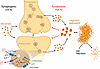
Studies of amyloid-β (Aβ) in Alzheimer’s disease pathology have revealed the peptide’s complex roles in synaptic function. The study by Siddu et al. in this issue clarifies the contexts in which Aβ peptides may be synaptogenic or synaptotoxic. This commentary integrates the study’s major findings with the salient findings of others that, over recent years, have redefined Aβ from a troublesome waste product into a physiological agent of the innate immune response and a modulator of synaptic homeostasis. Convergent evidence demonstrates how free, nonaggregated Aβ supports synaptic structure and activity, whereas oligomeric assemblies enact an adaptive brake on excitatory drive that can become maladaptive with age and inflammation. This redefined perspective on Aβ function emphasizes an evolutionarily conserved feedback loop linking neuronal activity, amyloid generation, and synaptic tuning that protects energy balance under stress but, when dysregulated, promotes proteostatic failure, persistent neuroinflammation, and network dysfunction characteristic of Alzheimer’s disease.
Authors
Joachim Herz
×Abstract
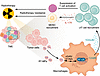
Radiotherapy is a key treatment modality in many malignancies, but radiation-induced immunosuppression can undermine its outcomes and diminish the efficacy of combinatorial strategies, like radioimmunotherapy. In this issue of the JCI, Deng et al. implicate cGAS/STING signaling in the recruitment of γδ T cells that drive downstream radioresistance. Radiation-induced microparticles containing double-stranded tumor DNA led to activation of the cGAS/STING pathway in macrophages, promoting γδ T cell recruitment through CCL20 signaling. In mouse models, γδ T cell–dependent recruitment of myeloid-derived suppressor cells and T cell suppression curbed radiotherapy efficacy and drove antitumor immunity. Ablation of γδ T cells improved the efficacy of radiotherapy alone and radiotherapy combined with immune checkpoint inhibitors in mouse models, supporting further investigation of γδ T cell targeting to improve clinical outcomes with radioimmunotherapy. The findings also add complexity to the function of the cGAS/STING pathway in setting the balance between antitumor immunity and immunosuppression.
Authors
Brooke C. Braman, David R. Raleigh
×Abstract
Chronic pain etiology involves a shared genetic profile, but its cellular context is poorly defined. In a study published in this issue of the JCI, Toikumo et al. integrated a chronic pain GWAS meta-analysis (n >1.2 million) with single-cell omics data from human brain and dorsal root ganglia. Genetic risk was predominantly enriched in central glutamatergic neurons, particularly those in the prefrontal cortex, hippocampus, and amygdala. In the periphery, the C-fiber nociceptor subtype hPEP.TRPV1/A1.2 was highlighted. Implicated genes converged on involvement in synaptic function and neuron projection development. This work identifies specific central and peripheral cell types that define the genetic architecture of chronic pain, providing a foundation for targeted translational research.
Authors
Erick J. Rodríguez-Palma, Rajesh Khanna
×Abstract
Approximately 80% of Merkel cell carcinoma (MCC) cases are caused by Merkel cell polyomavirus (MCV), driven by its T antigen oncogene. Why MCV drives MCC, a skin cancer that displays the neuroendocrine Merkel cell phenotype, remains unclear. In this issue of the JCI, Miao et al. demonstrated that MCC tumor survival requires neuroendocrine-lineage transcription factors, which are recruited to superenhancers (SEs) with the viral small T antigen oncoprotein to promote the neuroendocrine Merkel cell lineage of the cancer. Surprisingly, SEs mapped near the MCV integration site in MCC, and two SE-associated neuroendocrine transcription factors drove viral T antigen gene expression. MCV oncogene and neuroendocrine transcriptional network interactions rendered this viral tumorigenesis dependent on the Merkel cell lineage. Together with reports from other groups, the findings explain why MCV-associated cancer is specifically linked to the Merkel cell phenotype and identify epigenetic strategies targeting of lineage-dependent oncogene circuitry to treat virus-positive MCC.
Authors
Masahiro Shuda

-
Research Letter
×
Abstract
Authors
Isin Y. Comba, Tijs Louwies, Ruben A.T. Mars, Yang Xiao, Prabhjot Kaur Sekhon, Brian S. Edwards, Adam Willits, Robin R. Shields-Cutler, Shreya Bellampalli, Arnaldo Mercado-Perez, Dennis R. Tienter, Lisa M. Till, David R. Linden, Gianrico Farrugia, Arthur Beyder, Kristen M. Smith-Edwards, Purna C. Kashyap

-
Research Articles
×
Abstract
Genome instability is most commonly caused by replication stress, which also renders cancer cells extremely vulnerable once their response to replication stress is impeded. Topoisomerase II binding protein 1 (TOPBP1), an allosteric activator of ataxia telangiectasia and Rad3-related kinase (ATR), coordinates ATR in replication stress response and has emerged as a potential therapeutic target for tumors. Here, we identify auranofin, the FDA-approved drug for rheumatoid arthritis, as a lead compound capable of binding to the BRCT 7–8 domains and blocking TOPBP1 interaction with PHF8 and FANCJ. The liquid-liquid phase separation of TOPBP1 is also disrupted by auranofin. Through targeting these TOPBP1-nucleated molecular machineries, auranofin leads to an accumulation of replication defects by impairing ATR activation and attenuating replication protein A loading on perturbed replication forks, and it shows significant anti–breast tumor activity in combination with a PARP inhibitor. This study provides mechanistic insights into how auranofin challenges replication integrity and expands the application of this FDA-approved drug in breast tumor intervention.
Authors
Shuai Ma, Yingying Han, Rui Gu, Qi Chen, Qiushi Guo, Yuan Yue, Cheng Cao, Ling Liu, Zhenzhen Yang, Yan Qin, Ying Yang, Kai Zhang, Fei Liu, Lin Liu, Na Yang, Jihui Hao, Jie Yang, Zhi Yao, Xiaoyun Mao, Lei Shi
×Abstract
Metabolic dysfunction–associated steatotic liver disease–induced (MASLD-induced) hepatocellular carcinoma (HCC) is an emerging malignancy linked to excessive accumulation of adipose tissue and hepatic fat. Understanding the role of adipocytes in the development of MASLD-induced HCC is crucial. In an in vitro coculture system, differentiated adipocytes were found to enhance cancer stemness and drug resistance in HCC through paracrine signaling. Fatty acid–binding protein 4 (FABP4) was preferentially secreted by adipocytes, and recombinant FABP4 further augmented the cancer stem cell (CSC) properties of HCC cells. Notably, Fabp4–/– mice exhibited a marked delay in the progression of MASLD-HCC, which correlated with the increased HCC risk observed in MASLD patients with elevated FABP4 expression. Mass spectrometry analysis identified integrin β 1 (ITGB1) as a binding partner of FABP4. These data, together with a substantial downregulation of the Wnt/β-catenin pathway in Fabp4–/– mouse tumors, revealed that FABP4 augmented liver CSC functions by activating PI3K/AKT/β-catenin signaling via ITGB1. We developed an anti-FABP4 neutralizing antibody that successfully inhibited FABP4-driven CSC functions and suppressed MASLD-induced HCC. In conclusion, our findings indicate that adipocyte-derived FABP4 plays a critical role in the development of MASLD-induced HCC and targeting the ITGB1/PI3K/AKT/β-catenin signaling cascade may offer a promising approach to combat this aggressive disease.
Authors
Carmen Oi Ning Leung, Shilpa Gurung, Katherine Po Sin Chung, Rainbow Wing Hei Leung, Martina Mang Leng Lei, Mandy Sze Man Chan, Gregory Kenneth Muliawan, Shakeel Ahmad Khan, Xue Qian Wu, Jun Yu, Hui Lian Zhu, Yin Ying Lu, Stephanie Ma, Xiaoping Wu, Ruby Lai Chong Hoo, Terence Kin Wah Lee
×Abstract
Triple-negative breast cancer (TNBC), being both aggressive and highly lethal, poses a major clinical challenge in terms of treatment. Its heterogeneity and lack of hormone receptors or HER2 expression further restrict the availability of targeted therapy. Breast cancer stem cells (BCSCs), known to fuel TNBC malignancy, are now being exploited as a vulnerability for TNBC treatment. Here, we dissected the transcriptome of BCSCs and identified kinesin family member 20A (KIF20A) as a key regulator of BCSC survival and TNBC tumorigenesis. Genetic depletion or pharmacological inhibition of KIF20A impairs BCSC viability and tumor initiation and development in vitro and in vivo. Mechanistically, KIF20A supports BCSC stemness through modulation of mitochondrial oxidative phosphorylation, which is repressed by SMARCA4, a component of the SWI/SNF chromatin remodeling complex. Therapeutically, KIF20A inhibition sensitizes TNBC xenografts to standard-of-care chemotherapy. Our study highlights the importance of targeting KIF20A to exploit BCSC vulnerabilities in TNBC.
Authors
Yayoi Adachi, Weilong Chen, Cheng Zhang, Tao Wang, Nina Gildor, Rachel Shi, Haoyong Fu, Masashi Takeda, Qian Liang, Fangzhou Zhao, Hongyi Liu, Jun Fang, Jin Zhou, Hongwei Yao, Lianxin Hu, Shina Li, Lei Guo, Lin Xu, Ling Xie, Xian Chen, Chengheng Liao, Qing Zhang
×Abstract
It is now recognized that patient and animal models expressing genetically encoded misfolded mutant thyroglobulin (TG, the protein precursor for thyroid hormone synthesis) exhibit dramatic swelling of the endoplasmic reticulum (ER), with ER stress and cell death in thyrocytes — seen both in homozygotes (with severe hypothyroidism) and heterozygotes (with subclinical hypothyroidism). The thyrocyte death phenotype is exacerbated upon thyroidal stimulation (by thyrotropin [TSH]), as cell death is inhibited upon treatment with exogenous thyroxine. TSH stimulation might contribute to cytotoxicity by promoting ER stress or by an independent mechanism. Here we’ve engineered KO mice completely lacking Tg expression. Like other animals/patients with mutant TG, these animals rapidly developed severe goitrous hypothyroidism; however, thyroidal ER stress was exceedingly low — lower even than that seen in WT mice. Nevertheless, mice lacking TG exhibited abundant thyroid cell death, which depended upon renegade thyroidal iodination; cell death was completely suppressed in a genetic model lacking effective iodination or in Tg-KO mice treated with propylthiouracil (iodination inhibitor) or iodide deficiency. Thyrocytes in culture were killed not in the presence of H2O2 alone, but rather upon peroxidase-mediated iodination, with cell death blocked by propylthiouracil. Thus, in the thyroid gland bearing Tg mutation(s), TSH-stimulated iodination activity triggers thyroid cell death.
Authors
Crystal Young, Xiaohan Zhang, Xiaofan Wang, Aaron P. Kellogg, Kevin Pena, August Z. Cumming, Xiao-Hui Liao, Dennis Larkin, Hao Zhang, Emma Mastroianni, Helmut Grasberger, Samuel Refetoff, Peter Arvan
×Abstract
Chromosome 8 (chr8) gains are common in cancer, but their contribution to tumor heterogeneity is largely unexplored. Ewing sarcoma (EwS) is defined by FET::ETS fusions with few other recurrent mutations to explain clinical diversity. In EwS, chr8 gains are the second most frequent alteration, making it an ideal model to study the relevance of chr8 gains in an otherwise silent genomic context. We report that chr8 gain–driven expression patterns correlate with poor overall survival of patients with EwS. This effect is mainly mediated by increased expression of the translation initiation factor binding protein 4E-BP1, encoded by EIF4EBP1 on chr8. Among all chr8-encoded genes, EIF4EBP1 expression showed the strongest association with poor survival and correlated with chr8 gains in EwS tumors. Similar findings emerged across multiple cancer entities in The Cancer Genome Atlas. Multiomics profiling revealed that 4E-BP1 orchestrates a pro-proliferative proteomic network. Silencing 4E-BP1 reduced proliferation, clonogenicity, spheroidal growth in vitro, and tumor growth in vivo. Drug screens demonstrated that high 4E-BP1 expression sensitizes EwS to pharmacological CDK4/6-inhibition. Chr8 gains and elevated 4E-BP1 emerge as prognostic biomarkers in EwS, with poor outcomes driven by 4E-BP1–mediated pro-proliferative networks that sensitize tumors to CDK4/6 inhibitors. Testing for chr8 gains may enhance risk stratification and therapy in EwS and other cancers.
Authors
Cornelius M. Funk, Anna C. Ehlers, Martin F. Orth, Karim Aljakouch, Jing Li, Tilman L.B. Hölting, Rainer Will, Florian H. Geyer, A. Katharina Ceranski, Franziska Willis, Endrit Vinca, Shunya Ohmura, Roland Imle, Jana Siebenlist, Angelina Yershova, Maximilian M.L. Knott, Felina Zahnow, Ana Sastre, Javier Alonso, Felix Sahm, Heike Peterziel, Anna Loboda, Martin Schneider, Ana Banito, Gabriel Leprivier, Wolfgang Hartmann, Uta Dirksen, Olaf Witt, Ina Oehme, Stefan M. Pfister, Laura Romero-Pérez, Jeroen Krijgsveld, Florencia Cidre-Aranaz, Thomas G.P. Grünewald, Julian Musa
×Abstract
The interaction between cells and extracellular matrix (ECM) has been recognized in the mechanism of fibrotic diseases. Collagen type VII (collagen VII) is an ECM component that plays an important role in cell-ECM interaction, particularly in cell anchoring and maintenance of ECM integrity. Pleural mesothelial cells (PMCs) drive inflammatory reactions and ECM production in pleura. However, the role of collagen VII and PMCs in pleural fibrosis was poorly understood. In this study, collagen VII protein was found to be increased in pleura of patients with tuberculous pleural fibrosis. Investigation of cellular and animal models revealed that collagen VII began to increase at an early stage in the pleural fibrotic process. Increase of collagen VII occurred ahead of collagen I and α-SMA in PMCs and pleura of animal models. Inhibition of collagen VII by mesothelial cell–specific deletion of collagen VII gene (Wt1-Cre+ Col7a1fl/fl) attenuated mouse experimental pleural fibrosis. Finally, it was found that excessive collagen VII changed collagen conformation, which resulted in elevation of ECM stiffness. Elevation of ECM stiffness activated integrin/PI3K-AKT/JUN signaling and promoted more ECM deposition, as well as mediated pleural fibrosis. In conclusion, excessive collagen VII mediated pleural fibrosis via increasing ECM stiffness.
Authors
Qian Li, Xin-Liang He, Shuai-Jun Chen, Qian Niu, Tan-Ze Cao, Xiao-Lin Cui, Zi-Heng Jia, He-De Zhang, Xiao Feng, Ye-Han Jiang, Li-Mei Liang, Pei-Pei Cheng, Shi-He Hu, Liang Xiong, Meng Wang, Hong Ye, Wan-Li Ma
×Abstract
Over 15% of cancers worldwide are caused by viruses. Merkel cell polyomavirus (MCPyV) is the most recently discovered human oncovirus and is the only polyomavirus that drives malignant tumors in humans. Here, we show that MCPyV+ Merkel cell carcinoma is defined by neuroendocrine-lineage core regulatory (CR) transcription factors (TFs) (ATOH1, INSM1, ISL1, LHX3, POU4F3, and SOX2) that were essential for tumor survival and that co-bound chromatin with the viral small T antigen at super enhancers. Moreover, MCPyV integration sites were enriched at these neuroendocrine super enhancers. We further discovered that the MCPyV noncoding control region contained a homeodomain binding motif absent in other polyomaviruses that bound ISL1 and LHX3 and depended on them for T antigen expression. To therapeutically target the CR factors, we used histone deacetylase (HDAC) inhibitors to collapse the chromatin architecture and induce topological blurring of superenhancer loops, abrogating core TF expression and halting tumor growth. To our knowledge, our study presents the first example of oncogenic cross-regulation between viral and human epigenomic circuitry to generate interlocking and essential transcriptional feedback circuits that explain why MCPyV causes neuroendocrine cancer and represent a tumor dependency that can be targeted therapeutically.
Authors
Lingling Miao, David Milewski, Amy Coxon, Tara Gelb, Khalid A. Garman, Jadon Porch, Arushi Khanna, Loren Collado, Natasha T. Hill, Kenneth Daily, Serena Vilasi, Danielle Reed, Tiffany Alexander, Gabriel J. Starrett, Maharshi Chakraborty, Young Song, Rachel Choi, Vineela Gangalapudi, Josiah Seaman, Andrew Morton, Klaus J. Busam, Christopher R. Vakoc, Daniel J. Urban, Min Shen, Matthew D. Hall, Richard Sallari, Javed Khan, Berkley E. Gryder, Isaac Brownell
×Abstract
The metabolic microenvironment plays important roles in tumorigenesis, but how leukemia-initiating cells (LICs) response to the acidic BM niche remains largely unknown. Here, we show that acid-sensing ion channel 3 (ASIC3) dramatically delays leukemogenesis. Asic3 deletion results in a remarkably enhanced self-renewal, reduced differentiation, and 9-fold greater number of murine acute myeloid LICs. We developed an ultrasensitive, ratiometric, genetically encoded fluorescent pH sensor (pHluorin3) and demonstrated that LICs prefer localizing in the endosteal niche with a neutral pH range of 7.34–7.42, but not in the vascular niche with a lower pH range of 6.89–7.22. Unexpectedly, acid-ASIC3 signaling inhibits both murine and human LIC activities in a noncanonical manner by interacting with the N-terminal of STIM1 to reduce calcium-mediated CAMK1-CREB-MEIS1-LDHA levels, without inducing cation currents. This study reveals a pathway in suppression of leukemogenesis in the acidic BM niche and provides insight into targeting LICs or other cancer stem cells through pH-dependent ASICs.
Authors
Hao Gu, Lietao Weng, Chiqi Chen, Xiaoxin Hao, Rongkun Tao, Xin Qi, Xiaoyun Lai, Ligen Liu, Tinghua Zhang, Yiming Jiang, Jin Wang, Wei-Guang Li, Zhuo Yu, Li Xie, Yaping Zhang, Xiaoxiao He, Ye Yu, Yi Yang, Dehua Wu, Yuzheng Zhao, Tian-Le Xu, Guo-Qiang Chen, Junke Zheng
×Abstract
Orthosteric beta blockers represent the leading pharmacological intervention for managing heart diseases owing to their ability to competitively antagonize β-adrenergic receptors (βARs). However, their use is often limited by adverse effects such as fatigue, hypotension, and reduced exercise capacity, due in part to nonselective inhibition of multiple βAR subtypes. These challenges are particularly problematic in treating catecholaminergic polymorphic ventricular tachycardia (CPVT), a disease characterized by lethal tachyarrhythmias directly triggered by cardiac β1AR activation. To identify small-molecule allosteric modulators of the β1AR with enhanced subtype specificity and robust functional antagonism of β1AR-mediated signaling, we conducted a DNA-encoded small-molecule library screen and discovered Compound 11 (C11). C11 selectively potentiates the binding affinity of orthosteric agonists to the β1AR while potently inhibiting downstream signaling after β1AR activation. C11 prevents agonist-induced spontaneous contractile activity, Ca2+ release events, and exercise-induced ventricular tachycardia in the CSQ2–/– murine model of CPVT. Our studies demonstrate that C11 belongs to an emerging class of allosteric modulators termed positive allosteric modulator antagonists that positively modulate agonist binding but block downstream function. Its pharmacological properties and selective functional antagonism of β1AR-mediated signaling make C11 a promising therapeutic candidate for the treatment of CPVT and other forms of cardiac disease associated with excessive β1AR activation.
Authors
Alyssa Grogan, Robin M. Perelli, Seungkirl Ahn, Haoran Jiang, Arun Jyothidasan, Damini Sood, Chongzhao You, David I. Israel, Alex Shaginian, Qiuxia Chen, Jian Liu, Jialu Wang, Jan Steyaert, Alem W. Kahsai, Andrew P. Landstrom, Robert J. Lefkowitz, Howard A. Rockman
×Abstract
Liver metastases are relatively resistant to checkpoint blockade immunotherapy. The hepatic tissue has distinctive features including high numbers of NK cells. It was therefore important to conduct in-depth single-cell analysis of NK cells in colorectal cancer liver metastases (CRLMs) with an effort to dissect their diversity and to identify candidate therapeutic targets. By combining unbiased single-cell transcriptomic with multiparametric flow cytometry analysis, we identified an abundant family of intrahepatic CD56bright NK cells in CRLMs endowed with antitumor functions resulting from specific transcriptional liver programs. Intrahepatic CD56bright and CD56dim NK lymphocytes expressed unique transcription factors (IRF8, TOX2), a high level of chemokines, and targetable immune checkpoints, including CXCR4 and the IL-1 receptor family member IL-1R8. CXCR4 pharmacological blocking and an anti–IL-1R8 mAb enhanced the effector function of CRLM NK cells. Targeting the diversity of liver NK cells and their distinct immune checkpoint repertoires is key to optimize the current immune therapy protocols in CRLM.
Authors
Joanna Mikulak, Domenico Supino, Paolo Marzano, Sara Terzoli, Roberta Carriero, Valentina Cazzetta, Rocco Piazza, Elena Bruni, Paolo Kunderfranco, Alessia Donato, Sarah Natalia Mapelli, Roberto Garuti, Silvia Carnevale, Francesco Scavello, Elena Magrini, Jelena Zeleznjak, Clelia Peano, Matteo Donadon, Guido Costa, Guido Torzilli, Alberto Mantovani, Cecilia Garlanda, Domenico Mavilio
×Abstract
The E3 ligase SPOP plays a context-dependent role in cancer by targeting specific cellular proteins for degradation, thereby influencing cell behavior. However, its role in tumor immunity remains largely unexplored. In this study, we revealed that SPOP targeted the innate immune sensor STING for degradation in a CK1γ phosphorylation-dependent manner to promote melanoma growth. Stabilization of STING by escaping SPOP-mediated degradation enhanced antitumor immunity by increasing IFN-β production and ISG expression. Notably, small-molecule SPOP inhibitors not only blocked STING recognition by SPOP, but also acted as molecular glues, redirecting SPOP to target neosubstrates such as CBX4 for degradation. This CBX4 degradation led to increased DNA damage, which in turn activated STING and amplified innate immune responses. In a xenografted melanoma B16 tumor model, single-cell RNA-seq analysis demonstrated that SPOP inhibition induced the infiltration of immune cells associated with anti–PD-1 responses. Consequently, SPOP inhibitors synergized with immune checkpoint blockade to suppress B16 tumor growth in syngeneic murine models and enhanced the efficacy of CAR.CD19-T cell therapy. Our findings highlight a molecular glue degrader property of SPOP inhibitors, with potential implications for other E3 ligase–targeting small molecules designed to disrupt protein–protein interactions.
Authors
Zhichuan Zhu, Xin Zhou, Max Xu, Jianfeng Chen, Kevin C. Robertson, Gatphan Atassi, Mark G. Woodcock, Allie C. Mills, Laura E. Herring, Gianpietro Dotti, Pengda Liu
×Abstract
Harnessing the stimulator of IFN genes (STING) signaling pathway to trigger innate immune responses has shown remarkable promise in cancer immunotherapy; however, overwhelming resistance to intratumoral STING monotherapy has been witnessed in clinical trials, and the underlying mechanisms remain to be fully explored. Herein, we show that pharmacological STING activation following the intratumoral injection of a nonnucleotide STING agonist (i.e., MSA-2) resulted in apoptosis of the cytolytic T cells, IFN-mediated overexpression of indoleamine 2,3-dioxygenase 1 (IDO1), and evasion from immune surveillance. We leveraged a noncovalent chemical strategy for developing immunomodulatory binary nanoparticles (iBINP) that include both the STING agonist and an IDO1 inhibitor for treating immune-evasive tumors. This iBINP platform, developed by dual prodrug engineering and subsequent nanoparticle assembly, enabled tumor-restricted STING activation and IDO1 inhibition, achieving immune activation while mitigating immune tolerance. A systemic treatment of preclinical models of colorectal cancer with iBINP resulted in robust antitumor immune responses, reduced infiltration of Tregs, and enhanced activity of CD8+ T cells. Importantly, this platform exhibits great therapeutic efficacy by overcoming STING-induced immune evasion and controlling the progression of multiple tumor models. This study unveils the mechanisms by which STING monotherapy induces immunosuppression in the tumor microenvironment and provides a combinatorial strategy for advancing cancer immunotherapies.
Authors
Fanchao Meng, Hengyan Zhu, Shuo Wu, Bohan Li, Xiaona Chen, Hangxiang Wang
×Abstract
During the progression of acute myeloid leukemia (AML), extramedullary hematopoiesis (EMH) compensates for impaired bone marrow hematopoiesis. However, the specific cellular dynamics of EMH and its influence on AML progression remain poorly understood. In this study, we identified a substantial expansion of the CD81+ erythroblast subpopulation (CD81+ Erys) in the spleens of AML mice, which promoted AML cell proliferation and reduced survival. Mechanistically, CD81+ Erys secrete elevated levels of macrophage migration-inhibitory factor (MIF), which interacted with the CD74 receptor on AML cells, activating the mTORC1 signaling pathway and upregulating Egln3. Consequently, AML cells cocultured with CD81+ Erys exhibited reprogrammed phospholipid metabolism, characterized by an increased phospholipid-to-lysophospholipid ratio. Modulating this metabolic shift, either by supplementing exogenous lysophospholipids or depleting Egln3 in AML cells, restored the phospholipid balance and mitigated the protumorigenic effects induced by CD81+ Erys. Overall, our findings elucidate the molecular crosstalk between erythroblasts and AML cells, extend our insights into the mechanisms driving AML progression, and suggest potential therapeutic strategies.
Authors
Yue Li, Jiaxuan Cao, Jingyuan Tong, Peixia Tang, Haoran Chen, Guohuan Sun, Zining Yang, Xiaoru Zhang, Fang Dong, Shangda Yang, Jie Gao, Xiangnan Zhao, Jinfa Ma, Di Wang, Lei Zhang, Lin Wang, Tao Cheng, Hui Cheng, Lihong Shi
×Abstract
Whether amyloid-β (Aβ) peptides are synaptogenic or synaptotoxic remains a pivotal open question in Alzheimer’s disease research. Here, we chronically treated human neurons with precisely controlled concentrations of chemically defined synthetic Aβ40, Aβ42, and Aβ42arctic peptides that exhibit distinct aggregation propensities. Remarkably, chronic exposure of human neurons to free Aβ40 at higher concentrations or to free Aβ42 at lower concentrations potently promoted synapse formation. In contrast, aggregated Aβ42 or Aβ42arctic at higher concentrations were neurotoxic and synaptotoxic. The synaptotoxic effects of Aβ peptides manifested as an initial contraction of the synaptic vesicle cluster followed by synapse loss. Aβ40 and Aβ42 peptides with scrambled or inverted sequences were inactive. Thus, our experiments reveal that Aβ peptides exhibit an aggregation-dependent functional dichotomy that renders them either synaptogenic or synaptotoxic, thereby providing insight into how Aβ peptides straddle a thin line between physiological synapse organization and pathological synapse disruption. Among others, our data suggest that Alzheimer’s disease therapies might aim to shift the balance of Aβ peptides from the aggregated to the free state instead of suppressing all Aβ peptides.
Authors
Alberto Siddu, Silvia Natale, Connie H. Wong, Hamidreza Shaye, Thomas C. Südhof
×Abstract
The immunosuppressive tumor microenvironment (TME) drives radioresistance, but the role of γδ T cells in regulating radiosensitivity remains incompletely understood. In this study, we found that γδ T cell infiltration in the TME substantially increased after radiotherapy and contributed to radioresistance. Depletion of γδ T cells enhanced radiosensitivity. Single-cell RNA-seq revealed that γδ T cells in the postradiotherapy TME were characterized by the expression of Zbtb16, Il23r, and Il17a, and served as the primary source of IL-17A. These γδ T cells promoted radioresistance by recruiting myeloid-derived suppressor cells and suppressing T cell activation. Mechanistically, radiotherapy-induced tumor cell–derived microparticles containing dsDNA activated the cGAS-STING/NF-κB signaling pathway in macrophages, upregulating the expression of the chemokine CCL20, which was critical for γδ T cell recruitment. Targeting γδ T cells and IL-17A enhanced radiosensitivity and improved the efficacy of radiotherapy combined with anti-PD-1 immunotherapy, providing potential therapeutic strategies to overcome radioresistance.
Authors
Yue Deng, Xixi Liu, Xiao Yang, Wenwen Wei, Jiacheng Wang, Zheng Yang, Yajie Sun, Yan Hu, Haibo Zhang, Yijun Wang, Zhanjie Zhang, Lu Wen, Fang Huang, Kunyu Yang, Chao Wan
×Abstract
Mitochondrial metabolism orchestrates T cell functions, yet the role of specific mitochondrial components in distinct T cell subsets remains poorly understood. Here, we explored the role of mitochondrial complex II (MC II), the only complex from the electron transport chain (ETC) that plays a role in both ETC and metabolism, in regulating T cell functions. Surprisingly, MC II exerts divergent effects on CD4+ and CD8+ T cell activation and function. Using T cell–specific MC II subunit, succinate dehydrogenase A–deficient (SDHA-deficient) mice, we integrated single-cell RNA-seq and metabolic profiling, with in vitro and in vivo T cell functional assays to illuminate these differences. SDHA deficiency induced metabolic changes and remodeled gene expression exclusively in activated T cells. In CD4+ T cells, SDHA loss dampened both oxidative phosphorylation (OXPHOS) and glycolysis, impaired cytokine production, proliferation, and reduced CD4+ T cell–mediated graft-versus-host disease after allogeneic stem cell transplantation (SCT). In contrast, SDHA deficiency in CD8+ T cells reduced OXPHOS but paradoxically upregulated glycolysis and demonstrated enhanced cytotoxic functions in vitro and in vivo. This metabolic reprogramming endowed SDHA-KO CD8+ T cells with superior in vivo antitumor efficacy after immune checkpoint inhibitor therapy and allogeneic SCT. These findings reveal MC II as a bifurcation point for metabolic and functional specialization in CD4+ and CD8+ T cells.
Authors
Keisuke Seike, Shih-Chun A. Chu, Yuichi Sumii, Takashi Ikeda, Meng-Chih Wu, Laure Maneix, Dongchang Zhao, Yaping Sun, Marcin Cieslik, Pavan Reddy
×Abstract
Neutrophils play a critical role in sepsis-induced acute lung injury (ALI). Extracellular cold-inducible RNA-binding protein (eCIRP), a damage-associated molecular pattern, promotes neutrophil heterogeneity. While delta-like ligand 4 (DLL4) expression has been studied in various cell populations, its expression in neutrophils and impact on inflammation remain unknown. Here, we discovered that eCIRP induces DLL4+ neutrophils. These neutrophils trigger PANoptosis, a novel proinflammatory form of cell death initiated by Z-DNA–binding protein-1 (ZBP1) in pulmonary vascular endothelial cells (PVECs). In sepsis, DLL4+ neutrophils increase in the blood and lungs, upregulating ZBP1, cleaved gasdermin D, cleaved caspase-3, and phosphorylated MLKL, all of which are markers of PANoptosis, exacerbating ALI. DLL4 binds to Notch1 on PVECs and activates Notch1 intracellular domain to increase ZBP1-mediated endothelial PANoptosis. We discovered what we believe to be a novel Notch1-DLL4 inhibitor (NDI), derived from Notch1 to specifically block this interaction. Our findings reveal that NDI reduced endothelial PANoptosis in vitro and in vivo, attenuated pulmonary injury induced by DLL4+ neutrophils, and decreased lung water content and permeability, indicating improved barrier function. NDI also reduced serum injury and inflammatory markers and improved survival rate in sepsis. These findings underscore the Notch1-DLL4 pathway’s critical role in DLL4+ neutrophil–mediated ALI. Targeting the Notch1-DLL4 interaction with an NDI represents a promising therapeutic strategy for sepsis-induced ALI.
Authors
Hui Jin, Saoirse Holland, Alok Jha, Gaifeng Ma, Jingsong Li, Atsushi Murao, Monowar Aziz, Ping Wang
×Abstract
Statins lower cholesterol, reducing the risk of heart disease, and are among the most frequently prescribed drugs. Approximately 10% of individuals develop statin-associated muscle symptoms (SAMS; myalgias, rhabdomyolysis, and muscle weakness), often rendering them statin intolerant. The mechanism underlying SAMS remains poorly understood. Patients with mutations in the skeletal muscle ryanodine receptor 1 (RyR1)/calcium release channel can be particularly intolerant of statins. High-resolution structures revealed simvastatin binding sites in the pore region of RyR1. Simvastatin stabilized the open conformation of the pore and activated the RyR1 channel. In a mouse expressing a mutant RyR1-T4709M found in a patient with profound statin intolerance, simvastatin caused muscle weakness associated with leaky RyR1 channels. Cotreatment with a Rycal drug that stabilizes the channel closed state prevented simvastatin-induced muscle weakness. Thus, statin binding to RyR1 can cause SAMS, and patients with RyR1 mutations may represent a high-risk group for statin intolerance.
Authors
Gunnar Weninger, Haikel Dridi, Steven Reiken, Qi Yuan, Nan Zhao, Linda Groom, Jennifer Leigh, Yang Liu, Carl Tchagou, Jiayi Kang, Alexander Chang, Estefania Luna-Figueroa, Marco C. Miotto, Anetta Wronska, Robert T. Dirksen, Andrew R. Marks
×Abstract
Lactylation, a posttranslational modification derived from glycolysis, plays a pivotal role in ischemic heart disease. Neutrophils are predominantly glycolytic cells that trigger intensive inflammation of myocardial ischemia/reperfusion (MI/R). However, whether lactylation regulates neutrophil function during MI/R remains unknown. We applied lactyl proteomics analysis and found that S100a9 was lactylated at lysine 26 (S100a9K26la) in neutrophils, with elevated levels observed in both patients with acute myocardial infarction (AMI) and MI/R model mice. We demonstrated that S100a9K26la drove the development of MI/R using mutant knockin mice. Mechanistically, lactylated S100a9 translocated to the nucleus of neutrophils, where it bound to the promoters of migration-related genes, thereby enhancing their transcription as a coactivator and promoting neutrophil migration and cardiac recruitment. Additionally, lactylated S100a9 was released during neutrophil extracellular trap (NET) formation, leading to cardiomyocyte death by disrupting mitochondrial function. The enzyme dihydrolipoyllysine-residue acetyltransferase (DLAT) was identified as the lactyltransferase facilitating neutrophil S100a9K26la following MI/R, a process that could be restrained by α-lipoic acid. Consistently, we found that targeting the DLAT/S100a9K26la axis suppressed neutrophil burden and improved cardiac function following MI/R. In patients with AMI, elevated S100a9K26la levels in plasma were positively correlated with cardiac death. These findings highlight S100a9 lactylation as a potential therapeutic target for MI/R and as a promising biomarker for evaluating poor MI/R outcomes.
Authors
Xiaoqi Wang, Xiangyu Yan, Ge Mang, Yujia Chen, Shuang Liu, Jiayu Sui, Zhonghua Tong, Penghe Wang, Jingxuan Cui, Qiannan Yang, Yafei Zhang, Dongni Wang, Ping Sun, Weijun Song, Zexi Jin, Ming Shi, Peng Zhao, Jia Yang, Mingyang Liu, Naixin Wang, Tao Chen, Yong Ji, Bo Yu, Maomao Zhang
×Abstract
Clonal expansion of HIV-infected CD4+ T cells is a barrier to HIV eradication. We previously described a marked reduction in the frequency of the most clonally expanded, infected CD4+ T cells in an individual with elite control (ES24) after initiating chemoradiation for metastatic lung cancer with a regimen that included paclitaxel and carboplatin. We tested the hypothesis that this phenomenon was due to a higher susceptibility to the chemotherapeutic drugs of CD4+ T cell clones that were sustained by proliferation. We studied a CD4+ T cell clone with replication-competent provirus integrated into the ZNF721 gene, termed ZNF721i. We stimulated the clone with its cognate peptide and then exposed the cells to paclitaxel and/or carboplatin or the antiproliferative drug mycophenolate mofetil. While treatment of cells with the cognate peptide alone led to a marked expansion of the ZNF721i clone, treatment with the cognate peptide followed by culture with either paclitaxel or mycophenolate mofetil abrogated this process. The drugs did not affect the proliferation of other CD4+ T cell clones that were not specific for the cognate peptide. This strategy of antigen-specific stimulation followed by treatment with an antiproliferative agent may lead to the selective elimination of clonally expanded HIV-infected cells.
Authors
Filippo Dragoni, Joel Sop, Isha Gurumurthy, Tyler P. Beckey, Kellie N. Smith, Francesco R. Simonetti, Joel N. Blankson
×Abstract
Chronic pain is a complex clinical problem comprising multiple conditions that may share a common genetic profile. GWAS have identified many risk loci whose cell-type context remains unclear. Here, we integrated GWAS data on chronic pain with single-cell RNA-Seq (scRNA-Seq) data from human brain and dorsal root ganglia (hDRG) and single-cell chromatin accessibility data from human brain and mouse dorsal horn. Pain-associated variants were enriched in glutamatergic neurons, mainly in the prefrontal cortex, hippocampal CA1-3, and amygdala. In hDRG, the hPEP.TRPV1/A1.2 neuronal subtype showed robust enrichment. Chromatin accessibility analyses revealed variant enrichment in excitatory and inhibitory neocortical neurons in the brain and in midventral neurons and oligodendrocyte precursor cells in the mouse dorsal horn. Gene-level heritability in the brain highlighted roles for kinase activity, GABAergic synapses, axon guidance, and neuron projection development. In hDRG, implicated genes were related to glutamatergic signaling and neuronal projection. In cervical DRG of patients with acute versus chronic pain, scRNA-Seq data from neuronal or non-neuronal cells were enriched for chronic pain–associated genes (e.g., EFNB2, GABBR1, NCAM1, SCN11A). This cell-type–specific genetic architecture of chronic pain across central and PNS circuits provides a foundation for targeted translational research.
Authors
Sylvanus Toikumo, Marc Parisien, Michael J. Leone, Chaitanya Srinivasan, Huasheng Yu, Asta Arendt-Tranholm, Úrzula Franco-Enzástiga, Christoph Hofstetter, Michele Curatolo, Wenqin Luo, Andreas R. Pfenning, Rebecca P. Seal, Rachel L. Kember, Theodore J. Price, Luda Diatchenko, Stephen G. Waxman, Henry R. Kranzler








In-Press Preview - More
Abstract
Periodontal disease, a bacterial infection affecting a large percentage of the world's population, is an important risk factor for several systemic diseases and is significantly worsened by diabetes. To investigate how diabetes exacerbates the inflammatory response to bacteria in this disease, we combined insights from murine and human studies. Through single-cell RNA sequencing, we identified a compelling hyperglycemia-driven molecular pathway: the upregulation of CD137L in dendritic cells and increased expression of its receptor, CD137, in γδ T-cells. The CD137L-CD137 axis emerged as a pivotal mediator of diabetes-induced inflammatory tissue destruction. Antibody-mediated inhibition of CD137L markedly reduced the diabetes-driven bone loss, neutrophil recruitment, expansion of γδ T-cells, and excessive infiltration by IL17A+ cells. In vitro studies further validated these findings and established that high glucose-mediated dysregulation of dendritic cells dramatically altered γδ T-cell activity in co-culture systems via CD137L. The essential role of dendritic cells as CD137L producers in vivo was definitively established through lineage-specific Akt1 deletion, which abrogated CD137L expression in these cells and reversed the adverse effects of hyperglycemia on leukocyte responses to bacterial pathogens in vivo. Conversely, activation of CD137 with an agonist in normal animals recapitulated diabetes-induced abnormalities in the inflammatory response and accelerated bone loss. These findings elucidate a key mechanism underlying diabetes-induced immune dysregulation and inflammatory damage, and point to the CD137L-CD137 pathway as a promising therapeutic target, offering potential insights into mitigating other diabetes-associated complications linked to inflammatory changes.
Authors
Xin Huang, Min Liu, Michael V. Gonzalez, Rahul Debnath, Hamideh Afzali, Yongwon Choi, Su Ah Kim, Kang I. Ko, Dana T. Graves
Abstract
KRAS mutations serve as key oncogenic drivers in the initiation and progression of pancreatic ductal adenocarcinoma (PDAC). Despite the advancement of KRAS inhibitors like MRTX1133 for PDAC treatment, intrinsic and acquired resistance remain major barriers to their clinical efficacy. This study underscored the role of histone deacetylase 5 (HDAC5) loss in mediating intrinsic resistance to KRASG12D inhibitors. Mechanistically, HDAC5 promoted c-Myc degradation by deacetylating K148, thereby facilitating NEDD4-mediated ubiquitination at this site. The loss of HDAC5 resulted in hyperacetylation of c-Myc at K148, impeding the ubiquitination and subsequent degradation process of c-Myc following deacetylation. Consequently, c-Myc stability and transcriptional activity were sustained even under KRAS-MEK-ERK pathway inhibition, reinforcing MAPK signaling and promoting cell survival despite KRAS suppression. Our data further demonstrated that pharmacological or genetic inhibition of c-Myc effectively reversed the resistance phenotype mediated by HDAC5 loss, suggesting a therapeutic strategy centered on "KRAS-MYC dual-node blockade." Furthermore, the expression levels of HDAC5 and the acetylation status of c-Myc may serve as potential biomarkers for predicting the therapeutic response to MRTX1133. These findings provide insights into overcoming resistance to KRASG12D inhibitors and offer potential biomarkers and combinatorial therapeutic strategies for precision treatment of PDAC.
Authors
Taoyu Chen, Haixin Yu, Keshan Wang, Gengdu Qin, Yuhan Zhao, Xueyi Liang, Yuxuan Li, Tianhao Zou, Jiaying Liu, Jingyuan Zhao, Zhiqiang Liu, Ruozheng Wei, Bo Wang, Shanmiao Gou, Tao Yin, Heshui Wu, Xin Jin, Yingke Zhou
Abstract
BACKGROUND. Among antiretroviral therapy (ART)-suppressed people with HIV (PWH), women have higher levels of some inflammatory markers than men, but the broader effect of sex on the inflammatory proteome, and whether these differences are modified by age, remains unclear. METHODS. 363 plasma inflammatory protein levels (Olink Inflammation Explore) were assessed in ART-suppressed PWH sampled from the Center for AIDS Research Network of Integrated Clinical Systems (CNICS). The relationship between sex and 363 plasma proteins – including 22 in the interferon-α response pathway – was assessed with linear regression models adjusting for confounders, assessing interactions by age. FINDINGS. Of 922 participants, 162 (18%) were female. The median age was 47, above which the majority of women had undetectable plasma anti-Müllerian hormone levels, a biomarker of ovarian reserve. Age impacted the influence of sex on the inflammatory proteome. Older age (>47) was associated with greater increases among women than men in 194 proteins. Interferon-α response proteins were higher in men in those ≤ 47 (P = 0.024), but higher in women in those > 47 (P = 0.005, p-interaction < 0.001). Among the 131 proteins associated with mortality risk (q < 0.05), only 5 differed by sex among those ≤ 47, while 79 differed by sex in those > 47, with nearly all being higher in women . Women had decreased mortality than men ≤47 (P < 0.001) but had similar mortality > 47 (P = 0.84). INTERPRETATION. The menopausal transition appears to have a dramatic effect on systemic Type I interferon responses and the broader inflammatory proteome in women with HIV. Among older PWH, women have greater inflammation than men, including the majority of proteins linked with mortality risk.
Authors
Rebecca A. Abelman, Samuel R. Schnittman, Natalia Faraj Murad, Adam Olshen, Gabriele B. Beck-Engeser, Noah Aquino, Gabrielle C. Ambayec, Edward R. Cachay, Joseph J. Eron, Michael Saag, Robin M. Nance, Joseph A. Delaney, Stephanie A. Ruderman, Richard D. Moore, Kenneth H. Mayer, Jeffrey M. Jacobson, Heidi M. Crane, Peter W. Hunt
Abstract
Autoimmune factor XIII (FXIII) deficiency is a rare hemorrhagic disease characterized by severe bleeding and a high mortality rate. However, the pathogenesis of this disease remains unclear. Currently, FXIII consumption caused by infections is becoming increasingly common. Our clinical investigation, combined with in vivo experiments, revealed that patients and mice with autoimmune FXIII deficiency displayed complement dysfunction, and that pathogenic infection and autoantibody generation were positively correlated. Further analysis revealed the presence of combined FXIII-C3 autoantibodies in patients with autoimmune FXIII deficiency. These combined autoantibodies neutralize FXIII, causing excessive bleeding, and form a complex with C3, inhibiting complement activation and complement-mediated adaptive immune responses. Therefore, compromised immune responses increase host susceptibility to pathogenic Candida albicans infections. Consequently, uncontrolled exogenous fungal infections further activate platelets and cause platelet-related CD40 ligand (CD40L) release. By interacting with the CD40 on the B cell surface, the released CD40L further promotes auto-reactive B cell activation to produce more autoantibodies, thereby forming a self-amplification loop for the progressive consumption of FXIII. We believe that this study provides a perspective on disease pathogenesis and therapeutic guidance for better treatment of autoimmune FXIII deficiency.
Authors
Shanshan Luo, Jun Deng, Yue Liu, Lv Xiong, Wanting Wang, Chaofan Wang, Yaohua Cai, Yajie Ding, Bahgat Fayed, Zhipeng Cheng, Lu Zhang, Min Zhang, Jun Fang, Gensheng Zhang, Rui Zhu, Haiqiang Jiang, Yunlun Li, Kun Huang, Xiang Cheng, Liang V. Tang, Chunyan Sun, Heng Mei, Peter F. Zipfel, Huafang Wang, Yadan Wang, Desheng Hu, Yu Hu
Abstract
The role of the tumor immune microenvironment (TIME) in modulating responses to antiestrogen therapy in hormone receptor-positive (HR+) breast cancers remains unclear. We analyzed pre- and on-treatment biopsies from patients with HR+ breast cancer treated with letrozole to induce estrogen deprivation (ED). Stromal tumor-infiltrating lymphocytes, assessed by H&E-staining, and immune-related gene sets, including IFNɣ signaling, measured by RNA sequencing, were increased in ED-resistant tumors. Cyclic immunofluorescence and spatial transcriptomics revealed an abundance of CD8+ T cells and enhanced antigen processing and immune gene signatures in ED-resistant tumors. In this group, the expression of CXCL9, CXCL10, and CXCL11 — chemokine genes involved in CD8+ T cell recruitment — and the CXCR3 receptor were upregulated both before and after letrozole. CXCL11 levels were higher in conditioned media from HR+ breast cancer cells co-cultured with CD8+ T cells. Both recombinant CXCL11 and co-culture with CD8+ T cells promoted MCF7 and T47D cell growth in estrogen-free conditions. Finally, deletion combined with silencing of the CXCL11 receptors CXCR3 and CXCR7 in MCF7 cells impaired proliferation in response to exogenous CXCL11 and to co-culture with CD8+ T cells in estrogen-free conditions. These findings suggest that CD8+ T cell-associated CXCL11 in the TIME modulates the response of HR+ breast cancer cells to estrogen suppression.
Authors
Fabiana Napolitano, Yunguan Wang, Dhivya R. Sudhan, Paula I. Gonzalez-Ericsson, Luigi Formisano, Nisha Unni, Shahbano Shakeel, James Z. Zhu, Khushi Ahuja, Lei Guo, María Rosario Chica-Parrado, Yuki Matsunaga, Pamela Luna, Chang-Ching A. Lin, Yasuaki Uemoto, Kyung-Min Lee, Hongli Ma, Nathaniel J. Evans, Alberto Servetto, Saurabh Mendiratta, Spencer D. Barnes, Roberto Bianco, Yisheng V. Fang, Lin Xu, Jeon Lee, Tao Wang, Justin M. Balko, Gordon B. Mills, Marilyne Labrie, Ariella B. Hanker, Carlos L. Arteaga
View more articles by topic:
Sign up for email alerts
Review Series - More
Series edited by Daniel J. Drucker
Clinical innovation and scientific progress in GLP-1 medicine
Series edited by Daniel J. Drucker
Therapies targeting the glucagon-like peptide 1 (GLP-1) receptor have revolutionized the treatment of obesity and diabetes. This series of reviews, curated by Dr. Dan Drucker, describes the latest research in this fast-moving in field, from our evolving understanding of the mechanism of GLP-1 receptor signaling to the medicines’ impact on inflammation and the consequences for heart, kidney, and brain health. The reviews also explore the impact of these medicines on conditions beyond their initial indications, including cancer and neurodegenerative disease risk.
×
Latest Video Abstract - More
Protective, subtype antibody family targets the active site of influenza A virus neuraminidase
In this episode, Dr. Seth J. Zost presents an antibody lineage from a single donor that binds the active site of influenza neuraminidase, cross-reacts with antigenically diverse viruses, and protects mice from infection...


Copyright © 2025 American Society for Clinical Investigation
ISSN: 0021-9738 (print), 1558-8238 (online)