
Advertisement
Research ArticleImmunologyOncology
Open Access |  10.1172/JCI193945
IL-17–producing γδ T cells in the tumor microenvironment promote radioresistance in mice
Yue Deng,1,2,3,4 Xixi Liu,1,2,3,4 Xiao Yang,1,2,3,4 Wenwen Wei,1,2,3,4 Jiacheng Wang,1,2,3,4 Zheng Yang,1,2,3,4 Yajie Sun,1,2,3,4 Yan Hu,1,2,3,4 Haibo Zhang,5 Yijun Wang,1,2,3,4 Zhanjie Zhang,1,2,3,4 Lu Wen,1,2,3,4 Fang Huang,1,2,3,4 Kunyu Yang,1,2,3,4 and Chao Wan1,2,3,4
1Cancer Center, Union Hospital, Tongji Medical College and
2Institute of Radiation Oncology, Union Hospital, Tongji Medical College, Huazhong University of Science and Technology, Wuhan, China.
3Hubei Key Laboratory of Precision Radiation Oncology, Wuhan, China.
4Key Laboratory of Biological Targeted Therapy (Huazhong University of Science and Technology), Ministry of Education, Wuhan, Hubei, China.
5Cancer Center, Department of Radiation Oncology, Zhejiang Provincial People’s Hospital (Affiliated People’s Hospital), Hangzhou Medical College, Hangzhou, Zhejiang, China.
Address correspondence to: Chao Wan or Kunyu Yang, Cancer Center, Union Hospital, Tongji Medical College, Huazhong University of Science and Technology, 1277 Jiefang Avenue, Wuhan 430022, Hubei, China. Phone: 86.18062775069; Email: wanc@hust.edu.cn (CW). Phone: 86.13995595360; Email: yangkunyu@hust.edu.cn (KY).
Authorship note: YD and XL contributed equally to this work.
Find articles by Deng, Y. in: PubMed | Google Scholar
1Cancer Center, Union Hospital, Tongji Medical College and
2Institute of Radiation Oncology, Union Hospital, Tongji Medical College, Huazhong University of Science and Technology, Wuhan, China.
3Hubei Key Laboratory of Precision Radiation Oncology, Wuhan, China.
4Key Laboratory of Biological Targeted Therapy (Huazhong University of Science and Technology), Ministry of Education, Wuhan, Hubei, China.
5Cancer Center, Department of Radiation Oncology, Zhejiang Provincial People’s Hospital (Affiliated People’s Hospital), Hangzhou Medical College, Hangzhou, Zhejiang, China.
Address correspondence to: Chao Wan or Kunyu Yang, Cancer Center, Union Hospital, Tongji Medical College, Huazhong University of Science and Technology, 1277 Jiefang Avenue, Wuhan 430022, Hubei, China. Phone: 86.18062775069; Email: wanc@hust.edu.cn (CW). Phone: 86.13995595360; Email: yangkunyu@hust.edu.cn (KY).
Authorship note: YD and XL contributed equally to this work.
Find articles by Liu, X. in: PubMed | Google Scholar
1Cancer Center, Union Hospital, Tongji Medical College and
2Institute of Radiation Oncology, Union Hospital, Tongji Medical College, Huazhong University of Science and Technology, Wuhan, China.
3Hubei Key Laboratory of Precision Radiation Oncology, Wuhan, China.
4Key Laboratory of Biological Targeted Therapy (Huazhong University of Science and Technology), Ministry of Education, Wuhan, Hubei, China.
5Cancer Center, Department of Radiation Oncology, Zhejiang Provincial People’s Hospital (Affiliated People’s Hospital), Hangzhou Medical College, Hangzhou, Zhejiang, China.
Address correspondence to: Chao Wan or Kunyu Yang, Cancer Center, Union Hospital, Tongji Medical College, Huazhong University of Science and Technology, 1277 Jiefang Avenue, Wuhan 430022, Hubei, China. Phone: 86.18062775069; Email: wanc@hust.edu.cn (CW). Phone: 86.13995595360; Email: yangkunyu@hust.edu.cn (KY).
Authorship note: YD and XL contributed equally to this work.
Find articles by Yang, X. in: PubMed | Google Scholar
1Cancer Center, Union Hospital, Tongji Medical College and
2Institute of Radiation Oncology, Union Hospital, Tongji Medical College, Huazhong University of Science and Technology, Wuhan, China.
3Hubei Key Laboratory of Precision Radiation Oncology, Wuhan, China.
4Key Laboratory of Biological Targeted Therapy (Huazhong University of Science and Technology), Ministry of Education, Wuhan, Hubei, China.
5Cancer Center, Department of Radiation Oncology, Zhejiang Provincial People’s Hospital (Affiliated People’s Hospital), Hangzhou Medical College, Hangzhou, Zhejiang, China.
Address correspondence to: Chao Wan or Kunyu Yang, Cancer Center, Union Hospital, Tongji Medical College, Huazhong University of Science and Technology, 1277 Jiefang Avenue, Wuhan 430022, Hubei, China. Phone: 86.18062775069; Email: wanc@hust.edu.cn (CW). Phone: 86.13995595360; Email: yangkunyu@hust.edu.cn (KY).
Authorship note: YD and XL contributed equally to this work.
Find articles by Wei, W. in: PubMed | Google Scholar
1Cancer Center, Union Hospital, Tongji Medical College and
2Institute of Radiation Oncology, Union Hospital, Tongji Medical College, Huazhong University of Science and Technology, Wuhan, China.
3Hubei Key Laboratory of Precision Radiation Oncology, Wuhan, China.
4Key Laboratory of Biological Targeted Therapy (Huazhong University of Science and Technology), Ministry of Education, Wuhan, Hubei, China.
5Cancer Center, Department of Radiation Oncology, Zhejiang Provincial People’s Hospital (Affiliated People’s Hospital), Hangzhou Medical College, Hangzhou, Zhejiang, China.
Address correspondence to: Chao Wan or Kunyu Yang, Cancer Center, Union Hospital, Tongji Medical College, Huazhong University of Science and Technology, 1277 Jiefang Avenue, Wuhan 430022, Hubei, China. Phone: 86.18062775069; Email: wanc@hust.edu.cn (CW). Phone: 86.13995595360; Email: yangkunyu@hust.edu.cn (KY).
Authorship note: YD and XL contributed equally to this work.
Find articles by Wang, J. in: PubMed | Google Scholar
1Cancer Center, Union Hospital, Tongji Medical College and
2Institute of Radiation Oncology, Union Hospital, Tongji Medical College, Huazhong University of Science and Technology, Wuhan, China.
3Hubei Key Laboratory of Precision Radiation Oncology, Wuhan, China.
4Key Laboratory of Biological Targeted Therapy (Huazhong University of Science and Technology), Ministry of Education, Wuhan, Hubei, China.
5Cancer Center, Department of Radiation Oncology, Zhejiang Provincial People’s Hospital (Affiliated People’s Hospital), Hangzhou Medical College, Hangzhou, Zhejiang, China.
Address correspondence to: Chao Wan or Kunyu Yang, Cancer Center, Union Hospital, Tongji Medical College, Huazhong University of Science and Technology, 1277 Jiefang Avenue, Wuhan 430022, Hubei, China. Phone: 86.18062775069; Email: wanc@hust.edu.cn (CW). Phone: 86.13995595360; Email: yangkunyu@hust.edu.cn (KY).
Authorship note: YD and XL contributed equally to this work.
Find articles by Yang, Z. in: PubMed | Google Scholar
1Cancer Center, Union Hospital, Tongji Medical College and
2Institute of Radiation Oncology, Union Hospital, Tongji Medical College, Huazhong University of Science and Technology, Wuhan, China.
3Hubei Key Laboratory of Precision Radiation Oncology, Wuhan, China.
4Key Laboratory of Biological Targeted Therapy (Huazhong University of Science and Technology), Ministry of Education, Wuhan, Hubei, China.
5Cancer Center, Department of Radiation Oncology, Zhejiang Provincial People’s Hospital (Affiliated People’s Hospital), Hangzhou Medical College, Hangzhou, Zhejiang, China.
Address correspondence to: Chao Wan or Kunyu Yang, Cancer Center, Union Hospital, Tongji Medical College, Huazhong University of Science and Technology, 1277 Jiefang Avenue, Wuhan 430022, Hubei, China. Phone: 86.18062775069; Email: wanc@hust.edu.cn (CW). Phone: 86.13995595360; Email: yangkunyu@hust.edu.cn (KY).
Authorship note: YD and XL contributed equally to this work.
Find articles by Sun, Y. in: PubMed | Google Scholar
1Cancer Center, Union Hospital, Tongji Medical College and
2Institute of Radiation Oncology, Union Hospital, Tongji Medical College, Huazhong University of Science and Technology, Wuhan, China.
3Hubei Key Laboratory of Precision Radiation Oncology, Wuhan, China.
4Key Laboratory of Biological Targeted Therapy (Huazhong University of Science and Technology), Ministry of Education, Wuhan, Hubei, China.
5Cancer Center, Department of Radiation Oncology, Zhejiang Provincial People’s Hospital (Affiliated People’s Hospital), Hangzhou Medical College, Hangzhou, Zhejiang, China.
Address correspondence to: Chao Wan or Kunyu Yang, Cancer Center, Union Hospital, Tongji Medical College, Huazhong University of Science and Technology, 1277 Jiefang Avenue, Wuhan 430022, Hubei, China. Phone: 86.18062775069; Email: wanc@hust.edu.cn (CW). Phone: 86.13995595360; Email: yangkunyu@hust.edu.cn (KY).
Authorship note: YD and XL contributed equally to this work.
Find articles by Hu, Y. in: PubMed | Google Scholar
1Cancer Center, Union Hospital, Tongji Medical College and
2Institute of Radiation Oncology, Union Hospital, Tongji Medical College, Huazhong University of Science and Technology, Wuhan, China.
3Hubei Key Laboratory of Precision Radiation Oncology, Wuhan, China.
4Key Laboratory of Biological Targeted Therapy (Huazhong University of Science and Technology), Ministry of Education, Wuhan, Hubei, China.
5Cancer Center, Department of Radiation Oncology, Zhejiang Provincial People’s Hospital (Affiliated People’s Hospital), Hangzhou Medical College, Hangzhou, Zhejiang, China.
Address correspondence to: Chao Wan or Kunyu Yang, Cancer Center, Union Hospital, Tongji Medical College, Huazhong University of Science and Technology, 1277 Jiefang Avenue, Wuhan 430022, Hubei, China. Phone: 86.18062775069; Email: wanc@hust.edu.cn (CW). Phone: 86.13995595360; Email: yangkunyu@hust.edu.cn (KY).
Authorship note: YD and XL contributed equally to this work.
Find articles by Zhang, H. in: PubMed | Google Scholar
1Cancer Center, Union Hospital, Tongji Medical College and
2Institute of Radiation Oncology, Union Hospital, Tongji Medical College, Huazhong University of Science and Technology, Wuhan, China.
3Hubei Key Laboratory of Precision Radiation Oncology, Wuhan, China.
4Key Laboratory of Biological Targeted Therapy (Huazhong University of Science and Technology), Ministry of Education, Wuhan, Hubei, China.
5Cancer Center, Department of Radiation Oncology, Zhejiang Provincial People’s Hospital (Affiliated People’s Hospital), Hangzhou Medical College, Hangzhou, Zhejiang, China.
Address correspondence to: Chao Wan or Kunyu Yang, Cancer Center, Union Hospital, Tongji Medical College, Huazhong University of Science and Technology, 1277 Jiefang Avenue, Wuhan 430022, Hubei, China. Phone: 86.18062775069; Email: wanc@hust.edu.cn (CW). Phone: 86.13995595360; Email: yangkunyu@hust.edu.cn (KY).
Authorship note: YD and XL contributed equally to this work.
Find articles by Wang, Y. in: PubMed | Google Scholar
1Cancer Center, Union Hospital, Tongji Medical College and
2Institute of Radiation Oncology, Union Hospital, Tongji Medical College, Huazhong University of Science and Technology, Wuhan, China.
3Hubei Key Laboratory of Precision Radiation Oncology, Wuhan, China.
4Key Laboratory of Biological Targeted Therapy (Huazhong University of Science and Technology), Ministry of Education, Wuhan, Hubei, China.
5Cancer Center, Department of Radiation Oncology, Zhejiang Provincial People’s Hospital (Affiliated People’s Hospital), Hangzhou Medical College, Hangzhou, Zhejiang, China.
Address correspondence to: Chao Wan or Kunyu Yang, Cancer Center, Union Hospital, Tongji Medical College, Huazhong University of Science and Technology, 1277 Jiefang Avenue, Wuhan 430022, Hubei, China. Phone: 86.18062775069; Email: wanc@hust.edu.cn (CW). Phone: 86.13995595360; Email: yangkunyu@hust.edu.cn (KY).
Authorship note: YD and XL contributed equally to this work.
Find articles by Zhang, Z. in: PubMed | Google Scholar
1Cancer Center, Union Hospital, Tongji Medical College and
2Institute of Radiation Oncology, Union Hospital, Tongji Medical College, Huazhong University of Science and Technology, Wuhan, China.
3Hubei Key Laboratory of Precision Radiation Oncology, Wuhan, China.
4Key Laboratory of Biological Targeted Therapy (Huazhong University of Science and Technology), Ministry of Education, Wuhan, Hubei, China.
5Cancer Center, Department of Radiation Oncology, Zhejiang Provincial People’s Hospital (Affiliated People’s Hospital), Hangzhou Medical College, Hangzhou, Zhejiang, China.
Address correspondence to: Chao Wan or Kunyu Yang, Cancer Center, Union Hospital, Tongji Medical College, Huazhong University of Science and Technology, 1277 Jiefang Avenue, Wuhan 430022, Hubei, China. Phone: 86.18062775069; Email: wanc@hust.edu.cn (CW). Phone: 86.13995595360; Email: yangkunyu@hust.edu.cn (KY).
Authorship note: YD and XL contributed equally to this work.
Find articles by Wen, L. in: PubMed | Google Scholar
1Cancer Center, Union Hospital, Tongji Medical College and
2Institute of Radiation Oncology, Union Hospital, Tongji Medical College, Huazhong University of Science and Technology, Wuhan, China.
3Hubei Key Laboratory of Precision Radiation Oncology, Wuhan, China.
4Key Laboratory of Biological Targeted Therapy (Huazhong University of Science and Technology), Ministry of Education, Wuhan, Hubei, China.
5Cancer Center, Department of Radiation Oncology, Zhejiang Provincial People’s Hospital (Affiliated People’s Hospital), Hangzhou Medical College, Hangzhou, Zhejiang, China.
Address correspondence to: Chao Wan or Kunyu Yang, Cancer Center, Union Hospital, Tongji Medical College, Huazhong University of Science and Technology, 1277 Jiefang Avenue, Wuhan 430022, Hubei, China. Phone: 86.18062775069; Email: wanc@hust.edu.cn (CW). Phone: 86.13995595360; Email: yangkunyu@hust.edu.cn (KY).
Authorship note: YD and XL contributed equally to this work.
Find articles by Huang, F. in: PubMed | Google Scholar
1Cancer Center, Union Hospital, Tongji Medical College and
2Institute of Radiation Oncology, Union Hospital, Tongji Medical College, Huazhong University of Science and Technology, Wuhan, China.
3Hubei Key Laboratory of Precision Radiation Oncology, Wuhan, China.
4Key Laboratory of Biological Targeted Therapy (Huazhong University of Science and Technology), Ministry of Education, Wuhan, Hubei, China.
5Cancer Center, Department of Radiation Oncology, Zhejiang Provincial People’s Hospital (Affiliated People’s Hospital), Hangzhou Medical College, Hangzhou, Zhejiang, China.
Address correspondence to: Chao Wan or Kunyu Yang, Cancer Center, Union Hospital, Tongji Medical College, Huazhong University of Science and Technology, 1277 Jiefang Avenue, Wuhan 430022, Hubei, China. Phone: 86.18062775069; Email: wanc@hust.edu.cn (CW). Phone: 86.13995595360; Email: yangkunyu@hust.edu.cn (KY).
Authorship note: YD and XL contributed equally to this work.
Find articles by Yang, K. in: PubMed | Google Scholar
1Cancer Center, Union Hospital, Tongji Medical College and
2Institute of Radiation Oncology, Union Hospital, Tongji Medical College, Huazhong University of Science and Technology, Wuhan, China.
3Hubei Key Laboratory of Precision Radiation Oncology, Wuhan, China.
4Key Laboratory of Biological Targeted Therapy (Huazhong University of Science and Technology), Ministry of Education, Wuhan, Hubei, China.
5Cancer Center, Department of Radiation Oncology, Zhejiang Provincial People’s Hospital (Affiliated People’s Hospital), Hangzhou Medical College, Hangzhou, Zhejiang, China.
Address correspondence to: Chao Wan or Kunyu Yang, Cancer Center, Union Hospital, Tongji Medical College, Huazhong University of Science and Technology, 1277 Jiefang Avenue, Wuhan 430022, Hubei, China. Phone: 86.18062775069; Email: wanc@hust.edu.cn (CW). Phone: 86.13995595360; Email: yangkunyu@hust.edu.cn (KY).
Authorship note: YD and XL contributed equally to this work.
Find articles by
Wan, C.
in:
PubMed
|
Google Scholar
|

Published October 7, 2025 - More info
J Clin Invest. 2025;135(24):e193945. https://doi.org/10.1172/JCI193945.
© 2025 Deng et al. This work is licensed under the Creative Commons Attribution 4.0 International License. To view a copy of this license, visit http://creativecommons.org/licenses/by/4.0/.
Received: March 27, 2025; Accepted: September 30, 2025

Related article:
Abstract
Radiotherapy is a key treatment modality in many malignancies, but radiation-induced immunosuppression can undermine its outcomes and diminish the efficacy of combinatorial strategies, like radioimmunotherapy. In this issue of the JCI, Deng et al. implicate cGAS/STING signaling in the recruitment of γδ T cells that drive downstream radioresistance. Radiation-induced microparticles containing double-stranded tumor DNA led to activation of the cGAS/STING pathway in macrophages, promoting γδ T cell recruitment through CCL20 signaling. In mouse models, γδ T cell–dependent recruitment of myeloid-derived suppressor cells and T cell suppression curbed radiotherapy efficacy and drove antitumor immunity. Ablation of γδ T cells improved the efficacy of radiotherapy alone and radiotherapy combined with immune checkpoint inhibitors in mouse models, supporting further investigation of γδ T cell targeting to improve clinical outcomes with radioimmunotherapy. The findings also add complexity to the function of the cGAS/STING pathway in setting the balance between antitumor immunity and immunosuppression.
Authors
Brooke C. Braman, David R. Raleigh

-
Results
Enhanced γδ T cell infiltration in the TME following radiotherapy promotes radioresistance. To systematically delineate the alterations in immune cell composition within the TME after radiotherapy (RT), we conducted scRNA-seq on CD45+ immune cells isolated from murine Lewis lung cancer subcutaneous tumors in 2 groups: the control group and the RT group (96 hours after 10 Gy radiotherapy) (Figure 1A). Unsupervised clustering analysis identified 7 distinct immune cell subsets, including monocytes and macrophages, T cells, neutrophils, natural killer cells, dendritic cells, B cells, and basophils (Figure 1B and Supplemental Figure 1A; supplemental material available online with this article; https://doi.org/10.1172/JCI193945DS1). Comparative analysis revealed pronounced shifts in immune cell clusters following radiotherapy, characterized by increased monocyte and macrophage populations and decreased T cell and NK cell relative proportions, potentially attributed to the differential radiosensitivity between myeloid and lymphoid lineages (Figure 1C and Supplemental Figure 1B). To precisely characterize the dynamics of γδ T cells, we performed subclustering of the T cell cluster, delineating 5 distinct subsets including a clearly defined γδ T cell cluster (Figure 1, D and E). Notably, we observed a marked increase in the relative proportions of both CD4+ and γδ T cell subsets after radiotherapy (Figure 1F and Supplemental Figure 1C). To further validate these findings, we established the murine subcutaneous Lewis lung cancer model. Tumor tissues were collected at 24 hours and 96 hours after irradiation with a single-dose of 2 Gy or 10 Gy, followed by comprehensive T cell profiling using flow cytometry (Supplemental Figure 1D). Compared with lower-dose (2 Gy) radiotherapy or short-term (24 hours) postradiotherapy, the proportion of γδ T cell infiltration was markedly increased at 96 hours following higher-dose (10 Gy) radiotherapy (Figure 1G). Additionally, although αβ T cells exhibited increased proportions following radiotherapy at the same dose and time point, the γδ T/αβ T cell ratio showed the most substantial elevation, reflecting the predominant expansion of γδ T cells relative to αβ T cells postradiotherapy (Figure 1H and Supplemental Figure 1, E and F). These findings collectively demonstrated that radiotherapy induces preferential γδ T cell infiltration within the TME, warranting further investigation into their role in radiotherapy-mediated tumor immunity.
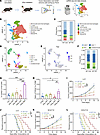 Figure 1
Radiotherapy-induced γδ T cell infiltration in the TME promotes radioresistance. (A) Schematic diagram for scRNA-seq of CD45+ immune cells isolated from mouse subcutaneous tumors. (B) UMAP plot of all cells passed quality control colored by cell identities. (C) Stacked bar plot showing the proportion of major immune cell types originating from WT Ctrl and WT RT mice. (D) UMAP plot of T cells colored by cell clusters as indicated. (E) Feature plots of the Trgc (referred to γδ T cells) expression in the T cell clusters. (F) Stacked bar plot showing the proportion of major T cell clusters originating from WT Ctrl and WT RT mice. (G) Flow cytometry analysis of γδ T cell proportions in the TME of LLC subcutaneous tumors following radiotherapy at different doses (2 Gy and 10 Gy) and time points (24 h and 96 h) (n = 6 per group). (H) Changes in the ratio of γδ T cells to αβ T cells in the TME following radiotherapy at different doses and time points (n = 5 to 6 per group). (I) Tumor growth curves of LLC subcutaneous tumors in corresponding groups (n = 6 to 8 per group). (J) Kaplan-Meier survival plot of LLC lung cancer–bearing mice in the corresponding groups (n = 6–8 per group). (K) Tumor growth curves of B16-F10 subcutaneous tumors in corresponding groups (n = 8 per group). (L) Kaplan-Meier survival plot of B16-F10 melanoma-bearing mice in the corresponding groups (n = 8 per group). *P < 0.05; **P < 0.01; ***P < 0.001. 1-way ANOVA with Tukey’s multiple comparisons test (G and H), 2-way ANOVA followed by Tukey’s multiple comparison test (I and K), Log-rank (Mantel-Cox) test (J and L).
To investigate the functional role of γδ T cells in radiosensitivity, we established subcutaneous tumor models using TCR δ chain-deficient (TCR δ–/–) and age-matched WT mice. It has been confirmed that γδ T cells were genetically ablated in TCR δ–/– mice, while αβ T cell populations remained intact. In Lewis lung cancer and B16-F10 melanoma subcutaneous tumor models, as well as orthotopic pancreatic tumor models, TCR δ–/– mice exhibited notable tumor growth inhibition and prolonged overall survival compared with WT mice following single-dose 10 Gy irradiation (Figure 1, I–L, and Supplemental Figure 2A). This radiosensitization effect was further corroborated using the 8 Gy × 3 and 2 Gy × 5 regimens, demonstrating superior tumor growth control in TCR δ–/– mice relative to WT mice (Supplemental Figure 2, B–E). These results highlight the critical role of γδ T cells in mediating tumor radioresistance.
γδ T cells in the postradiation TME are characterized by IL-17 secretion. Given the well-established role of γδ T cells exerting immunomodulatory functions through secreting pleiotropic cytokines, we performed in-depth analysis of scRNA-seq data to characterize the phenotypic and functional features of γδ T cell populations in the postradiation TME. This revealed that γδ T cells were predominantly characterized by the expression of Zbtb16, Il23r, and Il17a (Figure 2A and Supplemental Figure 3A). Further subclustering analysis identified 7 transcriptionally distinct γδ T cell subsets, among which Il17+ γδ T cells (γδT17) emerged as the dominant subpopulation following radiotherapy (Figure 2, B and C, and Supplemental Figure 3B). These compelling results are consistent with previous studies demonstrating that Zbtb16 and Il23r are essential regulators of γδ T cell differentiation and cytokine IL-17 production (14, 15). Meanwhile, we performed flow cytometry to quantify cytokine production in tumor-infiltrating γδ T cells, including IL-17, TNF-α, IFN-γ, IL-4, IL-10, and TGF-β. Among these cytokines, IL-17 exhibited the highest expression level in γδ T cells, and its production was further enhanced following radiotherapy (Figure 2, D and E, and Supplemental Figure 4, A–D). Both scRNA-seq and in vivo experimental data consistently demonstrated that IL-17–producing γδ T cells represent the predominant population in the TME after radiotherapy.
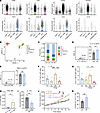 Figure 2
The γδ T cell population in the TME after radiotherapy is primarily characterized by the IL-17–producing subset. (A) Violin plots demonstrate expression of the genes that identify each T cell cluster. (B) UMAP plot of γδ T cells colored by cell clusters as indicated. (C) Stacked bar plot showing the proportion of major γδ T cells clusters originating from WT Ctrl and WT RT mice. (D) Representative flow cytometry plots and statistical analysis of IL-17 expression in γδ T cells from LLC subcutaneous tumors after radiotherapy (n = 6 per group). (E) Representative flow cytometry plots and statistical analysis of TNF-α expression in γδ T cells from LLC subcutaneous tumors after radiotherapy (n = 6 per group). (F) Flow cytometry analysis of IL-17+ γδ T cell proportions in the TME of LLC subcutaneous tumors following radiotherapy at different time points (n = 6–7 per group). (G) Flow cytometry analysis of IL-17+ αβ T cell proportions in the TME of LLC subcutaneous tumors following radiotherapy at different time points (n = 6–7 per group). (H) Proportions of IL-17+ γδ T cells and IL-17+ αβ T cells in the TME at 96 hours after 10 Gy radiotherapy (n = 7 per group). (I) IL-17A concentrations in tumor interstitial fluid from WT RT and TCRδ–/– RT group mice measured by ELISA (n = 5 per group). (J) Tumor growth curves of LLC subcutaneous tumors in corresponding groups (n = 7 to 8 per group). (K) Flow cytometry analysis of TCR Vγ4+ γδ T cell proportions of LLC subcutaneous tumors following radiotherapy (n = 5 per group). *P < 0.05; **P < 0.01; ***P < 0.001. Unpaired 2-tailed Student’s t test (D, E, H, I, and K), 1-way ANOVA with Tukey’s multiple comparisons test (F and G), 2-way ANOVA followed by Tukey’s multiple comparison test (J).
IL-17 is a prevalent proinflammatory cytokine that plays crucial roles in cancer progression and immune regulation (16). While CD4+ T helper cells (Th17) are traditionally considered the major source of IL-17 alongside γδT17 cells, we sought to identify the primary cellular source of IL-17 in the irradiated TME. We compared the infiltration dynamics of IL-17+ γδ T cells and IL-17+ αβ T cells at 3 distinct time points (24 hours, 96 hours, and 1 week) following 10 Gy or 2 Gy × 5 fractions irradiation. Notably, both cell populations reached their peak infiltration levels at 96 hours postirradiation, while IL-17+ γδ T cells substantially outnumbered IL-17+ αβ T cells at this time point (Figure 2, F–H, and Supplemental Figure 4, E–G). Notably, although the proportion of IL-17+ γδ T cells within the TME was reduced at 1 week postradiotherapy, immunological analysis of the TME at this time point revealed that TCRδ–/– mice exhibited markedly elevated proportions of CD4+ T cells, CD8+ T cells, IFN-γ+ CD4+ T cells, and IFN-γ+ CD8+ T cells, alongside diminished proportions of Tregs and MDSCs, compared with WT mice (Supplemental Figure 4, H–N). This suggested that γδ T cells induced durable immunosuppressive and protumor effects following radiotherapy. Concurrently, the proportion of γ-H2AX+ cells in the tumor tissues was substantially decreased (Supplemental Figure 4O), indicating that most cells had completed the DNA damage repair process. This resolution of DNA damage may account for the observed reduction in γδ T cell frequency in the TME.
Cytokine profiling revealed that, while αβ T cells remained the primary source of IFNγ, γδ T cells constituted the dominant IL-17–producing population in the irradiated TME (Supplemental Figure 5A). ELISA analysis revealed a notable reduction (> 50%) in IL-17A levels in the tumor interstitial fluid of TCRδ–/– mice compared with WT controls after radiotherapy (Figure 2I), further supporting the notion that γδ T cells were the dominant cell population responsible for IL-17 secretion in the TME following radiotherapy. To determine whether IL-17 secreted by γδ T cells mediates radiosensitization, we administered IL-17A–neutralizing antibodies to WT and TCRδ–/– mice. IL-17A blockade enhanced radiosensitivity and prolonged postradiotherapy survival in WT mice, whereas such effect was absent in TCRδ–/– mice (Figure 2J and Supplemental Figure 5B). Previous studies have reported that, in murine γδ T cells, Vγ4 and Vγ6 T cell subsets are predominantly associated with IL-17 production (17). Therefore, to further delineate the predominant γ chain subtypes of these γδ T cells, we performed flow cytometry and revealed that Vγ4+ γδ T cells constituted the predominant γδ T cell population in the irradiated TME (Figure 2K and Supplemental Figure 5C).
γδ T cells attenuate radiosensitivity via MDSCs recruitment and T cell suppression. To elucidate the potential mechanisms underlying γδ T cell–mediated radioresistance, we performed scRNA-seq analysis on CD45+ immune cells from Lewis subcutaneous tumors in WT mice and TCRδ–/– mice after 10 Gy irradiation (TCRδ–/– RT vs WT RT). TCRδ–/– mice exhibited reduced monocyte and macrophage enrichment compared with WT mice (Figure 3A). Thus, we further distinguished myeloid-derived cells into 13 distinct subtypes based on differential gene expression (Supplemental Figure 6A). Compared with TCRδ–/– mice, WT mice showed increased macrophages and MDSC infiltration but reduced neutrophils and dendritic cells (DCs) accumulation post-irradiation (Figure 3, B and C). Flow cytometric analysis confirmed increased proportions of myeloid cell populations, including macrophages (CD11b+ F4/80+), M-MDSCs (Ly6C+ Ly6G–), and PMN-MDSCs (Ly6G+ Ly6C–) in WT mice versus TCRδ–/– mice (Figure 3, D–G, and Supplemental Figure 6B). Based on the recognized role of MDSCs in suppressing antitumor immunity (18), we speculated that elevated γδ T cells after radiation mediate radioresistance through facilitating the recruitment of MDSCs within the TME. RT-qPCR analysis of subcutaneous tumors revealed marked upregulation of multiple MDSC-associated chemokines, including CCL2 and CCL3, in irradiated WT mice compared with TCRδ–/– mice (Figure 3H), suggesting that γδ T cells may exert their functional effects through MDSC recruitment.
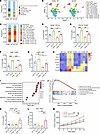 Figure 3
γδ T cell–mediated suppression of radiosensitivity through MDSC recruitment and T cell inhibition. (A) Stacked bar plot showing the proportion of major immune cell types originating from TCRδ–/– RT and WT RT mice. (B) UMAP plot of monocytes and macrophages colored by cell clusters as indicated. (C) Stacked bar plot showing the proportion of major monocyte and macrophage clusters originating from TCRδ–/– RT and WT RT mice. (D–G) Flow cytometry analysis of CD45+CD11b+ myeloid cell (D), CD11b+F4/80+ macrophage (E), Ly6C+Ly6G– M-MDSC (F), and Ly6G+Ly6C– PMN-MDSC (G) proportions in the TME of LLC subcutaneous tumors in corresponding groups (n = 5–6 per group). (H) Heatmap of MDSC-related chemokine expression from LLC subcutaneous tumors in corresponding groups. Data presented as the mean of 3 biological replicates. (I) GO enrichment analysis of differentially expressed genes in LLC subcutaneous tumors from TCRδ–/– RT and WT RT mice. (J) GSEA enrichment analysis of differentially expressed genes in LLC subcutaneous tumors from TCRδ–/– RT and WT RT mice. (K and L) Flow cytometry analysis of CD45+CD3+ T cell (K) and CD4+IFNγ+ Th1 cell (L) proportions in the TME of LLC subcutaneous tumors in corresponding groups (n = 6 per group). (M) Tumor growth curves of LLC subcutaneous tumors in corresponding groups (n = 7 per group). *P < 0.05; **P < 0.01; ***P < 0.001. 1-way ANOVA with Tukey’s multiple comparisons test (D–G, K, and L), 2-way ANOVA followed by Tukey’s multiple comparison test (M).
Furthermore, Gene Ontology (GO) enrichment analysis of differentially expressed genes between irradiated subcutaneous tumors from TCRδ–/– and WT mice revealed enrichment of T cell–related immune response and immune activation pathways, such as “Regulation of immune effector process”, “T cell differentiation”, “Lymphocyte-mediated immunity”, and “α β T cell activation” (Figure 3I). Consistently, GSEA demonstrated the upregulation of immunoregulatory pathways in TCRδ–/– subcutaneous tumors, including “Adaptive immune response”, “Immune response regulating signaling pathway”, “Lymphocyte mediated immunity” and “T cell activation” (Figure 3J). In subcutaneous tumor models of WT and TCRδ–/– mice, we quantified tumor-infiltrating T cell populations using flow cytometry and found that, compared with WT mice, TCRδ–/– mice exhibited substantially increased T cell infiltration, particularly CD3+CD4+IFNγ+ Th1 cells, in the TME following radiotherapy (Figure 3, K and L, and Supplemental Figure 6C). In contrast, CD3+CD8+GrzB+ T cell and CD4+FoxP3+ Treg proportions remained comparable between 2 groups (Supplemental Figure 6, D and E). Finally, to determine whether γδ T cell–mediated radioresistance is MDSC dependent, we performed in vivo MDSCs depletion experiments via Gr-1 antibody in tumor-bearing WT and TCRδ–/– mice. The clearance efficiency of the Gr-1 antibody in spleen and peripheral blood was more than 95% (Supplemental Figure 7, A and B), and tumor growth curves revealed that MDSC depletion enhanced radiosensitivity and prolonged survival in WT mice, while no such effect was observed in TCRδ–/– mice (Figure 3M and Supplemental Figure 7C). Collectively, these results suggested that γδ T cells promote radioresistance by recruiting MDSCs, which subsequently suppress the T cell–mediated antitumor immune responses.
Radiation-induced macrophage-derived CCL20 facilitates γδ T cell recruitment. To elucidate mechanisms responsible for radiation-induced γδ T cell infiltration, we quantified the expression of multiple T cell–related chemokines in Lewis subcutaneous tumors following 10 Gy irradiation. RT-qPCR analysis identified Ccl20 as the most pronouncedly upregulated chemokine after radiation (Figure 4A). It has been reported that CCL20-CCR6 axis was essential for IL-17A–producing γδ T cell recruitment (19). Therefore, we utilized CCL20 neutralizing antibody combined with radiotherapy in WT mice and found CCL20 blockade effectively reversed radiation-induced γδ T cell accumulation in the TME (Figure 4B), establishing CCL20 as a critical driver of γδ T cell recruitment in irradiated tumors. Meanwhile, CCL20 neutralization also attenuated M-MDSC and PMN-MDSC accumulation after radiation (Figure 4C and Supplemental Figure 8A).
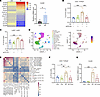 Figure 4
Macrophage-derived chemokine CCL20 promotes γδ T cell recruitment. (A) Left panel, heatmap of T cell–related chemokines expression from LLC subcutaneous tumors after radiotherapy. Right panel, relative mRNA expression of Ccl20 from LLC subcutaneous tumors in corresponding groups (n = 4–6 per group). (B and C) Flow cytometry analysis of γδ T cell (B) and Ly6C+Ly6G– M-MDSC (C) proportions in the TME of LLC subcutaneous tumors in corresponding groups (n = 8 per group). (D) Left panel, UMAP plot of major cell clusters from human lung cancer samples (GSE127465) colored by cell identities. Right panel, feature plots of the CCL20 expression in the major cell clusters. (E) Correlation between monocyte and macrophage types (estimated from matched scRNA-seq) and γδ T cell clusters. (F) Flow cytometry analysis of γδ T cell proportions in the TME of LLC subcutaneous tumors after macrophage clearance (n = 6 per group). (G) Relative mRNA expression of Ccl20 from LLC subcutaneous tumors after macrophage clearance (n = 4–5 per group). *P < 0.05; **P < 0.01; ***P < 0.001. Unpaired 2-tailed Student’s t test (A), 1-way ANOVA with Tukey’s multiple comparisons test (B, C, F, and G).
Given the critical role of CCL20 in mediating γδ T cell recruitment, we next sought to determine its major cellular origin after radiation. Integrated analysis of scRNA-seq data from human lung cancer tissues revealed that macrophages displayed marked enrichment of CCL20 transcripts (20), exhibiting higher expression levels compared with other cell subsets (Figure 4D and Supplemental Figure 8B). Cell-cell interaction analysis based on our previous scRNA-seq data demonstrated that macrophages represent the predominant interacting populations with γδ T cells in irradiated WT mice, consistent with their role as primary CCL20 producers (Figure 4E). Additionally, we employed clodronate liposomes (Clo) in vivo to systemically deplete macrophages; flow cytometry analysis demonstrated that Clo-mediated macrophage ablation markedly attenuated radiation-induced γδ T cell accumulation in the TME (Figure 4F and Supplemental Figure 8, C and D). Concomitantly, RT-PCR analysis revealed that macrophage depletion markedly reduced Ccl20 expression levels in irradiated subcutaneous tumors (Figure 4G). Taken together, the aforementioned results suggested that macrophage-secreted chemokine CCL20 in the irradiated TIME plays a pivotal role in mediating γδ T cell recruitment.
Radiated tumor cell–released RT-MPs leads to Ccl20 upregulation in macrophages via cGAS-STING/NF-κB signaling pathway. To unravel the potential mechanisms driving radiation-induced macrophage CCL20 upregulation, we investigated whether radiation directly enhances Ccl20 expression in macrophages. RT-qPCR analysis revealed that direct 10 Gy irradiation failed to upregulate Ccl20 expression in bone marrow–derived macrophages (BMDMs) in vitro (Figure 5A), suggesting that microenvironmental factors or cell-cell interactions may indirectly regulate macrophage gene expression. Given that tumor cells represent the predominant cellular component of the TME, we hypothesized that radiation-induced tumor cell–derived factors might mediate this indirect regulation. Using conditioned medium (CM) from 10 Gy–irradiated tumor cells, we observed considerable upregulation of Ccl20 expression in macrophages compared with control CM (Figure 5B). To further identify the specific components in the supernatant of irradiated tumor cells that mediate this effect, we focused on extracellular vesicles (EVs) based on their crucial roles in mediating intercellular communication (21). Since our previous studies have demonstrated and characterized that irradiated tumor cell–derived microparticles (RT-MPs) exhibit potent tumoricidal and immunostimulatory properties (22), we wondered whether RT-MPs mediate CCL20 secretion by macrophages, thereby promoting γδ T cell infiltration. We isolated RT-MPs from irradiated tumor cell supernatants and found that RT-MPs upregulated Ccl20 expression in BMDMs, whereas RT-MP-depleted conditioned medium lost this capacity (Figure 5C and Supplemental Figure 9A). Subsequently, we employed the transwell chemotaxis assays in vitro, with spleen single cells seeded in the upper chamber of a 3 μm transwell insert and BMDMs placed in the lower chamber. After 24 hours of coculture, we observed that RT-MPs markedly enhanced the capacity of macrophages to recruit γδ T cells, but the effect was attenuated by CCL20 neutralization (Figure 5D). Furthermore, direct intratumoral injection of RT-MPs pronouncedly enhanced γδ T cell infiltration within the TME (Supplemental Figure 9B).
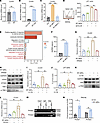 Figure 5
RT-MPs upregulate Ccl20 expression in macrophages through cGAS-STING/NF-κB pathway activation. (A) Relative mRNA expression of Ccl20 in BMDMs after 10 Gy irradiation for 24 hours. (B) Relative mRNA expression of Ccl20 in BMDMs treated with conditioned medium (CM) from control or irradiated tumor cells. (C) Relative mRNA expression of Ccl20 in BMDMs treated with RT-MPs or irradiated tumor cell–derived CM depleted of RT-MPs. (D) Left panel, pattern diagram of transwell migration assay. Right panel, flow cytometry analysis of γδ T cell migration to the lower chamber in corresponding treatment conditions. (E) GO enrichment analysis of differentially expressed genes in LLC subcutaneous tumors from WT RT and WT Ctrl mice. (F) Quantitative measurement of dsDNA content in RT-MPs and Ctrl-MPs. (G) Relative mRNA expression of Ccl20 in BMDMs treated with RT-MPs or dsDNA-depleted RT-MPs. (H) Representative Western blot images showing protein expression levels of cGAS, STING, TBK1, and p-TBK1 in BMDMs. (I) Relative mRNA expression of Ccl20 in BMDMs treated with RT-MPs or the STING inhibitor C176. (J) Flow cytometry analysis of γδ T cell proportions in the TME of LLC subcutaneous tumors in corresponding groups (n = 6 per group). (K) Representative Western blot images showing protein expression levels of P65 and p-P65 in BMDMs. (L) Relative mRNA expression of Ccl20 in BMDMs treated with RT-MPs or the NF-κB pathway inhibitor TPCA1. (M and N) ChIP assay of P65 in RT-MP–treated BMDMs. Representative gel electrophoresis results are shown in M. P65 binding to the Ccl20 promoter region is quantified by qPCR, with results expressed as fold enrichment in site-specific occupancy relative to the control (N). *P < 0.05; **P < 0.01; ***P < 0.001. Unpaired 2-tailed Student’s t test (A, B, F, and N), 1-way ANOVA with Tukey’s multiple comparisons test (C, D, G, I, J, and L).
Mechanistically, GO enrichment analysis of differentially expressed genes between irradiated and control subcutaneous tumors in WT mice revealed enrichment of “intracellular receptor signaling pathway”, “regulation of NIK/NF-κB signaling”, and “cytoplasmic pattern recognition receptor (PRR) signaling pathway” (Figure 5E). It has been well established that irradiation-induced DNA double-strand breaks (DSBs) activate PRRs, such as cyclic GMP-AMP synthase (cGAS), through cytoplasmic DNA fragment release, thereby regulating antitumor immunity (23). Therefore, we quantified the dsDNA levels and observed roughly a 3-fold increase in dsDNA content in RT-MPs compared with microparticles from nonirradiated tumor cells (Figure 5F and Supplemental Figure 9C). Taking these findings into account, we hypothesized that dsDNA encapsulated within RT-MPs activates the cGAS-STING pathway in macrophages, promoting CCL20 upregulation. DNase I–mediated depletion of dsDNA in RT-MPs markedly attenuated their capacity to upregulate Ccl20 expression in macrophages (Figure 5G and Supplemental Figure 9, D and E). Consistent with this finding, Western blot analysis demonstrated that RT-MPs robustly activated the cGAS-STING signaling pathway in macrophages, while DNase I pretreatment completely reversed this activation (Figure 5H and Supplemental Figure 9F). Moreover, STING inhibitor C176 or genetic knockdown of STING via siRNA transfection in macrophages substantially attenuated RT-MP–induced Ccl20 upregulation (Figure 5I and Supplemental Figure 9, G–I). In vivo administration of C176 combined with radiotherapy reduced the proportions of tumor-infiltrating γδ T cells (Figure 5J). However, C176 did not markedly alter the proportions of M-MDSCs and PMN-MDSCs after radiotherapy, which may be related to the prominent role of cGAS-STING pathway in radiation-induced adaptive immune activation (3) (Supplemental Figure 9, J and K).
Activation of the cGAS-STING pathway through cytosolic DNA sensing has been shown to trigger downstream NF-κB signaling, thereby amplifying inflammatory responses (24). Therefore, we hypothesized that RT-MPs might regulate macrophage Ccl20 expression through NF-κB activation downstream of cGAS-STING. Western blot analysis confirmed that RT-MPs activated the NF-κB pathway in macrophages, as evidenced by increased phosphorylation of P65 at Ser468. Both STING inhibitor C176 and genetic STING knockdown markedly attenuated RT-MP–induced P65 phosphorylation (Figure 5K and Supplemental Figure 9, L and M). Meanwhile, either NF-κB inhibitor TPCA-1 or siRNA-mediated P65 knockdown reversed RT-MP–driven Ccl20 upregulation in macrophages (Figure 5L and Supplemental Figure 9, N–P). Upon activation of the NF-κB pathway, the P65 subunit typically translocates to the nucleus, where it functions as the transcription factor to regulate gene expression (25). P65 chromatin immunoprecipitation (ChIP) sequencing data of macrophages in the ENCODE project suggested a potential P65 binding sites around the promotor region of Ccl20 (Supplemental Figure 9Q). ChIP assay of P65 followed by DNA gel electrophoresis and quantitative PCR identified that RT-MP treatment markedly enhanced the P65 binding to the promoter regions of Ccl20 in BMDMs (Figure 5, M and N), directly linking NF-κB activation to Ccl20 transcriptional regulation. In a word, these results suggested that RT-MP–encapsulated dsDNA triggers cGAS-STING/NF-κB signaling axis, leading to transcriptional activation of Ccl20 in macrophages.
Radiation-induced γδ T cell infiltration impairs the efficacy of radiotherapy combined with immunotherapy. To validate our findings in clinical specimens, we analyzed the publicly available transcriptomic sequencing data from Piper et al., comprising pre- and postneoadjuvant radiotherapy tissues from patients with pancreatic ductal adenocarcinoma (PDAC) (26). The analysis revealed marked upregulation of γδ T cell–related gene expression profiles in postradiotherapy tumor tissues (Figure 6A). In addition, we collected paired peripheral blood samples from patients with non-small cell lung cancer (NSCLC) before and after radiotherapy. Analysis of peripheral blood mononuclear cells (PBMCs) by RT-qPCR demonstrated considerable upregulation of γδ T cell–specific genes (TRDV2 and TRGV9) after radiotherapy (Figure 6B). Immunofluorescence staining confirmed increased proportions of IL-17A+ γδ T cells in postradiotherapy PBMCs (Supplemental Figure 10A). Consistent with these findings, ELISA measurements showed markedly elevated serum IL-17A levels in patients after radiotherapy (Figure 6C). Similarly, we detected notable upregulation of γδ T cell–related gene (Tcrvg4) in PBMCs of irradiated mice (Figure 6D). These coordinated changes collectively support radiation-induced γδT17 cell infiltration.
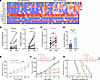 Figure 6
Clinical relevance between γδ T cells and radiotherapy. (A) Transcriptomic analysis of pancreatic cancer patient samples shows increased expression of TCR-encoding genes in γδ T cells after radiotherapy (GSE225767). (B) Relative mRNA expression of TRDV2 and TRGV9 in peripheral blood PBMCs from patients with lung cancer before and after radiotherapy (n = 10 paired samples). (C) IL-17A concentrations in plasma from lung cancer patients before and after radiotherapy measured by ELISA (n = 19 paired samples). (D) Relative mRNA expression of Tcrvg4 in peripheral blood PBMCs from LLC subcutaneous tumor-bearing mice after radiotherapy (n = 6 per group). (E) Tumor growth curves of LLC subcutaneous tumors in corresponding groups with anti-PD-1 treatment (n = 6–9 per group). (F) Tumor growth curves of LLC subcutaneous tumors in corresponding groups (n = 6–7 per group). (G) Kaplan-Meier survival plot of LLC lung cancer-bearing mice in the corresponding groups (n = 6–7 per group). *P < 0.05; **P < 0.01; ***P < 0.001. Paired 2-tailed t test (B and C), Unpaired 2-tailed Student’s t test (D), 2-way ANOVA (E and F), Log-rank (Mantel-Cox) test (G).
Based on our previous findings that γδ T cells exhibit immunosuppressive properties and mediate radioresistance, we further investigated whether γδ T cell deletion could potentiate the therapeutic efficacy of immune checkpoint blockade (ICB) monotherapy or its combination with radiotherapy. While anti–PD-1 monotherapy demonstrated similar antitumor effects in WT and TCRδ–/– mice (Figure 6E), flow cytometry analysis of the TME showed comparable infiltration levels of total γδ T cells, IL-17–producing γδ T cells, and IFN-γ–producing γδ T cells between anti-PD-1–treated and untreated controls (Supplemental Figure 10B). Strikingly, in the combination therapy group receiving both radiotherapy and anti–PD-1 treatment, TCRδ–/– mice exhibited markedly slower tumor growth and prolonged survival compared with WT mice (Figure 6, F and G), suggesting that γδ T cell ablation enhances the therapeutic efficacy of combined radioimmunotherapy.


Copyright © 2025 American Society for Clinical Investigation
ISSN: 0021-9738 (print), 1558-8238 (online)