
Advertisement
Research ArticleEndocrinologyGenetics
Open Access |  10.1172/JCI187044
Stimulated thyroid hormone synthesis machinery drives thyrocyte cell death independent of ER stress
Crystal Young,1,2 Xiaohan Zhang,1 Xiaofan Wang,1 Aaron P. Kellogg,1 Kevin Pena,1 August Z. Cumming,1 Xiao-Hui Liao,3 Dennis Larkin,1 Hao Zhang,1 Emma Mastroianni,1 Helmut Grasberger,4 Samuel Refetoff,4,5 and Peter Arvan1,2
1Division of Metabolism, Endocrinology & Diabetes and
2Department of Molecular & Integrative Physiology, University of Michigan, Ann Arbor, Michigan, USA.
3Department of Medicine, The University of Chicago, Chicago, Illinois, USA.
4Department of Medicine, Division of Gastroenterology, University of Michigan, Ann Arbor, Michigan, USA.
5Department of Pediatrics and Committee on Genetics, The University of Chicago, Chicago, Illinois, USA.
Address correspondence to: Peter Arvan, Division of Metabolism, Endocrinology & Diabetes, University of Michigan, Brehm Tower rm 5112, 1000 Wall Street, Ann Arbor, Michigan 48105, USA. Phone: 734.936.5505; Email: parvan@umich.edu.
Authorship note: CY and XZ contributed equally to this work.
Find articles by
Young, C.
in:
PubMed
|
Google Scholar
|

1Division of Metabolism, Endocrinology & Diabetes and
2Department of Molecular & Integrative Physiology, University of Michigan, Ann Arbor, Michigan, USA.
3Department of Medicine, The University of Chicago, Chicago, Illinois, USA.
4Department of Medicine, Division of Gastroenterology, University of Michigan, Ann Arbor, Michigan, USA.
5Department of Pediatrics and Committee on Genetics, The University of Chicago, Chicago, Illinois, USA.
Address correspondence to: Peter Arvan, Division of Metabolism, Endocrinology & Diabetes, University of Michigan, Brehm Tower rm 5112, 1000 Wall Street, Ann Arbor, Michigan 48105, USA. Phone: 734.936.5505; Email: parvan@umich.edu.
Authorship note: CY and XZ contributed equally to this work.
Find articles by
Zhang, X.
in:
PubMed
|
Google Scholar
|
1Division of Metabolism, Endocrinology & Diabetes and
2Department of Molecular & Integrative Physiology, University of Michigan, Ann Arbor, Michigan, USA.
3Department of Medicine, The University of Chicago, Chicago, Illinois, USA.
4Department of Medicine, Division of Gastroenterology, University of Michigan, Ann Arbor, Michigan, USA.
5Department of Pediatrics and Committee on Genetics, The University of Chicago, Chicago, Illinois, USA.
Address correspondence to: Peter Arvan, Division of Metabolism, Endocrinology & Diabetes, University of Michigan, Brehm Tower rm 5112, 1000 Wall Street, Ann Arbor, Michigan 48105, USA. Phone: 734.936.5505; Email: parvan@umich.edu.
Authorship note: CY and XZ contributed equally to this work.
Find articles by Wang, X. in: PubMed | Google Scholar
1Division of Metabolism, Endocrinology & Diabetes and
2Department of Molecular & Integrative Physiology, University of Michigan, Ann Arbor, Michigan, USA.
3Department of Medicine, The University of Chicago, Chicago, Illinois, USA.
4Department of Medicine, Division of Gastroenterology, University of Michigan, Ann Arbor, Michigan, USA.
5Department of Pediatrics and Committee on Genetics, The University of Chicago, Chicago, Illinois, USA.
Address correspondence to: Peter Arvan, Division of Metabolism, Endocrinology & Diabetes, University of Michigan, Brehm Tower rm 5112, 1000 Wall Street, Ann Arbor, Michigan 48105, USA. Phone: 734.936.5505; Email: parvan@umich.edu.
Authorship note: CY and XZ contributed equally to this work.
Find articles by Kellogg, A. in: PubMed | Google Scholar
1Division of Metabolism, Endocrinology & Diabetes and
2Department of Molecular & Integrative Physiology, University of Michigan, Ann Arbor, Michigan, USA.
3Department of Medicine, The University of Chicago, Chicago, Illinois, USA.
4Department of Medicine, Division of Gastroenterology, University of Michigan, Ann Arbor, Michigan, USA.
5Department of Pediatrics and Committee on Genetics, The University of Chicago, Chicago, Illinois, USA.
Address correspondence to: Peter Arvan, Division of Metabolism, Endocrinology & Diabetes, University of Michigan, Brehm Tower rm 5112, 1000 Wall Street, Ann Arbor, Michigan 48105, USA. Phone: 734.936.5505; Email: parvan@umich.edu.
Authorship note: CY and XZ contributed equally to this work.
Find articles by Pena, K. in: PubMed | Google Scholar
1Division of Metabolism, Endocrinology & Diabetes and
2Department of Molecular & Integrative Physiology, University of Michigan, Ann Arbor, Michigan, USA.
3Department of Medicine, The University of Chicago, Chicago, Illinois, USA.
4Department of Medicine, Division of Gastroenterology, University of Michigan, Ann Arbor, Michigan, USA.
5Department of Pediatrics and Committee on Genetics, The University of Chicago, Chicago, Illinois, USA.
Address correspondence to: Peter Arvan, Division of Metabolism, Endocrinology & Diabetes, University of Michigan, Brehm Tower rm 5112, 1000 Wall Street, Ann Arbor, Michigan 48105, USA. Phone: 734.936.5505; Email: parvan@umich.edu.
Authorship note: CY and XZ contributed equally to this work.
Find articles by Cumming, A. in: PubMed | Google Scholar
1Division of Metabolism, Endocrinology & Diabetes and
2Department of Molecular & Integrative Physiology, University of Michigan, Ann Arbor, Michigan, USA.
3Department of Medicine, The University of Chicago, Chicago, Illinois, USA.
4Department of Medicine, Division of Gastroenterology, University of Michigan, Ann Arbor, Michigan, USA.
5Department of Pediatrics and Committee on Genetics, The University of Chicago, Chicago, Illinois, USA.
Address correspondence to: Peter Arvan, Division of Metabolism, Endocrinology & Diabetes, University of Michigan, Brehm Tower rm 5112, 1000 Wall Street, Ann Arbor, Michigan 48105, USA. Phone: 734.936.5505; Email: parvan@umich.edu.
Authorship note: CY and XZ contributed equally to this work.
Find articles by Liao, X. in: PubMed | Google Scholar
1Division of Metabolism, Endocrinology & Diabetes and
2Department of Molecular & Integrative Physiology, University of Michigan, Ann Arbor, Michigan, USA.
3Department of Medicine, The University of Chicago, Chicago, Illinois, USA.
4Department of Medicine, Division of Gastroenterology, University of Michigan, Ann Arbor, Michigan, USA.
5Department of Pediatrics and Committee on Genetics, The University of Chicago, Chicago, Illinois, USA.
Address correspondence to: Peter Arvan, Division of Metabolism, Endocrinology & Diabetes, University of Michigan, Brehm Tower rm 5112, 1000 Wall Street, Ann Arbor, Michigan 48105, USA. Phone: 734.936.5505; Email: parvan@umich.edu.
Authorship note: CY and XZ contributed equally to this work.
Find articles by Larkin, D. in: PubMed | Google Scholar
1Division of Metabolism, Endocrinology & Diabetes and
2Department of Molecular & Integrative Physiology, University of Michigan, Ann Arbor, Michigan, USA.
3Department of Medicine, The University of Chicago, Chicago, Illinois, USA.
4Department of Medicine, Division of Gastroenterology, University of Michigan, Ann Arbor, Michigan, USA.
5Department of Pediatrics and Committee on Genetics, The University of Chicago, Chicago, Illinois, USA.
Address correspondence to: Peter Arvan, Division of Metabolism, Endocrinology & Diabetes, University of Michigan, Brehm Tower rm 5112, 1000 Wall Street, Ann Arbor, Michigan 48105, USA. Phone: 734.936.5505; Email: parvan@umich.edu.
Authorship note: CY and XZ contributed equally to this work.
Find articles by Zhang, H. in: PubMed | Google Scholar
1Division of Metabolism, Endocrinology & Diabetes and
2Department of Molecular & Integrative Physiology, University of Michigan, Ann Arbor, Michigan, USA.
3Department of Medicine, The University of Chicago, Chicago, Illinois, USA.
4Department of Medicine, Division of Gastroenterology, University of Michigan, Ann Arbor, Michigan, USA.
5Department of Pediatrics and Committee on Genetics, The University of Chicago, Chicago, Illinois, USA.
Address correspondence to: Peter Arvan, Division of Metabolism, Endocrinology & Diabetes, University of Michigan, Brehm Tower rm 5112, 1000 Wall Street, Ann Arbor, Michigan 48105, USA. Phone: 734.936.5505; Email: parvan@umich.edu.
Authorship note: CY and XZ contributed equally to this work.
Find articles by Mastroianni, E. in: PubMed | Google Scholar
1Division of Metabolism, Endocrinology & Diabetes and
2Department of Molecular & Integrative Physiology, University of Michigan, Ann Arbor, Michigan, USA.
3Department of Medicine, The University of Chicago, Chicago, Illinois, USA.
4Department of Medicine, Division of Gastroenterology, University of Michigan, Ann Arbor, Michigan, USA.
5Department of Pediatrics and Committee on Genetics, The University of Chicago, Chicago, Illinois, USA.
Address correspondence to: Peter Arvan, Division of Metabolism, Endocrinology & Diabetes, University of Michigan, Brehm Tower rm 5112, 1000 Wall Street, Ann Arbor, Michigan 48105, USA. Phone: 734.936.5505; Email: parvan@umich.edu.
Authorship note: CY and XZ contributed equally to this work.
Find articles by Grasberger, H. in: PubMed | Google Scholar
1Division of Metabolism, Endocrinology & Diabetes and
2Department of Molecular & Integrative Physiology, University of Michigan, Ann Arbor, Michigan, USA.
3Department of Medicine, The University of Chicago, Chicago, Illinois, USA.
4Department of Medicine, Division of Gastroenterology, University of Michigan, Ann Arbor, Michigan, USA.
5Department of Pediatrics and Committee on Genetics, The University of Chicago, Chicago, Illinois, USA.
Address correspondence to: Peter Arvan, Division of Metabolism, Endocrinology & Diabetes, University of Michigan, Brehm Tower rm 5112, 1000 Wall Street, Ann Arbor, Michigan 48105, USA. Phone: 734.936.5505; Email: parvan@umich.edu.
Authorship note: CY and XZ contributed equally to this work.
Find articles by
Refetoff, S.
in:
PubMed
|
Google Scholar
|
1Division of Metabolism, Endocrinology & Diabetes and
2Department of Molecular & Integrative Physiology, University of Michigan, Ann Arbor, Michigan, USA.
3Department of Medicine, The University of Chicago, Chicago, Illinois, USA.
4Department of Medicine, Division of Gastroenterology, University of Michigan, Ann Arbor, Michigan, USA.
5Department of Pediatrics and Committee on Genetics, The University of Chicago, Chicago, Illinois, USA.
Address correspondence to: Peter Arvan, Division of Metabolism, Endocrinology & Diabetes, University of Michigan, Brehm Tower rm 5112, 1000 Wall Street, Ann Arbor, Michigan 48105, USA. Phone: 734.936.5505; Email: parvan@umich.edu.
Authorship note: CY and XZ contributed equally to this work.
Find articles by
Arvan, P.
in:
PubMed
|
Google Scholar
|
Published October 14, 2025 - More info
J Clin Invest. 2025;135(24):e187044. https://doi.org/10.1172/JCI187044.
© 2025 Young et al. This work is licensed under the Creative Commons Attribution 4.0 International License. To view a copy of this license, visit http://creativecommons.org/licenses/by/4.0/.
Received: September 12, 2024; Accepted: October 10, 2025


-
Results
Generation of Tg-KO mice. We designed mice bearing deletion of Tg expression by homologous recombination (Supplemental Figure 1A; supplemental material available online with this article; https://doi.org/10.1172/JCI187044DS1), which resulted in replacement of 4.9 kB of the endogenous murine Tg gene, including removal of approximately 3 kB of Tg promoter plus 1.9 kB that includes Tg exons 1–3 (Supplemental Figure 1B). After selection of more than 100 ES colonies, we identified a suitable clone (Supplemental Figure 1, C and D). Mice generated from this clone yielded heterozygous animals that transmitted the KO allele through the germline and were then bred to homozygosity (Supplemental Figure 1E). RNA reverse-transcribed from the thyroid glands of homozygous mice yielded no detectable Tg mRNA, as measured with 11 distinct qPCR primer pairs spanning from exon 5 to exon 47 (Supplemental Figure 1F); similarly, thyroid tissue from these mice yielded no detectable TG protein by immunoblotting (Supplemental Figure 1G). Altogether, our data confirm complete absence of TG in homozygous KO mice.
Homozygous Tg-KO mice exhibited dwarfism (Figure 1A), as observed in other congenital models of hypothyroidism. Indeed, Tg-KO mice exhibited primary hypothyroidism with low circulating thyroxine levels and elevation of serum TSH to >5,000 mU/L (see Figure 1B — note that to improve fertility, homozygous pregnant mothers are treated with thyroxine, and this is continued in the presence of suckling pups in order to improve pup survival; the suckling pups may receive some thyroxine from breast milk, which may affect TSH levels in animals shortly after weaning).
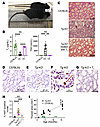 Figure 1
Phenotype of Tg-KO mice. (A) Whereas Tg+/– mice (bottom) grow like WT mice (not shown in photo), Tg–/– mice (top) are dwarfs. (B) The levels of serum total T4 and TSH in WT C57BL6/j (also referred to as TG+/+), Tg-KO (TG–/–), and Tg+/– heterozygous mice (n = 5–25 per group, 3.3 ± 1.3 mo; mean ± SD; **P < 0.01, ***P < 0.001, ****P < 0.0001; 1-way ANOVA with Tukey’s post hoc test). Each dot represents an individual animal (males, squares; females, circles). (C) Thyroid gland histology of Tg+/+ and Tg-KO mice without or with 6 weeks of exogenous T4 treatment beginning at the time of weaning (scale bar: 50 μm). (D–G) Ki67 immunohistochemistry of thyroid sections from Tg+/+ and Tg-KO mice without or with 6 weeks of exogenous T4 treatment. Scale bar: 50 μm (D, E, and G); 10 μm (F). (H) Quantitation of Ki67-positive nuclei as a percentage of total nuclei in thyroid images from Tg+/+ and Tg-KO mice without or with 6 weeks of exogenous T4 treatment (mean ± SD, ***P < 0.001, ****P < 0.0001 by 1-way ANOVA with Tukey’s post hoc test). Each color represents a different animal; each point is an independent thyroid section image (males, squares; females, circles). (I) Thyroid gland size as a function of age (males, squares; females, circles; the linear regression combines animals of both sexes).
The thyroid glands of Tg-KO and heterozygous mice. Histologically, in addition to perturbation of the normally homogeneous eosinophilic staining of the thyroid follicle lumen, the thyroid glands of homozygous Tg-KO mice revealed smaller and misshapen follicles with an obvious increase in thyroid tissue cellularity — both of which tended to be remediated in animals treated with thyroxine (Figure 1C). Elevation of serum TSH in primary hypothyroidism drives thyroid cell proliferation (32, 33), including thyrocyte growth into the follicle lumen, described as (noncancerous) papillae (34). Indeed, in the thyroid tissue of postweaning Tg-KO mice, Ki67 immunostaining was markedly increased (Figure 1E vs. Figure 1D; quantified in Figure 1H). In Tg-KO weanlings, some proliferating cells could be seen to grow into the thyroid follicular lumen (Figure 1F); thyrocyte overgrowth was prevented in postweaning Tg-KO mice that were intentionally treated with thyroxine (Figure 1, G and H), and inducible reexpansion of such cells could be observed in adult animals during the weeks following reversal of TSH suppression by withdrawal of exogenous thyroxine treatment (Supplemental Figure 2). Already detectable in weanlings, the abnormal appearance of occasional cells in the thyroid follicle lumen could be observed both by DAPI staining as well as residual Pax8 protein expression (Supplemental Figure 3A). Thus, in untreated Tg-KO pups immediately upon weaning from a thyroxine-treated mother or in adult animals following withdrawal of thyroxine supplementation, thyrocyte overgrowth occurs, including entry of these cells into the lumen of thyroid follicles. Accompanying this thyrocyte proliferation was progressive goiter development (roughly 5-fold enlargement of the thyroid gland at 4 months of age with a continued increase thereafter, Figure 1I and Supplemental Figure 1H).
In TG+/– heterozygotes, animals grew to normal size (represented in Figure 1A); thyroid histology appeared normal (Figure 2A); and unlike the elevated average TSH value of Tg-KO mice (in the thousands of mU/L), circulating TSH in Tg+/– heterozygotes was ≤10 mU/L with normal circulating T4 levels (Figure 1B). Additionally, Tg+/– heterozygotes exhibited a small decrease in the thyroidal levels of the ER chaperone BiP, cochaperone p58ipk, or phosphorylated-eIF2α (Figure 2B, top; quantified in Figure 2C). In contrast, in Tg-KO mice, these ER stress markers were more markedly decreased (Figure 2B, bottom; quantified in Figure 2C), and this was also apparent upon immunofluorescence examination of BiP (Supplemental Figure 3B).
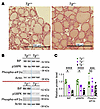 Figure 2
In the absence of TG expression, despite hypothyroidism, thyroid tissue exhibits unusually low biochemical levels of ER stress markers. (A) Thyroid gland histology of Tg+/+ control and Tg+/– heterozygous mice at average age of 6.1 months (n = 2–3 per group; scale bar: 200 μm). (B) Immunoblotting of BiP, p58IPK, and phospho-eIf2α in the thyroid glands of Tg+/+ and Tg+/– heterozygotes (top) as well as Tg+/+ and Tg–/– homozygotes (bottom; each panel comes from its own single gel/blot with intervening lanes removed). Actin is a loading control. (C) Quantitation of BiP, p58IPK, and phospho-eIf2α per unit actin, with heterozygotes and homozygotes normalized to WT C57BL6/j controls (n = 4–9 per group, mean ± SD. *P < 0.05, ***P < 0.001, ****P < 0.0001 (1-way ANOVA with Tukey’s post hoc test).
By transmission electron microscopy, we contrasted the thyroidal response to hypothyroidism in Tg-KO mice with that of WT mice treated with the peroxidase inhibitor propylthiouracil (PTU, which blocks thyroidal iodination). As expected, untreated WT mice formed spherical thyroid follicles with a central protein-filled luminal cavity, but this pattern appeared disturbed in both Tg-KO and WT mice treated with PTU (Figure 3A). When viewed at higher levels of magnification, the ER of WT thyrocytes was easily recognizable at normal levels of bioactivity; the PTU-treated hypothyroid animals exhibited dramatic ER swelling, whereas the ER in Tg-KO hypothyroid mice was far more limited in size (Figure 3B). At the highest magnification employed, the thyrocyte ER in Tg-KO mice clearly exhibited a shrunken diameter in comparison to that observed even in untreated WT thyroid tissue (Figure 3C). The foregoing data support that the expression of endogenous TG is a major contributor to physiological ER stress in normal thyrocytes (35) and further establish that the thyroidal ER stress response to hypothyroidism is greatly dependent upon Tg protein expression.
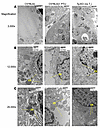 Figure 3
In the absence of TG expression, despite hypothyroidism, thyroid tissue exhibits an unusually small ER compartment, whereas hypothyroid animals that synthesize TG exhibit an expanded ER. Transmission electron microscopy of WT C57BL6/j mice untreated (2.3 months old, left column) or mice rendered hypothyroid with PTU treatment for 9 weeks (middle column) or Tg-KO mice rendered hypothyroid by removal of exogenous thyroxine treatment for 9 weeks (right column; average age 3 months; 2 animals per group). Image magnification and size bars are indicated. Original magnification, ×3,000 (A); ×12,000 (B); ×20,000 (C). The endoplasmic reticulum (ER) is identified.
Thyroid cell death in Tg-KO mice occurs in the absence of ER stress. Both hypothyroid human patients with misfolded mutant TG and animal models (14, 30) exhibit evidence of dramatic thyroidal ER stress — and recent studies reveal that this (hypothyroidism with ER stress) is accompanied by thyroid cell death (12, 36–38). However, these findings do not prove that the observed thyroid cell death requires chronic unremitting ER stress as its trigger. An alternative explanation to be excluded could be that in the setting of primary hypothyroidism caused by a failure of secreted TG (despite active thyroid hormone synthesis machinery, ref. 12, including NADPH oxidase-mediated H2O2 generation, refs. 39, 40, and thyroid peroxidase-mediated iodination, ref. 17), thyroid cell death might emerge as a secondary consequence of these potentially cytotoxic TSH-stimulated enzymatic activities, as has been previously suggested (41). In support of this alternative, WT mice that exhibited physiological levels of thyroidal ER stress that were greater than those of Tg-KO mice, exhibited no detectable thyroid cell death by TUNEL staining (Figure 4A, top; quantified in 4B). Nevertheless, in Tg-KO weanlings we already observed ongoing thyroid cell death (Supplemental Figure 4A and Figure 4A, middle; quantified in Figure 4B). Moreover, whereas nuclear material was never seen in the thyroid follicle lumen of normal animals, Tg-KO mice exhibited abnormal, positive staining for DAPI in the lumen of most thyroid follicles (Figure 4C). Euthyroid Tg+/– heterozygotes exhibited little thyroid cell death (Supplemental Figure 4B), and in Tg-KO homozygotes treated with thyroxine to suppress circulating TSH, thyroid cell death was similarly inhibited (Figure 4A, bottom; quantified in 4B). Moreover, within 5 days of withdrawal of exogenous thyroxine treatment, circulating TSH rose markedly and thyroid cell death resumed thereafter (Supplemental Figure 5, A–C). These data strongly suggest that, independent of ER stress, TSH stimulation in Tg-KO mice contributes to the thyroid cell death phenotype.
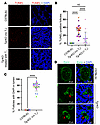 Figure 4
Thyroid cell death and discontinuity of the apical barrier in hypothyroid Tg-KO mice. (A) TUNEL labeling (red, with DAPI blue counterstain) in the thyroid sections of WT C57BL6/j and Tg-KO mice without or with 6 weeks of exogenous T4 treatment from the time of weaning (n = 4–6 per group beginning treatment at 1.2 ± 0.5 mo; scale bar: 50 μm). (B) Quantitation of TUNEL-positive follicles as a percentage of total follicles in each thyroid section image from the treatment conditions of A. Each color represents a single animal; each point is an independent image (males, squares; females, circles; mean ± SD, ****P < 0.0001; 1-way ANOVA with Tukey’s post hoc test). (C) Quantitation of follicles containing 1 or more DAPI-stained nuclear profile aberrantly located within the thyroid follicle lumen, as a percentage of total follicles in each thyroid section image from Tg+/+ and Tg–/– mice (n = 5 per group, 1.6 ± 0.9 mo). Each color represents a different animal; each point is an independent image (males, squares; females, circles; mean ± SD, ****P < 0.0001; unpaired 2-tailed Student’s t test). (D) Immunofluorescence of ezrin (green, with DAPI blue counterstain) on the apical follicular luminal border in Tg+/+ and Tg-KO mice (n = 2–5 per group, 1.6 ± 0.9 mo; scale bar: 25 μm). Red arrows highlight apical discontinuity in ezrin immunostaining.
Co-opting hormone synthesis machinery to drive thyroid cell death. Enzymatically generated reactive metabolites in the thyroid follicle lumen (such as DUOX2-generated luminal H2O2, ref. 42, as well as thyroid peroxidase-generated oxidized iodide, ref. 41) are potentially cytotoxic — and dysregulation of the thyroid gland can lead to toxic iodination of thyroid lipids and proteins and can promote cell death (43, 44). It is said that, in the thyroid gland, the first line of protection from such damage lies within the structure of the follicle itself, by providing abundant TG enclosed with these toxic constituents within the follicle lumen, surrounded by an apical plasma membrane that is relatively impermeant to these metabolites and sealed between the epithelial cells by tight junctions (45). Normally, ezrin localization can be used to define the apical boundary of thyroid follicles (46–48) (Figure 4D, top); however, in the hyperstimulated thyroid glands of Tg-KO mice we frequently observed a loss of contiguity of the ezrin-marked apical boundary (Figure 4D, red arrows in bottom panels). We reasoned that such disorganization might result in exposure of unprotected thyrocyte regions to toxic metabolites normally generated in the iodination environment.
Certainly, exogenous H2O2 added at supraphysiologic doses can kill thyrocytes (49), but in vivo, the contribution of DUOX2-generated H2O2 (42) to cytotoxicity in the thyroid gland might be explained either by a direct effect of H2O2 or by its supporting role as a cofactor in peroxidase-mediated iodination (44). To test this potential contribution of DUOX2-generated hydrogen peroxide, we compared TUNEL staining in the thyroid glands of Tg-KO mice to that observed in Duoxa-KO mice (in which part of Duoxa2 and Duoxa1 exons was deleted, resulting in thyroidal deficiency of DUOX2 and DUOX1, ref. 50). Remarkably, unlike the obvious thyroid cell death observed in Tg-KO mice (Figure 5A, middle; quantified in Figure 5B, middle), thyroid tissue of Duoxa-KO mice exhibited no thyroid follicles with positive TUNEL staining (Figure 5A, bottom; quantified in Figure 5B, middle). This cannot be explained by an insufficiently stimulated thyroid gland in Duoxa-KO mice, because circulating TSH levels in these mice were certainly not lower than those of Tg-KO mice (Figure 5B, top).
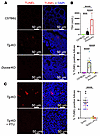 Figure 5
Thyroid cell death is inhibited by disruption upon impairment of the enzymatic machinery that leads to iodination. (A) Representative TUNEL labeling (red, with DAPI blue counterstain) in thyroid sections of WT C57BL6/j or Tg-KO mice without exogenous T4 treatment or Duoxa-KO mice (n = 3 per group, 1.2 ± 0.4 mo; scale bar: 50 μm). (B) Top: Serum TSH levels from the genotypes shown in A (n = 3–27 per group, 3.3 ± 1.4 mo. Mean ± SD; ***P < 0.001; ****P < 0.0001; 1-way ANOVA with Tukey’s post hoc test). Middle: Quantitation of TUNEL-positive follicles as a percentage of all follicles in each thyroid section image from the genotypes shown in A. Each color represents a different animal; each point is an independent image (males, squares; females, circles; mean ± SD; ****P < 0.0001; 1-way ANOVA with Tukey’s post hoc test). Bottom: Quantitation of TUNEL labeling shown in C using methodology of B (mean ± SD; ****P < 0.0001; unpaired 2-tailed Student’s t test). (C) TUNEL labeling (red, with DAPI blue counterstain) in thyroid sections of Tg-KO mice without or with 2 weeks of propylthiouracil (PTU) treatment (n = 4 per group beginning at 1.3 mo; scale bar: 50 μm).
The presented data strongly suggest that DUOX2-generated H2O2 is an essential contributor to the thyrocyte death phenotype observed in iodination-competent thyroid tissue — but the data do not clarify whether the resulting TSH-stimulated levels of H2O2 generate direct toxicity or indirectly affect toxicity by providing this essential cofactor for peroxidase-mediated iodination (39). To test this, we treated Tg-KO mice for 2 weeks with PTU. Such treatment makes primary hypothyroidism worse but, even if thyroidal H2O2 levels were to be further increased by TSH stimulation, this cannot overcome the PTU inhibition of thyroid peroxidase (51). Remarkably, 2 weeks of PTU treatment almost completely eliminated all detectable thyroid cell death (Figure 5C, quantified in Figure 5B, bottom).
Of course, enzymatically generated H2O2 alone is potentially capable of generating a cytotoxic response in 293 cells (40), and supraphysiologic doses of H2O2 are capable of even killing thyrocytes (44). Using the Cytotox-Glo assay system (52), PCCL3 thyrocytes exposed to H2O2 generation by glucose + glucose oxidase (2.7 U/L) showed little or no evidence of cell death, although a vast (>160-fold) excess of glucose oxidase (442 U/L) was sufficient to kill all PCCL3 thyrocytes within 24 hours (Supplemental Figure 6) — and this cell death cannot be inhibited by simultaneous addition of PTU even at 1,000 μM (Supplemental Figure 6).
Similar to TSH-mediated thyrocyte overgrowth with discontinuities in the apical boundary surrounding the thyroid follicle lumen (Figure 4D), PCCL3 (or FRTL5) cells do not form a tight epithelial barrier comparable to that of the thyroid in vivo (53) (and these cells are typically grown at subconfluent density); thus, PCCL3 cells are susceptible to paracellular diffusion of small molecules. However, glucose oxidase at the lower 2.7 U/L dose in the presence of lactoperoxidase ([LPO], which is known to have similar capability to TPO in supporting iodination, ref. 54) plus 100 μM sodium iodide, when combined together, triggered the appearance of Annexin V positivity within 4 hours (Figure 6A, quantified in 6B); TUNEL positivity within 8 hours (Figure 6C); and 70% cell death at 24 hours by the Cytotox-Glo assay (which quantifies release of cytoplasmic proteases into the medium, Figure 6D). In each type of assay, thyrocyte cell death was blocked either by omitting one component of the iodination system or by addition of PTU (which inhibits LPO as it inhibits TPO, ref. 55) (Figure 6). Iodination activity was confirmed by performing the same assay for 4 hours in serum-free medium using PCCL3 cells bearing CRISPR-mediated Tg-KO (35, 56) in the presence of radioiodide tracer (Supplemental Figure 7, lanes 4+5). Thus, whereas no 2 of the 3-component iodination system was sufficient to trigger enhanced cytotoxicity, iodination conditions yielded a highly significant level of thyroid cell death that was essentially completely blocked by 100 μM PTU (Figure 6), which is a condition that blocked iodination (Supplemental Figure 7, lanes 1+2) and has been reported to block peroxidase-mediated death of human thyrocytes (41). Notably, surface-positive staining with Annexin V–FITC at 4 hours seemed to begin in cells whose nuclei did not stain positively with propidium iodide (Figure 6, A and B), indicating apoptosis (57) as the cause of cell death under iodination conditions.
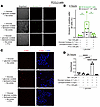 Figure 6
In vitro, moderate enzymatically generated extracellular H2O2 is not sufficient to trigger thyrocyte cell death but becomes cytotoxic when coupled to peroxidase-mediated iodination. PCCL3 cells growing in media containing 17.5 mM glucose were treated for different times under 3 distinct sets of conditions (except for time of treatment, these 3 distinct conditions were identical in all panels). (A) After a 4-hour exposure to the conditions described at left, the cells were labeled with Annexin V–FITC (green) and propidium iodide (PI, red). Scale bar: 25 μm. Identical fields were imaged under bright-field conditions (enabling counting of all cells) and epifluorescence; representative images are shown (B) Quantitation of Annexin V–positive PCCL3 thyrocytes that were concurrently positive for PI staining (dark gray symbols and bars) together with annexin V-positive cells that were negative for PI staining add up to all Annexin V–positive cells (additive green symbols and bars). The data were quantified as a fraction of all cells present from 3 independent replicate experiments (mean ± SD, *P < 0.05, 1-way ANOVA with Tukey’s post hoc test; the 3 conditions examined 30,406 cells, 22,836 cells, and 36,530 cells, respectively). (C) After an 8-hour exposure to the conditions described at left, TUNEL labeling (red, with DAPI counterstain in blue) was performed in 5 independent replicate experiments, with 5 independent fields examined for each condition in each experiment. From these 25 fields, in the presence of active lactoperoxidase, 30.6% of cells were TUNEL positive; when peroxidase was inhibited with PTU only 1.86% of cells were TUNEL positive (P < 0.001). Scale bar: 20 μm. (D) After a 24-hour exposure to the conditions indicated below the graph, the CytoTox-Glo cytotoxicity assay revealed significant cell death only in the presence of the complete iodination cocktail, inhibited by PTU (3 independent experiments, mean ± SD, ****P < 0.0001, 1-way ANOVA with Tukey’s post hoc test).
Finally, because thyrocyte cell death is blocked either by lack of any element of the 3-component iodination system, we tested whether thyroid cell death in vivo might be limited in Tg-KO animals transitioned to a low-iodide diet for 6 weeks. Because of intrathyroidal iodide recycling by DEHAL1, one might expect that iodination-mediated thyroid cell death would continue unabated in animals on a low-iodide diet, which would be expected to develop even more severe hypothyroidism (58). However, limiting iodide availability in Tg-KO mice blocked TUNEL staining and additional treatment with PTU had little additional effect on circulating TSH or inhibition of thyroid cell death (Figure 7). Altogether, these data establish that without any enhancement of ER stress, as long as the machinery supporting iodination is enzymatically active (and there is incomplete integrity of the apical barrier, as may occur in states of thyroid overgrowth), the generation of oxidized iodide, linked to “renegade iodination,” kills thyrocytes in vivo and in vitro.
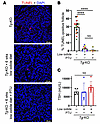 Figure 7
Thyroid cell death is suppressed in Tg-KO mice on a low-iodide diet. (A) Representative TUNEL labeling (red, with DAPI blue counterstain) in thyroid sections of Tg-KO mice fed normal chow, low-iodide diet for 6 weeks, or low-iodide diet containing PTU for 6 weeks (animals euthanized at age 2.5 ± 0.1 mo; n = 4–5 animals per group). Scale bar: 50 μm. (B) Quantitation of TUNEL-positive follicles in each thyroid section from the treatments shown (as in A). Each color represents a different animal; each point is an independent image (males, squares; females, circles; mean ± SD; ****P < 0.0001; 1-way ANOVA with Tukey’s post hoc test). (C) Circulating TSH levels from mice treated with the conditions shown in A. Each dot represents an individual animal (males, squares; females, circles).


Copyright © 2026 American Society for Clinical Investigation
ISSN: 0021-9738 (print), 1558-8238 (online)