
Advertisement
Research ArticleGeneticsOncology
Open Access |  10.1172/JCI187627
High 4E-BP1 expression associates with chromosome 8 gain and CDK4/6 sensitivity in Ewing sarcoma
Cornelius M. Funk,1,2,3 Anna C. Ehlers,1,2,3 Martin F. Orth,4 Karim Aljakouch,5,6 Jing Li,1,2,3 Tilman L.B. Hölting,1,2,3,7 Rainer Will,8 Florian H. Geyer,1,2,3 A. Katharina Ceranski,1,2,3 Franziska Willis,9,10 Endrit Vinca,1,2,3 Shunya Ohmura,1,2,3 Roland Imle,2,3,11,12,13 Jana Siebenlist,1,2,3 Angelina Yershova,1,2,3 Maximilian M.L. Knott,1,2,3,14 Felina Zahnow,1,2,3 Ana Sastre,15 Javier Alonso,16,17 Felix Sahm,18,19 Heike Peterziel,2,3,20 Anna Loboda,2,3,20,21 Martin Schneider,9,10 Ana Banito,2,3,11 Gabriel Leprivier,22 Wolfgang Hartmann,23 Uta Dirksen,24 Olaf Witt,2,3,20,25 Ina Oehme,2,3,25 Stefan M. Pfister,2,3,20,26 Laura Romero-Pérez,1,2,3,27,28 Jeroen Krijgsveld,5,21 Florencia Cidre-Aranaz,1,2,3 Thomas G.P. Grünewald,1,2,3,4,29 and Julian Musa1,2,3,9,10
1German Cancer Research Center (DKFZ) Heidelberg, Division of Translational Pediatric Sarcoma Research, Heidelberg, Germany.
2Hopp Children’s Cancer Center Heidelberg (KiTZ), Heidelberg, Germany.
3National Center for Tumor Diseases (NCT) Heidelberg, a partnership between DKFZ and Heidelberg University Hospital, Heidelberg, Germany.
4Max-Eder Research Group for Pediatric Sarcoma Biology, Institute of Pathology, Faculty of Medicine, Ludwig Maximilian University (LMU) Munich, Munich, Germany.
5DKFZ Heidelberg, Division of Proteomics of Stem Cells and Cancer, Heidelberg, Germany.
6Medical Faculty, Heidelberg University, Heidelberg, Germany.
7Department of Medical Oncology, NCT, Heidelberg, Germany.
8Cellular Tools Core Facility, DKFZ, German Cancer Consortium (DKTK), Heidelberg, Germany.
9Department of General, Visceral, and Transplant Surgery, University Hospital Heidelberg, Heidelberg, Germany.
10Department of General, Visceral, Thoracic, and Transplant Surgery, University Hospital Giessen and Marburg, Giessen, Germany.
11Soft-Tissue Sarcoma Junior Research Group, DKFZ, Heidelberg, Germany.
12Division of Pediatric Surgery, University Hospital Heidelberg, Heidelberg, Germany.
13Faculty of Biosciences, Heidelberg University, Heidelberg, Germany.
14Institute of Pathology, Faculty of Medicine, LMU Munich, Munich, Germany.
15Unidad Hemato-oncología Pediátrica, Hospital Infantil Universitario La Paz, Madrid, Spain.
16Pediatric Solid Tumour Laboratory, Institute of Rare Diseases Research (IIER) and
17Centro de Investigación Biomédica en Red de Enfermedades Raras, Instituto de Salud Carlos III (CB06/07/1009; CIBERER-ISCIII), Madrid, Spain.
18DKFZ Heidelberg, Clinical Cooperation Unit Neuropathology, Heidelberg, Germany.
19Department of Neuropathology, University Hospital Heidelberg, Heidelberg, Germany.
20Department of Pediatric Oncology, Hematology, Immunology and Pulmonology, Heidelberg University Hospital, Heidelberg, Germany.
21Faculty of Biosciences, Heidelberg University, Heidelberg, Germany.
22Institute of Neuropathology, University Hospital Düsseldorf, Medical Faculty, Heinrich Heine University, Düsseldorf, Germany.
23Division of Translational Pathology, Gerhard-Domagk-Institute of Pathology, University Hospital of Münster, Münster, Germany.
24Pediatrics III, West German Cancer Center, German Cancer Consortium site Essen, NCT site Essen, University Hospital of Essen, Essen, Germany.
25DKFZ Heidelberg, Clinical Cooperation Unit Pediatric Oncology, Germany.
26DKFZ Heidelberg, Division of Pediatric Neurooncology, Germany.
27Division of Molecular Pathology of Sarcomas, Institute of Biomedicine of Sevilla (IBiS), Virgen del Rocio University Hospital/CSIC/University of Sevilla/CIBERONC, Seville, Spain.
28Department of Normal and Pathological Cytology and Histology, School of Medicine, University of Seville, Seville, Spain.
29Institute of Pathology, Heidelberg University Hospital, Heidelberg, Germany.
Address correspondence to: Thomas G.P. Grünewald, Division Head, Division of Translational Pediatric Sarcoma Research (B410), German Cancer Research Center & Hopp-Children’s Cancer Center, Im Neuenheimer Feld 280, 69210 Heidelberg, Germany. Phone 49.6221.42.3718; Email t.gruenewald@kitz-heidelberg.de.
Authorship note: CMF and ACE are co–first authors. TGPG and JM are co–senior authors.
Find articles by Funk, C. in: PubMed | Google Scholar
1German Cancer Research Center (DKFZ) Heidelberg, Division of Translational Pediatric Sarcoma Research, Heidelberg, Germany.
2Hopp Children’s Cancer Center Heidelberg (KiTZ), Heidelberg, Germany.
3National Center for Tumor Diseases (NCT) Heidelberg, a partnership between DKFZ and Heidelberg University Hospital, Heidelberg, Germany.
4Max-Eder Research Group for Pediatric Sarcoma Biology, Institute of Pathology, Faculty of Medicine, Ludwig Maximilian University (LMU) Munich, Munich, Germany.
5DKFZ Heidelberg, Division of Proteomics of Stem Cells and Cancer, Heidelberg, Germany.
6Medical Faculty, Heidelberg University, Heidelberg, Germany.
7Department of Medical Oncology, NCT, Heidelberg, Germany.
8Cellular Tools Core Facility, DKFZ, German Cancer Consortium (DKTK), Heidelberg, Germany.
9Department of General, Visceral, and Transplant Surgery, University Hospital Heidelberg, Heidelberg, Germany.
10Department of General, Visceral, Thoracic, and Transplant Surgery, University Hospital Giessen and Marburg, Giessen, Germany.
11Soft-Tissue Sarcoma Junior Research Group, DKFZ, Heidelberg, Germany.
12Division of Pediatric Surgery, University Hospital Heidelberg, Heidelberg, Germany.
13Faculty of Biosciences, Heidelberg University, Heidelberg, Germany.
14Institute of Pathology, Faculty of Medicine, LMU Munich, Munich, Germany.
15Unidad Hemato-oncología Pediátrica, Hospital Infantil Universitario La Paz, Madrid, Spain.
16Pediatric Solid Tumour Laboratory, Institute of Rare Diseases Research (IIER) and
17Centro de Investigación Biomédica en Red de Enfermedades Raras, Instituto de Salud Carlos III (CB06/07/1009; CIBERER-ISCIII), Madrid, Spain.
18DKFZ Heidelberg, Clinical Cooperation Unit Neuropathology, Heidelberg, Germany.
19Department of Neuropathology, University Hospital Heidelberg, Heidelberg, Germany.
20Department of Pediatric Oncology, Hematology, Immunology and Pulmonology, Heidelberg University Hospital, Heidelberg, Germany.
21Faculty of Biosciences, Heidelberg University, Heidelberg, Germany.
22Institute of Neuropathology, University Hospital Düsseldorf, Medical Faculty, Heinrich Heine University, Düsseldorf, Germany.
23Division of Translational Pathology, Gerhard-Domagk-Institute of Pathology, University Hospital of Münster, Münster, Germany.
24Pediatrics III, West German Cancer Center, German Cancer Consortium site Essen, NCT site Essen, University Hospital of Essen, Essen, Germany.
25DKFZ Heidelberg, Clinical Cooperation Unit Pediatric Oncology, Germany.
26DKFZ Heidelberg, Division of Pediatric Neurooncology, Germany.
27Division of Molecular Pathology of Sarcomas, Institute of Biomedicine of Sevilla (IBiS), Virgen del Rocio University Hospital/CSIC/University of Sevilla/CIBERONC, Seville, Spain.
28Department of Normal and Pathological Cytology and Histology, School of Medicine, University of Seville, Seville, Spain.
29Institute of Pathology, Heidelberg University Hospital, Heidelberg, Germany.
Address correspondence to: Thomas G.P. Grünewald, Division Head, Division of Translational Pediatric Sarcoma Research (B410), German Cancer Research Center & Hopp-Children’s Cancer Center, Im Neuenheimer Feld 280, 69210 Heidelberg, Germany. Phone 49.6221.42.3718; Email t.gruenewald@kitz-heidelberg.de.
Authorship note: CMF and ACE are co–first authors. TGPG and JM are co–senior authors.
Find articles by Ehlers, A. in: PubMed | Google Scholar
1German Cancer Research Center (DKFZ) Heidelberg, Division of Translational Pediatric Sarcoma Research, Heidelberg, Germany.
2Hopp Children’s Cancer Center Heidelberg (KiTZ), Heidelberg, Germany.
3National Center for Tumor Diseases (NCT) Heidelberg, a partnership between DKFZ and Heidelberg University Hospital, Heidelberg, Germany.
4Max-Eder Research Group for Pediatric Sarcoma Biology, Institute of Pathology, Faculty of Medicine, Ludwig Maximilian University (LMU) Munich, Munich, Germany.
5DKFZ Heidelberg, Division of Proteomics of Stem Cells and Cancer, Heidelberg, Germany.
6Medical Faculty, Heidelberg University, Heidelberg, Germany.
7Department of Medical Oncology, NCT, Heidelberg, Germany.
8Cellular Tools Core Facility, DKFZ, German Cancer Consortium (DKTK), Heidelberg, Germany.
9Department of General, Visceral, and Transplant Surgery, University Hospital Heidelberg, Heidelberg, Germany.
10Department of General, Visceral, Thoracic, and Transplant Surgery, University Hospital Giessen and Marburg, Giessen, Germany.
11Soft-Tissue Sarcoma Junior Research Group, DKFZ, Heidelberg, Germany.
12Division of Pediatric Surgery, University Hospital Heidelberg, Heidelberg, Germany.
13Faculty of Biosciences, Heidelberg University, Heidelberg, Germany.
14Institute of Pathology, Faculty of Medicine, LMU Munich, Munich, Germany.
15Unidad Hemato-oncología Pediátrica, Hospital Infantil Universitario La Paz, Madrid, Spain.
16Pediatric Solid Tumour Laboratory, Institute of Rare Diseases Research (IIER) and
17Centro de Investigación Biomédica en Red de Enfermedades Raras, Instituto de Salud Carlos III (CB06/07/1009; CIBERER-ISCIII), Madrid, Spain.
18DKFZ Heidelberg, Clinical Cooperation Unit Neuropathology, Heidelberg, Germany.
19Department of Neuropathology, University Hospital Heidelberg, Heidelberg, Germany.
20Department of Pediatric Oncology, Hematology, Immunology and Pulmonology, Heidelberg University Hospital, Heidelberg, Germany.
21Faculty of Biosciences, Heidelberg University, Heidelberg, Germany.
22Institute of Neuropathology, University Hospital Düsseldorf, Medical Faculty, Heinrich Heine University, Düsseldorf, Germany.
23Division of Translational Pathology, Gerhard-Domagk-Institute of Pathology, University Hospital of Münster, Münster, Germany.
24Pediatrics III, West German Cancer Center, German Cancer Consortium site Essen, NCT site Essen, University Hospital of Essen, Essen, Germany.
25DKFZ Heidelberg, Clinical Cooperation Unit Pediatric Oncology, Germany.
26DKFZ Heidelberg, Division of Pediatric Neurooncology, Germany.
27Division of Molecular Pathology of Sarcomas, Institute of Biomedicine of Sevilla (IBiS), Virgen del Rocio University Hospital/CSIC/University of Sevilla/CIBERONC, Seville, Spain.
28Department of Normal and Pathological Cytology and Histology, School of Medicine, University of Seville, Seville, Spain.
29Institute of Pathology, Heidelberg University Hospital, Heidelberg, Germany.
Address correspondence to: Thomas G.P. Grünewald, Division Head, Division of Translational Pediatric Sarcoma Research (B410), German Cancer Research Center & Hopp-Children’s Cancer Center, Im Neuenheimer Feld 280, 69210 Heidelberg, Germany. Phone 49.6221.42.3718; Email t.gruenewald@kitz-heidelberg.de.
Authorship note: CMF and ACE are co–first authors. TGPG and JM are co–senior authors.
Find articles by Orth, M. in: PubMed | Google Scholar
1German Cancer Research Center (DKFZ) Heidelberg, Division of Translational Pediatric Sarcoma Research, Heidelberg, Germany.
2Hopp Children’s Cancer Center Heidelberg (KiTZ), Heidelberg, Germany.
3National Center for Tumor Diseases (NCT) Heidelberg, a partnership between DKFZ and Heidelberg University Hospital, Heidelberg, Germany.
4Max-Eder Research Group for Pediatric Sarcoma Biology, Institute of Pathology, Faculty of Medicine, Ludwig Maximilian University (LMU) Munich, Munich, Germany.
5DKFZ Heidelberg, Division of Proteomics of Stem Cells and Cancer, Heidelberg, Germany.
6Medical Faculty, Heidelberg University, Heidelberg, Germany.
7Department of Medical Oncology, NCT, Heidelberg, Germany.
8Cellular Tools Core Facility, DKFZ, German Cancer Consortium (DKTK), Heidelberg, Germany.
9Department of General, Visceral, and Transplant Surgery, University Hospital Heidelberg, Heidelberg, Germany.
10Department of General, Visceral, Thoracic, and Transplant Surgery, University Hospital Giessen and Marburg, Giessen, Germany.
11Soft-Tissue Sarcoma Junior Research Group, DKFZ, Heidelberg, Germany.
12Division of Pediatric Surgery, University Hospital Heidelberg, Heidelberg, Germany.
13Faculty of Biosciences, Heidelberg University, Heidelberg, Germany.
14Institute of Pathology, Faculty of Medicine, LMU Munich, Munich, Germany.
15Unidad Hemato-oncología Pediátrica, Hospital Infantil Universitario La Paz, Madrid, Spain.
16Pediatric Solid Tumour Laboratory, Institute of Rare Diseases Research (IIER) and
17Centro de Investigación Biomédica en Red de Enfermedades Raras, Instituto de Salud Carlos III (CB06/07/1009; CIBERER-ISCIII), Madrid, Spain.
18DKFZ Heidelberg, Clinical Cooperation Unit Neuropathology, Heidelberg, Germany.
19Department of Neuropathology, University Hospital Heidelberg, Heidelberg, Germany.
20Department of Pediatric Oncology, Hematology, Immunology and Pulmonology, Heidelberg University Hospital, Heidelberg, Germany.
21Faculty of Biosciences, Heidelberg University, Heidelberg, Germany.
22Institute of Neuropathology, University Hospital Düsseldorf, Medical Faculty, Heinrich Heine University, Düsseldorf, Germany.
23Division of Translational Pathology, Gerhard-Domagk-Institute of Pathology, University Hospital of Münster, Münster, Germany.
24Pediatrics III, West German Cancer Center, German Cancer Consortium site Essen, NCT site Essen, University Hospital of Essen, Essen, Germany.
25DKFZ Heidelberg, Clinical Cooperation Unit Pediatric Oncology, Germany.
26DKFZ Heidelberg, Division of Pediatric Neurooncology, Germany.
27Division of Molecular Pathology of Sarcomas, Institute of Biomedicine of Sevilla (IBiS), Virgen del Rocio University Hospital/CSIC/University of Sevilla/CIBERONC, Seville, Spain.
28Department of Normal and Pathological Cytology and Histology, School of Medicine, University of Seville, Seville, Spain.
29Institute of Pathology, Heidelberg University Hospital, Heidelberg, Germany.
Address correspondence to: Thomas G.P. Grünewald, Division Head, Division of Translational Pediatric Sarcoma Research (B410), German Cancer Research Center & Hopp-Children’s Cancer Center, Im Neuenheimer Feld 280, 69210 Heidelberg, Germany. Phone 49.6221.42.3718; Email t.gruenewald@kitz-heidelberg.de.
Authorship note: CMF and ACE are co–first authors. TGPG and JM are co–senior authors.
Find articles by Aljakouch, K. in: PubMed | Google Scholar
1German Cancer Research Center (DKFZ) Heidelberg, Division of Translational Pediatric Sarcoma Research, Heidelberg, Germany.
2Hopp Children’s Cancer Center Heidelberg (KiTZ), Heidelberg, Germany.
3National Center for Tumor Diseases (NCT) Heidelberg, a partnership between DKFZ and Heidelberg University Hospital, Heidelberg, Germany.
4Max-Eder Research Group for Pediatric Sarcoma Biology, Institute of Pathology, Faculty of Medicine, Ludwig Maximilian University (LMU) Munich, Munich, Germany.
5DKFZ Heidelberg, Division of Proteomics of Stem Cells and Cancer, Heidelberg, Germany.
6Medical Faculty, Heidelberg University, Heidelberg, Germany.
7Department of Medical Oncology, NCT, Heidelberg, Germany.
8Cellular Tools Core Facility, DKFZ, German Cancer Consortium (DKTK), Heidelberg, Germany.
9Department of General, Visceral, and Transplant Surgery, University Hospital Heidelberg, Heidelberg, Germany.
10Department of General, Visceral, Thoracic, and Transplant Surgery, University Hospital Giessen and Marburg, Giessen, Germany.
11Soft-Tissue Sarcoma Junior Research Group, DKFZ, Heidelberg, Germany.
12Division of Pediatric Surgery, University Hospital Heidelberg, Heidelberg, Germany.
13Faculty of Biosciences, Heidelberg University, Heidelberg, Germany.
14Institute of Pathology, Faculty of Medicine, LMU Munich, Munich, Germany.
15Unidad Hemato-oncología Pediátrica, Hospital Infantil Universitario La Paz, Madrid, Spain.
16Pediatric Solid Tumour Laboratory, Institute of Rare Diseases Research (IIER) and
17Centro de Investigación Biomédica en Red de Enfermedades Raras, Instituto de Salud Carlos III (CB06/07/1009; CIBERER-ISCIII), Madrid, Spain.
18DKFZ Heidelberg, Clinical Cooperation Unit Neuropathology, Heidelberg, Germany.
19Department of Neuropathology, University Hospital Heidelberg, Heidelberg, Germany.
20Department of Pediatric Oncology, Hematology, Immunology and Pulmonology, Heidelberg University Hospital, Heidelberg, Germany.
21Faculty of Biosciences, Heidelberg University, Heidelberg, Germany.
22Institute of Neuropathology, University Hospital Düsseldorf, Medical Faculty, Heinrich Heine University, Düsseldorf, Germany.
23Division of Translational Pathology, Gerhard-Domagk-Institute of Pathology, University Hospital of Münster, Münster, Germany.
24Pediatrics III, West German Cancer Center, German Cancer Consortium site Essen, NCT site Essen, University Hospital of Essen, Essen, Germany.
25DKFZ Heidelberg, Clinical Cooperation Unit Pediatric Oncology, Germany.
26DKFZ Heidelberg, Division of Pediatric Neurooncology, Germany.
27Division of Molecular Pathology of Sarcomas, Institute of Biomedicine of Sevilla (IBiS), Virgen del Rocio University Hospital/CSIC/University of Sevilla/CIBERONC, Seville, Spain.
28Department of Normal and Pathological Cytology and Histology, School of Medicine, University of Seville, Seville, Spain.
29Institute of Pathology, Heidelberg University Hospital, Heidelberg, Germany.
Address correspondence to: Thomas G.P. Grünewald, Division Head, Division of Translational Pediatric Sarcoma Research (B410), German Cancer Research Center & Hopp-Children’s Cancer Center, Im Neuenheimer Feld 280, 69210 Heidelberg, Germany. Phone 49.6221.42.3718; Email t.gruenewald@kitz-heidelberg.de.
Authorship note: CMF and ACE are co–first authors. TGPG and JM are co–senior authors.
Find articles by Li, J. in: PubMed | Google Scholar
1German Cancer Research Center (DKFZ) Heidelberg, Division of Translational Pediatric Sarcoma Research, Heidelberg, Germany.
2Hopp Children’s Cancer Center Heidelberg (KiTZ), Heidelberg, Germany.
3National Center for Tumor Diseases (NCT) Heidelberg, a partnership between DKFZ and Heidelberg University Hospital, Heidelberg, Germany.
4Max-Eder Research Group for Pediatric Sarcoma Biology, Institute of Pathology, Faculty of Medicine, Ludwig Maximilian University (LMU) Munich, Munich, Germany.
5DKFZ Heidelberg, Division of Proteomics of Stem Cells and Cancer, Heidelberg, Germany.
6Medical Faculty, Heidelberg University, Heidelberg, Germany.
7Department of Medical Oncology, NCT, Heidelberg, Germany.
8Cellular Tools Core Facility, DKFZ, German Cancer Consortium (DKTK), Heidelberg, Germany.
9Department of General, Visceral, and Transplant Surgery, University Hospital Heidelberg, Heidelberg, Germany.
10Department of General, Visceral, Thoracic, and Transplant Surgery, University Hospital Giessen and Marburg, Giessen, Germany.
11Soft-Tissue Sarcoma Junior Research Group, DKFZ, Heidelberg, Germany.
12Division of Pediatric Surgery, University Hospital Heidelberg, Heidelberg, Germany.
13Faculty of Biosciences, Heidelberg University, Heidelberg, Germany.
14Institute of Pathology, Faculty of Medicine, LMU Munich, Munich, Germany.
15Unidad Hemato-oncología Pediátrica, Hospital Infantil Universitario La Paz, Madrid, Spain.
16Pediatric Solid Tumour Laboratory, Institute of Rare Diseases Research (IIER) and
17Centro de Investigación Biomédica en Red de Enfermedades Raras, Instituto de Salud Carlos III (CB06/07/1009; CIBERER-ISCIII), Madrid, Spain.
18DKFZ Heidelberg, Clinical Cooperation Unit Neuropathology, Heidelberg, Germany.
19Department of Neuropathology, University Hospital Heidelberg, Heidelberg, Germany.
20Department of Pediatric Oncology, Hematology, Immunology and Pulmonology, Heidelberg University Hospital, Heidelberg, Germany.
21Faculty of Biosciences, Heidelberg University, Heidelberg, Germany.
22Institute of Neuropathology, University Hospital Düsseldorf, Medical Faculty, Heinrich Heine University, Düsseldorf, Germany.
23Division of Translational Pathology, Gerhard-Domagk-Institute of Pathology, University Hospital of Münster, Münster, Germany.
24Pediatrics III, West German Cancer Center, German Cancer Consortium site Essen, NCT site Essen, University Hospital of Essen, Essen, Germany.
25DKFZ Heidelberg, Clinical Cooperation Unit Pediatric Oncology, Germany.
26DKFZ Heidelberg, Division of Pediatric Neurooncology, Germany.
27Division of Molecular Pathology of Sarcomas, Institute of Biomedicine of Sevilla (IBiS), Virgen del Rocio University Hospital/CSIC/University of Sevilla/CIBERONC, Seville, Spain.
28Department of Normal and Pathological Cytology and Histology, School of Medicine, University of Seville, Seville, Spain.
29Institute of Pathology, Heidelberg University Hospital, Heidelberg, Germany.
Address correspondence to: Thomas G.P. Grünewald, Division Head, Division of Translational Pediatric Sarcoma Research (B410), German Cancer Research Center & Hopp-Children’s Cancer Center, Im Neuenheimer Feld 280, 69210 Heidelberg, Germany. Phone 49.6221.42.3718; Email t.gruenewald@kitz-heidelberg.de.
Authorship note: CMF and ACE are co–first authors. TGPG and JM are co–senior authors.
Find articles by Hölting, T. in: PubMed | Google Scholar
1German Cancer Research Center (DKFZ) Heidelberg, Division of Translational Pediatric Sarcoma Research, Heidelberg, Germany.
2Hopp Children’s Cancer Center Heidelberg (KiTZ), Heidelberg, Germany.
3National Center for Tumor Diseases (NCT) Heidelberg, a partnership between DKFZ and Heidelberg University Hospital, Heidelberg, Germany.
4Max-Eder Research Group for Pediatric Sarcoma Biology, Institute of Pathology, Faculty of Medicine, Ludwig Maximilian University (LMU) Munich, Munich, Germany.
5DKFZ Heidelberg, Division of Proteomics of Stem Cells and Cancer, Heidelberg, Germany.
6Medical Faculty, Heidelberg University, Heidelberg, Germany.
7Department of Medical Oncology, NCT, Heidelberg, Germany.
8Cellular Tools Core Facility, DKFZ, German Cancer Consortium (DKTK), Heidelberg, Germany.
9Department of General, Visceral, and Transplant Surgery, University Hospital Heidelberg, Heidelberg, Germany.
10Department of General, Visceral, Thoracic, and Transplant Surgery, University Hospital Giessen and Marburg, Giessen, Germany.
11Soft-Tissue Sarcoma Junior Research Group, DKFZ, Heidelberg, Germany.
12Division of Pediatric Surgery, University Hospital Heidelberg, Heidelberg, Germany.
13Faculty of Biosciences, Heidelberg University, Heidelberg, Germany.
14Institute of Pathology, Faculty of Medicine, LMU Munich, Munich, Germany.
15Unidad Hemato-oncología Pediátrica, Hospital Infantil Universitario La Paz, Madrid, Spain.
16Pediatric Solid Tumour Laboratory, Institute of Rare Diseases Research (IIER) and
17Centro de Investigación Biomédica en Red de Enfermedades Raras, Instituto de Salud Carlos III (CB06/07/1009; CIBERER-ISCIII), Madrid, Spain.
18DKFZ Heidelberg, Clinical Cooperation Unit Neuropathology, Heidelberg, Germany.
19Department of Neuropathology, University Hospital Heidelberg, Heidelberg, Germany.
20Department of Pediatric Oncology, Hematology, Immunology and Pulmonology, Heidelberg University Hospital, Heidelberg, Germany.
21Faculty of Biosciences, Heidelberg University, Heidelberg, Germany.
22Institute of Neuropathology, University Hospital Düsseldorf, Medical Faculty, Heinrich Heine University, Düsseldorf, Germany.
23Division of Translational Pathology, Gerhard-Domagk-Institute of Pathology, University Hospital of Münster, Münster, Germany.
24Pediatrics III, West German Cancer Center, German Cancer Consortium site Essen, NCT site Essen, University Hospital of Essen, Essen, Germany.
25DKFZ Heidelberg, Clinical Cooperation Unit Pediatric Oncology, Germany.
26DKFZ Heidelberg, Division of Pediatric Neurooncology, Germany.
27Division of Molecular Pathology of Sarcomas, Institute of Biomedicine of Sevilla (IBiS), Virgen del Rocio University Hospital/CSIC/University of Sevilla/CIBERONC, Seville, Spain.
28Department of Normal and Pathological Cytology and Histology, School of Medicine, University of Seville, Seville, Spain.
29Institute of Pathology, Heidelberg University Hospital, Heidelberg, Germany.
Address correspondence to: Thomas G.P. Grünewald, Division Head, Division of Translational Pediatric Sarcoma Research (B410), German Cancer Research Center & Hopp-Children’s Cancer Center, Im Neuenheimer Feld 280, 69210 Heidelberg, Germany. Phone 49.6221.42.3718; Email t.gruenewald@kitz-heidelberg.de.
Authorship note: CMF and ACE are co–first authors. TGPG and JM are co–senior authors.
Find articles by Will, R. in: PubMed | Google Scholar
1German Cancer Research Center (DKFZ) Heidelberg, Division of Translational Pediatric Sarcoma Research, Heidelberg, Germany.
2Hopp Children’s Cancer Center Heidelberg (KiTZ), Heidelberg, Germany.
3National Center for Tumor Diseases (NCT) Heidelberg, a partnership between DKFZ and Heidelberg University Hospital, Heidelberg, Germany.
4Max-Eder Research Group for Pediatric Sarcoma Biology, Institute of Pathology, Faculty of Medicine, Ludwig Maximilian University (LMU) Munich, Munich, Germany.
5DKFZ Heidelberg, Division of Proteomics of Stem Cells and Cancer, Heidelberg, Germany.
6Medical Faculty, Heidelberg University, Heidelberg, Germany.
7Department of Medical Oncology, NCT, Heidelberg, Germany.
8Cellular Tools Core Facility, DKFZ, German Cancer Consortium (DKTK), Heidelberg, Germany.
9Department of General, Visceral, and Transplant Surgery, University Hospital Heidelberg, Heidelberg, Germany.
10Department of General, Visceral, Thoracic, and Transplant Surgery, University Hospital Giessen and Marburg, Giessen, Germany.
11Soft-Tissue Sarcoma Junior Research Group, DKFZ, Heidelberg, Germany.
12Division of Pediatric Surgery, University Hospital Heidelberg, Heidelberg, Germany.
13Faculty of Biosciences, Heidelberg University, Heidelberg, Germany.
14Institute of Pathology, Faculty of Medicine, LMU Munich, Munich, Germany.
15Unidad Hemato-oncología Pediátrica, Hospital Infantil Universitario La Paz, Madrid, Spain.
16Pediatric Solid Tumour Laboratory, Institute of Rare Diseases Research (IIER) and
17Centro de Investigación Biomédica en Red de Enfermedades Raras, Instituto de Salud Carlos III (CB06/07/1009; CIBERER-ISCIII), Madrid, Spain.
18DKFZ Heidelberg, Clinical Cooperation Unit Neuropathology, Heidelberg, Germany.
19Department of Neuropathology, University Hospital Heidelberg, Heidelberg, Germany.
20Department of Pediatric Oncology, Hematology, Immunology and Pulmonology, Heidelberg University Hospital, Heidelberg, Germany.
21Faculty of Biosciences, Heidelberg University, Heidelberg, Germany.
22Institute of Neuropathology, University Hospital Düsseldorf, Medical Faculty, Heinrich Heine University, Düsseldorf, Germany.
23Division of Translational Pathology, Gerhard-Domagk-Institute of Pathology, University Hospital of Münster, Münster, Germany.
24Pediatrics III, West German Cancer Center, German Cancer Consortium site Essen, NCT site Essen, University Hospital of Essen, Essen, Germany.
25DKFZ Heidelberg, Clinical Cooperation Unit Pediatric Oncology, Germany.
26DKFZ Heidelberg, Division of Pediatric Neurooncology, Germany.
27Division of Molecular Pathology of Sarcomas, Institute of Biomedicine of Sevilla (IBiS), Virgen del Rocio University Hospital/CSIC/University of Sevilla/CIBERONC, Seville, Spain.
28Department of Normal and Pathological Cytology and Histology, School of Medicine, University of Seville, Seville, Spain.
29Institute of Pathology, Heidelberg University Hospital, Heidelberg, Germany.
Address correspondence to: Thomas G.P. Grünewald, Division Head, Division of Translational Pediatric Sarcoma Research (B410), German Cancer Research Center & Hopp-Children’s Cancer Center, Im Neuenheimer Feld 280, 69210 Heidelberg, Germany. Phone 49.6221.42.3718; Email t.gruenewald@kitz-heidelberg.de.
Authorship note: CMF and ACE are co–first authors. TGPG and JM are co–senior authors.
Find articles by Geyer, F. in: PubMed | Google Scholar
1German Cancer Research Center (DKFZ) Heidelberg, Division of Translational Pediatric Sarcoma Research, Heidelberg, Germany.
2Hopp Children’s Cancer Center Heidelberg (KiTZ), Heidelberg, Germany.
3National Center for Tumor Diseases (NCT) Heidelberg, a partnership between DKFZ and Heidelberg University Hospital, Heidelberg, Germany.
4Max-Eder Research Group for Pediatric Sarcoma Biology, Institute of Pathology, Faculty of Medicine, Ludwig Maximilian University (LMU) Munich, Munich, Germany.
5DKFZ Heidelberg, Division of Proteomics of Stem Cells and Cancer, Heidelberg, Germany.
6Medical Faculty, Heidelberg University, Heidelberg, Germany.
7Department of Medical Oncology, NCT, Heidelberg, Germany.
8Cellular Tools Core Facility, DKFZ, German Cancer Consortium (DKTK), Heidelberg, Germany.
9Department of General, Visceral, and Transplant Surgery, University Hospital Heidelberg, Heidelberg, Germany.
10Department of General, Visceral, Thoracic, and Transplant Surgery, University Hospital Giessen and Marburg, Giessen, Germany.
11Soft-Tissue Sarcoma Junior Research Group, DKFZ, Heidelberg, Germany.
12Division of Pediatric Surgery, University Hospital Heidelberg, Heidelberg, Germany.
13Faculty of Biosciences, Heidelberg University, Heidelberg, Germany.
14Institute of Pathology, Faculty of Medicine, LMU Munich, Munich, Germany.
15Unidad Hemato-oncología Pediátrica, Hospital Infantil Universitario La Paz, Madrid, Spain.
16Pediatric Solid Tumour Laboratory, Institute of Rare Diseases Research (IIER) and
17Centro de Investigación Biomédica en Red de Enfermedades Raras, Instituto de Salud Carlos III (CB06/07/1009; CIBERER-ISCIII), Madrid, Spain.
18DKFZ Heidelberg, Clinical Cooperation Unit Neuropathology, Heidelberg, Germany.
19Department of Neuropathology, University Hospital Heidelberg, Heidelberg, Germany.
20Department of Pediatric Oncology, Hematology, Immunology and Pulmonology, Heidelberg University Hospital, Heidelberg, Germany.
21Faculty of Biosciences, Heidelberg University, Heidelberg, Germany.
22Institute of Neuropathology, University Hospital Düsseldorf, Medical Faculty, Heinrich Heine University, Düsseldorf, Germany.
23Division of Translational Pathology, Gerhard-Domagk-Institute of Pathology, University Hospital of Münster, Münster, Germany.
24Pediatrics III, West German Cancer Center, German Cancer Consortium site Essen, NCT site Essen, University Hospital of Essen, Essen, Germany.
25DKFZ Heidelberg, Clinical Cooperation Unit Pediatric Oncology, Germany.
26DKFZ Heidelberg, Division of Pediatric Neurooncology, Germany.
27Division of Molecular Pathology of Sarcomas, Institute of Biomedicine of Sevilla (IBiS), Virgen del Rocio University Hospital/CSIC/University of Sevilla/CIBERONC, Seville, Spain.
28Department of Normal and Pathological Cytology and Histology, School of Medicine, University of Seville, Seville, Spain.
29Institute of Pathology, Heidelberg University Hospital, Heidelberg, Germany.
Address correspondence to: Thomas G.P. Grünewald, Division Head, Division of Translational Pediatric Sarcoma Research (B410), German Cancer Research Center & Hopp-Children’s Cancer Center, Im Neuenheimer Feld 280, 69210 Heidelberg, Germany. Phone 49.6221.42.3718; Email t.gruenewald@kitz-heidelberg.de.
Authorship note: CMF and ACE are co–first authors. TGPG and JM are co–senior authors.
Find articles by Ceranski, A. in: PubMed | Google Scholar
1German Cancer Research Center (DKFZ) Heidelberg, Division of Translational Pediatric Sarcoma Research, Heidelberg, Germany.
2Hopp Children’s Cancer Center Heidelberg (KiTZ), Heidelberg, Germany.
3National Center for Tumor Diseases (NCT) Heidelberg, a partnership between DKFZ and Heidelberg University Hospital, Heidelberg, Germany.
4Max-Eder Research Group for Pediatric Sarcoma Biology, Institute of Pathology, Faculty of Medicine, Ludwig Maximilian University (LMU) Munich, Munich, Germany.
5DKFZ Heidelberg, Division of Proteomics of Stem Cells and Cancer, Heidelberg, Germany.
6Medical Faculty, Heidelberg University, Heidelberg, Germany.
7Department of Medical Oncology, NCT, Heidelberg, Germany.
8Cellular Tools Core Facility, DKFZ, German Cancer Consortium (DKTK), Heidelberg, Germany.
9Department of General, Visceral, and Transplant Surgery, University Hospital Heidelberg, Heidelberg, Germany.
10Department of General, Visceral, Thoracic, and Transplant Surgery, University Hospital Giessen and Marburg, Giessen, Germany.
11Soft-Tissue Sarcoma Junior Research Group, DKFZ, Heidelberg, Germany.
12Division of Pediatric Surgery, University Hospital Heidelberg, Heidelberg, Germany.
13Faculty of Biosciences, Heidelberg University, Heidelberg, Germany.
14Institute of Pathology, Faculty of Medicine, LMU Munich, Munich, Germany.
15Unidad Hemato-oncología Pediátrica, Hospital Infantil Universitario La Paz, Madrid, Spain.
16Pediatric Solid Tumour Laboratory, Institute of Rare Diseases Research (IIER) and
17Centro de Investigación Biomédica en Red de Enfermedades Raras, Instituto de Salud Carlos III (CB06/07/1009; CIBERER-ISCIII), Madrid, Spain.
18DKFZ Heidelberg, Clinical Cooperation Unit Neuropathology, Heidelberg, Germany.
19Department of Neuropathology, University Hospital Heidelberg, Heidelberg, Germany.
20Department of Pediatric Oncology, Hematology, Immunology and Pulmonology, Heidelberg University Hospital, Heidelberg, Germany.
21Faculty of Biosciences, Heidelberg University, Heidelberg, Germany.
22Institute of Neuropathology, University Hospital Düsseldorf, Medical Faculty, Heinrich Heine University, Düsseldorf, Germany.
23Division of Translational Pathology, Gerhard-Domagk-Institute of Pathology, University Hospital of Münster, Münster, Germany.
24Pediatrics III, West German Cancer Center, German Cancer Consortium site Essen, NCT site Essen, University Hospital of Essen, Essen, Germany.
25DKFZ Heidelberg, Clinical Cooperation Unit Pediatric Oncology, Germany.
26DKFZ Heidelberg, Division of Pediatric Neurooncology, Germany.
27Division of Molecular Pathology of Sarcomas, Institute of Biomedicine of Sevilla (IBiS), Virgen del Rocio University Hospital/CSIC/University of Sevilla/CIBERONC, Seville, Spain.
28Department of Normal and Pathological Cytology and Histology, School of Medicine, University of Seville, Seville, Spain.
29Institute of Pathology, Heidelberg University Hospital, Heidelberg, Germany.
Address correspondence to: Thomas G.P. Grünewald, Division Head, Division of Translational Pediatric Sarcoma Research (B410), German Cancer Research Center & Hopp-Children’s Cancer Center, Im Neuenheimer Feld 280, 69210 Heidelberg, Germany. Phone 49.6221.42.3718; Email t.gruenewald@kitz-heidelberg.de.
Authorship note: CMF and ACE are co–first authors. TGPG and JM are co–senior authors.
Find articles by Willis, F. in: PubMed | Google Scholar
1German Cancer Research Center (DKFZ) Heidelberg, Division of Translational Pediatric Sarcoma Research, Heidelberg, Germany.
2Hopp Children’s Cancer Center Heidelberg (KiTZ), Heidelberg, Germany.
3National Center for Tumor Diseases (NCT) Heidelberg, a partnership between DKFZ and Heidelberg University Hospital, Heidelberg, Germany.
4Max-Eder Research Group for Pediatric Sarcoma Biology, Institute of Pathology, Faculty of Medicine, Ludwig Maximilian University (LMU) Munich, Munich, Germany.
5DKFZ Heidelberg, Division of Proteomics of Stem Cells and Cancer, Heidelberg, Germany.
6Medical Faculty, Heidelberg University, Heidelberg, Germany.
7Department of Medical Oncology, NCT, Heidelberg, Germany.
8Cellular Tools Core Facility, DKFZ, German Cancer Consortium (DKTK), Heidelberg, Germany.
9Department of General, Visceral, and Transplant Surgery, University Hospital Heidelberg, Heidelberg, Germany.
10Department of General, Visceral, Thoracic, and Transplant Surgery, University Hospital Giessen and Marburg, Giessen, Germany.
11Soft-Tissue Sarcoma Junior Research Group, DKFZ, Heidelberg, Germany.
12Division of Pediatric Surgery, University Hospital Heidelberg, Heidelberg, Germany.
13Faculty of Biosciences, Heidelberg University, Heidelberg, Germany.
14Institute of Pathology, Faculty of Medicine, LMU Munich, Munich, Germany.
15Unidad Hemato-oncología Pediátrica, Hospital Infantil Universitario La Paz, Madrid, Spain.
16Pediatric Solid Tumour Laboratory, Institute of Rare Diseases Research (IIER) and
17Centro de Investigación Biomédica en Red de Enfermedades Raras, Instituto de Salud Carlos III (CB06/07/1009; CIBERER-ISCIII), Madrid, Spain.
18DKFZ Heidelberg, Clinical Cooperation Unit Neuropathology, Heidelberg, Germany.
19Department of Neuropathology, University Hospital Heidelberg, Heidelberg, Germany.
20Department of Pediatric Oncology, Hematology, Immunology and Pulmonology, Heidelberg University Hospital, Heidelberg, Germany.
21Faculty of Biosciences, Heidelberg University, Heidelberg, Germany.
22Institute of Neuropathology, University Hospital Düsseldorf, Medical Faculty, Heinrich Heine University, Düsseldorf, Germany.
23Division of Translational Pathology, Gerhard-Domagk-Institute of Pathology, University Hospital of Münster, Münster, Germany.
24Pediatrics III, West German Cancer Center, German Cancer Consortium site Essen, NCT site Essen, University Hospital of Essen, Essen, Germany.
25DKFZ Heidelberg, Clinical Cooperation Unit Pediatric Oncology, Germany.
26DKFZ Heidelberg, Division of Pediatric Neurooncology, Germany.
27Division of Molecular Pathology of Sarcomas, Institute of Biomedicine of Sevilla (IBiS), Virgen del Rocio University Hospital/CSIC/University of Sevilla/CIBERONC, Seville, Spain.
28Department of Normal and Pathological Cytology and Histology, School of Medicine, University of Seville, Seville, Spain.
29Institute of Pathology, Heidelberg University Hospital, Heidelberg, Germany.
Address correspondence to: Thomas G.P. Grünewald, Division Head, Division of Translational Pediatric Sarcoma Research (B410), German Cancer Research Center & Hopp-Children’s Cancer Center, Im Neuenheimer Feld 280, 69210 Heidelberg, Germany. Phone 49.6221.42.3718; Email t.gruenewald@kitz-heidelberg.de.
Authorship note: CMF and ACE are co–first authors. TGPG and JM are co–senior authors.
Find articles by Vinca, E. in: PubMed | Google Scholar
1German Cancer Research Center (DKFZ) Heidelberg, Division of Translational Pediatric Sarcoma Research, Heidelberg, Germany.
2Hopp Children’s Cancer Center Heidelberg (KiTZ), Heidelberg, Germany.
3National Center for Tumor Diseases (NCT) Heidelberg, a partnership between DKFZ and Heidelberg University Hospital, Heidelberg, Germany.
4Max-Eder Research Group for Pediatric Sarcoma Biology, Institute of Pathology, Faculty of Medicine, Ludwig Maximilian University (LMU) Munich, Munich, Germany.
5DKFZ Heidelberg, Division of Proteomics of Stem Cells and Cancer, Heidelberg, Germany.
6Medical Faculty, Heidelberg University, Heidelberg, Germany.
7Department of Medical Oncology, NCT, Heidelberg, Germany.
8Cellular Tools Core Facility, DKFZ, German Cancer Consortium (DKTK), Heidelberg, Germany.
9Department of General, Visceral, and Transplant Surgery, University Hospital Heidelberg, Heidelberg, Germany.
10Department of General, Visceral, Thoracic, and Transplant Surgery, University Hospital Giessen and Marburg, Giessen, Germany.
11Soft-Tissue Sarcoma Junior Research Group, DKFZ, Heidelberg, Germany.
12Division of Pediatric Surgery, University Hospital Heidelberg, Heidelberg, Germany.
13Faculty of Biosciences, Heidelberg University, Heidelberg, Germany.
14Institute of Pathology, Faculty of Medicine, LMU Munich, Munich, Germany.
15Unidad Hemato-oncología Pediátrica, Hospital Infantil Universitario La Paz, Madrid, Spain.
16Pediatric Solid Tumour Laboratory, Institute of Rare Diseases Research (IIER) and
17Centro de Investigación Biomédica en Red de Enfermedades Raras, Instituto de Salud Carlos III (CB06/07/1009; CIBERER-ISCIII), Madrid, Spain.
18DKFZ Heidelberg, Clinical Cooperation Unit Neuropathology, Heidelberg, Germany.
19Department of Neuropathology, University Hospital Heidelberg, Heidelberg, Germany.
20Department of Pediatric Oncology, Hematology, Immunology and Pulmonology, Heidelberg University Hospital, Heidelberg, Germany.
21Faculty of Biosciences, Heidelberg University, Heidelberg, Germany.
22Institute of Neuropathology, University Hospital Düsseldorf, Medical Faculty, Heinrich Heine University, Düsseldorf, Germany.
23Division of Translational Pathology, Gerhard-Domagk-Institute of Pathology, University Hospital of Münster, Münster, Germany.
24Pediatrics III, West German Cancer Center, German Cancer Consortium site Essen, NCT site Essen, University Hospital of Essen, Essen, Germany.
25DKFZ Heidelberg, Clinical Cooperation Unit Pediatric Oncology, Germany.
26DKFZ Heidelberg, Division of Pediatric Neurooncology, Germany.
27Division of Molecular Pathology of Sarcomas, Institute of Biomedicine of Sevilla (IBiS), Virgen del Rocio University Hospital/CSIC/University of Sevilla/CIBERONC, Seville, Spain.
28Department of Normal and Pathological Cytology and Histology, School of Medicine, University of Seville, Seville, Spain.
29Institute of Pathology, Heidelberg University Hospital, Heidelberg, Germany.
Address correspondence to: Thomas G.P. Grünewald, Division Head, Division of Translational Pediatric Sarcoma Research (B410), German Cancer Research Center & Hopp-Children’s Cancer Center, Im Neuenheimer Feld 280, 69210 Heidelberg, Germany. Phone 49.6221.42.3718; Email t.gruenewald@kitz-heidelberg.de.
Authorship note: CMF and ACE are co–first authors. TGPG and JM are co–senior authors.
Find articles by Ohmura, S. in: PubMed | Google Scholar
1German Cancer Research Center (DKFZ) Heidelberg, Division of Translational Pediatric Sarcoma Research, Heidelberg, Germany.
2Hopp Children’s Cancer Center Heidelberg (KiTZ), Heidelberg, Germany.
3National Center for Tumor Diseases (NCT) Heidelberg, a partnership between DKFZ and Heidelberg University Hospital, Heidelberg, Germany.
4Max-Eder Research Group for Pediatric Sarcoma Biology, Institute of Pathology, Faculty of Medicine, Ludwig Maximilian University (LMU) Munich, Munich, Germany.
5DKFZ Heidelberg, Division of Proteomics of Stem Cells and Cancer, Heidelberg, Germany.
6Medical Faculty, Heidelberg University, Heidelberg, Germany.
7Department of Medical Oncology, NCT, Heidelberg, Germany.
8Cellular Tools Core Facility, DKFZ, German Cancer Consortium (DKTK), Heidelberg, Germany.
9Department of General, Visceral, and Transplant Surgery, University Hospital Heidelberg, Heidelberg, Germany.
10Department of General, Visceral, Thoracic, and Transplant Surgery, University Hospital Giessen and Marburg, Giessen, Germany.
11Soft-Tissue Sarcoma Junior Research Group, DKFZ, Heidelberg, Germany.
12Division of Pediatric Surgery, University Hospital Heidelberg, Heidelberg, Germany.
13Faculty of Biosciences, Heidelberg University, Heidelberg, Germany.
14Institute of Pathology, Faculty of Medicine, LMU Munich, Munich, Germany.
15Unidad Hemato-oncología Pediátrica, Hospital Infantil Universitario La Paz, Madrid, Spain.
16Pediatric Solid Tumour Laboratory, Institute of Rare Diseases Research (IIER) and
17Centro de Investigación Biomédica en Red de Enfermedades Raras, Instituto de Salud Carlos III (CB06/07/1009; CIBERER-ISCIII), Madrid, Spain.
18DKFZ Heidelberg, Clinical Cooperation Unit Neuropathology, Heidelberg, Germany.
19Department of Neuropathology, University Hospital Heidelberg, Heidelberg, Germany.
20Department of Pediatric Oncology, Hematology, Immunology and Pulmonology, Heidelberg University Hospital, Heidelberg, Germany.
21Faculty of Biosciences, Heidelberg University, Heidelberg, Germany.
22Institute of Neuropathology, University Hospital Düsseldorf, Medical Faculty, Heinrich Heine University, Düsseldorf, Germany.
23Division of Translational Pathology, Gerhard-Domagk-Institute of Pathology, University Hospital of Münster, Münster, Germany.
24Pediatrics III, West German Cancer Center, German Cancer Consortium site Essen, NCT site Essen, University Hospital of Essen, Essen, Germany.
25DKFZ Heidelberg, Clinical Cooperation Unit Pediatric Oncology, Germany.
26DKFZ Heidelberg, Division of Pediatric Neurooncology, Germany.
27Division of Molecular Pathology of Sarcomas, Institute of Biomedicine of Sevilla (IBiS), Virgen del Rocio University Hospital/CSIC/University of Sevilla/CIBERONC, Seville, Spain.
28Department of Normal and Pathological Cytology and Histology, School of Medicine, University of Seville, Seville, Spain.
29Institute of Pathology, Heidelberg University Hospital, Heidelberg, Germany.
Address correspondence to: Thomas G.P. Grünewald, Division Head, Division of Translational Pediatric Sarcoma Research (B410), German Cancer Research Center & Hopp-Children’s Cancer Center, Im Neuenheimer Feld 280, 69210 Heidelberg, Germany. Phone 49.6221.42.3718; Email t.gruenewald@kitz-heidelberg.de.
Authorship note: CMF and ACE are co–first authors. TGPG and JM are co–senior authors.
Find articles by Imle, R. in: PubMed | Google Scholar
1German Cancer Research Center (DKFZ) Heidelberg, Division of Translational Pediatric Sarcoma Research, Heidelberg, Germany.
2Hopp Children’s Cancer Center Heidelberg (KiTZ), Heidelberg, Germany.
3National Center for Tumor Diseases (NCT) Heidelberg, a partnership between DKFZ and Heidelberg University Hospital, Heidelberg, Germany.
4Max-Eder Research Group for Pediatric Sarcoma Biology, Institute of Pathology, Faculty of Medicine, Ludwig Maximilian University (LMU) Munich, Munich, Germany.
5DKFZ Heidelberg, Division of Proteomics of Stem Cells and Cancer, Heidelberg, Germany.
6Medical Faculty, Heidelberg University, Heidelberg, Germany.
7Department of Medical Oncology, NCT, Heidelberg, Germany.
8Cellular Tools Core Facility, DKFZ, German Cancer Consortium (DKTK), Heidelberg, Germany.
9Department of General, Visceral, and Transplant Surgery, University Hospital Heidelberg, Heidelberg, Germany.
10Department of General, Visceral, Thoracic, and Transplant Surgery, University Hospital Giessen and Marburg, Giessen, Germany.
11Soft-Tissue Sarcoma Junior Research Group, DKFZ, Heidelberg, Germany.
12Division of Pediatric Surgery, University Hospital Heidelberg, Heidelberg, Germany.
13Faculty of Biosciences, Heidelberg University, Heidelberg, Germany.
14Institute of Pathology, Faculty of Medicine, LMU Munich, Munich, Germany.
15Unidad Hemato-oncología Pediátrica, Hospital Infantil Universitario La Paz, Madrid, Spain.
16Pediatric Solid Tumour Laboratory, Institute of Rare Diseases Research (IIER) and
17Centro de Investigación Biomédica en Red de Enfermedades Raras, Instituto de Salud Carlos III (CB06/07/1009; CIBERER-ISCIII), Madrid, Spain.
18DKFZ Heidelberg, Clinical Cooperation Unit Neuropathology, Heidelberg, Germany.
19Department of Neuropathology, University Hospital Heidelberg, Heidelberg, Germany.
20Department of Pediatric Oncology, Hematology, Immunology and Pulmonology, Heidelberg University Hospital, Heidelberg, Germany.
21Faculty of Biosciences, Heidelberg University, Heidelberg, Germany.
22Institute of Neuropathology, University Hospital Düsseldorf, Medical Faculty, Heinrich Heine University, Düsseldorf, Germany.
23Division of Translational Pathology, Gerhard-Domagk-Institute of Pathology, University Hospital of Münster, Münster, Germany.
24Pediatrics III, West German Cancer Center, German Cancer Consortium site Essen, NCT site Essen, University Hospital of Essen, Essen, Germany.
25DKFZ Heidelberg, Clinical Cooperation Unit Pediatric Oncology, Germany.
26DKFZ Heidelberg, Division of Pediatric Neurooncology, Germany.
27Division of Molecular Pathology of Sarcomas, Institute of Biomedicine of Sevilla (IBiS), Virgen del Rocio University Hospital/CSIC/University of Sevilla/CIBERONC, Seville, Spain.
28Department of Normal and Pathological Cytology and Histology, School of Medicine, University of Seville, Seville, Spain.
29Institute of Pathology, Heidelberg University Hospital, Heidelberg, Germany.
Address correspondence to: Thomas G.P. Grünewald, Division Head, Division of Translational Pediatric Sarcoma Research (B410), German Cancer Research Center & Hopp-Children’s Cancer Center, Im Neuenheimer Feld 280, 69210 Heidelberg, Germany. Phone 49.6221.42.3718; Email t.gruenewald@kitz-heidelberg.de.
Authorship note: CMF and ACE are co–first authors. TGPG and JM are co–senior authors.
Find articles by Siebenlist, J. in: PubMed | Google Scholar
1German Cancer Research Center (DKFZ) Heidelberg, Division of Translational Pediatric Sarcoma Research, Heidelberg, Germany.
2Hopp Children’s Cancer Center Heidelberg (KiTZ), Heidelberg, Germany.
3National Center for Tumor Diseases (NCT) Heidelberg, a partnership between DKFZ and Heidelberg University Hospital, Heidelberg, Germany.
4Max-Eder Research Group for Pediatric Sarcoma Biology, Institute of Pathology, Faculty of Medicine, Ludwig Maximilian University (LMU) Munich, Munich, Germany.
5DKFZ Heidelberg, Division of Proteomics of Stem Cells and Cancer, Heidelberg, Germany.
6Medical Faculty, Heidelberg University, Heidelberg, Germany.
7Department of Medical Oncology, NCT, Heidelberg, Germany.
8Cellular Tools Core Facility, DKFZ, German Cancer Consortium (DKTK), Heidelberg, Germany.
9Department of General, Visceral, and Transplant Surgery, University Hospital Heidelberg, Heidelberg, Germany.
10Department of General, Visceral, Thoracic, and Transplant Surgery, University Hospital Giessen and Marburg, Giessen, Germany.
11Soft-Tissue Sarcoma Junior Research Group, DKFZ, Heidelberg, Germany.
12Division of Pediatric Surgery, University Hospital Heidelberg, Heidelberg, Germany.
13Faculty of Biosciences, Heidelberg University, Heidelberg, Germany.
14Institute of Pathology, Faculty of Medicine, LMU Munich, Munich, Germany.
15Unidad Hemato-oncología Pediátrica, Hospital Infantil Universitario La Paz, Madrid, Spain.
16Pediatric Solid Tumour Laboratory, Institute of Rare Diseases Research (IIER) and
17Centro de Investigación Biomédica en Red de Enfermedades Raras, Instituto de Salud Carlos III (CB06/07/1009; CIBERER-ISCIII), Madrid, Spain.
18DKFZ Heidelberg, Clinical Cooperation Unit Neuropathology, Heidelberg, Germany.
19Department of Neuropathology, University Hospital Heidelberg, Heidelberg, Germany.
20Department of Pediatric Oncology, Hematology, Immunology and Pulmonology, Heidelberg University Hospital, Heidelberg, Germany.
21Faculty of Biosciences, Heidelberg University, Heidelberg, Germany.
22Institute of Neuropathology, University Hospital Düsseldorf, Medical Faculty, Heinrich Heine University, Düsseldorf, Germany.
23Division of Translational Pathology, Gerhard-Domagk-Institute of Pathology, University Hospital of Münster, Münster, Germany.
24Pediatrics III, West German Cancer Center, German Cancer Consortium site Essen, NCT site Essen, University Hospital of Essen, Essen, Germany.
25DKFZ Heidelberg, Clinical Cooperation Unit Pediatric Oncology, Germany.
26DKFZ Heidelberg, Division of Pediatric Neurooncology, Germany.
27Division of Molecular Pathology of Sarcomas, Institute of Biomedicine of Sevilla (IBiS), Virgen del Rocio University Hospital/CSIC/University of Sevilla/CIBERONC, Seville, Spain.
28Department of Normal and Pathological Cytology and Histology, School of Medicine, University of Seville, Seville, Spain.
29Institute of Pathology, Heidelberg University Hospital, Heidelberg, Germany.
Address correspondence to: Thomas G.P. Grünewald, Division Head, Division of Translational Pediatric Sarcoma Research (B410), German Cancer Research Center & Hopp-Children’s Cancer Center, Im Neuenheimer Feld 280, 69210 Heidelberg, Germany. Phone 49.6221.42.3718; Email t.gruenewald@kitz-heidelberg.de.
Authorship note: CMF and ACE are co–first authors. TGPG and JM are co–senior authors.
Find articles by Yershova, A. in: PubMed | Google Scholar
1German Cancer Research Center (DKFZ) Heidelberg, Division of Translational Pediatric Sarcoma Research, Heidelberg, Germany.
2Hopp Children’s Cancer Center Heidelberg (KiTZ), Heidelberg, Germany.
3National Center for Tumor Diseases (NCT) Heidelberg, a partnership between DKFZ and Heidelberg University Hospital, Heidelberg, Germany.
4Max-Eder Research Group for Pediatric Sarcoma Biology, Institute of Pathology, Faculty of Medicine, Ludwig Maximilian University (LMU) Munich, Munich, Germany.
5DKFZ Heidelberg, Division of Proteomics of Stem Cells and Cancer, Heidelberg, Germany.
6Medical Faculty, Heidelberg University, Heidelberg, Germany.
7Department of Medical Oncology, NCT, Heidelberg, Germany.
8Cellular Tools Core Facility, DKFZ, German Cancer Consortium (DKTK), Heidelberg, Germany.
9Department of General, Visceral, and Transplant Surgery, University Hospital Heidelberg, Heidelberg, Germany.
10Department of General, Visceral, Thoracic, and Transplant Surgery, University Hospital Giessen and Marburg, Giessen, Germany.
11Soft-Tissue Sarcoma Junior Research Group, DKFZ, Heidelberg, Germany.
12Division of Pediatric Surgery, University Hospital Heidelberg, Heidelberg, Germany.
13Faculty of Biosciences, Heidelberg University, Heidelberg, Germany.
14Institute of Pathology, Faculty of Medicine, LMU Munich, Munich, Germany.
15Unidad Hemato-oncología Pediátrica, Hospital Infantil Universitario La Paz, Madrid, Spain.
16Pediatric Solid Tumour Laboratory, Institute of Rare Diseases Research (IIER) and
17Centro de Investigación Biomédica en Red de Enfermedades Raras, Instituto de Salud Carlos III (CB06/07/1009; CIBERER-ISCIII), Madrid, Spain.
18DKFZ Heidelberg, Clinical Cooperation Unit Neuropathology, Heidelberg, Germany.
19Department of Neuropathology, University Hospital Heidelberg, Heidelberg, Germany.
20Department of Pediatric Oncology, Hematology, Immunology and Pulmonology, Heidelberg University Hospital, Heidelberg, Germany.
21Faculty of Biosciences, Heidelberg University, Heidelberg, Germany.
22Institute of Neuropathology, University Hospital Düsseldorf, Medical Faculty, Heinrich Heine University, Düsseldorf, Germany.
23Division of Translational Pathology, Gerhard-Domagk-Institute of Pathology, University Hospital of Münster, Münster, Germany.
24Pediatrics III, West German Cancer Center, German Cancer Consortium site Essen, NCT site Essen, University Hospital of Essen, Essen, Germany.
25DKFZ Heidelberg, Clinical Cooperation Unit Pediatric Oncology, Germany.
26DKFZ Heidelberg, Division of Pediatric Neurooncology, Germany.
27Division of Molecular Pathology of Sarcomas, Institute of Biomedicine of Sevilla (IBiS), Virgen del Rocio University Hospital/CSIC/University of Sevilla/CIBERONC, Seville, Spain.
28Department of Normal and Pathological Cytology and Histology, School of Medicine, University of Seville, Seville, Spain.
29Institute of Pathology, Heidelberg University Hospital, Heidelberg, Germany.
Address correspondence to: Thomas G.P. Grünewald, Division Head, Division of Translational Pediatric Sarcoma Research (B410), German Cancer Research Center & Hopp-Children’s Cancer Center, Im Neuenheimer Feld 280, 69210 Heidelberg, Germany. Phone 49.6221.42.3718; Email t.gruenewald@kitz-heidelberg.de.
Authorship note: CMF and ACE are co–first authors. TGPG and JM are co–senior authors.
Find articles by Knott, M. in: PubMed | Google Scholar
1German Cancer Research Center (DKFZ) Heidelberg, Division of Translational Pediatric Sarcoma Research, Heidelberg, Germany.
2Hopp Children’s Cancer Center Heidelberg (KiTZ), Heidelberg, Germany.
3National Center for Tumor Diseases (NCT) Heidelberg, a partnership between DKFZ and Heidelberg University Hospital, Heidelberg, Germany.
4Max-Eder Research Group for Pediatric Sarcoma Biology, Institute of Pathology, Faculty of Medicine, Ludwig Maximilian University (LMU) Munich, Munich, Germany.
5DKFZ Heidelberg, Division of Proteomics of Stem Cells and Cancer, Heidelberg, Germany.
6Medical Faculty, Heidelberg University, Heidelberg, Germany.
7Department of Medical Oncology, NCT, Heidelberg, Germany.
8Cellular Tools Core Facility, DKFZ, German Cancer Consortium (DKTK), Heidelberg, Germany.
9Department of General, Visceral, and Transplant Surgery, University Hospital Heidelberg, Heidelberg, Germany.
10Department of General, Visceral, Thoracic, and Transplant Surgery, University Hospital Giessen and Marburg, Giessen, Germany.
11Soft-Tissue Sarcoma Junior Research Group, DKFZ, Heidelberg, Germany.
12Division of Pediatric Surgery, University Hospital Heidelberg, Heidelberg, Germany.
13Faculty of Biosciences, Heidelberg University, Heidelberg, Germany.
14Institute of Pathology, Faculty of Medicine, LMU Munich, Munich, Germany.
15Unidad Hemato-oncología Pediátrica, Hospital Infantil Universitario La Paz, Madrid, Spain.
16Pediatric Solid Tumour Laboratory, Institute of Rare Diseases Research (IIER) and
17Centro de Investigación Biomédica en Red de Enfermedades Raras, Instituto de Salud Carlos III (CB06/07/1009; CIBERER-ISCIII), Madrid, Spain.
18DKFZ Heidelberg, Clinical Cooperation Unit Neuropathology, Heidelberg, Germany.
19Department of Neuropathology, University Hospital Heidelberg, Heidelberg, Germany.
20Department of Pediatric Oncology, Hematology, Immunology and Pulmonology, Heidelberg University Hospital, Heidelberg, Germany.
21Faculty of Biosciences, Heidelberg University, Heidelberg, Germany.
22Institute of Neuropathology, University Hospital Düsseldorf, Medical Faculty, Heinrich Heine University, Düsseldorf, Germany.
23Division of Translational Pathology, Gerhard-Domagk-Institute of Pathology, University Hospital of Münster, Münster, Germany.
24Pediatrics III, West German Cancer Center, German Cancer Consortium site Essen, NCT site Essen, University Hospital of Essen, Essen, Germany.
25DKFZ Heidelberg, Clinical Cooperation Unit Pediatric Oncology, Germany.
26DKFZ Heidelberg, Division of Pediatric Neurooncology, Germany.
27Division of Molecular Pathology of Sarcomas, Institute of Biomedicine of Sevilla (IBiS), Virgen del Rocio University Hospital/CSIC/University of Sevilla/CIBERONC, Seville, Spain.
28Department of Normal and Pathological Cytology and Histology, School of Medicine, University of Seville, Seville, Spain.
29Institute of Pathology, Heidelberg University Hospital, Heidelberg, Germany.
Address correspondence to: Thomas G.P. Grünewald, Division Head, Division of Translational Pediatric Sarcoma Research (B410), German Cancer Research Center & Hopp-Children’s Cancer Center, Im Neuenheimer Feld 280, 69210 Heidelberg, Germany. Phone 49.6221.42.3718; Email t.gruenewald@kitz-heidelberg.de.
Authorship note: CMF and ACE are co–first authors. TGPG and JM are co–senior authors.
Find articles by Zahnow, F. in: PubMed | Google Scholar
1German Cancer Research Center (DKFZ) Heidelberg, Division of Translational Pediatric Sarcoma Research, Heidelberg, Germany.
2Hopp Children’s Cancer Center Heidelberg (KiTZ), Heidelberg, Germany.
3National Center for Tumor Diseases (NCT) Heidelberg, a partnership between DKFZ and Heidelberg University Hospital, Heidelberg, Germany.
4Max-Eder Research Group for Pediatric Sarcoma Biology, Institute of Pathology, Faculty of Medicine, Ludwig Maximilian University (LMU) Munich, Munich, Germany.
5DKFZ Heidelberg, Division of Proteomics of Stem Cells and Cancer, Heidelberg, Germany.
6Medical Faculty, Heidelberg University, Heidelberg, Germany.
7Department of Medical Oncology, NCT, Heidelberg, Germany.
8Cellular Tools Core Facility, DKFZ, German Cancer Consortium (DKTK), Heidelberg, Germany.
9Department of General, Visceral, and Transplant Surgery, University Hospital Heidelberg, Heidelberg, Germany.
10Department of General, Visceral, Thoracic, and Transplant Surgery, University Hospital Giessen and Marburg, Giessen, Germany.
11Soft-Tissue Sarcoma Junior Research Group, DKFZ, Heidelberg, Germany.
12Division of Pediatric Surgery, University Hospital Heidelberg, Heidelberg, Germany.
13Faculty of Biosciences, Heidelberg University, Heidelberg, Germany.
14Institute of Pathology, Faculty of Medicine, LMU Munich, Munich, Germany.
15Unidad Hemato-oncología Pediátrica, Hospital Infantil Universitario La Paz, Madrid, Spain.
16Pediatric Solid Tumour Laboratory, Institute of Rare Diseases Research (IIER) and
17Centro de Investigación Biomédica en Red de Enfermedades Raras, Instituto de Salud Carlos III (CB06/07/1009; CIBERER-ISCIII), Madrid, Spain.
18DKFZ Heidelberg, Clinical Cooperation Unit Neuropathology, Heidelberg, Germany.
19Department of Neuropathology, University Hospital Heidelberg, Heidelberg, Germany.
20Department of Pediatric Oncology, Hematology, Immunology and Pulmonology, Heidelberg University Hospital, Heidelberg, Germany.
21Faculty of Biosciences, Heidelberg University, Heidelberg, Germany.
22Institute of Neuropathology, University Hospital Düsseldorf, Medical Faculty, Heinrich Heine University, Düsseldorf, Germany.
23Division of Translational Pathology, Gerhard-Domagk-Institute of Pathology, University Hospital of Münster, Münster, Germany.
24Pediatrics III, West German Cancer Center, German Cancer Consortium site Essen, NCT site Essen, University Hospital of Essen, Essen, Germany.
25DKFZ Heidelberg, Clinical Cooperation Unit Pediatric Oncology, Germany.
26DKFZ Heidelberg, Division of Pediatric Neurooncology, Germany.
27Division of Molecular Pathology of Sarcomas, Institute of Biomedicine of Sevilla (IBiS), Virgen del Rocio University Hospital/CSIC/University of Sevilla/CIBERONC, Seville, Spain.
28Department of Normal and Pathological Cytology and Histology, School of Medicine, University of Seville, Seville, Spain.
29Institute of Pathology, Heidelberg University Hospital, Heidelberg, Germany.
Address correspondence to: Thomas G.P. Grünewald, Division Head, Division of Translational Pediatric Sarcoma Research (B410), German Cancer Research Center & Hopp-Children’s Cancer Center, Im Neuenheimer Feld 280, 69210 Heidelberg, Germany. Phone 49.6221.42.3718; Email t.gruenewald@kitz-heidelberg.de.
Authorship note: CMF and ACE are co–first authors. TGPG and JM are co–senior authors.
Find articles by Sastre, A. in: PubMed | Google Scholar
1German Cancer Research Center (DKFZ) Heidelberg, Division of Translational Pediatric Sarcoma Research, Heidelberg, Germany.
2Hopp Children’s Cancer Center Heidelberg (KiTZ), Heidelberg, Germany.
3National Center for Tumor Diseases (NCT) Heidelberg, a partnership between DKFZ and Heidelberg University Hospital, Heidelberg, Germany.
4Max-Eder Research Group for Pediatric Sarcoma Biology, Institute of Pathology, Faculty of Medicine, Ludwig Maximilian University (LMU) Munich, Munich, Germany.
5DKFZ Heidelberg, Division of Proteomics of Stem Cells and Cancer, Heidelberg, Germany.
6Medical Faculty, Heidelberg University, Heidelberg, Germany.
7Department of Medical Oncology, NCT, Heidelberg, Germany.
8Cellular Tools Core Facility, DKFZ, German Cancer Consortium (DKTK), Heidelberg, Germany.
9Department of General, Visceral, and Transplant Surgery, University Hospital Heidelberg, Heidelberg, Germany.
10Department of General, Visceral, Thoracic, and Transplant Surgery, University Hospital Giessen and Marburg, Giessen, Germany.
11Soft-Tissue Sarcoma Junior Research Group, DKFZ, Heidelberg, Germany.
12Division of Pediatric Surgery, University Hospital Heidelberg, Heidelberg, Germany.
13Faculty of Biosciences, Heidelberg University, Heidelberg, Germany.
14Institute of Pathology, Faculty of Medicine, LMU Munich, Munich, Germany.
15Unidad Hemato-oncología Pediátrica, Hospital Infantil Universitario La Paz, Madrid, Spain.
16Pediatric Solid Tumour Laboratory, Institute of Rare Diseases Research (IIER) and
17Centro de Investigación Biomédica en Red de Enfermedades Raras, Instituto de Salud Carlos III (CB06/07/1009; CIBERER-ISCIII), Madrid, Spain.
18DKFZ Heidelberg, Clinical Cooperation Unit Neuropathology, Heidelberg, Germany.
19Department of Neuropathology, University Hospital Heidelberg, Heidelberg, Germany.
20Department of Pediatric Oncology, Hematology, Immunology and Pulmonology, Heidelberg University Hospital, Heidelberg, Germany.
21Faculty of Biosciences, Heidelberg University, Heidelberg, Germany.
22Institute of Neuropathology, University Hospital Düsseldorf, Medical Faculty, Heinrich Heine University, Düsseldorf, Germany.
23Division of Translational Pathology, Gerhard-Domagk-Institute of Pathology, University Hospital of Münster, Münster, Germany.
24Pediatrics III, West German Cancer Center, German Cancer Consortium site Essen, NCT site Essen, University Hospital of Essen, Essen, Germany.
25DKFZ Heidelberg, Clinical Cooperation Unit Pediatric Oncology, Germany.
26DKFZ Heidelberg, Division of Pediatric Neurooncology, Germany.
27Division of Molecular Pathology of Sarcomas, Institute of Biomedicine of Sevilla (IBiS), Virgen del Rocio University Hospital/CSIC/University of Sevilla/CIBERONC, Seville, Spain.
28Department of Normal and Pathological Cytology and Histology, School of Medicine, University of Seville, Seville, Spain.
29Institute of Pathology, Heidelberg University Hospital, Heidelberg, Germany.
Address correspondence to: Thomas G.P. Grünewald, Division Head, Division of Translational Pediatric Sarcoma Research (B410), German Cancer Research Center & Hopp-Children’s Cancer Center, Im Neuenheimer Feld 280, 69210 Heidelberg, Germany. Phone 49.6221.42.3718; Email t.gruenewald@kitz-heidelberg.de.
Authorship note: CMF and ACE are co–first authors. TGPG and JM are co–senior authors.
Find articles by Alonso, J. in: PubMed | Google Scholar
1German Cancer Research Center (DKFZ) Heidelberg, Division of Translational Pediatric Sarcoma Research, Heidelberg, Germany.
2Hopp Children’s Cancer Center Heidelberg (KiTZ), Heidelberg, Germany.
3National Center for Tumor Diseases (NCT) Heidelberg, a partnership between DKFZ and Heidelberg University Hospital, Heidelberg, Germany.
4Max-Eder Research Group for Pediatric Sarcoma Biology, Institute of Pathology, Faculty of Medicine, Ludwig Maximilian University (LMU) Munich, Munich, Germany.
5DKFZ Heidelberg, Division of Proteomics of Stem Cells and Cancer, Heidelberg, Germany.
6Medical Faculty, Heidelberg University, Heidelberg, Germany.
7Department of Medical Oncology, NCT, Heidelberg, Germany.
8Cellular Tools Core Facility, DKFZ, German Cancer Consortium (DKTK), Heidelberg, Germany.
9Department of General, Visceral, and Transplant Surgery, University Hospital Heidelberg, Heidelberg, Germany.
10Department of General, Visceral, Thoracic, and Transplant Surgery, University Hospital Giessen and Marburg, Giessen, Germany.
11Soft-Tissue Sarcoma Junior Research Group, DKFZ, Heidelberg, Germany.
12Division of Pediatric Surgery, University Hospital Heidelberg, Heidelberg, Germany.
13Faculty of Biosciences, Heidelberg University, Heidelberg, Germany.
14Institute of Pathology, Faculty of Medicine, LMU Munich, Munich, Germany.
15Unidad Hemato-oncología Pediátrica, Hospital Infantil Universitario La Paz, Madrid, Spain.
16Pediatric Solid Tumour Laboratory, Institute of Rare Diseases Research (IIER) and
17Centro de Investigación Biomédica en Red de Enfermedades Raras, Instituto de Salud Carlos III (CB06/07/1009; CIBERER-ISCIII), Madrid, Spain.
18DKFZ Heidelberg, Clinical Cooperation Unit Neuropathology, Heidelberg, Germany.
19Department of Neuropathology, University Hospital Heidelberg, Heidelberg, Germany.
20Department of Pediatric Oncology, Hematology, Immunology and Pulmonology, Heidelberg University Hospital, Heidelberg, Germany.
21Faculty of Biosciences, Heidelberg University, Heidelberg, Germany.
22Institute of Neuropathology, University Hospital Düsseldorf, Medical Faculty, Heinrich Heine University, Düsseldorf, Germany.
23Division of Translational Pathology, Gerhard-Domagk-Institute of Pathology, University Hospital of Münster, Münster, Germany.
24Pediatrics III, West German Cancer Center, German Cancer Consortium site Essen, NCT site Essen, University Hospital of Essen, Essen, Germany.
25DKFZ Heidelberg, Clinical Cooperation Unit Pediatric Oncology, Germany.
26DKFZ Heidelberg, Division of Pediatric Neurooncology, Germany.
27Division of Molecular Pathology of Sarcomas, Institute of Biomedicine of Sevilla (IBiS), Virgen del Rocio University Hospital/CSIC/University of Sevilla/CIBERONC, Seville, Spain.
28Department of Normal and Pathological Cytology and Histology, School of Medicine, University of Seville, Seville, Spain.
29Institute of Pathology, Heidelberg University Hospital, Heidelberg, Germany.
Address correspondence to: Thomas G.P. Grünewald, Division Head, Division of Translational Pediatric Sarcoma Research (B410), German Cancer Research Center & Hopp-Children’s Cancer Center, Im Neuenheimer Feld 280, 69210 Heidelberg, Germany. Phone 49.6221.42.3718; Email t.gruenewald@kitz-heidelberg.de.
Authorship note: CMF and ACE are co–first authors. TGPG and JM are co–senior authors.
Find articles by
Sahm, F.
in:
PubMed
|
Google Scholar
|

1German Cancer Research Center (DKFZ) Heidelberg, Division of Translational Pediatric Sarcoma Research, Heidelberg, Germany.
2Hopp Children’s Cancer Center Heidelberg (KiTZ), Heidelberg, Germany.
3National Center for Tumor Diseases (NCT) Heidelberg, a partnership between DKFZ and Heidelberg University Hospital, Heidelberg, Germany.
4Max-Eder Research Group for Pediatric Sarcoma Biology, Institute of Pathology, Faculty of Medicine, Ludwig Maximilian University (LMU) Munich, Munich, Germany.
5DKFZ Heidelberg, Division of Proteomics of Stem Cells and Cancer, Heidelberg, Germany.
6Medical Faculty, Heidelberg University, Heidelberg, Germany.
7Department of Medical Oncology, NCT, Heidelberg, Germany.
8Cellular Tools Core Facility, DKFZ, German Cancer Consortium (DKTK), Heidelberg, Germany.
9Department of General, Visceral, and Transplant Surgery, University Hospital Heidelberg, Heidelberg, Germany.
10Department of General, Visceral, Thoracic, and Transplant Surgery, University Hospital Giessen and Marburg, Giessen, Germany.
11Soft-Tissue Sarcoma Junior Research Group, DKFZ, Heidelberg, Germany.
12Division of Pediatric Surgery, University Hospital Heidelberg, Heidelberg, Germany.
13Faculty of Biosciences, Heidelberg University, Heidelberg, Germany.
14Institute of Pathology, Faculty of Medicine, LMU Munich, Munich, Germany.
15Unidad Hemato-oncología Pediátrica, Hospital Infantil Universitario La Paz, Madrid, Spain.
16Pediatric Solid Tumour Laboratory, Institute of Rare Diseases Research (IIER) and
17Centro de Investigación Biomédica en Red de Enfermedades Raras, Instituto de Salud Carlos III (CB06/07/1009; CIBERER-ISCIII), Madrid, Spain.
18DKFZ Heidelberg, Clinical Cooperation Unit Neuropathology, Heidelberg, Germany.
19Department of Neuropathology, University Hospital Heidelberg, Heidelberg, Germany.
20Department of Pediatric Oncology, Hematology, Immunology and Pulmonology, Heidelberg University Hospital, Heidelberg, Germany.
21Faculty of Biosciences, Heidelberg University, Heidelberg, Germany.
22Institute of Neuropathology, University Hospital Düsseldorf, Medical Faculty, Heinrich Heine University, Düsseldorf, Germany.
23Division of Translational Pathology, Gerhard-Domagk-Institute of Pathology, University Hospital of Münster, Münster, Germany.
24Pediatrics III, West German Cancer Center, German Cancer Consortium site Essen, NCT site Essen, University Hospital of Essen, Essen, Germany.
25DKFZ Heidelberg, Clinical Cooperation Unit Pediatric Oncology, Germany.
26DKFZ Heidelberg, Division of Pediatric Neurooncology, Germany.
27Division of Molecular Pathology of Sarcomas, Institute of Biomedicine of Sevilla (IBiS), Virgen del Rocio University Hospital/CSIC/University of Sevilla/CIBERONC, Seville, Spain.
28Department of Normal and Pathological Cytology and Histology, School of Medicine, University of Seville, Seville, Spain.
29Institute of Pathology, Heidelberg University Hospital, Heidelberg, Germany.
Address correspondence to: Thomas G.P. Grünewald, Division Head, Division of Translational Pediatric Sarcoma Research (B410), German Cancer Research Center & Hopp-Children’s Cancer Center, Im Neuenheimer Feld 280, 69210 Heidelberg, Germany. Phone 49.6221.42.3718; Email t.gruenewald@kitz-heidelberg.de.
Authorship note: CMF and ACE are co–first authors. TGPG and JM are co–senior authors.
Find articles by Peterziel, H. in: PubMed | Google Scholar
1German Cancer Research Center (DKFZ) Heidelberg, Division of Translational Pediatric Sarcoma Research, Heidelberg, Germany.
2Hopp Children’s Cancer Center Heidelberg (KiTZ), Heidelberg, Germany.
3National Center for Tumor Diseases (NCT) Heidelberg, a partnership between DKFZ and Heidelberg University Hospital, Heidelberg, Germany.
4Max-Eder Research Group for Pediatric Sarcoma Biology, Institute of Pathology, Faculty of Medicine, Ludwig Maximilian University (LMU) Munich, Munich, Germany.
5DKFZ Heidelberg, Division of Proteomics of Stem Cells and Cancer, Heidelberg, Germany.
6Medical Faculty, Heidelberg University, Heidelberg, Germany.
7Department of Medical Oncology, NCT, Heidelberg, Germany.
8Cellular Tools Core Facility, DKFZ, German Cancer Consortium (DKTK), Heidelberg, Germany.
9Department of General, Visceral, and Transplant Surgery, University Hospital Heidelberg, Heidelberg, Germany.
10Department of General, Visceral, Thoracic, and Transplant Surgery, University Hospital Giessen and Marburg, Giessen, Germany.
11Soft-Tissue Sarcoma Junior Research Group, DKFZ, Heidelberg, Germany.
12Division of Pediatric Surgery, University Hospital Heidelberg, Heidelberg, Germany.
13Faculty of Biosciences, Heidelberg University, Heidelberg, Germany.
14Institute of Pathology, Faculty of Medicine, LMU Munich, Munich, Germany.
15Unidad Hemato-oncología Pediátrica, Hospital Infantil Universitario La Paz, Madrid, Spain.
16Pediatric Solid Tumour Laboratory, Institute of Rare Diseases Research (IIER) and
17Centro de Investigación Biomédica en Red de Enfermedades Raras, Instituto de Salud Carlos III (CB06/07/1009; CIBERER-ISCIII), Madrid, Spain.
18DKFZ Heidelberg, Clinical Cooperation Unit Neuropathology, Heidelberg, Germany.
19Department of Neuropathology, University Hospital Heidelberg, Heidelberg, Germany.
20Department of Pediatric Oncology, Hematology, Immunology and Pulmonology, Heidelberg University Hospital, Heidelberg, Germany.
21Faculty of Biosciences, Heidelberg University, Heidelberg, Germany.
22Institute of Neuropathology, University Hospital Düsseldorf, Medical Faculty, Heinrich Heine University, Düsseldorf, Germany.
23Division of Translational Pathology, Gerhard-Domagk-Institute of Pathology, University Hospital of Münster, Münster, Germany.
24Pediatrics III, West German Cancer Center, German Cancer Consortium site Essen, NCT site Essen, University Hospital of Essen, Essen, Germany.
25DKFZ Heidelberg, Clinical Cooperation Unit Pediatric Oncology, Germany.
26DKFZ Heidelberg, Division of Pediatric Neurooncology, Germany.
27Division of Molecular Pathology of Sarcomas, Institute of Biomedicine of Sevilla (IBiS), Virgen del Rocio University Hospital/CSIC/University of Sevilla/CIBERONC, Seville, Spain.
28Department of Normal and Pathological Cytology and Histology, School of Medicine, University of Seville, Seville, Spain.
29Institute of Pathology, Heidelberg University Hospital, Heidelberg, Germany.
Address correspondence to: Thomas G.P. Grünewald, Division Head, Division of Translational Pediatric Sarcoma Research (B410), German Cancer Research Center & Hopp-Children’s Cancer Center, Im Neuenheimer Feld 280, 69210 Heidelberg, Germany. Phone 49.6221.42.3718; Email t.gruenewald@kitz-heidelberg.de.
Authorship note: CMF and ACE are co–first authors. TGPG and JM are co–senior authors.
Find articles by Loboda, A. in: PubMed | Google Scholar
1German Cancer Research Center (DKFZ) Heidelberg, Division of Translational Pediatric Sarcoma Research, Heidelberg, Germany.
2Hopp Children’s Cancer Center Heidelberg (KiTZ), Heidelberg, Germany.
3National Center for Tumor Diseases (NCT) Heidelberg, a partnership between DKFZ and Heidelberg University Hospital, Heidelberg, Germany.
4Max-Eder Research Group for Pediatric Sarcoma Biology, Institute of Pathology, Faculty of Medicine, Ludwig Maximilian University (LMU) Munich, Munich, Germany.
5DKFZ Heidelberg, Division of Proteomics of Stem Cells and Cancer, Heidelberg, Germany.
6Medical Faculty, Heidelberg University, Heidelberg, Germany.
7Department of Medical Oncology, NCT, Heidelberg, Germany.
8Cellular Tools Core Facility, DKFZ, German Cancer Consortium (DKTK), Heidelberg, Germany.
9Department of General, Visceral, and Transplant Surgery, University Hospital Heidelberg, Heidelberg, Germany.
10Department of General, Visceral, Thoracic, and Transplant Surgery, University Hospital Giessen and Marburg, Giessen, Germany.
11Soft-Tissue Sarcoma Junior Research Group, DKFZ, Heidelberg, Germany.
12Division of Pediatric Surgery, University Hospital Heidelberg, Heidelberg, Germany.
13Faculty of Biosciences, Heidelberg University, Heidelberg, Germany.
14Institute of Pathology, Faculty of Medicine, LMU Munich, Munich, Germany.
15Unidad Hemato-oncología Pediátrica, Hospital Infantil Universitario La Paz, Madrid, Spain.
16Pediatric Solid Tumour Laboratory, Institute of Rare Diseases Research (IIER) and
17Centro de Investigación Biomédica en Red de Enfermedades Raras, Instituto de Salud Carlos III (CB06/07/1009; CIBERER-ISCIII), Madrid, Spain.
18DKFZ Heidelberg, Clinical Cooperation Unit Neuropathology, Heidelberg, Germany.
19Department of Neuropathology, University Hospital Heidelberg, Heidelberg, Germany.
20Department of Pediatric Oncology, Hematology, Immunology and Pulmonology, Heidelberg University Hospital, Heidelberg, Germany.
21Faculty of Biosciences, Heidelberg University, Heidelberg, Germany.
22Institute of Neuropathology, University Hospital Düsseldorf, Medical Faculty, Heinrich Heine University, Düsseldorf, Germany.
23Division of Translational Pathology, Gerhard-Domagk-Institute of Pathology, University Hospital of Münster, Münster, Germany.
24Pediatrics III, West German Cancer Center, German Cancer Consortium site Essen, NCT site Essen, University Hospital of Essen, Essen, Germany.
25DKFZ Heidelberg, Clinical Cooperation Unit Pediatric Oncology, Germany.
26DKFZ Heidelberg, Division of Pediatric Neurooncology, Germany.
27Division of Molecular Pathology of Sarcomas, Institute of Biomedicine of Sevilla (IBiS), Virgen del Rocio University Hospital/CSIC/University of Sevilla/CIBERONC, Seville, Spain.
28Department of Normal and Pathological Cytology and Histology, School of Medicine, University of Seville, Seville, Spain.
29Institute of Pathology, Heidelberg University Hospital, Heidelberg, Germany.
Address correspondence to: Thomas G.P. Grünewald, Division Head, Division of Translational Pediatric Sarcoma Research (B410), German Cancer Research Center & Hopp-Children’s Cancer Center, Im Neuenheimer Feld 280, 69210 Heidelberg, Germany. Phone 49.6221.42.3718; Email t.gruenewald@kitz-heidelberg.de.
Authorship note: CMF and ACE are co–first authors. TGPG and JM are co–senior authors.
Find articles by Schneider, M. in: PubMed | Google Scholar
1German Cancer Research Center (DKFZ) Heidelberg, Division of Translational Pediatric Sarcoma Research, Heidelberg, Germany.
2Hopp Children’s Cancer Center Heidelberg (KiTZ), Heidelberg, Germany.
3National Center for Tumor Diseases (NCT) Heidelberg, a partnership between DKFZ and Heidelberg University Hospital, Heidelberg, Germany.
4Max-Eder Research Group for Pediatric Sarcoma Biology, Institute of Pathology, Faculty of Medicine, Ludwig Maximilian University (LMU) Munich, Munich, Germany.
5DKFZ Heidelberg, Division of Proteomics of Stem Cells and Cancer, Heidelberg, Germany.
6Medical Faculty, Heidelberg University, Heidelberg, Germany.
7Department of Medical Oncology, NCT, Heidelberg, Germany.
8Cellular Tools Core Facility, DKFZ, German Cancer Consortium (DKTK), Heidelberg, Germany.
9Department of General, Visceral, and Transplant Surgery, University Hospital Heidelberg, Heidelberg, Germany.
10Department of General, Visceral, Thoracic, and Transplant Surgery, University Hospital Giessen and Marburg, Giessen, Germany.
11Soft-Tissue Sarcoma Junior Research Group, DKFZ, Heidelberg, Germany.
12Division of Pediatric Surgery, University Hospital Heidelberg, Heidelberg, Germany.
13Faculty of Biosciences, Heidelberg University, Heidelberg, Germany.
14Institute of Pathology, Faculty of Medicine, LMU Munich, Munich, Germany.
15Unidad Hemato-oncología Pediátrica, Hospital Infantil Universitario La Paz, Madrid, Spain.
16Pediatric Solid Tumour Laboratory, Institute of Rare Diseases Research (IIER) and
17Centro de Investigación Biomédica en Red de Enfermedades Raras, Instituto de Salud Carlos III (CB06/07/1009; CIBERER-ISCIII), Madrid, Spain.
18DKFZ Heidelberg, Clinical Cooperation Unit Neuropathology, Heidelberg, Germany.
19Department of Neuropathology, University Hospital Heidelberg, Heidelberg, Germany.
20Department of Pediatric Oncology, Hematology, Immunology and Pulmonology, Heidelberg University Hospital, Heidelberg, Germany.
21Faculty of Biosciences, Heidelberg University, Heidelberg, Germany.
22Institute of Neuropathology, University Hospital Düsseldorf, Medical Faculty, Heinrich Heine University, Düsseldorf, Germany.
23Division of Translational Pathology, Gerhard-Domagk-Institute of Pathology, University Hospital of Münster, Münster, Germany.
24Pediatrics III, West German Cancer Center, German Cancer Consortium site Essen, NCT site Essen, University Hospital of Essen, Essen, Germany.
25DKFZ Heidelberg, Clinical Cooperation Unit Pediatric Oncology, Germany.
26DKFZ Heidelberg, Division of Pediatric Neurooncology, Germany.
27Division of Molecular Pathology of Sarcomas, Institute of Biomedicine of Sevilla (IBiS), Virgen del Rocio University Hospital/CSIC/University of Sevilla/CIBERONC, Seville, Spain.
28Department of Normal and Pathological Cytology and Histology, School of Medicine, University of Seville, Seville, Spain.
29Institute of Pathology, Heidelberg University Hospital, Heidelberg, Germany.
Address correspondence to: Thomas G.P. Grünewald, Division Head, Division of Translational Pediatric Sarcoma Research (B410), German Cancer Research Center & Hopp-Children’s Cancer Center, Im Neuenheimer Feld 280, 69210 Heidelberg, Germany. Phone 49.6221.42.3718; Email t.gruenewald@kitz-heidelberg.de.
Authorship note: CMF and ACE are co–first authors. TGPG and JM are co–senior authors.
Find articles by Banito, A. in: PubMed | Google Scholar
1German Cancer Research Center (DKFZ) Heidelberg, Division of Translational Pediatric Sarcoma Research, Heidelberg, Germany.
2Hopp Children’s Cancer Center Heidelberg (KiTZ), Heidelberg, Germany.
3National Center for Tumor Diseases (NCT) Heidelberg, a partnership between DKFZ and Heidelberg University Hospital, Heidelberg, Germany.
4Max-Eder Research Group for Pediatric Sarcoma Biology, Institute of Pathology, Faculty of Medicine, Ludwig Maximilian University (LMU) Munich, Munich, Germany.
5DKFZ Heidelberg, Division of Proteomics of Stem Cells and Cancer, Heidelberg, Germany.
6Medical Faculty, Heidelberg University, Heidelberg, Germany.
7Department of Medical Oncology, NCT, Heidelberg, Germany.
8Cellular Tools Core Facility, DKFZ, German Cancer Consortium (DKTK), Heidelberg, Germany.
9Department of General, Visceral, and Transplant Surgery, University Hospital Heidelberg, Heidelberg, Germany.
10Department of General, Visceral, Thoracic, and Transplant Surgery, University Hospital Giessen and Marburg, Giessen, Germany.
11Soft-Tissue Sarcoma Junior Research Group, DKFZ, Heidelberg, Germany.
12Division of Pediatric Surgery, University Hospital Heidelberg, Heidelberg, Germany.
13Faculty of Biosciences, Heidelberg University, Heidelberg, Germany.
14Institute of Pathology, Faculty of Medicine, LMU Munich, Munich, Germany.
15Unidad Hemato-oncología Pediátrica, Hospital Infantil Universitario La Paz, Madrid, Spain.
16Pediatric Solid Tumour Laboratory, Institute of Rare Diseases Research (IIER) and
17Centro de Investigación Biomédica en Red de Enfermedades Raras, Instituto de Salud Carlos III (CB06/07/1009; CIBERER-ISCIII), Madrid, Spain.
18DKFZ Heidelberg, Clinical Cooperation Unit Neuropathology, Heidelberg, Germany.
19Department of Neuropathology, University Hospital Heidelberg, Heidelberg, Germany.
20Department of Pediatric Oncology, Hematology, Immunology and Pulmonology, Heidelberg University Hospital, Heidelberg, Germany.
21Faculty of Biosciences, Heidelberg University, Heidelberg, Germany.
22Institute of Neuropathology, University Hospital Düsseldorf, Medical Faculty, Heinrich Heine University, Düsseldorf, Germany.
23Division of Translational Pathology, Gerhard-Domagk-Institute of Pathology, University Hospital of Münster, Münster, Germany.
24Pediatrics III, West German Cancer Center, German Cancer Consortium site Essen, NCT site Essen, University Hospital of Essen, Essen, Germany.
25DKFZ Heidelberg, Clinical Cooperation Unit Pediatric Oncology, Germany.
26DKFZ Heidelberg, Division of Pediatric Neurooncology, Germany.
27Division of Molecular Pathology of Sarcomas, Institute of Biomedicine of Sevilla (IBiS), Virgen del Rocio University Hospital/CSIC/University of Sevilla/CIBERONC, Seville, Spain.
28Department of Normal and Pathological Cytology and Histology, School of Medicine, University of Seville, Seville, Spain.
29Institute of Pathology, Heidelberg University Hospital, Heidelberg, Germany.
Address correspondence to: Thomas G.P. Grünewald, Division Head, Division of Translational Pediatric Sarcoma Research (B410), German Cancer Research Center & Hopp-Children’s Cancer Center, Im Neuenheimer Feld 280, 69210 Heidelberg, Germany. Phone 49.6221.42.3718; Email t.gruenewald@kitz-heidelberg.de.
Authorship note: CMF and ACE are co–first authors. TGPG and JM are co–senior authors.
Find articles by Leprivier, G. in: PubMed | Google Scholar
1German Cancer Research Center (DKFZ) Heidelberg, Division of Translational Pediatric Sarcoma Research, Heidelberg, Germany.
2Hopp Children’s Cancer Center Heidelberg (KiTZ), Heidelberg, Germany.
3National Center for Tumor Diseases (NCT) Heidelberg, a partnership between DKFZ and Heidelberg University Hospital, Heidelberg, Germany.
4Max-Eder Research Group for Pediatric Sarcoma Biology, Institute of Pathology, Faculty of Medicine, Ludwig Maximilian University (LMU) Munich, Munich, Germany.
5DKFZ Heidelberg, Division of Proteomics of Stem Cells and Cancer, Heidelberg, Germany.
6Medical Faculty, Heidelberg University, Heidelberg, Germany.
7Department of Medical Oncology, NCT, Heidelberg, Germany.
8Cellular Tools Core Facility, DKFZ, German Cancer Consortium (DKTK), Heidelberg, Germany.
9Department of General, Visceral, and Transplant Surgery, University Hospital Heidelberg, Heidelberg, Germany.
10Department of General, Visceral, Thoracic, and Transplant Surgery, University Hospital Giessen and Marburg, Giessen, Germany.
11Soft-Tissue Sarcoma Junior Research Group, DKFZ, Heidelberg, Germany.
12Division of Pediatric Surgery, University Hospital Heidelberg, Heidelberg, Germany.
13Faculty of Biosciences, Heidelberg University, Heidelberg, Germany.
14Institute of Pathology, Faculty of Medicine, LMU Munich, Munich, Germany.
15Unidad Hemato-oncología Pediátrica, Hospital Infantil Universitario La Paz, Madrid, Spain.
16Pediatric Solid Tumour Laboratory, Institute of Rare Diseases Research (IIER) and
17Centro de Investigación Biomédica en Red de Enfermedades Raras, Instituto de Salud Carlos III (CB06/07/1009; CIBERER-ISCIII), Madrid, Spain.
18DKFZ Heidelberg, Clinical Cooperation Unit Neuropathology, Heidelberg, Germany.
19Department of Neuropathology, University Hospital Heidelberg, Heidelberg, Germany.
20Department of Pediatric Oncology, Hematology, Immunology and Pulmonology, Heidelberg University Hospital, Heidelberg, Germany.
21Faculty of Biosciences, Heidelberg University, Heidelberg, Germany.
22Institute of Neuropathology, University Hospital Düsseldorf, Medical Faculty, Heinrich Heine University, Düsseldorf, Germany.
23Division of Translational Pathology, Gerhard-Domagk-Institute of Pathology, University Hospital of Münster, Münster, Germany.
24Pediatrics III, West German Cancer Center, German Cancer Consortium site Essen, NCT site Essen, University Hospital of Essen, Essen, Germany.
25DKFZ Heidelberg, Clinical Cooperation Unit Pediatric Oncology, Germany.
26DKFZ Heidelberg, Division of Pediatric Neurooncology, Germany.
27Division of Molecular Pathology of Sarcomas, Institute of Biomedicine of Sevilla (IBiS), Virgen del Rocio University Hospital/CSIC/University of Sevilla/CIBERONC, Seville, Spain.
28Department of Normal and Pathological Cytology and Histology, School of Medicine, University of Seville, Seville, Spain.
29Institute of Pathology, Heidelberg University Hospital, Heidelberg, Germany.
Address correspondence to: Thomas G.P. Grünewald, Division Head, Division of Translational Pediatric Sarcoma Research (B410), German Cancer Research Center & Hopp-Children’s Cancer Center, Im Neuenheimer Feld 280, 69210 Heidelberg, Germany. Phone 49.6221.42.3718; Email t.gruenewald@kitz-heidelberg.de.
Authorship note: CMF and ACE are co–first authors. TGPG and JM are co–senior authors.
Find articles by Hartmann, W. in: PubMed | Google Scholar
1German Cancer Research Center (DKFZ) Heidelberg, Division of Translational Pediatric Sarcoma Research, Heidelberg, Germany.
2Hopp Children’s Cancer Center Heidelberg (KiTZ), Heidelberg, Germany.
3National Center for Tumor Diseases (NCT) Heidelberg, a partnership between DKFZ and Heidelberg University Hospital, Heidelberg, Germany.
4Max-Eder Research Group for Pediatric Sarcoma Biology, Institute of Pathology, Faculty of Medicine, Ludwig Maximilian University (LMU) Munich, Munich, Germany.
5DKFZ Heidelberg, Division of Proteomics of Stem Cells and Cancer, Heidelberg, Germany.
6Medical Faculty, Heidelberg University, Heidelberg, Germany.
7Department of Medical Oncology, NCT, Heidelberg, Germany.
8Cellular Tools Core Facility, DKFZ, German Cancer Consortium (DKTK), Heidelberg, Germany.
9Department of General, Visceral, and Transplant Surgery, University Hospital Heidelberg, Heidelberg, Germany.
10Department of General, Visceral, Thoracic, and Transplant Surgery, University Hospital Giessen and Marburg, Giessen, Germany.
11Soft-Tissue Sarcoma Junior Research Group, DKFZ, Heidelberg, Germany.
12Division of Pediatric Surgery, University Hospital Heidelberg, Heidelberg, Germany.
13Faculty of Biosciences, Heidelberg University, Heidelberg, Germany.
14Institute of Pathology, Faculty of Medicine, LMU Munich, Munich, Germany.
15Unidad Hemato-oncología Pediátrica, Hospital Infantil Universitario La Paz, Madrid, Spain.
16Pediatric Solid Tumour Laboratory, Institute of Rare Diseases Research (IIER) and
17Centro de Investigación Biomédica en Red de Enfermedades Raras, Instituto de Salud Carlos III (CB06/07/1009; CIBERER-ISCIII), Madrid, Spain.
18DKFZ Heidelberg, Clinical Cooperation Unit Neuropathology, Heidelberg, Germany.
19Department of Neuropathology, University Hospital Heidelberg, Heidelberg, Germany.
20Department of Pediatric Oncology, Hematology, Immunology and Pulmonology, Heidelberg University Hospital, Heidelberg, Germany.
21Faculty of Biosciences, Heidelberg University, Heidelberg, Germany.
22Institute of Neuropathology, University Hospital Düsseldorf, Medical Faculty, Heinrich Heine University, Düsseldorf, Germany.
23Division of Translational Pathology, Gerhard-Domagk-Institute of Pathology, University Hospital of Münster, Münster, Germany.
24Pediatrics III, West German Cancer Center, German Cancer Consortium site Essen, NCT site Essen, University Hospital of Essen, Essen, Germany.
25DKFZ Heidelberg, Clinical Cooperation Unit Pediatric Oncology, Germany.
26DKFZ Heidelberg, Division of Pediatric Neurooncology, Germany.
27Division of Molecular Pathology of Sarcomas, Institute of Biomedicine of Sevilla (IBiS), Virgen del Rocio University Hospital/CSIC/University of Sevilla/CIBERONC, Seville, Spain.
28Department of Normal and Pathological Cytology and Histology, School of Medicine, University of Seville, Seville, Spain.
29Institute of Pathology, Heidelberg University Hospital, Heidelberg, Germany.
Address correspondence to: Thomas G.P. Grünewald, Division Head, Division of Translational Pediatric Sarcoma Research (B410), German Cancer Research Center & Hopp-Children’s Cancer Center, Im Neuenheimer Feld 280, 69210 Heidelberg, Germany. Phone 49.6221.42.3718; Email t.gruenewald@kitz-heidelberg.de.
Authorship note: CMF and ACE are co–first authors. TGPG and JM are co–senior authors.
Find articles by Dirksen, U. in: PubMed | Google Scholar
1German Cancer Research Center (DKFZ) Heidelberg, Division of Translational Pediatric Sarcoma Research, Heidelberg, Germany.
2Hopp Children’s Cancer Center Heidelberg (KiTZ), Heidelberg, Germany.
3National Center for Tumor Diseases (NCT) Heidelberg, a partnership between DKFZ and Heidelberg University Hospital, Heidelberg, Germany.
4Max-Eder Research Group for Pediatric Sarcoma Biology, Institute of Pathology, Faculty of Medicine, Ludwig Maximilian University (LMU) Munich, Munich, Germany.
5DKFZ Heidelberg, Division of Proteomics of Stem Cells and Cancer, Heidelberg, Germany.
6Medical Faculty, Heidelberg University, Heidelberg, Germany.
7Department of Medical Oncology, NCT, Heidelberg, Germany.
8Cellular Tools Core Facility, DKFZ, German Cancer Consortium (DKTK), Heidelberg, Germany.
9Department of General, Visceral, and Transplant Surgery, University Hospital Heidelberg, Heidelberg, Germany.
10Department of General, Visceral, Thoracic, and Transplant Surgery, University Hospital Giessen and Marburg, Giessen, Germany.
11Soft-Tissue Sarcoma Junior Research Group, DKFZ, Heidelberg, Germany.
12Division of Pediatric Surgery, University Hospital Heidelberg, Heidelberg, Germany.
13Faculty of Biosciences, Heidelberg University, Heidelberg, Germany.
14Institute of Pathology, Faculty of Medicine, LMU Munich, Munich, Germany.
15Unidad Hemato-oncología Pediátrica, Hospital Infantil Universitario La Paz, Madrid, Spain.
16Pediatric Solid Tumour Laboratory, Institute of Rare Diseases Research (IIER) and
17Centro de Investigación Biomédica en Red de Enfermedades Raras, Instituto de Salud Carlos III (CB06/07/1009; CIBERER-ISCIII), Madrid, Spain.
18DKFZ Heidelberg, Clinical Cooperation Unit Neuropathology, Heidelberg, Germany.
19Department of Neuropathology, University Hospital Heidelberg, Heidelberg, Germany.
20Department of Pediatric Oncology, Hematology, Immunology and Pulmonology, Heidelberg University Hospital, Heidelberg, Germany.
21Faculty of Biosciences, Heidelberg University, Heidelberg, Germany.
22Institute of Neuropathology, University Hospital Düsseldorf, Medical Faculty, Heinrich Heine University, Düsseldorf, Germany.
23Division of Translational Pathology, Gerhard-Domagk-Institute of Pathology, University Hospital of Münster, Münster, Germany.
24Pediatrics III, West German Cancer Center, German Cancer Consortium site Essen, NCT site Essen, University Hospital of Essen, Essen, Germany.
25DKFZ Heidelberg, Clinical Cooperation Unit Pediatric Oncology, Germany.
26DKFZ Heidelberg, Division of Pediatric Neurooncology, Germany.
27Division of Molecular Pathology of Sarcomas, Institute of Biomedicine of Sevilla (IBiS), Virgen del Rocio University Hospital/CSIC/University of Sevilla/CIBERONC, Seville, Spain.
28Department of Normal and Pathological Cytology and Histology, School of Medicine, University of Seville, Seville, Spain.
29Institute of Pathology, Heidelberg University Hospital, Heidelberg, Germany.
Address correspondence to: Thomas G.P. Grünewald, Division Head, Division of Translational Pediatric Sarcoma Research (B410), German Cancer Research Center & Hopp-Children’s Cancer Center, Im Neuenheimer Feld 280, 69210 Heidelberg, Germany. Phone 49.6221.42.3718; Email t.gruenewald@kitz-heidelberg.de.
Authorship note: CMF and ACE are co–first authors. TGPG and JM are co–senior authors.
Find articles by Witt, O. in: PubMed | Google Scholar
1German Cancer Research Center (DKFZ) Heidelberg, Division of Translational Pediatric Sarcoma Research, Heidelberg, Germany.
2Hopp Children’s Cancer Center Heidelberg (KiTZ), Heidelberg, Germany.
3National Center for Tumor Diseases (NCT) Heidelberg, a partnership between DKFZ and Heidelberg University Hospital, Heidelberg, Germany.
4Max-Eder Research Group for Pediatric Sarcoma Biology, Institute of Pathology, Faculty of Medicine, Ludwig Maximilian University (LMU) Munich, Munich, Germany.
5DKFZ Heidelberg, Division of Proteomics of Stem Cells and Cancer, Heidelberg, Germany.
6Medical Faculty, Heidelberg University, Heidelberg, Germany.
7Department of Medical Oncology, NCT, Heidelberg, Germany.
8Cellular Tools Core Facility, DKFZ, German Cancer Consortium (DKTK), Heidelberg, Germany.
9Department of General, Visceral, and Transplant Surgery, University Hospital Heidelberg, Heidelberg, Germany.
10Department of General, Visceral, Thoracic, and Transplant Surgery, University Hospital Giessen and Marburg, Giessen, Germany.
11Soft-Tissue Sarcoma Junior Research Group, DKFZ, Heidelberg, Germany.
12Division of Pediatric Surgery, University Hospital Heidelberg, Heidelberg, Germany.
13Faculty of Biosciences, Heidelberg University, Heidelberg, Germany.
14Institute of Pathology, Faculty of Medicine, LMU Munich, Munich, Germany.
15Unidad Hemato-oncología Pediátrica, Hospital Infantil Universitario La Paz, Madrid, Spain.
16Pediatric Solid Tumour Laboratory, Institute of Rare Diseases Research (IIER) and
17Centro de Investigación Biomédica en Red de Enfermedades Raras, Instituto de Salud Carlos III (CB06/07/1009; CIBERER-ISCIII), Madrid, Spain.
18DKFZ Heidelberg, Clinical Cooperation Unit Neuropathology, Heidelberg, Germany.
19Department of Neuropathology, University Hospital Heidelberg, Heidelberg, Germany.
20Department of Pediatric Oncology, Hematology, Immunology and Pulmonology, Heidelberg University Hospital, Heidelberg, Germany.
21Faculty of Biosciences, Heidelberg University, Heidelberg, Germany.
22Institute of Neuropathology, University Hospital Düsseldorf, Medical Faculty, Heinrich Heine University, Düsseldorf, Germany.
23Division of Translational Pathology, Gerhard-Domagk-Institute of Pathology, University Hospital of Münster, Münster, Germany.
24Pediatrics III, West German Cancer Center, German Cancer Consortium site Essen, NCT site Essen, University Hospital of Essen, Essen, Germany.
25DKFZ Heidelberg, Clinical Cooperation Unit Pediatric Oncology, Germany.
26DKFZ Heidelberg, Division of Pediatric Neurooncology, Germany.
27Division of Molecular Pathology of Sarcomas, Institute of Biomedicine of Sevilla (IBiS), Virgen del Rocio University Hospital/CSIC/University of Sevilla/CIBERONC, Seville, Spain.
28Department of Normal and Pathological Cytology and Histology, School of Medicine, University of Seville, Seville, Spain.
29Institute of Pathology, Heidelberg University Hospital, Heidelberg, Germany.
Address correspondence to: Thomas G.P. Grünewald, Division Head, Division of Translational Pediatric Sarcoma Research (B410), German Cancer Research Center & Hopp-Children’s Cancer Center, Im Neuenheimer Feld 280, 69210 Heidelberg, Germany. Phone 49.6221.42.3718; Email t.gruenewald@kitz-heidelberg.de.
Authorship note: CMF and ACE are co–first authors. TGPG and JM are co–senior authors.
Find articles by Oehme, I. in: PubMed | Google Scholar
1German Cancer Research Center (DKFZ) Heidelberg, Division of Translational Pediatric Sarcoma Research, Heidelberg, Germany.
2Hopp Children’s Cancer Center Heidelberg (KiTZ), Heidelberg, Germany.
3National Center for Tumor Diseases (NCT) Heidelberg, a partnership between DKFZ and Heidelberg University Hospital, Heidelberg, Germany.
4Max-Eder Research Group for Pediatric Sarcoma Biology, Institute of Pathology, Faculty of Medicine, Ludwig Maximilian University (LMU) Munich, Munich, Germany.
5DKFZ Heidelberg, Division of Proteomics of Stem Cells and Cancer, Heidelberg, Germany.
6Medical Faculty, Heidelberg University, Heidelberg, Germany.
7Department of Medical Oncology, NCT, Heidelberg, Germany.
8Cellular Tools Core Facility, DKFZ, German Cancer Consortium (DKTK), Heidelberg, Germany.
9Department of General, Visceral, and Transplant Surgery, University Hospital Heidelberg, Heidelberg, Germany.
10Department of General, Visceral, Thoracic, and Transplant Surgery, University Hospital Giessen and Marburg, Giessen, Germany.
11Soft-Tissue Sarcoma Junior Research Group, DKFZ, Heidelberg, Germany.
12Division of Pediatric Surgery, University Hospital Heidelberg, Heidelberg, Germany.
13Faculty of Biosciences, Heidelberg University, Heidelberg, Germany.
14Institute of Pathology, Faculty of Medicine, LMU Munich, Munich, Germany.
15Unidad Hemato-oncología Pediátrica, Hospital Infantil Universitario La Paz, Madrid, Spain.
16Pediatric Solid Tumour Laboratory, Institute of Rare Diseases Research (IIER) and
17Centro de Investigación Biomédica en Red de Enfermedades Raras, Instituto de Salud Carlos III (CB06/07/1009; CIBERER-ISCIII), Madrid, Spain.
18DKFZ Heidelberg, Clinical Cooperation Unit Neuropathology, Heidelberg, Germany.
19Department of Neuropathology, University Hospital Heidelberg, Heidelberg, Germany.
20Department of Pediatric Oncology, Hematology, Immunology and Pulmonology, Heidelberg University Hospital, Heidelberg, Germany.
21Faculty of Biosciences, Heidelberg University, Heidelberg, Germany.
22Institute of Neuropathology, University Hospital Düsseldorf, Medical Faculty, Heinrich Heine University, Düsseldorf, Germany.
23Division of Translational Pathology, Gerhard-Domagk-Institute of Pathology, University Hospital of Münster, Münster, Germany.
24Pediatrics III, West German Cancer Center, German Cancer Consortium site Essen, NCT site Essen, University Hospital of Essen, Essen, Germany.
25DKFZ Heidelberg, Clinical Cooperation Unit Pediatric Oncology, Germany.
26DKFZ Heidelberg, Division of Pediatric Neurooncology, Germany.
27Division of Molecular Pathology of Sarcomas, Institute of Biomedicine of Sevilla (IBiS), Virgen del Rocio University Hospital/CSIC/University of Sevilla/CIBERONC, Seville, Spain.
28Department of Normal and Pathological Cytology and Histology, School of Medicine, University of Seville, Seville, Spain.
29Institute of Pathology, Heidelberg University Hospital, Heidelberg, Germany.
Address correspondence to: Thomas G.P. Grünewald, Division Head, Division of Translational Pediatric Sarcoma Research (B410), German Cancer Research Center & Hopp-Children’s Cancer Center, Im Neuenheimer Feld 280, 69210 Heidelberg, Germany. Phone 49.6221.42.3718; Email t.gruenewald@kitz-heidelberg.de.
Authorship note: CMF and ACE are co–first authors. TGPG and JM are co–senior authors.
Find articles by Pfister, S. in: PubMed | Google Scholar
1German Cancer Research Center (DKFZ) Heidelberg, Division of Translational Pediatric Sarcoma Research, Heidelberg, Germany.
2Hopp Children’s Cancer Center Heidelberg (KiTZ), Heidelberg, Germany.
3National Center for Tumor Diseases (NCT) Heidelberg, a partnership between DKFZ and Heidelberg University Hospital, Heidelberg, Germany.
4Max-Eder Research Group for Pediatric Sarcoma Biology, Institute of Pathology, Faculty of Medicine, Ludwig Maximilian University (LMU) Munich, Munich, Germany.
5DKFZ Heidelberg, Division of Proteomics of Stem Cells and Cancer, Heidelberg, Germany.
6Medical Faculty, Heidelberg University, Heidelberg, Germany.
7Department of Medical Oncology, NCT, Heidelberg, Germany.
8Cellular Tools Core Facility, DKFZ, German Cancer Consortium (DKTK), Heidelberg, Germany.
9Department of General, Visceral, and Transplant Surgery, University Hospital Heidelberg, Heidelberg, Germany.
10Department of General, Visceral, Thoracic, and Transplant Surgery, University Hospital Giessen and Marburg, Giessen, Germany.
11Soft-Tissue Sarcoma Junior Research Group, DKFZ, Heidelberg, Germany.
12Division of Pediatric Surgery, University Hospital Heidelberg, Heidelberg, Germany.
13Faculty of Biosciences, Heidelberg University, Heidelberg, Germany.
14Institute of Pathology, Faculty of Medicine, LMU Munich, Munich, Germany.
15Unidad Hemato-oncología Pediátrica, Hospital Infantil Universitario La Paz, Madrid, Spain.
16Pediatric Solid Tumour Laboratory, Institute of Rare Diseases Research (IIER) and
17Centro de Investigación Biomédica en Red de Enfermedades Raras, Instituto de Salud Carlos III (CB06/07/1009; CIBERER-ISCIII), Madrid, Spain.
18DKFZ Heidelberg, Clinical Cooperation Unit Neuropathology, Heidelberg, Germany.
19Department of Neuropathology, University Hospital Heidelberg, Heidelberg, Germany.
20Department of Pediatric Oncology, Hematology, Immunology and Pulmonology, Heidelberg University Hospital, Heidelberg, Germany.
21Faculty of Biosciences, Heidelberg University, Heidelberg, Germany.
22Institute of Neuropathology, University Hospital Düsseldorf, Medical Faculty, Heinrich Heine University, Düsseldorf, Germany.
23Division of Translational Pathology, Gerhard-Domagk-Institute of Pathology, University Hospital of Münster, Münster, Germany.
24Pediatrics III, West German Cancer Center, German Cancer Consortium site Essen, NCT site Essen, University Hospital of Essen, Essen, Germany.
25DKFZ Heidelberg, Clinical Cooperation Unit Pediatric Oncology, Germany.
26DKFZ Heidelberg, Division of Pediatric Neurooncology, Germany.
27Division of Molecular Pathology of Sarcomas, Institute of Biomedicine of Sevilla (IBiS), Virgen del Rocio University Hospital/CSIC/University of Sevilla/CIBERONC, Seville, Spain.
28Department of Normal and Pathological Cytology and Histology, School of Medicine, University of Seville, Seville, Spain.
29Institute of Pathology, Heidelberg University Hospital, Heidelberg, Germany.
Address correspondence to: Thomas G.P. Grünewald, Division Head, Division of Translational Pediatric Sarcoma Research (B410), German Cancer Research Center & Hopp-Children’s Cancer Center, Im Neuenheimer Feld 280, 69210 Heidelberg, Germany. Phone 49.6221.42.3718; Email t.gruenewald@kitz-heidelberg.de.
Authorship note: CMF and ACE are co–first authors. TGPG and JM are co–senior authors.
Find articles by Romero-Pérez, L. in: PubMed | Google Scholar
1German Cancer Research Center (DKFZ) Heidelberg, Division of Translational Pediatric Sarcoma Research, Heidelberg, Germany.
2Hopp Children’s Cancer Center Heidelberg (KiTZ), Heidelberg, Germany.
3National Center for Tumor Diseases (NCT) Heidelberg, a partnership between DKFZ and Heidelberg University Hospital, Heidelberg, Germany.
4Max-Eder Research Group for Pediatric Sarcoma Biology, Institute of Pathology, Faculty of Medicine, Ludwig Maximilian University (LMU) Munich, Munich, Germany.
5DKFZ Heidelberg, Division of Proteomics of Stem Cells and Cancer, Heidelberg, Germany.
6Medical Faculty, Heidelberg University, Heidelberg, Germany.
7Department of Medical Oncology, NCT, Heidelberg, Germany.
8Cellular Tools Core Facility, DKFZ, German Cancer Consortium (DKTK), Heidelberg, Germany.
9Department of General, Visceral, and Transplant Surgery, University Hospital Heidelberg, Heidelberg, Germany.
10Department of General, Visceral, Thoracic, and Transplant Surgery, University Hospital Giessen and Marburg, Giessen, Germany.
11Soft-Tissue Sarcoma Junior Research Group, DKFZ, Heidelberg, Germany.
12Division of Pediatric Surgery, University Hospital Heidelberg, Heidelberg, Germany.
13Faculty of Biosciences, Heidelberg University, Heidelberg, Germany.
14Institute of Pathology, Faculty of Medicine, LMU Munich, Munich, Germany.
15Unidad Hemato-oncología Pediátrica, Hospital Infantil Universitario La Paz, Madrid, Spain.
16Pediatric Solid Tumour Laboratory, Institute of Rare Diseases Research (IIER) and
17Centro de Investigación Biomédica en Red de Enfermedades Raras, Instituto de Salud Carlos III (CB06/07/1009; CIBERER-ISCIII), Madrid, Spain.
18DKFZ Heidelberg, Clinical Cooperation Unit Neuropathology, Heidelberg, Germany.
19Department of Neuropathology, University Hospital Heidelberg, Heidelberg, Germany.
20Department of Pediatric Oncology, Hematology, Immunology and Pulmonology, Heidelberg University Hospital, Heidelberg, Germany.
21Faculty of Biosciences, Heidelberg University, Heidelberg, Germany.
22Institute of Neuropathology, University Hospital Düsseldorf, Medical Faculty, Heinrich Heine University, Düsseldorf, Germany.
23Division of Translational Pathology, Gerhard-Domagk-Institute of Pathology, University Hospital of Münster, Münster, Germany.
24Pediatrics III, West German Cancer Center, German Cancer Consortium site Essen, NCT site Essen, University Hospital of Essen, Essen, Germany.
25DKFZ Heidelberg, Clinical Cooperation Unit Pediatric Oncology, Germany.
26DKFZ Heidelberg, Division of Pediatric Neurooncology, Germany.
27Division of Molecular Pathology of Sarcomas, Institute of Biomedicine of Sevilla (IBiS), Virgen del Rocio University Hospital/CSIC/University of Sevilla/CIBERONC, Seville, Spain.
28Department of Normal and Pathological Cytology and Histology, School of Medicine, University of Seville, Seville, Spain.
29Institute of Pathology, Heidelberg University Hospital, Heidelberg, Germany.
Address correspondence to: Thomas G.P. Grünewald, Division Head, Division of Translational Pediatric Sarcoma Research (B410), German Cancer Research Center & Hopp-Children’s Cancer Center, Im Neuenheimer Feld 280, 69210 Heidelberg, Germany. Phone 49.6221.42.3718; Email t.gruenewald@kitz-heidelberg.de.
Authorship note: CMF and ACE are co–first authors. TGPG and JM are co–senior authors.
Find articles by Krijgsveld, J. in: PubMed | Google Scholar
1German Cancer Research Center (DKFZ) Heidelberg, Division of Translational Pediatric Sarcoma Research, Heidelberg, Germany.
2Hopp Children’s Cancer Center Heidelberg (KiTZ), Heidelberg, Germany.
3National Center for Tumor Diseases (NCT) Heidelberg, a partnership between DKFZ and Heidelberg University Hospital, Heidelberg, Germany.
4Max-Eder Research Group for Pediatric Sarcoma Biology, Institute of Pathology, Faculty of Medicine, Ludwig Maximilian University (LMU) Munich, Munich, Germany.
5DKFZ Heidelberg, Division of Proteomics of Stem Cells and Cancer, Heidelberg, Germany.
6Medical Faculty, Heidelberg University, Heidelberg, Germany.
7Department of Medical Oncology, NCT, Heidelberg, Germany.
8Cellular Tools Core Facility, DKFZ, German Cancer Consortium (DKTK), Heidelberg, Germany.
9Department of General, Visceral, and Transplant Surgery, University Hospital Heidelberg, Heidelberg, Germany.
10Department of General, Visceral, Thoracic, and Transplant Surgery, University Hospital Giessen and Marburg, Giessen, Germany.
11Soft-Tissue Sarcoma Junior Research Group, DKFZ, Heidelberg, Germany.
12Division of Pediatric Surgery, University Hospital Heidelberg, Heidelberg, Germany.
13Faculty of Biosciences, Heidelberg University, Heidelberg, Germany.
14Institute of Pathology, Faculty of Medicine, LMU Munich, Munich, Germany.
15Unidad Hemato-oncología Pediátrica, Hospital Infantil Universitario La Paz, Madrid, Spain.
16Pediatric Solid Tumour Laboratory, Institute of Rare Diseases Research (IIER) and
17Centro de Investigación Biomédica en Red de Enfermedades Raras, Instituto de Salud Carlos III (CB06/07/1009; CIBERER-ISCIII), Madrid, Spain.
18DKFZ Heidelberg, Clinical Cooperation Unit Neuropathology, Heidelberg, Germany.
19Department of Neuropathology, University Hospital Heidelberg, Heidelberg, Germany.
20Department of Pediatric Oncology, Hematology, Immunology and Pulmonology, Heidelberg University Hospital, Heidelberg, Germany.
21Faculty of Biosciences, Heidelberg University, Heidelberg, Germany.
22Institute of Neuropathology, University Hospital Düsseldorf, Medical Faculty, Heinrich Heine University, Düsseldorf, Germany.
23Division of Translational Pathology, Gerhard-Domagk-Institute of Pathology, University Hospital of Münster, Münster, Germany.
24Pediatrics III, West German Cancer Center, German Cancer Consortium site Essen, NCT site Essen, University Hospital of Essen, Essen, Germany.
25DKFZ Heidelberg, Clinical Cooperation Unit Pediatric Oncology, Germany.
26DKFZ Heidelberg, Division of Pediatric Neurooncology, Germany.
27Division of Molecular Pathology of Sarcomas, Institute of Biomedicine of Sevilla (IBiS), Virgen del Rocio University Hospital/CSIC/University of Sevilla/CIBERONC, Seville, Spain.
28Department of Normal and Pathological Cytology and Histology, School of Medicine, University of Seville, Seville, Spain.
29Institute of Pathology, Heidelberg University Hospital, Heidelberg, Germany.
Address correspondence to: Thomas G.P. Grünewald, Division Head, Division of Translational Pediatric Sarcoma Research (B410), German Cancer Research Center & Hopp-Children’s Cancer Center, Im Neuenheimer Feld 280, 69210 Heidelberg, Germany. Phone 49.6221.42.3718; Email t.gruenewald@kitz-heidelberg.de.
Authorship note: CMF and ACE are co–first authors. TGPG and JM are co–senior authors.
Find articles by Cidre-Aranaz, F. in: PubMed | Google Scholar
1German Cancer Research Center (DKFZ) Heidelberg, Division of Translational Pediatric Sarcoma Research, Heidelberg, Germany.
2Hopp Children’s Cancer Center Heidelberg (KiTZ), Heidelberg, Germany.
3National Center for Tumor Diseases (NCT) Heidelberg, a partnership between DKFZ and Heidelberg University Hospital, Heidelberg, Germany.
4Max-Eder Research Group for Pediatric Sarcoma Biology, Institute of Pathology, Faculty of Medicine, Ludwig Maximilian University (LMU) Munich, Munich, Germany.
5DKFZ Heidelberg, Division of Proteomics of Stem Cells and Cancer, Heidelberg, Germany.
6Medical Faculty, Heidelberg University, Heidelberg, Germany.
7Department of Medical Oncology, NCT, Heidelberg, Germany.
8Cellular Tools Core Facility, DKFZ, German Cancer Consortium (DKTK), Heidelberg, Germany.
9Department of General, Visceral, and Transplant Surgery, University Hospital Heidelberg, Heidelberg, Germany.
10Department of General, Visceral, Thoracic, and Transplant Surgery, University Hospital Giessen and Marburg, Giessen, Germany.
11Soft-Tissue Sarcoma Junior Research Group, DKFZ, Heidelberg, Germany.
12Division of Pediatric Surgery, University Hospital Heidelberg, Heidelberg, Germany.
13Faculty of Biosciences, Heidelberg University, Heidelberg, Germany.
14Institute of Pathology, Faculty of Medicine, LMU Munich, Munich, Germany.
15Unidad Hemato-oncología Pediátrica, Hospital Infantil Universitario La Paz, Madrid, Spain.
16Pediatric Solid Tumour Laboratory, Institute of Rare Diseases Research (IIER) and
17Centro de Investigación Biomédica en Red de Enfermedades Raras, Instituto de Salud Carlos III (CB06/07/1009; CIBERER-ISCIII), Madrid, Spain.
18DKFZ Heidelberg, Clinical Cooperation Unit Neuropathology, Heidelberg, Germany.
19Department of Neuropathology, University Hospital Heidelberg, Heidelberg, Germany.
20Department of Pediatric Oncology, Hematology, Immunology and Pulmonology, Heidelberg University Hospital, Heidelberg, Germany.
21Faculty of Biosciences, Heidelberg University, Heidelberg, Germany.
22Institute of Neuropathology, University Hospital Düsseldorf, Medical Faculty, Heinrich Heine University, Düsseldorf, Germany.
23Division of Translational Pathology, Gerhard-Domagk-Institute of Pathology, University Hospital of Münster, Münster, Germany.
24Pediatrics III, West German Cancer Center, German Cancer Consortium site Essen, NCT site Essen, University Hospital of Essen, Essen, Germany.
25DKFZ Heidelberg, Clinical Cooperation Unit Pediatric Oncology, Germany.
26DKFZ Heidelberg, Division of Pediatric Neurooncology, Germany.
27Division of Molecular Pathology of Sarcomas, Institute of Biomedicine of Sevilla (IBiS), Virgen del Rocio University Hospital/CSIC/University of Sevilla/CIBERONC, Seville, Spain.
28Department of Normal and Pathological Cytology and Histology, School of Medicine, University of Seville, Seville, Spain.
29Institute of Pathology, Heidelberg University Hospital, Heidelberg, Germany.
Address correspondence to: Thomas G.P. Grünewald, Division Head, Division of Translational Pediatric Sarcoma Research (B410), German Cancer Research Center & Hopp-Children’s Cancer Center, Im Neuenheimer Feld 280, 69210 Heidelberg, Germany. Phone 49.6221.42.3718; Email t.gruenewald@kitz-heidelberg.de.
Authorship note: CMF and ACE are co–first authors. TGPG and JM are co–senior authors.
Find articles by Grünewald, T. in: PubMed | Google Scholar
1German Cancer Research Center (DKFZ) Heidelberg, Division of Translational Pediatric Sarcoma Research, Heidelberg, Germany.
2Hopp Children’s Cancer Center Heidelberg (KiTZ), Heidelberg, Germany.
3National Center for Tumor Diseases (NCT) Heidelberg, a partnership between DKFZ and Heidelberg University Hospital, Heidelberg, Germany.
4Max-Eder Research Group for Pediatric Sarcoma Biology, Institute of Pathology, Faculty of Medicine, Ludwig Maximilian University (LMU) Munich, Munich, Germany.
5DKFZ Heidelberg, Division of Proteomics of Stem Cells and Cancer, Heidelberg, Germany.
6Medical Faculty, Heidelberg University, Heidelberg, Germany.
7Department of Medical Oncology, NCT, Heidelberg, Germany.
8Cellular Tools Core Facility, DKFZ, German Cancer Consortium (DKTK), Heidelberg, Germany.
9Department of General, Visceral, and Transplant Surgery, University Hospital Heidelberg, Heidelberg, Germany.
10Department of General, Visceral, Thoracic, and Transplant Surgery, University Hospital Giessen and Marburg, Giessen, Germany.
11Soft-Tissue Sarcoma Junior Research Group, DKFZ, Heidelberg, Germany.
12Division of Pediatric Surgery, University Hospital Heidelberg, Heidelberg, Germany.
13Faculty of Biosciences, Heidelberg University, Heidelberg, Germany.
14Institute of Pathology, Faculty of Medicine, LMU Munich, Munich, Germany.
15Unidad Hemato-oncología Pediátrica, Hospital Infantil Universitario La Paz, Madrid, Spain.
16Pediatric Solid Tumour Laboratory, Institute of Rare Diseases Research (IIER) and
17Centro de Investigación Biomédica en Red de Enfermedades Raras, Instituto de Salud Carlos III (CB06/07/1009; CIBERER-ISCIII), Madrid, Spain.
18DKFZ Heidelberg, Clinical Cooperation Unit Neuropathology, Heidelberg, Germany.
19Department of Neuropathology, University Hospital Heidelberg, Heidelberg, Germany.
20Department of Pediatric Oncology, Hematology, Immunology and Pulmonology, Heidelberg University Hospital, Heidelberg, Germany.
21Faculty of Biosciences, Heidelberg University, Heidelberg, Germany.
22Institute of Neuropathology, University Hospital Düsseldorf, Medical Faculty, Heinrich Heine University, Düsseldorf, Germany.
23Division of Translational Pathology, Gerhard-Domagk-Institute of Pathology, University Hospital of Münster, Münster, Germany.
24Pediatrics III, West German Cancer Center, German Cancer Consortium site Essen, NCT site Essen, University Hospital of Essen, Essen, Germany.
25DKFZ Heidelberg, Clinical Cooperation Unit Pediatric Oncology, Germany.
26DKFZ Heidelberg, Division of Pediatric Neurooncology, Germany.
27Division of Molecular Pathology of Sarcomas, Institute of Biomedicine of Sevilla (IBiS), Virgen del Rocio University Hospital/CSIC/University of Sevilla/CIBERONC, Seville, Spain.
28Department of Normal and Pathological Cytology and Histology, School of Medicine, University of Seville, Seville, Spain.
29Institute of Pathology, Heidelberg University Hospital, Heidelberg, Germany.
Address correspondence to: Thomas G.P. Grünewald, Division Head, Division of Translational Pediatric Sarcoma Research (B410), German Cancer Research Center & Hopp-Children’s Cancer Center, Im Neuenheimer Feld 280, 69210 Heidelberg, Germany. Phone 49.6221.42.3718; Email t.gruenewald@kitz-heidelberg.de.
Authorship note: CMF and ACE are co–first authors. TGPG and JM are co–senior authors.
Find articles by Musa, J. in: PubMed | Google Scholar
Published October 16, 2025 - More info
J Clin Invest. 2025;135(24):e187627. https://doi.org/10.1172/JCI187627.
© 2025 Funk et al. This work is licensed under the Creative Commons Attribution 4.0 International License. To view a copy of this license, visit http://creativecommons.org/licenses/by/4.0/.
Received: October 1, 2024; Accepted: October 14, 2025

-
Results
Chr8 gain drives overexpression of the clinically relevant translational regulator 4E-BP1 in EwS. To gain initial insights into whether chr8 gain mediates poor patient outcomes in EwS, we analyzed 196 EwS tumor samples for which matched microarray gene expression data and clinical data were available (cohort 1). We used a chr8 gene expression signature as a surrogate model for factual genomic chr8 gain and performed a single-sample Gene Set Enrichment Analysis (ssGSEA) followed by hierarchical clustering (hclust) (Figure 1A) (47, 48). Each patient was stratified to either a high or low chr8 gene expression signature group based on hierarchical clustering of sample-specific ssGSEA enrichment scores for the chr8 gene set (Figure 1A). To validate our approach, we first identified the differentially expressed genes (DEGs) between the inferred chr8-high and -low clusters. We then performed a position-related data analysis, which identifies chromosomal location of the respective DEGs and maps them to the respective chromosomal positions (49, 50). The position-related data analysis demonstrated that the vast majority of DEGs map to chr8, validating the inferred chr8 signature (Supplemental Figure 1A; supplemental material available online with this article; https://doi.org/10.1172/JCI187627DS1).
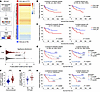 Figure 1
Chr8 gain drives overexpression of the clinically relevant translation initiation factor 4E-BP1 in EwS. (A) Flowchart illustrating patient stratification to either a high or low chr8 gene-expression-signature group based on hierarchical clustering (hclust) of sample-specific ssGSEA enrichment scores for the chr8 gene set (left). Heatmap of ssGSEA scores for chr8 genes in 196 EwS tumors (cohort 1) (right). Color intensity indicates the degree of gene set enrichment. (B) Kaplan-Meier overall survival analysis of cohort 1 stratified into either a high or low chr8-signature-enrichment group as described in (A). P values were determined by the Mantel-Haenszel test. (C) Kaplan-Meier overall survival analysis of 117 patients with EwS (cohort 1 with Chr8 focus) stratified into either a high or low chr8-signature-enrichment group as described in (A) but excluding samples with other inferred, recurrent CNVs. P values were determined by the Mantel-Haenszel test. (D) Overall survival batch analysis as assessed for every gene or exclusively chr8 genes covered in transcriptomic profiling of cohort 1 using the Mantel-Haenszel test. (E) Kaplan-Meier overall survival analysis of cohort 1 stratified by quartile of EIF4EBP1 expression. Percentages given for each expression quartile refer to the percentage of patients with predicted chr8 gain in the respective quartile. P values were determined by the Mantel-Haenszel test. (F) EIF4EBP1 expression as measured by microarray profiling in 196 EwS tumors (cohort 1) stratified into either a high or low chr8-signature-enrichment group as described in (A). P values were determined by 2-tailed Mann-Whitney test; horizontal bars represent means, and whiskers represent the SEM. ***P < 0.001. (G) EIF4EBP1 expression as measured by RNA-Seq in cohort 2 depending on the presence of chr8 gain as determined by methylation array. P values were determined by 2-tailed Mann-Whitney test; horizontal bars represent means, and whiskers represent the SEM. ***P < 0.001. (H) Kaplan-Meier overall survival analysis of 117 patients with EwS (cohort 1 with Chr8 focus, as in C) stratified by quartile of EIF4EBP1 expression. Percentages given for each expression quartile refer to the percentage of patients with predicted chr8 gain in the respective quartile. P values were determined by the Mantel-Haenszel test.
Second, we applied our approach to RNA-Seq data from an independent cohort of 100 EwS tumors (cohort 2) and compared the chr8 signature enrichment clustering with matched factual chr8 copy number variation (CNV) status (inferred from DNA methylation arrays). This analysis showed that clustering based on the chr8 gene expression signature enrichment accurately indicates the presence of chr8 gain (Supplemental Figure 1B).
Kaplan-Meier analysis of data from cohort 1 revealed that a high chr8 gene expression signature was associated with shorter overall survival among patients with EwS (P = 0.0137) (Figure 1B). Strikingly, this association remained significant (P = 0.0309) (Figure 1B) even when only considering patients with localized disease (i.e., without evidence for metastasis at diagnosis), indicating that chr8 gain is functionally involved in mediating an unfavorable disease phenotype. In support of this hypothesis, it is intriguing that while chr8 gain is only found in approximately 50% of primary tumors, approximately 80% of EwS cell lines, which are expected to be derived from highly aggressive tumor clones, exhibit chr8 gains (mostly trisomies) (16–19, 21, 24–28). Because previous studies have reported that chr8 gains can co-occur with other recurrent chromosomal gains and losses that may have an effect on patient overall survival (16–18, 27), such as chr1q gains, chr12 gains, and 16q loss, we reanalyzed our cohort 1 to focus on those patients with an exclusive predicted chr8 gain versus those harboring none of the aforementioned CNVs, to rule out possible confounding other gains and losses. As shown in Figure 1C, this yielded even a better patient-stratification regarding overall survival in both localized disease and the entire sub-cohort (P = 0.0115 and P = 0.0033, respectively). Together, these findings suggest that genes located on chr8 contribute to aggressive cellular behavior and disease progression in EwS.
Previous reports suggested that MYC located on chr8 may mediate the effect of chr8 gains on patient outcome in EwS and other undifferentiated sarcomas (10, 51). However, in our large EwS cohort 1, MYC expression was not significantly associated with overall patient survival (P = 0.689) (Supplemental Figure 1C and Supplemental Table 1). Similarly, the chr8-located gene RAD21, previously reported to promote EwS tumorigenicity by mitigating EWSR1::FLI1–induced replication stress (23), was not significantly associated with overall survival of patients with EwS (P = 0.174) (Supplemental Figure 1C and Supplemental Table 1). These findings suggest the mechanisms underlying the association of chr8 gain with EwS aggressiveness are more complex than previously anticipated.
To identify chr8-encoded genes most strongly associated with poor overall survival among patients with EwS, we conducted a batch analysis within cohort 1. Using our custom code software, GenEx, we calculated P values for the association between gene expression and overall survival for all microarray-represented genes, using the Mantel-Haenszel test (Supplemental Table 1). Among all chr8-located genes analyzed, EIF4EBP1 expression showed the strongest association with patient outcome, with high EIF4EBP1 expression significantly correlating with unfavorable overall survival (nominal P < 0.0001; Bonferroni-adjusted P = 0.049) (Figure 1, D and E, and Supplemental Table 2). High EIF4EBP1 expression remained significantly associated with poor overall survival even when considering only patients with localized disease (P = 0.0013) (Figure 1E). Additionally, EIF4EBP1 ranked within the top 15 survival-associated genes genome-wide (Figure 1D and Supplemental Table 1). These results are consistent with the association of chr8 gain with poor overall survival among patients with EwS (Figure 1, B and C) as well as with previous research that has linked chr8p, where EIF4EBP1 is located, with EwS relapse (51, 52). Furthermore, EIF4EBP1 expression was significantly correlated with high ssGSEA enrichment scores for chr8 gene expression in cohort 1 (P < 0.001; r = 0.47, by Pearson’s test; Cohen′s d = 1.19) (Supplemental Table 3). This suggests that a significant part of the negative prognostic effect of the high chr8 gene expression signature can be attributed to high EIF4EBP1 expression. Accordingly, the predicted chr8 gain was significantly associated with elevated EIF4EBP1 expression levels in this cohort (P < 0.001) (Figure 1F), which also holds true when only considering patients with an exclusive predicted chr8 gain or none of the other aforementioned CNVs (P < 0.001) (Supplemental Figure 1D). This association was confirmed on mRNA and protein levels in the independent cohort 2, with chr8 status detected at the DNA level (P < 0.001) (Figure 1G and Supplemental Figure 1E).
Similar to our analyses shown in Figure 1C, we reanalyzed our survival data from cohort 1, now only focusing on exclusively predicted chr8-gained samples versus samples without any recurrent chromosomal gain or loss. The reanalysis fully confirmed the prognostic role of EIF4EBP1 in patients with EwS (Figure 1H). Interestingly, DEG analysis of cohort 1 comparing chr8-high and -low gene expression revealed that among genes of the mTOR signaling pathway, EIF4EBP1 is distinctively upregulated in tumors with chr8 gain (Supplemental Figure 1F), indicating that 4E-BP1 has a distinct clinical and functional role within the mTOR signaling pathway in EwS.
To evaluate the potential clinical and functional significance of chr8 gain and EIF4EBP1 expression in other cancer entities besides EwS, we analyzed CNV data from DNA methylation arrays of The Cancer Genome Atlas (TCGA). Our analysis revealed that numerous cancer entities exhibit chr8 gains (specifically, 8 of 32 identified entities exhibited chr8 gains in >10% of cases) (Supplemental Table 4). Additionally, consistent with previously published data (46), chr8 gain and high EIF4EBP1 expression are associated with unfavorable patient survival in several other cancer entities (chr8 gain in 4 and high EIF4EBP1 expression in 14 of 32 identified entities) (Supplemental Table 4). These include hepatocellular carcinoma, renal papillary cell carcinoma, lower-grade glioma, and thymoma (Supplemental Table 4).
Collectively, these results indicate that chr8 gain contributes to unfavorable outcomes in patients with EwS and identify 4E-BP1, encoded on chr8, as a potential driver of EwS aggressiveness.
4E-BP1 drives a proliferation-associated proteomic network. Contrary to our findings that high EIF4EBP1 levels significantly correlated with worse patient outcome (Figure 1, D, E, and H), a recent report has suggested that 4E-BP1 may act as a tumor suppressor in EwS (53). However, this conclusion was based on observations of supraphysiological, ectopic overexpression of a phospho-mutant (and thus functionally hyperactive) 4E-BP1 protein in 2 EwS cell lines (EW8 and TC-71) (53). The role of 4E-BP1 in cancer is complex and strongly depends on the cellular context and its precise phosphorylation status (30). Therefore, to obtain a more comprehensive understanding of 4E-BP1 in EwS, we first integrated results of preranked fast GSEA (fGSEA). We conducted fGSEAs based on Pearson’s correlation coefficients between the mRNA expression levels of EIF4EBP1 and every other gene represented in the respective datasets of cohorts 1 and 2 (Supplemental Tables 5 and 6). Additionally, we carried out a third fGSEA based on gene expression fold-changes between tumors with and without detected chr8 gain in cohort 2 (Supplemental Table 7). The overlap among all 3 fGSEAs consisted predominantly of proliferation-associated gene sets (Figure 2, A and B, and Supplemental Tables 5–7). These transcriptomic data from patients with EwS pointed toward a role of 4E-BP1 in the regulation of EwS cell proliferation and strongly supported the potential role of 4E-BP1 as a major mediator of chr8 gain–driven poor prognosis in EwS.
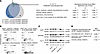 Figure 2
4E-BP1 drives a proliferation-associated proteomic network. (A) An area-proportional Venn diagram of gene sets enriched with EIF4EBP1 expression in cohorts 1 (A) and 2 (B) as well as with chr8 gain in cohort 2 (C), as determined by fGSEA. Exemplary gene sets representing a proliferation-associated enrichment signature in the overlap among A, B, and C are shown with respective normalized enrichment scores (NESs) and significance levels. (B) fGSEA enrichment plots of exemplary gene sets displayed in (A). (C) Representative Western blots of A-673, SK-N-MC, and TC-71 cells containing either Dox-inducible specific shRNA constructs directed against EIF4EBP1 (sh4E-BP1_1 or sh4E-BP1_2) or an shCtr. Cells were grown either with or without Dox for 96 hours. β-Actin served as a loading control. (D) Gene sets negatively enriched upon 4E-BP1 knockdown at the protein level, as determined by fGSEA using integrated MS and microarray protein/gene expression data as an input. Exemplary gene sets representing a proliferation-associated enrichment signature are shown with respective NESs and significance levels. ***P < 0.001, **P < 0.01, *P < 0.05. adj., adjusted.
To further explore this hypothesis, we generated an in vitro 4E-BP1 knockdown model in 3 EwS cell lines with relatively high EIF4EBP1 baseline expression levels: A-673, SK-N-MC, and TC-71 (Supplemental Figure 2A). Notably, 2 of the selected cell lines (SK-N-MC and TC-71) exhibit a chr8 gain (26). Because chr8 gains are probably not the only factor affecting 4E-BP1 expression levels, and certainly not all chr8 gained tumors necessarily show high 4E-BP1 expression levels, we intentionally included 1 cell line (A-673) without chr8 amplification in the following analyses to emphasize the functional and clinical relevance of 4E-BP1 by itself across EwS with and without chr8 gain. Furthermore, A-673 cells were used because chr8 gain may affect expression levels of many other genes and thereby could bias the effects seen by modulation of 4E-BP1. To that end, we transduced these 3 EwS cell lines with a lentivirus containing a vector-system (pLKO Tet-on) with doxycycline (Dox)-inducible shRNAs specifically directed against EIF4EBP1 (sh4E-BP1_1 or sh4E-BP1_2) or a nontargeting control shRNA (shCtr). Both targeted shRNAs effectively silenced EIF4EBP1 mRNA expression, resulting in a strong knockdown of EIF4EBP1 mRNA levels (Supplemental Figure 2B) and protein levels (Figure 2C and Supplemental Figure 2C). This is consistent with a strong correlation between (EIF)4E-BP1 mRNA and protein levels in human cells, as evidenced by the analysis of Cancer Dependency Map (DepMap) gene expression and corresponding protein array data (n = 887 cancer cell lines; r = 0.68; P = 5.2 × 10⁻²², by Pearson’s test). Western blot experiments demonstrated that knockdown of 4E-BP1 led to a consistent loss of its phosphorylated form (Ser65) in all EwS cell lines in a manner similar to total 4E-BP1 (Supplemental Figure 2, D and E). Therefore, our EwS 4E-BP1 knockdown models are well suited to study the functional consequences of its inactivation.
Because 4E-BP1 regulates mRNA translation initiation by binding to the translation initiation factor eIF4E and thereby modifies overall and selective translation rates (30), we asked whether functional interference with 4E-BP1 might also affect proliferation-related translational signatures. To identify proteins regulated by 4E-BP1 exclusively at the translational level, we combined mass spectrometry–based (MS-based) proteomic profiling of newly synthesized proteins (pulsed stable isotope labeled amino acids in cell culture [SILAC]) with parallel transcriptome profiling by gene expression microarrays. To this end, we silenced 4E-BP1 in the 3 aforementioned EwS cell lines and pulsed them with SILAC medium and the methionine analog l-azidohomoalanine for 6 hours. We identified 9,508 proteins through MS analysis, of which 4,335 common proteins across all cell lines and constructs with at least 1 value per replicate group were used for downstream analyses. Our parallel microarray analyses captured 12,056 stably expressed genes across all 3 cell lines. After more filtering steps (see Supplemental Methods), we identified 1,332 differentially expressed proteins upon 4E-BP1 knockdown (adjusted P < 0.05), which were not regulated by 4E-BP1 at the mRNA level across all 3 cell lines (Supplemental Table 8). To technically validate our MS findings, we conducted Western blot analyses for 1 representative upregulated protein, PDCD4 (54–57), after 4E-BP1 knockdown, thereby providing independent confirmation of our results using an alternative method (Supplemental Figure 2F).
Preranked fGSEA analysis on proteins not regulated at the mRNA level, and therefore most likely directly differentially regulated by 4E-BP1, identified again a strong enrichment of proliferation-associated gene sets (Figure 2D and Supplemental Table 9), consistent with fGSEA results from the patient gene expression data as shown in Figure 2, A and B. Such integrative fGSEA analyses conducted using the full list of obtained proteins and genes are displayed in Supplemental Tables 10 and 11, respectively, and essentially showed similar results.
Our in silico analyses of patient data at the mRNA level and functional in vitro analyses at the protein level collectively indicated 4E-BP1 is linked to accelerated proliferation of EwS cells, suggesting a potential role as an oncogene in EwS.
4E-BP1 promotes proliferation and tumorigenicity of EwS cells. To confirm the pro-proliferative and oncogenic roles of 4E-BP1 in EwS, we conducted various functional in vitro and in vivo assays. Knockdown of 4E-BP1 for 96 hours significantly inhibited cell proliferation in all 3 cell lines (Figure 3A). The antiproliferative effect of 4E-BP1 knockdown appeared to be independent of cell death, because trypan blue–exclusion assays did not consistently show a significant effect of 4E-BP1 knockdown on cell death across all cell lines and shRNAs (Supplemental Figure 3A). Prolonged 4E-BP1 knockdown (10–14 days) significantly reduced both 2D clonogenic and 3D anchorage-independent growth of EwS cells (Figure 3, B and C). Such effects were not observed in shCtr cells (Figure 3, B and C). Similarly, knockdown of 4E-BP1 in subcutaneously xenotransplanted cells significantly reduced tumor growth in vivo (Figure 3D, Supplemental Figure 3B, and Supplemental Table 12). Consistent with our in vitro results, this phenotype was linked to a significantly diminished mitotic cell count, as revealed by histologic assessment of the respective xenografts (Figure 3E and Supplemental Figure 3C). No difference in tumor necrosis was observed between xenografts with or without 4E-BP1 knockdown (Supplemental Figure 3D). Notably, combined MS and gene expression profiling of A-673 and TC-71 xenografts validated the proproliferative proteotranscriptomic signatures by fGSEA, as observed in vitro (Supplemental Tables 13 and 14).
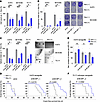 Figure 3
RNAi-mediated knockdown of 4E-BP1 inhibits EwS growth. (A) Relative viable cell count of A-673, SK-N-MC, and TC-71 cells containing either Dox-inducible specific shRNA constructs directed against EIF4EBP1 (sh4E-BP1_1 or sh4E-BP1_2) or an shCtr, as measured by trypan blue exclusion. Cells were grown either with or without Dox for 120 hours. Horizontal bars represent means; whiskers represent the SEM; n ≥ 4 biologically independent experiments. P values were determined via 1-tailed Mann-Whitney test and adjusted for multiple comparisons with the Benjamini-Hochberg method. (B) Relative colony numbers of EwS cells containing indicated Dox-inducible shRNA constructs. Cells were grown either with or without Dox for 8–14 days. Horizontal bars represent means; whiskers the SEM; n ≥ 4 biologically independent experiments. P values were determined via 2-tailed Mann-Whitney test and adjusted for multiple comparisons with the Benjamini-Hochberg method. Representative images of colony formation are shown on the right. (C) Sphere formation in EwS cells containing indicated Dox-inducible shRNA constructs, treated with or without Dox for 8–14 days. Horizontal bars represent means; whiskers represent the SEM; n ≥ 3 biologically independent experiments. P values were determined by 2-tailed unpaired t test with Welch′s correction and adjusted for multiple comparisons with the Benjamini-Hochberg method. Representative images of spheres are shown on the right. (D) Kaplan-Meier analysis of event-free survival of NSG mice xenografted with A-673 cells containing indicated Dox-inducible shRNA constructs. Once tumors were palpable, mice were randomly assigned to treatment with either vehicle (–) or Dox (+); n ≥ 5 animals per condition. An “event” was recorded when tumors reached a size maximum of 15 mm in 1 dimension. P values were determined via Mantel-Haenszel test. (E) Quantification of mitoses in H&E-stained slides of xenografts described in (D). Five high-power fields (HPFs) were counted per sample. Horizontal bars represent means; whiskers represent the SEM; n ≥ 4 samples per condition. Rel, relative. (F) Kaplan-Meier analysis of event-free survival of NSG mice orthotopically xenografted into the proximal tibia with TC-71 cells containing a Dox-inducible shRNA construct directed against EIF4EBP1. n = 5 animals per condition. P values were determined via Mantel-Haenszel test. ***P < 0.001, **P < 0.01, *P < 0.05, determined via 2-tailed Mann-Whitney test if not otherwise specified.
To validate the effect of 4E-BP1 in an orthotopic xenograft model, we xenografted TC-71 cells transduced with an inducible EIF4EBP1-targeting shRNA construct (sh4E-BP1_2) into the proximal tibia of NSG mice, which were subsequently treated with or without Dox. Similar to our subcutaneous xenograft model, the tumor burden in orthotopic EwS xenografts decreased upon Dox-induced knockdown of 4E-BP1 (Figure 3F).
In summary, and in conjunction with our integrative clinical and in silico analyses of patient tumors and cell line models (Figures 1 and 2), these results generated in vitro and in vivo provide strong evidence that 4E-BP1 acts as an oncogene in EwS.
High 4E-BP1 expression sensitizes for CDK4/6 inhibitor treatment. To identify therapeutic vulnerabilities in EwS with high 4E-BP1 expression, we conducted drug screens on 3D spheroids of A-673 EwS cells with or without knockdown of 4E-BP1. Ribociclib, an FDA-approved CDK4/6 inhibitor (58–61), was the top hit, demonstrating differential sensitivity in cells with high 4E-BP1 expression (Supplemental Figure 4A). The presented data align with the published gene-dependency data of the DepMap project, indicating a significant and selective dependency of EwS cell lines on CDK4 expression compared with non-EwS cell lines (Supplemental Figure 4B). We validated these findings in 2D culture experiments using A-673 EwS cells with or without 4E-BP1 knockdown and confirmed them in both A-673 and TC-71 EwS cells treated with the second FDA-approved CDK4/6 inhibitor, palbociclib (Figure 4A and Supplemental Figure 4C) (58–61). The top 3 hits identified in the drug screen after ribociclib (namely, vincristine, thioguanine, and methotrexate) exhibited no or comparatively lower increases in sensitivity upon 4E-BP1 knockdown in 2D experiments (Supplemental Figure 4D). Interestingly, EwS cell lines with high endogenous 4E-BP1 expression (A-673 and TC-71) showed greater sensitivity to palbociclib and ribociclib than did cell lines with low endogenous 4E-BP1 expression (EW-22 and CHLA-10) (Figure 4B and Supplemental Figure 4E). Consistently, overexpression of 4E-BP1 in an EwS cell line expressing 4E-BP1 at a low endogenous level (EW-22) led to an increase of sensitivity toward CDK4/6 inhibition (Supplemental Figure 4F).
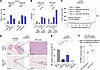 Figure 4
High 4E-BP1 expression sensitizes to targeted CDK4/6 inhibitor treatment with palbociclib and ribociclib. (A) IC50 analysis of CDK4/6 inhibitors palbociclib and ribociclib in A-673 cells containing indicated Dox-inducible shRNAs, as measured by resazurin colorimetry. Cells were treated with or without Dox as well as with serial dilutions of respective inhibitors. Horizontal bars represent means; whiskers represent the SEM; n ≥ 5 biologically independent experiments. P values were determined via 1-tailed Mann-Whitney test and adjusted for multiple comparisons with the Benjamini-Hochberg method. (B) IC50 analysis of CDK4/6 inhibitors palbociclib and ribociclib in EwS cells with high and low endogenous 4E-BP1 expression. Horizontal bars represent means; whiskers represent the SEM; n ≥ 3 biologically independent experiments. P values were determined via 1-tailed Mann-Whitney test and adjusted for multiple comparisons with the Benjamini-Hochberg method. (C) NSG mice xenografted with A-673 EwS cells containing a Dox-inducible sh4E-BP1 construct, treated with or without Dox and either vehicle or palbociclib. Mice were randomized to the treatment groups when tumors were palpable. For each condition, the mean tumor volume and SEM of 4–6 mice over the time of treatment are shown. P values were determined via 2-tailed Mann-Whitney test and adjusted for multiple comparisons with the Benjamini-Hochberg method. (D) Representative H&E-stained micrographs of A673/sh4E-BP1 xenografts [Dox (–)] treated with either vehicle or palbociclib, as described in (C) (shown as an overview with ×12.5 magnification and as a high-power field [HPF] at ×400 magnification). Scale bar: 2.5 mm (×12.5) and 100 μm (×400). (E) Quantification of mitoses in micrographs of xenografts described in (C). Horizontal bars represent means; whiskers represent the SEM; n ≥ 2 samples per condition. P values were determined via 2-tailed Mann-Whitney test and adjusted for multiple comparisons with the Benjamini-Hochberg method. Rel, relative. (F) EIF4EBP1 gene expression data from EwS tumors of 14 patients treated within the INFORM registry and stratified according to matched palbociclib or ribociclib drug-sensitivity data from 3D tumor cell cultures into a CDK4/6 inhibitor nonresponsive and responsive groups. ***P < 0.001, **P < 0.01, *P < 0.05. P values were determined via 2-tailed Mann-Whitney test if not otherwise specified.
Next, we conducted xenograft experiments by transplanting A673 EwS cells subcutaneously into the flanks of NSG mice, treated with or without Dox and with or without palbociclib; treatment started when tumors were palpable in all mice. Xenografts with 4E-BP1 knockdown and xenografts with palbociclib treatment similarly had a very strong reduction of tumor growth, which correlated with a strong decrease in histologically assessable viable tumor burden as compared with respective xenografts without 4E-BP1 knockdown or palbociclib treatment (Figures 4, C and D, Supplemental Figure 4G, and Supplemental Tables 15 and 16). Consistently, xenografts of mice with 4E-BP1 knockdown or treatment with palbociclib, for which histological material was obtainable, had fewer mitoses per high-power field (Figure 4E). However, because the very strong growth-inhibitory effects of either 4E-BP1 knockdown or palbociclib treatment alone precluded the assessment of a potential differential effect of 4E-BP1 expression on sensitivity toward palbociclib in this model (Figures 4, C and D, Supplemental Figure 4G, and Supplemental Tables 15 and 16), we turned to further validation to patient-derived real-world data. To this end, we analyzed gene expression and 3D drug sensitivity data from 14 short-term cultures treated with palbociclib or ribociclib from patients with EwS in the context of the Individualized Therapy for Relapsed Malignancies in Childhood (INFORM) registry (62). Strikingly, we found that high EIF4EBP1 expression, indeed, was associated with higher sensitivity to CDK4/6 inhibitor treatment (Figure 4F).
To more mechanistically decipher the link between high 4E-BP1 expression, EwS cell proliferation, and increased sensitivity to CDK4/6 inhibitors, we screened the top 10% of downregulated proteins upon 4E-BP1 knockdown in our generated MS profiling (n = 393) according to a reported potential direct or indirect regulatory association with CDK4/6 signaling (n = 35). Furthermore, we screened for a significant association of the transcript expression of these genes with poor overall survival in cohort 1 (n = 11). Among the remaining 11 proteins, we further focused on those with potential mechanistic association with CDK4/6, according to the literature, leading to a final selection of 6 proteins: CDC25B (63), PRMT5 (64, 65), MCM2 (66, 67), RBL1 (68, 69), RNF2 (70, 71), and USP14 (72–74). To validate these results, we performed an association analysis with STRING (75), which showed a close association of most of these genes with 4E-BP1 and CDK4/6 (Supplemental Figure 4H). Furthermore, we performed complementary Western blot and parallel qRT-PCR assays measuring PRMT5 expression levels upon 4E-BP1 knockdown, showing that PRMT5 expression is reduced at the protein level but not at the mRNA level (Supplemental Figure 4I). These results validate our integrated pulsed SILAC and transcriptomic analyses, reinforcing the conclusion that the observed changes in protein abundance are primarily regulated at the level of protein synthesis.
We performed siRNA-mediated knockdown experiments for these genes in A-673 EwS cells and found that knockdown of CDC25B, PRMT5, and RBL1 significantly reduced cell proliferation without affecting cell death (Supplemental Figure 4, J–L); there was no significant effect on proliferation or cell death upon knockdown of the remaining 3 genes (data not shown). To validate these genes as critical mediators of 4E-BP1–related increased CDK4/6 inhibitor sensitivity, we performed 2D drug sensitivity assays and showed that knockdown of CDC25B and PRMT5 was associated with a reduction of sensitivity to CDK4/6 inhibition (Supplemental Figure 4M).
In summary, these results suggest 4E-BP1 may serve as a valuable predictive biomarker for clinical effectiveness of CDK4/6 inhibitor treatment.


Copyright © 2026 American Society for Clinical Investigation
ISSN: 0021-9738 (print), 1558-8238 (online)