
Advertisement
Research ArticleCell biologyOncology
Open Access |  10.1172/JCI191772
Molecular glue degrader function of SPOP inhibitors enhances STING-dependent immunotherapy efficacy in melanoma models
Zhichuan Zhu,1,2 Xin Zhou,1,3 Max Xu,1,3 Jianfeng Chen,1,2 Kevin C. Robertson,1,4 Gatphan Atassi,1 Mark G. Woodcock,1,5 Allie C. Mills,6 Laura E. Herring,6 Gianpietro Dotti,1,3 and Pengda Liu1,2
1Lineberger Comprehensive Cancer Center,
2Department of Biochemistry and Biophysics,
3Department of Microbiology and Immunology,
4Department of Pharmacology,
5Division of Oncology, Department of Medicine, and
6UNC Metabolomics and Proteomics Core, Department of Pharmacology, The University of North Carolina at Chapel Hill, Chapel Hill, North Carolina, USA.
Address correspondence to: Gianpietro Dotti, 5202 Marsico Hall, 125 Mason Farm Road, CB# 7599, The University of North Carolina at Chapel Hill, Chapel Hill, North Carolina 27599, USA. Phone: 919.962.8279; Email: gianpi@email.unc.edu. Or to: Pengda Liu, 21-246 Lineberger Building, 450 West Drive, CB# 7295, The University of North Carolina at Chapel Hill, Chapel Hill, North Carolina 27599, USA. Phone: 919.966.3522; Email: pengda_liu@med.unc.edu.
Authorship note: ZZ and XZ contributed equally to this work.
Find articles by Zhu, Z. in: PubMed | Google Scholar
1Lineberger Comprehensive Cancer Center,
2Department of Biochemistry and Biophysics,
3Department of Microbiology and Immunology,
4Department of Pharmacology,
5Division of Oncology, Department of Medicine, and
6UNC Metabolomics and Proteomics Core, Department of Pharmacology, The University of North Carolina at Chapel Hill, Chapel Hill, North Carolina, USA.
Address correspondence to: Gianpietro Dotti, 5202 Marsico Hall, 125 Mason Farm Road, CB# 7599, The University of North Carolina at Chapel Hill, Chapel Hill, North Carolina 27599, USA. Phone: 919.962.8279; Email: gianpi@email.unc.edu. Or to: Pengda Liu, 21-246 Lineberger Building, 450 West Drive, CB# 7295, The University of North Carolina at Chapel Hill, Chapel Hill, North Carolina 27599, USA. Phone: 919.966.3522; Email: pengda_liu@med.unc.edu.
Authorship note: ZZ and XZ contributed equally to this work.
Find articles by Zhou, X. in: PubMed | Google Scholar
1Lineberger Comprehensive Cancer Center,
2Department of Biochemistry and Biophysics,
3Department of Microbiology and Immunology,
4Department of Pharmacology,
5Division of Oncology, Department of Medicine, and
6UNC Metabolomics and Proteomics Core, Department of Pharmacology, The University of North Carolina at Chapel Hill, Chapel Hill, North Carolina, USA.
Address correspondence to: Gianpietro Dotti, 5202 Marsico Hall, 125 Mason Farm Road, CB# 7599, The University of North Carolina at Chapel Hill, Chapel Hill, North Carolina 27599, USA. Phone: 919.962.8279; Email: gianpi@email.unc.edu. Or to: Pengda Liu, 21-246 Lineberger Building, 450 West Drive, CB# 7295, The University of North Carolina at Chapel Hill, Chapel Hill, North Carolina 27599, USA. Phone: 919.966.3522; Email: pengda_liu@med.unc.edu.
Authorship note: ZZ and XZ contributed equally to this work.
Find articles by Xu, M. in: PubMed | Google Scholar
1Lineberger Comprehensive Cancer Center,
2Department of Biochemistry and Biophysics,
3Department of Microbiology and Immunology,
4Department of Pharmacology,
5Division of Oncology, Department of Medicine, and
6UNC Metabolomics and Proteomics Core, Department of Pharmacology, The University of North Carolina at Chapel Hill, Chapel Hill, North Carolina, USA.
Address correspondence to: Gianpietro Dotti, 5202 Marsico Hall, 125 Mason Farm Road, CB# 7599, The University of North Carolina at Chapel Hill, Chapel Hill, North Carolina 27599, USA. Phone: 919.962.8279; Email: gianpi@email.unc.edu. Or to: Pengda Liu, 21-246 Lineberger Building, 450 West Drive, CB# 7295, The University of North Carolina at Chapel Hill, Chapel Hill, North Carolina 27599, USA. Phone: 919.966.3522; Email: pengda_liu@med.unc.edu.
Authorship note: ZZ and XZ contributed equally to this work.
Find articles by
Chen, J.
in:
PubMed
|
Google Scholar
|

1Lineberger Comprehensive Cancer Center,
2Department of Biochemistry and Biophysics,
3Department of Microbiology and Immunology,
4Department of Pharmacology,
5Division of Oncology, Department of Medicine, and
6UNC Metabolomics and Proteomics Core, Department of Pharmacology, The University of North Carolina at Chapel Hill, Chapel Hill, North Carolina, USA.
Address correspondence to: Gianpietro Dotti, 5202 Marsico Hall, 125 Mason Farm Road, CB# 7599, The University of North Carolina at Chapel Hill, Chapel Hill, North Carolina 27599, USA. Phone: 919.962.8279; Email: gianpi@email.unc.edu. Or to: Pengda Liu, 21-246 Lineberger Building, 450 West Drive, CB# 7295, The University of North Carolina at Chapel Hill, Chapel Hill, North Carolina 27599, USA. Phone: 919.966.3522; Email: pengda_liu@med.unc.edu.
Authorship note: ZZ and XZ contributed equally to this work.
Find articles by Robertson, K. in: PubMed | Google Scholar
1Lineberger Comprehensive Cancer Center,
2Department of Biochemistry and Biophysics,
3Department of Microbiology and Immunology,
4Department of Pharmacology,
5Division of Oncology, Department of Medicine, and
6UNC Metabolomics and Proteomics Core, Department of Pharmacology, The University of North Carolina at Chapel Hill, Chapel Hill, North Carolina, USA.
Address correspondence to: Gianpietro Dotti, 5202 Marsico Hall, 125 Mason Farm Road, CB# 7599, The University of North Carolina at Chapel Hill, Chapel Hill, North Carolina 27599, USA. Phone: 919.962.8279; Email: gianpi@email.unc.edu. Or to: Pengda Liu, 21-246 Lineberger Building, 450 West Drive, CB# 7295, The University of North Carolina at Chapel Hill, Chapel Hill, North Carolina 27599, USA. Phone: 919.966.3522; Email: pengda_liu@med.unc.edu.
Authorship note: ZZ and XZ contributed equally to this work.
Find articles by Atassi, G. in: PubMed | Google Scholar
1Lineberger Comprehensive Cancer Center,
2Department of Biochemistry and Biophysics,
3Department of Microbiology and Immunology,
4Department of Pharmacology,
5Division of Oncology, Department of Medicine, and
6UNC Metabolomics and Proteomics Core, Department of Pharmacology, The University of North Carolina at Chapel Hill, Chapel Hill, North Carolina, USA.
Address correspondence to: Gianpietro Dotti, 5202 Marsico Hall, 125 Mason Farm Road, CB# 7599, The University of North Carolina at Chapel Hill, Chapel Hill, North Carolina 27599, USA. Phone: 919.962.8279; Email: gianpi@email.unc.edu. Or to: Pengda Liu, 21-246 Lineberger Building, 450 West Drive, CB# 7295, The University of North Carolina at Chapel Hill, Chapel Hill, North Carolina 27599, USA. Phone: 919.966.3522; Email: pengda_liu@med.unc.edu.
Authorship note: ZZ and XZ contributed equally to this work.
Find articles by Woodcock, M. in: PubMed | Google Scholar
1Lineberger Comprehensive Cancer Center,
2Department of Biochemistry and Biophysics,
3Department of Microbiology and Immunology,
4Department of Pharmacology,
5Division of Oncology, Department of Medicine, and
6UNC Metabolomics and Proteomics Core, Department of Pharmacology, The University of North Carolina at Chapel Hill, Chapel Hill, North Carolina, USA.
Address correspondence to: Gianpietro Dotti, 5202 Marsico Hall, 125 Mason Farm Road, CB# 7599, The University of North Carolina at Chapel Hill, Chapel Hill, North Carolina 27599, USA. Phone: 919.962.8279; Email: gianpi@email.unc.edu. Or to: Pengda Liu, 21-246 Lineberger Building, 450 West Drive, CB# 7295, The University of North Carolina at Chapel Hill, Chapel Hill, North Carolina 27599, USA. Phone: 919.966.3522; Email: pengda_liu@med.unc.edu.
Authorship note: ZZ and XZ contributed equally to this work.
Find articles by Mills, A. in: PubMed | Google Scholar
1Lineberger Comprehensive Cancer Center,
2Department of Biochemistry and Biophysics,
3Department of Microbiology and Immunology,
4Department of Pharmacology,
5Division of Oncology, Department of Medicine, and
6UNC Metabolomics and Proteomics Core, Department of Pharmacology, The University of North Carolina at Chapel Hill, Chapel Hill, North Carolina, USA.
Address correspondence to: Gianpietro Dotti, 5202 Marsico Hall, 125 Mason Farm Road, CB# 7599, The University of North Carolina at Chapel Hill, Chapel Hill, North Carolina 27599, USA. Phone: 919.962.8279; Email: gianpi@email.unc.edu. Or to: Pengda Liu, 21-246 Lineberger Building, 450 West Drive, CB# 7295, The University of North Carolina at Chapel Hill, Chapel Hill, North Carolina 27599, USA. Phone: 919.966.3522; Email: pengda_liu@med.unc.edu.
Authorship note: ZZ and XZ contributed equally to this work.
Find articles by
Herring, L.
in:
PubMed
|
Google Scholar
|
1Lineberger Comprehensive Cancer Center,
2Department of Biochemistry and Biophysics,
3Department of Microbiology and Immunology,
4Department of Pharmacology,
5Division of Oncology, Department of Medicine, and
6UNC Metabolomics and Proteomics Core, Department of Pharmacology, The University of North Carolina at Chapel Hill, Chapel Hill, North Carolina, USA.
Address correspondence to: Gianpietro Dotti, 5202 Marsico Hall, 125 Mason Farm Road, CB# 7599, The University of North Carolina at Chapel Hill, Chapel Hill, North Carolina 27599, USA. Phone: 919.962.8279; Email: gianpi@email.unc.edu. Or to: Pengda Liu, 21-246 Lineberger Building, 450 West Drive, CB# 7295, The University of North Carolina at Chapel Hill, Chapel Hill, North Carolina 27599, USA. Phone: 919.966.3522; Email: pengda_liu@med.unc.edu.
Authorship note: ZZ and XZ contributed equally to this work.
Find articles by Dotti, G. in: PubMed | Google Scholar
1Lineberger Comprehensive Cancer Center,
2Department of Biochemistry and Biophysics,
3Department of Microbiology and Immunology,
4Department of Pharmacology,
5Division of Oncology, Department of Medicine, and
6UNC Metabolomics and Proteomics Core, Department of Pharmacology, The University of North Carolina at Chapel Hill, Chapel Hill, North Carolina, USA.
Address correspondence to: Gianpietro Dotti, 5202 Marsico Hall, 125 Mason Farm Road, CB# 7599, The University of North Carolina at Chapel Hill, Chapel Hill, North Carolina 27599, USA. Phone: 919.962.8279; Email: gianpi@email.unc.edu. Or to: Pengda Liu, 21-246 Lineberger Building, 450 West Drive, CB# 7295, The University of North Carolina at Chapel Hill, Chapel Hill, North Carolina 27599, USA. Phone: 919.966.3522; Email: pengda_liu@med.unc.edu.
Authorship note: ZZ and XZ contributed equally to this work.
Find articles by Liu, P. in: PubMed | Google Scholar
Published October 28, 2025 - More info
J Clin Invest. 2025;135(24):e191772. https://doi.org/10.1172/JCI191772.
© 2025 Zhu et al. This work is licensed under the Creative Commons Attribution 4.0 International License. To view a copy of this license, visit http://creativecommons.org/licenses/by/4.0/.
Received: January 28, 2025; Accepted: October 14, 2025


-
Results
An intact immune microenvironment is crucial for suppressing B16 tumor growth following SPOP depletion. While SPOP’s roles in prostate and kidney cancers are well established, its function in melanoma remains unclear. Similar to human renal cell carcinoma (RCC) 786-o and A498 cells, depletion of endogenous SPOP reduced colony formation in human melanoma A2058 and HMCB cells (Supplemental Figure 1, A and B; supplemental material available online with this article; https://doi.org/10.1172/JCI191772DS1). Likewise, SPOP knockdown in mouse RCC Renca and melanoma B16 cells impaired in vitro growth (Supplemental Figure 1, C–H). In RCC, SPOP exerts oncogenic activity by targeting the tumor suppressor PTEN (10), and analysis of The Cancer Genome Atlas revealed similar patterns of SPOP and PTEN alterations in KIRC and SKCM (Supplemental Figure 1I). These results suggest that SPOP may function as an oncogene in melanoma, analogous to its role in RCC.
To assess SPOP’s role in tumor immunity, control or SPOP-depleted B16 cells were xenografted into immune-deficient nude mice or immune-competent C57BL/6 mice (Figure 1A). Consistent with in vitro data (Supplemental Figure 1E), SPOP depletion slightly reduced tumor growth in nude mice but markedly suppressed tumor growth in C57BL/6 mice (Figure 1, B–D), suggesting that host T cell immunity is required for SPOP depletion-mediated tumor suppression. Reexpression of SPOP largely rescued tumor growth in C57BL/6 mice, ruling out shRNA off-target effects (Figure 1, E–H). Cytokine profiling of SPOP-depleted human melanoma A2058 cells revealed increased expression of interferon-stimulated genes (ISGs), including IFIT1, CXCL10, and MX1, which was validated by RT-PCR (Figure 2, A–C). This finding was supported by xenografted SPOP-depleted B16 tumors, where SPOP loss led to increased CCL5 and CXCL10 expression (Supplemental Figure 1J). mRNA profiling of SPOP-depleted B16 cells also revealed upregulated ISGs (Supplemental Figure 1K). Given that type I interferons and ISGs mediate tumor innate immune activation and recruit immune infiltrates (26, 27), these findings indicate that SPOP depletion enhances tumor innate immunity to suppress melanoma growth. In this study, we focus on melanoma and RCC to determine whether SPOP regulates tumor immunity.
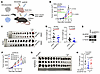 Figure 1
SPOP depletion suppresses B16 tumor growth depending on tumor immune environment. (A) Xenograft schema. Tumor volume and weight were measured in nude and C57BL/6J mice injected with B16 cells expressing shScr and shmSPOP-6. (B) Tumor volume measurements over time for xenograft of indicated B16 cell lines. Data are shown as mean ± SEM, n = 10. (C and D) Isolated tumors (C) from B and tumor weight (D). Scale bar: 1 cm. Data are shown as mean ± SEM, n = 10. (E) IB analyses of control, SPOP-depleted, and reconstituted B16 cells. (F) Tumor volume measurements over time for xenograft of B16 cells in E. Data are shown as mean ± SEM, n = 14. (G and H) Isolated tumors (G)from F and tumor weight (H). Scale bar: 1 cm. Data are shown as mean ± SEM, n = 14. Two-way ANOVA followed by Tukey’s multiple-comparison test (B and F), 2-tailed unpaired Student’s t test (D), or 1-way ANOVA followed by Fisher’s LSD multiple-comparison test (H). Representative experiments shown in figures were repeated at least 2 times independently with similar results.
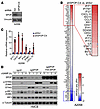 Figure 2
SPOP depletion potentiates type I interferon response. (A) IB analyses of control and SPOP-depleted A2058 cells. (B) RNA expression profiling heatmap of genes in human type I interferon response in A2058 cells from A. (C) RT-PCR analyses of mRNA changes in A2058 cells from A. Data are shown as mean ± SD, n = 3. Two-tailed unpaired Student’s t test. *P < 0.05. (D) IB analysis of indicated HMCB cells treated with 5 μg/mL 2′3′-cGAMP for indicated hours.
SPOP depletion enhances cellular responses to DNA stimulation. Since cytosolic DNA-sensing pathways drive ISG expression (28), we tested whether SPOP depletion alters responses to DNA stimulation. DNA sensing is a ubiquitous innate immune pathway in both immune and tumor cells, initiated when cyclic GMP-AMP synthase (cGAS) detects cytosolic DNA and produces 2′3′-cyclic GMP-AMP (2′3′-cGAMP), which activates STING to trigger TBK1/IRF3-dependent IFN-β and ISG expression (29–32). SPOP depletion markedly enhanced ISD90-induced STING activation, as shown by increased pSTING, an effect reversed by SPOP reexpression in HMCB melanoma cells (Figure 2D). Similar results were observed in RCC 786-o cells, where SPOP loss augmented STING signaling, increased IFN-β transcription, and upregulated multiple ISGs, including CCL5, CXCL10, OAS1, IFIT1, and IFI44 (Supplemental Figure 1, L–R). SPOP depletion also potentiated 2′3′-cGAMP– and diABZI-induced (33) STING activation and ISG production (Supplemental Figure 1, S–Z). Importantly, reintroducing SPOP largely reversed these effects (Supplemental Figure 1, Z1 and Z2). Collectively, these findings indicate that SPOP depletion sensitizes cells to cytosolic DNA stimulation by enhancing cGAS/STING signaling.
SPOP earmarks STING for ubiquitination and degradation. The cytosolic DNA-sensing pathway primarily involves cGAS, STING, TBK1, and IRF3 (32). To determine how SPOP depletion enhances DNA sensing, we silenced endogenous SPOP using multiple independent shRNAs/sgRNAs (shSPOP/sgSPOP). SPOP loss consistently increased STING protein levels, but not those of cGAS, TBK1, or IRF3, across human melanoma (A2058, HMCB, and MeWo), mouse melanoma (B16), human RCC (A498, 786-o, and UMRC6), mouse RCC (Renca), and HEK293 cells (Figure 3, A–C and F, and Supplemental Figure 2, A–H). Other DNA sensors, including DDX41 and IFI16, were minimally affected. SPOP depletion did not alter STING mRNA levels (Supplemental Figure 2I), suggesting posttranscriptional regulation. Reexpression of shSPOP/sgSPOP-resistant SPOP restored STING to baseline, confirming specificity (Figure 3, D, E, and G, and Supplemental Figure 2, J–L). Conversely, ectopic SPOP expression reduced endogenous and exogenous STING, which was reversible by proteasome inhibition (Figure 3, H and I). Cycloheximide chase assays further demonstrated that SPOP depletion stabilized STING, extending its half-life, which was reversed by SPOP reexpression (Figure 3, J and K, and Supplemental Figure 2, N–Q).
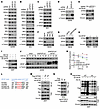 Figure 3
SPOP targets STING for ubiquitination and degradation. (A–C) IB analyses of indicated cells depleted of SPOP by shRNAs or sgRNAs. (D–G) IB analyses of indicated cells depleted of SPOP and rescued by stably expressing shRNA/sgRNA-resistant SPOP. (H) IB analyses of indicated cells transfected with HA-SPOP construct. (I) IB analyses of 293T cells treated with 10 μM MG132 overnight after transfecting with indicated constructs for 36 h. (J) IB analysis of control and SPOP-depleted A2058 cells treated with 100 μg/mL of cycloheximide (CHX) for indicated periods. (K) Quantification of relative STING grayscale values in J. (L) Schematic illustration of potential SPOP-binding motifs in human and mouse STING and corresponding mutations. (M) IB analyses of HA-IP (immunoprecipitants) and whole-cell lysates (WCL) derived from 293T cells transfected with indicated constructs. (N) IB analyses of Flag-IP and WCL derived from B16 cells stably expressing indicated molecules by lentivirus infection. (O) IB analyses of WCL and Ni-NTA pull-down products derived from 293T cells transfected with the indicated constructs. Cells in L–N were treated with 10 μM MG132 overnight before collection. Representative experiments shown in figures were repeated at least 2 times independently with similar results.
SPOP recognizes the degron motif Φ-Π-S-S/T-S/T (Φ, nonpolar; Π, polar) (6, 8). Sequence analysis identified the potential degron PSTST in human STING (Figure 3L). Mutation of these residues (S353A/T354A/S355A/T356A [4A-STING]) impaired SPOP binding (Figure 3M). Similarly, in mouse STING, mutation of PSVLS serines (S354A/S357A [2A-mSTING]) reduced interaction (Figure 3N). Moreover, SPOP efficiently ubiquitinated WT-STING but not 4A-STING (Figure 3O). Together, these results demonstrate that SPOP directly recognizes the PSTST degron to ubiquitinate and degrade STING.
CK1γ generates a phospho-degron in STING for SPOP recognition. Multiple S/T residues in the canonical SPOP Φ-Π-S-S/T-S/T degron can be phosphorylated to enhance SPOP binding (6–8, 17). Testing CK1 and CK2 isoforms revealed that CK1γ, specifically CK1γ1, promotes STING recognition by SPOP (Figure 4, A and B). CK1γ1 depletion in RCC cells (A498, 786-o, Caki-1, and RCC10) led to STING protein accumulation without affecting STING mRNA (Figure 4, C–E), indicating regulation at the protein level. CK1γ1-induced STING degradation was partially blocked by the proteasome inhibitor MG132 or the cullin neddylation inhibitor MLN4924, but not by the lysosomal inhibitor Baf-A1 (Figure 4F), and required the intact STING degron, as 4A-STING was resistant (Figure 4G). Pharmacological CK1 inhibition (D4476 or epiblastin A) similarly stabilized STING by reducing CK1γ1-mediated phosphorylation and SPOP binding (Figure 4, H and I, and Supplemental Figure 2R). These results indicate that CK1γ1 phosphorylates the STING PSTST motif to prime it for SPOP-mediated ubiquitination and degradation (Figure 4J).
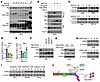 Figure 4
CK1γ1 phosphorylates STING for SPOP-mediated ubiquitination and degradation. (A) IB analyses of 293T cells cotransfected with constructs of Flag-STING and Myc-tagged casein kinases. (B) IB analyses of Flag-IP and WCL derived from 293T cells transfected with indicated constructs and overnight treated with 20 nM Baf-A1. (C) IB analyses of indicated cells depleted of CK1γ1. (D and E) RT-PCR analyses of mRNA changes in 786-o cells depleted of CK1γ1. Data are shown as mean ± SD, n = 2. One-way ANOVA followed by Dunnett’s multiple-comparison test. *P < 0.05, compared with shScr. (F) IB analyses of 293T cells treated overnight with 10 μM MG132, 1 μM MLN4294, and 20 nM Baf-A1 after transfecting with indicated constructs for 36 h. (G) IB analyses of 293T cells transfected with indicated constructs. (H and I) IB analyses of indicated cells treated with indicated doses of D4476 (H) and epiblastin A (I) for 24 h. (J) Schematic of STING degradation triggered by SPOP and CK1γ1. TM, transmembrane domain; CBD, cyclic dinucleotide–binding domain; CTT, C-terminal tail; p, phosphorylation. Representative experiments shown in figures were repeated at least 2 times independently with similar results.
Evading SPOP-mediated degradation enhances STING activation in innate immunity. We next asked whether STING stabilization by evading SPOP-mediated degradation enhances innate immune activation. Reexpression of WT- or 4A-STING in STING-depleted 786-o cells showed comparable ISD90-induced STING activation (Figure 5A), but RT-PCR revealed that 4A-STING induced significantly lower IFN-β and ISG (CCL5 and CXCL10) expression than WT-STING after ISD90 or diABZI stimulation (Figure 5, B and C, and Supplemental Figure 3, A–D). This suggested that loss of phosphorylation within the degron impairs STING activation. Consistent with prior reports that TAK1 phosphorylates STING at S355 to facilitate ER-to-ERGIC (ER-Golgi intermediate compartment) trafficking (34), S355F-STING failed to rescue STING activation in depleted cells (Supplemental Figure 3E).
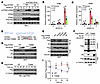 Figure 5
Evading SPOP-mediated degradation enhances STING activation in innate immunity. (A) IB analyses of indicated 786-o stable cell lines treated with 5 μg/mL of ISD90 for indicated periods. EV, empty vector. (B and C) RT-PCR analyses of indicated 786-o stable cell lines treated with 5 μg/mL of ISD90 (B) or 3 μM diABZI (C) for indicated periods. Data are shown as mean ± SD, n = 3. (D) Schematic illustration of patient STING-T356M mutation in the SPOP-binding motif. (E) IB analyses of HA-IP and WCL derived from 293T cells transfected with indicated constructs. (F) IB analyses of WCL and Ni-NTA pull-down products derived from 293T cells transfected with the indicated constructs. Cells in E and F were treated with 10 μM MG132 overnight before collection. (G) IB analyses of 293T cells transfected with fixed dose of STING constructs and increased dose of SPOP construct. (H) IB analysis of Flag-STING-WT– and -T356M–reconstituting 786-o cells treated with 100 μg/mL of CHX for indicated periods. (I) Quantification of relative Flag grayscale values in H. Data are shown as mean ± SEM, n = 2. One-way ANOVA followed by Tukey’s multiple-comparison test (B and C) or 2-way ANOVA (I). *P < 0.05. Representative experiments shown in figures were repeated at least 2 times independently with similar results.
To identify mutations that evade SPOP without disrupting activation, we found a T356M-STING mutation in a gastric cancer patient (Catalogue of Somatic Mutations in Cancer database; https://www.sanger.ac.uk/tool/cosmic/) that disrupted SPOP binding (Figure 5, D and E) and reduced SPOP-mediated ubiquitination (Figure 5F), extending STING half-life (Figure 5, G–I). T356M-STING enhanced ISD90- or diABZI-induced STING activation (Figure 6, A–C, and Supplemental Figure 3F). Similarly, CK1γ1 depletion or pharmacological inhibition (D4476) stabilized STING, boosting diABZI-induced activation and downstream IFN-β and ISG expression (CCL5, CXCL10, OAS1, IFIT1, and IFI44) (Figure 6, D–G, and Supplemental Figure 3, G–M). These results indicate that evasion of SPOP recognition stabilizes STING, enhancing its activation (Figure 6H).
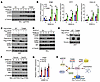 Figure 6
The STING-T356M mutant exhibits an enhanced ability to respond to dsDNA, owing to its evasion of SPOP-mediated degradation. (A and B) IB (A) and RT-PCR (B) analyses of indicated 786-o stable cell lines treated with 5 μg/mL of ISD90 for indicated periods. Data are shown as mean ± SD, n = 3. (C) IB analyses of 293T cells transfected with indicated constructs and treated with 3 μM diABZI for 4 h. (D) IB analyses of control and CK1γ1-depleted 786-o cells treated with 5 μg/mL of ISD90 for indicated periods. (E) IB analyses of 293T cells transfected with indicated constructs. (F) IB analyses of STING-reconstituted 786-o cells treated first with 40 μM D4476 for 24 h and then with 3 μM diABZI for indicated periods. (G) RT-PCR analyses of IFNB1 mRNA in 786-o cells treated first with 40 μM D4476 for 24 h and then with 3 μM diABZI for indicated periods. (H) Schematic of STING stabilization resulting from SPOP depletion, CK1γ1 inhibition, and STING-T356M mutation and increased sensitivity to DNA and STING agonist for type I interferon signaling activation. One-way ANOVA followed by Tukey’s multiple-comparison test (B) or 2-tailed unpaired Student’s t test (G). *P < 0.05. Representative experiments shown in figures were repeated at least 2 times independently with similar results.
Pharmacological SPOP inhibition disrupts STING binding to SPOP and enhances STING activation. Since E3 ubiquitin ligases do not exert catalytic activities but only serve to bridge E2 enzymes to specific substrates (35), a few E3 ligase inhibitors have been developed to block specific E3 ligases from binding to substrates, including Apcin (36), which blocks Cdc20/substrate interactions; Skpin (37), which blocks Skp2/p27 interactions (38); and Nutlin (39), which blocks Mdm2/p53 binding and DCAF1 inhibitors (40). Interestingly, the small molecule SPOP inhibitor SPOP-IN-6b (6b) was developed for treating kidney cancer where SPOP exerts an oncogenic function (41), and it was further upgraded to SPOP-i-6lc (6lc) (42) through medicinal chemistry optimization. Consistent with the previous study (41), we observed that 6b disrupted SPOP interactions with PTEN (Supplemental Figure 4A). We found that 6b similarly disrupted STING binding to SPOP (Supplemental Figure 4B), and 6lc was also able to do so (Figure 7A), further supporting STING as a SPOP substrate.
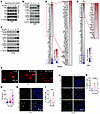 Figure 7
Pharmacological SPOP inhibition induces DNA damage to trigger STING activation. (A) IB analyses of WCL and glutathione S-transferase (GST) pull-down products derived from 293T cells transfected with indicated constructs and treated with indicated dose of 6lc and 10 μM MG132 for 12 h. (B and C) IB analyses of B16 and A2058 cells treated with indicated dose of 6b for 24 h. (D and E) RNA expression profiling heatmap of genes in type I interferon response in A2058 cells (D) and B16 cells (E) treated with 10 μM 6lc for 24 h. (F and G) B16 cells were treated with indicated dose of 6lc for 24 h and examined using alkaline lysis method to detect single-strand breaks. Microscopy images of representative comets (F) and tail moment quantification (G) are shown. Scale bar: 50 μm. Data are shown as mean ± SD; 0 μM, n = 54; 5 μM, n = 50; 10 μM, n = 56. Unpaired t test. *P < 0.05, compared with 0 μM. (H–K) B16 and A2058 cells were treated with indicated dose of 6b or 6lc for 24 h before immunofluorescence of γH2AX (H and J) and quantification of percentages of γH2AX positive cells (I and K). Scale bars: 50 μm. Data are shown as mean ± SD, n = 5–7. *P < 0.05 compared with 0 μM (unpaired t test). One-way ANOVA followed by Dunnett’s multiple-comparison test (G), Fisher’s LSD test (K), or 2-tailed unpaired Student’s t test (I). Representative experiments shown in figures were repeated at least 2 times independently with similar results.
Treatment with 6b (Figure 7, B and C) or 6lc (Supplemental Figure 4, C and D) disrupted SPOP recognition and stabilized STING in cells. This effect was SPOP dependent (Supplemental Figure 4, E and F), ruling out off-target effects. STING stabilization was dose dependent, but at higher 6b/6lc doses, STING levels slightly decreased while activation markers pTBK1 and pIRF3 increased (Figure 7, B and C, and Supplemental Figure 4, C and D), consistent with lysosomal degradation of activated STING (43). Cytokine profiling in 6lc-treated A2058 and B16 cells (Figure 7, D and E) showed a broader and stronger ISG induction compared with SPOP genetic depletion (Figure 2B), indicating that pharmacological inhibition more effectively activates STING.
Pharmacological SPOP inhibition induces DNA damage to trigger STING activation. Canonical STING activators include viral/bacterial DNA, apoptotic cells, and damaged genomic or mitochondrial DNA (32). Treatment with 6b significantly increased genomic DNA damage, as shown by comet assays (44) (Figure 7, F and G) and γH2AX foci (Figure 7, H and I); 6lc had similar effects (Figure 7, J and K, and Supplemental Figure 4, G and H). DNA damage led to cytosolic dsDNA accumulation (Figure 8A and Supplemental Figure 4I), activating STING and inducing ISGs (Figure 8B and Supplemental Figure 4J). Although 6lc also caused mitochondrial DNA leakage (Supplemental Figure 4K), ethidium bromide–mediated depletion of mitochondrial DNA (45) did not affect STING activation (Supplemental Figure 4, L and M), indicating genomic DNA as the primary activator. Cytosolic dsRNA was unaffected (Supplemental Figure 4, N and O). Knockdown of cGAS or STING abolished 6lc-induced STING activation and ISG induction (Figure 8C and Supplemental Figure 4, P and R). Notably, SPOP genetic depletion did not increase DNA damage (Figure 8, D and E), suggesting that pharmacological inhibition, which preserves SPOP scaffolding while blocking E3 ligase activity (Figure 8F), uniquely induces DNA damage to activate cGAS/STING.
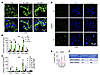 Figure 8
Genetic SPOP depletion mildly induces DNA damage. (A) Immunofluorescence of dsDNA in A2058 cells treated with indicated dose of 6b or 6lc for 24 h. Scale bar: 30 μm. (B) RT-PCR analyses of mRNA changes in B16 cells treated with indicated dose of 6b for 24 h. Data are shown as mean ± SD, n = 3. (C) RT-PCR analyses of mRNA changes in control and STING knockout B16 cells treated with indicated dose of 6lc for 24 h. Data are shown as mean ± SEM, n = 2. (D and E) Immunofluorescence of γH2AX in control and SPOP-depleted A2058 cells and quantification of percentages of γH2AX positive cells. Scale bar: 50 μm. Data are shown as mean ± SD, n = 4–8. Unpaired t test determined no statistical significance between any groups. (F) Schematic illustration of the impact of SPOP depletion and 6b/6lc treatment on the function of SPOP protein. One-way ANOVA followed by Fisher’s LSD test (E) or Tukey’s multiple-comparison test (B and C). *P < 0.05. Representative experiments shown in figures were repeated at least 2 times independently with similar results.
SPOP inhibitors glue neosubstrates for SPOP-mediated ubiquitination and degradation to accumulate DNA damage. The distinct DNA damage–inducing effect of SPOP inhibitors versus genetic depletion suggested that 6b/6lc not only block SPOP’s interaction with STING, but also recruit neosubstrates for degradation (Figure 9A), similar to how lenalidomide acts as a molecular glue for CRBN (46–48). In addition, different lenalidomide derivatives recruit distinct neosubstrates for CRBN binding and degradation (49), supporting the role of E3 ligase inhibitors in controlling E3 substrate specificity. We similarly hypothesize that without 6b or 6lc, SPOP targets STING for ubiquitination and degradation. While 6b/6lc binding to SPOP may, on the one hand, block STING binding to SPOP to stabilize STING, it may, on the other hand, recruit neosubstrates to SPOP for degradation, through which 6b/6lc accumulates DNA damage to activate STING. Consistently, 6b/6lc treatment increased ubiquitinated proteins (Supplemental Figure 5A). To identify neosubstrates, we performed quantitative mass spectrometry with K-ε-GG enrichment, comparing 6lc-treated and untreated A2058 cells, using SPOP-depleted cells as controls (Figure 9B). Among 3,625 proteins with increased ubiquitination (log2 fold change ≥ 1), 182 showed SPOP-dependent increases (Figure 9C), enriched in chromosome organization and DNA damage response pathways (Supplemental Figure 5B). Focusing on DNA damage regulators, 6lc enhanced ubiquitination of chromobox protein homolog 4 (CBX4), ESCO2, GNE, HP1γ, METTL3, and TAOK2 (Figure 9D).
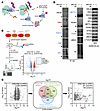 Figure 9
Systematic profiling of the protein degradation landscape induced by SPOP inhibition. (A) Schematic diagram of the hypothesis that 6lc binding to SPOP not only disrupts SPOP interactions with its bona fide substrates, resulting in STING accumulation, but also recruits neosubstrates to SPOP for regulation, which triggers DNA damage, STING activation, and immune response. (B) Workflow of detecting 6lc-induced protein ubiquitination. Control and SPOP-depleted A2058 cells were lysed after 12 h of treatment with 10 μM 6lc. Ubiquitinated peptides with diglycine tag resulting from trypsin digestion were enriched by K-ε-GG immunoaffinity beads, followed by quantitative LC-MS/MS analysis. Candidates regulating DNA damage were selected from 6lc-induced SPOP-dependent ubiquitinated proteins for validation. (C) Selection of candidates from all ubiquitinated proteins significantly changed upon 6lc treatment. Left volcano plot shows K-ε-GG peptides significantly changed (q value < 0.05, log2 fold change < −0.6 or > 0.6) in shScr cells after 6lc treatment. Hits in blue are peptides of SPOP substrates downregulated after 6lc treatment. Middle Venn diagram shows among 11,502 peptides belonging to 3,625 proteins, 221 peptides belonging to 182 proteins were at least 2-fold more enriched in shScr+6lc than in shScr, in shScr+6lc (vs. shScr) than in shSPOP+6lc (vs. shScr), and in shScr+6lc (vs. shScr) than in shSPOP+6lc (vs. shSPOP). In the right volcano plot, top hits in red with DNA damage–regulating function were selected for validation. (D) IB analyses of HA-IP and WCL derived from HA-Ub–expressing A2058 cells treated with 10 μM 6lc and 10 μM MG132 for 12 h. Arrowheads indicate positions of full-length proteins. Representative experiments shown in figures were repeated at least 2 times independently with similar results.
We further hypothesized that SPOP/6lc-induced degradation of the true hit(s) would cause DNA damage prior to STING activation. Time-course analysis revealed only CBX4 degradation preceded STING activation in 6lc-treated A2058 and 786-o cells (Figure 10A and Supplemental Figure 5, C and D). 6lc promoted CBX4 K48-linked ubiquitination and proteasomal degradation in a SPOP/Cul3-dependent manner (Figure 10, B and C, and Supplemental Figure 5F). CBX4 protein was not affected by SPOP depletion (Figure 10D), indicating CBX4 is not a natural SPOP substrate, nor was it affected by 6lc (Figure 10E), ruling out transcriptional regulation. In vitro pulldown confirmed that SPOP binds CBX4 only in the presence of 6lc (Figure 10F and Supplemental Figure 5, G and H). The CBX4-K114R mutant resisted 6lc-induced ubiquitination and degradation (Supplemental Figure 5, I and J).
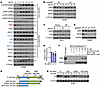 Figure 10
CBX4 is a neosubstrate for SPOP/6lc to control DNA damage. (A) IB analyses of A2058 cells treated with 20 μM 6lc for indicated periods. On the right side are starting time points of protein level changes. (B) IB analyses of control and SPOP-depleted A2058 cells treated with 20 μM 6lc for indicated periods. (C) IB analyses of control and CUL3-depleted 786-o cells treated with 20 μM 6lc for 12 h. (D) IB analyses of control and SPOP-depleted A2058 cells. (E) RT-PCR analyses of A2058 cells treated with 20 μM 6lc for indicated periods. Data are shown as mean ± SD, n = 3. No statistical significance between any groups (2-tailed unpaired Student’s t test). (F) In vitro streptavidin pull-down assay using indicated dose of compounds and purified proteins. (G) Schematic of CBX4 backbone, SUMO-interacting motifs SIM1 and SIM2, and truncations used in H. Full-length CBX4 (FL) consists of a chromodomain (CD), the 2 intrinsically disordered domains P2 and P3, and a CBox domain. (H) IB analyses of HA-CBX4-FL and truncations in A2058 cells upon 20 μM 6lc treatment for indicated periods. Quantification of relative HA grayscale values is shown. Representative experiments shown in figures were repeated at least 2 times independently with similar results.
CBX4, a SUMO E3 ligase in PRC1 (50), uses its chromodomain and SUMO-interacting domains (SIMs) for function (Figure 10G). Truncation of its C-terminal region abolished 6lc-mediated degradation (Figure 10H), suggesting this region contains the neodegron. Together, these results support CBX4 as a bona fide neosubstrate for SPOP/6lc, revealing that 6lc functions as a molecular glue that recruits CBX4 to SPOP for degradation, which in turn induces DNA damage.
CBX4 is a neosubstrate for SPOP/6lc to control DNA damage response. We next tested whether SPOP/6lc-induced CBX4 degradation triggers DNA damage. CBX4 depletion increased DNA damage, as shown by elevated pChk1 levels and γH2AX signals, as well as cytosolic dsDNA/cGAS foci (Figure 11A and Supplemental Figure 6, A–C). Ectopic CBX4 partially rescued 6lc-induced CBX4 degradation, DNA damage, and cytosolic dsDNA accumulation (Figure 11, B–F, and Supplemental Figure 6, D and E), reducing STING activation and ISG production (IFN-β, CCL5, and CXCL10; Figure 11G). Conversely, CBX4-depleted cells were resistant to 6lc-induced DNA damage and dsDNA accumulation (Supplemental Figure 6, F–H), supporting CBX4 as a key SPOP/6lc neosubstrate that mediates STING activation.
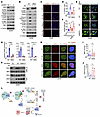 Figure 11
6lc triggers DNA damage through the CBX4/BMI1/H2A axis. (A) IB analyses of control and CBX4-depleted A2058 cells. (B) IB analyses in control and CBX4-overexpressing A2058 cells treated with 20 μM 6lc for 12 h. (C, E, G, and H) γH2AX immunofluorescence (C), dsDNA immunofluorescence (E), RT-PCR analyses (G), and BMI1/CBX4 immunofluorescence (H) in control and CBX4-overexpressing A2058 cells treated with 20 μM 6lc for 12 h. Scale bars: 50 μm (C), 30 μm (E), 10 μm (H). (D and F) Quantifications of rH2Ax foci (D) from C and dsDNA MFI cells (F) from E. (I and J) Quantifications of BMI1 (I) or CBX4 (J) foci from H. Data are shown as mean ± SD; n = 8 (D), n = 14–21 (F), n = 3 (G), and n = 55–65 (I and J). (K) IB analyses of BMI1-IP and WCL derived from A2058 cells overexpressing CBX4-WT and -ΔSIM1/2. (L) A schematic diagram of 6lc-mediated CBX4 degradation, DNA damage, and STING activation. DSB, double-strand break; PHC, polyhomeotic homolog. Detailed information is given in Results. One-way ANOVA followed by Tukey’s multiple-comparison test (D, F, and G) or Kruskal-Wallis test followed by Dunn’s test (I and J). *P < 0.05. Representative experiments shown in figures were repeated at least 2 times independently with similar results.
CBX4, besides promoting cancer progression (51) and metastasis (52), maintains genome stability via SUMOylation of BMI1 (53), which recruits BMI1 to DNA damage foci (54) for repair (55). Consistently, 6lc reduced CBX4 and BMI1 foci, while ectopic CBX4 restored BMI1 foci and H2AX interactions (Figure 11, H–K). A SUMO E3 ligase–deficient CBX4 mutant (ΔSIM1/2) failed to rescue BMI1 recruitment (Figure 11K and Supplemental Figure 6, I–K). These data support a model in which 6lc both stabilizes STING by blocking SPOP binding and glues CBX4 to SPOP for degradation, impairing BMI1-mediated DNA repair. The resulting DNA damage activates STING, promoting tumor innate immunity and enhancing immune cell infiltration to improve therapeutic responses (Figure 11L).
SPOP inhibition enhances the antitumor effects of checkpoint blockades and CAR T cells. ICBs are pivotal in metastatic melanoma (56, 57), but response rates are influenced by tumor-infiltrating lymphocytes and the tumor microenvironment (58). Since SPOP inhibition stabilizes and activates STING, triggering IFN and ISG production, which could promote immune cell infiltration (59), we evaluated whether SPOP inhibitors enhance ICB efficacy in melanoma models. Using the anti–PD-1–resistant B16 C57BL/6 model (60, 61), mice were treated daily with the SPOP inhibitor 6b and tumors collected on day 13 for scRNA-seq of FACS-sorted CD45+ cells (Figure 12A). The 6b treatment increased B cells (cluster 1), plasma cells (cluster 2), macrophages (cluster 3), and memory CD4+ T cells (cluster 4), which are associated with anti–PD-1 response (Figure 12, B and C, and Supplemental Figure 7, A and B) (62–64). CD8+ populations were largely unchanged, but PD-L1 expression was upregulated in plasma cells, naive CD8+ T cells, macrophages, and CD36+ monocytes (Supplemental Figure 7C).
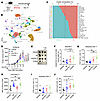 Figure 12
SPOP inhibition enhances immunotherapy effects in murine models. (A) Schematic of the syngeneic B16 melanoma model in which tumor-bearing mice were treated with/without 6b for scRNA-seq analysis. (B) UMAP plot of cells profiled from 2 groups; clusters are annotated based on expression patterns of characteristic genes. (C) Composition of each cluster from A. (D) Tumor volume measurements at indicated days after cell inoculation. Arrowheads indicate treatment schedule of indicated agents. Data are shown as mean ± SEM. Vehicle, 6b, and anti–PD-1: n = 9; Combo: n = 8. (E) Representative images of tumors isolated from D. Scale bar: 1 cm. (F–J) The absolute percentages of T cells (F), CD4+ T cells (G), MFI of IFN-γ in CD4+ cells (H), CD8+ T cells (I), and percentage of Granzyme B+ (GrzB+) cells in CD8+ T cells (J) in implanted B16 tumors from mice treated with indicated agents were analyzed by flow cytometry. Data are shown as mean ± SEM; n = 8 (H); vehicle, 6b, and anti–PD-1: n = 7 (F, G, I, and J); Combo: n = 6 (F, G, I, and J). Two-way (D) or one-way ANOVA (F–J) followed by Tukey’s multiple-comparison test. *P < 0.05, **P < 0.01.
Functionally, 6b or anti–PD-1 alone showed limited efficacy, whereas the combination significantly reduced tumor growth with minimal toxicity (Figure 12, D and E, and Supplemental Figure 8A). FACS and IHC analyses confirmed enrichment of intratumor CD4+ T cells, particularly IFN-γ+ activated cells (Figure 12, F–H, and Supplemental Figure 8B), and increased activated CD8+ (GrzB+) T cells (Figure 12, I and J). Although macrophages increased, 6b shifted polarization from M1 to M2 (Supplemental Figure 8, C–G), suggesting macrophage changes do not mediate the antitumor effect. Similar results were observed using the SPOP inhibitor 6lc (Supplemental Figure 8, H and I).
Importantly, the combination of 6b and anti–PD-1 markedly inhibited WT-B16 tumor growth, but not STING-depleted tumors (Figure 13, A–C), indicating that 6b’s antitumor effect depends on SPOP/STING signaling. Analysis of the Tumor Immunotherapy Gene Expression Resource further showed that melanoma patients with high SPOP expression had poorer responses to anti–PD-1 therapy (Figure 13D), likely due to reduced STING levels and lower tumor-infiltrating immune cells.
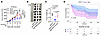 Figure 13
The enhanced immunotherapeutic effects of SPOP inhibition depend on tumor-intrinsic STING. (A) Tumor volume measurements at indicated days after cell inoculation. Arrowheads indicate treatment schedule of indicated agents. Data are shown as mean ± SEM, n = 7. (B and C) Representative images of tumors (B) isolated from A and tumor weight (C). Scale bar: 1 cm. (D) Kaplan-Meier survival curve of anti–PD-1–treated melanoma patients with high or low expression of SPOP mRNA. The image is based on the SPOP-Melanoma-PRJEB23709_anti-PD-1-None-None-0.5-survival dataset in the Tumor Immunotherapy Gene Expression Resource database (http://tiger.canceromics.org/#/). Two-way ANOVA followed by Tukey’s multiple-comparison test (A) or 1-way ANOVA followed by Fisher’s LSD test (C).
Using the B16-OVA-hCD19 model (61, 65–67), we tested CAR.CD19-T cell therapy with or without 6lc (5 doses, 20 mg/kg) (Figure 14A). The combination of 6lc and CAR.CD19-T cells markedly improved tumor control (Figure 14, B and C) and increased infiltration of both CAR T and CD4+ T cells (Figure 14, D–H). These results indicate that SPOP inhibition enhances the efficacy of both ICB and CAR T therapies by promoting CD4+ T cell–mediated antitumor immunity, highlighting its potential to boost diverse immunotherapy approaches.
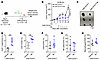 Figure 14
SPOP inhibition enhances CAR T cell effects in xenografted B16 melanoma models. (A) Schematic of the B16-OVA-hCD19 melanoma model in which tumor-bearing mice were lymphodepleted with cyclophosphamide (Cy) and then treated with CD19-CAR T cells intravenously and following treatment with/without 6lc, 5 times every 2–3 days. (B) Measurement of the tumor volume at indicated days after cell inoculation. Arrowheads indicate treatment schedule of indicated cells and agents. Data are shown as mean ± SEM. CAR.CD19-T: n = 4; CAR.CD19-T+6lc, n = 5 (2-way ANOVA followed by Tukey’s multiple-comparison test). (C) Representative images of tumors isolated from B. Scale bar: 1 cm. (D–H) Percentages of CAR T (D), CD4+ (E), CD8+ (F), NK (G), macrophages (H) in CD45+ cells from B16-OVA-hCD19 tumors in B. Data are shown as mean ± SEM. Vehicle: n = 4; 6lc: n = 5. Two-tailed unpaired Student’s t test. **P < 0.01.


Copyright © 2026 American Society for Clinical Investigation
ISSN: 0021-9738 (print), 1558-8238 (online)