
Issue published December 1, 2025 Previous issue | Next issue

- Volume 135, Issue 23
On the cover:
Carboxypeptidase D deficiency causes hearing loss
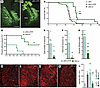
Ramzan et al. report that changes in the carboxypeptidase D gene cause congenital hearing loss by harming inner ear cells and suggest a potential therapeutic strategy targeting the nitric oxide pathway. The cover art is a modified version of confocal micrographs showing immunolabeled neuronal membranes, cap rods, scolopale rods, and actin bundles within the cilium in Johnston’s organ, a component of the auditory system required for sensing gravity, wind flow, and near-field sound. Image credit: Natalie Ortiz-Vega, Memoona Ramzan, Thomas J. Diefenbach, and Chong Li.
Ramzan et al. report that changes in the carboxypeptidase D gene cause congenital hearing loss by harming inner ear cells and suggest a potential therapeutic strategy targeting the nitric oxide pathway. The cover art is a modified version of confocal micrographs showing immunolabeled neuronal membranes, cap rods, scolopale rods, and actin bundles within the cilium in Johnston’s organ, a component of the auditory system required for sensing gravity, wind flow, and near-field sound. Image credit: Natalie Ortiz-Vega, Memoona Ramzan, Thomas J. Diefenbach, and Chong Li.
Go to section:
-
Viewpoints
×
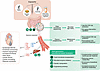
Gut microbial metabolite connections to cardiovascular disease call for gutsy therapeutic approaches
Abstract
Authors
Frank Ruschitzka, Antonio Vidal-Puig, Seyed Soheil Saeedi Saravi

-
Commentaries
×
Abstract
Loss of circulating insulin resulting from autoimmune destruction of β cells is the defining characteristic of type 1 diabetes (T1D), but islet dysfunction in T1D affects both β cells and α cells. Advances in multiomic analyses and the systematic collection of diseased human pancreata are enabling new approaches for diabetes research; hypotheses can be generated from observations in the affected human tissue and then tested in human islets, stem cell–derived islets, or humanized mice. The study by dos Santos and colleagues that appears in this issue of the JCI is an excellent example of the advantages and challenges posed by this approach. Through integrated analyses that combined electrophysiological and transcriptomic profiling, the authors provided detailed insights into the mechanisms leading to α cell dysfunction in islets from individuals with T1D.
Authors
Decio L. Eizirik, Priscila L. Zimath
×Abstract
Type 2 diabetes mellitus affects over 38 million Americans, with diabetic kidney disease as a major complication partly driven by lipotoxicity. Fatty acid transport protein 2 (FATP2) regulates uptake and activation of long-chain fatty acids, making it a therapeutic target in metabolic disease. In this issue of the JCI, Khan et al. investigated FATP2 in glycemic control. In db/db mice, global FATP2 deletion reduced plasma glucose via sustained insulin secretion, with expression restricted to pancreatic α cells. FATP2-deficient db/db mice also showed suppressed glucagon and reduced alanine-stimulated gluconeogenesis, implicating α cell FATP2 in systemic glucose regulation. The FATP2-specific inhibitor lipofermata enhanced α cell–derived glucagon-like peptide 1 (GLP-1) secretion, expanded GLP-1–positive α cell mass, and promoted paracrine insulin release — effects reversed by GLP-1 receptor antagonism. These findings identify FATP2 as a key regulator linking lipid handling to α cell hormone secretion and glucose control, positioning its inhibition as a potential complement to incretin-based therapies.
Authors
Paul N. Black, Concetta C. DiRusso
×Abstract
The aryl hydrocarbon receptor (AhR) is increasingly recognized as a physiologic modulator of the immune response, a function that extends beyond its established role as a sensor for environmental xenobiotics. In a recent report published in the JCI, Cros et al. demonstrate that the AhR restrains tonic, microbiota-driven inflammatory cytokine production in monocytes. Through the combined use of murine models, human ex vivo systems, and the analysis of patient-derived data, Cros and coworkers established that the AhR limits stimulator of IFN gene–induced (STING-induced) proinflammatory signals. These findings define cell type–specific physiologic roles for the AhR in the regulation of innate immunity and underscore its potential as a therapeutic target for the treatment of inflammatory and autoimmune diseases.
Authors
Jessica E. Kenison, Francisco J. Quintana
×Abstract
Estrogen receptor α (ESR1) is a pivotal regulator of endometrial homeostasis and reproductive function, yet the coregulators that fine tune its transcriptional activity remain incompletely defined. In this issue of the JCI, Hewitt et al. identified Zinc finger MIZ-type containing 1 (ZMIZ1) as an ESR1 coregulator that is essential for stromal proliferation, decidualization, and overall endometrial integrity. ZMIZ1 deficiency was associated with endometriosis and endometrial cancer, and conditional ablation of Zmiz1 using the PgrCre mouse led to infertility and accelerated fibrosis due to impaired estrogen responsiveness. These findings position ZMIZ1 as a key modulator of estrogen signaling with translational potential as both a biomarker and a therapeutic target in uterine disorders.
Authors
Md Saidur Rahman, Kyeong A So, Jae-Wook Jeong


-
Research Letter
×
Abstract
Authors
Bowen Yan, Qingchen Yuan, Marco M. Buttigieg, Prabhjot Kaur, Annalisse R. McKee, Daniil E. Shabashvili, Caitlyn Vlasschaert, Alexander G. Bick, Michael J. Rauh, Olga A. Guryanova

-
Research Articles
×
Abstract
Teplizumab, a humanized anti-CD3 mAb, represents a breakthrough in autoimmune type 1 diabetes (T1D) treatment, by delaying clinical onset in stage 2 and slowing progression in early stage 3 of the disease. However, therapeutic responses are heterogeneous. To better understand this variability, we applied single-cell transcriptomics to paired peripheral blood and pancreas samples from anti–mouse CD3–treated nonobese diabetic (NOD) mice and identified distinct gene signatures associated with the therapy outcome, with consistent patterns across compartments. Success-associated signatures were enriched in NK or CD8+ T cells and other immune cell types, whereas resistance signatures were predominantly expressed by neutrophils. The immune cell communities underlying these response signatures were confirmed in human whole blood sequencing data from the Autoimmunity-blocking Antibody for Tolerance (AbATE) study at 6 months, which assessed teplizumab therapy in individuals with stage 3 T1D. Furthermore, baseline expression profiling in the human TrialNet Anti-CD3 Prevention (TN10) (stage 2) and AbATE (stage 3) cohorts identified immune signatures predictive of therapy response, T cell–enriched signatures in responders, and neutrophil-enriched signatures in nonresponders, highlighting the roles of both adaptive and innate immunity in determining teplizumab treatment outcomes. Using an elastic net logistic regression model, we developed a 26-gene blood-based signature predicting the response to teplizumab (AUC = 0.97). These findings demonstrate the predictive potential of immune gene signatures and the value of transcriptomics profiling in guiding individualized treatment strategies with teplizumab in individuals with T1D.
Authors
Gabriele Sassi, Pierre Lemaitre, Laia Fernández Calvo, Francesca Lodi, Álvaro Cortés Calabuig, Samal Bissenova, Amber Wouters, Laure Degroote, Marijke Viaene, Niels van Damme, Lauren Higdon, Peter S. Linsley, S. Alice Long, Chantal Mathieu, Conny Gysemans
×Abstract
Impaired glucose-stimulated insulin secretion (GSIS) is a hallmark of β cell dysfunction in diabetes. Epigenetic mechanisms govern cellular glucose sensing and GSIS by β cells, but they remain incompletely defined. Here, we found that BAF60a functions as a chromatin regulator that sustains biphasic GSIS and preserves β cell function under metabolic stress conditions. BAF60a was downregulated in β cells from obese and diabetic mice, monkeys, and humans. β cell–specific inactivation of BAF60a in adult mice impaired GSIS, leading to hyperglycemia and glucose intolerance. Conversely, restoring BAF60a expression improved β cell function and systemic glucose homeostasis. Mechanistically, BAF60a physically interacted with Nkx6.1 to selectively modulate chromatin accessibility and transcriptional activity of target genes critical for GSIS coupling in islet β cells. A BAF60a V278M mutation associated with decreased β cell GSIS function was identified in human donors. Mice carrying this mutation, which disrupted the interaction between BAF60a and Nkx6.1, displayed β cell dysfunction and impaired glucose homeostasis. In addition, GLP-1R and GIPR expression was significantly reduced in BAF60a-deficient islets, attenuating the insulinotropic effect of GLP-1R agonists. Together, these findings support a role for BAF60a as a component of the epigenetic machinery that shapes the chromatin landscape in β cells critical for glucose sensing and insulin secretion.
Authors
Xinyuan Qiu, Ruo-Ran Wang, Qing-Qian Wu, Hongxing Fu, Shuaishuai Zhu, Wei Chen, Wen Wang, Haide Chen, Xiuyu Ji, Wenjing Zhang, Dandan Yan, Jing Yan, Li Jin, Rong Zhang, Mengjie Shi, Ping Luo, Yingqing Yang, Qintao Wang, Ziyin Zhang, Wei Ding, Xiaowen Pan, Chengbin Li, Bin Liang, Guoji Guo, Hai-long Piao, Min Zheng, Sheng Yan, Lingyun Zhu, Cheng Hu, Zhuo-Xian Meng
×Abstract
Tregs are critical for maintaining immune homeostasis, and their adoptive transfer can treat murine inflammatory disorders. In patients, Treg therapies have been variably efficacious. Therefore, new strategies to enhance Treg therapeutic efficacy are needed. Tregs predominantly depend on oxidative phosphorylation (OXPHOS) for energy and suppressive function. Fatty acid oxidation (FAO) contributes to Treg OXPHOS and can be important for Treg “effector” differentiation, but FAO activity is inhibited by coordinated activity of the isoenzymes acetyl-CoA carboxylase-1 and -2 (ACC1 and ACC2). Here, we show that small-molecule inhibition or Treg-specific genetic deletion of ACC1 significantly increases Treg suppressive function in vitro and in mice with established chronic graft-versus-host disease. ACC1 inhibition skewed Tregs toward an “effector” phenotype and enhanced FAO-mediated OXPHOS, mitochondrial function, and mitochondrial fusion. Inhibiting mitochondrial fusion diminished the effect of ACC1 inhibition. Reciprocally, promoting mitochondrial fusion, even in the absence of ACC1 modulation, resulted in a Treg functional and metabolic phenotype similar to that seen with ACC1 inhibition, indicating a key role for mitochondrial fusion in Treg-suppressive potency. Ex vivo–expanded, ACC1 inhibitor–treated human Tregs similarly augmented suppressor function, as observed with murine Tregs. Together, these data suggest that ACC1 manipulation may be exploited to modulate Treg function in patients.
Authors
Cameron McDonald-Hyman, Ethan G. Aguilar, Ewoud B. Compeer, Michael C. Zaiken, Stephanie Y. Rhee, Fathima A. Mohamed, Jemma H. Larson, Michael L. Loschi, Christopher Lees, Govindarajan Thangavelu, Margaret L. Sleeth, Kyle D. Smith, Jennifer S. Whangbo, Jerome Ritz, Tim D. Sparwasser, Roddy S. O’Connor, Peter A. Crawford, Jeffrey C. Rathmell, Leslie S. Kean, Robert Zeiser, Keli L. Hippen, Michael L. Dustin, Bruce R. Blazar
×Abstract
Tay-Sachs disease (TSD) and Sandhoff disease are fatal neurodegenerative diseases without an effective therapy that are caused by mutations in the HEXA and HEXB genes, respectively. Together they encode the heterodimeric isozyme of hexosaminidase, hexosaminidase A (HexA), that degrades GM2 ganglioside. This report describes a 5-year-long study using a bidirectional adeno-associated virus 9 (AAV9) vector (AAV9-Bic_HexA/HexB) encoding both HEXA and HEXB in the TSD sheep model. Bidirectional AAV9 was delivered i.v. or through various cerebrospinal fluid (CSF) delivery routes: intracerebroventricular (ICV), cisterna magna (CM), and lumbar intrathecal space (LIT). The longest survival and best distribution were achieved by multipoint CSF delivery (combined CM, ICV, and LIT) with treated animals that survived up to 5 years of age (untreated animals with TSD die after ~9 months). Extension in survival was accompanied by lasting improvement in neurological examination and maze testing. Improvement in biomarkers of efficacy, including MRI, magnetic resonance spectroscopy, diffusion tensor imaging, and CSF levels of GM2 ganglioside and HexA activity, was evident. Postmortem assessments showed broad HexA distribution, GM2 ganglioside clearance, and vector genome distribution, especially in deep brain structures. Therapeutic efficacy documented in this study supports translation of bidirectional vector and multipoint CSF delivery to a clinical trial in patients with TSD and Sandhoff disease.
Authors
Toloo Taghian, Jillian Gallagher, Stephanie Bertrand, William C. Baker, Kalajan Lopez Mercado, Hector R. Benatti, Erin Hall, Yvette Lopez, Abigail McElroy, John T. McCarthy, Sanjana Pulaparthi, Deborah Fernau, Samuel Mather, Sophia Esteves, Elise Diffie, Amanda Gross, Hannah G. Lahey, Xuntian Jiang, Elizabeth Parsley, Rachael Gately, Rachel Prestigiacomo, Siauna Johnson, Amanda Taylor, Lindsey Bierfeldt, Susan Tuominen, Jennifer Koehler, Guangping Gao, Jun Xie, Qin Su, Robert King, Matthew J. Gounis, Vania Anagnostakou, Ajit Puri, Ana Rita Batista, Miguel Sena-Esteves, Douglas R. Martin, Heather Gray-Edwards
×Abstract
Charcot-Marie-Tooth (CMT) disease is a clinically and genetically heterogeneous group of hereditary neuropathies. Despite progress in genetic sequencing, for around a quarter of patients the disease has lacked a genetic explanation. Here, we identified 16 recessive variants in the RhoGTPase activating protein 19 gene (ARHGAP19) causing motor-predominant neuropathy in 25 individuals from 20 unrelated families. The ARHGAP19 protein acts as a negative regulator of the RhoA GTPase. In vitro biochemical and cellular assays revealed that patient variants impair the GTPase-activating protein (GAP) activity of ARHGAP19 and reduce ARHGAP19 protein levels. Through the use of patient lines, in vitro GAP assays and in silico molecular modeling, we provided evidence that CMT-associated ARHGAP19 variants act through a loss-of-function (LOF) mechanism. LOF in ARHGAP19 orthologues in Drosophila melanogaster and Danio rerio induced motor defects in axonal and synaptic morphology. Similar cellular phenotypes were observed in ARHGAP19 patient-derived motoneurons. Transcriptomic studies further demonstrated that ARHGAP19 regulates cellular pathways associated with motor proteins and the cell cycle. Taken together, our findings establish ARHGAP19 variants as a cause of inherited neuropathy acting through a LOF mechanism.
Authors
Natalia Dominik, Stephanie Efthymiou, Christopher J. Record, Xinyu Miao, Renee Q. Lin, Jevin M. Parmar, Annarita Scardamaglia, Reza Maroofian, Simon A. Lowe, Gabriel N. Aughey, Abigail D. Wilson, Riccardo Curro, Ricardo P. Schnekenberg, Shahryar Alavi, Leif Leclaire, Yi He, Kristina Zhelcheska, Yohanns Bellaïche, Isabelle Gaugué, Mariola Skorupinska, Liedewei Van de Vondel, Sahar I. Da’as, Valentina Turchetti, Serdal Güngör, Gavin V. Monahan, Ehsan Ghayoor Karimiani, Yalda Jamshidi, Phillipa J. Lamont, Camila Armirola-Ricaurte, Haluk Topaloglu, Albena Jordanova, Mashaya Zaman, Selina H. Banu, Wilson Marques, Pedro J. Tomaselli, Busra Aynekin, Ali Cansu, Huseyin Per, Ayten Güleç, Javeria Raza Alvi, Tipu Sultan, Arif Khan, Giovanni Zifarelli, Shahnaz Ibrahim, Grazia M. S. Mancini, M.M. Motazacker, Esther Brusse, Vincenzo Lupo, Teresa Sevilla, A. Nazli Başak, Seyma Tekgul, Robin J. Palvadeau, Jonathan Baets, Yesim Parman, Arman Çakar, Rita Horvath, Tobias B. Haack, Jan-Hendrik Stahl, Kathrin Grundmann-Hauser, Joohyun Park, Stephan Zuchner, Nigel G. Laing, Lindsay A. Wilson, Alexander M. Rossor, James Polke, Fernanda Barbosa Figueiredo, André Pessoa, Fernando Kok, Antônio Rodrigues Coimbra-Neto, Marcondes C. Franca Jr, Gianina Ravenscroft, Sherifa A. Hamed, Wendy K. Chung, Alan M. Pittman, Daniel P. Osborn, Michael Hanna, Andrea Cortese, Mary M. Reilly, James E.C. Jepson, Nathalie Lamarche-Vane, Henry Houlden
×Abstract
Genetic factors are fundamental in the etiology of thoracic aortic aneurysm and dissection (TAAD), but the genetic cause is detected in only about 30% of cases. To define unreported TAAD-associated sequence variants, exome and gene panel sequencing was performed in 323 patients. We identified heterozygous CDKL1 variants [c.427T>C p.(Cys143Arg), c.617C>T p.(Ser206Leu), and c.404C>T p.(Thr135Met)] in 6 patients from 3 families with TAAD spectrum disorders. CDKL1 encodes a protein kinase involved in ciliary biology. Amino acid substitutions were predicted to affect CDKL1 catalytic activity or protein binding properties. CDKL1 was expressed in vascular smooth muscle cells in normal and diseased human aortic wall tissue. Cdkl1 knockdown and transient knockout in zebrafish resulted in intersomitic vessel (ISV) malformations and aortic dilation. Coinjection of human CDKL1wild-type RNA, but not CDKL1Cys143Arg and CDKL1Ser206Leu RNA, rescued ISV malformations. All variants affected CDKL1 kinase function and profiling data, and altered protein-protein binding properties, particularly with ciliary transport molecules. Expression of CDKL1 variants in heterologous cells interfered with cilia formation and length, CDKL1 localization, and p38 MAPK and Vegf signaling. Our data suggest a role of CDKL1 variants in the pathogenesis of TAAD spectrum disorders. The association between primary cilia dysregulation and TAAD expands our knowledge of the underlying molecular pathophysiology.
Authors
Theresa Nauth, Melanie Philipp, Sina Renner, Martin D. Burkhalter, Helke Schüler, Ceren Saygi, Kristian Händler, Bente Siebels, Alice Busch, Thomas Mair, Verena Rickassel, Sophia Deden, Konstantin Hoffer, Jakob Olfe, Thomas S. Mir, Yskert von Kodolitsch, Evaldas Girdauskas, Meike Rybczynski, Malte Kriegs, Hannah Voß, Thomas Sauvigny, Malte Spielmann, Malik Alawi, Susanne Krasemann, Christian Kubisch, Till J. Demal, Georg Rosenberger
×Abstract
Adams-Oliver syndrome (AOS) is a rare congenital disorder characterized by scalp, limb, and cardiovascular defects. Although variants in the NOTCH1 receptor, DLL4 ligand, and RBPJ transcription factor have been implicated in AOS, the driving tissue types and molecular mechanisms by which these variants cause pathogenesis are unknown. Here, we used quantitative binding assays to show that AOS-associated RBPJ missense variants compromise DNA binding but not cofactor binding. These findings suggest that AOS-associated RBPJ variants do not function as loss-of-function alleles but instead act as dominant-negative proteins that sequester cofactors from DNA. Consistent with this idea, mice carrying an AOS-associated Rbpj allele develop dominant phenotypes that include increased lethality and cardiovascular defects in a Notch1 heterozygous background, whereas Notch1 and Rbpj compound heterozygous null alleles are well tolerated. To facilitate studies into the tissues driving AOS pathogenesis, we employed conditional genetics to isolate the contribution of the vascular endothelium to the development of AOS-like phenotypes. Importantly, our studies show that expression of the Rbpj AOS allele in endothelial cells is both necessary and sufficient to cause lethality and cardiovascular defects. These data establish that reduced Notch1 signaling in the vasculature is a key driver of pathogenesis in this AOS mouse model.
Authors
Alyssa F. Solano, Kristina Preusse, Brittany Cain, Rebecca Hotz, Parthav Gavini, Zhenyu Yuan, Benjamin Bowen, Gabrielle Maco, Hope Neal, Ellen K. Gagliani, Christopher Ahn, Hee-Woong Lim, Laura Southgate, Rhett A. Kovall, Raphael Kopan, Brian Gebelein
×Abstract
Deficits in the mitochondrial energy–generating machinery cause mitochondrial disease, a group of untreatable and usually fatal disorders. Refractory epileptic events are a common neurological presentation of mitochondrial disease, including Leigh syndrome, a severe form of mitochondrial disease associated with epilepsy. However, the neuronal substrates and circuits for mitochondrial disease–induced epilepsy remain unclear. Here, using mouse models of Leigh syndrome that lack mitochondrial complex I subunit NDUFS4 in a constitutive or conditional manner, we demonstrated that mitochondrial dysfunction leads to a reduction of GABAergic neurons in the rostral external globus pallidus (GPe) and identified a specific affectation of pallidal Lhx6–expressing inhibitory neurons contributing to altered GPe excitability. Our findings revealed that viral vector–mediated Ndufs4 reexpression in the GPe effectively prevented seizures and improved survival in the models. Additionally, we highlight the subthalamic nucleus (STN) as a critical structure in the neural circuit involved in mitochondrial epilepsy, as its inhibition effectively reduces epileptic events. Thus, we have identified a role for pallido-subthalamic projections in epilepsy development in the context of mitochondrial dysfunction. Our results suggest STN inhibition as a potential therapeutic intervention for refractory epilepsy in patients with mitochondrial disease, providing promising leads in the quest to identify effective treatments.
Authors
Laura Sánchez-Benito, Melania González-Torres, Irene Fernández-González, Laura Cutando, María Royo, Joan Compte, Miquel Vila, Sandra Jurado, Elisenda Sanz, Albert Quintana
×Abstract
The intratumor microenvironment shapes the metastatic potential of cancer cells and their susceptibility to any immune response. Yet, the nature of the signals within the microenvironment that control anticancer immunity and how they are regulated is poorly understood. Here, using melanoma as a model, we investigate the involvement in metastatic dissemination and the immune-modulatory microenvironment of Protein S-Acyl Transferases as an underexplored class of potential therapeutic targets. We find that ZDHHC13 suppresses metastatic dissemination by palmitoylation of CTNND1, leading to stabilization of E-cadherin. Importantly, ZDHHC13 also reshapes the tumor immune microenvironment by suppressing lysophosphatidylcholine (LPC) synthesis in melanoma cells, leading to inhibition of M2-like tumor-associated macrophages that we show degrade E-cadherin via MMP12 expression. Consequently, ZDHHC13 activity suppresses tumor growth and metastasis in immunocompetent mice. Our study highlights the therapeutic potential of targeting the ZDHHC13–E-cadherin axis and its downstream metabolic and immune-modulatory mechanisms, offering additional strategies to inhibit melanoma progression and metastasis.
Authors
Hongjin Li, Jianke Lyu, Yu Sun, Chengqian Yin, Yuewen Li, Weiqiang Chen, Suan-Sin Foo, Xianfang Wu, Colin R. Goding, Shuyang Chen
×Abstract
Influenza type A viruses (IAVs) remain an extraordinary burden to global public health and regularly circulate through human populations. This investigation describes the isolation of human mAbs from an individual with a substantial history of influenza exposure via vaccination and natural infection. From these mAbs, a clonally expanded B cell lineage was identified that recognizes the IAV neuraminidase (NA) glycoprotein and binds near the NA active site of H3N2 viruses to inhibit sialidase activity. Further characterization found that some somatically mutated members of this lineage exhibited cross-reactive binding to recombinant N1 and N9 antigens, suggesting that heterosubtypic reactivity was acquired through somatic mutation. Two candidate mAbs from this family — FluA-168 and FluA-173 — potently inhibited IAV replication in vitro and protected against lethality in vivo. The results of this study contribute to our understanding of cross-reactivity between IAV subtypes in response to diverse exposure patterns and identified 2 mAbs as potential therapeutic candidates for IAV infection.
Authors
Ty A. Sornberger, Rachael M. Wolters, Iuliia M. Gilchuk, Luke Myers, Elad Binshtein, Ryan Irving, Elaine C. Chen, Pavlo Gilchuk, Rachel S. Nargi, Rachel E. Sutton, Bethany N. Howard, Laura S. Handal, Andrew Trivette, Katherine E. Webb, Chandrahaas Kona, Eduardo Villalobos, Lauren E. Williamson, James E. Crowe Jr., Seth J. Zost
×Abstract
Immune cells are constantly exposed to microbiota-derived compounds that can engage innate recognition receptors. How this constitutive stimulation is downmodulated to avoid systemic inflammation and autoimmunity is poorly understood. Here, we show that aryl hydrocarbon receptor (AhR) deficiency in monocytes unleashed spontaneous cytokine responses in vivo, driven by stimulator of interferon genes (STING)-mediated tonic sensing of microbiota. This effect was specific to monocytes, as mice deficient for AhR specifically in macrophages did not show any dysregulation of tonic cytokine responses. AhR inhibition also increased tonic cytokine production in human monocytes. Finally, in patients with systemic juvenile idiopathic arthritis, low AhR activity in monocytes correlated with elevated cytokine responses. Our findings reveal an essential role for AhR in monocytes in restraining tonic microbiota sensing and in maintaining immune homeostasis.
Authors
Adeline Cros, Alessandra Rigamonti, Alba de Juan, Alice Coillard, Mathilde Rieux-Laucat, Darawan Tabtim-On, Emeline Papillon, Christel Goudot, Alma-Martina Cepika, Romain Banchereau, Virginia Pascual, Marianne Burbage, Burkhard Becher, Elodie Segura
×Abstract
Single-cell studies have revealed that intestinal macrophages maintain gut homeostasis through the balanced actions of reactive (inflammatory) and tolerant (noninflammatory) subpopulations. How such balance is impaired in inflammatory bowel diseases (IBDs), including Crohn’s disease (CD) and ulcerative colitis (UC), remains unresolved. Here, we define colon-specific macrophage states and reveal the critical role of noninflammatory colon-associated macrophages (niColAMs) in IBD recovery. Through trans-scale analyses—integrating computational transcriptomics, proteomics, and in vivo interventional studies—we identified GIV (CCDC88A) as a key regulator of niColAMs. GIV emerged as the top-ranked gene in niColAMs that physically and functionally interacts with NOD2, an innate immune sensor implicated in CD and UC. Myeloid-specific GIV depletion exacerbates infectious colitis, prolongs disease, and abolishes the protective effects of the NOD2 ligand muramyl dipeptide in colitis and sepsis models. Mechanistically, GIV’s C-terminus binds the terminal leucine-rich repeat 10 (LRR 10) of NOD2 and is required for NOD2 to dampen inflammation and clear microbes. The CD-associated 1007fs NOD2 variant, which lacks LRR 10, cannot bind GIV, which provides critical insights into how this clinically relevant variant impairs microbial sensing and clearance. These findings illuminate a critical GIV•NOD2 axis essential for gut homeostasis and highlight its disruption as a driver of dysbiosis and inflammation in IBD.
Authors
Gajanan D. Katkar, Mahitha Shree Anandachar, Stella-Rita C. Ibeawuchi, Ella G. McLaren, Megan L. Estanol, Kennith Carpio-Perkins, Shu-Ting Hsu, Celia R. Espinoza, Jane E. Coates, Yashaswat S. Malhotra, Madhubanti Mullick, Vanessa Castillo, Daniella Vo, Saptarshi Sinha, Pradipta Ghosh
×Abstract
Endoplasmic reticulum (ER) stress through IRE1/XBP1 is implicated in the onset and progression of graft-versus-host disease (GVHD), but the role of the ER stress sensor PERK in T cell allogeneic responses and GVHD remains unexplored. Here, we report that PERK is a key regulator in T cell allogeneic response and GVHD induction. PERK augments GVHD through increasing Th1 and Th17 population, while reducing Treg differentiation by activating the Nrf2 pathway. Genetic deletion or selective inhibition of PERK pharmacologically reduces GVHD while preserving graft-versus-leukemia (GVL) activity. At the cellular level, PERK positively regulates CD4+ T cell pathogenicity while negatively regulating CD8+ T cell pathogenicity in the induction of GVHD. At the molecular level, PERK interacts with SEL1L and regulates SEL1L expression, leading to augmented T cell allogeneic responses and GVHD development. In vivo, PERK deficiency in donor T cells alleviates GVHD through ER-associated degradation. Furthermore, pharmacological inhibition of PERK with AMG44 significantly suppresses the severity of GVHD induced by murine or human T cells. In summary, our findings validate PERK as a potential therapeutic target for the prevention of GVHD while preserving GVL responses, and uncover the mechanism by which PERK differentially regulates CD4+ versus CD8+ T cell allogeneic and antitumor responses.
Authors
Qiao Cheng, Hee-Jin Choi, Yongxia Wu, Xiaohong Yuan, Allison Pugel, Linlu Tian, Michael Hendrix, Denggang Fu, Reza Alimohammadi, Chen Liu, Xue-Zhong Yu
×Abstract
Metabolic dysfunction–associated steatohepatitis (MASH) is a progressive liver disease characterized by complex interactions between lipotoxicity, ER stress responses, and immune-mediated inflammation. We identified enrichment of the proinflammatory alarmin S100 calcium-binding protein A11 (S100A11) on extracellular vesicles stimulated by palmitate-induced lipotoxic ER stress with concomitant upregulation of hepatocellular S100A11 abundance in an IRE1A-XBP1s–dependent manner. We next investigated the epigenetic mechanisms that regulate this stress response. Publicly available human liver ChIP-Seq GEO datasets demonstrated a region of histone H3 lysine 27 (H3K27) acetylation upstream of the S100A11 promoter. H3K27 acetylation ChIP-qPCR demonstrated a positive correlation between lipotoxic ER stress and H3K27 acetylation of the region, which we termed the lipotoxicity-influenced enhancer (LIE) domain. CRISPR-mediated repression of the LIE domain reduced palmitate-induced H3K27 acetylation and corresponding S100A11 upregulation in Huh7 cells and immortalized mouse hepatocytes. Silencing of the murine LIE in 2 independent steatohepatitis models demonstrated reduced S100a11 upregulation and attenuated liver injury. We confirmed H3K27 acetylation and XBP1s occupancy at the LIE domain in human MASH liver samples and an increase in hepatocyte-derived S100A11-enriched extracellular vesicles in MASH patient plasma. Our studies demonstrate a LIE domain that mediates hepatic S100A11 upregulation. This pathway may be a potential therapeutic target in MASH.
Authors
P. Vineeth Daniel, Hanna L. Erickson, Daheui Choi, Feda H. Hamdan, Yasuhiko Nakao, Gyanendra Puri, Takahito Nishihara, Yeriel Yoon, Amy S. Mauer, Debanjali Dasgupta, Jill Thompson, Alexander Revzin, Harmeet Malhi
×Abstract
Type 2 diabetes affects more than 38 million people in the United States, and a major complication is kidney disease. During the analysis of lipotoxicity in diabetic kidney disease, global fatty acid transport protein 2 (FATP2) gene deletion was noted to markedly reduce plasma glucose in db/db mice due to sustained insulin secretion. To identify the mechanism, we observed that islet FATP2 expression was restricted to α cells and that α cell FATP2 was functional. Basal glucagon and alanine-stimulated gluconeogenesis were reduced in FATP2-KO db/db mice compared with db/db mice. Direct evidence of FATP2-KO–induced α cell–mediated glucagon-like peptide 1 (GLP-1) secretion included increased GLP-1+ α cell mass in FATP2-KO db/db mice, small-molecule FATP2 inhibitor enhancement of GLP-1 secretion in αTC1-6 cells and human islets, and exendin[9-39]-inhibitable insulin secretion in FATP2 inhibitor–treated human islets. FATP2-dependent enteroendocrine GLP-1 secretion was excluded by demonstration of similar glucose tolerance and plasma GLP-1 concentrations in db/db FATP2-KO mice following oral versus i.p. glucose loading, nonoverlapping FATP2 and preproglucagon mRNA expression, and lack of FATP2 and GLP-1 coimmunolocalization in the intestines. We conclude that FATP2 deletion or inhibition exerts glucose-lowering effects through α cell–mediated GLP-1 secretion and paracrine β cell insulin release.
Authors
Shenaz Khan, Robert J. Gaivin, Zhiyu Liu, Vincent Li, Ivy Samuels, Jinsook Son, Patrick Osei-Owusu, Jeffrey L. Garvin, Domenico Accili, Jeffrey R. Schelling
×Abstract
Genetic factors contributing to hearing loss (HL) are heterogeneous, and effective medical treatments remain limited. We identified 3 distinct missense variants in CPD, encoding carboxypeptidase D, in 5 individuals with congenital deafness from 3 unrelated families, affecting the catalytically active CP domain 2 of this protein. Subsequent analysis of a larger cohort from the 100,000 Genomes Project revealed an enrichment of rare protein-altering CPD variants in individuals with HL. We show that CPD localizes to sensory epithelium and nerve cells in the mouse cochlea, and the enzymatic activity of CPD, crucial for nitric oxide (NO) production through arginine processing, is impaired in affected individuals. The levels of arginine, NO, and cGMP in patient-derived fibroblasts are also decreased, leading to endoplasmic reticulum stress–mediated responses being triggered in the cells. Silencing of Cpd in organotypic mouse cochlea cultures leads to increased apoptosis. Finally, Drosophila models of CPD deficiency display defective Johnston’s organ, impaired auditory transduction, and sensory and movement abnormalities. Notably, these phenotypes are partially rescued by supplementation with arginine or sildenafil, a cGMP enhancer. Our findings establish CPD mutations as a cause of congenital HL, highlighting that the NO signaling pathway offers a promising therapeutic avenue.
Authors
Memoona Ramzan, Natalie Ortiz-Vega, Mohammad Faraz Zafeer, Amanda G. Lobato, Tahir Atik, Clemer Abad, Nirmal Vadgama, Duygu Duman, Nazım Bozan, Enise Avcı Durmuşalioǧlu, Sunny Greene, Shengru Guo, Suna Tokgöz-Yılmaz, Merve Koç Yekedüz, Fatma Tuba Eminoğlu, Mehmet Aydın, Serhat Seyhan, Ioannis Karakikes, Vladimir Camarena, Maria Camila Robayo, Tijana Canic, Güney Bademci, Gaofeng Wang, Amjad Farooq, Mei-ling Joiner, Katherina Walz, Daniel F. Eberl, Jamal Nasir, R. Grace Zhai, Mustafa Tekin
×Abstract
TMPRSS2:ERG gene fusion (T:E fusion) in prostate adenocarcinoma (PCa) puts ERG under androgen receptor–regulated (AR-regulated) TMPRSS2 expression. T:E fusion is associated with PTEN loss and is highly associated with decreased INPP4B expression, which together may compensate for ERG-mediated suppression of AKT signaling. We confirmed in PCa cells and a mouse PCa model that ERG suppresses IRS2 and AKT activation. In contrast, ERG downregulation did not increase INPP4B, suggesting its decrease is indirect and reflects selective pressure to suppress INPP4B function. Notably, INPP4B expression was decreased in PTEN-intact and PTEN-deficient T:E fusion tumors, suggesting selection for a nonredundant function. As ERG in T:E fusion tumors is AR regulated, we further assessed whether AR inhibition increases AKT activity in T:E fusion tumors. A T:E fusion–positive PDX had increased AKT activity in vivo and response to AKT inhibition in vitro after androgen deprivation. Moreover, two clinical trials of neoadjuvant AR inhibition prior to radical prostatectomy showed greater increases in AKT activation in the T:E fusion–positive versus –negative tumors. These findings indicate that AKT activation may mitigate the efficacy of AR-targeted therapy in T:E fusion PCa and that these patients may most benefit from combination therapy targeting AR and AKT.
Authors
Fen Ma, Sen Chen, Luigi Cecchi, Betul Ersoy-Fazlioglu, Joshua W. Russo, Seiji Arai, Seifeldin Awad, Carla Calagua, Fang Xie, Larysa Poluben, Olga Voznesensky, Anson T. Ku, Fatima Karzai, Changmeng Cai, David J. Einstein, Huihui Ye, Xin Yuan, Alex Toker, Mary-Ellen Taplin, Adam G. Sowalsky, Steven P. Balk
×Abstract
Estrogen is a critical regulator of endometrial health. Aberrant estrogen stimulation can result in infertility, endometrial cancer, and endometriosis. Here, we identified Zinc Finger MIZ-Type Containing 1 (Zmiz1) as a coregulator of uterine estrogen signaling. ZMIZ1 is colocalized with an estrogen receptor α–binding (ESR1-binding) super enhancer. ZMIZ1 mutations are found in endometrial cancer and its RNA levels trend toward reduction in endometrium of patients with endometriosis. ZMIZ1 is dynamically expressed in human endometrial tissues during the menstrual cycle. Disrupting ZMIZ1 in cultured human endometrial stromal cells resulted in impaired cell proliferation and decidual differentiation. Ablation of Zmiz1 using the PgrCre mouse (Zmiz1d/d) resulted in infertility and accelerated age-dependent uterine fibrosis. Zmiz1d/d mice showed reduced ovulation and progesterone levels while maintaining normal serum prolactin during pregnancy. Uteri of Zmiz1d/d mice were unable to undergo a hormonally induced decidual response, had decreased expression of stromal progesterone receptor (PGR) and decreased stromal and epithelial cell proliferation. Analysis of the transcriptome of Zmiz1d/d mouse uteri showed decreased E2F, CCNA2, and FOXM1 signaling. Challenging ovariectomized Zmiz1d/d mice with estrogen resulted in a decreased amplitude of some estrogen-regulated gene responses. Our findings demonstrate the importance of ZMIZ1 as an ESR1 coregulator in uterine biology and pathology.
Authors
Sylvia C. Hewitt, Frank Orellana, Ryan M. Marquardt, MyeongJin Yi, Cynthia J. Willson, Mark Y. Chiang, Yong Song, Goutham Venkata Naga Davuluri, Christopher Day, Ramakrishna Kommagani, Joseph Rodriguez, Asgerally T. Fazleabas, John P. Lydon, Francesco J. DeMayo
×Abstract
The effectiveness of RAS/MAPK inhibitors in treating metastatic KRAS-mutant non–small cell lung cancer (NSCLC) is often hindered by the development of resistance driven by disrupted negative feedback mechanisms led by phosphatases like PP2A. PP2A is frequently suppressed in lung cancer to maintain elevated RAS/MAPK activity. Despite its established role in regulating oncogenic signaling, targeting PP2A with RAS/MAPK to prevent resistance has not been previously demonstrated. In this study, we aimed to establish a treatment paradigm by combining a PP2A molecular glue with a RAS/MAPK inhibitor to restore PP2A activity and counteract resistance. We demonstrated that KRASG12C and MEK1/2 inhibitors disrupted PP2A carboxymethylation and destabilized critical heterotrimeric complexes. Furthermore, genetic disruption of PP2A carboxymethylation enhanced intrinsic resistance to MEK1/2 inhibition both in vitro and in vivo. We developed RPT04402, a PP2A molecular glue that selectively stabilizes PP2A-B56α heterotrimers. In commercial cell lines and in a patient-derived model, combining RPT04402 with a RAS/MAPK inhibitor slowed proliferation and enhanced apoptosis. In mouse xenografts, this combination induced tumor regressions, extended median survival, and delayed the onset of treatment resistance. These findings highlight that promoting PP2A stabilization and RAS/MAPK inhibition presents a promising therapeutic strategy to improve treatment outcomes and overcome resistance in metastatic KRAS-mutant NSCLC.
Authors
Brynne Raines, Stephanie Tseng-Rogenski, Amanda C. Dowdican, Irene Peris, Matthew Hinderman, Kaitlin P. Zawacki, Kelsey Barrie, Gabrielle Hodges Onishi, Alexander M. Dymond, Tahra K. Luther, Sydney Musser, Behirda Karaj Majchrowski, J. Chad Brenner, Aqila Ahmed, Derek J. Taylor, Caitlin M. O’Connor, Goutham Narla
×Abstract
Type 1 diabetes (T1D) is characterized by the autoimmune destruction of most insulin-producing β cells, along with dysregulated glucagon secretion from pancreatic α cells. We conducted an integrated analysis that combines electrophysiological and transcriptomic profiling, along with machine learning, of islet cells from T1D donors. The few surviving β cells exhibit altered electrophysiological properties and transcriptomic signatures indicative of increased antigen presentation, metabolic reprogramming, and impaired protein translation. In α cells, we observed hyperresponsiveness and increased exocytosis, which are associated with upregulated immune signaling, disrupted transcription factor localization, and lysosome homeostasis, as well as dysregulation of mTORC1 complex signaling. Notably, key genetic risk signals for T1D were enriched in transcripts related to α cell dysfunction, including MHC class I, which were closely linked with α cell dysfunction. Our data provide what we believe are novel insights into the molecular underpinnings of islet cell dysfunction in T1D, highlighting pathways that may be leveraged to preserve residual β cell function and modulate α cell activity. These findings underscore the complex interplay between immune signaling, metabolic stress, and cellular identity in shaping islet cell phenotypes in T1D.
Authors
Theodore dos Santos, Xiao-Qing Dai, Robert C. Jones, Aliya F. Spigelman, Hannah M. Mummey, Jessica D. Ewald, Cara E. Ellis, James G. Lyon, Nancy Smith, Austin Bautista, Jocelyn E. Manning Fox, Norma F. Neff, Angela M. Detweiler, Michelle Tan, Rafael Arrojo e Drigo, Jianguo Xia, Joan Camunas-Soler, Kyle J. Gaulton, Stephen R. Quake, Patrick E. MacDonald
×Abstract
The efficacy of anticancer treatments, including radiotherapy, depends on the activation of type I IFN signaling. However, its regulatory networks and mechanisms remain to be elucidated. Here, we report that tumor cell–intrinsic type I IFN signaling can be transferred to macrophages via secretory autophagy, inducing CXCL9hi macrophages and enhancing CD8+ T cell–mediated antitumor immunity. Mechanistically, K63-linked ubiquitination at the K167 site of phosphorylated STAT2 (p-STAT2) facilitates its binding to LC3B, promoting the loading of p-STAT1 and p-STAT2 into extracellular vesicles and intercellular transference from tumor cells to macrophages, which, however, is suppressed by USP5-mediated STAT2 deubiquitination. Genetic depletion or pharmacological inhibition of USP5 promotes autophagy-dependent unconventional protein secretion of p-STAT1 and p-STAT2, leading to the induction of CXCL9+ macrophages. This process promotes the expression of T cell chemokines and upregulates the antigen presentation machinery, thereby enhancing radiation-induced CD8+ T cell antitumor immunity and radiotherapy efficacy. Our findings reveal a critical role of USP5 in type I IFN–induced antitumor immunity, providing potential targets for improving the efficacy of radiotherapy.
Authors
Jun-Yan Li, Ying-Qing Li, Jia-Hao Dai, Sha Gong, Qing-Mei He, Jie-Wen Bai, Sai-Wei Huang, Ying-Qi Lu, Yu-Fei Duan, Sen-Yu Feng, Xi-Rong Tan, Xiao-Yu Liang, Jun Ma, Rui Guo, Na Liu
×Abstract
Plasminogen activator inhibitor 1 (PAI-1), encoded by SERPINE1, contributes to age-related cardiovascular disease (CVD) and other aging-related pathologies. Humans with a heterozygous loss-of-function SERPINE1 variant exhibit protection against aging and cardiometabolic dysfunction. We engineered a mouse model mimicking the human mutation (Serpine1TA700/+) and compared cardiovascular responses with WT littermates. Serpine1TA700/+ mice lived 17% longer than did littermate control mice. Under l-NG-nitro-arginine methyl ester–induced (l-NAME–induced) vascular stress, Serpine1TA700/+ mice exhibited diminished pulse wave velocity (PWV), lower systolic blood pressure (SBP), and preserved left ventricular diastolic function compared with controls. Conversely, PAI-1–overexpressing mice had measurements indicating accelerated cardiovascular aging. Single-cell transcriptomics of Serpine1TA700/+ aortas revealed a vascular-protective mechanism with downregulation of the extracellular matrix regulators Ccn1 and Itgb1. Serpine1TA700/+ aortas were also enriched in a cluster of smooth muscle cells that exhibited plasticity. Finally, PAI-1 pharmacological inhibition normalized SBP and reversed l-NAME–induced PWV elevation. These findings demonstrate that PAI-1 reduction protects against cardiovascular aging-related phenotypes, while PAI-1 excess promotes vascular pathological changes. Taken together, PAI-1 inhibition represents a promising strategy to mitigate age-related CVD.
Authors
Alireza Khoddam, Anthony Kalousdian, Mesut Eren, Saul Soberanes, Andrew Decker, Elizabeth J. Lux, Benjamin W. Zywicki, Brian Dinh, Bedirhan Boztepe, Baljash S. Cheema, Carla M. Cuda, Hiam Abdala-Valencia, Arun Sivakumar, Toshio Miyata, Lisa D. Wilsbacher, Douglas E. Vaughan
×Abstract
Deposits of hydroxyapatite called Randall’s plaques are found in the renal papilla of calcium oxalate kidney stone formers and likely serve as the nidus for stone formation, but their pathogenesis is unknown. Claudin-2 is a paracellular ion channel that mediates calcium reabsorption in the renal proximal tubule. To investigate the role of renal claudin-2, we generated kidney tubule–specific claudin-2 conditional KO mice (KS-Cldn2 KO). KS-Cldn2 KO mice exhibited transient hypercalciuria in early life. Normalization of urine calcium was accompanied by a compensatory increase in expression and function of renal tubule calcium transporters, including in the thick ascending limb. Despite normocalciuria, KS-Cldn2 KO mice developed papillary hydroxyapatite deposits, beginning at 6 months of age, that resembled Randall’s plaques and tubule plugs. Bulk chemical tissue analysis and laser ablation–inductively coupled plasma mass spectrometry revealed a gradient of intrarenal calcium concentration along the corticomedullary axis in normal mice that was accentuated in KS-Cldn2 KO mice. Our findings provide evidence for the “vas washdown” hypothesis for Randall’s plaque formation and identify the corticomedullary calcium gradient as a potential target for therapies to prevent kidney stone disease.
Authors
Christine V. Behm, Duuamene Nyimanu, Ony Araujo Galdino, Sadhana Kanoo, Young Chul Kim, Natalia Lopez, Helen Goodluck, Peter S. Rowe, Andrew P. Evan, André J. Sommer, Matthew N. Barr, Tracy Punshon, Volker Vallon, Brian P. Jackson, James C. Williams Jr., Alan S.L. Yu




Copyright © 2026 American Society for Clinical Investigation
ISSN: 0021-9738 (print), 1558-8238 (online)