
Advertisement
Research ArticleDevelopment
Open Access |  10.1172/JCI182942
Five-year analysis of efficacy and safety of a bidirectional AAV gene therapy in Tay-Sachs sheep
Toloo Taghian,1,2 Jillian Gallagher,2 Stephanie Bertrand,3 William C. Baker,2 Kalajan Lopez Mercado,4 Hector R. Benatti,2 Erin Hall,2 Yvette Lopez,2 Abigail McElroy,2 John T. McCarthy,2 Sanjana Pulaparthi,2 Deborah Fernau,2 Samuel Mather,2 Sophia Esteves,2 Elise Diffie,4 Amanda Gross,4 Hannah G. Lahey,2 Xuntian Jiang,5 Elizabeth Parsley,6 Rachael Gately,7,8 Rachel Prestigiacomo,2,3 Siauna Johnson,4 Amanda Taylor,9 Lindsey Bierfeldt,10 Susan Tuominen,10 Jennifer Koehler,11 Guangping Gao,2 Jun Xie,2 Qin Su,2 Robert King,1 Matthew J. Gounis,1 Vania Anagnostakou,1 Ajit Puri,1 Ana Rita Batista,2 Miguel Sena-Esteves,2 Douglas R. Martin,4 and Heather Gray-Edwards1,2
1Department of Radiology and
2Horae Gene Therapy Center, University of Massachusetts Chan Medical School, Worcester, Massachusetts, USA.
3Tufts Farm, Cummings College of Veterinary Medicine, Tufts University, North Grafton, Massachusetts, USA.
4Scott-Ritchey Research Center, Auburn University College of Veterinary Medicine, Auburn, Alabama, USA.
5Department of Medicine, Washington University, St. Louis, Missouri, USA.
6Department of Clinical Sciences,
7Department of Ambulatory and Theriogenology, and
8Tufts Field Service, Cummings School of Veterinary Medicine, Tufts University, North Grafton, Massachusetts, USA.
9Department of Clinical Sciences, Auburn University College of Veterinary Medicine, Auburn, Alabama, USA.
10Department of Animal Medicine, University of Massachusetts Chan Medical School, Worcester, Massachusetts, USA.
11Department of Pathobiology, Auburn University College of Veterinary Medicine, Auburn, Alabama, USA.
Address correspondence to: Heather Gray-Edwards, UMass Chan Medical School, 366 Plantation Street N8-1103, Worcester, Massachusetts 01605, USA. Phone: 508.856.5737; Email: heathergrayedwards@umassmed.edu.
Find articles by
Taghian, T.
in:
PubMed
|
Google Scholar
|

1Department of Radiology and
2Horae Gene Therapy Center, University of Massachusetts Chan Medical School, Worcester, Massachusetts, USA.
3Tufts Farm, Cummings College of Veterinary Medicine, Tufts University, North Grafton, Massachusetts, USA.
4Scott-Ritchey Research Center, Auburn University College of Veterinary Medicine, Auburn, Alabama, USA.
5Department of Medicine, Washington University, St. Louis, Missouri, USA.
6Department of Clinical Sciences,
7Department of Ambulatory and Theriogenology, and
8Tufts Field Service, Cummings School of Veterinary Medicine, Tufts University, North Grafton, Massachusetts, USA.
9Department of Clinical Sciences, Auburn University College of Veterinary Medicine, Auburn, Alabama, USA.
10Department of Animal Medicine, University of Massachusetts Chan Medical School, Worcester, Massachusetts, USA.
11Department of Pathobiology, Auburn University College of Veterinary Medicine, Auburn, Alabama, USA.
Address correspondence to: Heather Gray-Edwards, UMass Chan Medical School, 366 Plantation Street N8-1103, Worcester, Massachusetts 01605, USA. Phone: 508.856.5737; Email: heathergrayedwards@umassmed.edu.
Find articles by
Gallagher, J.
in:
PubMed
|
Google Scholar
|
1Department of Radiology and
2Horae Gene Therapy Center, University of Massachusetts Chan Medical School, Worcester, Massachusetts, USA.
3Tufts Farm, Cummings College of Veterinary Medicine, Tufts University, North Grafton, Massachusetts, USA.
4Scott-Ritchey Research Center, Auburn University College of Veterinary Medicine, Auburn, Alabama, USA.
5Department of Medicine, Washington University, St. Louis, Missouri, USA.
6Department of Clinical Sciences,
7Department of Ambulatory and Theriogenology, and
8Tufts Field Service, Cummings School of Veterinary Medicine, Tufts University, North Grafton, Massachusetts, USA.
9Department of Clinical Sciences, Auburn University College of Veterinary Medicine, Auburn, Alabama, USA.
10Department of Animal Medicine, University of Massachusetts Chan Medical School, Worcester, Massachusetts, USA.
11Department of Pathobiology, Auburn University College of Veterinary Medicine, Auburn, Alabama, USA.
Address correspondence to: Heather Gray-Edwards, UMass Chan Medical School, 366 Plantation Street N8-1103, Worcester, Massachusetts 01605, USA. Phone: 508.856.5737; Email: heathergrayedwards@umassmed.edu.
Find articles by Bertrand, S. in: PubMed | Google Scholar
1Department of Radiology and
2Horae Gene Therapy Center, University of Massachusetts Chan Medical School, Worcester, Massachusetts, USA.
3Tufts Farm, Cummings College of Veterinary Medicine, Tufts University, North Grafton, Massachusetts, USA.
4Scott-Ritchey Research Center, Auburn University College of Veterinary Medicine, Auburn, Alabama, USA.
5Department of Medicine, Washington University, St. Louis, Missouri, USA.
6Department of Clinical Sciences,
7Department of Ambulatory and Theriogenology, and
8Tufts Field Service, Cummings School of Veterinary Medicine, Tufts University, North Grafton, Massachusetts, USA.
9Department of Clinical Sciences, Auburn University College of Veterinary Medicine, Auburn, Alabama, USA.
10Department of Animal Medicine, University of Massachusetts Chan Medical School, Worcester, Massachusetts, USA.
11Department of Pathobiology, Auburn University College of Veterinary Medicine, Auburn, Alabama, USA.
Address correspondence to: Heather Gray-Edwards, UMass Chan Medical School, 366 Plantation Street N8-1103, Worcester, Massachusetts 01605, USA. Phone: 508.856.5737; Email: heathergrayedwards@umassmed.edu.
Find articles by Baker, W. in: PubMed | Google Scholar
1Department of Radiology and
2Horae Gene Therapy Center, University of Massachusetts Chan Medical School, Worcester, Massachusetts, USA.
3Tufts Farm, Cummings College of Veterinary Medicine, Tufts University, North Grafton, Massachusetts, USA.
4Scott-Ritchey Research Center, Auburn University College of Veterinary Medicine, Auburn, Alabama, USA.
5Department of Medicine, Washington University, St. Louis, Missouri, USA.
6Department of Clinical Sciences,
7Department of Ambulatory and Theriogenology, and
8Tufts Field Service, Cummings School of Veterinary Medicine, Tufts University, North Grafton, Massachusetts, USA.
9Department of Clinical Sciences, Auburn University College of Veterinary Medicine, Auburn, Alabama, USA.
10Department of Animal Medicine, University of Massachusetts Chan Medical School, Worcester, Massachusetts, USA.
11Department of Pathobiology, Auburn University College of Veterinary Medicine, Auburn, Alabama, USA.
Address correspondence to: Heather Gray-Edwards, UMass Chan Medical School, 366 Plantation Street N8-1103, Worcester, Massachusetts 01605, USA. Phone: 508.856.5737; Email: heathergrayedwards@umassmed.edu.
Find articles by Lopez Mercado, K. in: PubMed | Google Scholar
1Department of Radiology and
2Horae Gene Therapy Center, University of Massachusetts Chan Medical School, Worcester, Massachusetts, USA.
3Tufts Farm, Cummings College of Veterinary Medicine, Tufts University, North Grafton, Massachusetts, USA.
4Scott-Ritchey Research Center, Auburn University College of Veterinary Medicine, Auburn, Alabama, USA.
5Department of Medicine, Washington University, St. Louis, Missouri, USA.
6Department of Clinical Sciences,
7Department of Ambulatory and Theriogenology, and
8Tufts Field Service, Cummings School of Veterinary Medicine, Tufts University, North Grafton, Massachusetts, USA.
9Department of Clinical Sciences, Auburn University College of Veterinary Medicine, Auburn, Alabama, USA.
10Department of Animal Medicine, University of Massachusetts Chan Medical School, Worcester, Massachusetts, USA.
11Department of Pathobiology, Auburn University College of Veterinary Medicine, Auburn, Alabama, USA.
Address correspondence to: Heather Gray-Edwards, UMass Chan Medical School, 366 Plantation Street N8-1103, Worcester, Massachusetts 01605, USA. Phone: 508.856.5737; Email: heathergrayedwards@umassmed.edu.
Find articles by Benatti, H. in: PubMed | Google Scholar
1Department of Radiology and
2Horae Gene Therapy Center, University of Massachusetts Chan Medical School, Worcester, Massachusetts, USA.
3Tufts Farm, Cummings College of Veterinary Medicine, Tufts University, North Grafton, Massachusetts, USA.
4Scott-Ritchey Research Center, Auburn University College of Veterinary Medicine, Auburn, Alabama, USA.
5Department of Medicine, Washington University, St. Louis, Missouri, USA.
6Department of Clinical Sciences,
7Department of Ambulatory and Theriogenology, and
8Tufts Field Service, Cummings School of Veterinary Medicine, Tufts University, North Grafton, Massachusetts, USA.
9Department of Clinical Sciences, Auburn University College of Veterinary Medicine, Auburn, Alabama, USA.
10Department of Animal Medicine, University of Massachusetts Chan Medical School, Worcester, Massachusetts, USA.
11Department of Pathobiology, Auburn University College of Veterinary Medicine, Auburn, Alabama, USA.
Address correspondence to: Heather Gray-Edwards, UMass Chan Medical School, 366 Plantation Street N8-1103, Worcester, Massachusetts 01605, USA. Phone: 508.856.5737; Email: heathergrayedwards@umassmed.edu.
Find articles by Hall, E. in: PubMed | Google Scholar
1Department of Radiology and
2Horae Gene Therapy Center, University of Massachusetts Chan Medical School, Worcester, Massachusetts, USA.
3Tufts Farm, Cummings College of Veterinary Medicine, Tufts University, North Grafton, Massachusetts, USA.
4Scott-Ritchey Research Center, Auburn University College of Veterinary Medicine, Auburn, Alabama, USA.
5Department of Medicine, Washington University, St. Louis, Missouri, USA.
6Department of Clinical Sciences,
7Department of Ambulatory and Theriogenology, and
8Tufts Field Service, Cummings School of Veterinary Medicine, Tufts University, North Grafton, Massachusetts, USA.
9Department of Clinical Sciences, Auburn University College of Veterinary Medicine, Auburn, Alabama, USA.
10Department of Animal Medicine, University of Massachusetts Chan Medical School, Worcester, Massachusetts, USA.
11Department of Pathobiology, Auburn University College of Veterinary Medicine, Auburn, Alabama, USA.
Address correspondence to: Heather Gray-Edwards, UMass Chan Medical School, 366 Plantation Street N8-1103, Worcester, Massachusetts 01605, USA. Phone: 508.856.5737; Email: heathergrayedwards@umassmed.edu.
Find articles by Lopez, Y. in: PubMed | Google Scholar
1Department of Radiology and
2Horae Gene Therapy Center, University of Massachusetts Chan Medical School, Worcester, Massachusetts, USA.
3Tufts Farm, Cummings College of Veterinary Medicine, Tufts University, North Grafton, Massachusetts, USA.
4Scott-Ritchey Research Center, Auburn University College of Veterinary Medicine, Auburn, Alabama, USA.
5Department of Medicine, Washington University, St. Louis, Missouri, USA.
6Department of Clinical Sciences,
7Department of Ambulatory and Theriogenology, and
8Tufts Field Service, Cummings School of Veterinary Medicine, Tufts University, North Grafton, Massachusetts, USA.
9Department of Clinical Sciences, Auburn University College of Veterinary Medicine, Auburn, Alabama, USA.
10Department of Animal Medicine, University of Massachusetts Chan Medical School, Worcester, Massachusetts, USA.
11Department of Pathobiology, Auburn University College of Veterinary Medicine, Auburn, Alabama, USA.
Address correspondence to: Heather Gray-Edwards, UMass Chan Medical School, 366 Plantation Street N8-1103, Worcester, Massachusetts 01605, USA. Phone: 508.856.5737; Email: heathergrayedwards@umassmed.edu.
Find articles by McElroy, A. in: PubMed | Google Scholar
1Department of Radiology and
2Horae Gene Therapy Center, University of Massachusetts Chan Medical School, Worcester, Massachusetts, USA.
3Tufts Farm, Cummings College of Veterinary Medicine, Tufts University, North Grafton, Massachusetts, USA.
4Scott-Ritchey Research Center, Auburn University College of Veterinary Medicine, Auburn, Alabama, USA.
5Department of Medicine, Washington University, St. Louis, Missouri, USA.
6Department of Clinical Sciences,
7Department of Ambulatory and Theriogenology, and
8Tufts Field Service, Cummings School of Veterinary Medicine, Tufts University, North Grafton, Massachusetts, USA.
9Department of Clinical Sciences, Auburn University College of Veterinary Medicine, Auburn, Alabama, USA.
10Department of Animal Medicine, University of Massachusetts Chan Medical School, Worcester, Massachusetts, USA.
11Department of Pathobiology, Auburn University College of Veterinary Medicine, Auburn, Alabama, USA.
Address correspondence to: Heather Gray-Edwards, UMass Chan Medical School, 366 Plantation Street N8-1103, Worcester, Massachusetts 01605, USA. Phone: 508.856.5737; Email: heathergrayedwards@umassmed.edu.
Find articles by McCarthy, J. in: PubMed | Google Scholar
1Department of Radiology and
2Horae Gene Therapy Center, University of Massachusetts Chan Medical School, Worcester, Massachusetts, USA.
3Tufts Farm, Cummings College of Veterinary Medicine, Tufts University, North Grafton, Massachusetts, USA.
4Scott-Ritchey Research Center, Auburn University College of Veterinary Medicine, Auburn, Alabama, USA.
5Department of Medicine, Washington University, St. Louis, Missouri, USA.
6Department of Clinical Sciences,
7Department of Ambulatory and Theriogenology, and
8Tufts Field Service, Cummings School of Veterinary Medicine, Tufts University, North Grafton, Massachusetts, USA.
9Department of Clinical Sciences, Auburn University College of Veterinary Medicine, Auburn, Alabama, USA.
10Department of Animal Medicine, University of Massachusetts Chan Medical School, Worcester, Massachusetts, USA.
11Department of Pathobiology, Auburn University College of Veterinary Medicine, Auburn, Alabama, USA.
Address correspondence to: Heather Gray-Edwards, UMass Chan Medical School, 366 Plantation Street N8-1103, Worcester, Massachusetts 01605, USA. Phone: 508.856.5737; Email: heathergrayedwards@umassmed.edu.
Find articles by Pulaparthi, S. in: PubMed | Google Scholar
1Department of Radiology and
2Horae Gene Therapy Center, University of Massachusetts Chan Medical School, Worcester, Massachusetts, USA.
3Tufts Farm, Cummings College of Veterinary Medicine, Tufts University, North Grafton, Massachusetts, USA.
4Scott-Ritchey Research Center, Auburn University College of Veterinary Medicine, Auburn, Alabama, USA.
5Department of Medicine, Washington University, St. Louis, Missouri, USA.
6Department of Clinical Sciences,
7Department of Ambulatory and Theriogenology, and
8Tufts Field Service, Cummings School of Veterinary Medicine, Tufts University, North Grafton, Massachusetts, USA.
9Department of Clinical Sciences, Auburn University College of Veterinary Medicine, Auburn, Alabama, USA.
10Department of Animal Medicine, University of Massachusetts Chan Medical School, Worcester, Massachusetts, USA.
11Department of Pathobiology, Auburn University College of Veterinary Medicine, Auburn, Alabama, USA.
Address correspondence to: Heather Gray-Edwards, UMass Chan Medical School, 366 Plantation Street N8-1103, Worcester, Massachusetts 01605, USA. Phone: 508.856.5737; Email: heathergrayedwards@umassmed.edu.
Find articles by Fernau, D. in: PubMed | Google Scholar
1Department of Radiology and
2Horae Gene Therapy Center, University of Massachusetts Chan Medical School, Worcester, Massachusetts, USA.
3Tufts Farm, Cummings College of Veterinary Medicine, Tufts University, North Grafton, Massachusetts, USA.
4Scott-Ritchey Research Center, Auburn University College of Veterinary Medicine, Auburn, Alabama, USA.
5Department of Medicine, Washington University, St. Louis, Missouri, USA.
6Department of Clinical Sciences,
7Department of Ambulatory and Theriogenology, and
8Tufts Field Service, Cummings School of Veterinary Medicine, Tufts University, North Grafton, Massachusetts, USA.
9Department of Clinical Sciences, Auburn University College of Veterinary Medicine, Auburn, Alabama, USA.
10Department of Animal Medicine, University of Massachusetts Chan Medical School, Worcester, Massachusetts, USA.
11Department of Pathobiology, Auburn University College of Veterinary Medicine, Auburn, Alabama, USA.
Address correspondence to: Heather Gray-Edwards, UMass Chan Medical School, 366 Plantation Street N8-1103, Worcester, Massachusetts 01605, USA. Phone: 508.856.5737; Email: heathergrayedwards@umassmed.edu.
Find articles by Mather, S. in: PubMed | Google Scholar
1Department of Radiology and
2Horae Gene Therapy Center, University of Massachusetts Chan Medical School, Worcester, Massachusetts, USA.
3Tufts Farm, Cummings College of Veterinary Medicine, Tufts University, North Grafton, Massachusetts, USA.
4Scott-Ritchey Research Center, Auburn University College of Veterinary Medicine, Auburn, Alabama, USA.
5Department of Medicine, Washington University, St. Louis, Missouri, USA.
6Department of Clinical Sciences,
7Department of Ambulatory and Theriogenology, and
8Tufts Field Service, Cummings School of Veterinary Medicine, Tufts University, North Grafton, Massachusetts, USA.
9Department of Clinical Sciences, Auburn University College of Veterinary Medicine, Auburn, Alabama, USA.
10Department of Animal Medicine, University of Massachusetts Chan Medical School, Worcester, Massachusetts, USA.
11Department of Pathobiology, Auburn University College of Veterinary Medicine, Auburn, Alabama, USA.
Address correspondence to: Heather Gray-Edwards, UMass Chan Medical School, 366 Plantation Street N8-1103, Worcester, Massachusetts 01605, USA. Phone: 508.856.5737; Email: heathergrayedwards@umassmed.edu.
Find articles by Esteves, S. in: PubMed | Google Scholar
1Department of Radiology and
2Horae Gene Therapy Center, University of Massachusetts Chan Medical School, Worcester, Massachusetts, USA.
3Tufts Farm, Cummings College of Veterinary Medicine, Tufts University, North Grafton, Massachusetts, USA.
4Scott-Ritchey Research Center, Auburn University College of Veterinary Medicine, Auburn, Alabama, USA.
5Department of Medicine, Washington University, St. Louis, Missouri, USA.
6Department of Clinical Sciences,
7Department of Ambulatory and Theriogenology, and
8Tufts Field Service, Cummings School of Veterinary Medicine, Tufts University, North Grafton, Massachusetts, USA.
9Department of Clinical Sciences, Auburn University College of Veterinary Medicine, Auburn, Alabama, USA.
10Department of Animal Medicine, University of Massachusetts Chan Medical School, Worcester, Massachusetts, USA.
11Department of Pathobiology, Auburn University College of Veterinary Medicine, Auburn, Alabama, USA.
Address correspondence to: Heather Gray-Edwards, UMass Chan Medical School, 366 Plantation Street N8-1103, Worcester, Massachusetts 01605, USA. Phone: 508.856.5737; Email: heathergrayedwards@umassmed.edu.
Find articles by Diffie, E. in: PubMed | Google Scholar
1Department of Radiology and
2Horae Gene Therapy Center, University of Massachusetts Chan Medical School, Worcester, Massachusetts, USA.
3Tufts Farm, Cummings College of Veterinary Medicine, Tufts University, North Grafton, Massachusetts, USA.
4Scott-Ritchey Research Center, Auburn University College of Veterinary Medicine, Auburn, Alabama, USA.
5Department of Medicine, Washington University, St. Louis, Missouri, USA.
6Department of Clinical Sciences,
7Department of Ambulatory and Theriogenology, and
8Tufts Field Service, Cummings School of Veterinary Medicine, Tufts University, North Grafton, Massachusetts, USA.
9Department of Clinical Sciences, Auburn University College of Veterinary Medicine, Auburn, Alabama, USA.
10Department of Animal Medicine, University of Massachusetts Chan Medical School, Worcester, Massachusetts, USA.
11Department of Pathobiology, Auburn University College of Veterinary Medicine, Auburn, Alabama, USA.
Address correspondence to: Heather Gray-Edwards, UMass Chan Medical School, 366 Plantation Street N8-1103, Worcester, Massachusetts 01605, USA. Phone: 508.856.5737; Email: heathergrayedwards@umassmed.edu.
Find articles by Gross, A. in: PubMed | Google Scholar
1Department of Radiology and
2Horae Gene Therapy Center, University of Massachusetts Chan Medical School, Worcester, Massachusetts, USA.
3Tufts Farm, Cummings College of Veterinary Medicine, Tufts University, North Grafton, Massachusetts, USA.
4Scott-Ritchey Research Center, Auburn University College of Veterinary Medicine, Auburn, Alabama, USA.
5Department of Medicine, Washington University, St. Louis, Missouri, USA.
6Department of Clinical Sciences,
7Department of Ambulatory and Theriogenology, and
8Tufts Field Service, Cummings School of Veterinary Medicine, Tufts University, North Grafton, Massachusetts, USA.
9Department of Clinical Sciences, Auburn University College of Veterinary Medicine, Auburn, Alabama, USA.
10Department of Animal Medicine, University of Massachusetts Chan Medical School, Worcester, Massachusetts, USA.
11Department of Pathobiology, Auburn University College of Veterinary Medicine, Auburn, Alabama, USA.
Address correspondence to: Heather Gray-Edwards, UMass Chan Medical School, 366 Plantation Street N8-1103, Worcester, Massachusetts 01605, USA. Phone: 508.856.5737; Email: heathergrayedwards@umassmed.edu.
Find articles by Lahey, H. in: PubMed | Google Scholar
1Department of Radiology and
2Horae Gene Therapy Center, University of Massachusetts Chan Medical School, Worcester, Massachusetts, USA.
3Tufts Farm, Cummings College of Veterinary Medicine, Tufts University, North Grafton, Massachusetts, USA.
4Scott-Ritchey Research Center, Auburn University College of Veterinary Medicine, Auburn, Alabama, USA.
5Department of Medicine, Washington University, St. Louis, Missouri, USA.
6Department of Clinical Sciences,
7Department of Ambulatory and Theriogenology, and
8Tufts Field Service, Cummings School of Veterinary Medicine, Tufts University, North Grafton, Massachusetts, USA.
9Department of Clinical Sciences, Auburn University College of Veterinary Medicine, Auburn, Alabama, USA.
10Department of Animal Medicine, University of Massachusetts Chan Medical School, Worcester, Massachusetts, USA.
11Department of Pathobiology, Auburn University College of Veterinary Medicine, Auburn, Alabama, USA.
Address correspondence to: Heather Gray-Edwards, UMass Chan Medical School, 366 Plantation Street N8-1103, Worcester, Massachusetts 01605, USA. Phone: 508.856.5737; Email: heathergrayedwards@umassmed.edu.
Find articles by
Jiang, X.
in:
PubMed
|
Google Scholar
|
1Department of Radiology and
2Horae Gene Therapy Center, University of Massachusetts Chan Medical School, Worcester, Massachusetts, USA.
3Tufts Farm, Cummings College of Veterinary Medicine, Tufts University, North Grafton, Massachusetts, USA.
4Scott-Ritchey Research Center, Auburn University College of Veterinary Medicine, Auburn, Alabama, USA.
5Department of Medicine, Washington University, St. Louis, Missouri, USA.
6Department of Clinical Sciences,
7Department of Ambulatory and Theriogenology, and
8Tufts Field Service, Cummings School of Veterinary Medicine, Tufts University, North Grafton, Massachusetts, USA.
9Department of Clinical Sciences, Auburn University College of Veterinary Medicine, Auburn, Alabama, USA.
10Department of Animal Medicine, University of Massachusetts Chan Medical School, Worcester, Massachusetts, USA.
11Department of Pathobiology, Auburn University College of Veterinary Medicine, Auburn, Alabama, USA.
Address correspondence to: Heather Gray-Edwards, UMass Chan Medical School, 366 Plantation Street N8-1103, Worcester, Massachusetts 01605, USA. Phone: 508.856.5737; Email: heathergrayedwards@umassmed.edu.
Find articles by Parsley, E. in: PubMed | Google Scholar
1Department of Radiology and
2Horae Gene Therapy Center, University of Massachusetts Chan Medical School, Worcester, Massachusetts, USA.
3Tufts Farm, Cummings College of Veterinary Medicine, Tufts University, North Grafton, Massachusetts, USA.
4Scott-Ritchey Research Center, Auburn University College of Veterinary Medicine, Auburn, Alabama, USA.
5Department of Medicine, Washington University, St. Louis, Missouri, USA.
6Department of Clinical Sciences,
7Department of Ambulatory and Theriogenology, and
8Tufts Field Service, Cummings School of Veterinary Medicine, Tufts University, North Grafton, Massachusetts, USA.
9Department of Clinical Sciences, Auburn University College of Veterinary Medicine, Auburn, Alabama, USA.
10Department of Animal Medicine, University of Massachusetts Chan Medical School, Worcester, Massachusetts, USA.
11Department of Pathobiology, Auburn University College of Veterinary Medicine, Auburn, Alabama, USA.
Address correspondence to: Heather Gray-Edwards, UMass Chan Medical School, 366 Plantation Street N8-1103, Worcester, Massachusetts 01605, USA. Phone: 508.856.5737; Email: heathergrayedwards@umassmed.edu.
Find articles by Gately, R. in: PubMed | Google Scholar
1Department of Radiology and
2Horae Gene Therapy Center, University of Massachusetts Chan Medical School, Worcester, Massachusetts, USA.
3Tufts Farm, Cummings College of Veterinary Medicine, Tufts University, North Grafton, Massachusetts, USA.
4Scott-Ritchey Research Center, Auburn University College of Veterinary Medicine, Auburn, Alabama, USA.
5Department of Medicine, Washington University, St. Louis, Missouri, USA.
6Department of Clinical Sciences,
7Department of Ambulatory and Theriogenology, and
8Tufts Field Service, Cummings School of Veterinary Medicine, Tufts University, North Grafton, Massachusetts, USA.
9Department of Clinical Sciences, Auburn University College of Veterinary Medicine, Auburn, Alabama, USA.
10Department of Animal Medicine, University of Massachusetts Chan Medical School, Worcester, Massachusetts, USA.
11Department of Pathobiology, Auburn University College of Veterinary Medicine, Auburn, Alabama, USA.
Address correspondence to: Heather Gray-Edwards, UMass Chan Medical School, 366 Plantation Street N8-1103, Worcester, Massachusetts 01605, USA. Phone: 508.856.5737; Email: heathergrayedwards@umassmed.edu.
Find articles by Prestigiacomo, R. in: PubMed | Google Scholar
1Department of Radiology and
2Horae Gene Therapy Center, University of Massachusetts Chan Medical School, Worcester, Massachusetts, USA.
3Tufts Farm, Cummings College of Veterinary Medicine, Tufts University, North Grafton, Massachusetts, USA.
4Scott-Ritchey Research Center, Auburn University College of Veterinary Medicine, Auburn, Alabama, USA.
5Department of Medicine, Washington University, St. Louis, Missouri, USA.
6Department of Clinical Sciences,
7Department of Ambulatory and Theriogenology, and
8Tufts Field Service, Cummings School of Veterinary Medicine, Tufts University, North Grafton, Massachusetts, USA.
9Department of Clinical Sciences, Auburn University College of Veterinary Medicine, Auburn, Alabama, USA.
10Department of Animal Medicine, University of Massachusetts Chan Medical School, Worcester, Massachusetts, USA.
11Department of Pathobiology, Auburn University College of Veterinary Medicine, Auburn, Alabama, USA.
Address correspondence to: Heather Gray-Edwards, UMass Chan Medical School, 366 Plantation Street N8-1103, Worcester, Massachusetts 01605, USA. Phone: 508.856.5737; Email: heathergrayedwards@umassmed.edu.
Find articles by Johnson, S. in: PubMed | Google Scholar
1Department of Radiology and
2Horae Gene Therapy Center, University of Massachusetts Chan Medical School, Worcester, Massachusetts, USA.
3Tufts Farm, Cummings College of Veterinary Medicine, Tufts University, North Grafton, Massachusetts, USA.
4Scott-Ritchey Research Center, Auburn University College of Veterinary Medicine, Auburn, Alabama, USA.
5Department of Medicine, Washington University, St. Louis, Missouri, USA.
6Department of Clinical Sciences,
7Department of Ambulatory and Theriogenology, and
8Tufts Field Service, Cummings School of Veterinary Medicine, Tufts University, North Grafton, Massachusetts, USA.
9Department of Clinical Sciences, Auburn University College of Veterinary Medicine, Auburn, Alabama, USA.
10Department of Animal Medicine, University of Massachusetts Chan Medical School, Worcester, Massachusetts, USA.
11Department of Pathobiology, Auburn University College of Veterinary Medicine, Auburn, Alabama, USA.
Address correspondence to: Heather Gray-Edwards, UMass Chan Medical School, 366 Plantation Street N8-1103, Worcester, Massachusetts 01605, USA. Phone: 508.856.5737; Email: heathergrayedwards@umassmed.edu.
Find articles by Taylor, A. in: PubMed | Google Scholar
1Department of Radiology and
2Horae Gene Therapy Center, University of Massachusetts Chan Medical School, Worcester, Massachusetts, USA.
3Tufts Farm, Cummings College of Veterinary Medicine, Tufts University, North Grafton, Massachusetts, USA.
4Scott-Ritchey Research Center, Auburn University College of Veterinary Medicine, Auburn, Alabama, USA.
5Department of Medicine, Washington University, St. Louis, Missouri, USA.
6Department of Clinical Sciences,
7Department of Ambulatory and Theriogenology, and
8Tufts Field Service, Cummings School of Veterinary Medicine, Tufts University, North Grafton, Massachusetts, USA.
9Department of Clinical Sciences, Auburn University College of Veterinary Medicine, Auburn, Alabama, USA.
10Department of Animal Medicine, University of Massachusetts Chan Medical School, Worcester, Massachusetts, USA.
11Department of Pathobiology, Auburn University College of Veterinary Medicine, Auburn, Alabama, USA.
Address correspondence to: Heather Gray-Edwards, UMass Chan Medical School, 366 Plantation Street N8-1103, Worcester, Massachusetts 01605, USA. Phone: 508.856.5737; Email: heathergrayedwards@umassmed.edu.
Find articles by Bierfeldt, L. in: PubMed | Google Scholar
1Department of Radiology and
2Horae Gene Therapy Center, University of Massachusetts Chan Medical School, Worcester, Massachusetts, USA.
3Tufts Farm, Cummings College of Veterinary Medicine, Tufts University, North Grafton, Massachusetts, USA.
4Scott-Ritchey Research Center, Auburn University College of Veterinary Medicine, Auburn, Alabama, USA.
5Department of Medicine, Washington University, St. Louis, Missouri, USA.
6Department of Clinical Sciences,
7Department of Ambulatory and Theriogenology, and
8Tufts Field Service, Cummings School of Veterinary Medicine, Tufts University, North Grafton, Massachusetts, USA.
9Department of Clinical Sciences, Auburn University College of Veterinary Medicine, Auburn, Alabama, USA.
10Department of Animal Medicine, University of Massachusetts Chan Medical School, Worcester, Massachusetts, USA.
11Department of Pathobiology, Auburn University College of Veterinary Medicine, Auburn, Alabama, USA.
Address correspondence to: Heather Gray-Edwards, UMass Chan Medical School, 366 Plantation Street N8-1103, Worcester, Massachusetts 01605, USA. Phone: 508.856.5737; Email: heathergrayedwards@umassmed.edu.
Find articles by Tuominen, S. in: PubMed | Google Scholar
1Department of Radiology and
2Horae Gene Therapy Center, University of Massachusetts Chan Medical School, Worcester, Massachusetts, USA.
3Tufts Farm, Cummings College of Veterinary Medicine, Tufts University, North Grafton, Massachusetts, USA.
4Scott-Ritchey Research Center, Auburn University College of Veterinary Medicine, Auburn, Alabama, USA.
5Department of Medicine, Washington University, St. Louis, Missouri, USA.
6Department of Clinical Sciences,
7Department of Ambulatory and Theriogenology, and
8Tufts Field Service, Cummings School of Veterinary Medicine, Tufts University, North Grafton, Massachusetts, USA.
9Department of Clinical Sciences, Auburn University College of Veterinary Medicine, Auburn, Alabama, USA.
10Department of Animal Medicine, University of Massachusetts Chan Medical School, Worcester, Massachusetts, USA.
11Department of Pathobiology, Auburn University College of Veterinary Medicine, Auburn, Alabama, USA.
Address correspondence to: Heather Gray-Edwards, UMass Chan Medical School, 366 Plantation Street N8-1103, Worcester, Massachusetts 01605, USA. Phone: 508.856.5737; Email: heathergrayedwards@umassmed.edu.
Find articles by Koehler, J. in: PubMed | Google Scholar
1Department of Radiology and
2Horae Gene Therapy Center, University of Massachusetts Chan Medical School, Worcester, Massachusetts, USA.
3Tufts Farm, Cummings College of Veterinary Medicine, Tufts University, North Grafton, Massachusetts, USA.
4Scott-Ritchey Research Center, Auburn University College of Veterinary Medicine, Auburn, Alabama, USA.
5Department of Medicine, Washington University, St. Louis, Missouri, USA.
6Department of Clinical Sciences,
7Department of Ambulatory and Theriogenology, and
8Tufts Field Service, Cummings School of Veterinary Medicine, Tufts University, North Grafton, Massachusetts, USA.
9Department of Clinical Sciences, Auburn University College of Veterinary Medicine, Auburn, Alabama, USA.
10Department of Animal Medicine, University of Massachusetts Chan Medical School, Worcester, Massachusetts, USA.
11Department of Pathobiology, Auburn University College of Veterinary Medicine, Auburn, Alabama, USA.
Address correspondence to: Heather Gray-Edwards, UMass Chan Medical School, 366 Plantation Street N8-1103, Worcester, Massachusetts 01605, USA. Phone: 508.856.5737; Email: heathergrayedwards@umassmed.edu.
Find articles by
Gao, G.
in:
PubMed
|
Google Scholar
|
1Department of Radiology and
2Horae Gene Therapy Center, University of Massachusetts Chan Medical School, Worcester, Massachusetts, USA.
3Tufts Farm, Cummings College of Veterinary Medicine, Tufts University, North Grafton, Massachusetts, USA.
4Scott-Ritchey Research Center, Auburn University College of Veterinary Medicine, Auburn, Alabama, USA.
5Department of Medicine, Washington University, St. Louis, Missouri, USA.
6Department of Clinical Sciences,
7Department of Ambulatory and Theriogenology, and
8Tufts Field Service, Cummings School of Veterinary Medicine, Tufts University, North Grafton, Massachusetts, USA.
9Department of Clinical Sciences, Auburn University College of Veterinary Medicine, Auburn, Alabama, USA.
10Department of Animal Medicine, University of Massachusetts Chan Medical School, Worcester, Massachusetts, USA.
11Department of Pathobiology, Auburn University College of Veterinary Medicine, Auburn, Alabama, USA.
Address correspondence to: Heather Gray-Edwards, UMass Chan Medical School, 366 Plantation Street N8-1103, Worcester, Massachusetts 01605, USA. Phone: 508.856.5737; Email: heathergrayedwards@umassmed.edu.
Find articles by
Xie, J.
in:
PubMed
|
Google Scholar
|
1Department of Radiology and
2Horae Gene Therapy Center, University of Massachusetts Chan Medical School, Worcester, Massachusetts, USA.
3Tufts Farm, Cummings College of Veterinary Medicine, Tufts University, North Grafton, Massachusetts, USA.
4Scott-Ritchey Research Center, Auburn University College of Veterinary Medicine, Auburn, Alabama, USA.
5Department of Medicine, Washington University, St. Louis, Missouri, USA.
6Department of Clinical Sciences,
7Department of Ambulatory and Theriogenology, and
8Tufts Field Service, Cummings School of Veterinary Medicine, Tufts University, North Grafton, Massachusetts, USA.
9Department of Clinical Sciences, Auburn University College of Veterinary Medicine, Auburn, Alabama, USA.
10Department of Animal Medicine, University of Massachusetts Chan Medical School, Worcester, Massachusetts, USA.
11Department of Pathobiology, Auburn University College of Veterinary Medicine, Auburn, Alabama, USA.
Address correspondence to: Heather Gray-Edwards, UMass Chan Medical School, 366 Plantation Street N8-1103, Worcester, Massachusetts 01605, USA. Phone: 508.856.5737; Email: heathergrayedwards@umassmed.edu.
Find articles by Su, Q. in: PubMed | Google Scholar
1Department of Radiology and
2Horae Gene Therapy Center, University of Massachusetts Chan Medical School, Worcester, Massachusetts, USA.
3Tufts Farm, Cummings College of Veterinary Medicine, Tufts University, North Grafton, Massachusetts, USA.
4Scott-Ritchey Research Center, Auburn University College of Veterinary Medicine, Auburn, Alabama, USA.
5Department of Medicine, Washington University, St. Louis, Missouri, USA.
6Department of Clinical Sciences,
7Department of Ambulatory and Theriogenology, and
8Tufts Field Service, Cummings School of Veterinary Medicine, Tufts University, North Grafton, Massachusetts, USA.
9Department of Clinical Sciences, Auburn University College of Veterinary Medicine, Auburn, Alabama, USA.
10Department of Animal Medicine, University of Massachusetts Chan Medical School, Worcester, Massachusetts, USA.
11Department of Pathobiology, Auburn University College of Veterinary Medicine, Auburn, Alabama, USA.
Address correspondence to: Heather Gray-Edwards, UMass Chan Medical School, 366 Plantation Street N8-1103, Worcester, Massachusetts 01605, USA. Phone: 508.856.5737; Email: heathergrayedwards@umassmed.edu.
Find articles by
King, R.
in:
PubMed
|
Google Scholar
|
1Department of Radiology and
2Horae Gene Therapy Center, University of Massachusetts Chan Medical School, Worcester, Massachusetts, USA.
3Tufts Farm, Cummings College of Veterinary Medicine, Tufts University, North Grafton, Massachusetts, USA.
4Scott-Ritchey Research Center, Auburn University College of Veterinary Medicine, Auburn, Alabama, USA.
5Department of Medicine, Washington University, St. Louis, Missouri, USA.
6Department of Clinical Sciences,
7Department of Ambulatory and Theriogenology, and
8Tufts Field Service, Cummings School of Veterinary Medicine, Tufts University, North Grafton, Massachusetts, USA.
9Department of Clinical Sciences, Auburn University College of Veterinary Medicine, Auburn, Alabama, USA.
10Department of Animal Medicine, University of Massachusetts Chan Medical School, Worcester, Massachusetts, USA.
11Department of Pathobiology, Auburn University College of Veterinary Medicine, Auburn, Alabama, USA.
Address correspondence to: Heather Gray-Edwards, UMass Chan Medical School, 366 Plantation Street N8-1103, Worcester, Massachusetts 01605, USA. Phone: 508.856.5737; Email: heathergrayedwards@umassmed.edu.
Find articles by
Gounis, M.
in:
PubMed
|
Google Scholar
|
1Department of Radiology and
2Horae Gene Therapy Center, University of Massachusetts Chan Medical School, Worcester, Massachusetts, USA.
3Tufts Farm, Cummings College of Veterinary Medicine, Tufts University, North Grafton, Massachusetts, USA.
4Scott-Ritchey Research Center, Auburn University College of Veterinary Medicine, Auburn, Alabama, USA.
5Department of Medicine, Washington University, St. Louis, Missouri, USA.
6Department of Clinical Sciences,
7Department of Ambulatory and Theriogenology, and
8Tufts Field Service, Cummings School of Veterinary Medicine, Tufts University, North Grafton, Massachusetts, USA.
9Department of Clinical Sciences, Auburn University College of Veterinary Medicine, Auburn, Alabama, USA.
10Department of Animal Medicine, University of Massachusetts Chan Medical School, Worcester, Massachusetts, USA.
11Department of Pathobiology, Auburn University College of Veterinary Medicine, Auburn, Alabama, USA.
Address correspondence to: Heather Gray-Edwards, UMass Chan Medical School, 366 Plantation Street N8-1103, Worcester, Massachusetts 01605, USA. Phone: 508.856.5737; Email: heathergrayedwards@umassmed.edu.
Find articles by Anagnostakou, V. in: PubMed | Google Scholar
1Department of Radiology and
2Horae Gene Therapy Center, University of Massachusetts Chan Medical School, Worcester, Massachusetts, USA.
3Tufts Farm, Cummings College of Veterinary Medicine, Tufts University, North Grafton, Massachusetts, USA.
4Scott-Ritchey Research Center, Auburn University College of Veterinary Medicine, Auburn, Alabama, USA.
5Department of Medicine, Washington University, St. Louis, Missouri, USA.
6Department of Clinical Sciences,
7Department of Ambulatory and Theriogenology, and
8Tufts Field Service, Cummings School of Veterinary Medicine, Tufts University, North Grafton, Massachusetts, USA.
9Department of Clinical Sciences, Auburn University College of Veterinary Medicine, Auburn, Alabama, USA.
10Department of Animal Medicine, University of Massachusetts Chan Medical School, Worcester, Massachusetts, USA.
11Department of Pathobiology, Auburn University College of Veterinary Medicine, Auburn, Alabama, USA.
Address correspondence to: Heather Gray-Edwards, UMass Chan Medical School, 366 Plantation Street N8-1103, Worcester, Massachusetts 01605, USA. Phone: 508.856.5737; Email: heathergrayedwards@umassmed.edu.
Find articles by Puri, A. in: PubMed | Google Scholar
1Department of Radiology and
2Horae Gene Therapy Center, University of Massachusetts Chan Medical School, Worcester, Massachusetts, USA.
3Tufts Farm, Cummings College of Veterinary Medicine, Tufts University, North Grafton, Massachusetts, USA.
4Scott-Ritchey Research Center, Auburn University College of Veterinary Medicine, Auburn, Alabama, USA.
5Department of Medicine, Washington University, St. Louis, Missouri, USA.
6Department of Clinical Sciences,
7Department of Ambulatory and Theriogenology, and
8Tufts Field Service, Cummings School of Veterinary Medicine, Tufts University, North Grafton, Massachusetts, USA.
9Department of Clinical Sciences, Auburn University College of Veterinary Medicine, Auburn, Alabama, USA.
10Department of Animal Medicine, University of Massachusetts Chan Medical School, Worcester, Massachusetts, USA.
11Department of Pathobiology, Auburn University College of Veterinary Medicine, Auburn, Alabama, USA.
Address correspondence to: Heather Gray-Edwards, UMass Chan Medical School, 366 Plantation Street N8-1103, Worcester, Massachusetts 01605, USA. Phone: 508.856.5737; Email: heathergrayedwards@umassmed.edu.
Find articles by Batista, A. in: PubMed | Google Scholar
1Department of Radiology and
2Horae Gene Therapy Center, University of Massachusetts Chan Medical School, Worcester, Massachusetts, USA.
3Tufts Farm, Cummings College of Veterinary Medicine, Tufts University, North Grafton, Massachusetts, USA.
4Scott-Ritchey Research Center, Auburn University College of Veterinary Medicine, Auburn, Alabama, USA.
5Department of Medicine, Washington University, St. Louis, Missouri, USA.
6Department of Clinical Sciences,
7Department of Ambulatory and Theriogenology, and
8Tufts Field Service, Cummings School of Veterinary Medicine, Tufts University, North Grafton, Massachusetts, USA.
9Department of Clinical Sciences, Auburn University College of Veterinary Medicine, Auburn, Alabama, USA.
10Department of Animal Medicine, University of Massachusetts Chan Medical School, Worcester, Massachusetts, USA.
11Department of Pathobiology, Auburn University College of Veterinary Medicine, Auburn, Alabama, USA.
Address correspondence to: Heather Gray-Edwards, UMass Chan Medical School, 366 Plantation Street N8-1103, Worcester, Massachusetts 01605, USA. Phone: 508.856.5737; Email: heathergrayedwards@umassmed.edu.
Find articles by Sena-Esteves, M. in: PubMed | Google Scholar
1Department of Radiology and
2Horae Gene Therapy Center, University of Massachusetts Chan Medical School, Worcester, Massachusetts, USA.
3Tufts Farm, Cummings College of Veterinary Medicine, Tufts University, North Grafton, Massachusetts, USA.
4Scott-Ritchey Research Center, Auburn University College of Veterinary Medicine, Auburn, Alabama, USA.
5Department of Medicine, Washington University, St. Louis, Missouri, USA.
6Department of Clinical Sciences,
7Department of Ambulatory and Theriogenology, and
8Tufts Field Service, Cummings School of Veterinary Medicine, Tufts University, North Grafton, Massachusetts, USA.
9Department of Clinical Sciences, Auburn University College of Veterinary Medicine, Auburn, Alabama, USA.
10Department of Animal Medicine, University of Massachusetts Chan Medical School, Worcester, Massachusetts, USA.
11Department of Pathobiology, Auburn University College of Veterinary Medicine, Auburn, Alabama, USA.
Address correspondence to: Heather Gray-Edwards, UMass Chan Medical School, 366 Plantation Street N8-1103, Worcester, Massachusetts 01605, USA. Phone: 508.856.5737; Email: heathergrayedwards@umassmed.edu.
Find articles by Martin, D. in: PubMed | Google Scholar
1Department of Radiology and
2Horae Gene Therapy Center, University of Massachusetts Chan Medical School, Worcester, Massachusetts, USA.
3Tufts Farm, Cummings College of Veterinary Medicine, Tufts University, North Grafton, Massachusetts, USA.
4Scott-Ritchey Research Center, Auburn University College of Veterinary Medicine, Auburn, Alabama, USA.
5Department of Medicine, Washington University, St. Louis, Missouri, USA.
6Department of Clinical Sciences,
7Department of Ambulatory and Theriogenology, and
8Tufts Field Service, Cummings School of Veterinary Medicine, Tufts University, North Grafton, Massachusetts, USA.
9Department of Clinical Sciences, Auburn University College of Veterinary Medicine, Auburn, Alabama, USA.
10Department of Animal Medicine, University of Massachusetts Chan Medical School, Worcester, Massachusetts, USA.
11Department of Pathobiology, Auburn University College of Veterinary Medicine, Auburn, Alabama, USA.
Address correspondence to: Heather Gray-Edwards, UMass Chan Medical School, 366 Plantation Street N8-1103, Worcester, Massachusetts 01605, USA. Phone: 508.856.5737; Email: heathergrayedwards@umassmed.edu.
Find articles by Gray-Edwards, H. in: PubMed | Google Scholar
Published September 30, 2025 - More info
J Clin Invest. 2025;135(23):e182942. https://doi.org/10.1172/JCI182942.
© 2025 Taghian et al. This work is licensed under the Creative Commons Attribution 4.0 International License. To view a copy of this license, visit http://creativecommons.org/licenses/by/4.0/.
Received: July 24, 2024; Accepted: September 24, 2025


-
Introduction
Tay-Sachs disease (TSD) and Sandhoff disease are characterized by progressive nervous system dysfunction and are classified according to disease severity as infantile, juvenile, or late onset. Children with the infantile form (the most severe) develop normally for the first 3–6 months of life, after which developmental regression occurs. By the age of 2 years, affected children suffer from frequent seizures, swallowing difficulties, respiratory infections, and loss of motor control. Death typically occurs before the fifth birthday (1). Juvenile-onset TSD is typically diagnosed around 4–6 years of age. Children develop learning, speech, and walking difficulties, which are followed by loss of learned skills, hypertonia, spasticity, and seizures. Patients eventually progress to a semi-vegetative state, and death frequently occurs in the second decade of life (2). Patients with late-onset TSD and late-onset Sandhoff disease have an onset of clinical signs that occurs in their early 20s, and most become wheelchair bound by 35–40 years of age. Clinical signs include ataxia, muscle weakness, abnormal saccades, swallowing and speech difficulties, peripheral neuropathy, and psychiatric disease (3). Currently there are no FDA-approved disease-modifying treatment options for TSD or Sandhoff disease, and management is limited to symptomatic treatment including anticonvulsants and psychiatric medications during a relentless progressive decline.
TSD and Sandhoff disease are lysosomal storage disorders caused by mutations in the HEXA and HEXB genes, encoding the α and β subunit, respectively. β-N-acetyl-d-hexosaminidase A (HexA) (enzyme class 3.2.1.52) consists of a heterodimeric complex of α and β subunits; therefore, mutations in either gene result in reduced enzymatic activity (4). HexA deficiency leads to progressive accumulation of GM2 ganglioside with ensuing neurodegeneration in the central and peripheral nervous systems; severity inversely correlates with residual enzymatic activity. GM2 ganglioside is degraded by the coordinated action of HexA and the GM2 activator protein, a nondegradative accessory protein necessary for GM2 ganglioside presentation to HexA. Hex α and β subunits can also self-dimerize to form separate isozymes with different substrate specificities: HexB (ββ) and HexS (αα) (an unstable isoform present at very low levels) (Figure 1A), but only HexA is capable of GM2-ganglioside degradation in humans (5).
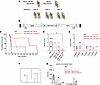 Figure 1
Hexosaminidase structure, AAV design, and improved survival and neurological scores by AAV treatment. (A) Hexosaminidase enzyme has 3 isozymes: HexA, HexB, and HexS. The HexA enzyme hydrolyzes GM2 ganglioside in humans and consists of α and β subunits, encoded by HEXA and HEXB genes, respectively. Deficiency in HEXA and HEXB genes results in TSD and Sandhoff disease, respectively. Hex α- and β-subunit protein x-ray diffraction structure was from the RCSB protein data bank (2GK1 PDB DOI: https//doi.org/10.22.10/pdb2GK1/pdb). (B) Schematics of bicistronic AAV9 vector expressing both HEXA and HEXB in a single AAV. (C) Kaplan-Meier plot of the survival rate of untreated sheep (n = 15) and bicistronic AAV9-treated TSD sheep (TSD+AAV_IV, n = 5; TSD+AAV_CSF_ICV-CM-LIT, n = 5; TSD+AAV_CSF_CM-LIT, n = 3). Survival of the TSD+AAV_IV and TSD+AAV_CSF_ICV-CM-LIT cohorts was significantly different than that of the TSD group (P < 0.001), while survival of TSD+AAV_CSF_CM-LIT cohort was not different than the TSD group (P = 0.059). The log-rank test was used for statistical analysis between cohorts. (D) The neurological score of sheep was described by scoring from 1 (normal) to 5 (worse). The TSD+AAV_CSF_ICV-CM-LIT cohort had significantly decreased scores compared with untreated TSD sheep (*P < 0.05). Scores were analyzed by Mann-Whitney tests, and effect was determined by a Hodges-Lehmann test. The neurological scores were collected at the time of euthanasia, corresponding to the survival curve in C. (E) Total neurological score of sheep over time. Statistical analyses were not completed for these data because some time points only had 1 recording per group (TSD, n = 3; TSD+AAV_IV, n = 5; TSD+AAV_CSF_ICV-CM-LIT, n = 3 up to year 4, and n = 1 at 5 years; TSD+AAV_CSF_CM-LIT, n = 1). (F) Schematic of the maze used to test sheep cognition. (G) Bar chart showing latency to complete the maze for all sheep at 6 months or at 3–4 years of age (6 months: TSD n = 5, WT n = 3, TSD+AAV_IV n = 3, TSD+AAV_CSF-CM-LIT n = 2, TSD+AAV_CSF_ICV-CM-LIT n = 2; 3–4 years: TSD+AAV_ CSF_ICV-CM-LIT n = 3, WT n = 4).
Adeno-associated virus (AAV) vectors have emerged as the most potent platform for efficient and stable in vivo gene transfer to the CNS with minimal or absent intrinsic toxicity. AAV vectors have become the platform of choice for development of effective therapies for neurological diseases, and some clinical trials have reported encouraging (6) or even transformative results (7). Intracranial co-administration of 2 monocistronic vectors encoding the human transgene in Sandhoff disease mice restored the enzyme activity, corrected neuropathology, and extended lifespan (8–10). Similar results were observed in feline models of Sandhoff disease (11–14). Similarly, TSD sheep exhibited normalization of storage and neuroinflammation in the brain after intracranial injection of monocistronic vectors (15). This dual-vector AAV gene therapy approach has been tested in 2 patients with infantile TSD under an expanded access investigational new drug (application 18225) and a recently concluded phase I/II study (ClinicalTrials.gov NCT04669535) (16, 17).
While thalamic injections have been shown to be highly effective for widespread enzyme distribution in the cerebrum with encouraging preliminary data in patients, the thalamus is a high-risk target because of its critical functions as an integration and relay center. Therefore, we developed a CSF-based approach using a bicistronic AAV9 vector (AAV9-Bic_HexA/HexB) expressing both HEXA and HEXB in a single AAV to enable coexpression of both subunits in each transduced cell. The therapeutic efficacy of this AAV9 vector was tested in Sandhoff disease mice by i.v. delivery showing significant extension of lifespan and normalization of neurochemistry (18). Here we report the therapeutic efficacy results in 5-year-old TSD sheep with a similar bicistronic AAV9 vector expressing ovine HEXA/HEXB cDNAs delivered by i.v. delivery or CSF infusion. These results support the translation of this AAV9-based CSF gene therapy for patients with juvenile and late-onset TSD and Sandhoff disease.
-
Results
Summary of cohorts. This study had 4 treatment groups (Table 1) and 2 control groups: (a) TSD sheep treated by i.v. injection with 5 × 10¹³ viral genome (vg)/kg at 9–13 days of age (n = 5). (b) TSD sheep treated by CSF delivery via 4 sites: bilaterally in the lateral ventricles (ICVs), cisterna magna (CM), and the lumbar intrathecal (LIT) space, 1 × 10¹⁴ vg total dose at 3 weeks of age, 75% divided between ventricles, 25% divided between the LIT and CM (TSD+AAV_CSF_ICV-CM-LIT; n = 4 animals harvested at 4 months after injection for biochemical assessment; n = 5 for long-term survival and clinical benefit and durability). The total AAV9 dose was approximately equivalent across treated cohorts when comparing doses by body weight. (c) TSD sheep treated by CSF delivery at 3 weeks of age with 1 × 10¹⁴ vg administered at the CM (75%) and LIT (25%) (TSD+AAV_CSF_CM-LIT; n = 3. (d) Untreated TSD controls (n = 15). Also included were (e) WT sheep controls (n = 10). Intravenous delivery was performed at an earlier age to minimize the total AAV required while maintaining an equivalent high dose.
Survival. Long-term survival and therapeutic benefit as measured by neurological evaluation were as follows (Figure 1, C–E). The 4-site, CSF-treated cohort (TSD+AAV_CSF_ICV-CM-LIT) (represented by the red line in Figure 1, C and E) had an average survival of 45 (± 21.1 SD) months, with the oldest animal at 62.7 months (>5 years of age). Supplemental Videos 1, A and B show WT and untreated TSD as compared with Supplemental Videos 1, C and D for 2 oldest treated sheep, 212 and 271. TSD+AAV_CSF_ICV-CM-LIT animals had an average proprioceptive neuro score at endpoint of 1.4 out of 5 (5 being worst) throughout the study and were euthanized due to cervical trauma (from ramming by a herd mate), heart failure, or ruptured metacarpal collateral ligament. Sheep treated by CM and LIT delivery only (TSD+AAV_CSF_CM-LIT; purple line) survived an average of 19.2 (± 17.2 SD) months. Compared with animals treated in all CSF sites, TSD+AAV_CSF_CM-LIT sheep had lower mean scores on neurological exams over time, although differences were not statistically significant, with euthanasia due to aspiration pneumonia, ataxia, weight loss, or blindness. The intravenous AAV-treated cohort (TSD+AAV_IV) (represented by the orange line in Figure 1C) had an average survival of 18.9 (± 3.9 SD) months. TSD+AAV_IV animals had a neurological exam score of 3 out of 5 at endpoint, and animals were all euthanized due to distal limb tendon or ligament rupture, which is not consistent with the natural history of TSD in sheep. All treated sheep were evaluated at necropsy for evidence of hepatocellular carcinoma or any other abnormalities consistent with neoplasia or immune response, for which no evidence was found. Untreated TSD sheep (indicated by the black line in Figure 1, C and E, and the black box in Figure 1B) had an average neuro score of 3 out of 5 and a survival of 9.4 (± 0.8 SD) months, with euthanasia due to ataxia and falling.
Behavioral testing. To determine level of functional rescue, TSD sheep were put through a maze with completion time recorded (Figure 1, F and G, and Supplemental Videos 2, A–D; supplemental material available online with this article; https://doi.org/10.1172/JCI182942DS1). The flock was located out of sight in a holding pen at the end of the maze but were clearly audible to the test subject; thus, the strong flocking instinct of sheep was used as motivation to complete the maze. Audition was retained in the TSD sheep, and brain-stem auditory evoked responses were within normal limits at the time of humane endpoint (19). Untreated TSD sheep at 6 months of age (6–7 months of age; n = 4) (indicated by black Xs in Figure 1G) took 353 (± 159 SD) seconds longer to complete the maze compared with WT controls (n = 5) (gray circles in Figure 1G). Decreased time to navigate the maze was noted in the TSD+AAV_CSF_ICV-CM-LIT group at 6 months, with increased time to completion at 3–4 years of age. Intermediate improvement was noted in the TSD+AAV_IV cohort at 6 months of age; we note that the slowest animal was nearing humane endpoint at the time of the exam. The TSD+AAV_CSF_CM-LIT sheep completed the maze at a time equivalent to that of TSD control sheep.
CSF HexA and GM2 levels. HexA activity and GM2 ganglioside levels were quantified in the CSF and serum (HexA only) of untreated TSD sheep, WT controls, and all AAV-treated cohorts (Figure 2, A and B, and Supplemental Figure 1A). As expected, untreated TSD sheep had very low HexA and elevated GM2 levels in CSF compared with WT controls. In the TSD+AAV_CSF_ICV-CM-LIT cohort, HexA activity was at or above normal levels (range, 0.5- to 2.7-fold of normal) and GM2 level was normalized by 1 month after treatment (similar levels as WT). HexA activity remained in the normal range in all samples. Later time points in the TSD+AAV_CSF_ICV-CM-LIT and TSD+AAV_CSF_CM-LIT animals trended toward decreased HexA and increased GM2 concentrations at 2–4 years after gene therapy. The TSD+AAV_IV cohort had lowest HexA levels (8%–20% of normal) and elevated GM2 levels in CSF. HexA in serum remained at the levels of untreated TSD sheep in all AAV-treated cohorts after gene therapy (Supplemental Figure 1A).
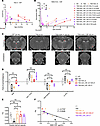 Figure 2
Noninvasive monitoring of bicistronic AAV9-treated TSD sheep. (A and B) HexA in CSF of short-term-treated sheep (n = 4 TSD+AAV_CSF-ICV-CM-LIT; pink hexagon-solid lines) shows a sharp increase to at least WT levels by 1 month after AAV administration (n = 10; gray circles). Similarly, there is a sharp decrease in GM2 levels into the normal range by 1 month after treatment. In the long-term-treated cohort (TSD+AAV_CSF-ICV-CM-LIT; red-dotted lines), GM2 shows a steady increase accompanied by an inversely proportional decrease in HexA levels approximately 1 year after AAV administration (each red symbol represents 1 sheep in the long-term cohort). Analyzed TSD (n = 14; black crosses). (C) T2-weighted MRI of sheep thalamus and cerebellum demonstrate normalization of white matter intensity (white arrow) in both TSD+AAV_IV and TSD+AAV_CSF_ICV-CM-LIT treated cohorts. (D) MRS in sheep thalamus indicates the normalization (no statistical difference from WT; n = 7) of markers of neuronal health, demyelination, and energy metabolism for the TSD+AAV_CSF_ICV-CM-LIT group (n = 4) and significantly different levels as compared with TSD sheep (*P < 0.05; n = 8 TSD sheep). TSD+AAV_IV (n = 3) and TSD+AAV_CSF_CM-LIT (n = 2) groups show intermediate levels. Brown-Forsythe and Welch’s ANOVA tests followed by Dunnett’s T3 test were performed. The data shown for MRS and DTI analysis in this figure represent 1-time imaging of each sheep at the endpoint. NAA, GPC + PCh, NAA+NAAG, Cr+PCr. (E) DTI scalar FA, which informs about the degree of anisotropy in diffusion of water in white matter, decreases significantly in TSD sheep as compared with WT sheep in the caudal internal capsule. AAV_IV and CSF cohorts show normalization on FA about 2–3 years after AAV administration (*P < 0.05). The Kruskal-Wallis test followed by Dunn’s test was performed. (F) FA scalar shows a negative and significant association with GM2 levels in sheep CSF (P = 0.0028). Spearman’s test was used for correlation analysis.
MRI-based metrics. To determine the degree of normalization in the brain after gene therapy, MRI was performed. T2-weighted MRI revealed normalization of gray and white matter intensities in i.v.- or CSF-treated sheep at 20 or 36 months of age, respectively, compared with untreated TSD sheep at 9 months (humane endpoint) (Figure 2C). To monitor brain biochemistry, MR spectroscopy (MRS) was performed (Figure 2D). In TSD+AAV_CSF-ICV-CM-LIT animals, there was normalization in the thalamus for markers of neuron and axon health (namely, N-acetylaspartate [NAA] and N-acetylaspartylglutamate [NAAG]), myelination (glycerophosphocholine [GPC] plus phosphocholine [PCh]) and metabolism (creatine [Cr] plus phosphocreatine [PCr]) compared with untreated controls. Intermediate improvement was noted in the TSD+AAV_CSF-ICV-CM-LIT and TSD+AAV_IV groups. Diffusion tensor imaging (DTI) was performed to further evaluate integrity of myelination (Figure 2, E and F, and Supplemental Figure 1, B and C), with normalization of fractional anisotropy (FA) (Figure 2E) and radial diffusivity (RD) (Supplemental Figure 1, B and C) in all AAV-treated cohorts. Interestingly, both FA and RD strongly correlated with GM2 levels in the CSF.
HexA enzymatic assays, GM2 storage clearance, and biodistribution. Throughout the CNS, including deep brain structures, HexA activity was restored to normal or above normal levels in the TSD+AAV_CSF_ICV-CM-LIT cohort 4 months after treatment, and levels remained in this range after approximately 4 years (Figure 3, A–D). In the TSD+AAV_CSF_CM-LIT cohort at endpoint, HexA activity trended lower in the forebrain (di- and telencephalon) as compared with TSD+AAV_CSF-ICV-CM-LIT animals, especially in the thalamus and frontal cortex. In the TSD+AAV_IV cohort at endpoint, HexA activity was low (near untreated TSD sheep levels) in the forebrain, but HexA activity increased in the hindbrain (cerebellum and medulla) and spinal cord (Figure 3C). As expected, areas with higher-than-normal HexA activity showed the best GM2 storage clearance. In the TSD+AAV_CSF-ICV-CM-LIT group, GM2 was approximately in the normal range, with little to no GM2 clearance in the IV cohort (Figure 3D).
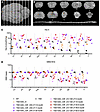 Figure 3
HexA activity and GM2 ganglioside levels in CNS after bicistronic AAV administration. (A) Dorsoventral view of the sheep brain, with white lines showing corresponding brain sections. (B) Analyzed regions include frontal cortex (FC), parietal cortex (PC), thalamus (Th), temporal cortex (TC), occipital cortex (OC), cerebellum (CB), brainstem (BS), cervical intumescence (CI), and lumbar intumescence (LI). (C) HexA activity. Short-term TSD+AAV_CSF_ICV-CM-LIT cohort (pink hexagon) had HexA levels similar to or higher than WT (gray circles) levels in all analyzed CNS regions and were not significantly different from WT at 5 months. The TSD+AAV_IV cohort had significantly less HexA levels in all analyzed region as compared with WT except for Thal, CI, and LI. (D) GM2 ganglioside. Short-term TSD+AAV_CSF_ICV-CM-LIT cohort (pink hexagon) had HexA levels similar in same range as WT (gray circles) levels in all analyzed CNS regions and were not significantly different from WT at 5 months except for striatum. TSD+AAV_IV cohort had significantly higher GM2 levels as compared with WT (not significantly different from TSD) in all analyzed regions except for CI and LI, where no statistical difference was obtained as compared with WT (note: this might be due to variability in data). Brown-Forsythe and Welch’s ANOVA tests followed by Dunnett’s T3 test were performed for statistical analysis in C and D. Assays were repeated at least 3 times.
Biodistribution of vector genomes was in line with HexA activity and GM2 reduction in all cohorts (Supplemental Figure 2A). One treated sheep in the TSD+AAV_CSF_CM-LIT cohort did not benefit from the treatment and was euthanized at 7.6 months. We acknowledge the possibility that the catheter and guide wire created a hole in the dura during AAV delivery, which could have allowed for vector leakage into the epidural space; however, no evidence of this was noted intraoperatively.
To further evaluate biodistribution, RNAscope targeting the promoter in the vector genome and Basescope targeting the 3′ end of HexA and 5′ end of the polyA were used. As expected, the 2 in situ probes highly correlated across in the parietal cortex of the short-term (5 months of age) TSD+AAV_CSF_ICV-CM-LIT cohort and appeared primarily neuronal based on morphological examination (Figure 4). Expression in glial cells appeared to be below our level of detection. Similar analyses were performed using RNAscope in the frontal cortex of a long-term treated TSD+AAV_CSF_ICV-CM-LIT cohort at 60.9 months of age. In line with HexA and qPCR analyses, biodistribution of the AAV vector in the frontal cortex of the long-term-treated sheep was in line with RNAscope results (Supplemental Figure 3).
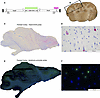 Figure 4
Vector biodistribution assessment by RNAscope and BaseScope. (A) HexA-SV40 probe (BaseScope, pink) and bicistronic promoter probe (RNAscope, green). (B) Gross location of the parietal cortex of the TSD+AAV_CSF-ICV-CM-LIT at 5 months of age. Representative photomicrographs of HexA-SV40 probe (C and D). and bicistronic promoter probe (E and F) in the parietal cortex.
In nerves, HexA activity and GM2 clearance in all groups were roughly equivalent and intermediate of WT and TSD sheep, except for the optic nerve, where the TSD+AAV_CSF_ICV-CM-LIT group trended higher in HexA (Figure 5, A and B). Partial GM2 clearance was only appreciated in the optic nerve. Vector biodistribution mimicked HexA activity and GM2 clearance (Supplemental Figure 2B). In the peripheral organs, HexA expression was above untreated levels only in the heart and skeletal muscle, with the TSD+AAV_IV cohort trending higher than the TSD+AAV_CSF_ICV-CM-LIT or TSD+AAV_CSF_ CM-LIT groups (Figure 5C). Similarly, vector biodistribution also trended higher for the TSD+AAV_IV cohort as compared with the TSD+AAV_CSF_ICV-CM-LIT or TSD+AAV_CSF_ CM-LIT groups (Supplemental Figure 2C). Lastly, GM2 storage levels were in line with HexA expression in peripheral organs (Figure 5D).
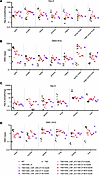 Figure 5
HexA activity and GM2 ganglioside levels in the nerves and peripheral organs after bicistronic AAV administration. (A) HexA activity for nerves in both TSD+AAV_IV and short-term TSD+AAV_CSF_ICV-CM-LIT (pink hexagons) cohorts showed an increase from that of the TSD controls. This was most notable for the optic, sciatic, and vagosympathetic trunk nerves; however, HexA expression in all analyzed nerves was not significantly different from the TSD controls. (B) GM2 ganglioside levels in nerves remained statistically the same as in the TSD group for both TSD+AAV_IV and short-term TSD+AAV_CSF_ICV-CM-LIT cohorts (pink hexagons) except for optic nerve in the TSD+AAV_CSF_ICV-CM-LIT cohort, which was different than in the TSD cohort (*P < 0.02). (C) HexA activity in peripheral organs remained similar to that of the TSD cohort for TSD+AAV_IV and short-term TSD+AAV_CSF_ICV-CM-LIT (pink hexagons) cohorts except for muscle. HexA was not detectable in TSD muscle. HexA in skeletal isolated from the TSD+AAV_IV group was not different from WT, while in the short-term TSD+AAV_CSF_ICV-CM-LIT (pink hexagons), HexA activity was significantly higher than in WT. (D) Levels of GM2 ganglioside in peripheral organs, except for heart and liver, remained the same as in the TSD group for both the TSD+AAV_IV and short-term TSD+AAV_CSF_ICV-CM-LIT (pink hexagons) cohorts. GM2 ganglioside levels in hearts of the short-term TSD+AAV_CSF_ICV-CM-LIT sheep were significantly lower than TSD levels (*P < 0.04). Similarly, for livers in the TSD+AAV_IV cohort, GM2 levels were significantly less than in the TSD group (*P < 0.05). Brown-Forsythe and Welch’s ANOVA tests followed by Dunnett’s T3 test were performed for statistical analysis in A–D. Assays were repeated at least 3 times. Symp chain, sympathetic chain; vago symp trunk, vagosympathetic trunk.
Because most of the AAV-treated sheep in the study had to be euthanized due to tendon and/or ligament failure, we investigated if this could be due to an off-target effect of gene therapy. We evaluated HexA and total hexosaminidase activity of the AAV_IV animals because they had the greatest AAV dose directed to the periphery. Hexosaminidase activities in AAV-treated sheep were not significantly different from that in WT control sheep in tendons. Additionally, vector genomes were not detectable in tendons of the AAV_IV cohort (Supplemental Figure 4).
Impact of preexisting immunity on HexA expression. Due to cohousing of sheep after the TSD+AAV_IV cohort was treated, all the short-term animals in the TSD+AAV_CSF-ICV-CM-LIT cohort developed preexisting anti-AAV9 neutralizing antibodies (NAbs) in the blood (titer range, 1:10 to 1:20 (data not shown) and CSF (1:10) by the time of treatment. Interestingly, the animals with the fastest rise in anti-AAV9 titer in CSF had the lowest HexA increase in CSF over time (Supplemental Figure 5). All the long-term-treated CSF animals also had NAb titers ranging from 1:10 to 1:20 at the time of treatment.
Qualitative histologic evaluation of the CNS. On H&E staining, neuronal morphology was normalized throughout the CNS in both the short-term and approximately 4-year-old TSD+AAV_CSF_ICV-CM-LIT sheep as compared with the widespread neuronal vacuolation of the untreated TSD sheep (Supplemental Figure 6). In the TSD+AAV_CSF_CM-LIT cohort, we observed correction of the spinal cord and cerebellum, but vacuolation persisted in the forebrain cortical and deep brain structures (Supplemental Figure 6). Immunofluorescent staining of neurons (microtubule-associated protein 2 [MAP2]) and oligodendrocytes (olig2) qualitatively showed normal oligodendrocyte and neuropil staining by 5 months after treatment that persisted until at least 4 years after AAV gene transfer in the TSD+AAV_CSF_ICV-CM-LIT group (Figure 6 and Supplemental Figure 7 for additional evaluated regions). In the TSD+AAV_CSF_CM-LIT group, appropriate oligodendrocyte and neuronal morphologies were observed in the spinal cord and cerebellum and to some extent in cortical structures, but not in the thalamus, striatum, or hippocampus (Figure 6 and Supplemental Figure 7 for additional evaluated regions). Myelination, as measured by myelin basic protein (MBP), was restored in all structures in the TSD+AAV_CSF-ICV-CM-LIT cohort at all ages, except with some loss of myelination after 4 years in the thalamus and hippocampus (Figure 7 and Supplemental Figure 8 for additional evaluated regions). The striatum, thalamus, and hippocampus of the TSD+AAV_CSF_CM-LIT cohort had qualitatively less myelin than the TSD+AAV_CSF_ICV_CM-LIT cohort. Microgliosis was attenuated in the TSD+AAV_CSF_ICV-CM-LIT cohort in all brain areas except the hippocampus (Figure 7 and Supplemental Figure 8 for additional evaluated regions). In the TSD+AAV_CSF_CM-LIT cohort, amoeboid activated microglia were evident in the cortex, thalamus, and hippocampus, but otherwise were ramified and in appropriate numbers elsewhere in the CNS. Astrocytosis as measured by glial fibrillary acidic protein immunostaining in the TSD+AAV_CSF_ICV_CM-LIT cohort was like that in the WT control at all ages but progressed like untreated TSD in the forebrain of the TSD+AAV_CSF_CM_LIT sheep 39 months after treatment (Supplemental Figure 9).
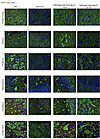 Figure 6
Immunofluorescence evaluation of neurons and oligodendrocytes in sheep CNS up to 4 years after AAV administration. MAP2, Olig2, and DAPI staining. Scale bar: 20 μm. Intum, intumescence.
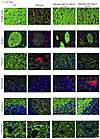 Figure 7
Immunofluorescence evaluation of white matter and glia in sheep CNS up to 4 years after AAV administration. MBP, calcium-binding adapter molecule 1 (Iba1), and DAPI staining. Scale bar: 20 μm. Intum, intumescence.
Dorsal root ganglia. One TSD+AAV_CSF_ICV-CM-LIT sheep died at 10 months of age from a fracture of the cervical vertebrae at C1–C2 due to ramming by a herd mate. This animal was found immediately, and a necropsy was performed. Dorsal root ganglia harvested at the level of cervical and lumbar intumescence showed no histopathological alterations (Supplemental Figure 10A). In fact, neuronal morphology was markedly improved from that of untreated TSD sheep that reached humane endpoint at a similar age (9 months). HexA activity in dorsal root ganglia from all groups was intermediate of WT control and untreated TSD sheep (Supplemental Figure 10, B and C).


Copyright © 2026 American Society for Clinical Investigation
ISSN: 0021-9738 (print), 1558-8238 (online)