
Advertisement
Research ArticleDevelopmentVascular biology
Open Access |  10.1172/JCI187532
Defective Notch1 signaling in endothelial cells drives pathogenesis in a mouse model of Adams-Oliver syndrome
Alyssa F. Solano,1,2,3 Kristina Preusse,1 Brittany Cain,1 Rebecca Hotz,1 Parthav Gavini,1 Zhenyu Yuan,4 Benjamin Bowen,5 Gabrielle Maco,5 Hope Neal,5 Ellen K. Gagliani,5 Christopher Ahn,6 Hee-Woong Lim,6,7 Laura Southgate,8,9 Rhett A. Kovall,4 Raphael Kopan,1,7 and Brian Gebelein1,7
1Division of Developmental Biology, Cincinnati Children’s Hospital Medical Center, Cincinnati, Ohio, USA.
2Medical Scientist Training Program, University of Cincinnati College of Medicine, Cincinnati, Ohio, USA.
3Graduate Program in Molecular and Developmental Biology, Cincinnati Children’s Hospital Research Foundation, Cincinnati, Ohio, USA.
4Department of Molecular and Cellular Biosciences, University of Cincinnati College of Medicine, Cincinnati, Ohio, USA.
5Department of Chemistry, Xavier University, Cincinnati, Ohio, USA.
6Division of Biomedical Informatics, Cincinnati Children’s Hospital Medical Center, Cincinnati, Ohio, USA.
7Department of Pediatrics, University of Cincinnati College of Medicine, Cincinnati, Ohio, USA.
8School of Health and Medical Sciences, City St George’s, University of London, United Kingdom.
9Department of Medical and Molecular Genetics, Faculty of Life Sciences and Medicine, King’s College London, London, United Kingdom.
Address correspondence to: Brian Gebelein or Raphael Kopan, Cincinnati Children’s Hospital Medical Center, 3333 Burnet Avenue, MLC7007, Cincinnati, Ohio, 45229. USA. Email: Brian.Gebelein@cchmc.org (BG); rafi.kopan@gmail.com (RK).
Find articles by Solano, A. in: PubMed | Google Scholar
1Division of Developmental Biology, Cincinnati Children’s Hospital Medical Center, Cincinnati, Ohio, USA.
2Medical Scientist Training Program, University of Cincinnati College of Medicine, Cincinnati, Ohio, USA.
3Graduate Program in Molecular and Developmental Biology, Cincinnati Children’s Hospital Research Foundation, Cincinnati, Ohio, USA.
4Department of Molecular and Cellular Biosciences, University of Cincinnati College of Medicine, Cincinnati, Ohio, USA.
5Department of Chemistry, Xavier University, Cincinnati, Ohio, USA.
6Division of Biomedical Informatics, Cincinnati Children’s Hospital Medical Center, Cincinnati, Ohio, USA.
7Department of Pediatrics, University of Cincinnati College of Medicine, Cincinnati, Ohio, USA.
8School of Health and Medical Sciences, City St George’s, University of London, United Kingdom.
9Department of Medical and Molecular Genetics, Faculty of Life Sciences and Medicine, King’s College London, London, United Kingdom.
Address correspondence to: Brian Gebelein or Raphael Kopan, Cincinnati Children’s Hospital Medical Center, 3333 Burnet Avenue, MLC7007, Cincinnati, Ohio, 45229. USA. Email: Brian.Gebelein@cchmc.org (BG); rafi.kopan@gmail.com (RK).
Find articles by Preusse, K. in: PubMed | Google Scholar
1Division of Developmental Biology, Cincinnati Children’s Hospital Medical Center, Cincinnati, Ohio, USA.
2Medical Scientist Training Program, University of Cincinnati College of Medicine, Cincinnati, Ohio, USA.
3Graduate Program in Molecular and Developmental Biology, Cincinnati Children’s Hospital Research Foundation, Cincinnati, Ohio, USA.
4Department of Molecular and Cellular Biosciences, University of Cincinnati College of Medicine, Cincinnati, Ohio, USA.
5Department of Chemistry, Xavier University, Cincinnati, Ohio, USA.
6Division of Biomedical Informatics, Cincinnati Children’s Hospital Medical Center, Cincinnati, Ohio, USA.
7Department of Pediatrics, University of Cincinnati College of Medicine, Cincinnati, Ohio, USA.
8School of Health and Medical Sciences, City St George’s, University of London, United Kingdom.
9Department of Medical and Molecular Genetics, Faculty of Life Sciences and Medicine, King’s College London, London, United Kingdom.
Address correspondence to: Brian Gebelein or Raphael Kopan, Cincinnati Children’s Hospital Medical Center, 3333 Burnet Avenue, MLC7007, Cincinnati, Ohio, 45229. USA. Email: Brian.Gebelein@cchmc.org (BG); rafi.kopan@gmail.com (RK).
Find articles by Cain, B. in: PubMed | Google Scholar
1Division of Developmental Biology, Cincinnati Children’s Hospital Medical Center, Cincinnati, Ohio, USA.
2Medical Scientist Training Program, University of Cincinnati College of Medicine, Cincinnati, Ohio, USA.
3Graduate Program in Molecular and Developmental Biology, Cincinnati Children’s Hospital Research Foundation, Cincinnati, Ohio, USA.
4Department of Molecular and Cellular Biosciences, University of Cincinnati College of Medicine, Cincinnati, Ohio, USA.
5Department of Chemistry, Xavier University, Cincinnati, Ohio, USA.
6Division of Biomedical Informatics, Cincinnati Children’s Hospital Medical Center, Cincinnati, Ohio, USA.
7Department of Pediatrics, University of Cincinnati College of Medicine, Cincinnati, Ohio, USA.
8School of Health and Medical Sciences, City St George’s, University of London, United Kingdom.
9Department of Medical and Molecular Genetics, Faculty of Life Sciences and Medicine, King’s College London, London, United Kingdom.
Address correspondence to: Brian Gebelein or Raphael Kopan, Cincinnati Children’s Hospital Medical Center, 3333 Burnet Avenue, MLC7007, Cincinnati, Ohio, 45229. USA. Email: Brian.Gebelein@cchmc.org (BG); rafi.kopan@gmail.com (RK).
Find articles by Hotz, R. in: PubMed | Google Scholar
1Division of Developmental Biology, Cincinnati Children’s Hospital Medical Center, Cincinnati, Ohio, USA.
2Medical Scientist Training Program, University of Cincinnati College of Medicine, Cincinnati, Ohio, USA.
3Graduate Program in Molecular and Developmental Biology, Cincinnati Children’s Hospital Research Foundation, Cincinnati, Ohio, USA.
4Department of Molecular and Cellular Biosciences, University of Cincinnati College of Medicine, Cincinnati, Ohio, USA.
5Department of Chemistry, Xavier University, Cincinnati, Ohio, USA.
6Division of Biomedical Informatics, Cincinnati Children’s Hospital Medical Center, Cincinnati, Ohio, USA.
7Department of Pediatrics, University of Cincinnati College of Medicine, Cincinnati, Ohio, USA.
8School of Health and Medical Sciences, City St George’s, University of London, United Kingdom.
9Department of Medical and Molecular Genetics, Faculty of Life Sciences and Medicine, King’s College London, London, United Kingdom.
Address correspondence to: Brian Gebelein or Raphael Kopan, Cincinnati Children’s Hospital Medical Center, 3333 Burnet Avenue, MLC7007, Cincinnati, Ohio, 45229. USA. Email: Brian.Gebelein@cchmc.org (BG); rafi.kopan@gmail.com (RK).
Find articles by Gavini, P. in: PubMed | Google Scholar
1Division of Developmental Biology, Cincinnati Children’s Hospital Medical Center, Cincinnati, Ohio, USA.
2Medical Scientist Training Program, University of Cincinnati College of Medicine, Cincinnati, Ohio, USA.
3Graduate Program in Molecular and Developmental Biology, Cincinnati Children’s Hospital Research Foundation, Cincinnati, Ohio, USA.
4Department of Molecular and Cellular Biosciences, University of Cincinnati College of Medicine, Cincinnati, Ohio, USA.
5Department of Chemistry, Xavier University, Cincinnati, Ohio, USA.
6Division of Biomedical Informatics, Cincinnati Children’s Hospital Medical Center, Cincinnati, Ohio, USA.
7Department of Pediatrics, University of Cincinnati College of Medicine, Cincinnati, Ohio, USA.
8School of Health and Medical Sciences, City St George’s, University of London, United Kingdom.
9Department of Medical and Molecular Genetics, Faculty of Life Sciences and Medicine, King’s College London, London, United Kingdom.
Address correspondence to: Brian Gebelein or Raphael Kopan, Cincinnati Children’s Hospital Medical Center, 3333 Burnet Avenue, MLC7007, Cincinnati, Ohio, 45229. USA. Email: Brian.Gebelein@cchmc.org (BG); rafi.kopan@gmail.com (RK).
Find articles by Yuan, Z. in: PubMed | Google Scholar
1Division of Developmental Biology, Cincinnati Children’s Hospital Medical Center, Cincinnati, Ohio, USA.
2Medical Scientist Training Program, University of Cincinnati College of Medicine, Cincinnati, Ohio, USA.
3Graduate Program in Molecular and Developmental Biology, Cincinnati Children’s Hospital Research Foundation, Cincinnati, Ohio, USA.
4Department of Molecular and Cellular Biosciences, University of Cincinnati College of Medicine, Cincinnati, Ohio, USA.
5Department of Chemistry, Xavier University, Cincinnati, Ohio, USA.
6Division of Biomedical Informatics, Cincinnati Children’s Hospital Medical Center, Cincinnati, Ohio, USA.
7Department of Pediatrics, University of Cincinnati College of Medicine, Cincinnati, Ohio, USA.
8School of Health and Medical Sciences, City St George’s, University of London, United Kingdom.
9Department of Medical and Molecular Genetics, Faculty of Life Sciences and Medicine, King’s College London, London, United Kingdom.
Address correspondence to: Brian Gebelein or Raphael Kopan, Cincinnati Children’s Hospital Medical Center, 3333 Burnet Avenue, MLC7007, Cincinnati, Ohio, 45229. USA. Email: Brian.Gebelein@cchmc.org (BG); rafi.kopan@gmail.com (RK).
Find articles by Bowen, B. in: PubMed | Google Scholar
1Division of Developmental Biology, Cincinnati Children’s Hospital Medical Center, Cincinnati, Ohio, USA.
2Medical Scientist Training Program, University of Cincinnati College of Medicine, Cincinnati, Ohio, USA.
3Graduate Program in Molecular and Developmental Biology, Cincinnati Children’s Hospital Research Foundation, Cincinnati, Ohio, USA.
4Department of Molecular and Cellular Biosciences, University of Cincinnati College of Medicine, Cincinnati, Ohio, USA.
5Department of Chemistry, Xavier University, Cincinnati, Ohio, USA.
6Division of Biomedical Informatics, Cincinnati Children’s Hospital Medical Center, Cincinnati, Ohio, USA.
7Department of Pediatrics, University of Cincinnati College of Medicine, Cincinnati, Ohio, USA.
8School of Health and Medical Sciences, City St George’s, University of London, United Kingdom.
9Department of Medical and Molecular Genetics, Faculty of Life Sciences and Medicine, King’s College London, London, United Kingdom.
Address correspondence to: Brian Gebelein or Raphael Kopan, Cincinnati Children’s Hospital Medical Center, 3333 Burnet Avenue, MLC7007, Cincinnati, Ohio, 45229. USA. Email: Brian.Gebelein@cchmc.org (BG); rafi.kopan@gmail.com (RK).
Find articles by Maco, G. in: PubMed | Google Scholar
1Division of Developmental Biology, Cincinnati Children’s Hospital Medical Center, Cincinnati, Ohio, USA.
2Medical Scientist Training Program, University of Cincinnati College of Medicine, Cincinnati, Ohio, USA.
3Graduate Program in Molecular and Developmental Biology, Cincinnati Children’s Hospital Research Foundation, Cincinnati, Ohio, USA.
4Department of Molecular and Cellular Biosciences, University of Cincinnati College of Medicine, Cincinnati, Ohio, USA.
5Department of Chemistry, Xavier University, Cincinnati, Ohio, USA.
6Division of Biomedical Informatics, Cincinnati Children’s Hospital Medical Center, Cincinnati, Ohio, USA.
7Department of Pediatrics, University of Cincinnati College of Medicine, Cincinnati, Ohio, USA.
8School of Health and Medical Sciences, City St George’s, University of London, United Kingdom.
9Department of Medical and Molecular Genetics, Faculty of Life Sciences and Medicine, King’s College London, London, United Kingdom.
Address correspondence to: Brian Gebelein or Raphael Kopan, Cincinnati Children’s Hospital Medical Center, 3333 Burnet Avenue, MLC7007, Cincinnati, Ohio, 45229. USA. Email: Brian.Gebelein@cchmc.org (BG); rafi.kopan@gmail.com (RK).
Find articles by Neal, H. in: PubMed | Google Scholar
1Division of Developmental Biology, Cincinnati Children’s Hospital Medical Center, Cincinnati, Ohio, USA.
2Medical Scientist Training Program, University of Cincinnati College of Medicine, Cincinnati, Ohio, USA.
3Graduate Program in Molecular and Developmental Biology, Cincinnati Children’s Hospital Research Foundation, Cincinnati, Ohio, USA.
4Department of Molecular and Cellular Biosciences, University of Cincinnati College of Medicine, Cincinnati, Ohio, USA.
5Department of Chemistry, Xavier University, Cincinnati, Ohio, USA.
6Division of Biomedical Informatics, Cincinnati Children’s Hospital Medical Center, Cincinnati, Ohio, USA.
7Department of Pediatrics, University of Cincinnati College of Medicine, Cincinnati, Ohio, USA.
8School of Health and Medical Sciences, City St George’s, University of London, United Kingdom.
9Department of Medical and Molecular Genetics, Faculty of Life Sciences and Medicine, King’s College London, London, United Kingdom.
Address correspondence to: Brian Gebelein or Raphael Kopan, Cincinnati Children’s Hospital Medical Center, 3333 Burnet Avenue, MLC7007, Cincinnati, Ohio, 45229. USA. Email: Brian.Gebelein@cchmc.org (BG); rafi.kopan@gmail.com (RK).
Find articles by Gagliani, E. in: PubMed | Google Scholar
1Division of Developmental Biology, Cincinnati Children’s Hospital Medical Center, Cincinnati, Ohio, USA.
2Medical Scientist Training Program, University of Cincinnati College of Medicine, Cincinnati, Ohio, USA.
3Graduate Program in Molecular and Developmental Biology, Cincinnati Children’s Hospital Research Foundation, Cincinnati, Ohio, USA.
4Department of Molecular and Cellular Biosciences, University of Cincinnati College of Medicine, Cincinnati, Ohio, USA.
5Department of Chemistry, Xavier University, Cincinnati, Ohio, USA.
6Division of Biomedical Informatics, Cincinnati Children’s Hospital Medical Center, Cincinnati, Ohio, USA.
7Department of Pediatrics, University of Cincinnati College of Medicine, Cincinnati, Ohio, USA.
8School of Health and Medical Sciences, City St George’s, University of London, United Kingdom.
9Department of Medical and Molecular Genetics, Faculty of Life Sciences and Medicine, King’s College London, London, United Kingdom.
Address correspondence to: Brian Gebelein or Raphael Kopan, Cincinnati Children’s Hospital Medical Center, 3333 Burnet Avenue, MLC7007, Cincinnati, Ohio, 45229. USA. Email: Brian.Gebelein@cchmc.org (BG); rafi.kopan@gmail.com (RK).
Find articles by Ahn, C. in: PubMed | Google Scholar
1Division of Developmental Biology, Cincinnati Children’s Hospital Medical Center, Cincinnati, Ohio, USA.
2Medical Scientist Training Program, University of Cincinnati College of Medicine, Cincinnati, Ohio, USA.
3Graduate Program in Molecular and Developmental Biology, Cincinnati Children’s Hospital Research Foundation, Cincinnati, Ohio, USA.
4Department of Molecular and Cellular Biosciences, University of Cincinnati College of Medicine, Cincinnati, Ohio, USA.
5Department of Chemistry, Xavier University, Cincinnati, Ohio, USA.
6Division of Biomedical Informatics, Cincinnati Children’s Hospital Medical Center, Cincinnati, Ohio, USA.
7Department of Pediatrics, University of Cincinnati College of Medicine, Cincinnati, Ohio, USA.
8School of Health and Medical Sciences, City St George’s, University of London, United Kingdom.
9Department of Medical and Molecular Genetics, Faculty of Life Sciences and Medicine, King’s College London, London, United Kingdom.
Address correspondence to: Brian Gebelein or Raphael Kopan, Cincinnati Children’s Hospital Medical Center, 3333 Burnet Avenue, MLC7007, Cincinnati, Ohio, 45229. USA. Email: Brian.Gebelein@cchmc.org (BG); rafi.kopan@gmail.com (RK).
Find articles by
Lim, H.
in:
PubMed
|
Google Scholar
|

1Division of Developmental Biology, Cincinnati Children’s Hospital Medical Center, Cincinnati, Ohio, USA.
2Medical Scientist Training Program, University of Cincinnati College of Medicine, Cincinnati, Ohio, USA.
3Graduate Program in Molecular and Developmental Biology, Cincinnati Children’s Hospital Research Foundation, Cincinnati, Ohio, USA.
4Department of Molecular and Cellular Biosciences, University of Cincinnati College of Medicine, Cincinnati, Ohio, USA.
5Department of Chemistry, Xavier University, Cincinnati, Ohio, USA.
6Division of Biomedical Informatics, Cincinnati Children’s Hospital Medical Center, Cincinnati, Ohio, USA.
7Department of Pediatrics, University of Cincinnati College of Medicine, Cincinnati, Ohio, USA.
8School of Health and Medical Sciences, City St George’s, University of London, United Kingdom.
9Department of Medical and Molecular Genetics, Faculty of Life Sciences and Medicine, King’s College London, London, United Kingdom.
Address correspondence to: Brian Gebelein or Raphael Kopan, Cincinnati Children’s Hospital Medical Center, 3333 Burnet Avenue, MLC7007, Cincinnati, Ohio, 45229. USA. Email: Brian.Gebelein@cchmc.org (BG); rafi.kopan@gmail.com (RK).
Find articles by Southgate, L. in: PubMed | Google Scholar
1Division of Developmental Biology, Cincinnati Children’s Hospital Medical Center, Cincinnati, Ohio, USA.
2Medical Scientist Training Program, University of Cincinnati College of Medicine, Cincinnati, Ohio, USA.
3Graduate Program in Molecular and Developmental Biology, Cincinnati Children’s Hospital Research Foundation, Cincinnati, Ohio, USA.
4Department of Molecular and Cellular Biosciences, University of Cincinnati College of Medicine, Cincinnati, Ohio, USA.
5Department of Chemistry, Xavier University, Cincinnati, Ohio, USA.
6Division of Biomedical Informatics, Cincinnati Children’s Hospital Medical Center, Cincinnati, Ohio, USA.
7Department of Pediatrics, University of Cincinnati College of Medicine, Cincinnati, Ohio, USA.
8School of Health and Medical Sciences, City St George’s, University of London, United Kingdom.
9Department of Medical and Molecular Genetics, Faculty of Life Sciences and Medicine, King’s College London, London, United Kingdom.
Address correspondence to: Brian Gebelein or Raphael Kopan, Cincinnati Children’s Hospital Medical Center, 3333 Burnet Avenue, MLC7007, Cincinnati, Ohio, 45229. USA. Email: Brian.Gebelein@cchmc.org (BG); rafi.kopan@gmail.com (RK).
Find articles by Kovall, R. in: PubMed | Google Scholar
1Division of Developmental Biology, Cincinnati Children’s Hospital Medical Center, Cincinnati, Ohio, USA.
2Medical Scientist Training Program, University of Cincinnati College of Medicine, Cincinnati, Ohio, USA.
3Graduate Program in Molecular and Developmental Biology, Cincinnati Children’s Hospital Research Foundation, Cincinnati, Ohio, USA.
4Department of Molecular and Cellular Biosciences, University of Cincinnati College of Medicine, Cincinnati, Ohio, USA.
5Department of Chemistry, Xavier University, Cincinnati, Ohio, USA.
6Division of Biomedical Informatics, Cincinnati Children’s Hospital Medical Center, Cincinnati, Ohio, USA.
7Department of Pediatrics, University of Cincinnati College of Medicine, Cincinnati, Ohio, USA.
8School of Health and Medical Sciences, City St George’s, University of London, United Kingdom.
9Department of Medical and Molecular Genetics, Faculty of Life Sciences and Medicine, King’s College London, London, United Kingdom.
Address correspondence to: Brian Gebelein or Raphael Kopan, Cincinnati Children’s Hospital Medical Center, 3333 Burnet Avenue, MLC7007, Cincinnati, Ohio, 45229. USA. Email: Brian.Gebelein@cchmc.org (BG); rafi.kopan@gmail.com (RK).
Find articles by Kopan, R. in: PubMed | Google Scholar
1Division of Developmental Biology, Cincinnati Children’s Hospital Medical Center, Cincinnati, Ohio, USA.
2Medical Scientist Training Program, University of Cincinnati College of Medicine, Cincinnati, Ohio, USA.
3Graduate Program in Molecular and Developmental Biology, Cincinnati Children’s Hospital Research Foundation, Cincinnati, Ohio, USA.
4Department of Molecular and Cellular Biosciences, University of Cincinnati College of Medicine, Cincinnati, Ohio, USA.
5Department of Chemistry, Xavier University, Cincinnati, Ohio, USA.
6Division of Biomedical Informatics, Cincinnati Children’s Hospital Medical Center, Cincinnati, Ohio, USA.
7Department of Pediatrics, University of Cincinnati College of Medicine, Cincinnati, Ohio, USA.
8School of Health and Medical Sciences, City St George’s, University of London, United Kingdom.
9Department of Medical and Molecular Genetics, Faculty of Life Sciences and Medicine, King’s College London, London, United Kingdom.
Address correspondence to: Brian Gebelein or Raphael Kopan, Cincinnati Children’s Hospital Medical Center, 3333 Burnet Avenue, MLC7007, Cincinnati, Ohio, 45229. USA. Email: Brian.Gebelein@cchmc.org (BG); rafi.kopan@gmail.com (RK).
Find articles by Gebelein, B. in: PubMed | Google Scholar
Published October 7, 2025 - More info
J Clin Invest. 2025;135(23):e187532. https://doi.org/10.1172/JCI187532.
© 2025 Solano et al. This work is licensed under the Creative Commons Attribution 4.0 International License. To view a copy of this license, visit http://creativecommons.org/licenses/by/4.0/.
Received: October 8, 2024; Accepted: September 30, 2025


-
Results
AOS-associated RBPJ variants reduce DNA but not cofactor binding. RBPJ has a conserved core consisting of an N-terminal domain (NTD), beta-trefoil domain (BTD), interdomain linker, and C-terminal domain (CTD) (Figure 1A). In the human ortholog (NM_005349.4), residues 57–67 and 165–170 in the NTD and 192–197 in the BTD directly interact with DNA (Figure 1, A and B) (36). To date, 6 likely deleterious RBPJ variants have been reported in AOS, all of which are missense substitutions that alter highly conserved residues (Y60C, E63G, R65G, F66V, K169E, and S332R; Figure 1, A and B) (2, 5). Five of these missense variants occur within the RBPJ DNA binding domain, whereas S332R occurs within the linker region (Figure 1, A and B). Consistent with the locations of these point mutations, prior studies characterized the DNA binding properties of two RBPJ disease variants (E63G and K169E) and found decreased DNA binding (5). These studies led to the prediction that AOS-associated RBPJ variants behave as loss-of-function alleles due to decreased DNA binding.
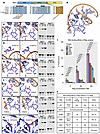 Figure 1
AOS-associated RBPJ variants impair DNA binding. (A) Domain map and sequence alignment of RBPJ orthologs. Conserved residues are highlighted, and AOS-associated variants (*) are denoted by human (blue) and mouse (orange) residue numbers. Black bars indicate DNA-binding regions. NTD = N-terminal domain. BTD = beta-trefoil domain. CTD = C-terminal domain. (Created in BioRender.) (B) Structure of RBPJ on DNA with AOS-associated residue changes denoted by human (blue) and mouse (orange) numbers. (C–H) PyMOL models of structural changes and representative comparative EMSAs of AOS-associated RBPJ variants. Dashed lines within each model denote DNA-residue or residue-residue polar interactions, and red discs indicate steric clash. EMSAs were performed using equimolar concentrations (5, 25, and 125 nM) of WT mouse RBPJ and the R91G (C), K195E (D), E89G (E), Y86C (F), F92V (G), and S358R (H) variants on a DNA probe encoding a high-affinity RBPJ binding site. (I) Graph quantifying the probe depletion for each variant across triplicate EMSAs (see Supplemental Figure 1). A 1-way ANOVA with Tukey’s post hoc correction was used to compare WT RBPJ with each variant. (J) Tabulated ITC data measuring DNA binding affinity of RBPJ variants. Fold-change calculated relative to WT RBPJ. A 2-tailed t test was used to compare KD of WT RBPJ to each variant. *P < 0.05, **P < 0.01, ****P < 0.0001. NS, not significant. N/A, not applicable.
To determine whether all RBPJ AOS variants affect DNA binding and to directly compare the binding activity of each variant, we performed electrophoretic mobility shift assays (EMSAs) and isothermal titration calorimetry (ITC) assays using DNA probes encoding an RBPJ binding site and purified AOS-associated RBPJ variants within the context of the mouse protein (Figure 1 and Supplemental Figures 1 and 2; supplemental material available online with this article; https://doi.org/10.1172/JCI187532DS1). In addition, we modeled each variant in the context of the known RBPJ/DNA structure to better understand the molecular nature of each defect (Figure 1, C–H). Note, we previously reported ITC assays to assess the DNA binding affinity of WT RBPJ and the RBPJE89G and RBPJK195E AOS variants (34). We included that data here along with new EMSA data for comparative purposes, and we have cited the original source as appropriate. Collectively, these studies revealed 2 findings: first, all variants significantly decreased DNA binding compared with WT RBPJ; and second, the variants’ impact on DNA binding fell across a spectrum of severity (Figure 1, C–J, and Supplemental Figures 1 and 2). Below, we describe the impact of each variant.
The most severe variant was RBPJR91G, which abolished DNA binding in EMSAs (Figure 1, C and I) and ITC assays (Figure 1J and Supplemental Figure 2A). This finding is congruent with the R91G change being predicted to abolish polar interactions with both DNA and the adjacent E89 residue (Figure 1C). Almost as severe was RBPJK195E, which significantly compromised DNA binding in EMSAs (Figure 1, D and I) and decreased binding approximately 16-fold in ITC assays (Figure 1J and Supplemental Figure 2A). Consistent with this dramatic loss in DNA binding, the K195E change introduced electrostatic repulsion and steric clashing within a region involved in direct binding to the DNA backbone (Figure 1D).
The RBPJE89G and RBPJY86C variants decreased DNA binding to a similar extent in EMSAs (Figure 1, E, F, and I). ITC assays further showed that RBPJE89G resulted in an approximately 6-fold loss in DNA binding relative to WT RBPJ (Figure 1J and Supplemental Figure 2A). Consistent with these findings, the E89G change is predicted to abolish polar interactions with Y86 and R91. Unfortunately, we were unable to purify sufficient RBPJY86C to perform ITC assays. Moreover, the RBPJY86C/DNA complex migrated slower than WT RBPJ and all other tested variants in EMSAs, even though these proteins were similar in size in SDS gels (Supplemental Figure 1B). Since RbpjY86C introduces a Cys residue, we treated the protein with reducing agents and performed EMSAs but did not observe a change in this slower migration pattern (Supplemental Figure 1C). Although it is unclear why the Y86C substitution results in a slower migrating band, the similar loss of affinity observed by RBPJY86C and RBPJE89G in EMSAs is consistent with structural analysis showing that Y86C is predicted to disrupt polar and nonpolar interactions with DNA (Figure 1F).
The last 2 variants, RBPJF92V and RBPJS358R, resulted in weaker but still significant decreases in DNA binding in EMSAs compared with WT RBPJ (Figure 1, G and H). ITC assays confirmed an approximately 3-fold decrease in DNA binding affinity for each variant (Figure 1J and Supplemental Figure 2A). The modest impact on DNA binding is consistent with S358R residing in a region that does not directly contact DNA. However, this variant is predicted to induce steric clashing with surrounding residues (Figure 1H) and thereby could cause protein folding changes that result in decreased DNA binding. The F92V variant is not predicted to change polar interactions or introduce steric clashing. However, F92 appears to have substantial nonpolar interactions with the DNA backbone that the smaller V92 residue may not fully recapitulate (Figure 1G). Taken together, these DNA binding assays show that all RBPJ AOS variants negatively affect DNA binding but to varying degrees.
These DNA binding assays support the idea that RBPJ AOS alleles encode defective transcription factors that fail to properly bind DNA. In addition to binding DNA, RBPJ directly recruits NICD to activate transcription and corepressors to inhibit transcription. We previously showed that 2 AOS variants, RBPJE89G and RBPJK195E, do not significantly alter their affinity for the NICD1 coactivator or the SHARP corepressor (34). Here, we found that RBPJF92V binds both NICD1 and SHARP with similar affinities as WT RBPJ and that RBPJR91G binds NICD1 with a similar affinity as WT RBPJ in ITC assays (Supplemental Figure 2, B and C, and Supplemental Table 1). Since Y86C is similarly found far from the NICD and SHARP interaction regions, this variant is also unlikely to alter cofactor binding. However, because S358R is located within a region not directly associated with DNA or cofactor binding, we tested RBPJS358R in ITC assays (Supplemental Figure 2, B and C) and found that it also binds NICD1 and SHARP with the same affinity as WT RBPJ (Supplemental Table 1). Thus, all RBPJ variants associated with AOS negatively affect DNA binding but not cofactor binding, consistent with the model that RBPJ AOS variants act as dominant-negative proteins that sequester cofactors away from WT RBPJ and off DNA.
RbpjE89G and RbpjS358R mouse models reveal that phenotypic severity correlates with loss in DNA binding affinity. To make mouse models with AOS-associated Rbpj alleles, we used CRISPR/Cas9 gene editing to engineer 2 Rbpj mutations. We chose to model the RbpjS358R and RbpjE89G variants based on their mild (approximately 3-fold loss) and moderate (approximately 6-fold loss) impacts on DNA binding affinity, respectively, to avoid potential heterozygote lethality in a mouse carrying a severe variant. To introduce S358R (human S332R), we used a donor sequence to replace part of exon 9 of mouse Rbpj (Figure 2A). We similarly introduced E89G (human E63G) using a donor sequence to replace part of exon 3 (Figure 2B). In both cases, silent mutations were included to introduce restriction enzyme sites that facilitate genotyping, and each variant was confirmed by sequencing (Figure 2, A and B). Note, RbpjS358R was generated on a WT Rbpj allele, and we created RbpjE89G on the well-characterized Rbpjfl allele (37). Our rationale for making RbpjE89G on the floxed allele is that Cre can be used to convert the dominant-negative RbpjE89G,fl allele into an Rbpjnull allele in select tissues of heterozygous mice that still have a non-floxed WT Rbpj allele (i.e., Rbpj+/E89G,fl).
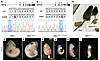 Figure 2
Generation of AOS-associated Rbpj variant mouse models reveals impaired animal growth and development. (A) (top) Schematic of mouse Rbpj, detailing the region of exon 9 encoding S358 and the donor sequence used to introduce the S358R substitution. (Created in BioRender.) (bottom) Confirmation of mouse genotype by Sanger sequencing with the codon for S358/R358 highlighted. (B) (top) Schematic of mouse Rbpj, detailing the region of exon 3 encoding E89 and the donor sequence used to introduce the E89G substitution. (Created in BioRender.) (bottom) Confirmation of mouse genotype by Sanger sequencing with the codon for E89/G89 highlighted. (C) Image showing that a typical P17 RbpjS358R/null hemizygote (right) is much smaller than its Rbpj+/+ littermate (left). (D–I) Stereoscope images of E10.5 embryos show that RbpjE89G,fl/E89G,fl homozygotes (F–H) display growth retardation, hemorrhage, pallor, and/or pericardial edema of variable severity. Rbpjnull/null homozygotes (I) show similar, albeit more severe, defects. Scale bar: 1 mm.
To determine the impact of these Rbpj alleles on mouse viability, we assessed offspring for deviation from expected Mendelian ratios. These studies revealed that Rbpj+/S358R heterozygous and RbpjS358R/S358R homozygous mice were viable and occurred at expected ratios (Table 1). Moreover, these mice did not show gross morphological defects, although RbpjS358R/S358R mice were initially smaller than littermates but were of normal size by P5 (Supplemental Figure 3A). We subsequently crossed RbpjS358R/S358R mice with mice carrying an Rbpj-null allele (Rbpj+/null) and found that RbpjS358R/null hemizygotes had significantly reduced viability (Table 1), and surviving offspring were much smaller than littermates (Figure 2C and Supplemental Figure 3B). Thus, the RbpjS358R allele behaves as a weak hypomorph in mice.
We similarly assessed the RbpjE89G,fl allele and found that, although heterozygous mice (Rbpj+/E89G,fl) were viable and lacked gross morphological defects, no RbpjE89G,fl/E89G,fl homozygotes were observed among live offspring (Table 1). To determine when RbpjE89G,fl/E89G,fl homozygotes perish, we performed timed collections at E10.5. Although Rbpj+/E89G,fl embryos resembled WT littermates (Figure 2, D and E), we observed a lower-than-expected frequency of RbpjE89G,fl/E89G,fl embryos (Table 1), and all homozygous embryos were much smaller than their littermates (Figure 2, F–H). Western blot analysis of protein isolated from E10.5 RbpjE89G,fl/E89G,fl and WT embryos revealed that RBPJE89G was expressed at normal levels relative to β-actin (Supplemental Figure 4), consistent with prior studies showing that RBPJE89G had similar stability as WT RBPJ in cell culture (34). Visual analysis of these embryos revealed a range of morphological defects that included hemorrhages (Figure 2F, n = 4/8), pericardial edema (Figure 2, G and H, n = 6/8), pallor (Figure 2G, n = 3/8), and incomplete axial rotation (Figure 2H, n = 3/8). The pericardial edema and incomplete axial rotation are reminiscent of Rbpjnull/null embryos (Figure 2I), although RbpjE89G,fl/E89G,fl embryos fare slightly better than Rbpjnull/null embryos. Lastly, we crossed Rbpj+/E89G,fl mice with Rbpj+/S358R mice and observed a dramatic loss of viability in offspring with both the RbpjS358R and RbpjE89G,fl alleles (RbpjS358R/E89G,fl, Table 1). Altogether, these data show that the RBPJE89G variant, which has an approximately 6-fold decrease in DNA binding activity, causes more severe phenotypes in mice than the RBPJS358R variant with an approximately 3-fold loss in DNA binding.
A compound heterozygous mouse model carrying RbpjE89G and N1null AOS alleles has vascular and heart phenotypes. Our data with the RbpjS358R and RbpjE89G,fl alleles revealed that neither was sufficient to cause dominant AOS-like phenotypes. In contrast, patients heterozygous for analogous RBPJ variants have dominant AOS phenotypes, although the RBPJS332R allele shows incomplete penetrance with only a single symptomatic patient and nonsymptomatic parent (2). These findings are consistent with prior studies showing differences in sensitivity to Notch pathway alleles between mice and humans. For example, NOTCH1 haploinsufficiency can cause human disease such as AOS and aortic valve disease (25), whereas a Notch1-null (N1-null) allele is well tolerated in heterozygous mice (33, 38). Interestingly, a family with AOS was found to have compound heterozygous mutations in both RBPJ and NOTCH1 alleles (2). Hence, we crossed Rbpj+/E89G,fl mice with mice heterozygous for either an N1-null allele that deletes amino acids 1056–2049, thereby removing several EGF repeats, the transmembrane domain, and Ankyrin repeats (N1tm1Con; ref. 38; referred to here as N1null), or an N1-null allele that deletes the promoter and exon 1 (N1tm2Agt; ref. 39; referred to here as N1gKO). Importantly, we observed a dramatic loss of viability in both N1+/null Rbpj+/E89G,fl and N1+/gKO Rbpj+/E89G,fl compound heterozygous mice (Table 2), and the surviving mice generally failed to thrive. Intriguingly, a subset of the N1+/gKO Rbpj+/E89G,fl mice, which had considerable C57/BL6 in their background, had obvious morphological skin/scalp defects (Figure 3, A and B). These findings raise the possibility of genetic background contributing to the skin/scalp defect. Hence, in this study, we focused on identifying the mechanisms of embryonic lethality, which was observed with both N1 alleles in outbred backgrounds.
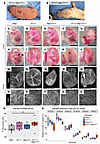 Figure 3
N1+/null Rbpj+/E89G,fl embryos display vascular phenotypes. (A and B) Representative images of dorsal midline skin lesions in P0 (A) and P11 (B) N1+/gKO Rbpj+/E89G,fl mice. (C–G) Representative images of E14.5 embryos for WT (Rbpj+/+), N1+/null, and Rbpj+/E89G,fl single heterozygotes and N1+/null Rbpj+/E89G,fl compound heterozygotes. Note, areas of hemorrhage (arrows) are observed in E14.5 N1+/null Rbpj+/E89G,fl embryos but not in control embryos. (H–L) Representative images of E14.5 embryos within their yolk sac for the indicated genotypes. Note, the compound heterozygous embryos have reduced or absent yolk sac vasculature (filled arrowheads). (M–Q) Representative 4× original magnification images of CD31-stained yolk sacs from E10.5 embryos for the indicated genotypes. (R–V) Representative 10× original magnification images of CD31-stained yolk sac microvasculature from E10.5 embryos for indicated genotypes. Scale bars: 0.5 cm (C–L), 1 mm (M–Q), and 100 μm (R–V). (W) Percentage of vascular coverage of yolk sacs measured in representative areas for 5–7 embryos per each indicated genotype. Each dot represents the yolk sac from an individual embryo, and the box plot shows the median with the 25th and 75th quartile highlighted. (X) Distribution of vessels by diameter using representative 400 μm × 400 μm areas of the yolk sac capillary networks stained for CD31. Vessel diameters were assessed between all branch points and measured using the NIS-Elements measurements tool. Each dot represents the yolk sac from an individual embryo, and the box plot shows the median with the 25th and 75th quartile highlighted.
 Table 2
Impact of Rbpj variants on prenatal and postnatal mouse viability in Notch1-sensitized backgrounds
We next assessed the specificity of the genetic interactions between N1 and RbpjE89G by performing 2 additional tests. First, we crossed each N1-null allele with mice carrying an Rbpj-null allele and found that neither N1+/null Rbpj+/null nor N1+/gKO Rbpj+/null were significantly underrepresented (Table 2). Moreover, unlike the N1 and Rbpj+/E89G,fl compound heterozygotes that showed morphological defects and failed to thrive, the N1+/null Rbpj+/null and N1+/gKO Rbpj+/null compound heterozygous mice were indistinguishable from littermate controls. Thus, the decreased viability observed in the N1 and Rbpj+/E89G,fl compound heterozygotes was due to the presence of the RbpjE89G,fl allele and not simply due to loss of a WT Rbpj allele. Second, we crossed the Rbpj+/E89G,fl allele into a Notch2-sensitized (N2-sensitized) background and observed expected numbers of N2+/lacZ Rbpj+/E89G,fl compound heterozygotes that showed no gross morphological defects (Table 2). Thus, the RbpjE89G allele genetically interacts with N1-null alleles to cause decreased viability but not with an N2-null allele. These data are consistent with clinical findings showing that RBPJ variants cause a NOTCH1-like syndrome (AOS) but not a NOTCH2-like syndrome (Alagille syndrome) (25, 40).
The decreased viability and failure of N1+/null Rbpj+/E89G,fl mice to thrive made it difficult to obtain sufficient mice to perform quantitative analyses of postnatal tissues. To define the cause of lethality in N1+/null Rbpj+/E89G,fl compound heterozygotes, we first genotyped embryos from timed harvests at E10.5, E14.5, and E16.5 to assess the time of embryonic demise. These experiments revealed a gradual decrease in N1+/null Rbpj+/E89G,fl compound heterozygous embryos that became significant by E16.5 (Table 2). Moreover, gross morphological analysis of these embryos revealed vascular phenotypes that included hemorrhages (Figure 3, C–G) and a dramatic reduction in large vessels within the yolk sac vasculature (Figure 3, H–L). Since loss of large vessels could be caused by a lack of vascular remodeling, we stained yolk sacs from E10.5 embryos for the endothelial marker CD31 (Figure 3, M–V). Low magnification images confirmed an overall decrease in large vessels within the yolk sacs of N1+/null Rbpj+/E89G,fl embryos (Figure 3, P and Q) compared with single heterozygous and WT littermates (Figure 3, M–O). However, higher magnification images revealed a robust network of yolk sac capillary vessels in all embryos including N1+/null Rbpj+/E89G,fl compound heterozygotes (Figure 3, R–V). This capillary bed initially forms via vasculogenesis prior to E8.5 and then undergoes N1-dependent remodeling between E8.5 and E10.5 to form a branched hierarchical network of large and small vessels (41). Comparative analysis of the capillary bed revealed that, while the WT and single heterozygous yolk sac vessels had successfully undergone remodeling to form a network of different sized vessels (Figure 3, R–T), the N1+/null Rbpj+/E89G,fl compound heterozygotes showed a range of phenotypes consistent with a lack of or partial failure to undergo hierarchical vascular patterning (Figure 3, U and V, respectively). We next quantified the percentage of vascularized area and the diameter distribution of capillary vessels in the yolk sacs from at least 5 embryos per genotype. Although this analysis revealed that, as a group, the N1+/null Rbpj+/E89G,fl yolk sac capillary bed vasculature was not significantly different from littermate controls (Figure 3, W and X), the N1+/null Rbpj+/E89G,fl embryos showed greater phenotype variability than control embryos. These data are consistent with N1+/null Rbpj+/E89G,fl compound heterozygotes having a partially penetrant disruption or delay in remodeling of the early vascular plexus.
Since heart defects are common in both humans and mice with Notch pathway mutations, we analyzed E16.5 hearts and observed malformations that included ventricular septal defects (VSDs) and dilated coronary vessels in N1+/null Rbpj+/E89G,fl embryos (Figure 4, A–D; we quantify these defects below). We confirmed that the dilated structures in N1+/null Rbpj+/E89G,fl hearts were blood vessels using the endothelial marker VE-cadherin (Fih–I). Consistent with these data, analysis of the hearts from the relatively few P7 N1+/null Rbpj+/E89G,fl mice revealed that one-third also had VSDs (2 of 6, Figure 4, J–N). Although NOTCH1 variants in humans have been associated with bicuspid valve disease, we did not observe obvious valve abnormalities in the hearts of either E16.5 or P7 N1+/null Rbpj+/E89G,fl animals. Altogether, these data demonstrated that N1+/null Rbpj+/E89G,fl mice show increased embryonic lethality that is potentially caused by hemorrhages, diminished yolk sac vascular remodeling, and/or cardiovascular defects.
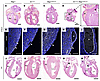 Figure 4
N1+/null Rbpj+/E89G,fl embryos display cardiac phenotypes. (A–D) Representative images of E16.5 H&E-stained heart sections from WT (Rbpj+/+), N1+/null, Rbpj+/E89G,fl, and N1+/null Rbpj+/E89G,fl genotypes. The left ventricle (LV) and right ventricle (RV) are labeled, and arrowheads highlight ventricular septal defects in the N1+/null Rbpj+/E89G,fl heart, whereas asterisks highlight dilated coronary vessels. The box in D outlines the region shown at higher magnification at left. (E–I) Representative images of E16.5 heart sections that were stained with VE-cadherin (endothelium, white) and DAPI (nuclei, blue). Arrows indicate coronary vessels, with the lumens of dilated vessels indicated with asterisks. (J–N) Representative images of P7 H&E-stained heart sections from WT (Rbpj+/+), N1+/null, Rbpj+/E89G,fl, and N1+/null Rbpj+/E89G,fl genotypes. The left ventricle (LV) and right ventricle (RV) are labeled, and arrowheads highlight ventricular septal defects in N1+/null Rbpj+/E89G,fl hearts. Scale bars: 0.5 mm (A–D), 100 μm (E–I), and 1 mm (J–N).
Conditional removal of the RbpjE89G,fl allele from only endothelial cells rescues cardiovascular phenotypes. Two pieces of evidence have led to the hypothesis that AOS is largely a vascular disease. First, patients with AOS with NOTCH1, DLL4, and RBPJ variants frequently have cardiovascular defects (2). Second, mouse and zebrafish studies have shown that N1 and DLL4 signaling are critical regulators of vascular development (25, 26). To test this hypothesis, we developed a conditional AOS “rescue” model that uses Tie2-CreYwa to specifically recombine floxed alleles in the developing endothelium (42), which includes the vascular endothelial cells that form the inner lining of blood vessels and the endocardial cells that line the heart. Tie2 is not active in lymphatic endothelial cells, but it is active in hematopoietic stem cells (43). By crossing N1+/null Tie2-Cre+/Ywa mice with Rbpj+/E89G,fl mice, Cre recombination converts the floxed RbpjE89G,fl allele into an Rbpjnull allele in heterozygous endothelial cells and hematopoietic stem cells that still encode a WT Rbpj+ allele (see schematic in Figure 5A). Since N1+/null Rbpj+/null mice occur in expected numbers (Table 2) and do not show overt phenotypes, this mouse model explicitly tests whether expressing the Rbpj+/E89G,fl allele within endothelial cells and hematopoietic stem cells is required (i.e., necessary) to induce morbidity in an N1+/null background (Figure 5A). Consistent with this idea, N1+/null Rbpj+/E89G,fl Tie2-Cre+/Ywa mice had significantly enhanced viability compared with N1+/null Rbpj+/E89G,fl littermates that lack Tie2-Cre (Table 3). Moreover, the N1+/null Rbpj+/E89G,fl Tie2-Cre+/Ywa mice were indistinguishable from control littermates (Supplemental Figure 5), whereas N1+/null Rbpj+/E89G,fl mice without Tie2-Cre generally failed to thrive (Table 3). Thus, Tie2-Cre can significantly rescue the lethality seen in N1+/null Rbpj+/E89G,fl mice by converting the Rbpj+/E89G,fl AOS allele into an Rbpj+/null allele within the endothelium.
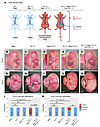 Figure 5
Conditional removal of RbpjE89G from the endothelium rescues vascular phenotypes. (A) Schematic of AOS rescue model. Both WT (N1+/+ Rbpj+/+) and N1+/null Rbpj+/null mice are viable and without overt defects. Mice with the N1+/null Rbpj+/E89G,fl genotype have reduced viability, vascular defects, and heart defects (see Table 3 and Figures 3 and 4). A mouse that recombines N1+/null Rbpj+/E89G,fl to N1+/null Rbpj+/null in the endothelium using Tie2-CreYwa tests the necessity of the variant in the vascular endothelium for the development of AOS-like phenotypes. (Created in BioRender.). (B–K) Representative images of E14.5 embryos (B–F) and E16.5 embryos (G–K) within their yolk sac for the indicated genotypes. Note, only the N1+/null Rbpj+/E89G,fl embryos have reduced or absent yolk sac vasculature. The ratio of affected to total individuals is listed in the lower left corner of each panel. (L and M) Visualization of the proportion of embryos with yolk sac vasculature defects at each stage. P values calculated with Fisher’s exact test are noted; NS, not significant.
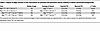 Table 3
Impact of Rbpj variants in the vasculature on prenatal and postnatal mouse viability in Notch-sensitized backgrounds
Because few N1+/null Rbpj+/E89G,fl mice without Tie2-Cre survive postnatally, we quantified the impact of converting the Rbpj+/E89G,fl allele into an Rbpj+/null allele using timed embryo collections at E14.5 and E16.5. Consistent with our postnatal analysis, Tie2-Cre was sufficient to rescue lethality of N1+/null Rbpj+/E89G,fl embryos at E16.5, whereas N1+/null Rbpj+/E89G,fl littermates without Tie2-Cre were significantly underrepresented (Table 3). Moreover, analysis of the yolk sac at both E14.5 and E16.5 revealed that Tie2-Cre significantly rescued the vascular defects of N1+/null Rbpj+/E89G,fl embryos (Figure 5, B–K). For example, although 7 of 9 E14.5 N1+/null Rbpj+/E89G,fl embryos had reduced or absent yolk sac vasculature, 0 of 6 E14.5 N1+/null Rbpj+/E89G,fl Tie2-Cre+/Ywa embryos and none of the control littermates showed diminished yolk sac vasculature (Figure 5, B–F, and L). A similar rescue in yolk sac vasculature was observed in Tie2-Cre positive N1+/null Rbpj+/E89G,fl embryos at E16.5 (Figure 5, G–K, and M). Thus, conditionally converting Rbpj+/E89G,fl into an Rbpj+/null allele with Tie2-Cre was sufficient to rescue both viability and yolk sac vasculature defects in N1+/null heterozygous embryos. Intriguingly, comparative analysis between embryonic time points revealed that the penetrance of yolk sac vasculature defects in the absence of Tie2-Cre was significantly decreased at E16.5 (approximately 33%) compared with E14.5 (approximately 78%) in N1+/null Rbpj+/E89G,fl embryos (P = 0.046). This decreased penetrance in older embryos correlates well with the viability data showing a decrease in the proportion of N1+/null Rbpj+/E89G,fl embryos from E14.5 to E16.5 (Table 2). Hence, these data suggest that those E14.5 embryos with severe yolk sac phenotypes are likely to perish prior to E16.5 and that conditionally deleting the Rbpj+/E89G,fl allele using Tie2-Cre can rescue this phenotype and lethality.
To further assess for possible vascular defects, we immunostained the skin vasculature from the forelimb and scalp regions of E14.5 embryos using a CD31 antibody to label endothelial cells. Analysis of the forelimb tissues for both percentage of vascularized area and branch point density did not reveal significant differences across genotypes (Supplemental Figure 6, A–D). In addition, we analyzed tip cell numbers within the scalp vasculature at E14.5, a time point at which sprouting angiogenesis is actively occurring at the top of the skull, and did not observe any obvious changes in tip cell numbers across genotypes (Supplemental Figure 6, E–I). Thus, although significant defects in the yolk sac vasculature were observed in N1+/null Rbpj+/E89G,fl embryos, we did not observe obvious widespread vascular defects within the embryonic skin.
Next, we assessed whether Tie2-Cre could rescue the heart defects seen in N1+/null Rbpj+/E89G,fl embryos (see Figure 4). Unlike WT embryos (Figure 6A), N1+/null single heterozygotes (Figure 6B), and Rbpj+/E89G,fl single heterozygotes (Figure 6C), N1+/null Rbpj+/E89G,fl compound heterozygotes showed heart defects at E16.5 that included VSDs (5 of 9, Figure 6, D and F) and coronary vessel dilation (5 of 9, Figure 6G). In contrast, we did not observe these phenotypes in N1+/null Rbpj+/E89G,fl Tie2-Cre+/Ywa embryos (Figure 6, E–G), suggesting that the heart and vessel dilation defects in N1+/null Rbpj+/E89G,fl embryos are due to compromised N1 signaling in the developing endothelial and endocardial cells. Together, these results show that expressing the AOS-associated dominant-negative RBPJ protein in the vascular endothelium is necessary to cause cardiovascular phenotypes.
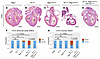 Figure 6
Conditional removal of RbpjE89G from the vascular endothelium rescues heart phenotypes. (A–E) Representative images of E16.5 H&E-stained heart sections. The left ventricle (LV) and right ventricle (RV) are labeled, and an arrowhead highlights a ventricular septal defect in the N1+/null Rbpj+/E89G,fl heart. (F–G) Visualization of the proportion of E16.5 embryos with (F) ventricular septal defects and (G) dilated coronary vessels. P values calculated with Fisher’s exact test are noted. ns = not significant.
Selective induction of N1+/cKO Rbpj+/E89G compound heterozygosity in the vascular endothelium is sufficient to cause lethality and cardiovascular phenotypes. The AOS rescue model reveals that expressing RbpjE89G in the endothelium is necessary to induce morbidity in N1+/null mice. To test whether expressing these alleles within only the endothelium and hematopoietic stem cells is sufficient to induce morbidity, we modified our conditional approach to create an AOS induction model (Figure 7A). First, we used genome editing to remake the RbpjE89G variant on a non-floxed Rbpj allele. Rbpj+/E89G Tie2-Cre+/Ywa mice were then crossed with N1fl/fl mice (44) to generate N1+/flRbpj+/E89G offspring with and without Tie2-Cre. In this model, Tie2-Cre selectively recombines the N1fl/fl allele into a null allele (N1cKO) to induce N1+/cKO Rbpj+/E89G compound heterozygosity within endothelial cells and hematopoietic stem cells of mice that otherwise have 2 copies of N1 (i.e., N1+/fl Rbpj+/E89G) (Figure 7A). Consistent with our hypothesis, N1+/fl Rbpj+/E89G Tie2-Cre+/Ywa mice occurred significantly less often than their littermates, suggesting prenatal demise (Table 4). Moreover, E16.5 N1+/fl Rbpj+/E89G Tie2-Cre+/Ywa embryos had both significantly reduced yolk sac vasculature (Figure 7, B–E) and increased incidences of hemorrhage (Figure 7, F–I) compared with littermates. Additionally, VSDs were observed in N1+/fl Rbpj+/E89G Tie2-Cre+/Ywa hearts but not in control littermates (3 of 7, Figure 7, J–L). Thus, N1+/null Rbpj+/E89G compound heterozygosity in the vascular endothelium is sufficient to cause lethality and cardiovascular defects.
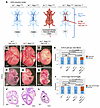 Figure 7
Conditional removal of one copy of Notch1 from the vascular endothelium of Rbpj+/E89G mice induces vascular and heart phenotypes. (A) Schematics of AOS induction model. Both WT (N1+/+ Rbpj+/+) and N1+/fl Rbpj+/E89G mice are viable and without overt defects (see Table 4). A mouse that recombines N1+/fl Rbpj+/E89G to N1+/cKO Rbpj+/E89G in the endothelium using Tie2-CreYwa tests the sufficiency of the variant’s presence in the vascular endothelium for the development of AOS-like phenotypes. (Created in BioRender.) (B–E) E16.5 N1+/fl Rbpj+/E89G Tie2-Cre+/Ywa embryos have reduced yolk sac vasculature, increased frequency of hemorrhage (F–I), and ventricular septal defects (J–L). The left ventricle (LV) and right ventricle (RV) are labeled, and an arrowhead highlights a ventricular septal defect in the N1+/fl Rbpj+/E89G Tie2-Cre+/Ywa heart. The ratio of affected individuals to total individuals is listed in the lower left corner of each panel. Scale bars: 0.5 cm (B–D and F–H) and 0.5 mm (J–L). P values calculated with Fisher’s exact test are noted; NS, not significant.
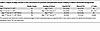 Table 4
Impact of Rbpj variants in the vasculature on prenatal and postnatal mouse viability in Notch-sensitized backgrounds


Copyright © 2026 American Society for Clinical Investigation
ISSN: 0021-9738 (print), 1558-8238 (online)