
Go to JCI Insight
  • About
  • Editors
  • Consulting Editors
  • For authors
  • Publication ethics
  • Publication alerts by email
  • Advertising
  • Job board
  • Contact
  • Clinical Research and Public Health
  • Current issue
  • Past issues
  • By specialty
    • COVID-19
    • Cardiology
    • Gastroenterology
    • Immunology
    • Metabolism
    • Nephrology
    • Neuroscience
    • Oncology
    • Pulmonology
    • Vascular biology
    • All ...
  • Videos
    • Conversations with Giants in Medicine
    • Video Abstracts
  • Reviews
    • View all reviews ...
    • Clinical innovation and scientific progress in GLP-1 medicine (Nov 2025)
    • Pancreatic Cancer (Jul 2025)
    • Complement Biology and Therapeutics (May 2025)
    • Evolving insights into MASLD and MASH pathogenesis and treatment (Apr 2025)
    • Microbiome in Health and Disease (Feb 2025)
    • Substance Use Disorders (Oct 2024)
    • Clonal Hematopoiesis (Oct 2024)
    • View all review series ...
  • Viewpoint
  • Collections
    • In-Press Preview
    • Clinical Research and Public Health
    • Research Letters
    • Letters to the Editor
    • Editorials
    • Commentaries
    • Editor's notes
    • Reviews
    • Viewpoints
    • 100th anniversary
    • Top read articles

  • Current issue
  • Past issues
  • Specialties
  • Reviews
  • Review series
  • Conversations with Giants in Medicine
  • Video Abstracts
  • In-Press Preview
  • Clinical Research and Public Health
  • Research Letters
  • Letters to the Editor
  • Editorials
  • Commentaries
  • Editor's notes
  • Reviews
  • Viewpoints
  • 100th anniversary
  • Top read articles
  • About
  • Editors
  • Consulting Editors
  • For authors
  • Publication ethics
  • Publication alerts by email
  • Advertising
  • Job board
  • Contact
Top
  • View PDF
  • Download citation information
  • Send a comment
  • Terms of use
  • Standard abbreviations
  • Need help? Email the journal
  • Top
  • Abstract
  • Advantages of genome-based studies of donor pancreatic islets
  • Comparing α cell and β cell dysfunction in T1D islets
  • Connecting T1D genetic risk variants to α cell dysfunction
  • Scouting mechanisms that protect α cells during β cell destruction
  • Future directions and challenges of islet-based T1D research
  • Funding support
  • Acknowledgments
  • Footnotes
  • References
  • Version history
  • Article usage
  • Citations to this article

Advertisement

Commentary Open Access | 10.1172/JCI199728

Diabetes research enters the biobank era: searching for the truth in a deep well

Decio L. Eizirik and Priscila L. Zimath

ULB Center for Diabetes Research, Medical Faculty, Université Libre de Bruxelles (ULB), Brussels, Belgium.

Address correspondence to: Decio L. Eizirik, ULB Center for Diabetes Research, Medical Faculty, Université Libre de Bruxelles, 808 Route de Lennik, B-1070 Brussels, Belgium. Email: decio.laks.eizirik@ulb.be.

Find articles by Eizirik, D. in: PubMed | Google Scholar

ULB Center for Diabetes Research, Medical Faculty, Université Libre de Bruxelles (ULB), Brussels, Belgium.

Address correspondence to: Decio L. Eizirik, ULB Center for Diabetes Research, Medical Faculty, Université Libre de Bruxelles, 808 Route de Lennik, B-1070 Brussels, Belgium. Email: decio.laks.eizirik@ulb.be.

Find articles by Zimath, P. in: PubMed | Google Scholar

Published December 1, 2025 - More info

Published in Volume 135, Issue 23 on December 1, 2025
J Clin Invest. 2025;135(23):e199728. https://doi.org/10.1172/JCI199728.
© 2025 Eizirik et al. This work is licensed under the Creative Commons Attribution 4.0 International License. To view a copy of this license, visit http://creativecommons.org/licenses/by/4.0/.
Published December 1, 2025 - Version history
View PDF

Related article:

Altered immune and metabolic molecular pathways drive islet cell dysfunction in human type 1 diabetes
Theodore dos Santos, Xiao-Qing Dai, Robert C. Jones, Aliya F. Spigelman, Hannah M. Mummey, Jessica D. Ewald, Cara E. Ellis, James G. Lyon, Nancy Smith, Austin Bautista, Jocelyn E. Manning Fox, Norma F. Neff, Angela M. Detweiler, Michelle Tan, Rafael Arrojo e Drigo, Jianguo Xia, Joan Camunas-Soler, Kyle J. Gaulton, Stephen R. Quake, Patrick E. MacDonald
We analyzed pancreatic islet cells from donors with type 1 diabetes to define pathways and mechanisms responsible for altered insulin and glucagon in this disease.
Research Article Autoimmunity Cell biology Endocrinology

Altered immune and metabolic molecular pathways drive islet cell dysfunction in human type 1 diabetes

  • Text
  • PDF
Abstract

Type 1 diabetes (T1D) is characterized by the autoimmune destruction of most insulin-producing β cells, along with dysregulated glucagon secretion from pancreatic α cells. We conducted an integrated analysis that combines electrophysiological and transcriptomic profiling, along with machine learning, of islet cells from T1D donors. The few surviving β cells exhibit altered electrophysiological properties and transcriptomic signatures indicative of increased antigen presentation, metabolic reprogramming, and impaired protein translation. In α cells, we observed hyperresponsiveness and increased exocytosis, which are associated with upregulated immune signaling, disrupted transcription factor localization, and lysosome homeostasis, as well as dysregulation of mTORC1 complex signaling. Notably, key genetic risk signals for T1D were enriched in transcripts related to α cell dysfunction, including MHC class I, which were closely linked with α cell dysfunction. Our data provide what we believe are novel insights into the molecular underpinnings of islet cell dysfunction in T1D, highlighting pathways that may be leveraged to preserve residual β cell function and modulate α cell activity. These findings underscore the complex interplay between immune signaling, metabolic stress, and cellular identity in shaping islet cell phenotypes in T1D.

Authors

Theodore dos Santos, Xiao-Qing Dai, Robert C. Jones, Aliya F. Spigelman, Hannah M. Mummey, Jessica D. Ewald, Cara E. Ellis, James G. Lyon, Nancy Smith, Austin Bautista, Jocelyn E. Manning Fox, Norma F. Neff, Angela M. Detweiler, Michelle Tan, Rafael Arrojo e Drigo, Jianguo Xia, Joan Camunas-Soler, Kyle J. Gaulton, Stephen R. Quake, Patrick E. MacDonald

×

Abstract

Loss of circulating insulin resulting from autoimmune destruction of β cells is the defining characteristic of type 1 diabetes (T1D), but islet dysfunction in T1D affects both β cells and α cells. Advances in multiomic analyses and the systematic collection of diseased human pancreata are enabling new approaches for diabetes research; hypotheses can be generated from observations in the affected human tissue and then tested in human islets, stem cell–derived islets, or humanized mice. The study by dos Santos and colleagues that appears in this issue of the JCI is an excellent example of the advantages and challenges posed by this approach. Through integrated analyses that combined electrophysiological and transcriptomic profiling, the authors provided detailed insights into the mechanisms leading to α cell dysfunction in islets from individuals with T1D.

Advantages of genome-based studies of donor pancreatic islets

In past decades, research on β cell fate in diabetes usually started with hypothesis generation and testing in rodent models and then, if feasible, proceeded to confirmation of key findings in human islets. Trust by some scientists in these rodent-based conclusions and in their own convictions were so “rock solid” that, often, a single experiment in human islets was considered sufficient to “prove” the rodent model findings.

A classic example of this era was the so called “Okamoto Model”; based on experiments in rodent islets exposed to the β cell toxins streptozotocin and alloxan, this model posited that activation of poly(ADP–ribose) synthetase (PARP) and consequent NAD depletion (preventable by nicotinamide) was the central cause of β cell death in type 1 diabetes (T1D) (1, 2). The Okamoto Model laid the foundation for a large double-blind, placebo-controlled trial testing nicotinamide as an approach to prevent T1D in 552 individuals with islet cell antibodies (ICAs) (the ENDIT trial (3)). Unfortunately, the results of this and subsequent trials based on a similar framework were negative (4). By then, it had started to dawn on many scientists that the field faced a phenomenon akin to that described by Thomas Mann in the introduction to his masterpiece “Joseph and His Brothers” (5), discussing the study of ancient history: “And so one runs the risk, when peering down into the well of the past, of seeing at the bottom not the real past … but rather one’s own face” — or, in the present case, one’s own favorite rodent-based hypothesis.

The solution to this conundrum arrived from 2 sides. First, the human genome project enabled the development of tools to comprehensively profile mRNAs and proteins, initially with microarrays, later with RNA-seq, advanced proteomics, and, more recently, spatial transcriptomics and proteomics. Use of genome-based tools shifted thinking from the traditional “one gene, one protein, one disease” view to understanding that complex conditions, such as β cell failure in diabetes, often result from perturbed gene and protein networks. Second, American and European initiatives, such as the Network for Pancreatic Organ Donors with Diabetes (nPOD, https://npod.org/) (6), Human Pancreas Analysis Program (HPAP, https://hpap.pmacs.upenn.edu/) (7) and Exeter Archival Diabetes Biobank (EADB, https://foulis.vub.ac.be) (8), systematically collected pancreata from nondiabetic individuals and individuals positive for islet autoantibodies or with clinical T1D. These tissues were analyzed by advanced omics and/or histology, and data were deposited in open access resources (similar initiatives were developed for brain and other tissues [e.g., Human BioMolecular Atlas Program (HuBMAP) (9), Human Protein Atlas (HPA) (10), etc.]). Together, these advances enabled a different approach to human diabetes research; hypotheses could now be generated departing from the affected human tissue — which could be studied at its full complexity (Figure 1A) — and then tested in human β cell lines, islets, or stem cell-derived islet organoids, humanized mice, or spontaneous animal models of diabetes, such as NOD mice (Figure 1B).
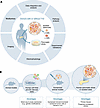
A paradigm shift in diabetes research: from “rodent-first” to “human-based”Figure 1

A paradigm shift in diabetes research: from “rodent-first” to “human-based” approaches. Traditional diabetes research often followed a “rodent-first” paradigm, where hypotheses were generated and tested in animal models and only then validated in human islets. Advances in genomics, proteomics, and systematic human pancreatic tissue collection have enabled a “human-first” approach, where hypotheses are now generated from affected human tissue at its full complexity (A) and subsequently tested in human β-cell lines, islets, stem cell–derived organoids, or humanized mouse models (B).
Comparing α cell and β cell dysfunction in T1D islets

The study by dos Santos and colleagues (11) published in this issue of the JCI is an excellent example of the advantages and challenges posed by this new approach. Through integration of electrophysiological analyses and transcriptomic profiling in donor islet cells, the authors provide new insights into β and α cell dysfunction in individuals with and without T1D (Figure 1A). In T1D islets, surviving β cells were scarce (16 cells from 4 donors), reflecting longstanding disease. Indeed, only one T1D islet was studied at the time of the donor’s diagnosis — all of the other donors had had diabetes for 3–41 years. This explains the β cell scarcity and should caution against bias when interpreting these results: the study of a few surviving β cells that endured years of autoimmune attack limits the relevance for understanding early β cell events in the development of T1D. The surviving β cells in T1D islets showed impaired electrophysiological activity, transcriptional signatures of increased antigen presentation (increased MHC class I– and IFN-γ–related pathways, both key in T1D pathogenesis), a shift towards glycolysis, downregulation of mitochondrial respiration, and impaired protein translation relative to β cells from nondiabetic islets changes suggesting metabolic reprogramming of these immune-stressed cells. These findings align with previous studies in pancreatic slices showing that residual β cells in T1D are functionally impaired (12, 13).

In contrast, α cells (569 cells from 9 donors with T1D) were preserved but exhibited hyperexcitability, increased exocytosis, and loss of physiological glucose-mediated suppression of glucagon secretion, paralleled by dysregulation of mTORC1 complex signaling, compared with α cells from nondiabetic islets. Studying α cells in T1D is important, as these cells contribute to dysregulation of glucose homeostasis, initially by aggravating hyperglycemia due to glucagon hypersecretion and, at later stages of the disease, by failing to provide counter regulation to hypoglycemia (14, 15). The functional alterations in T1D islet α cells were accompanied by upregulation of immune signaling transcripts (e.g., HLA-A/B/C and B2M), dysregulation of mTOR signaling, and lysosomal imbalance, all of which likely contribute to aberrant glucagon release. Microscopy analysis revealed compartmentalization of glucagon and MHC-I in α cells from nondiabetic individuals, but colocalization in T1D α cells. Based on these findings, dos Santos et al. suggested that the negative correlation between the α cell score (an integrated metric for α cell behavior) and antigen presentation genes (HLA-A and -B, B2M, etc.) in T1D islets indicates that upregulation of antigen loading and presentation somehow affects α cell function. HLA expression in islet cells is one of the best markers of interferon exposure (16, 17). Thus, an alternative explanation could be that cells that faced greater exposure to interferons — resulting in higher HLA class I expression — had a lower α cell score. In other words, higher HLA class I expression and lower α cell score could be concurrent to interferon exposure, without implying causality.

Connecting T1D genetic risk variants to α cell dysfunction

Another interesting and counterintuitive observation in dos Santos et al.’s report was the upregulation of key transcription factors required for maintenance of α cell phenotype, such as NeuroD1 and ISL1, in individuals with diabetes. This, however, was paralleled by a general impairment in nuclear access, which may result in defective action of the transcription factors. In future studies in α and β cells, it would be of interest to perform single-cell RNA-seq and single-nuclear RNA-seq in parallel to determine whether this defective nuclear transfer is specific for some transcription factors or is a general phenomenon.

By linking electrophysiological phenotypes to molecular signatures, this study showed that α cell dysfunction genes and pathways were enriched for T1D genetic risk variants (derived from the T1D Knowledge Portal and islet expression quantitative trait loci [eQTL]) (18). Although T1D genetic risk is classically linked to T cell activity and β cells (19), dos Santos and colleagues’ findings now extend this to α cells. The data suggest that α cell dysfunction is shaped by a combination of genetic, transcriptomic, and biophysical factors: cells with pronounced electrophysiological impairment expressed higher levels of T1D risk genes, while cells with preserved function showed reduced expression. Three points to consider here are that: (a) most risk variants for autoimmune diseases act in noncoding regions; (b) islet eQTL in the context of T1D, and differently from T2D, is better detected when islets are exposed to proinflammatory cytokines (20, 21); and (c) there are new tools available to determine islet cell eQTLs in both T1D and T2D (18). It will therefore be of interest to reanalyze the present data in light of this new information.

Scouting mechanisms that protect α cells during β cell destruction

A feature of T1D is that the immune system destroys β cells but not neighboring α cells, even though both are dysfunctional. Although α cells are exposed to the same inflammatory environment as β cells and the cells share gene expression signatures (22, 23), α cells survive. Understanding how α cells resist the prolonged immune assault that characterizes T1D pathogenesis may uncover protective mechanisms and novel therapeutic targets to preserve β cells and prevent or delay disease. By highlighting the role of α cells, the authors provide a new and valuable perspective on T1D pathophysiology. Several other relevant T1D pathways were identified in this study, and it will provide an excellent blueprint for future studies to map α cell fate in T1D.

Future directions and challenges of islet-based T1D research

Research in human T1D pancreata faces challenges that are not unique to the present study. The restricted availability of T1D donor tissue limits the number of islets and cells available to be analyzed; it is furthermore impossible to perform longitudinal studies, distinguishing this research from research based on sequential biopsies of skin in psoriasis or joints in rheumatoid arthritis. Another complication is donor variability in terms of disease duration, age at onset, biological sex, and autoantibody profiles; each variable introduces heterogeneity but also reflects the clinical diversity of T1D (24). To partially mitigate these challenges, alternative approaches have been used, such as studying intact pancreatic slices (13). This model preserves the islet microenvironment, minimizes the impact of enzymatic isolation, and enables us to study endocrine and immune cell crosstalk. Such cross-sectional experiments inform on a single time point only and do not capture dynamic β and α cell changes over the course of disease — a pitfall that can only be addressed in vitro using human islets and stem cell-derived islets, alone or in coculture with immune cells, or, as the methodology improves, in vivo in humanized mice (25). Integrated with complementary technologies, including patch-clamp electrophysiology, multiomics, and in vivo intravital imaging, approaches enabling study at multiple time points hold promise to address important questions in T1D pathogenesis, such as the distinct contributions of α and β cells, the persistence and functionality of surviving β cells, and the heterogeneity of disease progression.

Notwithstanding the limitations discussed above, dos Santos et al. (11) extend our knowledge of the pathogenesis of T1D, providing a detailed view of α cell dysfunction in T1D and highlighting potential pathways that contribute to T1D pathophysiology.

Funding support
  • Breakthrough T1D (3-SRA-2023-1379-S-B, 3-IND-2024-1549-I-X, 2-SRA-2024-1524-S-B and IDDP-InSphero 201310390).
  • The Leona M. & Harry B. Helmsley Charitable Trust (Grants 2402-08172 and 2402-08172).
  • The Win4Excellence – Gene therapy in Wallonie (GT4Health_20230920).
  • Acknowledgments

    We are very grateful to Miriam Cnop, ULB Center for Diabetes Research, for helpful comments on the text.

    Address correspondence to: Decio L. Eizirik, ULB Center for Diabetes Research, Medical Faculty, Université Libre de Bruxelles, 808 Route de Lennik, B-1070 Brussels, Belgium. Email: decio.laks.eizirik@ulb.be.

    Footnotes

    Conflict of interest: DLE received, in the past year, research support from Novo Nordisk Research Center, Novo Nordisk A/S, 2760 Maaloev, Denmark and InSphero AG, Schlieren 8952, Switzerland.

    Copyright: © 2025, Eizirik et al. This is an open access article published under the terms of the Creative Commons Attribution 4.0 International License.

    Reference information: J Clin Invest. 2025;135(23):e199728. https://doi.org/10.1172/JCI199728.

    See the related article at Altered immune and metabolic molecular pathways drive islet cell dysfunction in human type 1 diabetes.

    References
    1. Yamamoto H, et al. Streptozotocin and alloxan induce DNA strand breaks and poly(ADP-ribose) synthetase in pancreatic islets. Nature. 1981;294(5838):284–286.
      View this article via: CrossRef PubMed Google Scholar
    2. Okamoto H. The role of poly(ADP-ribose) synthetase in the development of insulin-dependent diabetes and islet B-cell regeneration. Biomed Biochim Acta. 1985;44(1):15–20.
      View this article via: PubMed Google Scholar
    3. Gale EA, et al. European nicotinamide diabetes intervention trial (ENDIT): a randomised controlled trial of intervention before the onset of type 1 diabetes. Lancet. 2004;363(9413):925–931.
      View this article via: CrossRef PubMed Google Scholar
    4. Roep BO, et al. Satisfaction (not) guaranteed: re-evaluating the use of animal models of type 1 diabetes. Nat Rev Immunol. 2004;4(12):989–997.
      View this article via: CrossRef PubMed Google Scholar
    5. Mann T. Joseph and His Brothers: Translated and Introduced by John E. Woods. Knopf Doubleday Publishing Group; 2005.
    6. Campbell-Thompson M, et al. Network for pancreatic organ donors with diabetes (nPOD): developing a tissue biobank for type 1 diabetes. Diabetes Metab Res Rev. 2012;28(7):608–617.
      View this article via: CrossRef PubMed Google Scholar
    7. Kaestner KH, et al. NIH initiative to improve understanding of the pancreas, islet, and autoimmunity in type 1 diabetes: the human pancreas analysis program (HPAP). Diabetes. 2019;68(7):1394–1402.
      View this article via: CrossRef PubMed Google Scholar
    8. Richardson SJ, Pugliese A. 100 years of insulin: pancreas pathology in type 1 diabetes: an evolving story. J Endocrinol. 2021;252(2):R41–R57.
      View this article via: CrossRef PubMed Google Scholar
    9. HuBMAP Consortium. The human body at cellular resolution: the NIH human biomolecular atlas program. Nature. 2019;574(7777):187–192.
      View this article via: CrossRef PubMed Google Scholar
    10. Uhlén M, et al. Proteomics. Tissue-based map of the human proteome. Science. 2015;347(6220):1260419.
      View this article via: CrossRef PubMed Google Scholar
    11. dos Santos T, et al. Altered immune and metabolic molecular pathways drive islet cell dysfunction in human type 1 diabetes. J Clin Invest. 2025;135(23):e195267.
      View this article via: JCI PubMed Google Scholar
    12. Panzer JK, et al. Pancreas tissue slices from organ donors enable in situ analysis of type 1 diabetes pathogenesis. JCI Insight. 2020;5(8):e134525.
      View this article via: JCI Insight CrossRef PubMed Google Scholar
    13. Huber MK, et al. Beta cell dysfunction occurs independently of insulitis in type 1 diabetes pathogenesis. Cell Rep. 2025;44(9):116174.
      View this article via: CrossRef PubMed Google Scholar
    14. Carroll J, et al. Decoding the significance of alpha cell function in the pathophysiology of type 1 diabetes. Cells. 2024;13(22):1914.
      View this article via: CrossRef PubMed Google Scholar
    15. Pettway YD, et al. The human α cell in health and disease. J Endocrinol. 2023;258(1):e220298.
      View this article via: CrossRef PubMed Google Scholar
    16. Coomans de Brachène A, et al. Interferons are key cytokines acting on pancreatic islets in type 1 diabetes. Diabetologia. 2024;67(5):908–927.
      View this article via: CrossRef PubMed Google Scholar
    17. Yi X, et al. Transcriptomics of autoimmune diseases identifies FGFR1 as a target for pancreatic β cell protection. J Autoimmun. 2025;156:103469.
      View this article via: CrossRef PubMed Google Scholar
    18. Piron A, et al. Identification of novel type 1 and type 2 diabetes genes by co-localization of human islet eQTL and GWAS variants with colocRedRibbon. [published online September 16, 2025]. Cell Genom. https://doi.org/10.1016/j.xgen.2025.101004.
      View this article via: PubMed Google Scholar
    19. Chiou J, et al. Interpreting type 1 diabetes risk with genetics and single-cell epigenomics. Nature. 2021;594(7863):398–402.
      View this article via: CrossRef PubMed Google Scholar
    20. Ramos-Rodríguez M, et al. The impact of proinflammatory cytokines on the β cell regulatory landscape provides insights into the genetics of type 1 diabetes. Nat Genet. 2019;51(11):1588–1595.
      View this article via: CrossRef PubMed Google Scholar
    21. Eizirik DL, et al. Pancreatic β cells in type 1 and type 2 diabetes mellitus: different pathways to failure. Nat Rev Endocrinol. 2020;16(7):349–362.
      View this article via: CrossRef PubMed Google Scholar
    22. Eizirik DL, et al. Why does the immune system destroy pancreatic β cells but not α cells in type 1 diabetes? Nat Rev Endocrinol. 2023;19(7):425–434.
      View this article via: CrossRef PubMed Google Scholar
    23. Bosi E, et al. Human alpha cell transcriptomic signatures of types 1 and 2 diabetes highlight disease-specific dysfunction pathways. iScience. 2022;25(10):105056.
      View this article via: CrossRef PubMed Google Scholar
    24. Redondo MJ, Morgan NG. Heterogeneity and endotypes in type 1 diabetes mellitus. Nat Rev Endocrinol. 2023;19(9):542–554.
      View this article via: CrossRef PubMed Google Scholar
    25. Khosravi-Maharlooei M, et al. Modeling human T1D-associated autoimmune processes. Mol Metab. 2022;56:101417.
      View this article via: CrossRef PubMed Google Scholar
    Version history
    • Version 1 (December 1, 2025): Electronic publication

    Article tools

    • View PDF
    • Download citation information
    • Send a comment
    • Terms of use
    • Standard abbreviations
    • Need help? Email the journal

    Metrics

    • Article usage
    • Citations to this article

    Go to

    • Top
    • Abstract
    • Advantages of genome-based studies of donor pancreatic islets
    • Comparing α cell and β cell dysfunction in T1D islets
    • Connecting T1D genetic risk variants to α cell dysfunction
    • Scouting mechanisms that protect α cells during β cell destruction
    • Future directions and challenges of islet-based T1D research
    • Funding support
    • Acknowledgments
    • Footnotes
    • References
    • Version history
    Advertisement
    Advertisement

    Copyright © 2025 American Society for Clinical Investigation
    ISSN: 0021-9738 (print), 1558-8238 (online)

    Sign up for email alerts