
Advertisement
Research ArticleInflammationNeuroscience
Open Access |  10.1172/JCI187571
Dysfunctional LHX6 pallido-subthalamic projections mediate epileptic events in a mouse model of Leigh syndrome
Laura Sánchez-Benito,1,2 Melania González-Torres,1,2 Irene Fernández-González,1 Laura Cutando,1,2 María Royo,3 Joan Compte,4 Miquel Vila,1,4,5,6 Sandra Jurado,3 Elisenda Sanz,1,2 and Albert Quintana1,2,7
1Institut de Neurociències, and
2Department of Cell Biology, Physiology and Immunology, Universitat Autònoma de Barcelona, Bellaterra, Barcelona Spain.
3Institute of Neuroscience, CSIC-UMH, Alicante, Spain.
4Neurodegenerative Diseases Research Group, Vall d’Hebron Research Institute-Network Center for Biomedical Research in Neurodegenerative Diseases (CIBERNED), Barcelona, Spain.
5Department of Biochemistry and Molecular Biology, Autonomous University of Barcelona, Barcelona, Spain.
6Catalan Institution for Research and Advanced Studies (ICREA), Barcelona, Spain.
7Focus Area for Human Metabolomics, Faculty of Natural and Agricultural Sciences, North-West University, Potchefstroom, South Africa.
Address correspondence to: Elisenda Sanz or Albert Quintana, Institut de Neurociències, Universitat Autònoma de Barcelona, M1-113, Bellaterra (Barcelona), Spain 08193. Phone: 34935814968; Email: elisenda.sanz@uab.cat (ES). Phone: 34935814967; Email: albert.quintana@uab.cat (AQ).
Find articles by Sánchez-Benito, L. in: PubMed | Google Scholar
1Institut de Neurociències, and
2Department of Cell Biology, Physiology and Immunology, Universitat Autònoma de Barcelona, Bellaterra, Barcelona Spain.
3Institute of Neuroscience, CSIC-UMH, Alicante, Spain.
4Neurodegenerative Diseases Research Group, Vall d’Hebron Research Institute-Network Center for Biomedical Research in Neurodegenerative Diseases (CIBERNED), Barcelona, Spain.
5Department of Biochemistry and Molecular Biology, Autonomous University of Barcelona, Barcelona, Spain.
6Catalan Institution for Research and Advanced Studies (ICREA), Barcelona, Spain.
7Focus Area for Human Metabolomics, Faculty of Natural and Agricultural Sciences, North-West University, Potchefstroom, South Africa.
Address correspondence to: Elisenda Sanz or Albert Quintana, Institut de Neurociències, Universitat Autònoma de Barcelona, M1-113, Bellaterra (Barcelona), Spain 08193. Phone: 34935814968; Email: elisenda.sanz@uab.cat (ES). Phone: 34935814967; Email: albert.quintana@uab.cat (AQ).
Find articles by González-Torres, M. in: PubMed | Google Scholar
1Institut de Neurociències, and
2Department of Cell Biology, Physiology and Immunology, Universitat Autònoma de Barcelona, Bellaterra, Barcelona Spain.
3Institute of Neuroscience, CSIC-UMH, Alicante, Spain.
4Neurodegenerative Diseases Research Group, Vall d’Hebron Research Institute-Network Center for Biomedical Research in Neurodegenerative Diseases (CIBERNED), Barcelona, Spain.
5Department of Biochemistry and Molecular Biology, Autonomous University of Barcelona, Barcelona, Spain.
6Catalan Institution for Research and Advanced Studies (ICREA), Barcelona, Spain.
7Focus Area for Human Metabolomics, Faculty of Natural and Agricultural Sciences, North-West University, Potchefstroom, South Africa.
Address correspondence to: Elisenda Sanz or Albert Quintana, Institut de Neurociències, Universitat Autònoma de Barcelona, M1-113, Bellaterra (Barcelona), Spain 08193. Phone: 34935814968; Email: elisenda.sanz@uab.cat (ES). Phone: 34935814967; Email: albert.quintana@uab.cat (AQ).
Find articles by Fernández-González, I. in: PubMed | Google Scholar
1Institut de Neurociències, and
2Department of Cell Biology, Physiology and Immunology, Universitat Autònoma de Barcelona, Bellaterra, Barcelona Spain.
3Institute of Neuroscience, CSIC-UMH, Alicante, Spain.
4Neurodegenerative Diseases Research Group, Vall d’Hebron Research Institute-Network Center for Biomedical Research in Neurodegenerative Diseases (CIBERNED), Barcelona, Spain.
5Department of Biochemistry and Molecular Biology, Autonomous University of Barcelona, Barcelona, Spain.
6Catalan Institution for Research and Advanced Studies (ICREA), Barcelona, Spain.
7Focus Area for Human Metabolomics, Faculty of Natural and Agricultural Sciences, North-West University, Potchefstroom, South Africa.
Address correspondence to: Elisenda Sanz or Albert Quintana, Institut de Neurociències, Universitat Autònoma de Barcelona, M1-113, Bellaterra (Barcelona), Spain 08193. Phone: 34935814968; Email: elisenda.sanz@uab.cat (ES). Phone: 34935814967; Email: albert.quintana@uab.cat (AQ).
Find articles by Cutando, L. in: PubMed | Google Scholar
1Institut de Neurociències, and
2Department of Cell Biology, Physiology and Immunology, Universitat Autònoma de Barcelona, Bellaterra, Barcelona Spain.
3Institute of Neuroscience, CSIC-UMH, Alicante, Spain.
4Neurodegenerative Diseases Research Group, Vall d’Hebron Research Institute-Network Center for Biomedical Research in Neurodegenerative Diseases (CIBERNED), Barcelona, Spain.
5Department of Biochemistry and Molecular Biology, Autonomous University of Barcelona, Barcelona, Spain.
6Catalan Institution for Research and Advanced Studies (ICREA), Barcelona, Spain.
7Focus Area for Human Metabolomics, Faculty of Natural and Agricultural Sciences, North-West University, Potchefstroom, South Africa.
Address correspondence to: Elisenda Sanz or Albert Quintana, Institut de Neurociències, Universitat Autònoma de Barcelona, M1-113, Bellaterra (Barcelona), Spain 08193. Phone: 34935814968; Email: elisenda.sanz@uab.cat (ES). Phone: 34935814967; Email: albert.quintana@uab.cat (AQ).
Find articles by Royo, M. in: PubMed | Google Scholar
1Institut de Neurociències, and
2Department of Cell Biology, Physiology and Immunology, Universitat Autònoma de Barcelona, Bellaterra, Barcelona Spain.
3Institute of Neuroscience, CSIC-UMH, Alicante, Spain.
4Neurodegenerative Diseases Research Group, Vall d’Hebron Research Institute-Network Center for Biomedical Research in Neurodegenerative Diseases (CIBERNED), Barcelona, Spain.
5Department of Biochemistry and Molecular Biology, Autonomous University of Barcelona, Barcelona, Spain.
6Catalan Institution for Research and Advanced Studies (ICREA), Barcelona, Spain.
7Focus Area for Human Metabolomics, Faculty of Natural and Agricultural Sciences, North-West University, Potchefstroom, South Africa.
Address correspondence to: Elisenda Sanz or Albert Quintana, Institut de Neurociències, Universitat Autònoma de Barcelona, M1-113, Bellaterra (Barcelona), Spain 08193. Phone: 34935814968; Email: elisenda.sanz@uab.cat (ES). Phone: 34935814967; Email: albert.quintana@uab.cat (AQ).
Find articles by
Compte, J.
in:
PubMed
|
Google Scholar
|

1Institut de Neurociències, and
2Department of Cell Biology, Physiology and Immunology, Universitat Autònoma de Barcelona, Bellaterra, Barcelona Spain.
3Institute of Neuroscience, CSIC-UMH, Alicante, Spain.
4Neurodegenerative Diseases Research Group, Vall d’Hebron Research Institute-Network Center for Biomedical Research in Neurodegenerative Diseases (CIBERNED), Barcelona, Spain.
5Department of Biochemistry and Molecular Biology, Autonomous University of Barcelona, Barcelona, Spain.
6Catalan Institution for Research and Advanced Studies (ICREA), Barcelona, Spain.
7Focus Area for Human Metabolomics, Faculty of Natural and Agricultural Sciences, North-West University, Potchefstroom, South Africa.
Address correspondence to: Elisenda Sanz or Albert Quintana, Institut de Neurociències, Universitat Autònoma de Barcelona, M1-113, Bellaterra (Barcelona), Spain 08193. Phone: 34935814968; Email: elisenda.sanz@uab.cat (ES). Phone: 34935814967; Email: albert.quintana@uab.cat (AQ).
Find articles by Vila, M. in: PubMed | Google Scholar
1Institut de Neurociències, and
2Department of Cell Biology, Physiology and Immunology, Universitat Autònoma de Barcelona, Bellaterra, Barcelona Spain.
3Institute of Neuroscience, CSIC-UMH, Alicante, Spain.
4Neurodegenerative Diseases Research Group, Vall d’Hebron Research Institute-Network Center for Biomedical Research in Neurodegenerative Diseases (CIBERNED), Barcelona, Spain.
5Department of Biochemistry and Molecular Biology, Autonomous University of Barcelona, Barcelona, Spain.
6Catalan Institution for Research and Advanced Studies (ICREA), Barcelona, Spain.
7Focus Area for Human Metabolomics, Faculty of Natural and Agricultural Sciences, North-West University, Potchefstroom, South Africa.
Address correspondence to: Elisenda Sanz or Albert Quintana, Institut de Neurociències, Universitat Autònoma de Barcelona, M1-113, Bellaterra (Barcelona), Spain 08193. Phone: 34935814968; Email: elisenda.sanz@uab.cat (ES). Phone: 34935814967; Email: albert.quintana@uab.cat (AQ).
Find articles by Jurado, S. in: PubMed | Google Scholar
1Institut de Neurociències, and
2Department of Cell Biology, Physiology and Immunology, Universitat Autònoma de Barcelona, Bellaterra, Barcelona Spain.
3Institute of Neuroscience, CSIC-UMH, Alicante, Spain.
4Neurodegenerative Diseases Research Group, Vall d’Hebron Research Institute-Network Center for Biomedical Research in Neurodegenerative Diseases (CIBERNED), Barcelona, Spain.
5Department of Biochemistry and Molecular Biology, Autonomous University of Barcelona, Barcelona, Spain.
6Catalan Institution for Research and Advanced Studies (ICREA), Barcelona, Spain.
7Focus Area for Human Metabolomics, Faculty of Natural and Agricultural Sciences, North-West University, Potchefstroom, South Africa.
Address correspondence to: Elisenda Sanz or Albert Quintana, Institut de Neurociències, Universitat Autònoma de Barcelona, M1-113, Bellaterra (Barcelona), Spain 08193. Phone: 34935814968; Email: elisenda.sanz@uab.cat (ES). Phone: 34935814967; Email: albert.quintana@uab.cat (AQ).
Find articles by Sanz, E. in: PubMed | Google Scholar
1Institut de Neurociències, and
2Department of Cell Biology, Physiology and Immunology, Universitat Autònoma de Barcelona, Bellaterra, Barcelona Spain.
3Institute of Neuroscience, CSIC-UMH, Alicante, Spain.
4Neurodegenerative Diseases Research Group, Vall d’Hebron Research Institute-Network Center for Biomedical Research in Neurodegenerative Diseases (CIBERNED), Barcelona, Spain.
5Department of Biochemistry and Molecular Biology, Autonomous University of Barcelona, Barcelona, Spain.
6Catalan Institution for Research and Advanced Studies (ICREA), Barcelona, Spain.
7Focus Area for Human Metabolomics, Faculty of Natural and Agricultural Sciences, North-West University, Potchefstroom, South Africa.
Address correspondence to: Elisenda Sanz or Albert Quintana, Institut de Neurociències, Universitat Autònoma de Barcelona, M1-113, Bellaterra (Barcelona), Spain 08193. Phone: 34935814968; Email: elisenda.sanz@uab.cat (ES). Phone: 34935814967; Email: albert.quintana@uab.cat (AQ).
Find articles by
Quintana, A.
in:
PubMed
|
Google Scholar
|
Published October 2, 2025 - More info
J Clin Invest. 2025;135(23):e187571. https://doi.org/10.1172/JCI187571.
© 2025 Sánchez-Benito et al. This work is licensed under the Creative Commons Attribution 4.0 International License. To view a copy of this license, visit http://creativecommons.org/licenses/by/4.0/.
Received: September 30, 2024; Accepted: September 30, 2025

-
Results
Restoration of Ndufs4 in external pallidal GAD2 neurons extends lifespan, reduces epileptic events, and abolishes local microglial reactivity in cKO mice. Mice lacking the NDUFS4 subunit of mitochondrial complex I in Gad2-expressing GABAergic neurons (Gad2, Ndufs4c-KO, hereafter cKO mice) exhibit epileptic seizures, reduced lifespan, and glial reactivity in the external globus pallidus (GPe) within the basal ganglia (24, 25). Thus, we aimed to investigate the potential involvement of mitochondrial dysfunction in the GPe in the development of epilepsy by using viral vector–mediated stereotaxic restoration of NDUFS4 in this area (Supplemental Figure 1A; supplemental material available online with this article; https://doi.org/10.1172/JCI187571DS1). This approach successfully transduced both the GPe and the neighboring thalamic reticular nucleus (TRN), an area showing milder glial reactivity compared with the GPe (Supplemental Figure 1B), as described (24). Virus-mediated rescue of Ndufs4 expression in cKO mice (cKO-vr mice, rescue group, Supplemental Figure 1C) significantly increased lifespan compared with those injected with the control viral vector (cKO-vYFP, Figure 1, A–C).
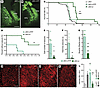 Figure 1
Reexpression of Ndufs4 in Gad2-expressing GPe neurons reduces epilepsy and local microgliosis. (A and B) Representative images showing the injection site in the GPe of cKO-vr (A) and cKO-vYFP (B) mice. Scale bar: 400 μm. Str, striatum; GPe, external globus pallidus; TRN, thalamic reticular nucleus. The reduced transduction observed in the GPe of cKO-vYFP mice is likely due to neuronal death resulting from NDUFS4 deficiency, as shown in Figure 2. (C) Survival curves for cKO-vYFP (control group, n = 5), cKO-vr (rescue group, n = 7), and uninjected cKO mice (n = 42). **P < 0.01 indicates significant differences compared with cKO-vYFP group. ####P < 0.0001 indicates significant differences compared with the uninjected cKO group. Gehan-Breslow-Wilcoxon test. (D) Percentage of animals without epilepsy relative to body temperature. n = 6 per group. **P < 0.01, Gehan-Breslow-Wilcoxon test. (E) Total number of epileptic events during the induction protocol. cKO-vYFP mice n = 5, cKO-vr mice n = 6. *P < 0.05, Mann-Whitney U test. (F) Total duration of epileptic events. cKO-vYFP mice n = 5, cKO-vr mice n = 6. **P < 0.01, Mann-Whitney U test. (G) Maximum severity of epileptic events according to the modified Racine scale. n = 6 per group. **P < 0.01, unpaired 2-tailed t test. (H–K) Immunofluorescence staining for the microglial marker IBA1 (shown in red) in the GPe from cCT (H), cKO (I), cKO-vYFP (J), and cKO-vr (K) mice. Scale bar: 150 μm. (L) Quantification of IBA1 intensity, expressed in AU. cCT (n = 5), cKO (n = 3), cKO-vYFP (n = 6), cKO-vr (n = 6). *P < 0.05, **P < 0.01, indicates significant differences compared with cCT. ###P < 0.001, indicates significant differences compared with cKO-vYFP; 1-way ANOVA test.
To study and compare both the frequency and severity of epileptic events between groups, seizures were induced by increasing the body temperature of cKO-vr and control mice (24, 26). Viral vector restoration of NDUFS4 in the GPe of cKO mice (cKO-vr group) led to a significant decrease in epileptic events compared with the control (cKO-vYFP) group (Figure 1, D–G). Of note, it was observed that a higher increase in body temperature was required for the rescued mice to develop epilepsy compared with the control group. Moreover, after the complete induction procedure, only 50% of the rescue group animals developed epilepsy compared with 100% of the control group animals (Figure 1D). Significant differences were found in the total number of epileptic events during the induction protocol (Figure 1E). Specifically, during the 10-minute prehabituation period, 50% of control-injected animals showed epileptic events but none of the viral rescue animals did (Figure 1, D and E). Differences in the number of epileptic events were also observed during the temperature increase period (Figure 1E). Likewise, significant reductions in the total duration and maximum severity of epileptic events were observed between the cKO-vr group and cKO-vYFP group (Figure 1, F and G).
cKO mice exhibit overt microglia/macrophage reactivity in the GPe (24). Therefore, we sought to determine whether Ndufs4 reexpression could alter microglial/macrophage reactivity and infiltration in the GPe of cKO mice. The results of immunofluorescence analysis for the microglial protein IBA1 revealed that Ndufs4 reexpression significantly reduced microglial reactivity in cKO mice compared with uninjected or control-injected animals (Figure 1, H–L).
To rule out the possibility that the beneficial effects of the rescue vector, compared with the control vector, were due to serotype-mediated differences in cellular transduction or distinct cellular compartmentalization of the control protein (mitochondrial or cytosolic), we generated a mitochondria-targeted control AAV5 vector by fusing the YFP sequence with the mitochondrial targeting sequence (MTS) for COX8 [AAV-DIO-COX8(MTS)·YFP; Supplemental Figure 1A]. Injection of this control viral vector, and the reexpression viral vector, into the GPe of cKO mice (cKO-vmtYFP and cKO-vr mice, respectively; Supplemental Figure 1, D–M) confirmed previous results, showing that Ndufs4 reexpression in the GPe of cKO mice significantly increased their lifespan (Supplemental Figure 1N).
After demonstrating that restoring NDUFS4 in the GPe of cKO mice is crucial for improving their phenotype and reducing epileptic events in this animal model, we investigated whether the GPe was not only a necessary area involved in the epileptic process in cKO mice, but also sufficient for seizure generation. To that end, we stereotaxically injected viral vectors expressing either functional Cre recombinase (AAV-CRE·GFP) or a nonfunctional Cre as control (AAV-ΔCRE·GFP) (27–29) into the GPe of mice carrying 2 floxed Ndufs4 alleles (Ndufs4fl/fl mice) (22). To assess the validity of this Cre-mediated approach, we generated a mouse line allowing selective expression of the ribosomal protein RPL22 tagged with HA upon Cre recombinase expression (RiboTag mice) (Ndufs4fl/fl-RiboTag), allowing the selective immunoprecipitation of ribosome-associated transcripts from transduced cells (30). Administration of AAV-CRE-GFP led to virtually absent Ndufs4 expression in transduced cells, validating Cre recombinase activity (Supplemental Figure 2, A–D). Histological analysis of the injections confirmed that the expression of the viral vectors was restricted to the GPe and the TRN (Supplemental Figure 3, A and B). Neither of the mouse groups (injected with AAV-CRE·GFP or AAV-ΔCRE·GFP) showed spontaneous seizures or temperature-induced epileptic events, in contrast to cKO animals (Supplemental Figure 3C). This suggests that Ndufs4 deletion limited to the GPe (and TRN) is not sufficient to trigger epilepsy or convulsive events. However, while Ndufs4fl/fl mice with specific deletion of Ndufs4 in the GPe/TRN did not exhibit epileptic events, our results demonstrated that this deletion led to microgliosis confined to the injection site, a response absent in control mice (Supplemental Figure 3, D–J). This indicates that Ndufs4 deletion in the GPe induces local microglial reactivity and/or macrophage infiltration.
Lhx6-expressing GABAergic neurons in the GPe show increased vulnerability to mitochondrial dysfunction. To assess the impact of Ndufs4 deficiency on the abundance and survival of GABAergic neurons in the GPe, we generated a cKO mouse line expressing the RiboTag construct exclusively in Gad2-expressing GABAergic neurons (experimental mice, cKO-HA; control mice, cCT-HA), enabling the visualization of Gad2 neurons with the use of an anti-HA antibody in cCT-HA and cKO-HA mice euthanized at P60 (Figure 2, A and B). A reduction in Gad2-expressing neurons was observed in the GPe of cKO-HA mice compared with cCT-HA mice (Figure 2C), particularly in the rostral part (from Bregma –0.22 mm to –0.46 mm, Figure 2D), underscoring the potential localization of a compromised neuronal population in this region.
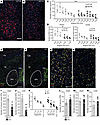 Figure 2
Loss of Lhx6-expressing GABAergic neurons in the rostral GPe of cKO mice. (A and B) Immunofluorescence analysis of GPe showing HA (red) staining in cCT-HA (A) and cKO-HA (B) mice. Scale bar: 200 μm. (C) Quantification of HA-positive (GAD2) neurons across GPe (from Bregma –0.22 mm to –0.94 mm) in cCT-HA and cKO-HA mice. n = 3 per group; 2-way ANOVA; ***P < 0.001 column factor effect (genotype). (D) Quantification of HA-positive (GAD2) neurons in rostral GPe (from Bregma –0.22 mm to –0.46 mm) and caudal GPe (from Bregma –0.46 mm to –0.94 mm) from cCT-HA and cKO-HA mice. n = 3 per group; 2-way ANOVA, **P < 0.01 column factor effect (genotype). (E–H) In situ hybridization analysis for Gad2 (green) and Lhx6 (red) mRNAs in brain sections containing rostral GPe of cCT (E) and cKO mice (F). Scale bar: 500 μm. Higher magnification images of rostral GPe of cCT (G) and cKO mice (H). Scale bar: 200 μm. (I and J) Quantification of total number of Gad2-expressing (I) and Lhx6-expressing (J) neurons in rostral GPe (from Bregma –0.22 mm to –0.46 mm) of cCT and cKO mice. n = 4 per group; **P < 0.01, ***P < 0.001, unpaired 2-tailed t test. (K) Proportion of Lhx6-expressing neurons relative to total number of Gad2-expressing neurons in rostral GPe of cCT and cKO mice. n = 4 for each group; 2-way repeat measures ANOVA followed by Šidák’s multiple-comparison test, *P < 0.05, **P < 0.01 column factor effect (genotype). (L) Quantification of total number of Gad2-expressing neurons in the TRN of cKO and cCT mice (from Bregma –0.22 mm to –0.46 mm). n = 3–4 per group. (M and N). Quantification of total number of Gad2-expressing (L) and Lhx6-expressing (M) neurons in primary somatosensory cortex of cCT and cKO mice (Bregma –0.34 mm) of cCT and cKO mice. n = 4 per group.
Approximately 95% of GPe neurons are GABAergic and can be classified into different subtypes based on specific marker expression (31), each with distinct projections and anatomical distributions (31, 32). Notably, the Lhx6-expressing GABAergic subpopulation is more abundant in rostral GPe (32). In situ hybridization assays for Gad2 and Lhx6 on brain sections of cKO and cCT mice containing the GPe (Figure 2, E–H) showed a reduction in both Gad2-expressing neurons (Figure 2I) and Lhx6-expressing neurons (Figure 2J) in the rostral GPe in cKO mice compared with cCT mice. Moreover, the Lhx6/Gad2 ratio was also reduced in cKO mice compared with cCT mice, suggesting increased vulnerability of Lhx6 neurons in the rostral GPe to Ndufs4 deficiency (Figure 2K). Neuronal counting showed a significant decrease in the neuronal populations in the rostral GPe of cKO mice compared with cCT mice, suggesting that reduced expression of Gad2 and Lhx6 was due to cell death rather than to loss of phenotypic markers (Supplemental Figure 4, A–C). In contrast to the GPe, no differences were observed in the number of Gad2-expressing neurons in the TRN of cKO mice (Figure 2, E, F, and L), as expected given the absence of Lhx6-expressing neurons in the TRN (33), thus confirming a primary role for the GPe in the phenotype of cKO mice. Additionally, reduction of Gad2- or Lhx6-expressing neurons was not observed in the cortex of these mice (Figure 2, M and N), an area with abundant Gad2- and Lhx6-expressing neurons, ruling out a global affectation of Lhx6-expressing neuronal populations in cKO mice.
Fatal epileptic events lead to activation of the subthalamic nucleus in cKO mice. The GPe exhibits predominant projections to various basal ganglia regions, including the striatum, subthalamic nucleus (STN), internal globus pallidus, and substantia nigra pars reticulata. In addition, GPe projections also extend to the TRN, cerebral cortex, amygdala, and lateral habenula (31). To specifically identify projections from the rostral GPe, stereotaxic injections of a Cre-expressing viral vector (AAV1-CRE·GFP) were administered in the rostral GPe of tdTomato reporter mice (Ai9 mice) (34). This confirmed pallidal projections to the lateral habenula, STN, and substantia nigra pars reticulata (Figure 3, A–C).
 Figure 3
Activation of the STN during fatal epileptic events. (A–C) TdTomato labeling of brain areas receiving inputs from the GPe: lateral habenula (LHb) (A), subthalamic nucleus (STN) (B), and substantia nigra pars reticulata (SNr) (C). Scale bar: 300 μm. n = 3 per group. (D–F) Representative images of the brain areas in cKO animals showing c-Fos immunoreactivity after fatal epileptic events. (D) Generalized c-Fos expression pattern. (E) Restricted c-Fos expression in the paraventricular thalamus (PV). (F) Restricted c-Fos expression in the subthalamic nucleus (STN). DG, dentate gyrus; Amy, amygdala; Ctx, cortex. Scale bar: 1 mm.
Furthermore, to elucidate the putatively affected and/or involved regions within the epileptogenic circuit of cKO mice, we assessed c-Fos protein expression as a proxy for neuronal activation after epileptic events (35, 36). Using this approach, we identified two distinct patterns of neuronal activation in response to fatal epileptic events in cKO animals. Approximately half of the cKO mice exhibited widespread c-Fos staining across various brain regions, including the dentate gyrus of the hippocampal formation, cerebral cortex, STN, and paraventricular thalamus, among others (Figure 3D). In contrast, a second group of cKO animals showed c-Fos staining confined to the paraventricular thalamus and STN regions only (Figure 3, E and F). Thus, despite the marked difference in overall c-Fos activation, the STN and the paraventricular thalamus were the only areas consistently activated across all animals.
Excitatory/inhibitory tone imbalance in the GPe of cKO mice. Pallidal Lhx6-expressing GABAergic neurons represent one of the GPe subpopulations that project to the glutamatergic neuronal populations in the STN (32, 37). In turn, the STN provides the main excitatory input onto the GPe (31). Therefore, we hypothesized that loss of Lhx6-expressing neurons in the GPe could imbalance the GPe-STN loop and alter the inhibitory-excitatory balance in the GPe. To that end, we recorded spontaneous excitatory and inhibitory postsynaptic currents (sEPSCs and sIPSCs) in brain slices from cCT cKO mice (Figure 4, A–H, and Supplemental Figure 5). Our results underscored a significant increase in the event amplitude of both sEPSCs (Figure 4C) and sIPSCs (Figure 4F) in cKO neurons compared with controls and an increase in the number of large sIPSC events (Supplemental Figure 5). Regarding event frequency, a significant shift in the cumulative distribution of sEPSC interevent intervals was observed in cKO neurons compared with cCT neurons (Figure 4D), indicating a decrease in interevent intervals and therefore an increase in event frequency. This was further supported by the significantly higher average frequency of sEPSCs in cKO neurons compared with cCT neurons (Figure 4E).
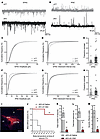 Figure 4
Altered pallido-subthalamic projections participate in the development of seizures in cKO mice. (A–H) Spontaneous inhibitory and excitatory postsynaptic currents in GPe-containing brain slices from cCT and cKO mice (n = 17 cells, 6 mice per group). (A and B) Representative traces showing EPSCs (A) and IPSCs (B) recorded at -70 mV and 0 mV, respectively. (C) Cumulative frequency plots of EPSC amplitudes. ****P < 0.0001, Kolmogorov–Smirnov test. (D) Cumulative distribution of EPSC interevent intervals. ****P < 0.0001, Kolmogorov–Smirnov test. (E) Average frequency of EPSCs. *P < 0.05, Mann-Whitney test. (F) Cumulative frequency plots of IPSC amplitudes. ****P < 0.0001, Kolmogorov–Smirnov test. (G) Cumulative distribution of IPSC interevent intervals. ****P < 0.0001, Kolmogorov–Smirnov test. (H) Average frequency of IPSCs. (I–M) Analysis of temperature-induced epilepsy in cKO mice comparing the group with chemogenetic inhibition of the STN (cKO-vD CNO) with the control group (cKO-vD saline). (I) Representative image of the stereotaxic injection site of the AAV8/2-CaMKIIa-hM4Di·mCherry viral vector in the STN. Scale bar: 400 μm. STN, subthalamic nucleus; pSTN, parasubthalamic nucleus; pc, cerebellar peduncle; ZI, zona incerta. (J) Percentage of animals without epilepsy relative to body temperature. A value less than 100% at the initial temperature (37.5°C) indicates that the mouse experienced epileptic events during the habituation period. n = 4 per group. **P < 0.01, log-rank test (Mantel-Cox). (K) Total number of events during the induction protocol. cKO-vD CNO n = 4; cKO-vD saline n = 3. P = 0.057, Mann-Whitney U test. (L) Duration of epileptic events. cKO-vD CNO n = 4; cKO-vD saline n = 3. ****P < 0.0001, unpaired 2-tailed t test. (M) Maximum severity of epileptic events according to the Racine scale. n = 4 per group. **P < 0.01, unpaired 2-tailed t test.
In contrast, GPe neurons in cKO mice presented a slight reduction in the cumulative distribution of sIPSC interevent intervals (Figure 4G) without a significant change in average sIPSC frequency (Figure 4H) compared with cCT neurons. Taken together, these results suggest that the loss of Lhx6-positive neurons in the GPe leads to a broad alteration of both excitatory and inhibitory synaptic activity, likely reflecting both an increase in STN excitatory inputs and compensatory reorganization of the local GPe circuitry.
Chemogenetic inhibition of glutamatergic neurons in the STN attenuates temperature-induced epilepsy in cKO mice. Given the increase in STN activity observed in cKO mice, we hypothesized that inhibiting the STN could mitigate epileptic events in cKO mice.
To achieve chemogenic inhibition of glutamatergic neurons in the STN of cKO mice, an AAV8/2-CaMKIIa-hM4Di·mCherry viral vector was stereotaxically administered into the STN of cKO mice (Figure 4I). Subsequently, to assess the role of the STN in epileptic events after chemogenetic inhibition, mice were subjected to a thermally induced epileptogenic paradigm (24) on P54. After completing the entire induction procedure, only 25% of animals with chemogenetic inhibition (treated with clozapine N-oxide [CNO]) exhibited epilepsy, in contrast to 100% in the saline group (Figure 4J). In addition, the CNO-treated mice presented a higher threshold for temperature-induced epileptic events, together with a decrease in duration and maximum severity of epileptic events during the induction protocol, compared with the saline group (Figure 4, K–M).
Specific loss of Lhx6-expressing GABAergic neurons in the GPe is conserved in animals constitutively lacking NDUFS4. cKO mice manifest an overt vulnerability of GABAergic neurons in the rostral GPe to Ndufs4 deletion, particularly within the Gad2/Lhx6-expressing subpopulation. Thus, we aimed at validating whether this vulnerability is conserved in animals that constitutively lack NDUFS4 (KO mice), an established model of Leigh syndrome (22, 23, 29, 38). In agreement with our results in the conditional Ndufs4 KO in GABAergic neurons, in situ hybridization assays showed a reduction in the number of Gad2-expressing neurons in the rostral GPe in the constitutive KO group compared with controls (Figure 5, A–E). Furthermore, a decrease in the number of Lhx6-expressing neurons in the rostral GPe was also observed in the KO mice compared with controls (Figure 5, A–D, and F). A significant reduction in the Lhx6/Gad2 ratio further underscored a preferential decrease in Lhx6-expressing neurons in the rostral GPe in animals lacking Ndufs4 compared with control mice (Figure 5G). However, no such difference in the number of Gad2- or Lhx6-expressing neurons was observed in the cortex (Figure 5, H and I), an area not predominantly affected in KO mice (22, 23, 29, 38). These results suggest that the reduction of Lhx6-expressing neurons in the rostral GPe is a conserved response to Ndufs4 deficiency, highlighting the pallidal region’s specific vulnerability.
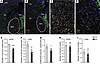 Figure 5
Reduced number of Gad2- and Lhx6-expressing neurons in the rostral GPe of KO mice. (A–D) In situ hybridization analysis for Gad2 (green) and Lhx6 (red) mRNAs in brain sections containing the rostral GPe of CT (A and C) and KO (B and D) mice. (C and D) show magnified views of the GPe in A and B, respectively. (E and F) Quantification of the total number of Gad2-expressing (A) and Lhx6-expressing (B) neurons in the rostral GPe of Ndufs4-KO and control mice (from Bregma –0.22 mm to –0.46 mm). n = 4 per group. **P < 0.01, ***P < 0.001, unpaired 2-tailed t test. (G) Proportion of Lhx6-expressing neurons relative to the total number of Gad2-expressing neurons in the rostral GPe of CT and KO mice. n = 4 per group. *P < 0.05, unpaired 2-tailed t test. (H and I) Quantification of the total number of Gad2-expressing (H) and Lhx6-expressing (I) neurons in the primary somatosensory cortex of CT and KO mice (Bregma –0.34 mm). n = 4 per group.
NDUFS4 restoration in external pallidal GABAergic neurons reduces temperature-induced seizures and extends lifespan in KO mice. KO mice exhibit a fatal phenotype associated with reduced lifespan (approximately between P50 and P60) (23, 29). KO mice manifest spontaneous epilepsies (23) and are susceptible to thermally induced seizures (39). Thus, we sought to assess the involvement of GPe GABAergic populations in the development of the epileptic phenotype of KO mice. To that end, we first generated a mouse line with a constitutive deletion of Ndufs4 and concurrent expression of Cre recombinase in GABAergic neurons (Gad2Cre-KO mice). These mice subsequently received a stereotaxic injection of a Cre-dependent AAV expressing either Ndufs4 or a mitochondria-targeted YFP in the GPe. Reexpression of Ndufs4 in the GPe increased the survival of the Gad2Cre-KO mice (Gad2Cre-KO-vr versus Gad2Cre-KO-vmtYFP group and noninjected Gad2Cre-KO mice) (Figure 6A). Analysis of thermally induced epileptic events during the induction protocols at different disease stages (P40, P47, and P54) in Gad2Cre-KO mice revealed an overall significant decrease in seizure frequency in the Gad2Cre-KO-vr group compared with the Gad2Cre-KO-vmtYFP and noninjected Gad2Cre-KO control groups (Figure 6B). It was noteworthy that we observed a differential impact of NDUFS4 restoration during disease progression (Figure 6, C–K). In this regard, at P40, Gad2Cre-KO-vr mice presented a higher resistance to thermally induced seizures, showing approximately a 3-fold reduction in the number of animals developing seizures compared with Gad2Cre-KO-vmtYFP or Gad2Cre-KO mice (Figure 6C). In addition, a reduction in the frequency (Figure 6D) and severity (Figure 6E) of epileptic events was observed in the Gad2Cre-KO-vr group. At P47, Gad2Cre-KO-vr mice continued to exhibit resistance to epilepsy induction compared with the Gad2Cre-KO-vmtYFP and Gad2Cre-KO groups. However, all animals eventually experienced epileptic events (Figure 6F). Likewise, a significant decrease was observed in the total number of epileptic events during the induction protocol in the Gad2Cre-KO-vr group compared with both control groups (Figure 6G). However, no differences were noted in the maximum severity of these events (Figure 6H). Finally, at a late stage of the disease, specifically at P54 (Figure 6, I–K), the Gad2Cre-KO-vr group continued to show a significant reduction in the total number of epileptic events compared with the Gad2Cre-KO-vmtYFP and Gad2Cre-KO control groups (Figure 6J). Nonetheless, no differences were found in the percentage of mice developing seizures (Figure 6I) or the severity of the events (Figure 6K).
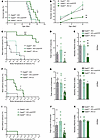 Figure 6
Ndufs4 reexpression in external-pallidal Gad2-expressing neurons extends lifespan and reduces temperature-induced seizures in Ndufs4-deficient animals. (A) Survival curves of Gad2Cre-KO (uninjected; n = 8), Gad2Cre-KO-vmtYFP (control-injected; n = 6), and Gad2Cre-KO-vr (viral rescue; n = 8) mice. ##P < 0.01 indicates significant differences compared with Gad2Cre-KO, *P < 0.05 indicates significant differences compared with Gad2Cre-KO-vmtYFP, log-rank test (Mantel-Cox). (B) Temporal progression of total epileptic events during inductions at P40, P47, and P54 in Gad2Cre-KO (n = 7–8), Gad2Cre-KO-vmtYFP (n = 6), and Gad2Cre-KO-vr (n = 8). Mixed-effects analysis followed by Tukey’s multiple-comparison test: ##P < 0.01 indicates significant differences compared with Gad2Cre-KO, **P < 0.01 indicates significant differences compared with Gad2Cre-KO-vmtYFP. (C–E) Effect of NDUFS4 restoration in GPe on temperature-induced epilepsy in Gad2Cre-KO mice at P40 assessed by percentage of animals remaining seizure-free after increasing body temperature (C), total number of epileptic events during induction protocol (D), and severity of epileptic events according to Racine scale (E). Gad2Cre-KO n = 8; Gad2Cre-KO-vmtYFP n = 6; Gad2Cre-KO-vr n = 8. **P < 0.01, ***P < 0.001, indicates significant differences compared with KO-vmtYFP. #P < 0.05, ##P < 0.01, ###P < 0.001, indicates significant differences compared with Gad2Cre-KO. Signficance was determined by log-rank test (Mantel-Cox) (C), Kruskal-Wallis test (D), and 1-way ANOVA (E). (F–H) Effect of NDUFS4 restoration in GPe on temperature-induced epilepsy in Gad2Cre-KO mice at P47 assessed by percentage of animals remaining seizure-free after increasing body temperature (F), total number of epileptic events during induction protocol (G), and severity of epileptic events according to Racine scale (H). Gad2Cre-KO n = 8; Gad2Cre-KO-vmtYFP n = 6; Gad2Cre-KO-vr n = 8. *P < 0.05, indicates significant differences compared with KO-vmtYFP. #P < 0.05, indicates significant differences compared with Gad2Cre-KO. Significance was determined by Gehan-Breslow-Wilcoxon test (F), 1-way ANOVA followed by Tukey’s multiple-comparison test (G), and Kruskal-Wallis followed by Dunn’s multiple-comparison test (H). (I and K) Effect of NDUFS4 restoration in GPe on temperature-induced epilepsy in Gad2Cre-KO mice at P54 assessed by percentage of animals remaining seizure-free after increasing body temperature (I), total number of epileptic events during induction protocol (J), and severity of epileptic events according to Racine scale (K). Gad2Cre-KO n = 7; KO-vmtYFP n = 6; Gad2Cre-KO-vr n = 8. **P < 0.01, indicates significant differences compared with Gad2Cre-KO-vmtYFP. Significance was determined by log-rank test (Mantel-Cox) (I), Kruskal-Wallis test followed by Dunn’s multiple-comparison test (J), and 1-way ANOVA followed by Tukey’s multiple-comparison test (K).


Copyright © 2026 American Society for Clinical Investigation
ISSN: 0021-9738 (print), 1558-8238 (online)