
Advertisement
- Corrigendum (January 2026)
- Expression of Concern (December 2025)
Research ArticleBone biologyNeuroscience
Open Access |  10.1172/JCI193014
Axon guidance cue SLIT2 regulates the murine skeletal stem cell niche through sympathetic innervation
Zuoxing Wu,1,2 Na Li,1,3 Zhengqiong Luo,1,2 Zihan Chen,2,4 Xuemei He,1,2 Jie Han,1,2 Xixi Lin,1,2 Fan Shi,2,4 Haitao Huang,5 Baohong Shi,1,2 Yu Li,1,2 Xin Wang,6 Lin Meng,7 Dachuan Zhang,8 Lanfen Chen,5 Dawang Zhou,5 Weinan Cheng,1,9 Matthew B. Greenblatt,10,11 and Ren Xu1,2,4
1The First Affiliated Hospital of Xiamen University–ICMRS Collaborating Center for Skeletal Stem Cells, Xiamen Cell Therapy Research Center, First Affiliated Hospital of Xiamen University, School of Medicine, Faculty of Medicine and Life Sciences, and
2Xiamen Key Laboratory of Regeneration Medicine, Fujian Provincial Key Laboratory of Organ and Tissue Regeneration, School of Medicine, Xiamen University, Xiamen, China.
3Shenzhen Key Laboratory of Bone Tissue Repair and Translational Research, Department of Orthopaedic Surgery, Seventh Affiliated Hospital of Sun Yat-sen University, Shenzhen, China.
4Research Centre for Regenerative Medicine, Guangxi Key Laboratory of Regenerative Medicine, Guangxi Medical University, Nanning, China.
5State Key Laboratory of Cellular Stress Biology, Innovation Center for Cell Signaling Network, School of Life Sciences, Xiamen University, Xiamen, China.
6Graduate School of Science and Engineering and
7College of Science and Engineering, Ritsumeikan University, Shiga, Japan.
8Department of Pathophysiology, Key Laboratory of Cell Differentiation and Apoptosis, Chinese Ministry of Education, Shanghai Jiao Tong University School of Medicine, Shanghai, China.
9Department of Sports Medicine, National Center for Orthopaedics, Shanghai Jiao Tong University Affiliated Sixth People’s Hospital, Shanghai, China.
10Department of Pathology and Laboratory Medicine, Weill Cornell Medical College, New York, New York, USA.
11Skeletal Health and Orthopedic Research Program, Hospital for Special Surgery, New York, New York, USA.
Address correspondence to: Ren Xu, State Key Laboratory of Cellular Stress Biology, School of Medicine, Xiamen University, Yuejin Building A503, Xiang’an South Road, Xiang’an District, Xiamen, 361102, China. Email: xuren526@xmu.edu.cn. Or to: Matthew B. Greenblatt, Department of Pathology and Laboratory Medicine, Weill Cornell Medical College, Skeletal Health and Orthopedic Research Program, Hospital for Special Surgery, LC925, 1300 York Ave, New York, New York 10065, USA. Email: Mag3003@med.cornell.edu. Or to: Weinan Cheng, Department of Sports Medicine National Center for Orthopaedics, Shanghai Jiao Tong University Affiliated Sixth People’s Hospital, Shanghai, 200233, China. Email: 7250013396@shsmu.edu.cn.
Authorship note: ZXW and NL contributed equally to this work.
Find articles by Wu, Z. in: PubMed | Google Scholar
1The First Affiliated Hospital of Xiamen University–ICMRS Collaborating Center for Skeletal Stem Cells, Xiamen Cell Therapy Research Center, First Affiliated Hospital of Xiamen University, School of Medicine, Faculty of Medicine and Life Sciences, and
2Xiamen Key Laboratory of Regeneration Medicine, Fujian Provincial Key Laboratory of Organ and Tissue Regeneration, School of Medicine, Xiamen University, Xiamen, China.
3Shenzhen Key Laboratory of Bone Tissue Repair and Translational Research, Department of Orthopaedic Surgery, Seventh Affiliated Hospital of Sun Yat-sen University, Shenzhen, China.
4Research Centre for Regenerative Medicine, Guangxi Key Laboratory of Regenerative Medicine, Guangxi Medical University, Nanning, China.
5State Key Laboratory of Cellular Stress Biology, Innovation Center for Cell Signaling Network, School of Life Sciences, Xiamen University, Xiamen, China.
6Graduate School of Science and Engineering and
7College of Science and Engineering, Ritsumeikan University, Shiga, Japan.
8Department of Pathophysiology, Key Laboratory of Cell Differentiation and Apoptosis, Chinese Ministry of Education, Shanghai Jiao Tong University School of Medicine, Shanghai, China.
9Department of Sports Medicine, National Center for Orthopaedics, Shanghai Jiao Tong University Affiliated Sixth People’s Hospital, Shanghai, China.
10Department of Pathology and Laboratory Medicine, Weill Cornell Medical College, New York, New York, USA.
11Skeletal Health and Orthopedic Research Program, Hospital for Special Surgery, New York, New York, USA.
Address correspondence to: Ren Xu, State Key Laboratory of Cellular Stress Biology, School of Medicine, Xiamen University, Yuejin Building A503, Xiang’an South Road, Xiang’an District, Xiamen, 361102, China. Email: xuren526@xmu.edu.cn. Or to: Matthew B. Greenblatt, Department of Pathology and Laboratory Medicine, Weill Cornell Medical College, Skeletal Health and Orthopedic Research Program, Hospital for Special Surgery, LC925, 1300 York Ave, New York, New York 10065, USA. Email: Mag3003@med.cornell.edu. Or to: Weinan Cheng, Department of Sports Medicine National Center for Orthopaedics, Shanghai Jiao Tong University Affiliated Sixth People’s Hospital, Shanghai, 200233, China. Email: 7250013396@shsmu.edu.cn.
Authorship note: ZXW and NL contributed equally to this work.
Find articles by Li, N. in: PubMed | Google Scholar
1The First Affiliated Hospital of Xiamen University–ICMRS Collaborating Center for Skeletal Stem Cells, Xiamen Cell Therapy Research Center, First Affiliated Hospital of Xiamen University, School of Medicine, Faculty of Medicine and Life Sciences, and
2Xiamen Key Laboratory of Regeneration Medicine, Fujian Provincial Key Laboratory of Organ and Tissue Regeneration, School of Medicine, Xiamen University, Xiamen, China.
3Shenzhen Key Laboratory of Bone Tissue Repair and Translational Research, Department of Orthopaedic Surgery, Seventh Affiliated Hospital of Sun Yat-sen University, Shenzhen, China.
4Research Centre for Regenerative Medicine, Guangxi Key Laboratory of Regenerative Medicine, Guangxi Medical University, Nanning, China.
5State Key Laboratory of Cellular Stress Biology, Innovation Center for Cell Signaling Network, School of Life Sciences, Xiamen University, Xiamen, China.
6Graduate School of Science and Engineering and
7College of Science and Engineering, Ritsumeikan University, Shiga, Japan.
8Department of Pathophysiology, Key Laboratory of Cell Differentiation and Apoptosis, Chinese Ministry of Education, Shanghai Jiao Tong University School of Medicine, Shanghai, China.
9Department of Sports Medicine, National Center for Orthopaedics, Shanghai Jiao Tong University Affiliated Sixth People’s Hospital, Shanghai, China.
10Department of Pathology and Laboratory Medicine, Weill Cornell Medical College, New York, New York, USA.
11Skeletal Health and Orthopedic Research Program, Hospital for Special Surgery, New York, New York, USA.
Address correspondence to: Ren Xu, State Key Laboratory of Cellular Stress Biology, School of Medicine, Xiamen University, Yuejin Building A503, Xiang’an South Road, Xiang’an District, Xiamen, 361102, China. Email: xuren526@xmu.edu.cn. Or to: Matthew B. Greenblatt, Department of Pathology and Laboratory Medicine, Weill Cornell Medical College, Skeletal Health and Orthopedic Research Program, Hospital for Special Surgery, LC925, 1300 York Ave, New York, New York 10065, USA. Email: Mag3003@med.cornell.edu. Or to: Weinan Cheng, Department of Sports Medicine National Center for Orthopaedics, Shanghai Jiao Tong University Affiliated Sixth People’s Hospital, Shanghai, 200233, China. Email: 7250013396@shsmu.edu.cn.
Authorship note: ZXW and NL contributed equally to this work.
Find articles by Luo, Z. in: PubMed | Google Scholar
1The First Affiliated Hospital of Xiamen University–ICMRS Collaborating Center for Skeletal Stem Cells, Xiamen Cell Therapy Research Center, First Affiliated Hospital of Xiamen University, School of Medicine, Faculty of Medicine and Life Sciences, and
2Xiamen Key Laboratory of Regeneration Medicine, Fujian Provincial Key Laboratory of Organ and Tissue Regeneration, School of Medicine, Xiamen University, Xiamen, China.
3Shenzhen Key Laboratory of Bone Tissue Repair and Translational Research, Department of Orthopaedic Surgery, Seventh Affiliated Hospital of Sun Yat-sen University, Shenzhen, China.
4Research Centre for Regenerative Medicine, Guangxi Key Laboratory of Regenerative Medicine, Guangxi Medical University, Nanning, China.
5State Key Laboratory of Cellular Stress Biology, Innovation Center for Cell Signaling Network, School of Life Sciences, Xiamen University, Xiamen, China.
6Graduate School of Science and Engineering and
7College of Science and Engineering, Ritsumeikan University, Shiga, Japan.
8Department of Pathophysiology, Key Laboratory of Cell Differentiation and Apoptosis, Chinese Ministry of Education, Shanghai Jiao Tong University School of Medicine, Shanghai, China.
9Department of Sports Medicine, National Center for Orthopaedics, Shanghai Jiao Tong University Affiliated Sixth People’s Hospital, Shanghai, China.
10Department of Pathology and Laboratory Medicine, Weill Cornell Medical College, New York, New York, USA.
11Skeletal Health and Orthopedic Research Program, Hospital for Special Surgery, New York, New York, USA.
Address correspondence to: Ren Xu, State Key Laboratory of Cellular Stress Biology, School of Medicine, Xiamen University, Yuejin Building A503, Xiang’an South Road, Xiang’an District, Xiamen, 361102, China. Email: xuren526@xmu.edu.cn. Or to: Matthew B. Greenblatt, Department of Pathology and Laboratory Medicine, Weill Cornell Medical College, Skeletal Health and Orthopedic Research Program, Hospital for Special Surgery, LC925, 1300 York Ave, New York, New York 10065, USA. Email: Mag3003@med.cornell.edu. Or to: Weinan Cheng, Department of Sports Medicine National Center for Orthopaedics, Shanghai Jiao Tong University Affiliated Sixth People’s Hospital, Shanghai, 200233, China. Email: 7250013396@shsmu.edu.cn.
Authorship note: ZXW and NL contributed equally to this work.
Find articles by Chen, Z. in: PubMed | Google Scholar
1The First Affiliated Hospital of Xiamen University–ICMRS Collaborating Center for Skeletal Stem Cells, Xiamen Cell Therapy Research Center, First Affiliated Hospital of Xiamen University, School of Medicine, Faculty of Medicine and Life Sciences, and
2Xiamen Key Laboratory of Regeneration Medicine, Fujian Provincial Key Laboratory of Organ and Tissue Regeneration, School of Medicine, Xiamen University, Xiamen, China.
3Shenzhen Key Laboratory of Bone Tissue Repair and Translational Research, Department of Orthopaedic Surgery, Seventh Affiliated Hospital of Sun Yat-sen University, Shenzhen, China.
4Research Centre for Regenerative Medicine, Guangxi Key Laboratory of Regenerative Medicine, Guangxi Medical University, Nanning, China.
5State Key Laboratory of Cellular Stress Biology, Innovation Center for Cell Signaling Network, School of Life Sciences, Xiamen University, Xiamen, China.
6Graduate School of Science and Engineering and
7College of Science and Engineering, Ritsumeikan University, Shiga, Japan.
8Department of Pathophysiology, Key Laboratory of Cell Differentiation and Apoptosis, Chinese Ministry of Education, Shanghai Jiao Tong University School of Medicine, Shanghai, China.
9Department of Sports Medicine, National Center for Orthopaedics, Shanghai Jiao Tong University Affiliated Sixth People’s Hospital, Shanghai, China.
10Department of Pathology and Laboratory Medicine, Weill Cornell Medical College, New York, New York, USA.
11Skeletal Health and Orthopedic Research Program, Hospital for Special Surgery, New York, New York, USA.
Address correspondence to: Ren Xu, State Key Laboratory of Cellular Stress Biology, School of Medicine, Xiamen University, Yuejin Building A503, Xiang’an South Road, Xiang’an District, Xiamen, 361102, China. Email: xuren526@xmu.edu.cn. Or to: Matthew B. Greenblatt, Department of Pathology and Laboratory Medicine, Weill Cornell Medical College, Skeletal Health and Orthopedic Research Program, Hospital for Special Surgery, LC925, 1300 York Ave, New York, New York 10065, USA. Email: Mag3003@med.cornell.edu. Or to: Weinan Cheng, Department of Sports Medicine National Center for Orthopaedics, Shanghai Jiao Tong University Affiliated Sixth People’s Hospital, Shanghai, 200233, China. Email: 7250013396@shsmu.edu.cn.
Authorship note: ZXW and NL contributed equally to this work.
Find articles by He, X. in: PubMed | Google Scholar
1The First Affiliated Hospital of Xiamen University–ICMRS Collaborating Center for Skeletal Stem Cells, Xiamen Cell Therapy Research Center, First Affiliated Hospital of Xiamen University, School of Medicine, Faculty of Medicine and Life Sciences, and
2Xiamen Key Laboratory of Regeneration Medicine, Fujian Provincial Key Laboratory of Organ and Tissue Regeneration, School of Medicine, Xiamen University, Xiamen, China.
3Shenzhen Key Laboratory of Bone Tissue Repair and Translational Research, Department of Orthopaedic Surgery, Seventh Affiliated Hospital of Sun Yat-sen University, Shenzhen, China.
4Research Centre for Regenerative Medicine, Guangxi Key Laboratory of Regenerative Medicine, Guangxi Medical University, Nanning, China.
5State Key Laboratory of Cellular Stress Biology, Innovation Center for Cell Signaling Network, School of Life Sciences, Xiamen University, Xiamen, China.
6Graduate School of Science and Engineering and
7College of Science and Engineering, Ritsumeikan University, Shiga, Japan.
8Department of Pathophysiology, Key Laboratory of Cell Differentiation and Apoptosis, Chinese Ministry of Education, Shanghai Jiao Tong University School of Medicine, Shanghai, China.
9Department of Sports Medicine, National Center for Orthopaedics, Shanghai Jiao Tong University Affiliated Sixth People’s Hospital, Shanghai, China.
10Department of Pathology and Laboratory Medicine, Weill Cornell Medical College, New York, New York, USA.
11Skeletal Health and Orthopedic Research Program, Hospital for Special Surgery, New York, New York, USA.
Address correspondence to: Ren Xu, State Key Laboratory of Cellular Stress Biology, School of Medicine, Xiamen University, Yuejin Building A503, Xiang’an South Road, Xiang’an District, Xiamen, 361102, China. Email: xuren526@xmu.edu.cn. Or to: Matthew B. Greenblatt, Department of Pathology and Laboratory Medicine, Weill Cornell Medical College, Skeletal Health and Orthopedic Research Program, Hospital for Special Surgery, LC925, 1300 York Ave, New York, New York 10065, USA. Email: Mag3003@med.cornell.edu. Or to: Weinan Cheng, Department of Sports Medicine National Center for Orthopaedics, Shanghai Jiao Tong University Affiliated Sixth People’s Hospital, Shanghai, 200233, China. Email: 7250013396@shsmu.edu.cn.
Authorship note: ZXW and NL contributed equally to this work.
Find articles by Han, J. in: PubMed | Google Scholar
1The First Affiliated Hospital of Xiamen University–ICMRS Collaborating Center for Skeletal Stem Cells, Xiamen Cell Therapy Research Center, First Affiliated Hospital of Xiamen University, School of Medicine, Faculty of Medicine and Life Sciences, and
2Xiamen Key Laboratory of Regeneration Medicine, Fujian Provincial Key Laboratory of Organ and Tissue Regeneration, School of Medicine, Xiamen University, Xiamen, China.
3Shenzhen Key Laboratory of Bone Tissue Repair and Translational Research, Department of Orthopaedic Surgery, Seventh Affiliated Hospital of Sun Yat-sen University, Shenzhen, China.
4Research Centre for Regenerative Medicine, Guangxi Key Laboratory of Regenerative Medicine, Guangxi Medical University, Nanning, China.
5State Key Laboratory of Cellular Stress Biology, Innovation Center for Cell Signaling Network, School of Life Sciences, Xiamen University, Xiamen, China.
6Graduate School of Science and Engineering and
7College of Science and Engineering, Ritsumeikan University, Shiga, Japan.
8Department of Pathophysiology, Key Laboratory of Cell Differentiation and Apoptosis, Chinese Ministry of Education, Shanghai Jiao Tong University School of Medicine, Shanghai, China.
9Department of Sports Medicine, National Center for Orthopaedics, Shanghai Jiao Tong University Affiliated Sixth People’s Hospital, Shanghai, China.
10Department of Pathology and Laboratory Medicine, Weill Cornell Medical College, New York, New York, USA.
11Skeletal Health and Orthopedic Research Program, Hospital for Special Surgery, New York, New York, USA.
Address correspondence to: Ren Xu, State Key Laboratory of Cellular Stress Biology, School of Medicine, Xiamen University, Yuejin Building A503, Xiang’an South Road, Xiang’an District, Xiamen, 361102, China. Email: xuren526@xmu.edu.cn. Or to: Matthew B. Greenblatt, Department of Pathology and Laboratory Medicine, Weill Cornell Medical College, Skeletal Health and Orthopedic Research Program, Hospital for Special Surgery, LC925, 1300 York Ave, New York, New York 10065, USA. Email: Mag3003@med.cornell.edu. Or to: Weinan Cheng, Department of Sports Medicine National Center for Orthopaedics, Shanghai Jiao Tong University Affiliated Sixth People’s Hospital, Shanghai, 200233, China. Email: 7250013396@shsmu.edu.cn.
Authorship note: ZXW and NL contributed equally to this work.
Find articles by Lin, X. in: PubMed | Google Scholar
1The First Affiliated Hospital of Xiamen University–ICMRS Collaborating Center for Skeletal Stem Cells, Xiamen Cell Therapy Research Center, First Affiliated Hospital of Xiamen University, School of Medicine, Faculty of Medicine and Life Sciences, and
2Xiamen Key Laboratory of Regeneration Medicine, Fujian Provincial Key Laboratory of Organ and Tissue Regeneration, School of Medicine, Xiamen University, Xiamen, China.
3Shenzhen Key Laboratory of Bone Tissue Repair and Translational Research, Department of Orthopaedic Surgery, Seventh Affiliated Hospital of Sun Yat-sen University, Shenzhen, China.
4Research Centre for Regenerative Medicine, Guangxi Key Laboratory of Regenerative Medicine, Guangxi Medical University, Nanning, China.
5State Key Laboratory of Cellular Stress Biology, Innovation Center for Cell Signaling Network, School of Life Sciences, Xiamen University, Xiamen, China.
6Graduate School of Science and Engineering and
7College of Science and Engineering, Ritsumeikan University, Shiga, Japan.
8Department of Pathophysiology, Key Laboratory of Cell Differentiation and Apoptosis, Chinese Ministry of Education, Shanghai Jiao Tong University School of Medicine, Shanghai, China.
9Department of Sports Medicine, National Center for Orthopaedics, Shanghai Jiao Tong University Affiliated Sixth People’s Hospital, Shanghai, China.
10Department of Pathology and Laboratory Medicine, Weill Cornell Medical College, New York, New York, USA.
11Skeletal Health and Orthopedic Research Program, Hospital for Special Surgery, New York, New York, USA.
Address correspondence to: Ren Xu, State Key Laboratory of Cellular Stress Biology, School of Medicine, Xiamen University, Yuejin Building A503, Xiang’an South Road, Xiang’an District, Xiamen, 361102, China. Email: xuren526@xmu.edu.cn. Or to: Matthew B. Greenblatt, Department of Pathology and Laboratory Medicine, Weill Cornell Medical College, Skeletal Health and Orthopedic Research Program, Hospital for Special Surgery, LC925, 1300 York Ave, New York, New York 10065, USA. Email: Mag3003@med.cornell.edu. Or to: Weinan Cheng, Department of Sports Medicine National Center for Orthopaedics, Shanghai Jiao Tong University Affiliated Sixth People’s Hospital, Shanghai, 200233, China. Email: 7250013396@shsmu.edu.cn.
Authorship note: ZXW and NL contributed equally to this work.
Find articles by Shi, F. in: PubMed | Google Scholar
1The First Affiliated Hospital of Xiamen University–ICMRS Collaborating Center for Skeletal Stem Cells, Xiamen Cell Therapy Research Center, First Affiliated Hospital of Xiamen University, School of Medicine, Faculty of Medicine and Life Sciences, and
2Xiamen Key Laboratory of Regeneration Medicine, Fujian Provincial Key Laboratory of Organ and Tissue Regeneration, School of Medicine, Xiamen University, Xiamen, China.
3Shenzhen Key Laboratory of Bone Tissue Repair and Translational Research, Department of Orthopaedic Surgery, Seventh Affiliated Hospital of Sun Yat-sen University, Shenzhen, China.
4Research Centre for Regenerative Medicine, Guangxi Key Laboratory of Regenerative Medicine, Guangxi Medical University, Nanning, China.
5State Key Laboratory of Cellular Stress Biology, Innovation Center for Cell Signaling Network, School of Life Sciences, Xiamen University, Xiamen, China.
6Graduate School of Science and Engineering and
7College of Science and Engineering, Ritsumeikan University, Shiga, Japan.
8Department of Pathophysiology, Key Laboratory of Cell Differentiation and Apoptosis, Chinese Ministry of Education, Shanghai Jiao Tong University School of Medicine, Shanghai, China.
9Department of Sports Medicine, National Center for Orthopaedics, Shanghai Jiao Tong University Affiliated Sixth People’s Hospital, Shanghai, China.
10Department of Pathology and Laboratory Medicine, Weill Cornell Medical College, New York, New York, USA.
11Skeletal Health and Orthopedic Research Program, Hospital for Special Surgery, New York, New York, USA.
Address correspondence to: Ren Xu, State Key Laboratory of Cellular Stress Biology, School of Medicine, Xiamen University, Yuejin Building A503, Xiang’an South Road, Xiang’an District, Xiamen, 361102, China. Email: xuren526@xmu.edu.cn. Or to: Matthew B. Greenblatt, Department of Pathology and Laboratory Medicine, Weill Cornell Medical College, Skeletal Health and Orthopedic Research Program, Hospital for Special Surgery, LC925, 1300 York Ave, New York, New York 10065, USA. Email: Mag3003@med.cornell.edu. Or to: Weinan Cheng, Department of Sports Medicine National Center for Orthopaedics, Shanghai Jiao Tong University Affiliated Sixth People’s Hospital, Shanghai, 200233, China. Email: 7250013396@shsmu.edu.cn.
Authorship note: ZXW and NL contributed equally to this work.
Find articles by Huang, H. in: PubMed | Google Scholar
1The First Affiliated Hospital of Xiamen University–ICMRS Collaborating Center for Skeletal Stem Cells, Xiamen Cell Therapy Research Center, First Affiliated Hospital of Xiamen University, School of Medicine, Faculty of Medicine and Life Sciences, and
2Xiamen Key Laboratory of Regeneration Medicine, Fujian Provincial Key Laboratory of Organ and Tissue Regeneration, School of Medicine, Xiamen University, Xiamen, China.
3Shenzhen Key Laboratory of Bone Tissue Repair and Translational Research, Department of Orthopaedic Surgery, Seventh Affiliated Hospital of Sun Yat-sen University, Shenzhen, China.
4Research Centre for Regenerative Medicine, Guangxi Key Laboratory of Regenerative Medicine, Guangxi Medical University, Nanning, China.
5State Key Laboratory of Cellular Stress Biology, Innovation Center for Cell Signaling Network, School of Life Sciences, Xiamen University, Xiamen, China.
6Graduate School of Science and Engineering and
7College of Science and Engineering, Ritsumeikan University, Shiga, Japan.
8Department of Pathophysiology, Key Laboratory of Cell Differentiation and Apoptosis, Chinese Ministry of Education, Shanghai Jiao Tong University School of Medicine, Shanghai, China.
9Department of Sports Medicine, National Center for Orthopaedics, Shanghai Jiao Tong University Affiliated Sixth People’s Hospital, Shanghai, China.
10Department of Pathology and Laboratory Medicine, Weill Cornell Medical College, New York, New York, USA.
11Skeletal Health and Orthopedic Research Program, Hospital for Special Surgery, New York, New York, USA.
Address correspondence to: Ren Xu, State Key Laboratory of Cellular Stress Biology, School of Medicine, Xiamen University, Yuejin Building A503, Xiang’an South Road, Xiang’an District, Xiamen, 361102, China. Email: xuren526@xmu.edu.cn. Or to: Matthew B. Greenblatt, Department of Pathology and Laboratory Medicine, Weill Cornell Medical College, Skeletal Health and Orthopedic Research Program, Hospital for Special Surgery, LC925, 1300 York Ave, New York, New York 10065, USA. Email: Mag3003@med.cornell.edu. Or to: Weinan Cheng, Department of Sports Medicine National Center for Orthopaedics, Shanghai Jiao Tong University Affiliated Sixth People’s Hospital, Shanghai, 200233, China. Email: 7250013396@shsmu.edu.cn.
Authorship note: ZXW and NL contributed equally to this work.
Find articles by Shi, B. in: PubMed | Google Scholar
1The First Affiliated Hospital of Xiamen University–ICMRS Collaborating Center for Skeletal Stem Cells, Xiamen Cell Therapy Research Center, First Affiliated Hospital of Xiamen University, School of Medicine, Faculty of Medicine and Life Sciences, and
2Xiamen Key Laboratory of Regeneration Medicine, Fujian Provincial Key Laboratory of Organ and Tissue Regeneration, School of Medicine, Xiamen University, Xiamen, China.
3Shenzhen Key Laboratory of Bone Tissue Repair and Translational Research, Department of Orthopaedic Surgery, Seventh Affiliated Hospital of Sun Yat-sen University, Shenzhen, China.
4Research Centre for Regenerative Medicine, Guangxi Key Laboratory of Regenerative Medicine, Guangxi Medical University, Nanning, China.
5State Key Laboratory of Cellular Stress Biology, Innovation Center for Cell Signaling Network, School of Life Sciences, Xiamen University, Xiamen, China.
6Graduate School of Science and Engineering and
7College of Science and Engineering, Ritsumeikan University, Shiga, Japan.
8Department of Pathophysiology, Key Laboratory of Cell Differentiation and Apoptosis, Chinese Ministry of Education, Shanghai Jiao Tong University School of Medicine, Shanghai, China.
9Department of Sports Medicine, National Center for Orthopaedics, Shanghai Jiao Tong University Affiliated Sixth People’s Hospital, Shanghai, China.
10Department of Pathology and Laboratory Medicine, Weill Cornell Medical College, New York, New York, USA.
11Skeletal Health and Orthopedic Research Program, Hospital for Special Surgery, New York, New York, USA.
Address correspondence to: Ren Xu, State Key Laboratory of Cellular Stress Biology, School of Medicine, Xiamen University, Yuejin Building A503, Xiang’an South Road, Xiang’an District, Xiamen, 361102, China. Email: xuren526@xmu.edu.cn. Or to: Matthew B. Greenblatt, Department of Pathology and Laboratory Medicine, Weill Cornell Medical College, Skeletal Health and Orthopedic Research Program, Hospital for Special Surgery, LC925, 1300 York Ave, New York, New York 10065, USA. Email: Mag3003@med.cornell.edu. Or to: Weinan Cheng, Department of Sports Medicine National Center for Orthopaedics, Shanghai Jiao Tong University Affiliated Sixth People’s Hospital, Shanghai, 200233, China. Email: 7250013396@shsmu.edu.cn.
Authorship note: ZXW and NL contributed equally to this work.
Find articles by Li, Y. in: PubMed | Google Scholar
1The First Affiliated Hospital of Xiamen University–ICMRS Collaborating Center for Skeletal Stem Cells, Xiamen Cell Therapy Research Center, First Affiliated Hospital of Xiamen University, School of Medicine, Faculty of Medicine and Life Sciences, and
2Xiamen Key Laboratory of Regeneration Medicine, Fujian Provincial Key Laboratory of Organ and Tissue Regeneration, School of Medicine, Xiamen University, Xiamen, China.
3Shenzhen Key Laboratory of Bone Tissue Repair and Translational Research, Department of Orthopaedic Surgery, Seventh Affiliated Hospital of Sun Yat-sen University, Shenzhen, China.
4Research Centre for Regenerative Medicine, Guangxi Key Laboratory of Regenerative Medicine, Guangxi Medical University, Nanning, China.
5State Key Laboratory of Cellular Stress Biology, Innovation Center for Cell Signaling Network, School of Life Sciences, Xiamen University, Xiamen, China.
6Graduate School of Science and Engineering and
7College of Science and Engineering, Ritsumeikan University, Shiga, Japan.
8Department of Pathophysiology, Key Laboratory of Cell Differentiation and Apoptosis, Chinese Ministry of Education, Shanghai Jiao Tong University School of Medicine, Shanghai, China.
9Department of Sports Medicine, National Center for Orthopaedics, Shanghai Jiao Tong University Affiliated Sixth People’s Hospital, Shanghai, China.
10Department of Pathology and Laboratory Medicine, Weill Cornell Medical College, New York, New York, USA.
11Skeletal Health and Orthopedic Research Program, Hospital for Special Surgery, New York, New York, USA.
Address correspondence to: Ren Xu, State Key Laboratory of Cellular Stress Biology, School of Medicine, Xiamen University, Yuejin Building A503, Xiang’an South Road, Xiang’an District, Xiamen, 361102, China. Email: xuren526@xmu.edu.cn. Or to: Matthew B. Greenblatt, Department of Pathology and Laboratory Medicine, Weill Cornell Medical College, Skeletal Health and Orthopedic Research Program, Hospital for Special Surgery, LC925, 1300 York Ave, New York, New York 10065, USA. Email: Mag3003@med.cornell.edu. Or to: Weinan Cheng, Department of Sports Medicine National Center for Orthopaedics, Shanghai Jiao Tong University Affiliated Sixth People’s Hospital, Shanghai, 200233, China. Email: 7250013396@shsmu.edu.cn.
Authorship note: ZXW and NL contributed equally to this work.
Find articles by Wang, X. in: PubMed | Google Scholar
1The First Affiliated Hospital of Xiamen University–ICMRS Collaborating Center for Skeletal Stem Cells, Xiamen Cell Therapy Research Center, First Affiliated Hospital of Xiamen University, School of Medicine, Faculty of Medicine and Life Sciences, and
2Xiamen Key Laboratory of Regeneration Medicine, Fujian Provincial Key Laboratory of Organ and Tissue Regeneration, School of Medicine, Xiamen University, Xiamen, China.
3Shenzhen Key Laboratory of Bone Tissue Repair and Translational Research, Department of Orthopaedic Surgery, Seventh Affiliated Hospital of Sun Yat-sen University, Shenzhen, China.
4Research Centre for Regenerative Medicine, Guangxi Key Laboratory of Regenerative Medicine, Guangxi Medical University, Nanning, China.
5State Key Laboratory of Cellular Stress Biology, Innovation Center for Cell Signaling Network, School of Life Sciences, Xiamen University, Xiamen, China.
6Graduate School of Science and Engineering and
7College of Science and Engineering, Ritsumeikan University, Shiga, Japan.
8Department of Pathophysiology, Key Laboratory of Cell Differentiation and Apoptosis, Chinese Ministry of Education, Shanghai Jiao Tong University School of Medicine, Shanghai, China.
9Department of Sports Medicine, National Center for Orthopaedics, Shanghai Jiao Tong University Affiliated Sixth People’s Hospital, Shanghai, China.
10Department of Pathology and Laboratory Medicine, Weill Cornell Medical College, New York, New York, USA.
11Skeletal Health and Orthopedic Research Program, Hospital for Special Surgery, New York, New York, USA.
Address correspondence to: Ren Xu, State Key Laboratory of Cellular Stress Biology, School of Medicine, Xiamen University, Yuejin Building A503, Xiang’an South Road, Xiang’an District, Xiamen, 361102, China. Email: xuren526@xmu.edu.cn. Or to: Matthew B. Greenblatt, Department of Pathology and Laboratory Medicine, Weill Cornell Medical College, Skeletal Health and Orthopedic Research Program, Hospital for Special Surgery, LC925, 1300 York Ave, New York, New York 10065, USA. Email: Mag3003@med.cornell.edu. Or to: Weinan Cheng, Department of Sports Medicine National Center for Orthopaedics, Shanghai Jiao Tong University Affiliated Sixth People’s Hospital, Shanghai, 200233, China. Email: 7250013396@shsmu.edu.cn.
Authorship note: ZXW and NL contributed equally to this work.
Find articles by Meng, L. in: PubMed | Google Scholar
1The First Affiliated Hospital of Xiamen University–ICMRS Collaborating Center for Skeletal Stem Cells, Xiamen Cell Therapy Research Center, First Affiliated Hospital of Xiamen University, School of Medicine, Faculty of Medicine and Life Sciences, and
2Xiamen Key Laboratory of Regeneration Medicine, Fujian Provincial Key Laboratory of Organ and Tissue Regeneration, School of Medicine, Xiamen University, Xiamen, China.
3Shenzhen Key Laboratory of Bone Tissue Repair and Translational Research, Department of Orthopaedic Surgery, Seventh Affiliated Hospital of Sun Yat-sen University, Shenzhen, China.
4Research Centre for Regenerative Medicine, Guangxi Key Laboratory of Regenerative Medicine, Guangxi Medical University, Nanning, China.
5State Key Laboratory of Cellular Stress Biology, Innovation Center for Cell Signaling Network, School of Life Sciences, Xiamen University, Xiamen, China.
6Graduate School of Science and Engineering and
7College of Science and Engineering, Ritsumeikan University, Shiga, Japan.
8Department of Pathophysiology, Key Laboratory of Cell Differentiation and Apoptosis, Chinese Ministry of Education, Shanghai Jiao Tong University School of Medicine, Shanghai, China.
9Department of Sports Medicine, National Center for Orthopaedics, Shanghai Jiao Tong University Affiliated Sixth People’s Hospital, Shanghai, China.
10Department of Pathology and Laboratory Medicine, Weill Cornell Medical College, New York, New York, USA.
11Skeletal Health and Orthopedic Research Program, Hospital for Special Surgery, New York, New York, USA.
Address correspondence to: Ren Xu, State Key Laboratory of Cellular Stress Biology, School of Medicine, Xiamen University, Yuejin Building A503, Xiang’an South Road, Xiang’an District, Xiamen, 361102, China. Email: xuren526@xmu.edu.cn. Or to: Matthew B. Greenblatt, Department of Pathology and Laboratory Medicine, Weill Cornell Medical College, Skeletal Health and Orthopedic Research Program, Hospital for Special Surgery, LC925, 1300 York Ave, New York, New York 10065, USA. Email: Mag3003@med.cornell.edu. Or to: Weinan Cheng, Department of Sports Medicine National Center for Orthopaedics, Shanghai Jiao Tong University Affiliated Sixth People’s Hospital, Shanghai, 200233, China. Email: 7250013396@shsmu.edu.cn.
Authorship note: ZXW and NL contributed equally to this work.
Find articles by Zhang, D. in: PubMed | Google Scholar
1The First Affiliated Hospital of Xiamen University–ICMRS Collaborating Center for Skeletal Stem Cells, Xiamen Cell Therapy Research Center, First Affiliated Hospital of Xiamen University, School of Medicine, Faculty of Medicine and Life Sciences, and
2Xiamen Key Laboratory of Regeneration Medicine, Fujian Provincial Key Laboratory of Organ and Tissue Regeneration, School of Medicine, Xiamen University, Xiamen, China.
3Shenzhen Key Laboratory of Bone Tissue Repair and Translational Research, Department of Orthopaedic Surgery, Seventh Affiliated Hospital of Sun Yat-sen University, Shenzhen, China.
4Research Centre for Regenerative Medicine, Guangxi Key Laboratory of Regenerative Medicine, Guangxi Medical University, Nanning, China.
5State Key Laboratory of Cellular Stress Biology, Innovation Center for Cell Signaling Network, School of Life Sciences, Xiamen University, Xiamen, China.
6Graduate School of Science and Engineering and
7College of Science and Engineering, Ritsumeikan University, Shiga, Japan.
8Department of Pathophysiology, Key Laboratory of Cell Differentiation and Apoptosis, Chinese Ministry of Education, Shanghai Jiao Tong University School of Medicine, Shanghai, China.
9Department of Sports Medicine, National Center for Orthopaedics, Shanghai Jiao Tong University Affiliated Sixth People’s Hospital, Shanghai, China.
10Department of Pathology and Laboratory Medicine, Weill Cornell Medical College, New York, New York, USA.
11Skeletal Health and Orthopedic Research Program, Hospital for Special Surgery, New York, New York, USA.
Address correspondence to: Ren Xu, State Key Laboratory of Cellular Stress Biology, School of Medicine, Xiamen University, Yuejin Building A503, Xiang’an South Road, Xiang’an District, Xiamen, 361102, China. Email: xuren526@xmu.edu.cn. Or to: Matthew B. Greenblatt, Department of Pathology and Laboratory Medicine, Weill Cornell Medical College, Skeletal Health and Orthopedic Research Program, Hospital for Special Surgery, LC925, 1300 York Ave, New York, New York 10065, USA. Email: Mag3003@med.cornell.edu. Or to: Weinan Cheng, Department of Sports Medicine National Center for Orthopaedics, Shanghai Jiao Tong University Affiliated Sixth People’s Hospital, Shanghai, 200233, China. Email: 7250013396@shsmu.edu.cn.
Authorship note: ZXW and NL contributed equally to this work.
Find articles by Chen, L. in: PubMed | Google Scholar
1The First Affiliated Hospital of Xiamen University–ICMRS Collaborating Center for Skeletal Stem Cells, Xiamen Cell Therapy Research Center, First Affiliated Hospital of Xiamen University, School of Medicine, Faculty of Medicine and Life Sciences, and
2Xiamen Key Laboratory of Regeneration Medicine, Fujian Provincial Key Laboratory of Organ and Tissue Regeneration, School of Medicine, Xiamen University, Xiamen, China.
3Shenzhen Key Laboratory of Bone Tissue Repair and Translational Research, Department of Orthopaedic Surgery, Seventh Affiliated Hospital of Sun Yat-sen University, Shenzhen, China.
4Research Centre for Regenerative Medicine, Guangxi Key Laboratory of Regenerative Medicine, Guangxi Medical University, Nanning, China.
5State Key Laboratory of Cellular Stress Biology, Innovation Center for Cell Signaling Network, School of Life Sciences, Xiamen University, Xiamen, China.
6Graduate School of Science and Engineering and
7College of Science and Engineering, Ritsumeikan University, Shiga, Japan.
8Department of Pathophysiology, Key Laboratory of Cell Differentiation and Apoptosis, Chinese Ministry of Education, Shanghai Jiao Tong University School of Medicine, Shanghai, China.
9Department of Sports Medicine, National Center for Orthopaedics, Shanghai Jiao Tong University Affiliated Sixth People’s Hospital, Shanghai, China.
10Department of Pathology and Laboratory Medicine, Weill Cornell Medical College, New York, New York, USA.
11Skeletal Health and Orthopedic Research Program, Hospital for Special Surgery, New York, New York, USA.
Address correspondence to: Ren Xu, State Key Laboratory of Cellular Stress Biology, School of Medicine, Xiamen University, Yuejin Building A503, Xiang’an South Road, Xiang’an District, Xiamen, 361102, China. Email: xuren526@xmu.edu.cn. Or to: Matthew B. Greenblatt, Department of Pathology and Laboratory Medicine, Weill Cornell Medical College, Skeletal Health and Orthopedic Research Program, Hospital for Special Surgery, LC925, 1300 York Ave, New York, New York 10065, USA. Email: Mag3003@med.cornell.edu. Or to: Weinan Cheng, Department of Sports Medicine National Center for Orthopaedics, Shanghai Jiao Tong University Affiliated Sixth People’s Hospital, Shanghai, 200233, China. Email: 7250013396@shsmu.edu.cn.
Authorship note: ZXW and NL contributed equally to this work.
Find articles by Zhou, D. in: PubMed | Google Scholar
1The First Affiliated Hospital of Xiamen University–ICMRS Collaborating Center for Skeletal Stem Cells, Xiamen Cell Therapy Research Center, First Affiliated Hospital of Xiamen University, School of Medicine, Faculty of Medicine and Life Sciences, and
2Xiamen Key Laboratory of Regeneration Medicine, Fujian Provincial Key Laboratory of Organ and Tissue Regeneration, School of Medicine, Xiamen University, Xiamen, China.
3Shenzhen Key Laboratory of Bone Tissue Repair and Translational Research, Department of Orthopaedic Surgery, Seventh Affiliated Hospital of Sun Yat-sen University, Shenzhen, China.
4Research Centre for Regenerative Medicine, Guangxi Key Laboratory of Regenerative Medicine, Guangxi Medical University, Nanning, China.
5State Key Laboratory of Cellular Stress Biology, Innovation Center for Cell Signaling Network, School of Life Sciences, Xiamen University, Xiamen, China.
6Graduate School of Science and Engineering and
7College of Science and Engineering, Ritsumeikan University, Shiga, Japan.
8Department of Pathophysiology, Key Laboratory of Cell Differentiation and Apoptosis, Chinese Ministry of Education, Shanghai Jiao Tong University School of Medicine, Shanghai, China.
9Department of Sports Medicine, National Center for Orthopaedics, Shanghai Jiao Tong University Affiliated Sixth People’s Hospital, Shanghai, China.
10Department of Pathology and Laboratory Medicine, Weill Cornell Medical College, New York, New York, USA.
11Skeletal Health and Orthopedic Research Program, Hospital for Special Surgery, New York, New York, USA.
Address correspondence to: Ren Xu, State Key Laboratory of Cellular Stress Biology, School of Medicine, Xiamen University, Yuejin Building A503, Xiang’an South Road, Xiang’an District, Xiamen, 361102, China. Email: xuren526@xmu.edu.cn. Or to: Matthew B. Greenblatt, Department of Pathology and Laboratory Medicine, Weill Cornell Medical College, Skeletal Health and Orthopedic Research Program, Hospital for Special Surgery, LC925, 1300 York Ave, New York, New York 10065, USA. Email: Mag3003@med.cornell.edu. Or to: Weinan Cheng, Department of Sports Medicine National Center for Orthopaedics, Shanghai Jiao Tong University Affiliated Sixth People’s Hospital, Shanghai, 200233, China. Email: 7250013396@shsmu.edu.cn.
Authorship note: ZXW and NL contributed equally to this work.
Find articles by Cheng, W. in: PubMed | Google Scholar
1The First Affiliated Hospital of Xiamen University–ICMRS Collaborating Center for Skeletal Stem Cells, Xiamen Cell Therapy Research Center, First Affiliated Hospital of Xiamen University, School of Medicine, Faculty of Medicine and Life Sciences, and
2Xiamen Key Laboratory of Regeneration Medicine, Fujian Provincial Key Laboratory of Organ and Tissue Regeneration, School of Medicine, Xiamen University, Xiamen, China.
3Shenzhen Key Laboratory of Bone Tissue Repair and Translational Research, Department of Orthopaedic Surgery, Seventh Affiliated Hospital of Sun Yat-sen University, Shenzhen, China.
4Research Centre for Regenerative Medicine, Guangxi Key Laboratory of Regenerative Medicine, Guangxi Medical University, Nanning, China.
5State Key Laboratory of Cellular Stress Biology, Innovation Center for Cell Signaling Network, School of Life Sciences, Xiamen University, Xiamen, China.
6Graduate School of Science and Engineering and
7College of Science and Engineering, Ritsumeikan University, Shiga, Japan.
8Department of Pathophysiology, Key Laboratory of Cell Differentiation and Apoptosis, Chinese Ministry of Education, Shanghai Jiao Tong University School of Medicine, Shanghai, China.
9Department of Sports Medicine, National Center for Orthopaedics, Shanghai Jiao Tong University Affiliated Sixth People’s Hospital, Shanghai, China.
10Department of Pathology and Laboratory Medicine, Weill Cornell Medical College, New York, New York, USA.
11Skeletal Health and Orthopedic Research Program, Hospital for Special Surgery, New York, New York, USA.
Address correspondence to: Ren Xu, State Key Laboratory of Cellular Stress Biology, School of Medicine, Xiamen University, Yuejin Building A503, Xiang’an South Road, Xiang’an District, Xiamen, 361102, China. Email: xuren526@xmu.edu.cn. Or to: Matthew B. Greenblatt, Department of Pathology and Laboratory Medicine, Weill Cornell Medical College, Skeletal Health and Orthopedic Research Program, Hospital for Special Surgery, LC925, 1300 York Ave, New York, New York 10065, USA. Email: Mag3003@med.cornell.edu. Or to: Weinan Cheng, Department of Sports Medicine National Center for Orthopaedics, Shanghai Jiao Tong University Affiliated Sixth People’s Hospital, Shanghai, 200233, China. Email: 7250013396@shsmu.edu.cn.
Authorship note: ZXW and NL contributed equally to this work.
Find articles by Greenblatt, M. in: PubMed | Google Scholar
1The First Affiliated Hospital of Xiamen University–ICMRS Collaborating Center for Skeletal Stem Cells, Xiamen Cell Therapy Research Center, First Affiliated Hospital of Xiamen University, School of Medicine, Faculty of Medicine and Life Sciences, and
2Xiamen Key Laboratory of Regeneration Medicine, Fujian Provincial Key Laboratory of Organ and Tissue Regeneration, School of Medicine, Xiamen University, Xiamen, China.
3Shenzhen Key Laboratory of Bone Tissue Repair and Translational Research, Department of Orthopaedic Surgery, Seventh Affiliated Hospital of Sun Yat-sen University, Shenzhen, China.
4Research Centre for Regenerative Medicine, Guangxi Key Laboratory of Regenerative Medicine, Guangxi Medical University, Nanning, China.
5State Key Laboratory of Cellular Stress Biology, Innovation Center for Cell Signaling Network, School of Life Sciences, Xiamen University, Xiamen, China.
6Graduate School of Science and Engineering and
7College of Science and Engineering, Ritsumeikan University, Shiga, Japan.
8Department of Pathophysiology, Key Laboratory of Cell Differentiation and Apoptosis, Chinese Ministry of Education, Shanghai Jiao Tong University School of Medicine, Shanghai, China.
9Department of Sports Medicine, National Center for Orthopaedics, Shanghai Jiao Tong University Affiliated Sixth People’s Hospital, Shanghai, China.
10Department of Pathology and Laboratory Medicine, Weill Cornell Medical College, New York, New York, USA.
11Skeletal Health and Orthopedic Research Program, Hospital for Special Surgery, New York, New York, USA.
Address correspondence to: Ren Xu, State Key Laboratory of Cellular Stress Biology, School of Medicine, Xiamen University, Yuejin Building A503, Xiang’an South Road, Xiang’an District, Xiamen, 361102, China. Email: xuren526@xmu.edu.cn. Or to: Matthew B. Greenblatt, Department of Pathology and Laboratory Medicine, Weill Cornell Medical College, Skeletal Health and Orthopedic Research Program, Hospital for Special Surgery, LC925, 1300 York Ave, New York, New York 10065, USA. Email: Mag3003@med.cornell.edu. Or to: Weinan Cheng, Department of Sports Medicine National Center for Orthopaedics, Shanghai Jiao Tong University Affiliated Sixth People’s Hospital, Shanghai, 200233, China. Email: 7250013396@shsmu.edu.cn.
Authorship note: ZXW and NL contributed equally to this work.
Find articles by Xu, R. in: PubMed | Google Scholar
Published October 15, 2025 - More info
J Clin Invest. 2025;135(20):e193014. https://doi.org/10.1172/JCI193014.
© 2025 Wu et al. This work is licensed under the Creative Commons Attribution 4.0 International License. To view a copy of this license, visit http://creativecommons.org/licenses/by/4.0/.
Received: March 5, 2025; Accepted: August 1, 2025


-
Results
Nerve-derived but not bone-derived SLIT2 regulates bone formation. To understand the role of SLIT2 in bone homeostasis, we first examined Slit2 expression in osteoblasts and osteoclasts. Similar to SLIT3 (15), robust expression of SLIT2 was detected in osteoblasts but not osteoclasts at both the mRNA and protein level (Supplemental Figure 1, A and B; supplemental material available online with this article; https://doi.org/10.1172/JCI193014DS1). Based on this, we bred Slit2fl/fl mice to Cre driver lines targeting preosteoblasts/osteoblasts (Osx-Cre; Slit2osx mice) (Supplemental Figure 1, C and D). Unexpectedly, Slit2osx mice displayed similar bone mass as littermate Slit2fl/fl mice or Osx-Cre control mice (Supplemental Figure 1, E and F). Consistent with this, there were no observable changes in the amount of CD31hiEMCNhi vascular endothelium in bones of Slit2osx mice (Supplemental Figure 1, G and H). In addition, primary osteoblast culture ex vivo showed that ablation of Slit2 did not impair osteoblast differentiation or mineralization (Supplemental Figure 1, I and J). Similarly, deletion of Slit2 in skeletal stem/progenitor cells using Prrx1-Cre (Slit2prx1 mice) did not result in a skeletal phenotype (Supplemental Figure 2, A–D). These results together indicated that SLIT2 expression in skeletal lineage cells was dispensable for osteogenesis.
Bone homeostasis has been shown to be regulated by the central and peripheral nervous systems (10). As SLIT2 mediates the spatial and temporal patterning of innervation during organogenesis as an axonal chemorepellent (18), we next assessed the necessity of nervous system–derived SLIT2 in the maintenance of bone mass. To examine this, we intercrossed Slit2fl/fl mice with synapsin-I–Cre mice to specifically delete Slit2 in neurons (Slit2syn1 mice) but not skeletal cells, as validated by lineage tracing and SLIT2 expression analysis (Supplemental Figure 3, A–C). Contrasting with the results of conditional Slit2 deletion in skeletal cells, a substantial reduction in bone mass was seen in both vertebrae and long bones of Slit2syn1 mice relative to littermate Slit2fl/fl controls (Figure 1, A–C). Histomorphometric analysis further showed that the osteopenic phenotype observed in Slit2syn1 mice was mainly due to reductions in bone formation and the numbers of mature osteoblasts in vivo (Figure 1, D and E). At the same time, both the number of osteoclasts and serum CTX levels remained unchanged in Slit2syn1 mice (Figure 1E and Supplemental Figure 3D). In addition, neither global deletion of Slit1 (Supplemental Figure 4, A and B) nor neuron-specific deletion of Slit3 resulted in an observable alteration of bone mass in vivo (14). Taken together, the results showed that among the SLIT ligands, only SLIT2 functioned in neurons to regulate bone mass accrual by supporting in vivo bone formation.
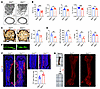 Figure 1
Bone loss, impaired bone formation, and sympathetic hyperinnervation in Slit2syn1 mice. (A and B) Representative μCT images of trabecular bone in the distal femur (A) and BV/TV with relative quantitative analysis of bone parameters (B) in Slit2fl/fl and Slit2syn1 male mice at 8 weeks of age. Slit2fl/fl, n = 11; Slit2syn1, n = 10. Scale bars: 500 μm. (C) Representative images of Von Kossa/Van Gieson staining and BV/TV of the L3 vertebral bone in 8-week-old Slit2fl/fl and Slit2syn1 male mice. n = 7 per group. Scale bars: 500 μm. (D and E) Representative images of calcein double labeling (D) and quantification of histomorphometric parameters of the L3 vertebrae (E) in Slit2fl/fl and Slit2syn1 male mice at 8 weeks of age. MAR, trabecular mineral apposition rate (μm/day); BFR/BS, bone formation rate/bone surface (μm3/μm/yr); Ob.S/BS, osteoblast surface/bone surface (%); (No.Oc./B.Pm, osteoclast number/bone perimeter. MAR and BFR/BS: n = 6 per group; Ob.S/BS: n = 7 per group; No.Oc./B.Pm: n = 6 per group. Scale bars: 100 μm. (F) Representative confocal images of immunofluorescence staining with TH (red) and DAPI (blue) and quantitative analysis of relative quantity of TH+ sympathetic nerves in femur sections from 3-week-old Slit2fl/fl and Slit2syn1 male mice. Arrowheads indicate TH+ sympathetic nerve fibers. n = 10 per group. Scale bars: 400 μm. (G) Images of tibiae prior to and after tissue clearing. Representative images of whole-tissue TH immunofluorescence labeling of femurs from 3-week-old Slit2fl/fl and Slit2syn1 male mice. Scale bars: 400 μm. Error bars indicate mean ± SEM. *P < 0.05, **P < 0.01, ***P < 0.001, by unpaired, 2-tailed Student’s t test for 2-group comparisons.
SLIT2-regulated sympathetic innervation controls bone formation. The skeleton is innervated by sympathetic and sensory nerves (38, 39), with sympathetic nervous activity stimulating bone resorption and suppressing bone formation (40–43). To determine whether lack of Slit2 in the nervous system disrupts peripheral bone innervation, we further analyzed the nerve subtypes present in the bones of Slit2syn1 mice. Interestingly, both immunostaining of femur sections and 3D imaging of optically cleared bones showed that the level of tyrosine hydroxylase positive (TH-positive) sympathetic nerve fibers was elevated in Slit2syn1 mice relative to littermate controls, whereas calcitonin gene–related peptide–positive (CGRP-positive) sensory fibers were not altered (Figure 1, F and G, and Supplemental Figure 5A). Thus, sympathetic but not sensory innervation of the skeleton was regulated by Slit2 expression in neurons.
We next sought to further dissect whether sympathetic or sensory nerves are the key source of SLIT2 regulation of the skeleton. Immunofluorescence analysis revealed colocalization of Slit2 expression with both sympathetic and sensory nerve fibers in bone (Supplemental Figure 6, A and B). To this end, we conditionally deleted Slit2 in either sympathetic or sensory nerves using TH-Cre (44) or advillin-Cre (45), respectively, in Slit2th or Slit2adv mice. The specificity and efficiency of Slit2 deletion was validated by reporter mice and Slit2 expression analysis in both crosses (Supplemental Figure 6, C–H). Interestingly, μCT analysis and bone histology demonstrated that Slit2th but not Slit2adv mice displayed an osteopenic phenotype similar to that observed in Slit2syn1 mice (Figure 2, A–D, and Supplemental Figure 7, A and B). Notably, this bone phenotype was consistently observed in both male and female mice, indicating that the skeletal effects of sympathetic nerve–specific Slit2 deletion were not sex dependent (Supplemental Figure 7C). In parallel with this, both immunostaining of femur sections and 3D imaging of optically cleared bones showed that the number of TH-positive nerve fibers was considerably elevated in Slit2th but not Slit2adv mice (Figure 2, E and F, and Supplemental Figure 7, D–F). Deletion of Slit2 did not induce a compensatory increase in expression levels of other SLITs in sympathetic neurons (Supplemental Figure 8, A–C) or lead to alterations in brain morphology (Supplemental Figure 8D). Consistent with observations in Slit2syn1 mice, the number of CGRP-positive nerve fibers was not significantly altered in Slit2th mice (Supplemental Figure 9A). The increase in sympathetic innervation in Slit2th mice resulted in impaired bone formation but not bone resorption, as shown by dynamic histomorphometric analysis and the unchanged serum CTX levels (Figure 2, G–I, and Supplemental Figure 9B). Together, the results indicate that sympathetic but not sensory neuron–derived SLIT2 suppresses both skeletal sympathetic innervation and bone mass accrual in vivo.
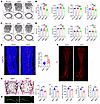 Figure 2
Slit2th but not Slit2adv mice recapitulate the skeletal and nerve phenotypes of Slit2syn1 mice. (A and B) Representative μCT images of trabecular bone in the distal femur (A) and relative quantitative analysis of BV/TV and relative quantitative analysis of bone parameters (B) in male control (Th-cre and Slit2fl/fl) and Slit2th mice at 8 weeks of age. Th-cre, n = 6; Slit2fl/fl; n = 14; Slit2th; n = 15. Scale bars: 500 μm. (C and D) Representative μCT images of trabecular bone in the distal femur (C) and relative quantitative analysis of BV/TV and of bone parameters (D) in male control (Adv-cre and Slit2fl/fl) and Slit2adv mice at 8 weeks of age. Adv-cre, n = 5; Slit2fl/fl, n = 13; Slit2adv. n = 12. Scale bars: 500 μm. (E) Representative confocal images of immunofluorescence staining with TH (red) and DAPI (blue) and quantitative analysis of relative TH+ sympathetic nerves in femur sections from 3-week-old Slit2fl/fl and Slit2th male mice. Slit2fl/fl, n = 15; Slit2th. n = 17. Scale bars: 500 μm. (F) Representative images of whole-femur immunofluorescence labeling of TH+ sympathetic nerves in 3-week-old Slit2fl/fl and Slit2th male mice. Scale bars: 500 μm. (G) Representative images of Von Kossa/Van Gieson staining and BV/TV of the L3 vertebral bone in 8-week-old Slit2fl/fl and Slit2th male mice. n = 7 per group. Scale bars: 500 μm. (H and I) Representative images of calcein double labeling (H) and quantification of histomorphometric parameters of L3 vertebrae in Slit2fl/fl and Slit2th male mice at 8 weeks of age. MAR trabecular mineral apposition rate (μm day−1); BFR/BS, bone formation rate/bone surface (μm3μm−2yr−1); Ob.S/BS, osteoblast surface/bone surface (%); No.Oc./B.Pm, osteoclast number/bone perimeter (I). MAR and BFR/BS: n = 6 per group; Ob.S/BS and No.Oc./B. Pm: n = 6 per group; Scale bars: 100 μm. Error bars indicate mean ± SEM. *P < 0.05, **P < 0.01, ***P < 0.001, ****P < 0.0001, by ordinary 1-way ANOVA for multiple-group comparisons (B and D). *P < 0.05, **P < 0.01, ***P < 0.001, ****P < 0.0001, by unpaired, 2-tailed Student’s t test for 2-group comparisons (E,G, and I).
Sympathetic nerves regulate the SSC niche. While sympathetic innervation decreased bone formation, it is unclear whether the autonomic nervous system acts at the level of regulating the SSC niche or through other mechanisms. Indeed, 3D imaging of optically cleared skeletons identified skeletal sympathetic nerve fibers in close proximity to physical sites housing SSCs, such as the metaphyseal region, periosteum, and inner endosteal compartment (Supplemental Figure 10, A–D) (5, 46, 47). To address the impact of sympathetic hyperinnervation of SSCs, we evaluated SSCs in the long bones of Slit2syn1 mice and Slit2th mice, defining SSCs as CD45−Ter119−CD31−AlphaV+Thy−6C3−CD105−CD200+ cells, a population previously shown to display formal evidence of stemness in several contexts (4, 5, 48, 49). The abundance of immunophenotypic SSCs was reduced in both of Slit2syn1 and Slit2th mice displaying augmented sympathetic innervation, whereas the abundance of non-stem progenitors derived from SSCs, pre-bone cartilage stromal progenitors (pre-BCSPs) and BCSPs, was not significantly decreased (Figure 3A and Supplemental Figure 11, A–E). In addition, the number of periosteal stem cells (PSC) (5) was also decreased in the periosteum of Slit2th mice (Supplemental Figure 12A). SSC proliferation was reduced in line with the reduction in total SSC pool size (Figure 3B and Supplemental Figure 12B). Thus, sympathetic hyperinnervation driven by Slit2 loss led to a contraction in the SSC pool, consistent with a defect in SSC self-renewal. Furthermore, immunofluorescence demonstrated that the sympathetic hyperinnervation phenotype seen in Slit2syn1 and Slit2th mice was progressively enhanced with increasing postnatal age, paralleling the kinetics of the decline in SSC numbers (Supplemental Figure 13, A and B) (50).
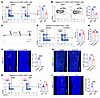 Figure 3
Sympathetic innervation negatively controls SSC abundance. (A) Representative flow cytometry plots and relative frequency of SSCs from femurs of 3-week-old Slit2fl/fl and Slit2th male mice. n = 5 per group. (B) Representative flow cytometry and quantitative analysis of the relative frequency of Ki-67+ fractions of SSCs (expressed as a proportion of the total Lin-CD31-CD51+ progenitor population) isolated from the femurs of 3-week-old Slit2fl/fl and Slit2th male mice. n = 4 per group. (C) Timeline of the 6-OHDA chemical sympathectomy mouse models. (D) Representative flow cytometry plots and relative frequency of SSCs in the femurs of 3-week-old WT male mice treated with 6-OHDA or vehicle as neonates. n = 7 per group. (E) Statistical analysis of body weight of 3-week-old WT male mice treated with 6-OHDA or vehicle as neonates. n = 7 per group. (F) Representative confocal images of immunofluorescence staining with TH (red) and DAPI (blue) and quantitative analysis of TH+ sympathetic nerves in femur sections from 3-week-old WT male mice treated with 6-OHDA or vehicle at the neonatal stage. n = 4 per group. Scale bars: 500 μm. (G) Representative confocal images of immunofluorescence staining with CGRP (green) and DAPI (blue) and quantitative analysis of CGRP+ sensory nerves in femur sections from 3-week-old WT male mice treated with 6-OHDA or vehicle as neonates. n = 6 per group. Scale bars: 500 μm. (H) Representative flow cytometry showing the relative frequency of femur SSCs in 3-week-old WT male mice after sympathectomy surgery. n = 7 per group. Sham, sham surgery group; Den, denervation group. (I) Representative confocal images of immunofluorescence staining with TH and DAPI and quantitative analysis of TH+ sympathetic nerves in femur sections from 3-week-old WT male mice after sympathectomy surgery. n = 6 per group. Scale bars: 500 μm. Error bars indicate mean ± SEM. *P < 0.05, **P < 0.01, ***P < 0.001, ****P < 0.0001, by unpaired, 2-tailed Student’s t test for 2-group comparisons.
To directly confirm the causal relationship between sympathetic nerves and total SSC pool size, we conducted pharmacological sympathectomy with neonatal 6-hydroxydopamine (6-OHDA) treatment. 6-OHDA not only impaired skeletal sympathetic — but not sensory — innervation but also significantly elevated numbers of SSCs, without overt systemic or growth effects such as an impact on body weight (Figure 3, C–G). Similarly, surgical ablation of the sympathetic nerve chain (51) in both Slit2th and WT mice also impaired bone sympathetic innervation and significantly increased the number of SSCs (Figure 3, H and I, and Supplemental Figure 14, A and B).
To directly determine the importance of sympathetic nerves as a component of the SSC niche, we developed an orthotopic SSC niche engraftment assay to test for SSC niche function in the native femoral environment. Specifically, we isolated tdTomato+ SSCs by FACS and transplanted equal numbers into femurs of sublethally irradiated Slit2th and Slit2fl/fl mice via intrafemoral injection (Figure 4A and Supplemental Figure 14C). By histology, a significant proportion of SSC-graft derived cells were found to be located in proximity (<50 μm) to TH-positive sympathetic nerves in the bone compartment of Slit2th and Slit2fl/fl mice (Supplemental Figure 14, D and E). Four weeks later, flow cytometry demonstrated that the engraftment and self-renewal of graft SSCs was reduced by 30% in the femurs of Slit2th hosts compared with Slit2fl/fl controls, accompanied by a decline in the abundance of downstream tdTomato+ BCSPs derived from graft SSCs (Figure 4B and Supplemental Figure 14F). Consistent with this finding, graft SSCs in the femurs of Slit2th hosts showed a significant decrease in generation of mature osteoblast derivatives, accompanied by a marginal decrease in mature adipocytes (Figure 4, C and D). On the other hand, SSCs were sorted from Slit2th and Slit2fl/fl mice, and equal numbers were transplanted into the kidney capsule of secondary WT hosts, where they displayed similar bone-forming capability (Figure 4, E and F). Consistent with this finding, SSCs from both groups also exhibited comparable CFU formation and osteogenic differentiation potential in vitro (Supplemental Figure 14, G and H), further confirming that SSC dysfunction in Slit2th mice was extrinsic to SSCs and therefore represented a niche effect. Second, this demonstrated that the impact of sympathetic niche dysfunction on SSCs was reversible when SSCs were introduced to a new niche environment. Notably, bone organoids in the kidney capsule were not innervated (Figure 4G), and SSC-driven osteogenesis was accordingly not altered in the kidney capsule of Slit2th hosts compared with Slit2fl/fl hosts (Supplemental Figure 15, A and B). This confirmed that the altered niche effect was local and excluded confounding systemic effects in Slit2th hosts not dependent on local sympathetic innervation.
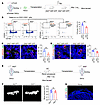 Figure 4
Sympathetic nerves are a component of the SSC niche. (A) Experimental model of mice bone marrow cavity orthotopic transplantation for SSCs. Approximately 2 × 10⁴ SSCs and 1 × 10⁷ bone marrow cells (after RBC lysis) were transplanted into each recipient mouse. (AUTHOR: You may wish to clarify the label “Mice harvest” in A and E. Do you mean “Organoid harvest”?) (B) Representative flow cytometry plots and relative frequency of tdTomato+ SSCs from the femurs of Slit2fl/fl-MIP-GFP and Slit2th-MIP-GFP male mice 1 month after surgery. n = 4 per group. (C) Representative images and quantitative analysis of OSX+ osteoblast immunofluorescence staining in the femurs of Slit2fl/fl-MIP-GFP and Slit2th-MIP-GFP male mice 4 weeks after tdTomato+ SSC bone marrow cavity transplantation. td+ OSX+/BS, tdTomato+ OSX+/bone area. n = 4 per group. Scale bars: 100 μm. (D) Representative images and quantitative analysis of FABP4 immunofluorescence to visualize adipocytes in femurs of Slit2fl/fl-MIP-GFP and Slit2th-MIP-GFP male mice 4 weeks after orthotopic bone marrow cavity transplantation of tdTomato+ SSCs. N.td+ FABP4+/BC, number of tdTomato+FABP4+/bone cavity. n = 6 per group. Scale bars: 100 μm. (E) Experimental model of mouse renal subcapsular transplantation of SSCs. Approximately 1 × 10⁴ SSCs were transplanted beneath the renal capsule on one side of each recipient mouse. (F) Representative images of μCT and quantitative analysis of bone parameters 4 weeks after subcapsular SSCs transplantation in mouse kidney. n = 4 per group. Scale bars: 500 μm. (G) Immunofluorescence staining for osteopontin and TH in bone organoids derived from SSCs transplanted into the renal capsule of secondary recipient mice. Organoids were harvested 4 weeks after transplantation. Scale bars: 200 μm. Error bars indicate mean ± SEM. *P < 0.05, **P < 0.01, by unpaired, 2-tailed Student’s t test for 2-group comparisons.
FSTL1 derived from sympathetic nerves suppress SSC self-renewal and osteogenesis. To investigate how sympathetic hyperinnervation resulting from Slit2 deficiency affects SSCs and osteogenesis, we cultured primary sympathetic neurons isolated from Slit2th and Slit2fl/fl mice for RNA-Seq analysis. This identified differential expression of a transcriptional program regulating axonogenesis (Figure 5A). Consistent with this and the overall nerve phenotype in vivo, a neurite outgrowth assay showed that Slit2 deletion remarkably enhanced axon growth of sympathetic neurons labeled by TH staining in vitro (Figure 5B). In parallel with this, conditioned medium harvested from Slit2th sympathetic neurons displayed a reduced ability to induce SSCs colony formation and mineralization, suggesting that the relevant mediator impacting SSCs was a soluble nerve-derived factor (Figure 5, C and D).
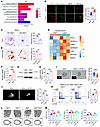 Figure 5
FSTL1 secreted from sympathetic nerves inhibits SSC self-renewal and osteogenesis. (A) GO enrichment analysis of genes differentially expressed in Slit2th sympathetic neurons relative to Slit2fl/fl sympathetic neurons. The significance values are based on a hypergeometric test. (B) Sympathetic neuron culture, TH+ (red) and βIII-tubulin+ (green) axon staining, and quantitative analysis in 3-week-old mice. Slit2fl/fl, n = 18; Slit2th. n = 18. Scale bars: 25 μm. (C) Crystal violet staining and quantitative analysis of CFU formation in SSCs stimulated with sympathetic neuronal conditioned medium. n = 3 per group. CM-Slit2fl/fl, conditioned culture medium of sympathetic neurons in Slit2fl/fl mice; CM-Slit2th, conditioned culture medium of sympathetic neurons in Slit2th mice. Scale bars: 5 mm. (D) Alizarin red staining and quantitative analysis of SSC mineralization activity after stimulation with conditioned medium from sympathetic neurons. n = 3 per group. Scale bars: 1 mm. (E) Expression of the soluble factors elevated in primary Slit2th sympathetic neurons relative to Slit2fl/fl sympathetic neurons. (F) mRNA levels of Fstl1 in primary Slit2fl/fl and Slit2th sympathetic neurons were analyzed by real-time PCR. n = 4 per group. (G) Protein levels of FSLT1 in primary Slit2fl/fl and Slit2th sympathetic neurons were analyzed by immunoblotting. n = 3 per group. (H) Results from ELISA for FSTL1 secretion in primary Slit2fl/fl and Slit2th sympathetic neurons. n = 3 per group. (I) Pellet formation assay and quantitative analysis of SSCs cultured for 8 days after treatment with recombinant FSTL1 or vehicle. n = 4 per group. Scale bars: 20 μm. (J) Representative μCT images and quantitative analysis of the bone volume of bone organoids 4 weeks after renal capsule transplantation of SSCs encapsulated in Matrigel and stimulated by treatment with recombinant protein FSTL1 or vehicle. n = 4 per group. Scale bars: 500 μm. (K) Representative flow cytometry plots and relative frequency of SSCs from femurs of 3-week-old Fstl1fl/fl and Fstl1th male mice. n = 5 per group. (L and M) Representative μCT images of trabecular bone in the distal femur (L) and relative quantitative analysis of bone volume/total volume (BV/TV) and relative quantitative analysis of bone parameters (M) in Fstl1fl/fl, Fstl1th, Slit2th, and Slit2thFstl1th male mice at 8 weeks of age. Fstl1fl/fl, n = 10; Fstl1th, n = 11; Slit2th, n = 15; Slit2thFstl1th, n = 10. Scale bars: 500 μm. Error bars indicate mean ± SEM. *P < 0.05, **P < 0.01, ***P < 0.001, ****P < 0.0001, by unpaired, 2-tailed Student’s t test for 2-group comparisons (B–D, F, and H–K). *P < 0.05, **P < 0.01, ***P < 0.001, by 1-way ANOVA followed by Tukey’s post hoc test for multiple comparisons (M).
Catecholamines, including norepinephrine and epinephrine, are released in part by the postganglionic fibers of the sympathetic nervous system and influence bone homeostasis through adrenergic signaling (43, 44). To ascertain whether norepinephrine and epinephrine are implicated in the effect of SLIT2 to regulate SSC-driven osteogenesis, we mapped the expression pattern of adrenergic receptors in SSCs and identified that SSCs only express Adrb2 (Supplemental Figure 16A) (49). Subsequently, flow cytometry analysis found no alteration in SSC numbers in Adrb2-knockout (Adrb2–/–) mice (Supplemental Figure 16B). We then administrated a β-adrenergic receptor agonist (salbutamol) (52) or antagonist (propranolol) (43) to Slit2th and Slit2fl/fl mice and found that adrenergic signaling was dispensable for SSC maintenance in either Slit2th or Slit2fl/fl mice (Supplemental Figure 16, C–E). Furthermore, the circulating levels of epinephrine and norepinephrine were not altered in Slit2th and Slit2syn1 mice, further indicating that systemic sympathetic tone associated with catecholamines release and Slit2-regulated peripheral sympathetic innervation were independent (Supplemental Figure 16, F and G). Thus, the effect of SLIT2-regulated sympathetic nerves to control SSCs was independent of norepinephrine or epinephrine signaling and therefore distinct from known mechanisms of sympathetic regulation of bone mass.
Next, we sought to identify the molecular mediator of the effect of sympathetic nerves on the SSC niche. To this end, we performed RNA-Seq on sympathetic nerve ganglions to identify secreted factors regulated by SLIT2 (Figure 5E). Among these, FSTL1, a secreted extracellular glycoprotein recently suggested to modulate bone morphogenetic protein (BMP) signaling (53), showed substantially greater levels in Slit2th sympathetic neurons relative to Slit2fl/fl controls (Figure 5E). To verify this, experiments with 3 complementary approaches, including real-time PCR, Western-blotting, and ELISA, were performed, and all confirmed increased Fstl1 expression in sympathetic neurons lacking Slit2 (Figure 5, F–H).
To determine whether FSTL1 regulates SSCs, we performed a series of in vitro and in vivo assays. In vitro, recombinant FSTL1 impaired SSC colony-forming capability, serial mesensphere formation and osteogenic differentiation, where serial mesensphere formation is an established proxy for in vivo SSC self-renewal (5, 29, 54) (Figure 5I and Supplemental Figure 17, A and B). In vivo, we transplanted the same number of sorted murine SSCs mixed with Matrigel containing recombinant FSTL1 or vehicle into the kidney capsule for a bone organoid formation assay. As in the in vitro assay, recombinant FSTL1 suppressed the osteogenic activity of SSCs, as indicated by a reduction in mineralized bone volume in FSTL1-treated organoids (Figure 5J).
To further validate the importance of sympathetic FSTL1 in regulation of SSCs in vivo, we intercrossed Fstl1fl/fl mice with Th-Cre mice to specifically delete Fstl1 expression in sympathetic neurons (Fstl1th mice). In line with FSTL1 serving as a key effector of the sympathetic SSC niche, Fstl1th mice displayed an expansion of SSCs (Figure 5K) and increased bone mass (Figure 5, L and M). Furthermore, the osteopenic phenotype observed in Slit2th mice was genetically contingent on sympathetic neuron-secreted FSTL1, as shown in Fstl1thSlit2th mice (Figure 5, L and M). In summary, SLIT2 expression in sympathetic neurons negatively regulated production of FSTL1, which in turn suppressed SSC self-renewal and osteogenic capacity. Thus, sympathetic neurons acted via FSTL1 as a component of the SSC niche.
Sympathetic innervation acts on SSCs to inhibit skeletal regeneration. Bone repair is mediated by SSC-based osteogenesis. It is likely that the marked expansion of SSCs occurring to mediate this skeletal repair is dependent on niche remodeling; however, this has yet to be investigated (5). To examine whether SLIT2-mediated sympathetic innervation affects bone regeneration, we first conducted a femoral bone marrow ablation study using Slit2th and Slit2fl/fl mice. μCT analysis showed that the volume of newly synthesized bone after bone marrow ablation was significantly reduced in Slit2th mice relative to Slit2fl/fl controls (Figure 6, A and B, and Supplemental Figure 18A). Similar to what was observed in uninjured mice, SSC numbers were reduced in Slit2th mice undergoing marrow osteogenic repair in parallel with increases in TH-positive sympathetic nerve fibers present around the ablation area (Figure 6, C and D, and Supplemental Figure 18B).
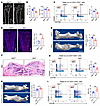 Figure 6
Sympathetic hyperinnervation disrupts bone regeneration by impairing SSC expansion. (A and B) Representative μCT images of bone regeneration 7 days after femoral bone marrow ablation and quantitative analysis of bone parameter in regeneration area in 6-week-old Slit2fl/fl and Slit2th male mice. n = 5. Scale bars: 1 mm. (C) Representative flow cytometry plots 7 days after femoral bone marrow ablation and relative frequency of SSCs from femurs of 6-week-old Slit2fl/fl and Slit2th male mice. n = 5. (D) Representative confocal images 7 days after femoral bone marrow ablation. Shown are TH (red) and DAPI (blue) signal and quantitative analysis of TH+ sympathetic nerves in femur sections. Marrow ablation was conducted in 6-week-old Slit2fl/fl and Slit2th male mice. n = 6; Scale bars, 500 μm. (E) Representative μCT images 21 days after femur fracture and quantitative analysis of callus bone volume. Fractures were performed in 6-week-old Slit2fl/fl and Slit2th male mice. n = 6. Scale bars: 2 mm. (F) H&E staining visualizing the callus formed 21 days after femur fracture in 6-week-old Slit2fl/fl and Slit2th male mice. Scale bars: 200 μm. (G) Representative flow cytometry plots 14 days after femur fracture and the relative frequency of SSCs from the femurs of 6-week-old Slit2fl/fl and Slit2th male mice. n = 5 per group. (H) Representative μCT images 21 days after femur fracture and quantitative analysis of bone callus volume. Fractures were performed in 6-week-old Fstl1fl/fl and Fstl1Dbh-cre-ert2 male mice. n = 5. Scale bars: 2 mm. (I) Representative flow cytometry plots 14 days after femur fracture and relative frequency of SSCs from femurs of 6-week-old Fstl1fl/fl and Fstl1Dbh-cre-ert2 male mice. Fstl1fl/fl, n = 6; Fstl1Dbh-cre-ert2, n = 5. Error bars indicate mean ± SEM. *P < 0.05, **P < 0.01, by unpaired, 2-tailed Student’s t test for 2-group comparisons.
To confirm the role of sympathetic nerves on SSC activation and reparative capacity, we created an open femoral mid-shaft fracture model in Slit2th and Slit2fl/fl mice. Three weeks later, μCT analysis combined with histology showed that bone fracture healing was impaired in Slit2th mice (Figure 6, E and F). Consistent with the SSC phenotype seen in the bone marrow ablation model, the number of SSCs in the fracture callus was markedly reduced in Slit2th mice relative to Slit2fl/fl controls (Figure 6G and Supplemental Figure 18C). To further verify whether sympathetic neuron–derived FSTL1 plays a pivotal role in the remodeling of the SSC niche occurring in response to injury, we intercrossed Fstl1fl/fl mice with Dbh-Cre-ert2 mice to conduct inducible deletion of Fstl1 in sympathetic neurons shortly before femoral fracture. μCT analysis revealed that fracture healing in Fstl1Dbh-cre-ert2 mice, compared with Fstl1fl/fl mice, was significantly accelerated (Figure 6H). Consistent with this, an increase in SSC expansion was observed at the fracture site in Fstl1Dbh-cre-ert2 mice (Figure 6I). Thus, in addition to functioning as an SSC niche component during baseline physiology, the sympathetic nerve SLIT2/FSTL1 axis also regulated dynamic remodeling of the SSC niche in response to injury. Thus, we identified what we believe to be a new sympathetic nerve SSC niche as a component governing osteogenesis during the course of both normal skeletal mineralization and regeneration.


Copyright © 2026 American Society for Clinical Investigation
ISSN: 0021-9738 (print), 1558-8238 (online)