
Advertisement
Research ArticleCell biologyHematologyMetabolism
Open Access |  10.1172/JCI193082
Leukemia-expanded splenic CD81+ erythroblasts potentiate disease progression in mice by reshaping leukemic cell metabolism
Yue Li,1,2 Jiaxuan Cao,1,3 Jingyuan Tong,1 Peixia Tang,1 Haoran Chen,4 Guohuan Sun,1 Zining Yang,1 Xiaoru Zhang,1 Fang Dong,1 Shangda Yang,1 Jie Gao,1 Xiangnan Zhao,1 Jinfa Ma,1 Di Wang,1 Lei Zhang,1 Lin Wang,4 Tao Cheng,1 Hui Cheng,1 and Lihong Shi1
1State Key Laboratory of Experimental Hematology, National Clinical Research Center for Blood Diseases, Haihe Laboratory of Cell Ecosystem, Tianjin Institutes of Health Science, Institute of Hematology and Blood Diseases Hospital, Chinese Academy of Medical Sciences and Peking Union Medical College, Tianjin, China.
2Department of Hematology, Beijing Anzhen Hospital, Capital Medical University, Beijing, China.
3Department of Oncology, Tianjin Union Medical Center, The First Affiliated Hospital of Nankai University, Tianjin, China.
4State Key Laboratory of Common Mechanism Research for Major Disease, Department of Pharmacology, Institute of Basic Medical Sciences, Chinese Academy of Medical Sciences and Peking Union Medical College, Beijing, China.
Address correspondence to: Lihong Shi, Hui Cheng, or Tao Cheng, State Key Laboratory of Experimental Hematology, Institute of Hematology and Blood Diseases Hospital, 288 Nanjing Road, Tianjin 300020, China. Phone: 0086.022.23909448; Email: shilihongxys@ihcams.ac.cn (LS). Phone: 0086.022.23909386; Email: chenghui@ihcams.ac.cn (HC). Phone: 0086.022.23909999; Email: chengtao@ihcams.ac.cn (TC). Or to: Lin Wang, State Key Laboratory of Common Mechanism Research for Major Disease, Department of Pharmacology, Institute of Basic Medical Sciences, No.5 Dongdansantiao, Beijing 100005, China; Email: linwangZJU@hotmail.com.
Authorship note: YL, JC, JT, and PT contributed equally to this work.
Find articles by Li, Y. in: PubMed | Google Scholar
1State Key Laboratory of Experimental Hematology, National Clinical Research Center for Blood Diseases, Haihe Laboratory of Cell Ecosystem, Tianjin Institutes of Health Science, Institute of Hematology and Blood Diseases Hospital, Chinese Academy of Medical Sciences and Peking Union Medical College, Tianjin, China.
2Department of Hematology, Beijing Anzhen Hospital, Capital Medical University, Beijing, China.
3Department of Oncology, Tianjin Union Medical Center, The First Affiliated Hospital of Nankai University, Tianjin, China.
4State Key Laboratory of Common Mechanism Research for Major Disease, Department of Pharmacology, Institute of Basic Medical Sciences, Chinese Academy of Medical Sciences and Peking Union Medical College, Beijing, China.
Address correspondence to: Lihong Shi, Hui Cheng, or Tao Cheng, State Key Laboratory of Experimental Hematology, Institute of Hematology and Blood Diseases Hospital, 288 Nanjing Road, Tianjin 300020, China. Phone: 0086.022.23909448; Email: shilihongxys@ihcams.ac.cn (LS). Phone: 0086.022.23909386; Email: chenghui@ihcams.ac.cn (HC). Phone: 0086.022.23909999; Email: chengtao@ihcams.ac.cn (TC). Or to: Lin Wang, State Key Laboratory of Common Mechanism Research for Major Disease, Department of Pharmacology, Institute of Basic Medical Sciences, No.5 Dongdansantiao, Beijing 100005, China; Email: linwangZJU@hotmail.com.
Authorship note: YL, JC, JT, and PT contributed equally to this work.
Find articles by Cao, J. in: PubMed | Google Scholar
1State Key Laboratory of Experimental Hematology, National Clinical Research Center for Blood Diseases, Haihe Laboratory of Cell Ecosystem, Tianjin Institutes of Health Science, Institute of Hematology and Blood Diseases Hospital, Chinese Academy of Medical Sciences and Peking Union Medical College, Tianjin, China.
2Department of Hematology, Beijing Anzhen Hospital, Capital Medical University, Beijing, China.
3Department of Oncology, Tianjin Union Medical Center, The First Affiliated Hospital of Nankai University, Tianjin, China.
4State Key Laboratory of Common Mechanism Research for Major Disease, Department of Pharmacology, Institute of Basic Medical Sciences, Chinese Academy of Medical Sciences and Peking Union Medical College, Beijing, China.
Address correspondence to: Lihong Shi, Hui Cheng, or Tao Cheng, State Key Laboratory of Experimental Hematology, Institute of Hematology and Blood Diseases Hospital, 288 Nanjing Road, Tianjin 300020, China. Phone: 0086.022.23909448; Email: shilihongxys@ihcams.ac.cn (LS). Phone: 0086.022.23909386; Email: chenghui@ihcams.ac.cn (HC). Phone: 0086.022.23909999; Email: chengtao@ihcams.ac.cn (TC). Or to: Lin Wang, State Key Laboratory of Common Mechanism Research for Major Disease, Department of Pharmacology, Institute of Basic Medical Sciences, No.5 Dongdansantiao, Beijing 100005, China; Email: linwangZJU@hotmail.com.
Authorship note: YL, JC, JT, and PT contributed equally to this work.
Find articles by Tong, J. in: PubMed | Google Scholar
1State Key Laboratory of Experimental Hematology, National Clinical Research Center for Blood Diseases, Haihe Laboratory of Cell Ecosystem, Tianjin Institutes of Health Science, Institute of Hematology and Blood Diseases Hospital, Chinese Academy of Medical Sciences and Peking Union Medical College, Tianjin, China.
2Department of Hematology, Beijing Anzhen Hospital, Capital Medical University, Beijing, China.
3Department of Oncology, Tianjin Union Medical Center, The First Affiliated Hospital of Nankai University, Tianjin, China.
4State Key Laboratory of Common Mechanism Research for Major Disease, Department of Pharmacology, Institute of Basic Medical Sciences, Chinese Academy of Medical Sciences and Peking Union Medical College, Beijing, China.
Address correspondence to: Lihong Shi, Hui Cheng, or Tao Cheng, State Key Laboratory of Experimental Hematology, Institute of Hematology and Blood Diseases Hospital, 288 Nanjing Road, Tianjin 300020, China. Phone: 0086.022.23909448; Email: shilihongxys@ihcams.ac.cn (LS). Phone: 0086.022.23909386; Email: chenghui@ihcams.ac.cn (HC). Phone: 0086.022.23909999; Email: chengtao@ihcams.ac.cn (TC). Or to: Lin Wang, State Key Laboratory of Common Mechanism Research for Major Disease, Department of Pharmacology, Institute of Basic Medical Sciences, No.5 Dongdansantiao, Beijing 100005, China; Email: linwangZJU@hotmail.com.
Authorship note: YL, JC, JT, and PT contributed equally to this work.
Find articles by Tang, P. in: PubMed | Google Scholar
1State Key Laboratory of Experimental Hematology, National Clinical Research Center for Blood Diseases, Haihe Laboratory of Cell Ecosystem, Tianjin Institutes of Health Science, Institute of Hematology and Blood Diseases Hospital, Chinese Academy of Medical Sciences and Peking Union Medical College, Tianjin, China.
2Department of Hematology, Beijing Anzhen Hospital, Capital Medical University, Beijing, China.
3Department of Oncology, Tianjin Union Medical Center, The First Affiliated Hospital of Nankai University, Tianjin, China.
4State Key Laboratory of Common Mechanism Research for Major Disease, Department of Pharmacology, Institute of Basic Medical Sciences, Chinese Academy of Medical Sciences and Peking Union Medical College, Beijing, China.
Address correspondence to: Lihong Shi, Hui Cheng, or Tao Cheng, State Key Laboratory of Experimental Hematology, Institute of Hematology and Blood Diseases Hospital, 288 Nanjing Road, Tianjin 300020, China. Phone: 0086.022.23909448; Email: shilihongxys@ihcams.ac.cn (LS). Phone: 0086.022.23909386; Email: chenghui@ihcams.ac.cn (HC). Phone: 0086.022.23909999; Email: chengtao@ihcams.ac.cn (TC). Or to: Lin Wang, State Key Laboratory of Common Mechanism Research for Major Disease, Department of Pharmacology, Institute of Basic Medical Sciences, No.5 Dongdansantiao, Beijing 100005, China; Email: linwangZJU@hotmail.com.
Authorship note: YL, JC, JT, and PT contributed equally to this work.
Find articles by Chen, H. in: PubMed | Google Scholar
1State Key Laboratory of Experimental Hematology, National Clinical Research Center for Blood Diseases, Haihe Laboratory of Cell Ecosystem, Tianjin Institutes of Health Science, Institute of Hematology and Blood Diseases Hospital, Chinese Academy of Medical Sciences and Peking Union Medical College, Tianjin, China.
2Department of Hematology, Beijing Anzhen Hospital, Capital Medical University, Beijing, China.
3Department of Oncology, Tianjin Union Medical Center, The First Affiliated Hospital of Nankai University, Tianjin, China.
4State Key Laboratory of Common Mechanism Research for Major Disease, Department of Pharmacology, Institute of Basic Medical Sciences, Chinese Academy of Medical Sciences and Peking Union Medical College, Beijing, China.
Address correspondence to: Lihong Shi, Hui Cheng, or Tao Cheng, State Key Laboratory of Experimental Hematology, Institute of Hematology and Blood Diseases Hospital, 288 Nanjing Road, Tianjin 300020, China. Phone: 0086.022.23909448; Email: shilihongxys@ihcams.ac.cn (LS). Phone: 0086.022.23909386; Email: chenghui@ihcams.ac.cn (HC). Phone: 0086.022.23909999; Email: chengtao@ihcams.ac.cn (TC). Or to: Lin Wang, State Key Laboratory of Common Mechanism Research for Major Disease, Department of Pharmacology, Institute of Basic Medical Sciences, No.5 Dongdansantiao, Beijing 100005, China; Email: linwangZJU@hotmail.com.
Authorship note: YL, JC, JT, and PT contributed equally to this work.
Find articles by
Sun, G.
in:
PubMed
|
Google Scholar
|

1State Key Laboratory of Experimental Hematology, National Clinical Research Center for Blood Diseases, Haihe Laboratory of Cell Ecosystem, Tianjin Institutes of Health Science, Institute of Hematology and Blood Diseases Hospital, Chinese Academy of Medical Sciences and Peking Union Medical College, Tianjin, China.
2Department of Hematology, Beijing Anzhen Hospital, Capital Medical University, Beijing, China.
3Department of Oncology, Tianjin Union Medical Center, The First Affiliated Hospital of Nankai University, Tianjin, China.
4State Key Laboratory of Common Mechanism Research for Major Disease, Department of Pharmacology, Institute of Basic Medical Sciences, Chinese Academy of Medical Sciences and Peking Union Medical College, Beijing, China.
Address correspondence to: Lihong Shi, Hui Cheng, or Tao Cheng, State Key Laboratory of Experimental Hematology, Institute of Hematology and Blood Diseases Hospital, 288 Nanjing Road, Tianjin 300020, China. Phone: 0086.022.23909448; Email: shilihongxys@ihcams.ac.cn (LS). Phone: 0086.022.23909386; Email: chenghui@ihcams.ac.cn (HC). Phone: 0086.022.23909999; Email: chengtao@ihcams.ac.cn (TC). Or to: Lin Wang, State Key Laboratory of Common Mechanism Research for Major Disease, Department of Pharmacology, Institute of Basic Medical Sciences, No.5 Dongdansantiao, Beijing 100005, China; Email: linwangZJU@hotmail.com.
Authorship note: YL, JC, JT, and PT contributed equally to this work.
Find articles by Yang, Z. in: PubMed | Google Scholar
1State Key Laboratory of Experimental Hematology, National Clinical Research Center for Blood Diseases, Haihe Laboratory of Cell Ecosystem, Tianjin Institutes of Health Science, Institute of Hematology and Blood Diseases Hospital, Chinese Academy of Medical Sciences and Peking Union Medical College, Tianjin, China.
2Department of Hematology, Beijing Anzhen Hospital, Capital Medical University, Beijing, China.
3Department of Oncology, Tianjin Union Medical Center, The First Affiliated Hospital of Nankai University, Tianjin, China.
4State Key Laboratory of Common Mechanism Research for Major Disease, Department of Pharmacology, Institute of Basic Medical Sciences, Chinese Academy of Medical Sciences and Peking Union Medical College, Beijing, China.
Address correspondence to: Lihong Shi, Hui Cheng, or Tao Cheng, State Key Laboratory of Experimental Hematology, Institute of Hematology and Blood Diseases Hospital, 288 Nanjing Road, Tianjin 300020, China. Phone: 0086.022.23909448; Email: shilihongxys@ihcams.ac.cn (LS). Phone: 0086.022.23909386; Email: chenghui@ihcams.ac.cn (HC). Phone: 0086.022.23909999; Email: chengtao@ihcams.ac.cn (TC). Or to: Lin Wang, State Key Laboratory of Common Mechanism Research for Major Disease, Department of Pharmacology, Institute of Basic Medical Sciences, No.5 Dongdansantiao, Beijing 100005, China; Email: linwangZJU@hotmail.com.
Authorship note: YL, JC, JT, and PT contributed equally to this work.
Find articles by Zhang, X. in: PubMed | Google Scholar
1State Key Laboratory of Experimental Hematology, National Clinical Research Center for Blood Diseases, Haihe Laboratory of Cell Ecosystem, Tianjin Institutes of Health Science, Institute of Hematology and Blood Diseases Hospital, Chinese Academy of Medical Sciences and Peking Union Medical College, Tianjin, China.
2Department of Hematology, Beijing Anzhen Hospital, Capital Medical University, Beijing, China.
3Department of Oncology, Tianjin Union Medical Center, The First Affiliated Hospital of Nankai University, Tianjin, China.
4State Key Laboratory of Common Mechanism Research for Major Disease, Department of Pharmacology, Institute of Basic Medical Sciences, Chinese Academy of Medical Sciences and Peking Union Medical College, Beijing, China.
Address correspondence to: Lihong Shi, Hui Cheng, or Tao Cheng, State Key Laboratory of Experimental Hematology, Institute of Hematology and Blood Diseases Hospital, 288 Nanjing Road, Tianjin 300020, China. Phone: 0086.022.23909448; Email: shilihongxys@ihcams.ac.cn (LS). Phone: 0086.022.23909386; Email: chenghui@ihcams.ac.cn (HC). Phone: 0086.022.23909999; Email: chengtao@ihcams.ac.cn (TC). Or to: Lin Wang, State Key Laboratory of Common Mechanism Research for Major Disease, Department of Pharmacology, Institute of Basic Medical Sciences, No.5 Dongdansantiao, Beijing 100005, China; Email: linwangZJU@hotmail.com.
Authorship note: YL, JC, JT, and PT contributed equally to this work.
Find articles by Dong, F. in: PubMed | Google Scholar
1State Key Laboratory of Experimental Hematology, National Clinical Research Center for Blood Diseases, Haihe Laboratory of Cell Ecosystem, Tianjin Institutes of Health Science, Institute of Hematology and Blood Diseases Hospital, Chinese Academy of Medical Sciences and Peking Union Medical College, Tianjin, China.
2Department of Hematology, Beijing Anzhen Hospital, Capital Medical University, Beijing, China.
3Department of Oncology, Tianjin Union Medical Center, The First Affiliated Hospital of Nankai University, Tianjin, China.
4State Key Laboratory of Common Mechanism Research for Major Disease, Department of Pharmacology, Institute of Basic Medical Sciences, Chinese Academy of Medical Sciences and Peking Union Medical College, Beijing, China.
Address correspondence to: Lihong Shi, Hui Cheng, or Tao Cheng, State Key Laboratory of Experimental Hematology, Institute of Hematology and Blood Diseases Hospital, 288 Nanjing Road, Tianjin 300020, China. Phone: 0086.022.23909448; Email: shilihongxys@ihcams.ac.cn (LS). Phone: 0086.022.23909386; Email: chenghui@ihcams.ac.cn (HC). Phone: 0086.022.23909999; Email: chengtao@ihcams.ac.cn (TC). Or to: Lin Wang, State Key Laboratory of Common Mechanism Research for Major Disease, Department of Pharmacology, Institute of Basic Medical Sciences, No.5 Dongdansantiao, Beijing 100005, China; Email: linwangZJU@hotmail.com.
Authorship note: YL, JC, JT, and PT contributed equally to this work.
Find articles by Yang, S. in: PubMed | Google Scholar
1State Key Laboratory of Experimental Hematology, National Clinical Research Center for Blood Diseases, Haihe Laboratory of Cell Ecosystem, Tianjin Institutes of Health Science, Institute of Hematology and Blood Diseases Hospital, Chinese Academy of Medical Sciences and Peking Union Medical College, Tianjin, China.
2Department of Hematology, Beijing Anzhen Hospital, Capital Medical University, Beijing, China.
3Department of Oncology, Tianjin Union Medical Center, The First Affiliated Hospital of Nankai University, Tianjin, China.
4State Key Laboratory of Common Mechanism Research for Major Disease, Department of Pharmacology, Institute of Basic Medical Sciences, Chinese Academy of Medical Sciences and Peking Union Medical College, Beijing, China.
Address correspondence to: Lihong Shi, Hui Cheng, or Tao Cheng, State Key Laboratory of Experimental Hematology, Institute of Hematology and Blood Diseases Hospital, 288 Nanjing Road, Tianjin 300020, China. Phone: 0086.022.23909448; Email: shilihongxys@ihcams.ac.cn (LS). Phone: 0086.022.23909386; Email: chenghui@ihcams.ac.cn (HC). Phone: 0086.022.23909999; Email: chengtao@ihcams.ac.cn (TC). Or to: Lin Wang, State Key Laboratory of Common Mechanism Research for Major Disease, Department of Pharmacology, Institute of Basic Medical Sciences, No.5 Dongdansantiao, Beijing 100005, China; Email: linwangZJU@hotmail.com.
Authorship note: YL, JC, JT, and PT contributed equally to this work.
Find articles by Gao, J. in: PubMed | Google Scholar
1State Key Laboratory of Experimental Hematology, National Clinical Research Center for Blood Diseases, Haihe Laboratory of Cell Ecosystem, Tianjin Institutes of Health Science, Institute of Hematology and Blood Diseases Hospital, Chinese Academy of Medical Sciences and Peking Union Medical College, Tianjin, China.
2Department of Hematology, Beijing Anzhen Hospital, Capital Medical University, Beijing, China.
3Department of Oncology, Tianjin Union Medical Center, The First Affiliated Hospital of Nankai University, Tianjin, China.
4State Key Laboratory of Common Mechanism Research for Major Disease, Department of Pharmacology, Institute of Basic Medical Sciences, Chinese Academy of Medical Sciences and Peking Union Medical College, Beijing, China.
Address correspondence to: Lihong Shi, Hui Cheng, or Tao Cheng, State Key Laboratory of Experimental Hematology, Institute of Hematology and Blood Diseases Hospital, 288 Nanjing Road, Tianjin 300020, China. Phone: 0086.022.23909448; Email: shilihongxys@ihcams.ac.cn (LS). Phone: 0086.022.23909386; Email: chenghui@ihcams.ac.cn (HC). Phone: 0086.022.23909999; Email: chengtao@ihcams.ac.cn (TC). Or to: Lin Wang, State Key Laboratory of Common Mechanism Research for Major Disease, Department of Pharmacology, Institute of Basic Medical Sciences, No.5 Dongdansantiao, Beijing 100005, China; Email: linwangZJU@hotmail.com.
Authorship note: YL, JC, JT, and PT contributed equally to this work.
Find articles by Zhao, X. in: PubMed | Google Scholar
1State Key Laboratory of Experimental Hematology, National Clinical Research Center for Blood Diseases, Haihe Laboratory of Cell Ecosystem, Tianjin Institutes of Health Science, Institute of Hematology and Blood Diseases Hospital, Chinese Academy of Medical Sciences and Peking Union Medical College, Tianjin, China.
2Department of Hematology, Beijing Anzhen Hospital, Capital Medical University, Beijing, China.
3Department of Oncology, Tianjin Union Medical Center, The First Affiliated Hospital of Nankai University, Tianjin, China.
4State Key Laboratory of Common Mechanism Research for Major Disease, Department of Pharmacology, Institute of Basic Medical Sciences, Chinese Academy of Medical Sciences and Peking Union Medical College, Beijing, China.
Address correspondence to: Lihong Shi, Hui Cheng, or Tao Cheng, State Key Laboratory of Experimental Hematology, Institute of Hematology and Blood Diseases Hospital, 288 Nanjing Road, Tianjin 300020, China. Phone: 0086.022.23909448; Email: shilihongxys@ihcams.ac.cn (LS). Phone: 0086.022.23909386; Email: chenghui@ihcams.ac.cn (HC). Phone: 0086.022.23909999; Email: chengtao@ihcams.ac.cn (TC). Or to: Lin Wang, State Key Laboratory of Common Mechanism Research for Major Disease, Department of Pharmacology, Institute of Basic Medical Sciences, No.5 Dongdansantiao, Beijing 100005, China; Email: linwangZJU@hotmail.com.
Authorship note: YL, JC, JT, and PT contributed equally to this work.
Find articles by Ma, J. in: PubMed | Google Scholar
1State Key Laboratory of Experimental Hematology, National Clinical Research Center for Blood Diseases, Haihe Laboratory of Cell Ecosystem, Tianjin Institutes of Health Science, Institute of Hematology and Blood Diseases Hospital, Chinese Academy of Medical Sciences and Peking Union Medical College, Tianjin, China.
2Department of Hematology, Beijing Anzhen Hospital, Capital Medical University, Beijing, China.
3Department of Oncology, Tianjin Union Medical Center, The First Affiliated Hospital of Nankai University, Tianjin, China.
4State Key Laboratory of Common Mechanism Research for Major Disease, Department of Pharmacology, Institute of Basic Medical Sciences, Chinese Academy of Medical Sciences and Peking Union Medical College, Beijing, China.
Address correspondence to: Lihong Shi, Hui Cheng, or Tao Cheng, State Key Laboratory of Experimental Hematology, Institute of Hematology and Blood Diseases Hospital, 288 Nanjing Road, Tianjin 300020, China. Phone: 0086.022.23909448; Email: shilihongxys@ihcams.ac.cn (LS). Phone: 0086.022.23909386; Email: chenghui@ihcams.ac.cn (HC). Phone: 0086.022.23909999; Email: chengtao@ihcams.ac.cn (TC). Or to: Lin Wang, State Key Laboratory of Common Mechanism Research for Major Disease, Department of Pharmacology, Institute of Basic Medical Sciences, No.5 Dongdansantiao, Beijing 100005, China; Email: linwangZJU@hotmail.com.
Authorship note: YL, JC, JT, and PT contributed equally to this work.
Find articles by Wang, D. in: PubMed | Google Scholar
1State Key Laboratory of Experimental Hematology, National Clinical Research Center for Blood Diseases, Haihe Laboratory of Cell Ecosystem, Tianjin Institutes of Health Science, Institute of Hematology and Blood Diseases Hospital, Chinese Academy of Medical Sciences and Peking Union Medical College, Tianjin, China.
2Department of Hematology, Beijing Anzhen Hospital, Capital Medical University, Beijing, China.
3Department of Oncology, Tianjin Union Medical Center, The First Affiliated Hospital of Nankai University, Tianjin, China.
4State Key Laboratory of Common Mechanism Research for Major Disease, Department of Pharmacology, Institute of Basic Medical Sciences, Chinese Academy of Medical Sciences and Peking Union Medical College, Beijing, China.
Address correspondence to: Lihong Shi, Hui Cheng, or Tao Cheng, State Key Laboratory of Experimental Hematology, Institute of Hematology and Blood Diseases Hospital, 288 Nanjing Road, Tianjin 300020, China. Phone: 0086.022.23909448; Email: shilihongxys@ihcams.ac.cn (LS). Phone: 0086.022.23909386; Email: chenghui@ihcams.ac.cn (HC). Phone: 0086.022.23909999; Email: chengtao@ihcams.ac.cn (TC). Or to: Lin Wang, State Key Laboratory of Common Mechanism Research for Major Disease, Department of Pharmacology, Institute of Basic Medical Sciences, No.5 Dongdansantiao, Beijing 100005, China; Email: linwangZJU@hotmail.com.
Authorship note: YL, JC, JT, and PT contributed equally to this work.
Find articles by Zhang, L. in: PubMed | Google Scholar
1State Key Laboratory of Experimental Hematology, National Clinical Research Center for Blood Diseases, Haihe Laboratory of Cell Ecosystem, Tianjin Institutes of Health Science, Institute of Hematology and Blood Diseases Hospital, Chinese Academy of Medical Sciences and Peking Union Medical College, Tianjin, China.
2Department of Hematology, Beijing Anzhen Hospital, Capital Medical University, Beijing, China.
3Department of Oncology, Tianjin Union Medical Center, The First Affiliated Hospital of Nankai University, Tianjin, China.
4State Key Laboratory of Common Mechanism Research for Major Disease, Department of Pharmacology, Institute of Basic Medical Sciences, Chinese Academy of Medical Sciences and Peking Union Medical College, Beijing, China.
Address correspondence to: Lihong Shi, Hui Cheng, or Tao Cheng, State Key Laboratory of Experimental Hematology, Institute of Hematology and Blood Diseases Hospital, 288 Nanjing Road, Tianjin 300020, China. Phone: 0086.022.23909448; Email: shilihongxys@ihcams.ac.cn (LS). Phone: 0086.022.23909386; Email: chenghui@ihcams.ac.cn (HC). Phone: 0086.022.23909999; Email: chengtao@ihcams.ac.cn (TC). Or to: Lin Wang, State Key Laboratory of Common Mechanism Research for Major Disease, Department of Pharmacology, Institute of Basic Medical Sciences, No.5 Dongdansantiao, Beijing 100005, China; Email: linwangZJU@hotmail.com.
Authorship note: YL, JC, JT, and PT contributed equally to this work.
Find articles by Wang, L. in: PubMed | Google Scholar
1State Key Laboratory of Experimental Hematology, National Clinical Research Center for Blood Diseases, Haihe Laboratory of Cell Ecosystem, Tianjin Institutes of Health Science, Institute of Hematology and Blood Diseases Hospital, Chinese Academy of Medical Sciences and Peking Union Medical College, Tianjin, China.
2Department of Hematology, Beijing Anzhen Hospital, Capital Medical University, Beijing, China.
3Department of Oncology, Tianjin Union Medical Center, The First Affiliated Hospital of Nankai University, Tianjin, China.
4State Key Laboratory of Common Mechanism Research for Major Disease, Department of Pharmacology, Institute of Basic Medical Sciences, Chinese Academy of Medical Sciences and Peking Union Medical College, Beijing, China.
Address correspondence to: Lihong Shi, Hui Cheng, or Tao Cheng, State Key Laboratory of Experimental Hematology, Institute of Hematology and Blood Diseases Hospital, 288 Nanjing Road, Tianjin 300020, China. Phone: 0086.022.23909448; Email: shilihongxys@ihcams.ac.cn (LS). Phone: 0086.022.23909386; Email: chenghui@ihcams.ac.cn (HC). Phone: 0086.022.23909999; Email: chengtao@ihcams.ac.cn (TC). Or to: Lin Wang, State Key Laboratory of Common Mechanism Research for Major Disease, Department of Pharmacology, Institute of Basic Medical Sciences, No.5 Dongdansantiao, Beijing 100005, China; Email: linwangZJU@hotmail.com.
Authorship note: YL, JC, JT, and PT contributed equally to this work.
Find articles by
Cheng, T.
in:
PubMed
|
Google Scholar
|
1State Key Laboratory of Experimental Hematology, National Clinical Research Center for Blood Diseases, Haihe Laboratory of Cell Ecosystem, Tianjin Institutes of Health Science, Institute of Hematology and Blood Diseases Hospital, Chinese Academy of Medical Sciences and Peking Union Medical College, Tianjin, China.
2Department of Hematology, Beijing Anzhen Hospital, Capital Medical University, Beijing, China.
3Department of Oncology, Tianjin Union Medical Center, The First Affiliated Hospital of Nankai University, Tianjin, China.
4State Key Laboratory of Common Mechanism Research for Major Disease, Department of Pharmacology, Institute of Basic Medical Sciences, Chinese Academy of Medical Sciences and Peking Union Medical College, Beijing, China.
Address correspondence to: Lihong Shi, Hui Cheng, or Tao Cheng, State Key Laboratory of Experimental Hematology, Institute of Hematology and Blood Diseases Hospital, 288 Nanjing Road, Tianjin 300020, China. Phone: 0086.022.23909448; Email: shilihongxys@ihcams.ac.cn (LS). Phone: 0086.022.23909386; Email: chenghui@ihcams.ac.cn (HC). Phone: 0086.022.23909999; Email: chengtao@ihcams.ac.cn (TC). Or to: Lin Wang, State Key Laboratory of Common Mechanism Research for Major Disease, Department of Pharmacology, Institute of Basic Medical Sciences, No.5 Dongdansantiao, Beijing 100005, China; Email: linwangZJU@hotmail.com.
Authorship note: YL, JC, JT, and PT contributed equally to this work.
Find articles by
Cheng, H.
in:
PubMed
|
Google Scholar
|
1State Key Laboratory of Experimental Hematology, National Clinical Research Center for Blood Diseases, Haihe Laboratory of Cell Ecosystem, Tianjin Institutes of Health Science, Institute of Hematology and Blood Diseases Hospital, Chinese Academy of Medical Sciences and Peking Union Medical College, Tianjin, China.
2Department of Hematology, Beijing Anzhen Hospital, Capital Medical University, Beijing, China.
3Department of Oncology, Tianjin Union Medical Center, The First Affiliated Hospital of Nankai University, Tianjin, China.
4State Key Laboratory of Common Mechanism Research for Major Disease, Department of Pharmacology, Institute of Basic Medical Sciences, Chinese Academy of Medical Sciences and Peking Union Medical College, Beijing, China.
Address correspondence to: Lihong Shi, Hui Cheng, or Tao Cheng, State Key Laboratory of Experimental Hematology, Institute of Hematology and Blood Diseases Hospital, 288 Nanjing Road, Tianjin 300020, China. Phone: 0086.022.23909448; Email: shilihongxys@ihcams.ac.cn (LS). Phone: 0086.022.23909386; Email: chenghui@ihcams.ac.cn (HC). Phone: 0086.022.23909999; Email: chengtao@ihcams.ac.cn (TC). Or to: Lin Wang, State Key Laboratory of Common Mechanism Research for Major Disease, Department of Pharmacology, Institute of Basic Medical Sciences, No.5 Dongdansantiao, Beijing 100005, China; Email: linwangZJU@hotmail.com.
Authorship note: YL, JC, JT, and PT contributed equally to this work.
Find articles by Shi, L. in: PubMed | Google Scholar
Published December 15, 2025 - More info
J Clin Invest. 2025;135(24):e193082. https://doi.org/10.1172/JCI193082.
© 2025 Li et al. This work is licensed under the Creative Commons Attribution 4.0 International License. To view a copy of this license, visit http://creativecommons.org/licenses/by/4.0/.
Received: March 4, 2025; Accepted: October 10, 2025


-
Results
An erythroblast population is markedly expanded in the spleens of AML mice. To explore the effects of AML cell infiltration on hematopoiesis, we analyzed alterations in multiple hematopoietic compartments within the BM, and 2 EMH sites — the liver and spleen — using a nonirradiated AML mouse model driven by the human MLL-AF9 fusion protein (28) (Supplemental Figure 1A; supplemental material available online with this article; https://doi.org/10.1172/JCI193082DS1). When AML cells composed 60% of the peripheral blood (PB) cells in leukemic mice, we observed a significant reduction in the number of all non-AML hematopoietic lineage cells, including CD45− cells, B220+ B cells, CD4+ T cells, CD8+ T cells, Gr1/CD11b+ myeloid cells, and F4/80+ macrophages, in both the BM (1.2 × 10⁸ vs. 1.3 × 10⁶ cells in control [CTRL] vs. AML, respectively) and liver (4.6 × 10⁸ vs. 7.5 × 10⁷ cells in CTRL vs. AML, respectively) (Supplemental Figure 1B). In the BM, the proportions of myeloid cells and CD4+ T cells increased, whereas the cell proportions in the liver remained largely unchanged, except for CD4+ T cells (Supplemental Figure 1B).
In contrast, the number of non-AML hematopoietic cells in the spleen was markedly increased in AML mice (1.5 × 10⁸ vs. 2.2 × 10⁸ cells in CTRL vs. AML, respectively) (Figure 1A), consistent with the observed splenomegaly (Supplemental Figure 1C). Intriguingly, further investigation revealed that the expansion was primarily driven by a marked increase in CD45− cells (Figure 1B). To further characterize the CD45− compartment, we purified CD45− cells via FACS and performed Wright-Giemsa staining. Morphological assessment indicated a strong resemblance to erythroid lineage cells (Figure 1C). Using erythroid lineage–specific markers Ter119, CD71, and CD44 (29), we confirmed that the majority of CD45− cells from AML mice spleen were nucleated erythroid cells, which aligned with the Wright-Giemsa staining results (Figure 1D). Thus, we demonstrated that the significantly expanded CD45− cell population in the spleens of AML mice consisted almost exclusively of erythroblasts (CD45−CD71+Ter119+CD44+).
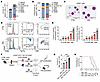 Figure 1
An erythroblast population is markedly expanded in the spleens of AML mice. (A and B) Cell counts (A) and frequencies (B) of CD45− cells, B220+ B cells, CD4+ T cells, CD8+ T cells, Gr1/CD11b+ myeloid cells, F4/80+ macrophages, and other non-AML cell populations in the spleens of control (CTRL) mice and mice with advanced AML (n = 4); advanced AML was defined as the presence of 50%–60% AML cells in PB. (C) Wright-Giemsa staining of CD45− cells from the spleens of CTRL mice and mice with advanced AML. Scale bar: 20 μm. (D) Flow cytometric analysis of CD71 (erythroid precursor marker), Ter119 (erythrocyte marker), and CD44 (differentiation marker) expression in CD45− cells from the spleens of CTRL mice and mice with advanced AML. (E) Cell counts and frequencies of CD45−CD71+Ter119+CD44+ erythroblasts in the spleens of CTRL mice and AML mice at different disease stages (n = 3). (F) A schematic illustrating the experimental design: AML cells were cocultured with CD45−CD71+Ter119+CD44+ erythroblasts isolated from the spleens of CTRL mice or mice with advanced AML, or cultured alone. After culturing, the AML cells were isolated and injected into irradiated (4.5 Gy) mice. (G) Cell counts of AML cells obtained after 6 days of culture alone or coculture (n = 3). (H) Survival analysis of mice i.v. injected with cultured AML cells (n ≥6). Data are presented as the mean ± SEM. The results shown are representative of 1 of 3 independent experiments with consistent trends. *P < 0.05, **P < 0.01, and ***P < 0.001, by 2-tailed, unpaired t test (A and B), 1-way ANOVA (E and G), and log-rank test (H).
To scrutinize the kinetics of erythropoiesis in the spleen, BM, and PB during AML progression, we monitored key indices associated with erythroid lineage alterations. We found that erythropoiesis in the BM was almost completely impaired, as very few erythroblasts were detected at the advanced disease stage (Supplemental Figure 1D). In contrast, both the cell counts and frequencies of erythroblasts gradually increased in the spleen (Figure 1E), likely originating from expanded erythroid progenitors (30) (Supplemental Figure 1, E and F). Based on this observation, we hypothesized that the severe impairment of erythropoiesis in the BM was partially compensated by a stress erythropoiesis response in the spleen, leading to mild anemia in the PB (Supplemental Figure 1G).
Given the substantial expansion of erythroblasts in the spleens of AML mice, we next sought to investigate their functional role. We cocultured AML cells with erythroblasts from either CTRL mice or mice with advanced-stage AML (i.e., with 50%–60% AML cells in PB) (Figure 1F). It turned out that AML cells cocultured with AML erythroblasts (AML Erys) exhibited enhanced proliferative capacity compared with those cocultured with CTRL erythroblasts (CTRL Erys) or cultured alone (Figure 1G and Supplemental Figure 1H). Notably, mice injected with FACS-purified AML cells that had been cocultured with AML Erys exhibited significantly shortened survival (Figure 1H). These results suggest that the accumulation of AML-expanded erythroblasts in the spleen may contribute to AML progression.
To investigate whether this pro-proliferative effect was confined to erythroblasts derived from the spleens of AML mice, we cocultured AML cells with erythroblasts isolated from the spleens of other mouse models known to induce splenic EMH, such as polycythemia vera (PV), erythropoietin-treated (EPO-treated), and phenylhydrazine-treated (PHZ-treated) mice (Supplemental Figure 1I). Interestingly, although splenic EMH occurred across multiple stress erythropoiesis models, only AML splenic erythroblasts uniquely promoted AML progression (Supplemental Figure 1, J–L).
CD81+ Erys are notably enriched in the spleens of AML mice. Prior studies by our group and others have revealed the heterogeneity of erythroblasts (16, 26). To determine whether heterogeneous erythroblast subpopulations exist in the spleens of AML mice and identify which subpopulations mainly contribute to AML progression, we performed single-cell RNA-Seq (scRNA-Seq) on CD45–CD71+TER119+CD44+ erythroblasts (total Erys) isolated from the spleens of CTRL mice and advanced-stage AML mice using the 10x Genomics platform (Figure 2A). After implementing rigorous quality control, we integrated the gene expression profiles of the AML and CTRL datasets and obtained 4 major cell clusters (C1–C4) (Figure 2B and Supplemental Table 1–4). We found that erythroid lineage–specific genes (e.g., Tfrc, Gypa, Hba-a1, Hbb-bt) were highly expressed across all clusters in both AML and CTRL Erys (Supplemental Figure 2A). Gene ontology analysis indicated that upregulated genes in C1 were associated with RNA splicing, RNA processing, and DNA replication (e.g., Ybx1, Ppia, Car1); genes upregulated in C2 and C3 were linked to active cell cycle, cell division, and chromosome segregation (e.g., Stmn1, Pcna, Slbp, Aspm, Hmmr, Ccnb1); and genes enriched in C4 were related to protein ubiquitination, apoptosis, and erythrocyte development (e.g., Xpo7, Lpin2, Bcl2l1) (Figure 2C and Supplemental Figure 2, B and C). Trajectory analysis positioned C1 cells at the onset of the erythroid maturation continuum, which extended through C1 to C4 (Figure 2D). Pairwise cluster comparison between AML Erys and CTRL Erys revealed that AML Erys were less mature than their CTRL counterparts, as evidenced by the lower expression of genes involved in heme metabolism and erythrocyte development in AML Erys, such as Gypa and Alas2 (Supplemental Figure 2, D–F).
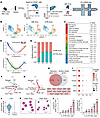 Figure 2
CD81+ Erys are notably enriched in the spleens of AML mice. (A) A schematic illustrating the experimental design: CD45−CD71+TER119+CD44+ erythroblasts (total Erys) from spleens of CTRL mice or mice with advanced AML were sorted by flow cytometry and processed for scRNA-Seq on the 10x Genomics platform. (B) UMAP plot showing the cell cluster distribution for AML Erys and CTRL Erys. (C) Top 5 gene ontology terms and their corresponding P values in the identified clusters. (D) Pseudotime analysis illustrating the differentiation trajectory of C1–C4 (top) and the distribution of each cluster (bottom). (E) Relative proportions of AML Erys (red) and CTRL Erys (blue) in each cluster. (F and G) Directional network plots showing the number of incoming (F) and outgoing (G) interactions for AML C1 Erys and other cells in the AML microenvironment, including AML cells, endothelial cells (ECs), pericytes, Tcf21+ fibroblasts, and Tcf21+ mesenchymal stem cells (MSCs). (H) Venn diagram illustrating the intersection of C1 signature genes and a list of surface marker genes (Supplemental Table 5). The 14 identified genes are listed in the box below the Venn diagram. (I) Expression levels of the top 5 C1 surface marker genes across C1–C4. (J) Expression of Cd81 in C1 versus in C2–C4. (K) Representative Wright-Giemsa staining of the sorted CD81+ Erys and CD81− Erys from the spleens of AML mice. Scale bar: 20 μm. (L) Cell counts and frequencies of CD81+ Erys in the spleens of CTRL mice and mice at different stages of AML (n = 4). Data are presented as the mean ± SEM. The results are representative of 1 of 3 independent experiments with consistent trends. *P < 0.05 and ***P < 0.001, by 1-way ANOVA (L).
We next analyzed the distributions of AML Erys and CTRL Erys across C1–C4. Interestingly, AML Erys constituted approximately 80% of C1, whereas C2–C4 contained roughly equal proportions of AML Erys and CTRL Erys, implying that C1 might represent an AML-expanded erythroblast subset (Figure 2E).
To elucidate the potential activities of AML-expanded C1 Erys, we performed an interaction analysis using scRNA-Seq datasets derived from AML Erys and various other cells in the AML splenic microenvironment. Specifically, we conducted scRNA-Seq analyses on AML cells and CD45−Ter119−CD71− splenic stromal cells isolated from both CTRL mice and advanced AML mice (Supplemental Figure 3A). Unsupervised clustering identified 4 cell populations based on their canonical marker gene expression: endothelial cells (ECs) (Pecam1hi and Cdh5hi, pericytes (Myh11hi and Acta2hi), Tcf21+ fibroblasts (Pdgfrahi and Dcnhi), and Tcf21+ MSCs (Csf1hi and Cxcl12hi) (Supplemental Figure 3B). Subsequent interaction analysis of erythroblasts and the identified cell subpopulations in their corresponding splenic microenvironment revealed that, compared with AML C2–C4 Erys, AML C1 Erys not only received more frequent and stronger signals from microenvironmental cells, but also emitted more active and intense signals. Notably, AML C1 Erys showed active interaction with AML cells (Figure 2, F and G, and Supplemental Figure 3, C–G). These results collectively suggest that AML-expanded C1 Erys play a key role in AML progression by directly interacting with AML cells and remodeling the splenic microenvironment through active, bidirectional interactions with surrounding cells.
To determine the function of AML-expanded C1 Erys, we next intersected the signature genes of C1 with a curated surface marker gene list obtained from The Human Protein Atlas (31) (Supplemental Table 5). Among the 14 identified genes, Cd81 was selected for further analysis (Figure 2, H–J). Flow cytometry analysis indicated amplified CD71+Ter119+CD44+CD81+ erythroblasts (CD81+ Erys) in spleens of AML mice (Supplemental Figure 4, A and B). Analysis of forward scatter (a parameter related to cell size) and the levels of CD71, Ter119, and CD44 — established markers of erythroid maturation (29) — revealed that the majority of CD81+ Erys were at early stages of terminal erythropoiesis, predominantly at the proerythroblast and basophilic erythroblast stages (Supplemental Figure 4, C–F), rather than erythroid progenitor stages (Supplemental Figure 4G). This observation was further supported by correlation analysis comparing the transcriptional profiles of clusters C1–C4 with those of proerythroblast, basophilic erythroblast, polychromatic erythroblast, and orthochromatic erythroblast (29) (Supplemental Figure 4H). In accordance, morphological analysis showed that CD81+ Erys were larger, had a higher nucleus-to-cytoplasm ratio, and exhibited a more basophilic cytoplasm than CD71+Ter119+CD44+CD81− erythroblasts (CD81− Erys) (Figure 2K and Supplemental Figure 4, I and J). Moreover, the cell counts and frequencies of CD81+ Erys increased during AML progression (Figure 2L). Intriguingly, the expansion of CD81+ Erys was more evident in the spleens of AML mice than in those of PV, EPO-treated, and PHZ-treated mouse models (Supplemental Figure 4K). Collectively, our findings identify AML-expanded CD81+ Erys and reveal that their expansion is specific to AML, suggesting that this cell population may be associated with AML progression.
CD81+ Erys promote AML cell proliferation and contribute to disease progression. To determine the roles of CD81+ Erys in AML progression, we conducted in vitro coculture assays. Three erythroblast populations — total Erys, CD81− Erys, and CD81+ Erys — were sorted from the spleens of AML mice and cocultured with highly purified AML cells for 9 days (Figure 3A and Supplemental Figure 5, A and B). AML cells cocultured with CD81+ Erys showed progressively enhanced proliferation on days 3, 6, and 9 (Supplemental Figure 5C). These cocultured AML cells were evaluated in vitro for proliferation and colony formation assays and in vivo for transplantation assays. We found that CD81+ Erys significantly promoted AML cell proliferation, whereas total Erys and CD81− Erys had a moderate and negligible effect, respectively (Figure 3B and Supplemental Figure 5D). This trend was further supported by the colony formation assay (Figure 3C and Supplemental Figure 5E). Remarkably, the AML cells cocultured with CD81+ Erys accelerated AML progression after being injected into recipient mice. On day 18 after transplantation, the AML cells from the CD81+ Erys coculture group infiltrated approximately 50% of the PB cell population, compared with only around 10% in the AML only or CD81− Erys coculture groups (Figure 3D and Supplemental Figure 5F). Consequently, mice receiving AML cells cocultured with CD81+ Erys had a shorter lifespan than those in the other groups (Figure 3E). In summary, our data demonstrate that AML-expanded CD81+ Erys could promote AML cell proliferation and accelerate disease progression.
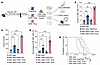 Figure 3
CD81+ Erys promote AML cell proliferation and contribute to disease progression. (A) A schematic illustrating the experimental design: AML cells were cocultured with total Erys, CD81− Erys, or CD81+ Erys isolated from the spleens of mice with advanced AML, or cultured alone, for 9 days. AML cell proliferation in each group was monitored, and cells were then collected for colony formation assays or injection into irradiated (4.5 Gy) mice. (B) Cell counts of AML cells obtained after 9 days of culture alone or coculture (n = 6). (C) Number of colonies formed by cultured AML cells (n = 4). (D and E) AML progression rates determined by the percentage of AML cells in mouse PB (D) and survival analysis (E) of mice i.v. injected with cultured AML cells (n = 8). Data are presented as the mean ± SEM. The results shown are representative of 1 of 3 independent experiments with consistent trends. **P < 0.01 and ***P < 0.001, by 1-way ANOVA (B–D) and log-rank test (E).
CD81+ Erys secrete elevated levels of macrophage migration inhibitory factor. To investigate whether CD81+ Erys regulate AML cell proliferation and disease progression by cytokine secretion, we compared the signature genes of C1, the genes upregulated in CD81+ Erys compared with CD81− Erys, and a secreted protein gene set obtained from The Human Protein Atlas. This analysis yielded 13 potential candidates (31) (Figure 4A and Supplemental Table 6). Macrophage migration inhibitory factor (Mif), which has been reported to boost AML cell growth, was highly expressed in C1 (32) (Figure 4, B and C). Moreover, the cell-cell interaction analysis further indicated Mif mediated the strongest interactions between C1 and AML cells (Figure 4D). In accordance with the scRNA-Seq analysis, the isolated CD81+ Erys from the spleens of AML mice showed higher MIF expression compared with CD81− Erys (Figure 4, E–G). Considering the previously documented roles of MIF in AML progression (32), our findings raise the intriguing possibility that CD81+ Erys might promote AML development through the secretion of MIF.
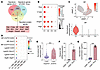 Figure 4
CD81+ Erys secrete elevated levels of MIF. (A) Venn diagram illustrating the intersection of the C1 and CD81+ Erys signature genes with a list of secreted protein genes (Supplemental Table 6). The 13 identified genes are listed in the box below the Venn diagram. (B) Expression distributions of the top 5 secreted protein genes across C1–C4. (C) Expression of Mif across C1–C4. (D) Ligand-receptor pairs illustrating the signals emitted by AML C1–C4 Erys and received by AML cells (P < 0.01). (E) Expression of Mif in Cd81-negative Erys (relative Cd81 expression = 0) and Cd81-positive Erys (relative Cd81 expression >1), with the column representing the average expression level (0.02 vs. 0.23). (F) Relative RNA expression level of Mif in CD81− Erys and CD81+ Erys, analyzed by RT-qPCR (n = 3). (G) Secreted MIF concentration in the culture medium of CD81− Erys and CD81+ Erys, measured by ELISA after 12 hours of culture (n = 4). Data represent the mean ± SEM. Results are representative of 1 of 3 independent experiments with consistent trends. **P < 0.01 and ***P < 0.001, by 2-tailed, unpaired t test (E–G).
MIF plays a central role in mediating the AML-promoting effects of CD81+ Erys. To determine whether MIF mediated the AML-promoting effects of CD81+ Erys, we pretreated CD81+ Erys with the MIF-specific inhibitor 4-iodo-6-phenylpyrimidine (4-IPP), which irreversibly inhibits the biological activity of MIF (33), and cocultured the 4-IPP–pretreated CD81+ Erys with AML cells. The results showed that pretreatment with 4-IPP significantly inhibited the pro-proliferative effects of CD81+ Erys on AML cell proliferation, confirming MIF’s essential role in this process (Figure 5A).
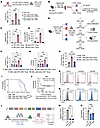 Figure 5
MIF plays a central role in mediating the AML-promoting effects of CD81+ Erys. (A) Illustration of experimental design (top) and cell counts (bottom) of AML cells cocultured with CD81+ Erys pretreated with either 10 μM 4-IPP or DMSO (n = 5). (B–D) Illustration of experimental design (B) for AML mouse model induction, flow cytometric sorting of CD81− Erys and CD81+ Erys from spleens of Miffl/fl (fl/fl) and EpoR-Cre;Miffl/fl (Δ/Δ) mice, and confirmation of Mif depletion by RT-qPCR (n = 3) (C) and ELISA (n = 4) (D). (E) Illustration of experimental design: AML cells were cocultured with fl/fl CD81− Erys, Δ/Δ CD81− Erys, fl/fl CD81+ Erys, or Δ/Δ CD81+ Erys, or cultured alone, for 9 days. AML cell proliferation in each group was monitored; then cells were collected for colony formation assays or injection into irradiated (4.5 Gy) mice. (F) Cell counts of AML cells obtained after 9 days of culture alone or coculture (n = 6). (G) Number of colonies formed by cultured AML cells (n = 4). (H and I) AML progression rates (determined by percentage of AML cells in mouse PB) (H) and survival analysis (I) of mice injected with cultured AML cells (n = 8). (J) Correlation between MIF expression levels and disease outcomes in AML patient cohorts (GSE1159 and GSE6891; cutoff = median; figure generated using Kaplan-Meier Plotter; ref. 73). (K) AML cells were assessed for the expression of CD74, CXCR2, and CXCR4 by flow cytometry. (L–O) Illustration of construction of nontarget control (NT) and Cd74_KO (Cd74_sg1, Cd74_sg2) AML cells, followed by measurement of CD74 expression by RT-qPCR (n = 3) (M) and flow cytometry (N), and assessment of proliferation rates of NT and Cd74_KO AML cells cocultured with or without CD81+ Erys (n = 4) (O). Rates were calculated as the ratio of AML cell counts obtained after coculturing with CD81+ Erys to those obtained after culture alone. Data represent the mean ± SEM. Results are representative of 1 of 3 independent experiments with consistent trends. **P < 0.01 and ***P < 0.001, by 1-way ANOVA (A, C, D, F, G, H, M, O) and log-rank test (I and J).
To further elucidate the functional importance of CD81+ Erys-derived MIF in AML progression, we generated EpoR-Cre;Miffl/fl (Δ/Δ) mice, in which the Mif gene was primarily deleted in the erythroid lineage, as well as in other hematopoietic lineages (Supplemental Figure 6, A and B) (34). Peripheral hemogram parameters, splenic size, and erythroid differentiation (in the BM and spleen) were comparable between Δ/Δ mice and their Miffl/fl (hereafter, fl/fl mice) littermates, suggesting that Mif deletion did not perturb normal erythropoiesis (Supplemental Figure 6, C–K).
After AML induction, total Erys isolated from the spleens of Δ/Δ mice showed significantly reduced MIF levels compared with those from fl/fl mice (Supplemental Figure 6, L–N). Specifically, Mif expression was markedly lower in Δ/Δ CD81+ Erys compared with fl/fl CD81+ Erys (Figure 5, B–D). We then isolated CD81+ Erys and CD81− Erys from the spleens of Δ/Δ and fl/fl mice with advanced AML and cocultured them with AML cells for 9 days (Figure 5E). AML cells cocultured with fl/fl CD81+ Erys exhibited higher proliferative capacity than that of AML cells cocultured with Δ/Δ CD81+ Erys (Figure 5F and Supplemental Figure 6O). Colony formation assays further confirmed the indispensable role of MIF in promoting AML cell proliferation (Figure 5G and Supplemental Figure 6P). Importantly, mice injected with AML cells that were cocultured with Δ/Δ CD81+ Erys exhibited significantly slower AML progression and longer survival compared with those injected with AML cells cocultured with fl/fl CD81+ Erys (Figure 5, H and I, and Supplemental Figure 6Q).
Consistent with our findings, clinical data showed that elevated MIF expression was correlated with poor survival outcomes in patients with AML (Figure 5J). Together, our data reveal that CD81+ Erys in the spleens of AML mice promote AML cell proliferation and disease progression primarily through MIF secretion.
MIF promotes AML cell proliferation through binding to CD74 on AML cells. MIF exerts its biological effects through various receptors, including CD74, CXCR2, and CXCR4. To determine which receptors were implicated in MIF signaling in AML, we assessed their expression on AML cells. We found that CD74 was highly expressed, whereas CXCR2 and CXCR4 levels were negligible (Figure 5K). This finding aligned with the results of cell communication analysis, which suggested that MIF secreted by C1 exerted its effects on AML cells via CD74 (Figure 4D).
To validate the role of MIF/CD74 interaction in AML cell proliferation, we generated Cd74_KO AML cell lines (Figure 5, L–N). Importantly, the coculture effect induced by CD81+ Erys was attenuated in Cd74_KO AML cells compared with the nontarget control (NT) (Figure 5O). Thus, our results suggest that the MIF/CD74 axis mediates the effects of CD81+ Erys on AML cell proliferation.
Coculturing with CD81+ Erys reshapes the metabolic profile of AML cells. To investigate the molecular mechanisms driving AML proliferation in coculture with CD81+ Erys, we performed bulk RNA-Seq on AML cells (purity >99%) cultured alone or cocultured with CD81+ Erys or CD81–Erys (Supplemental Figure 7A).
Using weighted gene coexpression network analysis (WGCNA), we identified 2 gene modules (the blue and yellow modules, identified based on a module-trait correlation greater than 0.85 and a P value less than 0.05, Figure 6A) specifically enriched in AML cells cocultured with CD81+ Erys. Kyoto Encyclopedia of Genes and Genomes (KEGG) analysis revealed these modules were associated with glycolysis/carbon metabolism and steroid biosynthesis/fatty acid metabolism (Figure 6A and Supplemental Tables 7–10), suggesting that CD81+ Erys may drive metabolic disturbances in AML cells through coculture.
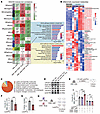 Figure 6
Coculturing with CD81+ Erys reshapes the metabolic profile of AML cells. (A) Module-trait correlations derived from weighted gene coexpression network analysis (WGCNA) of all expressed genes in AML cells that were either cultured alone or cocultured with CD81− Erys or CD81+ Erys and subsequently sequenced. KEGG analysis of genes in the blue and yellow modules was performed to identify the most significantly enriched pathways. The module eigengenes (ME) represent the overall gene expression profile. (B) Identification of metabolites specifically altered in AML cells cocultured with CD81+ Erys. Differential abundance was determined by comparing both CD81+ and CD81− Erys cocultures with AML monoculture. Selection criteria were set at a raw P value less than 0.05 and an FDR less than 0.2 for both comparisons. (C) Classification of differentially expressed metabolites identified in AML cells cocultured with CD81+ Erys using the ClassyFire superclass annotation. (D) Protein expression levels of LPCAT1, LPCAT3, and LPCAT4 in AML cells cultured alone or cocultured with CD81− Erys or CD81+ Erys. β-Actin was used as a loading control. Molecular weights are indicated on the right. (E) A schematic illustrating the experimental design for lysophosphatidylcholine (LysoPC) supplementation in AML monoculture. (F) Cell counts of AML cells obtained after 6 days of culture (n = 4). (G) Number of colonies formed by cultured AML cells (n = 4). (H) A schematic illustrating the experimental design: AML cells were cocultured with CD81− Erys or CD81+ Erys, or cultured alone, for 6 days, with or without LysoPC supplementation. (I) Cell counts of AML cells obtained after 6 days of culture (n = 5). Data are presented as the mean ± SEM. The results shown are representative of 1 of 3 independent experiments with consistent trends. ***P < 0.001, by 2-tailed, unpaired t test (F and G) and 1-way ANOVA (I).
Metabolomic profiling showed that over 75% of the differential metabolites in AML cells cocultured with CD81+ Erys were lipids and lipid-like metabolites. This included elevated phospholipids, such as phosphatidylcholines, and phosphatidylethanolamines, alongside a marked reduction in lysophospholipids, particularly lysophosphatidylcholines (LysoPCs) (Figure 6, B and C). LysoPCs are of particular interest given previous reports that their accumulation can suppress tumor progression (35, 36). Correspondingly, we observed an upregulation in the protein expression of lysophospholipid acyltransferases, including LPCAT1, LPCAT3, and LPCAT4 (Figure 6D), which catalyze the reacylation of lysophospholipids to phospholipids in AML cells cocultured with CD81+ Erys. Since ROS can promote lipid peroxidation and LysoPC generation (37), we quantified intracellular ROS but found no significant differences among AML cells cultured alone or cocultured with CD81+ or CD81– Erys (Supplemental Figure 7B). These results suggest that LysoPC reduction in AML cells cocultured with CD81+ Erys occurs independently of ROS-mediated lipid peroxidation.
To determine the consequence of unbalanced phospholipid metabolism, particularly the role of LysoPCs in AML cells, we investigated the effect of LysoPC supplementation in AML monoculture (Figure 6E). Exogenous supplementation significantly inhibited both the proliferation and colony formation of AML cells (Figure 6, F and G, and Supplemental Figure 7C). Inspired by this observation, we next added LysoPCs to the AML-erythroblast coculture system (Figure 6H) and found that the coculture effect induced by CD81+ Erys was nearly completely abrogated (Figure 6I and Supplemental Figure 7D). This result suggests that metabolic remodeling contributes to the enhanced proliferation of AML cells during coculture with CD81+ Erys.
MIF/CD74/mTORC1/EGLN3 regulatory axis rebalances lipid metabolism in AML cells during coculture. To further explore the molecular mechanisms underlying the dysregulated lipid profile and their coculture effects caused by CD81+ Erys coculture, we intersected the genes upregulated in AML cells under 2 comparison sets: (a) cocultured with CD81+ Erys versus CD81− Erys, (b) cocultured with CD81+ Erys versus cultured alone. This led to the identification of 34 differentially expressed genes (DEGs) (Figure 7A and Supplemental Tables 11 and 12). HALLMARK overrepresentation analysis revealed that these enriched DEGs were implicated in mTORC1 signaling, hypoxia response, and cholesterol homeostasis (Figure 7B). Among them, the mTORC1 signaling pathway was markedly elevated in AML cells cocultured with CD81+ Erys (Supplemental Figure 8A). The proliferation of AML cells was significantly inhibited by supplementation with the mTORC1 inhibitor rapamycin (50 nM) into the coculture system (Supplemental Figure 8B). Therefore, it is likely that CD81+ Erys modulated AML cell proliferation via the MIF/CD74/mTORC1 regulatory axis. This hypothesis was further supported by the observation that mTOR expression was attenuated in AML cells cocultured with Δ/Δ CD81+ Erys, indicating that mTORC1 activation depends on MIF secretion from CD81+ Erys (Supplemental Figure 8C).
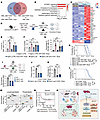 Figure 7
MIF/CD74/mTORC1/EGLN3 regulatory axis rebalances lipid metabolism in AML cells during coculture. (A) Venn diagram illustrates selection of 34 DEGs from AML cells after coculture with CD81+ Erys. DEGs were identified by intersecting those upregulated in AML cells cocultured with CD81+ Erys versus AML cells cocultured with CD81− Erys (AML cells+CD81+ Erys vs. AML cells+CD81− Erys) and compared with AML cells alone (AML cells+CD81+ Erys vs. AML cells); Padj < 0.05. (B) Hallmark overrepresentation analysis of 34 DEGs. (C) Expression of 34 DEGs, including 6 core enrichment genes of mTORC1 signaling pathway (in red). (D) Illustration of experimental design: Egln3_CTRL or Egln3_OE AML cells were cultured alone or cocultured with Δ/Δ CD81+ Erys for 9 days. (E) Cell counts of AML cells obtained after 9 days of culture alone or coculture (n = 3). Egln3_CTRL AML cells cocultured with fl/fl CD81+ Erys were positive control. (F) Number of colonies formed by cultured AML cells (n = 4). (G and H) AML progression rates (determined by percentage of AML cells in mouse PB) (G) and survival analysis (H) of mice injected with cultured AML cells (n = 8). (I) Experimental design for coculturing nontarget control (NT) and Egln3_KO (Egln3_sg1, Egln3_sg2) AML cells with CD81+ Erys (top). Proliferation rates of NT and Egln3_KO AML cells were assessed after 6 days of culture alone or coculture with CD81+ Erys (n = 4) (bottom). Rates were calculated as the ratio of AML cell counts obtained after coculturing with CD81+ Erys to those obtained after culture alone. (J) Number of colonies formed by cultured AML cells (n = 4). (K and L) AML progression rates (determined by percentage of AML cells in mouse PB) (K) and survival analysis (L) of mice injected with cultured AML cells (n = 8). (M) Relative abundance of lysophospholipids and phospholipids in AML cells under different experimental conditions (n = 3). (N) Correlation between EGLN3 expression levels and disease outcomes in AML patient cohorts (GSE1159 and GSE6891; cutoff = median; figure generated using Kaplan-Meier Plotter; ref. 73). (O) Left: Infiltration of AML cells into spleen drives EMH and expansion of CD81+ Erys, fueling disease progression. Right: Molecular mechanism by which MIF, secreted by CD81+ Erys, interacts with CD74 on AML cells, activating mTORC1 pathway and upregulating downstream Egln3. This signaling cascade disrupts the metabolic balance between phospholipids and lysophospholipids, creating a favorable environment that supports AML cell proliferation, survival, and disease progression. Data are shown as the mean ± SEM. Results are representative of 1 of 3 independent experiments with consistent trends. *P < 0.05, **P < 0.01, and ***P < 0.001, by 1-way ANOVA (E–G, I–K, and M) or log-rank test (H, L, N).
To further pinpoint the key gene in AML cells associated with the mTORC1 signaling pathway upon coculture with CD81+ Erys, we identified 34 DEGs and found that Egln3 (Egl-9 family hypoxia inducible factor 3) was the most significantly upregulated gene downstream of the mTORC1 signaling pathway (Figure 7C). The robust upregulation of Egln3 in AML cells from the CD81+ Erys coculture group was confirmed, and this upregulation was dependent on the MIF/CD74/mTORC1 regulatory axis, as evidenced by the failure of both Δ/Δ CD81+ Erys and mTORC1 inhibitor to elevate Egln3 expression (Supplemental Figure 8, D–F).
To validate Egln3 as a downstream effector of MIF, we overexpressed Egln3 (Egln3_OE) in AML cells and cocultured them with Δ/Δ CD81+ Erys for 9 days (Figure 7D and Supplemental Figure 8G). We found that Egln3 overexpression partially restored the proliferative advantage of AML cells when cocultured with Δ/Δ CD81+ Erys (Figure 7E and Supplemental Figure 8H), consistent with the results of colony formation assays (Figure 7F and Supplemental Figure 8I). Additionally, we transplanted the cocultured Egln3_CTRL and Egln3_OE AML cells into sublethally irradiated (4.5 Gy) recipient mice. Mice with Egln3_OE AML cells showed significantly accelerated leukemia progression and shorter survival (Figure 7, G and H, and Supplemental Figure 8J). These findings collectively demonstrate that Egln3 overexpression can compensate for MIF deficiency, supporting its role as a downstream effector in the MIF/CD74/mTORC1 signaling axis.
To further strengthen the functional role of Egln3 in AML proliferation and disease progression, and its potential involvement in metabolic reprogramming, we generated Egln3_KO AML cell lines (Supplemental Figure 8, K and L). We found that Egln3 depletion significantly attenuated the proliferative advantage conferred by CD81+ Erys (Figure 7, I and J, and Supplemental Figure 8M). More importantly, mice injected with CD81+ Erys-cocultured Egln3_KO AML cells exhibited markedly slower disease progression, with fewer PB AML cells (Figure 7K and Supplemental Figure 8N) and longer survival (Figure 7L).
To uncover the underlying mechanisms responsible for the reduced AML cell proliferation, we conducted metabolomic profiling of Egln3_KO AML cells and their corresponding NT AML cells after coculture with CD81+ Erys. The most notable metabolite alterations after Egln3 depletion were the opposing trends of lysophospholipids and phospholipids. We found that Egln3 depletion led to significantly decreased phospholipids, including phosphatidylcholines and phosphatidylethanolamines, and increased lysophospholipids, particularly LysoPCs (Figure 7M and Supplemental Figure 8O). In summary, the metabolomic profile of Egln3_KO AML cells cocultured with CD81+ Erys exhibited an opposite trend compared with that of NT AML cells cocultured with CD81+ Erys, underscoring the critical role of Egln3 in this metabolic adaptation.
In addition, the beneficial effect of low EGLN3 expression was further corroborated by a positive correlation between increased EGLN3 expression and adverse outcomes in patients with AML (Figure 7N). In conclusion, our findings suggest that the impact of CD81+ Erys on AML cells is at least partially mediated by Egln3 (Figure 7O).


Copyright © 2025 American Society for Clinical Investigation
ISSN: 0021-9738 (print), 1558-8238 (online)