
Advertisement
Research ArticleCell biologyGeneticsNeuroscience
Open Access |  10.1172/JCI197583
The cell-type–specific genetic architecture of chronic pain in brain and dorsal root ganglia
Sylvanus Toikumo,1,2 Marc Parisien,3,4,5 Michael J. Leone,6,7 Chaitanya Srinivasan,6 Huasheng Yu,8 Asta Arendt-Tranholm,9 Úrzula Franco-Enzástiga,9 Christoph Hofstetter,10 Michele Curatolo,11 Wenqin Luo,8 Andreas R. Pfenning,6,12 Rebecca P. Seal,13,14,15 Rachel L. Kember,1,2 Theodore J. Price,9 Luda Diatchenko,3,4,5 Stephen G. Waxman,16,17 and Henry R. Kranzler1,2
1Mental Illness Research, Education and Clinical Center, Crescenz VAMC, Philadelphia, Pennsylvania, USA.
2Center for Studies of Addiction, University of Pennsylvania Perelman School of Medicine, Philadelphia, Pennsylvania, USA.
3Alan Edwards Centre for Research on Pain,
4Department of Anesthesia, Faculty of Medicine and Health Sciences, and
5Faculty of Dental Medicine and Oral Health Sciences, McGill University, Montreal, Quebec, Canada.
6Department of Computational Biology, School of Computer Science, Carnegie Mellon University, Pittsburgh, Pennsylvania, USA.
7Medical Scientist Training Program, University of Pittsburgh School of Medicine, Pittsburgh, Pennsylvania, USA.
8Department of Neuroscience, Perelman School of Medicine, University of Pennsylvania, Philadelphia, Pennsylvania, USA.
9Center for Advanced Pain Studies, Department of Neuroscience, University of Texas at Dallas, Richardson, Texas, USA.
10Department of Neurological Surgery, and
11Department of Anesthesiology and Pain Medicine, University of Washington, Seattle, Washington, USA.
12Neuroscience Institute, Carnegie Mellon University, Pittsburgh, Pennsylvania, USA.
13Department of Neurobiology,
14Pittsburgh Center for Pain Research, and
15Department of Otolaryngology, University of Pittsburgh School of Medicine, Pittsburgh, Pennsylvania, USA.
16Veterans Affairs Connecticut Healthcare System, West Haven, Connecticut, USA.
17Department of Neurology, Yale University School of Medicine, New Haven, Connecticut, USA.
Address correspondence to: Sylvanus Toikumo or Henry R. Kranzler, Center for Studies of Addiction, University of Pennsylvania Perelman School of Medicine, 3535 Market Street, Philadelphia, Pennsylvania 19104, USA. Email: sylvanus.toikumo@pennmedicine.upenn.edu (ST); Email: kranzler@pennmedicine.upenn.edu (HRK).
Find articles by Toikumo, S. in: PubMed | Google Scholar
1Mental Illness Research, Education and Clinical Center, Crescenz VAMC, Philadelphia, Pennsylvania, USA.
2Center for Studies of Addiction, University of Pennsylvania Perelman School of Medicine, Philadelphia, Pennsylvania, USA.
3Alan Edwards Centre for Research on Pain,
4Department of Anesthesia, Faculty of Medicine and Health Sciences, and
5Faculty of Dental Medicine and Oral Health Sciences, McGill University, Montreal, Quebec, Canada.
6Department of Computational Biology, School of Computer Science, Carnegie Mellon University, Pittsburgh, Pennsylvania, USA.
7Medical Scientist Training Program, University of Pittsburgh School of Medicine, Pittsburgh, Pennsylvania, USA.
8Department of Neuroscience, Perelman School of Medicine, University of Pennsylvania, Philadelphia, Pennsylvania, USA.
9Center for Advanced Pain Studies, Department of Neuroscience, University of Texas at Dallas, Richardson, Texas, USA.
10Department of Neurological Surgery, and
11Department of Anesthesiology and Pain Medicine, University of Washington, Seattle, Washington, USA.
12Neuroscience Institute, Carnegie Mellon University, Pittsburgh, Pennsylvania, USA.
13Department of Neurobiology,
14Pittsburgh Center for Pain Research, and
15Department of Otolaryngology, University of Pittsburgh School of Medicine, Pittsburgh, Pennsylvania, USA.
16Veterans Affairs Connecticut Healthcare System, West Haven, Connecticut, USA.
17Department of Neurology, Yale University School of Medicine, New Haven, Connecticut, USA.
Address correspondence to: Sylvanus Toikumo or Henry R. Kranzler, Center for Studies of Addiction, University of Pennsylvania Perelman School of Medicine, 3535 Market Street, Philadelphia, Pennsylvania 19104, USA. Email: sylvanus.toikumo@pennmedicine.upenn.edu (ST); Email: kranzler@pennmedicine.upenn.edu (HRK).
Find articles by
Parisien, M.
in:
PubMed
|
Google Scholar
|

1Mental Illness Research, Education and Clinical Center, Crescenz VAMC, Philadelphia, Pennsylvania, USA.
2Center for Studies of Addiction, University of Pennsylvania Perelman School of Medicine, Philadelphia, Pennsylvania, USA.
3Alan Edwards Centre for Research on Pain,
4Department of Anesthesia, Faculty of Medicine and Health Sciences, and
5Faculty of Dental Medicine and Oral Health Sciences, McGill University, Montreal, Quebec, Canada.
6Department of Computational Biology, School of Computer Science, Carnegie Mellon University, Pittsburgh, Pennsylvania, USA.
7Medical Scientist Training Program, University of Pittsburgh School of Medicine, Pittsburgh, Pennsylvania, USA.
8Department of Neuroscience, Perelman School of Medicine, University of Pennsylvania, Philadelphia, Pennsylvania, USA.
9Center for Advanced Pain Studies, Department of Neuroscience, University of Texas at Dallas, Richardson, Texas, USA.
10Department of Neurological Surgery, and
11Department of Anesthesiology and Pain Medicine, University of Washington, Seattle, Washington, USA.
12Neuroscience Institute, Carnegie Mellon University, Pittsburgh, Pennsylvania, USA.
13Department of Neurobiology,
14Pittsburgh Center for Pain Research, and
15Department of Otolaryngology, University of Pittsburgh School of Medicine, Pittsburgh, Pennsylvania, USA.
16Veterans Affairs Connecticut Healthcare System, West Haven, Connecticut, USA.
17Department of Neurology, Yale University School of Medicine, New Haven, Connecticut, USA.
Address correspondence to: Sylvanus Toikumo or Henry R. Kranzler, Center for Studies of Addiction, University of Pennsylvania Perelman School of Medicine, 3535 Market Street, Philadelphia, Pennsylvania 19104, USA. Email: sylvanus.toikumo@pennmedicine.upenn.edu (ST); Email: kranzler@pennmedicine.upenn.edu (HRK).
Find articles by Leone, M. in: PubMed | Google Scholar
1Mental Illness Research, Education and Clinical Center, Crescenz VAMC, Philadelphia, Pennsylvania, USA.
2Center for Studies of Addiction, University of Pennsylvania Perelman School of Medicine, Philadelphia, Pennsylvania, USA.
3Alan Edwards Centre for Research on Pain,
4Department of Anesthesia, Faculty of Medicine and Health Sciences, and
5Faculty of Dental Medicine and Oral Health Sciences, McGill University, Montreal, Quebec, Canada.
6Department of Computational Biology, School of Computer Science, Carnegie Mellon University, Pittsburgh, Pennsylvania, USA.
7Medical Scientist Training Program, University of Pittsburgh School of Medicine, Pittsburgh, Pennsylvania, USA.
8Department of Neuroscience, Perelman School of Medicine, University of Pennsylvania, Philadelphia, Pennsylvania, USA.
9Center for Advanced Pain Studies, Department of Neuroscience, University of Texas at Dallas, Richardson, Texas, USA.
10Department of Neurological Surgery, and
11Department of Anesthesiology and Pain Medicine, University of Washington, Seattle, Washington, USA.
12Neuroscience Institute, Carnegie Mellon University, Pittsburgh, Pennsylvania, USA.
13Department of Neurobiology,
14Pittsburgh Center for Pain Research, and
15Department of Otolaryngology, University of Pittsburgh School of Medicine, Pittsburgh, Pennsylvania, USA.
16Veterans Affairs Connecticut Healthcare System, West Haven, Connecticut, USA.
17Department of Neurology, Yale University School of Medicine, New Haven, Connecticut, USA.
Address correspondence to: Sylvanus Toikumo or Henry R. Kranzler, Center for Studies of Addiction, University of Pennsylvania Perelman School of Medicine, 3535 Market Street, Philadelphia, Pennsylvania 19104, USA. Email: sylvanus.toikumo@pennmedicine.upenn.edu (ST); Email: kranzler@pennmedicine.upenn.edu (HRK).
Find articles by Srinivasan, C. in: PubMed | Google Scholar
1Mental Illness Research, Education and Clinical Center, Crescenz VAMC, Philadelphia, Pennsylvania, USA.
2Center for Studies of Addiction, University of Pennsylvania Perelman School of Medicine, Philadelphia, Pennsylvania, USA.
3Alan Edwards Centre for Research on Pain,
4Department of Anesthesia, Faculty of Medicine and Health Sciences, and
5Faculty of Dental Medicine and Oral Health Sciences, McGill University, Montreal, Quebec, Canada.
6Department of Computational Biology, School of Computer Science, Carnegie Mellon University, Pittsburgh, Pennsylvania, USA.
7Medical Scientist Training Program, University of Pittsburgh School of Medicine, Pittsburgh, Pennsylvania, USA.
8Department of Neuroscience, Perelman School of Medicine, University of Pennsylvania, Philadelphia, Pennsylvania, USA.
9Center for Advanced Pain Studies, Department of Neuroscience, University of Texas at Dallas, Richardson, Texas, USA.
10Department of Neurological Surgery, and
11Department of Anesthesiology and Pain Medicine, University of Washington, Seattle, Washington, USA.
12Neuroscience Institute, Carnegie Mellon University, Pittsburgh, Pennsylvania, USA.
13Department of Neurobiology,
14Pittsburgh Center for Pain Research, and
15Department of Otolaryngology, University of Pittsburgh School of Medicine, Pittsburgh, Pennsylvania, USA.
16Veterans Affairs Connecticut Healthcare System, West Haven, Connecticut, USA.
17Department of Neurology, Yale University School of Medicine, New Haven, Connecticut, USA.
Address correspondence to: Sylvanus Toikumo or Henry R. Kranzler, Center for Studies of Addiction, University of Pennsylvania Perelman School of Medicine, 3535 Market Street, Philadelphia, Pennsylvania 19104, USA. Email: sylvanus.toikumo@pennmedicine.upenn.edu (ST); Email: kranzler@pennmedicine.upenn.edu (HRK).
Find articles by Yu, H. in: PubMed | Google Scholar
1Mental Illness Research, Education and Clinical Center, Crescenz VAMC, Philadelphia, Pennsylvania, USA.
2Center for Studies of Addiction, University of Pennsylvania Perelman School of Medicine, Philadelphia, Pennsylvania, USA.
3Alan Edwards Centre for Research on Pain,
4Department of Anesthesia, Faculty of Medicine and Health Sciences, and
5Faculty of Dental Medicine and Oral Health Sciences, McGill University, Montreal, Quebec, Canada.
6Department of Computational Biology, School of Computer Science, Carnegie Mellon University, Pittsburgh, Pennsylvania, USA.
7Medical Scientist Training Program, University of Pittsburgh School of Medicine, Pittsburgh, Pennsylvania, USA.
8Department of Neuroscience, Perelman School of Medicine, University of Pennsylvania, Philadelphia, Pennsylvania, USA.
9Center for Advanced Pain Studies, Department of Neuroscience, University of Texas at Dallas, Richardson, Texas, USA.
10Department of Neurological Surgery, and
11Department of Anesthesiology and Pain Medicine, University of Washington, Seattle, Washington, USA.
12Neuroscience Institute, Carnegie Mellon University, Pittsburgh, Pennsylvania, USA.
13Department of Neurobiology,
14Pittsburgh Center for Pain Research, and
15Department of Otolaryngology, University of Pittsburgh School of Medicine, Pittsburgh, Pennsylvania, USA.
16Veterans Affairs Connecticut Healthcare System, West Haven, Connecticut, USA.
17Department of Neurology, Yale University School of Medicine, New Haven, Connecticut, USA.
Address correspondence to: Sylvanus Toikumo or Henry R. Kranzler, Center for Studies of Addiction, University of Pennsylvania Perelman School of Medicine, 3535 Market Street, Philadelphia, Pennsylvania 19104, USA. Email: sylvanus.toikumo@pennmedicine.upenn.edu (ST); Email: kranzler@pennmedicine.upenn.edu (HRK).
Find articles by Arendt-Tranholm, A. in: PubMed | Google Scholar
1Mental Illness Research, Education and Clinical Center, Crescenz VAMC, Philadelphia, Pennsylvania, USA.
2Center for Studies of Addiction, University of Pennsylvania Perelman School of Medicine, Philadelphia, Pennsylvania, USA.
3Alan Edwards Centre for Research on Pain,
4Department of Anesthesia, Faculty of Medicine and Health Sciences, and
5Faculty of Dental Medicine and Oral Health Sciences, McGill University, Montreal, Quebec, Canada.
6Department of Computational Biology, School of Computer Science, Carnegie Mellon University, Pittsburgh, Pennsylvania, USA.
7Medical Scientist Training Program, University of Pittsburgh School of Medicine, Pittsburgh, Pennsylvania, USA.
8Department of Neuroscience, Perelman School of Medicine, University of Pennsylvania, Philadelphia, Pennsylvania, USA.
9Center for Advanced Pain Studies, Department of Neuroscience, University of Texas at Dallas, Richardson, Texas, USA.
10Department of Neurological Surgery, and
11Department of Anesthesiology and Pain Medicine, University of Washington, Seattle, Washington, USA.
12Neuroscience Institute, Carnegie Mellon University, Pittsburgh, Pennsylvania, USA.
13Department of Neurobiology,
14Pittsburgh Center for Pain Research, and
15Department of Otolaryngology, University of Pittsburgh School of Medicine, Pittsburgh, Pennsylvania, USA.
16Veterans Affairs Connecticut Healthcare System, West Haven, Connecticut, USA.
17Department of Neurology, Yale University School of Medicine, New Haven, Connecticut, USA.
Address correspondence to: Sylvanus Toikumo or Henry R. Kranzler, Center for Studies of Addiction, University of Pennsylvania Perelman School of Medicine, 3535 Market Street, Philadelphia, Pennsylvania 19104, USA. Email: sylvanus.toikumo@pennmedicine.upenn.edu (ST); Email: kranzler@pennmedicine.upenn.edu (HRK).
Find articles by Franco-Enzástiga, Ú. in: PubMed | Google Scholar
1Mental Illness Research, Education and Clinical Center, Crescenz VAMC, Philadelphia, Pennsylvania, USA.
2Center for Studies of Addiction, University of Pennsylvania Perelman School of Medicine, Philadelphia, Pennsylvania, USA.
3Alan Edwards Centre for Research on Pain,
4Department of Anesthesia, Faculty of Medicine and Health Sciences, and
5Faculty of Dental Medicine and Oral Health Sciences, McGill University, Montreal, Quebec, Canada.
6Department of Computational Biology, School of Computer Science, Carnegie Mellon University, Pittsburgh, Pennsylvania, USA.
7Medical Scientist Training Program, University of Pittsburgh School of Medicine, Pittsburgh, Pennsylvania, USA.
8Department of Neuroscience, Perelman School of Medicine, University of Pennsylvania, Philadelphia, Pennsylvania, USA.
9Center for Advanced Pain Studies, Department of Neuroscience, University of Texas at Dallas, Richardson, Texas, USA.
10Department of Neurological Surgery, and
11Department of Anesthesiology and Pain Medicine, University of Washington, Seattle, Washington, USA.
12Neuroscience Institute, Carnegie Mellon University, Pittsburgh, Pennsylvania, USA.
13Department of Neurobiology,
14Pittsburgh Center for Pain Research, and
15Department of Otolaryngology, University of Pittsburgh School of Medicine, Pittsburgh, Pennsylvania, USA.
16Veterans Affairs Connecticut Healthcare System, West Haven, Connecticut, USA.
17Department of Neurology, Yale University School of Medicine, New Haven, Connecticut, USA.
Address correspondence to: Sylvanus Toikumo or Henry R. Kranzler, Center for Studies of Addiction, University of Pennsylvania Perelman School of Medicine, 3535 Market Street, Philadelphia, Pennsylvania 19104, USA. Email: sylvanus.toikumo@pennmedicine.upenn.edu (ST); Email: kranzler@pennmedicine.upenn.edu (HRK).
Find articles by Hofstetter, C. in: PubMed | Google Scholar
1Mental Illness Research, Education and Clinical Center, Crescenz VAMC, Philadelphia, Pennsylvania, USA.
2Center for Studies of Addiction, University of Pennsylvania Perelman School of Medicine, Philadelphia, Pennsylvania, USA.
3Alan Edwards Centre for Research on Pain,
4Department of Anesthesia, Faculty of Medicine and Health Sciences, and
5Faculty of Dental Medicine and Oral Health Sciences, McGill University, Montreal, Quebec, Canada.
6Department of Computational Biology, School of Computer Science, Carnegie Mellon University, Pittsburgh, Pennsylvania, USA.
7Medical Scientist Training Program, University of Pittsburgh School of Medicine, Pittsburgh, Pennsylvania, USA.
8Department of Neuroscience, Perelman School of Medicine, University of Pennsylvania, Philadelphia, Pennsylvania, USA.
9Center for Advanced Pain Studies, Department of Neuroscience, University of Texas at Dallas, Richardson, Texas, USA.
10Department of Neurological Surgery, and
11Department of Anesthesiology and Pain Medicine, University of Washington, Seattle, Washington, USA.
12Neuroscience Institute, Carnegie Mellon University, Pittsburgh, Pennsylvania, USA.
13Department of Neurobiology,
14Pittsburgh Center for Pain Research, and
15Department of Otolaryngology, University of Pittsburgh School of Medicine, Pittsburgh, Pennsylvania, USA.
16Veterans Affairs Connecticut Healthcare System, West Haven, Connecticut, USA.
17Department of Neurology, Yale University School of Medicine, New Haven, Connecticut, USA.
Address correspondence to: Sylvanus Toikumo or Henry R. Kranzler, Center for Studies of Addiction, University of Pennsylvania Perelman School of Medicine, 3535 Market Street, Philadelphia, Pennsylvania 19104, USA. Email: sylvanus.toikumo@pennmedicine.upenn.edu (ST); Email: kranzler@pennmedicine.upenn.edu (HRK).
Find articles by Curatolo, M. in: PubMed | Google Scholar
1Mental Illness Research, Education and Clinical Center, Crescenz VAMC, Philadelphia, Pennsylvania, USA.
2Center for Studies of Addiction, University of Pennsylvania Perelman School of Medicine, Philadelphia, Pennsylvania, USA.
3Alan Edwards Centre for Research on Pain,
4Department of Anesthesia, Faculty of Medicine and Health Sciences, and
5Faculty of Dental Medicine and Oral Health Sciences, McGill University, Montreal, Quebec, Canada.
6Department of Computational Biology, School of Computer Science, Carnegie Mellon University, Pittsburgh, Pennsylvania, USA.
7Medical Scientist Training Program, University of Pittsburgh School of Medicine, Pittsburgh, Pennsylvania, USA.
8Department of Neuroscience, Perelman School of Medicine, University of Pennsylvania, Philadelphia, Pennsylvania, USA.
9Center for Advanced Pain Studies, Department of Neuroscience, University of Texas at Dallas, Richardson, Texas, USA.
10Department of Neurological Surgery, and
11Department of Anesthesiology and Pain Medicine, University of Washington, Seattle, Washington, USA.
12Neuroscience Institute, Carnegie Mellon University, Pittsburgh, Pennsylvania, USA.
13Department of Neurobiology,
14Pittsburgh Center for Pain Research, and
15Department of Otolaryngology, University of Pittsburgh School of Medicine, Pittsburgh, Pennsylvania, USA.
16Veterans Affairs Connecticut Healthcare System, West Haven, Connecticut, USA.
17Department of Neurology, Yale University School of Medicine, New Haven, Connecticut, USA.
Address correspondence to: Sylvanus Toikumo or Henry R. Kranzler, Center for Studies of Addiction, University of Pennsylvania Perelman School of Medicine, 3535 Market Street, Philadelphia, Pennsylvania 19104, USA. Email: sylvanus.toikumo@pennmedicine.upenn.edu (ST); Email: kranzler@pennmedicine.upenn.edu (HRK).
Find articles by Luo, W. in: PubMed | Google Scholar
1Mental Illness Research, Education and Clinical Center, Crescenz VAMC, Philadelphia, Pennsylvania, USA.
2Center for Studies of Addiction, University of Pennsylvania Perelman School of Medicine, Philadelphia, Pennsylvania, USA.
3Alan Edwards Centre for Research on Pain,
4Department of Anesthesia, Faculty of Medicine and Health Sciences, and
5Faculty of Dental Medicine and Oral Health Sciences, McGill University, Montreal, Quebec, Canada.
6Department of Computational Biology, School of Computer Science, Carnegie Mellon University, Pittsburgh, Pennsylvania, USA.
7Medical Scientist Training Program, University of Pittsburgh School of Medicine, Pittsburgh, Pennsylvania, USA.
8Department of Neuroscience, Perelman School of Medicine, University of Pennsylvania, Philadelphia, Pennsylvania, USA.
9Center for Advanced Pain Studies, Department of Neuroscience, University of Texas at Dallas, Richardson, Texas, USA.
10Department of Neurological Surgery, and
11Department of Anesthesiology and Pain Medicine, University of Washington, Seattle, Washington, USA.
12Neuroscience Institute, Carnegie Mellon University, Pittsburgh, Pennsylvania, USA.
13Department of Neurobiology,
14Pittsburgh Center for Pain Research, and
15Department of Otolaryngology, University of Pittsburgh School of Medicine, Pittsburgh, Pennsylvania, USA.
16Veterans Affairs Connecticut Healthcare System, West Haven, Connecticut, USA.
17Department of Neurology, Yale University School of Medicine, New Haven, Connecticut, USA.
Address correspondence to: Sylvanus Toikumo or Henry R. Kranzler, Center for Studies of Addiction, University of Pennsylvania Perelman School of Medicine, 3535 Market Street, Philadelphia, Pennsylvania 19104, USA. Email: sylvanus.toikumo@pennmedicine.upenn.edu (ST); Email: kranzler@pennmedicine.upenn.edu (HRK).
Find articles by Pfenning, A. in: PubMed | Google Scholar
1Mental Illness Research, Education and Clinical Center, Crescenz VAMC, Philadelphia, Pennsylvania, USA.
2Center for Studies of Addiction, University of Pennsylvania Perelman School of Medicine, Philadelphia, Pennsylvania, USA.
3Alan Edwards Centre for Research on Pain,
4Department of Anesthesia, Faculty of Medicine and Health Sciences, and
5Faculty of Dental Medicine and Oral Health Sciences, McGill University, Montreal, Quebec, Canada.
6Department of Computational Biology, School of Computer Science, Carnegie Mellon University, Pittsburgh, Pennsylvania, USA.
7Medical Scientist Training Program, University of Pittsburgh School of Medicine, Pittsburgh, Pennsylvania, USA.
8Department of Neuroscience, Perelman School of Medicine, University of Pennsylvania, Philadelphia, Pennsylvania, USA.
9Center for Advanced Pain Studies, Department of Neuroscience, University of Texas at Dallas, Richardson, Texas, USA.
10Department of Neurological Surgery, and
11Department of Anesthesiology and Pain Medicine, University of Washington, Seattle, Washington, USA.
12Neuroscience Institute, Carnegie Mellon University, Pittsburgh, Pennsylvania, USA.
13Department of Neurobiology,
14Pittsburgh Center for Pain Research, and
15Department of Otolaryngology, University of Pittsburgh School of Medicine, Pittsburgh, Pennsylvania, USA.
16Veterans Affairs Connecticut Healthcare System, West Haven, Connecticut, USA.
17Department of Neurology, Yale University School of Medicine, New Haven, Connecticut, USA.
Address correspondence to: Sylvanus Toikumo or Henry R. Kranzler, Center for Studies of Addiction, University of Pennsylvania Perelman School of Medicine, 3535 Market Street, Philadelphia, Pennsylvania 19104, USA. Email: sylvanus.toikumo@pennmedicine.upenn.edu (ST); Email: kranzler@pennmedicine.upenn.edu (HRK).
Find articles by Seal, R. in: PubMed | Google Scholar
1Mental Illness Research, Education and Clinical Center, Crescenz VAMC, Philadelphia, Pennsylvania, USA.
2Center for Studies of Addiction, University of Pennsylvania Perelman School of Medicine, Philadelphia, Pennsylvania, USA.
3Alan Edwards Centre for Research on Pain,
4Department of Anesthesia, Faculty of Medicine and Health Sciences, and
5Faculty of Dental Medicine and Oral Health Sciences, McGill University, Montreal, Quebec, Canada.
6Department of Computational Biology, School of Computer Science, Carnegie Mellon University, Pittsburgh, Pennsylvania, USA.
7Medical Scientist Training Program, University of Pittsburgh School of Medicine, Pittsburgh, Pennsylvania, USA.
8Department of Neuroscience, Perelman School of Medicine, University of Pennsylvania, Philadelphia, Pennsylvania, USA.
9Center for Advanced Pain Studies, Department of Neuroscience, University of Texas at Dallas, Richardson, Texas, USA.
10Department of Neurological Surgery, and
11Department of Anesthesiology and Pain Medicine, University of Washington, Seattle, Washington, USA.
12Neuroscience Institute, Carnegie Mellon University, Pittsburgh, Pennsylvania, USA.
13Department of Neurobiology,
14Pittsburgh Center for Pain Research, and
15Department of Otolaryngology, University of Pittsburgh School of Medicine, Pittsburgh, Pennsylvania, USA.
16Veterans Affairs Connecticut Healthcare System, West Haven, Connecticut, USA.
17Department of Neurology, Yale University School of Medicine, New Haven, Connecticut, USA.
Address correspondence to: Sylvanus Toikumo or Henry R. Kranzler, Center for Studies of Addiction, University of Pennsylvania Perelman School of Medicine, 3535 Market Street, Philadelphia, Pennsylvania 19104, USA. Email: sylvanus.toikumo@pennmedicine.upenn.edu (ST); Email: kranzler@pennmedicine.upenn.edu (HRK).
Find articles by
Kember, R.
in:
PubMed
|
Google Scholar
|
1Mental Illness Research, Education and Clinical Center, Crescenz VAMC, Philadelphia, Pennsylvania, USA.
2Center for Studies of Addiction, University of Pennsylvania Perelman School of Medicine, Philadelphia, Pennsylvania, USA.
3Alan Edwards Centre for Research on Pain,
4Department of Anesthesia, Faculty of Medicine and Health Sciences, and
5Faculty of Dental Medicine and Oral Health Sciences, McGill University, Montreal, Quebec, Canada.
6Department of Computational Biology, School of Computer Science, Carnegie Mellon University, Pittsburgh, Pennsylvania, USA.
7Medical Scientist Training Program, University of Pittsburgh School of Medicine, Pittsburgh, Pennsylvania, USA.
8Department of Neuroscience, Perelman School of Medicine, University of Pennsylvania, Philadelphia, Pennsylvania, USA.
9Center for Advanced Pain Studies, Department of Neuroscience, University of Texas at Dallas, Richardson, Texas, USA.
10Department of Neurological Surgery, and
11Department of Anesthesiology and Pain Medicine, University of Washington, Seattle, Washington, USA.
12Neuroscience Institute, Carnegie Mellon University, Pittsburgh, Pennsylvania, USA.
13Department of Neurobiology,
14Pittsburgh Center for Pain Research, and
15Department of Otolaryngology, University of Pittsburgh School of Medicine, Pittsburgh, Pennsylvania, USA.
16Veterans Affairs Connecticut Healthcare System, West Haven, Connecticut, USA.
17Department of Neurology, Yale University School of Medicine, New Haven, Connecticut, USA.
Address correspondence to: Sylvanus Toikumo or Henry R. Kranzler, Center for Studies of Addiction, University of Pennsylvania Perelman School of Medicine, 3535 Market Street, Philadelphia, Pennsylvania 19104, USA. Email: sylvanus.toikumo@pennmedicine.upenn.edu (ST); Email: kranzler@pennmedicine.upenn.edu (HRK).
Find articles by
Price, T.
in:
PubMed
|
Google Scholar
|
1Mental Illness Research, Education and Clinical Center, Crescenz VAMC, Philadelphia, Pennsylvania, USA.
2Center for Studies of Addiction, University of Pennsylvania Perelman School of Medicine, Philadelphia, Pennsylvania, USA.
3Alan Edwards Centre for Research on Pain,
4Department of Anesthesia, Faculty of Medicine and Health Sciences, and
5Faculty of Dental Medicine and Oral Health Sciences, McGill University, Montreal, Quebec, Canada.
6Department of Computational Biology, School of Computer Science, Carnegie Mellon University, Pittsburgh, Pennsylvania, USA.
7Medical Scientist Training Program, University of Pittsburgh School of Medicine, Pittsburgh, Pennsylvania, USA.
8Department of Neuroscience, Perelman School of Medicine, University of Pennsylvania, Philadelphia, Pennsylvania, USA.
9Center for Advanced Pain Studies, Department of Neuroscience, University of Texas at Dallas, Richardson, Texas, USA.
10Department of Neurological Surgery, and
11Department of Anesthesiology and Pain Medicine, University of Washington, Seattle, Washington, USA.
12Neuroscience Institute, Carnegie Mellon University, Pittsburgh, Pennsylvania, USA.
13Department of Neurobiology,
14Pittsburgh Center for Pain Research, and
15Department of Otolaryngology, University of Pittsburgh School of Medicine, Pittsburgh, Pennsylvania, USA.
16Veterans Affairs Connecticut Healthcare System, West Haven, Connecticut, USA.
17Department of Neurology, Yale University School of Medicine, New Haven, Connecticut, USA.
Address correspondence to: Sylvanus Toikumo or Henry R. Kranzler, Center for Studies of Addiction, University of Pennsylvania Perelman School of Medicine, 3535 Market Street, Philadelphia, Pennsylvania 19104, USA. Email: sylvanus.toikumo@pennmedicine.upenn.edu (ST); Email: kranzler@pennmedicine.upenn.edu (HRK).
Find articles by
Diatchenko, L.
in:
PubMed
|
Google Scholar
|
1Mental Illness Research, Education and Clinical Center, Crescenz VAMC, Philadelphia, Pennsylvania, USA.
2Center for Studies of Addiction, University of Pennsylvania Perelman School of Medicine, Philadelphia, Pennsylvania, USA.
3Alan Edwards Centre for Research on Pain,
4Department of Anesthesia, Faculty of Medicine and Health Sciences, and
5Faculty of Dental Medicine and Oral Health Sciences, McGill University, Montreal, Quebec, Canada.
6Department of Computational Biology, School of Computer Science, Carnegie Mellon University, Pittsburgh, Pennsylvania, USA.
7Medical Scientist Training Program, University of Pittsburgh School of Medicine, Pittsburgh, Pennsylvania, USA.
8Department of Neuroscience, Perelman School of Medicine, University of Pennsylvania, Philadelphia, Pennsylvania, USA.
9Center for Advanced Pain Studies, Department of Neuroscience, University of Texas at Dallas, Richardson, Texas, USA.
10Department of Neurological Surgery, and
11Department of Anesthesiology and Pain Medicine, University of Washington, Seattle, Washington, USA.
12Neuroscience Institute, Carnegie Mellon University, Pittsburgh, Pennsylvania, USA.
13Department of Neurobiology,
14Pittsburgh Center for Pain Research, and
15Department of Otolaryngology, University of Pittsburgh School of Medicine, Pittsburgh, Pennsylvania, USA.
16Veterans Affairs Connecticut Healthcare System, West Haven, Connecticut, USA.
17Department of Neurology, Yale University School of Medicine, New Haven, Connecticut, USA.
Address correspondence to: Sylvanus Toikumo or Henry R. Kranzler, Center for Studies of Addiction, University of Pennsylvania Perelman School of Medicine, 3535 Market Street, Philadelphia, Pennsylvania 19104, USA. Email: sylvanus.toikumo@pennmedicine.upenn.edu (ST); Email: kranzler@pennmedicine.upenn.edu (HRK).
Find articles by
Waxman, S.
in:
PubMed
|
Google Scholar
|
1Mental Illness Research, Education and Clinical Center, Crescenz VAMC, Philadelphia, Pennsylvania, USA.
2Center for Studies of Addiction, University of Pennsylvania Perelman School of Medicine, Philadelphia, Pennsylvania, USA.
3Alan Edwards Centre for Research on Pain,
4Department of Anesthesia, Faculty of Medicine and Health Sciences, and
5Faculty of Dental Medicine and Oral Health Sciences, McGill University, Montreal, Quebec, Canada.
6Department of Computational Biology, School of Computer Science, Carnegie Mellon University, Pittsburgh, Pennsylvania, USA.
7Medical Scientist Training Program, University of Pittsburgh School of Medicine, Pittsburgh, Pennsylvania, USA.
8Department of Neuroscience, Perelman School of Medicine, University of Pennsylvania, Philadelphia, Pennsylvania, USA.
9Center for Advanced Pain Studies, Department of Neuroscience, University of Texas at Dallas, Richardson, Texas, USA.
10Department of Neurological Surgery, and
11Department of Anesthesiology and Pain Medicine, University of Washington, Seattle, Washington, USA.
12Neuroscience Institute, Carnegie Mellon University, Pittsburgh, Pennsylvania, USA.
13Department of Neurobiology,
14Pittsburgh Center for Pain Research, and
15Department of Otolaryngology, University of Pittsburgh School of Medicine, Pittsburgh, Pennsylvania, USA.
16Veterans Affairs Connecticut Healthcare System, West Haven, Connecticut, USA.
17Department of Neurology, Yale University School of Medicine, New Haven, Connecticut, USA.
Address correspondence to: Sylvanus Toikumo or Henry R. Kranzler, Center for Studies of Addiction, University of Pennsylvania Perelman School of Medicine, 3535 Market Street, Philadelphia, Pennsylvania 19104, USA. Email: sylvanus.toikumo@pennmedicine.upenn.edu (ST); Email: kranzler@pennmedicine.upenn.edu (HRK).
Find articles by Kranzler, H. in: PubMed | Google Scholar
Published October 7, 2025 - More info
J Clin Invest. 2025;135(24):e197583. https://doi.org/10.1172/JCI197583.
© 2025 Toikumo et al. This work is licensed under the Creative Commons Attribution 4.0 International License. To view a copy of this license, visit http://creativecommons.org/licenses/by/4.0/.
Received: July 7, 2025; Accepted: September 30, 2025

Related article:
Abstract
Chronic pain etiology involves a shared genetic profile, but its cellular context is poorly defined. In a study published in this issue of the JCI, Toikumo et al. integrated a chronic pain GWAS meta-analysis (n >1.2 million) with single-cell omics data from human brain and dorsal root ganglia. Genetic risk was predominantly enriched in central glutamatergic neurons, particularly those in the prefrontal cortex, hippocampus, and amygdala. In the periphery, the C-fiber nociceptor subtype hPEP.TRPV1/A1.2 was highlighted. Implicated genes converged on involvement in synaptic function and neuron projection development. This work identifies specific central and peripheral cell types that define the genetic architecture of chronic pain, providing a foundation for targeted translational research.
Authors
Erick J. Rodríguez-Palma, Rajesh Khanna

-
Introduction
Chronic pain is both a symptom and a primary disease. It affects approximately 20% of the global population and is associated with psychiatric and physical comorbidities (1), contributing to high rates of morbidity and mortality (2). Despite its substantial and growing impact on public health (3), most currently available treatments for chronic pain are nonspecific, of limited efficacy, and associated with substantial adverse effects, including addiction (4–6). A deeper understanding of pain biology is crucial for the development of novel, targeted, safe, and effective treatments (7).
Integration of genomic data into drug development pipelines can yield drug approval rates that are 2.6 times those that lack such information (8) and could expedite the prioritization of new targets for chronic pain. Despite their diverse phenotypic manifestations, pain conditions exhibit high genetic overlap (9), a common genetic risk profile (10, 11), and similar associated alterations of the CNS (12, 13). GWAS have revealed hundreds of genetic risk loci for chronic pain, which account for a substantial fraction of the trait’s heritability (14–16). Previous GWAS of pain have shown that genetic loci located near genes expressed in the brain display enriched heritability (14, 17, 18), and more so for chronic pain than acute pain (19). However, despite the availability of transcriptomics data from various isolated brain regions, the cellular diversity of these regions remains unexplored.
Chronic pain can be caused and maintained by alterations in various components of the pain pathway, including dorsal root ganglia (DRG), the spinal cord dorsal horn (20, 21), and supraspinal brain centers (12, 13), with neuronal architecture organized into complex, hierarchically structured clusters of distinct cell types (22, 23). We recently showed that genetic variation that influences pain intensity is enriched in GABAergic neurons in the mid-brain (16) and identified a role for mouse dorsal horn neuron subtype–specific open chromatin in multisite chronic pain (24). While these findings relate to individual pain phenotypes with substantial genetic overlap (16), the shared downstream biological effects of the implicated genes on the complex cellular structure of the brain and dorsal horn are unidentified.
We recently performed a large GWAS meta-analysis of chronic pain phenotypes (n = 1,235,695) that implicated 343 genomic loci and revealed pleiotropic associations with psychiatric disorders, immune traits, and brain structures (25). Although this study revealed key genetic risk factors for chronic pain, the specific cell types that define the genetic associations underlying the cellular and circuit-based mechanisms (26, 27) — key to therapeutic targeting (28, 29) — are yet to be determined.
Here, we integrate multiple layers of single-cell omics from the brain, dorsal horn, and DRG with our GWAS meta-analysis of chronic pain to identify cell types and pathways relevant to the trait (Figure 1). This effort, made possible with datasets from 2 recent studies, advances our understanding of the physiological relevance of genomic associations for chronic pain. The first of these studies analyzed a comprehensive human brain transcriptomics dataset, using single-nucleus RNA-Seq (snRNA-Seq) of 3.369 million nuclei from 106 anatomical dissections across 10 brain regions (30). The second study was of the neural basis of human somatosensation that used single-soma RNA-Seq data from human DRG (hDRG) neurons (31).
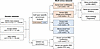 Figure 1
Study overview. Using S-LDSC, we first identified cell types enriched for chronic pain SNP heritability across single-nucleus transcriptomics data from human brain and hDRG, as well as chromatin accessibility data from human brain and mouse dorsal horn. To test the robustness of cell-type enrichment results in transcriptomic human brain and hDRG transcriptomics data, we used MAGMA, followed by gene prioritization and ontology analysis. Multi-omics datasets included in both S-LDSC and MAGMA analyses are shown in pink, while those included only in MAGMA are shown in blue. Finally, genetic loci from the pain meta-analysis were tested for enrichment in DEGs (snRNA-Seq) and sex-stratified GWAS for genes linked to differential chromatin accessibility (spatial ATAC-Seq) from hDRG datasets.
-
Results
Cell-type identification using S-LDSC. The brain’s cellular diversity has a hierarchical structure, with a foundational classification into broad categories (excitatory neurons, inhibitory neurons, neuromodulatory neurons and non-neuronal cells) that extends to more intricate superclusters of cells subdivided into clusters and subclusters or cell types (Figure 2) (22, 32). Applying stratified linkage disequilibrium score (S-LDSC) regression (33), we used this classification to assess chronic pain SNP heritability in 461 neuronal cell clusters generated from the extensive brain snRNA-Seq data (30). The 461 cell clusters were further organized into the broad neuronal types of GABAergic (inhibitory, n = 131) and glutamatergic (excitatory, n = 209) subtypes, of which 15 (~11.5%) and 76 (~36.4%), respectively, were significantly associated with chronic pain at the FDR 5% level (Supplemental Table 1; supplemental material available online with this article; https://doi.org/10.1172/JCI197583DS1).
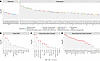 Figure 2
Cell-type enrichments for chronic pain. Cell-type numbers are denoted on the x axis, and statistical significance is shown on the y axis [–log10(P)]. (A) The significantly enriched cell types for chronic pain (n = 91, FDR P < 0.05) among 461 human brain cell clusters. Each cell type is colored according to its supercluster, and cell types are grouped into GABAergic (n = 15) or glutamatergic (n = 76) on the basis of their neurotransmitter annotation. See Supplemental Table 1 for full results. (B) Human single-soma DRG cell-type enrichment. (C) Human brain open chromatin cell-type enrichment. (D) Mouse dorsal horn open chromatin enrichment. Cell-type enrichments denoted by red in B–D are significantly enriched for chronic pain (FDR-corrected P < 0.05).
Hypergeometric tests of neurotransmitter annotations for the associated cell types revealed significant enrichment of glutamatergic — but not GABAergic — neurons in chronic pain heritability within the brain (glutamatergic P < 9 × 10–18; GABAergic P = 0.9). The enriched glutamatergic neurons include 25 intratelencephalic clusters and 11 deep layers from the prefrontal cortex; 11 amygdalar excitatory neuronal cell types; 7 hippocampal neuronal types annotated to subfield CA1-3; three cortex-wide annotations to deep-layer 6b; and 2 “splatter” neuronal types, among others (Figure 2A and Supplemental Table 1). These enriched cell types were significantly overrepresented in the prefrontal cortex (P < 4 × 10–24), amygdala (P < 2 × 10⁻⁴), and hippocampus (P < 0.01).
The entire body is innervated by DRG neurons, which serve as the primary origin of the pain pathway (34). Thus, we explored peripheral neuronal cell types for chronic pain using single-soma hDRG data (31). Of the 16 hDRG cell types analyzed, 3 (hAδ.LTMR, hPEP.TRPV1/A1.2, and hPEP.PIEZOh) showed significant enrichment for chronic pain SNP heritability (FDR P < 0.05, Figure 2B and Supplemental Table 2).
Whereas studies support the enrichment of pain risk loci for mouse gene sets related to excitatory and inhibitory cellular pathways (35), we examined whether the SNP heritability of human chronic pain shows similar cell-type enrichment. To do so, we used S-LDSC (33) to partition the heritability of the chronic pain loci in putative cis-regulatory elements (CREs) from mouse dorsal horn neurons and glial cell types (24) and human brain neurons and glial cell types (36) (see Methods). We found significant enrichment for pain among brain neurons aggregated across subtypes of excitatory (hippocampal and isocortical) and inhibitory (striatal and isocortical) neurons (Figure 2C and Supplemental Table 3). Of the brain glial cell types, the putative CREs of astrocytes that are found across the neocortex, hippocampus, striatum, and substantia nigra were significantly enriched in chronic pain-associated genetic variation (Figure 2C). Consistent with prior evidence (24), we observed a broad enrichment of chronic pain variants across open chromatin of mouse spinal cord midventral neurons, inhibitory and excitatory neurons, and oligodendrocyte precursor cells (OPCs) (Figure 2D and Supplemental Table 4).
Cell-type identification using MAGMA. We used multi-marker analysis of genomic annotation (MAGMA) (37) to determine cell-type–specific enrichment of chronic pain gene-level associations. As expected, chronic pain variants mapped to the nearest gene were enriched largely in the brain (Figure 3A) and in neural subregions that process pain information (38, 39), such as the parietal, posterior insular, entorhinal, and medial frontal cortices, and the temporal gyrus (Figure 3, B and C, and Supplemental Table 5). We also observed robust enrichment in excitatory and inhibitory neurons, astrocytes, OPCs, and microglia (Figure 3D and Supplemental Table 6). Although immune cell types, including plasmacytoid DCs, naive B cells, and immune progenitor cells, were nominally enriched for chronic pain (P < 0.05), none survived multiple test correction (Supplemental Table 6).
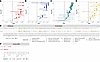 Figure 3
Comparison of MAGMA and S-LDSC cell-type enrichment analysis. (A–D) MAGMA-based gene enrichment results. Significant heritability enrichments (FDR P < 0.05) are uniquely colored for each tissue- and cell-level analysis. Tissue-based enrichment analysis used data from (A) CONSENSUS, (B) FANTOM, and (C) the Human Protein Atlas. (D) Cell-level enrichment analysis using RNA-Seq data from the Human Protein Atlas. (E) Combined MAGMA and S-LDSC results of significantly enriched cell types for chronic pain (101 unique cell types: 91 in S-LDSC versus 47 in MAGMA; FDR P < 0.05) among 461 brain cell clusters. Each cell type is colored according to its supercluster, and cell types are grouped into GABAergic (n = 15) and glutamatergic (n = 86) on the basis of their neurotransmitter annotation. Cell types that are significantly associated are marked by a black dot centered within each colored circle. In total, 37 cell types overlap across both methods. See Supplemental Tables 1 and 7 for full results. (F) Human single-soma DRG cell-type enrichment. Cell-type enrichments denoted by red in F are significantly enriched for chronic pain (FDR P < 0.05). In total, 1 cell type overlaps across both methods. See Supplemental Tables 2 and 8 for full results.
Consistent with the S-LDSC analysis, we also investigated the enrichment for chronic pain in 461 cell-type clusters from the brain snRNA-Seq data (30) and 16 cell types from single-soma RNA-Seq hDRG data (31). Among the 461 brain cell-type clusters, only glutamatergic cell types (47 of 109; 22.5%) were significantly associated with chronic pain (FDR P < 0.05), all of which showed strong enrichment (hypergeometric P < 9 × 10–18) (Figure 3E and Supplemental Table 7). The cell types with the most enrichments (n = 29) were predominantly intratelencephalic neurons from the prefrontal cortex (P < 3.8 × 10⁻²). Other significant cell types were excitatory, including 7 cortex-wide annotations to deep-layer 6b (P < 3.5 × 10⁻²); eight amygdalar neuronal cell types (P < 3.3 × 10⁻²); two hippocampal neuronal cell types (annotated to subfields CA1-3, P = 3.2 × 10⁻² and CA4, P = 2.2 × 10⁻²); and one thalamic excitatory neuronal cell type (P = 9.5 × 10⁻³) (Figure 3E and Supplemental Table 7). Of the 16 hDRG cell types analyzed, we observed enrichment for hPEP.TRPV1/A1.2, hNP1, and hTRPM8 (Figure 3F and Supplemental Table 8).
Following prior studies (40), we required that both our primary analytic method (S-LDSC) and the MAGMA gene property analysis provide strong evidence linking chronic pain genome-wide associations to specific cell types in the brain and hDRG. These methods rely on different assumptions and modeling approaches: S-LDSC is SNP based and evaluates GWAS heritability enrichment in the most cell-type–specific genes (33), whereas MAGMA uses proximity-based SNP-to-gene mapping and tests whether gene-level associations increase linearly with cell-type–specific expression (41). To reduce false-positives, we required both methods — each accounting differently for confounders such as gene size and linkage disequilibrium — to yield consistent results after multiple testing correction. Using this approach, we found that glutamatergic neurons — across 37 cell-type clusters — were enriched in chronic pain, primarily in cortical interneurons, the hippocampus, and the amygdala (Figure 3E). In the hDRG, both methods identified enrichment of the C-fiber thermoreceptor and nociceptor subtype hPEP.TRPV1/A1.2 (31) (Figure 3F).
Contrasting cell-type enrichment for pain-related conditions. To test for the presence of cellular heterogeneity across pain conditions, we used S-LDSC to link brain and hDRG data with GWAS of other pain-related phenotypes, including knee pain, neck/shoulder pain, joint pain, low back pain, and migraine (Figure 4).
 Figure 4
Cross-trait S-LDSC cell-type enrichment analysis. (A) Significantly enriched cell types across traits (chronic pain, n = 91; neck/shoulder pain, n = 5; knee pain, n = 1; FDR P < 0.05) among 461 brain cell clusters. Each cell type is colored according to its supercluster, and cell types are grouped into GABAergic (n = 15) and glutamatergic (n = 77) on the basis of their neurotransmitter annotation. Cell types that are significantly associated are marked by a black dot centered within each colored circle. In total, 4 significant brain cell clusters (DLIT_136, Amex_171, Amex_172, and Amex_172) overlap across traits. (B) Human single-soma DRG cell-type enrichment. Cell-type enrichments denoted by red in B are significantly enriched for chronic pain (FDR P < 0.05). All 3 significantly enriched hDRG cell types overlap in at least 2 traits. See Supplemental Tables 9 and 10 for full results.
The significantly enriched brain cell type for knee pain was an intratelencephalic glutamatergic neuron (DLIT_136, P = 4.3 × 10⁻²), consistent with previous findings of cortical glutamatergic neuronal activity in knee pain (42). For neck/shoulder pain, 5 cell types showed significant enrichment, largely in amygdalar excitatory neuronal cell types (e.g., Amex_171, P = 3.1 × 10⁻², Amex_172, P = 3.1 × 10⁻², and Amex_173, P = 3.1 × 10⁻²). This finding is consistent with evidence that links amygdalar hyperactivity with neck/shoulder pain (28, 43). Most (5 of 6) cell types were also significantly enriched in the chronic pain meta-GWAS results, highlighting a potential cross-trait pleiotropic cellular etiology (Figure 4A and Supplemental Table 9). No cell types for joint pain, low back pain, or migraine survived multiple testing corrections (Supplemental Table 9).
In the hDRG, hPEP.TRPV1/A1.2 was significantly enriched for neck/shoulder pain (P = 2.5 × 10⁻³), consistent with the role of C-fiber thermoreceptors and nociceptors in pain sensation (31). Joint pain was enriched for hPEP.PIEZOh (P = 4.3 × 10⁻²), suggesting a role for neurons that express high levels of PIEZO2 (31, 44). The significantly enriched hDRG cell type for knee pain was hAδ.LTMR (P = 4.6 × 10⁻²), highlighting its potential role in tactile sensation and pain modulation in the context of knee pain (45). Notably, all 3 cell types that showed significant enrichment across these traits were also enriched in S-LDSC results for the chronic pain meta-GWAS (Figure 4B). At a FDR of P of less than 0.05, no hDRG cell types were significantly enriched for low back pain or migraine (Figure 4B and Supplemental Table 10), which is expected for migraine, since this is a disorder of the trigeminal ganglia (TG) system, and there are important differences between the DRG and the TG (46, 47).
Cell-type enrichment for chronic pain in males and females. Sex differences could play a role in pain neurobiology (48, 49). There is emerging evidence of sex-specific enrichment of pain GWAS loci/genes in the human brain (18) and DRG (49, 50) and in mouse DRG (51). However, the cell-type–specific context needed to clarify these enrichment patterns in the human brain and hDRG are yet to be determined. We thus partitioned the heritability of sex-stratified pain GWAS loci (25) in the brain and hDRG. In male individuals, we identified significant SNP heritability signals for chronic pain in 10 GABAergic and 65 glutamatergic (VGLUT1, VGLUT2, and VGLUT3) brain neuronal cell types. Looking at the broad neuronal types, glutamatergic — but not GABAergic — neurons were significantly enriched for chronic pain (hypergeometric P < 6 × 10–17). Among females, only the intratelencephalic glutamatergic cell cluster (DLIT_136, P = 1.1 × 10⁻²) was significantly associated with chronic pain SNP heritability (Supplemental Figure 1A and Supplemental Table 11).
In the hDRG, hPEP.PIEZOh, hNP1, and hTRPM8 were nominally significant (P < 0.05) cell types among females, and hPEP.TRPV1/A1.2, hAδ.LTMR, and hTRPM8 were nominally significant among males, though none of these cell types was significantly enriched after correction for multiple testing (Supplemental Figure 1B and Supplemental Table 12).
Prioritizing heritable genes for chronic pain in the brain and DRG cell types. We extended our investigation using LDAK-GBAT (52), fast gene set enrichment analysis (fGSEA) (53), and ToppGene (54) analyses to understand the biological mechanisms of chronic pain cell-type enrichments. These analyses enabled us to estimate the chronic pain heritability attributable to individual genes (Supplemental Table 13), pinpoint heritable gene clusters in the brain and hDRG, and identify biological processes and pathways enriched for the gene clusters in each cell type.
Among the 37 glutamatergic neuronal types significantly enriched for chronic pain in the brain (Figure 3E), heritable gene clusters were enriched in 25 neuronal clusters (nominal P < 0.05), ten of which were significant after multiple testing correction (FDR P < 0.05) (Figure 5A and Supplemental Table 14). Of the 94 heritable genes identified in the 10 cell types, 29 were shared among them (e.g., ACTN1, BSN, DAG1, SLC45A4, and PTPRO) (Figure 5B). In the hDRG, hPEP.PIEZOh, hNP1, and hTRPM8 were nominally significant (P < 0.05), although none survived multiple testing (FDR P > 0.05) (Supplemental Table 15). Notably, 89 of 94 (~94.7%) of the enriched genes in the brain cell types were also identified in hDRGs (Figure 5, A and C).
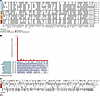 Figure 5
Heritable genes in brain and hDRG cell types. (A) The significantly heritable genes among 10 enriched brain cell clusters. Each cell type is colored according to its supercluster. (B) Gene overlap across brain cell types (C) Significantly heritable genes among 5 associated hDRG cell clusters. Overlapping genes in brain (A) and hDRG (C) are shown in black.
Gene overrepresentation analysis using heritable genes from the 10 significant brain cell types revealed enrichment for neuron projection, axon guidance, and synapse-related processes (Supplemental Figure 2 and Supplemental Table 16). Particularly noteworthy is the intratelencephalic cell type ULIT_127, with heritable genes enriched for protein kinase activity (PTPRO and PTPRT), GABAergic synapse (BSN, CDH13, CTBP2, DAG1, and PTPRO), dorsal/ventral horn axon guidance (DCC and SLIT2), and neuron projection (DCC, PTPRO, RHOA, SLIT2, and SEMA6D) (Supplemental Table 16). In hDRG, prioritized heritable genes for hPEP.TRPV1/A1.2 were implicated in kinase activity (IP6K3 and IP6K1), calcium channel activity (CACNA1D and CACNB2), glutamatergic synapse (e.g., BSN, MDGA2, NPTN, NRXN1, PTPRD), somatodendritic compartments (e.g., ACTN1, BSN, CACNA1D, CNTNAP2, MAGI2, NCAM1), and neuron projection (e.g., AUTS2, CTNNA2, CNTNAP2, NCAM1, NRXN1, PTPRO), among others (Supplemental Figure 2 and Supplemental Table 17).
In summary, gene clusters with heritable links to chronic pain in the brain and hDRG cell types converge on biological processes related to synaptic function and neuron projection.
Identification of differentially expressed or accessible genes linked to chronic pain risk. As in our current analyses, prior human pain GWAS studies that used S-LDSC and MAGMA analyzed transcriptomics data from healthy individuals or individuals with an unknown disease status (14, 15). However, in rodents, hundreds of genes are differentially expressed in the DRG in response to painful stimulus (55). At the same time, varying transcriptomics effects have been identified in the blood, spinal cord, and brain of humans experiencing pain (47, 56). Dysregulated genes are crucial for host immune defense and wound healing, as well as pain modulation, which enables the host to adopt survival behaviors (56, 57). We hypothesized that decoding the chronic pain GWAS at loci of pain-perturbed genes would explain a larger proportion of heritability than loci of homeostatic genes. To test this hypothesis, we selected differentially expressed genes (DEGs) (FDR P < 0.01) from a scRNA-Seq dataset of cervical DRG samples from patients with acute pain versus those with chronic pain (58). The heritability enrichment at these genetic loci was assessed via QQ plots, where the gene-level MAGMA-derived chronic pain GWAS P values were gauged against those expected by chance.
We found that DEGs in both neuronal and non-neuronal cell types had steep slopes (λ) in these QQ plots (neuronal cells: λ = 3.5 – 7.7; non-neuronal cells: λ = 4.3 – 6.1), indicating greater enrichment of significant P values for chronic pain than would be expected by chance (Figure 6A). Gene set enrichment between the sets of genes differentially expressed in individuals with acute or chronic pain and the MAGMA pain-associated genes provide substantial support for 526 genes, of which 88 were differentially expressed in at least 2 cell types (Supplemental Table 14). The top DEGs and those most strongly associated with findings from our chronic pain GWAS were EFNB2 (PMAGMA = 8.6 × 10⁻⁷), GABBR1 (PMAGMA = 6.2 × 10⁻¹³), GRK4 (PMAGMA = 6.2 × 10⁻¹³), LSAMP (PMAGMA = 3.4 × 10⁻³⁴), NCAM1 (PMAGMA = 2.5 × 10⁻¹⁵), NRXN1 (PMAGMA = 6.2 × 10⁻¹³), PITPNM2 (PMAGMA = 2.5 × 10⁻¹⁵), and SEMA3F (PMAGMA = 2.5 × 10⁻¹⁵) (Figure 6B). We also found evidence of SCN11A loci enrichment in a neuronal cell cluster (PMAGMA = 6.8 × 10⁻⁴, Supplemental Table 18). We observed an overlap between DEGs in cervical DRGs and heritable genes from the brain (27 of 95) (30) and pain-free hDRGs (58 of 164) (31) (Figure 6C).
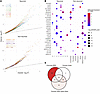 Figure 6
Chronic pain–associated genes in cervical DRG of patients with acute versus chronic pain. (A) QQ plots of pain-associated genes in neuronal and non-neuronal cervical DRGs. (B) The top 30 differentially expressed genes in neuronal and non-neuronal cervical DRG cell types that are associated with chronic pain risk. SGCs, satellite glial cells; NMSchwann, nonmyelinated Schwann; MSchwann, myelinated Schwann. (C) Gene overlaps between cervical DRGs and gene-level results from brain and hDRG (pain-free) cell types.
Using the same approach as above, we also tested for enrichment of GWAS loci in differentially accessible regions (DARs) from a spatial assay for transposase-accessible chromatin using sequencing (ATAC-Seq) hDRG dataset comparing neuronal chromatin accessibility between sexes (59) (females: λ = 2.5; males: λ = 3.4; FDR P < 0.01; Supplemental Figure 3A). In females, hDRG DAR gene associations included genes encoding the netrin 1 receptor DCC and sodium transporter SLC4A10 (Supplemental Figure 3B and Supplemental Table 19). In males, the top hDRG DAR genes most strongly enriched for chronic pain genetic signals were involved in kinase activity (CAMKV, DCAKD), calcium signaling (ERBB3, ITPR3), and synaptic function (BSN) (Supplemental Figure 3B and Supplemental Table 19).


Copyright © 2026 American Society for Clinical Investigation
ISSN: 0021-9738 (print), 1558-8238 (online)