
Advertisement
Research ArticleCell biologyOncology
Open Access |  10.1172/JCI182394
Targeting kinesin family member 20A sensitizes stem-like triple-negative breast cancer cells to standard chemotherapy
Yayoi Adachi,1,2 Weilong Chen,1,3 Cheng Zhang,1 Tao Wang,1 Nina Gildor,1 Rachel Shi,1 Haoyong Fu,1 Masashi Takeda,1 Qian Liang,1 Fangzhou Zhao,1 Hongyi Liu,1 Jun Fang,1 Jin Zhou,1 Hongwei Yao,1 Lianxin Hu,1 Shina Li,1 Lei Guo,4 Lin Xu,4 Ling Xie,5 Xian Chen,5 Chengheng Liao,1 and Qing Zhang1,6
1Department of Pathology, University of Texas Southwestern Medical Center, Dallas, Texas, USA.
2Department of Breast and Endocrine Surgery, Nagoya University Graduate School of Medicine, Nagoya, Aichi, Japan.
3Jinfeng Laboratory, Chongqing, China.
4Quantitative Biomedical Research Center, Peter O’Donnell Jr. School of Public Health, University of Texas Southwestern Medical Center, Dallas, Texas, USA.
5Department of Biochemistry and Biophysics, University of North Carolina, Chapel Hill, North Carolina, USA.
6Simmons Comprehensive Cancer Center, University of Texas Southwestern Medical Center, Dallas, Texas, USA.
Address correspondence to: Qing Zhang or Chengheng Liao, Department of Pathology, UT Southwestern Medical Center, 5323 Harry Hines Boulevard, NB7 208, Dallas, Texas 75390, USA. Phone: 214.645.4671; Email: Qing.Zhang@UTSouthwestern.edu (QZ); Chengheng.Liao@UTSouthwestern.edu (CL).
Authorship note: YA and WC contributed equally to this work.
Find articles by Adachi, Y. in: PubMed | Google Scholar
1Department of Pathology, University of Texas Southwestern Medical Center, Dallas, Texas, USA.
2Department of Breast and Endocrine Surgery, Nagoya University Graduate School of Medicine, Nagoya, Aichi, Japan.
3Jinfeng Laboratory, Chongqing, China.
4Quantitative Biomedical Research Center, Peter O’Donnell Jr. School of Public Health, University of Texas Southwestern Medical Center, Dallas, Texas, USA.
5Department of Biochemistry and Biophysics, University of North Carolina, Chapel Hill, North Carolina, USA.
6Simmons Comprehensive Cancer Center, University of Texas Southwestern Medical Center, Dallas, Texas, USA.
Address correspondence to: Qing Zhang or Chengheng Liao, Department of Pathology, UT Southwestern Medical Center, 5323 Harry Hines Boulevard, NB7 208, Dallas, Texas 75390, USA. Phone: 214.645.4671; Email: Qing.Zhang@UTSouthwestern.edu (QZ); Chengheng.Liao@UTSouthwestern.edu (CL).
Authorship note: YA and WC contributed equally to this work.
Find articles by Chen, W. in: PubMed | Google Scholar
1Department of Pathology, University of Texas Southwestern Medical Center, Dallas, Texas, USA.
2Department of Breast and Endocrine Surgery, Nagoya University Graduate School of Medicine, Nagoya, Aichi, Japan.
3Jinfeng Laboratory, Chongqing, China.
4Quantitative Biomedical Research Center, Peter O’Donnell Jr. School of Public Health, University of Texas Southwestern Medical Center, Dallas, Texas, USA.
5Department of Biochemistry and Biophysics, University of North Carolina, Chapel Hill, North Carolina, USA.
6Simmons Comprehensive Cancer Center, University of Texas Southwestern Medical Center, Dallas, Texas, USA.
Address correspondence to: Qing Zhang or Chengheng Liao, Department of Pathology, UT Southwestern Medical Center, 5323 Harry Hines Boulevard, NB7 208, Dallas, Texas 75390, USA. Phone: 214.645.4671; Email: Qing.Zhang@UTSouthwestern.edu (QZ); Chengheng.Liao@UTSouthwestern.edu (CL).
Authorship note: YA and WC contributed equally to this work.
Find articles by Zhang, C. in: PubMed | Google Scholar
1Department of Pathology, University of Texas Southwestern Medical Center, Dallas, Texas, USA.
2Department of Breast and Endocrine Surgery, Nagoya University Graduate School of Medicine, Nagoya, Aichi, Japan.
3Jinfeng Laboratory, Chongqing, China.
4Quantitative Biomedical Research Center, Peter O’Donnell Jr. School of Public Health, University of Texas Southwestern Medical Center, Dallas, Texas, USA.
5Department of Biochemistry and Biophysics, University of North Carolina, Chapel Hill, North Carolina, USA.
6Simmons Comprehensive Cancer Center, University of Texas Southwestern Medical Center, Dallas, Texas, USA.
Address correspondence to: Qing Zhang or Chengheng Liao, Department of Pathology, UT Southwestern Medical Center, 5323 Harry Hines Boulevard, NB7 208, Dallas, Texas 75390, USA. Phone: 214.645.4671; Email: Qing.Zhang@UTSouthwestern.edu (QZ); Chengheng.Liao@UTSouthwestern.edu (CL).
Authorship note: YA and WC contributed equally to this work.
Find articles by Wang, T. in: PubMed | Google Scholar
1Department of Pathology, University of Texas Southwestern Medical Center, Dallas, Texas, USA.
2Department of Breast and Endocrine Surgery, Nagoya University Graduate School of Medicine, Nagoya, Aichi, Japan.
3Jinfeng Laboratory, Chongqing, China.
4Quantitative Biomedical Research Center, Peter O’Donnell Jr. School of Public Health, University of Texas Southwestern Medical Center, Dallas, Texas, USA.
5Department of Biochemistry and Biophysics, University of North Carolina, Chapel Hill, North Carolina, USA.
6Simmons Comprehensive Cancer Center, University of Texas Southwestern Medical Center, Dallas, Texas, USA.
Address correspondence to: Qing Zhang or Chengheng Liao, Department of Pathology, UT Southwestern Medical Center, 5323 Harry Hines Boulevard, NB7 208, Dallas, Texas 75390, USA. Phone: 214.645.4671; Email: Qing.Zhang@UTSouthwestern.edu (QZ); Chengheng.Liao@UTSouthwestern.edu (CL).
Authorship note: YA and WC contributed equally to this work.
Find articles by Gildor, N. in: PubMed | Google Scholar
1Department of Pathology, University of Texas Southwestern Medical Center, Dallas, Texas, USA.
2Department of Breast and Endocrine Surgery, Nagoya University Graduate School of Medicine, Nagoya, Aichi, Japan.
3Jinfeng Laboratory, Chongqing, China.
4Quantitative Biomedical Research Center, Peter O’Donnell Jr. School of Public Health, University of Texas Southwestern Medical Center, Dallas, Texas, USA.
5Department of Biochemistry and Biophysics, University of North Carolina, Chapel Hill, North Carolina, USA.
6Simmons Comprehensive Cancer Center, University of Texas Southwestern Medical Center, Dallas, Texas, USA.
Address correspondence to: Qing Zhang or Chengheng Liao, Department of Pathology, UT Southwestern Medical Center, 5323 Harry Hines Boulevard, NB7 208, Dallas, Texas 75390, USA. Phone: 214.645.4671; Email: Qing.Zhang@UTSouthwestern.edu (QZ); Chengheng.Liao@UTSouthwestern.edu (CL).
Authorship note: YA and WC contributed equally to this work.
Find articles by Shi, R. in: PubMed | Google Scholar
1Department of Pathology, University of Texas Southwestern Medical Center, Dallas, Texas, USA.
2Department of Breast and Endocrine Surgery, Nagoya University Graduate School of Medicine, Nagoya, Aichi, Japan.
3Jinfeng Laboratory, Chongqing, China.
4Quantitative Biomedical Research Center, Peter O’Donnell Jr. School of Public Health, University of Texas Southwestern Medical Center, Dallas, Texas, USA.
5Department of Biochemistry and Biophysics, University of North Carolina, Chapel Hill, North Carolina, USA.
6Simmons Comprehensive Cancer Center, University of Texas Southwestern Medical Center, Dallas, Texas, USA.
Address correspondence to: Qing Zhang or Chengheng Liao, Department of Pathology, UT Southwestern Medical Center, 5323 Harry Hines Boulevard, NB7 208, Dallas, Texas 75390, USA. Phone: 214.645.4671; Email: Qing.Zhang@UTSouthwestern.edu (QZ); Chengheng.Liao@UTSouthwestern.edu (CL).
Authorship note: YA and WC contributed equally to this work.
Find articles by Fu, H. in: PubMed | Google Scholar
1Department of Pathology, University of Texas Southwestern Medical Center, Dallas, Texas, USA.
2Department of Breast and Endocrine Surgery, Nagoya University Graduate School of Medicine, Nagoya, Aichi, Japan.
3Jinfeng Laboratory, Chongqing, China.
4Quantitative Biomedical Research Center, Peter O’Donnell Jr. School of Public Health, University of Texas Southwestern Medical Center, Dallas, Texas, USA.
5Department of Biochemistry and Biophysics, University of North Carolina, Chapel Hill, North Carolina, USA.
6Simmons Comprehensive Cancer Center, University of Texas Southwestern Medical Center, Dallas, Texas, USA.
Address correspondence to: Qing Zhang or Chengheng Liao, Department of Pathology, UT Southwestern Medical Center, 5323 Harry Hines Boulevard, NB7 208, Dallas, Texas 75390, USA. Phone: 214.645.4671; Email: Qing.Zhang@UTSouthwestern.edu (QZ); Chengheng.Liao@UTSouthwestern.edu (CL).
Authorship note: YA and WC contributed equally to this work.
Find articles by Takeda, M. in: PubMed | Google Scholar
1Department of Pathology, University of Texas Southwestern Medical Center, Dallas, Texas, USA.
2Department of Breast and Endocrine Surgery, Nagoya University Graduate School of Medicine, Nagoya, Aichi, Japan.
3Jinfeng Laboratory, Chongqing, China.
4Quantitative Biomedical Research Center, Peter O’Donnell Jr. School of Public Health, University of Texas Southwestern Medical Center, Dallas, Texas, USA.
5Department of Biochemistry and Biophysics, University of North Carolina, Chapel Hill, North Carolina, USA.
6Simmons Comprehensive Cancer Center, University of Texas Southwestern Medical Center, Dallas, Texas, USA.
Address correspondence to: Qing Zhang or Chengheng Liao, Department of Pathology, UT Southwestern Medical Center, 5323 Harry Hines Boulevard, NB7 208, Dallas, Texas 75390, USA. Phone: 214.645.4671; Email: Qing.Zhang@UTSouthwestern.edu (QZ); Chengheng.Liao@UTSouthwestern.edu (CL).
Authorship note: YA and WC contributed equally to this work.
Find articles by Liang, Q. in: PubMed | Google Scholar
1Department of Pathology, University of Texas Southwestern Medical Center, Dallas, Texas, USA.
2Department of Breast and Endocrine Surgery, Nagoya University Graduate School of Medicine, Nagoya, Aichi, Japan.
3Jinfeng Laboratory, Chongqing, China.
4Quantitative Biomedical Research Center, Peter O’Donnell Jr. School of Public Health, University of Texas Southwestern Medical Center, Dallas, Texas, USA.
5Department of Biochemistry and Biophysics, University of North Carolina, Chapel Hill, North Carolina, USA.
6Simmons Comprehensive Cancer Center, University of Texas Southwestern Medical Center, Dallas, Texas, USA.
Address correspondence to: Qing Zhang or Chengheng Liao, Department of Pathology, UT Southwestern Medical Center, 5323 Harry Hines Boulevard, NB7 208, Dallas, Texas 75390, USA. Phone: 214.645.4671; Email: Qing.Zhang@UTSouthwestern.edu (QZ); Chengheng.Liao@UTSouthwestern.edu (CL).
Authorship note: YA and WC contributed equally to this work.
Find articles by Zhao, F. in: PubMed | Google Scholar
1Department of Pathology, University of Texas Southwestern Medical Center, Dallas, Texas, USA.
2Department of Breast and Endocrine Surgery, Nagoya University Graduate School of Medicine, Nagoya, Aichi, Japan.
3Jinfeng Laboratory, Chongqing, China.
4Quantitative Biomedical Research Center, Peter O’Donnell Jr. School of Public Health, University of Texas Southwestern Medical Center, Dallas, Texas, USA.
5Department of Biochemistry and Biophysics, University of North Carolina, Chapel Hill, North Carolina, USA.
6Simmons Comprehensive Cancer Center, University of Texas Southwestern Medical Center, Dallas, Texas, USA.
Address correspondence to: Qing Zhang or Chengheng Liao, Department of Pathology, UT Southwestern Medical Center, 5323 Harry Hines Boulevard, NB7 208, Dallas, Texas 75390, USA. Phone: 214.645.4671; Email: Qing.Zhang@UTSouthwestern.edu (QZ); Chengheng.Liao@UTSouthwestern.edu (CL).
Authorship note: YA and WC contributed equally to this work.
Find articles by Liu, H. in: PubMed | Google Scholar
1Department of Pathology, University of Texas Southwestern Medical Center, Dallas, Texas, USA.
2Department of Breast and Endocrine Surgery, Nagoya University Graduate School of Medicine, Nagoya, Aichi, Japan.
3Jinfeng Laboratory, Chongqing, China.
4Quantitative Biomedical Research Center, Peter O’Donnell Jr. School of Public Health, University of Texas Southwestern Medical Center, Dallas, Texas, USA.
5Department of Biochemistry and Biophysics, University of North Carolina, Chapel Hill, North Carolina, USA.
6Simmons Comprehensive Cancer Center, University of Texas Southwestern Medical Center, Dallas, Texas, USA.
Address correspondence to: Qing Zhang or Chengheng Liao, Department of Pathology, UT Southwestern Medical Center, 5323 Harry Hines Boulevard, NB7 208, Dallas, Texas 75390, USA. Phone: 214.645.4671; Email: Qing.Zhang@UTSouthwestern.edu (QZ); Chengheng.Liao@UTSouthwestern.edu (CL).
Authorship note: YA and WC contributed equally to this work.
Find articles by Fang, J. in: PubMed | Google Scholar
1Department of Pathology, University of Texas Southwestern Medical Center, Dallas, Texas, USA.
2Department of Breast and Endocrine Surgery, Nagoya University Graduate School of Medicine, Nagoya, Aichi, Japan.
3Jinfeng Laboratory, Chongqing, China.
4Quantitative Biomedical Research Center, Peter O’Donnell Jr. School of Public Health, University of Texas Southwestern Medical Center, Dallas, Texas, USA.
5Department of Biochemistry and Biophysics, University of North Carolina, Chapel Hill, North Carolina, USA.
6Simmons Comprehensive Cancer Center, University of Texas Southwestern Medical Center, Dallas, Texas, USA.
Address correspondence to: Qing Zhang or Chengheng Liao, Department of Pathology, UT Southwestern Medical Center, 5323 Harry Hines Boulevard, NB7 208, Dallas, Texas 75390, USA. Phone: 214.645.4671; Email: Qing.Zhang@UTSouthwestern.edu (QZ); Chengheng.Liao@UTSouthwestern.edu (CL).
Authorship note: YA and WC contributed equally to this work.
Find articles by Zhou, J. in: PubMed | Google Scholar
1Department of Pathology, University of Texas Southwestern Medical Center, Dallas, Texas, USA.
2Department of Breast and Endocrine Surgery, Nagoya University Graduate School of Medicine, Nagoya, Aichi, Japan.
3Jinfeng Laboratory, Chongqing, China.
4Quantitative Biomedical Research Center, Peter O’Donnell Jr. School of Public Health, University of Texas Southwestern Medical Center, Dallas, Texas, USA.
5Department of Biochemistry and Biophysics, University of North Carolina, Chapel Hill, North Carolina, USA.
6Simmons Comprehensive Cancer Center, University of Texas Southwestern Medical Center, Dallas, Texas, USA.
Address correspondence to: Qing Zhang or Chengheng Liao, Department of Pathology, UT Southwestern Medical Center, 5323 Harry Hines Boulevard, NB7 208, Dallas, Texas 75390, USA. Phone: 214.645.4671; Email: Qing.Zhang@UTSouthwestern.edu (QZ); Chengheng.Liao@UTSouthwestern.edu (CL).
Authorship note: YA and WC contributed equally to this work.
Find articles by Yao, H. in: PubMed | Google Scholar
1Department of Pathology, University of Texas Southwestern Medical Center, Dallas, Texas, USA.
2Department of Breast and Endocrine Surgery, Nagoya University Graduate School of Medicine, Nagoya, Aichi, Japan.
3Jinfeng Laboratory, Chongqing, China.
4Quantitative Biomedical Research Center, Peter O’Donnell Jr. School of Public Health, University of Texas Southwestern Medical Center, Dallas, Texas, USA.
5Department of Biochemistry and Biophysics, University of North Carolina, Chapel Hill, North Carolina, USA.
6Simmons Comprehensive Cancer Center, University of Texas Southwestern Medical Center, Dallas, Texas, USA.
Address correspondence to: Qing Zhang or Chengheng Liao, Department of Pathology, UT Southwestern Medical Center, 5323 Harry Hines Boulevard, NB7 208, Dallas, Texas 75390, USA. Phone: 214.645.4671; Email: Qing.Zhang@UTSouthwestern.edu (QZ); Chengheng.Liao@UTSouthwestern.edu (CL).
Authorship note: YA and WC contributed equally to this work.
Find articles by Hu, L. in: PubMed | Google Scholar
1Department of Pathology, University of Texas Southwestern Medical Center, Dallas, Texas, USA.
2Department of Breast and Endocrine Surgery, Nagoya University Graduate School of Medicine, Nagoya, Aichi, Japan.
3Jinfeng Laboratory, Chongqing, China.
4Quantitative Biomedical Research Center, Peter O’Donnell Jr. School of Public Health, University of Texas Southwestern Medical Center, Dallas, Texas, USA.
5Department of Biochemistry and Biophysics, University of North Carolina, Chapel Hill, North Carolina, USA.
6Simmons Comprehensive Cancer Center, University of Texas Southwestern Medical Center, Dallas, Texas, USA.
Address correspondence to: Qing Zhang or Chengheng Liao, Department of Pathology, UT Southwestern Medical Center, 5323 Harry Hines Boulevard, NB7 208, Dallas, Texas 75390, USA. Phone: 214.645.4671; Email: Qing.Zhang@UTSouthwestern.edu (QZ); Chengheng.Liao@UTSouthwestern.edu (CL).
Authorship note: YA and WC contributed equally to this work.
Find articles by Li, S. in: PubMed | Google Scholar
1Department of Pathology, University of Texas Southwestern Medical Center, Dallas, Texas, USA.
2Department of Breast and Endocrine Surgery, Nagoya University Graduate School of Medicine, Nagoya, Aichi, Japan.
3Jinfeng Laboratory, Chongqing, China.
4Quantitative Biomedical Research Center, Peter O’Donnell Jr. School of Public Health, University of Texas Southwestern Medical Center, Dallas, Texas, USA.
5Department of Biochemistry and Biophysics, University of North Carolina, Chapel Hill, North Carolina, USA.
6Simmons Comprehensive Cancer Center, University of Texas Southwestern Medical Center, Dallas, Texas, USA.
Address correspondence to: Qing Zhang or Chengheng Liao, Department of Pathology, UT Southwestern Medical Center, 5323 Harry Hines Boulevard, NB7 208, Dallas, Texas 75390, USA. Phone: 214.645.4671; Email: Qing.Zhang@UTSouthwestern.edu (QZ); Chengheng.Liao@UTSouthwestern.edu (CL).
Authorship note: YA and WC contributed equally to this work.
Find articles by Guo, L. in: PubMed | Google Scholar
1Department of Pathology, University of Texas Southwestern Medical Center, Dallas, Texas, USA.
2Department of Breast and Endocrine Surgery, Nagoya University Graduate School of Medicine, Nagoya, Aichi, Japan.
3Jinfeng Laboratory, Chongqing, China.
4Quantitative Biomedical Research Center, Peter O’Donnell Jr. School of Public Health, University of Texas Southwestern Medical Center, Dallas, Texas, USA.
5Department of Biochemistry and Biophysics, University of North Carolina, Chapel Hill, North Carolina, USA.
6Simmons Comprehensive Cancer Center, University of Texas Southwestern Medical Center, Dallas, Texas, USA.
Address correspondence to: Qing Zhang or Chengheng Liao, Department of Pathology, UT Southwestern Medical Center, 5323 Harry Hines Boulevard, NB7 208, Dallas, Texas 75390, USA. Phone: 214.645.4671; Email: Qing.Zhang@UTSouthwestern.edu (QZ); Chengheng.Liao@UTSouthwestern.edu (CL).
Authorship note: YA and WC contributed equally to this work.
Find articles by
Xu, L.
in:
PubMed
|
Google Scholar
|

1Department of Pathology, University of Texas Southwestern Medical Center, Dallas, Texas, USA.
2Department of Breast and Endocrine Surgery, Nagoya University Graduate School of Medicine, Nagoya, Aichi, Japan.
3Jinfeng Laboratory, Chongqing, China.
4Quantitative Biomedical Research Center, Peter O’Donnell Jr. School of Public Health, University of Texas Southwestern Medical Center, Dallas, Texas, USA.
5Department of Biochemistry and Biophysics, University of North Carolina, Chapel Hill, North Carolina, USA.
6Simmons Comprehensive Cancer Center, University of Texas Southwestern Medical Center, Dallas, Texas, USA.
Address correspondence to: Qing Zhang or Chengheng Liao, Department of Pathology, UT Southwestern Medical Center, 5323 Harry Hines Boulevard, NB7 208, Dallas, Texas 75390, USA. Phone: 214.645.4671; Email: Qing.Zhang@UTSouthwestern.edu (QZ); Chengheng.Liao@UTSouthwestern.edu (CL).
Authorship note: YA and WC contributed equally to this work.
Find articles by Xie, L. in: PubMed | Google Scholar
1Department of Pathology, University of Texas Southwestern Medical Center, Dallas, Texas, USA.
2Department of Breast and Endocrine Surgery, Nagoya University Graduate School of Medicine, Nagoya, Aichi, Japan.
3Jinfeng Laboratory, Chongqing, China.
4Quantitative Biomedical Research Center, Peter O’Donnell Jr. School of Public Health, University of Texas Southwestern Medical Center, Dallas, Texas, USA.
5Department of Biochemistry and Biophysics, University of North Carolina, Chapel Hill, North Carolina, USA.
6Simmons Comprehensive Cancer Center, University of Texas Southwestern Medical Center, Dallas, Texas, USA.
Address correspondence to: Qing Zhang or Chengheng Liao, Department of Pathology, UT Southwestern Medical Center, 5323 Harry Hines Boulevard, NB7 208, Dallas, Texas 75390, USA. Phone: 214.645.4671; Email: Qing.Zhang@UTSouthwestern.edu (QZ); Chengheng.Liao@UTSouthwestern.edu (CL).
Authorship note: YA and WC contributed equally to this work.
Find articles by Chen, X. in: PubMed | Google Scholar
1Department of Pathology, University of Texas Southwestern Medical Center, Dallas, Texas, USA.
2Department of Breast and Endocrine Surgery, Nagoya University Graduate School of Medicine, Nagoya, Aichi, Japan.
3Jinfeng Laboratory, Chongqing, China.
4Quantitative Biomedical Research Center, Peter O’Donnell Jr. School of Public Health, University of Texas Southwestern Medical Center, Dallas, Texas, USA.
5Department of Biochemistry and Biophysics, University of North Carolina, Chapel Hill, North Carolina, USA.
6Simmons Comprehensive Cancer Center, University of Texas Southwestern Medical Center, Dallas, Texas, USA.
Address correspondence to: Qing Zhang or Chengheng Liao, Department of Pathology, UT Southwestern Medical Center, 5323 Harry Hines Boulevard, NB7 208, Dallas, Texas 75390, USA. Phone: 214.645.4671; Email: Qing.Zhang@UTSouthwestern.edu (QZ); Chengheng.Liao@UTSouthwestern.edu (CL).
Authorship note: YA and WC contributed equally to this work.
Find articles by
Liao, C.
in:
PubMed
|
Google Scholar
|
1Department of Pathology, University of Texas Southwestern Medical Center, Dallas, Texas, USA.
2Department of Breast and Endocrine Surgery, Nagoya University Graduate School of Medicine, Nagoya, Aichi, Japan.
3Jinfeng Laboratory, Chongqing, China.
4Quantitative Biomedical Research Center, Peter O’Donnell Jr. School of Public Health, University of Texas Southwestern Medical Center, Dallas, Texas, USA.
5Department of Biochemistry and Biophysics, University of North Carolina, Chapel Hill, North Carolina, USA.
6Simmons Comprehensive Cancer Center, University of Texas Southwestern Medical Center, Dallas, Texas, USA.
Address correspondence to: Qing Zhang or Chengheng Liao, Department of Pathology, UT Southwestern Medical Center, 5323 Harry Hines Boulevard, NB7 208, Dallas, Texas 75390, USA. Phone: 214.645.4671; Email: Qing.Zhang@UTSouthwestern.edu (QZ); Chengheng.Liao@UTSouthwestern.edu (CL).
Authorship note: YA and WC contributed equally to this work.
Find articles by Zhang, Q. in: PubMed | Google Scholar
Published December 15, 2025 - More info
J Clin Invest. 2025;135(24):e182394. https://doi.org/10.1172/JCI182394.
© 2025 Adachi et al. This work is licensed under the Creative Commons Attribution 4.0 International License. To view a copy of this license, visit http://creativecommons.org/licenses/by/4.0/.
Received: April 26, 2024; Accepted: October 21, 2025


-
Results
Screening for potential determinants of breast cancer stem-like cells. BCSCs are regarded as tumor-initiating drivers that promote tumor progression and malignancy (13). Targeting BCSCs represents a promising strategy to suppress tumor initiation and overcome therapeutic resistance in breast cancer (16). Previous studies have shown that Ras/MARK, Wnt, TGF-β, Hedgehog, and Notch pathways maintain BCSC survival (15). However, there are no established target therapies for BCSCs, and potential regulators controlling BCSCs in TNBC remain understudied (15). BCSCs are commonly marked by CD24–CD44+ or ALDH+ phenotypes, representing invasive mesenchymal-like and proliferative epithelial-like subpopulations, respectively (17, 18). To identify key regulators differentially expressed in BCSCs versus non-BCSCs, we isolated BCSCs marked with CD24–CD44+ and ALDH+ using FACS from Hs578T and HCC70 cell lines, which exhibited moderate proportions of both populations suitable for sorting (Supplemental Figure 1, A–C; supplemental material available online with this article; https://doi.org/10.1172/JCI182394DS1). Cells lacking both markers (non-CD24–CD44+ and ALDH–) were defined as non-BCSCs (Supplemental Figure 2). We then performed transcriptomic profiling by RNA sequencing (RNA-Seq) on BCSCs and non-BCSCs from both cell lines (Figure 1A). Differentially expressed genes (DEGs) (BCSCs vs. non-BCSCs) were filtered with the following criteria: (a) significance defined by P value (P < 0.05) and (b) fold changes (log2 fold change > 0.4). We identified 533 and 457 DEGs in Hs578T and HCC70 cells, respectively (Supplemental Table 1). Among the DEGs, 31 genes showed consistent differential expression across both cell lines (Figure 1B). We performed quantitative reverse transcription PCR (RT-qPCR) to validate the expression of these 31 genes in sorted BCSCs and non-BCSCs from Hs578T and HCC70 cells (Figure 1C). Among them, 7 genes — CCNB1, GDF15, HIST1H2BA, HMMR, KIF20A, MVB12B, and NEK2 — were significantly upregulated in BCSCs from both TNBC lines (Figure 1D). To assess whether these genes regulate BCSC abundance, we transfected each of the 7 genes with 4 individual siRNAs into 3 TNBC cell lines (HCC70, Hs578T, and SUM149). We then conducted flow cytometry to measure the CD24–CD44+ and ALDH+ BCSCs populations upon knockdown of each gene (Figure 1E). Our results showed that KIF20A knockdown consistently reduced both CD24–CD44+ and ALDH+ BCSC populations across all cell lines (Figure 1F). The role of KIF20A in regulating BCSCs remains undefined, which prompted us to investigate its function in TNBC stemness.
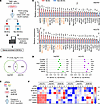 Figure 1
Identification of key regulators in breast cancer stem cells. (A) Experimental design of a screening strategy to identify critical genes essential for breast cancer stem cells (BCSCs). FACS, fluorescence-activated cell sorting. (B) Venn diagram of top differentially expressed genes (DEGs) in BCSCs versus non-BCSCs with indicated criteria and overlapped between 2 cell lines. (C) RT-qPCR analysis of the overlapped DEGs expressed in BCSCs and non-BCSCs derived from Hs578T and HCC70 cells (n = 3). Those marked in bold are overlapped genes significantly enriched in both Hs578T and HCC70 cells from RT-qPCR results. (D) Fold changes (FC) and P values are shown for top candidates in C. (E) Study design of siRNA-based gene knockdown and functional validation in BCSC populations. (F) Relative fold changes of CD24–CD44+ and ALDH+ populations measured by flow cytometry after knockdown of each candidate gene using 4 individual siRNAs (1 to 4) separately in indicated cell lines. Results are shown as fold changes over control siRNA. Data represent mean ± SEM. Statistical analyses were conducted by 2-tailed Student’s t test. *P < 0.05, **P < 0.01, ***P < 0.001, ****P < 0.0001.
KIF20A depletion decreases BCSC populations and related markers. To further validate whether KIF20A depletion reduces BCSC populations, we generated 2 independent sgRNAs against KIF20A. In MDA-MB-231 cells, KIF20A depletion markedly decreased both CD24–CD44+ and ALDH+ populations (Figure 2, A and B). To confirm that KIF20A regulates breast cancer stemness, we assessed the expression of canonical stem cell markers (Oct4, Sox2, or NANOG) and found that KIF20A siRNA transfection led to decreased mRNA levels of these markers in Hs578T cells (Figure 2C). We next compared KIF20A expression between 2D monolayer cultures and BCSC-enriched mammospheres derived from the mammosphere formation assay, a well-established method for evaluating the BCSC populations (19). KIF20A expression was significantly elevated in mammospheres from multiple TNBC cell lines compared with their parental 2D cultures (Figure 2D), consistent with our finding in Figure 1C. Accordingly, Oct4, Sox2, and NANOG gene expression was induced in mammospheres compared with parental cells (Figure 2D).
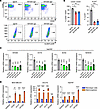 Figure 2
KIF20A depletion decreases BCSC populations and related markers. (A and B) Flow cytometry analysis for CD24–CD44+ and ALDH+ populations in TNBC stable cells infected with control or KIF20A sgRNA lentivirus. Representative images of flow cytometry (A) and quantification of CD24–CD44+ and ALDH+ cells (B) are shown. n = 3. (C) RT-qPCR analysis of indicated CSC markers and KIF20A gene in Hs578T cells with KIF20A knockdown by individual siRNAs. n = 3. (D) RT-qPCR analysis of indicated CSC markers and KIF20A gene in indicated TNBC parental cells and mammospheres derived from the mammosphere formation assay. n = 3. Each data point represents a biological replicate. Data represent mean ± SEM. Statistical analyses were conducted by 1-way ANOVA with Dunnett’s test (B and C) or 2-tailed Student’s t test (D). *P < 0.05, **P < 0.01, ***P < 0.001, ****P < 0.0001.
KIF20A controls self-renewal and population expansion of BCSCs in vitro. To validate the role of KIF20A in regulating BCSCs in TNBC, we depleted KIF20A using sgRNAs in MDA-MB-231 and HCC1806 TNBC cells (Figure 3A). Since MVB12B also emerged as a candidate from our initial screen (Figure 1F), we also generated 3 sgRNAs that effectively target MVB12B in MDA-MB-231 and Hs578T cells (Supplemental Figure 3, A and B). Next, equal numbers of control and sgRNA-depleted cells were plated for mammosphere formation assays (19) to assess self-renewal capacity. KIF20A depletion significantly reduced mammosphere formation in both TNBC cell lines (Figure 3, B and C), whereas MVB12B depletion had no significant effect (Supplemental Figure 3, C–F). To further validate these findings, we generated shRNAs (#1, #2) in stable cells or transiently transfected TNBC cells with 2 independent KIF20A siRNAs (#2, #3). Consistent with sgRNA results, KIF20A knockdown by shRNAs or siRNAs decreased mammosphere formation (Figure 3, D–F, and Supplemental Figure 3, G–I). These findings demonstrate that KIF20A is critical for BCSC self-renewal and expansion in vitro.
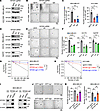 Figure 3
KIF20A depletion decreases BCSC self-renewal and expansion in vitro. (A–C) Immunoblot analysis of KIF20A (A), representative images of mammosphere formation assay (B), and corresponding quantifications (C) in MDA-MB-231 and HCC1806 cells infected with lentivirus encoding control or KIF20A sgRNAs. n = 3. Scale bar: 1 mm. (D–F) Immunoblot analysis of KIF20A (D), representative images of mammosphere formation assay (E), and quantification of mammospheres (F) in indicated cells transfected with control or KIF20A siRNAs. n = 3. Scale bar: 1 mm. (G and H) Extreme limiting dilution assays (G) and calculated estimated BCSC frequency (H) in MDA-MB-231 and HCC1806 cells infected with control or KIF20A sgRNA lentivirus. (I–K) Immunoblot analysis (I), mammosphere formation assay (J), and quantification of mammospheres (K) of GFP- or KIF20A-expressing MDA-MB-231 stable cells infected with virus encoding control or KIF20A sgRNAs. n = 3. Scale bar: 1 mm. Each data point represents a biological replicate. Data represent mean ± SEM. Statistical analyses were conducted by 1-way ANOVA with Dunnett’s test (C and F) or Tukey’s test (K), or χ2 test (G). *P < 0.05, **P < 0.01, ****P < 0.0001.
KIF20A, a member of the kinesin-6 family within the kinesin superfamily of proteins (KIFs), functions as a molecular motor that transports cellular cargo and plays an essential role in cell division (20, 21). The attenuation of BCSC self-renewal upon KIF20A depletion prompted us to assess its effect on cancer stem cell (CSC) frequency using the extreme limiting dilution assay (22–26). In MDA-MB-231 cells, the estimated stem cell frequency was 1 in 315 with control sgRNA, which decreased to 1 in 845 and 1 in 1,780 upon infection with KIF20A sgRNA #1 and sgRNA #3, respectively. Similar results were observed in HCC1806 cells (the frequency dropped from 1 in 262 in controls to 1 in 943 and 1 in 2,735 with KIF20A sg1 and sg3, respectively) (Figure 3, G and H).
To confirm that these phenotypes resulted from on-target effects, we generated sgRNA-resistant KIF20A expression constructs by introducing silent mutations within the CRISPR/Cas9 NGG recognition sites for sgRNAs #1 and #3. These constructs were introduced into KIF20A-depleted TNBC cells via viral infection. As expected, expression of the resistant constructs restored KIF20A protein levels to those comparable to control cells (Figure 3I). Importantly, reintroduction of sgRNA-resistant KIF20A rescued the mammosphere formation defect caused by KIF20A depletion (Figure 3, J and K). Collectively, these results establish that KIF20A is essential for maintaining BCSC self-renewal and population expansion in TNBC.
KIF20A is essential to BCSC survival in vivo and TNBC tumor development. To determine whether KIF20A regulates BCSC activity to promote TNBC tumor initiation in vivo, we performed limiting dilution assays in NOD-scid IL-2Rγ–null (NSG) mice. The tumor initiation assay with limiting dilution is widely recognized as a rigorous method for evaluating the impact of specific factors on CSC frequency in vivo (24, 25). We performed 2 independent experiments with 2 different KIF20A sgRNAs (sg1, sg3) in MDA-MB-231 cells. Control or KIF20A-depleted cells were orthotopically injected into the fourth mammary fat pad of female NSG mice with 5 serial dilutions (5,000, 1,000, 500, 200, and 40 cells). After implantation, tumor incidence was recorded, and CSC frequency was calculated accordingly. KIF20A depletion significantly decreased tumor incidence with decreased CSC frequency for sg1 (1:574 in KIF20A-KO vs. 1:101 in control group, P = 0.000637) (Figure 4A), and a similar result was obtained for sg3 (1:277 in KIF20A-KO vs. 1:41 in control group, P = 0.00199) (Figure 4B). Similarly, depletion of KIF20A in another TNBC line, HCC1806, led to a reduction in CSC frequency (1:3,448 in KIF20A-KO vs. 1:604 in control group, P = 0.00944) (Figure 4C), accompanied by smaller tumor volumes especially in the 5,000 dilution group (Figure 4, D and E). Minor variations observed among control sgRNA groups likely reflect biological variability between independent experiments. Our results suggest that KIF20A is essential for maintaining BCSC population in vivo. Consistently, KIF20A depletion also resulted in impaired TNBC tumor growth, which resulted in reduced tumor weight and smaller size of xenografts at necropsy (Figure 4, F–H). Furthermore, KIF20A-depleted tumors, which were verified by Western blot (Supplemental Figure 4A), showed reduced expression of Oct4, Sox2, and NANOG, underpinning that the BCSC population was decreased in these tumors (Supplemental Figure 4B). Given that tumor progression is not solely driven by CSCs and that non-CSCs can also promote tumor progression (27), we investigated the effect of KIF20A on the proliferation of non-BCSCs. We sorted non-BCSCs using FACS from the siRNA control Hs578T cells and siRNA-mediated KIF20A-downregulated cells (Supplemental Figure 4C) and immediately performed 2D colony formation assay and MTS assay. We found that cell growth in these non-BCSCs was slightly decreased by KIF20A knockdown (Supplemental Figure 4, D and E).
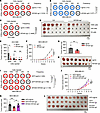 Figure 4
KIF20A depletion decreases BCSC self-renewal and TNBC tumorigenesis in vivo. (A and B) Limiting dilution tumor-initiating assay of MDA-MB-231 cells infected with lentivirus encoding control or KIF20A sgRNA #1 or #3. n = 5 mice for each group. (C–E) Limiting dilution tumor-initiating assay (C), harvested tumor images (D), and tumor volume at the end point (E) in HCC1806 cells infected with lentivirus encoding control or KIF20A sgRNA #1. n = 6 mice for each group. (F–H) Tumor growth (F), tumor weight (G), and tumor images after sacrifice (H) of MDA-MB-231 stable cells infected with lentivirus encoding control or KIF20A sgRNA #1 injected into mammary glands of NSG mice. (I) Limiting dilution tumor-initiating assay of MDA-MB-231 cells expressing control or KIF20A sgRNA and GFP or sgRNA-resistant KIF20A mutant as indicated. (J–L) Tumor growth (J), tumor weight (K), and tumor images after sacrifice (L) of MDA-MB-231 stable cells expressing control or KIF20A sgRNA and GFP or sgRNA-resistant KIF20A mutant as indicated in NSG mice. Each data point represents a biological replicate. Data represent mean ± SEM. Statistical analyses were conducted by χ2 test (A–C and I), 2-tailed Student’s t test (E and G), 2-way ANOVA (F and J), or 1-way ANOVA with Tukey’s test (K). *P < 0.05, **P < 0.01, ***P < 0.001, ****P < 0.0001. Scale bars: 1 cm.
To confirm the on-target effect of KIF20A sgRNAs on BCSC initiation in vivo, we carried out tumor initiating assay with limiting dilutions by re-expressing sgRNA-resistant KIF20A in KIF20A-depleted cells (sg1). We found that sgRNA-resistant KIF20A expression could fully rescue the impairment of BCSC frequency caused by KIF20A deletion, arguing that the effect of KIF20A sgRNA on BCSC initiation was due to its on-target depletion of KIF20A protein levels in TNBC (Figure 4I). Consistently, re-expression of sgRNA-resistant KIF20A also rescued tumor growth defects caused by KIF20A depletion (Figure 4, J–L). Together, our results show that KIF20A is essential for TNBC tumor growth through controlling BCSC fate.
To examine whether KIF20A is sufficient to drive BCSC expansion and tumor progression, we overexpressed KIF20A in MDA-MB-231 and HCC1806 cells (Supplemental Figure 5A). However, KIF20A overexpression did not significantly alter mammosphere formation in vitro (Supplemental Figure 5, B and C). To confirm this in vivo, we generated doxycycline-inducible (Dox-inducible) KIF20A or empty vector control cells (Supplemental Figure 5D) and performed tumor initiation and growth assays in mice fed with Dox food. Similarly, KIF20A overexpression did not change the CSC frequency in vivo (Supplemental Figure 5E) or tumor growth (Supplemental Figure 5, F–H). These results suggest that KIF20A may be essential but not sufficient for BCSC expansion or tumor progression. Therefore, depletion or inhibition of KIF20A could be therapeutically beneficial in TNBC.
Pharmacological inhibition of KIF20A decreases BCSCs and suppresses TNBC tumor growth. To validate the impact of genetic ablation of KIF20A on BCSCs in TNBC, we investigated the potential effect of pharmacological inhibition of KIF20A. To achieve this, we used a characterized KIF20A inhibitor, paprotrain (Supplemental Figure 6A), which inhibits ATPase activity of KIF20A with an IC50 of 1.35 μM (28). A previous study demonstrated that depletion of KIF20A through RNAi led to an increase of binucleated cells (28). To validate the on-target inhibition of KIF20A by paprotrain, we quantified binucleated cells across a range of on-target concentrations (0.5–4 μM). Our results showed that paprotrain treatment led to significantly increased binucleation of TNBC cells in a dose-dependent manner (Supplemental Figure 6, B and C). We then examined the effect of paprotrain on the BCSC population using the mammosphere formation assay. Our results showed that paprotrain treatment, especially at the dosage (2 μM in MDA-MB-231 and 3 μM in HCC1806 cells) that caused significant KIF20A activity inhibition (Supplemental Figure 6, B and C), led to decreased mammosphere formation in these cells (Figure 5, A–D). Because mammosphere culture extends over 2 weeks and fresh compound cannot be replenished, we applied slightly higher yet still on-target concentrations to ensure sustained inhibition. To evaluate whether paprotrain suppresses BCSC activity in vivo, we implanted MDA-MB-231 cells orthotopically in female NSG mice. One week after inoculation, we administered paprotrain intraperitoneally once per week (100 mg/kg), and monitored tumor initiation and tumor size. Paprotrain administration significantly decreased tumor initiation with decreased CSC frequency (1/459 in paprotrain vs. 1/106 in control group, P = 0.000324) (Figure 5E). Furthermore, paprotrain treatment led to decreased tumor growth, which corresponded to decreased tumor weight and size at necropsy (Figure 5, F–H). Importantly, paprotrain treatment did not lead to significant change in mouse body weight, suggesting no overt toxicity (Figure 5I). Collectively, we confirmed the essential role of KIF20A in sustaining the ability of BCSCs in TNBC through multipronged approaches.
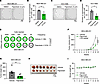 Figure 5
KIF20A inhibitor decreases BCSC self-renewal ability and expansion in vivo. (A and B) Mammosphere formation assays with representative images (A) and corresponding quantification (B) in MDA-MB-231 cells treated with 2 μM of paprotrain. n = 3. (C and D) Mammosphere formation assay with representative images (C) and corresponding quantification (D) in HCC1806 cells treated with 3 μM of paprotrain. n = 3. Scale bars: 1 mm. (E) Limiting dilution tumor-initiating assay with MDA-MB-231 cells treated with vehicle or paprotrain (100 mg/kg/wk). (F–I) Tumor growth (F), tumor weight after dissection (G), image of tumors (H), and body weight (I) of MDA-MB-231 xenograft tumors treated with vehicle or paprotrain (100 mg/kg/wk). n = 7 mice for each group. Scale bar: 1 cm. Each data point represents a biological replicate. Data represent mean ± SEM. Statistical analyses were conducted by χ2 test (E), 2-tailed Student’s t test (B, D, and G), or 2-way ANOVA (F). *P < 0.05, **P < 0.01, ****P < 0.0001.
KIF20A regulates OXPHOS-related gene expression in TNBC. To understand the molecular mechanism by which KIF20A regulates BCSCs in TNBC, we analyzed transcriptomic changes following KIF20A gene manipulation with 2 complementary strategies. First, we performed RNA-Seq with MDA-MB-231 cells with KIF20A depletion using the validated sgRNA #1. Conversely, we also conducted RNA-Seq with MDA-MB-231 cells overexpressing KIF20A. Gene set enrichment analysis (GSEA) revealed that oxidative phosphorylation (OXPHOS) was the top downregulated pathway in KIF20A-depleted cells (Figure 6, A and B), whereas it was significantly enriched in KIF20A-overexpressing cells compared with control cells (Figure 6, C and D). Although the metabolic phenotype of CSCs varies across cancer types and microenvironments, OXPHOS has been widely recognized as a major energy source supporting CSC maintenance (29–31). A previous study showed that the master mitochondrial biogenesis regulator peroxisome proliferator–activated receptor-γ coactivator 1α (PGC1α) maintains stemness characteristics in breast cancer (29). Another prior study demonstrated that metformin, an inhibitor of OXPHOS, reduces the size and number of mammospheres, as well as OCT4, a maker of BCSCs, in breast cancer (32). In contrast, canonical Wnt/β-catenin and Hedgehog signaling pathways, both previously implicated in BCSC regulation (33), did not reach statistical significance in our GSEA for either KIF20A depletion or overexpression, suggesting that KIF20A may regulate BCSCs through Wnt/β-catenin– and Hedgehog-independent signaling in TNBC. Therefore, we decided to focus on OXPHOS as a potential mechanism through which KIF20A regulates BCSCs in TNBC.
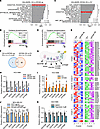 Figure 6
KIF20A affects the expression of mitochondrial OXPHOS genes. (A–D) Gene set enrichment analysis (GSEA) showing the top hallmark pathways enriched in the control sgRNA compared with KIF20A sg1 (A) or KIF20A overexpression compared with the EV control (C) in MDA-MB-231 cells. GSEA enrichment plots of the OXPHOS pathways from KIF20A knockdown (B) and KIF20A overexpression (D) are shown. (E) Heatmap of genes related to mitochondrial complex I–V in control or KIF20A-depleted and -overexpressing MDA-MB-231 cells from the RNA-Seq data. n = 3. (F) Venn diagram of significant genes associated with mitochondrial complexes identified from the KIF20A-depleted and -overexpressing RNA-Seq experiments. (G) Representative genes selected for functional validation from each mitochondrial complex. (H) RT-qPCR analysis of selected OXPHOS genes in KIF20A-depleted HCC1806 cells. n = 3. (I) RT-qPCR analysis of OXPHOS genes in HCC1806 cells with KIF20A overexpression. n = 3. (J) RT-qPCR analysis of OXPHOS genes in KIF20A cells rescued by sgRNA-resistant KIF20A mutant in MDA-MB-231 cells. n = 3. (K) RT-qPCR analysis of OXPHOS genes in HCC1806 cells treated with paprotrain. n = 6. Each data point represents a biological replicate. Data represent mean ± SEM. Statistical analyses were conducted by 1-way ANOVA with Dunnett’s test (H), 2-tailed Student’s t test (I and K), or 1-way ANOVA with Tukey’s test (J). *P < 0.05, **P < 0.01, ***P < 0.001, ****P < 0.0001.
The OXPHOS system comprises 5 enzyme complexes (I–V). RNA-Seq analysis identified significantly overlapping KIF20A-dependent genes across all complexes except complex II (Figure 6E). Seventeen genes were commonly regulated by both KIF20A depletion and overexpression (fold change >1.2, P < 0.05) (Figure 6F and Supplemental Table 2). For further analysis, we selected NDUFB8 from complex I, UQCRH from complex III, COX5B and COX8A from complex IV, and ATP5MF from complex V, as they were among the overlapping genes (Figure 6G). From complex II, SDHA was chosen because its expression was significantly induced by KIF20A overexpression and showed a tendency of downregulation by KIF20A depletion. Quantitative RT-PCR analysis confirmed that 5 of the 6 selected OXPHOS genes (excepting SDHA) were downregulated upon KIF20A depletion by 2 independent sgRNAs (#1, #3) in 3 TNBC cell lines (MDA-MB-231, HCC1806, and Hs578T) (Figure 6H and Supplemental Figure 7, A and B). Consistent results were obtained with shRNA-mediated knockdown in Hs578T cells (Supplemental Figure 7C). Conversely, overexpression of KIF20A upregulated these OXPHOS genes across all 3 TNBC cell lines (Figure 6I and Supplemental Figure 7, D and E). Importantly, re-expression of sgRNA-resistant KIF20A fully restored OXPHOS gene expression in KIF20A-depleted cells, confirming the on-target effect of KIF20A loss (Figure 6J). Pharmacological inhibition of KIF20A using paprotrain at physiologically relevant concentrations also reduced the expression of these OXPHOS genes (Figure 6K and Supplemental Figure 7F). Moreover, FACS-sorted BCSCs and non-BCSCs from MDA-MB-231 cells revealed that OXPHOS gene downregulation upon KIF20A depletion occurred specifically in the BCSC population but not in non-BCSCs (Supplemental Figure 7G). Together, our data suggest that KIF20A controls gene expression involved in OXPHOS, which may be important to regulate BCSCs in TNBC.
KIF20A regulates mitochondrial OXPHOS important in maintaining BCSCs in TNBC. To determine whether KIF20A controls mitochondrial function through regulating OXPHOS genes, we measured the oxygen consumption rate (OCR) in TNBC cells following KIF20A manipulation using Seahorse assays. First, KIF20A depletion by 2 independent sgRNAs (#1, #3) led to decreased OCR in MDA-MB-231 cells (Figure 7A) and HCC1806 cells (Figure 7B). Similarly, knockdown of KIF20A using 2 distinct siRNAs (#2, #3) decreased OCR in Hs578T cells (Figure 7, C and D). KIF20A inhibition with paprotrain treatment decreased OCR in a dose-dependent manner in MDA-MB-231 cells (Figure 7, E and F). Conversely, KIF20A overexpression resulted in significantly increased OCR in MDA-MB-231 (Figure 7, G and H) and HCC1806 cells (Figure 7, I and J).
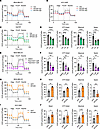 Figure 7
KIF20A controls mitochondrial OXPHOS. (A and B) Measurement of oxygen consumption rate (OCR) of MDA-MB-231 (A) and HCC1806 (B) cells expressing control or KIF20A sgRNAs. n = 5–7. (C and D) Measurement of OCR (C) and corresponding quantifications (D) in Hs578T cells transfected with control or KIF20A siRNAs. n = 6–7. (E and F) Measurement of OCR (E) and corresponding quantifications (F) in MDA-MB-231 cells treated with indicated doses of paprotrain. n = 4–5. (G–J) Measurement of OCR and corresponding quantifications in MDA-MB-231 (G and H) and HCC1806 (I and J) cells expressing GFP control or KIF20A. n = 4–5. Each data point represents a biological replicate. Data represent mean ± SEM. Statistical analyses were conducted by 1-way ANOVA with Dunnett’s test (D and F) or 2-tailed Student’s t test (H and J). *P < 0.05, **P < 0.01, ***P < 0.001, ****P < 0.0001.
To verify whether KIF20A modulates OCR through mitochondrial OXPHOS, we generated MDA-MB-231 cell lines depleted of mitochondrial DNA (mtDNA) using ethidium bromide (EtBr) (34). Treatment with EtBr for 1 week reduced the expression of the mtDNA-encoded genes ND2 and D-loop at concentrations of 225 ng/mL or more (Supplemental Figure 8, A and B). MDA-MB-231 control or KIF20A-overexpressing cells were then cultured in either DMSO or EtBr (225 ng/mL) for 1 week to establish cell lines with normal or depleted mtDNA expression (Supplemental Figure 8, C and D). We performed Seahorse assays in these cell lines and found that the KIF20A-induced OCR was abolished by mtDNA depletion. Specifically, EtBr-treated cells showed no response to oligomycin, FCCP, or rotenone/antimycin A (Rot/AA), even with high KIF20A expression (Supplemental Figure 8, E and F). This suggests that the effect of KIF20A on OXPHOS relies on the integrity of the electron transport chain. To summarize, our results showed that KIF20A may regulate mitochondrial function in TNBC.
The reduction in OCR upon KIF20A loss suggests impaired mitochondrial function. We next investigated whether restoring mitochondrial respiration could rescue the stem-like phenotype impaired by KIF20A depletion. We expressed the yeast mitochondrial NADH dehydrogenase NDI1 (hereafter referred to as mt-ND1) (Supplemental Figure 8G), which oxidizes NADH to NAD+ and compensates for mammalian complex I activity (35). First, mt-ND1 overexpression increased both basal and maximal respiration in MDA-MB-231 cells (Figure 8, A and B), confirming enhanced mitochondrial activity. Next, we performed mammosphere assays to examine the effect of mt-ND1 overexpression in TNBC cells depleted of KIF20A. Whereas KIF20A knockdown led to decreased mammosphere formation in TNBC, this phenotype could be partially rescued by mt-ND1 overexpression (Figure 8, C–E). Furthermore, mt-ND1 overexpression partially rescued OCR depletion caused by KIF20A depletion (Figure 8, F and G). In addition, we also performed rescue experiments in TNBC infected with the KIF20A sgRNA, and consistently, mt-ND1 overexpression rescued the phenotype of BCSCs upon KIF20A depletion (Figure 8, H–J). Cumulatively, our results suggest that KIF20A sustains BCSCs in TNBC through mitochondrial OXPHOS.
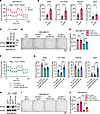 Figure 8
OXPHOS restoration by mt-ND1 rescues decreased BCSC self-renewal ability by KIF20A depletion. (A and B) Measurement of OCR (A) and corresponding quantifications (B) in MDA-MB-231 cells expressing empty vector (EV) or mt-ND1. n = 5. (C–G) Immunoblot analysis (C), representative images of mammosphere formation assay (D), corresponding mammosphere quantifications (n = 3) (E), and OCR measurement and quantifications (n = 3–7) (F and G) of KIF20A in EV- or mt-ND1–overexpressing MDA-MB-231 cells transfected with indicated control (Ctrl) or KIF20A siRNAs. Scale bar: 1 mm. (H–J) Immunoblot analysis of KIF20A (H), representative images of mammosphere formation assay (I), and corresponding mammosphere quantifications (n = 3) (J) in EV- or mt-ND1–overexpressing MDA-MB-231 cells transduced with control (Ctrl) or KIF20A sgRNA. Scale bar: 1 mm. Each data point represents a biological replicate. Data represent mean ± SEM. Statistical analyses were conducted by 2-tailed Student’s t test (B) or 1-way ANOVA with Tukey’s test (E, G, and J). *P < 0.05, **P < 0.01, ***P < 0.001, ****P < 0.0001.
KIF20A controls OXPHOS and BCSCs through SMARCA4. As a kinesin family member, KIF20A canonically mediates chromosome transport during mitosis via its ATPase-containing kinesin domain (20). Since KIF20A is not a transcription factor, how it regulates gene expression involved in mitochondrial function remains unclear. To identify KIF20A-interacting proteins that potentially mediate its effect on gene regulation, we performed V5-tagged KIF20A immunoprecipitation followed by mass spectrometry in MDA-MB-231 cells (Figure 9A). Among the proteins enriched in the KIF20A group, it is interesting that both canonical SWI/SNF complex proteins SMARCA4 and ARID1A were identified as potential KIF20A interaction partners. The SWI/SNF complex is composed of evolutionarily conserved core subunit protein and variant subunit protein. The major subclasses of the human SWI/SNF are BRG1-associated factor (BAF) and polybromo BRG1-associated factor (PBAF). SMARCA4 is one of the evolutionarily conserved core subunits found in BAF and PBAF, while ARID1A is specific to BAF complex (36). Therefore, we decided to characterize the role of these SWI/SNF complex proteins in regulating the effect of KIF20A. We performed coimmunoprecipitation (co-IP) in MDA-MB-231 cells expressing exogenous HA-tagged KIF20A and V5-tagged SMARCA4. We found strong KIF20A-SMARCA4 interactions from either HA- or V5-tagged co-IP (Supplemental Figure 9, A and B). Moreover, their interaction was further validated in co-IP using exogenous V5-tagged KIF20A and endogenous SMARCA4 in both MDA-MB-231 and HCC1806 cells (Figure 9, B and C). Although exogenous KIF20A interacts with V5-tagged ARID1A in MDA-MB-231 and HCC1806 cells (Supplemental Figure 9, C and D), we could not detect its reliable binding to endogenous ARID1A (Supplemental Figure 9, E and F). To support the co-IP results demonstrating the interaction between KIF20A and SMARCA4, we examined their subcellular localization by extracting nuclear and cytoplasmic proteins from MDA-MB-231 and HCC1806 cells. Western blotting results revealed that KIF20A is localized in both the nucleus and cytoplasm, while SMARCA4 is exclusively localized in the nucleus (Figure 9, D and E). Immunofluorescence stains using primary antibodies against endogenous KIF20A and SMARCA4 revealed that both proteins predominantly colocalize in the nucleus (Figure 9F). We also performed immunofluorescence staining in the cells with ectopic overexpression of KIF20A and SMARCA4 and found similar results (Supplemental Figure 9G). Based on these results, we decided to focus on SMARCA4A to elucidate the mechanism of KIF20A in BCSC regulation.
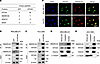 Figure 9
KIF20A interacts with SMARCA4. (A) Top hits of KIF20A binding proteins identified by immunoprecipitation–mass spectrometry. (B and C) Co-IP of exogenous HA-tagged KIF20A and endogenous SMARCA4 in MDA-MB-231 (B) or HCC1806 (C) cells. (D and E) Immunoblot analysis of extracted nuclear and cytoplasmic proteins in MDA-MB-231 (D) or HCC1806 (E) cells. (F) Immunofluorescence staining of endogenous KIF20A and SMARCA4 in MDA-MB-231 or Hs587T cell lines. Scale bar: 90 μm.
SMARCA4, as part of the SWI/SNF chromatin remodeling complex, regulates transcription through nucleosome repositioning. In mammalian cells, it has been reported that the SWI/SNF complex plays roles in both the activation and repression of transcription (36). We hypothesized that KIF20A interacts with SMARCA4 to influence the transcriptional regulation of BCSCs in TNBC. To first examine the effect of SMARCA4 on OXPHOS gene expression, we depleted SMARCA4 with 2 independent shRNAs in MDA-MB-231 cells (Figure 10A). SMARCA4 knockdown increased OXPHOS gene expression and OCR (Figure 10, B and C), suggesting that SMARCA4 negatively regulates OXPHOS in TNBC. Next, to investigate whether SMARCA4 mediates the expression of OXPHOS genes regulated by KIF20A in TNBC, we further knocked down SMARCA4 in TNBC cells with KIF20A depletion (Figure 10D). Consequently, we found that SMARCA4 knockdown could rescue the reduction of OXPHOS gene expression and OCR in KIF20A-depleted MDA-MB-231 and HCC1806 cells (Figure 10, E–G). In line with OXPHOS gene rescue, knockdown of SMARCA4 restored the decreased mammosphere formation ability in MDA-MB-231 cells caused by KIF20A depletion (Figure 10H).
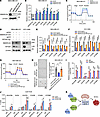 Figure 10
KIF20A controls OXPHOS genes and BCSCs through SMARCA4. (A–C) Immunoblot analysis of SMARCA4 protein (A), RT-qPCR analysis of OXPHOS genes (n = 3) (B), and measurement of OCR (C) in MDA-MB-231 cells transduced with indicated control or SMARCA4 shRNAs. (D–F) Immunoblot analysis of KIF20A and SMARCA4 (D) and RT-qPCR analysis of OXPHOS genes in MDA-MB-231 (E) and HCC1806 (F) cells transduced with control or KIF20A sgRNA and control or SMARCA4 shRNA as indicated. n = 3. (G and H) Measurement of OCR (n = 5) (G) and mammosphere formation assay and corresponding quantifications (n = 3) (H) in MDA-MB-231 cells transduced with control or KIF20A sgRNA and control or SMARCA4 shRNA as indicated. Scale bar: 1 mm. (I) ChIP-PCR analysis of KIF20A and SMARCA4 binding at the promoters of OXPHOS genes in MDA-MB-231 cells. n = 3. (J) ChIP-PCR analysis of SMARCA4 binding at the promoters of OXPHOS genes in MDA-MB-231 cells transduced with control or KIF20A sgRNAs. n = 3. (K) Schematic model of the mechanism proposed for this study. Each data point represents a biological replicate. Data represent mean ± SEM. Statistical analyses were conducted by 1-way ANOVA with Dunnett’s test (B, I, and J) or with Tukey’s test (E, F, and H). *P < 0.05, **P < 0.01, ***P < 0.001, ****P < 0.0001.
To determine whether the KIF20A-SMARCA4 complex directly regulates OXPHOS genes, we performed chromatin immunoprecipitation (ChIP) assays in MDA-MB-231 cells using antibodies against KIF20A and SMARCA4, followed by qPCR analysis with primers specific to the promoter regions of OXPHOS genes. We found significant enrichment of OXPHOS gene promoter regions in both KIF20A and SMARCA4 groups compared with the IgG control (Figure 10I). Our ChIP-PCR data for SMARCA4 is consistent with published ChIP sequencing data performed in MDA-MB-231 cells (37) (Supplemental Figure 10). These data suggest that KIF20A and SMARCA4 coordinate the regulation of OXPHOS gene expression by co-occupying their promoters. Given that KIF20A and SMARCA4 play opposing roles in promoting and repressing OXPHOS gene expression, respectively (Figure 6, H and I, and Figure 10B), we hypothesize that KIF20A may antagonize SMARCA4’s regulatory function at OXPHOS genes. To investigate whether KIF20A influences SMARCA4’s promoter-binding activity, we performed SMARCA4 ChIP-PCR analysis in scrambled control sgRNA or KIF20A-knockdown (sg1 and sg3) cells. Notably, we found that KIF20A depletion enhanced SMARCA4 occupancy at the OXPHOS gene promoters (Figure 10J), suggesting that KIF20A antagonizes SMARCA4 binding to relieve repression of OXPHOS genes. Together, these data suggest that KIF20A, by forming a complex with SMARCA4, controls OXPHOS gene expression important in regulating BCSCs in TNBC (Figure 10K).
KIF20A inhibitor treatment sensitizes TNBC xenografts to chemotherapy. Platinum-based chemotherapy, such as carboplatin, is frequently used in the treatment of TNBC (38). However, acquired resistance to prolonged platinum-based chemotherapy has been reported, often due to BCSCs (39). Given that the KIF20A inhibitor effectively targets BCSCs (Figure 5), while conventional chemotherapy such as carboplatin efficiently debulks the bulk tumor cells, we evaluated the therapeutic efficacy of combining carboplatin with paprotrain in vivo. To determine whether paprotrain and carboplatin display a combinatorial effect on BCSCs, we pretreated MDA-MB-231 tumor cells with carboplatin, paprotrain, or their combination, alongside vehicle-treated controls. Treated cells were then subjected to secondary in vivo extreme limiting dilution assays (ELDAs) to assess BCSC frequency (Figure 11A). We found that paprotrain alone reduced the tumor initiation rate, whereas carboplatin treatment had minimal effect, consistent with previous findings (40, 41). Notably, the combination treatment further suppressed tumor initiation and tumor burden compared with all other treatment groups (Figure 11, B–D). Motivated by these findings, we treated MDA-MB-231 tumor-bearing mice with the same regimen and observed that the combination of carboplatin and paprotrain further reduced tumor growth and weight compared with carboplatin alone (Figure 11, E–G).
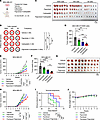 Figure 11
Paprotrain treatment sensitizes TNBC tumor model to chemotherapy. (A–D) Study design (A), limiting dilution tumor-initiating assay (B), harvested tumor images (C), and tumor weight at the end point with 5,000 cells injected (D) for MDA-MB-231 cells treated with vehicle, paprotrain (2 μM), carboplatin (2 μM), or combination. n = 6. Scale bar: 1 cm. (E–G) Tumor growth (E), tumor weight upon dissection (F), and tumor images (G) of MDA-MB-231 orthotopic xenograft model treated with vehicle, paprotrain (50 mg/kg/wk), carboplatin (10 mg/kg/wk), or paprotrain (50 mg/kg/wk) combined with carboplatin (10 mg/kg/wk). n = 10. Scale bar: 1 cm. (H–J) Tumor growth (H), mouse survival (I), and body weight change (J) of MDA-MB-231 orthotopic xenograft model treated with vehicle, paprotrain (50 mg/kg/wk), paclitaxel (10 mg/kg/wk), or paprotrain (50 mg/kg/wk) combined with paclitaxel (10 mg/kg/wk). n = 10–11. Data represent mean ± SEM. Statistical analyses were conducted by χ2 test (B), 1-way ANOVA with Tukey’s test (D and F), 2-way ANOVA with Tukey’s test (E, H, and J), or log-rank (Mantel-Cox) test (I). *P < 0.05, **P < 0.01, ***P < 0.001, ****P < 0.0001.
It has been reported that BCSCs are associated with resistance to paclitaxel, another widely used chemotherapeutic agent (13). Notably, a study has shown that KIF20A expression is downregulated in paclitaxel-sensitive breast cancer cells but elevated in paclitaxel-resistant ones (42). Therefore, we also examined the therapeutic efficacy of combined treatment with paclitaxel (10 mg/kg/wk) and paprotrain (50 mg/kg/wk) in an MDA-MB-231 orthotopic xenograft model. As a result, combined therapy significantly reduced tumor growth and increased mouse survival compared with treatment with paclitaxel or paprotrain alone (Figure 11, H and I). Importantly, no significant change in body weight was observed in combined therapy, suggesting that it is a well-tolerated treatment (Figure 11J). Taken together, our results suggest that KIF20A inhibition with specific inhibitors, such as paprotrain, could sensitize TNBC to standard chemotherapy, potentially by reducing BCSC fitness in vivo.


Copyright © 2026 American Society for Clinical Investigation
ISSN: 0021-9738 (print), 1558-8238 (online)