
Advertisement
Research ArticleDermatologyOncology
Open Access |  10.1172/JCI188924
Interlocking host and viral cis-regulatory networks drive Merkel cell carcinoma
Lingling Miao,1 David Milewski,2 Amy Coxon,1 Tara Gelb,1 Khalid A. Garman,1 Jadon Porch,3 Arushi Khanna,3 Loren Collado,1 Natasha T. Hill,1 Kenneth Daily,1 Serena Vilasi,1 Danielle Reed,1 Tiffany Alexander,1 Gabriel J. Starrett,4 Maharshi Chakraborty,5 Young Song,2 Rachel Choi,2 Vineela Gangalapudi,2 Josiah Seaman,3 Andrew Morton,3 Klaus J. Busam,6 Christopher R. Vakoc,7 Daniel J. Urban,8 Min Shen,8 Matthew D. Hall,8 Richard Sallari,5 Javed Khan,2 Berkley E. Gryder,2,3 and Isaac Brownell1
1Dermatology Branch, National Institute of Arthritis and Musculoskeletal and Skin Diseases (NIAMS), and
2Genetics Branch, National Cancer Institute (NCI), NIH, Bethesda, Maryland, USA.
3Department of Genetics and Genome Sciences, Case Western Reserve University, Cleveland, Ohio, USA.
4Laboratory of Cellular Oncology, NCI, NIH, Bethesda, Maryland, USA.
5Axiotl, Cleveland, Ohio, USA.
6Department of Pathology, Memorial Sloan Kettering Cancer Center, New York, New York, USA.
7Cold Spring Harbor Laboratory, Cold Spring Harbor, New York, USA.
8Division of Pre-clinical Innovation, National Center for Advancing Translational Sciences (NCATS), NIH, Rockville, Maryland, USA.
Address correspondence to: Isaac Brownell, Dermatology Branch, NIAMS, NIH, 10 Center Drive, Bethesda, Maryland, 20892, USA. Phone: 301.827.2519; Email: isaac.brownell@nih.gov. Or to: Berkley E. Gryder, Department of Genetics and Genome Sciences, Case Western Reserve University, Biomedical Research Building 701, 2109 Adelbert Road, Cleveland, Ohio, 44106, USA. Phone: 216.368.8749; Email: berkley.gryder@case.edu. Or to: Javed Khan, Genetics Branch, NCI, NIH, 37 Convent Drive, Bethesda, Maryland, 20892, USA. Phone: 240.760.6135; Email: khanjav@mail.nih.gov.
Authorship note: LM, DM, and BEG contributed equally to this work.
Find articles by Miao, L. in: PubMed | Google Scholar
1Dermatology Branch, National Institute of Arthritis and Musculoskeletal and Skin Diseases (NIAMS), and
2Genetics Branch, National Cancer Institute (NCI), NIH, Bethesda, Maryland, USA.
3Department of Genetics and Genome Sciences, Case Western Reserve University, Cleveland, Ohio, USA.
4Laboratory of Cellular Oncology, NCI, NIH, Bethesda, Maryland, USA.
5Axiotl, Cleveland, Ohio, USA.
6Department of Pathology, Memorial Sloan Kettering Cancer Center, New York, New York, USA.
7Cold Spring Harbor Laboratory, Cold Spring Harbor, New York, USA.
8Division of Pre-clinical Innovation, National Center for Advancing Translational Sciences (NCATS), NIH, Rockville, Maryland, USA.
Address correspondence to: Isaac Brownell, Dermatology Branch, NIAMS, NIH, 10 Center Drive, Bethesda, Maryland, 20892, USA. Phone: 301.827.2519; Email: isaac.brownell@nih.gov. Or to: Berkley E. Gryder, Department of Genetics and Genome Sciences, Case Western Reserve University, Biomedical Research Building 701, 2109 Adelbert Road, Cleveland, Ohio, 44106, USA. Phone: 216.368.8749; Email: berkley.gryder@case.edu. Or to: Javed Khan, Genetics Branch, NCI, NIH, 37 Convent Drive, Bethesda, Maryland, 20892, USA. Phone: 240.760.6135; Email: khanjav@mail.nih.gov.
Authorship note: LM, DM, and BEG contributed equally to this work.
Find articles by
Milewski, D.
in:
PubMed
|
Google Scholar
|

1Dermatology Branch, National Institute of Arthritis and Musculoskeletal and Skin Diseases (NIAMS), and
2Genetics Branch, National Cancer Institute (NCI), NIH, Bethesda, Maryland, USA.
3Department of Genetics and Genome Sciences, Case Western Reserve University, Cleveland, Ohio, USA.
4Laboratory of Cellular Oncology, NCI, NIH, Bethesda, Maryland, USA.
5Axiotl, Cleveland, Ohio, USA.
6Department of Pathology, Memorial Sloan Kettering Cancer Center, New York, New York, USA.
7Cold Spring Harbor Laboratory, Cold Spring Harbor, New York, USA.
8Division of Pre-clinical Innovation, National Center for Advancing Translational Sciences (NCATS), NIH, Rockville, Maryland, USA.
Address correspondence to: Isaac Brownell, Dermatology Branch, NIAMS, NIH, 10 Center Drive, Bethesda, Maryland, 20892, USA. Phone: 301.827.2519; Email: isaac.brownell@nih.gov. Or to: Berkley E. Gryder, Department of Genetics and Genome Sciences, Case Western Reserve University, Biomedical Research Building 701, 2109 Adelbert Road, Cleveland, Ohio, 44106, USA. Phone: 216.368.8749; Email: berkley.gryder@case.edu. Or to: Javed Khan, Genetics Branch, NCI, NIH, 37 Convent Drive, Bethesda, Maryland, 20892, USA. Phone: 240.760.6135; Email: khanjav@mail.nih.gov.
Authorship note: LM, DM, and BEG contributed equally to this work.
Find articles by Coxon, A. in: PubMed | Google Scholar
1Dermatology Branch, National Institute of Arthritis and Musculoskeletal and Skin Diseases (NIAMS), and
2Genetics Branch, National Cancer Institute (NCI), NIH, Bethesda, Maryland, USA.
3Department of Genetics and Genome Sciences, Case Western Reserve University, Cleveland, Ohio, USA.
4Laboratory of Cellular Oncology, NCI, NIH, Bethesda, Maryland, USA.
5Axiotl, Cleveland, Ohio, USA.
6Department of Pathology, Memorial Sloan Kettering Cancer Center, New York, New York, USA.
7Cold Spring Harbor Laboratory, Cold Spring Harbor, New York, USA.
8Division of Pre-clinical Innovation, National Center for Advancing Translational Sciences (NCATS), NIH, Rockville, Maryland, USA.
Address correspondence to: Isaac Brownell, Dermatology Branch, NIAMS, NIH, 10 Center Drive, Bethesda, Maryland, 20892, USA. Phone: 301.827.2519; Email: isaac.brownell@nih.gov. Or to: Berkley E. Gryder, Department of Genetics and Genome Sciences, Case Western Reserve University, Biomedical Research Building 701, 2109 Adelbert Road, Cleveland, Ohio, 44106, USA. Phone: 216.368.8749; Email: berkley.gryder@case.edu. Or to: Javed Khan, Genetics Branch, NCI, NIH, 37 Convent Drive, Bethesda, Maryland, 20892, USA. Phone: 240.760.6135; Email: khanjav@mail.nih.gov.
Authorship note: LM, DM, and BEG contributed equally to this work.
Find articles by Gelb, T. in: PubMed | Google Scholar
1Dermatology Branch, National Institute of Arthritis and Musculoskeletal and Skin Diseases (NIAMS), and
2Genetics Branch, National Cancer Institute (NCI), NIH, Bethesda, Maryland, USA.
3Department of Genetics and Genome Sciences, Case Western Reserve University, Cleveland, Ohio, USA.
4Laboratory of Cellular Oncology, NCI, NIH, Bethesda, Maryland, USA.
5Axiotl, Cleveland, Ohio, USA.
6Department of Pathology, Memorial Sloan Kettering Cancer Center, New York, New York, USA.
7Cold Spring Harbor Laboratory, Cold Spring Harbor, New York, USA.
8Division of Pre-clinical Innovation, National Center for Advancing Translational Sciences (NCATS), NIH, Rockville, Maryland, USA.
Address correspondence to: Isaac Brownell, Dermatology Branch, NIAMS, NIH, 10 Center Drive, Bethesda, Maryland, 20892, USA. Phone: 301.827.2519; Email: isaac.brownell@nih.gov. Or to: Berkley E. Gryder, Department of Genetics and Genome Sciences, Case Western Reserve University, Biomedical Research Building 701, 2109 Adelbert Road, Cleveland, Ohio, 44106, USA. Phone: 216.368.8749; Email: berkley.gryder@case.edu. Or to: Javed Khan, Genetics Branch, NCI, NIH, 37 Convent Drive, Bethesda, Maryland, 20892, USA. Phone: 240.760.6135; Email: khanjav@mail.nih.gov.
Authorship note: LM, DM, and BEG contributed equally to this work.
Find articles by Garman, K. in: PubMed | Google Scholar
1Dermatology Branch, National Institute of Arthritis and Musculoskeletal and Skin Diseases (NIAMS), and
2Genetics Branch, National Cancer Institute (NCI), NIH, Bethesda, Maryland, USA.
3Department of Genetics and Genome Sciences, Case Western Reserve University, Cleveland, Ohio, USA.
4Laboratory of Cellular Oncology, NCI, NIH, Bethesda, Maryland, USA.
5Axiotl, Cleveland, Ohio, USA.
6Department of Pathology, Memorial Sloan Kettering Cancer Center, New York, New York, USA.
7Cold Spring Harbor Laboratory, Cold Spring Harbor, New York, USA.
8Division of Pre-clinical Innovation, National Center for Advancing Translational Sciences (NCATS), NIH, Rockville, Maryland, USA.
Address correspondence to: Isaac Brownell, Dermatology Branch, NIAMS, NIH, 10 Center Drive, Bethesda, Maryland, 20892, USA. Phone: 301.827.2519; Email: isaac.brownell@nih.gov. Or to: Berkley E. Gryder, Department of Genetics and Genome Sciences, Case Western Reserve University, Biomedical Research Building 701, 2109 Adelbert Road, Cleveland, Ohio, 44106, USA. Phone: 216.368.8749; Email: berkley.gryder@case.edu. Or to: Javed Khan, Genetics Branch, NCI, NIH, 37 Convent Drive, Bethesda, Maryland, 20892, USA. Phone: 240.760.6135; Email: khanjav@mail.nih.gov.
Authorship note: LM, DM, and BEG contributed equally to this work.
Find articles by Porch, J. in: PubMed | Google Scholar
1Dermatology Branch, National Institute of Arthritis and Musculoskeletal and Skin Diseases (NIAMS), and
2Genetics Branch, National Cancer Institute (NCI), NIH, Bethesda, Maryland, USA.
3Department of Genetics and Genome Sciences, Case Western Reserve University, Cleveland, Ohio, USA.
4Laboratory of Cellular Oncology, NCI, NIH, Bethesda, Maryland, USA.
5Axiotl, Cleveland, Ohio, USA.
6Department of Pathology, Memorial Sloan Kettering Cancer Center, New York, New York, USA.
7Cold Spring Harbor Laboratory, Cold Spring Harbor, New York, USA.
8Division of Pre-clinical Innovation, National Center for Advancing Translational Sciences (NCATS), NIH, Rockville, Maryland, USA.
Address correspondence to: Isaac Brownell, Dermatology Branch, NIAMS, NIH, 10 Center Drive, Bethesda, Maryland, 20892, USA. Phone: 301.827.2519; Email: isaac.brownell@nih.gov. Or to: Berkley E. Gryder, Department of Genetics and Genome Sciences, Case Western Reserve University, Biomedical Research Building 701, 2109 Adelbert Road, Cleveland, Ohio, 44106, USA. Phone: 216.368.8749; Email: berkley.gryder@case.edu. Or to: Javed Khan, Genetics Branch, NCI, NIH, 37 Convent Drive, Bethesda, Maryland, 20892, USA. Phone: 240.760.6135; Email: khanjav@mail.nih.gov.
Authorship note: LM, DM, and BEG contributed equally to this work.
Find articles by Khanna, A. in: PubMed | Google Scholar
1Dermatology Branch, National Institute of Arthritis and Musculoskeletal and Skin Diseases (NIAMS), and
2Genetics Branch, National Cancer Institute (NCI), NIH, Bethesda, Maryland, USA.
3Department of Genetics and Genome Sciences, Case Western Reserve University, Cleveland, Ohio, USA.
4Laboratory of Cellular Oncology, NCI, NIH, Bethesda, Maryland, USA.
5Axiotl, Cleveland, Ohio, USA.
6Department of Pathology, Memorial Sloan Kettering Cancer Center, New York, New York, USA.
7Cold Spring Harbor Laboratory, Cold Spring Harbor, New York, USA.
8Division of Pre-clinical Innovation, National Center for Advancing Translational Sciences (NCATS), NIH, Rockville, Maryland, USA.
Address correspondence to: Isaac Brownell, Dermatology Branch, NIAMS, NIH, 10 Center Drive, Bethesda, Maryland, 20892, USA. Phone: 301.827.2519; Email: isaac.brownell@nih.gov. Or to: Berkley E. Gryder, Department of Genetics and Genome Sciences, Case Western Reserve University, Biomedical Research Building 701, 2109 Adelbert Road, Cleveland, Ohio, 44106, USA. Phone: 216.368.8749; Email: berkley.gryder@case.edu. Or to: Javed Khan, Genetics Branch, NCI, NIH, 37 Convent Drive, Bethesda, Maryland, 20892, USA. Phone: 240.760.6135; Email: khanjav@mail.nih.gov.
Authorship note: LM, DM, and BEG contributed equally to this work.
Find articles by Collado, L. in: PubMed | Google Scholar
1Dermatology Branch, National Institute of Arthritis and Musculoskeletal and Skin Diseases (NIAMS), and
2Genetics Branch, National Cancer Institute (NCI), NIH, Bethesda, Maryland, USA.
3Department of Genetics and Genome Sciences, Case Western Reserve University, Cleveland, Ohio, USA.
4Laboratory of Cellular Oncology, NCI, NIH, Bethesda, Maryland, USA.
5Axiotl, Cleveland, Ohio, USA.
6Department of Pathology, Memorial Sloan Kettering Cancer Center, New York, New York, USA.
7Cold Spring Harbor Laboratory, Cold Spring Harbor, New York, USA.
8Division of Pre-clinical Innovation, National Center for Advancing Translational Sciences (NCATS), NIH, Rockville, Maryland, USA.
Address correspondence to: Isaac Brownell, Dermatology Branch, NIAMS, NIH, 10 Center Drive, Bethesda, Maryland, 20892, USA. Phone: 301.827.2519; Email: isaac.brownell@nih.gov. Or to: Berkley E. Gryder, Department of Genetics and Genome Sciences, Case Western Reserve University, Biomedical Research Building 701, 2109 Adelbert Road, Cleveland, Ohio, 44106, USA. Phone: 216.368.8749; Email: berkley.gryder@case.edu. Or to: Javed Khan, Genetics Branch, NCI, NIH, 37 Convent Drive, Bethesda, Maryland, 20892, USA. Phone: 240.760.6135; Email: khanjav@mail.nih.gov.
Authorship note: LM, DM, and BEG contributed equally to this work.
Find articles by Hill, N. in: PubMed | Google Scholar
1Dermatology Branch, National Institute of Arthritis and Musculoskeletal and Skin Diseases (NIAMS), and
2Genetics Branch, National Cancer Institute (NCI), NIH, Bethesda, Maryland, USA.
3Department of Genetics and Genome Sciences, Case Western Reserve University, Cleveland, Ohio, USA.
4Laboratory of Cellular Oncology, NCI, NIH, Bethesda, Maryland, USA.
5Axiotl, Cleveland, Ohio, USA.
6Department of Pathology, Memorial Sloan Kettering Cancer Center, New York, New York, USA.
7Cold Spring Harbor Laboratory, Cold Spring Harbor, New York, USA.
8Division of Pre-clinical Innovation, National Center for Advancing Translational Sciences (NCATS), NIH, Rockville, Maryland, USA.
Address correspondence to: Isaac Brownell, Dermatology Branch, NIAMS, NIH, 10 Center Drive, Bethesda, Maryland, 20892, USA. Phone: 301.827.2519; Email: isaac.brownell@nih.gov. Or to: Berkley E. Gryder, Department of Genetics and Genome Sciences, Case Western Reserve University, Biomedical Research Building 701, 2109 Adelbert Road, Cleveland, Ohio, 44106, USA. Phone: 216.368.8749; Email: berkley.gryder@case.edu. Or to: Javed Khan, Genetics Branch, NCI, NIH, 37 Convent Drive, Bethesda, Maryland, 20892, USA. Phone: 240.760.6135; Email: khanjav@mail.nih.gov.
Authorship note: LM, DM, and BEG contributed equally to this work.
Find articles by Daily, K. in: PubMed | Google Scholar
1Dermatology Branch, National Institute of Arthritis and Musculoskeletal and Skin Diseases (NIAMS), and
2Genetics Branch, National Cancer Institute (NCI), NIH, Bethesda, Maryland, USA.
3Department of Genetics and Genome Sciences, Case Western Reserve University, Cleveland, Ohio, USA.
4Laboratory of Cellular Oncology, NCI, NIH, Bethesda, Maryland, USA.
5Axiotl, Cleveland, Ohio, USA.
6Department of Pathology, Memorial Sloan Kettering Cancer Center, New York, New York, USA.
7Cold Spring Harbor Laboratory, Cold Spring Harbor, New York, USA.
8Division of Pre-clinical Innovation, National Center for Advancing Translational Sciences (NCATS), NIH, Rockville, Maryland, USA.
Address correspondence to: Isaac Brownell, Dermatology Branch, NIAMS, NIH, 10 Center Drive, Bethesda, Maryland, 20892, USA. Phone: 301.827.2519; Email: isaac.brownell@nih.gov. Or to: Berkley E. Gryder, Department of Genetics and Genome Sciences, Case Western Reserve University, Biomedical Research Building 701, 2109 Adelbert Road, Cleveland, Ohio, 44106, USA. Phone: 216.368.8749; Email: berkley.gryder@case.edu. Or to: Javed Khan, Genetics Branch, NCI, NIH, 37 Convent Drive, Bethesda, Maryland, 20892, USA. Phone: 240.760.6135; Email: khanjav@mail.nih.gov.
Authorship note: LM, DM, and BEG contributed equally to this work.
Find articles by Vilasi, S. in: PubMed | Google Scholar
1Dermatology Branch, National Institute of Arthritis and Musculoskeletal and Skin Diseases (NIAMS), and
2Genetics Branch, National Cancer Institute (NCI), NIH, Bethesda, Maryland, USA.
3Department of Genetics and Genome Sciences, Case Western Reserve University, Cleveland, Ohio, USA.
4Laboratory of Cellular Oncology, NCI, NIH, Bethesda, Maryland, USA.
5Axiotl, Cleveland, Ohio, USA.
6Department of Pathology, Memorial Sloan Kettering Cancer Center, New York, New York, USA.
7Cold Spring Harbor Laboratory, Cold Spring Harbor, New York, USA.
8Division of Pre-clinical Innovation, National Center for Advancing Translational Sciences (NCATS), NIH, Rockville, Maryland, USA.
Address correspondence to: Isaac Brownell, Dermatology Branch, NIAMS, NIH, 10 Center Drive, Bethesda, Maryland, 20892, USA. Phone: 301.827.2519; Email: isaac.brownell@nih.gov. Or to: Berkley E. Gryder, Department of Genetics and Genome Sciences, Case Western Reserve University, Biomedical Research Building 701, 2109 Adelbert Road, Cleveland, Ohio, 44106, USA. Phone: 216.368.8749; Email: berkley.gryder@case.edu. Or to: Javed Khan, Genetics Branch, NCI, NIH, 37 Convent Drive, Bethesda, Maryland, 20892, USA. Phone: 240.760.6135; Email: khanjav@mail.nih.gov.
Authorship note: LM, DM, and BEG contributed equally to this work.
Find articles by Reed, D. in: PubMed | Google Scholar
1Dermatology Branch, National Institute of Arthritis and Musculoskeletal and Skin Diseases (NIAMS), and
2Genetics Branch, National Cancer Institute (NCI), NIH, Bethesda, Maryland, USA.
3Department of Genetics and Genome Sciences, Case Western Reserve University, Cleveland, Ohio, USA.
4Laboratory of Cellular Oncology, NCI, NIH, Bethesda, Maryland, USA.
5Axiotl, Cleveland, Ohio, USA.
6Department of Pathology, Memorial Sloan Kettering Cancer Center, New York, New York, USA.
7Cold Spring Harbor Laboratory, Cold Spring Harbor, New York, USA.
8Division of Pre-clinical Innovation, National Center for Advancing Translational Sciences (NCATS), NIH, Rockville, Maryland, USA.
Address correspondence to: Isaac Brownell, Dermatology Branch, NIAMS, NIH, 10 Center Drive, Bethesda, Maryland, 20892, USA. Phone: 301.827.2519; Email: isaac.brownell@nih.gov. Or to: Berkley E. Gryder, Department of Genetics and Genome Sciences, Case Western Reserve University, Biomedical Research Building 701, 2109 Adelbert Road, Cleveland, Ohio, 44106, USA. Phone: 216.368.8749; Email: berkley.gryder@case.edu. Or to: Javed Khan, Genetics Branch, NCI, NIH, 37 Convent Drive, Bethesda, Maryland, 20892, USA. Phone: 240.760.6135; Email: khanjav@mail.nih.gov.
Authorship note: LM, DM, and BEG contributed equally to this work.
Find articles by Alexander, T. in: PubMed | Google Scholar
1Dermatology Branch, National Institute of Arthritis and Musculoskeletal and Skin Diseases (NIAMS), and
2Genetics Branch, National Cancer Institute (NCI), NIH, Bethesda, Maryland, USA.
3Department of Genetics and Genome Sciences, Case Western Reserve University, Cleveland, Ohio, USA.
4Laboratory of Cellular Oncology, NCI, NIH, Bethesda, Maryland, USA.
5Axiotl, Cleveland, Ohio, USA.
6Department of Pathology, Memorial Sloan Kettering Cancer Center, New York, New York, USA.
7Cold Spring Harbor Laboratory, Cold Spring Harbor, New York, USA.
8Division of Pre-clinical Innovation, National Center for Advancing Translational Sciences (NCATS), NIH, Rockville, Maryland, USA.
Address correspondence to: Isaac Brownell, Dermatology Branch, NIAMS, NIH, 10 Center Drive, Bethesda, Maryland, 20892, USA. Phone: 301.827.2519; Email: isaac.brownell@nih.gov. Or to: Berkley E. Gryder, Department of Genetics and Genome Sciences, Case Western Reserve University, Biomedical Research Building 701, 2109 Adelbert Road, Cleveland, Ohio, 44106, USA. Phone: 216.368.8749; Email: berkley.gryder@case.edu. Or to: Javed Khan, Genetics Branch, NCI, NIH, 37 Convent Drive, Bethesda, Maryland, 20892, USA. Phone: 240.760.6135; Email: khanjav@mail.nih.gov.
Authorship note: LM, DM, and BEG contributed equally to this work.
Find articles by
Starrett, G.
in:
PubMed
|
Google Scholar
|
1Dermatology Branch, National Institute of Arthritis and Musculoskeletal and Skin Diseases (NIAMS), and
2Genetics Branch, National Cancer Institute (NCI), NIH, Bethesda, Maryland, USA.
3Department of Genetics and Genome Sciences, Case Western Reserve University, Cleveland, Ohio, USA.
4Laboratory of Cellular Oncology, NCI, NIH, Bethesda, Maryland, USA.
5Axiotl, Cleveland, Ohio, USA.
6Department of Pathology, Memorial Sloan Kettering Cancer Center, New York, New York, USA.
7Cold Spring Harbor Laboratory, Cold Spring Harbor, New York, USA.
8Division of Pre-clinical Innovation, National Center for Advancing Translational Sciences (NCATS), NIH, Rockville, Maryland, USA.
Address correspondence to: Isaac Brownell, Dermatology Branch, NIAMS, NIH, 10 Center Drive, Bethesda, Maryland, 20892, USA. Phone: 301.827.2519; Email: isaac.brownell@nih.gov. Or to: Berkley E. Gryder, Department of Genetics and Genome Sciences, Case Western Reserve University, Biomedical Research Building 701, 2109 Adelbert Road, Cleveland, Ohio, 44106, USA. Phone: 216.368.8749; Email: berkley.gryder@case.edu. Or to: Javed Khan, Genetics Branch, NCI, NIH, 37 Convent Drive, Bethesda, Maryland, 20892, USA. Phone: 240.760.6135; Email: khanjav@mail.nih.gov.
Authorship note: LM, DM, and BEG contributed equally to this work.
Find articles by Chakraborty, M. in: PubMed | Google Scholar
1Dermatology Branch, National Institute of Arthritis and Musculoskeletal and Skin Diseases (NIAMS), and
2Genetics Branch, National Cancer Institute (NCI), NIH, Bethesda, Maryland, USA.
3Department of Genetics and Genome Sciences, Case Western Reserve University, Cleveland, Ohio, USA.
4Laboratory of Cellular Oncology, NCI, NIH, Bethesda, Maryland, USA.
5Axiotl, Cleveland, Ohio, USA.
6Department of Pathology, Memorial Sloan Kettering Cancer Center, New York, New York, USA.
7Cold Spring Harbor Laboratory, Cold Spring Harbor, New York, USA.
8Division of Pre-clinical Innovation, National Center for Advancing Translational Sciences (NCATS), NIH, Rockville, Maryland, USA.
Address correspondence to: Isaac Brownell, Dermatology Branch, NIAMS, NIH, 10 Center Drive, Bethesda, Maryland, 20892, USA. Phone: 301.827.2519; Email: isaac.brownell@nih.gov. Or to: Berkley E. Gryder, Department of Genetics and Genome Sciences, Case Western Reserve University, Biomedical Research Building 701, 2109 Adelbert Road, Cleveland, Ohio, 44106, USA. Phone: 216.368.8749; Email: berkley.gryder@case.edu. Or to: Javed Khan, Genetics Branch, NCI, NIH, 37 Convent Drive, Bethesda, Maryland, 20892, USA. Phone: 240.760.6135; Email: khanjav@mail.nih.gov.
Authorship note: LM, DM, and BEG contributed equally to this work.
Find articles by Song, Y. in: PubMed | Google Scholar
1Dermatology Branch, National Institute of Arthritis and Musculoskeletal and Skin Diseases (NIAMS), and
2Genetics Branch, National Cancer Institute (NCI), NIH, Bethesda, Maryland, USA.
3Department of Genetics and Genome Sciences, Case Western Reserve University, Cleveland, Ohio, USA.
4Laboratory of Cellular Oncology, NCI, NIH, Bethesda, Maryland, USA.
5Axiotl, Cleveland, Ohio, USA.
6Department of Pathology, Memorial Sloan Kettering Cancer Center, New York, New York, USA.
7Cold Spring Harbor Laboratory, Cold Spring Harbor, New York, USA.
8Division of Pre-clinical Innovation, National Center for Advancing Translational Sciences (NCATS), NIH, Rockville, Maryland, USA.
Address correspondence to: Isaac Brownell, Dermatology Branch, NIAMS, NIH, 10 Center Drive, Bethesda, Maryland, 20892, USA. Phone: 301.827.2519; Email: isaac.brownell@nih.gov. Or to: Berkley E. Gryder, Department of Genetics and Genome Sciences, Case Western Reserve University, Biomedical Research Building 701, 2109 Adelbert Road, Cleveland, Ohio, 44106, USA. Phone: 216.368.8749; Email: berkley.gryder@case.edu. Or to: Javed Khan, Genetics Branch, NCI, NIH, 37 Convent Drive, Bethesda, Maryland, 20892, USA. Phone: 240.760.6135; Email: khanjav@mail.nih.gov.
Authorship note: LM, DM, and BEG contributed equally to this work.
Find articles by Choi, R. in: PubMed | Google Scholar
1Dermatology Branch, National Institute of Arthritis and Musculoskeletal and Skin Diseases (NIAMS), and
2Genetics Branch, National Cancer Institute (NCI), NIH, Bethesda, Maryland, USA.
3Department of Genetics and Genome Sciences, Case Western Reserve University, Cleveland, Ohio, USA.
4Laboratory of Cellular Oncology, NCI, NIH, Bethesda, Maryland, USA.
5Axiotl, Cleveland, Ohio, USA.
6Department of Pathology, Memorial Sloan Kettering Cancer Center, New York, New York, USA.
7Cold Spring Harbor Laboratory, Cold Spring Harbor, New York, USA.
8Division of Pre-clinical Innovation, National Center for Advancing Translational Sciences (NCATS), NIH, Rockville, Maryland, USA.
Address correspondence to: Isaac Brownell, Dermatology Branch, NIAMS, NIH, 10 Center Drive, Bethesda, Maryland, 20892, USA. Phone: 301.827.2519; Email: isaac.brownell@nih.gov. Or to: Berkley E. Gryder, Department of Genetics and Genome Sciences, Case Western Reserve University, Biomedical Research Building 701, 2109 Adelbert Road, Cleveland, Ohio, 44106, USA. Phone: 216.368.8749; Email: berkley.gryder@case.edu. Or to: Javed Khan, Genetics Branch, NCI, NIH, 37 Convent Drive, Bethesda, Maryland, 20892, USA. Phone: 240.760.6135; Email: khanjav@mail.nih.gov.
Authorship note: LM, DM, and BEG contributed equally to this work.
Find articles by Gangalapudi, V. in: PubMed | Google Scholar
1Dermatology Branch, National Institute of Arthritis and Musculoskeletal and Skin Diseases (NIAMS), and
2Genetics Branch, National Cancer Institute (NCI), NIH, Bethesda, Maryland, USA.
3Department of Genetics and Genome Sciences, Case Western Reserve University, Cleveland, Ohio, USA.
4Laboratory of Cellular Oncology, NCI, NIH, Bethesda, Maryland, USA.
5Axiotl, Cleveland, Ohio, USA.
6Department of Pathology, Memorial Sloan Kettering Cancer Center, New York, New York, USA.
7Cold Spring Harbor Laboratory, Cold Spring Harbor, New York, USA.
8Division of Pre-clinical Innovation, National Center for Advancing Translational Sciences (NCATS), NIH, Rockville, Maryland, USA.
Address correspondence to: Isaac Brownell, Dermatology Branch, NIAMS, NIH, 10 Center Drive, Bethesda, Maryland, 20892, USA. Phone: 301.827.2519; Email: isaac.brownell@nih.gov. Or to: Berkley E. Gryder, Department of Genetics and Genome Sciences, Case Western Reserve University, Biomedical Research Building 701, 2109 Adelbert Road, Cleveland, Ohio, 44106, USA. Phone: 216.368.8749; Email: berkley.gryder@case.edu. Or to: Javed Khan, Genetics Branch, NCI, NIH, 37 Convent Drive, Bethesda, Maryland, 20892, USA. Phone: 240.760.6135; Email: khanjav@mail.nih.gov.
Authorship note: LM, DM, and BEG contributed equally to this work.
Find articles by Seaman, J. in: PubMed | Google Scholar
1Dermatology Branch, National Institute of Arthritis and Musculoskeletal and Skin Diseases (NIAMS), and
2Genetics Branch, National Cancer Institute (NCI), NIH, Bethesda, Maryland, USA.
3Department of Genetics and Genome Sciences, Case Western Reserve University, Cleveland, Ohio, USA.
4Laboratory of Cellular Oncology, NCI, NIH, Bethesda, Maryland, USA.
5Axiotl, Cleveland, Ohio, USA.
6Department of Pathology, Memorial Sloan Kettering Cancer Center, New York, New York, USA.
7Cold Spring Harbor Laboratory, Cold Spring Harbor, New York, USA.
8Division of Pre-clinical Innovation, National Center for Advancing Translational Sciences (NCATS), NIH, Rockville, Maryland, USA.
Address correspondence to: Isaac Brownell, Dermatology Branch, NIAMS, NIH, 10 Center Drive, Bethesda, Maryland, 20892, USA. Phone: 301.827.2519; Email: isaac.brownell@nih.gov. Or to: Berkley E. Gryder, Department of Genetics and Genome Sciences, Case Western Reserve University, Biomedical Research Building 701, 2109 Adelbert Road, Cleveland, Ohio, 44106, USA. Phone: 216.368.8749; Email: berkley.gryder@case.edu. Or to: Javed Khan, Genetics Branch, NCI, NIH, 37 Convent Drive, Bethesda, Maryland, 20892, USA. Phone: 240.760.6135; Email: khanjav@mail.nih.gov.
Authorship note: LM, DM, and BEG contributed equally to this work.
Find articles by Morton, A. in: PubMed | Google Scholar
1Dermatology Branch, National Institute of Arthritis and Musculoskeletal and Skin Diseases (NIAMS), and
2Genetics Branch, National Cancer Institute (NCI), NIH, Bethesda, Maryland, USA.
3Department of Genetics and Genome Sciences, Case Western Reserve University, Cleveland, Ohio, USA.
4Laboratory of Cellular Oncology, NCI, NIH, Bethesda, Maryland, USA.
5Axiotl, Cleveland, Ohio, USA.
6Department of Pathology, Memorial Sloan Kettering Cancer Center, New York, New York, USA.
7Cold Spring Harbor Laboratory, Cold Spring Harbor, New York, USA.
8Division of Pre-clinical Innovation, National Center for Advancing Translational Sciences (NCATS), NIH, Rockville, Maryland, USA.
Address correspondence to: Isaac Brownell, Dermatology Branch, NIAMS, NIH, 10 Center Drive, Bethesda, Maryland, 20892, USA. Phone: 301.827.2519; Email: isaac.brownell@nih.gov. Or to: Berkley E. Gryder, Department of Genetics and Genome Sciences, Case Western Reserve University, Biomedical Research Building 701, 2109 Adelbert Road, Cleveland, Ohio, 44106, USA. Phone: 216.368.8749; Email: berkley.gryder@case.edu. Or to: Javed Khan, Genetics Branch, NCI, NIH, 37 Convent Drive, Bethesda, Maryland, 20892, USA. Phone: 240.760.6135; Email: khanjav@mail.nih.gov.
Authorship note: LM, DM, and BEG contributed equally to this work.
Find articles by Busam, K. in: PubMed | Google Scholar
1Dermatology Branch, National Institute of Arthritis and Musculoskeletal and Skin Diseases (NIAMS), and
2Genetics Branch, National Cancer Institute (NCI), NIH, Bethesda, Maryland, USA.
3Department of Genetics and Genome Sciences, Case Western Reserve University, Cleveland, Ohio, USA.
4Laboratory of Cellular Oncology, NCI, NIH, Bethesda, Maryland, USA.
5Axiotl, Cleveland, Ohio, USA.
6Department of Pathology, Memorial Sloan Kettering Cancer Center, New York, New York, USA.
7Cold Spring Harbor Laboratory, Cold Spring Harbor, New York, USA.
8Division of Pre-clinical Innovation, National Center for Advancing Translational Sciences (NCATS), NIH, Rockville, Maryland, USA.
Address correspondence to: Isaac Brownell, Dermatology Branch, NIAMS, NIH, 10 Center Drive, Bethesda, Maryland, 20892, USA. Phone: 301.827.2519; Email: isaac.brownell@nih.gov. Or to: Berkley E. Gryder, Department of Genetics and Genome Sciences, Case Western Reserve University, Biomedical Research Building 701, 2109 Adelbert Road, Cleveland, Ohio, 44106, USA. Phone: 216.368.8749; Email: berkley.gryder@case.edu. Or to: Javed Khan, Genetics Branch, NCI, NIH, 37 Convent Drive, Bethesda, Maryland, 20892, USA. Phone: 240.760.6135; Email: khanjav@mail.nih.gov.
Authorship note: LM, DM, and BEG contributed equally to this work.
Find articles by Vakoc, C. in: PubMed | Google Scholar
1Dermatology Branch, National Institute of Arthritis and Musculoskeletal and Skin Diseases (NIAMS), and
2Genetics Branch, National Cancer Institute (NCI), NIH, Bethesda, Maryland, USA.
3Department of Genetics and Genome Sciences, Case Western Reserve University, Cleveland, Ohio, USA.
4Laboratory of Cellular Oncology, NCI, NIH, Bethesda, Maryland, USA.
5Axiotl, Cleveland, Ohio, USA.
6Department of Pathology, Memorial Sloan Kettering Cancer Center, New York, New York, USA.
7Cold Spring Harbor Laboratory, Cold Spring Harbor, New York, USA.
8Division of Pre-clinical Innovation, National Center for Advancing Translational Sciences (NCATS), NIH, Rockville, Maryland, USA.
Address correspondence to: Isaac Brownell, Dermatology Branch, NIAMS, NIH, 10 Center Drive, Bethesda, Maryland, 20892, USA. Phone: 301.827.2519; Email: isaac.brownell@nih.gov. Or to: Berkley E. Gryder, Department of Genetics and Genome Sciences, Case Western Reserve University, Biomedical Research Building 701, 2109 Adelbert Road, Cleveland, Ohio, 44106, USA. Phone: 216.368.8749; Email: berkley.gryder@case.edu. Or to: Javed Khan, Genetics Branch, NCI, NIH, 37 Convent Drive, Bethesda, Maryland, 20892, USA. Phone: 240.760.6135; Email: khanjav@mail.nih.gov.
Authorship note: LM, DM, and BEG contributed equally to this work.
Find articles by Urban, D. in: PubMed | Google Scholar
1Dermatology Branch, National Institute of Arthritis and Musculoskeletal and Skin Diseases (NIAMS), and
2Genetics Branch, National Cancer Institute (NCI), NIH, Bethesda, Maryland, USA.
3Department of Genetics and Genome Sciences, Case Western Reserve University, Cleveland, Ohio, USA.
4Laboratory of Cellular Oncology, NCI, NIH, Bethesda, Maryland, USA.
5Axiotl, Cleveland, Ohio, USA.
6Department of Pathology, Memorial Sloan Kettering Cancer Center, New York, New York, USA.
7Cold Spring Harbor Laboratory, Cold Spring Harbor, New York, USA.
8Division of Pre-clinical Innovation, National Center for Advancing Translational Sciences (NCATS), NIH, Rockville, Maryland, USA.
Address correspondence to: Isaac Brownell, Dermatology Branch, NIAMS, NIH, 10 Center Drive, Bethesda, Maryland, 20892, USA. Phone: 301.827.2519; Email: isaac.brownell@nih.gov. Or to: Berkley E. Gryder, Department of Genetics and Genome Sciences, Case Western Reserve University, Biomedical Research Building 701, 2109 Adelbert Road, Cleveland, Ohio, 44106, USA. Phone: 216.368.8749; Email: berkley.gryder@case.edu. Or to: Javed Khan, Genetics Branch, NCI, NIH, 37 Convent Drive, Bethesda, Maryland, 20892, USA. Phone: 240.760.6135; Email: khanjav@mail.nih.gov.
Authorship note: LM, DM, and BEG contributed equally to this work.
Find articles by Shen, M. in: PubMed | Google Scholar
1Dermatology Branch, National Institute of Arthritis and Musculoskeletal and Skin Diseases (NIAMS), and
2Genetics Branch, National Cancer Institute (NCI), NIH, Bethesda, Maryland, USA.
3Department of Genetics and Genome Sciences, Case Western Reserve University, Cleveland, Ohio, USA.
4Laboratory of Cellular Oncology, NCI, NIH, Bethesda, Maryland, USA.
5Axiotl, Cleveland, Ohio, USA.
6Department of Pathology, Memorial Sloan Kettering Cancer Center, New York, New York, USA.
7Cold Spring Harbor Laboratory, Cold Spring Harbor, New York, USA.
8Division of Pre-clinical Innovation, National Center for Advancing Translational Sciences (NCATS), NIH, Rockville, Maryland, USA.
Address correspondence to: Isaac Brownell, Dermatology Branch, NIAMS, NIH, 10 Center Drive, Bethesda, Maryland, 20892, USA. Phone: 301.827.2519; Email: isaac.brownell@nih.gov. Or to: Berkley E. Gryder, Department of Genetics and Genome Sciences, Case Western Reserve University, Biomedical Research Building 701, 2109 Adelbert Road, Cleveland, Ohio, 44106, USA. Phone: 216.368.8749; Email: berkley.gryder@case.edu. Or to: Javed Khan, Genetics Branch, NCI, NIH, 37 Convent Drive, Bethesda, Maryland, 20892, USA. Phone: 240.760.6135; Email: khanjav@mail.nih.gov.
Authorship note: LM, DM, and BEG contributed equally to this work.
Find articles by Hall, M. in: PubMed | Google Scholar
1Dermatology Branch, National Institute of Arthritis and Musculoskeletal and Skin Diseases (NIAMS), and
2Genetics Branch, National Cancer Institute (NCI), NIH, Bethesda, Maryland, USA.
3Department of Genetics and Genome Sciences, Case Western Reserve University, Cleveland, Ohio, USA.
4Laboratory of Cellular Oncology, NCI, NIH, Bethesda, Maryland, USA.
5Axiotl, Cleveland, Ohio, USA.
6Department of Pathology, Memorial Sloan Kettering Cancer Center, New York, New York, USA.
7Cold Spring Harbor Laboratory, Cold Spring Harbor, New York, USA.
8Division of Pre-clinical Innovation, National Center for Advancing Translational Sciences (NCATS), NIH, Rockville, Maryland, USA.
Address correspondence to: Isaac Brownell, Dermatology Branch, NIAMS, NIH, 10 Center Drive, Bethesda, Maryland, 20892, USA. Phone: 301.827.2519; Email: isaac.brownell@nih.gov. Or to: Berkley E. Gryder, Department of Genetics and Genome Sciences, Case Western Reserve University, Biomedical Research Building 701, 2109 Adelbert Road, Cleveland, Ohio, 44106, USA. Phone: 216.368.8749; Email: berkley.gryder@case.edu. Or to: Javed Khan, Genetics Branch, NCI, NIH, 37 Convent Drive, Bethesda, Maryland, 20892, USA. Phone: 240.760.6135; Email: khanjav@mail.nih.gov.
Authorship note: LM, DM, and BEG contributed equally to this work.
Find articles by Sallari, R. in: PubMed | Google Scholar
1Dermatology Branch, National Institute of Arthritis and Musculoskeletal and Skin Diseases (NIAMS), and
2Genetics Branch, National Cancer Institute (NCI), NIH, Bethesda, Maryland, USA.
3Department of Genetics and Genome Sciences, Case Western Reserve University, Cleveland, Ohio, USA.
4Laboratory of Cellular Oncology, NCI, NIH, Bethesda, Maryland, USA.
5Axiotl, Cleveland, Ohio, USA.
6Department of Pathology, Memorial Sloan Kettering Cancer Center, New York, New York, USA.
7Cold Spring Harbor Laboratory, Cold Spring Harbor, New York, USA.
8Division of Pre-clinical Innovation, National Center for Advancing Translational Sciences (NCATS), NIH, Rockville, Maryland, USA.
Address correspondence to: Isaac Brownell, Dermatology Branch, NIAMS, NIH, 10 Center Drive, Bethesda, Maryland, 20892, USA. Phone: 301.827.2519; Email: isaac.brownell@nih.gov. Or to: Berkley E. Gryder, Department of Genetics and Genome Sciences, Case Western Reserve University, Biomedical Research Building 701, 2109 Adelbert Road, Cleveland, Ohio, 44106, USA. Phone: 216.368.8749; Email: berkley.gryder@case.edu. Or to: Javed Khan, Genetics Branch, NCI, NIH, 37 Convent Drive, Bethesda, Maryland, 20892, USA. Phone: 240.760.6135; Email: khanjav@mail.nih.gov.
Authorship note: LM, DM, and BEG contributed equally to this work.
Find articles by
Khan, J.
in:
PubMed
|
Google Scholar
|
1Dermatology Branch, National Institute of Arthritis and Musculoskeletal and Skin Diseases (NIAMS), and
2Genetics Branch, National Cancer Institute (NCI), NIH, Bethesda, Maryland, USA.
3Department of Genetics and Genome Sciences, Case Western Reserve University, Cleveland, Ohio, USA.
4Laboratory of Cellular Oncology, NCI, NIH, Bethesda, Maryland, USA.
5Axiotl, Cleveland, Ohio, USA.
6Department of Pathology, Memorial Sloan Kettering Cancer Center, New York, New York, USA.
7Cold Spring Harbor Laboratory, Cold Spring Harbor, New York, USA.
8Division of Pre-clinical Innovation, National Center for Advancing Translational Sciences (NCATS), NIH, Rockville, Maryland, USA.
Address correspondence to: Isaac Brownell, Dermatology Branch, NIAMS, NIH, 10 Center Drive, Bethesda, Maryland, 20892, USA. Phone: 301.827.2519; Email: isaac.brownell@nih.gov. Or to: Berkley E. Gryder, Department of Genetics and Genome Sciences, Case Western Reserve University, Biomedical Research Building 701, 2109 Adelbert Road, Cleveland, Ohio, 44106, USA. Phone: 216.368.8749; Email: berkley.gryder@case.edu. Or to: Javed Khan, Genetics Branch, NCI, NIH, 37 Convent Drive, Bethesda, Maryland, 20892, USA. Phone: 240.760.6135; Email: khanjav@mail.nih.gov.
Authorship note: LM, DM, and BEG contributed equally to this work.
Find articles by Gryder, B. in: PubMed | Google Scholar
1Dermatology Branch, National Institute of Arthritis and Musculoskeletal and Skin Diseases (NIAMS), and
2Genetics Branch, National Cancer Institute (NCI), NIH, Bethesda, Maryland, USA.
3Department of Genetics and Genome Sciences, Case Western Reserve University, Cleveland, Ohio, USA.
4Laboratory of Cellular Oncology, NCI, NIH, Bethesda, Maryland, USA.
5Axiotl, Cleveland, Ohio, USA.
6Department of Pathology, Memorial Sloan Kettering Cancer Center, New York, New York, USA.
7Cold Spring Harbor Laboratory, Cold Spring Harbor, New York, USA.
8Division of Pre-clinical Innovation, National Center for Advancing Translational Sciences (NCATS), NIH, Rockville, Maryland, USA.
Address correspondence to: Isaac Brownell, Dermatology Branch, NIAMS, NIH, 10 Center Drive, Bethesda, Maryland, 20892, USA. Phone: 301.827.2519; Email: isaac.brownell@nih.gov. Or to: Berkley E. Gryder, Department of Genetics and Genome Sciences, Case Western Reserve University, Biomedical Research Building 701, 2109 Adelbert Road, Cleveland, Ohio, 44106, USA. Phone: 216.368.8749; Email: berkley.gryder@case.edu. Or to: Javed Khan, Genetics Branch, NCI, NIH, 37 Convent Drive, Bethesda, Maryland, 20892, USA. Phone: 240.760.6135; Email: khanjav@mail.nih.gov.
Authorship note: LM, DM, and BEG contributed equally to this work.
Find articles by
Brownell, I.
in:
PubMed
|
Google Scholar
|
Published December 15, 2025 - More info
J Clin Invest. 2025;135(24):e188924. https://doi.org/10.1172/JCI188924.
© 2025 Miao et al. This work is licensed under the Creative Commons Attribution 4.0 International License. To view a copy of this license, visit http://creativecommons.org/licenses/by/4.0/.
Received: November 18, 2024; Accepted: September 30, 2025

Related article:
Abstract
Approximately 80% of Merkel cell carcinoma (MCC) cases are caused by Merkel cell polyomavirus (MCV), driven by its T antigen oncogene. Why MCV drives MCC, a skin cancer that displays the neuroendocrine Merkel cell phenotype, remains unclear. In this issue of the JCI, Miao et al. demonstrated that MCC tumor survival requires neuroendocrine-lineage transcription factors, which are recruited to superenhancers (SEs) with the viral small T antigen oncoprotein to promote the neuroendocrine Merkel cell lineage of the cancer. Surprisingly, SEs mapped near the MCV integration site in MCC, and two SE-associated neuroendocrine transcription factors drove viral T antigen gene expression. MCV oncogene and neuroendocrine transcriptional network interactions rendered this viral tumorigenesis dependent on the Merkel cell lineage. Together with reports from other groups, the findings explain why MCV-associated cancer is specifically linked to the Merkel cell phenotype and identify epigenetic strategies targeting of lineage-dependent oncogene circuitry to treat virus-positive MCC.
Authors
Masahiro Shuda
-
Results
Neuroendocrine CR circuits dominate VP-MCC. To determine active enhancers in MCC, we performed ChIP-Seq of acetylated histone H3 at lysine 27 (H3K27ac) in 4 VP-MCC and 3 VN-MCC cell lines. SEs were identified as having the most concentrated deposits of H3K27ac. Consistent with their disparate pathoetiologies and possibly distinct cells of origin (3, 4), very few (8.8%) VP-MCC SEs overlapped with VN-MCC SEs (Figure 1, A and B, and Supplemental Figure 1A; supplemental material available online with this article; https://doi.org/10.1172/JCI188924DS1). In VN-MCC, we observed an enrichment of SEs associated with genes related to cell signaling pathways, especially TGF-β (Figure 1, C and D, and Supplemental Figure 1, B and C), consistent with aberrant signaling from reported genetic alterations of RB1, TP53, PIK3CA, and NOTCH1/2 (10, 11). Genes associated with SEs in VP-MCC cells were enriched in TFs, especially those related to the neuroendocrine lineage (Figure 1, C and D, and Supplemental Figure 1, B and C). SEs that regulate neurogenesis genes and TFs were H3K27ac abundant in VP-MCC cells and corresponded with higher gene expression, whereas a reciprocal pattern was present in VN-MCC cells (Supplemental Figure 1, C and D). Overall, 7% of SEs in VP-MCC targeted TFs compared with only 2% in VN-MCC (Figure 1D).
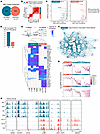 Figure 1
Neuroendocrine CR TF network in VP-MCC. (A) SEs common to 4 VP-MCC and 3 VN-MCC cell lines and overlap. (B) SE clusters by Pearson correlation of H3K27ac signal at all MCC SEs. (C) Representative rank order of SE (ROSE) plots. (D) Proportion of SEs connected to TF genes in VP-MCC (7%) and VN-MCC (2%). (E) CRC prediction by analysis of SE-associated TFs. Degree of connectivity for each TF is the combination of the “in” degree (the number of all TF motifs in its own SE) and the “out” degree (the total number of other SEs with that TF’s motif present), summarized in a heatmap. (F) Network of CR TFs in VP-MCC. Each arrow represents the presence of a TF’s motif in the SE of the TF to which it is pointing. Node sizes are scaled by relative gene expression. (G) Box plot violin representation of sgRNA abundance in MKL-1 cells over sequential passages, showing dropout of CR TFs co-opted in VP-MCC. (H) Genome browser view of H3K27ac ChIP-Seq at select CR TFs in MCC.
RNA-Seq revealed a set of TFs highly and selectively expressed in VP-MCC (Supplemental Figure 2 and Supplemental Table 1), many of which are associated with SEs specific to VP-MCC (Figure 1C and Supplemental Tables 1 and 2). To reconstruct the CR structure of MCC (Figure 1E), we analyzed the TF motifs present in TF SEs (5). We discovered interconnectivity among VP-MCC–specific TFs (Figure 1F), with ATOH1, INSM1, ISL1, LHX3, POU4F3, and SOX2 motifs present in SEs associated with each of these factors. To evaluate the necessity of CR TFs in VP-MCC, we performed pooled CRISPR disruption (library with 6–8 sgRNAs targeted to the DNA binding domains of each human TF) in MKL-1 cells, monitored over 5 cell passages. Remarkably, the CR TFs were each required in VP-MCC and dropped out at varying speeds (Figure 1G). Expression levels of these top 6 CR TFs in VP-MCC cells exceeded that of the most highly expressed CR TF in VN-MCC, MYC (Supplemental Figure 2D and Supplemental Table 1). When considering CR TFs’ gene expression profiles, VP-MCC cell lines matched that of tumors from patients with MCC (Supplemental Figure 2E) and harbored extensive enhancer structures at their CR TF loci (Figure 1H).
Consistent with a role in defining VP-MCC cell lineage, the top CR TFs function normally in sensory and neuroendocrine cell types. Merkel cells and sensory hair cells of the inner ear are innervated mechanoreceptors, and both require ATOH1 and SOX2 for proper development (12). SOX2 and ISL1 coregulate Atoh1 expression in Merkel cell development (13). Pou4f3 expression by inner ear hair cells is regulated by an enhancer activated by ATOH1 binding (14), and it is required for normal MC lineage development (15). INSM1 is a critical regulator of neuroendocrine cell development (16) and is a diagnostic immunohistochemical marker for neuroendocrine tumors (17). ISL1 and LHX3 are LIM homeobox TFs that regulate their own enhancers during neural development (18). Thus, similar to other neuroendocrine cancers (19), oncogenic transformation of VP-MCC involves TFs related to neural and neuroendocrine lineage specification.
To test whether the H3K27ac-rich enhancers were looping to the candidate promoters of CR TF genes, we performed chromatin conformation capture paired with H3K27ac IP (H3K27ac HiChIP). For each CR TF, we found interactions between enhancers and promoters and also between adjacent enhancers in these regions (Figure 2, A–D, and Supplemental Figure 3, A and B). To test the functionality of these acetylation clusters, we used CRISPR interference (CRISPRi) to repress SEs of the CR TF genes INSM1 and POU4F3 in VP-MCC cell lines. After 48 hours, repression of these SEs markedly reduced the expression of the target CR TFs, confirming SE-gene interactions as positive transcriptional units (Figure 2, A and B). SE loop constituents were well connected in the HiChIP data, both to each other (Figure 2C) and to their target CR TF genes (Figure 2D).
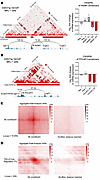 Figure 2
SEs loop to regulate CR TF genes in VP-MCC. (A and B) Left panels: Contact matrix of H3K27ac-mediated interactions (measured by H3K27ac HiChIP in MKL-1 cells), annotated with ChIP-Seq of H3K27ac, the genomic locations of sgRNAs targeting enhancer elements, and the CR TF gene. SEs are indicated with red bars, and called loops are shown with black rectangles. Right panels: INSM1 (A) and POU4F3 (B) mRNA expression in MKL-1 cells after CRISPi with sgRNAs targeting INSM1 and POU4F3 SEs, assayed by RT-qPCR. Neg., negative control sgRNAs. Distances between enhancer constituents and the CR TF target gene are indicated above the arcs connecting to the enhancer sgRNAs used to guide dCas9-KRAB for enhancer silencing. (C) APA plots of H3K27ac HiChIP data in MKL-1 cells, centered around SE loops (left) or 1 SE loop and a distance-matched shuffled location as a background control (right). (D) APA plots of H3K27ac HiChIP data in MKL-1 cells, centered around loops connecting SE constituents and their target TSS/promoter for CR TF genes.
MCPyV integration sites are proximal to VP-MCC SEs. We identified the clonal polyomavirus integration sites for 11 newly characterized VP-MCC tumors, and 8 of 11 (72.7%) were found near — sometimes overlapping, and often within 1 Mb of — VP-MCC SEs (Figure 3A). Furthermore, integration sites in 8 of 13 (61.5%) VP-MCC cell lines and tumors (20) coincided with VP-MCC SEs, and 6 of 13 (46.1%) were near CR TF genes, including loci regulating INSM1, ISL1, and LHX3 (Supplemental Figure 4), suggesting that these genes could have been active at the time of, or were activated by, MCPyV integration. To validate this observation, we analyzed MCPyV integration sites across 90 VP-MCC tumors (the above 24 cases and 66 additional published integration sites) and found the median distance to a VP-MCC SE was significantly smaller than the distance to the closest VN-MCC SE, or to random subsets of SEs in a database of human SEs (21) or the nearest random genomic location (Figure 3, B and C). The size of SEs was similar across subtypes, with VP-MCCs covering 1.3% of the genome, VN-MCCs covering 1.4% of the genome, and the control subsets each covering 1.3% of the genome. This preferential integration of MCPyV near VP-MCC SEs suggests a functional relationship between viral integration and CRC in the MCC cell of origin (Figure 3D). Consistent with MCPyV integration enrichment in active euchromatin near SEs, we found 85% of integration sites within the A compartment (defined by MKL-1 cell HiChIP), 3% in a SE found within the B compartment, and 8% in the B compartment with no SE nearby (Figure 3E). Comparing VP-MCC SEs and MCPyV integration sites with an atlas of chromatin accessibility in human tissue and cell types (22), we found the greatest overlap with chromatin sites active in neuroendocrine cell types (Figure 3F), further suggesting a positive association between transforming MCPyV integration events and neuroendocrine lineage circuitry.
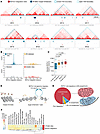 Figure 3
VP-MCC SEs are associated with MCPyV integration sites. (A) MCPyV integration sites (red) overlaid with SE sites that are recurrent among the 4 VP-MCC cell lines (sea blue). The clonal integration coordinates (unique for each VP-MCC tumor) are indicated in the center, and a 2 Mb window is shown around each. H3K27ac HiChIP from MKL-1 cells is shown above, with topological domain boundaries outlined in blue. (B) Histogram of the distances between MCPyV integration sites (n = 90 tumors) to the nearest VP-MCC SE, compared with SEs in other cell types, random genomic locations, and VN-MCC SEs. (C) Absolute distance between MCPyV integration sites and VP-MCC SEs, or to SEs from other human cell types and tissues, or to the nearest random genomic location, or to VN-MCC SEs. P values were determined using a Wilcoxon matched-pairs rank test. Data are summarized by box (quartiles) and whisker (1.5 × IQR) plots, with the median (thick center line). (D) Illustration of increased chromatin accessibility at SEs correlating with viral integration sites. (E) Percentage of integration sites by chromatin compartments defined by H3K27ac HiChIP data in MKL-1 cells. A compartment = euchromatin; B compartment = heterochromatin. (F) Heatmap of the human chromatin accessibility atlas (22) overlapped with VP-MCC SEs and MCPyV integration sites.
Neuroendocrine TFs are co-bound with ST at SEs. We hypothesized that access to open chromatin would be MCC viral subtype specific because of their distinct SE profiles and TF signatures. Indeed, DNase hypersensitivity in 4 VP-MCC and 3 VN-MCC cell lines showed that VP-MCC cells had shared sites of open chromatin, which were absent in VN-MCC cells (Figure 4, A and B), that were enriched in CR TF motifs including ATOH1, ISL1, LHX3, POU4F3, and SOX2 (Figure 4C). To validate the inferred regulatory network in VP-MCC, we performed ChIP-Seq for ATOH1, INSM1, ISL1, LHX3, POU4F3, and SOX2 in both MKL-1 and MKL-2 cells. Binding of these CR TFs was preferentially enriched in VP-MCC SEs, in which most SEs exhibited multiple peaks per TF (Figure 4, D and E, and Supplemental Figure 5, A and B).
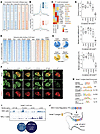 Figure 4
ATOH1, INSM1, ISL1, LHX3, POU4F3, and SOX2 co-bind SEs with MCPyV ST. (A) Heatmap of DNase hypersensitivity reveals sites of chromatin uniquely accessible in VP-MCC or VN-MCC. (B) DNase-Seq signal at sites with increased accessibility in VP-MCC (top) or VN-MCC (bottom). (C) TF motif enrichment within DNase hypersensitive sites predicts virus status–selective binding of TFs, plotted as a heatmap of P values determined by Hypergeometric Optimization of Motif EnRichment (HOMER) analysis. (D) Heatmap of ChIP-Seq at 1837 TF binding sites (±4 kb) within SEs in the VP-MCC cell line MKL-1. (E) Percentage of VP-MCC SEs and regular enhancers (in MKL-1 and MKL-2 cells) bound by CR TFs and ST. (F) Immunostaining of HA tag and CR TFs in the VP-MCC cell line MKL-1 transfected with HA-tagged ST. Original magnification, ×100. (G) Spatial correlation of nuclear ST and CR TF signals from immunostaining in F, as indicated by Pearson’s correlation and Mander’s split coefficients. (H) VP-MCC CR TF motifs enriched at genomic sites bound by the ST. (I) ChIP-Seq of ST transfected in HEK293 cells shows a lack of ST occupancy at VP-MCC sites. (J) Model of the VP-MCC CR network of neuroendocrine TFs and ST at SEs.
In VP-MCC, the MCPyV oncogene ST binds MYCL, MAX, and the EP400 chromatin remodeling complex to promote gene expression that supports cellular proliferation, represses adhesion, and activates both neural and cutaneous developmental programs (23). Cross-analysis with ChIP-Seq targets for EP400, MAX, and ST in VP-MCC MKL-1 cells (23) revealed substantial overlap with targets bound by CR TFs in SEs (Figure 4, D and E, and Supplemental Figure 5A). VP-MCC SEs harbored ST and CR TF sites more frequently than did regular enhancers (Figure 4E), and ST binding was positively correlated with that of the CR TFs (Supplemental Figure 5, C and D). In VP-MCC, transfected or endogenous ST co-bound chromatin with various combinations of CR TFs (Supplemental Figure 5E), and overlap was far more frequent in SEs compared with the transcription start sites (TSSs) or promoters of active genes (Supplemental Figure 5F). CR TFs and ST also co-bound with MAX, a proto-oncogene and surrogate for its heterodimeric partner, MYCL. VP-MCC had high expression and unique SEs for MYCL; in contrast, VN-MCC had SEs driving MYC (Supplemental Figure 6). As detected by superresolution immunofluorescence microscopy, HA-tagged MCPyV small T antigen (HA-ST) overlapped with its known binding partner, EP400, as well as individual CR TFs in the euchromatin of HA-ST–transfected MKL-1 cells (Figure 4, F and G), confirming that ST co-occupies active chromatin compartments with VP-MCC CR TFs. Although ST does not have its own cognate DNA sequence, its ChIP peaks were enriched for neuroendocrine TF DNA motifs (Figure 4H). In support of a role for CR TFs in directing the localization of ST to VP-MCC SEs, ChIP-Seq of transfected ST in non-neuroendocrine HEK293 cells showed a lack of ST occupancy at VP-MCC SE loci (Figure 4I). Together, our data suggest a model in which ST is directed to VP-MCC SEs by the combined DNA specificities of these lineage-restricted CR TFs (Figure 4J).
ISL1 and LHX3 bind a regulatory sequence unique to MCPyV to drive T antigen expression. In normal skin, MCPyV infection is common but T antigen expression is undetectable (24), whereas VP-MCC is rare and shows robust T antigen expression (25). We hypothesized that high T antigen expression in cancer cells may require the neuroendocrine CR TFs we identified, creating positive feedback circuitry between transforming viral oncogenes and a neuroendocrine state. Notably, ChIP-Seq reads mapped onto the noncoding control region of the polyomavirus genome indicated that the promoter driving MCPyV T antigens was flanked by H3K27ac and contained ISL1 and LHX3 peaks corresponding to an ISL1/LHX3 homeodomain motif (Figure 5A). ISL1 and LHX3 form a heterodimer when coexpressed (26). Knockdown of ISL1 or LHX3 in VP-MCC cells reduced the expression of both large T antigen (LT) and ST transcripts (Figure 5B). Aligning the promoter sequences of all known human polyomaviruses (HPyVs) revealed that this ISL1/LHX3 homeodomain motif is only present in MCPyV, and no other HPyVs (Figure 5C). To test this homeodomain motif, we designed a luciferase reporter plasmid containing a WT MCPyV promoter; it had strong activity in HEK293T cells cotransfected with ISL1 and/or LHX3 and reporter plasmids, which was reduced by mutating the homeodomain motif (Figure 5D). These data support a model of interlocking between the MCPyV oncogenes and the neuroendocrine-centered CR network found in VP-MCC (Figure 5E).
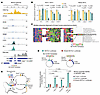 Figure 5
ISL1 and LHX3 bind and drive expression of polyomavirus T antigens. (A) MKL-1 ChIP-Seq of H3K27ac and CR TFs mapped to the integrated MCPyV genome reveals regulatory binding of ISL1 and LHX3, with RNA-Seq confirming expression of T antigens. (B) Knockdown of LHX3 or ISL1 caused downregulation of ST and LY, assayed by RT-qPCR in MKL-1 and WaGa cells. NC, nontargeting control. P values were calculated by 1-way ANOVA. Data are expressed as mean ± SD. (C) Multiple sequence alignment of human polyomavirus strains. The MCPyV unique ISL1/LHX3 homeobox sequence is highlighted. (D) Twenty-four-hour cotransfection of cDNA expression plasmids with WT or mutant MCPyV firefly and Renilla luciferase reporters in HEK293T cells. Values report the mean ± SD (n = 3 independent experiments) of the relative luciferase activity (firefly/Renilla). P values were calculated by 1-way ANOVA. (E) Model of interlocking polyomavirus and neuroendocrine TF cross-regulation circuit in VP-MCC.
Topological blurring via HDACi disrupts VP-MCC CR circuitry. To test if CR TF addiction in VP-MCC would result in molecular vulnerabilities, we treated MCC cell lines with small-molecule HDACi, as CR transcription is especially susceptible to histone hyperacetylation (8). Multiple HDACi were more effective in VP-MCC (MKL-1, MKL-2, and WaGa) than in VN-MCC (MCC13, MCC26, and UISO) or control cell lines (HEK293T, NIH3T3, and 7250) (Figure 6A and Supplemental Figure 7). We further tested the clinically approved HDACi panobinostat, which was effective in all MCC cell lines tested but was more potent in VP-MCC cell lines (Supplemental Figure 7) in xenograft mouse models. The MCC13 (VN-MCC) tumors did not respond to panobinostat, but VP-MCC MKL-1 tumors greatly decreased in volume (Figure 6, B and C), resulting in prolonged survival (Figure 6D). As CR TFs can rely on HDACs for transcriptional output (8, 27), we performed RNA-Seq at 1 and 6 hours of panobinostat treatment in MKL-1 (VP-MCC) and MCC26 (VN-MCC) cells. In MKL-1 cells, we observed rapid and selective downregulation of VP-MCC neuroendocrine CR TFs (Supplemental Figure 8, A–C), whereas VN-MCC CR circuitry was unaffected, and antigen-processing genes were upregulated in both (Supplemental Figure 8, C and D), consistent with previous findings (28). Thus, the use of HDACi represents a strategy to target neuroendocrine TF addiction, kill tumor cells, and increase antigen presentation — a combination that could synergize with immunotherapy, the current standard of care for advanced MCC (3, 4).
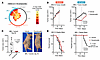 Figure 6
HDAC inhibition reduces VP-MCC tumor growth. (A) Wind-rose plot of AUCs for all HDACi (n = 16). Each petal shows the number of molecules that scored per cell line, with the color indicating the score magnitude. (B) Tumor growth curves for xenografts of MCC13 (VN-MCC) or MKL-1 (VP-MCC) treated with vehicle or HDACi panobinostat for 29 days. (C) Left: Box plot showing tumor sizes on day 29 of MKL-1 tumors, all data points overlapping. The P value calculated with an unpaired, 2-sided t test, box plots indicate first quartile, median, and third quartile, with whiskers at the minimum and maximum values. Right: Representative MKL-1 tumor–bearing mice treated with vehicle or panobinostat (day 36). (D) Kaplan-Meier plot for mice with MCC13 or MKL-1 xenografts treated with vehicle or panobinostat.
We previously reported that the nuclear HDACs (HDAC1, HDAC2 and HDAC3) were co-essential in maintaining CR TF circuits in rhabdomyosarcoma (27). Guided by published HDAC isoform selectivity data from diverse HDACi (29), we chose panobinostat, dacinostat, and mocetinostat to evaluate the dependence of CR TF transcripts on HDACs. Each compound exhibited potency in HDAC1 and HDAC2, whereas dacinostat and panobinostat also inhibited HDAC3 (Supplemental Figure 8E). Upon a 6-hour treatment of 3 VP-MCC cell lines (MKL-1, MKL-2, and WaGa), rapid and selective downregulation of VP-MCC CR TFs was evident in all 3 cell lines upon treatment with the HDAC1/2/3 inhibitors panobinostat and dacinostat, while mocetinostat had a mild and mixed effect on the transcription of CR TFs (Figure 7A and Supplemental Figure 8, F, H, and I). Notably, the top CR TFs identified herein (LHX3, ISL1, POU4F3, SOX2, INSM1, ATOH1) were uniformly disrupted by panobinostat and dacinostat. Increased transcription of the p53 and apoptosis pathways (Supplemental Figure 8F) indicates mechanisms for the associated reductions in viability, which is consistent with these VP-MCC cell lines having intact p53 (30). Consistent with this finding, panobinostat reduced MKL-1 cell viability and induced cell apoptosis 24 hours after treatment but had no significant effect at 6 hours (Supplemental Figure 9). HDACi did not cause an acute drop in the expression of MCPyV T antigens at 6 hours (Supplemental Figure 8G). However, we found that panobinostat eventually decreased LT and ST expression 24 hours after treatment in MKL-1 cells (Figure 7B), consistent with the observed decrease in ISL1 and LHX3.
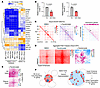 Figure 7
HDAC inhibition disrupts 3D enhancer loops to shutdown CR TFs. (A) Heatmap of expression changes for CR TFs (log2 fold change in TPM) in VP-MCC cell lines after treatment with panobinostat (Pano), dacinostat (Dac), or mocetinostat (Mocet). (B) RT-qPCR of MKL-1 cells shows decreased ST and LT expression following 24-hour panobinostat treatment. (C) AQuA-HiChIP of H3K27ac, performed after 6 hours of panobinostat treatment in WaGa cells, shows topological blurring in a heatmap of valid contacts per million reference contacts (AQuA-CPM) at the enhancer elements surrounding the ISL1 gene. DMSO (left) and panobinostat (center) were normalized to exogenous mouse contacts and compared by subtraction of the treated and control contact matrices (right). Orange bars, SEs; red bar, ISL1 gene. (D) APA plots for all adjacent SE pairs, AQuA normalized, in WaGa cells treated with DMSO (left) or panobinostat (middle) and contrasted by calculating the Δ (right). (E) AQuA-APA plot of called 3D loops in WaGa cells and the change induced at these loops by 6 hours of panobinostat treatment at SE loops or regular enhancer loops (bottom). (F) Model of H3K27ac diffusion and destabilization of long-range contacts by HDACi at CR TF SEs, followed by loss of CR TF gene expression.
HDACi cause accumulation of histone acetylation, particularly at highly acetylated regions such as SEs. We reasoned that because SE-driven CR TFs were particularly sensitive to HDAC inhibition, looping of SE elements might be disrupted. To test this, we utilized a per-cell spike-in normalization strategy designed to capture absolute quantification of architecture by HiChIP (AQuA-HiChIP) (31) to ensure accurate representation of global acetylation upon HDAC inhibition by panobinostat in the VP-MCC cell lines WaGa and MKL-1. This approach revealed 2 simultaneous phenomena: (a) the loss of SE contacts to both their target gene and adjacent SEs and also (b) a global increase in H3K27ac-mediated contacts seen as a bleeding across the loci in a nonspecific way. These combined changes in chromatin architecture resulted in topological blurring of the SE, as exemplified at the ISL1 domain (Figure 7C) and other CR TFs (Supplemental Figure 10). Aggregate peak analysis (AQuA-APA) of all adjacent SE pairs showed bloating of H3K27ac-mediated contacts into regions beyond the native SE-SE contacts (Figure 7D). Next, we identified all 3D loops in SEs and regular enhancers (32) and found the anchors of SE loops to be the points of greatest H3K27ac contact loss upon HDAC inhibition, surrounded by areas of increased acetylation-mediated contacts (Figure 7E). The AQuA-HiChIP data, combined with our other results, led us to conclude that VP-MCC CR TFs have a dependence on HDAC1/2/3 without which they are ineffectively transcribed, owing to the topological blurring that occurs with hyperacetylation of SE domains upon HDAC1/2/3 inhibition (Figure 7F). It is possible that H3K27ac HiChIP does not reflect actual topology, as it is enriching for a subset of acetylation-associated 3D conformation. However, we note that in previous work studying HDACi at the MYOD1 SE locus, the topological blurring seen by AQuA-HiChIP of H3K27ac (8) was also seen using 4C-Seq at both the SEs and the gene promoter (27).


Copyright © 2026 American Society for Clinical Investigation
ISSN: 0021-9738 (print), 1558-8238 (online)