
Issue published August 3, 2026 Previous issue | Next issue

- Volume 136, Issue 15
On the cover:
Lymphatic dysfunction linked to Marfan syndrome
Tan et al. report that lymphatic dysfunction and immune cell infiltration contribute to mitral valve disease in a mouse model of Marfan syndrome. The cover art is an illustration highlighting the decreased density of lymphatic vessels (green) within the myxomatous degenerated mitral valve leaflets of a Marfan syndrome mouse model. Image generated using ChatGPT and edited in Adobe Fresco. Image credit: Can Tan.
Tan et al. report that lymphatic dysfunction and immune cell infiltration contribute to mitral valve disease in a mouse model of Marfan syndrome. The cover art is an illustration highlighting the decreased density of lymphatic vessels (green) within the myxomatous degenerated mitral valve leaflets of a Marfan syndrome mouse model. Image generated using ChatGPT and edited in Adobe Fresco. Image credit: Can Tan.
Go to section:

-
Letter to the Editor
×
Abstract
Authors
Camila L. Rossetti, Bruna L. Alves, Ernesto Bernal-Mizrachi, Joao Pedro Werneck-de-Castro

-
Review Series
×
Abstract
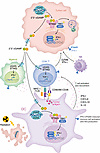
The cGAS/STING pathway is a central innate immune DNA-sensing system that links aberrant DNA species to innate immune and stress-response transcriptional programs and has emerged as a key regulator of tumor-immune interactions. In cancer, pathway outputs are shaped by interconnected downstream signaling modules, including type I IFN, NF-κB, autophagy, and stress-metabolic checkpoints, as well as by stringent spatial and biochemical regulation of both cGAS and STING. When activation is acute and appropriately compartmentalized, cGAS/STING signaling promotes antitumor immunity across multiple cellular compartments in the tumor microenvironment, supporting DC cross-priming and cytotoxic lymphocyte responses. In contrast, chronic or dysregulated activation rewires downstream signaling toward stress-adaptive and inflammatory programs that promote tumor progression, metastasis, and immune dysfunction, including deleterious effects in lymphocytes and the induction of suppressive myeloid and B cell populations. Here, we examine how context determines the consequences of cGAS/STING activation in cancer, review emerging therapeutic strategies that modulate this pathway, and discuss how its antitumor potential can be maximized while minimizing systemic toxicity and immune dysregulation.
Authors
Yi Wang, Juan Angulo-Lozano, Yueqi Wang, Liang Deng
-
Review
×
Abstract
Protein neddylation is an evolutionarily conserved posttranslational modification that conjugates NEDD8 to its substrate, catalyzed by an E1-activating enzyme, E2-conjugating enzyme, and E3 ligase. Neddylation is essential for cellular homeostasis, and its dysregulation has been implicated in diverse human diseases, including cancer, neurodegenerative diseases, and metabolic disorders, making the process a promising therapeutic target. In this Review, we systematically summarize the biochemical activity and biological functions of neddylation; its alterations in human diseases, particularly in cancers; and its validation as an attractive target for cancer therapy. We provide an overview on the discovery of neddylation inhibitors and the progress of MLN4924 (pevonedistat) and TAS4464 clinical trials and critically evaluate the core challenges and emerging opportunities for therapeutic strategies targeting neddylation.
Authors
Shizhen Zhang, Huiyin Lan, Yi Sun

-
Commentaries
×
Abstract
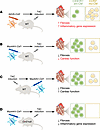
Cardiac macrophages (CMs) preserve homeostasis in the heart by clearing cellular debris and facilitating electrical conduction. During tissue injury, embryonically derived CMs (em-CMs) have traditionally been deemed beneficial for promoting tissue repair, whereas monocyte-derived CMs (mo-CMs) are considered detrimental, contributing to inflammation and tissue damage. However, Kasam et al. challenge this binary classification using cardiac-specific strategies to expand either em-CM or mo-CM populations. As expected, mice with cardiac-specific mo-CM expansion exhibited adverse outcomes following transverse aortic constriction (TAC). Surprisingly, mice with expanded em-CMs also showed a marked decline in cardiac function after TAC, which was associated with an unexpected interaction with mo-CMs. This deterioration was temporally regulated, occurring only if em-CMs were expanded before TAC induction. Together, these findings suggest that simplistic classification of CMs as either beneficial or harmful underestimates their complex roles in cardiac pathology, highlighting the need to reassess current views of macrophage function in heart injury.
Authors
Janmes Karunamurthy, Ziyi Li, Ajitha Thanabalasuriar
×Abstract
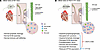
Myxomatous degeneration of the mitral valve (MDMV) is a common cardiovascular manifestation of Marfan syndrome (MFS), yet the role of lymphatic vessels in the disease progression remains unknown. In this Commentary, we discuss the study by Tan, Kume, and colleagues, which identifies defective lymphangiogenesis as a previously unrecognized driver of MDMV. Their work demonstrates that impaired lymphatic development and drainage promote valve inflammation through reduced ZFP36-mediated antiinflammatory signaling, whereas restoration of lymphatic function or pharmacological activation of ZFP36 with the FDA-approved drug FTY720 ameliorates disease progression. These findings establish lymphatic vessels as critical regulators of mitral valve homeostasis and support exploration of lymphatic-targeted therapeutic opportunities for MFS-associated valvular disease.
Authors
Yanna Tian, Kathleen M. Caron
×Abstract
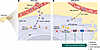
Pancreatic β cells regulate glucose homeostasis through insulin secretion, but nutrient overload and genetic defects can trigger ER stress and apoptosis, contributing to type 2 diabetes. Within β cells, the kinases PERK, IRE1α, and ATF6 initiate the unfolded protein response (UPR) as a result of ER stress, a process that is constitutively suppressed under nonstress conditions by GRP78 binding to these proteins. To gain insight into the mechanisms of β cell death upon dysregulated ER stress, Sharma et al. used β cell–specific GRP78 knockout models, revealing that hyperactivation of the UPR promoted β cell death primarily through the IRE1α/JNK/p53 signaling pathway. Pharmacological inhibition of JNK improved β cell survival, increased insulin levels, and lowered blood glucose in multiple diabetic mouse models. These findings highlight JNK signaling as a promising therapeutic target for preserving β cell function.
Authors
Jonathan M. Palozzi, Pere Puigserver
-
Research Letter
×
Abstract
Authors
Zhichuan Zhu, Yusha Liu, Yu Deng, Zhijun Li, Albert S. Baldwin, Pengda Liu

-
Research Articles
×
Abstract
Endoplasmic reticulum (ER) stress contributes to β cell death in both Type 1 and Type 2 diabetes (T1D and T2D). However, the molecular mechanisms driving β cell death during ER stress remain insufficiently defined, limiting development of protective therapies. GRP78, an ER chaperone, is the master regulator of unfolded protein response (UPR), suppressing UPR initiators during the unstressed state and releasing them to allow UPR activation during stress. To dissect the pathways leading to ER-stress response related β cell decompensation, we engineered mice genetically lacking GRP78 in pancreatic β cells. GRP78 deletion caused acute insulin-deficient diabetes in pups before weaning, with reduced β cell mass due to increased apoptosis. Molecular studies identified deregulated UPR, specifically IRE1 activity, as driving cell death. Unbiased and targeted analyses identified a JNK-p53 axis downstream of IRE1 kinase as a key mediator of β cell death during UPR activation. In vivo JNK inhibition protected against β cell death in 2 distinct ER stress diabetes models. In human β cells, pharmacological inhibition of both JNK and p53 improved β cell survival during GRP78 knockdown–induced UPR. These findings provide insight into mechanisms causing β cell death during ER stress and outline possible therapeutic targets to preserve insulin secretory capacity in diabetes.
Authors
Rohit B. Sharma, Christine Darko, Ying Wang, Thalia A. Castro, Tara Doma Lama, Brian Gablaski, Andrew Rappa, David Redmond, Jason K. Kim, Amy S. Lee, Laura C. Alonso
×Abstract
The exonic variants G1 and G2 in apolipoprotein-L1 (APOL1) are linked to an increased risk of kidney disease as well as kidney transplant rejection. Outside of the association of these prevalent variants with African ancestry, the underpinning causal mechanisms for rejection are unknown. We investigated T cell function using transgenic mice with physiologic expression of WT (G0), G1 APOL1 (G1), or G2 APOL1 (G2). Mice with the G1 or G2 variant showed greater CD8+ T cell activation with expansion of a central memory T cell (Tcm) subset. Stimulated G1 CD8+ T cells showed enhanced proliferation and cytokine production, which was reversed with APOL1 inhibition. In MHC-mismatched cardiac transplants, G1 mice demonstrated greater CD8+ T cell infiltration and worse survival. The bulk transcriptome of G1 CD8+ T cells and the single-cell transcriptome of graft-infiltrating Tcms showed enrichment of canonical T cell receptor (TCR) pathways including Ca2+ signaling. G1 CD8+ T cells demonstrated baseline ER Ca2+ depletion followed by sustained increases in cytosolic Ca2+ upon TCR stimulation. G1 CD8+ T cells were more sensitive to Ca2+ chelation, or store-operated Ca2+ entry inhibition, and were relatively resistant to calcineurin antagonism compared with G0 CD8+ T cells. Analogously, in a kidney transplant cohort, transplant recipients carrying an APOL1 risk variant (G1 or G2) who had elevated peripheral Tcms before transplantation developed rejection despite having significantly higher tacrolimus levels than recipients with the G0/G0 APOL1 genotype. In summary, we have unraveled an excitatory mechanism for APOL1 variants in T cells that causally links them to kidney rejection.
Authors
John Pell, EM Tanvir, Zeguo Sun, Irene Chernova, Anand Reghuvaran, Soichiro Nagata, Mateus T. Guerra, John Choi, Soltan Al Chaar, Hiroki Mizuno, Ke Dong, Xin Tian, Reika Ishibe, Barbara Franchin, Paolo Cravedi, Ashwani Kumar, Gabriel Barsotti, Hongmei Shi, Bony De Kumar, Shinobu Smithson, Wenzhi Song, John Cijiang He, Anita S. Chong, Jordan S. Pober, Stefan Somlo, Ian W Gibson, Waldemar Popik, Zhongyang Zhang, Joseph Craft, Jamil Azzi, Naoka Murakami, Shuta Ishibe, Peter S Heeger, Madhav C. Menon
×Abstract
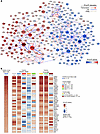
Fibroblast growth factor receptor 3 (FGFR3) is one of the most frequently altered genes in bladder cancer, primarily through activating mutations that drive oncogenesis and are enriched in luminal tumors. However, the underlying gene regulatory network (GRN) remains poorly characterized. Here, we constructed an FGFR3-mutated GRN using a bottom-up bioinformatics approach, integrating transcriptomic data from bladder cancer cell lines, FGFR3-mutated tumors, and FGFR3 perturbation experiments in human and mouse models. Using publicly available CRISPR/Cas9 screening data, we identified transcription factors from this GRN that regulate the viability of FGFR3-mutated cells, with a focus on p63 (TP63). We showed that FGFR3 activation upregulates p63 in patient-derived xenografts and cell lines, while single-cell RNA sequencing revealed heterogeneous p63 activation associated with basal differentiation. Functional studies, including TP63 knockdown in FGFR3-dependent in vitro and in vivo models and RNA-seq along with p63 ChIP-seq, demonstrated that p63 directly promotes cell proliferation and migration and uncovered a positive feedback loop between FGFR3 and p63. Together, these findings support p63 as a protumorigenic regulator in FGFR3-mutated tumors despite their luminal differentiation and provide a detailed FGFR3-driven GRN, offering insights into FGFR3-induced oncogenic dependency and potential strategies to circumvent resistance to FGFR inhibitors.
Authors
Aura Moreno-Vega, Macarena Zambrano, Lilia Estrada-Virrueta, Xiangyu Meng, Julia Puig, Helene Neyret-Kahn, Mingjun Shi, Florent Dufour, Guerric Gilbert, Ke Li, Clarice Groeneveld, Jacqueline Fontugne, Mercedes Pérez-Escavy, Wajdi Dhifli, Clément Hua, Luc Cabel, Clémentine Krucker, Laura Tanguy, Sia Viborg Lindskrog, Claire Beraud, Yanina V. Langle, Tao Ye, Fariza Tahi, Irwin Davidson, Jesus M. Paramio, Lars Dyrskjøt, Yves Allory, Philippe Lluel, Ana Maria Eiján, Mohamed Elati, François Radvanyi, Catalina Lodillinsky, Isabelle Bernard-Pierrot
×Abstract
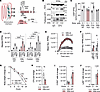
TRAIL is a TNF family ligand that trimerizes TRAIL-R1 (DR4) or TRAIL-R2 (DR5) to induce apoptosis, necroptosis, and/or NF-κB activation in receptor-bearing cells. We previously identified TRAILshort as a splice variant of TRAIL that lacks cysteine 230, cannot trimerize, and acts as a dominant-negative ligand that blocks TRAIL-mediated apoptosis. TRAILshort is expressed on cell surfaces and within extracellular vesicles, enabling it to confer TRAIL resistance to both producing and bystander cells. In this study, we showed that elevated TRAILshort levels were associated with chronic viral infections, cancer, and autoimmune diseases, suggesting a link to impaired immune regulation. Using unbiased phosphoproteomics and mechanistic studies, we demonstrated that TRAILshort binding to DR5 recruited and activated the phosphatase Src homology region 2 domain–containing phosphatase 1 (SHP-1), leading to zeta-chain-associated protein kinase 70 (ZAP-70) dephosphorylation, disruption of ZAP-70–CD3ζ interactions, and impaired T cell receptor signaling, thereby reducing T cell activation, proliferation, and cytokine production in response to antigen or CD3/CD28 ligation. Genetic or pharmacologic SHP-1 inhibition reverses these effects. In humanized mouse models, TRAILshort promoted the persistence of transformed mouse embryonic fibroblasts (MEFs) and L428 and antagonized CD19-directed CAR T cell activity, revealing TRAILshort as an immunomodulator of T cell function with therapeutic implications, including blocking TRAILshort to restore T cell immunity or delivering TRAILshort to enforce tolerance.
Authors
Shahrzad Jalali, Sekar Natesampillai, Zilin Nie, Ying Zhang, Ismail Can, Aswath P. Chandrasekar, Brianna M. Hameister, Cristina Correia, Tuantuan V. Zhao, Dong-Gi Mun, Enrique Garcia-Rivera, Robert Matson, Ashton Krogman, Mark A. Maynes, Robin Batchelor, Dileep D. Monie, Hu Li, Atta Behfar, Saad S. Kenderian, Akhilesh Pandey, Stephen M. Ansell, Timucin Taner, Cornelia Weyand, Daniel D. Billadeau, Andrew D. Badley
×Abstract
Enhanced TGF-β signaling caused by mutations in Fibrillin-1 (FBN1) in patients with Marfan syndrome (MFS) leads to myxomatous degeneration of the mitral valve (MDMV). MDMV can result in mitral valve prolapse, severe regurgitation, and sudden cardiac death. However, it remains unknown whether lymphatic vessel (LV) dysfunction contributes to MDMV development in MFS. Here, we show that lymphangiogenesis in murine mitral valves (MVs) begins postnatally. However, this process is inhibited in a mouse MFS model, Fbn1 mutant (Fbn1C1039G/+) mice, accompanied by disrupted lymphatic cell-cell junctions, impaired lymphatic drainage, and an abnormally widespread distribution of MHCII+ infiltrating macrophages. Treatment of Fbn1 mutant mice with VEGF-C156S, a selective VEGFR3 agonist, stimulates the ERK and Akt pathways, increases LV density in MVs, and ameliorates MDMV. Fbn1 mutant MVs display disorganized valvular endothelial cells (VECs) and decreased expression of the antiinflammatory modulator Zfp36 (zinc finger protein 36) in VECs and immune cells. Treatment with FTY720 (fingolimod), a ZFP36 activator and S1P antagonist, rescues MDMV phenotypes in Fbn1 mutant mice by reducing immune cell infiltration and restoring lymphatic cell junctions and drainage. These findings suggest that the Fbn1 mutation causes LV hypoplasia and defective lymphatic drainage in MVs, driven in part by proinflammatory VECs, leading to MFS-related MDMV.
Authors
Can Tan, Ziyou Ren, Shreya Kurup, Xianpeng Liu, Zhi-Dong Ge, Shodai Suzuki, Pritika Jakka, Cheryl Tang, M. Luisa Iruela-Arispe, Tsutomu Kume
×Abstract
Most mitochondrial proteins are nucleus-encoded, translated in the cytosol, and imported into the mitochondria. Through gene expression analysis and functional assays, we demonstrated that mitochondrial protein import was increased in acute myeloid leukemia (AML) cells compared with normal hematopoietic cells. Increased mitochondrial protein import was positively correlated with an increase in the mitochondrial unfolded protein response (UPRmt), a stress-activated pathway of mitochondrial proteases and chaperones that maintains protein solubility and prevents the formation of toxic aggregates. The UPRmt protease LONP1 (Lon peptidase 1) was upregulated in AML and positively correlated with increased mitochondrial protein import and UPRmt. Genetic or chemical inhibition of the LONP1 ATPase domain induced mitochondrial protein aggregation and selectively killed AML cells with high LONP1 expression, while sparing AML cells with low LONP1 expression and normal hematopoietic cells in vitro and in vivo. Thus, we uncovered a critical role of the UPRmt protease LONP1 in buffering stress from mitochondrial protein import in AML.
Authors
Matthew Tcheng, Veronique Voisin, Geethu Emily Thomas, Anastasija A. Piric, Marcela Gronda, Rose Hurren, Dakai Ling, Yongran Yan, Lan Xin Zhang, Yue Feng, Ali Chegini, Nathan Duong, Ross S. Mancini, Stefan Quinn W. Currie, Zaynab Mamai, Brady Stock, Shahbaz Khan, Yulia Jitkova, Chaitra Sarathy, Edward Ayoub, Po Yee Mak, Andrea Arruda, Thomas Kislinger, Mark A. Reed, Bing Z. Carter, Michael Andreeff, Steven M. Kornblau, Mark D. Minden, Siavash Vahidi, Aaron D. Schimmer
×Abstract
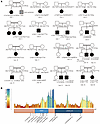
Chromatin remodeling is a dynamic epigenetic process that alters chromatin structure to gauge gene accessibility, enabling precise spatiotemporal gene expression, with disruptions often underlying neurodevelopmental disorders (NDDs), although the mechanistic underpinning remains incompletely understood. Despite essential roles in chromatin remodeling processes such as DNA methylation and histone acetylation and deposition, DMAP1 has not been implicated in human disease. We identified 20 individuals from 16 families with a syndromic NDD carrying homozygous or compound heterozygous variants in DMAP1. Neural-specific knockdown of its Drosophila ortholog, dDMAP1, caused pupal lethality, structural defects in the mushroom body (MB), decreased dendrite length, abnormal social behavior and mechanical-induced seizures. Human reference DMAP1 could largely compensate for the loss of dDMAP1 in knockdown flies, whereas patient variants failed to restore or differentially rescued the phenotypes, confirming their pathogenicity with differing severity. Transcriptome profiling of dDMAP1-knockdown fly brains nominated Cbl and SF1 as downstream targets. Their overexpression rescued the aforementioned lethality and MB defects. Finally, a DNA methylation episignature was identified, leading to the molecular diagnosis of an additional patient. Our findings demonstrate that biallelic inactivating variants in DMAP1 cause a syndromic NDD, expanding the short list of recessive disease-causing genes within the epigenetic machinery.
Authors
Qin Wang, Andrew K. Sobering, Christian Tirrito, Sadegheh Haghshenas, Tina Duelund Hjortshøj, Konrad Platzer, Silke Redler, Michael E. March, Leticia S. Matsuoka, Hang Xi, Josiah Zoodsma, Yuanhua Chen, Mari Mori, Marco L. Leung, Nathalie Couque, Alain Verloes, Antoine Pouzet, Noor A.A. Giesbertz, Marleen E.H. Simon, Ashley K. Yearwood, Dominique L. Assing, Tzung-Chien Hsieh, Jing-Mei Li, Michael A. Levy, Jennifer Kerkhof, Haley McConkey, Jessica Rzasa, Carolyn Lauzon-Young, Raashda A. Sulaiman, Firdous Abdulwahab, Hanan E. Shamseldin, Naif A.M. Almontashiri, Manal Afqi, Vettaikorumakankav Vedanarayanan, Maria J. Guillen Sacoto, Ingrid M. Wentzensen, Nadirah S. Damseh, Rivka Birnbaum, Babeth van Ommeren, Saskia M.J. Hopman, Maha S. Zaki, Gehad Elmakkawy, Erum Afzal, JiHye Kim, Stephanie Efthymiou, Henry Houlden, Ambreen Nusrat, Mathias Toft, Uzma Abdullah, Zafar Iqbal, Shannon Terek, Fowzan S. Alkuraya, Elizabeth J. Bhoj, Reza Maroofian, Bekim Sadikovic, Hakon Hakonarson, Yuanquan Song, Dong Li
×Abstract
Cardiac macrophages are broadly studied as 2 subtypes, tissue-resident CX3C chemokine motif receptor 1 positive (CX3CR1+) that are also CC motif chemokine receptor 2 negative (CCR2–) and monocyte-derived CCR2+. Previous systemic loss-of-function approaches suggested unique roles for each subtype in the heart, with CCR2+ being inflammatory and CX3CR1+ being prohealing. Here, we employed a cardiac-specific gain-of-function approach to selectively enhance either macrophage subtype. A robust increase in basal CCR2+ macrophages in the heart by targeted CC chemokine ligand 2 (Ccl2) expression did not induce inflammation, cause fibroblast activation, or impair cardiac function. However, increased CCR2+ macrophages reciprocally diminished self-renewing tissue-resident macrophages and worsened cardiac fibrosis due to pressure overload stimulation. Conversely, augmented expression of colony-stimulating factor-1 (Csf1) in the heart promoted selective expansion of resident CX3CR1+ macrophages, which exerted no pathophysiological consequences at steady state. However, pressure overload in these mice with expanded CX3CR1+ macrophages showed a CCR2+ macrophage–dependent inflammation leading to exacerbated cardiac dysfunction, simultaneously protecting from adverse remodeling and cardiac fibrosis. In conclusion, cardiac-specific selective enrichment of macrophage subtypes shows their intricate interplay and unique functional roles in regulating myocardial inflammation and fibrosis during hypertrophy and at homeostasis.
Authors
Rajesh K. Kasam, Ronald J. Vagnozzi, Yasuhide Kuwabara, Anne Katrine Z. Johansen, N. Scott Blair, Vikram Prasad, Suh-Chin J. Lin, Akanksha Rajput, Michelle Nieman, Jeffery D. Molkentin
×Abstract
Metastatic castration-resistant prostate cancer (mCRPC) is an aggressive subtype of prostate cancer (PC) without curative treatments. Antibody-drug conjugates (ADCs) emerged as promising cancer therapeutics that selectively deliver cytotoxic agents (payloads) to the tumors. Although ADCs have been successfully applied to treat hematological and solid tumors, ADC monotherapy has not demonstrated durable responses in mCRPC, and mechanisms of PC resistance to ADCs have not been thoroughly investigated. Our study aimed to improve ADC efficacy using an integrated approach for a custom ADC design and multiplexing. To nominate rational combinations of ADC targets and payloads, we (a) examined protein coexpression of 3 clinically relevant surface antigens — B7-H3, PSMA, and STEAP1 — in human mCRPCs and (b) screened established ADC payloads and their combinations in mCRPC cell lines with different molecular backgrounds. Identified synergistic interactions between DNA-damaging payloads and the BCL-XL inhibitor A-1331852 as well as their coordinated induction of the intrinsic apoptosis pathway were evaluated in PC cell lines. Functional relevance between isolated p53 loss and PC responses to 3 genotoxic ADCs — B7-H3–seco-DUBA, PSMA-SG3249, and STEAP1-DXd — and their combinations with A-1331852 were established using genetic knockout models. Lastly, enhanced in vivo antitumor activity of vobramitamab duocarmazine by systemic A-1331852 was shown. Collectively, our findings provide rationale for development of ADC therapies combining genotoxic payloads with BCL-XL inhibitors for mCRPC.
Authors
Galina Semenova, Sander B. Frank, Ruth Dumpit, Wanting Han, Ilsa Coleman, Roman Gulati, Canan D. Dirican, Tarana Arman, Jessica Maruwan, Colm Morrissey, Michael C. Haffner, Peter S. Nelson, John K. Lee
×Abstract
Obesity is increasingly implicated in hematopoietic malignancies, yet its role in mutation-driven myeloid leukemias remains unclear. Using UK Biobank data from over 440,000 individuals, we found obesity traits including elevated BMI and waist-to-hip ratio were associated with type 2 diabetes, increased plasma IL-17A levels, reduced glucagon-like peptide 1 receptor (GLP-1R) expression, and heightened risk of myeloid malignancies. Transplantation of protein tyrosine phosphatase nonreceptor type 11 (PTPN11) (Shp2E76K/+) mutant hematopoietic stem/progenitor cells into obese mice demonstrated that metabolic inflammation accelerated leukemogenesis via myeloid cell expansion, lipid metabolic rewiring, IL-17A activation, and accumulation of M2-like tumor-associated macrophages (TAMs), accompanied by T cell exhaustion and impaired antigen presentation. Notably, dual therapy with an anti–IL-17A antibody and a GLP-1R agonist reversed these effects by reducing M2-like TAMs, restoring Ciita-dependent antigen presentation and Tyk2-mediated IFN-γ signaling, reactivating T cell responses, and reducing leukemic burden. These findings establish IL-17A–driven, metabolism-coupled immunosuppression as a mechanistic link between obesity and protein tyrosine phosphatase 2–mutant (SHP2-mutant) myeloid leukemias, highlighting a tractable therapeutic strategy for patients with obesity at high risk for other diseases and their complications.
Authors
Reuben Kapur, Linke Li, Rahul Kanumuri, Kanaka Sai Ram Padam, Baskar Ramdas, Chiranjeevi Pasala, Gabriela Chiosis, Lakshmi Reddy Palam, Ramesh Kumar, Satoshi Koyama, Pradeep Natarajan, Laura S. Haneline, Zhi Yu, Santhosh Kumar Pasupuleti
×Abstract
Orphan GPCRs of the GPRC5 family regulate macrophage activity and vascular contractility by dimerizing with other GPCRs, but pharmacological modulation of this process has not been explored. We previously identified the dimerization interface of receptor GPRC5B and show here that both its mutation and inhibition by a decoy peptide disturbed the interaction with the prostaglandin E2 receptor EP2 in macrophages, resulting in reduced EP2 signaling, enhanced migration and phagocytosis, and protection from bacterial peritonitis in mice. Furthermore, we show that a similar interface exists in related receptor GPRC5C, and, the same as in GPRC5B, mutation or inhibition by decoy peptide improved host defense. Through a virtual docking screen, we identified a small molecule inhibitor of both GPRC5B and GPRC5C dimerization, K303MP20, and showed that it reduced EP2 signaling, enhanced macrophage activity, and improved host defense in bacterial peritonitis and influenza A infection. Interestingly, K303MP20 not only blocked dimerization between GPRC5B/C and EP2, but also with prostacyclin receptor IP and angiotensin II receptor AT1, resulting in reduced AT1-dependent contraction and enhanced IP-dependent relaxation in human and murine smooth muscle cells. In vivo, K303MP20 did not affect basal blood pressure, but protected mice from angiotensin II–induced hypertension. Taken together, inhibition of orphan GPCR dimerization by small molecules is feasible and improves infection control and arterial hypertension.
Authors
Jeonghyeon Kwon, Margherita Persechino, Jingchen Shao, Jamal Shamsara, Birgit Spitznagel, Isabelle Salwig, Miloslav Sanda, Stefan Offermanns, Peter Kolb, Nina Wettschureck








Copyright © 2026 American Society for Clinical Investigation
ISSN: 0021-9738 (print), 1558-8238 (online)