
Issue published August 17, 2026 Previous issue | Next issue

- Volume 136, Issue 16
On the cover:
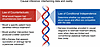
PTEN deficiency confers sensitivity to ATR inhibitor–based treatment
Hao et al. identify PTEN deficiency as a biomarker for ATR inhibition. They report that PTEN deficiency enhances sensitivity to ATR inhibitor–based therapies in preclinical models and is associated with clinical benefit in trials of high-grade serous ovarian cancer. Image credit: David A. Litman/Shutterstock.
Hao et al. identify PTEN deficiency as a biomarker for ATR inhibition. They report that PTEN deficiency enhances sensitivity to ATR inhibitor–based therapies in preclinical models and is associated with clinical benefit in trials of high-grade serous ovarian cancer. Image credit: David A. Litman/Shutterstock.
Go to section:
-
Reviews
×
Abstract
Synergizing radiotherapy (RT) with immune checkpoint inhibitors has emerged as a promising strategy for solid tumors. RT acts as a potent immunomodulator, capable of functioning as an in situ vaccine through the induction of immunogenic cell death and activation of innate immune sensing, thereby promoting DC maturation and CD8+ T cell responses. However, RT also triggers counter-regulatory immunosuppression, including PD-L1 upregulation and the recruitment of suppressive cells, providing the biological rationale for synergy. Here, we systematically review advances in radioimmunotherapy, covering immunomodulatory mechanisms, clinical optimization of dose and sequencing, and the emerging role of artificial intelligence (AI) in guiding treatment paradigms. We adopt a spatial interaction–centric perspective to synthesize current knowledge on how RT governs the DC/CD8+ T cell interaction axis across the tumor microenvironment and tumor-draining lymph nodes, aiming to chart a rational course from empirical combination toward personalized, precision radioimmunotherapy. Furthermore, we explore how AI-driven analysis of radiomics and multiomics data is being applied to predict responders and personalize treatment planning.
Authors
Lu Lu, Liufu Deng
×Abstract
Heart transplantation remains the gold standard therapy for patients with end-stage heart failure. However, post-transplant complications are considerable. Emerging evidence implicates the gut microbiome as a modifiable determinant of post–heart transplant outcomes through its influence on host immunity, metabolism, and inflammation. This Review synthesizes current understanding of gut microbiome dysregulation following solid organ transplantation, with particular emphasis on heart transplantation, examining mechanistic links underpinning important complications including allograft rejection, infection, metabolic dysfunction, and cardiac allograft vasculopathy. We critically evaluate bidirectional interactions between the gut microbiome and immunosuppressive drugs, assess the potential for microbiome profiling to serve as a predictive biomarker for post-transplant complications, and examine microbiome-targeted interventions including dietary modification, prebiotics, probiotics, and fecal microbiota transplant. Finally, we propose a translational roadmap to integrate microbiome science into heart transplant care to optimize immunosuppression, predict complications, and improve long-term outcomes for heart transplant recipients.
Authors
Ivan Ðuran, W.H. Wilson Tang, Petra Mamic

-
Commentaries
×
Abstract
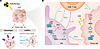
The ability of cancer cells to transition between epithelial and mesenchymal states, a process known as epithelial-to-mesenchymal transition (EMT), is a key driver of cancer metastasis and therapy resistance. While ataxia telangiectasia and Rad3-related (ATR) kinase was originally characterized as a responder to DNA damage and replication stress, recent discoveries implicate a critical role for ATR in EMT and metastasis. Two pivotal studies published in this issue of JCI provide key insights into how ATR intersects with EMT transcriptional reprogramming. Patel et al. demonstrated that ATR prevented R-loop accumulation at EMT-related gene loci, thereby facilitating the transcriptional reprogramming necessary for EMT as well as tumor growth and metastasis. Tu et al. further uncovered a role for ATR in ECM stiffness–induced EMT, which was associated with an immunosuppressive tumor microenvironment. Together, these studies highlight important therapeutic implications for ATR targeting in the context of metastasis and therapy resistance.
Authors
Aida Mestre-Farrera, Zhimin Hu, Jing Yang
×Abstract
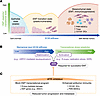
Monoclonal antibodies (mAbs) targeting Plasmodium falciparum epitopes aim to address gaps in malaria prevention, with potential to profoundly impact high-risk populations. In this issue of the JCI, Tran et al. performed pharmacokinetic and pharmacodynamic analyses on the mAb CIS43LS, which targets a unique conserved hinge region on the sporozoite protein CSP and previously demonstrated a high level of durable protection in controlled human malaria infections. Their findings establish a solid benchmark for mAb protection, demonstrating 80% protection from liver-stage invasion for 4–6 months. A clinical correlate of protection was estimated at antibody levels over 64 μg/mL. Successful protection could also be achieved from subcutaneous injections requiring lower doses. While efficacy of individual mAbs is more straightforward to demonstrate, exploring combination approaches targeting variable regions and diverse effector functions seems prudent to address the problem of evolving microbial pathogens. Combining both mAbs and long-acting malaria drugs may improve efficacy and reduce resistance.
Authors
David J. Sullivan
-
Research Articles
×
Abstract
Transitions of cancer cells between distinct cell states, which are typically driven by transcription reprogramming, fuel tumor plasticity, metastasis, and therapeutic resistance. Whether the transitions between cell states can be therapeutically targeted remains unknown. Here, using the epithelial-to-mesenchymal transition (EMT) as a model, we show that the transcription reprogramming during a cell-state transition induces genomic instability through R-loops and transcription-replication conflicts and that the cell-state transition cannot occur without the ATR kinase, a key regulator of the replication stress response. ATR inhibition during EMT not only increased transcription- and replication-dependent genomic instability, but also disrupted transcription reprogramming. Unexpectedly, ATR inhibition elevated R-loop–associated DNA damage at the SNAI1 gene, a key driver of the transcription reprogramming during EMT, triggering ATM- and Polycomb-mediated transcription repression of SNAI1. Beyond SNAI1, ATR also suppressed R-loops and antagonized repressive chromatin at a subset of EMT genes. Importantly, inhibition of ATR in tumors undergoing EMT reduced tumor growth and metastasis, suggesting that ATR inhibition eliminates cancer cells in transition. Thus, during EMT, ATR not only protects genome integrity but also enables transcription reprogramming, revealing that ATR is a safeguard of cell-state transitions and a target to suppress tumor plasticity.
Authors
Parasvi S. Patel, Jacob P. Matson, Xiaojuan Ran, Marcello Stanzione, Ajinkya S. Kawale, Mingchao Wang, Sneha Saxena, Conrad Sander, Jacquelyn Curtis, Jessica L. Hopkins, Edmond Wong, Ryan B. Corcoran, Daniel A. Haber, Nicholas J. Dyson, Shyamala Maheswaran, Lee Zou
×Abstract
Our research uncovers a role for ATR in responding to ECM stiffness and promoting epithelial-to-mesenchymal transition (EMT) and metastasis. ATR, when deubiquitinated and upregulated by USP21 under enhanced ECM stiffness conditions, phosphorylates the nuclear protein SUN2, which promotes β-catenin nuclear translocation and EMT. ATM-mediated EMT promotes polymorphonuclear myeloid-derived suppressor cell recruitment and inhibits CD103+ dendritic cells, fostering an immunosuppressive tumor milieu. ATR inhibition disrupts this malignant cascade by promoting mesenchymal-to-epithelial transition to enhance antitumor immunity and mitigate metastases. Consistently, circulating HLA-DR+ dendritic cells were also enhanced following treatment with the ATR inhibitor berzosertib in patients with therapeutically resistant early-stage breast cancer. Our data suggest that ATR-targeted therapy may be optimized by considering both DNA damage–dependent and EMT-inducing effects of ATR
Authors
Xinyi Tu, Xiangyu Zeng, Yaoliang Sun, Yaobin Ouyang, Lingling Zhu, Ping Yin, Kevin Pavelko, Roberto Leon-Ferre, Yanxia Jiang, Haidong Dong, Jodi Carter, Shouhai Zhu, Jann N. Sarkaria, Liewei Wang, Jinzhou Huang, Kuntian Luo, Yiqun Han, Zheming Wu, Zhenkun Lou, Robert W. Mutter
×Abstract
Glioblastoma is a fatal primary malignant brain tumor, with an average survival of 15 months despite surgical resection, chemotherapy, and radiation therapy. Due to the concurrent deregulation of numerous genes in glioblastoma, molecular monotherapies have not improved clinical outcomes. Evidence suggests that targeting multiple deregulated molecules is essential for better therapies; however, this is limited by the lack of suitable drugs and increased toxicity of combination therapies. To address this, we hypothesized that miRNAs, small gene-regulatory RNAs that suppress mRNA, could simultaneously inhibit multiple deregulated genes in glioblastoma and be used for more effective therapies. We identified regulatory miRNAs — those that target several deregulated genes in glioblastoma — using a combination of PAR-CLIP screening, TCGA data analyses, and an algorithm to rank target importance and miRNA therapeutic potential. We selected 2 tumor-suppressive miRNAs, miR-340 and miR-382, and 1 oncogenic miRNA, miR-17, and showed that they targeted critical glioblastoma pathways and altered cell growth, survival, invasion, and in vivo tumor growth. We developed and successfully applied a miRNA therapeutic delivery approach using brain-penetrating nanoparticles combined with MRI-guided focused ultrasound and microbubbles, to inhibit established tumor growth and extend animal survival. This strategy offers a promising approach for translating miRNA-based therapies into clinical trials for glioblastoma and other cancers.
Authors
Shekhar Saha, Ying Zhang, Myron K. Gibert Jr., Collin Dube, Farina Hanif, Elizabeth Qian Xu Mulcahy, Sylwia Bednarek, Yunan Sun, Pawel Marcinkiewicz, Xiantao Wang, Gijung Kwak, Ahsan Polash, Haolin Li, Kadie Hudson, Manikarna Dinda, Tapas Saha, Matthew McCord, Fadila Guessous, Nichola Cruickshanks, Rossymar Rivera Colon, Lily Dell’Olio, Rajitha Anbu, Wenjie Liu, Songy Choi, Benjamin Kefas, Pankaj Kumar, Alexander L. Klibanov, David Schiff, Jung Soo Suk, Justin Hanes, Jamie Mata, Markus Hafner, Roger Abounader
×Abstract
Kleefstra syndrome (KLEFS1) results from EHMT1 haploinsufficiency and is characterized by variable neurodevelopmental delays and psychopathology. Developmental regression, marked by the sudden loss of previously acquired daily life skills during late puberty or early adulthood, has emerged as a severe complication in individuals with KLEFS1. To investigate the clinical and molecular mechanisms underlying developmental regression and assess the therapeutic potential of olanzapine, we conducted a sequential study in an international cohort of 54 individuals with KLEFS1. Among 16 individuals treated with olanzapine, 10 exhibited a beneficial response based upon improvement of their adaptive functioning, and 4 showed temporary improvement. These clinical findings informed preclinical studies using human induced pluripotent stem cell-derived and ex-vivo cortical slices from a mouse model of KLEFS1. We identified hyperactivity in EHMT1+/– neuronal networks cocultured with EHMT1+/– astrocytes, a dysfunction reversible by olanzapine. Mechanistically, EHMT1+/– astrocytes displayed elevated levels of S100B, a neuroinflammatory marker contributing to neuronal network hyperactivity. Notably, olanzapine treatment reduced S100B levels, and pharmacological inhibition or genetic knockdown of S100B in EHMT1+/– astrocytes was sufficient to rescue the neuronal hyperactivity phenotype. These findings underscore a critical role for astrocytes in KLEFS1 pathophysiology and identify a potential cellular target for olanzapine in mitigating developmental regression.
Authors
Karlijn Vermeulen-Kalk, Shan Wang, Joost Kummeling, Britt Mossink, Kim Wijnant, Carlos Gonzales Jiménez, Zoe Frazier, Brian Rozumny, Anne O’Donnell-Luria, Ellen Hanson, Monica Frega, Katrin Linda, Moritz Negwer, Bas Lendemeijer, Astrid Oudakker, Monica Pop-Purceleanu, Joost Janzing, Linde van Dongen, Femke M.S. de Vrij, Steven A. Kushner, Ilse van der Werf, Chantal Schoenmaker, Wouter Oomens, Siddharth Srivastava, Jos I.M. Egger, Hans van Bokhoven, Dirk Schubert, Nael Nadif Kasri, Tjitske Kleefstra
×Abstract
Intervertebral disc degeneration (IVDD) is a leading cause of low back pain, yet there remains no effective therapeutic approach to reverse its progression, imposing a substantial socioeconomic burden. While multiple factors contribute to IVDD pathogenesis, cellular senescence has emerged as a critical risk factor associated with both the incidence and progression of IVDD. Aging and other damage factors drive nucleus pulposus cells (NPCs) toward a senescent phenotype characterized by increased secretion of proinflammatory factors, resulting in NPC dysfunction and tissue degeneration, which are hallmarks of IVDD. In this study, we demonstrated that PRMT2 deficiency disrupted arginine methylation-ubiquitination crosstalk, driving NPC inflammatory senescence and accelerating IVDD progression. Mechanistically, PRMT2 loss reduced FBXO7 methylation at Arg504, promoting the FBXO7–MED12 interaction to facilitate MED12 ubiquitination and subsequent proteasomal degradation. MED12 deficiency induced pathological R-loop accumulation, which activated the cytosolic DNA–sensing cGAS/STING axis, triggering inflammatory response cascades. Notably, engineered extracellular vesicles delivering MED12-overexpressing plasmids significantly inhibited NPC senescence and attenuated IVDD progression. Together, our findings establish that dysregulated methylation-ubiquitination crosstalk critically drives IVDD progression and reveal MED12 as a promising therapeutic target for ameliorating the impact of IVDD.
Authors
Huaizhen Liang, Dingchao Zhu, Zhi Du, Xinyu Li, Rui Shi, Jie Lei, Bide Tong, Hanpeng Xu, Di Wu, Xingyu Zhou, Yifan Du, Zixuan Ou, Junyu Wei, Shuchang Peng, Wencan Ke, Zhiwei Liao, Bingjin Wang, Kun Wang, Xiaobo Feng, Yu Song, Cao Yang
×Abstract
Ataxia telangiectasia and Rad3-related (ATR) inhibition is under evaluation for the treatment of high-grade serous ovarian cancer (HGSOC) to reverse acquired resistance to poly (ADP-ribose) polymerase (PARP) inhibition and to exacerbate chemotherapy-induced replicative stress. Here, we define PTEN deficiency as a predictive biomarker for the response to ATR inhibition, as monotherapy and in combination with PARP inhibition or gemcitabine. In response to ATR inhibition and compared with PTEN-proficient cells, PTEN-deficient cells are prone to (a) uncoupling of DNA polymerase and helicase activities, leading to excessive ssDNA and replication stress; (b) cytoplasmic sequestration of checkpoint kinase 1 (CHK1), compromising cell-cycle checkpoint control with reduced compensatory effects by ataxia-telangiectasia mutated (ATM) and DNA–dependent proteinase K (DNA-PK), leading to mitotic catastrophe; and (c) reduced DNA repair protein RAD51 homolog 1 (RAD51) recruitment, exacerbating replication fork instability, also leading to lethality. Retrospective analyses revealed that patients with HGSOC who expressed low PTEN levels experienced greater clinical benefit on ATR inhibitor–based trials than did those with high PTEN levels. These results justify prospective trials evaluating ATR inhibition as a therapeutic strategy for PTEN-deficient tumors.
Authors
Jie Hao, Bose Kochupurakkal, Timothy B. Branigan, Ozge Sezin Somuncu, Renyan Liu, Heta Jadhav, Alexandre André B. A. da Costa, Yuqing Jiao, Jenny Z. Yu, David B. Martignetti, Golbahar Sadatrezaei, Sirisha Mukkavalli, Prafulla C. Gokhale, Su-Chun Cheng, Steven J. Skates, Dimitrios Nasioudis, Panagiotis A. Konstantinopoulos, Joyce F. Liu, Stephanie Gaillard, Robert L. Giuntoli II, Lainie Martin, Janos Tanyi, Nawar Latif, Ian Heller, Fiona Simpkins, Kalindi Parmar, Alan D. D’Andrea, Geoffrey I. Shapiro
×Abstract
Pancreatic cancer remains a devastating disease with limited therapeutic options. Accumulating evidence shows that cancer-associated fibroblasts (CAFs) and tumor-associated macrophages, the predominant cells in the pancreatic cancer (PDAC) tumor microenvironment, hinder antitumor immunity. However, the role of extracellular vesicles (EVs) in such a process is poorly understood. In this study, using human bone marrow–derived monocytes and PDAC tumor cells, we showed that tumor cell–derived EVs (TC-EVs) induced monocyte differentiation toward M2-like, immunosuppressive, CD200R+PD-L1+HLA-DRlo macrophages that express ALOX15B, that we identify as an independent PDAC poor-prognosis biomarker using a human PDAC metacohort. We also demonstrated that TC-EVs reprogrammed human primary PDAC CAFs, causing a fibronectin network reorganization associated with changes in extracellular matrix (ECM) composition, including alterations of WNT pathway elements such as secreted frizzled related protein-1 (SFRP1) enrichment. We also revealed that monocytes cultured on SFRP1–enriched ECM differentiated into M2-like, immunosuppressive macrophages. Last, we demonstrated that both directly and indirectly TC-EV– or SFRP1-enriched ECM–driven differentiated macrophages hindered T cell activation and subsequent antitumor activity. Our findings highlight potentially novel dual mechanisms of TC-EV–mediated crosstalk, involving ALOX15B+ macrophages and SFRP1+ CAFs, that simultaneously contribute to foster the immunosuppressive ecosystem of PDAC.
Authors
Zainab Hussain, Claudio Montenegro, Christopher Rovera, Djamila Belghoula, Sarah Simha Tubiana, Pascal Finetti, Eugenie Lohmann, Magda Rodrigues, Thomas Bertran, Ghislain Bidaut, Daniel Isnardon, Sophie Vasseur, Francois Bertucci, Stephane Audebert, Luc Camoin, Moacyr Rego, Richard Tomasini
×Abstract
Reproductive aging is characterized by a progressive decline of reproductive function, with broad implications for overall health and longevity. Environmental factors, including assisted reproductive technologies (ARTs), can accelerate reproductive aging by promoting premature ovarian insufficiency in females. In vitro fertilization (IVF), though widely used and generally considered safe, has been associated with lasting effects on offspring health. Using a mouse model that closely approximates human IVF, we demonstrated that IVF accelerated reproductive aging in female offspring by inducing premature ovarian insufficiency. IVF-conceived female mice exhibited altered ovarian function, reduced follicle reserve, disrupted endocrine profiles, and transcriptomic and epigenetic changes consistent with premature reproductive decline. These findings reveal long-term consequences of IVF on female reproductive health and highlight the need to understand how early-life interventions influence reproductive longevity.
Authors
Eric A. Rhon-Calderon, Cassidy N. Hemphill, Alexandra J. Savage, Ana Domingo-Muelas, Zhengfeng Liu, Christopher J. Krapp, Laren Riesche, Nicolas Plachta, Richard M. Schultz, Marisa S. Bartolomei
×Abstract
Men with advanced prostate cancer are typically treated with androgen deprivation therapy, but most ultimately develop resistance and incurable disease (e.g., castration-resistant prostate cancer, CRPC). The majority of CRPCs overexpress the epigenetic enzyme EZH2 and harbor alterations in the PI3K pathway, providing 2 targetable pathways outside of the androgen receptor. Here, we show that EZH2 inhibitors synergize with PI3K, AKT, or mTORC1 inhibitors to kill CRPC in vitro and promote tumor regression in vivo. Strikingly, these agents trigger a catastrophic energy crisis by cooperatively suppressing glycolysis, the TCA cycle, and oxidative phosphorylation before cell death. EZH2 and PI3K pathway inhibitors achieve this by respectively inhibiting 2 key regulators of metabolism, MYC and HIF-1A, while derepressing a proapoptotic stress sensor. Together, these studies reveal a promising therapeutic strategy for CRPC and demonstrate how metabolic plasticity can be fatally impaired by cotargeting upstream oncogenic nodes that converge on this important process.
Authors
Rhea Sahu, Miriam Enos, Swastika Sharma, Amy E. Schade, Alycia Gardner, Akiko Yoshinaga, Alexandra Indeglia, Eleanor Minogue, Songhua Hu, Kiran Kurmi, Shakchhi Joshi, Daniel R. Schmidt, Samkyu Yaffe, Van T.M. Nguyen, Fang Xie, Steven P. Balk, Matthew G. Vander Heiden, Kristian Helin, Marcia C. Haigis, Karen Cichowski
×Abstract
Systemic lupus erythematosus (SLE) is an autoimmune disease characterized by autoantibody production. Extrafollicular (EF) B cell responses contribute to SLE pathogenesis, with age-associated B cells (ABCs) giving rise to autoantibody-secreting plasmablasts (PBs). However, the migratory cues governing this EF trajectory remain unclear. Here, we identify a distinct ABC state with PB precursor characteristics (pre-PB ABCs) and reveal a migration-dependent program underlying their generation. Single-cell analysis of patients with SLE and model mice showed that pre-PB ABCs were enriched in autoreactive clones and poised for PB differentiation. Their frequency correlated with autoantibody titers and disease activity, underscoring their pathogenic relevance. We further demonstrated that the oxysterol receptor EBI2 directed ABCs to EF niches within splenic bridging channels, promoting pre-PB ABC formation and autoreactive PB output. This process depended on the COMMD3/8 complex, a positive regulator of chemoattractant receptor signaling. Beyond EBI2-mediated ABC migration to EF niches, the COMMD3/8 complex was also required for trafficking of autoantibody-secreting cells to the bone marrow and infiltration of ABCs into the kidney. Accordingly, COMMD3/8 complex inhibition ameliorated disease in murine SLE models. These findings define a migration-dependent mechanism driving the EF differentiation of ABCs into autoreactive PBs and shaping the tissue distribution of pathogenic B cells, highlighting this program as a potential therapeutic target in SLE.
Authors
Taiichiro Shirai, Kentaro Kuzuya, Mizuki Kishi, Shinya Ichikawa, Shuhei Sakakibara, Akiko Nakai, Sarah Leach, Yu-Chen Liu, Daisuke Motooka, Daisuke Okuzaki, Masashi Narazaki, Atsushi Kumanogoh, Tomohiro Kurosaki, Jun Saegusa, Kazuhiro Suzuki
×Abstract
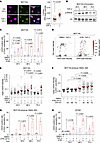
BACKGROUND CIS43LS is a long-acting mAb that targets the Plasmodium falciparum circumsporozoite protein. A phase II trial showed that a single dose of CIS43LS conferred > 85% sterile protection against infection in Malian adults over 6 months. Understanding the pharmacokinetics and pharmacodynamics (PK/PD) of CIS43LS is critical for the further development of CIS43LS and other antimalaria mAbs.METHODS Using 3,777 serum samples collected from 348 trial participants over the 6-month study period, we performed a PK/PD analysis of CIS43LS that included assessments for antidrug antibodies and target-mediated drug disposition. A 2-compartment, nonlinear mixed effects population PK model that evaluated demographic, anthropometric, hematologic, baseline parasitemia, and endogenous IgG and IgG1 as potential covariates was used to estimate PK parameters and serum concentrations required to achieve 80% efficacy.RESULTS The median CIS43LS t1/2 was 63.2 days (95% CI, 59.4–67.2 days). Serum concentrations ≥ 64 μg/mL (95% CI, 49–93 μg/mL) corresponded to ≥ 80% efficacy against infection over 6 months. A simulated dose of 30 mg/kg maintained serum concentrations > 64 μg/mL in > 97.5% of individuals for 4 months, the time frame for the WHO preferred product characteristics for antimalaria mAbs. There was no evidence of antidrug antibodies. Among infected individuals who received CIS43LS, no marked evidence of target-mediated drug disposition was observed.CONCLUSION This study indicates that protective CIS43LS levels can be maintained over the course of a single malaria season and provides guidance for PK/PD analyses of antimalaria mAbs in malaria-endemic populations.TRIAL REGISTRATION ClinicalTrials.gov NCT04329104.FUNDING NIH and Gates Foundation.
Authors
Tuan M. Tran, Zonghui Hu, Kassoum Kayentao, Aissata Ongoiba, Sam Jones, Nada Abla, Sara A. Healy, Hamidou Cisse, Bickey H. Chang, Jeff Skinner, Leonid Serebryannyy, Sandeep R. Narpala, Robin Schlesinger, Kwang Low, Rachel Kazmierski, Bob Lin, Joana Dias, Safiatou Doumbo, Didier Doumtabe, Anne C. Preston, Shanping Li, Mary E. Peterson, Amit Oberai, Adam D. Shandling, Joseph J. Campo, Sean C. Murphy, Shinyi Telscher, Emily E. Coates, Edmund V. Capparelli, Amagana Dolo, Boubacar Traore, Robert A. Seder, Peter D. Crompton




Copyright © 2026 American Society for Clinical Investigation
ISSN: 0021-9738 (print), 1558-8238 (online)