
Advertisement
Research ArticleDevelopmentGeneticsNeuroscience
Open Access |  10.1172/JCI198229
Biallelic inactivating variants in the chromatin remodeler DMAP1 cause a syndromic neurodevelopmental disorder
Qin Wang,1 Andrew K. Sobering,2,3,4 Christian Tirrito,1,5 Sadegheh Haghshenas,6 Tina Duelund Hjortshøj,7 Konrad Platzer,8 Silke Redler,9 Michael E. March,10 Leticia S. Matsuoka,10 Hang Xi,10 Josiah Zoodsma,1 Yuanhua Chen,1 Mari Mori,11 Marco L. Leung,12,13 Nathalie Couque,14,15 Alain Verloes,14,16 Antoine Pouzet,14,16 Noor A.A. Giesbertz,17,18 Marleen E.H. Simon,18 Ashley K. Yearwood,19 Dominique L. Assing,4 Tzung-Chien Hsieh,20 Jing-Mei Li,20 Michael A. Levy,6 Jennifer Kerkhof,6 Haley McConkey,6,21 Jessica Rzasa,6 Carolyn Lauzon-Young,6,21 Raashda A. Sulaiman,22,23 Firdous Abdulwahab,22 Hanan E. Shamseldin,22 Naif A.M. Almontashiri,24,25 Manal Afqi,26 Vettaikorumakankav Vedanarayanan,27 Maria J. Guillen Sacoto,28 Ingrid M. Wentzensen,28 Nadirah S. Damseh,29 Rivka Birnbaum,30 Babeth van Ommeren,18 Saskia M.J. Hopman,18 Maha S. Zaki,31 Gehad Elmakkawy,32 Erum Afzal,33 JiHye Kim,34 Stephanie Efthymiou,35 Henry Houlden,35 Ambreen Nusrat,36 Mathias Toft,37,38 Uzma Abdullah,39 Zafar Iqbal,37 Shannon Terek,40 Fowzan S. Alkuraya,22,41 Elizabeth J. Bhoj,10,42,43,44 Reza Maroofian,35 Bekim Sadikovic,6,21 Hakon Hakonarson,10,42,43 Yuanquan Song,1,45 and Dong Li10,42,43,44,45
1Raymond G. Perelman Center for Cellular and Molecular Therapeutics, Children’s Hospital of Philadelphia, Philadelphia, Pennsylvania, USA.
2Department of Basic Sciences, Augusta University/University of Georgia Medical Partnership, Athens, Georgia, USA.
3Windward Islands Research & Education Foundation, True Blue, St. George’s, Grenada.
4Department of Biochemistry, St. George’s University School of Medicine, St. George’s, Grenada.
5Biology Graduate Group, University of Pennsylvania, Philadelphia, Pennsylvania, USA.
6Verspeeten Clinical Genome Centre, London Health Sciences Centre, London, Ontario, Canada.
7Department of Clinical Genetics, University Hospital of Copenhagen, Copenhagen, Denmark.
8Institute of Human Genetics, University of Leipzig Medical Center, Leipzig, Germany.
9Institute of Human Genetics, Medical Faculty and University Hospital Düsseldorf, Heinrich-Heine-University Düsseldorf, Düsseldorf, Germany.
10Center for Applied Genomics, Children’s Hospital of Philadelphia, Philadelphia, Pennsylvania, USA.
11Emory University School of Medicine, Atlanta, Georgia, USA.
12The Steve and Cindy Rasmussen Institute for Genomic Medicine, Nationwide Children’s Hospital, Columbus, Ohio, USA.
13Departments of Pathology and Pediatrics, The Ohio State University College of Medicine, Columbus, Ohio, USA.
14Genetics Department, Robert Debré University Hospital, Assistance Publique–Hôpitaux de Paris, Paris, France.
15Multi-site Medical Biology Laboratory SeqOIA-FMG2025, Paris, France.
16French National Reference Centre for Developmental Anomalies and Malformative Syndromes of Île de France, Robert Debré University Hospital, Assistance Publique–Hôpitaux de Paris, Paris, France.
17Department of Genetics, Netherlands Cancer Institute, Amsterdam, Netherlands.
18Department of Genetics, University Medical Center Utrecht, Utrecht, Netherlands.
19Department of Radiology, UCLA, Los Angeles, California, USA.
20Institute for Genomic Statistics and Bioinformatics, University Hospital Bonn, Rheinische Friedrich-Wilhelms-Universität Bonn, Bonn, Germany.
21Department of Pathology and Laboratory Medicine, Western University, London, Ontario, Canada.
22Department of Medical Genomics, Center for Genomic Medicine, King Faisal Specialist Hospital and Research Center, Riyadh, Saudi Arabia.
23College of Medicine, Alfaisal University, Riyadh, Saudi Arabia.
24College of Applied Medical Sciences and Center for Genetics and Inherited Diseases, Taibah University, Madinah, Saudi Arabia.
25Research Department, King Khaled Eye Specialist Hospital, Riyadh, Saudi Arabia.
26Unit of Genetic Diseases, Department of Pediatrics, Maternity and Children’s Hospital, Almadinah Almunwarah, Saudi Arabia.
27The University of Texas at Austin Dell Medical School, Austin, Texas, USA.
28GeneDx Inc., Gaithersburg, Maryland, USA.
29Department of Pediatrics & Genetics, Makassed Hospital & Al-Quds Medical School, E. Jerusalem, Palestine.
30Department of Genetics, Hadassah Medical Center, Jerusalem, Israel.
31Clinical Genetics Department, Human Genetics and Genome Research Institute, National Research Centre, Cairo, Egypt.
32Human Genetics Department, Medical Research Institute, Alexandria University, Alexandria, Egypt.
33Department of Development Pediatrics, The Children’s Hospital and The Institute of Child Health, Multan, Pakistan.
343billion Inc., Seoul, Korea.
35Department of Neuromuscular Disease, UCL Queen Square Institute of Neurology, London, United Kingdom.
36Aero Hospital, Wah Cantt, Pakistan.
37Department of Neurology, Oslo University Hospital, Oslo, Norway.
38Institute of Clinical Medicine, University of Oslo, Oslo, Norway.
39University Institute of Biochemistry and Biotechnology, Pir Mehr Ali Shah Arid Agriculture University, Rawalpindi, Pakistan.
40Ambry Genetics, Aliso Viejo, California, USA.
41Department of Anatomy and Cell Biology, College of Medicine, Alfaisal University, Riyadh, Saudi Arabia.
42Division of Human Genetics, Children’s Hospital of Philadelphia, Philadelphia, Pennsylvania, USA.
43Department of Pediatrics, University of Pennsylvania Perelman School of Medicine, Philadelphia, Pennsylvania, USA.
44Department of Genetics and
45Department of Pathology and Laboratory Medicine, University of Pennsylvania, Philadelphia, Pennsylvania, USA.
Address correspondence to: Dong Li or Yuanquan Song, Children’s Hospital of Philadelphia, 3615 Civic Center Boulevard, Room 1016I, Philadelphia, Pennsylvania 19104, USA. Phone: 267.649.1269; Email: lid2@chop.edu (DL); songy2@chop.edu (YS).
Authorship note: QW, AKS, and CT contributed equally to this work and have been designated as co–first authors. YS and DL contributed equally to this work.
Find articles by Wang, Q. in: PubMed | Google Scholar
1Raymond G. Perelman Center for Cellular and Molecular Therapeutics, Children’s Hospital of Philadelphia, Philadelphia, Pennsylvania, USA.
2Department of Basic Sciences, Augusta University/University of Georgia Medical Partnership, Athens, Georgia, USA.
3Windward Islands Research & Education Foundation, True Blue, St. George’s, Grenada.
4Department of Biochemistry, St. George’s University School of Medicine, St. George’s, Grenada.
5Biology Graduate Group, University of Pennsylvania, Philadelphia, Pennsylvania, USA.
6Verspeeten Clinical Genome Centre, London Health Sciences Centre, London, Ontario, Canada.
7Department of Clinical Genetics, University Hospital of Copenhagen, Copenhagen, Denmark.
8Institute of Human Genetics, University of Leipzig Medical Center, Leipzig, Germany.
9Institute of Human Genetics, Medical Faculty and University Hospital Düsseldorf, Heinrich-Heine-University Düsseldorf, Düsseldorf, Germany.
10Center for Applied Genomics, Children’s Hospital of Philadelphia, Philadelphia, Pennsylvania, USA.
11Emory University School of Medicine, Atlanta, Georgia, USA.
12The Steve and Cindy Rasmussen Institute for Genomic Medicine, Nationwide Children’s Hospital, Columbus, Ohio, USA.
13Departments of Pathology and Pediatrics, The Ohio State University College of Medicine, Columbus, Ohio, USA.
14Genetics Department, Robert Debré University Hospital, Assistance Publique–Hôpitaux de Paris, Paris, France.
15Multi-site Medical Biology Laboratory SeqOIA-FMG2025, Paris, France.
16French National Reference Centre for Developmental Anomalies and Malformative Syndromes of Île de France, Robert Debré University Hospital, Assistance Publique–Hôpitaux de Paris, Paris, France.
17Department of Genetics, Netherlands Cancer Institute, Amsterdam, Netherlands.
18Department of Genetics, University Medical Center Utrecht, Utrecht, Netherlands.
19Department of Radiology, UCLA, Los Angeles, California, USA.
20Institute for Genomic Statistics and Bioinformatics, University Hospital Bonn, Rheinische Friedrich-Wilhelms-Universität Bonn, Bonn, Germany.
21Department of Pathology and Laboratory Medicine, Western University, London, Ontario, Canada.
22Department of Medical Genomics, Center for Genomic Medicine, King Faisal Specialist Hospital and Research Center, Riyadh, Saudi Arabia.
23College of Medicine, Alfaisal University, Riyadh, Saudi Arabia.
24College of Applied Medical Sciences and Center for Genetics and Inherited Diseases, Taibah University, Madinah, Saudi Arabia.
25Research Department, King Khaled Eye Specialist Hospital, Riyadh, Saudi Arabia.
26Unit of Genetic Diseases, Department of Pediatrics, Maternity and Children’s Hospital, Almadinah Almunwarah, Saudi Arabia.
27The University of Texas at Austin Dell Medical School, Austin, Texas, USA.
28GeneDx Inc., Gaithersburg, Maryland, USA.
29Department of Pediatrics & Genetics, Makassed Hospital & Al-Quds Medical School, E. Jerusalem, Palestine.
30Department of Genetics, Hadassah Medical Center, Jerusalem, Israel.
31Clinical Genetics Department, Human Genetics and Genome Research Institute, National Research Centre, Cairo, Egypt.
32Human Genetics Department, Medical Research Institute, Alexandria University, Alexandria, Egypt.
33Department of Development Pediatrics, The Children’s Hospital and The Institute of Child Health, Multan, Pakistan.
343billion Inc., Seoul, Korea.
35Department of Neuromuscular Disease, UCL Queen Square Institute of Neurology, London, United Kingdom.
36Aero Hospital, Wah Cantt, Pakistan.
37Department of Neurology, Oslo University Hospital, Oslo, Norway.
38Institute of Clinical Medicine, University of Oslo, Oslo, Norway.
39University Institute of Biochemistry and Biotechnology, Pir Mehr Ali Shah Arid Agriculture University, Rawalpindi, Pakistan.
40Ambry Genetics, Aliso Viejo, California, USA.
41Department of Anatomy and Cell Biology, College of Medicine, Alfaisal University, Riyadh, Saudi Arabia.
42Division of Human Genetics, Children’s Hospital of Philadelphia, Philadelphia, Pennsylvania, USA.
43Department of Pediatrics, University of Pennsylvania Perelman School of Medicine, Philadelphia, Pennsylvania, USA.
44Department of Genetics and
45Department of Pathology and Laboratory Medicine, University of Pennsylvania, Philadelphia, Pennsylvania, USA.
Address correspondence to: Dong Li or Yuanquan Song, Children’s Hospital of Philadelphia, 3615 Civic Center Boulevard, Room 1016I, Philadelphia, Pennsylvania 19104, USA. Phone: 267.649.1269; Email: lid2@chop.edu (DL); songy2@chop.edu (YS).
Authorship note: QW, AKS, and CT contributed equally to this work and have been designated as co–first authors. YS and DL contributed equally to this work.
Find articles by Sobering, A. in: PubMed | Google Scholar
1Raymond G. Perelman Center for Cellular and Molecular Therapeutics, Children’s Hospital of Philadelphia, Philadelphia, Pennsylvania, USA.
2Department of Basic Sciences, Augusta University/University of Georgia Medical Partnership, Athens, Georgia, USA.
3Windward Islands Research & Education Foundation, True Blue, St. George’s, Grenada.
4Department of Biochemistry, St. George’s University School of Medicine, St. George’s, Grenada.
5Biology Graduate Group, University of Pennsylvania, Philadelphia, Pennsylvania, USA.
6Verspeeten Clinical Genome Centre, London Health Sciences Centre, London, Ontario, Canada.
7Department of Clinical Genetics, University Hospital of Copenhagen, Copenhagen, Denmark.
8Institute of Human Genetics, University of Leipzig Medical Center, Leipzig, Germany.
9Institute of Human Genetics, Medical Faculty and University Hospital Düsseldorf, Heinrich-Heine-University Düsseldorf, Düsseldorf, Germany.
10Center for Applied Genomics, Children’s Hospital of Philadelphia, Philadelphia, Pennsylvania, USA.
11Emory University School of Medicine, Atlanta, Georgia, USA.
12The Steve and Cindy Rasmussen Institute for Genomic Medicine, Nationwide Children’s Hospital, Columbus, Ohio, USA.
13Departments of Pathology and Pediatrics, The Ohio State University College of Medicine, Columbus, Ohio, USA.
14Genetics Department, Robert Debré University Hospital, Assistance Publique–Hôpitaux de Paris, Paris, France.
15Multi-site Medical Biology Laboratory SeqOIA-FMG2025, Paris, France.
16French National Reference Centre for Developmental Anomalies and Malformative Syndromes of Île de France, Robert Debré University Hospital, Assistance Publique–Hôpitaux de Paris, Paris, France.
17Department of Genetics, Netherlands Cancer Institute, Amsterdam, Netherlands.
18Department of Genetics, University Medical Center Utrecht, Utrecht, Netherlands.
19Department of Radiology, UCLA, Los Angeles, California, USA.
20Institute for Genomic Statistics and Bioinformatics, University Hospital Bonn, Rheinische Friedrich-Wilhelms-Universität Bonn, Bonn, Germany.
21Department of Pathology and Laboratory Medicine, Western University, London, Ontario, Canada.
22Department of Medical Genomics, Center for Genomic Medicine, King Faisal Specialist Hospital and Research Center, Riyadh, Saudi Arabia.
23College of Medicine, Alfaisal University, Riyadh, Saudi Arabia.
24College of Applied Medical Sciences and Center for Genetics and Inherited Diseases, Taibah University, Madinah, Saudi Arabia.
25Research Department, King Khaled Eye Specialist Hospital, Riyadh, Saudi Arabia.
26Unit of Genetic Diseases, Department of Pediatrics, Maternity and Children’s Hospital, Almadinah Almunwarah, Saudi Arabia.
27The University of Texas at Austin Dell Medical School, Austin, Texas, USA.
28GeneDx Inc., Gaithersburg, Maryland, USA.
29Department of Pediatrics & Genetics, Makassed Hospital & Al-Quds Medical School, E. Jerusalem, Palestine.
30Department of Genetics, Hadassah Medical Center, Jerusalem, Israel.
31Clinical Genetics Department, Human Genetics and Genome Research Institute, National Research Centre, Cairo, Egypt.
32Human Genetics Department, Medical Research Institute, Alexandria University, Alexandria, Egypt.
33Department of Development Pediatrics, The Children’s Hospital and The Institute of Child Health, Multan, Pakistan.
343billion Inc., Seoul, Korea.
35Department of Neuromuscular Disease, UCL Queen Square Institute of Neurology, London, United Kingdom.
36Aero Hospital, Wah Cantt, Pakistan.
37Department of Neurology, Oslo University Hospital, Oslo, Norway.
38Institute of Clinical Medicine, University of Oslo, Oslo, Norway.
39University Institute of Biochemistry and Biotechnology, Pir Mehr Ali Shah Arid Agriculture University, Rawalpindi, Pakistan.
40Ambry Genetics, Aliso Viejo, California, USA.
41Department of Anatomy and Cell Biology, College of Medicine, Alfaisal University, Riyadh, Saudi Arabia.
42Division of Human Genetics, Children’s Hospital of Philadelphia, Philadelphia, Pennsylvania, USA.
43Department of Pediatrics, University of Pennsylvania Perelman School of Medicine, Philadelphia, Pennsylvania, USA.
44Department of Genetics and
45Department of Pathology and Laboratory Medicine, University of Pennsylvania, Philadelphia, Pennsylvania, USA.
Address correspondence to: Dong Li or Yuanquan Song, Children’s Hospital of Philadelphia, 3615 Civic Center Boulevard, Room 1016I, Philadelphia, Pennsylvania 19104, USA. Phone: 267.649.1269; Email: lid2@chop.edu (DL); songy2@chop.edu (YS).
Authorship note: QW, AKS, and CT contributed equally to this work and have been designated as co–first authors. YS and DL contributed equally to this work.
Find articles by Tirrito, C. in: PubMed | Google Scholar
1Raymond G. Perelman Center for Cellular and Molecular Therapeutics, Children’s Hospital of Philadelphia, Philadelphia, Pennsylvania, USA.
2Department of Basic Sciences, Augusta University/University of Georgia Medical Partnership, Athens, Georgia, USA.
3Windward Islands Research & Education Foundation, True Blue, St. George’s, Grenada.
4Department of Biochemistry, St. George’s University School of Medicine, St. George’s, Grenada.
5Biology Graduate Group, University of Pennsylvania, Philadelphia, Pennsylvania, USA.
6Verspeeten Clinical Genome Centre, London Health Sciences Centre, London, Ontario, Canada.
7Department of Clinical Genetics, University Hospital of Copenhagen, Copenhagen, Denmark.
8Institute of Human Genetics, University of Leipzig Medical Center, Leipzig, Germany.
9Institute of Human Genetics, Medical Faculty and University Hospital Düsseldorf, Heinrich-Heine-University Düsseldorf, Düsseldorf, Germany.
10Center for Applied Genomics, Children’s Hospital of Philadelphia, Philadelphia, Pennsylvania, USA.
11Emory University School of Medicine, Atlanta, Georgia, USA.
12The Steve and Cindy Rasmussen Institute for Genomic Medicine, Nationwide Children’s Hospital, Columbus, Ohio, USA.
13Departments of Pathology and Pediatrics, The Ohio State University College of Medicine, Columbus, Ohio, USA.
14Genetics Department, Robert Debré University Hospital, Assistance Publique–Hôpitaux de Paris, Paris, France.
15Multi-site Medical Biology Laboratory SeqOIA-FMG2025, Paris, France.
16French National Reference Centre for Developmental Anomalies and Malformative Syndromes of Île de France, Robert Debré University Hospital, Assistance Publique–Hôpitaux de Paris, Paris, France.
17Department of Genetics, Netherlands Cancer Institute, Amsterdam, Netherlands.
18Department of Genetics, University Medical Center Utrecht, Utrecht, Netherlands.
19Department of Radiology, UCLA, Los Angeles, California, USA.
20Institute for Genomic Statistics and Bioinformatics, University Hospital Bonn, Rheinische Friedrich-Wilhelms-Universität Bonn, Bonn, Germany.
21Department of Pathology and Laboratory Medicine, Western University, London, Ontario, Canada.
22Department of Medical Genomics, Center for Genomic Medicine, King Faisal Specialist Hospital and Research Center, Riyadh, Saudi Arabia.
23College of Medicine, Alfaisal University, Riyadh, Saudi Arabia.
24College of Applied Medical Sciences and Center for Genetics and Inherited Diseases, Taibah University, Madinah, Saudi Arabia.
25Research Department, King Khaled Eye Specialist Hospital, Riyadh, Saudi Arabia.
26Unit of Genetic Diseases, Department of Pediatrics, Maternity and Children’s Hospital, Almadinah Almunwarah, Saudi Arabia.
27The University of Texas at Austin Dell Medical School, Austin, Texas, USA.
28GeneDx Inc., Gaithersburg, Maryland, USA.
29Department of Pediatrics & Genetics, Makassed Hospital & Al-Quds Medical School, E. Jerusalem, Palestine.
30Department of Genetics, Hadassah Medical Center, Jerusalem, Israel.
31Clinical Genetics Department, Human Genetics and Genome Research Institute, National Research Centre, Cairo, Egypt.
32Human Genetics Department, Medical Research Institute, Alexandria University, Alexandria, Egypt.
33Department of Development Pediatrics, The Children’s Hospital and The Institute of Child Health, Multan, Pakistan.
343billion Inc., Seoul, Korea.
35Department of Neuromuscular Disease, UCL Queen Square Institute of Neurology, London, United Kingdom.
36Aero Hospital, Wah Cantt, Pakistan.
37Department of Neurology, Oslo University Hospital, Oslo, Norway.
38Institute of Clinical Medicine, University of Oslo, Oslo, Norway.
39University Institute of Biochemistry and Biotechnology, Pir Mehr Ali Shah Arid Agriculture University, Rawalpindi, Pakistan.
40Ambry Genetics, Aliso Viejo, California, USA.
41Department of Anatomy and Cell Biology, College of Medicine, Alfaisal University, Riyadh, Saudi Arabia.
42Division of Human Genetics, Children’s Hospital of Philadelphia, Philadelphia, Pennsylvania, USA.
43Department of Pediatrics, University of Pennsylvania Perelman School of Medicine, Philadelphia, Pennsylvania, USA.
44Department of Genetics and
45Department of Pathology and Laboratory Medicine, University of Pennsylvania, Philadelphia, Pennsylvania, USA.
Address correspondence to: Dong Li or Yuanquan Song, Children’s Hospital of Philadelphia, 3615 Civic Center Boulevard, Room 1016I, Philadelphia, Pennsylvania 19104, USA. Phone: 267.649.1269; Email: lid2@chop.edu (DL); songy2@chop.edu (YS).
Authorship note: QW, AKS, and CT contributed equally to this work and have been designated as co–first authors. YS and DL contributed equally to this work.
Find articles by Haghshenas, S. in: PubMed | Google Scholar
1Raymond G. Perelman Center for Cellular and Molecular Therapeutics, Children’s Hospital of Philadelphia, Philadelphia, Pennsylvania, USA.
2Department of Basic Sciences, Augusta University/University of Georgia Medical Partnership, Athens, Georgia, USA.
3Windward Islands Research & Education Foundation, True Blue, St. George’s, Grenada.
4Department of Biochemistry, St. George’s University School of Medicine, St. George’s, Grenada.
5Biology Graduate Group, University of Pennsylvania, Philadelphia, Pennsylvania, USA.
6Verspeeten Clinical Genome Centre, London Health Sciences Centre, London, Ontario, Canada.
7Department of Clinical Genetics, University Hospital of Copenhagen, Copenhagen, Denmark.
8Institute of Human Genetics, University of Leipzig Medical Center, Leipzig, Germany.
9Institute of Human Genetics, Medical Faculty and University Hospital Düsseldorf, Heinrich-Heine-University Düsseldorf, Düsseldorf, Germany.
10Center for Applied Genomics, Children’s Hospital of Philadelphia, Philadelphia, Pennsylvania, USA.
11Emory University School of Medicine, Atlanta, Georgia, USA.
12The Steve and Cindy Rasmussen Institute for Genomic Medicine, Nationwide Children’s Hospital, Columbus, Ohio, USA.
13Departments of Pathology and Pediatrics, The Ohio State University College of Medicine, Columbus, Ohio, USA.
14Genetics Department, Robert Debré University Hospital, Assistance Publique–Hôpitaux de Paris, Paris, France.
15Multi-site Medical Biology Laboratory SeqOIA-FMG2025, Paris, France.
16French National Reference Centre for Developmental Anomalies and Malformative Syndromes of Île de France, Robert Debré University Hospital, Assistance Publique–Hôpitaux de Paris, Paris, France.
17Department of Genetics, Netherlands Cancer Institute, Amsterdam, Netherlands.
18Department of Genetics, University Medical Center Utrecht, Utrecht, Netherlands.
19Department of Radiology, UCLA, Los Angeles, California, USA.
20Institute for Genomic Statistics and Bioinformatics, University Hospital Bonn, Rheinische Friedrich-Wilhelms-Universität Bonn, Bonn, Germany.
21Department of Pathology and Laboratory Medicine, Western University, London, Ontario, Canada.
22Department of Medical Genomics, Center for Genomic Medicine, King Faisal Specialist Hospital and Research Center, Riyadh, Saudi Arabia.
23College of Medicine, Alfaisal University, Riyadh, Saudi Arabia.
24College of Applied Medical Sciences and Center for Genetics and Inherited Diseases, Taibah University, Madinah, Saudi Arabia.
25Research Department, King Khaled Eye Specialist Hospital, Riyadh, Saudi Arabia.
26Unit of Genetic Diseases, Department of Pediatrics, Maternity and Children’s Hospital, Almadinah Almunwarah, Saudi Arabia.
27The University of Texas at Austin Dell Medical School, Austin, Texas, USA.
28GeneDx Inc., Gaithersburg, Maryland, USA.
29Department of Pediatrics & Genetics, Makassed Hospital & Al-Quds Medical School, E. Jerusalem, Palestine.
30Department of Genetics, Hadassah Medical Center, Jerusalem, Israel.
31Clinical Genetics Department, Human Genetics and Genome Research Institute, National Research Centre, Cairo, Egypt.
32Human Genetics Department, Medical Research Institute, Alexandria University, Alexandria, Egypt.
33Department of Development Pediatrics, The Children’s Hospital and The Institute of Child Health, Multan, Pakistan.
343billion Inc., Seoul, Korea.
35Department of Neuromuscular Disease, UCL Queen Square Institute of Neurology, London, United Kingdom.
36Aero Hospital, Wah Cantt, Pakistan.
37Department of Neurology, Oslo University Hospital, Oslo, Norway.
38Institute of Clinical Medicine, University of Oslo, Oslo, Norway.
39University Institute of Biochemistry and Biotechnology, Pir Mehr Ali Shah Arid Agriculture University, Rawalpindi, Pakistan.
40Ambry Genetics, Aliso Viejo, California, USA.
41Department of Anatomy and Cell Biology, College of Medicine, Alfaisal University, Riyadh, Saudi Arabia.
42Division of Human Genetics, Children’s Hospital of Philadelphia, Philadelphia, Pennsylvania, USA.
43Department of Pediatrics, University of Pennsylvania Perelman School of Medicine, Philadelphia, Pennsylvania, USA.
44Department of Genetics and
45Department of Pathology and Laboratory Medicine, University of Pennsylvania, Philadelphia, Pennsylvania, USA.
Address correspondence to: Dong Li or Yuanquan Song, Children’s Hospital of Philadelphia, 3615 Civic Center Boulevard, Room 1016I, Philadelphia, Pennsylvania 19104, USA. Phone: 267.649.1269; Email: lid2@chop.edu (DL); songy2@chop.edu (YS).
Authorship note: QW, AKS, and CT contributed equally to this work and have been designated as co–first authors. YS and DL contributed equally to this work.
Find articles by Hjortshøj, T. in: PubMed | Google Scholar
1Raymond G. Perelman Center for Cellular and Molecular Therapeutics, Children’s Hospital of Philadelphia, Philadelphia, Pennsylvania, USA.
2Department of Basic Sciences, Augusta University/University of Georgia Medical Partnership, Athens, Georgia, USA.
3Windward Islands Research & Education Foundation, True Blue, St. George’s, Grenada.
4Department of Biochemistry, St. George’s University School of Medicine, St. George’s, Grenada.
5Biology Graduate Group, University of Pennsylvania, Philadelphia, Pennsylvania, USA.
6Verspeeten Clinical Genome Centre, London Health Sciences Centre, London, Ontario, Canada.
7Department of Clinical Genetics, University Hospital of Copenhagen, Copenhagen, Denmark.
8Institute of Human Genetics, University of Leipzig Medical Center, Leipzig, Germany.
9Institute of Human Genetics, Medical Faculty and University Hospital Düsseldorf, Heinrich-Heine-University Düsseldorf, Düsseldorf, Germany.
10Center for Applied Genomics, Children’s Hospital of Philadelphia, Philadelphia, Pennsylvania, USA.
11Emory University School of Medicine, Atlanta, Georgia, USA.
12The Steve and Cindy Rasmussen Institute for Genomic Medicine, Nationwide Children’s Hospital, Columbus, Ohio, USA.
13Departments of Pathology and Pediatrics, The Ohio State University College of Medicine, Columbus, Ohio, USA.
14Genetics Department, Robert Debré University Hospital, Assistance Publique–Hôpitaux de Paris, Paris, France.
15Multi-site Medical Biology Laboratory SeqOIA-FMG2025, Paris, France.
16French National Reference Centre for Developmental Anomalies and Malformative Syndromes of Île de France, Robert Debré University Hospital, Assistance Publique–Hôpitaux de Paris, Paris, France.
17Department of Genetics, Netherlands Cancer Institute, Amsterdam, Netherlands.
18Department of Genetics, University Medical Center Utrecht, Utrecht, Netherlands.
19Department of Radiology, UCLA, Los Angeles, California, USA.
20Institute for Genomic Statistics and Bioinformatics, University Hospital Bonn, Rheinische Friedrich-Wilhelms-Universität Bonn, Bonn, Germany.
21Department of Pathology and Laboratory Medicine, Western University, London, Ontario, Canada.
22Department of Medical Genomics, Center for Genomic Medicine, King Faisal Specialist Hospital and Research Center, Riyadh, Saudi Arabia.
23College of Medicine, Alfaisal University, Riyadh, Saudi Arabia.
24College of Applied Medical Sciences and Center for Genetics and Inherited Diseases, Taibah University, Madinah, Saudi Arabia.
25Research Department, King Khaled Eye Specialist Hospital, Riyadh, Saudi Arabia.
26Unit of Genetic Diseases, Department of Pediatrics, Maternity and Children’s Hospital, Almadinah Almunwarah, Saudi Arabia.
27The University of Texas at Austin Dell Medical School, Austin, Texas, USA.
28GeneDx Inc., Gaithersburg, Maryland, USA.
29Department of Pediatrics & Genetics, Makassed Hospital & Al-Quds Medical School, E. Jerusalem, Palestine.
30Department of Genetics, Hadassah Medical Center, Jerusalem, Israel.
31Clinical Genetics Department, Human Genetics and Genome Research Institute, National Research Centre, Cairo, Egypt.
32Human Genetics Department, Medical Research Institute, Alexandria University, Alexandria, Egypt.
33Department of Development Pediatrics, The Children’s Hospital and The Institute of Child Health, Multan, Pakistan.
343billion Inc., Seoul, Korea.
35Department of Neuromuscular Disease, UCL Queen Square Institute of Neurology, London, United Kingdom.
36Aero Hospital, Wah Cantt, Pakistan.
37Department of Neurology, Oslo University Hospital, Oslo, Norway.
38Institute of Clinical Medicine, University of Oslo, Oslo, Norway.
39University Institute of Biochemistry and Biotechnology, Pir Mehr Ali Shah Arid Agriculture University, Rawalpindi, Pakistan.
40Ambry Genetics, Aliso Viejo, California, USA.
41Department of Anatomy and Cell Biology, College of Medicine, Alfaisal University, Riyadh, Saudi Arabia.
42Division of Human Genetics, Children’s Hospital of Philadelphia, Philadelphia, Pennsylvania, USA.
43Department of Pediatrics, University of Pennsylvania Perelman School of Medicine, Philadelphia, Pennsylvania, USA.
44Department of Genetics and
45Department of Pathology and Laboratory Medicine, University of Pennsylvania, Philadelphia, Pennsylvania, USA.
Address correspondence to: Dong Li or Yuanquan Song, Children’s Hospital of Philadelphia, 3615 Civic Center Boulevard, Room 1016I, Philadelphia, Pennsylvania 19104, USA. Phone: 267.649.1269; Email: lid2@chop.edu (DL); songy2@chop.edu (YS).
Authorship note: QW, AKS, and CT contributed equally to this work and have been designated as co–first authors. YS and DL contributed equally to this work.
Find articles by Platzer, K. in: PubMed | Google Scholar
1Raymond G. Perelman Center for Cellular and Molecular Therapeutics, Children’s Hospital of Philadelphia, Philadelphia, Pennsylvania, USA.
2Department of Basic Sciences, Augusta University/University of Georgia Medical Partnership, Athens, Georgia, USA.
3Windward Islands Research & Education Foundation, True Blue, St. George’s, Grenada.
4Department of Biochemistry, St. George’s University School of Medicine, St. George’s, Grenada.
5Biology Graduate Group, University of Pennsylvania, Philadelphia, Pennsylvania, USA.
6Verspeeten Clinical Genome Centre, London Health Sciences Centre, London, Ontario, Canada.
7Department of Clinical Genetics, University Hospital of Copenhagen, Copenhagen, Denmark.
8Institute of Human Genetics, University of Leipzig Medical Center, Leipzig, Germany.
9Institute of Human Genetics, Medical Faculty and University Hospital Düsseldorf, Heinrich-Heine-University Düsseldorf, Düsseldorf, Germany.
10Center for Applied Genomics, Children’s Hospital of Philadelphia, Philadelphia, Pennsylvania, USA.
11Emory University School of Medicine, Atlanta, Georgia, USA.
12The Steve and Cindy Rasmussen Institute for Genomic Medicine, Nationwide Children’s Hospital, Columbus, Ohio, USA.
13Departments of Pathology and Pediatrics, The Ohio State University College of Medicine, Columbus, Ohio, USA.
14Genetics Department, Robert Debré University Hospital, Assistance Publique–Hôpitaux de Paris, Paris, France.
15Multi-site Medical Biology Laboratory SeqOIA-FMG2025, Paris, France.
16French National Reference Centre for Developmental Anomalies and Malformative Syndromes of Île de France, Robert Debré University Hospital, Assistance Publique–Hôpitaux de Paris, Paris, France.
17Department of Genetics, Netherlands Cancer Institute, Amsterdam, Netherlands.
18Department of Genetics, University Medical Center Utrecht, Utrecht, Netherlands.
19Department of Radiology, UCLA, Los Angeles, California, USA.
20Institute for Genomic Statistics and Bioinformatics, University Hospital Bonn, Rheinische Friedrich-Wilhelms-Universität Bonn, Bonn, Germany.
21Department of Pathology and Laboratory Medicine, Western University, London, Ontario, Canada.
22Department of Medical Genomics, Center for Genomic Medicine, King Faisal Specialist Hospital and Research Center, Riyadh, Saudi Arabia.
23College of Medicine, Alfaisal University, Riyadh, Saudi Arabia.
24College of Applied Medical Sciences and Center for Genetics and Inherited Diseases, Taibah University, Madinah, Saudi Arabia.
25Research Department, King Khaled Eye Specialist Hospital, Riyadh, Saudi Arabia.
26Unit of Genetic Diseases, Department of Pediatrics, Maternity and Children’s Hospital, Almadinah Almunwarah, Saudi Arabia.
27The University of Texas at Austin Dell Medical School, Austin, Texas, USA.
28GeneDx Inc., Gaithersburg, Maryland, USA.
29Department of Pediatrics & Genetics, Makassed Hospital & Al-Quds Medical School, E. Jerusalem, Palestine.
30Department of Genetics, Hadassah Medical Center, Jerusalem, Israel.
31Clinical Genetics Department, Human Genetics and Genome Research Institute, National Research Centre, Cairo, Egypt.
32Human Genetics Department, Medical Research Institute, Alexandria University, Alexandria, Egypt.
33Department of Development Pediatrics, The Children’s Hospital and The Institute of Child Health, Multan, Pakistan.
343billion Inc., Seoul, Korea.
35Department of Neuromuscular Disease, UCL Queen Square Institute of Neurology, London, United Kingdom.
36Aero Hospital, Wah Cantt, Pakistan.
37Department of Neurology, Oslo University Hospital, Oslo, Norway.
38Institute of Clinical Medicine, University of Oslo, Oslo, Norway.
39University Institute of Biochemistry and Biotechnology, Pir Mehr Ali Shah Arid Agriculture University, Rawalpindi, Pakistan.
40Ambry Genetics, Aliso Viejo, California, USA.
41Department of Anatomy and Cell Biology, College of Medicine, Alfaisal University, Riyadh, Saudi Arabia.
42Division of Human Genetics, Children’s Hospital of Philadelphia, Philadelphia, Pennsylvania, USA.
43Department of Pediatrics, University of Pennsylvania Perelman School of Medicine, Philadelphia, Pennsylvania, USA.
44Department of Genetics and
45Department of Pathology and Laboratory Medicine, University of Pennsylvania, Philadelphia, Pennsylvania, USA.
Address correspondence to: Dong Li or Yuanquan Song, Children’s Hospital of Philadelphia, 3615 Civic Center Boulevard, Room 1016I, Philadelphia, Pennsylvania 19104, USA. Phone: 267.649.1269; Email: lid2@chop.edu (DL); songy2@chop.edu (YS).
Authorship note: QW, AKS, and CT contributed equally to this work and have been designated as co–first authors. YS and DL contributed equally to this work.
Find articles by Redler, S. in: PubMed | Google Scholar
1Raymond G. Perelman Center for Cellular and Molecular Therapeutics, Children’s Hospital of Philadelphia, Philadelphia, Pennsylvania, USA.
2Department of Basic Sciences, Augusta University/University of Georgia Medical Partnership, Athens, Georgia, USA.
3Windward Islands Research & Education Foundation, True Blue, St. George’s, Grenada.
4Department of Biochemistry, St. George’s University School of Medicine, St. George’s, Grenada.
5Biology Graduate Group, University of Pennsylvania, Philadelphia, Pennsylvania, USA.
6Verspeeten Clinical Genome Centre, London Health Sciences Centre, London, Ontario, Canada.
7Department of Clinical Genetics, University Hospital of Copenhagen, Copenhagen, Denmark.
8Institute of Human Genetics, University of Leipzig Medical Center, Leipzig, Germany.
9Institute of Human Genetics, Medical Faculty and University Hospital Düsseldorf, Heinrich-Heine-University Düsseldorf, Düsseldorf, Germany.
10Center for Applied Genomics, Children’s Hospital of Philadelphia, Philadelphia, Pennsylvania, USA.
11Emory University School of Medicine, Atlanta, Georgia, USA.
12The Steve and Cindy Rasmussen Institute for Genomic Medicine, Nationwide Children’s Hospital, Columbus, Ohio, USA.
13Departments of Pathology and Pediatrics, The Ohio State University College of Medicine, Columbus, Ohio, USA.
14Genetics Department, Robert Debré University Hospital, Assistance Publique–Hôpitaux de Paris, Paris, France.
15Multi-site Medical Biology Laboratory SeqOIA-FMG2025, Paris, France.
16French National Reference Centre for Developmental Anomalies and Malformative Syndromes of Île de France, Robert Debré University Hospital, Assistance Publique–Hôpitaux de Paris, Paris, France.
17Department of Genetics, Netherlands Cancer Institute, Amsterdam, Netherlands.
18Department of Genetics, University Medical Center Utrecht, Utrecht, Netherlands.
19Department of Radiology, UCLA, Los Angeles, California, USA.
20Institute for Genomic Statistics and Bioinformatics, University Hospital Bonn, Rheinische Friedrich-Wilhelms-Universität Bonn, Bonn, Germany.
21Department of Pathology and Laboratory Medicine, Western University, London, Ontario, Canada.
22Department of Medical Genomics, Center for Genomic Medicine, King Faisal Specialist Hospital and Research Center, Riyadh, Saudi Arabia.
23College of Medicine, Alfaisal University, Riyadh, Saudi Arabia.
24College of Applied Medical Sciences and Center for Genetics and Inherited Diseases, Taibah University, Madinah, Saudi Arabia.
25Research Department, King Khaled Eye Specialist Hospital, Riyadh, Saudi Arabia.
26Unit of Genetic Diseases, Department of Pediatrics, Maternity and Children’s Hospital, Almadinah Almunwarah, Saudi Arabia.
27The University of Texas at Austin Dell Medical School, Austin, Texas, USA.
28GeneDx Inc., Gaithersburg, Maryland, USA.
29Department of Pediatrics & Genetics, Makassed Hospital & Al-Quds Medical School, E. Jerusalem, Palestine.
30Department of Genetics, Hadassah Medical Center, Jerusalem, Israel.
31Clinical Genetics Department, Human Genetics and Genome Research Institute, National Research Centre, Cairo, Egypt.
32Human Genetics Department, Medical Research Institute, Alexandria University, Alexandria, Egypt.
33Department of Development Pediatrics, The Children’s Hospital and The Institute of Child Health, Multan, Pakistan.
343billion Inc., Seoul, Korea.
35Department of Neuromuscular Disease, UCL Queen Square Institute of Neurology, London, United Kingdom.
36Aero Hospital, Wah Cantt, Pakistan.
37Department of Neurology, Oslo University Hospital, Oslo, Norway.
38Institute of Clinical Medicine, University of Oslo, Oslo, Norway.
39University Institute of Biochemistry and Biotechnology, Pir Mehr Ali Shah Arid Agriculture University, Rawalpindi, Pakistan.
40Ambry Genetics, Aliso Viejo, California, USA.
41Department of Anatomy and Cell Biology, College of Medicine, Alfaisal University, Riyadh, Saudi Arabia.
42Division of Human Genetics, Children’s Hospital of Philadelphia, Philadelphia, Pennsylvania, USA.
43Department of Pediatrics, University of Pennsylvania Perelman School of Medicine, Philadelphia, Pennsylvania, USA.
44Department of Genetics and
45Department of Pathology and Laboratory Medicine, University of Pennsylvania, Philadelphia, Pennsylvania, USA.
Address correspondence to: Dong Li or Yuanquan Song, Children’s Hospital of Philadelphia, 3615 Civic Center Boulevard, Room 1016I, Philadelphia, Pennsylvania 19104, USA. Phone: 267.649.1269; Email: lid2@chop.edu (DL); songy2@chop.edu (YS).
Authorship note: QW, AKS, and CT contributed equally to this work and have been designated as co–first authors. YS and DL contributed equally to this work.
Find articles by
March, M.
in:
PubMed
|
Google Scholar
|

1Raymond G. Perelman Center for Cellular and Molecular Therapeutics, Children’s Hospital of Philadelphia, Philadelphia, Pennsylvania, USA.
2Department of Basic Sciences, Augusta University/University of Georgia Medical Partnership, Athens, Georgia, USA.
3Windward Islands Research & Education Foundation, True Blue, St. George’s, Grenada.
4Department of Biochemistry, St. George’s University School of Medicine, St. George’s, Grenada.
5Biology Graduate Group, University of Pennsylvania, Philadelphia, Pennsylvania, USA.
6Verspeeten Clinical Genome Centre, London Health Sciences Centre, London, Ontario, Canada.
7Department of Clinical Genetics, University Hospital of Copenhagen, Copenhagen, Denmark.
8Institute of Human Genetics, University of Leipzig Medical Center, Leipzig, Germany.
9Institute of Human Genetics, Medical Faculty and University Hospital Düsseldorf, Heinrich-Heine-University Düsseldorf, Düsseldorf, Germany.
10Center for Applied Genomics, Children’s Hospital of Philadelphia, Philadelphia, Pennsylvania, USA.
11Emory University School of Medicine, Atlanta, Georgia, USA.
12The Steve and Cindy Rasmussen Institute for Genomic Medicine, Nationwide Children’s Hospital, Columbus, Ohio, USA.
13Departments of Pathology and Pediatrics, The Ohio State University College of Medicine, Columbus, Ohio, USA.
14Genetics Department, Robert Debré University Hospital, Assistance Publique–Hôpitaux de Paris, Paris, France.
15Multi-site Medical Biology Laboratory SeqOIA-FMG2025, Paris, France.
16French National Reference Centre for Developmental Anomalies and Malformative Syndromes of Île de France, Robert Debré University Hospital, Assistance Publique–Hôpitaux de Paris, Paris, France.
17Department of Genetics, Netherlands Cancer Institute, Amsterdam, Netherlands.
18Department of Genetics, University Medical Center Utrecht, Utrecht, Netherlands.
19Department of Radiology, UCLA, Los Angeles, California, USA.
20Institute for Genomic Statistics and Bioinformatics, University Hospital Bonn, Rheinische Friedrich-Wilhelms-Universität Bonn, Bonn, Germany.
21Department of Pathology and Laboratory Medicine, Western University, London, Ontario, Canada.
22Department of Medical Genomics, Center for Genomic Medicine, King Faisal Specialist Hospital and Research Center, Riyadh, Saudi Arabia.
23College of Medicine, Alfaisal University, Riyadh, Saudi Arabia.
24College of Applied Medical Sciences and Center for Genetics and Inherited Diseases, Taibah University, Madinah, Saudi Arabia.
25Research Department, King Khaled Eye Specialist Hospital, Riyadh, Saudi Arabia.
26Unit of Genetic Diseases, Department of Pediatrics, Maternity and Children’s Hospital, Almadinah Almunwarah, Saudi Arabia.
27The University of Texas at Austin Dell Medical School, Austin, Texas, USA.
28GeneDx Inc., Gaithersburg, Maryland, USA.
29Department of Pediatrics & Genetics, Makassed Hospital & Al-Quds Medical School, E. Jerusalem, Palestine.
30Department of Genetics, Hadassah Medical Center, Jerusalem, Israel.
31Clinical Genetics Department, Human Genetics and Genome Research Institute, National Research Centre, Cairo, Egypt.
32Human Genetics Department, Medical Research Institute, Alexandria University, Alexandria, Egypt.
33Department of Development Pediatrics, The Children’s Hospital and The Institute of Child Health, Multan, Pakistan.
343billion Inc., Seoul, Korea.
35Department of Neuromuscular Disease, UCL Queen Square Institute of Neurology, London, United Kingdom.
36Aero Hospital, Wah Cantt, Pakistan.
37Department of Neurology, Oslo University Hospital, Oslo, Norway.
38Institute of Clinical Medicine, University of Oslo, Oslo, Norway.
39University Institute of Biochemistry and Biotechnology, Pir Mehr Ali Shah Arid Agriculture University, Rawalpindi, Pakistan.
40Ambry Genetics, Aliso Viejo, California, USA.
41Department of Anatomy and Cell Biology, College of Medicine, Alfaisal University, Riyadh, Saudi Arabia.
42Division of Human Genetics, Children’s Hospital of Philadelphia, Philadelphia, Pennsylvania, USA.
43Department of Pediatrics, University of Pennsylvania Perelman School of Medicine, Philadelphia, Pennsylvania, USA.
44Department of Genetics and
45Department of Pathology and Laboratory Medicine, University of Pennsylvania, Philadelphia, Pennsylvania, USA.
Address correspondence to: Dong Li or Yuanquan Song, Children’s Hospital of Philadelphia, 3615 Civic Center Boulevard, Room 1016I, Philadelphia, Pennsylvania 19104, USA. Phone: 267.649.1269; Email: lid2@chop.edu (DL); songy2@chop.edu (YS).
Authorship note: QW, AKS, and CT contributed equally to this work and have been designated as co–first authors. YS and DL contributed equally to this work.
Find articles by Matsuoka, L. in: PubMed | Google Scholar
1Raymond G. Perelman Center for Cellular and Molecular Therapeutics, Children’s Hospital of Philadelphia, Philadelphia, Pennsylvania, USA.
2Department of Basic Sciences, Augusta University/University of Georgia Medical Partnership, Athens, Georgia, USA.
3Windward Islands Research & Education Foundation, True Blue, St. George’s, Grenada.
4Department of Biochemistry, St. George’s University School of Medicine, St. George’s, Grenada.
5Biology Graduate Group, University of Pennsylvania, Philadelphia, Pennsylvania, USA.
6Verspeeten Clinical Genome Centre, London Health Sciences Centre, London, Ontario, Canada.
7Department of Clinical Genetics, University Hospital of Copenhagen, Copenhagen, Denmark.
8Institute of Human Genetics, University of Leipzig Medical Center, Leipzig, Germany.
9Institute of Human Genetics, Medical Faculty and University Hospital Düsseldorf, Heinrich-Heine-University Düsseldorf, Düsseldorf, Germany.
10Center for Applied Genomics, Children’s Hospital of Philadelphia, Philadelphia, Pennsylvania, USA.
11Emory University School of Medicine, Atlanta, Georgia, USA.
12The Steve and Cindy Rasmussen Institute for Genomic Medicine, Nationwide Children’s Hospital, Columbus, Ohio, USA.
13Departments of Pathology and Pediatrics, The Ohio State University College of Medicine, Columbus, Ohio, USA.
14Genetics Department, Robert Debré University Hospital, Assistance Publique–Hôpitaux de Paris, Paris, France.
15Multi-site Medical Biology Laboratory SeqOIA-FMG2025, Paris, France.
16French National Reference Centre for Developmental Anomalies and Malformative Syndromes of Île de France, Robert Debré University Hospital, Assistance Publique–Hôpitaux de Paris, Paris, France.
17Department of Genetics, Netherlands Cancer Institute, Amsterdam, Netherlands.
18Department of Genetics, University Medical Center Utrecht, Utrecht, Netherlands.
19Department of Radiology, UCLA, Los Angeles, California, USA.
20Institute for Genomic Statistics and Bioinformatics, University Hospital Bonn, Rheinische Friedrich-Wilhelms-Universität Bonn, Bonn, Germany.
21Department of Pathology and Laboratory Medicine, Western University, London, Ontario, Canada.
22Department of Medical Genomics, Center for Genomic Medicine, King Faisal Specialist Hospital and Research Center, Riyadh, Saudi Arabia.
23College of Medicine, Alfaisal University, Riyadh, Saudi Arabia.
24College of Applied Medical Sciences and Center for Genetics and Inherited Diseases, Taibah University, Madinah, Saudi Arabia.
25Research Department, King Khaled Eye Specialist Hospital, Riyadh, Saudi Arabia.
26Unit of Genetic Diseases, Department of Pediatrics, Maternity and Children’s Hospital, Almadinah Almunwarah, Saudi Arabia.
27The University of Texas at Austin Dell Medical School, Austin, Texas, USA.
28GeneDx Inc., Gaithersburg, Maryland, USA.
29Department of Pediatrics & Genetics, Makassed Hospital & Al-Quds Medical School, E. Jerusalem, Palestine.
30Department of Genetics, Hadassah Medical Center, Jerusalem, Israel.
31Clinical Genetics Department, Human Genetics and Genome Research Institute, National Research Centre, Cairo, Egypt.
32Human Genetics Department, Medical Research Institute, Alexandria University, Alexandria, Egypt.
33Department of Development Pediatrics, The Children’s Hospital and The Institute of Child Health, Multan, Pakistan.
343billion Inc., Seoul, Korea.
35Department of Neuromuscular Disease, UCL Queen Square Institute of Neurology, London, United Kingdom.
36Aero Hospital, Wah Cantt, Pakistan.
37Department of Neurology, Oslo University Hospital, Oslo, Norway.
38Institute of Clinical Medicine, University of Oslo, Oslo, Norway.
39University Institute of Biochemistry and Biotechnology, Pir Mehr Ali Shah Arid Agriculture University, Rawalpindi, Pakistan.
40Ambry Genetics, Aliso Viejo, California, USA.
41Department of Anatomy and Cell Biology, College of Medicine, Alfaisal University, Riyadh, Saudi Arabia.
42Division of Human Genetics, Children’s Hospital of Philadelphia, Philadelphia, Pennsylvania, USA.
43Department of Pediatrics, University of Pennsylvania Perelman School of Medicine, Philadelphia, Pennsylvania, USA.
44Department of Genetics and
45Department of Pathology and Laboratory Medicine, University of Pennsylvania, Philadelphia, Pennsylvania, USA.
Address correspondence to: Dong Li or Yuanquan Song, Children’s Hospital of Philadelphia, 3615 Civic Center Boulevard, Room 1016I, Philadelphia, Pennsylvania 19104, USA. Phone: 267.649.1269; Email: lid2@chop.edu (DL); songy2@chop.edu (YS).
Authorship note: QW, AKS, and CT contributed equally to this work and have been designated as co–first authors. YS and DL contributed equally to this work.
Find articles by Xi, H. in: PubMed | Google Scholar
1Raymond G. Perelman Center for Cellular and Molecular Therapeutics, Children’s Hospital of Philadelphia, Philadelphia, Pennsylvania, USA.
2Department of Basic Sciences, Augusta University/University of Georgia Medical Partnership, Athens, Georgia, USA.
3Windward Islands Research & Education Foundation, True Blue, St. George’s, Grenada.
4Department of Biochemistry, St. George’s University School of Medicine, St. George’s, Grenada.
5Biology Graduate Group, University of Pennsylvania, Philadelphia, Pennsylvania, USA.
6Verspeeten Clinical Genome Centre, London Health Sciences Centre, London, Ontario, Canada.
7Department of Clinical Genetics, University Hospital of Copenhagen, Copenhagen, Denmark.
8Institute of Human Genetics, University of Leipzig Medical Center, Leipzig, Germany.
9Institute of Human Genetics, Medical Faculty and University Hospital Düsseldorf, Heinrich-Heine-University Düsseldorf, Düsseldorf, Germany.
10Center for Applied Genomics, Children’s Hospital of Philadelphia, Philadelphia, Pennsylvania, USA.
11Emory University School of Medicine, Atlanta, Georgia, USA.
12The Steve and Cindy Rasmussen Institute for Genomic Medicine, Nationwide Children’s Hospital, Columbus, Ohio, USA.
13Departments of Pathology and Pediatrics, The Ohio State University College of Medicine, Columbus, Ohio, USA.
14Genetics Department, Robert Debré University Hospital, Assistance Publique–Hôpitaux de Paris, Paris, France.
15Multi-site Medical Biology Laboratory SeqOIA-FMG2025, Paris, France.
16French National Reference Centre for Developmental Anomalies and Malformative Syndromes of Île de France, Robert Debré University Hospital, Assistance Publique–Hôpitaux de Paris, Paris, France.
17Department of Genetics, Netherlands Cancer Institute, Amsterdam, Netherlands.
18Department of Genetics, University Medical Center Utrecht, Utrecht, Netherlands.
19Department of Radiology, UCLA, Los Angeles, California, USA.
20Institute for Genomic Statistics and Bioinformatics, University Hospital Bonn, Rheinische Friedrich-Wilhelms-Universität Bonn, Bonn, Germany.
21Department of Pathology and Laboratory Medicine, Western University, London, Ontario, Canada.
22Department of Medical Genomics, Center for Genomic Medicine, King Faisal Specialist Hospital and Research Center, Riyadh, Saudi Arabia.
23College of Medicine, Alfaisal University, Riyadh, Saudi Arabia.
24College of Applied Medical Sciences and Center for Genetics and Inherited Diseases, Taibah University, Madinah, Saudi Arabia.
25Research Department, King Khaled Eye Specialist Hospital, Riyadh, Saudi Arabia.
26Unit of Genetic Diseases, Department of Pediatrics, Maternity and Children’s Hospital, Almadinah Almunwarah, Saudi Arabia.
27The University of Texas at Austin Dell Medical School, Austin, Texas, USA.
28GeneDx Inc., Gaithersburg, Maryland, USA.
29Department of Pediatrics & Genetics, Makassed Hospital & Al-Quds Medical School, E. Jerusalem, Palestine.
30Department of Genetics, Hadassah Medical Center, Jerusalem, Israel.
31Clinical Genetics Department, Human Genetics and Genome Research Institute, National Research Centre, Cairo, Egypt.
32Human Genetics Department, Medical Research Institute, Alexandria University, Alexandria, Egypt.
33Department of Development Pediatrics, The Children’s Hospital and The Institute of Child Health, Multan, Pakistan.
343billion Inc., Seoul, Korea.
35Department of Neuromuscular Disease, UCL Queen Square Institute of Neurology, London, United Kingdom.
36Aero Hospital, Wah Cantt, Pakistan.
37Department of Neurology, Oslo University Hospital, Oslo, Norway.
38Institute of Clinical Medicine, University of Oslo, Oslo, Norway.
39University Institute of Biochemistry and Biotechnology, Pir Mehr Ali Shah Arid Agriculture University, Rawalpindi, Pakistan.
40Ambry Genetics, Aliso Viejo, California, USA.
41Department of Anatomy and Cell Biology, College of Medicine, Alfaisal University, Riyadh, Saudi Arabia.
42Division of Human Genetics, Children’s Hospital of Philadelphia, Philadelphia, Pennsylvania, USA.
43Department of Pediatrics, University of Pennsylvania Perelman School of Medicine, Philadelphia, Pennsylvania, USA.
44Department of Genetics and
45Department of Pathology and Laboratory Medicine, University of Pennsylvania, Philadelphia, Pennsylvania, USA.
Address correspondence to: Dong Li or Yuanquan Song, Children’s Hospital of Philadelphia, 3615 Civic Center Boulevard, Room 1016I, Philadelphia, Pennsylvania 19104, USA. Phone: 267.649.1269; Email: lid2@chop.edu (DL); songy2@chop.edu (YS).
Authorship note: QW, AKS, and CT contributed equally to this work and have been designated as co–first authors. YS and DL contributed equally to this work.
Find articles by Zoodsma, J. in: PubMed | Google Scholar
1Raymond G. Perelman Center for Cellular and Molecular Therapeutics, Children’s Hospital of Philadelphia, Philadelphia, Pennsylvania, USA.
2Department of Basic Sciences, Augusta University/University of Georgia Medical Partnership, Athens, Georgia, USA.
3Windward Islands Research & Education Foundation, True Blue, St. George’s, Grenada.
4Department of Biochemistry, St. George’s University School of Medicine, St. George’s, Grenada.
5Biology Graduate Group, University of Pennsylvania, Philadelphia, Pennsylvania, USA.
6Verspeeten Clinical Genome Centre, London Health Sciences Centre, London, Ontario, Canada.
7Department of Clinical Genetics, University Hospital of Copenhagen, Copenhagen, Denmark.
8Institute of Human Genetics, University of Leipzig Medical Center, Leipzig, Germany.
9Institute of Human Genetics, Medical Faculty and University Hospital Düsseldorf, Heinrich-Heine-University Düsseldorf, Düsseldorf, Germany.
10Center for Applied Genomics, Children’s Hospital of Philadelphia, Philadelphia, Pennsylvania, USA.
11Emory University School of Medicine, Atlanta, Georgia, USA.
12The Steve and Cindy Rasmussen Institute for Genomic Medicine, Nationwide Children’s Hospital, Columbus, Ohio, USA.
13Departments of Pathology and Pediatrics, The Ohio State University College of Medicine, Columbus, Ohio, USA.
14Genetics Department, Robert Debré University Hospital, Assistance Publique–Hôpitaux de Paris, Paris, France.
15Multi-site Medical Biology Laboratory SeqOIA-FMG2025, Paris, France.
16French National Reference Centre for Developmental Anomalies and Malformative Syndromes of Île de France, Robert Debré University Hospital, Assistance Publique–Hôpitaux de Paris, Paris, France.
17Department of Genetics, Netherlands Cancer Institute, Amsterdam, Netherlands.
18Department of Genetics, University Medical Center Utrecht, Utrecht, Netherlands.
19Department of Radiology, UCLA, Los Angeles, California, USA.
20Institute for Genomic Statistics and Bioinformatics, University Hospital Bonn, Rheinische Friedrich-Wilhelms-Universität Bonn, Bonn, Germany.
21Department of Pathology and Laboratory Medicine, Western University, London, Ontario, Canada.
22Department of Medical Genomics, Center for Genomic Medicine, King Faisal Specialist Hospital and Research Center, Riyadh, Saudi Arabia.
23College of Medicine, Alfaisal University, Riyadh, Saudi Arabia.
24College of Applied Medical Sciences and Center for Genetics and Inherited Diseases, Taibah University, Madinah, Saudi Arabia.
25Research Department, King Khaled Eye Specialist Hospital, Riyadh, Saudi Arabia.
26Unit of Genetic Diseases, Department of Pediatrics, Maternity and Children’s Hospital, Almadinah Almunwarah, Saudi Arabia.
27The University of Texas at Austin Dell Medical School, Austin, Texas, USA.
28GeneDx Inc., Gaithersburg, Maryland, USA.
29Department of Pediatrics & Genetics, Makassed Hospital & Al-Quds Medical School, E. Jerusalem, Palestine.
30Department of Genetics, Hadassah Medical Center, Jerusalem, Israel.
31Clinical Genetics Department, Human Genetics and Genome Research Institute, National Research Centre, Cairo, Egypt.
32Human Genetics Department, Medical Research Institute, Alexandria University, Alexandria, Egypt.
33Department of Development Pediatrics, The Children’s Hospital and The Institute of Child Health, Multan, Pakistan.
343billion Inc., Seoul, Korea.
35Department of Neuromuscular Disease, UCL Queen Square Institute of Neurology, London, United Kingdom.
36Aero Hospital, Wah Cantt, Pakistan.
37Department of Neurology, Oslo University Hospital, Oslo, Norway.
38Institute of Clinical Medicine, University of Oslo, Oslo, Norway.
39University Institute of Biochemistry and Biotechnology, Pir Mehr Ali Shah Arid Agriculture University, Rawalpindi, Pakistan.
40Ambry Genetics, Aliso Viejo, California, USA.
41Department of Anatomy and Cell Biology, College of Medicine, Alfaisal University, Riyadh, Saudi Arabia.
42Division of Human Genetics, Children’s Hospital of Philadelphia, Philadelphia, Pennsylvania, USA.
43Department of Pediatrics, University of Pennsylvania Perelman School of Medicine, Philadelphia, Pennsylvania, USA.
44Department of Genetics and
45Department of Pathology and Laboratory Medicine, University of Pennsylvania, Philadelphia, Pennsylvania, USA.
Address correspondence to: Dong Li or Yuanquan Song, Children’s Hospital of Philadelphia, 3615 Civic Center Boulevard, Room 1016I, Philadelphia, Pennsylvania 19104, USA. Phone: 267.649.1269; Email: lid2@chop.edu (DL); songy2@chop.edu (YS).
Authorship note: QW, AKS, and CT contributed equally to this work and have been designated as co–first authors. YS and DL contributed equally to this work.
Find articles by Chen, Y. in: PubMed | Google Scholar
1Raymond G. Perelman Center for Cellular and Molecular Therapeutics, Children’s Hospital of Philadelphia, Philadelphia, Pennsylvania, USA.
2Department of Basic Sciences, Augusta University/University of Georgia Medical Partnership, Athens, Georgia, USA.
3Windward Islands Research & Education Foundation, True Blue, St. George’s, Grenada.
4Department of Biochemistry, St. George’s University School of Medicine, St. George’s, Grenada.
5Biology Graduate Group, University of Pennsylvania, Philadelphia, Pennsylvania, USA.
6Verspeeten Clinical Genome Centre, London Health Sciences Centre, London, Ontario, Canada.
7Department of Clinical Genetics, University Hospital of Copenhagen, Copenhagen, Denmark.
8Institute of Human Genetics, University of Leipzig Medical Center, Leipzig, Germany.
9Institute of Human Genetics, Medical Faculty and University Hospital Düsseldorf, Heinrich-Heine-University Düsseldorf, Düsseldorf, Germany.
10Center for Applied Genomics, Children’s Hospital of Philadelphia, Philadelphia, Pennsylvania, USA.
11Emory University School of Medicine, Atlanta, Georgia, USA.
12The Steve and Cindy Rasmussen Institute for Genomic Medicine, Nationwide Children’s Hospital, Columbus, Ohio, USA.
13Departments of Pathology and Pediatrics, The Ohio State University College of Medicine, Columbus, Ohio, USA.
14Genetics Department, Robert Debré University Hospital, Assistance Publique–Hôpitaux de Paris, Paris, France.
15Multi-site Medical Biology Laboratory SeqOIA-FMG2025, Paris, France.
16French National Reference Centre for Developmental Anomalies and Malformative Syndromes of Île de France, Robert Debré University Hospital, Assistance Publique–Hôpitaux de Paris, Paris, France.
17Department of Genetics, Netherlands Cancer Institute, Amsterdam, Netherlands.
18Department of Genetics, University Medical Center Utrecht, Utrecht, Netherlands.
19Department of Radiology, UCLA, Los Angeles, California, USA.
20Institute for Genomic Statistics and Bioinformatics, University Hospital Bonn, Rheinische Friedrich-Wilhelms-Universität Bonn, Bonn, Germany.
21Department of Pathology and Laboratory Medicine, Western University, London, Ontario, Canada.
22Department of Medical Genomics, Center for Genomic Medicine, King Faisal Specialist Hospital and Research Center, Riyadh, Saudi Arabia.
23College of Medicine, Alfaisal University, Riyadh, Saudi Arabia.
24College of Applied Medical Sciences and Center for Genetics and Inherited Diseases, Taibah University, Madinah, Saudi Arabia.
25Research Department, King Khaled Eye Specialist Hospital, Riyadh, Saudi Arabia.
26Unit of Genetic Diseases, Department of Pediatrics, Maternity and Children’s Hospital, Almadinah Almunwarah, Saudi Arabia.
27The University of Texas at Austin Dell Medical School, Austin, Texas, USA.
28GeneDx Inc., Gaithersburg, Maryland, USA.
29Department of Pediatrics & Genetics, Makassed Hospital & Al-Quds Medical School, E. Jerusalem, Palestine.
30Department of Genetics, Hadassah Medical Center, Jerusalem, Israel.
31Clinical Genetics Department, Human Genetics and Genome Research Institute, National Research Centre, Cairo, Egypt.
32Human Genetics Department, Medical Research Institute, Alexandria University, Alexandria, Egypt.
33Department of Development Pediatrics, The Children’s Hospital and The Institute of Child Health, Multan, Pakistan.
343billion Inc., Seoul, Korea.
35Department of Neuromuscular Disease, UCL Queen Square Institute of Neurology, London, United Kingdom.
36Aero Hospital, Wah Cantt, Pakistan.
37Department of Neurology, Oslo University Hospital, Oslo, Norway.
38Institute of Clinical Medicine, University of Oslo, Oslo, Norway.
39University Institute of Biochemistry and Biotechnology, Pir Mehr Ali Shah Arid Agriculture University, Rawalpindi, Pakistan.
40Ambry Genetics, Aliso Viejo, California, USA.
41Department of Anatomy and Cell Biology, College of Medicine, Alfaisal University, Riyadh, Saudi Arabia.
42Division of Human Genetics, Children’s Hospital of Philadelphia, Philadelphia, Pennsylvania, USA.
43Department of Pediatrics, University of Pennsylvania Perelman School of Medicine, Philadelphia, Pennsylvania, USA.
44Department of Genetics and
45Department of Pathology and Laboratory Medicine, University of Pennsylvania, Philadelphia, Pennsylvania, USA.
Address correspondence to: Dong Li or Yuanquan Song, Children’s Hospital of Philadelphia, 3615 Civic Center Boulevard, Room 1016I, Philadelphia, Pennsylvania 19104, USA. Phone: 267.649.1269; Email: lid2@chop.edu (DL); songy2@chop.edu (YS).
Authorship note: QW, AKS, and CT contributed equally to this work and have been designated as co–first authors. YS and DL contributed equally to this work.
Find articles by Mori, M. in: PubMed | Google Scholar
1Raymond G. Perelman Center for Cellular and Molecular Therapeutics, Children’s Hospital of Philadelphia, Philadelphia, Pennsylvania, USA.
2Department of Basic Sciences, Augusta University/University of Georgia Medical Partnership, Athens, Georgia, USA.
3Windward Islands Research & Education Foundation, True Blue, St. George’s, Grenada.
4Department of Biochemistry, St. George’s University School of Medicine, St. George’s, Grenada.
5Biology Graduate Group, University of Pennsylvania, Philadelphia, Pennsylvania, USA.
6Verspeeten Clinical Genome Centre, London Health Sciences Centre, London, Ontario, Canada.
7Department of Clinical Genetics, University Hospital of Copenhagen, Copenhagen, Denmark.
8Institute of Human Genetics, University of Leipzig Medical Center, Leipzig, Germany.
9Institute of Human Genetics, Medical Faculty and University Hospital Düsseldorf, Heinrich-Heine-University Düsseldorf, Düsseldorf, Germany.
10Center for Applied Genomics, Children’s Hospital of Philadelphia, Philadelphia, Pennsylvania, USA.
11Emory University School of Medicine, Atlanta, Georgia, USA.
12The Steve and Cindy Rasmussen Institute for Genomic Medicine, Nationwide Children’s Hospital, Columbus, Ohio, USA.
13Departments of Pathology and Pediatrics, The Ohio State University College of Medicine, Columbus, Ohio, USA.
14Genetics Department, Robert Debré University Hospital, Assistance Publique–Hôpitaux de Paris, Paris, France.
15Multi-site Medical Biology Laboratory SeqOIA-FMG2025, Paris, France.
16French National Reference Centre for Developmental Anomalies and Malformative Syndromes of Île de France, Robert Debré University Hospital, Assistance Publique–Hôpitaux de Paris, Paris, France.
17Department of Genetics, Netherlands Cancer Institute, Amsterdam, Netherlands.
18Department of Genetics, University Medical Center Utrecht, Utrecht, Netherlands.
19Department of Radiology, UCLA, Los Angeles, California, USA.
20Institute for Genomic Statistics and Bioinformatics, University Hospital Bonn, Rheinische Friedrich-Wilhelms-Universität Bonn, Bonn, Germany.
21Department of Pathology and Laboratory Medicine, Western University, London, Ontario, Canada.
22Department of Medical Genomics, Center for Genomic Medicine, King Faisal Specialist Hospital and Research Center, Riyadh, Saudi Arabia.
23College of Medicine, Alfaisal University, Riyadh, Saudi Arabia.
24College of Applied Medical Sciences and Center for Genetics and Inherited Diseases, Taibah University, Madinah, Saudi Arabia.
25Research Department, King Khaled Eye Specialist Hospital, Riyadh, Saudi Arabia.
26Unit of Genetic Diseases, Department of Pediatrics, Maternity and Children’s Hospital, Almadinah Almunwarah, Saudi Arabia.
27The University of Texas at Austin Dell Medical School, Austin, Texas, USA.
28GeneDx Inc., Gaithersburg, Maryland, USA.
29Department of Pediatrics & Genetics, Makassed Hospital & Al-Quds Medical School, E. Jerusalem, Palestine.
30Department of Genetics, Hadassah Medical Center, Jerusalem, Israel.
31Clinical Genetics Department, Human Genetics and Genome Research Institute, National Research Centre, Cairo, Egypt.
32Human Genetics Department, Medical Research Institute, Alexandria University, Alexandria, Egypt.
33Department of Development Pediatrics, The Children’s Hospital and The Institute of Child Health, Multan, Pakistan.
343billion Inc., Seoul, Korea.
35Department of Neuromuscular Disease, UCL Queen Square Institute of Neurology, London, United Kingdom.
36Aero Hospital, Wah Cantt, Pakistan.
37Department of Neurology, Oslo University Hospital, Oslo, Norway.
38Institute of Clinical Medicine, University of Oslo, Oslo, Norway.
39University Institute of Biochemistry and Biotechnology, Pir Mehr Ali Shah Arid Agriculture University, Rawalpindi, Pakistan.
40Ambry Genetics, Aliso Viejo, California, USA.
41Department of Anatomy and Cell Biology, College of Medicine, Alfaisal University, Riyadh, Saudi Arabia.
42Division of Human Genetics, Children’s Hospital of Philadelphia, Philadelphia, Pennsylvania, USA.
43Department of Pediatrics, University of Pennsylvania Perelman School of Medicine, Philadelphia, Pennsylvania, USA.
44Department of Genetics and
45Department of Pathology and Laboratory Medicine, University of Pennsylvania, Philadelphia, Pennsylvania, USA.
Address correspondence to: Dong Li or Yuanquan Song, Children’s Hospital of Philadelphia, 3615 Civic Center Boulevard, Room 1016I, Philadelphia, Pennsylvania 19104, USA. Phone: 267.649.1269; Email: lid2@chop.edu (DL); songy2@chop.edu (YS).
Authorship note: QW, AKS, and CT contributed equally to this work and have been designated as co–first authors. YS and DL contributed equally to this work.
Find articles by Leung, M. in: PubMed | Google Scholar
1Raymond G. Perelman Center for Cellular and Molecular Therapeutics, Children’s Hospital of Philadelphia, Philadelphia, Pennsylvania, USA.
2Department of Basic Sciences, Augusta University/University of Georgia Medical Partnership, Athens, Georgia, USA.
3Windward Islands Research & Education Foundation, True Blue, St. George’s, Grenada.
4Department of Biochemistry, St. George’s University School of Medicine, St. George’s, Grenada.
5Biology Graduate Group, University of Pennsylvania, Philadelphia, Pennsylvania, USA.
6Verspeeten Clinical Genome Centre, London Health Sciences Centre, London, Ontario, Canada.
7Department of Clinical Genetics, University Hospital of Copenhagen, Copenhagen, Denmark.
8Institute of Human Genetics, University of Leipzig Medical Center, Leipzig, Germany.
9Institute of Human Genetics, Medical Faculty and University Hospital Düsseldorf, Heinrich-Heine-University Düsseldorf, Düsseldorf, Germany.
10Center for Applied Genomics, Children’s Hospital of Philadelphia, Philadelphia, Pennsylvania, USA.
11Emory University School of Medicine, Atlanta, Georgia, USA.
12The Steve and Cindy Rasmussen Institute for Genomic Medicine, Nationwide Children’s Hospital, Columbus, Ohio, USA.
13Departments of Pathology and Pediatrics, The Ohio State University College of Medicine, Columbus, Ohio, USA.
14Genetics Department, Robert Debré University Hospital, Assistance Publique–Hôpitaux de Paris, Paris, France.
15Multi-site Medical Biology Laboratory SeqOIA-FMG2025, Paris, France.
16French National Reference Centre for Developmental Anomalies and Malformative Syndromes of Île de France, Robert Debré University Hospital, Assistance Publique–Hôpitaux de Paris, Paris, France.
17Department of Genetics, Netherlands Cancer Institute, Amsterdam, Netherlands.
18Department of Genetics, University Medical Center Utrecht, Utrecht, Netherlands.
19Department of Radiology, UCLA, Los Angeles, California, USA.
20Institute for Genomic Statistics and Bioinformatics, University Hospital Bonn, Rheinische Friedrich-Wilhelms-Universität Bonn, Bonn, Germany.
21Department of Pathology and Laboratory Medicine, Western University, London, Ontario, Canada.
22Department of Medical Genomics, Center for Genomic Medicine, King Faisal Specialist Hospital and Research Center, Riyadh, Saudi Arabia.
23College of Medicine, Alfaisal University, Riyadh, Saudi Arabia.
24College of Applied Medical Sciences and Center for Genetics and Inherited Diseases, Taibah University, Madinah, Saudi Arabia.
25Research Department, King Khaled Eye Specialist Hospital, Riyadh, Saudi Arabia.
26Unit of Genetic Diseases, Department of Pediatrics, Maternity and Children’s Hospital, Almadinah Almunwarah, Saudi Arabia.
27The University of Texas at Austin Dell Medical School, Austin, Texas, USA.
28GeneDx Inc., Gaithersburg, Maryland, USA.
29Department of Pediatrics & Genetics, Makassed Hospital & Al-Quds Medical School, E. Jerusalem, Palestine.
30Department of Genetics, Hadassah Medical Center, Jerusalem, Israel.
31Clinical Genetics Department, Human Genetics and Genome Research Institute, National Research Centre, Cairo, Egypt.
32Human Genetics Department, Medical Research Institute, Alexandria University, Alexandria, Egypt.
33Department of Development Pediatrics, The Children’s Hospital and The Institute of Child Health, Multan, Pakistan.
343billion Inc., Seoul, Korea.
35Department of Neuromuscular Disease, UCL Queen Square Institute of Neurology, London, United Kingdom.
36Aero Hospital, Wah Cantt, Pakistan.
37Department of Neurology, Oslo University Hospital, Oslo, Norway.
38Institute of Clinical Medicine, University of Oslo, Oslo, Norway.
39University Institute of Biochemistry and Biotechnology, Pir Mehr Ali Shah Arid Agriculture University, Rawalpindi, Pakistan.
40Ambry Genetics, Aliso Viejo, California, USA.
41Department of Anatomy and Cell Biology, College of Medicine, Alfaisal University, Riyadh, Saudi Arabia.
42Division of Human Genetics, Children’s Hospital of Philadelphia, Philadelphia, Pennsylvania, USA.
43Department of Pediatrics, University of Pennsylvania Perelman School of Medicine, Philadelphia, Pennsylvania, USA.
44Department of Genetics and
45Department of Pathology and Laboratory Medicine, University of Pennsylvania, Philadelphia, Pennsylvania, USA.
Address correspondence to: Dong Li or Yuanquan Song, Children’s Hospital of Philadelphia, 3615 Civic Center Boulevard, Room 1016I, Philadelphia, Pennsylvania 19104, USA. Phone: 267.649.1269; Email: lid2@chop.edu (DL); songy2@chop.edu (YS).
Authorship note: QW, AKS, and CT contributed equally to this work and have been designated as co–first authors. YS and DL contributed equally to this work.
Find articles by Couque, N. in: PubMed | Google Scholar
1Raymond G. Perelman Center for Cellular and Molecular Therapeutics, Children’s Hospital of Philadelphia, Philadelphia, Pennsylvania, USA.
2Department of Basic Sciences, Augusta University/University of Georgia Medical Partnership, Athens, Georgia, USA.
3Windward Islands Research & Education Foundation, True Blue, St. George’s, Grenada.
4Department of Biochemistry, St. George’s University School of Medicine, St. George’s, Grenada.
5Biology Graduate Group, University of Pennsylvania, Philadelphia, Pennsylvania, USA.
6Verspeeten Clinical Genome Centre, London Health Sciences Centre, London, Ontario, Canada.
7Department of Clinical Genetics, University Hospital of Copenhagen, Copenhagen, Denmark.
8Institute of Human Genetics, University of Leipzig Medical Center, Leipzig, Germany.
9Institute of Human Genetics, Medical Faculty and University Hospital Düsseldorf, Heinrich-Heine-University Düsseldorf, Düsseldorf, Germany.
10Center for Applied Genomics, Children’s Hospital of Philadelphia, Philadelphia, Pennsylvania, USA.
11Emory University School of Medicine, Atlanta, Georgia, USA.
12The Steve and Cindy Rasmussen Institute for Genomic Medicine, Nationwide Children’s Hospital, Columbus, Ohio, USA.
13Departments of Pathology and Pediatrics, The Ohio State University College of Medicine, Columbus, Ohio, USA.
14Genetics Department, Robert Debré University Hospital, Assistance Publique–Hôpitaux de Paris, Paris, France.
15Multi-site Medical Biology Laboratory SeqOIA-FMG2025, Paris, France.
16French National Reference Centre for Developmental Anomalies and Malformative Syndromes of Île de France, Robert Debré University Hospital, Assistance Publique–Hôpitaux de Paris, Paris, France.
17Department of Genetics, Netherlands Cancer Institute, Amsterdam, Netherlands.
18Department of Genetics, University Medical Center Utrecht, Utrecht, Netherlands.
19Department of Radiology, UCLA, Los Angeles, California, USA.
20Institute for Genomic Statistics and Bioinformatics, University Hospital Bonn, Rheinische Friedrich-Wilhelms-Universität Bonn, Bonn, Germany.
21Department of Pathology and Laboratory Medicine, Western University, London, Ontario, Canada.
22Department of Medical Genomics, Center for Genomic Medicine, King Faisal Specialist Hospital and Research Center, Riyadh, Saudi Arabia.
23College of Medicine, Alfaisal University, Riyadh, Saudi Arabia.
24College of Applied Medical Sciences and Center for Genetics and Inherited Diseases, Taibah University, Madinah, Saudi Arabia.
25Research Department, King Khaled Eye Specialist Hospital, Riyadh, Saudi Arabia.
26Unit of Genetic Diseases, Department of Pediatrics, Maternity and Children’s Hospital, Almadinah Almunwarah, Saudi Arabia.
27The University of Texas at Austin Dell Medical School, Austin, Texas, USA.
28GeneDx Inc., Gaithersburg, Maryland, USA.
29Department of Pediatrics & Genetics, Makassed Hospital & Al-Quds Medical School, E. Jerusalem, Palestine.
30Department of Genetics, Hadassah Medical Center, Jerusalem, Israel.
31Clinical Genetics Department, Human Genetics and Genome Research Institute, National Research Centre, Cairo, Egypt.
32Human Genetics Department, Medical Research Institute, Alexandria University, Alexandria, Egypt.
33Department of Development Pediatrics, The Children’s Hospital and The Institute of Child Health, Multan, Pakistan.
343billion Inc., Seoul, Korea.
35Department of Neuromuscular Disease, UCL Queen Square Institute of Neurology, London, United Kingdom.
36Aero Hospital, Wah Cantt, Pakistan.
37Department of Neurology, Oslo University Hospital, Oslo, Norway.
38Institute of Clinical Medicine, University of Oslo, Oslo, Norway.
39University Institute of Biochemistry and Biotechnology, Pir Mehr Ali Shah Arid Agriculture University, Rawalpindi, Pakistan.
40Ambry Genetics, Aliso Viejo, California, USA.
41Department of Anatomy and Cell Biology, College of Medicine, Alfaisal University, Riyadh, Saudi Arabia.
42Division of Human Genetics, Children’s Hospital of Philadelphia, Philadelphia, Pennsylvania, USA.
43Department of Pediatrics, University of Pennsylvania Perelman School of Medicine, Philadelphia, Pennsylvania, USA.
44Department of Genetics and
45Department of Pathology and Laboratory Medicine, University of Pennsylvania, Philadelphia, Pennsylvania, USA.
Address correspondence to: Dong Li or Yuanquan Song, Children’s Hospital of Philadelphia, 3615 Civic Center Boulevard, Room 1016I, Philadelphia, Pennsylvania 19104, USA. Phone: 267.649.1269; Email: lid2@chop.edu (DL); songy2@chop.edu (YS).
Authorship note: QW, AKS, and CT contributed equally to this work and have been designated as co–first authors. YS and DL contributed equally to this work.
Find articles by Verloes, A. in: PubMed | Google Scholar
1Raymond G. Perelman Center for Cellular and Molecular Therapeutics, Children’s Hospital of Philadelphia, Philadelphia, Pennsylvania, USA.
2Department of Basic Sciences, Augusta University/University of Georgia Medical Partnership, Athens, Georgia, USA.
3Windward Islands Research & Education Foundation, True Blue, St. George’s, Grenada.
4Department of Biochemistry, St. George’s University School of Medicine, St. George’s, Grenada.
5Biology Graduate Group, University of Pennsylvania, Philadelphia, Pennsylvania, USA.
6Verspeeten Clinical Genome Centre, London Health Sciences Centre, London, Ontario, Canada.
7Department of Clinical Genetics, University Hospital of Copenhagen, Copenhagen, Denmark.
8Institute of Human Genetics, University of Leipzig Medical Center, Leipzig, Germany.
9Institute of Human Genetics, Medical Faculty and University Hospital Düsseldorf, Heinrich-Heine-University Düsseldorf, Düsseldorf, Germany.
10Center for Applied Genomics, Children’s Hospital of Philadelphia, Philadelphia, Pennsylvania, USA.
11Emory University School of Medicine, Atlanta, Georgia, USA.
12The Steve and Cindy Rasmussen Institute for Genomic Medicine, Nationwide Children’s Hospital, Columbus, Ohio, USA.
13Departments of Pathology and Pediatrics, The Ohio State University College of Medicine, Columbus, Ohio, USA.
14Genetics Department, Robert Debré University Hospital, Assistance Publique–Hôpitaux de Paris, Paris, France.
15Multi-site Medical Biology Laboratory SeqOIA-FMG2025, Paris, France.
16French National Reference Centre for Developmental Anomalies and Malformative Syndromes of Île de France, Robert Debré University Hospital, Assistance Publique–Hôpitaux de Paris, Paris, France.
17Department of Genetics, Netherlands Cancer Institute, Amsterdam, Netherlands.
18Department of Genetics, University Medical Center Utrecht, Utrecht, Netherlands.
19Department of Radiology, UCLA, Los Angeles, California, USA.
20Institute for Genomic Statistics and Bioinformatics, University Hospital Bonn, Rheinische Friedrich-Wilhelms-Universität Bonn, Bonn, Germany.
21Department of Pathology and Laboratory Medicine, Western University, London, Ontario, Canada.
22Department of Medical Genomics, Center for Genomic Medicine, King Faisal Specialist Hospital and Research Center, Riyadh, Saudi Arabia.
23College of Medicine, Alfaisal University, Riyadh, Saudi Arabia.
24College of Applied Medical Sciences and Center for Genetics and Inherited Diseases, Taibah University, Madinah, Saudi Arabia.
25Research Department, King Khaled Eye Specialist Hospital, Riyadh, Saudi Arabia.
26Unit of Genetic Diseases, Department of Pediatrics, Maternity and Children’s Hospital, Almadinah Almunwarah, Saudi Arabia.
27The University of Texas at Austin Dell Medical School, Austin, Texas, USA.
28GeneDx Inc., Gaithersburg, Maryland, USA.
29Department of Pediatrics & Genetics, Makassed Hospital & Al-Quds Medical School, E. Jerusalem, Palestine.
30Department of Genetics, Hadassah Medical Center, Jerusalem, Israel.
31Clinical Genetics Department, Human Genetics and Genome Research Institute, National Research Centre, Cairo, Egypt.
32Human Genetics Department, Medical Research Institute, Alexandria University, Alexandria, Egypt.
33Department of Development Pediatrics, The Children’s Hospital and The Institute of Child Health, Multan, Pakistan.
343billion Inc., Seoul, Korea.
35Department of Neuromuscular Disease, UCL Queen Square Institute of Neurology, London, United Kingdom.
36Aero Hospital, Wah Cantt, Pakistan.
37Department of Neurology, Oslo University Hospital, Oslo, Norway.
38Institute of Clinical Medicine, University of Oslo, Oslo, Norway.
39University Institute of Biochemistry and Biotechnology, Pir Mehr Ali Shah Arid Agriculture University, Rawalpindi, Pakistan.
40Ambry Genetics, Aliso Viejo, California, USA.
41Department of Anatomy and Cell Biology, College of Medicine, Alfaisal University, Riyadh, Saudi Arabia.
42Division of Human Genetics, Children’s Hospital of Philadelphia, Philadelphia, Pennsylvania, USA.
43Department of Pediatrics, University of Pennsylvania Perelman School of Medicine, Philadelphia, Pennsylvania, USA.
44Department of Genetics and
45Department of Pathology and Laboratory Medicine, University of Pennsylvania, Philadelphia, Pennsylvania, USA.
Address correspondence to: Dong Li or Yuanquan Song, Children’s Hospital of Philadelphia, 3615 Civic Center Boulevard, Room 1016I, Philadelphia, Pennsylvania 19104, USA. Phone: 267.649.1269; Email: lid2@chop.edu (DL); songy2@chop.edu (YS).
Authorship note: QW, AKS, and CT contributed equally to this work and have been designated as co–first authors. YS and DL contributed equally to this work.
Find articles by Pouzet, A. in: PubMed | Google Scholar
1Raymond G. Perelman Center for Cellular and Molecular Therapeutics, Children’s Hospital of Philadelphia, Philadelphia, Pennsylvania, USA.
2Department of Basic Sciences, Augusta University/University of Georgia Medical Partnership, Athens, Georgia, USA.
3Windward Islands Research & Education Foundation, True Blue, St. George’s, Grenada.
4Department of Biochemistry, St. George’s University School of Medicine, St. George’s, Grenada.
5Biology Graduate Group, University of Pennsylvania, Philadelphia, Pennsylvania, USA.
6Verspeeten Clinical Genome Centre, London Health Sciences Centre, London, Ontario, Canada.
7Department of Clinical Genetics, University Hospital of Copenhagen, Copenhagen, Denmark.
8Institute of Human Genetics, University of Leipzig Medical Center, Leipzig, Germany.
9Institute of Human Genetics, Medical Faculty and University Hospital Düsseldorf, Heinrich-Heine-University Düsseldorf, Düsseldorf, Germany.
10Center for Applied Genomics, Children’s Hospital of Philadelphia, Philadelphia, Pennsylvania, USA.
11Emory University School of Medicine, Atlanta, Georgia, USA.
12The Steve and Cindy Rasmussen Institute for Genomic Medicine, Nationwide Children’s Hospital, Columbus, Ohio, USA.
13Departments of Pathology and Pediatrics, The Ohio State University College of Medicine, Columbus, Ohio, USA.
14Genetics Department, Robert Debré University Hospital, Assistance Publique–Hôpitaux de Paris, Paris, France.
15Multi-site Medical Biology Laboratory SeqOIA-FMG2025, Paris, France.
16French National Reference Centre for Developmental Anomalies and Malformative Syndromes of Île de France, Robert Debré University Hospital, Assistance Publique–Hôpitaux de Paris, Paris, France.
17Department of Genetics, Netherlands Cancer Institute, Amsterdam, Netherlands.
18Department of Genetics, University Medical Center Utrecht, Utrecht, Netherlands.
19Department of Radiology, UCLA, Los Angeles, California, USA.
20Institute for Genomic Statistics and Bioinformatics, University Hospital Bonn, Rheinische Friedrich-Wilhelms-Universität Bonn, Bonn, Germany.
21Department of Pathology and Laboratory Medicine, Western University, London, Ontario, Canada.
22Department of Medical Genomics, Center for Genomic Medicine, King Faisal Specialist Hospital and Research Center, Riyadh, Saudi Arabia.
23College of Medicine, Alfaisal University, Riyadh, Saudi Arabia.
24College of Applied Medical Sciences and Center for Genetics and Inherited Diseases, Taibah University, Madinah, Saudi Arabia.
25Research Department, King Khaled Eye Specialist Hospital, Riyadh, Saudi Arabia.
26Unit of Genetic Diseases, Department of Pediatrics, Maternity and Children’s Hospital, Almadinah Almunwarah, Saudi Arabia.
27The University of Texas at Austin Dell Medical School, Austin, Texas, USA.
28GeneDx Inc., Gaithersburg, Maryland, USA.
29Department of Pediatrics & Genetics, Makassed Hospital & Al-Quds Medical School, E. Jerusalem, Palestine.
30Department of Genetics, Hadassah Medical Center, Jerusalem, Israel.
31Clinical Genetics Department, Human Genetics and Genome Research Institute, National Research Centre, Cairo, Egypt.
32Human Genetics Department, Medical Research Institute, Alexandria University, Alexandria, Egypt.
33Department of Development Pediatrics, The Children’s Hospital and The Institute of Child Health, Multan, Pakistan.
343billion Inc., Seoul, Korea.
35Department of Neuromuscular Disease, UCL Queen Square Institute of Neurology, London, United Kingdom.
36Aero Hospital, Wah Cantt, Pakistan.
37Department of Neurology, Oslo University Hospital, Oslo, Norway.
38Institute of Clinical Medicine, University of Oslo, Oslo, Norway.
39University Institute of Biochemistry and Biotechnology, Pir Mehr Ali Shah Arid Agriculture University, Rawalpindi, Pakistan.
40Ambry Genetics, Aliso Viejo, California, USA.
41Department of Anatomy and Cell Biology, College of Medicine, Alfaisal University, Riyadh, Saudi Arabia.
42Division of Human Genetics, Children’s Hospital of Philadelphia, Philadelphia, Pennsylvania, USA.
43Department of Pediatrics, University of Pennsylvania Perelman School of Medicine, Philadelphia, Pennsylvania, USA.
44Department of Genetics and
45Department of Pathology and Laboratory Medicine, University of Pennsylvania, Philadelphia, Pennsylvania, USA.
Address correspondence to: Dong Li or Yuanquan Song, Children’s Hospital of Philadelphia, 3615 Civic Center Boulevard, Room 1016I, Philadelphia, Pennsylvania 19104, USA. Phone: 267.649.1269; Email: lid2@chop.edu (DL); songy2@chop.edu (YS).
Authorship note: QW, AKS, and CT contributed equally to this work and have been designated as co–first authors. YS and DL contributed equally to this work.
Find articles by Giesbertz, N. in: PubMed | Google Scholar
1Raymond G. Perelman Center for Cellular and Molecular Therapeutics, Children’s Hospital of Philadelphia, Philadelphia, Pennsylvania, USA.
2Department of Basic Sciences, Augusta University/University of Georgia Medical Partnership, Athens, Georgia, USA.
3Windward Islands Research & Education Foundation, True Blue, St. George’s, Grenada.
4Department of Biochemistry, St. George’s University School of Medicine, St. George’s, Grenada.
5Biology Graduate Group, University of Pennsylvania, Philadelphia, Pennsylvania, USA.
6Verspeeten Clinical Genome Centre, London Health Sciences Centre, London, Ontario, Canada.
7Department of Clinical Genetics, University Hospital of Copenhagen, Copenhagen, Denmark.
8Institute of Human Genetics, University of Leipzig Medical Center, Leipzig, Germany.
9Institute of Human Genetics, Medical Faculty and University Hospital Düsseldorf, Heinrich-Heine-University Düsseldorf, Düsseldorf, Germany.
10Center for Applied Genomics, Children’s Hospital of Philadelphia, Philadelphia, Pennsylvania, USA.
11Emory University School of Medicine, Atlanta, Georgia, USA.
12The Steve and Cindy Rasmussen Institute for Genomic Medicine, Nationwide Children’s Hospital, Columbus, Ohio, USA.
13Departments of Pathology and Pediatrics, The Ohio State University College of Medicine, Columbus, Ohio, USA.
14Genetics Department, Robert Debré University Hospital, Assistance Publique–Hôpitaux de Paris, Paris, France.
15Multi-site Medical Biology Laboratory SeqOIA-FMG2025, Paris, France.
16French National Reference Centre for Developmental Anomalies and Malformative Syndromes of Île de France, Robert Debré University Hospital, Assistance Publique–Hôpitaux de Paris, Paris, France.
17Department of Genetics, Netherlands Cancer Institute, Amsterdam, Netherlands.
18Department of Genetics, University Medical Center Utrecht, Utrecht, Netherlands.
19Department of Radiology, UCLA, Los Angeles, California, USA.
20Institute for Genomic Statistics and Bioinformatics, University Hospital Bonn, Rheinische Friedrich-Wilhelms-Universität Bonn, Bonn, Germany.
21Department of Pathology and Laboratory Medicine, Western University, London, Ontario, Canada.
22Department of Medical Genomics, Center for Genomic Medicine, King Faisal Specialist Hospital and Research Center, Riyadh, Saudi Arabia.
23College of Medicine, Alfaisal University, Riyadh, Saudi Arabia.
24College of Applied Medical Sciences and Center for Genetics and Inherited Diseases, Taibah University, Madinah, Saudi Arabia.
25Research Department, King Khaled Eye Specialist Hospital, Riyadh, Saudi Arabia.
26Unit of Genetic Diseases, Department of Pediatrics, Maternity and Children’s Hospital, Almadinah Almunwarah, Saudi Arabia.
27The University of Texas at Austin Dell Medical School, Austin, Texas, USA.
28GeneDx Inc., Gaithersburg, Maryland, USA.
29Department of Pediatrics & Genetics, Makassed Hospital & Al-Quds Medical School, E. Jerusalem, Palestine.
30Department of Genetics, Hadassah Medical Center, Jerusalem, Israel.
31Clinical Genetics Department, Human Genetics and Genome Research Institute, National Research Centre, Cairo, Egypt.
32Human Genetics Department, Medical Research Institute, Alexandria University, Alexandria, Egypt.
33Department of Development Pediatrics, The Children’s Hospital and The Institute of Child Health, Multan, Pakistan.
343billion Inc., Seoul, Korea.
35Department of Neuromuscular Disease, UCL Queen Square Institute of Neurology, London, United Kingdom.
36Aero Hospital, Wah Cantt, Pakistan.
37Department of Neurology, Oslo University Hospital, Oslo, Norway.
38Institute of Clinical Medicine, University of Oslo, Oslo, Norway.
39University Institute of Biochemistry and Biotechnology, Pir Mehr Ali Shah Arid Agriculture University, Rawalpindi, Pakistan.
40Ambry Genetics, Aliso Viejo, California, USA.
41Department of Anatomy and Cell Biology, College of Medicine, Alfaisal University, Riyadh, Saudi Arabia.
42Division of Human Genetics, Children’s Hospital of Philadelphia, Philadelphia, Pennsylvania, USA.
43Department of Pediatrics, University of Pennsylvania Perelman School of Medicine, Philadelphia, Pennsylvania, USA.
44Department of Genetics and
45Department of Pathology and Laboratory Medicine, University of Pennsylvania, Philadelphia, Pennsylvania, USA.
Address correspondence to: Dong Li or Yuanquan Song, Children’s Hospital of Philadelphia, 3615 Civic Center Boulevard, Room 1016I, Philadelphia, Pennsylvania 19104, USA. Phone: 267.649.1269; Email: lid2@chop.edu (DL); songy2@chop.edu (YS).
Authorship note: QW, AKS, and CT contributed equally to this work and have been designated as co–first authors. YS and DL contributed equally to this work.
Find articles by Simon, M. in: PubMed | Google Scholar
1Raymond G. Perelman Center for Cellular and Molecular Therapeutics, Children’s Hospital of Philadelphia, Philadelphia, Pennsylvania, USA.
2Department of Basic Sciences, Augusta University/University of Georgia Medical Partnership, Athens, Georgia, USA.
3Windward Islands Research & Education Foundation, True Blue, St. George’s, Grenada.
4Department of Biochemistry, St. George’s University School of Medicine, St. George’s, Grenada.
5Biology Graduate Group, University of Pennsylvania, Philadelphia, Pennsylvania, USA.
6Verspeeten Clinical Genome Centre, London Health Sciences Centre, London, Ontario, Canada.
7Department of Clinical Genetics, University Hospital of Copenhagen, Copenhagen, Denmark.
8Institute of Human Genetics, University of Leipzig Medical Center, Leipzig, Germany.
9Institute of Human Genetics, Medical Faculty and University Hospital Düsseldorf, Heinrich-Heine-University Düsseldorf, Düsseldorf, Germany.
10Center for Applied Genomics, Children’s Hospital of Philadelphia, Philadelphia, Pennsylvania, USA.
11Emory University School of Medicine, Atlanta, Georgia, USA.
12The Steve and Cindy Rasmussen Institute for Genomic Medicine, Nationwide Children’s Hospital, Columbus, Ohio, USA.
13Departments of Pathology and Pediatrics, The Ohio State University College of Medicine, Columbus, Ohio, USA.
14Genetics Department, Robert Debré University Hospital, Assistance Publique–Hôpitaux de Paris, Paris, France.
15Multi-site Medical Biology Laboratory SeqOIA-FMG2025, Paris, France.
16French National Reference Centre for Developmental Anomalies and Malformative Syndromes of Île de France, Robert Debré University Hospital, Assistance Publique–Hôpitaux de Paris, Paris, France.
17Department of Genetics, Netherlands Cancer Institute, Amsterdam, Netherlands.
18Department of Genetics, University Medical Center Utrecht, Utrecht, Netherlands.
19Department of Radiology, UCLA, Los Angeles, California, USA.
20Institute for Genomic Statistics and Bioinformatics, University Hospital Bonn, Rheinische Friedrich-Wilhelms-Universität Bonn, Bonn, Germany.
21Department of Pathology and Laboratory Medicine, Western University, London, Ontario, Canada.
22Department of Medical Genomics, Center for Genomic Medicine, King Faisal Specialist Hospital and Research Center, Riyadh, Saudi Arabia.
23College of Medicine, Alfaisal University, Riyadh, Saudi Arabia.
24College of Applied Medical Sciences and Center for Genetics and Inherited Diseases, Taibah University, Madinah, Saudi Arabia.
25Research Department, King Khaled Eye Specialist Hospital, Riyadh, Saudi Arabia.
26Unit of Genetic Diseases, Department of Pediatrics, Maternity and Children’s Hospital, Almadinah Almunwarah, Saudi Arabia.
27The University of Texas at Austin Dell Medical School, Austin, Texas, USA.
28GeneDx Inc., Gaithersburg, Maryland, USA.
29Department of Pediatrics & Genetics, Makassed Hospital & Al-Quds Medical School, E. Jerusalem, Palestine.
30Department of Genetics, Hadassah Medical Center, Jerusalem, Israel.
31Clinical Genetics Department, Human Genetics and Genome Research Institute, National Research Centre, Cairo, Egypt.
32Human Genetics Department, Medical Research Institute, Alexandria University, Alexandria, Egypt.
33Department of Development Pediatrics, The Children’s Hospital and The Institute of Child Health, Multan, Pakistan.
343billion Inc., Seoul, Korea.
35Department of Neuromuscular Disease, UCL Queen Square Institute of Neurology, London, United Kingdom.
36Aero Hospital, Wah Cantt, Pakistan.
37Department of Neurology, Oslo University Hospital, Oslo, Norway.
38Institute of Clinical Medicine, University of Oslo, Oslo, Norway.
39University Institute of Biochemistry and Biotechnology, Pir Mehr Ali Shah Arid Agriculture University, Rawalpindi, Pakistan.
40Ambry Genetics, Aliso Viejo, California, USA.
41Department of Anatomy and Cell Biology, College of Medicine, Alfaisal University, Riyadh, Saudi Arabia.
42Division of Human Genetics, Children’s Hospital of Philadelphia, Philadelphia, Pennsylvania, USA.
43Department of Pediatrics, University of Pennsylvania Perelman School of Medicine, Philadelphia, Pennsylvania, USA.
44Department of Genetics and
45Department of Pathology and Laboratory Medicine, University of Pennsylvania, Philadelphia, Pennsylvania, USA.
Address correspondence to: Dong Li or Yuanquan Song, Children’s Hospital of Philadelphia, 3615 Civic Center Boulevard, Room 1016I, Philadelphia, Pennsylvania 19104, USA. Phone: 267.649.1269; Email: lid2@chop.edu (DL); songy2@chop.edu (YS).
Authorship note: QW, AKS, and CT contributed equally to this work and have been designated as co–first authors. YS and DL contributed equally to this work.
Find articles by Yearwood, A. in: PubMed | Google Scholar
1Raymond G. Perelman Center for Cellular and Molecular Therapeutics, Children’s Hospital of Philadelphia, Philadelphia, Pennsylvania, USA.
2Department of Basic Sciences, Augusta University/University of Georgia Medical Partnership, Athens, Georgia, USA.
3Windward Islands Research & Education Foundation, True Blue, St. George’s, Grenada.
4Department of Biochemistry, St. George’s University School of Medicine, St. George’s, Grenada.
5Biology Graduate Group, University of Pennsylvania, Philadelphia, Pennsylvania, USA.
6Verspeeten Clinical Genome Centre, London Health Sciences Centre, London, Ontario, Canada.
7Department of Clinical Genetics, University Hospital of Copenhagen, Copenhagen, Denmark.
8Institute of Human Genetics, University of Leipzig Medical Center, Leipzig, Germany.
9Institute of Human Genetics, Medical Faculty and University Hospital Düsseldorf, Heinrich-Heine-University Düsseldorf, Düsseldorf, Germany.
10Center for Applied Genomics, Children’s Hospital of Philadelphia, Philadelphia, Pennsylvania, USA.
11Emory University School of Medicine, Atlanta, Georgia, USA.
12The Steve and Cindy Rasmussen Institute for Genomic Medicine, Nationwide Children’s Hospital, Columbus, Ohio, USA.
13Departments of Pathology and Pediatrics, The Ohio State University College of Medicine, Columbus, Ohio, USA.
14Genetics Department, Robert Debré University Hospital, Assistance Publique–Hôpitaux de Paris, Paris, France.
15Multi-site Medical Biology Laboratory SeqOIA-FMG2025, Paris, France.
16French National Reference Centre for Developmental Anomalies and Malformative Syndromes of Île de France, Robert Debré University Hospital, Assistance Publique–Hôpitaux de Paris, Paris, France.
17Department of Genetics, Netherlands Cancer Institute, Amsterdam, Netherlands.
18Department of Genetics, University Medical Center Utrecht, Utrecht, Netherlands.
19Department of Radiology, UCLA, Los Angeles, California, USA.
20Institute for Genomic Statistics and Bioinformatics, University Hospital Bonn, Rheinische Friedrich-Wilhelms-Universität Bonn, Bonn, Germany.
21Department of Pathology and Laboratory Medicine, Western University, London, Ontario, Canada.
22Department of Medical Genomics, Center for Genomic Medicine, King Faisal Specialist Hospital and Research Center, Riyadh, Saudi Arabia.
23College of Medicine, Alfaisal University, Riyadh, Saudi Arabia.
24College of Applied Medical Sciences and Center for Genetics and Inherited Diseases, Taibah University, Madinah, Saudi Arabia.
25Research Department, King Khaled Eye Specialist Hospital, Riyadh, Saudi Arabia.
26Unit of Genetic Diseases, Department of Pediatrics, Maternity and Children’s Hospital, Almadinah Almunwarah, Saudi Arabia.
27The University of Texas at Austin Dell Medical School, Austin, Texas, USA.
28GeneDx Inc., Gaithersburg, Maryland, USA.
29Department of Pediatrics & Genetics, Makassed Hospital & Al-Quds Medical School, E. Jerusalem, Palestine.
30Department of Genetics, Hadassah Medical Center, Jerusalem, Israel.
31Clinical Genetics Department, Human Genetics and Genome Research Institute, National Research Centre, Cairo, Egypt.
32Human Genetics Department, Medical Research Institute, Alexandria University, Alexandria, Egypt.
33Department of Development Pediatrics, The Children’s Hospital and The Institute of Child Health, Multan, Pakistan.
343billion Inc., Seoul, Korea.
35Department of Neuromuscular Disease, UCL Queen Square Institute of Neurology, London, United Kingdom.
36Aero Hospital, Wah Cantt, Pakistan.
37Department of Neurology, Oslo University Hospital, Oslo, Norway.
38Institute of Clinical Medicine, University of Oslo, Oslo, Norway.
39University Institute of Biochemistry and Biotechnology, Pir Mehr Ali Shah Arid Agriculture University, Rawalpindi, Pakistan.
40Ambry Genetics, Aliso Viejo, California, USA.
41Department of Anatomy and Cell Biology, College of Medicine, Alfaisal University, Riyadh, Saudi Arabia.
42Division of Human Genetics, Children’s Hospital of Philadelphia, Philadelphia, Pennsylvania, USA.
43Department of Pediatrics, University of Pennsylvania Perelman School of Medicine, Philadelphia, Pennsylvania, USA.
44Department of Genetics and
45Department of Pathology and Laboratory Medicine, University of Pennsylvania, Philadelphia, Pennsylvania, USA.
Address correspondence to: Dong Li or Yuanquan Song, Children’s Hospital of Philadelphia, 3615 Civic Center Boulevard, Room 1016I, Philadelphia, Pennsylvania 19104, USA. Phone: 267.649.1269; Email: lid2@chop.edu (DL); songy2@chop.edu (YS).
Authorship note: QW, AKS, and CT contributed equally to this work and have been designated as co–first authors. YS and DL contributed equally to this work.
Find articles by Assing, D. in: PubMed | Google Scholar
1Raymond G. Perelman Center for Cellular and Molecular Therapeutics, Children’s Hospital of Philadelphia, Philadelphia, Pennsylvania, USA.
2Department of Basic Sciences, Augusta University/University of Georgia Medical Partnership, Athens, Georgia, USA.
3Windward Islands Research & Education Foundation, True Blue, St. George’s, Grenada.
4Department of Biochemistry, St. George’s University School of Medicine, St. George’s, Grenada.
5Biology Graduate Group, University of Pennsylvania, Philadelphia, Pennsylvania, USA.
6Verspeeten Clinical Genome Centre, London Health Sciences Centre, London, Ontario, Canada.
7Department of Clinical Genetics, University Hospital of Copenhagen, Copenhagen, Denmark.
8Institute of Human Genetics, University of Leipzig Medical Center, Leipzig, Germany.
9Institute of Human Genetics, Medical Faculty and University Hospital Düsseldorf, Heinrich-Heine-University Düsseldorf, Düsseldorf, Germany.
10Center for Applied Genomics, Children’s Hospital of Philadelphia, Philadelphia, Pennsylvania, USA.
11Emory University School of Medicine, Atlanta, Georgia, USA.
12The Steve and Cindy Rasmussen Institute for Genomic Medicine, Nationwide Children’s Hospital, Columbus, Ohio, USA.
13Departments of Pathology and Pediatrics, The Ohio State University College of Medicine, Columbus, Ohio, USA.
14Genetics Department, Robert Debré University Hospital, Assistance Publique–Hôpitaux de Paris, Paris, France.
15Multi-site Medical Biology Laboratory SeqOIA-FMG2025, Paris, France.
16French National Reference Centre for Developmental Anomalies and Malformative Syndromes of Île de France, Robert Debré University Hospital, Assistance Publique–Hôpitaux de Paris, Paris, France.
17Department of Genetics, Netherlands Cancer Institute, Amsterdam, Netherlands.
18Department of Genetics, University Medical Center Utrecht, Utrecht, Netherlands.
19Department of Radiology, UCLA, Los Angeles, California, USA.
20Institute for Genomic Statistics and Bioinformatics, University Hospital Bonn, Rheinische Friedrich-Wilhelms-Universität Bonn, Bonn, Germany.
21Department of Pathology and Laboratory Medicine, Western University, London, Ontario, Canada.
22Department of Medical Genomics, Center for Genomic Medicine, King Faisal Specialist Hospital and Research Center, Riyadh, Saudi Arabia.
23College of Medicine, Alfaisal University, Riyadh, Saudi Arabia.
24College of Applied Medical Sciences and Center for Genetics and Inherited Diseases, Taibah University, Madinah, Saudi Arabia.
25Research Department, King Khaled Eye Specialist Hospital, Riyadh, Saudi Arabia.
26Unit of Genetic Diseases, Department of Pediatrics, Maternity and Children’s Hospital, Almadinah Almunwarah, Saudi Arabia.
27The University of Texas at Austin Dell Medical School, Austin, Texas, USA.
28GeneDx Inc., Gaithersburg, Maryland, USA.
29Department of Pediatrics & Genetics, Makassed Hospital & Al-Quds Medical School, E. Jerusalem, Palestine.
30Department of Genetics, Hadassah Medical Center, Jerusalem, Israel.
31Clinical Genetics Department, Human Genetics and Genome Research Institute, National Research Centre, Cairo, Egypt.
32Human Genetics Department, Medical Research Institute, Alexandria University, Alexandria, Egypt.
33Department of Development Pediatrics, The Children’s Hospital and The Institute of Child Health, Multan, Pakistan.
343billion Inc., Seoul, Korea.
35Department of Neuromuscular Disease, UCL Queen Square Institute of Neurology, London, United Kingdom.
36Aero Hospital, Wah Cantt, Pakistan.
37Department of Neurology, Oslo University Hospital, Oslo, Norway.
38Institute of Clinical Medicine, University of Oslo, Oslo, Norway.
39University Institute of Biochemistry and Biotechnology, Pir Mehr Ali Shah Arid Agriculture University, Rawalpindi, Pakistan.
40Ambry Genetics, Aliso Viejo, California, USA.
41Department of Anatomy and Cell Biology, College of Medicine, Alfaisal University, Riyadh, Saudi Arabia.
42Division of Human Genetics, Children’s Hospital of Philadelphia, Philadelphia, Pennsylvania, USA.
43Department of Pediatrics, University of Pennsylvania Perelman School of Medicine, Philadelphia, Pennsylvania, USA.
44Department of Genetics and
45Department of Pathology and Laboratory Medicine, University of Pennsylvania, Philadelphia, Pennsylvania, USA.
Address correspondence to: Dong Li or Yuanquan Song, Children’s Hospital of Philadelphia, 3615 Civic Center Boulevard, Room 1016I, Philadelphia, Pennsylvania 19104, USA. Phone: 267.649.1269; Email: lid2@chop.edu (DL); songy2@chop.edu (YS).
Authorship note: QW, AKS, and CT contributed equally to this work and have been designated as co–first authors. YS and DL contributed equally to this work.
Find articles by Hsieh, T. in: PubMed | Google Scholar
1Raymond G. Perelman Center for Cellular and Molecular Therapeutics, Children’s Hospital of Philadelphia, Philadelphia, Pennsylvania, USA.
2Department of Basic Sciences, Augusta University/University of Georgia Medical Partnership, Athens, Georgia, USA.
3Windward Islands Research & Education Foundation, True Blue, St. George’s, Grenada.
4Department of Biochemistry, St. George’s University School of Medicine, St. George’s, Grenada.
5Biology Graduate Group, University of Pennsylvania, Philadelphia, Pennsylvania, USA.
6Verspeeten Clinical Genome Centre, London Health Sciences Centre, London, Ontario, Canada.
7Department of Clinical Genetics, University Hospital of Copenhagen, Copenhagen, Denmark.
8Institute of Human Genetics, University of Leipzig Medical Center, Leipzig, Germany.
9Institute of Human Genetics, Medical Faculty and University Hospital Düsseldorf, Heinrich-Heine-University Düsseldorf, Düsseldorf, Germany.
10Center for Applied Genomics, Children’s Hospital of Philadelphia, Philadelphia, Pennsylvania, USA.
11Emory University School of Medicine, Atlanta, Georgia, USA.
12The Steve and Cindy Rasmussen Institute for Genomic Medicine, Nationwide Children’s Hospital, Columbus, Ohio, USA.
13Departments of Pathology and Pediatrics, The Ohio State University College of Medicine, Columbus, Ohio, USA.
14Genetics Department, Robert Debré University Hospital, Assistance Publique–Hôpitaux de Paris, Paris, France.
15Multi-site Medical Biology Laboratory SeqOIA-FMG2025, Paris, France.
16French National Reference Centre for Developmental Anomalies and Malformative Syndromes of Île de France, Robert Debré University Hospital, Assistance Publique–Hôpitaux de Paris, Paris, France.
17Department of Genetics, Netherlands Cancer Institute, Amsterdam, Netherlands.
18Department of Genetics, University Medical Center Utrecht, Utrecht, Netherlands.
19Department of Radiology, UCLA, Los Angeles, California, USA.
20Institute for Genomic Statistics and Bioinformatics, University Hospital Bonn, Rheinische Friedrich-Wilhelms-Universität Bonn, Bonn, Germany.
21Department of Pathology and Laboratory Medicine, Western University, London, Ontario, Canada.
22Department of Medical Genomics, Center for Genomic Medicine, King Faisal Specialist Hospital and Research Center, Riyadh, Saudi Arabia.
23College of Medicine, Alfaisal University, Riyadh, Saudi Arabia.
24College of Applied Medical Sciences and Center for Genetics and Inherited Diseases, Taibah University, Madinah, Saudi Arabia.
25Research Department, King Khaled Eye Specialist Hospital, Riyadh, Saudi Arabia.
26Unit of Genetic Diseases, Department of Pediatrics, Maternity and Children’s Hospital, Almadinah Almunwarah, Saudi Arabia.
27The University of Texas at Austin Dell Medical School, Austin, Texas, USA.
28GeneDx Inc., Gaithersburg, Maryland, USA.
29Department of Pediatrics & Genetics, Makassed Hospital & Al-Quds Medical School, E. Jerusalem, Palestine.
30Department of Genetics, Hadassah Medical Center, Jerusalem, Israel.
31Clinical Genetics Department, Human Genetics and Genome Research Institute, National Research Centre, Cairo, Egypt.
32Human Genetics Department, Medical Research Institute, Alexandria University, Alexandria, Egypt.
33Department of Development Pediatrics, The Children’s Hospital and The Institute of Child Health, Multan, Pakistan.
343billion Inc., Seoul, Korea.
35Department of Neuromuscular Disease, UCL Queen Square Institute of Neurology, London, United Kingdom.
36Aero Hospital, Wah Cantt, Pakistan.
37Department of Neurology, Oslo University Hospital, Oslo, Norway.
38Institute of Clinical Medicine, University of Oslo, Oslo, Norway.
39University Institute of Biochemistry and Biotechnology, Pir Mehr Ali Shah Arid Agriculture University, Rawalpindi, Pakistan.
40Ambry Genetics, Aliso Viejo, California, USA.
41Department of Anatomy and Cell Biology, College of Medicine, Alfaisal University, Riyadh, Saudi Arabia.
42Division of Human Genetics, Children’s Hospital of Philadelphia, Philadelphia, Pennsylvania, USA.
43Department of Pediatrics, University of Pennsylvania Perelman School of Medicine, Philadelphia, Pennsylvania, USA.
44Department of Genetics and
45Department of Pathology and Laboratory Medicine, University of Pennsylvania, Philadelphia, Pennsylvania, USA.
Address correspondence to: Dong Li or Yuanquan Song, Children’s Hospital of Philadelphia, 3615 Civic Center Boulevard, Room 1016I, Philadelphia, Pennsylvania 19104, USA. Phone: 267.649.1269; Email: lid2@chop.edu (DL); songy2@chop.edu (YS).
Authorship note: QW, AKS, and CT contributed equally to this work and have been designated as co–first authors. YS and DL contributed equally to this work.
Find articles by Li, J. in: PubMed | Google Scholar
1Raymond G. Perelman Center for Cellular and Molecular Therapeutics, Children’s Hospital of Philadelphia, Philadelphia, Pennsylvania, USA.
2Department of Basic Sciences, Augusta University/University of Georgia Medical Partnership, Athens, Georgia, USA.
3Windward Islands Research & Education Foundation, True Blue, St. George’s, Grenada.
4Department of Biochemistry, St. George’s University School of Medicine, St. George’s, Grenada.
5Biology Graduate Group, University of Pennsylvania, Philadelphia, Pennsylvania, USA.
6Verspeeten Clinical Genome Centre, London Health Sciences Centre, London, Ontario, Canada.
7Department of Clinical Genetics, University Hospital of Copenhagen, Copenhagen, Denmark.
8Institute of Human Genetics, University of Leipzig Medical Center, Leipzig, Germany.
9Institute of Human Genetics, Medical Faculty and University Hospital Düsseldorf, Heinrich-Heine-University Düsseldorf, Düsseldorf, Germany.
10Center for Applied Genomics, Children’s Hospital of Philadelphia, Philadelphia, Pennsylvania, USA.
11Emory University School of Medicine, Atlanta, Georgia, USA.
12The Steve and Cindy Rasmussen Institute for Genomic Medicine, Nationwide Children’s Hospital, Columbus, Ohio, USA.
13Departments of Pathology and Pediatrics, The Ohio State University College of Medicine, Columbus, Ohio, USA.
14Genetics Department, Robert Debré University Hospital, Assistance Publique–Hôpitaux de Paris, Paris, France.
15Multi-site Medical Biology Laboratory SeqOIA-FMG2025, Paris, France.
16French National Reference Centre for Developmental Anomalies and Malformative Syndromes of Île de France, Robert Debré University Hospital, Assistance Publique–Hôpitaux de Paris, Paris, France.
17Department of Genetics, Netherlands Cancer Institute, Amsterdam, Netherlands.
18Department of Genetics, University Medical Center Utrecht, Utrecht, Netherlands.
19Department of Radiology, UCLA, Los Angeles, California, USA.
20Institute for Genomic Statistics and Bioinformatics, University Hospital Bonn, Rheinische Friedrich-Wilhelms-Universität Bonn, Bonn, Germany.
21Department of Pathology and Laboratory Medicine, Western University, London, Ontario, Canada.
22Department of Medical Genomics, Center for Genomic Medicine, King Faisal Specialist Hospital and Research Center, Riyadh, Saudi Arabia.
23College of Medicine, Alfaisal University, Riyadh, Saudi Arabia.
24College of Applied Medical Sciences and Center for Genetics and Inherited Diseases, Taibah University, Madinah, Saudi Arabia.
25Research Department, King Khaled Eye Specialist Hospital, Riyadh, Saudi Arabia.
26Unit of Genetic Diseases, Department of Pediatrics, Maternity and Children’s Hospital, Almadinah Almunwarah, Saudi Arabia.
27The University of Texas at Austin Dell Medical School, Austin, Texas, USA.
28GeneDx Inc., Gaithersburg, Maryland, USA.
29Department of Pediatrics & Genetics, Makassed Hospital & Al-Quds Medical School, E. Jerusalem, Palestine.
30Department of Genetics, Hadassah Medical Center, Jerusalem, Israel.
31Clinical Genetics Department, Human Genetics and Genome Research Institute, National Research Centre, Cairo, Egypt.
32Human Genetics Department, Medical Research Institute, Alexandria University, Alexandria, Egypt.
33Department of Development Pediatrics, The Children’s Hospital and The Institute of Child Health, Multan, Pakistan.
343billion Inc., Seoul, Korea.
35Department of Neuromuscular Disease, UCL Queen Square Institute of Neurology, London, United Kingdom.
36Aero Hospital, Wah Cantt, Pakistan.
37Department of Neurology, Oslo University Hospital, Oslo, Norway.
38Institute of Clinical Medicine, University of Oslo, Oslo, Norway.
39University Institute of Biochemistry and Biotechnology, Pir Mehr Ali Shah Arid Agriculture University, Rawalpindi, Pakistan.
40Ambry Genetics, Aliso Viejo, California, USA.
41Department of Anatomy and Cell Biology, College of Medicine, Alfaisal University, Riyadh, Saudi Arabia.
42Division of Human Genetics, Children’s Hospital of Philadelphia, Philadelphia, Pennsylvania, USA.
43Department of Pediatrics, University of Pennsylvania Perelman School of Medicine, Philadelphia, Pennsylvania, USA.
44Department of Genetics and
45Department of Pathology and Laboratory Medicine, University of Pennsylvania, Philadelphia, Pennsylvania, USA.
Address correspondence to: Dong Li or Yuanquan Song, Children’s Hospital of Philadelphia, 3615 Civic Center Boulevard, Room 1016I, Philadelphia, Pennsylvania 19104, USA. Phone: 267.649.1269; Email: lid2@chop.edu (DL); songy2@chop.edu (YS).
Authorship note: QW, AKS, and CT contributed equally to this work and have been designated as co–first authors. YS and DL contributed equally to this work.
Find articles by Levy, M. in: PubMed | Google Scholar
1Raymond G. Perelman Center for Cellular and Molecular Therapeutics, Children’s Hospital of Philadelphia, Philadelphia, Pennsylvania, USA.
2Department of Basic Sciences, Augusta University/University of Georgia Medical Partnership, Athens, Georgia, USA.
3Windward Islands Research & Education Foundation, True Blue, St. George’s, Grenada.
4Department of Biochemistry, St. George’s University School of Medicine, St. George’s, Grenada.
5Biology Graduate Group, University of Pennsylvania, Philadelphia, Pennsylvania, USA.
6Verspeeten Clinical Genome Centre, London Health Sciences Centre, London, Ontario, Canada.
7Department of Clinical Genetics, University Hospital of Copenhagen, Copenhagen, Denmark.
8Institute of Human Genetics, University of Leipzig Medical Center, Leipzig, Germany.
9Institute of Human Genetics, Medical Faculty and University Hospital Düsseldorf, Heinrich-Heine-University Düsseldorf, Düsseldorf, Germany.
10Center for Applied Genomics, Children’s Hospital of Philadelphia, Philadelphia, Pennsylvania, USA.
11Emory University School of Medicine, Atlanta, Georgia, USA.
12The Steve and Cindy Rasmussen Institute for Genomic Medicine, Nationwide Children’s Hospital, Columbus, Ohio, USA.
13Departments of Pathology and Pediatrics, The Ohio State University College of Medicine, Columbus, Ohio, USA.
14Genetics Department, Robert Debré University Hospital, Assistance Publique–Hôpitaux de Paris, Paris, France.
15Multi-site Medical Biology Laboratory SeqOIA-FMG2025, Paris, France.
16French National Reference Centre for Developmental Anomalies and Malformative Syndromes of Île de France, Robert Debré University Hospital, Assistance Publique–Hôpitaux de Paris, Paris, France.
17Department of Genetics, Netherlands Cancer Institute, Amsterdam, Netherlands.
18Department of Genetics, University Medical Center Utrecht, Utrecht, Netherlands.
19Department of Radiology, UCLA, Los Angeles, California, USA.
20Institute for Genomic Statistics and Bioinformatics, University Hospital Bonn, Rheinische Friedrich-Wilhelms-Universität Bonn, Bonn, Germany.
21Department of Pathology and Laboratory Medicine, Western University, London, Ontario, Canada.
22Department of Medical Genomics, Center for Genomic Medicine, King Faisal Specialist Hospital and Research Center, Riyadh, Saudi Arabia.
23College of Medicine, Alfaisal University, Riyadh, Saudi Arabia.
24College of Applied Medical Sciences and Center for Genetics and Inherited Diseases, Taibah University, Madinah, Saudi Arabia.
25Research Department, King Khaled Eye Specialist Hospital, Riyadh, Saudi Arabia.
26Unit of Genetic Diseases, Department of Pediatrics, Maternity and Children’s Hospital, Almadinah Almunwarah, Saudi Arabia.
27The University of Texas at Austin Dell Medical School, Austin, Texas, USA.
28GeneDx Inc., Gaithersburg, Maryland, USA.
29Department of Pediatrics & Genetics, Makassed Hospital & Al-Quds Medical School, E. Jerusalem, Palestine.
30Department of Genetics, Hadassah Medical Center, Jerusalem, Israel.
31Clinical Genetics Department, Human Genetics and Genome Research Institute, National Research Centre, Cairo, Egypt.
32Human Genetics Department, Medical Research Institute, Alexandria University, Alexandria, Egypt.
33Department of Development Pediatrics, The Children’s Hospital and The Institute of Child Health, Multan, Pakistan.
343billion Inc., Seoul, Korea.
35Department of Neuromuscular Disease, UCL Queen Square Institute of Neurology, London, United Kingdom.
36Aero Hospital, Wah Cantt, Pakistan.
37Department of Neurology, Oslo University Hospital, Oslo, Norway.
38Institute of Clinical Medicine, University of Oslo, Oslo, Norway.
39University Institute of Biochemistry and Biotechnology, Pir Mehr Ali Shah Arid Agriculture University, Rawalpindi, Pakistan.
40Ambry Genetics, Aliso Viejo, California, USA.
41Department of Anatomy and Cell Biology, College of Medicine, Alfaisal University, Riyadh, Saudi Arabia.
42Division of Human Genetics, Children’s Hospital of Philadelphia, Philadelphia, Pennsylvania, USA.
43Department of Pediatrics, University of Pennsylvania Perelman School of Medicine, Philadelphia, Pennsylvania, USA.
44Department of Genetics and
45Department of Pathology and Laboratory Medicine, University of Pennsylvania, Philadelphia, Pennsylvania, USA.
Address correspondence to: Dong Li or Yuanquan Song, Children’s Hospital of Philadelphia, 3615 Civic Center Boulevard, Room 1016I, Philadelphia, Pennsylvania 19104, USA. Phone: 267.649.1269; Email: lid2@chop.edu (DL); songy2@chop.edu (YS).
Authorship note: QW, AKS, and CT contributed equally to this work and have been designated as co–first authors. YS and DL contributed equally to this work.
Find articles by Kerkhof, J. in: PubMed | Google Scholar
1Raymond G. Perelman Center for Cellular and Molecular Therapeutics, Children’s Hospital of Philadelphia, Philadelphia, Pennsylvania, USA.
2Department of Basic Sciences, Augusta University/University of Georgia Medical Partnership, Athens, Georgia, USA.
3Windward Islands Research & Education Foundation, True Blue, St. George’s, Grenada.
4Department of Biochemistry, St. George’s University School of Medicine, St. George’s, Grenada.
5Biology Graduate Group, University of Pennsylvania, Philadelphia, Pennsylvania, USA.
6Verspeeten Clinical Genome Centre, London Health Sciences Centre, London, Ontario, Canada.
7Department of Clinical Genetics, University Hospital of Copenhagen, Copenhagen, Denmark.
8Institute of Human Genetics, University of Leipzig Medical Center, Leipzig, Germany.
9Institute of Human Genetics, Medical Faculty and University Hospital Düsseldorf, Heinrich-Heine-University Düsseldorf, Düsseldorf, Germany.
10Center for Applied Genomics, Children’s Hospital of Philadelphia, Philadelphia, Pennsylvania, USA.
11Emory University School of Medicine, Atlanta, Georgia, USA.
12The Steve and Cindy Rasmussen Institute for Genomic Medicine, Nationwide Children’s Hospital, Columbus, Ohio, USA.
13Departments of Pathology and Pediatrics, The Ohio State University College of Medicine, Columbus, Ohio, USA.
14Genetics Department, Robert Debré University Hospital, Assistance Publique–Hôpitaux de Paris, Paris, France.
15Multi-site Medical Biology Laboratory SeqOIA-FMG2025, Paris, France.
16French National Reference Centre for Developmental Anomalies and Malformative Syndromes of Île de France, Robert Debré University Hospital, Assistance Publique–Hôpitaux de Paris, Paris, France.
17Department of Genetics, Netherlands Cancer Institute, Amsterdam, Netherlands.
18Department of Genetics, University Medical Center Utrecht, Utrecht, Netherlands.
19Department of Radiology, UCLA, Los Angeles, California, USA.
20Institute for Genomic Statistics and Bioinformatics, University Hospital Bonn, Rheinische Friedrich-Wilhelms-Universität Bonn, Bonn, Germany.
21Department of Pathology and Laboratory Medicine, Western University, London, Ontario, Canada.
22Department of Medical Genomics, Center for Genomic Medicine, King Faisal Specialist Hospital and Research Center, Riyadh, Saudi Arabia.
23College of Medicine, Alfaisal University, Riyadh, Saudi Arabia.
24College of Applied Medical Sciences and Center for Genetics and Inherited Diseases, Taibah University, Madinah, Saudi Arabia.
25Research Department, King Khaled Eye Specialist Hospital, Riyadh, Saudi Arabia.
26Unit of Genetic Diseases, Department of Pediatrics, Maternity and Children’s Hospital, Almadinah Almunwarah, Saudi Arabia.
27The University of Texas at Austin Dell Medical School, Austin, Texas, USA.
28GeneDx Inc., Gaithersburg, Maryland, USA.
29Department of Pediatrics & Genetics, Makassed Hospital & Al-Quds Medical School, E. Jerusalem, Palestine.
30Department of Genetics, Hadassah Medical Center, Jerusalem, Israel.
31Clinical Genetics Department, Human Genetics and Genome Research Institute, National Research Centre, Cairo, Egypt.
32Human Genetics Department, Medical Research Institute, Alexandria University, Alexandria, Egypt.
33Department of Development Pediatrics, The Children’s Hospital and The Institute of Child Health, Multan, Pakistan.
343billion Inc., Seoul, Korea.
35Department of Neuromuscular Disease, UCL Queen Square Institute of Neurology, London, United Kingdom.
36Aero Hospital, Wah Cantt, Pakistan.
37Department of Neurology, Oslo University Hospital, Oslo, Norway.
38Institute of Clinical Medicine, University of Oslo, Oslo, Norway.
39University Institute of Biochemistry and Biotechnology, Pir Mehr Ali Shah Arid Agriculture University, Rawalpindi, Pakistan.
40Ambry Genetics, Aliso Viejo, California, USA.
41Department of Anatomy and Cell Biology, College of Medicine, Alfaisal University, Riyadh, Saudi Arabia.
42Division of Human Genetics, Children’s Hospital of Philadelphia, Philadelphia, Pennsylvania, USA.
43Department of Pediatrics, University of Pennsylvania Perelman School of Medicine, Philadelphia, Pennsylvania, USA.
44Department of Genetics and
45Department of Pathology and Laboratory Medicine, University of Pennsylvania, Philadelphia, Pennsylvania, USA.
Address correspondence to: Dong Li or Yuanquan Song, Children’s Hospital of Philadelphia, 3615 Civic Center Boulevard, Room 1016I, Philadelphia, Pennsylvania 19104, USA. Phone: 267.649.1269; Email: lid2@chop.edu (DL); songy2@chop.edu (YS).
Authorship note: QW, AKS, and CT contributed equally to this work and have been designated as co–first authors. YS and DL contributed equally to this work.
Find articles by McConkey, H. in: PubMed | Google Scholar
1Raymond G. Perelman Center for Cellular and Molecular Therapeutics, Children’s Hospital of Philadelphia, Philadelphia, Pennsylvania, USA.
2Department of Basic Sciences, Augusta University/University of Georgia Medical Partnership, Athens, Georgia, USA.
3Windward Islands Research & Education Foundation, True Blue, St. George’s, Grenada.
4Department of Biochemistry, St. George’s University School of Medicine, St. George’s, Grenada.
5Biology Graduate Group, University of Pennsylvania, Philadelphia, Pennsylvania, USA.
6Verspeeten Clinical Genome Centre, London Health Sciences Centre, London, Ontario, Canada.
7Department of Clinical Genetics, University Hospital of Copenhagen, Copenhagen, Denmark.
8Institute of Human Genetics, University of Leipzig Medical Center, Leipzig, Germany.
9Institute of Human Genetics, Medical Faculty and University Hospital Düsseldorf, Heinrich-Heine-University Düsseldorf, Düsseldorf, Germany.
10Center for Applied Genomics, Children’s Hospital of Philadelphia, Philadelphia, Pennsylvania, USA.
11Emory University School of Medicine, Atlanta, Georgia, USA.
12The Steve and Cindy Rasmussen Institute for Genomic Medicine, Nationwide Children’s Hospital, Columbus, Ohio, USA.
13Departments of Pathology and Pediatrics, The Ohio State University College of Medicine, Columbus, Ohio, USA.
14Genetics Department, Robert Debré University Hospital, Assistance Publique–Hôpitaux de Paris, Paris, France.
15Multi-site Medical Biology Laboratory SeqOIA-FMG2025, Paris, France.
16French National Reference Centre for Developmental Anomalies and Malformative Syndromes of Île de France, Robert Debré University Hospital, Assistance Publique–Hôpitaux de Paris, Paris, France.
17Department of Genetics, Netherlands Cancer Institute, Amsterdam, Netherlands.
18Department of Genetics, University Medical Center Utrecht, Utrecht, Netherlands.
19Department of Radiology, UCLA, Los Angeles, California, USA.
20Institute for Genomic Statistics and Bioinformatics, University Hospital Bonn, Rheinische Friedrich-Wilhelms-Universität Bonn, Bonn, Germany.
21Department of Pathology and Laboratory Medicine, Western University, London, Ontario, Canada.
22Department of Medical Genomics, Center for Genomic Medicine, King Faisal Specialist Hospital and Research Center, Riyadh, Saudi Arabia.
23College of Medicine, Alfaisal University, Riyadh, Saudi Arabia.
24College of Applied Medical Sciences and Center for Genetics and Inherited Diseases, Taibah University, Madinah, Saudi Arabia.
25Research Department, King Khaled Eye Specialist Hospital, Riyadh, Saudi Arabia.
26Unit of Genetic Diseases, Department of Pediatrics, Maternity and Children’s Hospital, Almadinah Almunwarah, Saudi Arabia.
27The University of Texas at Austin Dell Medical School, Austin, Texas, USA.
28GeneDx Inc., Gaithersburg, Maryland, USA.
29Department of Pediatrics & Genetics, Makassed Hospital & Al-Quds Medical School, E. Jerusalem, Palestine.
30Department of Genetics, Hadassah Medical Center, Jerusalem, Israel.
31Clinical Genetics Department, Human Genetics and Genome Research Institute, National Research Centre, Cairo, Egypt.
32Human Genetics Department, Medical Research Institute, Alexandria University, Alexandria, Egypt.
33Department of Development Pediatrics, The Children’s Hospital and The Institute of Child Health, Multan, Pakistan.
343billion Inc., Seoul, Korea.
35Department of Neuromuscular Disease, UCL Queen Square Institute of Neurology, London, United Kingdom.
36Aero Hospital, Wah Cantt, Pakistan.
37Department of Neurology, Oslo University Hospital, Oslo, Norway.
38Institute of Clinical Medicine, University of Oslo, Oslo, Norway.
39University Institute of Biochemistry and Biotechnology, Pir Mehr Ali Shah Arid Agriculture University, Rawalpindi, Pakistan.
40Ambry Genetics, Aliso Viejo, California, USA.
41Department of Anatomy and Cell Biology, College of Medicine, Alfaisal University, Riyadh, Saudi Arabia.
42Division of Human Genetics, Children’s Hospital of Philadelphia, Philadelphia, Pennsylvania, USA.
43Department of Pediatrics, University of Pennsylvania Perelman School of Medicine, Philadelphia, Pennsylvania, USA.
44Department of Genetics and
45Department of Pathology and Laboratory Medicine, University of Pennsylvania, Philadelphia, Pennsylvania, USA.
Address correspondence to: Dong Li or Yuanquan Song, Children’s Hospital of Philadelphia, 3615 Civic Center Boulevard, Room 1016I, Philadelphia, Pennsylvania 19104, USA. Phone: 267.649.1269; Email: lid2@chop.edu (DL); songy2@chop.edu (YS).
Authorship note: QW, AKS, and CT contributed equally to this work and have been designated as co–first authors. YS and DL contributed equally to this work.
Find articles by Rzasa, J. in: PubMed | Google Scholar
1Raymond G. Perelman Center for Cellular and Molecular Therapeutics, Children’s Hospital of Philadelphia, Philadelphia, Pennsylvania, USA.
2Department of Basic Sciences, Augusta University/University of Georgia Medical Partnership, Athens, Georgia, USA.
3Windward Islands Research & Education Foundation, True Blue, St. George’s, Grenada.
4Department of Biochemistry, St. George’s University School of Medicine, St. George’s, Grenada.
5Biology Graduate Group, University of Pennsylvania, Philadelphia, Pennsylvania, USA.
6Verspeeten Clinical Genome Centre, London Health Sciences Centre, London, Ontario, Canada.
7Department of Clinical Genetics, University Hospital of Copenhagen, Copenhagen, Denmark.
8Institute of Human Genetics, University of Leipzig Medical Center, Leipzig, Germany.
9Institute of Human Genetics, Medical Faculty and University Hospital Düsseldorf, Heinrich-Heine-University Düsseldorf, Düsseldorf, Germany.
10Center for Applied Genomics, Children’s Hospital of Philadelphia, Philadelphia, Pennsylvania, USA.
11Emory University School of Medicine, Atlanta, Georgia, USA.
12The Steve and Cindy Rasmussen Institute for Genomic Medicine, Nationwide Children’s Hospital, Columbus, Ohio, USA.
13Departments of Pathology and Pediatrics, The Ohio State University College of Medicine, Columbus, Ohio, USA.
14Genetics Department, Robert Debré University Hospital, Assistance Publique–Hôpitaux de Paris, Paris, France.
15Multi-site Medical Biology Laboratory SeqOIA-FMG2025, Paris, France.
16French National Reference Centre for Developmental Anomalies and Malformative Syndromes of Île de France, Robert Debré University Hospital, Assistance Publique–Hôpitaux de Paris, Paris, France.
17Department of Genetics, Netherlands Cancer Institute, Amsterdam, Netherlands.
18Department of Genetics, University Medical Center Utrecht, Utrecht, Netherlands.
19Department of Radiology, UCLA, Los Angeles, California, USA.
20Institute for Genomic Statistics and Bioinformatics, University Hospital Bonn, Rheinische Friedrich-Wilhelms-Universität Bonn, Bonn, Germany.
21Department of Pathology and Laboratory Medicine, Western University, London, Ontario, Canada.
22Department of Medical Genomics, Center for Genomic Medicine, King Faisal Specialist Hospital and Research Center, Riyadh, Saudi Arabia.
23College of Medicine, Alfaisal University, Riyadh, Saudi Arabia.
24College of Applied Medical Sciences and Center for Genetics and Inherited Diseases, Taibah University, Madinah, Saudi Arabia.
25Research Department, King Khaled Eye Specialist Hospital, Riyadh, Saudi Arabia.
26Unit of Genetic Diseases, Department of Pediatrics, Maternity and Children’s Hospital, Almadinah Almunwarah, Saudi Arabia.
27The University of Texas at Austin Dell Medical School, Austin, Texas, USA.
28GeneDx Inc., Gaithersburg, Maryland, USA.
29Department of Pediatrics & Genetics, Makassed Hospital & Al-Quds Medical School, E. Jerusalem, Palestine.
30Department of Genetics, Hadassah Medical Center, Jerusalem, Israel.
31Clinical Genetics Department, Human Genetics and Genome Research Institute, National Research Centre, Cairo, Egypt.
32Human Genetics Department, Medical Research Institute, Alexandria University, Alexandria, Egypt.
33Department of Development Pediatrics, The Children’s Hospital and The Institute of Child Health, Multan, Pakistan.
343billion Inc., Seoul, Korea.
35Department of Neuromuscular Disease, UCL Queen Square Institute of Neurology, London, United Kingdom.
36Aero Hospital, Wah Cantt, Pakistan.
37Department of Neurology, Oslo University Hospital, Oslo, Norway.
38Institute of Clinical Medicine, University of Oslo, Oslo, Norway.
39University Institute of Biochemistry and Biotechnology, Pir Mehr Ali Shah Arid Agriculture University, Rawalpindi, Pakistan.
40Ambry Genetics, Aliso Viejo, California, USA.
41Department of Anatomy and Cell Biology, College of Medicine, Alfaisal University, Riyadh, Saudi Arabia.
42Division of Human Genetics, Children’s Hospital of Philadelphia, Philadelphia, Pennsylvania, USA.
43Department of Pediatrics, University of Pennsylvania Perelman School of Medicine, Philadelphia, Pennsylvania, USA.
44Department of Genetics and
45Department of Pathology and Laboratory Medicine, University of Pennsylvania, Philadelphia, Pennsylvania, USA.
Address correspondence to: Dong Li or Yuanquan Song, Children’s Hospital of Philadelphia, 3615 Civic Center Boulevard, Room 1016I, Philadelphia, Pennsylvania 19104, USA. Phone: 267.649.1269; Email: lid2@chop.edu (DL); songy2@chop.edu (YS).
Authorship note: QW, AKS, and CT contributed equally to this work and have been designated as co–first authors. YS and DL contributed equally to this work.
Find articles by Lauzon-Young, C. in: PubMed | Google Scholar
1Raymond G. Perelman Center for Cellular and Molecular Therapeutics, Children’s Hospital of Philadelphia, Philadelphia, Pennsylvania, USA.
2Department of Basic Sciences, Augusta University/University of Georgia Medical Partnership, Athens, Georgia, USA.
3Windward Islands Research & Education Foundation, True Blue, St. George’s, Grenada.
4Department of Biochemistry, St. George’s University School of Medicine, St. George’s, Grenada.
5Biology Graduate Group, University of Pennsylvania, Philadelphia, Pennsylvania, USA.
6Verspeeten Clinical Genome Centre, London Health Sciences Centre, London, Ontario, Canada.
7Department of Clinical Genetics, University Hospital of Copenhagen, Copenhagen, Denmark.
8Institute of Human Genetics, University of Leipzig Medical Center, Leipzig, Germany.
9Institute of Human Genetics, Medical Faculty and University Hospital Düsseldorf, Heinrich-Heine-University Düsseldorf, Düsseldorf, Germany.
10Center for Applied Genomics, Children’s Hospital of Philadelphia, Philadelphia, Pennsylvania, USA.
11Emory University School of Medicine, Atlanta, Georgia, USA.
12The Steve and Cindy Rasmussen Institute for Genomic Medicine, Nationwide Children’s Hospital, Columbus, Ohio, USA.
13Departments of Pathology and Pediatrics, The Ohio State University College of Medicine, Columbus, Ohio, USA.
14Genetics Department, Robert Debré University Hospital, Assistance Publique–Hôpitaux de Paris, Paris, France.
15Multi-site Medical Biology Laboratory SeqOIA-FMG2025, Paris, France.
16French National Reference Centre for Developmental Anomalies and Malformative Syndromes of Île de France, Robert Debré University Hospital, Assistance Publique–Hôpitaux de Paris, Paris, France.
17Department of Genetics, Netherlands Cancer Institute, Amsterdam, Netherlands.
18Department of Genetics, University Medical Center Utrecht, Utrecht, Netherlands.
19Department of Radiology, UCLA, Los Angeles, California, USA.
20Institute for Genomic Statistics and Bioinformatics, University Hospital Bonn, Rheinische Friedrich-Wilhelms-Universität Bonn, Bonn, Germany.
21Department of Pathology and Laboratory Medicine, Western University, London, Ontario, Canada.
22Department of Medical Genomics, Center for Genomic Medicine, King Faisal Specialist Hospital and Research Center, Riyadh, Saudi Arabia.
23College of Medicine, Alfaisal University, Riyadh, Saudi Arabia.
24College of Applied Medical Sciences and Center for Genetics and Inherited Diseases, Taibah University, Madinah, Saudi Arabia.
25Research Department, King Khaled Eye Specialist Hospital, Riyadh, Saudi Arabia.
26Unit of Genetic Diseases, Department of Pediatrics, Maternity and Children’s Hospital, Almadinah Almunwarah, Saudi Arabia.
27The University of Texas at Austin Dell Medical School, Austin, Texas, USA.
28GeneDx Inc., Gaithersburg, Maryland, USA.
29Department of Pediatrics & Genetics, Makassed Hospital & Al-Quds Medical School, E. Jerusalem, Palestine.
30Department of Genetics, Hadassah Medical Center, Jerusalem, Israel.
31Clinical Genetics Department, Human Genetics and Genome Research Institute, National Research Centre, Cairo, Egypt.
32Human Genetics Department, Medical Research Institute, Alexandria University, Alexandria, Egypt.
33Department of Development Pediatrics, The Children’s Hospital and The Institute of Child Health, Multan, Pakistan.
343billion Inc., Seoul, Korea.
35Department of Neuromuscular Disease, UCL Queen Square Institute of Neurology, London, United Kingdom.
36Aero Hospital, Wah Cantt, Pakistan.
37Department of Neurology, Oslo University Hospital, Oslo, Norway.
38Institute of Clinical Medicine, University of Oslo, Oslo, Norway.
39University Institute of Biochemistry and Biotechnology, Pir Mehr Ali Shah Arid Agriculture University, Rawalpindi, Pakistan.
40Ambry Genetics, Aliso Viejo, California, USA.
41Department of Anatomy and Cell Biology, College of Medicine, Alfaisal University, Riyadh, Saudi Arabia.
42Division of Human Genetics, Children’s Hospital of Philadelphia, Philadelphia, Pennsylvania, USA.
43Department of Pediatrics, University of Pennsylvania Perelman School of Medicine, Philadelphia, Pennsylvania, USA.
44Department of Genetics and
45Department of Pathology and Laboratory Medicine, University of Pennsylvania, Philadelphia, Pennsylvania, USA.
Address correspondence to: Dong Li or Yuanquan Song, Children’s Hospital of Philadelphia, 3615 Civic Center Boulevard, Room 1016I, Philadelphia, Pennsylvania 19104, USA. Phone: 267.649.1269; Email: lid2@chop.edu (DL); songy2@chop.edu (YS).
Authorship note: QW, AKS, and CT contributed equally to this work and have been designated as co–first authors. YS and DL contributed equally to this work.
Find articles by Sulaiman, R. in: PubMed | Google Scholar
1Raymond G. Perelman Center for Cellular and Molecular Therapeutics, Children’s Hospital of Philadelphia, Philadelphia, Pennsylvania, USA.
2Department of Basic Sciences, Augusta University/University of Georgia Medical Partnership, Athens, Georgia, USA.
3Windward Islands Research & Education Foundation, True Blue, St. George’s, Grenada.
4Department of Biochemistry, St. George’s University School of Medicine, St. George’s, Grenada.
5Biology Graduate Group, University of Pennsylvania, Philadelphia, Pennsylvania, USA.
6Verspeeten Clinical Genome Centre, London Health Sciences Centre, London, Ontario, Canada.
7Department of Clinical Genetics, University Hospital of Copenhagen, Copenhagen, Denmark.
8Institute of Human Genetics, University of Leipzig Medical Center, Leipzig, Germany.
9Institute of Human Genetics, Medical Faculty and University Hospital Düsseldorf, Heinrich-Heine-University Düsseldorf, Düsseldorf, Germany.
10Center for Applied Genomics, Children’s Hospital of Philadelphia, Philadelphia, Pennsylvania, USA.
11Emory University School of Medicine, Atlanta, Georgia, USA.
12The Steve and Cindy Rasmussen Institute for Genomic Medicine, Nationwide Children’s Hospital, Columbus, Ohio, USA.
13Departments of Pathology and Pediatrics, The Ohio State University College of Medicine, Columbus, Ohio, USA.
14Genetics Department, Robert Debré University Hospital, Assistance Publique–Hôpitaux de Paris, Paris, France.
15Multi-site Medical Biology Laboratory SeqOIA-FMG2025, Paris, France.
16French National Reference Centre for Developmental Anomalies and Malformative Syndromes of Île de France, Robert Debré University Hospital, Assistance Publique–Hôpitaux de Paris, Paris, France.
17Department of Genetics, Netherlands Cancer Institute, Amsterdam, Netherlands.
18Department of Genetics, University Medical Center Utrecht, Utrecht, Netherlands.
19Department of Radiology, UCLA, Los Angeles, California, USA.
20Institute for Genomic Statistics and Bioinformatics, University Hospital Bonn, Rheinische Friedrich-Wilhelms-Universität Bonn, Bonn, Germany.
21Department of Pathology and Laboratory Medicine, Western University, London, Ontario, Canada.
22Department of Medical Genomics, Center for Genomic Medicine, King Faisal Specialist Hospital and Research Center, Riyadh, Saudi Arabia.
23College of Medicine, Alfaisal University, Riyadh, Saudi Arabia.
24College of Applied Medical Sciences and Center for Genetics and Inherited Diseases, Taibah University, Madinah, Saudi Arabia.
25Research Department, King Khaled Eye Specialist Hospital, Riyadh, Saudi Arabia.
26Unit of Genetic Diseases, Department of Pediatrics, Maternity and Children’s Hospital, Almadinah Almunwarah, Saudi Arabia.
27The University of Texas at Austin Dell Medical School, Austin, Texas, USA.
28GeneDx Inc., Gaithersburg, Maryland, USA.
29Department of Pediatrics & Genetics, Makassed Hospital & Al-Quds Medical School, E. Jerusalem, Palestine.
30Department of Genetics, Hadassah Medical Center, Jerusalem, Israel.
31Clinical Genetics Department, Human Genetics and Genome Research Institute, National Research Centre, Cairo, Egypt.
32Human Genetics Department, Medical Research Institute, Alexandria University, Alexandria, Egypt.
33Department of Development Pediatrics, The Children’s Hospital and The Institute of Child Health, Multan, Pakistan.
343billion Inc., Seoul, Korea.
35Department of Neuromuscular Disease, UCL Queen Square Institute of Neurology, London, United Kingdom.
36Aero Hospital, Wah Cantt, Pakistan.
37Department of Neurology, Oslo University Hospital, Oslo, Norway.
38Institute of Clinical Medicine, University of Oslo, Oslo, Norway.
39University Institute of Biochemistry and Biotechnology, Pir Mehr Ali Shah Arid Agriculture University, Rawalpindi, Pakistan.
40Ambry Genetics, Aliso Viejo, California, USA.
41Department of Anatomy and Cell Biology, College of Medicine, Alfaisal University, Riyadh, Saudi Arabia.
42Division of Human Genetics, Children’s Hospital of Philadelphia, Philadelphia, Pennsylvania, USA.
43Department of Pediatrics, University of Pennsylvania Perelman School of Medicine, Philadelphia, Pennsylvania, USA.
44Department of Genetics and
45Department of Pathology and Laboratory Medicine, University of Pennsylvania, Philadelphia, Pennsylvania, USA.
Address correspondence to: Dong Li or Yuanquan Song, Children’s Hospital of Philadelphia, 3615 Civic Center Boulevard, Room 1016I, Philadelphia, Pennsylvania 19104, USA. Phone: 267.649.1269; Email: lid2@chop.edu (DL); songy2@chop.edu (YS).
Authorship note: QW, AKS, and CT contributed equally to this work and have been designated as co–first authors. YS and DL contributed equally to this work.
Find articles by Abdulwahab, F. in: PubMed | Google Scholar
1Raymond G. Perelman Center for Cellular and Molecular Therapeutics, Children’s Hospital of Philadelphia, Philadelphia, Pennsylvania, USA.
2Department of Basic Sciences, Augusta University/University of Georgia Medical Partnership, Athens, Georgia, USA.
3Windward Islands Research & Education Foundation, True Blue, St. George’s, Grenada.
4Department of Biochemistry, St. George’s University School of Medicine, St. George’s, Grenada.
5Biology Graduate Group, University of Pennsylvania, Philadelphia, Pennsylvania, USA.
6Verspeeten Clinical Genome Centre, London Health Sciences Centre, London, Ontario, Canada.
7Department of Clinical Genetics, University Hospital of Copenhagen, Copenhagen, Denmark.
8Institute of Human Genetics, University of Leipzig Medical Center, Leipzig, Germany.
9Institute of Human Genetics, Medical Faculty and University Hospital Düsseldorf, Heinrich-Heine-University Düsseldorf, Düsseldorf, Germany.
10Center for Applied Genomics, Children’s Hospital of Philadelphia, Philadelphia, Pennsylvania, USA.
11Emory University School of Medicine, Atlanta, Georgia, USA.
12The Steve and Cindy Rasmussen Institute for Genomic Medicine, Nationwide Children’s Hospital, Columbus, Ohio, USA.
13Departments of Pathology and Pediatrics, The Ohio State University College of Medicine, Columbus, Ohio, USA.
14Genetics Department, Robert Debré University Hospital, Assistance Publique–Hôpitaux de Paris, Paris, France.
15Multi-site Medical Biology Laboratory SeqOIA-FMG2025, Paris, France.
16French National Reference Centre for Developmental Anomalies and Malformative Syndromes of Île de France, Robert Debré University Hospital, Assistance Publique–Hôpitaux de Paris, Paris, France.
17Department of Genetics, Netherlands Cancer Institute, Amsterdam, Netherlands.
18Department of Genetics, University Medical Center Utrecht, Utrecht, Netherlands.
19Department of Radiology, UCLA, Los Angeles, California, USA.
20Institute for Genomic Statistics and Bioinformatics, University Hospital Bonn, Rheinische Friedrich-Wilhelms-Universität Bonn, Bonn, Germany.
21Department of Pathology and Laboratory Medicine, Western University, London, Ontario, Canada.
22Department of Medical Genomics, Center for Genomic Medicine, King Faisal Specialist Hospital and Research Center, Riyadh, Saudi Arabia.
23College of Medicine, Alfaisal University, Riyadh, Saudi Arabia.
24College of Applied Medical Sciences and Center for Genetics and Inherited Diseases, Taibah University, Madinah, Saudi Arabia.
25Research Department, King Khaled Eye Specialist Hospital, Riyadh, Saudi Arabia.
26Unit of Genetic Diseases, Department of Pediatrics, Maternity and Children’s Hospital, Almadinah Almunwarah, Saudi Arabia.
27The University of Texas at Austin Dell Medical School, Austin, Texas, USA.
28GeneDx Inc., Gaithersburg, Maryland, USA.
29Department of Pediatrics & Genetics, Makassed Hospital & Al-Quds Medical School, E. Jerusalem, Palestine.
30Department of Genetics, Hadassah Medical Center, Jerusalem, Israel.
31Clinical Genetics Department, Human Genetics and Genome Research Institute, National Research Centre, Cairo, Egypt.
32Human Genetics Department, Medical Research Institute, Alexandria University, Alexandria, Egypt.
33Department of Development Pediatrics, The Children’s Hospital and The Institute of Child Health, Multan, Pakistan.
343billion Inc., Seoul, Korea.
35Department of Neuromuscular Disease, UCL Queen Square Institute of Neurology, London, United Kingdom.
36Aero Hospital, Wah Cantt, Pakistan.
37Department of Neurology, Oslo University Hospital, Oslo, Norway.
38Institute of Clinical Medicine, University of Oslo, Oslo, Norway.
39University Institute of Biochemistry and Biotechnology, Pir Mehr Ali Shah Arid Agriculture University, Rawalpindi, Pakistan.
40Ambry Genetics, Aliso Viejo, California, USA.
41Department of Anatomy and Cell Biology, College of Medicine, Alfaisal University, Riyadh, Saudi Arabia.
42Division of Human Genetics, Children’s Hospital of Philadelphia, Philadelphia, Pennsylvania, USA.
43Department of Pediatrics, University of Pennsylvania Perelman School of Medicine, Philadelphia, Pennsylvania, USA.
44Department of Genetics and
45Department of Pathology and Laboratory Medicine, University of Pennsylvania, Philadelphia, Pennsylvania, USA.
Address correspondence to: Dong Li or Yuanquan Song, Children’s Hospital of Philadelphia, 3615 Civic Center Boulevard, Room 1016I, Philadelphia, Pennsylvania 19104, USA. Phone: 267.649.1269; Email: lid2@chop.edu (DL); songy2@chop.edu (YS).
Authorship note: QW, AKS, and CT contributed equally to this work and have been designated as co–first authors. YS and DL contributed equally to this work.
Find articles by Shamseldin, H. in: PubMed | Google Scholar
1Raymond G. Perelman Center for Cellular and Molecular Therapeutics, Children’s Hospital of Philadelphia, Philadelphia, Pennsylvania, USA.
2Department of Basic Sciences, Augusta University/University of Georgia Medical Partnership, Athens, Georgia, USA.
3Windward Islands Research & Education Foundation, True Blue, St. George’s, Grenada.
4Department of Biochemistry, St. George’s University School of Medicine, St. George’s, Grenada.
5Biology Graduate Group, University of Pennsylvania, Philadelphia, Pennsylvania, USA.
6Verspeeten Clinical Genome Centre, London Health Sciences Centre, London, Ontario, Canada.
7Department of Clinical Genetics, University Hospital of Copenhagen, Copenhagen, Denmark.
8Institute of Human Genetics, University of Leipzig Medical Center, Leipzig, Germany.
9Institute of Human Genetics, Medical Faculty and University Hospital Düsseldorf, Heinrich-Heine-University Düsseldorf, Düsseldorf, Germany.
10Center for Applied Genomics, Children’s Hospital of Philadelphia, Philadelphia, Pennsylvania, USA.
11Emory University School of Medicine, Atlanta, Georgia, USA.
12The Steve and Cindy Rasmussen Institute for Genomic Medicine, Nationwide Children’s Hospital, Columbus, Ohio, USA.
13Departments of Pathology and Pediatrics, The Ohio State University College of Medicine, Columbus, Ohio, USA.
14Genetics Department, Robert Debré University Hospital, Assistance Publique–Hôpitaux de Paris, Paris, France.
15Multi-site Medical Biology Laboratory SeqOIA-FMG2025, Paris, France.
16French National Reference Centre for Developmental Anomalies and Malformative Syndromes of Île de France, Robert Debré University Hospital, Assistance Publique–Hôpitaux de Paris, Paris, France.
17Department of Genetics, Netherlands Cancer Institute, Amsterdam, Netherlands.
18Department of Genetics, University Medical Center Utrecht, Utrecht, Netherlands.
19Department of Radiology, UCLA, Los Angeles, California, USA.
20Institute for Genomic Statistics and Bioinformatics, University Hospital Bonn, Rheinische Friedrich-Wilhelms-Universität Bonn, Bonn, Germany.
21Department of Pathology and Laboratory Medicine, Western University, London, Ontario, Canada.
22Department of Medical Genomics, Center for Genomic Medicine, King Faisal Specialist Hospital and Research Center, Riyadh, Saudi Arabia.
23College of Medicine, Alfaisal University, Riyadh, Saudi Arabia.
24College of Applied Medical Sciences and Center for Genetics and Inherited Diseases, Taibah University, Madinah, Saudi Arabia.
25Research Department, King Khaled Eye Specialist Hospital, Riyadh, Saudi Arabia.
26Unit of Genetic Diseases, Department of Pediatrics, Maternity and Children’s Hospital, Almadinah Almunwarah, Saudi Arabia.
27The University of Texas at Austin Dell Medical School, Austin, Texas, USA.
28GeneDx Inc., Gaithersburg, Maryland, USA.
29Department of Pediatrics & Genetics, Makassed Hospital & Al-Quds Medical School, E. Jerusalem, Palestine.
30Department of Genetics, Hadassah Medical Center, Jerusalem, Israel.
31Clinical Genetics Department, Human Genetics and Genome Research Institute, National Research Centre, Cairo, Egypt.
32Human Genetics Department, Medical Research Institute, Alexandria University, Alexandria, Egypt.
33Department of Development Pediatrics, The Children’s Hospital and The Institute of Child Health, Multan, Pakistan.
343billion Inc., Seoul, Korea.
35Department of Neuromuscular Disease, UCL Queen Square Institute of Neurology, London, United Kingdom.
36Aero Hospital, Wah Cantt, Pakistan.
37Department of Neurology, Oslo University Hospital, Oslo, Norway.
38Institute of Clinical Medicine, University of Oslo, Oslo, Norway.
39University Institute of Biochemistry and Biotechnology, Pir Mehr Ali Shah Arid Agriculture University, Rawalpindi, Pakistan.
40Ambry Genetics, Aliso Viejo, California, USA.
41Department of Anatomy and Cell Biology, College of Medicine, Alfaisal University, Riyadh, Saudi Arabia.
42Division of Human Genetics, Children’s Hospital of Philadelphia, Philadelphia, Pennsylvania, USA.
43Department of Pediatrics, University of Pennsylvania Perelman School of Medicine, Philadelphia, Pennsylvania, USA.
44Department of Genetics and
45Department of Pathology and Laboratory Medicine, University of Pennsylvania, Philadelphia, Pennsylvania, USA.
Address correspondence to: Dong Li or Yuanquan Song, Children’s Hospital of Philadelphia, 3615 Civic Center Boulevard, Room 1016I, Philadelphia, Pennsylvania 19104, USA. Phone: 267.649.1269; Email: lid2@chop.edu (DL); songy2@chop.edu (YS).
Authorship note: QW, AKS, and CT contributed equally to this work and have been designated as co–first authors. YS and DL contributed equally to this work.
Find articles by
Almontashiri, N.
in:
PubMed
|
Google Scholar
|
1Raymond G. Perelman Center for Cellular and Molecular Therapeutics, Children’s Hospital of Philadelphia, Philadelphia, Pennsylvania, USA.
2Department of Basic Sciences, Augusta University/University of Georgia Medical Partnership, Athens, Georgia, USA.
3Windward Islands Research & Education Foundation, True Blue, St. George’s, Grenada.
4Department of Biochemistry, St. George’s University School of Medicine, St. George’s, Grenada.
5Biology Graduate Group, University of Pennsylvania, Philadelphia, Pennsylvania, USA.
6Verspeeten Clinical Genome Centre, London Health Sciences Centre, London, Ontario, Canada.
7Department of Clinical Genetics, University Hospital of Copenhagen, Copenhagen, Denmark.
8Institute of Human Genetics, University of Leipzig Medical Center, Leipzig, Germany.
9Institute of Human Genetics, Medical Faculty and University Hospital Düsseldorf, Heinrich-Heine-University Düsseldorf, Düsseldorf, Germany.
10Center for Applied Genomics, Children’s Hospital of Philadelphia, Philadelphia, Pennsylvania, USA.
11Emory University School of Medicine, Atlanta, Georgia, USA.
12The Steve and Cindy Rasmussen Institute for Genomic Medicine, Nationwide Children’s Hospital, Columbus, Ohio, USA.
13Departments of Pathology and Pediatrics, The Ohio State University College of Medicine, Columbus, Ohio, USA.
14Genetics Department, Robert Debré University Hospital, Assistance Publique–Hôpitaux de Paris, Paris, France.
15Multi-site Medical Biology Laboratory SeqOIA-FMG2025, Paris, France.
16French National Reference Centre for Developmental Anomalies and Malformative Syndromes of Île de France, Robert Debré University Hospital, Assistance Publique–Hôpitaux de Paris, Paris, France.
17Department of Genetics, Netherlands Cancer Institute, Amsterdam, Netherlands.
18Department of Genetics, University Medical Center Utrecht, Utrecht, Netherlands.
19Department of Radiology, UCLA, Los Angeles, California, USA.
20Institute for Genomic Statistics and Bioinformatics, University Hospital Bonn, Rheinische Friedrich-Wilhelms-Universität Bonn, Bonn, Germany.
21Department of Pathology and Laboratory Medicine, Western University, London, Ontario, Canada.
22Department of Medical Genomics, Center for Genomic Medicine, King Faisal Specialist Hospital and Research Center, Riyadh, Saudi Arabia.
23College of Medicine, Alfaisal University, Riyadh, Saudi Arabia.
24College of Applied Medical Sciences and Center for Genetics and Inherited Diseases, Taibah University, Madinah, Saudi Arabia.
25Research Department, King Khaled Eye Specialist Hospital, Riyadh, Saudi Arabia.
26Unit of Genetic Diseases, Department of Pediatrics, Maternity and Children’s Hospital, Almadinah Almunwarah, Saudi Arabia.
27The University of Texas at Austin Dell Medical School, Austin, Texas, USA.
28GeneDx Inc., Gaithersburg, Maryland, USA.
29Department of Pediatrics & Genetics, Makassed Hospital & Al-Quds Medical School, E. Jerusalem, Palestine.
30Department of Genetics, Hadassah Medical Center, Jerusalem, Israel.
31Clinical Genetics Department, Human Genetics and Genome Research Institute, National Research Centre, Cairo, Egypt.
32Human Genetics Department, Medical Research Institute, Alexandria University, Alexandria, Egypt.
33Department of Development Pediatrics, The Children’s Hospital and The Institute of Child Health, Multan, Pakistan.
343billion Inc., Seoul, Korea.
35Department of Neuromuscular Disease, UCL Queen Square Institute of Neurology, London, United Kingdom.
36Aero Hospital, Wah Cantt, Pakistan.
37Department of Neurology, Oslo University Hospital, Oslo, Norway.
38Institute of Clinical Medicine, University of Oslo, Oslo, Norway.
39University Institute of Biochemistry and Biotechnology, Pir Mehr Ali Shah Arid Agriculture University, Rawalpindi, Pakistan.
40Ambry Genetics, Aliso Viejo, California, USA.
41Department of Anatomy and Cell Biology, College of Medicine, Alfaisal University, Riyadh, Saudi Arabia.
42Division of Human Genetics, Children’s Hospital of Philadelphia, Philadelphia, Pennsylvania, USA.
43Department of Pediatrics, University of Pennsylvania Perelman School of Medicine, Philadelphia, Pennsylvania, USA.
44Department of Genetics and
45Department of Pathology and Laboratory Medicine, University of Pennsylvania, Philadelphia, Pennsylvania, USA.
Address correspondence to: Dong Li or Yuanquan Song, Children’s Hospital of Philadelphia, 3615 Civic Center Boulevard, Room 1016I, Philadelphia, Pennsylvania 19104, USA. Phone: 267.649.1269; Email: lid2@chop.edu (DL); songy2@chop.edu (YS).
Authorship note: QW, AKS, and CT contributed equally to this work and have been designated as co–first authors. YS and DL contributed equally to this work.
Find articles by Afqi, M. in: PubMed | Google Scholar
1Raymond G. Perelman Center for Cellular and Molecular Therapeutics, Children’s Hospital of Philadelphia, Philadelphia, Pennsylvania, USA.
2Department of Basic Sciences, Augusta University/University of Georgia Medical Partnership, Athens, Georgia, USA.
3Windward Islands Research & Education Foundation, True Blue, St. George’s, Grenada.
4Department of Biochemistry, St. George’s University School of Medicine, St. George’s, Grenada.
5Biology Graduate Group, University of Pennsylvania, Philadelphia, Pennsylvania, USA.
6Verspeeten Clinical Genome Centre, London Health Sciences Centre, London, Ontario, Canada.
7Department of Clinical Genetics, University Hospital of Copenhagen, Copenhagen, Denmark.
8Institute of Human Genetics, University of Leipzig Medical Center, Leipzig, Germany.
9Institute of Human Genetics, Medical Faculty and University Hospital Düsseldorf, Heinrich-Heine-University Düsseldorf, Düsseldorf, Germany.
10Center for Applied Genomics, Children’s Hospital of Philadelphia, Philadelphia, Pennsylvania, USA.
11Emory University School of Medicine, Atlanta, Georgia, USA.
12The Steve and Cindy Rasmussen Institute for Genomic Medicine, Nationwide Children’s Hospital, Columbus, Ohio, USA.
13Departments of Pathology and Pediatrics, The Ohio State University College of Medicine, Columbus, Ohio, USA.
14Genetics Department, Robert Debré University Hospital, Assistance Publique–Hôpitaux de Paris, Paris, France.
15Multi-site Medical Biology Laboratory SeqOIA-FMG2025, Paris, France.
16French National Reference Centre for Developmental Anomalies and Malformative Syndromes of Île de France, Robert Debré University Hospital, Assistance Publique–Hôpitaux de Paris, Paris, France.
17Department of Genetics, Netherlands Cancer Institute, Amsterdam, Netherlands.
18Department of Genetics, University Medical Center Utrecht, Utrecht, Netherlands.
19Department of Radiology, UCLA, Los Angeles, California, USA.
20Institute for Genomic Statistics and Bioinformatics, University Hospital Bonn, Rheinische Friedrich-Wilhelms-Universität Bonn, Bonn, Germany.
21Department of Pathology and Laboratory Medicine, Western University, London, Ontario, Canada.
22Department of Medical Genomics, Center for Genomic Medicine, King Faisal Specialist Hospital and Research Center, Riyadh, Saudi Arabia.
23College of Medicine, Alfaisal University, Riyadh, Saudi Arabia.
24College of Applied Medical Sciences and Center for Genetics and Inherited Diseases, Taibah University, Madinah, Saudi Arabia.
25Research Department, King Khaled Eye Specialist Hospital, Riyadh, Saudi Arabia.
26Unit of Genetic Diseases, Department of Pediatrics, Maternity and Children’s Hospital, Almadinah Almunwarah, Saudi Arabia.
27The University of Texas at Austin Dell Medical School, Austin, Texas, USA.
28GeneDx Inc., Gaithersburg, Maryland, USA.
29Department of Pediatrics & Genetics, Makassed Hospital & Al-Quds Medical School, E. Jerusalem, Palestine.
30Department of Genetics, Hadassah Medical Center, Jerusalem, Israel.
31Clinical Genetics Department, Human Genetics and Genome Research Institute, National Research Centre, Cairo, Egypt.
32Human Genetics Department, Medical Research Institute, Alexandria University, Alexandria, Egypt.
33Department of Development Pediatrics, The Children’s Hospital and The Institute of Child Health, Multan, Pakistan.
343billion Inc., Seoul, Korea.
35Department of Neuromuscular Disease, UCL Queen Square Institute of Neurology, London, United Kingdom.
36Aero Hospital, Wah Cantt, Pakistan.
37Department of Neurology, Oslo University Hospital, Oslo, Norway.
38Institute of Clinical Medicine, University of Oslo, Oslo, Norway.
39University Institute of Biochemistry and Biotechnology, Pir Mehr Ali Shah Arid Agriculture University, Rawalpindi, Pakistan.
40Ambry Genetics, Aliso Viejo, California, USA.
41Department of Anatomy and Cell Biology, College of Medicine, Alfaisal University, Riyadh, Saudi Arabia.
42Division of Human Genetics, Children’s Hospital of Philadelphia, Philadelphia, Pennsylvania, USA.
43Department of Pediatrics, University of Pennsylvania Perelman School of Medicine, Philadelphia, Pennsylvania, USA.
44Department of Genetics and
45Department of Pathology and Laboratory Medicine, University of Pennsylvania, Philadelphia, Pennsylvania, USA.
Address correspondence to: Dong Li or Yuanquan Song, Children’s Hospital of Philadelphia, 3615 Civic Center Boulevard, Room 1016I, Philadelphia, Pennsylvania 19104, USA. Phone: 267.649.1269; Email: lid2@chop.edu (DL); songy2@chop.edu (YS).
Authorship note: QW, AKS, and CT contributed equally to this work and have been designated as co–first authors. YS and DL contributed equally to this work.
Find articles by Vedanarayanan, V. in: PubMed | Google Scholar
1Raymond G. Perelman Center for Cellular and Molecular Therapeutics, Children’s Hospital of Philadelphia, Philadelphia, Pennsylvania, USA.
2Department of Basic Sciences, Augusta University/University of Georgia Medical Partnership, Athens, Georgia, USA.
3Windward Islands Research & Education Foundation, True Blue, St. George’s, Grenada.
4Department of Biochemistry, St. George’s University School of Medicine, St. George’s, Grenada.
5Biology Graduate Group, University of Pennsylvania, Philadelphia, Pennsylvania, USA.
6Verspeeten Clinical Genome Centre, London Health Sciences Centre, London, Ontario, Canada.
7Department of Clinical Genetics, University Hospital of Copenhagen, Copenhagen, Denmark.
8Institute of Human Genetics, University of Leipzig Medical Center, Leipzig, Germany.
9Institute of Human Genetics, Medical Faculty and University Hospital Düsseldorf, Heinrich-Heine-University Düsseldorf, Düsseldorf, Germany.
10Center for Applied Genomics, Children’s Hospital of Philadelphia, Philadelphia, Pennsylvania, USA.
11Emory University School of Medicine, Atlanta, Georgia, USA.
12The Steve and Cindy Rasmussen Institute for Genomic Medicine, Nationwide Children’s Hospital, Columbus, Ohio, USA.
13Departments of Pathology and Pediatrics, The Ohio State University College of Medicine, Columbus, Ohio, USA.
14Genetics Department, Robert Debré University Hospital, Assistance Publique–Hôpitaux de Paris, Paris, France.
15Multi-site Medical Biology Laboratory SeqOIA-FMG2025, Paris, France.
16French National Reference Centre for Developmental Anomalies and Malformative Syndromes of Île de France, Robert Debré University Hospital, Assistance Publique–Hôpitaux de Paris, Paris, France.
17Department of Genetics, Netherlands Cancer Institute, Amsterdam, Netherlands.
18Department of Genetics, University Medical Center Utrecht, Utrecht, Netherlands.
19Department of Radiology, UCLA, Los Angeles, California, USA.
20Institute for Genomic Statistics and Bioinformatics, University Hospital Bonn, Rheinische Friedrich-Wilhelms-Universität Bonn, Bonn, Germany.
21Department of Pathology and Laboratory Medicine, Western University, London, Ontario, Canada.
22Department of Medical Genomics, Center for Genomic Medicine, King Faisal Specialist Hospital and Research Center, Riyadh, Saudi Arabia.
23College of Medicine, Alfaisal University, Riyadh, Saudi Arabia.
24College of Applied Medical Sciences and Center for Genetics and Inherited Diseases, Taibah University, Madinah, Saudi Arabia.
25Research Department, King Khaled Eye Specialist Hospital, Riyadh, Saudi Arabia.
26Unit of Genetic Diseases, Department of Pediatrics, Maternity and Children’s Hospital, Almadinah Almunwarah, Saudi Arabia.
27The University of Texas at Austin Dell Medical School, Austin, Texas, USA.
28GeneDx Inc., Gaithersburg, Maryland, USA.
29Department of Pediatrics & Genetics, Makassed Hospital & Al-Quds Medical School, E. Jerusalem, Palestine.
30Department of Genetics, Hadassah Medical Center, Jerusalem, Israel.
31Clinical Genetics Department, Human Genetics and Genome Research Institute, National Research Centre, Cairo, Egypt.
32Human Genetics Department, Medical Research Institute, Alexandria University, Alexandria, Egypt.
33Department of Development Pediatrics, The Children’s Hospital and The Institute of Child Health, Multan, Pakistan.
343billion Inc., Seoul, Korea.
35Department of Neuromuscular Disease, UCL Queen Square Institute of Neurology, London, United Kingdom.
36Aero Hospital, Wah Cantt, Pakistan.
37Department of Neurology, Oslo University Hospital, Oslo, Norway.
38Institute of Clinical Medicine, University of Oslo, Oslo, Norway.
39University Institute of Biochemistry and Biotechnology, Pir Mehr Ali Shah Arid Agriculture University, Rawalpindi, Pakistan.
40Ambry Genetics, Aliso Viejo, California, USA.
41Department of Anatomy and Cell Biology, College of Medicine, Alfaisal University, Riyadh, Saudi Arabia.
42Division of Human Genetics, Children’s Hospital of Philadelphia, Philadelphia, Pennsylvania, USA.
43Department of Pediatrics, University of Pennsylvania Perelman School of Medicine, Philadelphia, Pennsylvania, USA.
44Department of Genetics and
45Department of Pathology and Laboratory Medicine, University of Pennsylvania, Philadelphia, Pennsylvania, USA.
Address correspondence to: Dong Li or Yuanquan Song, Children’s Hospital of Philadelphia, 3615 Civic Center Boulevard, Room 1016I, Philadelphia, Pennsylvania 19104, USA. Phone: 267.649.1269; Email: lid2@chop.edu (DL); songy2@chop.edu (YS).
Authorship note: QW, AKS, and CT contributed equally to this work and have been designated as co–first authors. YS and DL contributed equally to this work.
Find articles by Guillen Sacoto, M. in: PubMed | Google Scholar
1Raymond G. Perelman Center for Cellular and Molecular Therapeutics, Children’s Hospital of Philadelphia, Philadelphia, Pennsylvania, USA.
2Department of Basic Sciences, Augusta University/University of Georgia Medical Partnership, Athens, Georgia, USA.
3Windward Islands Research & Education Foundation, True Blue, St. George’s, Grenada.
4Department of Biochemistry, St. George’s University School of Medicine, St. George’s, Grenada.
5Biology Graduate Group, University of Pennsylvania, Philadelphia, Pennsylvania, USA.
6Verspeeten Clinical Genome Centre, London Health Sciences Centre, London, Ontario, Canada.
7Department of Clinical Genetics, University Hospital of Copenhagen, Copenhagen, Denmark.
8Institute of Human Genetics, University of Leipzig Medical Center, Leipzig, Germany.
9Institute of Human Genetics, Medical Faculty and University Hospital Düsseldorf, Heinrich-Heine-University Düsseldorf, Düsseldorf, Germany.
10Center for Applied Genomics, Children’s Hospital of Philadelphia, Philadelphia, Pennsylvania, USA.
11Emory University School of Medicine, Atlanta, Georgia, USA.
12The Steve and Cindy Rasmussen Institute for Genomic Medicine, Nationwide Children’s Hospital, Columbus, Ohio, USA.
13Departments of Pathology and Pediatrics, The Ohio State University College of Medicine, Columbus, Ohio, USA.
14Genetics Department, Robert Debré University Hospital, Assistance Publique–Hôpitaux de Paris, Paris, France.
15Multi-site Medical Biology Laboratory SeqOIA-FMG2025, Paris, France.
16French National Reference Centre for Developmental Anomalies and Malformative Syndromes of Île de France, Robert Debré University Hospital, Assistance Publique–Hôpitaux de Paris, Paris, France.
17Department of Genetics, Netherlands Cancer Institute, Amsterdam, Netherlands.
18Department of Genetics, University Medical Center Utrecht, Utrecht, Netherlands.
19Department of Radiology, UCLA, Los Angeles, California, USA.
20Institute for Genomic Statistics and Bioinformatics, University Hospital Bonn, Rheinische Friedrich-Wilhelms-Universität Bonn, Bonn, Germany.
21Department of Pathology and Laboratory Medicine, Western University, London, Ontario, Canada.
22Department of Medical Genomics, Center for Genomic Medicine, King Faisal Specialist Hospital and Research Center, Riyadh, Saudi Arabia.
23College of Medicine, Alfaisal University, Riyadh, Saudi Arabia.
24College of Applied Medical Sciences and Center for Genetics and Inherited Diseases, Taibah University, Madinah, Saudi Arabia.
25Research Department, King Khaled Eye Specialist Hospital, Riyadh, Saudi Arabia.
26Unit of Genetic Diseases, Department of Pediatrics, Maternity and Children’s Hospital, Almadinah Almunwarah, Saudi Arabia.
27The University of Texas at Austin Dell Medical School, Austin, Texas, USA.
28GeneDx Inc., Gaithersburg, Maryland, USA.
29Department of Pediatrics & Genetics, Makassed Hospital & Al-Quds Medical School, E. Jerusalem, Palestine.
30Department of Genetics, Hadassah Medical Center, Jerusalem, Israel.
31Clinical Genetics Department, Human Genetics and Genome Research Institute, National Research Centre, Cairo, Egypt.
32Human Genetics Department, Medical Research Institute, Alexandria University, Alexandria, Egypt.
33Department of Development Pediatrics, The Children’s Hospital and The Institute of Child Health, Multan, Pakistan.
343billion Inc., Seoul, Korea.
35Department of Neuromuscular Disease, UCL Queen Square Institute of Neurology, London, United Kingdom.
36Aero Hospital, Wah Cantt, Pakistan.
37Department of Neurology, Oslo University Hospital, Oslo, Norway.
38Institute of Clinical Medicine, University of Oslo, Oslo, Norway.
39University Institute of Biochemistry and Biotechnology, Pir Mehr Ali Shah Arid Agriculture University, Rawalpindi, Pakistan.
40Ambry Genetics, Aliso Viejo, California, USA.
41Department of Anatomy and Cell Biology, College of Medicine, Alfaisal University, Riyadh, Saudi Arabia.
42Division of Human Genetics, Children’s Hospital of Philadelphia, Philadelphia, Pennsylvania, USA.
43Department of Pediatrics, University of Pennsylvania Perelman School of Medicine, Philadelphia, Pennsylvania, USA.
44Department of Genetics and
45Department of Pathology and Laboratory Medicine, University of Pennsylvania, Philadelphia, Pennsylvania, USA.
Address correspondence to: Dong Li or Yuanquan Song, Children’s Hospital of Philadelphia, 3615 Civic Center Boulevard, Room 1016I, Philadelphia, Pennsylvania 19104, USA. Phone: 267.649.1269; Email: lid2@chop.edu (DL); songy2@chop.edu (YS).
Authorship note: QW, AKS, and CT contributed equally to this work and have been designated as co–first authors. YS and DL contributed equally to this work.
Find articles by Wentzensen, I. in: PubMed | Google Scholar
1Raymond G. Perelman Center for Cellular and Molecular Therapeutics, Children’s Hospital of Philadelphia, Philadelphia, Pennsylvania, USA.
2Department of Basic Sciences, Augusta University/University of Georgia Medical Partnership, Athens, Georgia, USA.
3Windward Islands Research & Education Foundation, True Blue, St. George’s, Grenada.
4Department of Biochemistry, St. George’s University School of Medicine, St. George’s, Grenada.
5Biology Graduate Group, University of Pennsylvania, Philadelphia, Pennsylvania, USA.
6Verspeeten Clinical Genome Centre, London Health Sciences Centre, London, Ontario, Canada.
7Department of Clinical Genetics, University Hospital of Copenhagen, Copenhagen, Denmark.
8Institute of Human Genetics, University of Leipzig Medical Center, Leipzig, Germany.
9Institute of Human Genetics, Medical Faculty and University Hospital Düsseldorf, Heinrich-Heine-University Düsseldorf, Düsseldorf, Germany.
10Center for Applied Genomics, Children’s Hospital of Philadelphia, Philadelphia, Pennsylvania, USA.
11Emory University School of Medicine, Atlanta, Georgia, USA.
12The Steve and Cindy Rasmussen Institute for Genomic Medicine, Nationwide Children’s Hospital, Columbus, Ohio, USA.
13Departments of Pathology and Pediatrics, The Ohio State University College of Medicine, Columbus, Ohio, USA.
14Genetics Department, Robert Debré University Hospital, Assistance Publique–Hôpitaux de Paris, Paris, France.
15Multi-site Medical Biology Laboratory SeqOIA-FMG2025, Paris, France.
16French National Reference Centre for Developmental Anomalies and Malformative Syndromes of Île de France, Robert Debré University Hospital, Assistance Publique–Hôpitaux de Paris, Paris, France.
17Department of Genetics, Netherlands Cancer Institute, Amsterdam, Netherlands.
18Department of Genetics, University Medical Center Utrecht, Utrecht, Netherlands.
19Department of Radiology, UCLA, Los Angeles, California, USA.
20Institute for Genomic Statistics and Bioinformatics, University Hospital Bonn, Rheinische Friedrich-Wilhelms-Universität Bonn, Bonn, Germany.
21Department of Pathology and Laboratory Medicine, Western University, London, Ontario, Canada.
22Department of Medical Genomics, Center for Genomic Medicine, King Faisal Specialist Hospital and Research Center, Riyadh, Saudi Arabia.
23College of Medicine, Alfaisal University, Riyadh, Saudi Arabia.
24College of Applied Medical Sciences and Center for Genetics and Inherited Diseases, Taibah University, Madinah, Saudi Arabia.
25Research Department, King Khaled Eye Specialist Hospital, Riyadh, Saudi Arabia.
26Unit of Genetic Diseases, Department of Pediatrics, Maternity and Children’s Hospital, Almadinah Almunwarah, Saudi Arabia.
27The University of Texas at Austin Dell Medical School, Austin, Texas, USA.
28GeneDx Inc., Gaithersburg, Maryland, USA.
29Department of Pediatrics & Genetics, Makassed Hospital & Al-Quds Medical School, E. Jerusalem, Palestine.
30Department of Genetics, Hadassah Medical Center, Jerusalem, Israel.
31Clinical Genetics Department, Human Genetics and Genome Research Institute, National Research Centre, Cairo, Egypt.
32Human Genetics Department, Medical Research Institute, Alexandria University, Alexandria, Egypt.
33Department of Development Pediatrics, The Children’s Hospital and The Institute of Child Health, Multan, Pakistan.
343billion Inc., Seoul, Korea.
35Department of Neuromuscular Disease, UCL Queen Square Institute of Neurology, London, United Kingdom.
36Aero Hospital, Wah Cantt, Pakistan.
37Department of Neurology, Oslo University Hospital, Oslo, Norway.
38Institute of Clinical Medicine, University of Oslo, Oslo, Norway.
39University Institute of Biochemistry and Biotechnology, Pir Mehr Ali Shah Arid Agriculture University, Rawalpindi, Pakistan.
40Ambry Genetics, Aliso Viejo, California, USA.
41Department of Anatomy and Cell Biology, College of Medicine, Alfaisal University, Riyadh, Saudi Arabia.
42Division of Human Genetics, Children’s Hospital of Philadelphia, Philadelphia, Pennsylvania, USA.
43Department of Pediatrics, University of Pennsylvania Perelman School of Medicine, Philadelphia, Pennsylvania, USA.
44Department of Genetics and
45Department of Pathology and Laboratory Medicine, University of Pennsylvania, Philadelphia, Pennsylvania, USA.
Address correspondence to: Dong Li or Yuanquan Song, Children’s Hospital of Philadelphia, 3615 Civic Center Boulevard, Room 1016I, Philadelphia, Pennsylvania 19104, USA. Phone: 267.649.1269; Email: lid2@chop.edu (DL); songy2@chop.edu (YS).
Authorship note: QW, AKS, and CT contributed equally to this work and have been designated as co–first authors. YS and DL contributed equally to this work.
Find articles by Damseh, N. in: PubMed | Google Scholar
1Raymond G. Perelman Center for Cellular and Molecular Therapeutics, Children’s Hospital of Philadelphia, Philadelphia, Pennsylvania, USA.
2Department of Basic Sciences, Augusta University/University of Georgia Medical Partnership, Athens, Georgia, USA.
3Windward Islands Research & Education Foundation, True Blue, St. George’s, Grenada.
4Department of Biochemistry, St. George’s University School of Medicine, St. George’s, Grenada.
5Biology Graduate Group, University of Pennsylvania, Philadelphia, Pennsylvania, USA.
6Verspeeten Clinical Genome Centre, London Health Sciences Centre, London, Ontario, Canada.
7Department of Clinical Genetics, University Hospital of Copenhagen, Copenhagen, Denmark.
8Institute of Human Genetics, University of Leipzig Medical Center, Leipzig, Germany.
9Institute of Human Genetics, Medical Faculty and University Hospital Düsseldorf, Heinrich-Heine-University Düsseldorf, Düsseldorf, Germany.
10Center for Applied Genomics, Children’s Hospital of Philadelphia, Philadelphia, Pennsylvania, USA.
11Emory University School of Medicine, Atlanta, Georgia, USA.
12The Steve and Cindy Rasmussen Institute for Genomic Medicine, Nationwide Children’s Hospital, Columbus, Ohio, USA.
13Departments of Pathology and Pediatrics, The Ohio State University College of Medicine, Columbus, Ohio, USA.
14Genetics Department, Robert Debré University Hospital, Assistance Publique–Hôpitaux de Paris, Paris, France.
15Multi-site Medical Biology Laboratory SeqOIA-FMG2025, Paris, France.
16French National Reference Centre for Developmental Anomalies and Malformative Syndromes of Île de France, Robert Debré University Hospital, Assistance Publique–Hôpitaux de Paris, Paris, France.
17Department of Genetics, Netherlands Cancer Institute, Amsterdam, Netherlands.
18Department of Genetics, University Medical Center Utrecht, Utrecht, Netherlands.
19Department of Radiology, UCLA, Los Angeles, California, USA.
20Institute for Genomic Statistics and Bioinformatics, University Hospital Bonn, Rheinische Friedrich-Wilhelms-Universität Bonn, Bonn, Germany.
21Department of Pathology and Laboratory Medicine, Western University, London, Ontario, Canada.
22Department of Medical Genomics, Center for Genomic Medicine, King Faisal Specialist Hospital and Research Center, Riyadh, Saudi Arabia.
23College of Medicine, Alfaisal University, Riyadh, Saudi Arabia.
24College of Applied Medical Sciences and Center for Genetics and Inherited Diseases, Taibah University, Madinah, Saudi Arabia.
25Research Department, King Khaled Eye Specialist Hospital, Riyadh, Saudi Arabia.
26Unit of Genetic Diseases, Department of Pediatrics, Maternity and Children’s Hospital, Almadinah Almunwarah, Saudi Arabia.
27The University of Texas at Austin Dell Medical School, Austin, Texas, USA.
28GeneDx Inc., Gaithersburg, Maryland, USA.
29Department of Pediatrics & Genetics, Makassed Hospital & Al-Quds Medical School, E. Jerusalem, Palestine.
30Department of Genetics, Hadassah Medical Center, Jerusalem, Israel.
31Clinical Genetics Department, Human Genetics and Genome Research Institute, National Research Centre, Cairo, Egypt.
32Human Genetics Department, Medical Research Institute, Alexandria University, Alexandria, Egypt.
33Department of Development Pediatrics, The Children’s Hospital and The Institute of Child Health, Multan, Pakistan.
343billion Inc., Seoul, Korea.
35Department of Neuromuscular Disease, UCL Queen Square Institute of Neurology, London, United Kingdom.
36Aero Hospital, Wah Cantt, Pakistan.
37Department of Neurology, Oslo University Hospital, Oslo, Norway.
38Institute of Clinical Medicine, University of Oslo, Oslo, Norway.
39University Institute of Biochemistry and Biotechnology, Pir Mehr Ali Shah Arid Agriculture University, Rawalpindi, Pakistan.
40Ambry Genetics, Aliso Viejo, California, USA.
41Department of Anatomy and Cell Biology, College of Medicine, Alfaisal University, Riyadh, Saudi Arabia.
42Division of Human Genetics, Children’s Hospital of Philadelphia, Philadelphia, Pennsylvania, USA.
43Department of Pediatrics, University of Pennsylvania Perelman School of Medicine, Philadelphia, Pennsylvania, USA.
44Department of Genetics and
45Department of Pathology and Laboratory Medicine, University of Pennsylvania, Philadelphia, Pennsylvania, USA.
Address correspondence to: Dong Li or Yuanquan Song, Children’s Hospital of Philadelphia, 3615 Civic Center Boulevard, Room 1016I, Philadelphia, Pennsylvania 19104, USA. Phone: 267.649.1269; Email: lid2@chop.edu (DL); songy2@chop.edu (YS).
Authorship note: QW, AKS, and CT contributed equally to this work and have been designated as co–first authors. YS and DL contributed equally to this work.
Find articles by Birnbaum, R. in: PubMed | Google Scholar
1Raymond G. Perelman Center for Cellular and Molecular Therapeutics, Children’s Hospital of Philadelphia, Philadelphia, Pennsylvania, USA.
2Department of Basic Sciences, Augusta University/University of Georgia Medical Partnership, Athens, Georgia, USA.
3Windward Islands Research & Education Foundation, True Blue, St. George’s, Grenada.
4Department of Biochemistry, St. George’s University School of Medicine, St. George’s, Grenada.
5Biology Graduate Group, University of Pennsylvania, Philadelphia, Pennsylvania, USA.
6Verspeeten Clinical Genome Centre, London Health Sciences Centre, London, Ontario, Canada.
7Department of Clinical Genetics, University Hospital of Copenhagen, Copenhagen, Denmark.
8Institute of Human Genetics, University of Leipzig Medical Center, Leipzig, Germany.
9Institute of Human Genetics, Medical Faculty and University Hospital Düsseldorf, Heinrich-Heine-University Düsseldorf, Düsseldorf, Germany.
10Center for Applied Genomics, Children’s Hospital of Philadelphia, Philadelphia, Pennsylvania, USA.
11Emory University School of Medicine, Atlanta, Georgia, USA.
12The Steve and Cindy Rasmussen Institute for Genomic Medicine, Nationwide Children’s Hospital, Columbus, Ohio, USA.
13Departments of Pathology and Pediatrics, The Ohio State University College of Medicine, Columbus, Ohio, USA.
14Genetics Department, Robert Debré University Hospital, Assistance Publique–Hôpitaux de Paris, Paris, France.
15Multi-site Medical Biology Laboratory SeqOIA-FMG2025, Paris, France.
16French National Reference Centre for Developmental Anomalies and Malformative Syndromes of Île de France, Robert Debré University Hospital, Assistance Publique–Hôpitaux de Paris, Paris, France.
17Department of Genetics, Netherlands Cancer Institute, Amsterdam, Netherlands.
18Department of Genetics, University Medical Center Utrecht, Utrecht, Netherlands.
19Department of Radiology, UCLA, Los Angeles, California, USA.
20Institute for Genomic Statistics and Bioinformatics, University Hospital Bonn, Rheinische Friedrich-Wilhelms-Universität Bonn, Bonn, Germany.
21Department of Pathology and Laboratory Medicine, Western University, London, Ontario, Canada.
22Department of Medical Genomics, Center for Genomic Medicine, King Faisal Specialist Hospital and Research Center, Riyadh, Saudi Arabia.
23College of Medicine, Alfaisal University, Riyadh, Saudi Arabia.
24College of Applied Medical Sciences and Center for Genetics and Inherited Diseases, Taibah University, Madinah, Saudi Arabia.
25Research Department, King Khaled Eye Specialist Hospital, Riyadh, Saudi Arabia.
26Unit of Genetic Diseases, Department of Pediatrics, Maternity and Children’s Hospital, Almadinah Almunwarah, Saudi Arabia.
27The University of Texas at Austin Dell Medical School, Austin, Texas, USA.
28GeneDx Inc., Gaithersburg, Maryland, USA.
29Department of Pediatrics & Genetics, Makassed Hospital & Al-Quds Medical School, E. Jerusalem, Palestine.
30Department of Genetics, Hadassah Medical Center, Jerusalem, Israel.
31Clinical Genetics Department, Human Genetics and Genome Research Institute, National Research Centre, Cairo, Egypt.
32Human Genetics Department, Medical Research Institute, Alexandria University, Alexandria, Egypt.
33Department of Development Pediatrics, The Children’s Hospital and The Institute of Child Health, Multan, Pakistan.
343billion Inc., Seoul, Korea.
35Department of Neuromuscular Disease, UCL Queen Square Institute of Neurology, London, United Kingdom.
36Aero Hospital, Wah Cantt, Pakistan.
37Department of Neurology, Oslo University Hospital, Oslo, Norway.
38Institute of Clinical Medicine, University of Oslo, Oslo, Norway.
39University Institute of Biochemistry and Biotechnology, Pir Mehr Ali Shah Arid Agriculture University, Rawalpindi, Pakistan.
40Ambry Genetics, Aliso Viejo, California, USA.
41Department of Anatomy and Cell Biology, College of Medicine, Alfaisal University, Riyadh, Saudi Arabia.
42Division of Human Genetics, Children’s Hospital of Philadelphia, Philadelphia, Pennsylvania, USA.
43Department of Pediatrics, University of Pennsylvania Perelman School of Medicine, Philadelphia, Pennsylvania, USA.
44Department of Genetics and
45Department of Pathology and Laboratory Medicine, University of Pennsylvania, Philadelphia, Pennsylvania, USA.
Address correspondence to: Dong Li or Yuanquan Song, Children’s Hospital of Philadelphia, 3615 Civic Center Boulevard, Room 1016I, Philadelphia, Pennsylvania 19104, USA. Phone: 267.649.1269; Email: lid2@chop.edu (DL); songy2@chop.edu (YS).
Authorship note: QW, AKS, and CT contributed equally to this work and have been designated as co–first authors. YS and DL contributed equally to this work.
Find articles by van Ommeren, B. in: PubMed | Google Scholar
1Raymond G. Perelman Center for Cellular and Molecular Therapeutics, Children’s Hospital of Philadelphia, Philadelphia, Pennsylvania, USA.
2Department of Basic Sciences, Augusta University/University of Georgia Medical Partnership, Athens, Georgia, USA.
3Windward Islands Research & Education Foundation, True Blue, St. George’s, Grenada.
4Department of Biochemistry, St. George’s University School of Medicine, St. George’s, Grenada.
5Biology Graduate Group, University of Pennsylvania, Philadelphia, Pennsylvania, USA.
6Verspeeten Clinical Genome Centre, London Health Sciences Centre, London, Ontario, Canada.
7Department of Clinical Genetics, University Hospital of Copenhagen, Copenhagen, Denmark.
8Institute of Human Genetics, University of Leipzig Medical Center, Leipzig, Germany.
9Institute of Human Genetics, Medical Faculty and University Hospital Düsseldorf, Heinrich-Heine-University Düsseldorf, Düsseldorf, Germany.
10Center for Applied Genomics, Children’s Hospital of Philadelphia, Philadelphia, Pennsylvania, USA.
11Emory University School of Medicine, Atlanta, Georgia, USA.
12The Steve and Cindy Rasmussen Institute for Genomic Medicine, Nationwide Children’s Hospital, Columbus, Ohio, USA.
13Departments of Pathology and Pediatrics, The Ohio State University College of Medicine, Columbus, Ohio, USA.
14Genetics Department, Robert Debré University Hospital, Assistance Publique–Hôpitaux de Paris, Paris, France.
15Multi-site Medical Biology Laboratory SeqOIA-FMG2025, Paris, France.
16French National Reference Centre for Developmental Anomalies and Malformative Syndromes of Île de France, Robert Debré University Hospital, Assistance Publique–Hôpitaux de Paris, Paris, France.
17Department of Genetics, Netherlands Cancer Institute, Amsterdam, Netherlands.
18Department of Genetics, University Medical Center Utrecht, Utrecht, Netherlands.
19Department of Radiology, UCLA, Los Angeles, California, USA.
20Institute for Genomic Statistics and Bioinformatics, University Hospital Bonn, Rheinische Friedrich-Wilhelms-Universität Bonn, Bonn, Germany.
21Department of Pathology and Laboratory Medicine, Western University, London, Ontario, Canada.
22Department of Medical Genomics, Center for Genomic Medicine, King Faisal Specialist Hospital and Research Center, Riyadh, Saudi Arabia.
23College of Medicine, Alfaisal University, Riyadh, Saudi Arabia.
24College of Applied Medical Sciences and Center for Genetics and Inherited Diseases, Taibah University, Madinah, Saudi Arabia.
25Research Department, King Khaled Eye Specialist Hospital, Riyadh, Saudi Arabia.
26Unit of Genetic Diseases, Department of Pediatrics, Maternity and Children’s Hospital, Almadinah Almunwarah, Saudi Arabia.
27The University of Texas at Austin Dell Medical School, Austin, Texas, USA.
28GeneDx Inc., Gaithersburg, Maryland, USA.
29Department of Pediatrics & Genetics, Makassed Hospital & Al-Quds Medical School, E. Jerusalem, Palestine.
30Department of Genetics, Hadassah Medical Center, Jerusalem, Israel.
31Clinical Genetics Department, Human Genetics and Genome Research Institute, National Research Centre, Cairo, Egypt.
32Human Genetics Department, Medical Research Institute, Alexandria University, Alexandria, Egypt.
33Department of Development Pediatrics, The Children’s Hospital and The Institute of Child Health, Multan, Pakistan.
343billion Inc., Seoul, Korea.
35Department of Neuromuscular Disease, UCL Queen Square Institute of Neurology, London, United Kingdom.
36Aero Hospital, Wah Cantt, Pakistan.
37Department of Neurology, Oslo University Hospital, Oslo, Norway.
38Institute of Clinical Medicine, University of Oslo, Oslo, Norway.
39University Institute of Biochemistry and Biotechnology, Pir Mehr Ali Shah Arid Agriculture University, Rawalpindi, Pakistan.
40Ambry Genetics, Aliso Viejo, California, USA.
41Department of Anatomy and Cell Biology, College of Medicine, Alfaisal University, Riyadh, Saudi Arabia.
42Division of Human Genetics, Children’s Hospital of Philadelphia, Philadelphia, Pennsylvania, USA.
43Department of Pediatrics, University of Pennsylvania Perelman School of Medicine, Philadelphia, Pennsylvania, USA.
44Department of Genetics and
45Department of Pathology and Laboratory Medicine, University of Pennsylvania, Philadelphia, Pennsylvania, USA.
Address correspondence to: Dong Li or Yuanquan Song, Children’s Hospital of Philadelphia, 3615 Civic Center Boulevard, Room 1016I, Philadelphia, Pennsylvania 19104, USA. Phone: 267.649.1269; Email: lid2@chop.edu (DL); songy2@chop.edu (YS).
Authorship note: QW, AKS, and CT contributed equally to this work and have been designated as co–first authors. YS and DL contributed equally to this work.
Find articles by Hopman, S. in: PubMed | Google Scholar
1Raymond G. Perelman Center for Cellular and Molecular Therapeutics, Children’s Hospital of Philadelphia, Philadelphia, Pennsylvania, USA.
2Department of Basic Sciences, Augusta University/University of Georgia Medical Partnership, Athens, Georgia, USA.
3Windward Islands Research & Education Foundation, True Blue, St. George’s, Grenada.
4Department of Biochemistry, St. George’s University School of Medicine, St. George’s, Grenada.
5Biology Graduate Group, University of Pennsylvania, Philadelphia, Pennsylvania, USA.
6Verspeeten Clinical Genome Centre, London Health Sciences Centre, London, Ontario, Canada.
7Department of Clinical Genetics, University Hospital of Copenhagen, Copenhagen, Denmark.
8Institute of Human Genetics, University of Leipzig Medical Center, Leipzig, Germany.
9Institute of Human Genetics, Medical Faculty and University Hospital Düsseldorf, Heinrich-Heine-University Düsseldorf, Düsseldorf, Germany.
10Center for Applied Genomics, Children’s Hospital of Philadelphia, Philadelphia, Pennsylvania, USA.
11Emory University School of Medicine, Atlanta, Georgia, USA.
12The Steve and Cindy Rasmussen Institute for Genomic Medicine, Nationwide Children’s Hospital, Columbus, Ohio, USA.
13Departments of Pathology and Pediatrics, The Ohio State University College of Medicine, Columbus, Ohio, USA.
14Genetics Department, Robert Debré University Hospital, Assistance Publique–Hôpitaux de Paris, Paris, France.
15Multi-site Medical Biology Laboratory SeqOIA-FMG2025, Paris, France.
16French National Reference Centre for Developmental Anomalies and Malformative Syndromes of Île de France, Robert Debré University Hospital, Assistance Publique–Hôpitaux de Paris, Paris, France.
17Department of Genetics, Netherlands Cancer Institute, Amsterdam, Netherlands.
18Department of Genetics, University Medical Center Utrecht, Utrecht, Netherlands.
19Department of Radiology, UCLA, Los Angeles, California, USA.
20Institute for Genomic Statistics and Bioinformatics, University Hospital Bonn, Rheinische Friedrich-Wilhelms-Universität Bonn, Bonn, Germany.
21Department of Pathology and Laboratory Medicine, Western University, London, Ontario, Canada.
22Department of Medical Genomics, Center for Genomic Medicine, King Faisal Specialist Hospital and Research Center, Riyadh, Saudi Arabia.
23College of Medicine, Alfaisal University, Riyadh, Saudi Arabia.
24College of Applied Medical Sciences and Center for Genetics and Inherited Diseases, Taibah University, Madinah, Saudi Arabia.
25Research Department, King Khaled Eye Specialist Hospital, Riyadh, Saudi Arabia.
26Unit of Genetic Diseases, Department of Pediatrics, Maternity and Children’s Hospital, Almadinah Almunwarah, Saudi Arabia.
27The University of Texas at Austin Dell Medical School, Austin, Texas, USA.
28GeneDx Inc., Gaithersburg, Maryland, USA.
29Department of Pediatrics & Genetics, Makassed Hospital & Al-Quds Medical School, E. Jerusalem, Palestine.
30Department of Genetics, Hadassah Medical Center, Jerusalem, Israel.
31Clinical Genetics Department, Human Genetics and Genome Research Institute, National Research Centre, Cairo, Egypt.
32Human Genetics Department, Medical Research Institute, Alexandria University, Alexandria, Egypt.
33Department of Development Pediatrics, The Children’s Hospital and The Institute of Child Health, Multan, Pakistan.
343billion Inc., Seoul, Korea.
35Department of Neuromuscular Disease, UCL Queen Square Institute of Neurology, London, United Kingdom.
36Aero Hospital, Wah Cantt, Pakistan.
37Department of Neurology, Oslo University Hospital, Oslo, Norway.
38Institute of Clinical Medicine, University of Oslo, Oslo, Norway.
39University Institute of Biochemistry and Biotechnology, Pir Mehr Ali Shah Arid Agriculture University, Rawalpindi, Pakistan.
40Ambry Genetics, Aliso Viejo, California, USA.
41Department of Anatomy and Cell Biology, College of Medicine, Alfaisal University, Riyadh, Saudi Arabia.
42Division of Human Genetics, Children’s Hospital of Philadelphia, Philadelphia, Pennsylvania, USA.
43Department of Pediatrics, University of Pennsylvania Perelman School of Medicine, Philadelphia, Pennsylvania, USA.
44Department of Genetics and
45Department of Pathology and Laboratory Medicine, University of Pennsylvania, Philadelphia, Pennsylvania, USA.
Address correspondence to: Dong Li or Yuanquan Song, Children’s Hospital of Philadelphia, 3615 Civic Center Boulevard, Room 1016I, Philadelphia, Pennsylvania 19104, USA. Phone: 267.649.1269; Email: lid2@chop.edu (DL); songy2@chop.edu (YS).
Authorship note: QW, AKS, and CT contributed equally to this work and have been designated as co–first authors. YS and DL contributed equally to this work.
Find articles by Zaki, M. in: PubMed | Google Scholar
1Raymond G. Perelman Center for Cellular and Molecular Therapeutics, Children’s Hospital of Philadelphia, Philadelphia, Pennsylvania, USA.
2Department of Basic Sciences, Augusta University/University of Georgia Medical Partnership, Athens, Georgia, USA.
3Windward Islands Research & Education Foundation, True Blue, St. George’s, Grenada.
4Department of Biochemistry, St. George’s University School of Medicine, St. George’s, Grenada.
5Biology Graduate Group, University of Pennsylvania, Philadelphia, Pennsylvania, USA.
6Verspeeten Clinical Genome Centre, London Health Sciences Centre, London, Ontario, Canada.
7Department of Clinical Genetics, University Hospital of Copenhagen, Copenhagen, Denmark.
8Institute of Human Genetics, University of Leipzig Medical Center, Leipzig, Germany.
9Institute of Human Genetics, Medical Faculty and University Hospital Düsseldorf, Heinrich-Heine-University Düsseldorf, Düsseldorf, Germany.
10Center for Applied Genomics, Children’s Hospital of Philadelphia, Philadelphia, Pennsylvania, USA.
11Emory University School of Medicine, Atlanta, Georgia, USA.
12The Steve and Cindy Rasmussen Institute for Genomic Medicine, Nationwide Children’s Hospital, Columbus, Ohio, USA.
13Departments of Pathology and Pediatrics, The Ohio State University College of Medicine, Columbus, Ohio, USA.
14Genetics Department, Robert Debré University Hospital, Assistance Publique–Hôpitaux de Paris, Paris, France.
15Multi-site Medical Biology Laboratory SeqOIA-FMG2025, Paris, France.
16French National Reference Centre for Developmental Anomalies and Malformative Syndromes of Île de France, Robert Debré University Hospital, Assistance Publique–Hôpitaux de Paris, Paris, France.
17Department of Genetics, Netherlands Cancer Institute, Amsterdam, Netherlands.
18Department of Genetics, University Medical Center Utrecht, Utrecht, Netherlands.
19Department of Radiology, UCLA, Los Angeles, California, USA.
20Institute for Genomic Statistics and Bioinformatics, University Hospital Bonn, Rheinische Friedrich-Wilhelms-Universität Bonn, Bonn, Germany.
21Department of Pathology and Laboratory Medicine, Western University, London, Ontario, Canada.
22Department of Medical Genomics, Center for Genomic Medicine, King Faisal Specialist Hospital and Research Center, Riyadh, Saudi Arabia.
23College of Medicine, Alfaisal University, Riyadh, Saudi Arabia.
24College of Applied Medical Sciences and Center for Genetics and Inherited Diseases, Taibah University, Madinah, Saudi Arabia.
25Research Department, King Khaled Eye Specialist Hospital, Riyadh, Saudi Arabia.
26Unit of Genetic Diseases, Department of Pediatrics, Maternity and Children’s Hospital, Almadinah Almunwarah, Saudi Arabia.
27The University of Texas at Austin Dell Medical School, Austin, Texas, USA.
28GeneDx Inc., Gaithersburg, Maryland, USA.
29Department of Pediatrics & Genetics, Makassed Hospital & Al-Quds Medical School, E. Jerusalem, Palestine.
30Department of Genetics, Hadassah Medical Center, Jerusalem, Israel.
31Clinical Genetics Department, Human Genetics and Genome Research Institute, National Research Centre, Cairo, Egypt.
32Human Genetics Department, Medical Research Institute, Alexandria University, Alexandria, Egypt.
33Department of Development Pediatrics, The Children’s Hospital and The Institute of Child Health, Multan, Pakistan.
343billion Inc., Seoul, Korea.
35Department of Neuromuscular Disease, UCL Queen Square Institute of Neurology, London, United Kingdom.
36Aero Hospital, Wah Cantt, Pakistan.
37Department of Neurology, Oslo University Hospital, Oslo, Norway.
38Institute of Clinical Medicine, University of Oslo, Oslo, Norway.
39University Institute of Biochemistry and Biotechnology, Pir Mehr Ali Shah Arid Agriculture University, Rawalpindi, Pakistan.
40Ambry Genetics, Aliso Viejo, California, USA.
41Department of Anatomy and Cell Biology, College of Medicine, Alfaisal University, Riyadh, Saudi Arabia.
42Division of Human Genetics, Children’s Hospital of Philadelphia, Philadelphia, Pennsylvania, USA.
43Department of Pediatrics, University of Pennsylvania Perelman School of Medicine, Philadelphia, Pennsylvania, USA.
44Department of Genetics and
45Department of Pathology and Laboratory Medicine, University of Pennsylvania, Philadelphia, Pennsylvania, USA.
Address correspondence to: Dong Li or Yuanquan Song, Children’s Hospital of Philadelphia, 3615 Civic Center Boulevard, Room 1016I, Philadelphia, Pennsylvania 19104, USA. Phone: 267.649.1269; Email: lid2@chop.edu (DL); songy2@chop.edu (YS).
Authorship note: QW, AKS, and CT contributed equally to this work and have been designated as co–first authors. YS and DL contributed equally to this work.
Find articles by Elmakkawy, G. in: PubMed | Google Scholar
1Raymond G. Perelman Center for Cellular and Molecular Therapeutics, Children’s Hospital of Philadelphia, Philadelphia, Pennsylvania, USA.
2Department of Basic Sciences, Augusta University/University of Georgia Medical Partnership, Athens, Georgia, USA.
3Windward Islands Research & Education Foundation, True Blue, St. George’s, Grenada.
4Department of Biochemistry, St. George’s University School of Medicine, St. George’s, Grenada.
5Biology Graduate Group, University of Pennsylvania, Philadelphia, Pennsylvania, USA.
6Verspeeten Clinical Genome Centre, London Health Sciences Centre, London, Ontario, Canada.
7Department of Clinical Genetics, University Hospital of Copenhagen, Copenhagen, Denmark.
8Institute of Human Genetics, University of Leipzig Medical Center, Leipzig, Germany.
9Institute of Human Genetics, Medical Faculty and University Hospital Düsseldorf, Heinrich-Heine-University Düsseldorf, Düsseldorf, Germany.
10Center for Applied Genomics, Children’s Hospital of Philadelphia, Philadelphia, Pennsylvania, USA.
11Emory University School of Medicine, Atlanta, Georgia, USA.
12The Steve and Cindy Rasmussen Institute for Genomic Medicine, Nationwide Children’s Hospital, Columbus, Ohio, USA.
13Departments of Pathology and Pediatrics, The Ohio State University College of Medicine, Columbus, Ohio, USA.
14Genetics Department, Robert Debré University Hospital, Assistance Publique–Hôpitaux de Paris, Paris, France.
15Multi-site Medical Biology Laboratory SeqOIA-FMG2025, Paris, France.
16French National Reference Centre for Developmental Anomalies and Malformative Syndromes of Île de France, Robert Debré University Hospital, Assistance Publique–Hôpitaux de Paris, Paris, France.
17Department of Genetics, Netherlands Cancer Institute, Amsterdam, Netherlands.
18Department of Genetics, University Medical Center Utrecht, Utrecht, Netherlands.
19Department of Radiology, UCLA, Los Angeles, California, USA.
20Institute for Genomic Statistics and Bioinformatics, University Hospital Bonn, Rheinische Friedrich-Wilhelms-Universität Bonn, Bonn, Germany.
21Department of Pathology and Laboratory Medicine, Western University, London, Ontario, Canada.
22Department of Medical Genomics, Center for Genomic Medicine, King Faisal Specialist Hospital and Research Center, Riyadh, Saudi Arabia.
23College of Medicine, Alfaisal University, Riyadh, Saudi Arabia.
24College of Applied Medical Sciences and Center for Genetics and Inherited Diseases, Taibah University, Madinah, Saudi Arabia.
25Research Department, King Khaled Eye Specialist Hospital, Riyadh, Saudi Arabia.
26Unit of Genetic Diseases, Department of Pediatrics, Maternity and Children’s Hospital, Almadinah Almunwarah, Saudi Arabia.
27The University of Texas at Austin Dell Medical School, Austin, Texas, USA.
28GeneDx Inc., Gaithersburg, Maryland, USA.
29Department of Pediatrics & Genetics, Makassed Hospital & Al-Quds Medical School, E. Jerusalem, Palestine.
30Department of Genetics, Hadassah Medical Center, Jerusalem, Israel.
31Clinical Genetics Department, Human Genetics and Genome Research Institute, National Research Centre, Cairo, Egypt.
32Human Genetics Department, Medical Research Institute, Alexandria University, Alexandria, Egypt.
33Department of Development Pediatrics, The Children’s Hospital and The Institute of Child Health, Multan, Pakistan.
343billion Inc., Seoul, Korea.
35Department of Neuromuscular Disease, UCL Queen Square Institute of Neurology, London, United Kingdom.
36Aero Hospital, Wah Cantt, Pakistan.
37Department of Neurology, Oslo University Hospital, Oslo, Norway.
38Institute of Clinical Medicine, University of Oslo, Oslo, Norway.
39University Institute of Biochemistry and Biotechnology, Pir Mehr Ali Shah Arid Agriculture University, Rawalpindi, Pakistan.
40Ambry Genetics, Aliso Viejo, California, USA.
41Department of Anatomy and Cell Biology, College of Medicine, Alfaisal University, Riyadh, Saudi Arabia.
42Division of Human Genetics, Children’s Hospital of Philadelphia, Philadelphia, Pennsylvania, USA.
43Department of Pediatrics, University of Pennsylvania Perelman School of Medicine, Philadelphia, Pennsylvania, USA.
44Department of Genetics and
45Department of Pathology and Laboratory Medicine, University of Pennsylvania, Philadelphia, Pennsylvania, USA.
Address correspondence to: Dong Li or Yuanquan Song, Children’s Hospital of Philadelphia, 3615 Civic Center Boulevard, Room 1016I, Philadelphia, Pennsylvania 19104, USA. Phone: 267.649.1269; Email: lid2@chop.edu (DL); songy2@chop.edu (YS).
Authorship note: QW, AKS, and CT contributed equally to this work and have been designated as co–first authors. YS and DL contributed equally to this work.
Find articles by Afzal, E. in: PubMed | Google Scholar
1Raymond G. Perelman Center for Cellular and Molecular Therapeutics, Children’s Hospital of Philadelphia, Philadelphia, Pennsylvania, USA.
2Department of Basic Sciences, Augusta University/University of Georgia Medical Partnership, Athens, Georgia, USA.
3Windward Islands Research & Education Foundation, True Blue, St. George’s, Grenada.
4Department of Biochemistry, St. George’s University School of Medicine, St. George’s, Grenada.
5Biology Graduate Group, University of Pennsylvania, Philadelphia, Pennsylvania, USA.
6Verspeeten Clinical Genome Centre, London Health Sciences Centre, London, Ontario, Canada.
7Department of Clinical Genetics, University Hospital of Copenhagen, Copenhagen, Denmark.
8Institute of Human Genetics, University of Leipzig Medical Center, Leipzig, Germany.
9Institute of Human Genetics, Medical Faculty and University Hospital Düsseldorf, Heinrich-Heine-University Düsseldorf, Düsseldorf, Germany.
10Center for Applied Genomics, Children’s Hospital of Philadelphia, Philadelphia, Pennsylvania, USA.
11Emory University School of Medicine, Atlanta, Georgia, USA.
12The Steve and Cindy Rasmussen Institute for Genomic Medicine, Nationwide Children’s Hospital, Columbus, Ohio, USA.
13Departments of Pathology and Pediatrics, The Ohio State University College of Medicine, Columbus, Ohio, USA.
14Genetics Department, Robert Debré University Hospital, Assistance Publique–Hôpitaux de Paris, Paris, France.
15Multi-site Medical Biology Laboratory SeqOIA-FMG2025, Paris, France.
16French National Reference Centre for Developmental Anomalies and Malformative Syndromes of Île de France, Robert Debré University Hospital, Assistance Publique–Hôpitaux de Paris, Paris, France.
17Department of Genetics, Netherlands Cancer Institute, Amsterdam, Netherlands.
18Department of Genetics, University Medical Center Utrecht, Utrecht, Netherlands.
19Department of Radiology, UCLA, Los Angeles, California, USA.
20Institute for Genomic Statistics and Bioinformatics, University Hospital Bonn, Rheinische Friedrich-Wilhelms-Universität Bonn, Bonn, Germany.
21Department of Pathology and Laboratory Medicine, Western University, London, Ontario, Canada.
22Department of Medical Genomics, Center for Genomic Medicine, King Faisal Specialist Hospital and Research Center, Riyadh, Saudi Arabia.
23College of Medicine, Alfaisal University, Riyadh, Saudi Arabia.
24College of Applied Medical Sciences and Center for Genetics and Inherited Diseases, Taibah University, Madinah, Saudi Arabia.
25Research Department, King Khaled Eye Specialist Hospital, Riyadh, Saudi Arabia.
26Unit of Genetic Diseases, Department of Pediatrics, Maternity and Children’s Hospital, Almadinah Almunwarah, Saudi Arabia.
27The University of Texas at Austin Dell Medical School, Austin, Texas, USA.
28GeneDx Inc., Gaithersburg, Maryland, USA.
29Department of Pediatrics & Genetics, Makassed Hospital & Al-Quds Medical School, E. Jerusalem, Palestine.
30Department of Genetics, Hadassah Medical Center, Jerusalem, Israel.
31Clinical Genetics Department, Human Genetics and Genome Research Institute, National Research Centre, Cairo, Egypt.
32Human Genetics Department, Medical Research Institute, Alexandria University, Alexandria, Egypt.
33Department of Development Pediatrics, The Children’s Hospital and The Institute of Child Health, Multan, Pakistan.
343billion Inc., Seoul, Korea.
35Department of Neuromuscular Disease, UCL Queen Square Institute of Neurology, London, United Kingdom.
36Aero Hospital, Wah Cantt, Pakistan.
37Department of Neurology, Oslo University Hospital, Oslo, Norway.
38Institute of Clinical Medicine, University of Oslo, Oslo, Norway.
39University Institute of Biochemistry and Biotechnology, Pir Mehr Ali Shah Arid Agriculture University, Rawalpindi, Pakistan.
40Ambry Genetics, Aliso Viejo, California, USA.
41Department of Anatomy and Cell Biology, College of Medicine, Alfaisal University, Riyadh, Saudi Arabia.
42Division of Human Genetics, Children’s Hospital of Philadelphia, Philadelphia, Pennsylvania, USA.
43Department of Pediatrics, University of Pennsylvania Perelman School of Medicine, Philadelphia, Pennsylvania, USA.
44Department of Genetics and
45Department of Pathology and Laboratory Medicine, University of Pennsylvania, Philadelphia, Pennsylvania, USA.
Address correspondence to: Dong Li or Yuanquan Song, Children’s Hospital of Philadelphia, 3615 Civic Center Boulevard, Room 1016I, Philadelphia, Pennsylvania 19104, USA. Phone: 267.649.1269; Email: lid2@chop.edu (DL); songy2@chop.edu (YS).
Authorship note: QW, AKS, and CT contributed equally to this work and have been designated as co–first authors. YS and DL contributed equally to this work.
Find articles by Kim, J. in: PubMed | Google Scholar
1Raymond G. Perelman Center for Cellular and Molecular Therapeutics, Children’s Hospital of Philadelphia, Philadelphia, Pennsylvania, USA.
2Department of Basic Sciences, Augusta University/University of Georgia Medical Partnership, Athens, Georgia, USA.
3Windward Islands Research & Education Foundation, True Blue, St. George’s, Grenada.
4Department of Biochemistry, St. George’s University School of Medicine, St. George’s, Grenada.
5Biology Graduate Group, University of Pennsylvania, Philadelphia, Pennsylvania, USA.
6Verspeeten Clinical Genome Centre, London Health Sciences Centre, London, Ontario, Canada.
7Department of Clinical Genetics, University Hospital of Copenhagen, Copenhagen, Denmark.
8Institute of Human Genetics, University of Leipzig Medical Center, Leipzig, Germany.
9Institute of Human Genetics, Medical Faculty and University Hospital Düsseldorf, Heinrich-Heine-University Düsseldorf, Düsseldorf, Germany.
10Center for Applied Genomics, Children’s Hospital of Philadelphia, Philadelphia, Pennsylvania, USA.
11Emory University School of Medicine, Atlanta, Georgia, USA.
12The Steve and Cindy Rasmussen Institute for Genomic Medicine, Nationwide Children’s Hospital, Columbus, Ohio, USA.
13Departments of Pathology and Pediatrics, The Ohio State University College of Medicine, Columbus, Ohio, USA.
14Genetics Department, Robert Debré University Hospital, Assistance Publique–Hôpitaux de Paris, Paris, France.
15Multi-site Medical Biology Laboratory SeqOIA-FMG2025, Paris, France.
16French National Reference Centre for Developmental Anomalies and Malformative Syndromes of Île de France, Robert Debré University Hospital, Assistance Publique–Hôpitaux de Paris, Paris, France.
17Department of Genetics, Netherlands Cancer Institute, Amsterdam, Netherlands.
18Department of Genetics, University Medical Center Utrecht, Utrecht, Netherlands.
19Department of Radiology, UCLA, Los Angeles, California, USA.
20Institute for Genomic Statistics and Bioinformatics, University Hospital Bonn, Rheinische Friedrich-Wilhelms-Universität Bonn, Bonn, Germany.
21Department of Pathology and Laboratory Medicine, Western University, London, Ontario, Canada.
22Department of Medical Genomics, Center for Genomic Medicine, King Faisal Specialist Hospital and Research Center, Riyadh, Saudi Arabia.
23College of Medicine, Alfaisal University, Riyadh, Saudi Arabia.
24College of Applied Medical Sciences and Center for Genetics and Inherited Diseases, Taibah University, Madinah, Saudi Arabia.
25Research Department, King Khaled Eye Specialist Hospital, Riyadh, Saudi Arabia.
26Unit of Genetic Diseases, Department of Pediatrics, Maternity and Children’s Hospital, Almadinah Almunwarah, Saudi Arabia.
27The University of Texas at Austin Dell Medical School, Austin, Texas, USA.
28GeneDx Inc., Gaithersburg, Maryland, USA.
29Department of Pediatrics & Genetics, Makassed Hospital & Al-Quds Medical School, E. Jerusalem, Palestine.
30Department of Genetics, Hadassah Medical Center, Jerusalem, Israel.
31Clinical Genetics Department, Human Genetics and Genome Research Institute, National Research Centre, Cairo, Egypt.
32Human Genetics Department, Medical Research Institute, Alexandria University, Alexandria, Egypt.
33Department of Development Pediatrics, The Children’s Hospital and The Institute of Child Health, Multan, Pakistan.
343billion Inc., Seoul, Korea.
35Department of Neuromuscular Disease, UCL Queen Square Institute of Neurology, London, United Kingdom.
36Aero Hospital, Wah Cantt, Pakistan.
37Department of Neurology, Oslo University Hospital, Oslo, Norway.
38Institute of Clinical Medicine, University of Oslo, Oslo, Norway.
39University Institute of Biochemistry and Biotechnology, Pir Mehr Ali Shah Arid Agriculture University, Rawalpindi, Pakistan.
40Ambry Genetics, Aliso Viejo, California, USA.
41Department of Anatomy and Cell Biology, College of Medicine, Alfaisal University, Riyadh, Saudi Arabia.
42Division of Human Genetics, Children’s Hospital of Philadelphia, Philadelphia, Pennsylvania, USA.
43Department of Pediatrics, University of Pennsylvania Perelman School of Medicine, Philadelphia, Pennsylvania, USA.
44Department of Genetics and
45Department of Pathology and Laboratory Medicine, University of Pennsylvania, Philadelphia, Pennsylvania, USA.
Address correspondence to: Dong Li or Yuanquan Song, Children’s Hospital of Philadelphia, 3615 Civic Center Boulevard, Room 1016I, Philadelphia, Pennsylvania 19104, USA. Phone: 267.649.1269; Email: lid2@chop.edu (DL); songy2@chop.edu (YS).
Authorship note: QW, AKS, and CT contributed equally to this work and have been designated as co–first authors. YS and DL contributed equally to this work.
Find articles by Efthymiou, S. in: PubMed | Google Scholar
1Raymond G. Perelman Center for Cellular and Molecular Therapeutics, Children’s Hospital of Philadelphia, Philadelphia, Pennsylvania, USA.
2Department of Basic Sciences, Augusta University/University of Georgia Medical Partnership, Athens, Georgia, USA.
3Windward Islands Research & Education Foundation, True Blue, St. George’s, Grenada.
4Department of Biochemistry, St. George’s University School of Medicine, St. George’s, Grenada.
5Biology Graduate Group, University of Pennsylvania, Philadelphia, Pennsylvania, USA.
6Verspeeten Clinical Genome Centre, London Health Sciences Centre, London, Ontario, Canada.
7Department of Clinical Genetics, University Hospital of Copenhagen, Copenhagen, Denmark.
8Institute of Human Genetics, University of Leipzig Medical Center, Leipzig, Germany.
9Institute of Human Genetics, Medical Faculty and University Hospital Düsseldorf, Heinrich-Heine-University Düsseldorf, Düsseldorf, Germany.
10Center for Applied Genomics, Children’s Hospital of Philadelphia, Philadelphia, Pennsylvania, USA.
11Emory University School of Medicine, Atlanta, Georgia, USA.
12The Steve and Cindy Rasmussen Institute for Genomic Medicine, Nationwide Children’s Hospital, Columbus, Ohio, USA.
13Departments of Pathology and Pediatrics, The Ohio State University College of Medicine, Columbus, Ohio, USA.
14Genetics Department, Robert Debré University Hospital, Assistance Publique–Hôpitaux de Paris, Paris, France.
15Multi-site Medical Biology Laboratory SeqOIA-FMG2025, Paris, France.
16French National Reference Centre for Developmental Anomalies and Malformative Syndromes of Île de France, Robert Debré University Hospital, Assistance Publique–Hôpitaux de Paris, Paris, France.
17Department of Genetics, Netherlands Cancer Institute, Amsterdam, Netherlands.
18Department of Genetics, University Medical Center Utrecht, Utrecht, Netherlands.
19Department of Radiology, UCLA, Los Angeles, California, USA.
20Institute for Genomic Statistics and Bioinformatics, University Hospital Bonn, Rheinische Friedrich-Wilhelms-Universität Bonn, Bonn, Germany.
21Department of Pathology and Laboratory Medicine, Western University, London, Ontario, Canada.
22Department of Medical Genomics, Center for Genomic Medicine, King Faisal Specialist Hospital and Research Center, Riyadh, Saudi Arabia.
23College of Medicine, Alfaisal University, Riyadh, Saudi Arabia.
24College of Applied Medical Sciences and Center for Genetics and Inherited Diseases, Taibah University, Madinah, Saudi Arabia.
25Research Department, King Khaled Eye Specialist Hospital, Riyadh, Saudi Arabia.
26Unit of Genetic Diseases, Department of Pediatrics, Maternity and Children’s Hospital, Almadinah Almunwarah, Saudi Arabia.
27The University of Texas at Austin Dell Medical School, Austin, Texas, USA.
28GeneDx Inc., Gaithersburg, Maryland, USA.
29Department of Pediatrics & Genetics, Makassed Hospital & Al-Quds Medical School, E. Jerusalem, Palestine.
30Department of Genetics, Hadassah Medical Center, Jerusalem, Israel.
31Clinical Genetics Department, Human Genetics and Genome Research Institute, National Research Centre, Cairo, Egypt.
32Human Genetics Department, Medical Research Institute, Alexandria University, Alexandria, Egypt.
33Department of Development Pediatrics, The Children’s Hospital and The Institute of Child Health, Multan, Pakistan.
343billion Inc., Seoul, Korea.
35Department of Neuromuscular Disease, UCL Queen Square Institute of Neurology, London, United Kingdom.
36Aero Hospital, Wah Cantt, Pakistan.
37Department of Neurology, Oslo University Hospital, Oslo, Norway.
38Institute of Clinical Medicine, University of Oslo, Oslo, Norway.
39University Institute of Biochemistry and Biotechnology, Pir Mehr Ali Shah Arid Agriculture University, Rawalpindi, Pakistan.
40Ambry Genetics, Aliso Viejo, California, USA.
41Department of Anatomy and Cell Biology, College of Medicine, Alfaisal University, Riyadh, Saudi Arabia.
42Division of Human Genetics, Children’s Hospital of Philadelphia, Philadelphia, Pennsylvania, USA.
43Department of Pediatrics, University of Pennsylvania Perelman School of Medicine, Philadelphia, Pennsylvania, USA.
44Department of Genetics and
45Department of Pathology and Laboratory Medicine, University of Pennsylvania, Philadelphia, Pennsylvania, USA.
Address correspondence to: Dong Li or Yuanquan Song, Children’s Hospital of Philadelphia, 3615 Civic Center Boulevard, Room 1016I, Philadelphia, Pennsylvania 19104, USA. Phone: 267.649.1269; Email: lid2@chop.edu (DL); songy2@chop.edu (YS).
Authorship note: QW, AKS, and CT contributed equally to this work and have been designated as co–first authors. YS and DL contributed equally to this work.
Find articles by Houlden, H. in: PubMed | Google Scholar
1Raymond G. Perelman Center for Cellular and Molecular Therapeutics, Children’s Hospital of Philadelphia, Philadelphia, Pennsylvania, USA.
2Department of Basic Sciences, Augusta University/University of Georgia Medical Partnership, Athens, Georgia, USA.
3Windward Islands Research & Education Foundation, True Blue, St. George’s, Grenada.
4Department of Biochemistry, St. George’s University School of Medicine, St. George’s, Grenada.
5Biology Graduate Group, University of Pennsylvania, Philadelphia, Pennsylvania, USA.
6Verspeeten Clinical Genome Centre, London Health Sciences Centre, London, Ontario, Canada.
7Department of Clinical Genetics, University Hospital of Copenhagen, Copenhagen, Denmark.
8Institute of Human Genetics, University of Leipzig Medical Center, Leipzig, Germany.
9Institute of Human Genetics, Medical Faculty and University Hospital Düsseldorf, Heinrich-Heine-University Düsseldorf, Düsseldorf, Germany.
10Center for Applied Genomics, Children’s Hospital of Philadelphia, Philadelphia, Pennsylvania, USA.
11Emory University School of Medicine, Atlanta, Georgia, USA.
12The Steve and Cindy Rasmussen Institute for Genomic Medicine, Nationwide Children’s Hospital, Columbus, Ohio, USA.
13Departments of Pathology and Pediatrics, The Ohio State University College of Medicine, Columbus, Ohio, USA.
14Genetics Department, Robert Debré University Hospital, Assistance Publique–Hôpitaux de Paris, Paris, France.
15Multi-site Medical Biology Laboratory SeqOIA-FMG2025, Paris, France.
16French National Reference Centre for Developmental Anomalies and Malformative Syndromes of Île de France, Robert Debré University Hospital, Assistance Publique–Hôpitaux de Paris, Paris, France.
17Department of Genetics, Netherlands Cancer Institute, Amsterdam, Netherlands.
18Department of Genetics, University Medical Center Utrecht, Utrecht, Netherlands.
19Department of Radiology, UCLA, Los Angeles, California, USA.
20Institute for Genomic Statistics and Bioinformatics, University Hospital Bonn, Rheinische Friedrich-Wilhelms-Universität Bonn, Bonn, Germany.
21Department of Pathology and Laboratory Medicine, Western University, London, Ontario, Canada.
22Department of Medical Genomics, Center for Genomic Medicine, King Faisal Specialist Hospital and Research Center, Riyadh, Saudi Arabia.
23College of Medicine, Alfaisal University, Riyadh, Saudi Arabia.
24College of Applied Medical Sciences and Center for Genetics and Inherited Diseases, Taibah University, Madinah, Saudi Arabia.
25Research Department, King Khaled Eye Specialist Hospital, Riyadh, Saudi Arabia.
26Unit of Genetic Diseases, Department of Pediatrics, Maternity and Children’s Hospital, Almadinah Almunwarah, Saudi Arabia.
27The University of Texas at Austin Dell Medical School, Austin, Texas, USA.
28GeneDx Inc., Gaithersburg, Maryland, USA.
29Department of Pediatrics & Genetics, Makassed Hospital & Al-Quds Medical School, E. Jerusalem, Palestine.
30Department of Genetics, Hadassah Medical Center, Jerusalem, Israel.
31Clinical Genetics Department, Human Genetics and Genome Research Institute, National Research Centre, Cairo, Egypt.
32Human Genetics Department, Medical Research Institute, Alexandria University, Alexandria, Egypt.
33Department of Development Pediatrics, The Children’s Hospital and The Institute of Child Health, Multan, Pakistan.
343billion Inc., Seoul, Korea.
35Department of Neuromuscular Disease, UCL Queen Square Institute of Neurology, London, United Kingdom.
36Aero Hospital, Wah Cantt, Pakistan.
37Department of Neurology, Oslo University Hospital, Oslo, Norway.
38Institute of Clinical Medicine, University of Oslo, Oslo, Norway.
39University Institute of Biochemistry and Biotechnology, Pir Mehr Ali Shah Arid Agriculture University, Rawalpindi, Pakistan.
40Ambry Genetics, Aliso Viejo, California, USA.
41Department of Anatomy and Cell Biology, College of Medicine, Alfaisal University, Riyadh, Saudi Arabia.
42Division of Human Genetics, Children’s Hospital of Philadelphia, Philadelphia, Pennsylvania, USA.
43Department of Pediatrics, University of Pennsylvania Perelman School of Medicine, Philadelphia, Pennsylvania, USA.
44Department of Genetics and
45Department of Pathology and Laboratory Medicine, University of Pennsylvania, Philadelphia, Pennsylvania, USA.
Address correspondence to: Dong Li or Yuanquan Song, Children’s Hospital of Philadelphia, 3615 Civic Center Boulevard, Room 1016I, Philadelphia, Pennsylvania 19104, USA. Phone: 267.649.1269; Email: lid2@chop.edu (DL); songy2@chop.edu (YS).
Authorship note: QW, AKS, and CT contributed equally to this work and have been designated as co–first authors. YS and DL contributed equally to this work.
Find articles by Nusrat, A. in: PubMed | Google Scholar
1Raymond G. Perelman Center for Cellular and Molecular Therapeutics, Children’s Hospital of Philadelphia, Philadelphia, Pennsylvania, USA.
2Department of Basic Sciences, Augusta University/University of Georgia Medical Partnership, Athens, Georgia, USA.
3Windward Islands Research & Education Foundation, True Blue, St. George’s, Grenada.
4Department of Biochemistry, St. George’s University School of Medicine, St. George’s, Grenada.
5Biology Graduate Group, University of Pennsylvania, Philadelphia, Pennsylvania, USA.
6Verspeeten Clinical Genome Centre, London Health Sciences Centre, London, Ontario, Canada.
7Department of Clinical Genetics, University Hospital of Copenhagen, Copenhagen, Denmark.
8Institute of Human Genetics, University of Leipzig Medical Center, Leipzig, Germany.
9Institute of Human Genetics, Medical Faculty and University Hospital Düsseldorf, Heinrich-Heine-University Düsseldorf, Düsseldorf, Germany.
10Center for Applied Genomics, Children’s Hospital of Philadelphia, Philadelphia, Pennsylvania, USA.
11Emory University School of Medicine, Atlanta, Georgia, USA.
12The Steve and Cindy Rasmussen Institute for Genomic Medicine, Nationwide Children’s Hospital, Columbus, Ohio, USA.
13Departments of Pathology and Pediatrics, The Ohio State University College of Medicine, Columbus, Ohio, USA.
14Genetics Department, Robert Debré University Hospital, Assistance Publique–Hôpitaux de Paris, Paris, France.
15Multi-site Medical Biology Laboratory SeqOIA-FMG2025, Paris, France.
16French National Reference Centre for Developmental Anomalies and Malformative Syndromes of Île de France, Robert Debré University Hospital, Assistance Publique–Hôpitaux de Paris, Paris, France.
17Department of Genetics, Netherlands Cancer Institute, Amsterdam, Netherlands.
18Department of Genetics, University Medical Center Utrecht, Utrecht, Netherlands.
19Department of Radiology, UCLA, Los Angeles, California, USA.
20Institute for Genomic Statistics and Bioinformatics, University Hospital Bonn, Rheinische Friedrich-Wilhelms-Universität Bonn, Bonn, Germany.
21Department of Pathology and Laboratory Medicine, Western University, London, Ontario, Canada.
22Department of Medical Genomics, Center for Genomic Medicine, King Faisal Specialist Hospital and Research Center, Riyadh, Saudi Arabia.
23College of Medicine, Alfaisal University, Riyadh, Saudi Arabia.
24College of Applied Medical Sciences and Center for Genetics and Inherited Diseases, Taibah University, Madinah, Saudi Arabia.
25Research Department, King Khaled Eye Specialist Hospital, Riyadh, Saudi Arabia.
26Unit of Genetic Diseases, Department of Pediatrics, Maternity and Children’s Hospital, Almadinah Almunwarah, Saudi Arabia.
27The University of Texas at Austin Dell Medical School, Austin, Texas, USA.
28GeneDx Inc., Gaithersburg, Maryland, USA.
29Department of Pediatrics & Genetics, Makassed Hospital & Al-Quds Medical School, E. Jerusalem, Palestine.
30Department of Genetics, Hadassah Medical Center, Jerusalem, Israel.
31Clinical Genetics Department, Human Genetics and Genome Research Institute, National Research Centre, Cairo, Egypt.
32Human Genetics Department, Medical Research Institute, Alexandria University, Alexandria, Egypt.
33Department of Development Pediatrics, The Children’s Hospital and The Institute of Child Health, Multan, Pakistan.
343billion Inc., Seoul, Korea.
35Department of Neuromuscular Disease, UCL Queen Square Institute of Neurology, London, United Kingdom.
36Aero Hospital, Wah Cantt, Pakistan.
37Department of Neurology, Oslo University Hospital, Oslo, Norway.
38Institute of Clinical Medicine, University of Oslo, Oslo, Norway.
39University Institute of Biochemistry and Biotechnology, Pir Mehr Ali Shah Arid Agriculture University, Rawalpindi, Pakistan.
40Ambry Genetics, Aliso Viejo, California, USA.
41Department of Anatomy and Cell Biology, College of Medicine, Alfaisal University, Riyadh, Saudi Arabia.
42Division of Human Genetics, Children’s Hospital of Philadelphia, Philadelphia, Pennsylvania, USA.
43Department of Pediatrics, University of Pennsylvania Perelman School of Medicine, Philadelphia, Pennsylvania, USA.
44Department of Genetics and
45Department of Pathology and Laboratory Medicine, University of Pennsylvania, Philadelphia, Pennsylvania, USA.
Address correspondence to: Dong Li or Yuanquan Song, Children’s Hospital of Philadelphia, 3615 Civic Center Boulevard, Room 1016I, Philadelphia, Pennsylvania 19104, USA. Phone: 267.649.1269; Email: lid2@chop.edu (DL); songy2@chop.edu (YS).
Authorship note: QW, AKS, and CT contributed equally to this work and have been designated as co–first authors. YS and DL contributed equally to this work.
Find articles by Toft, M. in: PubMed | Google Scholar
1Raymond G. Perelman Center for Cellular and Molecular Therapeutics, Children’s Hospital of Philadelphia, Philadelphia, Pennsylvania, USA.
2Department of Basic Sciences, Augusta University/University of Georgia Medical Partnership, Athens, Georgia, USA.
3Windward Islands Research & Education Foundation, True Blue, St. George’s, Grenada.
4Department of Biochemistry, St. George’s University School of Medicine, St. George’s, Grenada.
5Biology Graduate Group, University of Pennsylvania, Philadelphia, Pennsylvania, USA.
6Verspeeten Clinical Genome Centre, London Health Sciences Centre, London, Ontario, Canada.
7Department of Clinical Genetics, University Hospital of Copenhagen, Copenhagen, Denmark.
8Institute of Human Genetics, University of Leipzig Medical Center, Leipzig, Germany.
9Institute of Human Genetics, Medical Faculty and University Hospital Düsseldorf, Heinrich-Heine-University Düsseldorf, Düsseldorf, Germany.
10Center for Applied Genomics, Children’s Hospital of Philadelphia, Philadelphia, Pennsylvania, USA.
11Emory University School of Medicine, Atlanta, Georgia, USA.
12The Steve and Cindy Rasmussen Institute for Genomic Medicine, Nationwide Children’s Hospital, Columbus, Ohio, USA.
13Departments of Pathology and Pediatrics, The Ohio State University College of Medicine, Columbus, Ohio, USA.
14Genetics Department, Robert Debré University Hospital, Assistance Publique–Hôpitaux de Paris, Paris, France.
15Multi-site Medical Biology Laboratory SeqOIA-FMG2025, Paris, France.
16French National Reference Centre for Developmental Anomalies and Malformative Syndromes of Île de France, Robert Debré University Hospital, Assistance Publique–Hôpitaux de Paris, Paris, France.
17Department of Genetics, Netherlands Cancer Institute, Amsterdam, Netherlands.
18Department of Genetics, University Medical Center Utrecht, Utrecht, Netherlands.
19Department of Radiology, UCLA, Los Angeles, California, USA.
20Institute for Genomic Statistics and Bioinformatics, University Hospital Bonn, Rheinische Friedrich-Wilhelms-Universität Bonn, Bonn, Germany.
21Department of Pathology and Laboratory Medicine, Western University, London, Ontario, Canada.
22Department of Medical Genomics, Center for Genomic Medicine, King Faisal Specialist Hospital and Research Center, Riyadh, Saudi Arabia.
23College of Medicine, Alfaisal University, Riyadh, Saudi Arabia.
24College of Applied Medical Sciences and Center for Genetics and Inherited Diseases, Taibah University, Madinah, Saudi Arabia.
25Research Department, King Khaled Eye Specialist Hospital, Riyadh, Saudi Arabia.
26Unit of Genetic Diseases, Department of Pediatrics, Maternity and Children’s Hospital, Almadinah Almunwarah, Saudi Arabia.
27The University of Texas at Austin Dell Medical School, Austin, Texas, USA.
28GeneDx Inc., Gaithersburg, Maryland, USA.
29Department of Pediatrics & Genetics, Makassed Hospital & Al-Quds Medical School, E. Jerusalem, Palestine.
30Department of Genetics, Hadassah Medical Center, Jerusalem, Israel.
31Clinical Genetics Department, Human Genetics and Genome Research Institute, National Research Centre, Cairo, Egypt.
32Human Genetics Department, Medical Research Institute, Alexandria University, Alexandria, Egypt.
33Department of Development Pediatrics, The Children’s Hospital and The Institute of Child Health, Multan, Pakistan.
343billion Inc., Seoul, Korea.
35Department of Neuromuscular Disease, UCL Queen Square Institute of Neurology, London, United Kingdom.
36Aero Hospital, Wah Cantt, Pakistan.
37Department of Neurology, Oslo University Hospital, Oslo, Norway.
38Institute of Clinical Medicine, University of Oslo, Oslo, Norway.
39University Institute of Biochemistry and Biotechnology, Pir Mehr Ali Shah Arid Agriculture University, Rawalpindi, Pakistan.
40Ambry Genetics, Aliso Viejo, California, USA.
41Department of Anatomy and Cell Biology, College of Medicine, Alfaisal University, Riyadh, Saudi Arabia.
42Division of Human Genetics, Children’s Hospital of Philadelphia, Philadelphia, Pennsylvania, USA.
43Department of Pediatrics, University of Pennsylvania Perelman School of Medicine, Philadelphia, Pennsylvania, USA.
44Department of Genetics and
45Department of Pathology and Laboratory Medicine, University of Pennsylvania, Philadelphia, Pennsylvania, USA.
Address correspondence to: Dong Li or Yuanquan Song, Children’s Hospital of Philadelphia, 3615 Civic Center Boulevard, Room 1016I, Philadelphia, Pennsylvania 19104, USA. Phone: 267.649.1269; Email: lid2@chop.edu (DL); songy2@chop.edu (YS).
Authorship note: QW, AKS, and CT contributed equally to this work and have been designated as co–first authors. YS and DL contributed equally to this work.
Find articles by Abdullah, U. in: PubMed | Google Scholar
1Raymond G. Perelman Center for Cellular and Molecular Therapeutics, Children’s Hospital of Philadelphia, Philadelphia, Pennsylvania, USA.
2Department of Basic Sciences, Augusta University/University of Georgia Medical Partnership, Athens, Georgia, USA.
3Windward Islands Research & Education Foundation, True Blue, St. George’s, Grenada.
4Department of Biochemistry, St. George’s University School of Medicine, St. George’s, Grenada.
5Biology Graduate Group, University of Pennsylvania, Philadelphia, Pennsylvania, USA.
6Verspeeten Clinical Genome Centre, London Health Sciences Centre, London, Ontario, Canada.
7Department of Clinical Genetics, University Hospital of Copenhagen, Copenhagen, Denmark.
8Institute of Human Genetics, University of Leipzig Medical Center, Leipzig, Germany.
9Institute of Human Genetics, Medical Faculty and University Hospital Düsseldorf, Heinrich-Heine-University Düsseldorf, Düsseldorf, Germany.
10Center for Applied Genomics, Children’s Hospital of Philadelphia, Philadelphia, Pennsylvania, USA.
11Emory University School of Medicine, Atlanta, Georgia, USA.
12The Steve and Cindy Rasmussen Institute for Genomic Medicine, Nationwide Children’s Hospital, Columbus, Ohio, USA.
13Departments of Pathology and Pediatrics, The Ohio State University College of Medicine, Columbus, Ohio, USA.
14Genetics Department, Robert Debré University Hospital, Assistance Publique–Hôpitaux de Paris, Paris, France.
15Multi-site Medical Biology Laboratory SeqOIA-FMG2025, Paris, France.
16French National Reference Centre for Developmental Anomalies and Malformative Syndromes of Île de France, Robert Debré University Hospital, Assistance Publique–Hôpitaux de Paris, Paris, France.
17Department of Genetics, Netherlands Cancer Institute, Amsterdam, Netherlands.
18Department of Genetics, University Medical Center Utrecht, Utrecht, Netherlands.
19Department of Radiology, UCLA, Los Angeles, California, USA.
20Institute for Genomic Statistics and Bioinformatics, University Hospital Bonn, Rheinische Friedrich-Wilhelms-Universität Bonn, Bonn, Germany.
21Department of Pathology and Laboratory Medicine, Western University, London, Ontario, Canada.
22Department of Medical Genomics, Center for Genomic Medicine, King Faisal Specialist Hospital and Research Center, Riyadh, Saudi Arabia.
23College of Medicine, Alfaisal University, Riyadh, Saudi Arabia.
24College of Applied Medical Sciences and Center for Genetics and Inherited Diseases, Taibah University, Madinah, Saudi Arabia.
25Research Department, King Khaled Eye Specialist Hospital, Riyadh, Saudi Arabia.
26Unit of Genetic Diseases, Department of Pediatrics, Maternity and Children’s Hospital, Almadinah Almunwarah, Saudi Arabia.
27The University of Texas at Austin Dell Medical School, Austin, Texas, USA.
28GeneDx Inc., Gaithersburg, Maryland, USA.
29Department of Pediatrics & Genetics, Makassed Hospital & Al-Quds Medical School, E. Jerusalem, Palestine.
30Department of Genetics, Hadassah Medical Center, Jerusalem, Israel.
31Clinical Genetics Department, Human Genetics and Genome Research Institute, National Research Centre, Cairo, Egypt.
32Human Genetics Department, Medical Research Institute, Alexandria University, Alexandria, Egypt.
33Department of Development Pediatrics, The Children’s Hospital and The Institute of Child Health, Multan, Pakistan.
343billion Inc., Seoul, Korea.
35Department of Neuromuscular Disease, UCL Queen Square Institute of Neurology, London, United Kingdom.
36Aero Hospital, Wah Cantt, Pakistan.
37Department of Neurology, Oslo University Hospital, Oslo, Norway.
38Institute of Clinical Medicine, University of Oslo, Oslo, Norway.
39University Institute of Biochemistry and Biotechnology, Pir Mehr Ali Shah Arid Agriculture University, Rawalpindi, Pakistan.
40Ambry Genetics, Aliso Viejo, California, USA.
41Department of Anatomy and Cell Biology, College of Medicine, Alfaisal University, Riyadh, Saudi Arabia.
42Division of Human Genetics, Children’s Hospital of Philadelphia, Philadelphia, Pennsylvania, USA.
43Department of Pediatrics, University of Pennsylvania Perelman School of Medicine, Philadelphia, Pennsylvania, USA.
44Department of Genetics and
45Department of Pathology and Laboratory Medicine, University of Pennsylvania, Philadelphia, Pennsylvania, USA.
Address correspondence to: Dong Li or Yuanquan Song, Children’s Hospital of Philadelphia, 3615 Civic Center Boulevard, Room 1016I, Philadelphia, Pennsylvania 19104, USA. Phone: 267.649.1269; Email: lid2@chop.edu (DL); songy2@chop.edu (YS).
Authorship note: QW, AKS, and CT contributed equally to this work and have been designated as co–first authors. YS and DL contributed equally to this work.
Find articles by Iqbal, Z. in: PubMed | Google Scholar
1Raymond G. Perelman Center for Cellular and Molecular Therapeutics, Children’s Hospital of Philadelphia, Philadelphia, Pennsylvania, USA.
2Department of Basic Sciences, Augusta University/University of Georgia Medical Partnership, Athens, Georgia, USA.
3Windward Islands Research & Education Foundation, True Blue, St. George’s, Grenada.
4Department of Biochemistry, St. George’s University School of Medicine, St. George’s, Grenada.
5Biology Graduate Group, University of Pennsylvania, Philadelphia, Pennsylvania, USA.
6Verspeeten Clinical Genome Centre, London Health Sciences Centre, London, Ontario, Canada.
7Department of Clinical Genetics, University Hospital of Copenhagen, Copenhagen, Denmark.
8Institute of Human Genetics, University of Leipzig Medical Center, Leipzig, Germany.
9Institute of Human Genetics, Medical Faculty and University Hospital Düsseldorf, Heinrich-Heine-University Düsseldorf, Düsseldorf, Germany.
10Center for Applied Genomics, Children’s Hospital of Philadelphia, Philadelphia, Pennsylvania, USA.
11Emory University School of Medicine, Atlanta, Georgia, USA.
12The Steve and Cindy Rasmussen Institute for Genomic Medicine, Nationwide Children’s Hospital, Columbus, Ohio, USA.
13Departments of Pathology and Pediatrics, The Ohio State University College of Medicine, Columbus, Ohio, USA.
14Genetics Department, Robert Debré University Hospital, Assistance Publique–Hôpitaux de Paris, Paris, France.
15Multi-site Medical Biology Laboratory SeqOIA-FMG2025, Paris, France.
16French National Reference Centre for Developmental Anomalies and Malformative Syndromes of Île de France, Robert Debré University Hospital, Assistance Publique–Hôpitaux de Paris, Paris, France.
17Department of Genetics, Netherlands Cancer Institute, Amsterdam, Netherlands.
18Department of Genetics, University Medical Center Utrecht, Utrecht, Netherlands.
19Department of Radiology, UCLA, Los Angeles, California, USA.
20Institute for Genomic Statistics and Bioinformatics, University Hospital Bonn, Rheinische Friedrich-Wilhelms-Universität Bonn, Bonn, Germany.
21Department of Pathology and Laboratory Medicine, Western University, London, Ontario, Canada.
22Department of Medical Genomics, Center for Genomic Medicine, King Faisal Specialist Hospital and Research Center, Riyadh, Saudi Arabia.
23College of Medicine, Alfaisal University, Riyadh, Saudi Arabia.
24College of Applied Medical Sciences and Center for Genetics and Inherited Diseases, Taibah University, Madinah, Saudi Arabia.
25Research Department, King Khaled Eye Specialist Hospital, Riyadh, Saudi Arabia.
26Unit of Genetic Diseases, Department of Pediatrics, Maternity and Children’s Hospital, Almadinah Almunwarah, Saudi Arabia.
27The University of Texas at Austin Dell Medical School, Austin, Texas, USA.
28GeneDx Inc., Gaithersburg, Maryland, USA.
29Department of Pediatrics & Genetics, Makassed Hospital & Al-Quds Medical School, E. Jerusalem, Palestine.
30Department of Genetics, Hadassah Medical Center, Jerusalem, Israel.
31Clinical Genetics Department, Human Genetics and Genome Research Institute, National Research Centre, Cairo, Egypt.
32Human Genetics Department, Medical Research Institute, Alexandria University, Alexandria, Egypt.
33Department of Development Pediatrics, The Children’s Hospital and The Institute of Child Health, Multan, Pakistan.
343billion Inc., Seoul, Korea.
35Department of Neuromuscular Disease, UCL Queen Square Institute of Neurology, London, United Kingdom.
36Aero Hospital, Wah Cantt, Pakistan.
37Department of Neurology, Oslo University Hospital, Oslo, Norway.
38Institute of Clinical Medicine, University of Oslo, Oslo, Norway.
39University Institute of Biochemistry and Biotechnology, Pir Mehr Ali Shah Arid Agriculture University, Rawalpindi, Pakistan.
40Ambry Genetics, Aliso Viejo, California, USA.
41Department of Anatomy and Cell Biology, College of Medicine, Alfaisal University, Riyadh, Saudi Arabia.
42Division of Human Genetics, Children’s Hospital of Philadelphia, Philadelphia, Pennsylvania, USA.
43Department of Pediatrics, University of Pennsylvania Perelman School of Medicine, Philadelphia, Pennsylvania, USA.
44Department of Genetics and
45Department of Pathology and Laboratory Medicine, University of Pennsylvania, Philadelphia, Pennsylvania, USA.
Address correspondence to: Dong Li or Yuanquan Song, Children’s Hospital of Philadelphia, 3615 Civic Center Boulevard, Room 1016I, Philadelphia, Pennsylvania 19104, USA. Phone: 267.649.1269; Email: lid2@chop.edu (DL); songy2@chop.edu (YS).
Authorship note: QW, AKS, and CT contributed equally to this work and have been designated as co–first authors. YS and DL contributed equally to this work.
Find articles by Terek, S. in: PubMed | Google Scholar
1Raymond G. Perelman Center for Cellular and Molecular Therapeutics, Children’s Hospital of Philadelphia, Philadelphia, Pennsylvania, USA.
2Department of Basic Sciences, Augusta University/University of Georgia Medical Partnership, Athens, Georgia, USA.
3Windward Islands Research & Education Foundation, True Blue, St. George’s, Grenada.
4Department of Biochemistry, St. George’s University School of Medicine, St. George’s, Grenada.
5Biology Graduate Group, University of Pennsylvania, Philadelphia, Pennsylvania, USA.
6Verspeeten Clinical Genome Centre, London Health Sciences Centre, London, Ontario, Canada.
7Department of Clinical Genetics, University Hospital of Copenhagen, Copenhagen, Denmark.
8Institute of Human Genetics, University of Leipzig Medical Center, Leipzig, Germany.
9Institute of Human Genetics, Medical Faculty and University Hospital Düsseldorf, Heinrich-Heine-University Düsseldorf, Düsseldorf, Germany.
10Center for Applied Genomics, Children’s Hospital of Philadelphia, Philadelphia, Pennsylvania, USA.
11Emory University School of Medicine, Atlanta, Georgia, USA.
12The Steve and Cindy Rasmussen Institute for Genomic Medicine, Nationwide Children’s Hospital, Columbus, Ohio, USA.
13Departments of Pathology and Pediatrics, The Ohio State University College of Medicine, Columbus, Ohio, USA.
14Genetics Department, Robert Debré University Hospital, Assistance Publique–Hôpitaux de Paris, Paris, France.
15Multi-site Medical Biology Laboratory SeqOIA-FMG2025, Paris, France.
16French National Reference Centre for Developmental Anomalies and Malformative Syndromes of Île de France, Robert Debré University Hospital, Assistance Publique–Hôpitaux de Paris, Paris, France.
17Department of Genetics, Netherlands Cancer Institute, Amsterdam, Netherlands.
18Department of Genetics, University Medical Center Utrecht, Utrecht, Netherlands.
19Department of Radiology, UCLA, Los Angeles, California, USA.
20Institute for Genomic Statistics and Bioinformatics, University Hospital Bonn, Rheinische Friedrich-Wilhelms-Universität Bonn, Bonn, Germany.
21Department of Pathology and Laboratory Medicine, Western University, London, Ontario, Canada.
22Department of Medical Genomics, Center for Genomic Medicine, King Faisal Specialist Hospital and Research Center, Riyadh, Saudi Arabia.
23College of Medicine, Alfaisal University, Riyadh, Saudi Arabia.
24College of Applied Medical Sciences and Center for Genetics and Inherited Diseases, Taibah University, Madinah, Saudi Arabia.
25Research Department, King Khaled Eye Specialist Hospital, Riyadh, Saudi Arabia.
26Unit of Genetic Diseases, Department of Pediatrics, Maternity and Children’s Hospital, Almadinah Almunwarah, Saudi Arabia.
27The University of Texas at Austin Dell Medical School, Austin, Texas, USA.
28GeneDx Inc., Gaithersburg, Maryland, USA.
29Department of Pediatrics & Genetics, Makassed Hospital & Al-Quds Medical School, E. Jerusalem, Palestine.
30Department of Genetics, Hadassah Medical Center, Jerusalem, Israel.
31Clinical Genetics Department, Human Genetics and Genome Research Institute, National Research Centre, Cairo, Egypt.
32Human Genetics Department, Medical Research Institute, Alexandria University, Alexandria, Egypt.
33Department of Development Pediatrics, The Children’s Hospital and The Institute of Child Health, Multan, Pakistan.
343billion Inc., Seoul, Korea.
35Department of Neuromuscular Disease, UCL Queen Square Institute of Neurology, London, United Kingdom.
36Aero Hospital, Wah Cantt, Pakistan.
37Department of Neurology, Oslo University Hospital, Oslo, Norway.
38Institute of Clinical Medicine, University of Oslo, Oslo, Norway.
39University Institute of Biochemistry and Biotechnology, Pir Mehr Ali Shah Arid Agriculture University, Rawalpindi, Pakistan.
40Ambry Genetics, Aliso Viejo, California, USA.
41Department of Anatomy and Cell Biology, College of Medicine, Alfaisal University, Riyadh, Saudi Arabia.
42Division of Human Genetics, Children’s Hospital of Philadelphia, Philadelphia, Pennsylvania, USA.
43Department of Pediatrics, University of Pennsylvania Perelman School of Medicine, Philadelphia, Pennsylvania, USA.
44Department of Genetics and
45Department of Pathology and Laboratory Medicine, University of Pennsylvania, Philadelphia, Pennsylvania, USA.
Address correspondence to: Dong Li or Yuanquan Song, Children’s Hospital of Philadelphia, 3615 Civic Center Boulevard, Room 1016I, Philadelphia, Pennsylvania 19104, USA. Phone: 267.649.1269; Email: lid2@chop.edu (DL); songy2@chop.edu (YS).
Authorship note: QW, AKS, and CT contributed equally to this work and have been designated as co–first authors. YS and DL contributed equally to this work.
Find articles by
Alkuraya, F.
in:
PubMed
|
Google Scholar
|
1Raymond G. Perelman Center for Cellular and Molecular Therapeutics, Children’s Hospital of Philadelphia, Philadelphia, Pennsylvania, USA.
2Department of Basic Sciences, Augusta University/University of Georgia Medical Partnership, Athens, Georgia, USA.
3Windward Islands Research & Education Foundation, True Blue, St. George’s, Grenada.
4Department of Biochemistry, St. George’s University School of Medicine, St. George’s, Grenada.
5Biology Graduate Group, University of Pennsylvania, Philadelphia, Pennsylvania, USA.
6Verspeeten Clinical Genome Centre, London Health Sciences Centre, London, Ontario, Canada.
7Department of Clinical Genetics, University Hospital of Copenhagen, Copenhagen, Denmark.
8Institute of Human Genetics, University of Leipzig Medical Center, Leipzig, Germany.
9Institute of Human Genetics, Medical Faculty and University Hospital Düsseldorf, Heinrich-Heine-University Düsseldorf, Düsseldorf, Germany.
10Center for Applied Genomics, Children’s Hospital of Philadelphia, Philadelphia, Pennsylvania, USA.
11Emory University School of Medicine, Atlanta, Georgia, USA.
12The Steve and Cindy Rasmussen Institute for Genomic Medicine, Nationwide Children’s Hospital, Columbus, Ohio, USA.
13Departments of Pathology and Pediatrics, The Ohio State University College of Medicine, Columbus, Ohio, USA.
14Genetics Department, Robert Debré University Hospital, Assistance Publique–Hôpitaux de Paris, Paris, France.
15Multi-site Medical Biology Laboratory SeqOIA-FMG2025, Paris, France.
16French National Reference Centre for Developmental Anomalies and Malformative Syndromes of Île de France, Robert Debré University Hospital, Assistance Publique–Hôpitaux de Paris, Paris, France.
17Department of Genetics, Netherlands Cancer Institute, Amsterdam, Netherlands.
18Department of Genetics, University Medical Center Utrecht, Utrecht, Netherlands.
19Department of Radiology, UCLA, Los Angeles, California, USA.
20Institute for Genomic Statistics and Bioinformatics, University Hospital Bonn, Rheinische Friedrich-Wilhelms-Universität Bonn, Bonn, Germany.
21Department of Pathology and Laboratory Medicine, Western University, London, Ontario, Canada.
22Department of Medical Genomics, Center for Genomic Medicine, King Faisal Specialist Hospital and Research Center, Riyadh, Saudi Arabia.
23College of Medicine, Alfaisal University, Riyadh, Saudi Arabia.
24College of Applied Medical Sciences and Center for Genetics and Inherited Diseases, Taibah University, Madinah, Saudi Arabia.
25Research Department, King Khaled Eye Specialist Hospital, Riyadh, Saudi Arabia.
26Unit of Genetic Diseases, Department of Pediatrics, Maternity and Children’s Hospital, Almadinah Almunwarah, Saudi Arabia.
27The University of Texas at Austin Dell Medical School, Austin, Texas, USA.
28GeneDx Inc., Gaithersburg, Maryland, USA.
29Department of Pediatrics & Genetics, Makassed Hospital & Al-Quds Medical School, E. Jerusalem, Palestine.
30Department of Genetics, Hadassah Medical Center, Jerusalem, Israel.
31Clinical Genetics Department, Human Genetics and Genome Research Institute, National Research Centre, Cairo, Egypt.
32Human Genetics Department, Medical Research Institute, Alexandria University, Alexandria, Egypt.
33Department of Development Pediatrics, The Children’s Hospital and The Institute of Child Health, Multan, Pakistan.
343billion Inc., Seoul, Korea.
35Department of Neuromuscular Disease, UCL Queen Square Institute of Neurology, London, United Kingdom.
36Aero Hospital, Wah Cantt, Pakistan.
37Department of Neurology, Oslo University Hospital, Oslo, Norway.
38Institute of Clinical Medicine, University of Oslo, Oslo, Norway.
39University Institute of Biochemistry and Biotechnology, Pir Mehr Ali Shah Arid Agriculture University, Rawalpindi, Pakistan.
40Ambry Genetics, Aliso Viejo, California, USA.
41Department of Anatomy and Cell Biology, College of Medicine, Alfaisal University, Riyadh, Saudi Arabia.
42Division of Human Genetics, Children’s Hospital of Philadelphia, Philadelphia, Pennsylvania, USA.
43Department of Pediatrics, University of Pennsylvania Perelman School of Medicine, Philadelphia, Pennsylvania, USA.
44Department of Genetics and
45Department of Pathology and Laboratory Medicine, University of Pennsylvania, Philadelphia, Pennsylvania, USA.
Address correspondence to: Dong Li or Yuanquan Song, Children’s Hospital of Philadelphia, 3615 Civic Center Boulevard, Room 1016I, Philadelphia, Pennsylvania 19104, USA. Phone: 267.649.1269; Email: lid2@chop.edu (DL); songy2@chop.edu (YS).
Authorship note: QW, AKS, and CT contributed equally to this work and have been designated as co–first authors. YS and DL contributed equally to this work.
Find articles by Bhoj, E. in: PubMed | Google Scholar
1Raymond G. Perelman Center for Cellular and Molecular Therapeutics, Children’s Hospital of Philadelphia, Philadelphia, Pennsylvania, USA.
2Department of Basic Sciences, Augusta University/University of Georgia Medical Partnership, Athens, Georgia, USA.
3Windward Islands Research & Education Foundation, True Blue, St. George’s, Grenada.
4Department of Biochemistry, St. George’s University School of Medicine, St. George’s, Grenada.
5Biology Graduate Group, University of Pennsylvania, Philadelphia, Pennsylvania, USA.
6Verspeeten Clinical Genome Centre, London Health Sciences Centre, London, Ontario, Canada.
7Department of Clinical Genetics, University Hospital of Copenhagen, Copenhagen, Denmark.
8Institute of Human Genetics, University of Leipzig Medical Center, Leipzig, Germany.
9Institute of Human Genetics, Medical Faculty and University Hospital Düsseldorf, Heinrich-Heine-University Düsseldorf, Düsseldorf, Germany.
10Center for Applied Genomics, Children’s Hospital of Philadelphia, Philadelphia, Pennsylvania, USA.
11Emory University School of Medicine, Atlanta, Georgia, USA.
12The Steve and Cindy Rasmussen Institute for Genomic Medicine, Nationwide Children’s Hospital, Columbus, Ohio, USA.
13Departments of Pathology and Pediatrics, The Ohio State University College of Medicine, Columbus, Ohio, USA.
14Genetics Department, Robert Debré University Hospital, Assistance Publique–Hôpitaux de Paris, Paris, France.
15Multi-site Medical Biology Laboratory SeqOIA-FMG2025, Paris, France.
16French National Reference Centre for Developmental Anomalies and Malformative Syndromes of Île de France, Robert Debré University Hospital, Assistance Publique–Hôpitaux de Paris, Paris, France.
17Department of Genetics, Netherlands Cancer Institute, Amsterdam, Netherlands.
18Department of Genetics, University Medical Center Utrecht, Utrecht, Netherlands.
19Department of Radiology, UCLA, Los Angeles, California, USA.
20Institute for Genomic Statistics and Bioinformatics, University Hospital Bonn, Rheinische Friedrich-Wilhelms-Universität Bonn, Bonn, Germany.
21Department of Pathology and Laboratory Medicine, Western University, London, Ontario, Canada.
22Department of Medical Genomics, Center for Genomic Medicine, King Faisal Specialist Hospital and Research Center, Riyadh, Saudi Arabia.
23College of Medicine, Alfaisal University, Riyadh, Saudi Arabia.
24College of Applied Medical Sciences and Center for Genetics and Inherited Diseases, Taibah University, Madinah, Saudi Arabia.
25Research Department, King Khaled Eye Specialist Hospital, Riyadh, Saudi Arabia.
26Unit of Genetic Diseases, Department of Pediatrics, Maternity and Children’s Hospital, Almadinah Almunwarah, Saudi Arabia.
27The University of Texas at Austin Dell Medical School, Austin, Texas, USA.
28GeneDx Inc., Gaithersburg, Maryland, USA.
29Department of Pediatrics & Genetics, Makassed Hospital & Al-Quds Medical School, E. Jerusalem, Palestine.
30Department of Genetics, Hadassah Medical Center, Jerusalem, Israel.
31Clinical Genetics Department, Human Genetics and Genome Research Institute, National Research Centre, Cairo, Egypt.
32Human Genetics Department, Medical Research Institute, Alexandria University, Alexandria, Egypt.
33Department of Development Pediatrics, The Children’s Hospital and The Institute of Child Health, Multan, Pakistan.
343billion Inc., Seoul, Korea.
35Department of Neuromuscular Disease, UCL Queen Square Institute of Neurology, London, United Kingdom.
36Aero Hospital, Wah Cantt, Pakistan.
37Department of Neurology, Oslo University Hospital, Oslo, Norway.
38Institute of Clinical Medicine, University of Oslo, Oslo, Norway.
39University Institute of Biochemistry and Biotechnology, Pir Mehr Ali Shah Arid Agriculture University, Rawalpindi, Pakistan.
40Ambry Genetics, Aliso Viejo, California, USA.
41Department of Anatomy and Cell Biology, College of Medicine, Alfaisal University, Riyadh, Saudi Arabia.
42Division of Human Genetics, Children’s Hospital of Philadelphia, Philadelphia, Pennsylvania, USA.
43Department of Pediatrics, University of Pennsylvania Perelman School of Medicine, Philadelphia, Pennsylvania, USA.
44Department of Genetics and
45Department of Pathology and Laboratory Medicine, University of Pennsylvania, Philadelphia, Pennsylvania, USA.
Address correspondence to: Dong Li or Yuanquan Song, Children’s Hospital of Philadelphia, 3615 Civic Center Boulevard, Room 1016I, Philadelphia, Pennsylvania 19104, USA. Phone: 267.649.1269; Email: lid2@chop.edu (DL); songy2@chop.edu (YS).
Authorship note: QW, AKS, and CT contributed equally to this work and have been designated as co–first authors. YS and DL contributed equally to this work.
Find articles by Maroofian, R. in: PubMed | Google Scholar
1Raymond G. Perelman Center for Cellular and Molecular Therapeutics, Children’s Hospital of Philadelphia, Philadelphia, Pennsylvania, USA.
2Department of Basic Sciences, Augusta University/University of Georgia Medical Partnership, Athens, Georgia, USA.
3Windward Islands Research & Education Foundation, True Blue, St. George’s, Grenada.
4Department of Biochemistry, St. George’s University School of Medicine, St. George’s, Grenada.
5Biology Graduate Group, University of Pennsylvania, Philadelphia, Pennsylvania, USA.
6Verspeeten Clinical Genome Centre, London Health Sciences Centre, London, Ontario, Canada.
7Department of Clinical Genetics, University Hospital of Copenhagen, Copenhagen, Denmark.
8Institute of Human Genetics, University of Leipzig Medical Center, Leipzig, Germany.
9Institute of Human Genetics, Medical Faculty and University Hospital Düsseldorf, Heinrich-Heine-University Düsseldorf, Düsseldorf, Germany.
10Center for Applied Genomics, Children’s Hospital of Philadelphia, Philadelphia, Pennsylvania, USA.
11Emory University School of Medicine, Atlanta, Georgia, USA.
12The Steve and Cindy Rasmussen Institute for Genomic Medicine, Nationwide Children’s Hospital, Columbus, Ohio, USA.
13Departments of Pathology and Pediatrics, The Ohio State University College of Medicine, Columbus, Ohio, USA.
14Genetics Department, Robert Debré University Hospital, Assistance Publique–Hôpitaux de Paris, Paris, France.
15Multi-site Medical Biology Laboratory SeqOIA-FMG2025, Paris, France.
16French National Reference Centre for Developmental Anomalies and Malformative Syndromes of Île de France, Robert Debré University Hospital, Assistance Publique–Hôpitaux de Paris, Paris, France.
17Department of Genetics, Netherlands Cancer Institute, Amsterdam, Netherlands.
18Department of Genetics, University Medical Center Utrecht, Utrecht, Netherlands.
19Department of Radiology, UCLA, Los Angeles, California, USA.
20Institute for Genomic Statistics and Bioinformatics, University Hospital Bonn, Rheinische Friedrich-Wilhelms-Universität Bonn, Bonn, Germany.
21Department of Pathology and Laboratory Medicine, Western University, London, Ontario, Canada.
22Department of Medical Genomics, Center for Genomic Medicine, King Faisal Specialist Hospital and Research Center, Riyadh, Saudi Arabia.
23College of Medicine, Alfaisal University, Riyadh, Saudi Arabia.
24College of Applied Medical Sciences and Center for Genetics and Inherited Diseases, Taibah University, Madinah, Saudi Arabia.
25Research Department, King Khaled Eye Specialist Hospital, Riyadh, Saudi Arabia.
26Unit of Genetic Diseases, Department of Pediatrics, Maternity and Children’s Hospital, Almadinah Almunwarah, Saudi Arabia.
27The University of Texas at Austin Dell Medical School, Austin, Texas, USA.
28GeneDx Inc., Gaithersburg, Maryland, USA.
29Department of Pediatrics & Genetics, Makassed Hospital & Al-Quds Medical School, E. Jerusalem, Palestine.
30Department of Genetics, Hadassah Medical Center, Jerusalem, Israel.
31Clinical Genetics Department, Human Genetics and Genome Research Institute, National Research Centre, Cairo, Egypt.
32Human Genetics Department, Medical Research Institute, Alexandria University, Alexandria, Egypt.
33Department of Development Pediatrics, The Children’s Hospital and The Institute of Child Health, Multan, Pakistan.
343billion Inc., Seoul, Korea.
35Department of Neuromuscular Disease, UCL Queen Square Institute of Neurology, London, United Kingdom.
36Aero Hospital, Wah Cantt, Pakistan.
37Department of Neurology, Oslo University Hospital, Oslo, Norway.
38Institute of Clinical Medicine, University of Oslo, Oslo, Norway.
39University Institute of Biochemistry and Biotechnology, Pir Mehr Ali Shah Arid Agriculture University, Rawalpindi, Pakistan.
40Ambry Genetics, Aliso Viejo, California, USA.
41Department of Anatomy and Cell Biology, College of Medicine, Alfaisal University, Riyadh, Saudi Arabia.
42Division of Human Genetics, Children’s Hospital of Philadelphia, Philadelphia, Pennsylvania, USA.
43Department of Pediatrics, University of Pennsylvania Perelman School of Medicine, Philadelphia, Pennsylvania, USA.
44Department of Genetics and
45Department of Pathology and Laboratory Medicine, University of Pennsylvania, Philadelphia, Pennsylvania, USA.
Address correspondence to: Dong Li or Yuanquan Song, Children’s Hospital of Philadelphia, 3615 Civic Center Boulevard, Room 1016I, Philadelphia, Pennsylvania 19104, USA. Phone: 267.649.1269; Email: lid2@chop.edu (DL); songy2@chop.edu (YS).
Authorship note: QW, AKS, and CT contributed equally to this work and have been designated as co–first authors. YS and DL contributed equally to this work.
Find articles by Sadikovic, B. in: PubMed | Google Scholar
1Raymond G. Perelman Center for Cellular and Molecular Therapeutics, Children’s Hospital of Philadelphia, Philadelphia, Pennsylvania, USA.
2Department of Basic Sciences, Augusta University/University of Georgia Medical Partnership, Athens, Georgia, USA.
3Windward Islands Research & Education Foundation, True Blue, St. George’s, Grenada.
4Department of Biochemistry, St. George’s University School of Medicine, St. George’s, Grenada.
5Biology Graduate Group, University of Pennsylvania, Philadelphia, Pennsylvania, USA.
6Verspeeten Clinical Genome Centre, London Health Sciences Centre, London, Ontario, Canada.
7Department of Clinical Genetics, University Hospital of Copenhagen, Copenhagen, Denmark.
8Institute of Human Genetics, University of Leipzig Medical Center, Leipzig, Germany.
9Institute of Human Genetics, Medical Faculty and University Hospital Düsseldorf, Heinrich-Heine-University Düsseldorf, Düsseldorf, Germany.
10Center for Applied Genomics, Children’s Hospital of Philadelphia, Philadelphia, Pennsylvania, USA.
11Emory University School of Medicine, Atlanta, Georgia, USA.
12The Steve and Cindy Rasmussen Institute for Genomic Medicine, Nationwide Children’s Hospital, Columbus, Ohio, USA.
13Departments of Pathology and Pediatrics, The Ohio State University College of Medicine, Columbus, Ohio, USA.
14Genetics Department, Robert Debré University Hospital, Assistance Publique–Hôpitaux de Paris, Paris, France.
15Multi-site Medical Biology Laboratory SeqOIA-FMG2025, Paris, France.
16French National Reference Centre for Developmental Anomalies and Malformative Syndromes of Île de France, Robert Debré University Hospital, Assistance Publique–Hôpitaux de Paris, Paris, France.
17Department of Genetics, Netherlands Cancer Institute, Amsterdam, Netherlands.
18Department of Genetics, University Medical Center Utrecht, Utrecht, Netherlands.
19Department of Radiology, UCLA, Los Angeles, California, USA.
20Institute for Genomic Statistics and Bioinformatics, University Hospital Bonn, Rheinische Friedrich-Wilhelms-Universität Bonn, Bonn, Germany.
21Department of Pathology and Laboratory Medicine, Western University, London, Ontario, Canada.
22Department of Medical Genomics, Center for Genomic Medicine, King Faisal Specialist Hospital and Research Center, Riyadh, Saudi Arabia.
23College of Medicine, Alfaisal University, Riyadh, Saudi Arabia.
24College of Applied Medical Sciences and Center for Genetics and Inherited Diseases, Taibah University, Madinah, Saudi Arabia.
25Research Department, King Khaled Eye Specialist Hospital, Riyadh, Saudi Arabia.
26Unit of Genetic Diseases, Department of Pediatrics, Maternity and Children’s Hospital, Almadinah Almunwarah, Saudi Arabia.
27The University of Texas at Austin Dell Medical School, Austin, Texas, USA.
28GeneDx Inc., Gaithersburg, Maryland, USA.
29Department of Pediatrics & Genetics, Makassed Hospital & Al-Quds Medical School, E. Jerusalem, Palestine.
30Department of Genetics, Hadassah Medical Center, Jerusalem, Israel.
31Clinical Genetics Department, Human Genetics and Genome Research Institute, National Research Centre, Cairo, Egypt.
32Human Genetics Department, Medical Research Institute, Alexandria University, Alexandria, Egypt.
33Department of Development Pediatrics, The Children’s Hospital and The Institute of Child Health, Multan, Pakistan.
343billion Inc., Seoul, Korea.
35Department of Neuromuscular Disease, UCL Queen Square Institute of Neurology, London, United Kingdom.
36Aero Hospital, Wah Cantt, Pakistan.
37Department of Neurology, Oslo University Hospital, Oslo, Norway.
38Institute of Clinical Medicine, University of Oslo, Oslo, Norway.
39University Institute of Biochemistry and Biotechnology, Pir Mehr Ali Shah Arid Agriculture University, Rawalpindi, Pakistan.
40Ambry Genetics, Aliso Viejo, California, USA.
41Department of Anatomy and Cell Biology, College of Medicine, Alfaisal University, Riyadh, Saudi Arabia.
42Division of Human Genetics, Children’s Hospital of Philadelphia, Philadelphia, Pennsylvania, USA.
43Department of Pediatrics, University of Pennsylvania Perelman School of Medicine, Philadelphia, Pennsylvania, USA.
44Department of Genetics and
45Department of Pathology and Laboratory Medicine, University of Pennsylvania, Philadelphia, Pennsylvania, USA.
Address correspondence to: Dong Li or Yuanquan Song, Children’s Hospital of Philadelphia, 3615 Civic Center Boulevard, Room 1016I, Philadelphia, Pennsylvania 19104, USA. Phone: 267.649.1269; Email: lid2@chop.edu (DL); songy2@chop.edu (YS).
Authorship note: QW, AKS, and CT contributed equally to this work and have been designated as co–first authors. YS and DL contributed equally to this work.
Find articles by
Hakonarson, H.
in:
PubMed
|
Google Scholar
|
1Raymond G. Perelman Center for Cellular and Molecular Therapeutics, Children’s Hospital of Philadelphia, Philadelphia, Pennsylvania, USA.
2Department of Basic Sciences, Augusta University/University of Georgia Medical Partnership, Athens, Georgia, USA.
3Windward Islands Research & Education Foundation, True Blue, St. George’s, Grenada.
4Department of Biochemistry, St. George’s University School of Medicine, St. George’s, Grenada.
5Biology Graduate Group, University of Pennsylvania, Philadelphia, Pennsylvania, USA.
6Verspeeten Clinical Genome Centre, London Health Sciences Centre, London, Ontario, Canada.
7Department of Clinical Genetics, University Hospital of Copenhagen, Copenhagen, Denmark.
8Institute of Human Genetics, University of Leipzig Medical Center, Leipzig, Germany.
9Institute of Human Genetics, Medical Faculty and University Hospital Düsseldorf, Heinrich-Heine-University Düsseldorf, Düsseldorf, Germany.
10Center for Applied Genomics, Children’s Hospital of Philadelphia, Philadelphia, Pennsylvania, USA.
11Emory University School of Medicine, Atlanta, Georgia, USA.
12The Steve and Cindy Rasmussen Institute for Genomic Medicine, Nationwide Children’s Hospital, Columbus, Ohio, USA.
13Departments of Pathology and Pediatrics, The Ohio State University College of Medicine, Columbus, Ohio, USA.
14Genetics Department, Robert Debré University Hospital, Assistance Publique–Hôpitaux de Paris, Paris, France.
15Multi-site Medical Biology Laboratory SeqOIA-FMG2025, Paris, France.
16French National Reference Centre for Developmental Anomalies and Malformative Syndromes of Île de France, Robert Debré University Hospital, Assistance Publique–Hôpitaux de Paris, Paris, France.
17Department of Genetics, Netherlands Cancer Institute, Amsterdam, Netherlands.
18Department of Genetics, University Medical Center Utrecht, Utrecht, Netherlands.
19Department of Radiology, UCLA, Los Angeles, California, USA.
20Institute for Genomic Statistics and Bioinformatics, University Hospital Bonn, Rheinische Friedrich-Wilhelms-Universität Bonn, Bonn, Germany.
21Department of Pathology and Laboratory Medicine, Western University, London, Ontario, Canada.
22Department of Medical Genomics, Center for Genomic Medicine, King Faisal Specialist Hospital and Research Center, Riyadh, Saudi Arabia.
23College of Medicine, Alfaisal University, Riyadh, Saudi Arabia.
24College of Applied Medical Sciences and Center for Genetics and Inherited Diseases, Taibah University, Madinah, Saudi Arabia.
25Research Department, King Khaled Eye Specialist Hospital, Riyadh, Saudi Arabia.
26Unit of Genetic Diseases, Department of Pediatrics, Maternity and Children’s Hospital, Almadinah Almunwarah, Saudi Arabia.
27The University of Texas at Austin Dell Medical School, Austin, Texas, USA.
28GeneDx Inc., Gaithersburg, Maryland, USA.
29Department of Pediatrics & Genetics, Makassed Hospital & Al-Quds Medical School, E. Jerusalem, Palestine.
30Department of Genetics, Hadassah Medical Center, Jerusalem, Israel.
31Clinical Genetics Department, Human Genetics and Genome Research Institute, National Research Centre, Cairo, Egypt.
32Human Genetics Department, Medical Research Institute, Alexandria University, Alexandria, Egypt.
33Department of Development Pediatrics, The Children’s Hospital and The Institute of Child Health, Multan, Pakistan.
343billion Inc., Seoul, Korea.
35Department of Neuromuscular Disease, UCL Queen Square Institute of Neurology, London, United Kingdom.
36Aero Hospital, Wah Cantt, Pakistan.
37Department of Neurology, Oslo University Hospital, Oslo, Norway.
38Institute of Clinical Medicine, University of Oslo, Oslo, Norway.
39University Institute of Biochemistry and Biotechnology, Pir Mehr Ali Shah Arid Agriculture University, Rawalpindi, Pakistan.
40Ambry Genetics, Aliso Viejo, California, USA.
41Department of Anatomy and Cell Biology, College of Medicine, Alfaisal University, Riyadh, Saudi Arabia.
42Division of Human Genetics, Children’s Hospital of Philadelphia, Philadelphia, Pennsylvania, USA.
43Department of Pediatrics, University of Pennsylvania Perelman School of Medicine, Philadelphia, Pennsylvania, USA.
44Department of Genetics and
45Department of Pathology and Laboratory Medicine, University of Pennsylvania, Philadelphia, Pennsylvania, USA.
Address correspondence to: Dong Li or Yuanquan Song, Children’s Hospital of Philadelphia, 3615 Civic Center Boulevard, Room 1016I, Philadelphia, Pennsylvania 19104, USA. Phone: 267.649.1269; Email: lid2@chop.edu (DL); songy2@chop.edu (YS).
Authorship note: QW, AKS, and CT contributed equally to this work and have been designated as co–first authors. YS and DL contributed equally to this work.
Find articles by
Song, Y.
in:
PubMed
|
Google Scholar
|
1Raymond G. Perelman Center for Cellular and Molecular Therapeutics, Children’s Hospital of Philadelphia, Philadelphia, Pennsylvania, USA.
2Department of Basic Sciences, Augusta University/University of Georgia Medical Partnership, Athens, Georgia, USA.
3Windward Islands Research & Education Foundation, True Blue, St. George’s, Grenada.
4Department of Biochemistry, St. George’s University School of Medicine, St. George’s, Grenada.
5Biology Graduate Group, University of Pennsylvania, Philadelphia, Pennsylvania, USA.
6Verspeeten Clinical Genome Centre, London Health Sciences Centre, London, Ontario, Canada.
7Department of Clinical Genetics, University Hospital of Copenhagen, Copenhagen, Denmark.
8Institute of Human Genetics, University of Leipzig Medical Center, Leipzig, Germany.
9Institute of Human Genetics, Medical Faculty and University Hospital Düsseldorf, Heinrich-Heine-University Düsseldorf, Düsseldorf, Germany.
10Center for Applied Genomics, Children’s Hospital of Philadelphia, Philadelphia, Pennsylvania, USA.
11Emory University School of Medicine, Atlanta, Georgia, USA.
12The Steve and Cindy Rasmussen Institute for Genomic Medicine, Nationwide Children’s Hospital, Columbus, Ohio, USA.
13Departments of Pathology and Pediatrics, The Ohio State University College of Medicine, Columbus, Ohio, USA.
14Genetics Department, Robert Debré University Hospital, Assistance Publique–Hôpitaux de Paris, Paris, France.
15Multi-site Medical Biology Laboratory SeqOIA-FMG2025, Paris, France.
16French National Reference Centre for Developmental Anomalies and Malformative Syndromes of Île de France, Robert Debré University Hospital, Assistance Publique–Hôpitaux de Paris, Paris, France.
17Department of Genetics, Netherlands Cancer Institute, Amsterdam, Netherlands.
18Department of Genetics, University Medical Center Utrecht, Utrecht, Netherlands.
19Department of Radiology, UCLA, Los Angeles, California, USA.
20Institute for Genomic Statistics and Bioinformatics, University Hospital Bonn, Rheinische Friedrich-Wilhelms-Universität Bonn, Bonn, Germany.
21Department of Pathology and Laboratory Medicine, Western University, London, Ontario, Canada.
22Department of Medical Genomics, Center for Genomic Medicine, King Faisal Specialist Hospital and Research Center, Riyadh, Saudi Arabia.
23College of Medicine, Alfaisal University, Riyadh, Saudi Arabia.
24College of Applied Medical Sciences and Center for Genetics and Inherited Diseases, Taibah University, Madinah, Saudi Arabia.
25Research Department, King Khaled Eye Specialist Hospital, Riyadh, Saudi Arabia.
26Unit of Genetic Diseases, Department of Pediatrics, Maternity and Children’s Hospital, Almadinah Almunwarah, Saudi Arabia.
27The University of Texas at Austin Dell Medical School, Austin, Texas, USA.
28GeneDx Inc., Gaithersburg, Maryland, USA.
29Department of Pediatrics & Genetics, Makassed Hospital & Al-Quds Medical School, E. Jerusalem, Palestine.
30Department of Genetics, Hadassah Medical Center, Jerusalem, Israel.
31Clinical Genetics Department, Human Genetics and Genome Research Institute, National Research Centre, Cairo, Egypt.
32Human Genetics Department, Medical Research Institute, Alexandria University, Alexandria, Egypt.
33Department of Development Pediatrics, The Children’s Hospital and The Institute of Child Health, Multan, Pakistan.
343billion Inc., Seoul, Korea.
35Department of Neuromuscular Disease, UCL Queen Square Institute of Neurology, London, United Kingdom.
36Aero Hospital, Wah Cantt, Pakistan.
37Department of Neurology, Oslo University Hospital, Oslo, Norway.
38Institute of Clinical Medicine, University of Oslo, Oslo, Norway.
39University Institute of Biochemistry and Biotechnology, Pir Mehr Ali Shah Arid Agriculture University, Rawalpindi, Pakistan.
40Ambry Genetics, Aliso Viejo, California, USA.
41Department of Anatomy and Cell Biology, College of Medicine, Alfaisal University, Riyadh, Saudi Arabia.
42Division of Human Genetics, Children’s Hospital of Philadelphia, Philadelphia, Pennsylvania, USA.
43Department of Pediatrics, University of Pennsylvania Perelman School of Medicine, Philadelphia, Pennsylvania, USA.
44Department of Genetics and
45Department of Pathology and Laboratory Medicine, University of Pennsylvania, Philadelphia, Pennsylvania, USA.
Address correspondence to: Dong Li or Yuanquan Song, Children’s Hospital of Philadelphia, 3615 Civic Center Boulevard, Room 1016I, Philadelphia, Pennsylvania 19104, USA. Phone: 267.649.1269; Email: lid2@chop.edu (DL); songy2@chop.edu (YS).
Authorship note: QW, AKS, and CT contributed equally to this work and have been designated as co–first authors. YS and DL contributed equally to this work.
Find articles by
Li, D.
in:
PubMed
|
Google Scholar
|
Published June 11, 2026 - More info
J Clin Invest. 2026;136(15):e198229. https://doi.org/10.1172/JCI198229.
© 2026 Wang et al. This work is licensed under the Creative Commons Attribution 4.0 International License. To view a copy of this license, visit http://creativecommons.org/licenses/by/4.0/.
Received: July 23, 2025; Accepted: June 4, 2026

-
Results
Identification of biallelic variants in DMAP1 in probands with neurodevelopmental phenotypes. As an expansion of our study in identification of genetic causes of rare NDDs in an underrepresented cohort from the West Indies (28), exome analysis of a consanguineous family revealed a homozygous variant, c.371A>G, p.(Tyr124Cys), in DMAP1 (NM_019100.5) in the proband affected with developmental delay, moderate ID, mild hypotonia, and failure to thrive. Subsequent Sanger sequencing confirmed the variant and showed that both parents are carriers. Through international collaboration, including via GeneMatcher, 20 individuals from 16 independent families with biallelic variants (either compound heterozygous or homozygous) in DMAP1, including 7 consanguineous families, have now been identified through exome sequencing, genome sequencing, or methylation analysis (Figure 1A). Individual (Indv) 5 was previously described in a large-scale cohort study (29). The variant spectrum included 10 missense, 1 nonsense, and 1 frameshift variants. Four missense variants [p.(His113Arg), p.(Tyr124Cys), p.(Phe171Leu), and p.(Arg177Trp)] as well as a nonsense [p.(Arg224*)] variant were detected in 2 or 3 independent families (Figure 1B and Supplemental Table 1; supplemental material available online with this article; https://doi.org/10.1172/JCI198229DS1). All identified variants were rare — either absent or with a minor allele frequency < 0.005% — in gnomAD v2. All missense variants were predicted to be deleterious by multiple bioinformatic algorithms (i.e., SIFT, PolyPhen2, Combined Annotation-Dependent Depletion, and M-CAP) and by three-dimensional structure modeling (Supplemental Table 1). Additionally, co-occurrence analysis within gnomAD v2 did not identify any individuals carrying the compound heterozygous variant combinations reported in this study, further supporting their pathogenicity. Notably, 8 out of 10 missense variants cluster around the SANT domain, which is responsible for facilitating interactions with DNA and histones, suggesting that these variants may affect these processes. All affected individuals presented with a similar core set of clinical features, which are summarized in Table 1 and described in more detail in Supplemental Table 1. All individuals have developmental delay involving speech and language, cognition, and motor skills. All individuals, except 2 cases that were too young for ID assessment, have ID ranging from mild to severe. Hypotonia was identified in 15 of 20 individuals (75%). Brain MRI scans were performed for 10 individuals and revealed malformations in 6 individuals (60%), including hypoplasia/agenesis of corpus callosum, dilated/asymmetrical ventricles, delayed myelination, and brain atrophy. Generalized and/or focal seizures occurred in 8 out of 20 individuals (40%). Behavioral problems were observed in 6 individuals (6/18), with 3 carrying a formal diagnosis of autism and 4 with attention deficit disorder/attention deficit hyperactivity disorder. Other notable findings include failure to thrive (11/20), microcephaly (8/20), short stature (4/20), and vision abnormalities (7/16). Clinical photographs of 11 individuals (including 2 sets of siblings: Indv 13 and 14, and Indv 17 and 18) show several shared craniofacial features, including large or broad forehead, high anterior hairline, elongated face, broad or depressed nasal bridge, upturned or small nose, flat philtrum, thin upper lip, open mouth appearance, and sparse hair. Moreover, GestaltMatcher analysis (Supplemental Figure 1A) showed that 83% of DMAP1 distribution was below the threshold, indicating that the DMAP1 patients share a similar facial phenotype. The 7 individuals (Indv 1, 6, 9, 13, 14, 17, and 18) are relatively similar in forming a cluster compared with the 3 other individuals (Indv 3, 11, and 12; Supplemental Figure 1B).
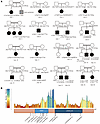 Figure 1
Molecular genetic findings in DMAP1. (A) Pedigrees of studied families and cosegregating pattern of the DMAP1 variants. The pedigrees are drawn using open circles to denote unaffected female subjects and open squares to denote unaffected male subjects; the solid shapes indicate affected subjects. (B) An intolerance landscape plot generated by MetaDome for DMAP1 variant (NM_019100.5) analysis (top panel) and a schematic outline of the DMAP1 protein domains (lower panel) showing 5 variants observed in 2 or 3 families.
dDMAP1 is essential for fly development, and patient DMAP1 variants exhibit partial LoF. To assess the impact of patient variants on DMAP1, we used Drosophila melanogaster as our model. When expressing dDMAP1 RNAi under the control of a pan-neural driver, elav-Gal4, almost no larvae survived to the adult stage, implicating that dDMAP1 is essential for fly development and survival (Figure 2A). Notably, expressing either reference (DMAP1Ref) or patient missense variants (DMAP1Tyr124Cys or DMAP1Phe171Leu) of DMAP1 was sufficient to rescue this lethality (Figure 2A). Since ID was identified as a clinical phenotype in DMAP1 patients, we then focused on assaying the mushroom body (MB), a structure homologous to the mammalian hippocampus that is recognized as the learning and memory center of flies. We found that pan-neural dDMAP1 knockdown caused severe morphological defects in the MB, including decreased overall volume of the MB indicated by decreases in vertical and horizontal lobe area (Figure 2, B–D). The MB defect was replicated by a second independent dDMAP1 RNAi, which showed a milder phenotype (Supplemental Figure 2, A–C). Again, expressing either reference DMAP1 or the 2 patient missense variants of DMAP1 fully restored the decrease in MB volume back to WT levels (Figure 2, B–D). Furthermore, dDMAP1 knockdown specifically in fly sensory neurons driven by ppk-Gal4, which labels the nociceptive class IV dendritic arborization neurons, significantly decreased overall dendritic branching and reduced dendrite complexity at the late larval stages (Supplemental Figure 2, D and E). In WT neurons, the total dendrite length continued to increase during larval development. However, dDMAP1 knockdown impaired this developmental process, which led to defects in dendritic tiling between neighboring neurons (Supplemental Figure 2F). While both DMAP1Tyr124Cys and DMAP1Phe171Leu increased total dendrite length in dDMAP1-knockdown larvae at 96 hours after egg laying, neither fully rescued the phenotype to the extent observed with DMAP1Ref (Supplemental Figure 2, G and H). This result is indicative of dDMAP1 playing a direct role in postmitotic neurons to shape neuronal morphology and circuitry.
 Figure 2
Loss of dDMAP1 leads to morphological and functional abnormality, and patient-derived DMAP1 variants differentially rescue developmental, structural, and behavioral phenotypes observed in dDMAP1-knockdown flies. (A) Pan-neural dDMAP1 deficiency results in lethality in larvae. The expression of DMAP1Ref or patient variants rescues lethality and significantly increases the survival rate. Analyzed by 2-way ANOVA followed by Tukey’s multiple-comparison test. n = 3, 2, 3, and 4 groups, with 30–118 male flies and/or 23–109 female flies in each group. (B–D) Pan-neuronal dDMAP1 knockdown leads to structural defects of the MB in larval brains. The vertical MB lobe is dramatically thinner. The vertical MB lobe is outlined by the yellow dotted line, and the horizontal MB lobe is highlighted by the dotted magenta line. Scale bar: 50 μm. Expressing DMAP1Ref or either of the patient missense variants rescues the volume of both the vertical (C) and horizontal (D) MB lobes to WT level. n = 10, 18, 10, 9, and 6 brains. (E–G) Expressing DMAP1Ref or patient variants concurrently with dDMAP1 knockdown rescues social behavior in the social space assay to different extents. n = 3 groups with 28–41 flies in each group. (F) Quantification of fly inter-distance in the triangle chamber. Analyzed by 1-way ANOVA followed by Dunnett’s multiple-comparison test. (G) Distribution of fly inter-distance. Analyzed by 2-way ANOVA followed by Tukey’s multiple-comparison test. (H) Pan-neural knockdown of dDMAP1 predisposes flies to bang sensitivity, which can be rescued by expressing DMAP1Ref, DMAP1Tyr124Cys, or DMAP1Arg194Gln, but not DMAP1Phe171Leu or DMAP1Arg392Gln. n = 18, 33, 16, 11, 22, and 17 groups with 9–14 flies in each group. Analyzed by 1-way ANOVA followed by Dunnett’s multiple-comparison test. *P < 0.05, **P < 0.01, ***P < 0.001.
To determine if the observed neural structural abnormality led to functional deficits, the flies were subjected to a series of behavioral assays. This is feasible as both reference DMAP1 and patient variants rescued the lethality in dDMAP1 pan-neural knockdown flies, allowing us to first conduct a social space assay to test the effect of missense variants DMAP1Tyr124Cys and DMAP1Phe171Leu on social behavior. WT flies are distributed widely in the behavior chamber, with some clustering at the top given their negative geotaxis (Figure 2E). We found that virgin female flies expressing either of the 2 human DMAP1 missense variants (DMAP1Tyr124Cys or DMAP1Phe171Leu) exhibited a reduction in social space and impaired social avoidance, as determined by the decreased inter-distance when compared with flies expressing DMAP1Ref, which were largely comparable with WT flies (Figure 2, E–G). DMAP1Phe171Leu performed the most poorly. This result indicated that although the 2 DMAP1 missense variants extended the lifespan of dDMAP1-knockdown flies, they were unable to fully restore its function in neural processing and in the regulation of higher-order social behavior. Thus, these results suggest that dDMAP1 is required for normal fly social behaviors, and biallelic DMAP1 variants affect neurons regulating social functions and most likely cause neurophysiological defects.
To further confirm the pathogenicity of the missense variants and given the seizure and hypotonia symptoms seen in patients, we performed the bang sensitivity test (Supplemental Figure 3), which assesses susceptibility to mechanically induced seizures (30, 31). Two additional patient variants, DMAP1Arg194Gln and DMAP1Arg392Gln, were also examined. Whereas WT flies quickly corrected their posture and started climbing immediately after vortex, flies expressing DMAP1Phe171Leu or DMAP1Arg392Gln in the setting of pan-neural dDMAP1 knockdown showed delayed recovery from the stimuli (Figure 2H). In comparison, flies expressing DMAP1Ref, DMAP1Tyr124Cys, or DMAP1Arg194Gln recovered as soon as WT (Figure 2H). These data collectively demonstrate that DMAP1Tyr124Cys, DMAP1Phe171Leu, and DMAP1Arg392Gln are all partial LoF alleles of DMAP1, while DMAP1Tyr124Cys retains more residual function in this paradigm. Consistently, individuals 1, 15, 17, and 18, who carried the homozygous DMAP1Tyr124Cys variant, exhibited relatively mild clinical phenotypes, and none of them presented with seizures. In contrast, the 3 patients carrying DMAP1Phe171Leu or DMAP1Arg392Gln had seizures. Notably, the patient carrying DMAP1Arg194Gln also harbored a nonsense variant (p.Arg224*) and presented with seizures. Given that the nonsense variant is predicted to result in a more severe LoF effect, it may contribute more prominently to the phenotype in this individual, making it difficult to attribute pathogenicity to DMAP1Arg194Gln independently based on the current data. Therefore, further functional studies are required to determine the role of DMAP1Arg194Gln.
Transcriptome profiling and potential effectors downstream of dDMAP1. Given the involvement of DMAP1 in multiple complexes to regulate gene expression, we performed RNA-seq on brain tissues harvested at the third instar larval stage from WT controls and elav-Gal4–driven dDMAP1-knockdown flies. A principal component analysis plot supported the separation of the WT versus dDMAP1 RNAi samples (Figure 3A). Differential expression analysis identified 1,182 genes with at least 2-fold change and an adjusted P value < 0.01 (FDR corrected), of which 873 were upregulated (73.9%) and 309 (26.1%) were downregulated (Figure 3B). Gene Ontology enrichment analysis of downregulated genes revealed significant enrichment for molecular functions related to DNA- and RNA-binding processes (Figure 3C), consistent with the known roles of DMAP1 in chromatin remodeling and transcriptional regulation. We focused on downregulated genes, as these are more likely to represent the direct consequences of impaired chromatin remodeling. dDMAP1 RNAi efficiency was confirmed by an 82% reduction in the dDMAP1 expression level (Figure 3D).
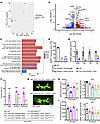 Figure 3
dCbl rescues the defects observed in dDMAP1-knockdown flies. (A) Principal component analysis showing the separation of the WT versus dDMAP1 RNAi samples. (B) Differential expression analysis for WT versus dDMAP1 RNAi, with at least 2-fold change and an adjusted P value < 0.01 (FDR corrected). (C) Gene Ontology enrichment analysis of downregulated genes shows significant enrichment for molecular functions related to DNA- and RNA-binding processes. (D) dDMAP1 expression data in the brains of WT and 2 RNAi strains measured by transcripts per million (TPM). n = 3. Analyzed by 1-way ANOVA followed by Dunnett’s multiple-comparison test. ***P < 0.001. (E) qPCR data show that dSF1 and dCbl are substantially downregulated in pan-neuronal dDMAP1-knockdown larval brains. Analyzed by unpaired 2-tailed Student’s t test. n = 3. ***P < 0.001. (F) Expressing dCbl pan-neuronally drastically increases the survival rate of dDMAP1-knockdown flies, while dSF1 partially rescues the lethality in female flies. Analyzed by 2-way ANOVA followed by Tukey’s multiple-comparison test. n = 3, 4, and 3 groups, with 18–43 male flies and/or 30–50 female flies in each group. (G–I) Expressing dCbl or dSF1 significantly attenuates the reduced MB area caused by dDMAP1 deficiency. Scale bar: 50 μm. (H) Quantification of MB vertical lobe area. (I) Quantification of horizontal lobe area. n = 10, 18, 12, and 13 brains. (J) qPCR data show that DMAP1Ref, DMAP1Tyr124Cys, and DMAP1Phe171Leu similarly rescue the dCbl and dSF1 levels in the pan-neural dDMAP1 RNAi background. Pan-neural DMAP1Ref overexpression does not increase dCbl and dSF1 levels in the WT background. All data are compared with the WT. Analyzed by 1-way ANOVA followed by Dunnett’s multiple-comparison test. n = 3. *P < 0.05, **P < 0.01, ***P < 0.001.
To nominate candidate downstream targets, downregulated fly genes were mapped to their human orthologs. Four genes were selected for validation based on their biological relevance, and reduced expression of all 4 was confirmed in dDMAP1-knockdown brains by qPCR (Figure 3E). Interestingly, human orthologs of 2 of these genes (Cbl and SF1) with high ortholog scores (10/14 and 13/14, respectively), are either known NDD-causing or NDD candidate genes: CBL in Noonan-like syndrome (32, 33) and SF1 in NDD (34). To assess functional relevance, we expressed dCbl (Drosophila Cbl) or dSF1 (Drosophila SF1) in dDMAP1-knockdown flies under the control of elav-Gal4 and found that dCbl drastically increased the survival rate in adult flies (Figure 3F). Interestingly, while dSF1 significantly attenuated the lethality in female flies, it had no effect in male flies. We then investigated the MB structure and found that expression of dCbl fully restored the volume of both vertical and horizontal lobes of MB, whereas dSF1 also partially rescued the morphological defects in dDMAP1-knockdown brains (Figure 3, G–I). Pan-neural overexpression of dCbl or dSF1 in the WT background did not result in increased overall brain size or MB lobe size (Supplemental Figure 4), suggesting that the rescue effects reflect compensation for the functional loss of dDMAP1 rather than a nonspecific increase in brain or MB volume. These results suggest that dCbl and dSF1 are the potential downstream effectors of dDMAP1. Furthermore, we found that DMAP1Ref, DMAP1Tyr124Cys, and DMAP1Phe171Leu similarly rescued the dCbl and dSF1 levels in the pan-neural dDMAP1-knockdown background (Figure 3J). These data are consistent with our result that they were able to rescue the MB phenotype. Overexpression of DMAP1Ref in the WT background did not increase the dCbl and dSF1 levels (Figure 3J), suggesting a possible regulatory mechanism keeping the expression of Cbl and SF1 in check.
Episignature analysis. Given the critical role of DMAP1 in DNA methylation, we performed an episignature analysis using blood-derived genomic DNA from 8 individuals harboring DMAP1 variants. This analysis identified 214 differentially methylated CpG probes that reliably distinguished affected individuals from 56 age-, sex-, and array-matched controls. The specificity and robustness of these probes were evaluated using hierarchical clustering and multidimensional scaling (MDS) analyses (Supplemental Figure 5), which demonstrated clear separation between DMAP1 cases and controls. To assess the reproducibility of the episignature, we performed leave-one-out cross-validation (LOOCV), in which 1 case sample was excluded per iteration during probe selection and subsequently reintroduced for testing and visualization via MDS. As illustrated in Supplemental Figure 6, most withheld samples consistently clustered with the remaining DMAP1 cases, confirming the reproducibility of the identified episignature. Support vector machine (SVM) models were then generated based on the 214 CpG probes to compute methylation variant pathogenicity (MVP) scores ranging from 0 to 1, with higher values reflecting greater similarity to the DMAP1-specific episignature. Two complementary models were developed as part of the standard EpiSign workflow. The first model (Supplemental Figure 7) was trained on the 8 DMAP1 cases and the 56 age- and sex-matched controls. This baseline model is routinely used to assess the specificity of the episignature relative to the broader EpiSign Knowledge Database (EKD). While a small number of non-DMAP1 EKD samples displayed modestly elevated MVP scores, the vast majority scored near zero, demonstrating strong baseline specificity and no evidence of appreciable overlap with other episignatures.
A second model was then constructed to refine the specificity of the DMAP1 episignature by incorporating 75% of additional control and disease samples from the EpiSign v5 clinical classifier into the training set. Results from this expanded model are shown in Figure 4. As expected, inclusion of the full spectrum of comparative episignature further increased specificity and robustness of the classifier. The final column of Figure 4 shows MVP scores for thousands of unresolved clinical cases submitted for diagnostic evaluation. Many of these samples lacked definitive genetic findings or detailed phenotypic information. Notably, follow-up investigation at the submitting institution confirmed that 1 individual with an elevated MVP score (Indv 16, MVP score: 0.59; Supplemental Table 1) carried biallelic pathogenic DMAP1 variants. Clustering results for this individual are shown in Figure 5, A and B.
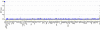 Figure 4
Classification model trained using matched controls and other disease samples. MVP scores generated by the SVM model, which is constructed by training the affected individual samples against matched control samples, 75% of other control samples from the EKD, and 75% of samples from other rare genetic disorders from the previously published EpiSign v5 classifier within the EKD. The remaining 25% of samples were used for testing the model. Samples used for training are shown in blue, and testing samples are shown in gray. The 56 matched controls are labeled “Control (probe selection),” whereas the remaining controls in the database are labeled “Control (others).” The “Unresolved” samples represent those that did not match any of the existing episignatures and may have unknown genotype or phenotype information. A list of episignature disorders is provided in Supplemental Table 2.
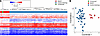 Figure 5
Identified episignature enabled identification of DMAP1 variants in a previously unresolved individual. (A) Hierarchical clustering heatmap, with rows representing the selected probes and columns representing individual samples. Methylation levels, ranging from 0 (unmethylated) to 1 (fully methylated), are shown using a blue-to-red color scale. In the heatmap panel, red denotes DMAP1 samples, green indicates the previously unresolved individual, and blue represents matched controls. (B) MDS plot using the same color scheme as in A, showing clear separation of cases and controls and the clustering of the unresolved samples with the cases.


Copyright © 2026 American Society for Clinical Investigation
ISSN: 0021-9738 (print), 1558-8238 (online)