
Metabolism
Abstract
Aging commonly causes decline of testosterone or estrogen, leading to overaccumulation of fatness in males or females, respectively. Although such phenomenon can be readily explained by estrogen’s direct action on adipocytes in females, accumulative evidence does not support the direct action of testosterone in adipocyte lipid metabolism, suggesting that there is a missing intermediary link. Herein, we propose that glycoprotein hormone β5 (GPHB5) is the intermediary linkage between testosterone and the regulation of adiposity. In clinical samples, blood levels of GPHB5 were correlated negatively with men’s ages, and positively with circulating testosterone. Testosterone directly stimulated the expression of GPHB5 in cultured cells, pharmacological blockade of androgen receptor (AR) functions abrogated such effect. Knockout of AR led to not only development of obesity but also reduction of GPHB5 expression. Genetic ablation of GPHB5 in the males, but not in the females, lowered the browning of white adipose tissue, diminished energy expenditure and caused severe obesity. Importantly, elevated blood testosterone didn’t exert its catabolic actions in GPHB5 null mice, and yet, recombinant GPHB5 protein was able to stimulate energy expenditure and reduce adiposity. Taken together, these results provided the strong proof that GPHB5 is the “missing” intermediary hormone linking testosterone (and aging) and its well-known catabolic effect on adipose tissue.
Authors
Gengmiao Xiao, Aijun Qian, Zhuo Gao, Tingting Dai, Hui Liang, Shuai Wang, Mulan Deng, Yunjing Yan, Xindan Zhang, Xuedi Zhang, Yunping Mu, Jiqiu Wang, Aibo Gao, Huijie Zhang, Fanghong Li, Allan Zijian Zhao
Abstract
Lipodystrophy syndromes are marked by loss of adipose tissue (AT), which leads to insulin resistance and metabolic syndrome development. We identified a heterozygous nonsense variant in early B cell factor 2 (EBF2) (Chr8:26033143C>A, NM_022659.4: c.493G>T, p.E165X) in a patient with atypical partial lipodystrophy (PLD). The EBF family is crucial for the differentiation and function of various mesenchymal tissues. Through in vitro and in vivo disease models, we discovered that this variant limits adipocyte differentiation and hampers adipose tissue remodeling. Heterozygous knock-in (Ebf2E165X/+) mice showed restricted adipogenesis and defective extracellular matrix (ECM) remodeling during post-weaning and high-fat diet (HFD)-induced adipose tissue expansion. HFD caused abnormal adipocyte hypertrophy, decreased expression of adiponectin and leptin, and glucose intolerance in Ebf2E165X/+ mice. Furthermore, key mitochondrial genes involved in fatty acid metabolism and oxidation were specifically downregulated in the Ebf2E165X/+ adipose tissue. Our results suggest that EBF2 dysfunction driven by this nonsense variant drives disease pathology, establishing a connection between EBF2 disruption and an atypical form of lipodystrophy.
Authors
Maria C. Foss-Freitas, Donatella Gilio, Lynn Pais, Eric D. Buras, Romil Kaul Verma, Melanie O'Leary, Heidi L. Rehm, Carmen Glaze, Kathryn Russell, Andre Monteiro da Rocha, Adam Neidert, Patrick Seale, Miriam S. Udler, Elif A. Oral, Tae-Hwa Chun
Abstract
Authors
Johnathan R. Kent, Keene L. Abbott, Rachel Nordgren, Amy Deik, Nupur K. Das, Millenia Waite, Tenzin Kunchok, Anna Shevzov-Zebrun, Nathaniel Christiansen, Amir Sadek, Darren S. Bryan, Mark K. Ferguson, Jessica S. Donington, Alexander Muir, Yatrik M. Shah, Clary B. Clish, Matthew G. Vander Heiden, Maria Lucia L. Madariaga, Peggy P. Hsu
Abstract
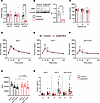
The c-Jun N-terminal kinases (JNKs) regulate diverse physiological processes. Whereas JNK1 and JNK2 are broadly expressed and associated with insulin resistance, inflammation, and stress responses, JNK3 is largely restricted to central nervous system neurons and pancreatic β cells, and its physiological role in β cells remains poorly defined. To investigate its function, we generated mice lacking JNK3 specifically in β cells (βJNK3-KO). These mice displayed glucose intolerance and defective insulin secretion, particularly after oral glucose challenge, indicating impaired incretin responses. Consistently, Exendin-4–stimulated (Ex4-stimulated) insulin secretion was blunted in βJNK3-KO islets, accompanied by reduced GLP-1R expression. Similar findings were observed in human islets treated with a selective JNK3 inhibitor (iJNK3). Downstream of GLP-1R, Ex4-induced CREB phosphorylation was diminished in βJNK3-KO islets, indicating impaired canonical signaling. Moreover, activation of the GLP-1R/CREB/IRS2 pathway, a key regulator of β cell survival, was reduced in βJNK3-KO islets and iJNK3-treated human islets. As a consequence, the protective effects of Ex4 were lost in cytokine-treated βJNK3-KO and human islets, and Ex4-mediated protection was partially attenuated in βJNK3-KO mice exposed to multiple low-dose streptozotocin. These findings identify JNK3 as a regulator of β cell function and survival and suggest that targeting this pathway may enhance incretin-based therapies.
Authors
Ruy A. Louzada, Marel Gonzalez Medina, Valentina Pita-Grisanti, Jessica Bouviere, Amanda F. Neves, Joana Almaça, Myoung Sook Han, Roger J. Davis, Gil Leibowitz, Manuel Blandino-Rosano, Ernesto Bernal-Mizrachi

Abstract
Calorie restriction (CR) extends maximal lifespan and maintains cellular homeostasis in various animal models. We have previously shown that CR induces a global reduction of protein fractional synthesis rates (FSRs) across the hepatic proteome in mice, but the timing and regulatory mechanisms remain unclear. Nitric oxide (NO), a bioactive molecule upregulated during CR, is a potential regulator of protein synthesis. To explore the role of NO in hepatic proteome fluxes during CR, we used in vivo deuterium labeling from heavy water and liquid chromatography/mass spectrometry–based (LC/MS-based) flux proteomics in WT and NO-deficient (NO–) mice. We observed a transition to reduced global protein FSRs that occurred rapidly between days 25 and 30 of CR. NO deficiency, whether genetic or pharmacological, disrupted the slowing of proteome-wide fluxes and the beneficial effects on body composition and physiology. Administering the NO donor molsidomine restored the reduction in hepatic FSRs in NO– mice. Furthermore, inhibiting NO pharmacologically, whether starting on day 1, day 14, or day 24 of CR, mitigated the reduction in hepatic protein FSRs at day 32, highlighting NO’s critical role during the transition period. These results underscore the importance of NO in CR-induced changes in proteostasis and suggest NO as a potential CR-mimetic target, while offering a specific time window for identifying other signals and testing therapeutic interventions.
Authors
Hector H. Palacios, Edward Cao, Adelaide Cahill, Hussein Mohamad, Marc K. Hellerstein
Abstract
BACKGROUND. Amino acid (AA) concentrations are increased in prediabetes and diabetes. Since AA stimulate glucagon secretion which should then increase hepatic AA catabolism, it has been hypothesized that hepatic resistance (associated with hepatic fat content) to glucagon’s actions on AA metabolism leads to hyperglucagonemia and hyperglycemia. METHODS. To test this hypothesis, we therefore studied lean and obese individuals, the latter group with and without hepatic steatosis as defined by Proton Density Fat Fraction (PDFF) > 5%. After an overnight fast, femoral vein, femoral artery, and hepatic vein catheters were placed. [3-3H] glucose and L-[1-13C,15N]-leucine were used to measure glucose turnover and leucine oxidation respectively. During a hyperglycemic clamp, an amino acid mixture was infused together with insulin and glucagon (1.5 ng/kg/min 0 – 120 min; 3.0 ng/kg/min 120 – 240 min). Tracer-based measurement of hepatic leucine oxidation in response to rising glucagon concentrations and splanchnic balance (measured using arterio-venous differences across the liver), of the other AA were the main outcomes measured. RESULTS. The presence of hepatic steatosis did not alter hepatic glucose metabolism and leucine oxidation in response to insulin and rising concentrations of glucagon. Splanchnic balance of a few amino acids, and related metabolites differed amongst the groups. However, across-group differences of AA splanchnic balance in response to glucagon were unaffected by the presence of hepatic steatosis. CONCLUSION. The action of glucagon on hepatic amino acid metabolism is unaffected by hepatic steatosis in humans. TRIAL REGISTRATION. This study was registered at Clinical Trials.Gov: NCT05500586. FUNDING. This work was funding by the NIH.
Authors
Hannah E. Christie, Sneha Mohan, Aoife M. Egan, Federica Boscolo, Chiara Dalla Man, Scott M. Thompson, Michael Jundt, Chad J. Fleming, James C. Andrews, Kent R. Bailey, Michael D. Jensen, K. Sree Nair, Adrian Vella

Abstract
The metabolic microenvironment plays important roles in tumorigenesis, but how leukemia-initiating cells (LICs) response to the acidic BM niche remains largely unknown. Here, we show that acid-sensing ion channel 3 (ASIC3) dramatically delays leukemogenesis. Asic3 deletion results in a remarkably enhanced self-renewal, reduced differentiation, and 9-fold greater number of murine acute myeloid LICs. We developed an ultrasensitive, ratiometric, genetically encoded fluorescent pH sensor (pHluorin3) and demonstrated that LICs prefer localizing in the endosteal niche with a neutral pH range of 7.34–7.42, but not in the vascular niche with a lower pH range of 6.89–7.22. Unexpectedly, acid-ASIC3 signaling inhibits both murine and human LIC activities in a noncanonical manner by interacting with the N-terminal of STIM1 to reduce calcium-mediated CAMK1-CREB-MEIS1-LDHA levels, without inducing cation currents. This study reveals a pathway in suppression of leukemogenesis in the acidic BM niche and provides insight into targeting LICs or other cancer stem cells through pH-dependent ASICs.
Authors
Hao Gu, Lietao Weng, Chiqi Chen, Xiaoxin Hao, Rongkun Tao, Xin Qi, Xiaoyun Lai, Ligen Liu, Tinghua Zhang, Yiming Jiang, Jin Wang, Wei-Guang Li, Zhuo Yu, Li Xie, Yaping Zhang, Xiaoxiao He, Ye Yu, Yi Yang, Dehua Wu, Yuzheng Zhao, Tian-Le Xu, Guo-Qiang Chen, Junke Zheng

Abstract
Mitochondrial metabolism orchestrates T cell functions, yet the role of specific mitochondrial components in distinct T cell subsets remains poorly understood. Here, we explored the role of mitochondrial complex II (MC II), the only complex from the electron transport chain (ETC) that plays a role in both ETC and metabolism, in regulating T cell functions. Surprisingly, MC II exerts divergent effects on CD4+ and CD8+ T cell activation and function. Using T cell–specific MC II subunit, succinate dehydrogenase A–deficient (SDHA-deficient) mice, we integrated single-cell RNA-seq and metabolic profiling, with in vitro and in vivo T cell functional assays to illuminate these differences. SDHA deficiency induced metabolic changes and remodeled gene expression exclusively in activated T cells. In CD4+ T cells, SDHA loss dampened both oxidative phosphorylation (OXPHOS) and glycolysis, impaired cytokine production, proliferation, and reduced CD4+ T cell–mediated graft-versus-host disease after allogeneic stem cell transplantation (SCT). In contrast, SDHA deficiency in CD8+ T cells reduced OXPHOS but paradoxically upregulated glycolysis and demonstrated enhanced cytotoxic functions in vitro and in vivo. This metabolic reprogramming endowed SDHA-KO CD8+ T cells with superior in vivo antitumor efficacy after immune checkpoint inhibitor therapy and allogeneic SCT. These findings reveal MC II as a bifurcation point for metabolic and functional specialization in CD4+ and CD8+ T cells.
Authors
Keisuke Seike, Shih-Chun A. Chu, Yuichi Sumii, Takashi Ikeda, Meng-Chih Wu, Laure Maneix, Dongchang Zhao, Yaping Sun, Marcin Cieslik, Pavan Reddy

Abstract
Statins lower cholesterol, reducing the risk of heart disease, and are among the most frequently prescribed drugs. Approximately 10% of individuals develop statin-associated muscle symptoms (SAMS; myalgias, rhabdomyolysis, and muscle weakness), often rendering them statin intolerant. The mechanism underlying SAMS remains poorly understood. Patients with mutations in the skeletal muscle ryanodine receptor 1 (RyR1)/calcium release channel can be particularly intolerant of statins. High-resolution structures revealed simvastatin binding sites in the pore region of RyR1. Simvastatin stabilized the open conformation of the pore and activated the RyR1 channel. In a mouse expressing a mutant RyR1-T4709M found in a patient with profound statin intolerance, simvastatin caused muscle weakness associated with leaky RyR1 channels. Cotreatment with a Rycal drug that stabilizes the channel closed state prevented simvastatin-induced muscle weakness. Thus, statin binding to RyR1 can cause SAMS, and patients with RyR1 mutations may represent a high-risk group for statin intolerance.
Authors
Gunnar Weninger, Haikel Dridi, Steven Reiken, Qi Yuan, Nan Zhao, Linda Groom, Jennifer Leigh, Yang Liu, Carl Tchagou, Jiayi Kang, Alexander Chang, Estefania Luna-Figueroa, Marco C. Miotto, Anetta Wronska, Robert T. Dirksen, Andrew R. Marks

Abstract
During the progression of acute myeloid leukemia (AML), extramedullary hematopoiesis (EMH) compensates for impaired bone marrow hematopoiesis. However, the specific cellular dynamics of EMH and its influence on AML progression remain poorly understood. In this study, we identified a substantial expansion of the CD81+ erythroblast subpopulation (CD81+ Erys) in the spleens of AML mice, which promoted AML cell proliferation and reduced survival. Mechanistically, CD81+ Erys secrete elevated levels of macrophage migration-inhibitory factor (MIF), which interacted with the CD74 receptor on AML cells, activating the mTORC1 signaling pathway and upregulating Egln3. Consequently, AML cells cocultured with CD81+ Erys exhibited reprogrammed phospholipid metabolism, characterized by an increased phospholipid-to-lysophospholipid ratio. Modulating this metabolic shift, either by supplementing exogenous lysophospholipids or depleting Egln3 in AML cells, restored the phospholipid balance and mitigated the protumorigenic effects induced by CD81+ Erys. Overall, our findings elucidate the molecular crosstalk between erythroblasts and AML cells, extend our insights into the mechanisms driving AML progression, and suggest potential therapeutic strategies.
Authors
Yue Li, Jiaxuan Cao, Jingyuan Tong, Peixia Tang, Haoran Chen, Guohuan Sun, Zining Yang, Xiaoru Zhang, Fang Dong, Shangda Yang, Jie Gao, Xiangnan Zhao, Jinfa Ma, Di Wang, Lei Zhang, Lin Wang, Tao Cheng, Hui Cheng, Lihong Shi


Copyright © 2026 American Society for Clinical Investigation
ISSN: 0021-9738 (print), 1558-8238 (online)