
Advertisement
Research ArticleAgingHepatologyMetabolism
Open Access |  10.1172/JCI189798
Nitric oxide required for transition to slower hepatic protein synthesis rates during long-term caloric restriction
Hector H. Palacios,1,2 Edward Cao,2 Adelaide Cahill,2 Hussein Mohamad,2 and Marc K. Hellerstein1,2
1Center for Human Nutrition, Washington University in St. Louis, St. Louis, Missouri, USA.
2Nutritional Science and Toxicology Department, University of California — Berkeley, Berkeley, California, USA.
Address correspondence to: Marc K. Hellerstein, Nutritional Sciences and Toxicology Department, UC Berkeley, 119 Morgan Hall, Berkeley, California 94720, USA. Phone: 510.643.2550; Email: march@berkeley.edu.
Find articles by Palacios, H. in: PubMed | Google Scholar
1Center for Human Nutrition, Washington University in St. Louis, St. Louis, Missouri, USA.
2Nutritional Science and Toxicology Department, University of California — Berkeley, Berkeley, California, USA.
Address correspondence to: Marc K. Hellerstein, Nutritional Sciences and Toxicology Department, UC Berkeley, 119 Morgan Hall, Berkeley, California 94720, USA. Phone: 510.643.2550; Email: march@berkeley.edu.
Find articles by Cao, E. in: PubMed | Google Scholar
1Center for Human Nutrition, Washington University in St. Louis, St. Louis, Missouri, USA.
2Nutritional Science and Toxicology Department, University of California — Berkeley, Berkeley, California, USA.
Address correspondence to: Marc K. Hellerstein, Nutritional Sciences and Toxicology Department, UC Berkeley, 119 Morgan Hall, Berkeley, California 94720, USA. Phone: 510.643.2550; Email: march@berkeley.edu.
Find articles by Cahill, A. in: PubMed | Google Scholar
1Center for Human Nutrition, Washington University in St. Louis, St. Louis, Missouri, USA.
2Nutritional Science and Toxicology Department, University of California — Berkeley, Berkeley, California, USA.
Address correspondence to: Marc K. Hellerstein, Nutritional Sciences and Toxicology Department, UC Berkeley, 119 Morgan Hall, Berkeley, California 94720, USA. Phone: 510.643.2550; Email: march@berkeley.edu.
Find articles by Mohamad, H. in: PubMed | Google Scholar
1Center for Human Nutrition, Washington University in St. Louis, St. Louis, Missouri, USA.
2Nutritional Science and Toxicology Department, University of California — Berkeley, Berkeley, California, USA.
Address correspondence to: Marc K. Hellerstein, Nutritional Sciences and Toxicology Department, UC Berkeley, 119 Morgan Hall, Berkeley, California 94720, USA. Phone: 510.643.2550; Email: march@berkeley.edu.
Find articles by Hellerstein, M. in: PubMed | Google Scholar
Published January 2, 2026 - More info
J Clin Invest. 2026;136(1):e189798. https://doi.org/10.1172/JCI189798.
© 2026 Palacios et al. This work is licensed under the Creative Commons Attribution 4.0 International License. To view a copy of this license, visit http://creativecommons.org/licenses/by/4.0/.
Received: December 3, 2024; Accepted: October 10, 2025


-
Results
CR time course and in vivo metabolic labeling procedures for proteome-wide synthesis rates. To investigate the effect of CR on protein synthesis rates across the global hepatic proteome and gain a deeper understanding of the time course and underlying signaling mechanisms, we conducted an intensive time-course study using C57BL/6J mice (n = 120). Starting from 6 weeks of age and after an acclimatization period, the mice were individually housed and subjected to CR, in which they consumed 30% less food compared with the Con mice. We included the following time points for in vivo labeling studies: 0 days (baseline Con), 9, 14, 20, 25, 27, 28, 29, 30, 31, 32, 40, 42, 73, and 170 days (Figure 1A). Age-matched Con mice, which were not subjected to CR, were used to establish 0 days as the baseline for protein turnover rates and to assess the variability of our flux proteomics measurements under ad libitum feeding conditions. The day 0 Con mice were labeled for 4 days prior to the assessment of hepatic protein kinetics. The coefficient of variation (CV) in these baseline samples served as a reference point for statistical analyses of all subsequent time points. We then selected time points aimed to capture the early, transitional, and long-term effects of CR on hepatic proteome turnover (Figure 1A).
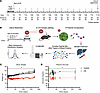 Figure 1
CR time-course experimental design for hepatic proteome–wide fluxes. (A) Experimental time points. Male C57Bl/6J mice, starting at 6 weeks of age, underwent CR (30% fewer calories than mice in the Con group) for up to 170 days, with CR feeding scheduled at 1200 hours to ensure a regular feeding schedule. Starting 4 days before sacrifice, mice were labeled with a 2H2O by i.p. bolus, and then body water enrichment was maintained with 8% 2H2O in drinking water. (B) Experimental approach for measuring in vivo protein fluxes (FSRs) across the global proteome. (C) Body weights. Mice (n = 120) were single-caged and split into ad-lib (Con) and CR groups. Mice were weighed at regular intervals throughout the experimental period. (D) Body weight and plasma glucose levels in mice fasted for 5–6 hours are shown for the Con and CR groups. Data indicate the mean ± SD (n = 3–5 for all experiments).*P < 0.05 versus Con, determined by repeated-measures ANOVA.
We used stable isotope labeling and MS/MS analysis with the MIDA approach (2, 5, 27, 29) to measure hepatic protein turnover rates (FSRs) as the primary outcome of this study. This approach involves i.p. injection of 99.8% 2H2O to increase the 2H enrichment of body water in mice to approximately 5%. Subsequently, we provided 8% 2H2O in the drinking water to maintain the body water 2H-enrichment constant at approximately 5% during the labeling period (2, 5, 30). Hepatic proteins were extracted and subjected to trypsin digestion (2, 5, 27). The resulting peptides were analyzed using LC-MS/MS, allowing for identification and kinetics analysis of the parent proteins (Figure 1B).
Body weight is an important assessment of CR that changes in less than 10 days following intervention (31, 32). To closely monitor changes throughout the study, we conducted regular body weight measurements. We observed a significant decrease in body weight (P < 0.05) within the first week of initiating the experiments (Figure 1C). The average body weight of the mice in the CR group was 26.0 ± 2.0 g at 6–7 weeks of age (start of CR) and 26.6 ± 1.4 g at the final time point (31 weeks of age) (Figure 1C). Weight regain and stabilization were consistent with previous observations that C57BL/6 mice regain weight over time during prolonged CR (33, 34).
Short-term CR can improve glucose homeostasis in male mice (35), so we measured plasma glucose levels (Figure 1D) after a 6-hour fast. This measurement revealed a significant effect of CR in lowering fasting plasma glucose concentrations (P < 0.05).
Time course of hepatic proteome-wide protein synthesis rates. From the comprehensive list of detected proteins that passed analytic criteria (2, 27, 36), we paired all proteins in each group at each time point and evaluated the log2 fold change (FC) of each protein’s FSR (CR over Con) to assess the effects of CR on hepatic protein FSRs (Figure 2). Proteins that had a higher value in the CR group than the Con group were classified as “Up” in response to CR. Conversely, if the FSR value was lower in the CR group, the protein’s FSR was classified as “Down.” Each time-course experiment was sorted from the highest log2(FCFSR) value to the lowest. To evaluate significance, we performed a binomial statistical test (i.e., the probability that x number of coin tosses would result in the distribution of Up vs. Down FSRs), presenting the results as 2-tailed P values, which are quantified in Figure 2. Additionally, we analyzed proteins represented across all time points (Supplemental Figure 3). This analysis indicates no significant changes in hepatic proteome kinetics prior to 25 days of CR. However, a transitional period is observed between 25 and 30 days, followed by a marked global reduction in FSR values after 30 days of CR.
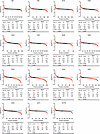 Figure 2
Time course to CR threshold event transition to slower hepatic protein FSRs. Time course of reduction in proteome-wide hepatic protein FSRs during long-term CR. Data represent experiments in which C57Bl/6J male mice underwent CR for different lengths of time, with heavy water labeling for 4 days prior to each termination time point shown. Livers were collected and proteome flux rates were analyzed by LC-MS/MS. Protein FSRs (turnover rates) were calculated by MIDA, as described in Methods. The data show the FSR as log2 values of the FC between the CR and Con groups. Dots represent individual proteins identified by LC-MS/MS, sorted from highest to lowest value. Above the “0” line are the proteins with a higher FSR under CR, while the dose below the “0” line represents the proteins whose FSR was lower under CR. To establish a cutoff threshold value, the CV was averaged, and this average value was used as the cutoff — i.e., a percentage change greater than that of the CV average was considered to be above the cutoff and is marked in red. Vertical gray lines show the dividing line separating faster (left) and slower (right) FSRs. The tables reflect the graphed data and represent the number and percentage of proteins upregulated (higher FSR) or downregulated (lower FSR) in CR compared with the Con. P values show the binomial distribution significance, determined using a 2-tailed binomial distribution. These results are consistent with a modest reduction before day 25 in hepatic FSRs (50%–60% of proteins with lower FSRs than Con) that rarely passes the CV cutoff until after days 25–30. After this transition, there was a global reduction, with 75%–90% of proteins having lower FSRs that exceeded the cutoff compared with the Con. D0, day 0.
To establish a cutoff for statistical stringency in binomial comparisons, we calculated the CV for each protein for the Con and CR groups. We then used the average of all the CVs as a proxy for variability within the experiments (37–39). Any change in value greater than the average CV was considered above the cutoff and is highlighted in red in Figure 2. This approach provided us a comprehensive method to determine the effect of CR on protein turnover rates and to identify proteins that exhibited substantial changes in response to interventions.
Observing a transition period or threshold event in hepatic proteome FSRs during CR. To facilitate a comprehensive understanding of the proteome-wide FSR time-course changes (Figure 2), we summarized the data using a standard score (z score), where each FSR value was positioned relative to the mean of the group. Through this standardization, each identified protein FSR allowed for easier comparisons between Con and CR across the different time points (Figure 3A). The number of individual proteins with either a lower FSR after CR intervention (Figure 3A, depicted in black on the left) or a higher FSR (Figure 3A, depicted in red on the right) are shown at each time point. The percentages shown indicate the proportion of proteins that exhibited either lower or higher FSR values under CR. The distribution of these changes was day 0: 54% down, 46% up; day 9: 62% down, 38% up; day 14: 56% down, 44% up; day 20: 63% down, 37% up; day 25: 52% down, 48% up; day 27: 70% down, 30% up; day 28: 66% down, 34% up; day 29: 64% down, 36% up; day 30: 74% down, 26% up; day 31: 85% down, 15% up; day 32: 76% down, 24% up; day 40: 92% down, 8% up; day 42: 82% down, 18% up; day 73: 85% down, 15% up; and day 170: 77% down, 23% up.
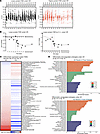 Figure 3
Identifying the threshold event time point at which CR induces a dramatic slowdown of protein turnover rates. (A) Each dot represents the FSR as a z score for every identified protein. In black (left) are the proteins whose FSR was lower after CR compared with the Con. In red (right) are the proteins whose FSR were higher after CR compared with the Con. The bottom of the graph shows the percentage of total proteins at each time point. Note that the percentage of proteins with a higher FSR is smaller in the right graph, especially after day 30. (B) The percentage values of the proteins that had a lower FSR under CR are shown as the –log2 FC relative to day 0. The top panel shows the –log2 (FC) without adjusting for the CV. The bottom panel shows the –log2 (FC) relative to the percentages adjusted for CV. (C) Heatmap of the log2 FC between CR and Con FSRs. Heatmap represents the proteins whose FSR changed between days 25 and 30, with the differentially expressed proteins between the 2 time points shown. (D) GO framework by aspect was used to analyze pathway enrichment analysis. BP, biological process; CC, cellular component; MF, molecular function.
Using these percentage values after logarithmic transformation (–log2), we examined the distribution of proteins with decreased FSRs under CR over time (Figure 3B, top panel). We also evaluated changes in variability using CV values, which showed a 3-fold greater degree of change (Figure 3B, bottom panel).
These analyses revealed a clear inflection pattern. During the first 25 days of CR, FSR values exhibited relatively minor changes, fluctuating between 52% and 63% of proteins showing modest downregulation (FSR <25% change). After day 25, a transition to more prevalent lower FSR values emerged, with 74%–85% of proteins affected by days 30–32, with an almost vertical slope and a doubling of the degree of change observed compared with before day 25 (Figure 3B). This period around 4–5 weeks after the start of CR represents a transitional event that suggests a threshold effect. This high prevalence of lower FSR values across the proteome was maintained for the remainder of the time course. Notably, when considering the values that surpassed the CV cutoff, the statistical differences became more pronounced (Figure 3B).
The identification of a transition event between days 25 and 30 of CR allowed us to generate a heatmap using the log2 FC between CR and Con FSRs depicting uniquely up- or downregulated fluxes that separate this important period (Figure 3C). Specific proteins that were differentially expressed (opposites between day 25 and day 30 by their FC) by being “uniquely” upregulated or downregulated under CR at day 30 compared with day 25 were identified (Figure 3C).
To further characterize the differences in protein expression between day 25 and day 30 of CR, we analyzed protein FSRs using Gene Ontology (GO) for proteins uniquely decreased or increased at day 30. As expected, pathways related to body composition and weight loss, such as fatty acid metabolic processes, were downregulated at day 30. Interestingly, differentially upregulated GO Biological Processes at day 30, not observed on day 25, included amino acid metabolic processes (Figure 3D).
Label-free quantitative proteomics (40–42), followed by within-proteome absolute synthesis rates (WPASRs) (5) at both day 25 and day 30, using a normalized signal intensity quotient (Q) was performed to validate our observations. Principal component analysis (PCA) (Supplemental Figure 4A; supplemental material available online with this article; https://doi.org/10.1172/JCI189798DS1) shows that CR at day 30 was the principal distinct component. Sample normalization of the WPASR (adjusted to the median for systemic differences among samples, followed by log10 transformation on individual values and data scaled to the mean center) are represented on the heatmap in Supplemental Figure 4B and show marginal changes at day 25 of CR, where only 56.7% of WPASRs were decreased under CR compared with its time-matched Con. Meanwhile, at day 30 of CR, 71.4% of WPASRs were decreased.
Comparing hepatic protein FSRs with gene expression. To gain a comprehensive understanding of gene expression during CR over the course of the transitional period (days 2–30), we performed RNA-Seq on hepatic mRNA for these 2 time points (Figure 4). Filtering out low-quality reads yielded 15,082 genes. Matching and comparing the expression of protein FSRs and gene expression (see Supplemental Figure 1 for overview) were conducted for day 25 (Figure 4A) and day 30 (Figure 4B), with a focus on targets identified in both the proteomics and RNA-Seq datasets. The proteins were then sorted from highest to lowest on the basis of the protein FSRs. The resulting tables in Figure 4, A and B, present the number of genes and protein FSRs with concordant or discordant expression patterns. Statistical analysis using binomial distribution 2-tailed P values was applied to generate the tables in Figure 4, A and B. Additionally, a vertical dotted line is shown to distinguish faster (left) from slower (right) FSR values. This analysis reveals that systematic changes in protein FSRs during CR, including those occurring between days 25 and 30, are not manifested in mRNA measurements.
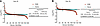 Figure 4
Comparison of the hepatic protein FSR with gene expression. Protein FSRs and gene expression (see Supplemental Figure 1 for overview) were matched and compared for day 25 (A) and day 30 (B). Only those targets identified in both the flux proteomics and RNA-Seq dataset were included. Proteins are shown as sorted from highest to lowest by FC of the protein FSR. Table represents the number of genes and protein FSRs with either the same or different direction of expression. Tables show statistics as determined by binomial distribution 2-tailed P values. Vertical dotted line separates faster (left) and slower (right) FSRs. These findings reveal that changes in protein FSRs during CR, including changes between days 25 and 30 of CR, were not reflected in mRNA measurements.
A biologic “lag” between gene transcription and protein translation (43) may explain why fluctuations in mRNA levels did not correspond to changes in protein levels. Our labeling approach analyzed protein turnover rates over a period of 4 days, however, which is much longer than the usual time for the message to be translated for protein synthesis (43, 44). These findings suggest that posttranscriptional regulatory mechanisms are at work here.
Exploring the role of NO in hepatic proteome fluxes. We then asked whether there is a role for NO in the regulation of the hepatic proteostatic response to CR. To establish the broad time course of changes, we first placed iNOS-KO mice (B6.129P2-Nos2tm1Lau/J) (45–47) (NO– mice) under 30% CR for either 10 weeks (time [T]: T73) or 22 weeks (T170). Prior to tissue collection, the mice were labeled with 2H2O for a period of 4 days. Both NO– mice (n = 20) and Con C57Bl6/J mice (n = 24) were started on the study protocol at 6 weeks of age and were randomly divided into 4 groups: Con (n = 12), NO– (n = 10), CR (n = 12), and NO-CR (n = 10) (Figure 5A).
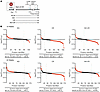 Figure 5
Effects of iNOS KO and CR on hepatic proteome FSRs. (A) Mouse experimental workflow. Mice underwent CR plus 2H2O labeling for different lengths of time. iNOS-KO mice (NO–) under CR at 2 time points (10 or 22 weeks of the study. Before sacrifice, mice were labeled with 2H2O for 4 days. NO– mice (n = 20) and Con C57Bl6/J mice (n = 24), starting at 6–7 weeks of age, were randomly divided into 4 groups: Con ad-lib (n = 12); NO– ad-lib (n = 10); CR (n = 12); and NO-CR (n = 10). (B) FSR values were obtained for the liver proteome at 10 or 22 weeks of intervention for Con, iNOS-KO (NO–), and CR iNOS-KO (NO-CR) mice. Dots along the line represent identified proteins sorted from the highest FSR to the lowest FSR for the group by the log2 FC compared with the ad-lib Con group. Comparisons were done for all groups. Tables represent the binomial distribution of proteins with an increased FSR (Up), or decreased (Down). In red are the proteins whose change was greater than the CV.
To compare flux differences, we calculated the log2 FC (log2[FCFSR]) values for each protein compared with the ad-lib Con, as described above. This allowed us to determine the distribution of proteins with higher (Up) or lower (Down) FSR values on a global scale. Statistical analysis was performed using binomial distribution analysis with a 2-tailed P value. Additionally, to enhance the rigor of our analysis, we considered proteins with changes that exceeded their CV thresholds.
We first saw, after 10 weeks (Figure 5B, top panel), that CR alone led to a marked slowdown in hepatic protein FSRs, with approximately 83.8% of proteins displaying a lower FSR compared with the Con group at 10 weeks. When considering values above the CV threshold, 58.1% had a lower FSR, while only 5.7% had a higher FSR compared with the Con group. Interestingly, these effects were diminished in the NO-CR group, with approximately 61.9% of proteins showing a lower FSR. When considering the CV threshold, approximately 46.7% of proteins in the NO-CR group exhibited a lower FSR. To test the significance of changes in protein downregulation between the CR and NO-CR groups at 10 weeks (quantified in Table 1), we used the Fisher’s exact test, which showed a significantly decreased effect between these 2 groups (P = 0.008).
In contrast, the NO– group had distinctly higher hepatic protein FSRs, with 75.2% of proteins exhibiting a higher turnover rate compared with the Con group. Among these changes, approximately 29.5% of proteins had a significantly higher FSR above the CV, while only 9.5% had a slower FSR compared with the Con group.
At 22 weeks (Figure 5B. bottom panel), the NO– group had higher FSRs (73.6%) in hepatic proteins compared with the Con group. Among proteins above the CV, 32.6% had a higher FSR, while 9.6% had a lower FSR than did the Con. CR alone decreased the hepatic proteome FSRs by 78.1%, with 53.9% of proteins above the CV being downregulated, while only 8.4% were upregulated. Notably, the NO-CR group showed significantly higher FSR values than did the Con group (P = 8.1–6), with 66.3% of proteins being upregulated. However, when considering values above the CV, only 13.5% had a higher FSR, while 28.1% had a decrease in the FSR. We performed Fisher’s exact test to compare protein FSR downregulation between the CR and NO-CR groups (Table 1). At 22 weeks, the global effects of CR on protein FSRs were reversed in the absence of NO. The comparison showed that 78.1% of proteins were downregulated under CR, while 33.7% were downregulated in the NO-CR group (P = 1.5 × 10⁻⁸).
Exploring the role of NO in physiological outcomes. We then asked whether there is a functional role for NO in the physiological outcomes showing a response to CR. We first compared body weights (Figure 6A) measured over time. Previous studies have shown that iNOS-KO mice exhibit significant increases in body weight and fat content, a reduced respiratory exchange ratio (RER), lower carbon dioxide production (VCO2), and decreased heat production compared with Con, suggesting an impaired metabolic rate and altered substrate utilization (48). We observed significant body weight differences between the Con and CR groups during the first week of intervention (Figure 6A). After 7 and 10 weeks of CR, the NO-CR mice were significantly heavier than the CR group. Measurements of food consumption showed no significant differences (Figure 6A).
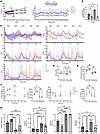 Figure 6
Experimental design for the physiologic effects of CR in iNOS-KO (NO–) mice. (A) Mice were single-caged, and their body weights and food consumption were measured throughout the intervention period. Mice under CR consumed 30% less food than did Con mice. Significance is indicated by an arrow; *P < 0.05 between Con and CR, **P < 0.05 between Con and NO–, and ***P < 0.05 between CR and NO-CR. P values were determined using 1-way ANOVA for all comparisons. (B) Plasma nitrate+nitrite concentrations (μM) normalized to mouse body weights (g) to represent NO production. *P < 0.05, by 1-way ANOVA. (C) Metabolic cage (CLAMS) assessment of mice (n = 6–9 per group). Animals were placed in a CLAMS, and their metrics were recorded for 3 nights (dark) and 2 days (light). Curves were smoothed to the sixth polynomial order. (D) Free plasma palmitate was esterified and analyzed for mass isotopomer abundances by GC-MS. *P < 0.05, by 1-way ANOVA with Fisher’s LSD test. (E) Fasting blood glucose levels (n = 6 per group). *P < 0.05 and **P < 0.005, by 1-way ANOVA. (F) GTTs and ITTs were performed under fasting conditions. The levels of glucose in the blood of mice fasted for 6 hours were measured over time after i.p. insulin injection for the ITT (n = 3 per group). Blood glucose levels after an i.p. glucose load (GTT) were measured in mice fasted overnight (n = 3–4 per group). *P < 0.05, by 1 way ANOVA for AUC analysis. (G) Behavioral and performance test results. Mice were subjected to treadmill exercise until exhaustion. Cage top and wire-hang tests were conducted for up to 60 seconds. The inverted pole test, assessing motor function, was scored by the time required to turn downward. *P < 0.05, **P < 0.005, ***P < 0.0005, and ****P < 0.00005, by 1-way ANOVA. HEAT, heat production measured as kcal/hr; Ztot, vertical plane; Xtot, horizontal plane total movement; Xamb, ambulatory movement.
To assess NO production, we measured plasma nitrate and nitrite levels, normalized to mouse body weight, as a proxy (20, 49, 50). These stable byproducts of NO are a preferred measurement because of the short lifespan of NO (51). We observed lower nitrate-plus-nitrite (nitrate+nitrite) levels in the NO– groups compared with the Con group, under both CR and ad-lib conditions. In addition, CR significantly increased nitrate+nitrite levels (Figure 6B).
To evaluate energy usage and behavioral movement, we utilized metabolic cages (comprehensive lab animal monitoring system [CLAMS]) (refer to Supplemental Figure 2 for metabolic cage outcomes) and measured the RER, heat production measured as kcal/hr (HEAT), and movement scores (vertical plane [Ztot], horizontal plane total movement [Xtot], and ambulatory movement [Xamb]) (Figure 6C). As we described previously, CR induces a wide circadian shift in the RER related to the meal-feeding pattern of food intake (the mouse’s entire daily ration of food is ingested over the 2–3 hours each day rather than being spread out over 24 hours; ref. 52) compared with Con. CR mice displayed a significantly lower AUC of RER values during the dark cycle (P < 0.05), which is consistent with predominantly fat utilization after the first few hours of food intake (52). This effect, however, was not observed in the NO-CR group (Figure 6C). We also measured de novo lipogenesis (DNL) (Figure 6D), as previously described (36, 53, 54). CR mice displayed a trend toward lower DNL values compared with Con mice (P < 0.07) in the measured period. Notably, NO-CR mice exhibited a statistically significantly higher DNL compared with CR mice (P < 0.05).
To assess insulin sensitivity, we measured fasting plasma glucose levels (Figure 6E) and conducted glucose tolerance tests (GTTs) and insulin tolerance tests (ITTs) (Figure 6F). Both fasting plasma glucose levels and AUC analysis from the GTTs showed statistically significantly higher glucose concentrations in the NO– group than in the Con group (P < 0.05), confirming previous observations that iNOS-KO mice exhibit altered glucose homeostasis (48). However, CR effectively mitigated these effects, with no significant differences observed between the CR and NO-CR groups in either test. The ITT, performed after a 6-hour fast, revealed no statistically significant changes across any group by AUC analysis.
Several behavioral and performance tests (Figure 6G) were conducted. (a) The inverted pole sensorimotor test (32, 55, 56) was performed and involves placing the mouse with its head up on top of a pole and measuring the time it takes to orient the body downward and descend. The scoring was based on time, where a higher score indicates a worse outcome. Our results indicated that both the Con and NO– groups, under ad-lib conditions, had similarly lower performance scores (Con mean: 5.22, NO– mean: 6.67) compared with the CR groups. CR mice attained the highest performance score, with a mean score of 1.1. However, this improvement was attenuated in the NO-CR group, which had a mean score of 3.78. (b). The treadmill test (representing fatigue-like behavior [ref. 57] and aerobic fitness [refs. 32, 58]) was performed by placing mice on a treadmill and gradually increasing the speed until exhaustion. Both the Con and NO– groups, under ad-lib conditions, had similarly lower performances (Con group mean: 625 meters traveled, NO– group mean: 495.1 meters traveled) compared with the CR groups. CR mice had the highest performance, with a mean distance of 1,803 meters traveled. However, this improvement was reduced in the NO-CR group of mice, which traveled a mean distance of 1,315 meters before reaching exhaustion. The mean difference between the CR and NO-CR groups was 488 meters (P = 0.0368). (c) The cage top suspension test was performed to assess sensorimotor reflexes and motor response by measuring the latency of a mouse to fall, for up to 60 seconds, while suspended upside down from a wire cage top (32, 59, 60). Our results indicated that the NO– group had the lowest performance, with an average time of 19.0 seconds before falling. The CR and NO-CR groups exhibited the highest performance of remaining on the wire cage top, going beyond the allocated 60 seconds. (d) The wire-hang test involves a method used to assess muscle performance (32, 61) by measuring the time it takes for the mouse to lose its grip on a wire, up to 60 seconds. Our results indicated that the NO– mice had the lowest performance, with an average time of 2.167 seconds before falling. The Con mice had an average time of 12.0 seconds before falling. Again, the CR group had the best performance, with an average time of 21.4 seconds before falling, and this effect was attenuated in the NO-CR group, in which the average time before falling decreased to 9.6 seconds.
Can the reversal of CR effects on hepatic proteome fluxes by iNOS KO be overcome? Focusing more closely on the period that included the transition between day 25 and day 30, we conducted a 6-week CR intervention experiment to determine whether the prevention of CR effects on hepatic proteome fluxes by NO– can be rescued (Figure 7). We administered molsidomine (Mols), a NO donor that is metabolized by hepatic esterases. This is a liver-specific metabolic process that converts Mols into its active metabolite, SIN-1, which subsequently releases NO (62–64). The inclusion of Mols in the experiment addressed whether the effects of CR on proteome regulation in the NO– mice were mitigated by NO replacement. Considering the short half-life of Mols in plasma of approximately 1–2 hours, we administered Mols continuously via the drinking water. Mols was administered at a dose of 120 mg/L (65, 66) and was maintained for the duration of the 6-week CR intervention.
 Figure 7
Effects of iNOS KO, pharmacological rescue, and CR on hepatic proteome FSRs. (A) FSR values were obtained for the liver proteome at 6 weeks of intervention for Con, iNOS-KO (NO–), and CR iNOS-KO (NO-CR) groups. Dots along the line represent identified proteins sorted from the highest FSR to the lowest FSR for the group by the log2 FC compared with the ad-lib Con group. Comparisons were done for all groups. Tables represent the binomial distribution of proteins with an increased (Up) or decreased (Down) FSR. In red are the proteins whose change was greater than the CV. P values in the tables were determined using a 2-tailed binomial distribution. (B) FSR values of the liver proteome at 6 weeks of CR. Included in this experiment were rescue experiments with Mols, given in the drinking water daily to rescue the effects of CR on proteome regulation in NO– mice. Mols is a potent donor of NO metabolized in the liver. NO– mice were given Mols in the drinking water for the same length of intervention as CR (6 weeks).
Several key observations are apparent (Figure 7A). First, at 6 weeks after the start of the study (which began for mice at 6 weeks of age), the NO– group had a significantly higher fraction of proteins with increased FSRs (67.4% of proteins). When considering only those proteins above the CV, 14.9% showed increased FSRs, whereas 9.7% had a decrease in FSRs. Within the CR group, the majority of proteins (73.7%) showed slower FSRs, and considering those above the CV, 27.4% were downregulated, with 10.3% showing upregulation. In the NO-CR group, the effects of CR were lessened significantly (Table 2), going from 73.7% under CR to 56.0% in the NO-CR group (P = 0.049). These findings confirmed our observations at 10 and 22 weeks of CR (Table 1).
In the Mols rescue group (NO–+Mols, Figure 7B), the trends toward higher FSRs with NO– alone were significantly diminished, dropping from 67.4% of proteins with higher FSRs in the NO– group alone compared with 55.2% after Mols administration. Notably, the effects on protein FSRs in the NO-CR group were rescued after daily administration of Mols for the 6-week intervention (Table 2). The effect of CR alone on reduced FSRs was maintained in the NO-CR+Mols group at 72.7% (P = 0.457).
These results demonstrate that the administration of Mols to NO-CR mice can restore the effects of CR alone on protein FSRs.
Reversing the effects of CR through pharmacological inhibition of iNOS. Next, we explored the inhibition of iNOS pharmacologically with aminoguanidine (AG), a highly selective inhibitor of iNOS, during the first 6 weeks after initiating CR. AG has been shown to be more than 50 times more effective at inhibiting the enzymatic activity of iNOS compared with eNOS or neuronal NO synthase (nNOS) (67–70). The experimental mice were placed on 6 weeks of CR, beginning at week 6 of age. AG was administered by dissolving it in the drinking water at a concentration of 2 mg/mL (71, 72) and was provided daily to mice in both the CON and CR groups (Figure 8A).
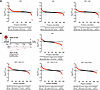 Figure 8
Pharmacological inhibition of NO by AG in relation to the threshold event of CR. A pharmaceutical approach was tested. AG is a selective inhibitor for all NOS enzymes. (A) Mice were given AG in the drinking water daily for 6 weeks. FSR values for hepatic proteins measured in all 4 groups were compared. P values in the tables were determined using a 2-tailed binomial distribution. (B) Experimental design for the time-course study of the threshold transition event. Mice underwent CR for 32 days, and AG was given in the drinking water daily starting at day 1 (T1), day 14 (T14), or day 24 (T24) to inhibit NOS. CR mice were compared with ad-lib Con mice. Mice with CR plus AG treatment were compared with mice subjected to CR alone without an inhibitor for the full 32 days. These findings show that inhibition of NO by AG reversed the effects of CR on hepatic proteome fluxes, whether during the entire period of CR, the last 18 days of CR, or during the 8-day period immediately preceding day 32 (the “threshold” or transition period).
We observed 79.0% of proteins with higher FSRs in the AG-treated group compared with the Con group. Notably, 53.6% of the proteins were upregulated beyond the CV, which aligns with our findings in NO– genetic KO mice. In the CR group, a total of 65.1% of protein fluxes were downregulated, with 34.2% of them falling above the CV threshold.
The effects of CR were reversed by AG administration during the 6-week period of CR: 70.1% of proteins had higher FSRs, with 36.4% exceeding the CV threshold. These findings are consistent with our previous observations with the genetic KO, demonstrating that in the absence of NO, the effects of CR on slowing down protein turnover rates were either markedly weakened, as seen at 6 weeks of CR in the genetic NO-CR group (Figure 7A) or completely reversed, as observed at 22 weeks of CR in the genetic NO-CR group (Figure 5B) and at 6 weeks of CR in the pharmacological AG-CR group (Figure 8A).
Investigating the role of NO in the transitional event during CR. In order to assess in finer detail the effects of NO on the transition that occurs between day 25 and day 30 of CR (Figure 3), we conducted a time-course study with AG administration (Figure 8B). Mice were placed on a CR regime for 32 days, and AG was administered daily by dissolving it in their drinking water at 2 mg/mL, starting at different time points — day 1 (T1), day 14 (T14), or day 24 (T24) — and continuing until study termination at day 32.
First, we compared the effects of CR with the ad-lib Con group at day 32. We observed that 71.3% of proteins had lower FSR values, with 37.4% exceeding the CV threshold. The CR+AG groups over the 32-day time course were then compared.
The time-course study revealed that inhibition of NO by AG effectively reversed the effects of CR on hepatic proteome fluxes when initiated at the start of the experiment on day 1 (T1). Hepatic proteome flux analysis showed that 58.3% of proteins had a higher FSR, with 22.6% being above the CV threshold, when compared with CR alone. This effect was also observed when AG was started at day 14 of CR (T14), when 66.1% of proteins had higher FSR values, with 29.6% of these being above the CV threshold. Most remarkably, starting the inhibition of NO by AG at day 24 (T24), one day before the previously observed transition period, blocked the effect of CR alone, with 56.5% of proteins having higher FSR values, and with 23.5% of these being above the CV threshold.
Accordingly, reversal of the effects of CR on the hepatic proteome was observed whether AG was administered throughout the entire duration of CR or only during the 8-day transition period preceding day 32. This highlights that NOS inhibition during this discrete time window of CR prevents the downregulation of hepatic proteome fluxes.


Copyright © 2026 American Society for Clinical Investigation
ISSN: 0021-9738 (print), 1558-8238 (online)