
Advertisement
Research ArticleEndocrinologyMetabolism
Open Access |  10.1172/JCI185707
JNK3 regulates β cell responses to incretins in human islets and mouse models
Ruy A. Louzada,1 Marel Gonzalez Medina,1 Valentina Pita-Grisanti,1 Jessica Bouviere,2 Amanda F. Neves,1 Joana Almaça,1 Myoung Sook Han,3 Roger J. Davis,3 Gil Leibowitz,4 Manuel Blandino-Rosano,1 and Ernesto Bernal-Mizrachi1,5
1Division of Endocrinology, Diabetes, and Metabolism, Department of Medicine and
2Department of Biochemistry and Molecular Biology, University of Miami Miller School of Medicine, Miami, Florida.
3Program in Molecular Medicine, University of Massachusetts Chan Medical School, Worcester, Massachusetts, USA.
4Diabetes Unit and Endocrine Service, Hadassah-Hebrew University Medical Center, Jerusalem, Israel.
5Veterans Affairs Medical Center, Miami, Florida, USA.
Address correspondence to: Ernesto Bernal-Mizrachi, Miami VA Healthcare System and Division Endocrinology, Metabolism and Diabetes, University of Miami, 1580 NW 10th Avenue, Suite 605, Miami, Florida, 33136, USA. Phone: 305.243.5631; Email: EbernalM@med.miami.edu. Or to: Ruy A. Louzada, Division Endocrinology, Metabolism and Diabetes, University of Miami, 1580 NW 10th Avenue, Suite 607, Miami, Florida, 33136, USA.
Find articles by
Louzada, R.
in:
PubMed
|
Google Scholar
|

1Division of Endocrinology, Diabetes, and Metabolism, Department of Medicine and
2Department of Biochemistry and Molecular Biology, University of Miami Miller School of Medicine, Miami, Florida.
3Program in Molecular Medicine, University of Massachusetts Chan Medical School, Worcester, Massachusetts, USA.
4Diabetes Unit and Endocrine Service, Hadassah-Hebrew University Medical Center, Jerusalem, Israel.
5Veterans Affairs Medical Center, Miami, Florida, USA.
Address correspondence to: Ernesto Bernal-Mizrachi, Miami VA Healthcare System and Division Endocrinology, Metabolism and Diabetes, University of Miami, 1580 NW 10th Avenue, Suite 605, Miami, Florida, 33136, USA. Phone: 305.243.5631; Email: EbernalM@med.miami.edu. Or to: Ruy A. Louzada, Division Endocrinology, Metabolism and Diabetes, University of Miami, 1580 NW 10th Avenue, Suite 607, Miami, Florida, 33136, USA.
Find articles by Gonzalez Medina, M. in: PubMed | Google Scholar
1Division of Endocrinology, Diabetes, and Metabolism, Department of Medicine and
2Department of Biochemistry and Molecular Biology, University of Miami Miller School of Medicine, Miami, Florida.
3Program in Molecular Medicine, University of Massachusetts Chan Medical School, Worcester, Massachusetts, USA.
4Diabetes Unit and Endocrine Service, Hadassah-Hebrew University Medical Center, Jerusalem, Israel.
5Veterans Affairs Medical Center, Miami, Florida, USA.
Address correspondence to: Ernesto Bernal-Mizrachi, Miami VA Healthcare System and Division Endocrinology, Metabolism and Diabetes, University of Miami, 1580 NW 10th Avenue, Suite 605, Miami, Florida, 33136, USA. Phone: 305.243.5631; Email: EbernalM@med.miami.edu. Or to: Ruy A. Louzada, Division Endocrinology, Metabolism and Diabetes, University of Miami, 1580 NW 10th Avenue, Suite 607, Miami, Florida, 33136, USA.
Find articles by Pita-Grisanti, V. in: PubMed | Google Scholar
1Division of Endocrinology, Diabetes, and Metabolism, Department of Medicine and
2Department of Biochemistry and Molecular Biology, University of Miami Miller School of Medicine, Miami, Florida.
3Program in Molecular Medicine, University of Massachusetts Chan Medical School, Worcester, Massachusetts, USA.
4Diabetes Unit and Endocrine Service, Hadassah-Hebrew University Medical Center, Jerusalem, Israel.
5Veterans Affairs Medical Center, Miami, Florida, USA.
Address correspondence to: Ernesto Bernal-Mizrachi, Miami VA Healthcare System and Division Endocrinology, Metabolism and Diabetes, University of Miami, 1580 NW 10th Avenue, Suite 605, Miami, Florida, 33136, USA. Phone: 305.243.5631; Email: EbernalM@med.miami.edu. Or to: Ruy A. Louzada, Division Endocrinology, Metabolism and Diabetes, University of Miami, 1580 NW 10th Avenue, Suite 607, Miami, Florida, 33136, USA.
Find articles by Bouviere, J. in: PubMed | Google Scholar
1Division of Endocrinology, Diabetes, and Metabolism, Department of Medicine and
2Department of Biochemistry and Molecular Biology, University of Miami Miller School of Medicine, Miami, Florida.
3Program in Molecular Medicine, University of Massachusetts Chan Medical School, Worcester, Massachusetts, USA.
4Diabetes Unit and Endocrine Service, Hadassah-Hebrew University Medical Center, Jerusalem, Israel.
5Veterans Affairs Medical Center, Miami, Florida, USA.
Address correspondence to: Ernesto Bernal-Mizrachi, Miami VA Healthcare System and Division Endocrinology, Metabolism and Diabetes, University of Miami, 1580 NW 10th Avenue, Suite 605, Miami, Florida, 33136, USA. Phone: 305.243.5631; Email: EbernalM@med.miami.edu. Or to: Ruy A. Louzada, Division Endocrinology, Metabolism and Diabetes, University of Miami, 1580 NW 10th Avenue, Suite 607, Miami, Florida, 33136, USA.
Find articles by Neves, A. in: PubMed | Google Scholar
1Division of Endocrinology, Diabetes, and Metabolism, Department of Medicine and
2Department of Biochemistry and Molecular Biology, University of Miami Miller School of Medicine, Miami, Florida.
3Program in Molecular Medicine, University of Massachusetts Chan Medical School, Worcester, Massachusetts, USA.
4Diabetes Unit and Endocrine Service, Hadassah-Hebrew University Medical Center, Jerusalem, Israel.
5Veterans Affairs Medical Center, Miami, Florida, USA.
Address correspondence to: Ernesto Bernal-Mizrachi, Miami VA Healthcare System and Division Endocrinology, Metabolism and Diabetes, University of Miami, 1580 NW 10th Avenue, Suite 605, Miami, Florida, 33136, USA. Phone: 305.243.5631; Email: EbernalM@med.miami.edu. Or to: Ruy A. Louzada, Division Endocrinology, Metabolism and Diabetes, University of Miami, 1580 NW 10th Avenue, Suite 607, Miami, Florida, 33136, USA.
Find articles by
Almaça, J.
in:
PubMed
|
Google Scholar
|
1Division of Endocrinology, Diabetes, and Metabolism, Department of Medicine and
2Department of Biochemistry and Molecular Biology, University of Miami Miller School of Medicine, Miami, Florida.
3Program in Molecular Medicine, University of Massachusetts Chan Medical School, Worcester, Massachusetts, USA.
4Diabetes Unit and Endocrine Service, Hadassah-Hebrew University Medical Center, Jerusalem, Israel.
5Veterans Affairs Medical Center, Miami, Florida, USA.
Address correspondence to: Ernesto Bernal-Mizrachi, Miami VA Healthcare System and Division Endocrinology, Metabolism and Diabetes, University of Miami, 1580 NW 10th Avenue, Suite 605, Miami, Florida, 33136, USA. Phone: 305.243.5631; Email: EbernalM@med.miami.edu. Or to: Ruy A. Louzada, Division Endocrinology, Metabolism and Diabetes, University of Miami, 1580 NW 10th Avenue, Suite 607, Miami, Florida, 33136, USA.
Find articles by Han, M. in: PubMed | Google Scholar
1Division of Endocrinology, Diabetes, and Metabolism, Department of Medicine and
2Department of Biochemistry and Molecular Biology, University of Miami Miller School of Medicine, Miami, Florida.
3Program in Molecular Medicine, University of Massachusetts Chan Medical School, Worcester, Massachusetts, USA.
4Diabetes Unit and Endocrine Service, Hadassah-Hebrew University Medical Center, Jerusalem, Israel.
5Veterans Affairs Medical Center, Miami, Florida, USA.
Address correspondence to: Ernesto Bernal-Mizrachi, Miami VA Healthcare System and Division Endocrinology, Metabolism and Diabetes, University of Miami, 1580 NW 10th Avenue, Suite 605, Miami, Florida, 33136, USA. Phone: 305.243.5631; Email: EbernalM@med.miami.edu. Or to: Ruy A. Louzada, Division Endocrinology, Metabolism and Diabetes, University of Miami, 1580 NW 10th Avenue, Suite 607, Miami, Florida, 33136, USA.
Find articles by
Davis, R.
in:
PubMed
|
Google Scholar
|
1Division of Endocrinology, Diabetes, and Metabolism, Department of Medicine and
2Department of Biochemistry and Molecular Biology, University of Miami Miller School of Medicine, Miami, Florida.
3Program in Molecular Medicine, University of Massachusetts Chan Medical School, Worcester, Massachusetts, USA.
4Diabetes Unit and Endocrine Service, Hadassah-Hebrew University Medical Center, Jerusalem, Israel.
5Veterans Affairs Medical Center, Miami, Florida, USA.
Address correspondence to: Ernesto Bernal-Mizrachi, Miami VA Healthcare System and Division Endocrinology, Metabolism and Diabetes, University of Miami, 1580 NW 10th Avenue, Suite 605, Miami, Florida, 33136, USA. Phone: 305.243.5631; Email: EbernalM@med.miami.edu. Or to: Ruy A. Louzada, Division Endocrinology, Metabolism and Diabetes, University of Miami, 1580 NW 10th Avenue, Suite 607, Miami, Florida, 33136, USA.
Find articles by
Leibowitz, G.
in:
PubMed
|
Google Scholar
|
1Division of Endocrinology, Diabetes, and Metabolism, Department of Medicine and
2Department of Biochemistry and Molecular Biology, University of Miami Miller School of Medicine, Miami, Florida.
3Program in Molecular Medicine, University of Massachusetts Chan Medical School, Worcester, Massachusetts, USA.
4Diabetes Unit and Endocrine Service, Hadassah-Hebrew University Medical Center, Jerusalem, Israel.
5Veterans Affairs Medical Center, Miami, Florida, USA.
Address correspondence to: Ernesto Bernal-Mizrachi, Miami VA Healthcare System and Division Endocrinology, Metabolism and Diabetes, University of Miami, 1580 NW 10th Avenue, Suite 605, Miami, Florida, 33136, USA. Phone: 305.243.5631; Email: EbernalM@med.miami.edu. Or to: Ruy A. Louzada, Division Endocrinology, Metabolism and Diabetes, University of Miami, 1580 NW 10th Avenue, Suite 607, Miami, Florida, 33136, USA.
Find articles by
Blandino-Rosano, M.
in:
PubMed
|
Google Scholar
|
1Division of Endocrinology, Diabetes, and Metabolism, Department of Medicine and
2Department of Biochemistry and Molecular Biology, University of Miami Miller School of Medicine, Miami, Florida.
3Program in Molecular Medicine, University of Massachusetts Chan Medical School, Worcester, Massachusetts, USA.
4Diabetes Unit and Endocrine Service, Hadassah-Hebrew University Medical Center, Jerusalem, Israel.
5Veterans Affairs Medical Center, Miami, Florida, USA.
Address correspondence to: Ernesto Bernal-Mizrachi, Miami VA Healthcare System and Division Endocrinology, Metabolism and Diabetes, University of Miami, 1580 NW 10th Avenue, Suite 605, Miami, Florida, 33136, USA. Phone: 305.243.5631; Email: EbernalM@med.miami.edu. Or to: Ruy A. Louzada, Division Endocrinology, Metabolism and Diabetes, University of Miami, 1580 NW 10th Avenue, Suite 607, Miami, Florida, 33136, USA.
Find articles by
Bernal-Mizrachi, E.
in:
PubMed
|
Google Scholar
|
Published January 2, 2026 - More info
J Clin Invest. 2026;136(1):e185707. https://doi.org/10.1172/JCI185707.
© 2026 Louzada et al. This work is licensed under the Creative Commons Attribution 4.0 International License. To view a copy of this license, visit http://creativecommons.org/licenses/by/4.0/.
Received: August 7, 2024; Accepted: October 28, 2025

-
Results
JNK3 mRNA is the most abundant JNK isoform in β cells and is induced in human diabetes. First, we assessed mRNA expression of JNK1, JNK2, and JNK3 in the single-cell transcriptome of α and β cells from mice at different developmental and postnatal stages (18). This shows that, while JNK1 and JNK2 decrease during the first 60 days of postnatal life, JNK3 mRNA is low during development and increases after postnatal day 3 to day 60 (Supplemental Figure 1A; supplemental material available online with this article; https://doi.org/10.1172/JCI185707DS1). Analysis of JNK1, JNK2, and JNK3 mRNA in the single-cell transcriptome library from the human pancreas (19) showed that JNK1 and JNK2 mRNA were present in all islet cells and acinar and ductal compartments (Supplemental Figure 2A). In contrast, JNK3 mRNA was more abundant in human α and β cells, while it was barely detected in exocrine and ductal cells (Supplemental Figure 2A). Moreover, the JNK3 isoform was found to be the most abundant isoform in β cells (Supplemental Figure 2A). Analyzing data from 65 HPAP donors (20), we confirmed the expression of JNK1, JNK2, and JNK3 across different pancreatic cell types. Notably, JNK3 expression was increased in mice subjected to a high-fat diet (HFD) compared with a regular chow diet (21) (Supplemental Figure 1B) and the expression of all 3 isoforms was increased in pancreatic β cells from type 2 diabetic donors (Supplemental Figure 2A) and in Type 1 diabetes donors in a single-cell analysis (Supplemental Figure 3A), indicating the involvement of JNKs in β cell adaptation to diabetes.
Deletion of JNK3 in β cells results in glucose intolerance and defective insulin secretion in response to oral glucose and incretin stimulation. To further assess the role of JNK3 in β cells in vivo, we generated mice with homozygous JNK3 deletion by crossing floxed-JNK3 mice with Rip-Cre (data not shown) and Ins-Cre mice (βJNK3-KO) (22–24). Islets isolated from βJNK3-KO mice showed a marked reduction in MAPK10 (JNK3) gene expression and JNK3 protein levels, without any compensatory effect on the levels of MAPK8 (JNK1) and MAPK9 (JNK2) mRNA (Figure 1, A and B). Random glucose levels in 3-, 6-, and 9-month-old βJNK3-KO mice were not different from controls (Figure 1C), as were the proportion of Ki67-positive β cells and overall β cell mass (Supplemental Figure 4, A and B, respectively). However, both male and female βJNK3-KO mice exhibited glucose intolerance (Figure 1, D and E) and impaired insulin secretion (Figure 1F) only during oral glucose tolerance test (OGTT), with no differences when glucose was administered intraperitoneally (Figure 1, D, E, and G, and Supplemental Figure 4, C–F for female βJNK3-KO mice). Further evaluation of the incretin effect by coadministering i.p. glucose with the GLP-1R agonist, Exendin 4 (Ex4), confirmed the impaired response to incretin signals (Figure 1F). This was accompanied by blunted insulin secretion (Figure 1H), suggesting a role for JNK3 in incretin induced insulin secretion in vivo.
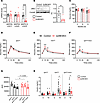 Figure 1
Deletion of JNK3 in β cells results in glucose intolerance and defective insulin secretion in response to oral glucose and incretin stimulation. (A) RT-PCR from 6-month-old male Control and βJNK3-KO islets. (B) Immunoblotting and quantification for JNK3 levels in isolated islets from 6-month-old male Control and βJNK3-KO. (C) Random fed glucose during the first 9 months of age. (D) Intraperitoneal glucose tolerance test (ipGTT), (E) Oral Glucose tolerance test (OGTT), (F) Coadministration of Exendin 4 during ipGTT in males of 4–5 months of age. (G) Calculation of the AUCs in all glucose tolerance tests and (H) Insulin levels at baseline and 15 minutes after glucose tolerance tests. Data are expressed as means ± SEM. Statistical significance was determined by 2-way ANOVA. *P < 0.05, **P < 0.01, ***P < 0.001, ***P < 0.0001 between groups; #P < 0.05 within the same group.
Inducible deletion of JNK3 in mature β cells results in glucose intolerance and defective insulin secretion after oral glucose and nutrients. To eliminate potential effects arising from loss of JNK3 during developmental stages, we disrupted JNK3 in adult β cells by crossing floxed-JNK3 model with mice expressing a tamoxifen-inducible Cre under the control of the mouse Ins1 promoter (Mip-CreERTM), named iβJNK3-KO (22). JNK3 protein levels showed a marked reduction in the iβJNK3-KO (Supplemental Figure 5A). Before tamoxifen treatment, iβJNK3-KO mice were normoglycemic and exhibited normal glucose tolerance in both i.p. (data not shown) and oral glucose tolerance tests (Figure 2, A and B) and comparable insulin secretion in response to oral glucose (Figure 2C). However, 5 weeks after tamoxifen (Tmx) administration, iβJNK3-KO mice showed impaired glucose clearance and decreased insulin secretion after oral glucose administration (Figure 2, D–F). Further testing of incretin responses in vivo using meal tolerance test (MTT) (25) confirmed glucose intolerance and blunted insulin secretion 6 weeks after Tmx (Figure 2, G–I).
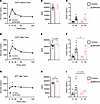 Figure 2
Inducible deletion of JNK3 in mature β cells results in glucose intolerance and defective insulin secretion after oral glucose and nutrients. (A) Oral glucose tolerance test, (B) AUC, and (C) insulin levels before Tmx injection in 4-month-old male mice. (D) Oral glucose tolerance test, (E) AUC, and (F) insulin levels at 5 weeks after Tmx injection. (G) Meal Tolerance Test, (H) AUC, and (I) insulin levels at 6 weeks after Tmx injection. Data are expressed as means ± SEM. Statistical significance was determined by 2-way ANOVA. *P < 0.05, **P < 0.01, ***P < 0.0001 between groups; #P < 0.05 within the same group.
JNK3 inhibition reduces in vitro GLP-1R–mediated signaling and insulin secretion. To gain insights into potential mechanisms by which JNK3 deletion impairs insulin secretory responses to incretins, we used MIN6 cells treated with iJNK3 (26). As expected, iJNK3 decreased the phosphorylation of c-JUN induced by CTKs, a downstream target of JNKs, compared with a broad-spectrum inhibitor of JNKs, SP600125 (Supplemental Figure 5B). Insulin secretory responses to glucose in MIN6 cells treated with iJNK3 were blunted in the presence or absence of Ex4 (Figure 3A). Although total insulin content did not differ between groups (Supplemental Figure 6, A–C), glucose-stimulated insulin secretion (GSIS) was decreased in βJNK3-KO and iβJNK3-KO after stimulation with a combination of high glucose and Ex4, but not after high glucose alone (Figure 3, B and C). Human islets treated with iJNK3 also exhibited a reduction in insulin secretion upon high glucose in combination with Ex4 treatment (Figure 3D).
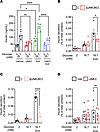 Figure 3
JNK3 inhibition reduces in vitro GLP-1R–mediated insulin secretion. (A) Assessment of insulin secretion in MIN6 induced by glucose, or combination of glucose with the GLP-1R agonist Exendin 4 (Ex4) in the presence or absence of a JNK3 inhibitor (iJNK3). Glucose-stimulated insulin secretion alone or in combination with Ex4 in (B) isolated islets from Control and βJNK3-KO mice, (C) isolated islets from Control and iβJNK3-KO,and (D) human islets from donors no. 4–6, 8–10, and 15 were treated with vehicle or iJNK3 for 24 hours. Data are expressed as means ± SEM. Statistical significance was determined by 2-way ANOVA. *P < 0.05, **P < 0.01, ***P < 0.001, ***P < 0.0001 between groups.
Assessment of incretin signaling showed a decrease in PKA activity (Supplemental Figure 7A) and consequently CREB phosphorylation in MIN6 cells cultured in low glucose in the presence or absence of Ex4 treatment after iJNK3 treatment (Figure 4A). Lower PKA activity and CREB phosphorylation upon Ex4 treatment was also observed in βJNK3-KO islets (Supplemental Figure 7B and Figure 4B) and after pharmacological inhibition of JNK3 in human islets (Supplemental Figure 7C and Figure 4C). Next, we analyzed key β cell identity genes and CREB-responsive genes in mouse and human islets (Supplemental Figure 6, D and E, respectively). To determine whether the expression of these genes is affected by JNK3 inhibition, we measured mRNA levels after 16 hours of Ex4 treatment. In βJNK3-KO islets, the induction of key β cell and CREB-sensitive genes (27) was attenuated (Figure 4D). These studies demonstrate that induction of cAMP/PKA/CREB axis by GLP-1R agonist is mediated at least in part by JNK3.
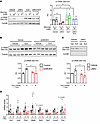 Figure 4
JNK3 inhibition reduces in vitro GLP-1R–mediated signaling by reduction of GLP-1R gene expression. (A) Phosphorylation of CREB in MIN6 cells after 1 hour of Exendin 4 treatment in the presence or absence of a JNK3 inhibitor (iJNK3). (B) Phosphorylation of CREB in isolated islets from 4–6 month-old Control and βJNK3-KO male and female mice after 1 hour of Exendin 4 treatment (C) Phosphorylation of CREB in human islets from donors no. 4–7 treated with vehicle or iJNK3 after 1 hour of Exendin 4 treatment. (D) RT-PCR for β cell maturity genes in isolated islets from control and βJNK3-KO treated with Ex4 for 16 hours. Data are expressed as means ± SEM. Statistical significance was determined by 2-way ANOVA. *P < 0.05 between groups; #P < 0.05 within the same group.
To assess the cAMP/PKA/CREB axis downstream of GLP-1R activation, we performed Forskolin treatment. Insulin secretion induced by high glucose plus Forskolin was comparable between control and βJNK3-KO islets, as well as in human islets treated with iJNK3 (Supplemental Figure 8, A and D, respectively). Similarly, Forskolin induced CREB-responsive genes to the same extent in βJNK3-KO and control islets (Supplemental Figure 8C), indicating that downstream GLP-1R signaling remains intact in the absence of JNK3.
Given that JNK3 inhibition decreased induction of the cAMP/PKA/CREB axis induced by GLP-1R agonist, we next focused on proximal events involving GLP-1R localization and expression. GLP-1R was colocalized with β catenin at the plasma membrane of insulin-positive cells in βJNK3-KO islets, indicating that JNK3 deficiency does not affect GLP-1R trafficking or localization (Figure 5A). To quantitatively assess GLP-1R levels at the cell membrane, we labeled the receptor using Luxendin551 (28). After 10 minutes of incubation, clear membrane staining was observed in control islets but was reduced in βJNK3-KO islets. By 60 minutes, membrane staining was strong and comparable between groups (Figure 5, B and C), suggesting that reduced GLP-1R abundance may contribute to impaired incretin signaling in βJNK3-KO islets.
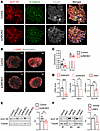 Figure 5
JNK3 inhibition reduces GLP-1R gene expression. (A) Representative images of dispersed islets GLP-1R (red) beta catenin (green) insulin (gray) and DAPI (blue); scale bar: 10 μm. (B) Representative images of live islets incubated with Luxendin551. Scale bar: 20 μm. (C) Quantification of Luxendin551 membrane labeling at 10 and 60 minutes. (D) q-RT-PCR analysis of Glp1r mRNA levels in isolated islets from (E) control and βJNK3-KO mice, control and iβJNK3-KO mice, and human islets treated with iJNK3 from donors 1–5, (F) GLP-1R protein levels in human islets from donors no. 1, 3–7 treated with vehicle or iJNK3 for 24 hours. Data are expressed as means ± SEM. Statistical significance was determined by 2-way ANOVA. *P < 0.05 between groups; #P < 0.05 within the same group.
JNK3 inhibition reduces GLP1R gene expression. Bioinformatic analysis of the promoter region of the GLP1R gene in humans and mice showed enrichment of putative binding sites for transcription factors targeted by JNKs, such as cJUN, JUNB, Elk1, and other substrates (29) (Supplemental Figure 9). Glp1r mRNA levels were downregulated in both βJNK3-KO and iβJNK3-KO islets (Figure 5D), and this was accompanied by reduced GLP-1R protein levels in βJNK3-KO islets (Figure 5E). Single-cell RNA-seq analysis showed a positive correlation between JNK3 and GLP1R expression (Supplemental Figure 2B) (19), as well as between JNK2/JNK3 and GLP1R (Supplemental Figure 3B) (20). Similarly, human islets treated with iJNK3 displayed decreased GLP1R mRNA levels (Figure 5D) and protein expression (Figure 5F). Together, these findings indicate that JNK3 regulates incretin-mediated insulin secretion, at least in part, by controlling GLP1R expression.
To determine whether JNK activation regulates GLP-1R expression, we used a plasmid encoding a constitutively active MKK7, the upstream JNK kinase, linked to JNK as a fusion protein, providing an in vitro strategy to selectively increase JNK activity (Figure 6A). The MKK7-JNK1APF (dominant-negative version of the JNK1 protein mutant) showed no JNK phosphorylation and, consequently, no c-JUN phosphorylation (Figure 6B). In contrast, MKK7-JNK1 and MKK7-JNK3 constructs induced the expression of the expected approximately 100 kDa fusion proteins, with both JNK1 and JNK3 phosphorylated, leading to increased phosphorylation of c-JUN at Ser73, Thr91, and Thr93. Notably, iJNK3 inhibited c-JUN phosphorylation at all sites, only in MKK7-JNK3–transfected cells, demonstrating specificity of this inhibitor (Figure 6C).
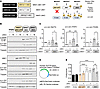 Figure 6
Transcriptional activation of the GLP1R is directly mediated by JNK. (A) Schematic representation of the MKK7-JNK fusion proteins. The constructs contain residues 1–443 of MKK7 fused to JNK1α1 (1–383), JNK3α2 (1–463), or phosphorylation-negative JNK (Thr180–Pro–Tyr182 replaced with Ala–Pro–Phe; APF). (B) Expression of MKK7-JNK fusion proteins in HEK293T cells detected by immunoblotting (IB). The presence of JNK1, JNK2, and JNK3 fusion proteins in cell lysates was confirmed. JNK phosphorylation status was assessed using an anti–phospho-SAPK antibody. (C) JNK activation was evaluated by IB using an antibody to phospho–c-Jun (Ser73, Thr91, and Thr93). (D) Schematic of the cloned promoter region of the human GLP1R (~1500 bp upstream to transcription start site) into the pMCS-Red Firefly luciferase vector. Renilla luciferase (pRL-TK) was used as an internal control. (E) Firefly/Renilla luciferase ratio indicating increased transcriptional activation of the human GLP1R promoter region. Data are expressed as means ± SEM. Statistical significance was determined by 2-way ANOVA. *P < 0.05 between groups; #P < 0.05 within the same group.
To test transcriptional regulation, the human GLP1R promoter region was cloned upstream of a luciferase reporter and cotransfected into HEK293T cells (Supplemental Figure 9 and Figure 6D). Both MKK7-JNK1 and MKK7-JNK3 increased the Firefly/Renilla luciferase ratio, indicating enhanced transcriptional activation of the GLP1R promoter. Importantly, iJNK3 specifically reduced the promoter activation induced by MKK7-JNK3 overexpression (Figure 6E). These results suggest the presence of JNK3-dependent transcriptional activation and functional binding sites within the approximately 1500 bp GLP1R promoter region.
Overactivation of JNK3 did not potentiate incretin responses. We first overexpressed JNK3 in control mouse islets using an adenoviral vector (Adenovirus-JNK3). GSIS experiments revealed similar responses to high glucose and Ex4 treatment compared with controls (Supplemental Figure 10, A and B). To further test whether increased JNK3 activity could potentiate incretin responses, MIN6 cells were transiently transfected with the constructs (Supplemental Figure 11A). Phosphorylation of CREB and insulin secretion were comparable between groups (Supplemental Figure 11, B and C). Although plasmid transfection efficiency is typically low in human islets, we dispersed human islets into single cells and performed transient transfection with the constitutively active JNK3 construct. While no quantitative data on transfection efficiency were obtained, JNK3 activation did not increase GLP1R or IRS2 expression, nor did it enhance insulin secretion (Supplemental Figure 11, D and E).
Beneficial effect of Ex4 in improving glucose homeostasis and preserving β cell mass after low-dose STZ is partially dependent on JNK3 in β cells. Given the role of JNK3 on insulin secretory responses induced by GLP-1R, we tested the effects of JNK3 on incretin-mediated β cell regeneration in the low-dose STZ mouse model. This model exhibits progressive inflammation followed by the destruction of β cells (13, 30). Daily administration of Ex4 (1 nmol/kg/d) or vehicle control intraperitoneally starting 2 days before treatment with low-dose STZ (5 consecutive injections of 40 mg/kg/d of STZ) resulted in comparable glucose levels in vehicle-treated control and βJNK3-KO mice. Remarkably, improvement in glucose levels observed in Ex4 treated control mice was attenuated in the βJNK3-KO group (Figure 7A). The attenuated effect of Ex4 was observed after day 11 and persisted throughout the experiment, as demonstrated by a decrease in the AUC over 4 weeks of treatment (Figure 7B). The improvement in glucose homeostasis was accompanied by increases in random insulin levels in the Control + Ex4 group but not in the βJNK3-KO+Ex4 after 22 days of STZ administration (Figure 7C). The meal tolerance test was improved and insulin secretion was increased in controls treated with Ex4, and this effect was reduced in the βJNK3-KO +Ex4 group on day 16 (Figure 7, D–F). No difference in glucose tolerance was observed between vehicle-treated control and βJNK3-KO mice (Figure 7, D–F). Morphometric analysis demonstrated that the control group treated with Ex4 exhibited an increase in the number of islets per pancreatic section and β cell mass, and these responses were markedly decreased in βJNK3-KO+Ex4 mice (Figure 7, G–I). Control and βJNK3-KO treated with vehicle exhibited a comparable number of islets per pancreatic section and β cell mass (Figure 7, G–I).
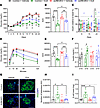 Figure 7
Beneficial effect of Ex4 in improving glucose homeostasis and preserving β cell mass after low-dose STZ is partially dependent on JNK3 in β cells. (A) The data represents the average glucose of 2 to 3 measurements per week. Control Vehicle group (Black), Control+Ex4 group (Green), βJNK3-KO+Vehicle group (Red), and βJNK3-KO+Ex4 group (Blue) (n = 9–10). Treatment started 2 days before STZ protocol and was conducted daily for 4 weeks. Ex4 was injected intraperitoneally at 1 nmol/kg. (B) AUC over 4 weeks after STZ protocol. (C) Insulin levels at days 8, 15, and 22, normalized to the baseline (dashed lines) of each animal before STZ protocol. (D) Meal tolerance test (MTT) at 15 days after STZ, (E) AUC, and (F) insulin levels during MTT baseline and 15 minutes after gavage. (G) Representative images of islets insulin (green) and DAPI (blue); scale bar: 75 μm, (H) number of islets per area and (I) β cell mass of pancreases from all the groups. Dashed lines in I represent average of normoglycemic mice, for reference. In panels A and D, *P < 0.05 indicates differences between groups (Control versus KO treated with Ex4), and #P < 0.05 indicates differences within groups (vehicle versus Ex4 treated within the same genotype). *P < 0.05, **P < 0.01, ***P < 0.001, ****P < 0.0001. The results are expressed as means ± SEM.
Effects of CTKs on stress-activated protein kinases (SAPKs) and c-Jun phosphorylation are reduced in βJNK3-KO islets. To further assess the mechanisms of β cell mass preservation by Ex4 in the low-dose STZ model, we assessed the responses to proinflammatory cytokines. We first assessed the activation of SAPKs and downstream targets of JNKs by measuring different phosphorylation sites of c-JUN. Upon exposure to a cocktail of proinflammatory cytokines (Interleukin-1β, IFN-γ, TNF-α), control islets showed increased phosphorylation of SAPK (Thr183/Tyr185) at p54 and p46, and, consequently, phosphorylation of c-Jun at Ser63, Ser73, and Thr91 when exposed for 0.5 and 4 hours (Supplemental Figure 12, A and B). In contrast, islets from βJNK3-KO mice showed decreased phosphorylation of SAPK and c-JUN at Ser73 and Thr91 after cytokine treatment (Supplemental Figure 12, A and B).
Protective effects of Ex4 against cytokine-induced apoptosis are mediated by JNK3. GLP1-R agonists trigger increases in cAMP-PKA-pCREB and stimulate the transcriptional regulation of key genes involved in β cell function and survival. Among these genes, Insulin Receptor Substrate 2 (IRS2) is a master regulator of survival in β cells (4, 15, 31). To evaluate if induction of the IRS2 protein by Ex4 is dependent on JNK3, we treated islets from control and iβJNK3-KO mice with Ex4. Protein levels of IRS2 increased in control islets and remained unchanged in iβJNK3-KO islets (Figure 8A). Given the role of JNK3 in activation of GLP-1R signaling and the known prosurvival effects of GLP-1R agonist against β cell apoptosis by regulation of IRS2 levels, we evaluated the role of JNK3 in GLP-1R agonist–mediated β cell survival by exposing control and βJNK3-KO islets to high glucose and cytokines for 24 hours in the presence or absence of Ex4. Ex4 treatment of control islets showed higher levels of IRS2 upon exposure to proinflammatory cytokines compared with vehicle-treated control islets and this was accompanied by lower levels of cleaved caspase 3 by immunoblotting and activity (Figure 8, B and C). In contrast, Ex4 failed to induce IRS2 levels in βJNK3-KO islets, and these islets lost the protection against apoptosis by Ex4, as assessed by Cleaved caspase 3 immunoblotting (Figure 8, B and C). Similar survival results were confirmed by measuring caspase 3/7 activity (Figure 8C). To test whether the survival signals are also modulated by JNK3 in human islets, we cultured human islets in the presence or absence of the JNK3 inhibitor. A decrease in IRS2 levels (Figure 8D) and an increase in caspase 3/7 activity induced by proinflammatory cytokines even under Ex4 (Figure 8E) were observed in islets treated with the JNK3 inhibitor, indicating that JNK3 mediates survival signals in human islets. Taken together, these studies indicate that the deletion of JNK3 impaired Ex4-mediated survival mechanisms in mouse and human islets.
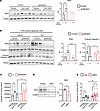 Figure 8
Protective effect of Ex4 against cytokine-induced apoptosis are mediated by JNK3. (A) IRS2 levels were measured after 24 hours of treatment with Exendin 4 in isolated islets from Control and βJNK3-KO. (B) IRS2 levels and CTK-induced apoptosis were measured by quantifying the cleaved caspase3 levels in presence or absence of Ex4 treatment. (C) Caspase 3/7 activity was evaluated in presence or absence of Ex4 and CTKs in islets from Control and βJNK3-KO. (D) IRS2 levels from donors no. 4–7 treated with vehicle or iJNK3 for 24 hours and (E) Caspase 3/7 activity from donors no. 6–7, 10–15 treated with vehicle or iJNK3 for 24 hours in presence or absence of Ex4 treatment. *P < 0.05, **P < 0.01, ***P < 0.001. The results are expressed as means ± SEM.


Copyright © 2026 American Society for Clinical Investigation
ISSN: 0021-9738 (print), 1558-8238 (online)