
Research Article

Abstract
Despite substantial progress in understanding the molecular pathology of Parkinson’s disease (PD), the underlying drivers of PD in many cases remain unknown. Here, we investigate the role of RNA modification in PD, following observations of selective m6A hypomethylation in the substantia nigra (SN) of mouse PD models and dysregulated METTL3 and ALKBH5 expression in dopaminergic (DA) neurons from patients with PD. We found preferential m6A deposition on transcripts of PD risk genes and what we believe to be a previously unreported heterozygous METTL3 p.K480R mutation in patients with PD. Mettl3K480R/+ mice exhibited progressive METTL3 reduction and m6A hypomethylation in the SN, leading to progressive DA neuron loss, phospho-α-synuclein increase, and levodopa-responsive motor and nonmotor deficits, mimicking PD progression. Dopamine transporter–specific METTL3 knockout mice recapitulate m6A hypomethylation, neurodegeneration, and levodopa-responsive parkinsonism. Mechanistically, m6A deficiency disrupted mitochondrial biogenesis and function through regulating Tfam expression, while mitochondrial dysfunction reciprocally impaired m6A deposition, creating a pathogenic loop. Importantly, supplementation with S-adenosylmethionine (SAMe) enhanced m6A modification, disrupted the pathogenic loop, and alleviated parkinsonism in mouse models. Our findings revealed m6A dysregulation as an important contributor to PD pathogenesis, provide a valuable preclinical mouse model for PD progression, and highlight RNA methylation-targeted therapies as a promising strategy for PD intervention.
Authors
Sun Liu, Qihuan Ren, Guiling Mo, Zengguang Li, Huili Huang, Yuhao Zhou, Ziteng Miao, Xin Cao, Bilian Wu, Zhuoyu Xiao, Shihui Yu, Guangjin Wu, Linjian Xia, Jinru Cui, Junyuan Mo, Yuan Li, Laixin Xia, Juan Shen, Shan Xiao

Abstract
The mammalian brain relies primarily on glucose for its energy needs. Delivery of this nutrient to the brain is mediated by the glucose transporter-1 (GLUT1) protein. Low GLUT1 thwarts glucose entry into the brain, causing an energy crisis and triggering, in one instance, the debilitating neurodevelopmental condition known as GLUT1 deficiency syndrome (GLUT1DS). Current treatments for GLUT1DS are suboptimal, as none address the root cause — low GLUT1 — of the condition. Levels of this transporter must respond rapidly to the brain’s changing energy requirements. This necessitates fine tuning its expression. Here, we describe a long-noncoding RNA (lncRNA) antisense to GLUT1 (SLC2A1) and show that it is involved in such regulation. Raising levels of the lncRNA had a concordant effect on GLUT1 in cultured human cells and transgenic mice; reducing levels elicited the opposite effect. Delivering the lncRNA to GLUT1DS model mice via viral vectors induced GLUT1 expression, enhancing brain glucose levels to mitigate disease. Direct delivery of such a lncRNA to combat disease has not been reported previously and constitutes, to our knowledge, a unique therapeutic paradigm. Moreover, considering the importance of maintaining homeostatic GLUT1 levels, calibrating transporter expression via the lncRNA could become broadly relevant to myriad conditions, including Alzheimer’s disease, wherein GLUT1 is perturbed.
Authors
Maoxue Tang, Sasa Teng, Yueqing Peng, Ashley Y. Kim, Yoon-Ra Her, Peter Canoll, Jeffrey N. Bruce, Phyllis L. Faust, Kailash Adhikari, Darryl C. De Vivo, Umrao R. Monani

Abstract
Obesity-linked steatosis is a significant risk factor for hepatocellular carcinoma (HCC); however, the molecular mechanisms underlying the transition from metabolic dysfunction–associated steatotic liver disease (MASLD) to HCC remain unclear. Here, we explored the role of the ER-associated protein NgBR, an essential component of the cis-prenyltransferase (cis-PTase) enzyme, in chronic liver disease. Hepatocyte-specific NgBR deletion in mice (N-LKO) intensified triacylglycerol (TAG) accumulation, inflammatory responses, ER/oxidative stress, and fibrosis, ultimately resulting in HCC development with 100% penetrance after 4 months on a high-fat diet. Similarly, liver-specific knockout of DHDDS, NgBR’s cis-PTase partner, and a knockin model carrying a human NgBR mutation that impairs cis-PTase activity developed HCC under high-fat diet conditions, although with lower penetrance. A single-cell transcriptomic atlas from affected livers provides a detailed molecular analysis of the transition from liver pathophysiology to HCC development. Mechanistically, NgBR deficiency promoted excessive hepatic TAG accumulation by enhancing lipid uptake and impairing VLDL secretion. Importantly, pharmacological inhibition of diacylglycerol acyltransferase-2 (DGAT2), a key enzyme in TAG synthesis, abrogated diet-induced liver damage and HCC burden in N-LKO mice. Overall, our findings establish cis-PTase as a critical suppressor of MASLD-HCC conversion and suggest DGAT2 inhibition may serve as a promising therapeutic approach to delay HCC formation in advanced metabolic dysfunction–associated steatohepatitis.
Authors
Abhishek K. Singh, Balkrishna Chaube, Kathryn M. Citrin, Joseph W.M. Fowler, Sungwoon Lee, Jonatas Catarino, James Knight, Sarah C. Lowery, Sonal Shree, Keira E. Mahoney, Nabil E. Boutagy, Inmaculada Ruz-Maldonado, Kathy Harry, Marya Shanabrough, Trenton T. Ross, Stacy A. Malaker, Yajaira Suárez, Carlos Fernández-Hernando, Kariona A. Grabińska, William C. Sessa

Abstract
Sepsis is a systemic response to infection with life-threatening consequences such as hemolysis, a predictor of mortality risks for the disease. Here, by measuring organism-wide changes in gene expression, we discovered that the secreted phospholipase PLA2G5 is induced in colon cell types during sepsis. The genetic deletion of Pla2g5 and treatment with a PLA2G5 antibody were both associated with protection from lethal sepsis. Treatment with a PLA2G5 antibody during sepsis was associated with increased splenic red pulp macrophages and improved iron homeostasis, linking PLA2G5 to red blood cell homeostasis during sepsis. Mechanistically, bloodborne PLA2G5 led to intravascular hemolysis through its lipolytic activity on red blood cell membranes. In humans with sepsis due to bacterial, fungal, or viral infections, the serum level of PLA2G5 was elevated and predictive of disease severity and mortality. We conclude that sepsis corrupts PLA2G5 into becoming an intravascular hemolytic factor which is toxic for host red blood cells.
Authors
Michihiro Takahama, Krysta S. Wolfe, Gabriella Richey, Madison Plaster, Anna Czapar, Fabian Hernandez, Denis Cipurko, Tatsuki Ueda, Yoshimi Miki, Yuki Nagasaki, Yoshitaka Taketomi, Tatsuya Saitoh, Tadafumi Kawamoto, Steven M. Dudek, Makoto Murakami, Nicolas Chevrier

Abstract
Cardiomyocytes primarily rely on fatty acid oxidation (FAO), which provides more than 70% of their energy. However, excessive FAO can disrupt cardiac metabolism by increasing oxygen demand and suppressing glucose utilization through the Randle cycle. Although inhibition of FAO has been investigated in heart failure, its overall therapeutic impact remains uncertain. To determine the consequences of enhanced FAO, we generated cardiomyocyte-specific ACC1 and ACC2 double-knockout (ACC dHKO) mice, which exhibit constitutively elevated FAO. ACC dHKO mice developed dilated cardiomyopathy and heart failure. Lipidomic analysis revealed marked depletion of cardiolipin caused by reduced linoleic acid, a direct consequence of excessive FAO. This cardiolipin deficiency impaired mitochondrial electron transport chain (ETC) activity, leading to mitochondrial dysfunction. Pharmacologic inhibition of FAO with etomoxir or oxfenicine restored cardiolipin levels, normalized ETC activity, and prevented cardiac dysfunction in ACC dHKO mice. These findings demonstrate that unrestrained FAO disrupts both lipid and energy homeostasis, culminating in heart failure in this model. Collectively, these results indicate that although FAO is essential for cardiac energy production, therapeutic strategies aimed at stimulating cardiac FAO may be detrimental rather than beneficial in heart failure.
Authors
Chai-Wan Kim, Goncalo Vale, Xiaorong Fu, Jeffrey G. McDonald, Chongshan Dai, Chao Li, Zhao V. Wang, Gaurav Sharma, Chalermchai Khemtong, Craig R. Malloy, Stanislaw Deja, Shawn C. Burgess, Matthew A. Mitsche, Jay D. Horton
Abstract
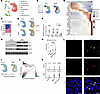
Hepatocyte senescence is increasingly recognized as a pathogenic driver of metabolic dysfunction–associated steatohepatitis (MASH). Through single-nucleus transcriptomic profiling, we identified a discrete population of disease-associated hepatocytes (daHep) exhibiting enrichment for senescence markers in MASH livers. The emergence of senescent hepatocytes was associated with a marked induction of hepatic thymocyte selection associated (THEMIS) expression in both murine and human MASH. Genetic ablation of Themis, either globally or specifically in hepatocytes, resulted in significant expansion of daHep and senescent hepatocyte populations and exacerbated MASH pathology in mice. Single-nucleus transcriptomic analysis revealed a central role for THEMIS in shaping the cellular landscape of both parenchymal and nonparenchymal compartments within the MASH liver microenvironment. Conversely, adeno-associated virus–mediated overexpression of THEMIS suppressed hepatocyte senescence and attenuated diet-induced MASH. Mechanistic studies revealed that THEMIS deficiency promoted aberrant ERK phosphorylation and hepatocyte senescence. These findings establish THEMIS as a critical hepatoprotective factor that restrains hepatocyte senescence and mitigates metabolic liver disease progression.
Authors
Xiaoxue Qiu, You Lu, Yuwei Tang, Linkang Zhou, Yu-tung Lee, Ziyi Meng, Zhimin Chen, Fnu Pradeepa, Lanuza A.P. Faccioli, Zhiping Hu, Alejandro Soto-Gutierrez, Siming Li, Jiandie D. Lin
Abstract
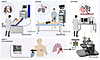
Integrative multiscale imaging bridges the gap between macroscopic organ structures and microscopic cellular processes, enabling holistic visualization of anatomy and function across scales. Photoacoustic imaging (PAI) leverages melanin’s potent contrast for label-free melanoma detection, yet its potential in lung imaging, challenged by air-tissue acoustic impedance mismatch, remains unexplored for melanoma lung metastases (MLMs). We used hierarchical multiscale PAI, transitioning from whole-body macroscale to localized mesoscale and single-cell-resolution microscale. PAI also guided photoablation interventions in the first and second near-infrared windows, requiring only 10.4 pg intracellular melanin/cell. Bioinformatic analysis of human MLM tissues revealed perturbed signaling pathways compared with normal skin and lung tissues, accounting for dysfunctional melanogenesis to enable label-free PAI with high sensitivity and specificity. Malignant MLM lesions in living mice, resected mouse lungs, and human lungs were delineated with margins closely conforming to histology. The high sensitivity allowed visualization of low-cellularity microsatellite foci down to a few tens of cell clusters, with sufficient penetration in the lungs of mice and Bama minipigs. The multiscale imaging methodology streamlines a theranostic workflow and specifically identifies MLM burden in a progressive, label-free manner, which may aid real-time tumor ablation in the future.
Authors
Wei Xing, Yujia Zhou, Katja Haedicke, Chenyixin Wang, Karla Ximena Vazquez-Prada, Hong Wu, Zhijun Lin, Chrysafis Andreou, Qize Zhang, Ke Shang, Ruoyang Hu, Moritz Kircher, Xingdong Ye, Jan Grimm, Jiang Yang

Abstract
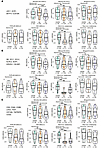
Bacteria-modulated gastric epithelial cells (GECs) play key roles in Helicobacter pylori–associated pathology. Here, we demonstrate both procolonization and proinflammation roles of GEC-derived PPFIA4 in H. pylori infection. PPFIA4 was elevated in GECs from gastric mucosa of H. pylori–infected patients and mice. PPFIA4 could be synergistically induced by H. pylori and IL-33 via the CagA/AP1 pathway. Human gastric PPFIA4 correlated with H. pylori colonization and the severity of gastritis, and H. pylori colonization and inflammation were attenuated in Ppfia4ΔGEC mice. Mechanistically, PPFIA4’s SAM1 domain bound domains from CaMK to the first L27 of CASK and subsequently formed a PPFIA4/CASK/AKT1 complex to activate AKT1, resulting in NF-κB activation and MMP1/CXCL3 secretion. This not only led to decreased E-cadherin and ZO-1 by MMP1, thereby promoting gastric mucosal damage to foster H. pylori colonization, but also resulted in increased gastric influx of G-MDSCs via CXCL3-dependent migration, thereby promoting gastritis and impairing H. pylori–specific IFN-γ–producing CD4+ T cell responses to foster H. pylori colonization. Furthermore, we identified a PPFIA4 inhibitor, kira6, which effectively inhibited GEC’s MMP1/CXCL3 production and ameliorated gastric H. pylori colonization and gastritis. Overall, PPFIA4 could be a promising therapeutic target, as it collectively ensures H. pylori persistence and promotes gastritis.
Authors
Pan Wang, Nan You, Yong-Sheng Teng, Yi-Pin Lv, Wen-Qing Tian, Jing-Yu Xu, Rui Xie, Jiang-Bo Wu, Geng-Yu Yue, Ping Cheng, Jin-Yu Zhang, Liu-Sheng Peng, Fang-Yuan Mao, Shou-Lu Luo, Shi-Ming Yang, Yong-Liang Zhao, Hong Zhou, Weisan Chen, Bin Wang, Yuan Zhuang
Abstract
Conventional type-1 dendritic cells (cDC1) are the main mediators of crosspresentation of tumor antigens to CD8+ T cells and provide a context of costimulatory molecules and cytokines that lead to cytotoxic T lymphocyte (CTL) responses. We analyzed bulk RNA sequences from 7 key clinical trials testing checkpoint inhibitors across multiple cancer types. cDC1- and CD8-associated gene signatures were analyzed. Multiplex tissue immunofluorescence was used to quantify cDC1 in melanoma, urothelial cancer, and non-small-cell lung cancer (NSCLC) samples and assess cDC1 tissue neighborhoods. Melanoma samples were studied with Xenium spatial transcriptomics (ST) and one series of NSCLC was analyzed using GeoMX-DSP. Strong associations across tumor types were found between cDC1 and CD8+ T cell transcripts with clinical outcomes. As mechanistically expected, transcripts for the CCL4 and CCL5 chemokines and the growth factor FLT3-L showed associations with cDC1 abundance. Tissue immunofluorescence showed a strong correlation of cDC1 and CD8+ T cell infiltration with clinical benefit upon treatment with checkpoint inhibitors (CPIs). Moreover, short distance between cDC1 and CD8+ T cells was found to define tissue niches associated with favorable outcomes. ST revealed recent T cell activation within immune cDC1-rich niches. cDC1 abundance, which determines CD8+ T lymphocyte density and activation in tumor tissues across cancer types, is strongly associated with clinical response to CPI-based immunotherapies.
Authors
Alvaro Lopez-Janeiro, José González-Gomariz, Fadi Issa, Joanna Hester, Angelo Porciuncula, Alvaro Teijeira, Carlos Luri-Rey, David Ruiz-Guillamon, Jose Luis Perez-Gracia, Elisabeth Perez-Ruiz, Isabel Barragan, Salvador Martín-Algarra, Miguel F. Sanmamed, Ignacio Ortego, Maria E. Rodriguez-Ruiz, Raluca Alexandru, Inmaculada Rodriguez, Saioa Arrieta-Aranzueque, David Rimm, Thazin Aung, Kurt A. Schalper, Carlos E. de Andrea, Ignacio Melero
Abstract
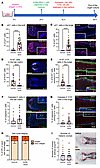
Chemotherapy-induced alopecia (CIA) remains one of the most distressing adverse effects of cancer therapy. Yet, no therapy is available to selectively protect healthy hair follicles (HFs) and their epithelial stem cells (eHFSCs) from chemotherapy-induced damage without awarding potential survival benefits to cancer cells. Here, we report how human HFs can be protected against 2 lead CIA-inducing chemotherapeutics by inducing selective transient cell cycle arrest. Pretreating scalp HFs before chemotherapy exposure ex vivo with ALRN-6924, a clinical-stage “stapled peptide” drug that binds with high affinity to key endogenous inhibitors of p53, selectively activated p53 signaling only in cells with wild-type TP53 genotype and upregulated p21. This led to temporary cell cycle arrest in healthy tissues without protecting TP53-mutant cancer cells and mitigated chemotherapy-induced HF damage on multiple levels, including excessive hair matrix apoptosis, premature catagen, pigmentary abnormalities, “mitotic catastrophe,” and micronucleation. It also protected eHFSCs against DNA damage, apoptosis, and pathological epithelial-mesenchymal transition. Notably, even topically applied ALRN-6924 afforded relative chemotherapy protection ex vivo. These results provide proof of principle for a strategy to selectively protect rapidly proliferating healthy epithelial tissues and their stem cells in patients with TP53-mutant cancers, which promises to protect against acute and permanent CIA.
Authors
Jennifer Gherardini, Tara Samra, Tatiana Gomez-Gomez, Aysun Akhundlu, Samantha D. Verling, Kinga Linowiecka, Tongyu C. Wikramanayake, Ulrich Knie, Jose Rodríguez-Feliz, Ramtin Kassir, Wolfgang Funk, Reza P. Azar, D. Allen Annis, Manuel Aivado, Jérémy Chéret, Ralf Paus
No posts were found with this tag.


Copyright © 2026 American Society for Clinical Investigation
ISSN: 0021-9738 (print), 1558-8238 (online)