
Therapeutics
Abstract
Nonsteroidal anti-inflammatory drugs (NSAIDs) are the most widely used medications for the management of chronic pain; however, they are associated with numerous gastrointestinal (GI) adverse events. Although many mechanisms have been suggested, NSAID-induced enteropathy has been thought to be primarily due to inhibition of both cyclooxygenases (COX) -1 and -2, which results in suppression of prostaglandin synthesis. Yet surprisingly, we found that concomitant postnatal deletion of Cox-1 and -2 over 10 months failed to cause intestinal injury in mice unless they were treated with naproxen or its structural analog, phenylpropionic acid, which is not a COX inhibitor. Cox double knockout mice exhibit a distinct gut microbiome composition and cohousing them with controls rescues their dysbiosis and delays the onset of NSAID-induced GI bleeding. In both the UK Biobank and All of Us human cohorts, coadministration of antibiotics with NSAIDs is associated with an increased frequency of GI bleeding. These results show that prostaglandin suppression plays a trivial role in NSAID-induced enteropathy. However, Cox deletion causes dysbiosis of the gut microbiome that amplifies the enteropathic response to NSAIDs.
Authors
Kayla Barekat, Soumita Ghosh, Christin Herrmann, Karl Keat, Charles-Antoine Assenmacher, Ceylan Tanes, Naomi Wilson, Ronan Lordan, Antonijo Mrčela, Lubica Rauova, Arjun Sengupta, Ujjalkumar Subhash Das, Robin Joshi, Elliot Friedman, Marylyn D. Ritchie, Kyle Bittinger, Aalim Weljie, Ken Cadwell, Frederic D. Bushman, Gary D. Wu, Garret A. FitzGerald, Emanuela Ricciotti
Abstract
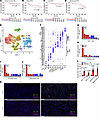
Immunotherapy has been effective in many cancer types but has failed in multiple clinical trials in prostate cancers, with the underlying mechanisms remaining largely unclear. Here, we demonstrate that androgen receptor pathway inhibitor (ARPI) plus irradiation (IR) triggered robust anticancer immunity in prostate cancers in both patients and mice. We show that androgen-activated AR suppressed innate immune signaling by inducing inhibitor of nuclear factor kappa-B kinase subunit epsilon (IKBKE) gene repression through HDAC2 interaction with an IKBKE enhancer RNA (IKBKE eRNA, or IKBKE-e). ARPI treatment caused IKBKE derepression and enhanced an IR-induced innate immune response via action of RIG-I and MDA5 dsRNA sensors. IKBKE-e ablation largely enhanced innate immunity in prostate cancer cells in culture and anticancer immunity in mice. Our results revealed AR, HDAC2, and IKBKE eRNA as critical intrinsic immune suppressors in prostate cancer cells, suggesting that rejuvenating inhibitor of nuclear factor kappa-B kinase subunit epsilon (IKKε) signaling by targeting IKBKE-e is an actionable strategy to elicit synthetic anticancer immunity in immunologically “cold” cancers such as prostate cancer.
Authors
Xiang Li, Rui Sun, Hao Li, Jacob J. Orme, Xu Zhang, Yu Hou, Sean S. Park, Yu Zhang, Yi He, Liguo Wang, Veronica Rodriguez-Bravo, Josep Domingo-Domenech, Shancheng Ren, Dan Xia, Guanghou Fu, Zhankui Jia, Haojie Huang

Abstract
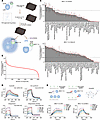
Protectin DX (PDX) is a member of the superfamily of specialized proresolving mediators and exerts anti-inflammatory actions in animal models; however, its signaling mechanism remains unclear. Here, we demonstrate the analgesic actions of PDX in a mouse model of tibial fracture–induced postoperative pain (fPOP). Intravenous early- and late-phase treatment of PDX (100 ng/mouse) effectively alleviated fPOP. Compared with protectin D1 (PD1)/neuroprotectin D1, DHA, steroids, and meloxicam, PDX provided superior pain relief. While dexamethasone and meloxicam prolonged fPOP, PDX shortened the pain duration. The analgesic effects of PDX were abrogated in Gpr37−/− mice, which displayed deficits in fPOP resolution. PDX was shown to bind GPR37 and induce calcium responses in peritoneal macrophages. LC-MS/MS–based lipidomic analysis revealed that endogenous PDX levels were approximately 10-fold higher than those of PD1 in muscle at the fracture site. PDX promoted macrophage polarization via GPR37-dependent phagocytosis and efferocytosis through calcium signaling in vitro, and it further enhanced macrophage viability and efferocytosis in vivo via GPR37. Finally, PDX rapidly modulated nociceptor neuron responses by suppressing C-fiber–induced muscle reflex in vivo and calcium responses in DRG neurons ex vivo and by reducing TRPA1/TRPV1-induced acute pain and neurogenic inflammation in vivo. Our findings highlight multiple benefits of PDX to manage postoperative pain and promote perioperative recovery.
Authors
Yize Li, Sangsu Bang, Jasmine Ji, Jing Xu, Min Lee, Sharat Chandra, Charles N. Serhan, Ru-Rong Ji
Abstract
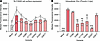
Genome instability is most commonly caused by replication stress, which also renders cancer cells extremely vulnerable once their response to replication stress is impeded. Topoisomerase II binding protein 1 (TOPBP1), an allosteric activator of ataxia telangiectasia and Rad3-related kinase (ATR), coordinates ATR in replication stress response and has emerged as a potential therapeutic target for tumors. Here, we identify auranofin, the FDA-approved drug for rheumatoid arthritis, as a lead compound capable of binding to the BRCT 7–8 domains and blocking TOPBP1 interaction with PHF8 and FANCJ. The liquid-liquid phase separation of TOPBP1 is also disrupted by auranofin. Through targeting these TOPBP1-nucleated molecular machineries, auranofin leads to an accumulation of replication defects by impairing ATR activation and attenuating replication protein A loading on perturbed replication forks, and it shows significant anti–breast tumor activity in combination with a PARP inhibitor. This study provides mechanistic insights into how auranofin challenges replication integrity and expands the application of this FDA-approved drug in breast tumor intervention.
Authors
Shuai Ma, Yingying Han, Rui Gu, Qi Chen, Qiushi Guo, Yuan Yue, Cheng Cao, Ling Liu, Zhenzhen Yang, Yan Qin, Ying Yang, Kai Zhang, Fei Liu, Lin Liu, Na Yang, Jihui Hao, Jie Yang, Zhi Yao, Xiaoyun Mao, Lei Shi
Abstract
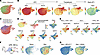
Solute carrier (SLC) transporters govern the selective transport of diverse molecules across cell membranes, controlling fundamental metabolic and cellular processes. Despite genetic evidence implicating SLC transporters in a variety of human diseases, this family of proteins represents an underexplored target class for therapeutic drug discovery. Here, we discovered a selective potentiator of SLC39A8, a metal transporter associated with inflammatory bowel disease, schizophrenia, and cardiovascular and metabolic disorders. We conducted a drug repurposing screen, identifying efavirenz as a potentiator of manganese and cadmium uptake by SLC39A8 and subsequently generated structure-activity relationships to guide design of analogs. Computational pocket identification methodology and molecular dynamic simulations revealed a ligandable, cryptic pocket that, together with functional mutagenesis, indicated direct target engagement and allosteric modulation. Our findings demonstrate how the combination of experimental data and computational tools represents a powerful synergy that can enhance scientific outcomes. This integrated approach allowed for iterative feedback where insights from experiments informed the model refinements and computational predictions guided future experimental designs. Furthermore, our data established that SLC39A8 transporter activity can be increased pharmacologically, potentially opening avenues for SLC transporter drug discovery.
Authors
Kelly L. Damm-Ganamet, Clara Moon, Alan D. Wickenden, Mark Tichenor, Yunhui Ge, Eduardo V. Mercado-Marin, Brian Chiou, Ayla Manughian-Peter, Taraneh Mirzadegan, Jennifer D. Venable, Ramnik J. Xavier, Jennifer E. Towne, Daniel B. Graham, Jacqueline Perrigoue
Abstract
Orthosteric β-blockers represent the leading pharmacological intervention for managing heart diseases owing to their ability to competitively antagonize β-adrenergic receptors (βARs). However, their use is often limited by the development of adverse effects such as fatigue, hypotension, and reduced exercise capacity, due in part to the nonselective inhibition of multiple βAR subtypes. These challenges are particularly problematic in treating catecholaminergic polymorphic ventricular tachycardia (CPVT), a disease characterized by lethal tachyarrhythmias directly triggered by cardiac β1AR activation. To identify small molecule allosteric modulators of the β1AR that could offer enhanced subtype specificity and robust functional antagonism of β1AR-mediated signaling, we conducted a DNA-encoded small molecule library screen and discovered Compound 11 (C11). C11 selectively potentiates the binding affinity of orthosteric agonists to the β1AR while potently inhibiting downstream signaling following β1AR activation. Moreover, C11 prevents agonist-induced spontaneous contractile activity, Ca2+ release events, and exercise-induced ventricular tachycardia in the CSQ2–/– murine model of CPVT. Collectively, our studies demonstrate that C11 belongs to an emerging class of allosteric modulators termed PAM-antagonists that positively modulate agonist binding but block downstream function. With unique pharmacological properties and selective functional antagonism of β1AR-mediated signaling, C11 represents a promising therapeutic candidate for the treatment of CPVT and other forms of cardiac disease associated with excessive β1AR activation.
Authors
Alyssa Grogan, Robin M. Perelli, Seungkirl Ahn, Haoran Jiang, Arun Jyothidasan, Damini Sood, Chongzhao You, David I. Israel, Alex Shaginian, Qiuxia Chen, Jian Liu, Jialu Wang, Jan Steyaert, Alem W. Kahsai, Andrew P. Landstrom, Robert J. Lefkowitz, Howard A. Rockman
Abstract
Stress-induced epithelial plasticity is central to lung regeneration, fibrosis, and malignancy, but how cellular stress leads to differentiation is incompletely understood. Here, we found a central role for IRE1α, a conserved mediator of the unfolded protein response (UPR), in stimulating the plasticity of alveolar type 2 (AT2) cells. In single-cell RNA-seq, IRE1α activity was associated with loss of AT2 identity and progression toward a damage-associated transitional state unique to fibrosis. AT2 plasticity required destructive regulated IRE1α-dependent decay (RIDD), which we demonstrated by deploying PAIR2, a kinase modulator that inhibits RIDD while preserving IRE1α’s adaptive XBP1 mRNA splicing activity. In vivo, selective inhibition of RIDD with PAIR2 reduced AT2 differentiation into profibrotic transitional cells and protected mice from bleomycin-induced pulmonary fibrosis. Mechanistically, we identified the Fgfr2 mRNA as a direct and regulated substrate for IRE1α’s RNase in primary AT2 cells and in a biochemically reconstituted cell-free system. Loss of Fgf signaling caused AT2 differentiation, while gain of signaling protected cells from IRE1α-induced differentiation. We propose that IRE1α downregulates Fgf signaling through RIDD, provoking loss of AT2 identity and differentiation towards a profibrotic phenotype. Thus, IRE1α’s RIDD activity emerges as a novel target for treatment of pulmonary fibrosis and potentially other diseases driven by aberrant epithelial cell plasticity.
Authors
Vincent C. Auyeung, Tavienne L. Steinberg, Alina Olivier, Luka Suzuki, Mary E. Moreno, Imran S. Khan, Michael S. Downey, Maike Thamsen, Lu Guo, Dustin J. Maly, Bradley J. Backes, Dean Sheppard, Feroz R. Papa
Abstract
Tay-Sachs and Sandhoff disease are fatal neurodegenerative diseases without an effective therapy that are caused by mutations in the HEXA and HEXB genes, respectively. Together they encode the heterodimeric isozyme of hexosaminidase (HexA) that degrades GM2 ganglioside. This report describes a 5 year-long study using a bidirectional AAV9 vector (AAV9-Bic_HexA/HexB) encoding both HEXA and HEXB in the Tay-Sachs sheep model. Bidirectional AAV9 was delivered intravenously or through various cerebral spinal fluid (CSF) delivery routes: intracerebroventricular (ICV), cisterna magna (CM) and lumbar delivery (LIT). The longest survival and best distribution were achieved by multipoint CSF delivery (combined CM, ICV and LIT) with treated animals survived up to 5 years of age (untreated Tay-Sachs animals die ~9 months). Extension in survival was accompanied by lasting improvement in neurological examination and maze testing. Improvement in biomarkers of efficacy including MRI, MR spectroscopy, diffusion tensor imaging as well as CSF levels of GM2 ganglioside and hexosaminidase A (HexA) activity was evident. Post-mortem assessments showed broad HexA distribution, GM2 ganglioside clearance and vector genome distribution, especially in deep brain structures. Therapeutic efficacy documented in this study supports translation of bidirectional vector and multipoint CSF delivery to a clinical trial in Tay-Sachs and Sandhoff disease patients.
Authors
Toloo Taghian, Jillian Gallagher, Stephanie Bertrand, William C. Baker, Kalajan Lopez Mercado, Hector R. Benatti, Erin Hall, Yvette Lopez, Abigail McElroy, John T. McCarthy, Sanjana Pulaparthi, Deborah Fernau, Samuel Mather, Sophia Esteves, Elise Diffie, Amanda Gross, Hannah G. Lahey, Xuntian Jiang, Elizabeth Parsley, Rachael Gately, Rachel Prestigiacomo, Siauna Johnson, Amanda Taylor, Lindsey Bierfeldt, Susan Tuominen, Jennifer Koehler, Guangping Gao, Jun Xie, Qin Su, Robert King, Matthew J. Gounis, Vania Anagnostakou, Ajit Puri, Ana Rita Batista, Miguel Sena-Esteves, Douglas R. Martin, Heather Gray-Edwards

Abstract
Growing evidence links human long noncoding RNAs (lncRNAs) to metabolic disease pathogenesis, yet no FDA-approved drugs target human lncRNAs. Most human lncRNAs lack conservation in other mammals, complicating efforts to define their roles and identify therapeutic targets. Here, we leveraged the concept of functionally conserved lncRNAs (FCLs) — lncRNAs that share function despite no sequence similarity — to develop a framework for identifying human lncRNAs as therapeutic targets for metabolic disorders. We used expression quantitative trait loci mapping and functional conservation analyses to pinpoint human lncRNAs influenced by disease-associated SNPs and with potential functionally conserved mouse equivalents. We identified human and mouse GULLs (glucose and lipid lowering), which regulate glucose and lipid metabolism by binding CRTC2, thereby modulating gluconeogenic genes via CREB and lipogenic genes via SREBP1. Despite their lack of sequence similarity, both lncRNAs demonstrated similar metabolic effects in obese mice, with more pronounced benefits from long-term activation. To identify druggable sites, we mapped GULLs’ binding motifs to CRTC2 (termed GULFs). Standalone human GULF, an RNA oligomer resembling FDA-approved siRNAs, significantly improved glucose and lipid levels in obese mice. This framework highlights functionally conserved human lncRNAs as promising therapeutic targets, exemplified by GULLs’ potential as a glucose- and lipid-lowering therapeutic.
Authors
Zhe Li, Sunmi Seok, Chengfei Jiang, Ping Li, Yonghe Ma, Hang Sun, Haiming Cao
Abstract
Degeneration of the neuromuscular system is a characteristic feature of spinal and bulbar muscular atrophy (SBMA), a CAG/polyglutamine (polyQ) expansion disorder caused by mutation in the androgen receptor (AR). Using a gene targeted mouse model of SBMA, AR113Q mice, we demonstrate age-dependent degeneration of the neuromuscular system that initially manifests with muscle weakness and atrophy and progresses to include denervation of neuromuscular junctions and lower motor neuron soma atrophy. Using this model, we tested the hypothesis that therapeutic intervention targeting skeletal muscle during this period of disease progression arrests degeneration of the neuromuscular system. To accomplish this, AR-targeted antisense oligonucleotides were administered subcutaneously to symptomatic AR113Q mice to reduce expression of polyQ AR in peripheral tissues but not in the spinal cord. This intervention rescued muscle atrophy, neuromuscular junction innervation, lower motor neuron soma size, and survival in aged AR113Q mice. Single-nucleus RNA sequencing revealed age-dependent transcriptional changes in the AR113Q spinal cord during disease progression which were mitigated by peripheral AR gene silencing. Our findings underscore the intricate interplay between peripheral tissues and the central nervous system in SBMA and emphasize the therapeutic effectiveness of peripheral gene knockdown in symptomatic disease.
Authors
Changwoo Lee, Zhigang Yu, Curtis J. Kuo, Leon Tejwani, Rosalie M. Grijalva, Eunwoo Bae, Hien T. Zhao, Janghoo Lim, Andrew P. Lieberman
No posts were found with this tag.


Copyright © 2026 American Society for Clinical Investigation
ISSN: 0021-9738 (print), 1558-8238 (online)