
Autoimmunity

Abstract
Vitiligo is an autoimmune skin disease characterized by depigmentation, mainly due to CD8+ T cell–mediated destruction of melanocytes. Hyperglycemia exacerbates autoimmune responses and is associated with vitiligo; however, the underlying immunometabolic mechanisms are poorly understood. Here, we demonstrated the correlation between hyperglycemia and vitiligo in a case-control study and demonstrated that hyperglycemia aggravated vitiligo based on a mouse model. Targeted metabolomics identified succinate as the potential metabolite mediating hyperglycemia-aggravated vitiligo. Mechanistically, succinate promotes the activation of CD8+ T cells through succinate receptor 1 (SUCNR1) and promotes keratinocytes to secrete CXCL9 and CXCL10 by enhancing the stability and nuclear translocation of hypoxia-inducible factor-1α, facilitating the skin-homing of CD8+ T cells. Thus, hyperglycemia aggravates vitiligo through succinate/SUCNR1 axis–regulated CD8+ T cell hyperactivation. Our study provides insights into the long-observed yet previously unclear mechanism by which hyperglycemia accelerates vitiligo progression and highlights SUCNR1 as a potential therapeutic target.
Authors
Pan Kang, Yuqian Chang, Tingting Wang, Xiuli Yi, Yinghan Wang, Pengran Du, Jiaxi Chen, Baizhang Li, Shuli Li, Zhongjun Shao, Jianru Chen, Chunying Li
Abstract
BACKGROUND. Anti-nephrin autoantibodies have emerged as a putative pathogenic driver in a subset of patients with podocytopathies, including those with post-transplant disease recurrence. METHODS. We measured anti-nephrin autoantibodies in a cohort of 65 patients with podocytopathy associated with steroid-sensitive nephrotic syndrome (n = 39) and steroid-resistant nephrotic syndrome (n = 26), and in 34 patients with post-transplant podocytopathy recurrence. Fourteen patients with membranous nephropathy and 20 healthy volunteers served as controls. ELISA and immunoprecipitation assays were performed to detect anti-nephrin IgG using two different recombinant human nephrin proteins. Immunofluorescence analysis was performed to assess the deposition of IgG and their colocalization with nephrin in renal biopsies. RESULTS. When using murine antigen-based ELISA, the highest positivity was found in healthy volunteers (55%), correlating with levels of circulating natural anti-α-galactose-α-1,3-galactose antibodies. This cross-reactivity was abrogated with recombinant human nephrin expressed in human cells. In this setting, very low prevalence (<5%) of anti-nephrin antibody-positive patients was found in steroid-sensitive and steroid-resistant nephrotic syndrome cohorts and in patients with post-transplant disease recurrence. These frequencies were comparable to healthy volunteers. Using confocal and super-resolution microscopy, only trace amounts of IgM, but no IgG, were found in the glomeruli of analyzed biopsies, which did not colocalize with nephrin. CONCLUSIONS. With the methodology presented here, anti-nephrin reactivity was extremely rare and occurred at comparably low frequencies in healthy controls, native-kidney podocytopathies, and post-transplant disease recurrence. This suggests that these autoantibodies are not inherently disease-specific and may not serve as a broad biomarker across podocytopathies. TRIAL REGISTRATION. ClinicalTrials.gov NCT06334692. FUNDING. Private donation.
Authors
Francesco Pecoraro, Luca Perico, Federica Casiraghi, Paola Rizzo, Matias Trillini, Andrea Angeletti, Manuel Alfredo Podestà, Xhuliana Kajana, Agnese Spennacchio, Marta Todeschini, Marilena Mister, Giuseppe Castellano, Ariela Benigni, Giuseppe Remuzzi

Abstract
Acquired generalized lipodystrophy (AGL) is a rare metabolic disorder frequently associated with autoimmunity. Its etiology is incompletely understood, and the effect of adipose tissue loss on intestinal inflammation in AGL remains unclear. Using mass cytometry and single-cell RNA-seq, we observed an oligoclonal expansion of T cells in the periphery and inflamed intestine in a patient with AGL and Crohn’s disease (AGLCD). To explore if loss of adipose tissue triggers lymphoproliferation, we studied lipodystrophic mice as a model for AGL. Unexpectedly, lipodystrophic mice did not show T cell expansion, were protected from colitis, and displayed a defect in the development of proinflammatory T cells, which could be reversed by allogeneic fat transplantations, indicating that clonal T cell expansion in AGLCD is not primarily caused by lipodystrophy. Instead, gene sequencing revealed a T cell–intrinsic de novo neuroblastoma RAS viral oncogene homolog (NRAS) mutation, implicating somatic mosaicism as a facilitator of clonal T cell expansion and intestinal inflammation in AGLCD.
Authors
Marilena Letizia, Toka Omar, Patrick Weidner, Manuel O. Jakob, Inka Freise, Susanne M. Krug, Britt-Sabina Löscher, Elisa Rosati, Benedikt Obermayer, Reyes Gamez-Belmonte, Julia Hecker, Jörn-Felix Ziegler, Benjamin Weixler, Patrick Asbach, Desiree Kunkel, Michael Stumvoll, Konstanze Miehle, Christoph Becker, Christoph S.N. Klose, Rainer Glauben, Dieter Beule, Anja A. Kühl, Thomas Conrad, Frank Tacke, Stefan Wirtz, Andre Franke, Ashley D. Sanders, Britta Siegmund, Carl Weidinger
Abstract
Interstitial lung disease (ILD) is a major cause of morbidity and mortality in systemic sclerosis (SSc); however, the immunopathologic mechanisms driving lung disease in SSc are unclear. T cells have been implicated as a likely driver of lung injury in SSc. Here, we have evaluated T cells in the blood of patients with SSc-ILD and identified a specific population of cytotoxic CD8 T cells that is expanded in SSc-ILD patients. Cytotoxic effector memory CD8 T cells marked by CD57 expression are preferentially expanded in SSc-ILD patients compared to SSc patients without ILD and controls and show prominent clonal expansion. These CD57+ T effector memory (TEM) cells differ from T effector memory cells re-expressing CD45RA (TEMRA) transcriptomically and functionally, with cytotoxic function that is enhanced by CD155 engagement of the costimulatory receptor CD226. We performed immunostaining of lung tissue samples obtained from independent SSc-ILD patients (biopsy or explant) and confirmed the presence of CD57+ TEM. In parallel, we analyzed publicly available lung scRNA-seq datasets from multiple ILD cohorts and identified endothelial cells as a likely source of CD155 to activate CD57+ cytotoxic T cells. Together, the results implicate a CD57+ cytotoxic CD8 T cell population as a potential mediator of lung injury in SSc-ILD.
Authors
Takanori Sasaki, Ye Cao, John M. Sowerby, Kazuhiko Higashioka, Kathryne E. Marks, Mehreen Elahee, Mari Kamiya, Paul F. Dellaripa, Richard I. Ainsworth, Kimberly E. Taylor, Nunzio Bottini, Paul Wolters, Edy Y. Kim, Francesco Boin, Deepak A. Rao

Abstract
Anaphylaxis is a life-threatening hypersensitivity reaction. Clinical observations suggest heightened susceptibility during viral infections, yet the mechanisms remain poorly defined. Here, we show that both active and passive IgG-mediated anaphylaxis were exacerbated in the setting of acute viral infection. In mice, this enhancement was driven predominantly by FcγRIV, the homolog of human FcγRIIIa. FcγRIV crosslinking induced anaphylactic symptoms selectively in infected animals, with no effect in naive conditions. Among leukocytes, inflammatory monocytes emerged as the principal drivers of this lethal reaction. Viral infection triggered a strong upregulation of FcγRIV on inflammatory monocytes, an effect absent in type I IFN receptor–deficient (Ifnar1-deficient) mice. Extending these findings, we observed increased frequencies of CD16-expressing classical monocytes in patients with acute COVID-19, and murine SARS-CoV-2 infection recapitulated this phenotype. Mechanistically, FcγRIV crosslinking during infection promoted the production of platelet-activating factor, the key mediator of mortality, in a type I IFN–dependent (IFN-I–dependent) manner. Together, these findings indicate that viral infection creates an immune milieu that heightens monocyte sensitivity to Fcγ receptor engagement, positioning these cells as major effectors of IgG-mediated hypersensitivity in the infected host. They further suggest that Fc receptor pathway modulation merits further investigation in contexts with heightened IFN-I responses, such as in systemic lupus erythematosus.
Authors
Abdelrahman Elwy, Hossam Abdelrahman, Julia Specht, Gina M. Ewert, Justa Friebus-Kardash, Swati Dhiman, Julia Falkenstein, Theresa Charlotte Christ, Elisa Wiebeck, Arzoo Shamoon, Nils B. Leimkühler, Thomas Gramberg, Alina Russ, Ulrich Kalinke, Fei Kuang, Kathrin Sutter, Manfred Kopf, Matthias Mack, Wiebke Hansen, Falk Nimmerjahn, Karl S. Lang
Abstract
Authors
Bingyu Yan, Jinwoo Lee, Suhas Srinivasan, Pedro Ambriz, Quanming Shi, Diana R. Dou, Srijana Davuluri, Swarna Nandyala, Adrianne Woods, Gwendolyn Leatherman, Yanding Zhao, Roman E. Reggiardo, Manasi Sawant, Hawa Racine Thiam, Ami A. Shah, David F. Fiorentino, Lorinda S. Chung, Howard Y. Chang
Abstract
Neutrophils and neutrophil extracellular traps (NETs) contribute to early neuromyelitis optica (NMO) histopathology initiated by IgG targeting astrocytic aquaporin-4 water (AQP4) channels. Yet, the mechanisms underlying neutrophil recruitment and their pathogenic roles in disease progression remain unclear. To investigate molecular-cellular events preceding classical complement cascade activation in a mouse NMO model, we continuously infused, via spinal subarachnoid route, a non-complement-activating mouse monoclonal AQP4-IgG. Parenchymal infiltration of netting neutrophils containing C5a ensued with microglial activation and motor impairment, but no blood–brain barrier leakage. Motor impairment and neuronal dysfunction both reversed when AQP4-IgG infusion stopped. Two-photon microscopy and electron-microscopy-based reconstructions revealed physical interaction of infiltrating neutrophils with microglia. Ablation of either peripheral neutrophils or microglia attenuated the motor deficit, highlighting their synergistic pathogenic roles. Of note, mice lacking complement receptor C5aR1 exhibited reduction in neutrophil infiltration, microglial lysosomal activation, neuronal lipid-droplet burden and motor impairment. Pharmacological inhibition of C5aR1 recapitulated this protection. Immunohistochemical analysis of an NMO patient’s spinal cord revealed disease-associated microglia surrounding motor neurons in non-destructive lesions. Our study identifies neutrophil-derived C5a signaling through microglial C5aR1 as a key early driver of reversible motor neuron dysfunction in the precytolytic phase of NMO.
Authors
Fangfang Qi, Vanda A. Lennon, Shunyi Zhao, Yong Guo, Husheng Ding, Caiyun Liu, Whitney M. Bartley, Tingjun Chen, Claudia F. Lucchinetti, Long-Jun Wu
Abstract
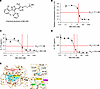
RORγt is a key transcription factor regulating both Th17 differentiation and thymocyte development. Although Th17 cells drive autoimmune diseases, inhibiting RORγt to treat autoimmunity also disrupts thymocyte development and can cause lethal thymic lymphoma. We identified a previously unreported RORγt cofactor, CBFβ, and a highly selective RORγt inhibitor, IMU-935, that preferentially disrupt the RORγt-CBFβ interaction in Th17 cells but not thymocytes. This interaction is essential for RORγt function; mice with a RORγt mutant unable to bind CBFβ had impaired Th17 differentiation, were resistant to experimental autoimmune encephalomyelitis (EAE), and had defective thymocyte development. IMU-935 inhibited Th17 differentiation and reduced EAE severity without affecting thymocyte development by selectively targeting the RORγt-CBFβ interaction in Th17 cells but not in thymocytes. This differential effect arose because different concentrations of IMU-935 were required to disrupt the interaction in Th17 cells versus thymocytes, due to varying levels of RUNX1 that compete with RORγt for CBFβ binding. This study reveals an unreported mechanism for RORγt regulation and a selective RORγt inhibitor that prevents Th17-driven autoimmunity without the risk of lethal lymphoma from thymocyte disruption.
Authors
Hongmin Wu, Xiancai Zhong, Ning Ma, Zhiheng He, Guanpeng Wang, Geming Lu, Yate-Ching Yuan, Wencan Zhang, Yun Shi, Nagarajan Vaidehi, Evelyn Peelen, Tanja Wulff, Christian Gege, Hella Kohlhof, Daniel Vitt, Yousang Gwack, Ichiro Taniuchi, Hai-Hui Xue, Zuoming Sun

Abstract
Neuromyelitis optica (NMO) is an autoimmune disorder characterized by autoantibodies against the astrocyte water channel aquaporin-4 (AQP4) that cause demyelination in the optic nerves and spinal cord. How astrocytopathy leads to myelination deficits remains unclear. Chitinase-3–like protein 1 (CHI3L1, also known as YKL-40) is predominantly secreted by activated astrocytes, serves as a robust NMO biomarker, and plays a role in immune responses, but how it is induced and shapes astrocyte activation in NMO is not well defined. Using ex vivo and in vivo NMO mouse models together with mice with astrocyte-specific CHI3L1 knockout, we demonstrated that CHI3L1 directly contributed to demyelinating lesions elicited by AQP4 autoantibody–activated astrocytes. With complementary in vitro assays and inducible transgenic lines, we uncovered an astrocyte-intrinsic cascade in which AQP4 autoantibody exposure activated STAT3, which in turn drove CHI3L1 expression and secretion. Secreted CHI3L1 then engaged the astrocytic receptor RAGE in an autocrine manner, activating downstream NF-κB signaling that drove proinflammatory gliosis and damaged myelination. Pharmacological blockade of this pathway in NMO models rescued demyelinating pathology and improved motor function. These findings reveal an astrocyte-intrinsic CHI3L1 pathway that contributed to demyelination in NMO and identify actionable therapeutic targets.
Authors
Huiming Xu, Wei Jiang, Li Xu, Haoyang Li, Xin Yang, Fan Zhu, Pengyan He, Yanna Song, Yuhan Li, Yu-Wen Alvin Huang, Wei Qiu, Changyong Tang
Abstract
Type 1 Diabetes Mellitus (T1D) is a chronic disease caused by an unremitting autoimmune attack on pancreatic beta cells. This autoimmune chronicity is mediated by stem-like progenitor CD8+ T cells that continually repopulate the pool of beta cell-specific cytolytic effectors. Factors governing the conversion of progenitors to effectors, however, remain unclear. T1D has been linked to a chromosomal region (Xp13-p11) that contains the epigenetic regulator UTX, which suggests a key role for UTX in T1D pathogenesis. Here, we show that T cell-specific UTX deletion in NOD mice protects against T1D development. In T cells of NOD mice and T1D patients, UTX ablation resulted in the accumulation of CD8+ progenitor cells with concomitant deficiency of effectors, suggesting a key role for UTX in poising progenitors for transition to effectors. Mechanistically, UTX’s role in T1D was independent of its inherent histone demethylase activity but instead relied on binding with transcription factors (TCF1 and STAT3) to co-regulate genes important in the maintenance and differentiation of progenitor CD8+ T cells. Together, these findings identify a critical role for UTX in T1D and the UTX:TCF1:STAT3 complex as a therapeutic target for terminating the long-lived autoimmune response.
Authors
Ho-Chung Chen, Madison F. Bang, Hsing-Hui Wang, Karl B. Shpargel, Lisa A. Kohn, David Sailer, Shile Zhang, Ethan C. McCarthy, Maryamsadat Seyedsadr, Satchel Stevens, Caitlyn L. H. Pham, Zikang Zhou, Xihui Yin, Nicole M. Wilkinson, Esther M. Peluso, Christian Bustillos, Jessica G. Ortega, Lixin Yang, Ashlyn A. Buzzelli, Reina C. Capati, Dennis J. Chia, Steven D. Mittelman, Christina M. Reh, Jason K. Whitmire, Melissa G. Lechner, Willy Hugo, Maureen A. Su
No posts were found with this tag.


Copyright © 2026 American Society for Clinical Investigation
ISSN: 0021-9738 (print), 1558-8238 (online)