
Advertisement
Review Series
Open Access |  10.1172/JCI207631
Next-generation CDK inhibitors in HR+/HER2– breast cancer
Daria Seriak,1,2 Jun Yong Kim,3,4 Geoffrey I. Shapiro,3,4 and Antonio Giordano3,4
1Dana-Farber Cancer Institute at Boston Medical Center, Brighton, Massachusetts, USA.
2Department of Medicine, Boston University Chobanian & Avedisian School of Medicine, Boston, Massachusetts, USA.
3Department of Medical Oncology, Dana-Farber Cancer Institute, Boston, Massachusetts, USA.
4Department of Medicine, Brigham and Women’s Hospital and Harvard Medical, School, Boston, Massachusetts, USA.
Address correspondence to: Antonio Giordano, Assistant Professor of Medicine, Harvard Medical School, Interim Director, Center for Cancer Therapeutic Innovation, Department of Medical Oncology, Dana-Farber Cancer Institute, 450 Brookline Avenue, D2010, Boston, Massachusetts 02215, USA. Phone: 617.632.3800; Email: Antonio_Giordano@dfci.harvard.edu.
Find articles by Seriak, D. in: PubMed | Google Scholar
1Dana-Farber Cancer Institute at Boston Medical Center, Brighton, Massachusetts, USA.
2Department of Medicine, Boston University Chobanian & Avedisian School of Medicine, Boston, Massachusetts, USA.
3Department of Medical Oncology, Dana-Farber Cancer Institute, Boston, Massachusetts, USA.
4Department of Medicine, Brigham and Women’s Hospital and Harvard Medical, School, Boston, Massachusetts, USA.
Address correspondence to: Antonio Giordano, Assistant Professor of Medicine, Harvard Medical School, Interim Director, Center for Cancer Therapeutic Innovation, Department of Medical Oncology, Dana-Farber Cancer Institute, 450 Brookline Avenue, D2010, Boston, Massachusetts 02215, USA. Phone: 617.632.3800; Email: Antonio_Giordano@dfci.harvard.edu.
Find articles by Kim, J. in: PubMed | Google Scholar
1Dana-Farber Cancer Institute at Boston Medical Center, Brighton, Massachusetts, USA.
2Department of Medicine, Boston University Chobanian & Avedisian School of Medicine, Boston, Massachusetts, USA.
3Department of Medical Oncology, Dana-Farber Cancer Institute, Boston, Massachusetts, USA.
4Department of Medicine, Brigham and Women’s Hospital and Harvard Medical, School, Boston, Massachusetts, USA.
Address correspondence to: Antonio Giordano, Assistant Professor of Medicine, Harvard Medical School, Interim Director, Center for Cancer Therapeutic Innovation, Department of Medical Oncology, Dana-Farber Cancer Institute, 450 Brookline Avenue, D2010, Boston, Massachusetts 02215, USA. Phone: 617.632.3800; Email: Antonio_Giordano@dfci.harvard.edu.
Find articles by
Shapiro, G.
in:
PubMed
|
Google Scholar
|

1Dana-Farber Cancer Institute at Boston Medical Center, Brighton, Massachusetts, USA.
2Department of Medicine, Boston University Chobanian & Avedisian School of Medicine, Boston, Massachusetts, USA.
3Department of Medical Oncology, Dana-Farber Cancer Institute, Boston, Massachusetts, USA.
4Department of Medicine, Brigham and Women’s Hospital and Harvard Medical, School, Boston, Massachusetts, USA.
Address correspondence to: Antonio Giordano, Assistant Professor of Medicine, Harvard Medical School, Interim Director, Center for Cancer Therapeutic Innovation, Department of Medical Oncology, Dana-Farber Cancer Institute, 450 Brookline Avenue, D2010, Boston, Massachusetts 02215, USA. Phone: 617.632.3800; Email: Antonio_Giordano@dfci.harvard.edu.
Find articles by Giordano, A. in: PubMed | Google Scholar
Published October 15, 2026 - More info
J Clin Invest. 2026;136(20):e207631. https://doi.org/10.1172/JCI207631.
© 2026 Seriak et al. This work is licensed under the Creative Commons Attribution 4.0 International License. To view a copy of this license, visit http://creativecommons.org/licenses/by/4.0/.

-
Introduction
Dysregulated control of the cell cycle is a fundamental hallmark of malignancy that enables sustained proliferative signaling across many tumor types, including breast cancer (1). Cyclin-dependent kinases (CDKs) are serine/threonine kinases that, together with their cyclin partners, coordinate orderly progression through the G1, S, G2, and M phases of the cell cycle, integrating mitogenic signals, checkpoint control, and DNA damage responses (2, 3). The 20 human CDKs include cell-cycle, transcriptional, and atypical kinases (3). Upon mitogenic stimulation, cyclin D–CDK4/6 complexes initiate phosphorylation of the retinoblastoma (Rb) tumor suppressor protein in early G1, generating monophosphorylated Rb isoforms that partially relieve repression of E2F transcription factors (E2Fs) (4, 5). Complete Rb inactivation, however, has been thought to require subsequent hyperphosphorylation by cyclin E–CDK2 complexes in late G1, promoting S phase entry (6–8). Single-cell studies have refined this model, showing that partial Rb phosphorylation by either CDK4/6 or CDK2 can generate a reversible intermediate state before full cyclin E–CDK2–dependent commitment to S phase entry (9).
In breast epithelium, estrogen receptor (ER) signaling directly upregulates cyclin D1 (CCND1) gene expression, creating a positive feedback loop in which cyclin D1–CDK4/6 complexes reciprocally enhance ER transcriptional activity (10, 11). Additionally, oncogenic alterations associated with breast cancer frequently converge on the cyclin D–CDK4/6–Rb axis. Amplification or overexpression of CCND1, activation of upstream growth factor signaling (e.g., PI3K/AKT/mTOR, FGFR, or MAPK pathways), and loss of negative regulators (such as p16INK4A) promote persistent CDK4/6 activity, leading to sustained Rb phosphorylation, activation of E2Fs, and, ultimately, the G1 to S transition (12) (Figure 1). Hormone receptor–positive/human epidermal growth factor receptor 2–negative (HR+/HER2–) breast cancer, which accounts for approximately 60%–70% of all breast cancers, is particularly dependent on this pathway, explaining the success of CDK4/6 inhibition in this disease (13).
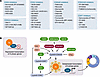 Figure 1
Overview of CDK inhibitors in development and role of the cyclin D–CDK4/6–Rb axis in cell-cycle progression in ER+ breast cancer. (A) CDK inhibitors are categorized based on their primary targets. d, degrader. (B) Upon mitogenic stimuli, activation of receptor tyrosine kinase and estrogen receptor (ER) signaling induce cyclin D1 expression and formation of cyclin D–CDK4/6 complexes in G1, leading to Rb hyperphosphorylation and liberation of E2F transcription factors for S phase gene expression. In ER+ breast cancer with resistance to CDK4/6is, these pathways are commonly dysregulated by CCND1 amplification, hyperactivation of upstream signaling pathways (including PI3K–AKT–mTOR, FGFR, and MAPK), and loss of FAT1, resulting in high cyclin D1 and CDK6 levels that enable persistent CDK4/6 activity. In addition, CDK7-driven MYC activation upregulates cyclin E and activates CDK2. These collectively drive sustained Rb hyperphosphorylation and uncontrolled G1/S progression.
Early pan-CDK inhibitors were limited by narrow therapeutic indices and dose-limiting toxicities (DLTs) and did not progress to clinical practice (14, 15). Improved structural comprehension of CDK-cyclin complexes and the advancement of more selective ATP-competitive inhibitors enabled development of more selective agents — palbociclib, ribociclib, and abemaciclib — which, in combination with endocrine therapy (ET), have transformed the management of HR+/HER2– breast cancer, demonstrating consistent improvements in progression-free survival (PFS) and, for several regimens, overall survival, across metastatic and high-risk early-stage settings (16, 17). CDK4/6 inhibitors (CDK4/6is) plus ET are now the standard of care for most patients with HR+/HER2– advanced breast cancer.
Despite these advances, important challenges motivate the development of next-generation CDK-directed therapies. Neutropenia and other hematologic toxicities frequently require dose interruptions or reductions, driving interest in CDK4-selective inhibitors (CDK4is) that limit myelosuppression (18). One important challenge is intrinsic (primary) resistance, in which tumors fail to respond at treatment initiation; this occurs in approximately 10%–20% of cases and likely reflects preexisting molecular or cell-state features that sustain proliferation despite CDK4/6 inhibition (19–21). In contrast, acquired resistance or adaptive escape develops in tumors that initially respond but later resume growth under treatment, often through bypass of CDK4/6 dependence and increased reliance on CDK2-related signaling (20, 22). Intrinsic heterogeneity in cell-cycle regulator expression also contributes to fractional resistance, in which a small subpopulation of cells within an otherwise CDK4/6i-sensitive tumor continues to proliferate due to cell-to-cell variability in regulators such as E2F1, Rb, and CDK2 (23). Finally, current CDK4/6is primarily induce a reversible cytostasis or senescence rather than cell death, and recovery of proliferative capacity following treatment interruption has been observed in several tumor contexts (24, 25). Together, these limitations underscore the need for agents that achieve more durable cell-cycle control, address both intrinsic and acquired resistance mechanisms, and support rational combination strategies without added toxicity.
With this growing interest, several recent reviews have addressed CDK-directed therapeutics in oncology (26, 27), but key distinctions motivate the present work. This Review focuses specifically on the next generation of CDK inhibitors in HR+/HER2− breast cancer. We review CDK4is, CDK2-selective inhibitors (CDK2is), multitargeted CDK agents, and CDK-targeting proteolysis-targeting chimeras (PROTACs), with emphasis on resistance biology, biomarkers, as well as emerging combinations with novel ETs.
-
CDK4is
CDK4 and CDK6 share approximately 70% sequence homology and jointly regulate Rb phosphorylation in early G1. However, CDK4 is the dominant driver of proliferation in many HR+/HER2– breast cancers, while CDK6 primarily regulates proliferation and differentiation of hematopoietic stem and progenitor cells (3, 28). Preclinical work suggests that tumor dependence may be preferentially CDK4 or CDK6 driven (29), with HR+ breast cancer among the tumor types most dependent on CDK4 (30). Because current dual CDK4/6is poorly distinguish the highly similar ATP-binding pockets of CDK4 and CDK6 (31, 32), myelosuppression, particularly neutropenia, remains a major toxicity, attributable in part to CDK6 inhibition resulting in discontinuous and/or attenuated dosing (33, 34). Accordingly, the goal of CDK4i development is to reduce hematologic toxicity while preserving or intensifying antitumor efficacy (Table 1).
Atirmociclib. Atirmociclib (Pfizer Inc., previously known as PF-07220060) is a first-in-class, CDK4i that displays over 20-fold greater selectivity for CDK4 over CDK6 compared with palbociclib and approximately 3- to 5-fold greater selectivity compared with abemaciclib and ribociclib (30, 32). Preclinically, selective CDK4 inhibition reduced hematologic toxicity and enabled deeper suppression of Rb phosphorylation and tumor growth than palbociclib in CDK4-driven models, including ER+ breast cancer (30).
In the first-in-human phase I/IIa trial (monotherapy followed by combination with ET in HR+/HER2– metastatic breast cancer (mBC), including patients progressing after prior CDK4/6is), atirmociclib showed a favorable tolerability profile and meaningful clinical activity (35). Pharmacodynamic analyses showed decreases in tumor Rb phosphorylation and Ki-67 expression as well as reduced serum TK1 activity and circulating tumor DNA (ctDNA). Based on the totality of data, 300 mg twice daily was selected for continuous dosing (35).
Among 34 patients treated in a first-line setting with atirmociclib (300 mg BID) plus letrozole, the most common treatment-related adverse events (TRAEs) were neutropenia (61.8% all grades; 26.5% grade 3) and leukopenia (41.2%; no grade 3); no diarrhea was reported (36). Dose intensity was largely maintained. Antitumor activity was also observed, with a confirmed objective response rate (ORR) of 69.7% and a clinical benefit rate (CBR) of 93.9%. After a median follow-up of 24.8 months (95% CI, 22.0–25.8 months), median PFS had not been reached; the estimated event-free probability was 90.9% at 12 months, 78.4% at 18 months, and 67.2% at 24 months (36).
Building upon these findings, a pivotal trial (FOURLIGHT-3, NCT06760637) was launched in January 2025 to investigate atirmociclib in the first-line setting. FOURLIGHT-3 is an open-label, randomized, multicenter phase III study comparing atirmociclib plus letrozole with standard-of-care CDK4/6is (palbociclib, ribociclib, or abemaciclib) plus letrozole in adults with previously untreated HR+/HER2− advanced or mBC (37).
Atirmociclib also showed activity in patients previously exposed to CDK4/6is. Among patients with measurable disease who progressed on a prior CDK4/6i plus ET, atirmociclib plus letrozole or fulvestrant demonstrated a confirmed ORR of 32.0% (8/25), with 1 CR and 7 partial responses (PRs) (38). CBR was 60.6% (20/33). Median PFS was 8.1 months (95% CI: 5.3, 10.9 months). Responses occurred irrespective of ESR1 or PI3K pathway mutations (38), suggesting preserved activity across common endocrine-resistance genotypes.
Based on activity observed in patients already exposed to CDK4/6is, FOURLIGHT-1 (NCT06105632) was initiated in September 2024 as an international randomized phase II trial comparing atirmociclib plus fulvestrant against investigator’s choice of fulvestrant alone or everolimus plus exemestane in patients who progressed on prior CDK4/6i therapy. According to a preliminary communication from Pfizer in March 2026, the trial met its primary endpoint, with a statistically significant improvement in investigator-assessed PFS (HR 0.60; 95% CI. 0.44–0.83; P = 0.0007) (39). A presurgical window study has also completed enrollment (NCT06465368). Owing to its favorable toxicity profile, atirmociclib has been the partner of choice in a triplet-combination trial incorporating the mutant-selective PI3Kα inhibitor zovegalisib with CDK4 inhibition plus ET (NCT05216432) and in combinations with camizestrant, a next-generation selective ER degrader (SERD; NCT07427394), and vepdegestrant, a PROTAC ER degrader (NCT06206837).
Combining atirmociclib with novel agents, such as oral SERDs or PROTAC-based ER degraders, represents a particularly promising therapeutic strategy. The TACTIVE-K study (NCT06206837) investigates atirmociclib with vepdegestrant in post-CDK4/6i ER+/HER2− disease. Preliminary phase Ib/II data reported an ORR of 16%–24% and median PFS of 9.3–11.5 months across dose cohorts, with consistent activity in patients harboring ESR1 mutations and a safety profile broadly consistent with each agent alone (40). Another trial (NCT05216432) is investigating the mutant-selective PI3Kα inhibitor zovegalisib (RLY-2608, Relay Therapeutics) in triplet combinations with fulvestrant and either a CDK4/6i or atirmociclib in PIK3CA-mutated HR+/HER2− breast cancer. Preliminary data from the zovegalisib plus atirmociclib plus fulvestrant cohort, reported in an unpublished company press release in April 2026, demonstrated a 44% ORR in heavily pretreated patients (patients are on a median of their third-line treatment, and all are CDK4/6i experienced) (41). Tolerability appeared consistent with individual agents, and a phase III frontline trial is planned pending regulatory feedback.
Clinical trials will ultimately assess intrinsic resistance as well as the emergence of tumors with acquired resistance to atirmociclib. To date, preliminary ctDNA analyses suggest that acquired resistance mechanisms may at least partially overlap those of dual CDK4/6is (42). Consistent with this possibility, in the initial preclinical description of atirmociclib in an ER+/HER2– breast cancer xenograft model, activation of the cyclin E1–CDK2 complex and FGFR1 signaling were both associated with acquired resistance (30). Additionally, CDK6 may be particularly relevant to resistance in the setting of selective CDK4 inhibition. Baseline CDK6 expression mediated intrinsic resistance to atirmociclib in preclinical models, and genomic alterations such as FAT1, PTEN, and ARID1A loss may converge on CDK6 upregulation in tumors less likely to benefit from CDK4-selective inhibition (30, 43, 44). Notably, CDK6 overexpression has also been implicated in acquired resistance to dual CDK4/6is (45, 46). Inhibition of bromodomain and extra-terminal (BET) proteins can suppress CDK6 expression in resistant models, suggesting a potential combination strategy (47).
Additional CDK4-selective agents. BGB-43395 (BeOne Medicines) is another next-generation, orally administered CDK4i. Preclinically, BGB-43395 showed potent and selective CDK4 inhibition with strong suppression of Rb phosphorylation and tumor growth in HR+/HER2− models (48). Preliminary clinical data from the first-in-human phase Ia trial (NCT06120283) indicated that BGB-43395 was tolerable in early dose-escalation and combination cohorts (49). A first-line safety expansion cohort evaluated BGB-43395 plus letrozole in 58 CDK4/6i-naive patients with HR+/HER2− advanced or mBC across three doses (240, 400, and 600 mg BID). As of April 30, 2026, toxicity was manageable at 240 and 400 mg BID. Most adverse events were grade 1–2 gastrointestinal events with low hematologic toxicity and no TRAE led to discontinuation at the recommended phase III dose of 400 mg BID. Confirmed ORRs ranged from 55.0% to 68.4% across dose levels (50). A first-line phase III trial has been launched (NCT07492641).
Several other CDK4-selective compounds have recently entered early-phase clinical evaluation, including HRS-6209 and AVZO-023 (Table 1). In summary, the promising outlook of CDK4is supports the central role of CDK4 in driving proliferation in HR+/HER2– breast cancer and suggests that selective CDK4 targeting may preserve or even enhance antitumor efficacy while decreasing hematologic toxicity mediated by CDK6 inhibition.

-
CDK2is
Rationale for selective CDK2 inhibition. Despite the success of CDK4/6is plus ET in HR+/HER2– breast cancer, resistance to these agents is almost universal (19–21). Many resistance mechanisms converge on elevated CDK2 activity, including cyclin E1 overexpression, CCNE1 or CCNE2 amplification, noncanonical cyclin D1–CDK2 activation, and upstream activation of PI3K–AKT–mTOR, FGFR, or MAPK signaling, all of which can restore Rb phosphorylation and cell-cycle progression despite CDK4/6 inhibition (20, 21, 51–53). In addition to CDK4/6i-resistant HR+/HER2– breast cancer, CCNE1 amplification occurs in subsets of other tumor types, including triple-negative breast cancer (TNBC) (54), high-grade serous ovarian cancer (HGSOC) (55), and upper GI malignancies (56), contributing to the rationale for developing CDK2is.
Biomarkers of response to CDK2 inhibition. Although patients with CDK4/6i-resistant HR+/HER2– breast cancers or other tumors with cyclin E1 overexpression or CCNE1 or CCNE2 amplification comprise rational populations for selective CDK2i trials, it is important to note that CDK2 inhibition can induce two mechanistically distinct cell-cycle arrests at either G1 or G2, depending on the tumor genetic makeup (22, 57). This distinction is important for patient selection. In RB1-intact tumors with high cyclin E that retain p16INK4A expression, as is the case in subsets of TNBC or gynecologic cancers, CDK2 is the dominant driver of Rb phosphorylation. A high cyclin E level renders cancer cells dependent on CDK2, while a high p16INK4A level blocks CDK4/6, further augmenting dependence on the cyclin E–CDK2 complex. In this context, CDK2 inhibition induces G1 arrest and antiproliferative effects (57–60). Indeed, emerging data indicate that high levels of cyclin E and p16INK4A expression are promising biomarkers of response. In models of HGSOC and endometrial cancer, CCNE1-amplified tumors with intact Rb and high p16INK4A expression exhibited potent sensitivity to CDK2i inhibition, including BLU-222 monotherapy (59, 60). Another CDK2i, INX-315, also inhibited tumor growth with greater potency in tumors expressing both cyclin E1 and p16INK4A (57).
In contrast, RB1-intact tumors carrying CDKN2A deletion, mutation, or promoter methylation are CDK4- or CDK4/6-driven, as occurs in most HR+/HER2− breast cancers. Here, CDK2 inhibition alone does not disrupt G1/S progression (61). Instead, cells are arrested at G2 resulting from inhibition of cyclin A–CDK2–mediated phosphorylation of substrates such as B-MYB and FOXM1 (58, 62, 63), events required for G2/M progression. However, cell-cycle arrest is partial and easily overcome without concomitant CDK1 inhibition (64), suggesting that, in this setting, selective CDK2i monotherapy will have modest activity. Rb-deficient tumors may similarly undergo G2 arrest upon CDK2 inhibition (57) and may also be prone to apoptosis resulting from persistently high E2F1 activity (65), suggesting RB1 alteration as a possible biomarker.
In CDK4/6i-resistant HR+/HER2− breast cancer, convergent resistance mechanisms position CDK2 as a central downstream node sustaining proliferation after CDK4/6i failure, making it an attractive target to address multiple resistance drivers (20). Prior CDK4/6i exposure may shift tumors toward greater reliance on CDK2, potentially increasing sensitivity to CDK2 inhibition, so that monotherapy may benefit a subset of patients with acquired CDK4/6i resistance. However, such tumors may still be p16INK4A-deficient. Indeed, preclinical studies indicate that continued CDK4/6 inhibition with the cotargeting of CDK2 suppressed the growth of endocrine- and CDK4/6i–resistant ER+ breast cancer models, reestablishing cell-cycle arrest, and delayed tumor progression in resistant xenograft settings (66, 67). A novel, weighted mRNA expression signature involving CCND1, CCNE1, RB1, and CDKN2A (p16INK4A) has been shown to predict response to combined inhibition of CDK2 and CDK4/6 in HR+/HER2– (CDK4/6i naive and resistant) and TNBC models (68). Collectively, these biological considerations and preclinical findings provide a clear rationale for developing CDK2is (Table 2) as well as insight into emerging monotherapy clinical data.
Tegtociclib. Tegtociclib, also known as PF-07104091 (Pfizer Inc.), is a first-in-class CDK2i. After showing preclinical activity in xenograft models, including PDX HR+ breast cancer models with acquired resistance to CDK4/6is and ET (69), tegtociclib has been investigated in a phase I/IIa study in patients with advanced or metastatic solid tumors, including a heavily pretreated cohort with HR+/HER2− mBC who had progressed on prior ET and CDK4/6is (NCT04553133). Preliminary results indicate that tegtociclib has been tolerated at escalating dose levels, with gastrointestinal toxicities and fatigue as the most common adverse events. Pharmacokinetics (PK) analyses revealed dose-proportional exposure associated with early ctDNA decrease, with the maximum tolerated dose (MTD) defined at 300 mg twice daily (70). Among 16 response-evaluable heavily pretreated patients with mBC, all of whom had received a prior CDK4/6i, confirmed PRs were observed in 3 patients (18.8%, with duration of response >6 months in 2 patients and 1 ongoing at the time of reporting), and stable disease (SD) was observed in 6 patients (37.5%), with a disease control rate of 61.5% (95% CI, 40.6%–79.8%).
These data suggest that tegtociclib as monotherapy has meaningful activity in a subset of patients with HR+/HER2− breast cancer with acquired CDK4/6i resistance, and the results were confirmed in a recently reported cohort of 10 additional patients, in which there was 1 PR and 4 instances of SD (71). Notably, clinical benefit, manifested by duration of treatment between 93 and 266 days, was observed irrespective of Rb expression and occurred only in patients whose tumors were TP53 wild-type. Surprisingly, studies in patient-derived models demonstrated that tegtociclib reduced the DNA replication rate without reduction of Rb phosphorylation (70). Instead, tegtociclib inhibited mitotic entry, with growth inhibition dependent on P53 expression, and tegtociclib induced DNA damage as well. These findings support a shift in CDK dependency from CDK4/6 toward CDK2 as cells transition from a CDK4/6i-sensitive to a CDK4/6i-resistant state, with effects of CDK2 inhibition and CDK4/6 inhibition targeting distinct cell-cycle phases.
BLU-222. BLU-222 (Blueprint Medicines) is an oral, potent, and highly selective CDK2i. Preclinical studies demonstrated robust antitumor activity of BLU-222 in HR+/HER2− breast cancer models. Cyclin E1–driven ribociclib-resistant models that retained p16INK4A expression regressed with BLU-222 monotherapy (72). Clinical evaluation of BLU-222 was clinically evaluated in the phase I/II VELA trial (NCT05252416), which enrolled heavily pretreated patients (median 5 prior lines) with breast, ovarian, endometrial, and prostate cancer. At data cutoff, the MTD had not been reached. Common toxicities included gastrointestinal events, fatigue, anemia, photophobia, and hypokalemia, with preliminary activity observed before the program was discontinued for strategic reasons (73).
INCB123667. INCB123667 (Incyte) is a potent, selective CDK2i investigated in a phase I, open-label, dose-escalation and dose-expansion study (NCT05238922). The study enrolled patients with advanced/metastatic solid tumors and measurable disease, with CCNE1 amplification preferred during dose escalation and required in expansion cohorts (74). Among 224 treated patients, the safety profile was dominated by hematologic and gastrointestinal toxicities; the 50 mg BID schedule showed the most favorable gastrointestinal tolerability and was selected for further development. Notably, in the ovarian cancer expansion cohort (CCNE1-selected), an ORR of 33.3% and a median PFS of 5.3 months were observed (74).
INX-315. INX-315 (Incyclix Bio) is a potent and highly selective CDK2i. Preclinically, INX-315 showed marked activity in CCNE1-amplified tumors and in CDK4/6i-resistant breast cancer models with upregulated CCNE1, supporting CDK2 monotherapy in selected tumors (58). INX-315 is now being clinically investigated in a phase I/II trial in both CCNE1-amplified cancers and CDK4/6i-resistant breast cancer (NCT05735080). As of June 2024, 27 patients were enrolled across 5 dose cohorts and included in the safety analysis, with a heavily pretreated population (median 5 prior lines) comprising ER+/HER2− breast cancer (n = 8), ovarian cancer (n = 10), and other solid tumors (n = 9) (75). Among efficacy-evaluable patients, 2 confirmed PRs were observed (1 ER+/HER2− breast cancer, 1 CCNE1-amplified ovarian cancer), and 14 patients (63.6%) achieved SD. Plasma concentrations achieved effective trough levels at the lowest dose, supporting once-daily dosing (75).
BG-68501. BG-68501 (BeOne Medicines) is a highly potent, selective CDK2i that induces novel interactions within the CDK2 ATP-binding pocket, resulting in tight binding with a slow off-rate. It has >100-fold selectivity for CDK2 and has shown preclinical activity in CCNE1-amplified cancers, Rb-deficient small cell lung cancer, and CDK4/6i-resistant breast cancer models (76). BG-68501 is currently in a first-in-human phase Ia/Ib clinical trial (NCT06257264) in patients with advanced solid tumors, including HR+/HER2− breast cancer (all with prior CDK4/6i therapy). At a data cutoff, TEAEs occurred in 95.1% of patients (grade ≥3, 26.8%) (77). Gastrointestinal toxicity predominated, although no DLTs were observed; notably, myelosuppression was not a prominent feature. Among 24 efficacy-evaluable patients, 1 heavily pretreated HR+/HER2− breast cancer patient achieved a confirmed PR, and 10 achieved SD (77). Dose escalation for both monotherapy and the fulvestrant combination is ongoing.Several other CDK2is have entered phase I clinical trials: AVZO-021, AZD8421, ECI830, and NKT3447 (Table 2). In summary, as monotherapies, these agents have been tolerable, albeit with gastrointestinal toxicities, and may benefit a subset of biomarker-selected patients with HR+/HER2– breast cancer with acquired resistance to CDK4/6 inhibition.

-
Multi-CDK inhibitors
In addition to combination strategies, novel compounds have been engineered to simultaneously inhibit CDK2 and CDK4 within a single molecule (Table 3). PF-06873600 (Pfizer), a first-in-class CDK2/4/6i, demonstrated preliminary antitumor activity in a phase I/IIa trial (NCT03519178), including an ORR of 22.7% and a median PFS of 11.1 months in CDK4/6i-naive patients (82). However, its narrow therapeutic index and limited target coverage led to discontinuation in favor of more selective next-generation agents.
In contrast, GDC-4198 (formerly RGT-419B, Genentech/Regor Therapeutics) is a novel CDK4/2i with subnanomolar potency against CDK4 and greater activity against CDK2 than CDK6, designed to overcome resistance to existing CDK4/6is and reduce hematologic toxicity. Preclinically, it induced durable cell-cycle arrest and inhibited tumor growth more potently than CDK4/6is in resistant HR+ breast cancer models (83). In a first-in-human phase I trial, patients with heavily pretreated HR+/HER2− mBC (median 3 prior lines, 100% prior CDK4/6i) received GDC-4198 as monotherapy (25–150 mg QD or 150 mg BID) or in combination with an aromatase inhibitor. The drug was well tolerated; the most common TRAEs were nausea, diarrhea, vomiting, and hematologic changes, with a low rate of grade ≥3 TRAEs (16%) and no treatment-related discontinuations (84). The MTD had not been reached at the time of reporting. Among 24 patients with measurable disease and at least 1 postbaseline assessment, 4 confirmed PRs were observed in the monotherapy cohorts (1 at 150 mg QD, 3 at 150 mg BID). Dose escalation is ongoing, as well as additional studies in combination with giredestrant and other ET (NCT07100106, NCT05304962).

Article tools
- Download citation information
- Send a comment
- Terms of use
- Standard abbreviations
- Need help? Email the journal
Review Series
Emerging therapeutic strategies in breast cancer
-
Toward targeted therapeutics for lobular breast cancer
-
Antibody-drug conjugates in breast cancer: redefining targeted therapy
-
Next-generation CDK inhibitors in HR+/HER2– breast cancer
-
Expanding the therapeutic scope of PARP inhibitors in breast cancer: current indications and future directions
-
Selective estrogen receptor degraders and their effect on the breast cancer immune microenvironment
-
Breast cancer immunogenicity as a spectrum: evolving concepts and therapeutic implications
-
PI3K signaling in breast cancer: therapeutic advances versus adaptive resistance
Metrics


Copyright © 2026 American Society for Clinical Investigation
ISSN: 0021-9738 (print), 1558-8238 (online)