
Submit a comment
Abstract
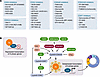
Cell-cycle dysregulation is a central driver of breast cancer progression and a major therapeutic vulnerability, particularly in hormone receptor–positive/human epidermal growth factor receptor 2–negative (HR+/HER2–) disease. The clinical success of cyclin-dependent kinase (CDK) 4/6 inhibitors combined with endocrine therapy has transformed treatment paradigms and established cell-cycle targeting as a cornerstone of care. However, important challenges remain, including hematologic toxicity, incomplete and largely cytostatic responses, and the near-universal development of resistance. These limitations have highlighted the need for next-generation CDK-directed strategies capable of improving selectivity, extending disease control, and overcoming adaptive escape pathways. This Review examines the evolving landscape of CDK-targeted therapeutics in breast cancer, with particular emphasis on emerging CDK4-selective inhibitors, CDK2-directed approaches, and broader multi-CDK strategies. We discuss the biological rationale underpinning these agents, the mechanisms of resistance that have informed their development, and the clinical opportunities they may create across both advanced and early-stage settings. By refining target specificity and addressing resistance-associated cell-cycle rewiring, next-generation CDK inhibitors may reduce toxicity, enhance treatment durability, and enable more effective combination and sequencing strategies. Collectively, these advances promise to move breast cancer treatment beyond current CDK4/6 inhibition toward more precise, adaptable, and durable cell-cycle–directed therapy.
Authors
Daria Seriak, Jun Yong Kim, Geoffrey I. Shapiro, Antonio Giordano
Guidelines
The Editorial Board will only consider comments that are deemed relevant and of interest to readers. The Journal will not post data that have not been subjected to peer review; or a comment that is essentially a reiteration of another comment.
- Comments appear on the Journal’s website and are linked from the original article’s web page.
- Authors are notified by email if their comments are posted.
- The Journal reserves the right to edit comments for length and clarity.
- No appeals will be considered.
- Comments are not indexed in PubMed.
Specific requirements
- Maximum length, 400 words
- Entered as plain text or HTML
- Author’s name and email address, to be posted with the comment
- Declaration of all potential conflicts of interest (even if these are not ultimately posted); see the Journal’s conflict-of-interest policy
- Comments may not include figures


Copyright © 2026 American Society for Clinical Investigation
ISSN: 0021-9738 (print), 1558-8238 (online)