
Research Article

Abstract
Stem cells are critical for the homeostasis of adult tissues. Thyroid hormone (TH), whose intracellular concentration is increased by type 2 deiodinase (D2), is involved in many functions, but its role in quiescence is unknown. Here, we show that D2 marks quiescent stem cells in muscle and skin. Genetic D2 depletion in quiescent muscle stem cells triggered their transition from a G0 to a GAlert-like state. This increased the proliferative potential of the stem cells but impaired their self-renewal capacity, leading to depletion of the stem cell pool and regenerative failure over time. Mechanistically, TH sustained Notch signaling, and active Notch overexpression partially rescued D2 depletion. Transient pharmacological inhibition of D2 accelerated muscle regeneration and skin wound healing by promoting stem cell expansion. In conclusion, we show that D2 is a critical metabolic enzyme in maintaining stem cell quiescence and in regulating self-renewal.
Authors
Maria Angela De Stefano, Raffaele Ambrosio, Cristina Luongo, Tommaso Porcelli, Daniela Di Girolamo, Caterina Miro, Monica Dentice, Caterina Missero, Domenico Salvatore

Abstract
PRC2/EZH2 inhibitors (PRC2i/EZH2i) are promising for the treatment of advanced cancers including metastatic prostate cancer. Here, we show that PRC2i/EZH2i alone or in combination with androgen receptor (AR) inhibitors induced diverse cell state programs (CSPs) (e.g., response to stress or IFN, MYC targets, stem cells, EMT lineage plasticity, and multiple developmental programs), which led to increased tumor cell invasion, metastasis, and resistance to other drugs, in addition to modest suppression of tumor growth. In contrast to the current perception, our comprehensive, integrated genomics and epigenomics profiling of patient-derived xenografts (PDXs) and clinical tumors revealed that PRC2/EZH2 suppressed CSP genes by maintaining chromatin bivalency. Hyperactive Wnt/β-catenin signaling and inhibitors of polycomb-repressive complex 2/enhancer of zeste homolog 2 (PRC2/EZH2) and the AR alter chromatin bivalency through antagonism of PRC2 and stimulation of MLL2/KMT2B in a feed-forward manner. The circadian rhythm regulator REV-ERBα unexpectedly reprogrammed β-catenin in promoting bivalency resolution and CSP gene expression. Dual targeting of Wnt/β-catenin and EZH2 diminished diverse cell states by restoring bivalency and effectively blocked tumor growth. Our findings provide unexpected insights into chromatin bivalency and dysregulated circadian rhythms in the control of cell state diversity and identify alternative therapeutic strategies that target PRC2/EZH2 for advanced malignancies.
Authors
Yatian Yang, Xiong Zhang, Varadha Balaji Venkadakrishnan, Hongye Zou, Xingling Zheng, Shiyao Guo, Christopher Z. Chen, Alexander D. Borowsky, Eva Corey, Ronald M. Evans, Allen C. Gao, Marc A. Dall’Era, Amina Zoubeidi, Primo N. Lara, Hsing-Jien Kung, Xinbin Chen, Himisha Beltran, Hong-Wu Chen

Abstract
Interstitial lung disease (ILD) is a major cause of morbidity and mortality in systemic sclerosis (SSc); however, the immunopathologic mechanisms driving lung disease in SSc are unclear. T cells have been implicated as a likely driver of lung injury in SSc. Here, we evaluated T cells in the blood of patients with SSc-ILD and identified a specific population of cytotoxic CD8+ T cells that was expanded in patients with SSc-ILD. Cytotoxic effector memory CD8+ T cells marked by CD57 expression were preferentially expanded in patients with SSc-ILD compared with patients with SSc but no ILD and control individuals and showed prominent clonal expansion. These CD57+ T effector memory (Tem) cells differed from T effector memory cells reexpressing CD45RA (Temra) transcriptomically and functionally, with cytotoxic function that was enhanced by CD155 engagement of the costimulatory receptor CD226. We performed immunostaining of lung tissue samples obtained from independent patients with SSc-ILD (biopsy or explant) and confirmed the presence of CD57+ Tem cells. In parallel, we analyzed publicly available lung scRNA-seq datasets from multiple ILD cohorts and identified endothelial cells as a likely source of CD155 for the activation of CD57+ cytotoxic T cells. Together, the results implicate a CD57+ cytotoxic CD8+ T cell population as a potential mediator of lung injury in SSc-ILD.
Authors
Takanori Sasaki, Ye Cao, John M. Sowerby, Kazuhiko Higashioka, Kathryne E. Marks, Mehreen Elahee, Mari Kamiya, Paul F. Dellaripa, Richard I. Ainsworth, Kimberly E. Taylor, Nunzio Bottini, Paul Wolters, Edy Y. Kim, Francesco Boin, Deepak A. Rao
Abstract
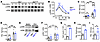
Osteofibrous dysplasia (OFD) is a skeletal RASopathy presenting with periosteal bone lesions that may progress to fracture and delayed healing (pseudarthrosis). MET gene mutations reducing ubiquitin-mediated protein degradation via loss of the juxtamembrane domain (METΔJMD) were previously identified in patients with OFD, resulting in ligand-dependent gain of function. The effect of METΔJMD expression on skeletal progenitor cell differentiation and the potential efficacy of targeted therapies remain unclear. We engineered MetΔJMD mice and showed that MetΔJMD expression inhibited osteogenic differentiation of skeletal progenitor cells in vitro and impaired cortical bone development and reduced bone stiffness in vivo. In contrast, conditional deletion of Met enhanced osteogenic differentiation of periosteal progenitor cells. Inhibition of MAPK signaling with MEK inhibitors restored osteogenic differentiation of mouse MetΔJMD skeletal progenitor cells and promoted the activation of transcriptional signatures associated with skeletal development and osteoblast differentiation in pseudarthrosis-derived primary cells from patients with OFD. With this preclinical support, we treated with the MEK inhibitor mirdametinib a pediatric patient with OFD who had a 3-year history of persistent pseudarthrosis, resulting in fracture union. Our findings demonstrate a bidirectional role for MET in regulating osteogenic differentiation of skeletal progenitor cells and a therapeutic avenue to improve clinical outcomes for this and potentially other skeletal RASopathies.
Authors
Aysha B. Khalid, Kristin Denton, Nandina Paria, Ila Oxendine, Meghan Wassell, Reuel Cornelia, Sasidhar Uppuganti, Jeffry S. Nyman, G. Jayashree Jagadeesh, Carlos R. Ferreira, Simon J. Conway, Robert E. Hammer, John Ritter, Mylinh Nguyen, David A. Podeszwa, Laura J. Klesse, Carol A. Wise, Jonathan J. Rios

Abstract
Huntington’s disease (HD) is a fatal neurodegenerative disorder characterized by progressive motor dysfunction, cognitive decline, and striatal neuron degeneration, primarily affecting medium spiny neurons (MSNs). Despite extensive research, the underlying metabolic vulnerabilities contributing to HD pathogenesis remain poorly understood. In this study, we employed RNA-seq and metabolomics analyses to identify marked dysregulation of 1-carbon metabolism in HD. We validated that SHMT2, a key mitochondrial enzyme in the mitochondrial 1-carbon pathway, was substantially downregulated in HD patient–derived iPSC-differentiated human striatal organoids (hSOs) and YAC128 mice. Functionally, pharmacologic inhibition or genetic deletion of SHMT2 exacerbated mutant huntingtin aggregation, induced MSN degeneration in hSOs, and impaired motor function in WT mice. Conversely, SHMT2 overexpression attenuated MSN degeneration in HD-hSOs and improved motor performance in YAC128 mice. Mechanistically, SHMT2 deficiency led to accumulation of homocysteine, which interacted with AARS1 and suppressed histone lactylation, thereby perturbing transcriptional regulation and associating with neurodegenerative phenotypes. Finally, we demonstrated that the HD clinical drug haloperidol modulated SHMT2 expression and restored histone lactylation, providing a pharmacologic tool to probe SHMT2-dependent metabolic and epigenetic regulation in HD models. These findings highlight a metabolic-epigenetic axis as a promising therapeutic target for HD.
Authors
Mingqin Lu, Kexin Li, Shanshan Wu, Zhilong Zheng, Xinyue Li, Shengda Wang, Hanwen Yu, Chunyue Liu, Yueqing Jiang, Xueqin Song, Yan Liu, Xing Guo
Abstract
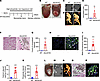
Pseudoxanthoma Elasticum (PXE) is a rare disease caused by loss of function of the ATP-binding cassette C (ABC) member 6 (Abcc6) gene and characterized by ectopic calcification of multiple tissues, but the physiological reasons underlying ectopic calcification in PXE remain unclear. In a murine model of Abcc6-deficient PXE in which animals developed robust cardiac calcification after heart injury, we show the critical importance of the liver in mediating ectopic cardiac calcification. Tissue-specific deletion of Abcc6 in the liver, but not in the heart, was sufficient to cause post-injury cardiac calcification. Metabolomics and gene expression analysis demonstrated deficiencies in nucleotide metabolism, cellular energetics, and defects in cellular respiration underlying ectopic calcification in PXE. Functional abnormalities in cellular respiration in the injured heart were similar in animals with global or liver-specific Abcc6 deficiency, showing that hepatic Abcc6 expression regulated cellular respiration in the injured heart. We show that ectopic calcification in PXE was primarily dystrophic and that treatment with clodronate or etidronate, which prevent the growth of calcium hydroxyapatite mineralization, was sufficient to rescue the phenotype of ectopic cardiac calcification in Abcc6-deficient states. Taken together, these observations highlight the role of the liver in regulating target tissue metabolic and mitochondrial function in causing ectopic calcification in Abcc6-deficient states.
Authors
Yijie Wang, Baiming Sun, Feiyang Ma, Bo Tao, Yiqian Gu, Zhiqiang Zhou, Jason Kim, Linlin Zhang, Zhihao Liu, Johanna ten Hoeve, Linsey Stiles, Lucia Fernandez del Rio, Calvin Pan, Orian Shirihai, Shili Xu, Thomas G. Graeber, Tamer Sallam, Matteo Pellegrini, Aldons J. Lusis, Arjun Deb

Abstract
Dominant-inactivating mutations in the colony stimulating factor-1 receptor (CSF1R) cause CSF-1R–related leukoencephalopathy (CRL), an adult-onset neurodegenerative disease that is modeled in the Csf1r+/– mouse. CRL is caused by microglial dysfunction. However, the primary microglial deficit is unknown. To address this question, we employed single-nucleus RNA sequencing of brains from young Csf1r+/– mice without pathological or behavioral alterations. Reduction of CSF-1R signaling caused metal ion accumulation in brain macrophages, with concomitant activation of cell death and stress response pathways in oligodendrocytes and neuronal subpopulations. Reduction of metallothionein 1 (Mt1) and 3 (Mt3) gene expression was a common feature in glial and neuronal cells of Csf1r+/– mice. Overexpression of Mt1 restored metal ion homeostasis, normalized ROS production in microglia, and prevented the development of behavioral deficits, while Mt3 deletion had disease-enhancing effects. These findings demonstrate CSF-1R regulation of metal ion homeostasis via metallothioneins in the brain.
Authors
Violeta Chițu, Julia Alvarenga, Wenna Chen, David Reynolds, Yang Liu, Daqian Sun, Anders Sandell, Virginjia Danylaité-Karrenbauer, Per Uvdal, Iran A.N da Silva, Christophe Sandt, Oxana Klementieva, Ulf Johansson, Kavitha Subramanian Vignesh, Zbigniew K. Wszolek, Dennis W. Dickson, Jennifer T. Aguilian, Simone Sidoli, Deyou Zheng, E. Richard Stanley

Abstract
Immune evasion is a major obstacle in pancreatic cancer therapy. Recent data implicate proinflammatory macrophages in the progression of pancreatic ductal adenocarcinoma (PDAC) and its therapeutic response. However, whether or which of the proinflammatory macrophage subtypes play a crucial role in the immune escape of PDAC remains unclear. Here, we identify a population of CD138+ tumor-associated macrophages (TAMs), characterized by their proinflammatory and neutrophil-chemotactic activity, which undergo significant expansion in both patients with PDAC and mouse models. These cells are elicited by a local synergy between IL-34/syndecan-1 and PGE2/EP2 signaling and are associated with immune evasion and poor clinical outcomes in patients, while also promoting immune escape and disease progression in mouse models. Mechanistically, CD138+ TAMs establish a feed-forward loop with immunosuppressive Siglec-F+ neutrophils, which exhibit elevated PGE2 expression, via the secretion of SAA3 and CXCL1. Targeting CD138+ TAMs by disrupting IL-34/syndecan-1 signaling with anti–IL-34 neutralizing antibodies significantly suppressed PDAC progression, especially when combined with anti–PD-1 antibodies. Together, our study elucidates a CD138+ TAM/Siglec-F+ neutrophil axis that drives immune escape in PDAC and proposes a therapeutic strategy that integrates IL-34/syndecan-1 signaling blockade with anti–PD-1 immunotherapy for the treatment of PDAC.
Authors
Chao Wang, Qi Zhang, Jinyan Huang, Fangyu Lin, Danyang Zhao, Youling Mu, Junshuo Tong, Jinping Li, Yingjiqiong Liang, Tao Zeng, Fukang Shi, Hang Shen, Tingting Lu, Tingbo Liang
Abstract
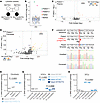
High levels of l- and d-2-hydroxyglutarate (2HG), the reduced forms of α-ketoglutarate (αKG), are implicated in neurodevelopmental disorders and cancer by modulating αKG-dependent dioxygenases involved in histone, DNA, and RNA demethylation. L-2HG dehydrogenase (L2HGDH) deficiency, a rare autosomal recessive inborn error of metabolism associated with systemic L-2HG elevation, causes progressive neurological disability and increased brain tumor risk of unclear mechanism. Using an isogenic, patient-derived induced pluripotent stem cell system, we examined the impact of L2HGDH deficiency on neural progenitor cell (NPC) function and neuronal differentiation. L2HGDH deficiency caused L-2HG accumulation, NPC hyperproliferation, increased clonogenicity, and defective neuronal differentiation in 2D cultures and cortical spheroids. Editing the L2HGDH locus to WT reversed these effects. Inhibiting glutaminase reduced L-2HG levels and induced neuronal differentiation. L-2HG–dependent inhibition of KDM5 histone demethylases led to widespread retention of H3K4me2/3, markers of active gene expression, with prominent enrichment at the MYC locus and elevated MYC expression across multiple neural cell types. Despite broadly altered histone methylation, genetically or pharmacologically normalizing MYC completely restored neuronal differentiation. These data indicated that a primary metabolic disturbance activated MYC to favor self-renewal and suppress neuronal lineage commitment.
Authors
Wen Gu, Xun Wang, Ashley Solmonson, Ling Cai, Yi Xiao, Alpaslan Tasdogan, Jordan Franklin, Yuannyu Zhang, Hua Zhang, Aundrea K. Westfall, Ashley Rowe, Hetali Trivedi, Brandon Faubert, Zheng Wu, Jessica Sudderth, Lauren G. Zacharias, Bushra Afroze, Ilya Bezprozvanny, Sunil Sudarshan, Feng Cai, Samuel K. McBrayer, Thomas P. Mathews, Ralph J. DeBerardinis

Abstract
N6-methyladenosine (m6A) is a prevalent modification of mammalian mRNA. Increasing evidence has documented diverse roles of m6A in normal cell physiology and diseases. However, its functional role in erythropoiesis remains poorly understood. In this study, we found that deletion of Mettl3 using the EpoR-Cre mouse led to microcytic/hypochromic anemia due to defective erythropoiesis along with impaired hemoglobin biosynthesis. Mechanically, Mettl3 deficiency disrupted nucleotide biosynthesis, which induced DNA damage, leading to apoptosis of colony-forming unit–erythroid cells and cell-cycle arrest of erythroblasts. Integrated m6A-seq and RNA-seq analysis along with biochemical studies identified Mthfd1, a key enzyme involved in nucleotide biosynthesis, as a Mettl3 direct target gene. Furthermore, deletion of Mettl3 led to decreased expression of Mthfd1, accompanied by a shortage of nucleotides deoxythymidine monophosphate and inosine monophosphate, in erythroid cells. Additionally, inhibition of METTL3 in human erythroid cells led to similar phenotypic and molecular changes, indicating a conserved role of METTL3 in human and murine erythropoiesis. Our findings have identified an METTL3-m6A-MTHFD1 axis that plays a critical role in erythropoiesis by maintaining genome stability of erythroid cells via regulation of nucleotide biosynthesis. These findings provide important insights into the regulatory mechanisms of erythropoiesis and may have implications for underlying the mechanisms of anemias.
Authors
Linlin Zhang, Huizhi Zhao, Shihui Wang, Xueting Wu, Donghao Liu, Hengchao Zhang, Qianqian Yang, Ying Cheng, Xiuyun Wu, Jiangwei Zhao, Shijie Zhang, Huan Zhang, Haojian Zhang, Qiaozhen Kang, Lixiang Chen, Xiuli An, Xiaoli Qu
No posts were found with this tag.


Copyright © 2026 American Society for Clinical Investigation
ISSN: 0021-9738 (print), 1558-8238 (online)