
Advertisement
Review Series
Open Access |  10.1172/JCI194740
The science of safety: adverse effects of GLP-1 receptor agonists as glucose-lowering and obesity medications
Ryan J. Jalleh,1,2 Nicholas J. Talley,3 Michael Horowitz,1,2 and Michael A. Nauck4,5
1Endocrine and Metabolic Unit, Royal Adelaide Hospital, Adelaide, Australia.
2Adelaide Medical School, The University of Adelaide, Adelaide, Australia.
3School of Medicine and Public Health, College of Health, Medicine and Wellbeing, University of Newcastle, Callaghan, New South Wales, Australia.
4Diabetes, Endocrinology, Metabolism Section, Medical Department I, Katholisches Klinikum Bochum gGmbH, Sankt Josef-Hospital, Ruhr-University, Bochum, Germany.
5Institute for Clinical Chemistry and Laboratory Medicine, University Medicine Greifswald, Greifswald, Germany.
Address correspondence to: Michael A. Nauck, Diabetes, Endocrinology, Metabolism Section, Medical Department I, Katholisches Klinikum Bochum gGmbH, Sankt Josef-Hospital, Ruhr-University, Gudrunstraße 56, 44791 Bochum, Germany. Email: michael.nauck@rub.de.
Find articles by
Jalleh, R.
in:
PubMed
|
Google Scholar
|

1Endocrine and Metabolic Unit, Royal Adelaide Hospital, Adelaide, Australia.
2Adelaide Medical School, The University of Adelaide, Adelaide, Australia.
3School of Medicine and Public Health, College of Health, Medicine and Wellbeing, University of Newcastle, Callaghan, New South Wales, Australia.
4Diabetes, Endocrinology, Metabolism Section, Medical Department I, Katholisches Klinikum Bochum gGmbH, Sankt Josef-Hospital, Ruhr-University, Bochum, Germany.
5Institute for Clinical Chemistry and Laboratory Medicine, University Medicine Greifswald, Greifswald, Germany.
Address correspondence to: Michael A. Nauck, Diabetes, Endocrinology, Metabolism Section, Medical Department I, Katholisches Klinikum Bochum gGmbH, Sankt Josef-Hospital, Ruhr-University, Gudrunstraße 56, 44791 Bochum, Germany. Email: michael.nauck@rub.de.
Find articles by
Talley, N.
in:
PubMed
|
Google Scholar
|
1Endocrine and Metabolic Unit, Royal Adelaide Hospital, Adelaide, Australia.
2Adelaide Medical School, The University of Adelaide, Adelaide, Australia.
3School of Medicine and Public Health, College of Health, Medicine and Wellbeing, University of Newcastle, Callaghan, New South Wales, Australia.
4Diabetes, Endocrinology, Metabolism Section, Medical Department I, Katholisches Klinikum Bochum gGmbH, Sankt Josef-Hospital, Ruhr-University, Bochum, Germany.
5Institute for Clinical Chemistry and Laboratory Medicine, University Medicine Greifswald, Greifswald, Germany.
Address correspondence to: Michael A. Nauck, Diabetes, Endocrinology, Metabolism Section, Medical Department I, Katholisches Klinikum Bochum gGmbH, Sankt Josef-Hospital, Ruhr-University, Gudrunstraße 56, 44791 Bochum, Germany. Email: michael.nauck@rub.de.
Find articles by
Horowitz, M.
in:
PubMed
|
Google Scholar
|
1Endocrine and Metabolic Unit, Royal Adelaide Hospital, Adelaide, Australia.
2Adelaide Medical School, The University of Adelaide, Adelaide, Australia.
3School of Medicine and Public Health, College of Health, Medicine and Wellbeing, University of Newcastle, Callaghan, New South Wales, Australia.
4Diabetes, Endocrinology, Metabolism Section, Medical Department I, Katholisches Klinikum Bochum gGmbH, Sankt Josef-Hospital, Ruhr-University, Bochum, Germany.
5Institute for Clinical Chemistry and Laboratory Medicine, University Medicine Greifswald, Greifswald, Germany.
Address correspondence to: Michael A. Nauck, Diabetes, Endocrinology, Metabolism Section, Medical Department I, Katholisches Klinikum Bochum gGmbH, Sankt Josef-Hospital, Ruhr-University, Gudrunstraße 56, 44791 Bochum, Germany. Email: michael.nauck@rub.de.
Find articles by
Nauck, M.
in:
PubMed
|
Google Scholar
|
Published February 16, 2026 - More info
J Clin Invest. 2026;136(4):e194740. https://doi.org/10.1172/JCI194740.
© 2026 Jalleh et al. This work is licensed under the Creative Commons Attribution 4.0 International License. To view a copy of this license, visit http://creativecommons.org/licenses/by/4.0/.

Among the two incretin hormones, glucose-dependent insulinotropic polypeptide (GIP) and glucagon-like peptide-1 (GLP-1), the latter has been established as having therapeutic potential for reducing elevated plasma glucose (1, 2) and body weight (3), while the former has been unable to either stimulate insulin secretion (1) or lower plasma glucose effectively in type 2 diabetes (T2D) (4). Therefore, GLP-1 became the parent compound for the development of GLP-1 receptor agonists (GLP-1RAs) (5–7). GLP-1 acts through a class 2 member of the G-coupled protein C receptor family seven-transmembrane receptor (GLP-1R) (8), which is mainly expressed in pancreatic islets, the brain, and the gastrointestinal (GI) tract (9–12), and less prominently in the kidney and eyes (11–13). This class of drugs is now used widely, with beneficial GLP-1R–mediated effects on body weight and glycemic control, as well as their cardio-renal complications (7, 14). The stimulation of GLP-1R, however, may also elicit adverse events. The focus of this Review is on adverse events associated with the treatment with selective GLP-1RAs, or with the dual-targeted GIP receptor agonist (GIPRA)/GLP-1RA tirzepatide, the overall treatment uptake, adherence, and persistence of which have been suboptimal. We discuss adverse events of specific interest observed with these therapies (and their potential underlying mechanisms), including GI side effects, psychiatric, ocular, thyroid, biliary, and pancreatic complications (Table 1).

-
GI side effects
A recent systematic review of 39 randomized controlled trials of GLP-1RAs showed a class effect of increased risks of nausea, vomiting, diarrhea and constipation compared with placebo (15) in individuals without diabetes. For the newer-generation therapies there was increased risk of nausea compared with placebo: semaglutide relative risk (RR) 2.95 (95% CI 2.61–3.32), tirzepatide RR 2.90 (95% CI 2–4.19), and orforglipron RR 4.77 (95% CI 2.02–11.31). In another systematic review that included individuals with T2D from 38 phase III or IV placebo-controlled randomized controlled trials with GLP-1RA–based therapy (16), nausea was reported in 19.3% of participants with active treatment versus 6.5% with placebo, and vomiting was reported in 7.6% of participants versus 2% with placebo. The odds ratios (vs. placebo treatment) for nausea and vomiting were similar for various compounds/preparations of GLP-1RA–based medications, while intended effect sizes (glycemic control and body weight reduction) varied widely (Table 2). More elaborate dose escalation regimens were associated with greater efficacy,
GI adverse events not infrequently lead to discontinuation of drug treatment, both in randomized clinical trials (16, 17) and in real-world practice (18, 19). In a systematic review of randomized clinical trials, 6.5% of those using a GLP-1RA discontinued it due to adverse events versus 3.6% of those on placebo (16), but these rates appear to be higher in observational studies where factors associated with discontinuation were an age of 65 years or older and GI adverse events with treatment (21). In the longer-term trials that reported individual adverse event categories associated with discontinuation of drug treatment, nausea was shown to be the leading cause of discontinuation, followed by vomiting and diarrhea, with much lower risks associated with constipation, abdominal discomfort, or pain (Table 3). It is possible that optimizing dose escalation schedules will improve tolerability, and this should be further explored in future studies (20). In a recent phase II trial with subcutaneous semaglutide, when doses were escalated relatively rapidly to 16 mg weekly, participants experienced additional weight loss, but at the expense of more adverse effects (21). However, it should be appreciated that a substantial proportion (>50%) of the participants did not report any GI adverse events, indicating that those individuals may be able to tolerate even higher doses. More individualized approaches to dose escalation may be needed to maximize the therapeutic potential for those who tolerate GLP-1RAs well, and to minimize the frequency and severity of adverse events in those who are more susceptible.
Does GIPR agonism improve GLP-1RA tolerance? Tirzepatide, a coagonist of GIPR and GLP-1R, is characterized by greater efficacy in both glucose lowering and weight loss than can be achieved with current selective GLP-1RAs (16), while having a comparable adverse event profile. In animal experiments involving shrews (which are able to vomit), GLP-1RAs elicit frequent episodes of vomiting, while GIPRAs do not. Moreover, the GIPRA GIP-085 almost totally prevented vomiting induced by a long-acting GLP-1RA GLP-140 (22). In an exploratory clinical trial, a long-acting GIPRA tended to reduce GI adverse events in response to rapidly escalated liraglutide in healthy individuals (23). In the SURPASS-2 trial, tirzepatide at doses of 5, 10, and 15 mg/week were compared with 1 mg/week semaglutide, and the 5 mg/week tirzepatide dose was found to be only slightly more effective than semaglutide in reducing both HbA1c (–2.01% vs. –1.86%) and body weight (–7.6 vs. –5.7 kg). Under these conditions, overall GI adverse events were, however, only slightly less prevalent with tirzepatide (40.0% vs. 43.0%), with minor differences in favor of tirzepatide for nausea (17.4% vs. 19.2%) and vomiting (5.7% vs. 8.1%), and, less so, diarrhea (13.2% vs. 13.7%) (24). In the systematic review of clinical trials mentioned above, tirzepatide conferred the greatest risk of vomiting, RR 13.23 (95% CI 4.85–36.09), whereas the risks for semaglutide (RR 4.21 [95% CI 3.58–4.95]) and orforglipron (RR 4.43 [95% CI 1.45–13.56]) were similar (15). Moreover, in a recent large cardiovascular outcomes trial (SURPASS-CVOT), numerically higher proportions of participants taking tirzepatide (15 mg weekly) reported nausea, vomiting, and diarrhea compared with those taking the selective GLP-1RA dulaglutide (1.5 mg weekly) (25). Although comparisons between tirzepatide and higher doses of dulaglutide (e.g., 4.5 mg) have yet to be done, these data argue against the concept that GIP coagonism can reduce the risk of GI adverse events. With the advent of dual and triple agonists stimulating additional receptors of gastro-entero-pancreatic peptide hormones with therapeutic potential, there is the possibility of altered adverse event profiles. Table 4 summarizes potential effects of combined stimulation of receptors for GIP, glucagon, amylin, and peptide YY on adverse events.
Assessment of GI symptoms. In the vast majority of trials, symptoms are evaluated by participant “self-report” that, while simple, has major limitations (26). Firstly, in the absence of a standardized questionnaire providing precise definitions of terms describing individual adverse effects, symptoms are likely to be perceived differently by participants. For example, uncomfortable fullness has the potential to be reported as nausea by one participant, but not another. Therefore, precise definitions, in terms understandable to laypeople, are required. Secondly, with self-reporting of symptoms there may be the expectation of adverse GI side effects (i.e., the nocebo effect). Thirdly, GI symptoms are common in healthy adults, with a greater frequency in individuals with diabetes even if they are not using a GLP-1RA, and these symptoms characteristically fluctuate (27). Therefore, changes in GI symptoms should also be quantified, rather than simply assessing their presence or absence. The ideal subject-reported outcome instrument would employ precise definitions for each symptom and their degree of severity, provide reliable inter-interviewer reproducibility, and be sensitive to the detection of changes in symptoms following initiation of the drug and any subsequent dose changes. In the assessment of treatment outcomes in functional GI disorders such as irritable bowel syndrome (28), the US Food and Drug Administration (FDA) and European Medicine Agency (EMA) have mandated the use of validated questionnaires. We believe that it would be beneficial for a validated instrument to be developed for the evaluation of GI adverse effects in GLP-1RA trials. Table 3 and Supplemental Table 1 represent preliminary examples of the proposed content for such instruments. In the interim, it should be appreciated that several instruments have been used widely in the evaluation of symptoms associated with GI disorders, including the Bowel Disease Questionnaire (BDQ) (29), a comprehensive questionnaire with 71 precisely defined questions. Derived from the BDQ is the Diabetes Bowel Symptom Questionnaire, which also contains items specific for diabetes and its complications (30). Both of these questionnaires, are, however, time-consuming for the participant to complete. Abbreviated instruments include the patient assessment of upper GI symptom severity index (PAGI-SYM) (31), the diabetic gastroparesis symptom severity diary (32), the gastroparesis cardinal symptom index (GCSI) (31), and the Nepean Dyspepsia Index (33). We believe that future trials should adopt such instruments and not rely on participant self-reporting of GI symptoms.


-
Adverse consequences of motility effects of GLP-1RAs
In one study, the incidence of retained gastric contents in individuals using a GLP-1RA was 56%, compared with 19% for those not using GLP-1RAs (34), although notably there were more individuals with T2D and obesity in the group treated with GLP-1RAs. Supplemental Table 2 summarizes information relating to the risk for retained gastric contents and aspiration in association with upper GI endoscopy.
Three systematic reviews analyzing the risk of retained gastric contents causing premature termination of endoscopy have been published. Baig et al. (35) and Facciorusso et al. (36) reported an increased risk (odds ratios 4.5 and 5.6, respectively) for premature termination among individuals taking GLP-1RAs, while Singh et al. reported an even greater risk (odds ratio 13.9) (37). Importantly, none of these reviews identified an increased risk of aspiration pneumonia. However, it should be appreciated that this severe complication is rare and the risk is also less with endoscopy compared with surgical procedures that require general anesthesia (38). Population-based studies have reported mixed findings on the potential association between GLP-1RA use and aspiration pneumonia (39–44). Furthermore, a systematic review of randomized controlled trials and observational studies also failed to identify an increased risk of aspiration pneumonia in GLP-1RA users, although an increased risk of retained gastric contents was evident (45). In summary, GLP-1RA therapy is clearly associated with a substantially increased risk of retained gastric contents, but there is little evidence to suggest that this translates to an increased incidence of aspiration pneumonia.
Potential risks of retained gastric content and pulmonary aspiration have predictably raised the question as to whether GLP-1RA treatment should be discontinued or modified before procedures associated with such risk. Multi-society consensus guidelines have, in general, recommended an individualized approach toward the decision to withhold GLP-1RA therapy (46). For agents with a long elimination half-life (6, 7), typically used at more than 10 times higher than physiological concentrations, such periods probably would need to be much longer than a week. The maximum duration of any of the few studies in which a good technique has been used to quantify emptying (usually scintigraphy) is 16 weeks, and while the magnitude of the delay in emptying at that time point was not as marked as at 5 weeks, it was substantial in some cases (47). Other strategies have been suggested to reduce the risk of retained gastric contents. First, it has been observed that individuals on GLP-1RAs undergoing both endoscopy and colonoscopy had a much lower risk of retained gastric contents, suggesting that a prolonged period on a clear liquid diet may reduce this risk (48). Second, intravenous erythromycin (200 mg), which has been shown to abolish the slowing of gastric emptying by acute intravenous GLP-1 infusion (49), may represent a treatment for individuals identified at having retained gastric content via ultrasonography (50).
Central and peripheral mechanisms underlying GI symptoms. Nausea, vomiting, and diarrhea in association with GLP-1RA treatment are often referred to as GI adverse events, implying that they predominantly represent the expression of an altered GI functional state. Indeed, GLP-1R agonism slows gastric emptying (51, 52) and suppresses small intestinal motility (53). However, an alternative explanation, albeit not mutually exclusive, is direct interaction of GLP-1RAs with GLP-1R in brain regions such as the brainstem (area postrema, nucleus tractus solitarii), which are not protected by the blood-brain barrier, and are typically involved in medication-induced nausea (chemosensitive area) (54–56). Peripheral GLP-1/GLP-1RAs may also interact with the CNS indirectly by GLP-1R expressed on vagal afferent fibers, signaling via nodose ganglia (57) to the nucleus tractus solitarii within the brainstem. The nucleus tractus solitarii projects to multiple regions of the CNS involved in the regulation of appetite, including the hypothalamus, ventral tegmental area, lateral parabrachial nucleus, and nucleus accumbens (58, 59). Preclinical studies also indicate that tanycytes, specialized glial cells within the CNS, may facilitate the transportation of peripheral GLP-1RAs, such as semaglutide, into the CNS, bypassing the blood-brain barrier to access appetite-regulating hypothalamic regions such as the arcuate nucleus (60, 61). Importantly, there are central pathways that result in a reduction in energy intake without the induction of nausea (62). The mechanisms underlying the effect of GLP-1RAs on GI motility and symptoms like nausea and vomiting are summarized in Figure 1.
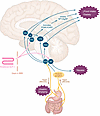 Figure 1
Central mechanisms by which peripheral GLP-1RAs may reduce appetite or induce nausea. Peripheral GLP-1 or GLP-1RAs may interact with appetite-regulating regions of the brain via gaps in the blood-brain barrier (27), via tanycyte uptake (32), or indirectly via the nodose ganglia (29). The effects to slow gastric emptying, induce nausea, and reduce energy intake are independent (34). AgRP, agouti-related peptide; AP, area postrema; ARC, arcuate nucleus; BBB, blood-brain barrier; CART, cocaine- and amphetamine-regulated transcript; H, hypothalamus; lPBN, lateral parabrachial nucleus; NAc, nucleus accumbens; NPY, neuropeptide Y; NTS, nucleus tractus solitarius; POMC, proopiomelanocortin; VTA, ventral tegmental area.
Biliary/pancreatic complications. In a systematic review of 55 double-blinded, placebo-controlled randomized clinical trials, GLP-1RA treatment was associated with an increased risk of cholelithiasis compared with placebo (RR 1.46, 95% CI 1.09–1.97) but not cholecystitis, cholangitis, or pancreatitis (63). This contrasts with case reports of acute pancreatitis with the first approved GLP-1RA, exenatide b.i.d. (64). The case reports of pancreatitis prompted searches of adverse event–reporting databases (65), which indicated a substantially higher risk for acute pancreatitis with GLP-1RA treatment. These searches have been reproduced with almost identical results (66), leading to the definition of acute pancreatitis as an “adverse event of special interest” in clinical trials of GLP-1RAs. The first trial reporting detailed results on adjudicated cases of suspected acute pancreatitis was the LEADER trial comparing liraglutide and placebo in patients with T2D (18 cases in 4668 participants randomized to liraglutide treatment vs. 23 in 4672 with placebo treatment) (67). Because of the suspected association with acute pancreatitis, amylase and lipase were measured throughout this trial (and in other clinical studies). Surprisingly, liraglutide treatment elevated serum amylase and lipase activity in the majority of participants (68), but such elevations did not predict clinical acute pancreatitis. Subsequent meta-analyses of cardiovascular outcomes trials with GLP-1RAs have clearly excluded a causal role for GLP-1RAs in acute pancreatitis (63, 69, 70), while therapy with inhibitors of dipeptidyl peptidase-4 may lead to a minor elevation of this risk (69). In retrospect, the suspicion that GLP-1RAs provoke acute pancreatitis can be traced to the diagnostic criteria used for acute pancreatitis (two out of the following three features: severe upper abdominal pain radiating into the back, elevations in amylase and/or lipase, and typical results of imaging procedures) and that GLP-1RA therapy induces abdominal symptoms in a large number of patients, as well as elevations in amylase and/or lipase. Careful adjudication of suspected cases was necessary to scrutinize details of the symptomatic presentation, the degree of elevation on pancreatic enzymes, and the diagnostic specificity of imaging data (68). Alarming reports published in 2011 (65) led to widely discussed safety concerns, which transiently limited the use of GLP-1RAs for the treatment of T2D. These events attest to the potential of adverse event–reporting databases for bias when a serious concern has achieved prominence. The quest for robust pharmacovigilance for suspected adverse events with relatively novel drugs remains an important issue, and benefits and risks must be weighed when available evidence is limited.
-
Thyroid carcinomas
Medullary thyroid carcinoma became a concern because of alerts from animal experiments showing increased calcitonin secretion and growth (hyperplasia, adenomas, and carcinomas) of C cells in rodents following treatment with the long-acting GLP-1RA liraglutide (71). The presence of GLP-1R in the rodent thyroid gland and on rodent C cells had been shown earlier (72, 73). In contrast, in primate and human thyroids, GLP-1R has either not been detected (74) or only found in small fractions of healthy C cells (75), and treatment with liraglutide does not stimulate calcitonin secretion (76). On the other hand, most human medullary thyroid carcinomas and hyperplastic C cells express GLP-1R (75, 77) (Figure 2). Accordingly, a personal or family history of medullary thyroid carcinoma or multiple endocrine neoplasia type 2 (MEN2) represents a contraindication to the use of GLP-1RAs and are exclusion criteria for participation in clinical trials with GLP-1RAs. Recent health insurance data from France are indicative of an elevated risk of medullary thyroid carcinoma in individuals treated with GLP-1RAs versus other glucose-lowering agents (35 cases, hazard ratio [HR] 1.78 [95% CI 1.04–3.05]) (78). A meta-analysis of cardiovascular outcomes trials indicates that spontaneous medullary thyroid carcinomas have been diagnosed in patients receiving GLP-1RA (6 with active vs. 2 with placebo treatment) (79). These findings reinforce the “at-risk” status as a contraindication to GLP-1RA treatment, but given their low incidence, screening measures to facilitate early diagnosis of medullary thyroid carcinomas in GLP-1RA–treated individuals have not been established.
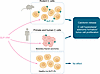 Figure 2
GLP-1Rs and thyroid C cells. GLP-1Rs are typically expressed in rodent C cells (83). Some GLP-1Rs are expressed in medullary thyroid cancer (85), but there are almost no GLP-1Rs are in healthy human/primary C cells (84). Accordingly, there may be an increased risk of medullary thyroid cancer with GLP-1RA use in susceptible individuals, but this may not be the case for healthy individuals.
Other histological types of thyroid carcinoma have not been examined as closely because less biological evidence exists for a convincing mechanism of action. GLP-1R has been detected in healthy thyroid cells other than C cells, as well as in some papillary thyroid cancers (75). A case-control study of health insurance data from France indicated an increased risk for thyroid carcinoma with GLP-1RA treatment, with an HR of 1.58 (95% CI 1.27–1.95) (78). In contrast, a Scandinavian cohort study using nationwide cancer registries found no association between GLP-1RA use and thyroid cancer (HR 0.93, 95 % CI 0.66–1.31) (80). Further information is needed before definitive recommendations can be made regarding GLP-1RA treatment in individuals with a family history of other thyroid cancers.
-
Retinopathy and other vision-related complications
Diabetic retinopathy. Subcutaneous semaglutide treatment led to an increased number of retinopathy complications in the SUSTAIN-6 cardiovascular outcomes trial (81). “Retinopathy complications” were defined as a composite of vitreous hemorrhage, onset of diabetes-related blindness, and a need for treatment with intravitreal injection or retinal photocoagulation, all serious clinical events. In this study, baseline retinopathy status had, perhaps surprisingly, not been assessed, and there were not any systematic follow-up examinations during the trial. Semaglutide predictably resulted in greater reductions in both plasma glucose and HbA1c concentrations than standard-of-care treatment. The observations in SUSTAIN-6 are predictable, given that intensified versus conventional insulin therapy is well known to have the capacity to precipitate initial worsening of retinopathy in patients with T2D with advanced preexisting retinopathy, as shown in the Diabetes Control and Complications Trial (82). However, in the longer term, retinopathy progression is slowed substantially with the improved glycemic control resulting from intensified insulin treatment (82) (Figure 3). Accordingly, a retrospective analysis of SUSTAIN-6 examined the role of preexisting advanced retinopathy and the induction of rapid reductions in plasma glucose and HbA1c and found retinopathy complications mainly in those with preproliferative or proliferative retinopathy at baseline who experienced a large reduction in HbA1c within 16 weeks after initiation of semaglutide (83). In SUSTAIN 1–5 and SUSTAIN 7, studies in which preexisting diabetic retinopathy and maculopathy were excluded, the rates of retinopathy were comparable across treatment groups (84). The same phenomenon was evident in those receiving other glucose-lowering medications (such as insulin or SGLT-2 inhibitors) as part of the standard of care (82, 85). A prospective trial focusing on the effects of semaglutide on retinopathy progression and complications (FOCUS) is ongoing (ClinicalTrials.gov NCT03811561; reporting in 2027) to further characterize risks and benefits associated with semaglutide treatment in T2D.
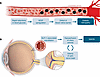 Figure 3
Hypothesized mechanisms for ocular complications associated with GLP-1RA therapy. In the eye, rapid reductions in glycemia due to GLP-1RA use may lead to the progression of diabetic retinopathy (A) or NAION (B). Figure based on Chou et al. (95) and Abdeen and le Roux (98).
Non-arteritic anterior ischemic optic neuropathy. Non-arteritic anterior ischemic optic neuropathy (NAION) is a potential, but rare cause of blindness among adults (86). The pathophysiology of this condition is incompletely understood but thought to be related to hypoperfusion of the optic nerve head leading to edema and infarction of optic nerve fibers (87, 88). Hathaway et al. reported in a cohort study (n = 16,827) that there was a higher risk of NAION in individuals prescribed semaglutide (HR 4.28) (89). Cai et al. subsequently confirmed this association in a large multicenter database study of 37.1 million adults, but the incidence was low at 14.5 per 100,000 person-years among semaglutide users, and there was only a modest increase in risk attributable to semaglutide (90). Grausland et al. in a 5-year longitudinal cohort study found a stronger association, reporting that semaglutide exposure more than doubled the risk of NAION (91). Fung et al. specifically examined those older than 65 years with T2D and also found an association between semaglutide and NAION (HR 1.39, 95% CI 1.13–1.72) (92). None of these studies have been able to establish causality, and complicated T2D and hypertension are known risk factors for NAION (93). The association may, therefore, reflect the higher presence of risk factors in semaglutide users rather than an effect of semaglutide. Furthermore, some studies have not found any increase in the risk of NAION in individuals using semaglutide or other GLP-1RAs (94, 95). Dedicated, prospective studies are required to confirm or refute this association, to clarify causality, and to determine whether there is a class effect with all GLP-1RAs. The mechanism(s) by which GLP-1RAs would cause NAION is also unclear, particularly as GLP-1RAs are associated with neuroprotective properties and reductions in ischemic risk (96), but it has been hypothesized to be related, like the exacerbation of retinopathy, to rapid improvements in glycemic control (Figure 3).
Article tools
- Download citation information
- Send a comment
- Terms of use
- Standard abbreviations
- Need help? Email the journal
Review Series
Clinical innovation and scientific progress in GLP-1 medicine
-
The science of safety: adverse effects of GLP-1 receptor agonists as glucose-lowering and obesity medications
-
GLP-1RA precision medicine in people with type 2 diabetes: current insights and future prospects
-
GLP-1 receptor agonists and cancer: current clinical evidence and translational opportunities for preclinical research
-
GLP-1 physiology and pharmacology along the gut-brain axis
-
The promise of GLP-1 receptor agonists for neurodegenerative diseases
-
GLP-1 and the cardiovascular system
-
GLP-1 agonists in the treatment of chronic kidney disease in type 2 diabetes and obesity
-
Antiinflammatory actions of glucagon-like peptide-1–based therapies beyond metabolic benefits
-
Signaling architecture of the glucagon-like peptide-1 receptor
Metrics
Go to
- Top
- Abstract
- GI side effects
- Adverse consequences of motility effects of GLP-1RAs
- Thyroid carcinomas
- Retinopathy and other vision-related complications
- Potential psychiatric complications GLP-1R agonism
- GLP-1 and adverse effects in specific populations
- Summary and outlook
- Funding support
- Supplemental material
- Acknowledgments
- Footnotes
- References
- Version history


Copyright © 2026 American Society for Clinical Investigation
ISSN: 0021-9738 (print), 1558-8238 (online)