
Clinical Research
Abstract
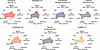
BACKGROUND The relationship between molecular subgroups in clear-cell renal cell carcinoma (ccRCC) and metastatic tropism is poorly understood.METHODS We analyzed over 5,000 metastatic sites from 305 treatment-naive ccRCC patients in the IMmotion150 phase II clinical trial, where patients were randomized to atezolizumab, atezolizumab/bevacizumab, or sunitinib.RESULTS Angiogenic tumors (clusters 1 and 2) had a higher rate of pancreatic (21% vs. 6.9%; P = 0.002) and lower absolute number of lymph node (2.5 vs. 4.2; P = 0.006) metastases. In contrast, proliferative tumors (clusters 4 and 5) exhibited a higher absolute number of lymph node metastases (5.5 vs. 3.5; P = 0.019). Patients with pancreatic metastases receiving sunitinib had higher odds of overall response (OR, 7.13; 95% CI, 1.81–28.07; P = 0.0049) and longer progression-free survival than those without pancreatic metastases (P = 0.02).CONCLUSION ccRCC metastatic tropism relates to molecular clusters that predict response to therapy for tumors that metastasize to the pancreas.TRIAL REGISTRATION ClinicalTrials.gov NCT01984242FUNDING NIH grants R01CA154475 and P50CA196516.
Authors
Gaelle Haddad, Junyu Guo, Yin Xi, Emin Albayrak, Mahrukh Huseni, Habib Hamidi, Romain Banchereau, Edward Kadel, Sarita Dubey, Corey Carter, Payal Kapur, James Brugarolas, Ivan Pedrosa
Abstract
Loss-of-function mutations in DNAJC6, encoding the co-chaperone auxilin (HSP40 family), cause familial juvenile-onset Parkinson’s disease (PD). Given the chaperone role of DNAJC6 in cellular homeostasis in adult neurons, we hypothesized that DNAJC6 dysfunction may not be limited to juvenile-onset disorders but could also be associated with adult-onset brain diseases. Here, we show that DNAJC6 expression is significantly downregulated in postmortem substantia nigra tissues and transcriptomic datasets from patients with late-onset sporadic PD. Consistently, human pluripotent stem cell–derived midbrain cultures exhibited reduced DNAJC6 expression under multiple PD-associated conditions. Mechanistically, DNAJC6 loss resulted from impaired transcription mediated by midbrain-specific factors NURR1/FOXA2 and reduced protein stability regulated by LRRK2. Beyond neurons, DNAJC6 was robustly expressed in astrocytes and similarly downregulated in sporadic PD contexts. Astrocytic DNAJC6 deficiency impaired phagocytic, autolysosomal, and mitochondrial functions while promoting a pro-inflammatory phenotype, thereby exacerbating neurodegenerative pathology. Importantly, epigenetic restoration of DNAJC6 in neurons and astrocytes using a CRISPRa-AAV9 system in the substantia nigra of an α-synuclein–induced PD mouse model alleviated behavioral deficits and neuropathology. These findings provide evidence that DNAJC6 dysregulation is associated with pathogenic processes in sporadic PD and suggest that targeting neuronal and astrocytic DNAJC6 could represent a potential disease-modifying strategy.
Authors
Wahyu Handoko Wibowo Darsono, Yeongran Hwang, Erica Valencia, Leonardo Tejo Gunawan, Seung Jae Hyeon, Hoon Ryu, Thor D. Stein, Mi-Yoon Chang, Noviana Wulansari, Sang-Hun Lee
Abstract
BACKGROUND. Current diagnosis and surveillance of bladder cancer relies on cystoscopy which is invasive and user dependent. The urine mRNA panel, uRNAp, measures expression of 3 genes for identification of bladder cancer. Here we report validation of uRNAp for patients undergoing initial work-up for suspected bladder cancer and surveillance for bladder cancer. METHODS. Urine specimens were prospectively collected prior to cystoscopy at two health care systems from patients without (detection cohort) or with (surveillance cohort) a history of bladder cancer. RNA was isolated from urine sediment for RT-qPCR to determine ROBO1, CRH, and IGF2 expression and calculate the uRNAp bladder cancer probability score. RESULTS. In the detection cohort, 547 samples were collected from 529 patients. There were 123 new diagnoses of bladder cancer in the detection cohort and uRNAp demonstrated 98% sensitivity and 51% specificity for identification of bladder cancer. In the surveillance cohort, 1543 samples were collected from 447 patients with 286 recurrences. uRNAp demonstrated 94% overall sensitivity with 43% specificity and 99% sensitivity for high-grade recurrence. The receiver operating characteristic area under the curve was 0.92 in the detection and 0.81 in the surveillance cohort. uRNAp scores significantly increased with tumor size and grade. CONCLUSIONS. Prospective validation of uRNAp demonstrated a strong potential clinical utility as a non-invasive adjunct to cystoscopy for management of bladder cancer. uRNAp may be a useful triage tool to defer or expedite cystoscopy for patients undergoing detection or surveillance of bladder cancer. FUNDING. Department of Veterans Affairs BLR&D Merit Review I01 BX004962 to JCL.
Authors
Kathleen E. Mach, Zachary Kornberg, Eugene Shkolyar, Jin Long, Timothy J. Lee, Vinh La, Ihna Yoo, Gabriela Rodriguez, Alan E. Thong, Kris B. Prado, Jay B. Shah, John T. Leppert, Eila C. Skinner, Joseph C. Liao
Abstract
Metastatic castration-resistant prostate cancer (mCRPC) remains lethal with limited treatment options. Antibody–drug conjugates (ADCs) have emerged as a transformative class across multiple solid tumors, yet their clinical application in prostate cancer has been limited. Izalontamab brengitecan (Iza-bren; BL-B01D1) is a bispecific ADC targeting EGFR and HER3 that has demonstrated activity in other malignancies. Here, we evaluated its therapeutic potential in prostate cancer. Multi-omics analyses revealed frequent EGFR and HER3 expression in CRPC adenocarcinoma but not in neuroendocrine subtypes. BL-B01D1 exerted potent, target-dependent cytotoxicity in prostate cancer cell lines, xenografts, and patient-derived organoids (PDOs). We highlight a representative mCRPC patient with high EGFR/HER3 expression who achieved a rapid and durable clinical and radiologic response to BL-B01D1, concordant with matched PDO sensitivity. Mechanistic studies identified ABCG2 upregulation as a driver of acquired resistance, with genetic or pharmacologic inhibition restoring BL-B01D1 sensitivity. Importantly, tumor tissue obtained at progression after BL-B01D1 treatment confirmed ABCG2 upregulation, validating a clinically relevant resistance mechanism. These findings support BL-B01D1 as a promising therapeutic strategy in mCRPC and nominate ABCG2 as a rational target for overcoming resistance.
Authors
Bangwei Fang, Xiaomeng Li, Ying Lu, Weiwei Ma, Hualei Gan, Tingwei Zhang, Qi Liu, Beihe Wang, Zixian Wang, Yi Zhu, Hai Zhu, Sa Xiao, Xiaojie Bian, Gonghong Wei, Dingwei Ye, Yao Zhu
Abstract
Mucociliary clearance (MCC) is an innate defense mechanism that normally keeps airways clean but is dysfunctional in cystic fibrosis (CF) and other muco-obstructive pulmonary diseases. Previously we discovered that activating adenyl cyclase in combination with a cholinergic agonist increased MCC velocity (MCCV) synergistically in ex vivo WT and CF ferret and WT piglets. The present study extends and underpins our earlier findings by showing for the first time, in vivo synergistic MCC in WT rats and in CF sheep models and CF rats using inhalable β-adrenergic and cholinergic drugs approved for human use when delivered to the apical surface and a single dose is tolerated by humans. As for mechanisms via ex vivo experiments, we show the combined agonists increased net fluid secretion mainly by stimulating gland secretion and by inhibiting surface absorption, consequently increased ASL depth. They also increased net base secretion and increased ciliary beat frequency. Additional ex vivo and in vitro experiments show that the combined agonists have additive effects when combined with highly effective CF transmembrane conductance regulator (CFTR) modulator therapy (HEMT). The synergistic increase in MCCV induced by this combination of agonists offers therapeutic potential for treating muco-obstructive pulmonary diseases including CF.
Authors
Nam Soo Joo, Susan E. Birket, Johnathan D. Keith, Juan P. Ianowski, Xiaojie Luan, Jacquelyn Spano, Jennifer B. Bollyky, Marissa N. Dobry, Juan R. Sabater, Ryan W. Williams, John F. Engelhardt, Jeffrey J. Wine, Carlos E. Milla

Splicing factor TRA2B enhances synthesis of androgen receptor variant AR-V7 in prostate cancer cells
Abstract
Treatment of locally advanced and metastatic prostate cancer (PC) with androgen receptor–targeting (AR-targeting) therapies has limited durability, with disease eventually progressing to castrate-resistant PC (CRPC). Constitutively active AR splice variants (AR-Vs), such as AR-V7, play a key role in driving treatment resistance and disease progression. Importantly, the failure to attenuate AR-V function represents a major unmet clinical need, and as such, defining how AR-Vs are generated is likely to yield new therapeutic targets. Our knowledge of factors that mediate splicing of AR-V–encoding mRNAs remains limited. Here, we have employed an RNA-targeting CasRx approach to identify selective protein interactors of AR-V7 mRNA in PC. TRA2B and its ortholog, TRA2A, were identified as splicing regulators of AR transcripts that facilitate AR-V synthesis at the expense of full-length AR isoforms. TRA2B expression correlated with AR-V7 transcript in CRPC and attenuation of TRA2-mediated splicing diminished PC cell growth. Exploiting TRA2B function may therefore provide new therapeutic opportunities in advanced disease.
Authors
Nicholas Brittain, Alec Paschalis, Ryan Nelson, Beth Adamson, Laura Walker, Ruaridh Duncan, Graham R. Smith, Suzanne McGill, Richard J.S. Burchmore, Denisa Bogdan, Juan M. Jiménez-Vacas, Jonathan Welti, Wei Yuan, Craig N. Robson, Pasquale Rescigno, Sara Luzzi, Adam Sharp, Johann de Bono, Luke Gaughan
Abstract
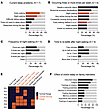
Sleep disturbances are among the most prevalent clinical features of FOXP1 syndrome, yet their nature and underlying mechanisms remain unclear. Here, we report that individuals with FOXP1 syndrome suffer from insomnia with sleep maintenance problems and early waking. Consistently, common variants in FOXP genes were associated with insomnia symptoms and short sleep. These sleep disturbances were recapitulated in Drosophila FoxP mutants, which exhibit severely fragmented and reduced sleep. FoxP loss also led to circadian arrhythmicity and impaired the plasticity of neuropeptide pigment dispersing factor–secreting (PDF-secreting) neurons in a non-cell-autonomous manner. FoxP was required during development for adult sleep integrity, particularly in peptidergic neurons. Transcriptomic analyses revealed a dysregulation of genes involved in peptidergic signaling, including hugin. FoxP was expressed in hugin+ neurons (afferent to PDF-secreting neurons) during development, and its knockdown in these cells was sufficient to induce sleep fragmentation. Our findings establish an evolutionarily conserved role for FOXP proteins in the peptidergic regulation of sleep.
Authors
Mireia Coll-Tané, Ilse Eidhof, Jie Han, Nicholas Raun, Lara V. van Renssen, Simon E. Fisher, Matthew S. Kayser, Tjitske Kleefstra, Sigrid Pillen, Caitlin M. Hudac, Jordi Mayneris-Perxachs, Marieke Klein, Saskia Koene, Anna Castells-Nobau, Annette Schenck
Abstract
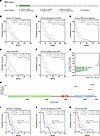
New androgen receptor (AR) pathway inhibitors (ARPIs) in clinical development, including AR degraders and CYP11A inhibitors, largely target ligand-dependent AR activation and have reported antitumor activity in metastatic castration-resistant prostate cancer (mCRPC) resistant to established ARPIs, predominately against tumors with AR mutations. We hypothesized that AR-mutated mCRPC exhibits lower AR splice variant 7 (AR-V7) expression and remains full-length–AR (FL-AR) driven, explaining, in part, the antitumor activity of these AR ligand–binding domain (LBD) targeting drugs. The data herein demonstrate that mCRPC tissue biopsies with detectable AR mutations express significantly lower levels of AR-V7 protein and associate with better overall survival and enhanced sensitivity to ARPIs. This is independent of differences in the total number of global splicing events but may be related to differences in splicing factor expression between AR-mutated and nonmutated mCRPC. In conclusion, AR-mutated mCRPC frequently exhibits low AR-V7 expression, arguably explaining the enhanced sensitivity to ARPIs observed in these cancers. Consequently, AR mutation status may serve as a biomarker to predict response to AR-directed therapies.
Authors
Alec Paschalis, Ines Figueiredo, Denisa Bogdan, Arian Lundberg, Rita Santos, Bora Gurel, Tarek Taha, Ossian Longoria, Ana Ferreira, Claudia Bertan, Nicholas Brittain, Ryan Nelson, Laura Walker, Antje Neeb, Jonathan Welti, Wei Yuan, Costas Mitsopoulos, Stephen R. Plymate, Michael C. Haffner, Adam G. Sowalsky, Suzanne Carreira, Adam Sharp, Luke Gaughan, Johann de Bono
Abstract
BACKGROUND Proliferation is a key biological feature of cancer and in prostate cancer is modulated by androgen receptor (AR) signalling. Cohort studies have suggested that highly proliferative tumors respond poorly to androgen receptor pathway inhibitors (ARPIs). To clarify whether tumor proliferation interacts with treatment benefit from adding abiraterone to androgen deprivation therapy (ADT), we assessed the Ki-67 proliferation index in prostate core biopsies from participants enrolled in the STAMPEDE platform protocol. METHODS Proliferation was assessed by Ki67 immunohistochemistry on tumors from patients randomized in two sequential but non-overlapping (ie no shared controls) phase 3 trials of abiraterone or abiraterone and enzalutamide conducted in STAMPEDE (NCT00268476), with 14-year survival outcomes. A standardised unweighted global assessment method was used. Survival analyses used Cox proportional hazards models adjusted for established prognostic factors. Ki-67 was examined both continuously and dichotomised at the median. Sensitivity analyses excluded samples exposed to ADT. RESULTS Ki-67 was successfully scored on cancers from 1,605 patients. Higher Ki-67 was strongly prognostic for shorter overall survival across disease states. However, in metastatic patients treated with ADT plus abiraterone, the adverse prognostic impact of high Ki-67 was substantially attenuated (aHR=1.06 per 10-percentage-point increase), with a statistically-significant treatment-biomarker interaction (p<0.001) confirming highly proliferative tumors derived greater treatment benefit. No interaction was observed in non-metastatic disease. CONCLUSION Ki-67 is an independent prognostic biomarker in advanced prostate cancer. In metastatic disease, higher proliferation predicts greater sensitivity to abiraterone added to ADT, suggesting a potential biological vulnerability of rapidly cycling tumors to intensified AR pathway blockade. TRIAL REGISTRATION: NCT00268476
Authors
Larissa Mendes, Peter F. Dutey-Magni, Emily Grist, Ashwin Sachdeva, Sara Santos Vidal, Sharanpreet Lall, Marina A. Parry, Claire L. Amos, Nafisah B. Atako, Anna Wingate, Daniel Wetterskog, Matthew R. Sydes, Chris C. Parker, Noel Clarke, Christopher J. Sweeney, Mahesh KB Parmar, Louise C. Brown, Nicholas D. James, Daniel M. Berney, Gerhardt Attard
Abstract
High levels of L- and D-2-hydroxyglutarate (2HG), the reduced forms of α-ketoglutarate (αKG), are implicated in neurodevelopmental disorders and cancer by modulating αKG-dependent dioxygenases involved in histone, DNA and RNA demethylation. L-2HG dehydrogenase (L2HGDH) deficiency, a rare autosomal recessive inborn error of metabolism associated with systemic L-2HG elevation, causes progressive neurological disability and increased brain tumor risk of unclear mechanism. Using an isogenic, patient-derived induced pluripotent stem cell (iPSC) system, we examined the impact of L2HGDH deficiency on neural progenitor cell (NPC) function and neuronal differentiation. L2HGDH deficiency caused L-2HG accumulation, NPC hyperproliferation, increased clonogenicity, and defective neuronal differentiation in 2D cultures and cortical spheroids. Editing the L2HGDH locus to wild-type reversed these effects. Inhibiting glutaminase reduced L-2HG levels and induced neuronal differentiation. L-2HG-dependent inhibition of KDM5 histone demethylases led to widespread retention of H3K4me2/3, markers of active gene expression, with prominent enrichment at the MYC locus and elevated MYC expression across multiple neural cell types. Despite broadly altered histone methylation, genetically or pharmacologically normalizing MYC completely restored neuronal differentiation. These data indicated that a primary metabolic disturbance activated MYC to favor self-renewal and suppress neuronal lineage commitment.
Authors
Wen Gu, Xun Wang, Ashley Solmonson, Ling Cai, Yi Xiao, Alpaslan Tasdogan, Jordan Franklin, Yuannyu Zhang, Hua Zhang, Aundrea K. Westfall, Ashley Rowe, Hetali Trivedi, Brandon Faubert, Zheng Wu, Jessica Sudderth, Lauren G. Zacharias, Bushra Afroze, Ilya Bezprozvanny, Sunil Sudarshan, Feng Cai, Samuel K. McBrayer, Thomas P. Mathews, Ralph J. DeBerardinis
No posts were found with this tag.


Copyright © 2026 American Society for Clinical Investigation
ISSN: 0021-9738 (print), 1558-8238 (online)