
Advertisement
Clinical Research and Public HealthClinical ResearchInflammationPulmonology
Open Access |  10.1172/JCI196290
Longitudinal multiomic signatures of ARDS and sepsis inflammatory phenotypes identify pathways associated with mortality
Narges Alipanah-Lechner,1 Lucile Neyton,1 Pratik Sinha,2 Carolyn Leroux,1 Kim Bardillon,3 Sidney A. Carrillo,1 Suzanna Chak,3 Olivia Chao,3 Taarini Hariharan,1 Carolyn Hendrickson,4 Kirsten Kangelaris,5 Charles R. Langelier,6 Deanna Lee,3 Chelsea Lin,1 Kathleen Liu,7,8 Liam Magee,3 Angelika Ringor,3 Aartik Sarma,1 Emma Schmiege,1 Natasha Spottiswoode,6 Kathryn Sullivan,1 Melanie F. Weingart,1 Andrew Willmore,1 Hanjing Zhuo,3 Angela J. Rogers,9 Kathleen A. Stringer,10,11,12 Michael A. Matthay,1,8 and Carolyn S. Calfee1,8
1Division of Pulmonary, Critical Care, Allergy, and Sleep Medicine, Department of Medicine, UCSF, San Francisco, California, USA.
2Division of Clinical and Translational Research, Department of Anesthesia, Washington University School of Medicine, St. Louis, Missouri, USA.
3Cardiovascular Research Institute, UCSF, San Francisco, California, USA.
4Division of Pulmonary and Critical Care, Department of Medicine, Zuckerberg San Francisco General Hospital, San Francisco, California, USA.
5Division of Hospital Medicine, Department of Medicine;
6Division of Infectious Disease, Department of Medicine;
7Division of Nephrology, Department of Medicine; and
8Department of Anesthesia, UCSF, San Francisco, California, USA.
9Division of Pulmonary and Critical Care, Department of Medicine, Stanford University, Stanford, California, USA.
10Department of Clinical Pharmacy, College of Pharmacy, and
11Division of Pulmonary and Critical Care Medicine and
12Weil Institute for Critical Care Research & Innovation, School of Medicine, University of Michigan, Ann Arbor, Michigan, USA.
Address correspondence to: Narges Alipanah-Lechner, 513 Parnassus Ave., HSE716, San Francisco, California, 94143, USA. Email: narges.alipanah@ucsf.edu.
Authorship note: NAL and LN contributed equally to this work and have been designated as co–first authors.
Find articles by Alipanah-Lechner, N. in: PubMed | Google Scholar
1Division of Pulmonary, Critical Care, Allergy, and Sleep Medicine, Department of Medicine, UCSF, San Francisco, California, USA.
2Division of Clinical and Translational Research, Department of Anesthesia, Washington University School of Medicine, St. Louis, Missouri, USA.
3Cardiovascular Research Institute, UCSF, San Francisco, California, USA.
4Division of Pulmonary and Critical Care, Department of Medicine, Zuckerberg San Francisco General Hospital, San Francisco, California, USA.
5Division of Hospital Medicine, Department of Medicine;
6Division of Infectious Disease, Department of Medicine;
7Division of Nephrology, Department of Medicine; and
8Department of Anesthesia, UCSF, San Francisco, California, USA.
9Division of Pulmonary and Critical Care, Department of Medicine, Stanford University, Stanford, California, USA.
10Department of Clinical Pharmacy, College of Pharmacy, and
11Division of Pulmonary and Critical Care Medicine and
12Weil Institute for Critical Care Research & Innovation, School of Medicine, University of Michigan, Ann Arbor, Michigan, USA.
Address correspondence to: Narges Alipanah-Lechner, 513 Parnassus Ave., HSE716, San Francisco, California, 94143, USA. Email: narges.alipanah@ucsf.edu.
Authorship note: NAL and LN contributed equally to this work and have been designated as co–first authors.
Find articles by Neyton, L. in: PubMed | Google Scholar
1Division of Pulmonary, Critical Care, Allergy, and Sleep Medicine, Department of Medicine, UCSF, San Francisco, California, USA.
2Division of Clinical and Translational Research, Department of Anesthesia, Washington University School of Medicine, St. Louis, Missouri, USA.
3Cardiovascular Research Institute, UCSF, San Francisco, California, USA.
4Division of Pulmonary and Critical Care, Department of Medicine, Zuckerberg San Francisco General Hospital, San Francisco, California, USA.
5Division of Hospital Medicine, Department of Medicine;
6Division of Infectious Disease, Department of Medicine;
7Division of Nephrology, Department of Medicine; and
8Department of Anesthesia, UCSF, San Francisco, California, USA.
9Division of Pulmonary and Critical Care, Department of Medicine, Stanford University, Stanford, California, USA.
10Department of Clinical Pharmacy, College of Pharmacy, and
11Division of Pulmonary and Critical Care Medicine and
12Weil Institute for Critical Care Research & Innovation, School of Medicine, University of Michigan, Ann Arbor, Michigan, USA.
Address correspondence to: Narges Alipanah-Lechner, 513 Parnassus Ave., HSE716, San Francisco, California, 94143, USA. Email: narges.alipanah@ucsf.edu.
Authorship note: NAL and LN contributed equally to this work and have been designated as co–first authors.
Find articles by Sinha, P. in: PubMed | Google Scholar
1Division of Pulmonary, Critical Care, Allergy, and Sleep Medicine, Department of Medicine, UCSF, San Francisco, California, USA.
2Division of Clinical and Translational Research, Department of Anesthesia, Washington University School of Medicine, St. Louis, Missouri, USA.
3Cardiovascular Research Institute, UCSF, San Francisco, California, USA.
4Division of Pulmonary and Critical Care, Department of Medicine, Zuckerberg San Francisco General Hospital, San Francisco, California, USA.
5Division of Hospital Medicine, Department of Medicine;
6Division of Infectious Disease, Department of Medicine;
7Division of Nephrology, Department of Medicine; and
8Department of Anesthesia, UCSF, San Francisco, California, USA.
9Division of Pulmonary and Critical Care, Department of Medicine, Stanford University, Stanford, California, USA.
10Department of Clinical Pharmacy, College of Pharmacy, and
11Division of Pulmonary and Critical Care Medicine and
12Weil Institute for Critical Care Research & Innovation, School of Medicine, University of Michigan, Ann Arbor, Michigan, USA.
Address correspondence to: Narges Alipanah-Lechner, 513 Parnassus Ave., HSE716, San Francisco, California, 94143, USA. Email: narges.alipanah@ucsf.edu.
Authorship note: NAL and LN contributed equally to this work and have been designated as co–first authors.
Find articles by Leroux, C. in: PubMed | Google Scholar
1Division of Pulmonary, Critical Care, Allergy, and Sleep Medicine, Department of Medicine, UCSF, San Francisco, California, USA.
2Division of Clinical and Translational Research, Department of Anesthesia, Washington University School of Medicine, St. Louis, Missouri, USA.
3Cardiovascular Research Institute, UCSF, San Francisco, California, USA.
4Division of Pulmonary and Critical Care, Department of Medicine, Zuckerberg San Francisco General Hospital, San Francisco, California, USA.
5Division of Hospital Medicine, Department of Medicine;
6Division of Infectious Disease, Department of Medicine;
7Division of Nephrology, Department of Medicine; and
8Department of Anesthesia, UCSF, San Francisco, California, USA.
9Division of Pulmonary and Critical Care, Department of Medicine, Stanford University, Stanford, California, USA.
10Department of Clinical Pharmacy, College of Pharmacy, and
11Division of Pulmonary and Critical Care Medicine and
12Weil Institute for Critical Care Research & Innovation, School of Medicine, University of Michigan, Ann Arbor, Michigan, USA.
Address correspondence to: Narges Alipanah-Lechner, 513 Parnassus Ave., HSE716, San Francisco, California, 94143, USA. Email: narges.alipanah@ucsf.edu.
Authorship note: NAL and LN contributed equally to this work and have been designated as co–first authors.
Find articles by Bardillon, K. in: PubMed | Google Scholar
1Division of Pulmonary, Critical Care, Allergy, and Sleep Medicine, Department of Medicine, UCSF, San Francisco, California, USA.
2Division of Clinical and Translational Research, Department of Anesthesia, Washington University School of Medicine, St. Louis, Missouri, USA.
3Cardiovascular Research Institute, UCSF, San Francisco, California, USA.
4Division of Pulmonary and Critical Care, Department of Medicine, Zuckerberg San Francisco General Hospital, San Francisco, California, USA.
5Division of Hospital Medicine, Department of Medicine;
6Division of Infectious Disease, Department of Medicine;
7Division of Nephrology, Department of Medicine; and
8Department of Anesthesia, UCSF, San Francisco, California, USA.
9Division of Pulmonary and Critical Care, Department of Medicine, Stanford University, Stanford, California, USA.
10Department of Clinical Pharmacy, College of Pharmacy, and
11Division of Pulmonary and Critical Care Medicine and
12Weil Institute for Critical Care Research & Innovation, School of Medicine, University of Michigan, Ann Arbor, Michigan, USA.
Address correspondence to: Narges Alipanah-Lechner, 513 Parnassus Ave., HSE716, San Francisco, California, 94143, USA. Email: narges.alipanah@ucsf.edu.
Authorship note: NAL and LN contributed equally to this work and have been designated as co–first authors.
Find articles by Carrillo, S. in: PubMed | Google Scholar
1Division of Pulmonary, Critical Care, Allergy, and Sleep Medicine, Department of Medicine, UCSF, San Francisco, California, USA.
2Division of Clinical and Translational Research, Department of Anesthesia, Washington University School of Medicine, St. Louis, Missouri, USA.
3Cardiovascular Research Institute, UCSF, San Francisco, California, USA.
4Division of Pulmonary and Critical Care, Department of Medicine, Zuckerberg San Francisco General Hospital, San Francisco, California, USA.
5Division of Hospital Medicine, Department of Medicine;
6Division of Infectious Disease, Department of Medicine;
7Division of Nephrology, Department of Medicine; and
8Department of Anesthesia, UCSF, San Francisco, California, USA.
9Division of Pulmonary and Critical Care, Department of Medicine, Stanford University, Stanford, California, USA.
10Department of Clinical Pharmacy, College of Pharmacy, and
11Division of Pulmonary and Critical Care Medicine and
12Weil Institute for Critical Care Research & Innovation, School of Medicine, University of Michigan, Ann Arbor, Michigan, USA.
Address correspondence to: Narges Alipanah-Lechner, 513 Parnassus Ave., HSE716, San Francisco, California, 94143, USA. Email: narges.alipanah@ucsf.edu.
Authorship note: NAL and LN contributed equally to this work and have been designated as co–first authors.
Find articles by Chak, S. in: PubMed | Google Scholar
1Division of Pulmonary, Critical Care, Allergy, and Sleep Medicine, Department of Medicine, UCSF, San Francisco, California, USA.
2Division of Clinical and Translational Research, Department of Anesthesia, Washington University School of Medicine, St. Louis, Missouri, USA.
3Cardiovascular Research Institute, UCSF, San Francisco, California, USA.
4Division of Pulmonary and Critical Care, Department of Medicine, Zuckerberg San Francisco General Hospital, San Francisco, California, USA.
5Division of Hospital Medicine, Department of Medicine;
6Division of Infectious Disease, Department of Medicine;
7Division of Nephrology, Department of Medicine; and
8Department of Anesthesia, UCSF, San Francisco, California, USA.
9Division of Pulmonary and Critical Care, Department of Medicine, Stanford University, Stanford, California, USA.
10Department of Clinical Pharmacy, College of Pharmacy, and
11Division of Pulmonary and Critical Care Medicine and
12Weil Institute for Critical Care Research & Innovation, School of Medicine, University of Michigan, Ann Arbor, Michigan, USA.
Address correspondence to: Narges Alipanah-Lechner, 513 Parnassus Ave., HSE716, San Francisco, California, 94143, USA. Email: narges.alipanah@ucsf.edu.
Authorship note: NAL and LN contributed equally to this work and have been designated as co–first authors.
Find articles by Chao, O. in: PubMed | Google Scholar
1Division of Pulmonary, Critical Care, Allergy, and Sleep Medicine, Department of Medicine, UCSF, San Francisco, California, USA.
2Division of Clinical and Translational Research, Department of Anesthesia, Washington University School of Medicine, St. Louis, Missouri, USA.
3Cardiovascular Research Institute, UCSF, San Francisco, California, USA.
4Division of Pulmonary and Critical Care, Department of Medicine, Zuckerberg San Francisco General Hospital, San Francisco, California, USA.
5Division of Hospital Medicine, Department of Medicine;
6Division of Infectious Disease, Department of Medicine;
7Division of Nephrology, Department of Medicine; and
8Department of Anesthesia, UCSF, San Francisco, California, USA.
9Division of Pulmonary and Critical Care, Department of Medicine, Stanford University, Stanford, California, USA.
10Department of Clinical Pharmacy, College of Pharmacy, and
11Division of Pulmonary and Critical Care Medicine and
12Weil Institute for Critical Care Research & Innovation, School of Medicine, University of Michigan, Ann Arbor, Michigan, USA.
Address correspondence to: Narges Alipanah-Lechner, 513 Parnassus Ave., HSE716, San Francisco, California, 94143, USA. Email: narges.alipanah@ucsf.edu.
Authorship note: NAL and LN contributed equally to this work and have been designated as co–first authors.
Find articles by Hariharan, T. in: PubMed | Google Scholar
1Division of Pulmonary, Critical Care, Allergy, and Sleep Medicine, Department of Medicine, UCSF, San Francisco, California, USA.
2Division of Clinical and Translational Research, Department of Anesthesia, Washington University School of Medicine, St. Louis, Missouri, USA.
3Cardiovascular Research Institute, UCSF, San Francisco, California, USA.
4Division of Pulmonary and Critical Care, Department of Medicine, Zuckerberg San Francisco General Hospital, San Francisco, California, USA.
5Division of Hospital Medicine, Department of Medicine;
6Division of Infectious Disease, Department of Medicine;
7Division of Nephrology, Department of Medicine; and
8Department of Anesthesia, UCSF, San Francisco, California, USA.
9Division of Pulmonary and Critical Care, Department of Medicine, Stanford University, Stanford, California, USA.
10Department of Clinical Pharmacy, College of Pharmacy, and
11Division of Pulmonary and Critical Care Medicine and
12Weil Institute for Critical Care Research & Innovation, School of Medicine, University of Michigan, Ann Arbor, Michigan, USA.
Address correspondence to: Narges Alipanah-Lechner, 513 Parnassus Ave., HSE716, San Francisco, California, 94143, USA. Email: narges.alipanah@ucsf.edu.
Authorship note: NAL and LN contributed equally to this work and have been designated as co–first authors.
Find articles by Hendrickson, C. in: PubMed | Google Scholar
1Division of Pulmonary, Critical Care, Allergy, and Sleep Medicine, Department of Medicine, UCSF, San Francisco, California, USA.
2Division of Clinical and Translational Research, Department of Anesthesia, Washington University School of Medicine, St. Louis, Missouri, USA.
3Cardiovascular Research Institute, UCSF, San Francisco, California, USA.
4Division of Pulmonary and Critical Care, Department of Medicine, Zuckerberg San Francisco General Hospital, San Francisco, California, USA.
5Division of Hospital Medicine, Department of Medicine;
6Division of Infectious Disease, Department of Medicine;
7Division of Nephrology, Department of Medicine; and
8Department of Anesthesia, UCSF, San Francisco, California, USA.
9Division of Pulmonary and Critical Care, Department of Medicine, Stanford University, Stanford, California, USA.
10Department of Clinical Pharmacy, College of Pharmacy, and
11Division of Pulmonary and Critical Care Medicine and
12Weil Institute for Critical Care Research & Innovation, School of Medicine, University of Michigan, Ann Arbor, Michigan, USA.
Address correspondence to: Narges Alipanah-Lechner, 513 Parnassus Ave., HSE716, San Francisco, California, 94143, USA. Email: narges.alipanah@ucsf.edu.
Authorship note: NAL and LN contributed equally to this work and have been designated as co–first authors.
Find articles by Kangelaris, K. in: PubMed | Google Scholar
1Division of Pulmonary, Critical Care, Allergy, and Sleep Medicine, Department of Medicine, UCSF, San Francisco, California, USA.
2Division of Clinical and Translational Research, Department of Anesthesia, Washington University School of Medicine, St. Louis, Missouri, USA.
3Cardiovascular Research Institute, UCSF, San Francisco, California, USA.
4Division of Pulmonary and Critical Care, Department of Medicine, Zuckerberg San Francisco General Hospital, San Francisco, California, USA.
5Division of Hospital Medicine, Department of Medicine;
6Division of Infectious Disease, Department of Medicine;
7Division of Nephrology, Department of Medicine; and
8Department of Anesthesia, UCSF, San Francisco, California, USA.
9Division of Pulmonary and Critical Care, Department of Medicine, Stanford University, Stanford, California, USA.
10Department of Clinical Pharmacy, College of Pharmacy, and
11Division of Pulmonary and Critical Care Medicine and
12Weil Institute for Critical Care Research & Innovation, School of Medicine, University of Michigan, Ann Arbor, Michigan, USA.
Address correspondence to: Narges Alipanah-Lechner, 513 Parnassus Ave., HSE716, San Francisco, California, 94143, USA. Email: narges.alipanah@ucsf.edu.
Authorship note: NAL and LN contributed equally to this work and have been designated as co–first authors.
Find articles by Langelier, C. in: PubMed | Google Scholar
1Division of Pulmonary, Critical Care, Allergy, and Sleep Medicine, Department of Medicine, UCSF, San Francisco, California, USA.
2Division of Clinical and Translational Research, Department of Anesthesia, Washington University School of Medicine, St. Louis, Missouri, USA.
3Cardiovascular Research Institute, UCSF, San Francisco, California, USA.
4Division of Pulmonary and Critical Care, Department of Medicine, Zuckerberg San Francisco General Hospital, San Francisco, California, USA.
5Division of Hospital Medicine, Department of Medicine;
6Division of Infectious Disease, Department of Medicine;
7Division of Nephrology, Department of Medicine; and
8Department of Anesthesia, UCSF, San Francisco, California, USA.
9Division of Pulmonary and Critical Care, Department of Medicine, Stanford University, Stanford, California, USA.
10Department of Clinical Pharmacy, College of Pharmacy, and
11Division of Pulmonary and Critical Care Medicine and
12Weil Institute for Critical Care Research & Innovation, School of Medicine, University of Michigan, Ann Arbor, Michigan, USA.
Address correspondence to: Narges Alipanah-Lechner, 513 Parnassus Ave., HSE716, San Francisco, California, 94143, USA. Email: narges.alipanah@ucsf.edu.
Authorship note: NAL and LN contributed equally to this work and have been designated as co–first authors.
Find articles by Lee, D. in: PubMed | Google Scholar
1Division of Pulmonary, Critical Care, Allergy, and Sleep Medicine, Department of Medicine, UCSF, San Francisco, California, USA.
2Division of Clinical and Translational Research, Department of Anesthesia, Washington University School of Medicine, St. Louis, Missouri, USA.
3Cardiovascular Research Institute, UCSF, San Francisco, California, USA.
4Division of Pulmonary and Critical Care, Department of Medicine, Zuckerberg San Francisco General Hospital, San Francisco, California, USA.
5Division of Hospital Medicine, Department of Medicine;
6Division of Infectious Disease, Department of Medicine;
7Division of Nephrology, Department of Medicine; and
8Department of Anesthesia, UCSF, San Francisco, California, USA.
9Division of Pulmonary and Critical Care, Department of Medicine, Stanford University, Stanford, California, USA.
10Department of Clinical Pharmacy, College of Pharmacy, and
11Division of Pulmonary and Critical Care Medicine and
12Weil Institute for Critical Care Research & Innovation, School of Medicine, University of Michigan, Ann Arbor, Michigan, USA.
Address correspondence to: Narges Alipanah-Lechner, 513 Parnassus Ave., HSE716, San Francisco, California, 94143, USA. Email: narges.alipanah@ucsf.edu.
Authorship note: NAL and LN contributed equally to this work and have been designated as co–first authors.
Find articles by Lin, C. in: PubMed | Google Scholar
1Division of Pulmonary, Critical Care, Allergy, and Sleep Medicine, Department of Medicine, UCSF, San Francisco, California, USA.
2Division of Clinical and Translational Research, Department of Anesthesia, Washington University School of Medicine, St. Louis, Missouri, USA.
3Cardiovascular Research Institute, UCSF, San Francisco, California, USA.
4Division of Pulmonary and Critical Care, Department of Medicine, Zuckerberg San Francisco General Hospital, San Francisco, California, USA.
5Division of Hospital Medicine, Department of Medicine;
6Division of Infectious Disease, Department of Medicine;
7Division of Nephrology, Department of Medicine; and
8Department of Anesthesia, UCSF, San Francisco, California, USA.
9Division of Pulmonary and Critical Care, Department of Medicine, Stanford University, Stanford, California, USA.
10Department of Clinical Pharmacy, College of Pharmacy, and
11Division of Pulmonary and Critical Care Medicine and
12Weil Institute for Critical Care Research & Innovation, School of Medicine, University of Michigan, Ann Arbor, Michigan, USA.
Address correspondence to: Narges Alipanah-Lechner, 513 Parnassus Ave., HSE716, San Francisco, California, 94143, USA. Email: narges.alipanah@ucsf.edu.
Authorship note: NAL and LN contributed equally to this work and have been designated as co–first authors.
Find articles by Liu, K. in: PubMed | Google Scholar
1Division of Pulmonary, Critical Care, Allergy, and Sleep Medicine, Department of Medicine, UCSF, San Francisco, California, USA.
2Division of Clinical and Translational Research, Department of Anesthesia, Washington University School of Medicine, St. Louis, Missouri, USA.
3Cardiovascular Research Institute, UCSF, San Francisco, California, USA.
4Division of Pulmonary and Critical Care, Department of Medicine, Zuckerberg San Francisco General Hospital, San Francisco, California, USA.
5Division of Hospital Medicine, Department of Medicine;
6Division of Infectious Disease, Department of Medicine;
7Division of Nephrology, Department of Medicine; and
8Department of Anesthesia, UCSF, San Francisco, California, USA.
9Division of Pulmonary and Critical Care, Department of Medicine, Stanford University, Stanford, California, USA.
10Department of Clinical Pharmacy, College of Pharmacy, and
11Division of Pulmonary and Critical Care Medicine and
12Weil Institute for Critical Care Research & Innovation, School of Medicine, University of Michigan, Ann Arbor, Michigan, USA.
Address correspondence to: Narges Alipanah-Lechner, 513 Parnassus Ave., HSE716, San Francisco, California, 94143, USA. Email: narges.alipanah@ucsf.edu.
Authorship note: NAL and LN contributed equally to this work and have been designated as co–first authors.
Find articles by Magee, L. in: PubMed | Google Scholar
1Division of Pulmonary, Critical Care, Allergy, and Sleep Medicine, Department of Medicine, UCSF, San Francisco, California, USA.
2Division of Clinical and Translational Research, Department of Anesthesia, Washington University School of Medicine, St. Louis, Missouri, USA.
3Cardiovascular Research Institute, UCSF, San Francisco, California, USA.
4Division of Pulmonary and Critical Care, Department of Medicine, Zuckerberg San Francisco General Hospital, San Francisco, California, USA.
5Division of Hospital Medicine, Department of Medicine;
6Division of Infectious Disease, Department of Medicine;
7Division of Nephrology, Department of Medicine; and
8Department of Anesthesia, UCSF, San Francisco, California, USA.
9Division of Pulmonary and Critical Care, Department of Medicine, Stanford University, Stanford, California, USA.
10Department of Clinical Pharmacy, College of Pharmacy, and
11Division of Pulmonary and Critical Care Medicine and
12Weil Institute for Critical Care Research & Innovation, School of Medicine, University of Michigan, Ann Arbor, Michigan, USA.
Address correspondence to: Narges Alipanah-Lechner, 513 Parnassus Ave., HSE716, San Francisco, California, 94143, USA. Email: narges.alipanah@ucsf.edu.
Authorship note: NAL and LN contributed equally to this work and have been designated as co–first authors.
Find articles by Ringor, A. in: PubMed | Google Scholar
1Division of Pulmonary, Critical Care, Allergy, and Sleep Medicine, Department of Medicine, UCSF, San Francisco, California, USA.
2Division of Clinical and Translational Research, Department of Anesthesia, Washington University School of Medicine, St. Louis, Missouri, USA.
3Cardiovascular Research Institute, UCSF, San Francisco, California, USA.
4Division of Pulmonary and Critical Care, Department of Medicine, Zuckerberg San Francisco General Hospital, San Francisco, California, USA.
5Division of Hospital Medicine, Department of Medicine;
6Division of Infectious Disease, Department of Medicine;
7Division of Nephrology, Department of Medicine; and
8Department of Anesthesia, UCSF, San Francisco, California, USA.
9Division of Pulmonary and Critical Care, Department of Medicine, Stanford University, Stanford, California, USA.
10Department of Clinical Pharmacy, College of Pharmacy, and
11Division of Pulmonary and Critical Care Medicine and
12Weil Institute for Critical Care Research & Innovation, School of Medicine, University of Michigan, Ann Arbor, Michigan, USA.
Address correspondence to: Narges Alipanah-Lechner, 513 Parnassus Ave., HSE716, San Francisco, California, 94143, USA. Email: narges.alipanah@ucsf.edu.
Authorship note: NAL and LN contributed equally to this work and have been designated as co–first authors.
Find articles by
Sarma, A.
in:
PubMed
|
Google Scholar
|

1Division of Pulmonary, Critical Care, Allergy, and Sleep Medicine, Department of Medicine, UCSF, San Francisco, California, USA.
2Division of Clinical and Translational Research, Department of Anesthesia, Washington University School of Medicine, St. Louis, Missouri, USA.
3Cardiovascular Research Institute, UCSF, San Francisco, California, USA.
4Division of Pulmonary and Critical Care, Department of Medicine, Zuckerberg San Francisco General Hospital, San Francisco, California, USA.
5Division of Hospital Medicine, Department of Medicine;
6Division of Infectious Disease, Department of Medicine;
7Division of Nephrology, Department of Medicine; and
8Department of Anesthesia, UCSF, San Francisco, California, USA.
9Division of Pulmonary and Critical Care, Department of Medicine, Stanford University, Stanford, California, USA.
10Department of Clinical Pharmacy, College of Pharmacy, and
11Division of Pulmonary and Critical Care Medicine and
12Weil Institute for Critical Care Research & Innovation, School of Medicine, University of Michigan, Ann Arbor, Michigan, USA.
Address correspondence to: Narges Alipanah-Lechner, 513 Parnassus Ave., HSE716, San Francisco, California, 94143, USA. Email: narges.alipanah@ucsf.edu.
Authorship note: NAL and LN contributed equally to this work and have been designated as co–first authors.
Find articles by Schmiege, E. in: PubMed | Google Scholar
1Division of Pulmonary, Critical Care, Allergy, and Sleep Medicine, Department of Medicine, UCSF, San Francisco, California, USA.
2Division of Clinical and Translational Research, Department of Anesthesia, Washington University School of Medicine, St. Louis, Missouri, USA.
3Cardiovascular Research Institute, UCSF, San Francisco, California, USA.
4Division of Pulmonary and Critical Care, Department of Medicine, Zuckerberg San Francisco General Hospital, San Francisco, California, USA.
5Division of Hospital Medicine, Department of Medicine;
6Division of Infectious Disease, Department of Medicine;
7Division of Nephrology, Department of Medicine; and
8Department of Anesthesia, UCSF, San Francisco, California, USA.
9Division of Pulmonary and Critical Care, Department of Medicine, Stanford University, Stanford, California, USA.
10Department of Clinical Pharmacy, College of Pharmacy, and
11Division of Pulmonary and Critical Care Medicine and
12Weil Institute for Critical Care Research & Innovation, School of Medicine, University of Michigan, Ann Arbor, Michigan, USA.
Address correspondence to: Narges Alipanah-Lechner, 513 Parnassus Ave., HSE716, San Francisco, California, 94143, USA. Email: narges.alipanah@ucsf.edu.
Authorship note: NAL and LN contributed equally to this work and have been designated as co–first authors.
Find articles by Spottiswoode, N. in: PubMed | Google Scholar
1Division of Pulmonary, Critical Care, Allergy, and Sleep Medicine, Department of Medicine, UCSF, San Francisco, California, USA.
2Division of Clinical and Translational Research, Department of Anesthesia, Washington University School of Medicine, St. Louis, Missouri, USA.
3Cardiovascular Research Institute, UCSF, San Francisco, California, USA.
4Division of Pulmonary and Critical Care, Department of Medicine, Zuckerberg San Francisco General Hospital, San Francisco, California, USA.
5Division of Hospital Medicine, Department of Medicine;
6Division of Infectious Disease, Department of Medicine;
7Division of Nephrology, Department of Medicine; and
8Department of Anesthesia, UCSF, San Francisco, California, USA.
9Division of Pulmonary and Critical Care, Department of Medicine, Stanford University, Stanford, California, USA.
10Department of Clinical Pharmacy, College of Pharmacy, and
11Division of Pulmonary and Critical Care Medicine and
12Weil Institute for Critical Care Research & Innovation, School of Medicine, University of Michigan, Ann Arbor, Michigan, USA.
Address correspondence to: Narges Alipanah-Lechner, 513 Parnassus Ave., HSE716, San Francisco, California, 94143, USA. Email: narges.alipanah@ucsf.edu.
Authorship note: NAL and LN contributed equally to this work and have been designated as co–first authors.
Find articles by Sullivan, K. in: PubMed | Google Scholar
1Division of Pulmonary, Critical Care, Allergy, and Sleep Medicine, Department of Medicine, UCSF, San Francisco, California, USA.
2Division of Clinical and Translational Research, Department of Anesthesia, Washington University School of Medicine, St. Louis, Missouri, USA.
3Cardiovascular Research Institute, UCSF, San Francisco, California, USA.
4Division of Pulmonary and Critical Care, Department of Medicine, Zuckerberg San Francisco General Hospital, San Francisco, California, USA.
5Division of Hospital Medicine, Department of Medicine;
6Division of Infectious Disease, Department of Medicine;
7Division of Nephrology, Department of Medicine; and
8Department of Anesthesia, UCSF, San Francisco, California, USA.
9Division of Pulmonary and Critical Care, Department of Medicine, Stanford University, Stanford, California, USA.
10Department of Clinical Pharmacy, College of Pharmacy, and
11Division of Pulmonary and Critical Care Medicine and
12Weil Institute for Critical Care Research & Innovation, School of Medicine, University of Michigan, Ann Arbor, Michigan, USA.
Address correspondence to: Narges Alipanah-Lechner, 513 Parnassus Ave., HSE716, San Francisco, California, 94143, USA. Email: narges.alipanah@ucsf.edu.
Authorship note: NAL and LN contributed equally to this work and have been designated as co–first authors.
Find articles by Weingart, M. in: PubMed | Google Scholar
1Division of Pulmonary, Critical Care, Allergy, and Sleep Medicine, Department of Medicine, UCSF, San Francisco, California, USA.
2Division of Clinical and Translational Research, Department of Anesthesia, Washington University School of Medicine, St. Louis, Missouri, USA.
3Cardiovascular Research Institute, UCSF, San Francisco, California, USA.
4Division of Pulmonary and Critical Care, Department of Medicine, Zuckerberg San Francisco General Hospital, San Francisco, California, USA.
5Division of Hospital Medicine, Department of Medicine;
6Division of Infectious Disease, Department of Medicine;
7Division of Nephrology, Department of Medicine; and
8Department of Anesthesia, UCSF, San Francisco, California, USA.
9Division of Pulmonary and Critical Care, Department of Medicine, Stanford University, Stanford, California, USA.
10Department of Clinical Pharmacy, College of Pharmacy, and
11Division of Pulmonary and Critical Care Medicine and
12Weil Institute for Critical Care Research & Innovation, School of Medicine, University of Michigan, Ann Arbor, Michigan, USA.
Address correspondence to: Narges Alipanah-Lechner, 513 Parnassus Ave., HSE716, San Francisco, California, 94143, USA. Email: narges.alipanah@ucsf.edu.
Authorship note: NAL and LN contributed equally to this work and have been designated as co–first authors.
Find articles by Willmore, A. in: PubMed | Google Scholar
1Division of Pulmonary, Critical Care, Allergy, and Sleep Medicine, Department of Medicine, UCSF, San Francisco, California, USA.
2Division of Clinical and Translational Research, Department of Anesthesia, Washington University School of Medicine, St. Louis, Missouri, USA.
3Cardiovascular Research Institute, UCSF, San Francisco, California, USA.
4Division of Pulmonary and Critical Care, Department of Medicine, Zuckerberg San Francisco General Hospital, San Francisco, California, USA.
5Division of Hospital Medicine, Department of Medicine;
6Division of Infectious Disease, Department of Medicine;
7Division of Nephrology, Department of Medicine; and
8Department of Anesthesia, UCSF, San Francisco, California, USA.
9Division of Pulmonary and Critical Care, Department of Medicine, Stanford University, Stanford, California, USA.
10Department of Clinical Pharmacy, College of Pharmacy, and
11Division of Pulmonary and Critical Care Medicine and
12Weil Institute for Critical Care Research & Innovation, School of Medicine, University of Michigan, Ann Arbor, Michigan, USA.
Address correspondence to: Narges Alipanah-Lechner, 513 Parnassus Ave., HSE716, San Francisco, California, 94143, USA. Email: narges.alipanah@ucsf.edu.
Authorship note: NAL and LN contributed equally to this work and have been designated as co–first authors.
Find articles by Zhuo, H. in: PubMed | Google Scholar
1Division of Pulmonary, Critical Care, Allergy, and Sleep Medicine, Department of Medicine, UCSF, San Francisco, California, USA.
2Division of Clinical and Translational Research, Department of Anesthesia, Washington University School of Medicine, St. Louis, Missouri, USA.
3Cardiovascular Research Institute, UCSF, San Francisco, California, USA.
4Division of Pulmonary and Critical Care, Department of Medicine, Zuckerberg San Francisco General Hospital, San Francisco, California, USA.
5Division of Hospital Medicine, Department of Medicine;
6Division of Infectious Disease, Department of Medicine;
7Division of Nephrology, Department of Medicine; and
8Department of Anesthesia, UCSF, San Francisco, California, USA.
9Division of Pulmonary and Critical Care, Department of Medicine, Stanford University, Stanford, California, USA.
10Department of Clinical Pharmacy, College of Pharmacy, and
11Division of Pulmonary and Critical Care Medicine and
12Weil Institute for Critical Care Research & Innovation, School of Medicine, University of Michigan, Ann Arbor, Michigan, USA.
Address correspondence to: Narges Alipanah-Lechner, 513 Parnassus Ave., HSE716, San Francisco, California, 94143, USA. Email: narges.alipanah@ucsf.edu.
Authorship note: NAL and LN contributed equally to this work and have been designated as co–first authors.
Find articles by
Rogers, A.
in:
PubMed
|
Google Scholar
|
1Division of Pulmonary, Critical Care, Allergy, and Sleep Medicine, Department of Medicine, UCSF, San Francisco, California, USA.
2Division of Clinical and Translational Research, Department of Anesthesia, Washington University School of Medicine, St. Louis, Missouri, USA.
3Cardiovascular Research Institute, UCSF, San Francisco, California, USA.
4Division of Pulmonary and Critical Care, Department of Medicine, Zuckerberg San Francisco General Hospital, San Francisco, California, USA.
5Division of Hospital Medicine, Department of Medicine;
6Division of Infectious Disease, Department of Medicine;
7Division of Nephrology, Department of Medicine; and
8Department of Anesthesia, UCSF, San Francisco, California, USA.
9Division of Pulmonary and Critical Care, Department of Medicine, Stanford University, Stanford, California, USA.
10Department of Clinical Pharmacy, College of Pharmacy, and
11Division of Pulmonary and Critical Care Medicine and
12Weil Institute for Critical Care Research & Innovation, School of Medicine, University of Michigan, Ann Arbor, Michigan, USA.
Address correspondence to: Narges Alipanah-Lechner, 513 Parnassus Ave., HSE716, San Francisco, California, 94143, USA. Email: narges.alipanah@ucsf.edu.
Authorship note: NAL and LN contributed equally to this work and have been designated as co–first authors.
Find articles by
Stringer, K.
in:
PubMed
|
Google Scholar
|
1Division of Pulmonary, Critical Care, Allergy, and Sleep Medicine, Department of Medicine, UCSF, San Francisco, California, USA.
2Division of Clinical and Translational Research, Department of Anesthesia, Washington University School of Medicine, St. Louis, Missouri, USA.
3Cardiovascular Research Institute, UCSF, San Francisco, California, USA.
4Division of Pulmonary and Critical Care, Department of Medicine, Zuckerberg San Francisco General Hospital, San Francisco, California, USA.
5Division of Hospital Medicine, Department of Medicine;
6Division of Infectious Disease, Department of Medicine;
7Division of Nephrology, Department of Medicine; and
8Department of Anesthesia, UCSF, San Francisco, California, USA.
9Division of Pulmonary and Critical Care, Department of Medicine, Stanford University, Stanford, California, USA.
10Department of Clinical Pharmacy, College of Pharmacy, and
11Division of Pulmonary and Critical Care Medicine and
12Weil Institute for Critical Care Research & Innovation, School of Medicine, University of Michigan, Ann Arbor, Michigan, USA.
Address correspondence to: Narges Alipanah-Lechner, 513 Parnassus Ave., HSE716, San Francisco, California, 94143, USA. Email: narges.alipanah@ucsf.edu.
Authorship note: NAL and LN contributed equally to this work and have been designated as co–first authors.
Find articles by Matthay, M. in: PubMed | Google Scholar
1Division of Pulmonary, Critical Care, Allergy, and Sleep Medicine, Department of Medicine, UCSF, San Francisco, California, USA.
2Division of Clinical and Translational Research, Department of Anesthesia, Washington University School of Medicine, St. Louis, Missouri, USA.
3Cardiovascular Research Institute, UCSF, San Francisco, California, USA.
4Division of Pulmonary and Critical Care, Department of Medicine, Zuckerberg San Francisco General Hospital, San Francisco, California, USA.
5Division of Hospital Medicine, Department of Medicine;
6Division of Infectious Disease, Department of Medicine;
7Division of Nephrology, Department of Medicine; and
8Department of Anesthesia, UCSF, San Francisco, California, USA.
9Division of Pulmonary and Critical Care, Department of Medicine, Stanford University, Stanford, California, USA.
10Department of Clinical Pharmacy, College of Pharmacy, and
11Division of Pulmonary and Critical Care Medicine and
12Weil Institute for Critical Care Research & Innovation, School of Medicine, University of Michigan, Ann Arbor, Michigan, USA.
Address correspondence to: Narges Alipanah-Lechner, 513 Parnassus Ave., HSE716, San Francisco, California, 94143, USA. Email: narges.alipanah@ucsf.edu.
Authorship note: NAL and LN contributed equally to this work and have been designated as co–first authors.
Find articles by Calfee, C. in: PubMed | Google Scholar
Published December 2, 2025 - More info
J Clin Invest. 2026;136(3):e196290. https://doi.org/10.1172/JCI196290.
© 2026 Alipanah-Lechner et al. This work is licensed under the Creative Commons Attribution 4.0 International License. To view a copy of this license, visit http://creativecommons.org/licenses/by/4.0/.
Received: July 9, 2025; Accepted: November 25, 2025

-
Results
LCA phenotypes have distinct metabolic profiles.
We first asked whether ethylenediamine tetraacetic acid (EDTA) plasma metabolites would be different between LCA-defined ARDS phenotypes. We evaluated patients from the ROSE trial of neuromuscular blockade for the treatment of moderate-to-severe ARDS (Figure 1A), who had previously undergone LCA phenotyping using plasma protein biomarkers and clinical variables (10, 15). We randomly selected 80 patients in each phenotype with high phenotype membership probability (P > 0.9) (Supplemental Figure 1; supplemental material available online with this article; https://doi.org/10.1172/JCI196290DS1). These 160 patients had a median age of 58.5 (IQR 47 to 68), were predominantly male (64%), and were racially designated as White (78%), with equivalent proportions randomized to neuromuscular blockade across phenotypes (Supplemental Table 1). The hyperinflammatory group exhibited lower median body mass index (BMI), higher APACHE III scores, reduced glomerular filtration rate (GFR), and higher prevalence of comorbid liver disease and leukemia. Corticosteroid administration rates were identical between phenotypes (24%). Consistent with previous studies, hyperinflammatory patients more frequently required vasopressors at enrollment (86% vs. 21%), experienced more than twice the mortality at 28 and 90 days (61% vs. 24%), and had significantly fewer ventilator-, intensive care unit– (ICU-), and hospital-free days (Supplemental Table 1). Pneumonia was the predominant ARDS etiology in both phenotypes, while all patients with extrapulmonary sepsis-induced ARDS belonged to the hyperinflammatory group.
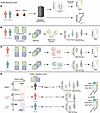 Figure 1
Study overview. (A) Day 0 and day 2 EDTA plasma from ROSE study participants underwent untargeted metabolic profiling to determine differences between latent class analysis (LCA) inflammatory phenotypes. (B) Longitudinal whole-blood transcriptomic data and metabolomic data were analyzed using an unsupervised multimodal factor analysis (MEFISTO), and the predominant sources of biological heterogeneity in the data of clinical relevance were assessed. (C) MEFISTO was applied separately to each phenotype to determine signatures related to mortality within each phenotype. (D) The highest weighted features (metabolite or gene) by absolute value within each multiomic factor of interest were used to calculate factor weights for patients in an observational cohort study (EARLI). The association of factor weights with LCA phenotypes and outcomes in the validation cohort was assessed. Created in BioRender. NES, normalized enrichment score.
Untargeted metabolic profiling identified 1,378 known metabolites (Supplemental Figure 2). After removing metabolites with high missingness (>25%), 982 remained for analysis. Differential abundance analysis using limma with adjustment for potential confounders identified 541 metabolites significantly different between phenotypes at day 0, with substantial differences across all metabolic classes (Figure 2, A and B). Similar analysis at day 2 revealed 494 significantly different metabolites, largely overlapping with day 0 findings (Figure 2C). Metabolite enrichment analysis using Metabolon’s library highlighted 60 dysregulated pathways at day 0 and 56 at day 2, totaling 74 unique metabolic pathways (Figure 2D and Supplemental Figure 3). The top 20 most differentially abundant metabolites belonged to lipids and amino acid classes, though the highest proportion of differentially abundant metabolites were related to energy production at both time points (Supplemental Tables 2 and 3). The primary metabolic differences between phenotypes persisted in sensitivity analyses restricted to pneumonia-only patients and adjusting for shock (Supplemental Figure 4 and Supplemental Tables 4 and 5). Similarly, adjusting for renal replacement therapy did not meaningfully alter the metabolomic differences between phenotypes (Supplemental Figure 5 and Supplemental Tables 6 and 7).
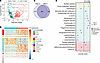 Figure 2
Metabolic profiling of LCA phenotypes (N = 160 patients). (A) Volcano plot showing differentially abundant metabolites between hyperinflammatory and hypoinflammatory ARDS at day 0, determined by limma adjusted for covariates (age, sex, BMI, medications, liver disease, and GFR). (B) Heatmap of differentially abundant metabolites by LCA phenotype at day 0 as determined by limma with adjustment for aforementioned covariates. Z-scaled log-transformed metabolite intensities are grouped by phenotype. (C) Venn diagram showing overlap of differentially abundant metabolites at day 0 and day 2 (day 2 also adjusted for randomization arm). (D) Metabolite pathway enrichment analysis comparing hyperinflammatory vs. hypoinflammatory groups at day 0 and day 2. X axis shows signed log10(P value), with positive values indicating positive enrichment in hyperinflammatory group and negative values indicating positive enrichment in hypoinflammatory group. Top 20 significant pathways are shown (FDR < 0.05). AA, amino acid; Carn, carnitine; FA, fatty acid; LC, long chain; MUFA, monounsaturated fatty acid; SAM, S-adenosylmethionine.
In patients surviving through day 2, individual metabolite trajectories did not differ by 90-day mortality in the full cohort or within phenotypes (Supplemental Figure 6). However, when metabolites were aggregated by class, several metabolic classes demonstrated significantly different trajectories based on 90-day mortality (Supplemental Figure 7A). Tryptophan metabolism, steroid pathways, and γ-glutamyl amino acids increased over time in non-survivors, who also demonstrated decreasing levels of lactosylceramides, lysoplasmalogens, hexosylceramides, sphingolipids, phospholipids, and ascorbate/aldarate metabolites. Hypoinflammatory non-survivors had increasing progestin steroids (Supplemental Figure 7B), while hyperinflammatory non-survivors exhibited decreasing acyl carnitines, plasmalogens, and ascorbate/aldarate metabolites alongside rising pregnenolone steroids (Supplemental Figure 7C). Testing for sex interactions across all metabolites revealed no biologically meaningful sex-specific differences in mortality-related trajectories (Supplemental Figure 8).
Mitochondrial metabolites are associated with hyperinflammatory phenotype and mortality.
We hypothesized that observed derangements in fatty acid oxidation, lactoyl amino acids, and TCA metabolites stemmed from mitochondrial dysfunction. To test this hypothesis, we curated mitochondria-associated metabolites based on established circulating biomarkers in genetic mitochondrial disorders (16). Of 38 detectable mitochondria-associated metabolites in our cohort, 37 (97%) differed significantly between phenotypes (Figure 3A). Since vasopressors can enhance glycolysis and lactate production (17, 18), we investigated whether increased mitochondrial metabolic activity in the hyperinflammatory group merely reflected vasopressor administration. Differential abundance analysis incorporating vasopressor administration (>1-hour infusion in preceding 24 hours) as a covariate revealed that 31 (81%) mitochondrial metabolites remained differentially abundant between phenotypes (Figure 3A), suggesting the distinct mitochondrial signature in the hyperinflammatory phenotype is independent of vasopressor effects. Further examining metabolic mitochondrial function through plasma redox-coupled (e.g., NADH/NAD+) metabolite pairs (19–23), we observed both lactate/pyruvate and 3-hydroxybutyrate/acetoacetate ratios were significantly higher in hyperinflammatory patients (Figure 3B), indicating systemic redox imbalance. Finally, assessing clinical relevance, 26 of 38 mitochondrial metabolites (68%) were associated with 90-day mortality in multivariate logistic regression models (Figure 3C).
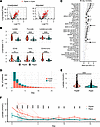 Figure 3
Mitochondrial metabolic derangements across LCA phenotypes. (A) Volcano plots comparing hyperinflammatory vs. hypoinflammatory phenotypes at day 0 in ROSE (N = 160 patients). Left: Unadjusted analysis showing statistical significance (limma) vs. log2 fold-change. Right: Analysis adjusted for age, sex, BMI, and vasopressor use. Solid colors represent mitochondrial metabolites. (B) Peak intensities of redox-coupled mitochondrial metabolites at day 0 in ROSE (N = 160 patients). (C) Association of mitochondrial metabolites at day 0 with 90-day mortality in ROSE patients (N = 160). X axis depicts regression coefficients with 95% confidence intervals from logistic regression models using log-transformed peak intensity as the primary predictor, adjusted for age, sex, BMI, and vasopressor use. Solid circles represent FDR P < 0.05. (D) Distribution of patients with clinical lactate measurements by LCA phenotype and enrollment day in the EARLI cohort (N = 546, hypoinflammatory: 380, hyperinflammatory: 166). (E) Comparison of highest clinical lactate value (days 0–2 after enrollment) per patient by phenotype in EARLI. (F) Longitudinal clinical lactate trajectories by phenotype showing mean ± SEM. Individual patient trajectories (random sample) are depicted, excluding those with lactate value > 15 mmol/L for visualization clarity. Wilcoxon’s rank-sum test P < 0.05 shown for each time point. *P < 0.05, **P < 0.01, ***P < 0.001. 3OHB, 3-hydroxybutyrate; FC, fold-change.
As proof of concept that metabolic differences identified through untargeted profiling reflected clinically quantifiable phenotype distinctions, we tested whether clinical lactate values differed by phenotype. Since ROSE lacked clinical lactate data, we examined measurements from EARLI, an independent cohort of critically ill patients with sepsis who had undergone LCA phenotyping (24). While both phenotypes presented with elevated lactate levels, hyperinflammatory patients had persistently higher lactate throughout nearly the entire follow-up period (Figure 3, D–F), validating that our metabolomic approach successfully identified clinically meaningful phenotypic differences. To further validate that metabolomic measurements captured patient-level lactate differences, we compared rankings between metabolomic and clinical lactate within EARLI patients with paired measurements available at baseline (n = 137). Metabolomic lactate demonstrated strong rank correlation with clinical lactate (Pearson’s p = 0.615; P < 1 × 10⁻⁴; Supplemental Figure 9), confirming our untargeted platform reliably captures relative metabolite differences between patients.
Multiomics analysis identifies principal factors related to LCA phenotypes.
To identify principal sources of biological heterogeneity in the ROSE cohort, we next performed integrated analysis of longitudinal metabolomics and whole-blood transcriptomics across all patients (Figure 1B). We selected the top 500 metabolites and 2,500 gene transcripts by median absolute deviation in the full cohort for multiomics analysis (Figure 4A). Applying a MEFISTO (Method for the Functional Integration of Spatial and Temporal Omics data) model incorporating both data types from both time points, we used temporal information as a covariate and configured the model to identify 10 latent factors (25). MEFISTO is a dimensionality reduction unsupervised approach for integrating multimodal data to identify driving sources of variation across data modalities. MEFISTO also disentangles sources of variation that change over time from those that are independent of time. Though MEFISTO does not enforce factor orthogonality, Spearman’s correlation analysis revealed no significant interfactor correlations, confirming each factor captured a distinct source of variability (Figure 4B). The model explained 49.6% of the total variance (R2) in transcriptomic data and 40.6% in metabolomic data (Supplemental Figure 10). Factors 1–3 collectively accounted for 59% of explained transcriptomic variance and 69% of explained metabolomic variance (Figure 4C and Supplemental Table 8). Factor 1 was predominantly driven by transcriptomic data, factor 2 by metabolomic data, and factor 3 by both data modalities.
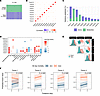 Figure 4
MEFISTO overview and association with clinical outcomes. (A) MEFISTO model overview with 290 samples (from 160 patients across 2 time points), top 500 metabolites, and top 2,500 gene transcripts by median absolute deviation. (B) Spearman’s correlation plot of 10 MEFISTO factors based on factor values. (C) Proportion of total variance explained by each factor and each data modality (metabolite vs. gene transcript). (D) The association of MEFISTO factor values at day 0 with clinical variables. Size and transparency of the dots represent strength of association as determined via Spearman’s correlation for continuous predictors or linear regression for categorical predictors (FDR < 0.05). Color represents directionality of the correlation. (E) Paired plots of MEFISTO factor values per patient sample, colored by LCA phenotype designation. (F) The slope of change in factor values over time by survival. Only factors associated with mortality at day 0 are depicted. P value derived from interaction term of a linear mixed effects regression model with 90-day mortality, time point, and their interaction as fixed effects and patient as random effect. APACHE, Acute Physiology and Chronic Health Evaluation III score; BMI, body mass index; GFR, glomerular filtration rate; metab, metabolite; NMB, neuromuscular blockade; PFRatio, PaO2/FiO2 at the time of enrollment in the ROSE trial; VFD, ventilator-free days.
We next analyzed associations between each latent factor at day 0 and key clinical characteristics and outcomes. Factors 1–4 exhibited strong associations with LCA phenotype designation, APACHE III scores, and ventilator-free days, while demonstrating variable associations with GFR, vasopressor use, corticosteroid administration, and propofol infusion (Figure 4D). The first 3 factors each explained more than 15% of model variance and were independently associated with mortality. Notably, factor 5, lacking association with LCA phenotypes, demonstrated strong independent association with mortality. While factor 2 substantially separated phenotypes, the combination of factors 2 and 3 achieved near-complete phenotype discrimination (Figure 4E). These findings indicate that the principal sources of biological heterogeneity identified through our data-driven multiomic approach strongly aligned with the biological signals captured by LCA phenotype designation.
Multiomic factors are related to mortality.
Factors 1, 2, 3, and 5 demonstrated strong associations with mortality (Figure 4D). MEFISTO identified all factors as time independent (time scales = 0), and the rate of change in factor values over time did not differ by 90-day mortality outcome (Figure 4F). In stepwise logistic regression analysis, a combination of factors 2 and 3 was sufficient to nullify the relationship between LCA phenotype and mortality (Supplemental Figure 11). Complete enrichment results are provided in the Supporting Data Values, with representative examples shown in Figure 5.
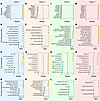 Figure 5
Top features and pathways within mortality-associated MEFISTO factors. (A, E, I, and M) Top 10 genes by relative scaled weight in each factor. (B, F, J, and N) Select top gene set enrichment pathways in each factor using Reactome pathways in each factor using Reactome and MitoCarta 3.0. X axis depicts normalized enrichment score (NES). (C, G, K, and O) Top 10 metabolites by relative scaled weight in each factor. (D, H, L, and P) Top metabolic pathways. X axis depicts NES. 5-ETE, 5-eicosatetraenoic acids; BCAA, branched chain amino acid; carb, carbohydrate; carn, carnitine; DAG, diacylglycerols; FA, fatty acid; GAG, glycosaminoglycan; GPCR, G protein–coupled receptor; HSC, hematopoietic stem cell; IFN, interferon; LC, long chain; Metab, metabolism; Neut, neutrophil; plt, platelet; Ox, oxidative; OXPHOS, oxidative phosphorylation; PUFA, polyunsaturated fatty acid; SeAA, selenoamino acid; ROS, reactive oxygen species; SRP, signal recognition particle; TLR, Toll-like receptor.
Factor 1, predominantly driven by gene expression, revealed coordinated changes between whole-blood transcripts and plasma metabolites, primarily reflecting innate immune activation (Figure 5, A–D). To better understand the cellular origins of these transcriptional signatures, we performed computational deconvolution using CIBERSORTx with a published sepsis neutrophil reference dataset (26). Factor 1 demonstrated strong positive correlation with total neutrophils and immature progenitor neutrophils, while showing negative correlation with adaptive immune cells (Supplemental Figure 12A). Gene set enrichment analysis demonstrated significant positive enrichment in neutrophil degranulation, characterized by upregulation of emergency granulopoiesis markers and stress response genes (Supplemental Figure 12, B–D), alongside TLR1/TLR2 signaling pathways, GAG metabolism, lipid metabolism, and 5-ETE synthesis pathways, with negative enrichment in protein synthesis/trafficking and EIF2AK4-mediated integrated stress response pathways. These transcriptional changes accompanied systemic metabolic alterations characterized by decreased plasma levels of long-chain polyunsaturated fatty acids, lysophospholipids, and plasmalogens, coupled with elevated pregnenolone and androgenic steroids, lactoyl amino acids, glycolytic intermediates, and branched chain amino acid catabolites.
Factor 2, significantly associated with clinical evidence of hepatic and renal dysfunction (Figure 4D), was primarily metabolite driven (Figure 5, E–H). The plasma metabolome demonstrated accumulation of ω-oxidation products (monohydroxy and dicarboxylated fatty acids) alongside decreased membrane-associated lipids and lipid signaling molecules (Figure 5H). Transcriptional profiling revealed increased expression of ABCA1, the cholesterol efflux pump, as well as positive enrichment of translation machinery and EIF2AK4-mediated amino acid stress response pathways (Figure 5F), with negative enrichment in neutrophil degranulation (Supplemental Figure 12), platelet activation, and GPCR signaling pathways. Computational deconvolution revealed that factor 2 correlated negatively with mature neutrophils and adaptive immune cells, suggesting depletion or functional suppression of these populations (Supplemental Figure 12).
Factor 3, associated with clinical evidence of renal dysfunction (Figure 4D), was characterized by impaired host response with reduced interferon signaling and increased systemic metabolic stress (Figure 5, I–L). Transcriptional analysis revealed positive enrichment for influenza infection and basic cellular processes, including protein synthesis and RNA processing, while immune signaling pathways were broadly suppressed (Figure 5J). Higher factor 3 values corresponded with increased expression of mitochondrial oxidative phosphorylation genes, particularly complexes I and III. Notably, both type I and type II interferon signaling pathways were downregulated, alongside decreased expression of lymphoid cell interaction genes. These transcriptional changes were accompanied by elevated lactoyl amino acids and polyamines and reduced sphingomyelins and lysophospholipids.
Factor 5 values were significantly associated with mortality but not LCA phenotype (Figure 4D). Analysis revealed a molecular state characterized by cell proliferation and oxidative stress (Figure 5, M–P). Transcriptional profiling demonstrated positive enrichment of DNA replication, cell cycle progression, RUNX1-mediated hematopoietic differentiation and megakaryocyte activation, HCMV infection, and increased WNT target gene engagement (Figure 5N). This hyperproliferative state featured increased expression of mitochondrial iron homeostasis genes, Fe-S protein metabolism, and ROS management systems, concurrent with activation of oxidative stress–induced senescence pathways.
Multiomics analysis reveals mortality-associated signatures within LCA phenotypes.
To investigate mechanisms underlying outcome heterogeneity within each ARDS phenotype, we conducted separate multiomics factor analyses within each phenotype (Figure 1C). Using MEFISTO with identical parameters to our full cohort analysis, we found that, in both phenotypes, transcriptional variation contributed more substantially to within-phenotype heterogeneity than metabolomic variation (Figure 6, A and B, and Figure 7, A and B).
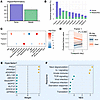 Figure 6
Hypoinflammatory MEFISTO and mortality-associated signature. Analysis of 153 samples from 80 patients at 2 time points. (A) Proportion of total variance explained per MEFISTO factor and per data modality (gene, metabolite). (B) Proportion of total variance explained per MEFISTO factor. (C) Association of MEFISTO factors with clinical variables at day 0 as determined via Spearman’s correlation for continuous predictors and linear regression for categorical predictors (FDR < 0.05). (D) The slope of change in factor 1 over time by 90-day mortality. P value derived from interaction term of a linear mixed effects regression model with 90-day mortality, time point, and their interaction as fixed effects and patient as random effect. (E) Top genes in factor 1 by relative scaled weight. (F) Enriched gene expression pathways in factor 1. X axis depicts normalized enrichment score (NES). NMD, nonsense-mediated decay; APACHE, Acute Physiology and Chronic Health Evaluation III score; BMI, body mass index; GFR, glomerular filtration rate; IL, interleukin; metab, metabolite; Neut, neutrophil; NMB, neuromuscular blockade; NMD, nonsense-mediated decay; PFRatio, PaO2/FiO2 at the time of enrollment; TCR, T cell receptor; VFD, ventilator-free days.
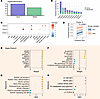 Figure 7
Hyperinflammatory MEFISTO and mortality-associated signature. Analysis of 137 samples from 80 patients at 2 time points. (A) Proportion of total variance explained per data modality (gene, metabolite). (B) Proportion of total variance explained per MEFISTO factor. (C) Association of MEFISTO factors with clinical variables at day 0 as determined via Spearman’s correlation for continuous predictors and linear regression for categorical predictors (FDR < 0.05). (D) The slope of change in factor 3 over time by 90-day mortality. P value derived from interaction term of a linear mixed effects regression model with 90-day mortality, time point, and their interaction as fixed effects and patient as random effect. (E) Top genes in factor 3 by relative scaled weight. (F) Top metabolites in factor 3 by relative scaled weight. (G) Top enriched gene expression pathways by normalized enrichment score (NES) in factor 3. (H) Top enriched metabolic pathways by NES in factor 3. ESR, estrogen receptor; plt, platelet; APACHE, Acute Physiology and Chronic Health Evaluation III score; BMI, body mass index; Carn, carnitine; FA, fatty acid; GFR, glomerular filtration rate; HSC, hematopoietic stem cell; LC, long chain; metab, metabolism; MUFA, monounsaturated fatty acid; PUFA, polyunsaturated fatty acid; Sat, saturated.
In the hypoinflammatory group, factor 1, primarily characterized by gene expression patterns, was associated with mortality (Figure 6, B and C). Factor 1 values demonstrated no differential change over time based on survival status (Figure 6D) but had strong association with moderate-to-high dose of corticosteroid treatment in the preceding 24 hours. Gene expression profiling revealed positive enrichment of innate immune response pathways (neutrophil degranulation and IL-1 signaling) with concurrent negative enrichment of translation machinery, starvation response, nonsense-mediated decay, viral infection, adaptive immune response, and integrated stress response pathways among others (Figure 6, E and F).
In the hyperinflammatory group, factors 1–3 explained most data variance (Figure 7B). While factor 1 had no association with clinical variables, factor 3 demonstrated strong association with mortality, with similar temporal trajectories between survivors and non-survivors (Figure 7, C and D). Factor 3 was characterized by elevated expression of genes involved in RUNX1-mediated hematopoiesis and megakaryopoiesis, epigenetic remodeling, viral infection signatures, and increased cell cycle activity with negative enrichment in transcriptional regulation by VENTX and TNF receptor superfamily mediating non-canonical NF-κB pathways (Figure 7, E and G). TCA cycle intermediates and mitochondrial metabolites (malate, succinate, fumarate, lactate) were positively weighted (Figure 7F). Metabolite analysis identified systemic stress markers (lactoyl amino acids), altered lipid metabolism, and reduced long-chain polyunsaturated fatty acids among others (Figure 7H).
Multiomic signatures are validated in external cohorts.
To assess generalizability of MEFISTO latent factors derived from our cohort with extreme phenotype designations, we examined these associations in EARLI, an ongoing, prospective, observational cohort study of critically ill adults with sepsis (Figure 1D). A subset of EARLI patients meeting sepsis criteria within 2 days of enrollment (n = 818) had previously undergone LCA phenotyping (24). Metabolomic data were available for 195 patients, whole-blood transcriptomics for 196 patients, and both data types for 61 patients (Supplemental Figure 13 and Supplemental Table 9) (27, 28).
To project ROSE MEFISTO factors onto EARLI patients, we selected the top 100 highest weighted features by absolute scaled weight within each factor of interest, yielding 2 transcriptomic signatures (factors 1 and 3) and 1 metabolomic signature (factor 2). This approach reduced noise from lower-weighted features and enabled testing in a larger cohort. We calculated factor 1 and 3 scores for EARLI patients with transcriptomic data (n = 196) and factor 2 values for those with metabolomic data (n = 195). All 3 ROSE MEFISTO factors demonstrated similar LCA phenotype associations in EARLI, with improved phenotype discrimination achieved by combining factors 2 and 3 (Figure 8, A–C). The 4 mortality-associated ROSE MEFISTO factors were similarly associated with mortality in EARLI (Figure 8D).
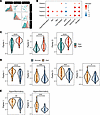 Figure 8
ROSE MEFISTO factor projections in the EARLI observational cohort. (A) Scatterplot of paired projected factor values per patient sample, colored by LCA phenotype designation, in patients with both transcriptomic and metabolomic data available (N = 61). (B) Association of projected MEFISTO factor values with clinical variables as determined via Spearman’s correlation for continuous predictors and linear regression for categorical predictors. (C) Projected factor values per patient sample comparing hyperinflammatory and hypoinflammatory phenotype. P value determined by Wilcoxon’s rank-sum. N = 189 patients with transcriptomic data (factors 1 and 3), and N = 183 patients with metabolomic data (factor 2). (D) Projected factor values per patient sample comparing hospital survivors and non-survivors in those with physician-adjudicated sepsis and transcriptomic data (N = 196 for transcriptomic factors 1, 3, and 5; N = 195 for metabolomic factor 2). P value determined by Wilcoxon’s rank-sum. (E) Projected phenotype-specific MEFISTO factors associated with mortality onto the extreme (P > 0.9) hypoinflammatory (left, N = 101) and extreme hyperinflammatory (right, N = 61) patients in EARLI. *P < 0.05, **P < 0.01, ***P < 0.001, ****P < 0.0001. APACHE, Acute Physiology and Chronic Health Evaluation III score; GFR, glomerular filtration rate.
Using the same approach, we projected ROSE MEFISTO mortality-associated factors derived within each LCA phenotype onto the EARLI participants with high phenotype probability (P > 0.9). The top 100 features in each phenotype-specific factor yielded 1 transcriptomic signature per phenotype. Among patients with phenotype probability greater than 0.9, transcriptomic data were available for 101 with hypoinflammatory and 61 with hyperinflammatory sepsis. Both phenotype-specific mortality signatures demonstrated significant mortality associations in the EARLI cohort (Figure 8E).


Copyright © 2026 American Society for Clinical Investigation
ISSN: 0021-9738 (print), 1558-8238 (online)