
Advertisement
Research ArticleCell biologyGeneticsNeuroscience
Open Access |  10.1172/JCI195336
Pathogenic variants in BORCS5 cause a spectrum of neurodevelopmental and neurodegenerative disorders with lysosomal dysfunction
Niccolò E. Mencacci,1 Georgia Minakaki,1 Reza Maroofian,2 Raffaella De Pace,3 Adeline Paimboeuf,4 Tiago Branco Fonseca,1 Tatiana Abramova,1 Patrick Shannon,5 David Chitayat,6,7 Francesca Magrinelli,8 Wesley J. Peng,1 Diptaman Chatterjee,1 Sara H. Eldessouky,9 Julia Baptista,10 Tamas Marton,11,12 Julie Vogt,13 Juan Dario Ortigoza-Escobar,14,15,16 Loreto Martorell,17 Marta Gómez-Chiari,18,19 Ingrid M. Wentzensen,20 Erik-Jan Kamsteeg,21 Maha S. Zaki,22 Annarita Scardamaglia,2 Giovanni Zifarelli,23 Zuhair Nasser Al-Hassnan,24 Elka Miller,25 Shiri Shinar,26 Lova S. Matsa,27 Sri Hari Chandan Appikonda,27 Ghada A. Otaify,22,28,29 Khalid Al-Thihli,28,29 Almundher Al-Maawali,28,29 Michael Schwake,30 Mariasavina Severino,31 Henry Houlden,2 Shunmoogum A. Patten,4,32 Juan S. Bonifacino,3 Kailash P. Bhatia,8 and Dimitri Krainc1
1Davee Department of Neurology, Northwestern University Feinberg School of Medicine, Chicago, Illinois, USA.
2Department of Neuromuscular Disorders, UCL Queen Square Institute of Neurology, University College London, London, United Kingdom.
3Division of Neuroscience and Cellular Structure, Eunice Kennedy Shriver National Institute of Child Health and Human Development, NIH, Bethesda, Maryland, USA.
4Institut National de la Recherche Scientifique, Centre Armand Frappier Santé Biotechnologie, Laval, Quebec, Canada.
5Department of Pathology and Laboratory Medicine, Mount Sinai Hospital,
6The Prenatal Diagnosis and Medical Genetics Program, Mount Sinai Hospital, and
7Division of Clinical and Metabolic Genetics, Hospital for Sick Children, University of Toronto, Toronto, Ontario, Canada.
8Department of Clinical and Movement Neurosciences, UCL Queen Square Institute of Neurology, University College London, London, United Kingdom.
9Prenatal Diagnosis & Fetal Medicine Department, Human Genetics and Genome Research Institute, National Research Centre, Cairo, Egypt.
10King’s College Hospital, Synnovis, Denmark Hill, London, SE5 9RS and Department of Medical & Molecular Genetics, Faculty of Life Sciences and Medicine, King’s College London, United Kingdom.
11Cellular Pathology Department, Birmingham Women’s and Children’s NHS Foundation Trust, Birmingham, United Kingdom.
12Department of Obstetrics and Gynecology, Semmelweis University, Baross u. 27, Budapest, Hungary.
13West Midlands Regional Genetics Service, Birmingham Women’s and Children’s NHS Foundation Trust, Birmingham, United Kingdom.
14Movement Disorders Unit, Pediatric Neurology Department, Institut de Recerca, Sant Joan de Déu Barcelona Children’s Hospital, Barcelona, Spain.
15European Reference Network for Rare Neurological Diseases, Barcelona, Spain.
16U-703 Centre for Biomedical Research on Rare Diseases, Instituto de Salud Carlos III, Barcelona, Spain.
17Department of Genetic,
18Diagnostic Imaging Department, and
19Institut de Recerca Sant Joan de Déu, Sant Joan de Déu Barcelona Children’s Hospital, Esplugues de Llobregat, Spain.
20GeneDx, LLC, Gaithersburg Maryland, USA.
21Department of Human Genetics, Radboud University Medical Center, Nijmegen, Netherlands.
22Department of Clinical Genetics, Human Genetics and Genome Research Institute, National Research Centre, Cairo, Egypt.
23CENTOGENE, Rostock, Germany.
24Department of Medical Genomics, Genomic Medicine Centre of Excellence, King Faisal Specialist Hospital & Research Center, Riyadh, Saudi Arabia.
25Department of Diagnostic and Interventional Radiology, Hospital for Sick Children, and
26Ontario Fetal Center, Department of Obstetrics and Gynecology, Mount Sinai Hospital, University of Toronto, Toronto, Ontario, Canada.
27Genomic Precision Diagnostic Department, Igenomix FZ LLC, Dubai, United Arab Emirates.
28Department of Genetics, Sultan Qaboos University Hospital, University Medical City, Muscat, Oman.
29Department of Genetics, College of Medicine and Health Sciences, Sultan Qaboos University, Muscat, Oman.
30Biochemistry III, Department of Chemistry, University of Bielefeld, Bielefeld, Germany.
31Neuroradiology Unit, Istituto di Ricovero e Cura a Carattere Scientifico Giannina Gaslini, Genova, Italy.
32Département de Neurosciences, Université de Montréal, Montréal, Quebec, Canada.
Address correspondence to: Niccolò E. Mencacci, Department of Neurology, Northwestern University Feinberg School of Medicine, 303 E Chicago Avenue, Ward 12-373, Chicago 60611, Illinois, USA. Phone: 1.312.503.1781; Email niccolo.mencacci@northwestern.edu. Or to: Dimitri Krainc, Department of Neurology, Northwestern University Feinberg School of Medicine, 303 E Chicago Avenue, Ward 12-140, Chicago 60611, Illinois, USA. Phone: 1.312.503.3936; Email: krainc@northwestern.edu.
Authorship note: NEM, GM, and RM are co–first authors.
Find articles by Mencacci, N. in: PubMed | Google Scholar
1Davee Department of Neurology, Northwestern University Feinberg School of Medicine, Chicago, Illinois, USA.
2Department of Neuromuscular Disorders, UCL Queen Square Institute of Neurology, University College London, London, United Kingdom.
3Division of Neuroscience and Cellular Structure, Eunice Kennedy Shriver National Institute of Child Health and Human Development, NIH, Bethesda, Maryland, USA.
4Institut National de la Recherche Scientifique, Centre Armand Frappier Santé Biotechnologie, Laval, Quebec, Canada.
5Department of Pathology and Laboratory Medicine, Mount Sinai Hospital,
6The Prenatal Diagnosis and Medical Genetics Program, Mount Sinai Hospital, and
7Division of Clinical and Metabolic Genetics, Hospital for Sick Children, University of Toronto, Toronto, Ontario, Canada.
8Department of Clinical and Movement Neurosciences, UCL Queen Square Institute of Neurology, University College London, London, United Kingdom.
9Prenatal Diagnosis & Fetal Medicine Department, Human Genetics and Genome Research Institute, National Research Centre, Cairo, Egypt.
10King’s College Hospital, Synnovis, Denmark Hill, London, SE5 9RS and Department of Medical & Molecular Genetics, Faculty of Life Sciences and Medicine, King’s College London, United Kingdom.
11Cellular Pathology Department, Birmingham Women’s and Children’s NHS Foundation Trust, Birmingham, United Kingdom.
12Department of Obstetrics and Gynecology, Semmelweis University, Baross u. 27, Budapest, Hungary.
13West Midlands Regional Genetics Service, Birmingham Women’s and Children’s NHS Foundation Trust, Birmingham, United Kingdom.
14Movement Disorders Unit, Pediatric Neurology Department, Institut de Recerca, Sant Joan de Déu Barcelona Children’s Hospital, Barcelona, Spain.
15European Reference Network for Rare Neurological Diseases, Barcelona, Spain.
16U-703 Centre for Biomedical Research on Rare Diseases, Instituto de Salud Carlos III, Barcelona, Spain.
17Department of Genetic,
18Diagnostic Imaging Department, and
19Institut de Recerca Sant Joan de Déu, Sant Joan de Déu Barcelona Children’s Hospital, Esplugues de Llobregat, Spain.
20GeneDx, LLC, Gaithersburg Maryland, USA.
21Department of Human Genetics, Radboud University Medical Center, Nijmegen, Netherlands.
22Department of Clinical Genetics, Human Genetics and Genome Research Institute, National Research Centre, Cairo, Egypt.
23CENTOGENE, Rostock, Germany.
24Department of Medical Genomics, Genomic Medicine Centre of Excellence, King Faisal Specialist Hospital & Research Center, Riyadh, Saudi Arabia.
25Department of Diagnostic and Interventional Radiology, Hospital for Sick Children, and
26Ontario Fetal Center, Department of Obstetrics and Gynecology, Mount Sinai Hospital, University of Toronto, Toronto, Ontario, Canada.
27Genomic Precision Diagnostic Department, Igenomix FZ LLC, Dubai, United Arab Emirates.
28Department of Genetics, Sultan Qaboos University Hospital, University Medical City, Muscat, Oman.
29Department of Genetics, College of Medicine and Health Sciences, Sultan Qaboos University, Muscat, Oman.
30Biochemistry III, Department of Chemistry, University of Bielefeld, Bielefeld, Germany.
31Neuroradiology Unit, Istituto di Ricovero e Cura a Carattere Scientifico Giannina Gaslini, Genova, Italy.
32Département de Neurosciences, Université de Montréal, Montréal, Quebec, Canada.
Address correspondence to: Niccolò E. Mencacci, Department of Neurology, Northwestern University Feinberg School of Medicine, 303 E Chicago Avenue, Ward 12-373, Chicago 60611, Illinois, USA. Phone: 1.312.503.1781; Email niccolo.mencacci@northwestern.edu. Or to: Dimitri Krainc, Department of Neurology, Northwestern University Feinberg School of Medicine, 303 E Chicago Avenue, Ward 12-140, Chicago 60611, Illinois, USA. Phone: 1.312.503.3936; Email: krainc@northwestern.edu.
Authorship note: NEM, GM, and RM are co–first authors.
Find articles by Minakaki, G. in: PubMed | Google Scholar
1Davee Department of Neurology, Northwestern University Feinberg School of Medicine, Chicago, Illinois, USA.
2Department of Neuromuscular Disorders, UCL Queen Square Institute of Neurology, University College London, London, United Kingdom.
3Division of Neuroscience and Cellular Structure, Eunice Kennedy Shriver National Institute of Child Health and Human Development, NIH, Bethesda, Maryland, USA.
4Institut National de la Recherche Scientifique, Centre Armand Frappier Santé Biotechnologie, Laval, Quebec, Canada.
5Department of Pathology and Laboratory Medicine, Mount Sinai Hospital,
6The Prenatal Diagnosis and Medical Genetics Program, Mount Sinai Hospital, and
7Division of Clinical and Metabolic Genetics, Hospital for Sick Children, University of Toronto, Toronto, Ontario, Canada.
8Department of Clinical and Movement Neurosciences, UCL Queen Square Institute of Neurology, University College London, London, United Kingdom.
9Prenatal Diagnosis & Fetal Medicine Department, Human Genetics and Genome Research Institute, National Research Centre, Cairo, Egypt.
10King’s College Hospital, Synnovis, Denmark Hill, London, SE5 9RS and Department of Medical & Molecular Genetics, Faculty of Life Sciences and Medicine, King’s College London, United Kingdom.
11Cellular Pathology Department, Birmingham Women’s and Children’s NHS Foundation Trust, Birmingham, United Kingdom.
12Department of Obstetrics and Gynecology, Semmelweis University, Baross u. 27, Budapest, Hungary.
13West Midlands Regional Genetics Service, Birmingham Women’s and Children’s NHS Foundation Trust, Birmingham, United Kingdom.
14Movement Disorders Unit, Pediatric Neurology Department, Institut de Recerca, Sant Joan de Déu Barcelona Children’s Hospital, Barcelona, Spain.
15European Reference Network for Rare Neurological Diseases, Barcelona, Spain.
16U-703 Centre for Biomedical Research on Rare Diseases, Instituto de Salud Carlos III, Barcelona, Spain.
17Department of Genetic,
18Diagnostic Imaging Department, and
19Institut de Recerca Sant Joan de Déu, Sant Joan de Déu Barcelona Children’s Hospital, Esplugues de Llobregat, Spain.
20GeneDx, LLC, Gaithersburg Maryland, USA.
21Department of Human Genetics, Radboud University Medical Center, Nijmegen, Netherlands.
22Department of Clinical Genetics, Human Genetics and Genome Research Institute, National Research Centre, Cairo, Egypt.
23CENTOGENE, Rostock, Germany.
24Department of Medical Genomics, Genomic Medicine Centre of Excellence, King Faisal Specialist Hospital & Research Center, Riyadh, Saudi Arabia.
25Department of Diagnostic and Interventional Radiology, Hospital for Sick Children, and
26Ontario Fetal Center, Department of Obstetrics and Gynecology, Mount Sinai Hospital, University of Toronto, Toronto, Ontario, Canada.
27Genomic Precision Diagnostic Department, Igenomix FZ LLC, Dubai, United Arab Emirates.
28Department of Genetics, Sultan Qaboos University Hospital, University Medical City, Muscat, Oman.
29Department of Genetics, College of Medicine and Health Sciences, Sultan Qaboos University, Muscat, Oman.
30Biochemistry III, Department of Chemistry, University of Bielefeld, Bielefeld, Germany.
31Neuroradiology Unit, Istituto di Ricovero e Cura a Carattere Scientifico Giannina Gaslini, Genova, Italy.
32Département de Neurosciences, Université de Montréal, Montréal, Quebec, Canada.
Address correspondence to: Niccolò E. Mencacci, Department of Neurology, Northwestern University Feinberg School of Medicine, 303 E Chicago Avenue, Ward 12-373, Chicago 60611, Illinois, USA. Phone: 1.312.503.1781; Email niccolo.mencacci@northwestern.edu. Or to: Dimitri Krainc, Department of Neurology, Northwestern University Feinberg School of Medicine, 303 E Chicago Avenue, Ward 12-140, Chicago 60611, Illinois, USA. Phone: 1.312.503.3936; Email: krainc@northwestern.edu.
Authorship note: NEM, GM, and RM are co–first authors.
Find articles by Maroofian, R. in: PubMed | Google Scholar
1Davee Department of Neurology, Northwestern University Feinberg School of Medicine, Chicago, Illinois, USA.
2Department of Neuromuscular Disorders, UCL Queen Square Institute of Neurology, University College London, London, United Kingdom.
3Division of Neuroscience and Cellular Structure, Eunice Kennedy Shriver National Institute of Child Health and Human Development, NIH, Bethesda, Maryland, USA.
4Institut National de la Recherche Scientifique, Centre Armand Frappier Santé Biotechnologie, Laval, Quebec, Canada.
5Department of Pathology and Laboratory Medicine, Mount Sinai Hospital,
6The Prenatal Diagnosis and Medical Genetics Program, Mount Sinai Hospital, and
7Division of Clinical and Metabolic Genetics, Hospital for Sick Children, University of Toronto, Toronto, Ontario, Canada.
8Department of Clinical and Movement Neurosciences, UCL Queen Square Institute of Neurology, University College London, London, United Kingdom.
9Prenatal Diagnosis & Fetal Medicine Department, Human Genetics and Genome Research Institute, National Research Centre, Cairo, Egypt.
10King’s College Hospital, Synnovis, Denmark Hill, London, SE5 9RS and Department of Medical & Molecular Genetics, Faculty of Life Sciences and Medicine, King’s College London, United Kingdom.
11Cellular Pathology Department, Birmingham Women’s and Children’s NHS Foundation Trust, Birmingham, United Kingdom.
12Department of Obstetrics and Gynecology, Semmelweis University, Baross u. 27, Budapest, Hungary.
13West Midlands Regional Genetics Service, Birmingham Women’s and Children’s NHS Foundation Trust, Birmingham, United Kingdom.
14Movement Disorders Unit, Pediatric Neurology Department, Institut de Recerca, Sant Joan de Déu Barcelona Children’s Hospital, Barcelona, Spain.
15European Reference Network for Rare Neurological Diseases, Barcelona, Spain.
16U-703 Centre for Biomedical Research on Rare Diseases, Instituto de Salud Carlos III, Barcelona, Spain.
17Department of Genetic,
18Diagnostic Imaging Department, and
19Institut de Recerca Sant Joan de Déu, Sant Joan de Déu Barcelona Children’s Hospital, Esplugues de Llobregat, Spain.
20GeneDx, LLC, Gaithersburg Maryland, USA.
21Department of Human Genetics, Radboud University Medical Center, Nijmegen, Netherlands.
22Department of Clinical Genetics, Human Genetics and Genome Research Institute, National Research Centre, Cairo, Egypt.
23CENTOGENE, Rostock, Germany.
24Department of Medical Genomics, Genomic Medicine Centre of Excellence, King Faisal Specialist Hospital & Research Center, Riyadh, Saudi Arabia.
25Department of Diagnostic and Interventional Radiology, Hospital for Sick Children, and
26Ontario Fetal Center, Department of Obstetrics and Gynecology, Mount Sinai Hospital, University of Toronto, Toronto, Ontario, Canada.
27Genomic Precision Diagnostic Department, Igenomix FZ LLC, Dubai, United Arab Emirates.
28Department of Genetics, Sultan Qaboos University Hospital, University Medical City, Muscat, Oman.
29Department of Genetics, College of Medicine and Health Sciences, Sultan Qaboos University, Muscat, Oman.
30Biochemistry III, Department of Chemistry, University of Bielefeld, Bielefeld, Germany.
31Neuroradiology Unit, Istituto di Ricovero e Cura a Carattere Scientifico Giannina Gaslini, Genova, Italy.
32Département de Neurosciences, Université de Montréal, Montréal, Quebec, Canada.
Address correspondence to: Niccolò E. Mencacci, Department of Neurology, Northwestern University Feinberg School of Medicine, 303 E Chicago Avenue, Ward 12-373, Chicago 60611, Illinois, USA. Phone: 1.312.503.1781; Email niccolo.mencacci@northwestern.edu. Or to: Dimitri Krainc, Department of Neurology, Northwestern University Feinberg School of Medicine, 303 E Chicago Avenue, Ward 12-140, Chicago 60611, Illinois, USA. Phone: 1.312.503.3936; Email: krainc@northwestern.edu.
Authorship note: NEM, GM, and RM are co–first authors.
Find articles by
De Pace, R.
in:
PubMed
|
Google Scholar
|

1Davee Department of Neurology, Northwestern University Feinberg School of Medicine, Chicago, Illinois, USA.
2Department of Neuromuscular Disorders, UCL Queen Square Institute of Neurology, University College London, London, United Kingdom.
3Division of Neuroscience and Cellular Structure, Eunice Kennedy Shriver National Institute of Child Health and Human Development, NIH, Bethesda, Maryland, USA.
4Institut National de la Recherche Scientifique, Centre Armand Frappier Santé Biotechnologie, Laval, Quebec, Canada.
5Department of Pathology and Laboratory Medicine, Mount Sinai Hospital,
6The Prenatal Diagnosis and Medical Genetics Program, Mount Sinai Hospital, and
7Division of Clinical and Metabolic Genetics, Hospital for Sick Children, University of Toronto, Toronto, Ontario, Canada.
8Department of Clinical and Movement Neurosciences, UCL Queen Square Institute of Neurology, University College London, London, United Kingdom.
9Prenatal Diagnosis & Fetal Medicine Department, Human Genetics and Genome Research Institute, National Research Centre, Cairo, Egypt.
10King’s College Hospital, Synnovis, Denmark Hill, London, SE5 9RS and Department of Medical & Molecular Genetics, Faculty of Life Sciences and Medicine, King’s College London, United Kingdom.
11Cellular Pathology Department, Birmingham Women’s and Children’s NHS Foundation Trust, Birmingham, United Kingdom.
12Department of Obstetrics and Gynecology, Semmelweis University, Baross u. 27, Budapest, Hungary.
13West Midlands Regional Genetics Service, Birmingham Women’s and Children’s NHS Foundation Trust, Birmingham, United Kingdom.
14Movement Disorders Unit, Pediatric Neurology Department, Institut de Recerca, Sant Joan de Déu Barcelona Children’s Hospital, Barcelona, Spain.
15European Reference Network for Rare Neurological Diseases, Barcelona, Spain.
16U-703 Centre for Biomedical Research on Rare Diseases, Instituto de Salud Carlos III, Barcelona, Spain.
17Department of Genetic,
18Diagnostic Imaging Department, and
19Institut de Recerca Sant Joan de Déu, Sant Joan de Déu Barcelona Children’s Hospital, Esplugues de Llobregat, Spain.
20GeneDx, LLC, Gaithersburg Maryland, USA.
21Department of Human Genetics, Radboud University Medical Center, Nijmegen, Netherlands.
22Department of Clinical Genetics, Human Genetics and Genome Research Institute, National Research Centre, Cairo, Egypt.
23CENTOGENE, Rostock, Germany.
24Department of Medical Genomics, Genomic Medicine Centre of Excellence, King Faisal Specialist Hospital & Research Center, Riyadh, Saudi Arabia.
25Department of Diagnostic and Interventional Radiology, Hospital for Sick Children, and
26Ontario Fetal Center, Department of Obstetrics and Gynecology, Mount Sinai Hospital, University of Toronto, Toronto, Ontario, Canada.
27Genomic Precision Diagnostic Department, Igenomix FZ LLC, Dubai, United Arab Emirates.
28Department of Genetics, Sultan Qaboos University Hospital, University Medical City, Muscat, Oman.
29Department of Genetics, College of Medicine and Health Sciences, Sultan Qaboos University, Muscat, Oman.
30Biochemistry III, Department of Chemistry, University of Bielefeld, Bielefeld, Germany.
31Neuroradiology Unit, Istituto di Ricovero e Cura a Carattere Scientifico Giannina Gaslini, Genova, Italy.
32Département de Neurosciences, Université de Montréal, Montréal, Quebec, Canada.
Address correspondence to: Niccolò E. Mencacci, Department of Neurology, Northwestern University Feinberg School of Medicine, 303 E Chicago Avenue, Ward 12-373, Chicago 60611, Illinois, USA. Phone: 1.312.503.1781; Email niccolo.mencacci@northwestern.edu. Or to: Dimitri Krainc, Department of Neurology, Northwestern University Feinberg School of Medicine, 303 E Chicago Avenue, Ward 12-140, Chicago 60611, Illinois, USA. Phone: 1.312.503.3936; Email: krainc@northwestern.edu.
Authorship note: NEM, GM, and RM are co–first authors.
Find articles by Paimboeuf, A. in: PubMed | Google Scholar
1Davee Department of Neurology, Northwestern University Feinberg School of Medicine, Chicago, Illinois, USA.
2Department of Neuromuscular Disorders, UCL Queen Square Institute of Neurology, University College London, London, United Kingdom.
3Division of Neuroscience and Cellular Structure, Eunice Kennedy Shriver National Institute of Child Health and Human Development, NIH, Bethesda, Maryland, USA.
4Institut National de la Recherche Scientifique, Centre Armand Frappier Santé Biotechnologie, Laval, Quebec, Canada.
5Department of Pathology and Laboratory Medicine, Mount Sinai Hospital,
6The Prenatal Diagnosis and Medical Genetics Program, Mount Sinai Hospital, and
7Division of Clinical and Metabolic Genetics, Hospital for Sick Children, University of Toronto, Toronto, Ontario, Canada.
8Department of Clinical and Movement Neurosciences, UCL Queen Square Institute of Neurology, University College London, London, United Kingdom.
9Prenatal Diagnosis & Fetal Medicine Department, Human Genetics and Genome Research Institute, National Research Centre, Cairo, Egypt.
10King’s College Hospital, Synnovis, Denmark Hill, London, SE5 9RS and Department of Medical & Molecular Genetics, Faculty of Life Sciences and Medicine, King’s College London, United Kingdom.
11Cellular Pathology Department, Birmingham Women’s and Children’s NHS Foundation Trust, Birmingham, United Kingdom.
12Department of Obstetrics and Gynecology, Semmelweis University, Baross u. 27, Budapest, Hungary.
13West Midlands Regional Genetics Service, Birmingham Women’s and Children’s NHS Foundation Trust, Birmingham, United Kingdom.
14Movement Disorders Unit, Pediatric Neurology Department, Institut de Recerca, Sant Joan de Déu Barcelona Children’s Hospital, Barcelona, Spain.
15European Reference Network for Rare Neurological Diseases, Barcelona, Spain.
16U-703 Centre for Biomedical Research on Rare Diseases, Instituto de Salud Carlos III, Barcelona, Spain.
17Department of Genetic,
18Diagnostic Imaging Department, and
19Institut de Recerca Sant Joan de Déu, Sant Joan de Déu Barcelona Children’s Hospital, Esplugues de Llobregat, Spain.
20GeneDx, LLC, Gaithersburg Maryland, USA.
21Department of Human Genetics, Radboud University Medical Center, Nijmegen, Netherlands.
22Department of Clinical Genetics, Human Genetics and Genome Research Institute, National Research Centre, Cairo, Egypt.
23CENTOGENE, Rostock, Germany.
24Department of Medical Genomics, Genomic Medicine Centre of Excellence, King Faisal Specialist Hospital & Research Center, Riyadh, Saudi Arabia.
25Department of Diagnostic and Interventional Radiology, Hospital for Sick Children, and
26Ontario Fetal Center, Department of Obstetrics and Gynecology, Mount Sinai Hospital, University of Toronto, Toronto, Ontario, Canada.
27Genomic Precision Diagnostic Department, Igenomix FZ LLC, Dubai, United Arab Emirates.
28Department of Genetics, Sultan Qaboos University Hospital, University Medical City, Muscat, Oman.
29Department of Genetics, College of Medicine and Health Sciences, Sultan Qaboos University, Muscat, Oman.
30Biochemistry III, Department of Chemistry, University of Bielefeld, Bielefeld, Germany.
31Neuroradiology Unit, Istituto di Ricovero e Cura a Carattere Scientifico Giannina Gaslini, Genova, Italy.
32Département de Neurosciences, Université de Montréal, Montréal, Quebec, Canada.
Address correspondence to: Niccolò E. Mencacci, Department of Neurology, Northwestern University Feinberg School of Medicine, 303 E Chicago Avenue, Ward 12-373, Chicago 60611, Illinois, USA. Phone: 1.312.503.1781; Email niccolo.mencacci@northwestern.edu. Or to: Dimitri Krainc, Department of Neurology, Northwestern University Feinberg School of Medicine, 303 E Chicago Avenue, Ward 12-140, Chicago 60611, Illinois, USA. Phone: 1.312.503.3936; Email: krainc@northwestern.edu.
Authorship note: NEM, GM, and RM are co–first authors.
Find articles by Branco Fonseca, T. in: PubMed | Google Scholar
1Davee Department of Neurology, Northwestern University Feinberg School of Medicine, Chicago, Illinois, USA.
2Department of Neuromuscular Disorders, UCL Queen Square Institute of Neurology, University College London, London, United Kingdom.
3Division of Neuroscience and Cellular Structure, Eunice Kennedy Shriver National Institute of Child Health and Human Development, NIH, Bethesda, Maryland, USA.
4Institut National de la Recherche Scientifique, Centre Armand Frappier Santé Biotechnologie, Laval, Quebec, Canada.
5Department of Pathology and Laboratory Medicine, Mount Sinai Hospital,
6The Prenatal Diagnosis and Medical Genetics Program, Mount Sinai Hospital, and
7Division of Clinical and Metabolic Genetics, Hospital for Sick Children, University of Toronto, Toronto, Ontario, Canada.
8Department of Clinical and Movement Neurosciences, UCL Queen Square Institute of Neurology, University College London, London, United Kingdom.
9Prenatal Diagnosis & Fetal Medicine Department, Human Genetics and Genome Research Institute, National Research Centre, Cairo, Egypt.
10King’s College Hospital, Synnovis, Denmark Hill, London, SE5 9RS and Department of Medical & Molecular Genetics, Faculty of Life Sciences and Medicine, King’s College London, United Kingdom.
11Cellular Pathology Department, Birmingham Women’s and Children’s NHS Foundation Trust, Birmingham, United Kingdom.
12Department of Obstetrics and Gynecology, Semmelweis University, Baross u. 27, Budapest, Hungary.
13West Midlands Regional Genetics Service, Birmingham Women’s and Children’s NHS Foundation Trust, Birmingham, United Kingdom.
14Movement Disorders Unit, Pediatric Neurology Department, Institut de Recerca, Sant Joan de Déu Barcelona Children’s Hospital, Barcelona, Spain.
15European Reference Network for Rare Neurological Diseases, Barcelona, Spain.
16U-703 Centre for Biomedical Research on Rare Diseases, Instituto de Salud Carlos III, Barcelona, Spain.
17Department of Genetic,
18Diagnostic Imaging Department, and
19Institut de Recerca Sant Joan de Déu, Sant Joan de Déu Barcelona Children’s Hospital, Esplugues de Llobregat, Spain.
20GeneDx, LLC, Gaithersburg Maryland, USA.
21Department of Human Genetics, Radboud University Medical Center, Nijmegen, Netherlands.
22Department of Clinical Genetics, Human Genetics and Genome Research Institute, National Research Centre, Cairo, Egypt.
23CENTOGENE, Rostock, Germany.
24Department of Medical Genomics, Genomic Medicine Centre of Excellence, King Faisal Specialist Hospital & Research Center, Riyadh, Saudi Arabia.
25Department of Diagnostic and Interventional Radiology, Hospital for Sick Children, and
26Ontario Fetal Center, Department of Obstetrics and Gynecology, Mount Sinai Hospital, University of Toronto, Toronto, Ontario, Canada.
27Genomic Precision Diagnostic Department, Igenomix FZ LLC, Dubai, United Arab Emirates.
28Department of Genetics, Sultan Qaboos University Hospital, University Medical City, Muscat, Oman.
29Department of Genetics, College of Medicine and Health Sciences, Sultan Qaboos University, Muscat, Oman.
30Biochemistry III, Department of Chemistry, University of Bielefeld, Bielefeld, Germany.
31Neuroradiology Unit, Istituto di Ricovero e Cura a Carattere Scientifico Giannina Gaslini, Genova, Italy.
32Département de Neurosciences, Université de Montréal, Montréal, Quebec, Canada.
Address correspondence to: Niccolò E. Mencacci, Department of Neurology, Northwestern University Feinberg School of Medicine, 303 E Chicago Avenue, Ward 12-373, Chicago 60611, Illinois, USA. Phone: 1.312.503.1781; Email niccolo.mencacci@northwestern.edu. Or to: Dimitri Krainc, Department of Neurology, Northwestern University Feinberg School of Medicine, 303 E Chicago Avenue, Ward 12-140, Chicago 60611, Illinois, USA. Phone: 1.312.503.3936; Email: krainc@northwestern.edu.
Authorship note: NEM, GM, and RM are co–first authors.
Find articles by Abramova, T. in: PubMed | Google Scholar
1Davee Department of Neurology, Northwestern University Feinberg School of Medicine, Chicago, Illinois, USA.
2Department of Neuromuscular Disorders, UCL Queen Square Institute of Neurology, University College London, London, United Kingdom.
3Division of Neuroscience and Cellular Structure, Eunice Kennedy Shriver National Institute of Child Health and Human Development, NIH, Bethesda, Maryland, USA.
4Institut National de la Recherche Scientifique, Centre Armand Frappier Santé Biotechnologie, Laval, Quebec, Canada.
5Department of Pathology and Laboratory Medicine, Mount Sinai Hospital,
6The Prenatal Diagnosis and Medical Genetics Program, Mount Sinai Hospital, and
7Division of Clinical and Metabolic Genetics, Hospital for Sick Children, University of Toronto, Toronto, Ontario, Canada.
8Department of Clinical and Movement Neurosciences, UCL Queen Square Institute of Neurology, University College London, London, United Kingdom.
9Prenatal Diagnosis & Fetal Medicine Department, Human Genetics and Genome Research Institute, National Research Centre, Cairo, Egypt.
10King’s College Hospital, Synnovis, Denmark Hill, London, SE5 9RS and Department of Medical & Molecular Genetics, Faculty of Life Sciences and Medicine, King’s College London, United Kingdom.
11Cellular Pathology Department, Birmingham Women’s and Children’s NHS Foundation Trust, Birmingham, United Kingdom.
12Department of Obstetrics and Gynecology, Semmelweis University, Baross u. 27, Budapest, Hungary.
13West Midlands Regional Genetics Service, Birmingham Women’s and Children’s NHS Foundation Trust, Birmingham, United Kingdom.
14Movement Disorders Unit, Pediatric Neurology Department, Institut de Recerca, Sant Joan de Déu Barcelona Children’s Hospital, Barcelona, Spain.
15European Reference Network for Rare Neurological Diseases, Barcelona, Spain.
16U-703 Centre for Biomedical Research on Rare Diseases, Instituto de Salud Carlos III, Barcelona, Spain.
17Department of Genetic,
18Diagnostic Imaging Department, and
19Institut de Recerca Sant Joan de Déu, Sant Joan de Déu Barcelona Children’s Hospital, Esplugues de Llobregat, Spain.
20GeneDx, LLC, Gaithersburg Maryland, USA.
21Department of Human Genetics, Radboud University Medical Center, Nijmegen, Netherlands.
22Department of Clinical Genetics, Human Genetics and Genome Research Institute, National Research Centre, Cairo, Egypt.
23CENTOGENE, Rostock, Germany.
24Department of Medical Genomics, Genomic Medicine Centre of Excellence, King Faisal Specialist Hospital & Research Center, Riyadh, Saudi Arabia.
25Department of Diagnostic and Interventional Radiology, Hospital for Sick Children, and
26Ontario Fetal Center, Department of Obstetrics and Gynecology, Mount Sinai Hospital, University of Toronto, Toronto, Ontario, Canada.
27Genomic Precision Diagnostic Department, Igenomix FZ LLC, Dubai, United Arab Emirates.
28Department of Genetics, Sultan Qaboos University Hospital, University Medical City, Muscat, Oman.
29Department of Genetics, College of Medicine and Health Sciences, Sultan Qaboos University, Muscat, Oman.
30Biochemistry III, Department of Chemistry, University of Bielefeld, Bielefeld, Germany.
31Neuroradiology Unit, Istituto di Ricovero e Cura a Carattere Scientifico Giannina Gaslini, Genova, Italy.
32Département de Neurosciences, Université de Montréal, Montréal, Quebec, Canada.
Address correspondence to: Niccolò E. Mencacci, Department of Neurology, Northwestern University Feinberg School of Medicine, 303 E Chicago Avenue, Ward 12-373, Chicago 60611, Illinois, USA. Phone: 1.312.503.1781; Email niccolo.mencacci@northwestern.edu. Or to: Dimitri Krainc, Department of Neurology, Northwestern University Feinberg School of Medicine, 303 E Chicago Avenue, Ward 12-140, Chicago 60611, Illinois, USA. Phone: 1.312.503.3936; Email: krainc@northwestern.edu.
Authorship note: NEM, GM, and RM are co–first authors.
Find articles by Shannon, P. in: PubMed | Google Scholar
1Davee Department of Neurology, Northwestern University Feinberg School of Medicine, Chicago, Illinois, USA.
2Department of Neuromuscular Disorders, UCL Queen Square Institute of Neurology, University College London, London, United Kingdom.
3Division of Neuroscience and Cellular Structure, Eunice Kennedy Shriver National Institute of Child Health and Human Development, NIH, Bethesda, Maryland, USA.
4Institut National de la Recherche Scientifique, Centre Armand Frappier Santé Biotechnologie, Laval, Quebec, Canada.
5Department of Pathology and Laboratory Medicine, Mount Sinai Hospital,
6The Prenatal Diagnosis and Medical Genetics Program, Mount Sinai Hospital, and
7Division of Clinical and Metabolic Genetics, Hospital for Sick Children, University of Toronto, Toronto, Ontario, Canada.
8Department of Clinical and Movement Neurosciences, UCL Queen Square Institute of Neurology, University College London, London, United Kingdom.
9Prenatal Diagnosis & Fetal Medicine Department, Human Genetics and Genome Research Institute, National Research Centre, Cairo, Egypt.
10King’s College Hospital, Synnovis, Denmark Hill, London, SE5 9RS and Department of Medical & Molecular Genetics, Faculty of Life Sciences and Medicine, King’s College London, United Kingdom.
11Cellular Pathology Department, Birmingham Women’s and Children’s NHS Foundation Trust, Birmingham, United Kingdom.
12Department of Obstetrics and Gynecology, Semmelweis University, Baross u. 27, Budapest, Hungary.
13West Midlands Regional Genetics Service, Birmingham Women’s and Children’s NHS Foundation Trust, Birmingham, United Kingdom.
14Movement Disorders Unit, Pediatric Neurology Department, Institut de Recerca, Sant Joan de Déu Barcelona Children’s Hospital, Barcelona, Spain.
15European Reference Network for Rare Neurological Diseases, Barcelona, Spain.
16U-703 Centre for Biomedical Research on Rare Diseases, Instituto de Salud Carlos III, Barcelona, Spain.
17Department of Genetic,
18Diagnostic Imaging Department, and
19Institut de Recerca Sant Joan de Déu, Sant Joan de Déu Barcelona Children’s Hospital, Esplugues de Llobregat, Spain.
20GeneDx, LLC, Gaithersburg Maryland, USA.
21Department of Human Genetics, Radboud University Medical Center, Nijmegen, Netherlands.
22Department of Clinical Genetics, Human Genetics and Genome Research Institute, National Research Centre, Cairo, Egypt.
23CENTOGENE, Rostock, Germany.
24Department of Medical Genomics, Genomic Medicine Centre of Excellence, King Faisal Specialist Hospital & Research Center, Riyadh, Saudi Arabia.
25Department of Diagnostic and Interventional Radiology, Hospital for Sick Children, and
26Ontario Fetal Center, Department of Obstetrics and Gynecology, Mount Sinai Hospital, University of Toronto, Toronto, Ontario, Canada.
27Genomic Precision Diagnostic Department, Igenomix FZ LLC, Dubai, United Arab Emirates.
28Department of Genetics, Sultan Qaboos University Hospital, University Medical City, Muscat, Oman.
29Department of Genetics, College of Medicine and Health Sciences, Sultan Qaboos University, Muscat, Oman.
30Biochemistry III, Department of Chemistry, University of Bielefeld, Bielefeld, Germany.
31Neuroradiology Unit, Istituto di Ricovero e Cura a Carattere Scientifico Giannina Gaslini, Genova, Italy.
32Département de Neurosciences, Université de Montréal, Montréal, Quebec, Canada.
Address correspondence to: Niccolò E. Mencacci, Department of Neurology, Northwestern University Feinberg School of Medicine, 303 E Chicago Avenue, Ward 12-373, Chicago 60611, Illinois, USA. Phone: 1.312.503.1781; Email niccolo.mencacci@northwestern.edu. Or to: Dimitri Krainc, Department of Neurology, Northwestern University Feinberg School of Medicine, 303 E Chicago Avenue, Ward 12-140, Chicago 60611, Illinois, USA. Phone: 1.312.503.3936; Email: krainc@northwestern.edu.
Authorship note: NEM, GM, and RM are co–first authors.
Find articles by Chitayat, D. in: PubMed | Google Scholar
1Davee Department of Neurology, Northwestern University Feinberg School of Medicine, Chicago, Illinois, USA.
2Department of Neuromuscular Disorders, UCL Queen Square Institute of Neurology, University College London, London, United Kingdom.
3Division of Neuroscience and Cellular Structure, Eunice Kennedy Shriver National Institute of Child Health and Human Development, NIH, Bethesda, Maryland, USA.
4Institut National de la Recherche Scientifique, Centre Armand Frappier Santé Biotechnologie, Laval, Quebec, Canada.
5Department of Pathology and Laboratory Medicine, Mount Sinai Hospital,
6The Prenatal Diagnosis and Medical Genetics Program, Mount Sinai Hospital, and
7Division of Clinical and Metabolic Genetics, Hospital for Sick Children, University of Toronto, Toronto, Ontario, Canada.
8Department of Clinical and Movement Neurosciences, UCL Queen Square Institute of Neurology, University College London, London, United Kingdom.
9Prenatal Diagnosis & Fetal Medicine Department, Human Genetics and Genome Research Institute, National Research Centre, Cairo, Egypt.
10King’s College Hospital, Synnovis, Denmark Hill, London, SE5 9RS and Department of Medical & Molecular Genetics, Faculty of Life Sciences and Medicine, King’s College London, United Kingdom.
11Cellular Pathology Department, Birmingham Women’s and Children’s NHS Foundation Trust, Birmingham, United Kingdom.
12Department of Obstetrics and Gynecology, Semmelweis University, Baross u. 27, Budapest, Hungary.
13West Midlands Regional Genetics Service, Birmingham Women’s and Children’s NHS Foundation Trust, Birmingham, United Kingdom.
14Movement Disorders Unit, Pediatric Neurology Department, Institut de Recerca, Sant Joan de Déu Barcelona Children’s Hospital, Barcelona, Spain.
15European Reference Network for Rare Neurological Diseases, Barcelona, Spain.
16U-703 Centre for Biomedical Research on Rare Diseases, Instituto de Salud Carlos III, Barcelona, Spain.
17Department of Genetic,
18Diagnostic Imaging Department, and
19Institut de Recerca Sant Joan de Déu, Sant Joan de Déu Barcelona Children’s Hospital, Esplugues de Llobregat, Spain.
20GeneDx, LLC, Gaithersburg Maryland, USA.
21Department of Human Genetics, Radboud University Medical Center, Nijmegen, Netherlands.
22Department of Clinical Genetics, Human Genetics and Genome Research Institute, National Research Centre, Cairo, Egypt.
23CENTOGENE, Rostock, Germany.
24Department of Medical Genomics, Genomic Medicine Centre of Excellence, King Faisal Specialist Hospital & Research Center, Riyadh, Saudi Arabia.
25Department of Diagnostic and Interventional Radiology, Hospital for Sick Children, and
26Ontario Fetal Center, Department of Obstetrics and Gynecology, Mount Sinai Hospital, University of Toronto, Toronto, Ontario, Canada.
27Genomic Precision Diagnostic Department, Igenomix FZ LLC, Dubai, United Arab Emirates.
28Department of Genetics, Sultan Qaboos University Hospital, University Medical City, Muscat, Oman.
29Department of Genetics, College of Medicine and Health Sciences, Sultan Qaboos University, Muscat, Oman.
30Biochemistry III, Department of Chemistry, University of Bielefeld, Bielefeld, Germany.
31Neuroradiology Unit, Istituto di Ricovero e Cura a Carattere Scientifico Giannina Gaslini, Genova, Italy.
32Département de Neurosciences, Université de Montréal, Montréal, Quebec, Canada.
Address correspondence to: Niccolò E. Mencacci, Department of Neurology, Northwestern University Feinberg School of Medicine, 303 E Chicago Avenue, Ward 12-373, Chicago 60611, Illinois, USA. Phone: 1.312.503.1781; Email niccolo.mencacci@northwestern.edu. Or to: Dimitri Krainc, Department of Neurology, Northwestern University Feinberg School of Medicine, 303 E Chicago Avenue, Ward 12-140, Chicago 60611, Illinois, USA. Phone: 1.312.503.3936; Email: krainc@northwestern.edu.
Authorship note: NEM, GM, and RM are co–first authors.
Find articles by Magrinelli, F. in: PubMed | Google Scholar
1Davee Department of Neurology, Northwestern University Feinberg School of Medicine, Chicago, Illinois, USA.
2Department of Neuromuscular Disorders, UCL Queen Square Institute of Neurology, University College London, London, United Kingdom.
3Division of Neuroscience and Cellular Structure, Eunice Kennedy Shriver National Institute of Child Health and Human Development, NIH, Bethesda, Maryland, USA.
4Institut National de la Recherche Scientifique, Centre Armand Frappier Santé Biotechnologie, Laval, Quebec, Canada.
5Department of Pathology and Laboratory Medicine, Mount Sinai Hospital,
6The Prenatal Diagnosis and Medical Genetics Program, Mount Sinai Hospital, and
7Division of Clinical and Metabolic Genetics, Hospital for Sick Children, University of Toronto, Toronto, Ontario, Canada.
8Department of Clinical and Movement Neurosciences, UCL Queen Square Institute of Neurology, University College London, London, United Kingdom.
9Prenatal Diagnosis & Fetal Medicine Department, Human Genetics and Genome Research Institute, National Research Centre, Cairo, Egypt.
10King’s College Hospital, Synnovis, Denmark Hill, London, SE5 9RS and Department of Medical & Molecular Genetics, Faculty of Life Sciences and Medicine, King’s College London, United Kingdom.
11Cellular Pathology Department, Birmingham Women’s and Children’s NHS Foundation Trust, Birmingham, United Kingdom.
12Department of Obstetrics and Gynecology, Semmelweis University, Baross u. 27, Budapest, Hungary.
13West Midlands Regional Genetics Service, Birmingham Women’s and Children’s NHS Foundation Trust, Birmingham, United Kingdom.
14Movement Disorders Unit, Pediatric Neurology Department, Institut de Recerca, Sant Joan de Déu Barcelona Children’s Hospital, Barcelona, Spain.
15European Reference Network for Rare Neurological Diseases, Barcelona, Spain.
16U-703 Centre for Biomedical Research on Rare Diseases, Instituto de Salud Carlos III, Barcelona, Spain.
17Department of Genetic,
18Diagnostic Imaging Department, and
19Institut de Recerca Sant Joan de Déu, Sant Joan de Déu Barcelona Children’s Hospital, Esplugues de Llobregat, Spain.
20GeneDx, LLC, Gaithersburg Maryland, USA.
21Department of Human Genetics, Radboud University Medical Center, Nijmegen, Netherlands.
22Department of Clinical Genetics, Human Genetics and Genome Research Institute, National Research Centre, Cairo, Egypt.
23CENTOGENE, Rostock, Germany.
24Department of Medical Genomics, Genomic Medicine Centre of Excellence, King Faisal Specialist Hospital & Research Center, Riyadh, Saudi Arabia.
25Department of Diagnostic and Interventional Radiology, Hospital for Sick Children, and
26Ontario Fetal Center, Department of Obstetrics and Gynecology, Mount Sinai Hospital, University of Toronto, Toronto, Ontario, Canada.
27Genomic Precision Diagnostic Department, Igenomix FZ LLC, Dubai, United Arab Emirates.
28Department of Genetics, Sultan Qaboos University Hospital, University Medical City, Muscat, Oman.
29Department of Genetics, College of Medicine and Health Sciences, Sultan Qaboos University, Muscat, Oman.
30Biochemistry III, Department of Chemistry, University of Bielefeld, Bielefeld, Germany.
31Neuroradiology Unit, Istituto di Ricovero e Cura a Carattere Scientifico Giannina Gaslini, Genova, Italy.
32Département de Neurosciences, Université de Montréal, Montréal, Quebec, Canada.
Address correspondence to: Niccolò E. Mencacci, Department of Neurology, Northwestern University Feinberg School of Medicine, 303 E Chicago Avenue, Ward 12-373, Chicago 60611, Illinois, USA. Phone: 1.312.503.1781; Email niccolo.mencacci@northwestern.edu. Or to: Dimitri Krainc, Department of Neurology, Northwestern University Feinberg School of Medicine, 303 E Chicago Avenue, Ward 12-140, Chicago 60611, Illinois, USA. Phone: 1.312.503.3936; Email: krainc@northwestern.edu.
Authorship note: NEM, GM, and RM are co–first authors.
Find articles by Peng, W. in: PubMed | Google Scholar
1Davee Department of Neurology, Northwestern University Feinberg School of Medicine, Chicago, Illinois, USA.
2Department of Neuromuscular Disorders, UCL Queen Square Institute of Neurology, University College London, London, United Kingdom.
3Division of Neuroscience and Cellular Structure, Eunice Kennedy Shriver National Institute of Child Health and Human Development, NIH, Bethesda, Maryland, USA.
4Institut National de la Recherche Scientifique, Centre Armand Frappier Santé Biotechnologie, Laval, Quebec, Canada.
5Department of Pathology and Laboratory Medicine, Mount Sinai Hospital,
6The Prenatal Diagnosis and Medical Genetics Program, Mount Sinai Hospital, and
7Division of Clinical and Metabolic Genetics, Hospital for Sick Children, University of Toronto, Toronto, Ontario, Canada.
8Department of Clinical and Movement Neurosciences, UCL Queen Square Institute of Neurology, University College London, London, United Kingdom.
9Prenatal Diagnosis & Fetal Medicine Department, Human Genetics and Genome Research Institute, National Research Centre, Cairo, Egypt.
10King’s College Hospital, Synnovis, Denmark Hill, London, SE5 9RS and Department of Medical & Molecular Genetics, Faculty of Life Sciences and Medicine, King’s College London, United Kingdom.
11Cellular Pathology Department, Birmingham Women’s and Children’s NHS Foundation Trust, Birmingham, United Kingdom.
12Department of Obstetrics and Gynecology, Semmelweis University, Baross u. 27, Budapest, Hungary.
13West Midlands Regional Genetics Service, Birmingham Women’s and Children’s NHS Foundation Trust, Birmingham, United Kingdom.
14Movement Disorders Unit, Pediatric Neurology Department, Institut de Recerca, Sant Joan de Déu Barcelona Children’s Hospital, Barcelona, Spain.
15European Reference Network for Rare Neurological Diseases, Barcelona, Spain.
16U-703 Centre for Biomedical Research on Rare Diseases, Instituto de Salud Carlos III, Barcelona, Spain.
17Department of Genetic,
18Diagnostic Imaging Department, and
19Institut de Recerca Sant Joan de Déu, Sant Joan de Déu Barcelona Children’s Hospital, Esplugues de Llobregat, Spain.
20GeneDx, LLC, Gaithersburg Maryland, USA.
21Department of Human Genetics, Radboud University Medical Center, Nijmegen, Netherlands.
22Department of Clinical Genetics, Human Genetics and Genome Research Institute, National Research Centre, Cairo, Egypt.
23CENTOGENE, Rostock, Germany.
24Department of Medical Genomics, Genomic Medicine Centre of Excellence, King Faisal Specialist Hospital & Research Center, Riyadh, Saudi Arabia.
25Department of Diagnostic and Interventional Radiology, Hospital for Sick Children, and
26Ontario Fetal Center, Department of Obstetrics and Gynecology, Mount Sinai Hospital, University of Toronto, Toronto, Ontario, Canada.
27Genomic Precision Diagnostic Department, Igenomix FZ LLC, Dubai, United Arab Emirates.
28Department of Genetics, Sultan Qaboos University Hospital, University Medical City, Muscat, Oman.
29Department of Genetics, College of Medicine and Health Sciences, Sultan Qaboos University, Muscat, Oman.
30Biochemistry III, Department of Chemistry, University of Bielefeld, Bielefeld, Germany.
31Neuroradiology Unit, Istituto di Ricovero e Cura a Carattere Scientifico Giannina Gaslini, Genova, Italy.
32Département de Neurosciences, Université de Montréal, Montréal, Quebec, Canada.
Address correspondence to: Niccolò E. Mencacci, Department of Neurology, Northwestern University Feinberg School of Medicine, 303 E Chicago Avenue, Ward 12-373, Chicago 60611, Illinois, USA. Phone: 1.312.503.1781; Email niccolo.mencacci@northwestern.edu. Or to: Dimitri Krainc, Department of Neurology, Northwestern University Feinberg School of Medicine, 303 E Chicago Avenue, Ward 12-140, Chicago 60611, Illinois, USA. Phone: 1.312.503.3936; Email: krainc@northwestern.edu.
Authorship note: NEM, GM, and RM are co–first authors.
Find articles by Chatterjee, D. in: PubMed | Google Scholar
1Davee Department of Neurology, Northwestern University Feinberg School of Medicine, Chicago, Illinois, USA.
2Department of Neuromuscular Disorders, UCL Queen Square Institute of Neurology, University College London, London, United Kingdom.
3Division of Neuroscience and Cellular Structure, Eunice Kennedy Shriver National Institute of Child Health and Human Development, NIH, Bethesda, Maryland, USA.
4Institut National de la Recherche Scientifique, Centre Armand Frappier Santé Biotechnologie, Laval, Quebec, Canada.
5Department of Pathology and Laboratory Medicine, Mount Sinai Hospital,
6The Prenatal Diagnosis and Medical Genetics Program, Mount Sinai Hospital, and
7Division of Clinical and Metabolic Genetics, Hospital for Sick Children, University of Toronto, Toronto, Ontario, Canada.
8Department of Clinical and Movement Neurosciences, UCL Queen Square Institute of Neurology, University College London, London, United Kingdom.
9Prenatal Diagnosis & Fetal Medicine Department, Human Genetics and Genome Research Institute, National Research Centre, Cairo, Egypt.
10King’s College Hospital, Synnovis, Denmark Hill, London, SE5 9RS and Department of Medical & Molecular Genetics, Faculty of Life Sciences and Medicine, King’s College London, United Kingdom.
11Cellular Pathology Department, Birmingham Women’s and Children’s NHS Foundation Trust, Birmingham, United Kingdom.
12Department of Obstetrics and Gynecology, Semmelweis University, Baross u. 27, Budapest, Hungary.
13West Midlands Regional Genetics Service, Birmingham Women’s and Children’s NHS Foundation Trust, Birmingham, United Kingdom.
14Movement Disorders Unit, Pediatric Neurology Department, Institut de Recerca, Sant Joan de Déu Barcelona Children’s Hospital, Barcelona, Spain.
15European Reference Network for Rare Neurological Diseases, Barcelona, Spain.
16U-703 Centre for Biomedical Research on Rare Diseases, Instituto de Salud Carlos III, Barcelona, Spain.
17Department of Genetic,
18Diagnostic Imaging Department, and
19Institut de Recerca Sant Joan de Déu, Sant Joan de Déu Barcelona Children’s Hospital, Esplugues de Llobregat, Spain.
20GeneDx, LLC, Gaithersburg Maryland, USA.
21Department of Human Genetics, Radboud University Medical Center, Nijmegen, Netherlands.
22Department of Clinical Genetics, Human Genetics and Genome Research Institute, National Research Centre, Cairo, Egypt.
23CENTOGENE, Rostock, Germany.
24Department of Medical Genomics, Genomic Medicine Centre of Excellence, King Faisal Specialist Hospital & Research Center, Riyadh, Saudi Arabia.
25Department of Diagnostic and Interventional Radiology, Hospital for Sick Children, and
26Ontario Fetal Center, Department of Obstetrics and Gynecology, Mount Sinai Hospital, University of Toronto, Toronto, Ontario, Canada.
27Genomic Precision Diagnostic Department, Igenomix FZ LLC, Dubai, United Arab Emirates.
28Department of Genetics, Sultan Qaboos University Hospital, University Medical City, Muscat, Oman.
29Department of Genetics, College of Medicine and Health Sciences, Sultan Qaboos University, Muscat, Oman.
30Biochemistry III, Department of Chemistry, University of Bielefeld, Bielefeld, Germany.
31Neuroradiology Unit, Istituto di Ricovero e Cura a Carattere Scientifico Giannina Gaslini, Genova, Italy.
32Département de Neurosciences, Université de Montréal, Montréal, Quebec, Canada.
Address correspondence to: Niccolò E. Mencacci, Department of Neurology, Northwestern University Feinberg School of Medicine, 303 E Chicago Avenue, Ward 12-373, Chicago 60611, Illinois, USA. Phone: 1.312.503.1781; Email niccolo.mencacci@northwestern.edu. Or to: Dimitri Krainc, Department of Neurology, Northwestern University Feinberg School of Medicine, 303 E Chicago Avenue, Ward 12-140, Chicago 60611, Illinois, USA. Phone: 1.312.503.3936; Email: krainc@northwestern.edu.
Authorship note: NEM, GM, and RM are co–first authors.
Find articles by Eldessouky, S. in: PubMed | Google Scholar
1Davee Department of Neurology, Northwestern University Feinberg School of Medicine, Chicago, Illinois, USA.
2Department of Neuromuscular Disorders, UCL Queen Square Institute of Neurology, University College London, London, United Kingdom.
3Division of Neuroscience and Cellular Structure, Eunice Kennedy Shriver National Institute of Child Health and Human Development, NIH, Bethesda, Maryland, USA.
4Institut National de la Recherche Scientifique, Centre Armand Frappier Santé Biotechnologie, Laval, Quebec, Canada.
5Department of Pathology and Laboratory Medicine, Mount Sinai Hospital,
6The Prenatal Diagnosis and Medical Genetics Program, Mount Sinai Hospital, and
7Division of Clinical and Metabolic Genetics, Hospital for Sick Children, University of Toronto, Toronto, Ontario, Canada.
8Department of Clinical and Movement Neurosciences, UCL Queen Square Institute of Neurology, University College London, London, United Kingdom.
9Prenatal Diagnosis & Fetal Medicine Department, Human Genetics and Genome Research Institute, National Research Centre, Cairo, Egypt.
10King’s College Hospital, Synnovis, Denmark Hill, London, SE5 9RS and Department of Medical & Molecular Genetics, Faculty of Life Sciences and Medicine, King’s College London, United Kingdom.
11Cellular Pathology Department, Birmingham Women’s and Children’s NHS Foundation Trust, Birmingham, United Kingdom.
12Department of Obstetrics and Gynecology, Semmelweis University, Baross u. 27, Budapest, Hungary.
13West Midlands Regional Genetics Service, Birmingham Women’s and Children’s NHS Foundation Trust, Birmingham, United Kingdom.
14Movement Disorders Unit, Pediatric Neurology Department, Institut de Recerca, Sant Joan de Déu Barcelona Children’s Hospital, Barcelona, Spain.
15European Reference Network for Rare Neurological Diseases, Barcelona, Spain.
16U-703 Centre for Biomedical Research on Rare Diseases, Instituto de Salud Carlos III, Barcelona, Spain.
17Department of Genetic,
18Diagnostic Imaging Department, and
19Institut de Recerca Sant Joan de Déu, Sant Joan de Déu Barcelona Children’s Hospital, Esplugues de Llobregat, Spain.
20GeneDx, LLC, Gaithersburg Maryland, USA.
21Department of Human Genetics, Radboud University Medical Center, Nijmegen, Netherlands.
22Department of Clinical Genetics, Human Genetics and Genome Research Institute, National Research Centre, Cairo, Egypt.
23CENTOGENE, Rostock, Germany.
24Department of Medical Genomics, Genomic Medicine Centre of Excellence, King Faisal Specialist Hospital & Research Center, Riyadh, Saudi Arabia.
25Department of Diagnostic and Interventional Radiology, Hospital for Sick Children, and
26Ontario Fetal Center, Department of Obstetrics and Gynecology, Mount Sinai Hospital, University of Toronto, Toronto, Ontario, Canada.
27Genomic Precision Diagnostic Department, Igenomix FZ LLC, Dubai, United Arab Emirates.
28Department of Genetics, Sultan Qaboos University Hospital, University Medical City, Muscat, Oman.
29Department of Genetics, College of Medicine and Health Sciences, Sultan Qaboos University, Muscat, Oman.
30Biochemistry III, Department of Chemistry, University of Bielefeld, Bielefeld, Germany.
31Neuroradiology Unit, Istituto di Ricovero e Cura a Carattere Scientifico Giannina Gaslini, Genova, Italy.
32Département de Neurosciences, Université de Montréal, Montréal, Quebec, Canada.
Address correspondence to: Niccolò E. Mencacci, Department of Neurology, Northwestern University Feinberg School of Medicine, 303 E Chicago Avenue, Ward 12-373, Chicago 60611, Illinois, USA. Phone: 1.312.503.1781; Email niccolo.mencacci@northwestern.edu. Or to: Dimitri Krainc, Department of Neurology, Northwestern University Feinberg School of Medicine, 303 E Chicago Avenue, Ward 12-140, Chicago 60611, Illinois, USA. Phone: 1.312.503.3936; Email: krainc@northwestern.edu.
Authorship note: NEM, GM, and RM are co–first authors.
Find articles by
Baptista, J.
in:
PubMed
|
Google Scholar
|
1Davee Department of Neurology, Northwestern University Feinberg School of Medicine, Chicago, Illinois, USA.
2Department of Neuromuscular Disorders, UCL Queen Square Institute of Neurology, University College London, London, United Kingdom.
3Division of Neuroscience and Cellular Structure, Eunice Kennedy Shriver National Institute of Child Health and Human Development, NIH, Bethesda, Maryland, USA.
4Institut National de la Recherche Scientifique, Centre Armand Frappier Santé Biotechnologie, Laval, Quebec, Canada.
5Department of Pathology and Laboratory Medicine, Mount Sinai Hospital,
6The Prenatal Diagnosis and Medical Genetics Program, Mount Sinai Hospital, and
7Division of Clinical and Metabolic Genetics, Hospital for Sick Children, University of Toronto, Toronto, Ontario, Canada.
8Department of Clinical and Movement Neurosciences, UCL Queen Square Institute of Neurology, University College London, London, United Kingdom.
9Prenatal Diagnosis & Fetal Medicine Department, Human Genetics and Genome Research Institute, National Research Centre, Cairo, Egypt.
10King’s College Hospital, Synnovis, Denmark Hill, London, SE5 9RS and Department of Medical & Molecular Genetics, Faculty of Life Sciences and Medicine, King’s College London, United Kingdom.
11Cellular Pathology Department, Birmingham Women’s and Children’s NHS Foundation Trust, Birmingham, United Kingdom.
12Department of Obstetrics and Gynecology, Semmelweis University, Baross u. 27, Budapest, Hungary.
13West Midlands Regional Genetics Service, Birmingham Women’s and Children’s NHS Foundation Trust, Birmingham, United Kingdom.
14Movement Disorders Unit, Pediatric Neurology Department, Institut de Recerca, Sant Joan de Déu Barcelona Children’s Hospital, Barcelona, Spain.
15European Reference Network for Rare Neurological Diseases, Barcelona, Spain.
16U-703 Centre for Biomedical Research on Rare Diseases, Instituto de Salud Carlos III, Barcelona, Spain.
17Department of Genetic,
18Diagnostic Imaging Department, and
19Institut de Recerca Sant Joan de Déu, Sant Joan de Déu Barcelona Children’s Hospital, Esplugues de Llobregat, Spain.
20GeneDx, LLC, Gaithersburg Maryland, USA.
21Department of Human Genetics, Radboud University Medical Center, Nijmegen, Netherlands.
22Department of Clinical Genetics, Human Genetics and Genome Research Institute, National Research Centre, Cairo, Egypt.
23CENTOGENE, Rostock, Germany.
24Department of Medical Genomics, Genomic Medicine Centre of Excellence, King Faisal Specialist Hospital & Research Center, Riyadh, Saudi Arabia.
25Department of Diagnostic and Interventional Radiology, Hospital for Sick Children, and
26Ontario Fetal Center, Department of Obstetrics and Gynecology, Mount Sinai Hospital, University of Toronto, Toronto, Ontario, Canada.
27Genomic Precision Diagnostic Department, Igenomix FZ LLC, Dubai, United Arab Emirates.
28Department of Genetics, Sultan Qaboos University Hospital, University Medical City, Muscat, Oman.
29Department of Genetics, College of Medicine and Health Sciences, Sultan Qaboos University, Muscat, Oman.
30Biochemistry III, Department of Chemistry, University of Bielefeld, Bielefeld, Germany.
31Neuroradiology Unit, Istituto di Ricovero e Cura a Carattere Scientifico Giannina Gaslini, Genova, Italy.
32Département de Neurosciences, Université de Montréal, Montréal, Quebec, Canada.
Address correspondence to: Niccolò E. Mencacci, Department of Neurology, Northwestern University Feinberg School of Medicine, 303 E Chicago Avenue, Ward 12-373, Chicago 60611, Illinois, USA. Phone: 1.312.503.1781; Email niccolo.mencacci@northwestern.edu. Or to: Dimitri Krainc, Department of Neurology, Northwestern University Feinberg School of Medicine, 303 E Chicago Avenue, Ward 12-140, Chicago 60611, Illinois, USA. Phone: 1.312.503.3936; Email: krainc@northwestern.edu.
Authorship note: NEM, GM, and RM are co–first authors.
Find articles by Marton, T. in: PubMed | Google Scholar
1Davee Department of Neurology, Northwestern University Feinberg School of Medicine, Chicago, Illinois, USA.
2Department of Neuromuscular Disorders, UCL Queen Square Institute of Neurology, University College London, London, United Kingdom.
3Division of Neuroscience and Cellular Structure, Eunice Kennedy Shriver National Institute of Child Health and Human Development, NIH, Bethesda, Maryland, USA.
4Institut National de la Recherche Scientifique, Centre Armand Frappier Santé Biotechnologie, Laval, Quebec, Canada.
5Department of Pathology and Laboratory Medicine, Mount Sinai Hospital,
6The Prenatal Diagnosis and Medical Genetics Program, Mount Sinai Hospital, and
7Division of Clinical and Metabolic Genetics, Hospital for Sick Children, University of Toronto, Toronto, Ontario, Canada.
8Department of Clinical and Movement Neurosciences, UCL Queen Square Institute of Neurology, University College London, London, United Kingdom.
9Prenatal Diagnosis & Fetal Medicine Department, Human Genetics and Genome Research Institute, National Research Centre, Cairo, Egypt.
10King’s College Hospital, Synnovis, Denmark Hill, London, SE5 9RS and Department of Medical & Molecular Genetics, Faculty of Life Sciences and Medicine, King’s College London, United Kingdom.
11Cellular Pathology Department, Birmingham Women’s and Children’s NHS Foundation Trust, Birmingham, United Kingdom.
12Department of Obstetrics and Gynecology, Semmelweis University, Baross u. 27, Budapest, Hungary.
13West Midlands Regional Genetics Service, Birmingham Women’s and Children’s NHS Foundation Trust, Birmingham, United Kingdom.
14Movement Disorders Unit, Pediatric Neurology Department, Institut de Recerca, Sant Joan de Déu Barcelona Children’s Hospital, Barcelona, Spain.
15European Reference Network for Rare Neurological Diseases, Barcelona, Spain.
16U-703 Centre for Biomedical Research on Rare Diseases, Instituto de Salud Carlos III, Barcelona, Spain.
17Department of Genetic,
18Diagnostic Imaging Department, and
19Institut de Recerca Sant Joan de Déu, Sant Joan de Déu Barcelona Children’s Hospital, Esplugues de Llobregat, Spain.
20GeneDx, LLC, Gaithersburg Maryland, USA.
21Department of Human Genetics, Radboud University Medical Center, Nijmegen, Netherlands.
22Department of Clinical Genetics, Human Genetics and Genome Research Institute, National Research Centre, Cairo, Egypt.
23CENTOGENE, Rostock, Germany.
24Department of Medical Genomics, Genomic Medicine Centre of Excellence, King Faisal Specialist Hospital & Research Center, Riyadh, Saudi Arabia.
25Department of Diagnostic and Interventional Radiology, Hospital for Sick Children, and
26Ontario Fetal Center, Department of Obstetrics and Gynecology, Mount Sinai Hospital, University of Toronto, Toronto, Ontario, Canada.
27Genomic Precision Diagnostic Department, Igenomix FZ LLC, Dubai, United Arab Emirates.
28Department of Genetics, Sultan Qaboos University Hospital, University Medical City, Muscat, Oman.
29Department of Genetics, College of Medicine and Health Sciences, Sultan Qaboos University, Muscat, Oman.
30Biochemistry III, Department of Chemistry, University of Bielefeld, Bielefeld, Germany.
31Neuroradiology Unit, Istituto di Ricovero e Cura a Carattere Scientifico Giannina Gaslini, Genova, Italy.
32Département de Neurosciences, Université de Montréal, Montréal, Quebec, Canada.
Address correspondence to: Niccolò E. Mencacci, Department of Neurology, Northwestern University Feinberg School of Medicine, 303 E Chicago Avenue, Ward 12-373, Chicago 60611, Illinois, USA. Phone: 1.312.503.1781; Email niccolo.mencacci@northwestern.edu. Or to: Dimitri Krainc, Department of Neurology, Northwestern University Feinberg School of Medicine, 303 E Chicago Avenue, Ward 12-140, Chicago 60611, Illinois, USA. Phone: 1.312.503.3936; Email: krainc@northwestern.edu.
Authorship note: NEM, GM, and RM are co–first authors.
Find articles by Vogt, J. in: PubMed | Google Scholar
1Davee Department of Neurology, Northwestern University Feinberg School of Medicine, Chicago, Illinois, USA.
2Department of Neuromuscular Disorders, UCL Queen Square Institute of Neurology, University College London, London, United Kingdom.
3Division of Neuroscience and Cellular Structure, Eunice Kennedy Shriver National Institute of Child Health and Human Development, NIH, Bethesda, Maryland, USA.
4Institut National de la Recherche Scientifique, Centre Armand Frappier Santé Biotechnologie, Laval, Quebec, Canada.
5Department of Pathology and Laboratory Medicine, Mount Sinai Hospital,
6The Prenatal Diagnosis and Medical Genetics Program, Mount Sinai Hospital, and
7Division of Clinical and Metabolic Genetics, Hospital for Sick Children, University of Toronto, Toronto, Ontario, Canada.
8Department of Clinical and Movement Neurosciences, UCL Queen Square Institute of Neurology, University College London, London, United Kingdom.
9Prenatal Diagnosis & Fetal Medicine Department, Human Genetics and Genome Research Institute, National Research Centre, Cairo, Egypt.
10King’s College Hospital, Synnovis, Denmark Hill, London, SE5 9RS and Department of Medical & Molecular Genetics, Faculty of Life Sciences and Medicine, King’s College London, United Kingdom.
11Cellular Pathology Department, Birmingham Women’s and Children’s NHS Foundation Trust, Birmingham, United Kingdom.
12Department of Obstetrics and Gynecology, Semmelweis University, Baross u. 27, Budapest, Hungary.
13West Midlands Regional Genetics Service, Birmingham Women’s and Children’s NHS Foundation Trust, Birmingham, United Kingdom.
14Movement Disorders Unit, Pediatric Neurology Department, Institut de Recerca, Sant Joan de Déu Barcelona Children’s Hospital, Barcelona, Spain.
15European Reference Network for Rare Neurological Diseases, Barcelona, Spain.
16U-703 Centre for Biomedical Research on Rare Diseases, Instituto de Salud Carlos III, Barcelona, Spain.
17Department of Genetic,
18Diagnostic Imaging Department, and
19Institut de Recerca Sant Joan de Déu, Sant Joan de Déu Barcelona Children’s Hospital, Esplugues de Llobregat, Spain.
20GeneDx, LLC, Gaithersburg Maryland, USA.
21Department of Human Genetics, Radboud University Medical Center, Nijmegen, Netherlands.
22Department of Clinical Genetics, Human Genetics and Genome Research Institute, National Research Centre, Cairo, Egypt.
23CENTOGENE, Rostock, Germany.
24Department of Medical Genomics, Genomic Medicine Centre of Excellence, King Faisal Specialist Hospital & Research Center, Riyadh, Saudi Arabia.
25Department of Diagnostic and Interventional Radiology, Hospital for Sick Children, and
26Ontario Fetal Center, Department of Obstetrics and Gynecology, Mount Sinai Hospital, University of Toronto, Toronto, Ontario, Canada.
27Genomic Precision Diagnostic Department, Igenomix FZ LLC, Dubai, United Arab Emirates.
28Department of Genetics, Sultan Qaboos University Hospital, University Medical City, Muscat, Oman.
29Department of Genetics, College of Medicine and Health Sciences, Sultan Qaboos University, Muscat, Oman.
30Biochemistry III, Department of Chemistry, University of Bielefeld, Bielefeld, Germany.
31Neuroradiology Unit, Istituto di Ricovero e Cura a Carattere Scientifico Giannina Gaslini, Genova, Italy.
32Département de Neurosciences, Université de Montréal, Montréal, Quebec, Canada.
Address correspondence to: Niccolò E. Mencacci, Department of Neurology, Northwestern University Feinberg School of Medicine, 303 E Chicago Avenue, Ward 12-373, Chicago 60611, Illinois, USA. Phone: 1.312.503.1781; Email niccolo.mencacci@northwestern.edu. Or to: Dimitri Krainc, Department of Neurology, Northwestern University Feinberg School of Medicine, 303 E Chicago Avenue, Ward 12-140, Chicago 60611, Illinois, USA. Phone: 1.312.503.3936; Email: krainc@northwestern.edu.
Authorship note: NEM, GM, and RM are co–first authors.
Find articles by Ortigoza-Escobar, J. in: PubMed | Google Scholar
1Davee Department of Neurology, Northwestern University Feinberg School of Medicine, Chicago, Illinois, USA.
2Department of Neuromuscular Disorders, UCL Queen Square Institute of Neurology, University College London, London, United Kingdom.
3Division of Neuroscience and Cellular Structure, Eunice Kennedy Shriver National Institute of Child Health and Human Development, NIH, Bethesda, Maryland, USA.
4Institut National de la Recherche Scientifique, Centre Armand Frappier Santé Biotechnologie, Laval, Quebec, Canada.
5Department of Pathology and Laboratory Medicine, Mount Sinai Hospital,
6The Prenatal Diagnosis and Medical Genetics Program, Mount Sinai Hospital, and
7Division of Clinical and Metabolic Genetics, Hospital for Sick Children, University of Toronto, Toronto, Ontario, Canada.
8Department of Clinical and Movement Neurosciences, UCL Queen Square Institute of Neurology, University College London, London, United Kingdom.
9Prenatal Diagnosis & Fetal Medicine Department, Human Genetics and Genome Research Institute, National Research Centre, Cairo, Egypt.
10King’s College Hospital, Synnovis, Denmark Hill, London, SE5 9RS and Department of Medical & Molecular Genetics, Faculty of Life Sciences and Medicine, King’s College London, United Kingdom.
11Cellular Pathology Department, Birmingham Women’s and Children’s NHS Foundation Trust, Birmingham, United Kingdom.
12Department of Obstetrics and Gynecology, Semmelweis University, Baross u. 27, Budapest, Hungary.
13West Midlands Regional Genetics Service, Birmingham Women’s and Children’s NHS Foundation Trust, Birmingham, United Kingdom.
14Movement Disorders Unit, Pediatric Neurology Department, Institut de Recerca, Sant Joan de Déu Barcelona Children’s Hospital, Barcelona, Spain.
15European Reference Network for Rare Neurological Diseases, Barcelona, Spain.
16U-703 Centre for Biomedical Research on Rare Diseases, Instituto de Salud Carlos III, Barcelona, Spain.
17Department of Genetic,
18Diagnostic Imaging Department, and
19Institut de Recerca Sant Joan de Déu, Sant Joan de Déu Barcelona Children’s Hospital, Esplugues de Llobregat, Spain.
20GeneDx, LLC, Gaithersburg Maryland, USA.
21Department of Human Genetics, Radboud University Medical Center, Nijmegen, Netherlands.
22Department of Clinical Genetics, Human Genetics and Genome Research Institute, National Research Centre, Cairo, Egypt.
23CENTOGENE, Rostock, Germany.
24Department of Medical Genomics, Genomic Medicine Centre of Excellence, King Faisal Specialist Hospital & Research Center, Riyadh, Saudi Arabia.
25Department of Diagnostic and Interventional Radiology, Hospital for Sick Children, and
26Ontario Fetal Center, Department of Obstetrics and Gynecology, Mount Sinai Hospital, University of Toronto, Toronto, Ontario, Canada.
27Genomic Precision Diagnostic Department, Igenomix FZ LLC, Dubai, United Arab Emirates.
28Department of Genetics, Sultan Qaboos University Hospital, University Medical City, Muscat, Oman.
29Department of Genetics, College of Medicine and Health Sciences, Sultan Qaboos University, Muscat, Oman.
30Biochemistry III, Department of Chemistry, University of Bielefeld, Bielefeld, Germany.
31Neuroradiology Unit, Istituto di Ricovero e Cura a Carattere Scientifico Giannina Gaslini, Genova, Italy.
32Département de Neurosciences, Université de Montréal, Montréal, Quebec, Canada.
Address correspondence to: Niccolò E. Mencacci, Department of Neurology, Northwestern University Feinberg School of Medicine, 303 E Chicago Avenue, Ward 12-373, Chicago 60611, Illinois, USA. Phone: 1.312.503.1781; Email niccolo.mencacci@northwestern.edu. Or to: Dimitri Krainc, Department of Neurology, Northwestern University Feinberg School of Medicine, 303 E Chicago Avenue, Ward 12-140, Chicago 60611, Illinois, USA. Phone: 1.312.503.3936; Email: krainc@northwestern.edu.
Authorship note: NEM, GM, and RM are co–first authors.
Find articles by Martorell, L. in: PubMed | Google Scholar
1Davee Department of Neurology, Northwestern University Feinberg School of Medicine, Chicago, Illinois, USA.
2Department of Neuromuscular Disorders, UCL Queen Square Institute of Neurology, University College London, London, United Kingdom.
3Division of Neuroscience and Cellular Structure, Eunice Kennedy Shriver National Institute of Child Health and Human Development, NIH, Bethesda, Maryland, USA.
4Institut National de la Recherche Scientifique, Centre Armand Frappier Santé Biotechnologie, Laval, Quebec, Canada.
5Department of Pathology and Laboratory Medicine, Mount Sinai Hospital,
6The Prenatal Diagnosis and Medical Genetics Program, Mount Sinai Hospital, and
7Division of Clinical and Metabolic Genetics, Hospital for Sick Children, University of Toronto, Toronto, Ontario, Canada.
8Department of Clinical and Movement Neurosciences, UCL Queen Square Institute of Neurology, University College London, London, United Kingdom.
9Prenatal Diagnosis & Fetal Medicine Department, Human Genetics and Genome Research Institute, National Research Centre, Cairo, Egypt.
10King’s College Hospital, Synnovis, Denmark Hill, London, SE5 9RS and Department of Medical & Molecular Genetics, Faculty of Life Sciences and Medicine, King’s College London, United Kingdom.
11Cellular Pathology Department, Birmingham Women’s and Children’s NHS Foundation Trust, Birmingham, United Kingdom.
12Department of Obstetrics and Gynecology, Semmelweis University, Baross u. 27, Budapest, Hungary.
13West Midlands Regional Genetics Service, Birmingham Women’s and Children’s NHS Foundation Trust, Birmingham, United Kingdom.
14Movement Disorders Unit, Pediatric Neurology Department, Institut de Recerca, Sant Joan de Déu Barcelona Children’s Hospital, Barcelona, Spain.
15European Reference Network for Rare Neurological Diseases, Barcelona, Spain.
16U-703 Centre for Biomedical Research on Rare Diseases, Instituto de Salud Carlos III, Barcelona, Spain.
17Department of Genetic,
18Diagnostic Imaging Department, and
19Institut de Recerca Sant Joan de Déu, Sant Joan de Déu Barcelona Children’s Hospital, Esplugues de Llobregat, Spain.
20GeneDx, LLC, Gaithersburg Maryland, USA.
21Department of Human Genetics, Radboud University Medical Center, Nijmegen, Netherlands.
22Department of Clinical Genetics, Human Genetics and Genome Research Institute, National Research Centre, Cairo, Egypt.
23CENTOGENE, Rostock, Germany.
24Department of Medical Genomics, Genomic Medicine Centre of Excellence, King Faisal Specialist Hospital & Research Center, Riyadh, Saudi Arabia.
25Department of Diagnostic and Interventional Radiology, Hospital for Sick Children, and
26Ontario Fetal Center, Department of Obstetrics and Gynecology, Mount Sinai Hospital, University of Toronto, Toronto, Ontario, Canada.
27Genomic Precision Diagnostic Department, Igenomix FZ LLC, Dubai, United Arab Emirates.
28Department of Genetics, Sultan Qaboos University Hospital, University Medical City, Muscat, Oman.
29Department of Genetics, College of Medicine and Health Sciences, Sultan Qaboos University, Muscat, Oman.
30Biochemistry III, Department of Chemistry, University of Bielefeld, Bielefeld, Germany.
31Neuroradiology Unit, Istituto di Ricovero e Cura a Carattere Scientifico Giannina Gaslini, Genova, Italy.
32Département de Neurosciences, Université de Montréal, Montréal, Quebec, Canada.
Address correspondence to: Niccolò E. Mencacci, Department of Neurology, Northwestern University Feinberg School of Medicine, 303 E Chicago Avenue, Ward 12-373, Chicago 60611, Illinois, USA. Phone: 1.312.503.1781; Email niccolo.mencacci@northwestern.edu. Or to: Dimitri Krainc, Department of Neurology, Northwestern University Feinberg School of Medicine, 303 E Chicago Avenue, Ward 12-140, Chicago 60611, Illinois, USA. Phone: 1.312.503.3936; Email: krainc@northwestern.edu.
Authorship note: NEM, GM, and RM are co–first authors.
Find articles by Gómez-Chiari, M. in: PubMed | Google Scholar
1Davee Department of Neurology, Northwestern University Feinberg School of Medicine, Chicago, Illinois, USA.
2Department of Neuromuscular Disorders, UCL Queen Square Institute of Neurology, University College London, London, United Kingdom.
3Division of Neuroscience and Cellular Structure, Eunice Kennedy Shriver National Institute of Child Health and Human Development, NIH, Bethesda, Maryland, USA.
4Institut National de la Recherche Scientifique, Centre Armand Frappier Santé Biotechnologie, Laval, Quebec, Canada.
5Department of Pathology and Laboratory Medicine, Mount Sinai Hospital,
6The Prenatal Diagnosis and Medical Genetics Program, Mount Sinai Hospital, and
7Division of Clinical and Metabolic Genetics, Hospital for Sick Children, University of Toronto, Toronto, Ontario, Canada.
8Department of Clinical and Movement Neurosciences, UCL Queen Square Institute of Neurology, University College London, London, United Kingdom.
9Prenatal Diagnosis & Fetal Medicine Department, Human Genetics and Genome Research Institute, National Research Centre, Cairo, Egypt.
10King’s College Hospital, Synnovis, Denmark Hill, London, SE5 9RS and Department of Medical & Molecular Genetics, Faculty of Life Sciences and Medicine, King’s College London, United Kingdom.
11Cellular Pathology Department, Birmingham Women’s and Children’s NHS Foundation Trust, Birmingham, United Kingdom.
12Department of Obstetrics and Gynecology, Semmelweis University, Baross u. 27, Budapest, Hungary.
13West Midlands Regional Genetics Service, Birmingham Women’s and Children’s NHS Foundation Trust, Birmingham, United Kingdom.
14Movement Disorders Unit, Pediatric Neurology Department, Institut de Recerca, Sant Joan de Déu Barcelona Children’s Hospital, Barcelona, Spain.
15European Reference Network for Rare Neurological Diseases, Barcelona, Spain.
16U-703 Centre for Biomedical Research on Rare Diseases, Instituto de Salud Carlos III, Barcelona, Spain.
17Department of Genetic,
18Diagnostic Imaging Department, and
19Institut de Recerca Sant Joan de Déu, Sant Joan de Déu Barcelona Children’s Hospital, Esplugues de Llobregat, Spain.
20GeneDx, LLC, Gaithersburg Maryland, USA.
21Department of Human Genetics, Radboud University Medical Center, Nijmegen, Netherlands.
22Department of Clinical Genetics, Human Genetics and Genome Research Institute, National Research Centre, Cairo, Egypt.
23CENTOGENE, Rostock, Germany.
24Department of Medical Genomics, Genomic Medicine Centre of Excellence, King Faisal Specialist Hospital & Research Center, Riyadh, Saudi Arabia.
25Department of Diagnostic and Interventional Radiology, Hospital for Sick Children, and
26Ontario Fetal Center, Department of Obstetrics and Gynecology, Mount Sinai Hospital, University of Toronto, Toronto, Ontario, Canada.
27Genomic Precision Diagnostic Department, Igenomix FZ LLC, Dubai, United Arab Emirates.
28Department of Genetics, Sultan Qaboos University Hospital, University Medical City, Muscat, Oman.
29Department of Genetics, College of Medicine and Health Sciences, Sultan Qaboos University, Muscat, Oman.
30Biochemistry III, Department of Chemistry, University of Bielefeld, Bielefeld, Germany.
31Neuroradiology Unit, Istituto di Ricovero e Cura a Carattere Scientifico Giannina Gaslini, Genova, Italy.
32Département de Neurosciences, Université de Montréal, Montréal, Quebec, Canada.
Address correspondence to: Niccolò E. Mencacci, Department of Neurology, Northwestern University Feinberg School of Medicine, 303 E Chicago Avenue, Ward 12-373, Chicago 60611, Illinois, USA. Phone: 1.312.503.1781; Email niccolo.mencacci@northwestern.edu. Or to: Dimitri Krainc, Department of Neurology, Northwestern University Feinberg School of Medicine, 303 E Chicago Avenue, Ward 12-140, Chicago 60611, Illinois, USA. Phone: 1.312.503.3936; Email: krainc@northwestern.edu.
Authorship note: NEM, GM, and RM are co–first authors.
Find articles by Wentzensen, I. in: PubMed | Google Scholar
1Davee Department of Neurology, Northwestern University Feinberg School of Medicine, Chicago, Illinois, USA.
2Department of Neuromuscular Disorders, UCL Queen Square Institute of Neurology, University College London, London, United Kingdom.
3Division of Neuroscience and Cellular Structure, Eunice Kennedy Shriver National Institute of Child Health and Human Development, NIH, Bethesda, Maryland, USA.
4Institut National de la Recherche Scientifique, Centre Armand Frappier Santé Biotechnologie, Laval, Quebec, Canada.
5Department of Pathology and Laboratory Medicine, Mount Sinai Hospital,
6The Prenatal Diagnosis and Medical Genetics Program, Mount Sinai Hospital, and
7Division of Clinical and Metabolic Genetics, Hospital for Sick Children, University of Toronto, Toronto, Ontario, Canada.
8Department of Clinical and Movement Neurosciences, UCL Queen Square Institute of Neurology, University College London, London, United Kingdom.
9Prenatal Diagnosis & Fetal Medicine Department, Human Genetics and Genome Research Institute, National Research Centre, Cairo, Egypt.
10King’s College Hospital, Synnovis, Denmark Hill, London, SE5 9RS and Department of Medical & Molecular Genetics, Faculty of Life Sciences and Medicine, King’s College London, United Kingdom.
11Cellular Pathology Department, Birmingham Women’s and Children’s NHS Foundation Trust, Birmingham, United Kingdom.
12Department of Obstetrics and Gynecology, Semmelweis University, Baross u. 27, Budapest, Hungary.
13West Midlands Regional Genetics Service, Birmingham Women’s and Children’s NHS Foundation Trust, Birmingham, United Kingdom.
14Movement Disorders Unit, Pediatric Neurology Department, Institut de Recerca, Sant Joan de Déu Barcelona Children’s Hospital, Barcelona, Spain.
15European Reference Network for Rare Neurological Diseases, Barcelona, Spain.
16U-703 Centre for Biomedical Research on Rare Diseases, Instituto de Salud Carlos III, Barcelona, Spain.
17Department of Genetic,
18Diagnostic Imaging Department, and
19Institut de Recerca Sant Joan de Déu, Sant Joan de Déu Barcelona Children’s Hospital, Esplugues de Llobregat, Spain.
20GeneDx, LLC, Gaithersburg Maryland, USA.
21Department of Human Genetics, Radboud University Medical Center, Nijmegen, Netherlands.
22Department of Clinical Genetics, Human Genetics and Genome Research Institute, National Research Centre, Cairo, Egypt.
23CENTOGENE, Rostock, Germany.
24Department of Medical Genomics, Genomic Medicine Centre of Excellence, King Faisal Specialist Hospital & Research Center, Riyadh, Saudi Arabia.
25Department of Diagnostic and Interventional Radiology, Hospital for Sick Children, and
26Ontario Fetal Center, Department of Obstetrics and Gynecology, Mount Sinai Hospital, University of Toronto, Toronto, Ontario, Canada.
27Genomic Precision Diagnostic Department, Igenomix FZ LLC, Dubai, United Arab Emirates.
28Department of Genetics, Sultan Qaboos University Hospital, University Medical City, Muscat, Oman.
29Department of Genetics, College of Medicine and Health Sciences, Sultan Qaboos University, Muscat, Oman.
30Biochemistry III, Department of Chemistry, University of Bielefeld, Bielefeld, Germany.
31Neuroradiology Unit, Istituto di Ricovero e Cura a Carattere Scientifico Giannina Gaslini, Genova, Italy.
32Département de Neurosciences, Université de Montréal, Montréal, Quebec, Canada.
Address correspondence to: Niccolò E. Mencacci, Department of Neurology, Northwestern University Feinberg School of Medicine, 303 E Chicago Avenue, Ward 12-373, Chicago 60611, Illinois, USA. Phone: 1.312.503.1781; Email niccolo.mencacci@northwestern.edu. Or to: Dimitri Krainc, Department of Neurology, Northwestern University Feinberg School of Medicine, 303 E Chicago Avenue, Ward 12-140, Chicago 60611, Illinois, USA. Phone: 1.312.503.3936; Email: krainc@northwestern.edu.
Authorship note: NEM, GM, and RM are co–first authors.
Find articles by Kamsteeg, E. in: PubMed | Google Scholar
1Davee Department of Neurology, Northwestern University Feinberg School of Medicine, Chicago, Illinois, USA.
2Department of Neuromuscular Disorders, UCL Queen Square Institute of Neurology, University College London, London, United Kingdom.
3Division of Neuroscience and Cellular Structure, Eunice Kennedy Shriver National Institute of Child Health and Human Development, NIH, Bethesda, Maryland, USA.
4Institut National de la Recherche Scientifique, Centre Armand Frappier Santé Biotechnologie, Laval, Quebec, Canada.
5Department of Pathology and Laboratory Medicine, Mount Sinai Hospital,
6The Prenatal Diagnosis and Medical Genetics Program, Mount Sinai Hospital, and
7Division of Clinical and Metabolic Genetics, Hospital for Sick Children, University of Toronto, Toronto, Ontario, Canada.
8Department of Clinical and Movement Neurosciences, UCL Queen Square Institute of Neurology, University College London, London, United Kingdom.
9Prenatal Diagnosis & Fetal Medicine Department, Human Genetics and Genome Research Institute, National Research Centre, Cairo, Egypt.
10King’s College Hospital, Synnovis, Denmark Hill, London, SE5 9RS and Department of Medical & Molecular Genetics, Faculty of Life Sciences and Medicine, King’s College London, United Kingdom.
11Cellular Pathology Department, Birmingham Women’s and Children’s NHS Foundation Trust, Birmingham, United Kingdom.
12Department of Obstetrics and Gynecology, Semmelweis University, Baross u. 27, Budapest, Hungary.
13West Midlands Regional Genetics Service, Birmingham Women’s and Children’s NHS Foundation Trust, Birmingham, United Kingdom.
14Movement Disorders Unit, Pediatric Neurology Department, Institut de Recerca, Sant Joan de Déu Barcelona Children’s Hospital, Barcelona, Spain.
15European Reference Network for Rare Neurological Diseases, Barcelona, Spain.
16U-703 Centre for Biomedical Research on Rare Diseases, Instituto de Salud Carlos III, Barcelona, Spain.
17Department of Genetic,
18Diagnostic Imaging Department, and
19Institut de Recerca Sant Joan de Déu, Sant Joan de Déu Barcelona Children’s Hospital, Esplugues de Llobregat, Spain.
20GeneDx, LLC, Gaithersburg Maryland, USA.
21Department of Human Genetics, Radboud University Medical Center, Nijmegen, Netherlands.
22Department of Clinical Genetics, Human Genetics and Genome Research Institute, National Research Centre, Cairo, Egypt.
23CENTOGENE, Rostock, Germany.
24Department of Medical Genomics, Genomic Medicine Centre of Excellence, King Faisal Specialist Hospital & Research Center, Riyadh, Saudi Arabia.
25Department of Diagnostic and Interventional Radiology, Hospital for Sick Children, and
26Ontario Fetal Center, Department of Obstetrics and Gynecology, Mount Sinai Hospital, University of Toronto, Toronto, Ontario, Canada.
27Genomic Precision Diagnostic Department, Igenomix FZ LLC, Dubai, United Arab Emirates.
28Department of Genetics, Sultan Qaboos University Hospital, University Medical City, Muscat, Oman.
29Department of Genetics, College of Medicine and Health Sciences, Sultan Qaboos University, Muscat, Oman.
30Biochemistry III, Department of Chemistry, University of Bielefeld, Bielefeld, Germany.
31Neuroradiology Unit, Istituto di Ricovero e Cura a Carattere Scientifico Giannina Gaslini, Genova, Italy.
32Département de Neurosciences, Université de Montréal, Montréal, Quebec, Canada.
Address correspondence to: Niccolò E. Mencacci, Department of Neurology, Northwestern University Feinberg School of Medicine, 303 E Chicago Avenue, Ward 12-373, Chicago 60611, Illinois, USA. Phone: 1.312.503.1781; Email niccolo.mencacci@northwestern.edu. Or to: Dimitri Krainc, Department of Neurology, Northwestern University Feinberg School of Medicine, 303 E Chicago Avenue, Ward 12-140, Chicago 60611, Illinois, USA. Phone: 1.312.503.3936; Email: krainc@northwestern.edu.
Authorship note: NEM, GM, and RM are co–first authors.
Find articles by Zaki, M. in: PubMed | Google Scholar
1Davee Department of Neurology, Northwestern University Feinberg School of Medicine, Chicago, Illinois, USA.
2Department of Neuromuscular Disorders, UCL Queen Square Institute of Neurology, University College London, London, United Kingdom.
3Division of Neuroscience and Cellular Structure, Eunice Kennedy Shriver National Institute of Child Health and Human Development, NIH, Bethesda, Maryland, USA.
4Institut National de la Recherche Scientifique, Centre Armand Frappier Santé Biotechnologie, Laval, Quebec, Canada.
5Department of Pathology and Laboratory Medicine, Mount Sinai Hospital,
6The Prenatal Diagnosis and Medical Genetics Program, Mount Sinai Hospital, and
7Division of Clinical and Metabolic Genetics, Hospital for Sick Children, University of Toronto, Toronto, Ontario, Canada.
8Department of Clinical and Movement Neurosciences, UCL Queen Square Institute of Neurology, University College London, London, United Kingdom.
9Prenatal Diagnosis & Fetal Medicine Department, Human Genetics and Genome Research Institute, National Research Centre, Cairo, Egypt.
10King’s College Hospital, Synnovis, Denmark Hill, London, SE5 9RS and Department of Medical & Molecular Genetics, Faculty of Life Sciences and Medicine, King’s College London, United Kingdom.
11Cellular Pathology Department, Birmingham Women’s and Children’s NHS Foundation Trust, Birmingham, United Kingdom.
12Department of Obstetrics and Gynecology, Semmelweis University, Baross u. 27, Budapest, Hungary.
13West Midlands Regional Genetics Service, Birmingham Women’s and Children’s NHS Foundation Trust, Birmingham, United Kingdom.
14Movement Disorders Unit, Pediatric Neurology Department, Institut de Recerca, Sant Joan de Déu Barcelona Children’s Hospital, Barcelona, Spain.
15European Reference Network for Rare Neurological Diseases, Barcelona, Spain.
16U-703 Centre for Biomedical Research on Rare Diseases, Instituto de Salud Carlos III, Barcelona, Spain.
17Department of Genetic,
18Diagnostic Imaging Department, and
19Institut de Recerca Sant Joan de Déu, Sant Joan de Déu Barcelona Children’s Hospital, Esplugues de Llobregat, Spain.
20GeneDx, LLC, Gaithersburg Maryland, USA.
21Department of Human Genetics, Radboud University Medical Center, Nijmegen, Netherlands.
22Department of Clinical Genetics, Human Genetics and Genome Research Institute, National Research Centre, Cairo, Egypt.
23CENTOGENE, Rostock, Germany.
24Department of Medical Genomics, Genomic Medicine Centre of Excellence, King Faisal Specialist Hospital & Research Center, Riyadh, Saudi Arabia.
25Department of Diagnostic and Interventional Radiology, Hospital for Sick Children, and
26Ontario Fetal Center, Department of Obstetrics and Gynecology, Mount Sinai Hospital, University of Toronto, Toronto, Ontario, Canada.
27Genomic Precision Diagnostic Department, Igenomix FZ LLC, Dubai, United Arab Emirates.
28Department of Genetics, Sultan Qaboos University Hospital, University Medical City, Muscat, Oman.
29Department of Genetics, College of Medicine and Health Sciences, Sultan Qaboos University, Muscat, Oman.
30Biochemistry III, Department of Chemistry, University of Bielefeld, Bielefeld, Germany.
31Neuroradiology Unit, Istituto di Ricovero e Cura a Carattere Scientifico Giannina Gaslini, Genova, Italy.
32Département de Neurosciences, Université de Montréal, Montréal, Quebec, Canada.
Address correspondence to: Niccolò E. Mencacci, Department of Neurology, Northwestern University Feinberg School of Medicine, 303 E Chicago Avenue, Ward 12-373, Chicago 60611, Illinois, USA. Phone: 1.312.503.1781; Email niccolo.mencacci@northwestern.edu. Or to: Dimitri Krainc, Department of Neurology, Northwestern University Feinberg School of Medicine, 303 E Chicago Avenue, Ward 12-140, Chicago 60611, Illinois, USA. Phone: 1.312.503.3936; Email: krainc@northwestern.edu.
Authorship note: NEM, GM, and RM are co–first authors.
Find articles by
Scardamaglia, A.
in:
PubMed
|
Google Scholar
|
1Davee Department of Neurology, Northwestern University Feinberg School of Medicine, Chicago, Illinois, USA.
2Department of Neuromuscular Disorders, UCL Queen Square Institute of Neurology, University College London, London, United Kingdom.
3Division of Neuroscience and Cellular Structure, Eunice Kennedy Shriver National Institute of Child Health and Human Development, NIH, Bethesda, Maryland, USA.
4Institut National de la Recherche Scientifique, Centre Armand Frappier Santé Biotechnologie, Laval, Quebec, Canada.
5Department of Pathology and Laboratory Medicine, Mount Sinai Hospital,
6The Prenatal Diagnosis and Medical Genetics Program, Mount Sinai Hospital, and
7Division of Clinical and Metabolic Genetics, Hospital for Sick Children, University of Toronto, Toronto, Ontario, Canada.
8Department of Clinical and Movement Neurosciences, UCL Queen Square Institute of Neurology, University College London, London, United Kingdom.
9Prenatal Diagnosis & Fetal Medicine Department, Human Genetics and Genome Research Institute, National Research Centre, Cairo, Egypt.
10King’s College Hospital, Synnovis, Denmark Hill, London, SE5 9RS and Department of Medical & Molecular Genetics, Faculty of Life Sciences and Medicine, King’s College London, United Kingdom.
11Cellular Pathology Department, Birmingham Women’s and Children’s NHS Foundation Trust, Birmingham, United Kingdom.
12Department of Obstetrics and Gynecology, Semmelweis University, Baross u. 27, Budapest, Hungary.
13West Midlands Regional Genetics Service, Birmingham Women’s and Children’s NHS Foundation Trust, Birmingham, United Kingdom.
14Movement Disorders Unit, Pediatric Neurology Department, Institut de Recerca, Sant Joan de Déu Barcelona Children’s Hospital, Barcelona, Spain.
15European Reference Network for Rare Neurological Diseases, Barcelona, Spain.
16U-703 Centre for Biomedical Research on Rare Diseases, Instituto de Salud Carlos III, Barcelona, Spain.
17Department of Genetic,
18Diagnostic Imaging Department, and
19Institut de Recerca Sant Joan de Déu, Sant Joan de Déu Barcelona Children’s Hospital, Esplugues de Llobregat, Spain.
20GeneDx, LLC, Gaithersburg Maryland, USA.
21Department of Human Genetics, Radboud University Medical Center, Nijmegen, Netherlands.
22Department of Clinical Genetics, Human Genetics and Genome Research Institute, National Research Centre, Cairo, Egypt.
23CENTOGENE, Rostock, Germany.
24Department of Medical Genomics, Genomic Medicine Centre of Excellence, King Faisal Specialist Hospital & Research Center, Riyadh, Saudi Arabia.
25Department of Diagnostic and Interventional Radiology, Hospital for Sick Children, and
26Ontario Fetal Center, Department of Obstetrics and Gynecology, Mount Sinai Hospital, University of Toronto, Toronto, Ontario, Canada.
27Genomic Precision Diagnostic Department, Igenomix FZ LLC, Dubai, United Arab Emirates.
28Department of Genetics, Sultan Qaboos University Hospital, University Medical City, Muscat, Oman.
29Department of Genetics, College of Medicine and Health Sciences, Sultan Qaboos University, Muscat, Oman.
30Biochemistry III, Department of Chemistry, University of Bielefeld, Bielefeld, Germany.
31Neuroradiology Unit, Istituto di Ricovero e Cura a Carattere Scientifico Giannina Gaslini, Genova, Italy.
32Département de Neurosciences, Université de Montréal, Montréal, Quebec, Canada.
Address correspondence to: Niccolò E. Mencacci, Department of Neurology, Northwestern University Feinberg School of Medicine, 303 E Chicago Avenue, Ward 12-373, Chicago 60611, Illinois, USA. Phone: 1.312.503.1781; Email niccolo.mencacci@northwestern.edu. Or to: Dimitri Krainc, Department of Neurology, Northwestern University Feinberg School of Medicine, 303 E Chicago Avenue, Ward 12-140, Chicago 60611, Illinois, USA. Phone: 1.312.503.3936; Email: krainc@northwestern.edu.
Authorship note: NEM, GM, and RM are co–first authors.
Find articles by Zifarelli, G. in: PubMed | Google Scholar
1Davee Department of Neurology, Northwestern University Feinberg School of Medicine, Chicago, Illinois, USA.
2Department of Neuromuscular Disorders, UCL Queen Square Institute of Neurology, University College London, London, United Kingdom.
3Division of Neuroscience and Cellular Structure, Eunice Kennedy Shriver National Institute of Child Health and Human Development, NIH, Bethesda, Maryland, USA.
4Institut National de la Recherche Scientifique, Centre Armand Frappier Santé Biotechnologie, Laval, Quebec, Canada.
5Department of Pathology and Laboratory Medicine, Mount Sinai Hospital,
6The Prenatal Diagnosis and Medical Genetics Program, Mount Sinai Hospital, and
7Division of Clinical and Metabolic Genetics, Hospital for Sick Children, University of Toronto, Toronto, Ontario, Canada.
8Department of Clinical and Movement Neurosciences, UCL Queen Square Institute of Neurology, University College London, London, United Kingdom.
9Prenatal Diagnosis & Fetal Medicine Department, Human Genetics and Genome Research Institute, National Research Centre, Cairo, Egypt.
10King’s College Hospital, Synnovis, Denmark Hill, London, SE5 9RS and Department of Medical & Molecular Genetics, Faculty of Life Sciences and Medicine, King’s College London, United Kingdom.
11Cellular Pathology Department, Birmingham Women’s and Children’s NHS Foundation Trust, Birmingham, United Kingdom.
12Department of Obstetrics and Gynecology, Semmelweis University, Baross u. 27, Budapest, Hungary.
13West Midlands Regional Genetics Service, Birmingham Women’s and Children’s NHS Foundation Trust, Birmingham, United Kingdom.
14Movement Disorders Unit, Pediatric Neurology Department, Institut de Recerca, Sant Joan de Déu Barcelona Children’s Hospital, Barcelona, Spain.
15European Reference Network for Rare Neurological Diseases, Barcelona, Spain.
16U-703 Centre for Biomedical Research on Rare Diseases, Instituto de Salud Carlos III, Barcelona, Spain.
17Department of Genetic,
18Diagnostic Imaging Department, and
19Institut de Recerca Sant Joan de Déu, Sant Joan de Déu Barcelona Children’s Hospital, Esplugues de Llobregat, Spain.
20GeneDx, LLC, Gaithersburg Maryland, USA.
21Department of Human Genetics, Radboud University Medical Center, Nijmegen, Netherlands.
22Department of Clinical Genetics, Human Genetics and Genome Research Institute, National Research Centre, Cairo, Egypt.
23CENTOGENE, Rostock, Germany.
24Department of Medical Genomics, Genomic Medicine Centre of Excellence, King Faisal Specialist Hospital & Research Center, Riyadh, Saudi Arabia.
25Department of Diagnostic and Interventional Radiology, Hospital for Sick Children, and
26Ontario Fetal Center, Department of Obstetrics and Gynecology, Mount Sinai Hospital, University of Toronto, Toronto, Ontario, Canada.
27Genomic Precision Diagnostic Department, Igenomix FZ LLC, Dubai, United Arab Emirates.
28Department of Genetics, Sultan Qaboos University Hospital, University Medical City, Muscat, Oman.
29Department of Genetics, College of Medicine and Health Sciences, Sultan Qaboos University, Muscat, Oman.
30Biochemistry III, Department of Chemistry, University of Bielefeld, Bielefeld, Germany.
31Neuroradiology Unit, Istituto di Ricovero e Cura a Carattere Scientifico Giannina Gaslini, Genova, Italy.
32Département de Neurosciences, Université de Montréal, Montréal, Quebec, Canada.
Address correspondence to: Niccolò E. Mencacci, Department of Neurology, Northwestern University Feinberg School of Medicine, 303 E Chicago Avenue, Ward 12-373, Chicago 60611, Illinois, USA. Phone: 1.312.503.1781; Email niccolo.mencacci@northwestern.edu. Or to: Dimitri Krainc, Department of Neurology, Northwestern University Feinberg School of Medicine, 303 E Chicago Avenue, Ward 12-140, Chicago 60611, Illinois, USA. Phone: 1.312.503.3936; Email: krainc@northwestern.edu.
Authorship note: NEM, GM, and RM are co–first authors.
Find articles by
Al-Hassnan, Z.
in:
PubMed
|
Google Scholar
|
1Davee Department of Neurology, Northwestern University Feinberg School of Medicine, Chicago, Illinois, USA.
2Department of Neuromuscular Disorders, UCL Queen Square Institute of Neurology, University College London, London, United Kingdom.
3Division of Neuroscience and Cellular Structure, Eunice Kennedy Shriver National Institute of Child Health and Human Development, NIH, Bethesda, Maryland, USA.
4Institut National de la Recherche Scientifique, Centre Armand Frappier Santé Biotechnologie, Laval, Quebec, Canada.
5Department of Pathology and Laboratory Medicine, Mount Sinai Hospital,
6The Prenatal Diagnosis and Medical Genetics Program, Mount Sinai Hospital, and
7Division of Clinical and Metabolic Genetics, Hospital for Sick Children, University of Toronto, Toronto, Ontario, Canada.
8Department of Clinical and Movement Neurosciences, UCL Queen Square Institute of Neurology, University College London, London, United Kingdom.
9Prenatal Diagnosis & Fetal Medicine Department, Human Genetics and Genome Research Institute, National Research Centre, Cairo, Egypt.
10King’s College Hospital, Synnovis, Denmark Hill, London, SE5 9RS and Department of Medical & Molecular Genetics, Faculty of Life Sciences and Medicine, King’s College London, United Kingdom.
11Cellular Pathology Department, Birmingham Women’s and Children’s NHS Foundation Trust, Birmingham, United Kingdom.
12Department of Obstetrics and Gynecology, Semmelweis University, Baross u. 27, Budapest, Hungary.
13West Midlands Regional Genetics Service, Birmingham Women’s and Children’s NHS Foundation Trust, Birmingham, United Kingdom.
14Movement Disorders Unit, Pediatric Neurology Department, Institut de Recerca, Sant Joan de Déu Barcelona Children’s Hospital, Barcelona, Spain.
15European Reference Network for Rare Neurological Diseases, Barcelona, Spain.
16U-703 Centre for Biomedical Research on Rare Diseases, Instituto de Salud Carlos III, Barcelona, Spain.
17Department of Genetic,
18Diagnostic Imaging Department, and
19Institut de Recerca Sant Joan de Déu, Sant Joan de Déu Barcelona Children’s Hospital, Esplugues de Llobregat, Spain.
20GeneDx, LLC, Gaithersburg Maryland, USA.
21Department of Human Genetics, Radboud University Medical Center, Nijmegen, Netherlands.
22Department of Clinical Genetics, Human Genetics and Genome Research Institute, National Research Centre, Cairo, Egypt.
23CENTOGENE, Rostock, Germany.
24Department of Medical Genomics, Genomic Medicine Centre of Excellence, King Faisal Specialist Hospital & Research Center, Riyadh, Saudi Arabia.
25Department of Diagnostic and Interventional Radiology, Hospital for Sick Children, and
26Ontario Fetal Center, Department of Obstetrics and Gynecology, Mount Sinai Hospital, University of Toronto, Toronto, Ontario, Canada.
27Genomic Precision Diagnostic Department, Igenomix FZ LLC, Dubai, United Arab Emirates.
28Department of Genetics, Sultan Qaboos University Hospital, University Medical City, Muscat, Oman.
29Department of Genetics, College of Medicine and Health Sciences, Sultan Qaboos University, Muscat, Oman.
30Biochemistry III, Department of Chemistry, University of Bielefeld, Bielefeld, Germany.
31Neuroradiology Unit, Istituto di Ricovero e Cura a Carattere Scientifico Giannina Gaslini, Genova, Italy.
32Département de Neurosciences, Université de Montréal, Montréal, Quebec, Canada.
Address correspondence to: Niccolò E. Mencacci, Department of Neurology, Northwestern University Feinberg School of Medicine, 303 E Chicago Avenue, Ward 12-373, Chicago 60611, Illinois, USA. Phone: 1.312.503.1781; Email niccolo.mencacci@northwestern.edu. Or to: Dimitri Krainc, Department of Neurology, Northwestern University Feinberg School of Medicine, 303 E Chicago Avenue, Ward 12-140, Chicago 60611, Illinois, USA. Phone: 1.312.503.3936; Email: krainc@northwestern.edu.
Authorship note: NEM, GM, and RM are co–first authors.
Find articles by Miller, E. in: PubMed | Google Scholar
1Davee Department of Neurology, Northwestern University Feinberg School of Medicine, Chicago, Illinois, USA.
2Department of Neuromuscular Disorders, UCL Queen Square Institute of Neurology, University College London, London, United Kingdom.
3Division of Neuroscience and Cellular Structure, Eunice Kennedy Shriver National Institute of Child Health and Human Development, NIH, Bethesda, Maryland, USA.
4Institut National de la Recherche Scientifique, Centre Armand Frappier Santé Biotechnologie, Laval, Quebec, Canada.
5Department of Pathology and Laboratory Medicine, Mount Sinai Hospital,
6The Prenatal Diagnosis and Medical Genetics Program, Mount Sinai Hospital, and
7Division of Clinical and Metabolic Genetics, Hospital for Sick Children, University of Toronto, Toronto, Ontario, Canada.
8Department of Clinical and Movement Neurosciences, UCL Queen Square Institute of Neurology, University College London, London, United Kingdom.
9Prenatal Diagnosis & Fetal Medicine Department, Human Genetics and Genome Research Institute, National Research Centre, Cairo, Egypt.
10King’s College Hospital, Synnovis, Denmark Hill, London, SE5 9RS and Department of Medical & Molecular Genetics, Faculty of Life Sciences and Medicine, King’s College London, United Kingdom.
11Cellular Pathology Department, Birmingham Women’s and Children’s NHS Foundation Trust, Birmingham, United Kingdom.
12Department of Obstetrics and Gynecology, Semmelweis University, Baross u. 27, Budapest, Hungary.
13West Midlands Regional Genetics Service, Birmingham Women’s and Children’s NHS Foundation Trust, Birmingham, United Kingdom.
14Movement Disorders Unit, Pediatric Neurology Department, Institut de Recerca, Sant Joan de Déu Barcelona Children’s Hospital, Barcelona, Spain.
15European Reference Network for Rare Neurological Diseases, Barcelona, Spain.
16U-703 Centre for Biomedical Research on Rare Diseases, Instituto de Salud Carlos III, Barcelona, Spain.
17Department of Genetic,
18Diagnostic Imaging Department, and
19Institut de Recerca Sant Joan de Déu, Sant Joan de Déu Barcelona Children’s Hospital, Esplugues de Llobregat, Spain.
20GeneDx, LLC, Gaithersburg Maryland, USA.
21Department of Human Genetics, Radboud University Medical Center, Nijmegen, Netherlands.
22Department of Clinical Genetics, Human Genetics and Genome Research Institute, National Research Centre, Cairo, Egypt.
23CENTOGENE, Rostock, Germany.
24Department of Medical Genomics, Genomic Medicine Centre of Excellence, King Faisal Specialist Hospital & Research Center, Riyadh, Saudi Arabia.
25Department of Diagnostic and Interventional Radiology, Hospital for Sick Children, and
26Ontario Fetal Center, Department of Obstetrics and Gynecology, Mount Sinai Hospital, University of Toronto, Toronto, Ontario, Canada.
27Genomic Precision Diagnostic Department, Igenomix FZ LLC, Dubai, United Arab Emirates.
28Department of Genetics, Sultan Qaboos University Hospital, University Medical City, Muscat, Oman.
29Department of Genetics, College of Medicine and Health Sciences, Sultan Qaboos University, Muscat, Oman.
30Biochemistry III, Department of Chemistry, University of Bielefeld, Bielefeld, Germany.
31Neuroradiology Unit, Istituto di Ricovero e Cura a Carattere Scientifico Giannina Gaslini, Genova, Italy.
32Département de Neurosciences, Université de Montréal, Montréal, Quebec, Canada.
Address correspondence to: Niccolò E. Mencacci, Department of Neurology, Northwestern University Feinberg School of Medicine, 303 E Chicago Avenue, Ward 12-373, Chicago 60611, Illinois, USA. Phone: 1.312.503.1781; Email niccolo.mencacci@northwestern.edu. Or to: Dimitri Krainc, Department of Neurology, Northwestern University Feinberg School of Medicine, 303 E Chicago Avenue, Ward 12-140, Chicago 60611, Illinois, USA. Phone: 1.312.503.3936; Email: krainc@northwestern.edu.
Authorship note: NEM, GM, and RM are co–first authors.
Find articles by Shinar, S. in: PubMed | Google Scholar
1Davee Department of Neurology, Northwestern University Feinberg School of Medicine, Chicago, Illinois, USA.
2Department of Neuromuscular Disorders, UCL Queen Square Institute of Neurology, University College London, London, United Kingdom.
3Division of Neuroscience and Cellular Structure, Eunice Kennedy Shriver National Institute of Child Health and Human Development, NIH, Bethesda, Maryland, USA.
4Institut National de la Recherche Scientifique, Centre Armand Frappier Santé Biotechnologie, Laval, Quebec, Canada.
5Department of Pathology and Laboratory Medicine, Mount Sinai Hospital,
6The Prenatal Diagnosis and Medical Genetics Program, Mount Sinai Hospital, and
7Division of Clinical and Metabolic Genetics, Hospital for Sick Children, University of Toronto, Toronto, Ontario, Canada.
8Department of Clinical and Movement Neurosciences, UCL Queen Square Institute of Neurology, University College London, London, United Kingdom.
9Prenatal Diagnosis & Fetal Medicine Department, Human Genetics and Genome Research Institute, National Research Centre, Cairo, Egypt.
10King’s College Hospital, Synnovis, Denmark Hill, London, SE5 9RS and Department of Medical & Molecular Genetics, Faculty of Life Sciences and Medicine, King’s College London, United Kingdom.
11Cellular Pathology Department, Birmingham Women’s and Children’s NHS Foundation Trust, Birmingham, United Kingdom.
12Department of Obstetrics and Gynecology, Semmelweis University, Baross u. 27, Budapest, Hungary.
13West Midlands Regional Genetics Service, Birmingham Women’s and Children’s NHS Foundation Trust, Birmingham, United Kingdom.
14Movement Disorders Unit, Pediatric Neurology Department, Institut de Recerca, Sant Joan de Déu Barcelona Children’s Hospital, Barcelona, Spain.
15European Reference Network for Rare Neurological Diseases, Barcelona, Spain.
16U-703 Centre for Biomedical Research on Rare Diseases, Instituto de Salud Carlos III, Barcelona, Spain.
17Department of Genetic,
18Diagnostic Imaging Department, and
19Institut de Recerca Sant Joan de Déu, Sant Joan de Déu Barcelona Children’s Hospital, Esplugues de Llobregat, Spain.
20GeneDx, LLC, Gaithersburg Maryland, USA.
21Department of Human Genetics, Radboud University Medical Center, Nijmegen, Netherlands.
22Department of Clinical Genetics, Human Genetics and Genome Research Institute, National Research Centre, Cairo, Egypt.
23CENTOGENE, Rostock, Germany.
24Department of Medical Genomics, Genomic Medicine Centre of Excellence, King Faisal Specialist Hospital & Research Center, Riyadh, Saudi Arabia.
25Department of Diagnostic and Interventional Radiology, Hospital for Sick Children, and
26Ontario Fetal Center, Department of Obstetrics and Gynecology, Mount Sinai Hospital, University of Toronto, Toronto, Ontario, Canada.
27Genomic Precision Diagnostic Department, Igenomix FZ LLC, Dubai, United Arab Emirates.
28Department of Genetics, Sultan Qaboos University Hospital, University Medical City, Muscat, Oman.
29Department of Genetics, College of Medicine and Health Sciences, Sultan Qaboos University, Muscat, Oman.
30Biochemistry III, Department of Chemistry, University of Bielefeld, Bielefeld, Germany.
31Neuroradiology Unit, Istituto di Ricovero e Cura a Carattere Scientifico Giannina Gaslini, Genova, Italy.
32Département de Neurosciences, Université de Montréal, Montréal, Quebec, Canada.
Address correspondence to: Niccolò E. Mencacci, Department of Neurology, Northwestern University Feinberg School of Medicine, 303 E Chicago Avenue, Ward 12-373, Chicago 60611, Illinois, USA. Phone: 1.312.503.1781; Email niccolo.mencacci@northwestern.edu. Or to: Dimitri Krainc, Department of Neurology, Northwestern University Feinberg School of Medicine, 303 E Chicago Avenue, Ward 12-140, Chicago 60611, Illinois, USA. Phone: 1.312.503.3936; Email: krainc@northwestern.edu.
Authorship note: NEM, GM, and RM are co–first authors.
Find articles by Matsa, L. in: PubMed | Google Scholar
1Davee Department of Neurology, Northwestern University Feinberg School of Medicine, Chicago, Illinois, USA.
2Department of Neuromuscular Disorders, UCL Queen Square Institute of Neurology, University College London, London, United Kingdom.
3Division of Neuroscience and Cellular Structure, Eunice Kennedy Shriver National Institute of Child Health and Human Development, NIH, Bethesda, Maryland, USA.
4Institut National de la Recherche Scientifique, Centre Armand Frappier Santé Biotechnologie, Laval, Quebec, Canada.
5Department of Pathology and Laboratory Medicine, Mount Sinai Hospital,
6The Prenatal Diagnosis and Medical Genetics Program, Mount Sinai Hospital, and
7Division of Clinical and Metabolic Genetics, Hospital for Sick Children, University of Toronto, Toronto, Ontario, Canada.
8Department of Clinical and Movement Neurosciences, UCL Queen Square Institute of Neurology, University College London, London, United Kingdom.
9Prenatal Diagnosis & Fetal Medicine Department, Human Genetics and Genome Research Institute, National Research Centre, Cairo, Egypt.
10King’s College Hospital, Synnovis, Denmark Hill, London, SE5 9RS and Department of Medical & Molecular Genetics, Faculty of Life Sciences and Medicine, King’s College London, United Kingdom.
11Cellular Pathology Department, Birmingham Women’s and Children’s NHS Foundation Trust, Birmingham, United Kingdom.
12Department of Obstetrics and Gynecology, Semmelweis University, Baross u. 27, Budapest, Hungary.
13West Midlands Regional Genetics Service, Birmingham Women’s and Children’s NHS Foundation Trust, Birmingham, United Kingdom.
14Movement Disorders Unit, Pediatric Neurology Department, Institut de Recerca, Sant Joan de Déu Barcelona Children’s Hospital, Barcelona, Spain.
15European Reference Network for Rare Neurological Diseases, Barcelona, Spain.
16U-703 Centre for Biomedical Research on Rare Diseases, Instituto de Salud Carlos III, Barcelona, Spain.
17Department of Genetic,
18Diagnostic Imaging Department, and
19Institut de Recerca Sant Joan de Déu, Sant Joan de Déu Barcelona Children’s Hospital, Esplugues de Llobregat, Spain.
20GeneDx, LLC, Gaithersburg Maryland, USA.
21Department of Human Genetics, Radboud University Medical Center, Nijmegen, Netherlands.
22Department of Clinical Genetics, Human Genetics and Genome Research Institute, National Research Centre, Cairo, Egypt.
23CENTOGENE, Rostock, Germany.
24Department of Medical Genomics, Genomic Medicine Centre of Excellence, King Faisal Specialist Hospital & Research Center, Riyadh, Saudi Arabia.
25Department of Diagnostic and Interventional Radiology, Hospital for Sick Children, and
26Ontario Fetal Center, Department of Obstetrics and Gynecology, Mount Sinai Hospital, University of Toronto, Toronto, Ontario, Canada.
27Genomic Precision Diagnostic Department, Igenomix FZ LLC, Dubai, United Arab Emirates.
28Department of Genetics, Sultan Qaboos University Hospital, University Medical City, Muscat, Oman.
29Department of Genetics, College of Medicine and Health Sciences, Sultan Qaboos University, Muscat, Oman.
30Biochemistry III, Department of Chemistry, University of Bielefeld, Bielefeld, Germany.
31Neuroradiology Unit, Istituto di Ricovero e Cura a Carattere Scientifico Giannina Gaslini, Genova, Italy.
32Département de Neurosciences, Université de Montréal, Montréal, Quebec, Canada.
Address correspondence to: Niccolò E. Mencacci, Department of Neurology, Northwestern University Feinberg School of Medicine, 303 E Chicago Avenue, Ward 12-373, Chicago 60611, Illinois, USA. Phone: 1.312.503.1781; Email niccolo.mencacci@northwestern.edu. Or to: Dimitri Krainc, Department of Neurology, Northwestern University Feinberg School of Medicine, 303 E Chicago Avenue, Ward 12-140, Chicago 60611, Illinois, USA. Phone: 1.312.503.3936; Email: krainc@northwestern.edu.
Authorship note: NEM, GM, and RM are co–first authors.
Find articles by Appikonda, S. in: PubMed | Google Scholar
1Davee Department of Neurology, Northwestern University Feinberg School of Medicine, Chicago, Illinois, USA.
2Department of Neuromuscular Disorders, UCL Queen Square Institute of Neurology, University College London, London, United Kingdom.
3Division of Neuroscience and Cellular Structure, Eunice Kennedy Shriver National Institute of Child Health and Human Development, NIH, Bethesda, Maryland, USA.
4Institut National de la Recherche Scientifique, Centre Armand Frappier Santé Biotechnologie, Laval, Quebec, Canada.
5Department of Pathology and Laboratory Medicine, Mount Sinai Hospital,
6The Prenatal Diagnosis and Medical Genetics Program, Mount Sinai Hospital, and
7Division of Clinical and Metabolic Genetics, Hospital for Sick Children, University of Toronto, Toronto, Ontario, Canada.
8Department of Clinical and Movement Neurosciences, UCL Queen Square Institute of Neurology, University College London, London, United Kingdom.
9Prenatal Diagnosis & Fetal Medicine Department, Human Genetics and Genome Research Institute, National Research Centre, Cairo, Egypt.
10King’s College Hospital, Synnovis, Denmark Hill, London, SE5 9RS and Department of Medical & Molecular Genetics, Faculty of Life Sciences and Medicine, King’s College London, United Kingdom.
11Cellular Pathology Department, Birmingham Women’s and Children’s NHS Foundation Trust, Birmingham, United Kingdom.
12Department of Obstetrics and Gynecology, Semmelweis University, Baross u. 27, Budapest, Hungary.
13West Midlands Regional Genetics Service, Birmingham Women’s and Children’s NHS Foundation Trust, Birmingham, United Kingdom.
14Movement Disorders Unit, Pediatric Neurology Department, Institut de Recerca, Sant Joan de Déu Barcelona Children’s Hospital, Barcelona, Spain.
15European Reference Network for Rare Neurological Diseases, Barcelona, Spain.
16U-703 Centre for Biomedical Research on Rare Diseases, Instituto de Salud Carlos III, Barcelona, Spain.
17Department of Genetic,
18Diagnostic Imaging Department, and
19Institut de Recerca Sant Joan de Déu, Sant Joan de Déu Barcelona Children’s Hospital, Esplugues de Llobregat, Spain.
20GeneDx, LLC, Gaithersburg Maryland, USA.
21Department of Human Genetics, Radboud University Medical Center, Nijmegen, Netherlands.
22Department of Clinical Genetics, Human Genetics and Genome Research Institute, National Research Centre, Cairo, Egypt.
23CENTOGENE, Rostock, Germany.
24Department of Medical Genomics, Genomic Medicine Centre of Excellence, King Faisal Specialist Hospital & Research Center, Riyadh, Saudi Arabia.
25Department of Diagnostic and Interventional Radiology, Hospital for Sick Children, and
26Ontario Fetal Center, Department of Obstetrics and Gynecology, Mount Sinai Hospital, University of Toronto, Toronto, Ontario, Canada.
27Genomic Precision Diagnostic Department, Igenomix FZ LLC, Dubai, United Arab Emirates.
28Department of Genetics, Sultan Qaboos University Hospital, University Medical City, Muscat, Oman.
29Department of Genetics, College of Medicine and Health Sciences, Sultan Qaboos University, Muscat, Oman.
30Biochemistry III, Department of Chemistry, University of Bielefeld, Bielefeld, Germany.
31Neuroradiology Unit, Istituto di Ricovero e Cura a Carattere Scientifico Giannina Gaslini, Genova, Italy.
32Département de Neurosciences, Université de Montréal, Montréal, Quebec, Canada.
Address correspondence to: Niccolò E. Mencacci, Department of Neurology, Northwestern University Feinberg School of Medicine, 303 E Chicago Avenue, Ward 12-373, Chicago 60611, Illinois, USA. Phone: 1.312.503.1781; Email niccolo.mencacci@northwestern.edu. Or to: Dimitri Krainc, Department of Neurology, Northwestern University Feinberg School of Medicine, 303 E Chicago Avenue, Ward 12-140, Chicago 60611, Illinois, USA. Phone: 1.312.503.3936; Email: krainc@northwestern.edu.
Authorship note: NEM, GM, and RM are co–first authors.
Find articles by Otaify, G. in: PubMed | Google Scholar
1Davee Department of Neurology, Northwestern University Feinberg School of Medicine, Chicago, Illinois, USA.
2Department of Neuromuscular Disorders, UCL Queen Square Institute of Neurology, University College London, London, United Kingdom.
3Division of Neuroscience and Cellular Structure, Eunice Kennedy Shriver National Institute of Child Health and Human Development, NIH, Bethesda, Maryland, USA.
4Institut National de la Recherche Scientifique, Centre Armand Frappier Santé Biotechnologie, Laval, Quebec, Canada.
5Department of Pathology and Laboratory Medicine, Mount Sinai Hospital,
6The Prenatal Diagnosis and Medical Genetics Program, Mount Sinai Hospital, and
7Division of Clinical and Metabolic Genetics, Hospital for Sick Children, University of Toronto, Toronto, Ontario, Canada.
8Department of Clinical and Movement Neurosciences, UCL Queen Square Institute of Neurology, University College London, London, United Kingdom.
9Prenatal Diagnosis & Fetal Medicine Department, Human Genetics and Genome Research Institute, National Research Centre, Cairo, Egypt.
10King’s College Hospital, Synnovis, Denmark Hill, London, SE5 9RS and Department of Medical & Molecular Genetics, Faculty of Life Sciences and Medicine, King’s College London, United Kingdom.
11Cellular Pathology Department, Birmingham Women’s and Children’s NHS Foundation Trust, Birmingham, United Kingdom.
12Department of Obstetrics and Gynecology, Semmelweis University, Baross u. 27, Budapest, Hungary.
13West Midlands Regional Genetics Service, Birmingham Women’s and Children’s NHS Foundation Trust, Birmingham, United Kingdom.
14Movement Disorders Unit, Pediatric Neurology Department, Institut de Recerca, Sant Joan de Déu Barcelona Children’s Hospital, Barcelona, Spain.
15European Reference Network for Rare Neurological Diseases, Barcelona, Spain.
16U-703 Centre for Biomedical Research on Rare Diseases, Instituto de Salud Carlos III, Barcelona, Spain.
17Department of Genetic,
18Diagnostic Imaging Department, and
19Institut de Recerca Sant Joan de Déu, Sant Joan de Déu Barcelona Children’s Hospital, Esplugues de Llobregat, Spain.
20GeneDx, LLC, Gaithersburg Maryland, USA.
21Department of Human Genetics, Radboud University Medical Center, Nijmegen, Netherlands.
22Department of Clinical Genetics, Human Genetics and Genome Research Institute, National Research Centre, Cairo, Egypt.
23CENTOGENE, Rostock, Germany.
24Department of Medical Genomics, Genomic Medicine Centre of Excellence, King Faisal Specialist Hospital & Research Center, Riyadh, Saudi Arabia.
25Department of Diagnostic and Interventional Radiology, Hospital for Sick Children, and
26Ontario Fetal Center, Department of Obstetrics and Gynecology, Mount Sinai Hospital, University of Toronto, Toronto, Ontario, Canada.
27Genomic Precision Diagnostic Department, Igenomix FZ LLC, Dubai, United Arab Emirates.
28Department of Genetics, Sultan Qaboos University Hospital, University Medical City, Muscat, Oman.
29Department of Genetics, College of Medicine and Health Sciences, Sultan Qaboos University, Muscat, Oman.
30Biochemistry III, Department of Chemistry, University of Bielefeld, Bielefeld, Germany.
31Neuroradiology Unit, Istituto di Ricovero e Cura a Carattere Scientifico Giannina Gaslini, Genova, Italy.
32Département de Neurosciences, Université de Montréal, Montréal, Quebec, Canada.
Address correspondence to: Niccolò E. Mencacci, Department of Neurology, Northwestern University Feinberg School of Medicine, 303 E Chicago Avenue, Ward 12-373, Chicago 60611, Illinois, USA. Phone: 1.312.503.1781; Email niccolo.mencacci@northwestern.edu. Or to: Dimitri Krainc, Department of Neurology, Northwestern University Feinberg School of Medicine, 303 E Chicago Avenue, Ward 12-140, Chicago 60611, Illinois, USA. Phone: 1.312.503.3936; Email: krainc@northwestern.edu.
Authorship note: NEM, GM, and RM are co–first authors.
Find articles by Al-Thihli, K. in: PubMed | Google Scholar
1Davee Department of Neurology, Northwestern University Feinberg School of Medicine, Chicago, Illinois, USA.
2Department of Neuromuscular Disorders, UCL Queen Square Institute of Neurology, University College London, London, United Kingdom.
3Division of Neuroscience and Cellular Structure, Eunice Kennedy Shriver National Institute of Child Health and Human Development, NIH, Bethesda, Maryland, USA.
4Institut National de la Recherche Scientifique, Centre Armand Frappier Santé Biotechnologie, Laval, Quebec, Canada.
5Department of Pathology and Laboratory Medicine, Mount Sinai Hospital,
6The Prenatal Diagnosis and Medical Genetics Program, Mount Sinai Hospital, and
7Division of Clinical and Metabolic Genetics, Hospital for Sick Children, University of Toronto, Toronto, Ontario, Canada.
8Department of Clinical and Movement Neurosciences, UCL Queen Square Institute of Neurology, University College London, London, United Kingdom.
9Prenatal Diagnosis & Fetal Medicine Department, Human Genetics and Genome Research Institute, National Research Centre, Cairo, Egypt.
10King’s College Hospital, Synnovis, Denmark Hill, London, SE5 9RS and Department of Medical & Molecular Genetics, Faculty of Life Sciences and Medicine, King’s College London, United Kingdom.
11Cellular Pathology Department, Birmingham Women’s and Children’s NHS Foundation Trust, Birmingham, United Kingdom.
12Department of Obstetrics and Gynecology, Semmelweis University, Baross u. 27, Budapest, Hungary.
13West Midlands Regional Genetics Service, Birmingham Women’s and Children’s NHS Foundation Trust, Birmingham, United Kingdom.
14Movement Disorders Unit, Pediatric Neurology Department, Institut de Recerca, Sant Joan de Déu Barcelona Children’s Hospital, Barcelona, Spain.
15European Reference Network for Rare Neurological Diseases, Barcelona, Spain.
16U-703 Centre for Biomedical Research on Rare Diseases, Instituto de Salud Carlos III, Barcelona, Spain.
17Department of Genetic,
18Diagnostic Imaging Department, and
19Institut de Recerca Sant Joan de Déu, Sant Joan de Déu Barcelona Children’s Hospital, Esplugues de Llobregat, Spain.
20GeneDx, LLC, Gaithersburg Maryland, USA.
21Department of Human Genetics, Radboud University Medical Center, Nijmegen, Netherlands.
22Department of Clinical Genetics, Human Genetics and Genome Research Institute, National Research Centre, Cairo, Egypt.
23CENTOGENE, Rostock, Germany.
24Department of Medical Genomics, Genomic Medicine Centre of Excellence, King Faisal Specialist Hospital & Research Center, Riyadh, Saudi Arabia.
25Department of Diagnostic and Interventional Radiology, Hospital for Sick Children, and
26Ontario Fetal Center, Department of Obstetrics and Gynecology, Mount Sinai Hospital, University of Toronto, Toronto, Ontario, Canada.
27Genomic Precision Diagnostic Department, Igenomix FZ LLC, Dubai, United Arab Emirates.
28Department of Genetics, Sultan Qaboos University Hospital, University Medical City, Muscat, Oman.
29Department of Genetics, College of Medicine and Health Sciences, Sultan Qaboos University, Muscat, Oman.
30Biochemistry III, Department of Chemistry, University of Bielefeld, Bielefeld, Germany.
31Neuroradiology Unit, Istituto di Ricovero e Cura a Carattere Scientifico Giannina Gaslini, Genova, Italy.
32Département de Neurosciences, Université de Montréal, Montréal, Quebec, Canada.
Address correspondence to: Niccolò E. Mencacci, Department of Neurology, Northwestern University Feinberg School of Medicine, 303 E Chicago Avenue, Ward 12-373, Chicago 60611, Illinois, USA. Phone: 1.312.503.1781; Email niccolo.mencacci@northwestern.edu. Or to: Dimitri Krainc, Department of Neurology, Northwestern University Feinberg School of Medicine, 303 E Chicago Avenue, Ward 12-140, Chicago 60611, Illinois, USA. Phone: 1.312.503.3936; Email: krainc@northwestern.edu.
Authorship note: NEM, GM, and RM are co–first authors.
Find articles by Al-Maawali, A. in: PubMed | Google Scholar
1Davee Department of Neurology, Northwestern University Feinberg School of Medicine, Chicago, Illinois, USA.
2Department of Neuromuscular Disorders, UCL Queen Square Institute of Neurology, University College London, London, United Kingdom.
3Division of Neuroscience and Cellular Structure, Eunice Kennedy Shriver National Institute of Child Health and Human Development, NIH, Bethesda, Maryland, USA.
4Institut National de la Recherche Scientifique, Centre Armand Frappier Santé Biotechnologie, Laval, Quebec, Canada.
5Department of Pathology and Laboratory Medicine, Mount Sinai Hospital,
6The Prenatal Diagnosis and Medical Genetics Program, Mount Sinai Hospital, and
7Division of Clinical and Metabolic Genetics, Hospital for Sick Children, University of Toronto, Toronto, Ontario, Canada.
8Department of Clinical and Movement Neurosciences, UCL Queen Square Institute of Neurology, University College London, London, United Kingdom.
9Prenatal Diagnosis & Fetal Medicine Department, Human Genetics and Genome Research Institute, National Research Centre, Cairo, Egypt.
10King’s College Hospital, Synnovis, Denmark Hill, London, SE5 9RS and Department of Medical & Molecular Genetics, Faculty of Life Sciences and Medicine, King’s College London, United Kingdom.
11Cellular Pathology Department, Birmingham Women’s and Children’s NHS Foundation Trust, Birmingham, United Kingdom.
12Department of Obstetrics and Gynecology, Semmelweis University, Baross u. 27, Budapest, Hungary.
13West Midlands Regional Genetics Service, Birmingham Women’s and Children’s NHS Foundation Trust, Birmingham, United Kingdom.
14Movement Disorders Unit, Pediatric Neurology Department, Institut de Recerca, Sant Joan de Déu Barcelona Children’s Hospital, Barcelona, Spain.
15European Reference Network for Rare Neurological Diseases, Barcelona, Spain.
16U-703 Centre for Biomedical Research on Rare Diseases, Instituto de Salud Carlos III, Barcelona, Spain.
17Department of Genetic,
18Diagnostic Imaging Department, and
19Institut de Recerca Sant Joan de Déu, Sant Joan de Déu Barcelona Children’s Hospital, Esplugues de Llobregat, Spain.
20GeneDx, LLC, Gaithersburg Maryland, USA.
21Department of Human Genetics, Radboud University Medical Center, Nijmegen, Netherlands.
22Department of Clinical Genetics, Human Genetics and Genome Research Institute, National Research Centre, Cairo, Egypt.
23CENTOGENE, Rostock, Germany.
24Department of Medical Genomics, Genomic Medicine Centre of Excellence, King Faisal Specialist Hospital & Research Center, Riyadh, Saudi Arabia.
25Department of Diagnostic and Interventional Radiology, Hospital for Sick Children, and
26Ontario Fetal Center, Department of Obstetrics and Gynecology, Mount Sinai Hospital, University of Toronto, Toronto, Ontario, Canada.
27Genomic Precision Diagnostic Department, Igenomix FZ LLC, Dubai, United Arab Emirates.
28Department of Genetics, Sultan Qaboos University Hospital, University Medical City, Muscat, Oman.
29Department of Genetics, College of Medicine and Health Sciences, Sultan Qaboos University, Muscat, Oman.
30Biochemistry III, Department of Chemistry, University of Bielefeld, Bielefeld, Germany.
31Neuroradiology Unit, Istituto di Ricovero e Cura a Carattere Scientifico Giannina Gaslini, Genova, Italy.
32Département de Neurosciences, Université de Montréal, Montréal, Quebec, Canada.
Address correspondence to: Niccolò E. Mencacci, Department of Neurology, Northwestern University Feinberg School of Medicine, 303 E Chicago Avenue, Ward 12-373, Chicago 60611, Illinois, USA. Phone: 1.312.503.1781; Email niccolo.mencacci@northwestern.edu. Or to: Dimitri Krainc, Department of Neurology, Northwestern University Feinberg School of Medicine, 303 E Chicago Avenue, Ward 12-140, Chicago 60611, Illinois, USA. Phone: 1.312.503.3936; Email: krainc@northwestern.edu.
Authorship note: NEM, GM, and RM are co–first authors.
Find articles by Schwake, M. in: PubMed | Google Scholar
1Davee Department of Neurology, Northwestern University Feinberg School of Medicine, Chicago, Illinois, USA.
2Department of Neuromuscular Disorders, UCL Queen Square Institute of Neurology, University College London, London, United Kingdom.
3Division of Neuroscience and Cellular Structure, Eunice Kennedy Shriver National Institute of Child Health and Human Development, NIH, Bethesda, Maryland, USA.
4Institut National de la Recherche Scientifique, Centre Armand Frappier Santé Biotechnologie, Laval, Quebec, Canada.
5Department of Pathology and Laboratory Medicine, Mount Sinai Hospital,
6The Prenatal Diagnosis and Medical Genetics Program, Mount Sinai Hospital, and
7Division of Clinical and Metabolic Genetics, Hospital for Sick Children, University of Toronto, Toronto, Ontario, Canada.
8Department of Clinical and Movement Neurosciences, UCL Queen Square Institute of Neurology, University College London, London, United Kingdom.
9Prenatal Diagnosis & Fetal Medicine Department, Human Genetics and Genome Research Institute, National Research Centre, Cairo, Egypt.
10King’s College Hospital, Synnovis, Denmark Hill, London, SE5 9RS and Department of Medical & Molecular Genetics, Faculty of Life Sciences and Medicine, King’s College London, United Kingdom.
11Cellular Pathology Department, Birmingham Women’s and Children’s NHS Foundation Trust, Birmingham, United Kingdom.
12Department of Obstetrics and Gynecology, Semmelweis University, Baross u. 27, Budapest, Hungary.
13West Midlands Regional Genetics Service, Birmingham Women’s and Children’s NHS Foundation Trust, Birmingham, United Kingdom.
14Movement Disorders Unit, Pediatric Neurology Department, Institut de Recerca, Sant Joan de Déu Barcelona Children’s Hospital, Barcelona, Spain.
15European Reference Network for Rare Neurological Diseases, Barcelona, Spain.
16U-703 Centre for Biomedical Research on Rare Diseases, Instituto de Salud Carlos III, Barcelona, Spain.
17Department of Genetic,
18Diagnostic Imaging Department, and
19Institut de Recerca Sant Joan de Déu, Sant Joan de Déu Barcelona Children’s Hospital, Esplugues de Llobregat, Spain.
20GeneDx, LLC, Gaithersburg Maryland, USA.
21Department of Human Genetics, Radboud University Medical Center, Nijmegen, Netherlands.
22Department of Clinical Genetics, Human Genetics and Genome Research Institute, National Research Centre, Cairo, Egypt.
23CENTOGENE, Rostock, Germany.
24Department of Medical Genomics, Genomic Medicine Centre of Excellence, King Faisal Specialist Hospital & Research Center, Riyadh, Saudi Arabia.
25Department of Diagnostic and Interventional Radiology, Hospital for Sick Children, and
26Ontario Fetal Center, Department of Obstetrics and Gynecology, Mount Sinai Hospital, University of Toronto, Toronto, Ontario, Canada.
27Genomic Precision Diagnostic Department, Igenomix FZ LLC, Dubai, United Arab Emirates.
28Department of Genetics, Sultan Qaboos University Hospital, University Medical City, Muscat, Oman.
29Department of Genetics, College of Medicine and Health Sciences, Sultan Qaboos University, Muscat, Oman.
30Biochemistry III, Department of Chemistry, University of Bielefeld, Bielefeld, Germany.
31Neuroradiology Unit, Istituto di Ricovero e Cura a Carattere Scientifico Giannina Gaslini, Genova, Italy.
32Département de Neurosciences, Université de Montréal, Montréal, Quebec, Canada.
Address correspondence to: Niccolò E. Mencacci, Department of Neurology, Northwestern University Feinberg School of Medicine, 303 E Chicago Avenue, Ward 12-373, Chicago 60611, Illinois, USA. Phone: 1.312.503.1781; Email niccolo.mencacci@northwestern.edu. Or to: Dimitri Krainc, Department of Neurology, Northwestern University Feinberg School of Medicine, 303 E Chicago Avenue, Ward 12-140, Chicago 60611, Illinois, USA. Phone: 1.312.503.3936; Email: krainc@northwestern.edu.
Authorship note: NEM, GM, and RM are co–first authors.
Find articles by Severino, M. in: PubMed | Google Scholar
1Davee Department of Neurology, Northwestern University Feinberg School of Medicine, Chicago, Illinois, USA.
2Department of Neuromuscular Disorders, UCL Queen Square Institute of Neurology, University College London, London, United Kingdom.
3Division of Neuroscience and Cellular Structure, Eunice Kennedy Shriver National Institute of Child Health and Human Development, NIH, Bethesda, Maryland, USA.
4Institut National de la Recherche Scientifique, Centre Armand Frappier Santé Biotechnologie, Laval, Quebec, Canada.
5Department of Pathology and Laboratory Medicine, Mount Sinai Hospital,
6The Prenatal Diagnosis and Medical Genetics Program, Mount Sinai Hospital, and
7Division of Clinical and Metabolic Genetics, Hospital for Sick Children, University of Toronto, Toronto, Ontario, Canada.
8Department of Clinical and Movement Neurosciences, UCL Queen Square Institute of Neurology, University College London, London, United Kingdom.
9Prenatal Diagnosis & Fetal Medicine Department, Human Genetics and Genome Research Institute, National Research Centre, Cairo, Egypt.
10King’s College Hospital, Synnovis, Denmark Hill, London, SE5 9RS and Department of Medical & Molecular Genetics, Faculty of Life Sciences and Medicine, King’s College London, United Kingdom.
11Cellular Pathology Department, Birmingham Women’s and Children’s NHS Foundation Trust, Birmingham, United Kingdom.
12Department of Obstetrics and Gynecology, Semmelweis University, Baross u. 27, Budapest, Hungary.
13West Midlands Regional Genetics Service, Birmingham Women’s and Children’s NHS Foundation Trust, Birmingham, United Kingdom.
14Movement Disorders Unit, Pediatric Neurology Department, Institut de Recerca, Sant Joan de Déu Barcelona Children’s Hospital, Barcelona, Spain.
15European Reference Network for Rare Neurological Diseases, Barcelona, Spain.
16U-703 Centre for Biomedical Research on Rare Diseases, Instituto de Salud Carlos III, Barcelona, Spain.
17Department of Genetic,
18Diagnostic Imaging Department, and
19Institut de Recerca Sant Joan de Déu, Sant Joan de Déu Barcelona Children’s Hospital, Esplugues de Llobregat, Spain.
20GeneDx, LLC, Gaithersburg Maryland, USA.
21Department of Human Genetics, Radboud University Medical Center, Nijmegen, Netherlands.
22Department of Clinical Genetics, Human Genetics and Genome Research Institute, National Research Centre, Cairo, Egypt.
23CENTOGENE, Rostock, Germany.
24Department of Medical Genomics, Genomic Medicine Centre of Excellence, King Faisal Specialist Hospital & Research Center, Riyadh, Saudi Arabia.
25Department of Diagnostic and Interventional Radiology, Hospital for Sick Children, and
26Ontario Fetal Center, Department of Obstetrics and Gynecology, Mount Sinai Hospital, University of Toronto, Toronto, Ontario, Canada.
27Genomic Precision Diagnostic Department, Igenomix FZ LLC, Dubai, United Arab Emirates.
28Department of Genetics, Sultan Qaboos University Hospital, University Medical City, Muscat, Oman.
29Department of Genetics, College of Medicine and Health Sciences, Sultan Qaboos University, Muscat, Oman.
30Biochemistry III, Department of Chemistry, University of Bielefeld, Bielefeld, Germany.
31Neuroradiology Unit, Istituto di Ricovero e Cura a Carattere Scientifico Giannina Gaslini, Genova, Italy.
32Département de Neurosciences, Université de Montréal, Montréal, Quebec, Canada.
Address correspondence to: Niccolò E. Mencacci, Department of Neurology, Northwestern University Feinberg School of Medicine, 303 E Chicago Avenue, Ward 12-373, Chicago 60611, Illinois, USA. Phone: 1.312.503.1781; Email niccolo.mencacci@northwestern.edu. Or to: Dimitri Krainc, Department of Neurology, Northwestern University Feinberg School of Medicine, 303 E Chicago Avenue, Ward 12-140, Chicago 60611, Illinois, USA. Phone: 1.312.503.3936; Email: krainc@northwestern.edu.
Authorship note: NEM, GM, and RM are co–first authors.
Find articles by Houlden, H. in: PubMed | Google Scholar
1Davee Department of Neurology, Northwestern University Feinberg School of Medicine, Chicago, Illinois, USA.
2Department of Neuromuscular Disorders, UCL Queen Square Institute of Neurology, University College London, London, United Kingdom.
3Division of Neuroscience and Cellular Structure, Eunice Kennedy Shriver National Institute of Child Health and Human Development, NIH, Bethesda, Maryland, USA.
4Institut National de la Recherche Scientifique, Centre Armand Frappier Santé Biotechnologie, Laval, Quebec, Canada.
5Department of Pathology and Laboratory Medicine, Mount Sinai Hospital,
6The Prenatal Diagnosis and Medical Genetics Program, Mount Sinai Hospital, and
7Division of Clinical and Metabolic Genetics, Hospital for Sick Children, University of Toronto, Toronto, Ontario, Canada.
8Department of Clinical and Movement Neurosciences, UCL Queen Square Institute of Neurology, University College London, London, United Kingdom.
9Prenatal Diagnosis & Fetal Medicine Department, Human Genetics and Genome Research Institute, National Research Centre, Cairo, Egypt.
10King’s College Hospital, Synnovis, Denmark Hill, London, SE5 9RS and Department of Medical & Molecular Genetics, Faculty of Life Sciences and Medicine, King’s College London, United Kingdom.
11Cellular Pathology Department, Birmingham Women’s and Children’s NHS Foundation Trust, Birmingham, United Kingdom.
12Department of Obstetrics and Gynecology, Semmelweis University, Baross u. 27, Budapest, Hungary.
13West Midlands Regional Genetics Service, Birmingham Women’s and Children’s NHS Foundation Trust, Birmingham, United Kingdom.
14Movement Disorders Unit, Pediatric Neurology Department, Institut de Recerca, Sant Joan de Déu Barcelona Children’s Hospital, Barcelona, Spain.
15European Reference Network for Rare Neurological Diseases, Barcelona, Spain.
16U-703 Centre for Biomedical Research on Rare Diseases, Instituto de Salud Carlos III, Barcelona, Spain.
17Department of Genetic,
18Diagnostic Imaging Department, and
19Institut de Recerca Sant Joan de Déu, Sant Joan de Déu Barcelona Children’s Hospital, Esplugues de Llobregat, Spain.
20GeneDx, LLC, Gaithersburg Maryland, USA.
21Department of Human Genetics, Radboud University Medical Center, Nijmegen, Netherlands.
22Department of Clinical Genetics, Human Genetics and Genome Research Institute, National Research Centre, Cairo, Egypt.
23CENTOGENE, Rostock, Germany.
24Department of Medical Genomics, Genomic Medicine Centre of Excellence, King Faisal Specialist Hospital & Research Center, Riyadh, Saudi Arabia.
25Department of Diagnostic and Interventional Radiology, Hospital for Sick Children, and
26Ontario Fetal Center, Department of Obstetrics and Gynecology, Mount Sinai Hospital, University of Toronto, Toronto, Ontario, Canada.
27Genomic Precision Diagnostic Department, Igenomix FZ LLC, Dubai, United Arab Emirates.
28Department of Genetics, Sultan Qaboos University Hospital, University Medical City, Muscat, Oman.
29Department of Genetics, College of Medicine and Health Sciences, Sultan Qaboos University, Muscat, Oman.
30Biochemistry III, Department of Chemistry, University of Bielefeld, Bielefeld, Germany.
31Neuroradiology Unit, Istituto di Ricovero e Cura a Carattere Scientifico Giannina Gaslini, Genova, Italy.
32Département de Neurosciences, Université de Montréal, Montréal, Quebec, Canada.
Address correspondence to: Niccolò E. Mencacci, Department of Neurology, Northwestern University Feinberg School of Medicine, 303 E Chicago Avenue, Ward 12-373, Chicago 60611, Illinois, USA. Phone: 1.312.503.1781; Email niccolo.mencacci@northwestern.edu. Or to: Dimitri Krainc, Department of Neurology, Northwestern University Feinberg School of Medicine, 303 E Chicago Avenue, Ward 12-140, Chicago 60611, Illinois, USA. Phone: 1.312.503.3936; Email: krainc@northwestern.edu.
Authorship note: NEM, GM, and RM are co–first authors.
Find articles by Patten, S. in: PubMed | Google Scholar
1Davee Department of Neurology, Northwestern University Feinberg School of Medicine, Chicago, Illinois, USA.
2Department of Neuromuscular Disorders, UCL Queen Square Institute of Neurology, University College London, London, United Kingdom.
3Division of Neuroscience and Cellular Structure, Eunice Kennedy Shriver National Institute of Child Health and Human Development, NIH, Bethesda, Maryland, USA.
4Institut National de la Recherche Scientifique, Centre Armand Frappier Santé Biotechnologie, Laval, Quebec, Canada.
5Department of Pathology and Laboratory Medicine, Mount Sinai Hospital,
6The Prenatal Diagnosis and Medical Genetics Program, Mount Sinai Hospital, and
7Division of Clinical and Metabolic Genetics, Hospital for Sick Children, University of Toronto, Toronto, Ontario, Canada.
8Department of Clinical and Movement Neurosciences, UCL Queen Square Institute of Neurology, University College London, London, United Kingdom.
9Prenatal Diagnosis & Fetal Medicine Department, Human Genetics and Genome Research Institute, National Research Centre, Cairo, Egypt.
10King’s College Hospital, Synnovis, Denmark Hill, London, SE5 9RS and Department of Medical & Molecular Genetics, Faculty of Life Sciences and Medicine, King’s College London, United Kingdom.
11Cellular Pathology Department, Birmingham Women’s and Children’s NHS Foundation Trust, Birmingham, United Kingdom.
12Department of Obstetrics and Gynecology, Semmelweis University, Baross u. 27, Budapest, Hungary.
13West Midlands Regional Genetics Service, Birmingham Women’s and Children’s NHS Foundation Trust, Birmingham, United Kingdom.
14Movement Disorders Unit, Pediatric Neurology Department, Institut de Recerca, Sant Joan de Déu Barcelona Children’s Hospital, Barcelona, Spain.
15European Reference Network for Rare Neurological Diseases, Barcelona, Spain.
16U-703 Centre for Biomedical Research on Rare Diseases, Instituto de Salud Carlos III, Barcelona, Spain.
17Department of Genetic,
18Diagnostic Imaging Department, and
19Institut de Recerca Sant Joan de Déu, Sant Joan de Déu Barcelona Children’s Hospital, Esplugues de Llobregat, Spain.
20GeneDx, LLC, Gaithersburg Maryland, USA.
21Department of Human Genetics, Radboud University Medical Center, Nijmegen, Netherlands.
22Department of Clinical Genetics, Human Genetics and Genome Research Institute, National Research Centre, Cairo, Egypt.
23CENTOGENE, Rostock, Germany.
24Department of Medical Genomics, Genomic Medicine Centre of Excellence, King Faisal Specialist Hospital & Research Center, Riyadh, Saudi Arabia.
25Department of Diagnostic and Interventional Radiology, Hospital for Sick Children, and
26Ontario Fetal Center, Department of Obstetrics and Gynecology, Mount Sinai Hospital, University of Toronto, Toronto, Ontario, Canada.
27Genomic Precision Diagnostic Department, Igenomix FZ LLC, Dubai, United Arab Emirates.
28Department of Genetics, Sultan Qaboos University Hospital, University Medical City, Muscat, Oman.
29Department of Genetics, College of Medicine and Health Sciences, Sultan Qaboos University, Muscat, Oman.
30Biochemistry III, Department of Chemistry, University of Bielefeld, Bielefeld, Germany.
31Neuroradiology Unit, Istituto di Ricovero e Cura a Carattere Scientifico Giannina Gaslini, Genova, Italy.
32Département de Neurosciences, Université de Montréal, Montréal, Quebec, Canada.
Address correspondence to: Niccolò E. Mencacci, Department of Neurology, Northwestern University Feinberg School of Medicine, 303 E Chicago Avenue, Ward 12-373, Chicago 60611, Illinois, USA. Phone: 1.312.503.1781; Email niccolo.mencacci@northwestern.edu. Or to: Dimitri Krainc, Department of Neurology, Northwestern University Feinberg School of Medicine, 303 E Chicago Avenue, Ward 12-140, Chicago 60611, Illinois, USA. Phone: 1.312.503.3936; Email: krainc@northwestern.edu.
Authorship note: NEM, GM, and RM are co–first authors.
Find articles by
Bonifacino, J.
in:
PubMed
|
Google Scholar
|
1Davee Department of Neurology, Northwestern University Feinberg School of Medicine, Chicago, Illinois, USA.
2Department of Neuromuscular Disorders, UCL Queen Square Institute of Neurology, University College London, London, United Kingdom.
3Division of Neuroscience and Cellular Structure, Eunice Kennedy Shriver National Institute of Child Health and Human Development, NIH, Bethesda, Maryland, USA.
4Institut National de la Recherche Scientifique, Centre Armand Frappier Santé Biotechnologie, Laval, Quebec, Canada.
5Department of Pathology and Laboratory Medicine, Mount Sinai Hospital,
6The Prenatal Diagnosis and Medical Genetics Program, Mount Sinai Hospital, and
7Division of Clinical and Metabolic Genetics, Hospital for Sick Children, University of Toronto, Toronto, Ontario, Canada.
8Department of Clinical and Movement Neurosciences, UCL Queen Square Institute of Neurology, University College London, London, United Kingdom.
9Prenatal Diagnosis & Fetal Medicine Department, Human Genetics and Genome Research Institute, National Research Centre, Cairo, Egypt.
10King’s College Hospital, Synnovis, Denmark Hill, London, SE5 9RS and Department of Medical & Molecular Genetics, Faculty of Life Sciences and Medicine, King’s College London, United Kingdom.
11Cellular Pathology Department, Birmingham Women’s and Children’s NHS Foundation Trust, Birmingham, United Kingdom.
12Department of Obstetrics and Gynecology, Semmelweis University, Baross u. 27, Budapest, Hungary.
13West Midlands Regional Genetics Service, Birmingham Women’s and Children’s NHS Foundation Trust, Birmingham, United Kingdom.
14Movement Disorders Unit, Pediatric Neurology Department, Institut de Recerca, Sant Joan de Déu Barcelona Children’s Hospital, Barcelona, Spain.
15European Reference Network for Rare Neurological Diseases, Barcelona, Spain.
16U-703 Centre for Biomedical Research on Rare Diseases, Instituto de Salud Carlos III, Barcelona, Spain.
17Department of Genetic,
18Diagnostic Imaging Department, and
19Institut de Recerca Sant Joan de Déu, Sant Joan de Déu Barcelona Children’s Hospital, Esplugues de Llobregat, Spain.
20GeneDx, LLC, Gaithersburg Maryland, USA.
21Department of Human Genetics, Radboud University Medical Center, Nijmegen, Netherlands.
22Department of Clinical Genetics, Human Genetics and Genome Research Institute, National Research Centre, Cairo, Egypt.
23CENTOGENE, Rostock, Germany.
24Department of Medical Genomics, Genomic Medicine Centre of Excellence, King Faisal Specialist Hospital & Research Center, Riyadh, Saudi Arabia.
25Department of Diagnostic and Interventional Radiology, Hospital for Sick Children, and
26Ontario Fetal Center, Department of Obstetrics and Gynecology, Mount Sinai Hospital, University of Toronto, Toronto, Ontario, Canada.
27Genomic Precision Diagnostic Department, Igenomix FZ LLC, Dubai, United Arab Emirates.
28Department of Genetics, Sultan Qaboos University Hospital, University Medical City, Muscat, Oman.
29Department of Genetics, College of Medicine and Health Sciences, Sultan Qaboos University, Muscat, Oman.
30Biochemistry III, Department of Chemistry, University of Bielefeld, Bielefeld, Germany.
31Neuroradiology Unit, Istituto di Ricovero e Cura a Carattere Scientifico Giannina Gaslini, Genova, Italy.
32Département de Neurosciences, Université de Montréal, Montréal, Quebec, Canada.
Address correspondence to: Niccolò E. Mencacci, Department of Neurology, Northwestern University Feinberg School of Medicine, 303 E Chicago Avenue, Ward 12-373, Chicago 60611, Illinois, USA. Phone: 1.312.503.1781; Email niccolo.mencacci@northwestern.edu. Or to: Dimitri Krainc, Department of Neurology, Northwestern University Feinberg School of Medicine, 303 E Chicago Avenue, Ward 12-140, Chicago 60611, Illinois, USA. Phone: 1.312.503.3936; Email: krainc@northwestern.edu.
Authorship note: NEM, GM, and RM are co–first authors.
Find articles by
Bhatia, K.
in:
PubMed
|
Google Scholar
|
1Davee Department of Neurology, Northwestern University Feinberg School of Medicine, Chicago, Illinois, USA.
2Department of Neuromuscular Disorders, UCL Queen Square Institute of Neurology, University College London, London, United Kingdom.
3Division of Neuroscience and Cellular Structure, Eunice Kennedy Shriver National Institute of Child Health and Human Development, NIH, Bethesda, Maryland, USA.
4Institut National de la Recherche Scientifique, Centre Armand Frappier Santé Biotechnologie, Laval, Quebec, Canada.
5Department of Pathology and Laboratory Medicine, Mount Sinai Hospital,
6The Prenatal Diagnosis and Medical Genetics Program, Mount Sinai Hospital, and
7Division of Clinical and Metabolic Genetics, Hospital for Sick Children, University of Toronto, Toronto, Ontario, Canada.
8Department of Clinical and Movement Neurosciences, UCL Queen Square Institute of Neurology, University College London, London, United Kingdom.
9Prenatal Diagnosis & Fetal Medicine Department, Human Genetics and Genome Research Institute, National Research Centre, Cairo, Egypt.
10King’s College Hospital, Synnovis, Denmark Hill, London, SE5 9RS and Department of Medical & Molecular Genetics, Faculty of Life Sciences and Medicine, King’s College London, United Kingdom.
11Cellular Pathology Department, Birmingham Women’s and Children’s NHS Foundation Trust, Birmingham, United Kingdom.
12Department of Obstetrics and Gynecology, Semmelweis University, Baross u. 27, Budapest, Hungary.
13West Midlands Regional Genetics Service, Birmingham Women’s and Children’s NHS Foundation Trust, Birmingham, United Kingdom.
14Movement Disorders Unit, Pediatric Neurology Department, Institut de Recerca, Sant Joan de Déu Barcelona Children’s Hospital, Barcelona, Spain.
15European Reference Network for Rare Neurological Diseases, Barcelona, Spain.
16U-703 Centre for Biomedical Research on Rare Diseases, Instituto de Salud Carlos III, Barcelona, Spain.
17Department of Genetic,
18Diagnostic Imaging Department, and
19Institut de Recerca Sant Joan de Déu, Sant Joan de Déu Barcelona Children’s Hospital, Esplugues de Llobregat, Spain.
20GeneDx, LLC, Gaithersburg Maryland, USA.
21Department of Human Genetics, Radboud University Medical Center, Nijmegen, Netherlands.
22Department of Clinical Genetics, Human Genetics and Genome Research Institute, National Research Centre, Cairo, Egypt.
23CENTOGENE, Rostock, Germany.
24Department of Medical Genomics, Genomic Medicine Centre of Excellence, King Faisal Specialist Hospital & Research Center, Riyadh, Saudi Arabia.
25Department of Diagnostic and Interventional Radiology, Hospital for Sick Children, and
26Ontario Fetal Center, Department of Obstetrics and Gynecology, Mount Sinai Hospital, University of Toronto, Toronto, Ontario, Canada.
27Genomic Precision Diagnostic Department, Igenomix FZ LLC, Dubai, United Arab Emirates.
28Department of Genetics, Sultan Qaboos University Hospital, University Medical City, Muscat, Oman.
29Department of Genetics, College of Medicine and Health Sciences, Sultan Qaboos University, Muscat, Oman.
30Biochemistry III, Department of Chemistry, University of Bielefeld, Bielefeld, Germany.
31Neuroradiology Unit, Istituto di Ricovero e Cura a Carattere Scientifico Giannina Gaslini, Genova, Italy.
32Département de Neurosciences, Université de Montréal, Montréal, Quebec, Canada.
Address correspondence to: Niccolò E. Mencacci, Department of Neurology, Northwestern University Feinberg School of Medicine, 303 E Chicago Avenue, Ward 12-373, Chicago 60611, Illinois, USA. Phone: 1.312.503.1781; Email niccolo.mencacci@northwestern.edu. Or to: Dimitri Krainc, Department of Neurology, Northwestern University Feinberg School of Medicine, 303 E Chicago Avenue, Ward 12-140, Chicago 60611, Illinois, USA. Phone: 1.312.503.3936; Email: krainc@northwestern.edu.
Authorship note: NEM, GM, and RM are co–first authors.
Find articles by Krainc, D. in: PubMed | Google Scholar
Published April 21, 2026 - More info
J Clin Invest. 2026;136(11):e195336. https://doi.org/10.1172/JCI195336.
© 2026 Mencacci et al. This work is licensed under the Creative Commons Attribution 4.0 International License. To view a copy of this license, visit http://creativecommons.org/licenses/by/4.0/.
Received: June 10, 2025; Accepted: April 8, 2026

-
Results
Identification of biallelic BORCS5 variants in affected patients from 9 unrelated families. Sixteen affected patients from 9 unrelated families of Pakistani (F-I, F-V, and F-VII), Moroccan (F-II), and Arab descent (F-III, F-IV F-VI, F-VIII, F-IX), were recruited into the study (Figure 1A).
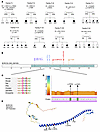 Figure 1
Family pedigrees and bi-allelic BORCS5 variants. (A) Family pedigrees and genotypes of cases with bi-allelic BORCS5 pathogenic variants. Triangles indicate spontaneous miscarriages, and crossed triangles indicate elective pregnancy terminations. (B) Schematic of BORCS5 protein indicating the position of the identified pathogenic BORCS5 variants. (C) Conservation across species of the amino acid residues involved by the identified pathogenic missense variants R95Q and H99P. (D) Graphic representation of intolerance to BORCS5 variants. Using Metadome software (https://stuart.radboudumc.nl/metadome/), we mapped the identified missense variants, which both affect amino acid residues that show marked intolerance to their variation. (E) Structure of BORCS5 predicted by AlphaFold and localization of coding variants identified in this study.
In total, we identified 7 pathogenic variants in BORCS5 (NM_058169.4): 2 missense variants (c.284G>A, p.R95Q and c.296A>C, p.H99P), 2 essential splice-site variants (c.202+1G>A and c.203-1G>T), and 3 PTVs, including 2 frameshift deletions (c.316delG, p.A106Pfs*20 and c.382_383delAG, p.L128Vfs*86) and 1 STOP-gain variant (c.417C>G, p.Y139*) (Figure 1B).
In the index pedigree (family F-I), quad familial research whole-exome sequencing of DNA from the 2 affected siblings (F-I:1 and F-I:2) and their healthy parents identified 2 rare variants in trans in BORCS5: the maternally inherited frameshift variant L128Vfs*86 and the paternally inherited missense variant R95Q. Sanger sequencing confirmed the variants and showed that the 2 older unaffected siblings were not carriers.
Fourteen additional cases from 8 families with BORCS5 bi-allelic variants were subsequently identified. Based on segregation analysis, BORCS5 variants were independently prioritized as the top candidate genetic cause in each family.
Only affected family members from F-I had compound heterozygous BORCS5 variants, whereas all other affected individuals carried homozygous variants. The 2 affected cases from family F-III carried the homozygous missense variant R95Q, which was also found in family F-I. The same homozygous frameshift variant A106Pfs*20 was identified in a total of 5 individuals from 2 unrelated Pakistani families (F-V and F-VII). The homozygous splice-site variant c.202+1G>A was identified in 4 individuals from 2 unrelated families from Oman (F-VIII and F-IX). The homozygous variants H99P (F-II:1), c.203-1G>T (F-IV:1), and Y139* (F-VI:1), were identified in single individual cases.
All identified BORCS5 variants are absent or exceedingly rare in gnomAD or other large datasets of genomic variation (Supplemental Table 1; supplemental material available online with this article; https://doi.org/10.1172/JCI195336DS1).
The missense variants R95Q and H99P have Combined Annotation–Dependent Depletion scores greater than 20, which places them in the top 1% most deleterious changes for the human genome, and are predicted to be damaging by all available in silico tools. Furthermore, both variants affect amino acid residues that are fully conserved across species and localized in a protein region highly intolerant to genetic variation (Figure 1, C and D).
The AlphaFold prediction of the BORCS5 protein structure indicates that R95 and H99 are part of a long α helix likely to be essential for its interaction with other BORC subunits (Figure 1E). The PTVs A106Pfs* and Y139* are predicted to cause an early protein truncation, removing a large proportion of the BORCS5 α-helical domain. The L128Vfs allele is predicted to lead to a profound alteration in the amino acid composition of the C-terminus of BORCS5, extending the protein by 16 amino acids and likely resulting in a severe disruption of the protein α-helix. The splice-site variants c.202+1G>A and c.203−1G>T are predicted by SpliceAI (11) to result in complete loss of the donor and acceptor splice sites of intron 2, respectively.
BORCS5 bi-allelic variants cause a broad phenotypic spectrum. Detailed clinical presentations of the 16 affected individuals with bi-allelic BORCS5 variants are included in Table 1 and Supplementary Material.
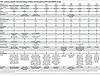 Table 1
Summary of genetic and clinical findings of children and adult patients with bi-allelic BORCS5 variants
Ten individuals from families F-I, F-II, F-III, F-IV, F-VIII, and F-IX shared a core phenotype of developmental encephalopathy characterized by profound intellectual disability, delayed milestones, seizures, and progressive movement disorders with spasticity. Patients from families F-I, F-II, and F-III harbored BORCS5 missense variants (R95Q or H99P), either in compound heterozygosity with PTV (F-I) or in homozygosity (F-II and F-III). Individuals from families F-IV, F-VIII, and F-IX carried splice-site variants (c.202+1G>A in F-VIII and F-IX; c.203-1G>T in F-IV). The patient from F-IV was previously reported on with minimal clinical details (12).
None of these individuals attained speech or walking abilities, and they were completely dependent on others. Developmental regression, including loss of babbling, visual tracking, head control, and ability to stand, was observed in the patients from F-I, F-II, F-VIII and F-IX. Seizures occurred within the first year in all patients and were managed effectively with standard antiepileptic treatments in families F-I, F-II, and F-III. Older individuals from F-I became seizure-free in their teens. Conversely, affected individuals from F-IV and F-VIII had a more severe epileptic phenotype, presenting with treatment-resistant infantile spasms and myoclonic seizures and an EEG showing hypsarrhythmia.
All individuals exhibited progressive spasticity, diffuse hyperreflexia, bilateral extensor plantar response, and severe limb contractures. Movement disorders (dystonia and parkinsonism) were prominent in families F-I and F-II. Generalized dystonia led to scoliosis, painful spasms, and oculogyric crises. Parkinsonian features included severe limb bradykinesia and hypomimia. Dystonic spasms improved dramatically with carbidopa/levodopa treatment, suggesting nigrostriatal dopaminergic denervation. Other medications, including trihexyphenidyl, baclofen, and diazepam, helped manage spasticity and dystonia.
Optic neuropathy was present in all patients. Nerve conduction studies revealed sensorimotor demyelinating neuropathy in F:II-1 but were normal in F:I-1. Dysmorphic features included microcephaly, dolichocephaly, and low-set ears. Swallowing difficulties necessitated percutaneous endoscopic gastrostomy in cases from families F-I and F-II.
Five patients (F-I:2, F-II:1, F-VIII:1 and 2, and F-IX:1) died prematurely from aspiration pneumonia or uncontrolled seizures. The remaining 5 individuals were aged 28 (F-I:1), 23 (F-III:1), 13 (F-III:2), 10 (F-IV:1), and 3 (F-VIII:2) years at their most recent evaluation.
Neuroimaging revealed cerebral atrophy, white matter loss, hypomyelination, small T2-hypointense thalami, thin brainstem, and optic nerve atrophy in 9 individuals from F-I, F-II, F-III, FV-III, and F-IX (Figure 2, A–G). F-I:1 and F-II:1 also had mild cerebellar atrophy (Figure 2, B–D). Changes in F-II:1 progressed rapidly between 9 months and 2 years, indicating an aggressive neurodegenerative process (Figure 2, C and D). Five patients with homozygous splice-site variants from families F-IV, F-VIII, and F-IX also had developmental anomalies such as corpus callosum dysgenesis and polymicrogyria (Figure 2, F and G).
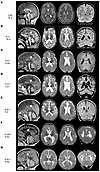 Figure 2
Neuroimaging findings in individuals with BORCS5 missense and splice-site variants. Brain MRI studies of a control individual performed at 15 years of age for comparison (A) and of individuals F-I:1 (B), F-II:1 (C and D), F-III:1 (E), F-VIII:1 (F), and F-IX:1 (G). Presented are sagittal T1-weighted images (first column), axial T2-weighted images (second and third column), and coronal FLAIR or T1/T2-weighted images (last column). There is moderate to severe cerebral atrophy and loss of white matter volume with consequent ventricular dilatation in all individuals (marked with *). The myelination is markedly reduced or incomplete in all cases. The corpus callosum is very thin in all individuals (thick arrows) with associated hypoplastic anterior commissure. In F-VIII:1 and F-IX:1, the corpus callosum is also short and dysplastic. There is atrophy of the optic nerves (not shown) and chiasm (dashed arrows) in all patients. The thalami are small and hypointense on T2-weighted images (arrowheads). The midbrain and pons are small in all individuals (thin arrows), especially F-II:1 and F-VIII:1. Mild atrophy is noted in F-I:1 and F-II:1 (empty arrows). Note the clear progression of cerebral and cerebellar atrophy with arrested myelination in FII:1 (C and D).
Six fetuses from families F-V, F-VI, and F-VII and who had biallelic BORCS5 PTVs (A106Pfs or Y139*) had a distinct phenotype with severe prenatal neurological manifestations, initially indicated by reduced fetal movements. Intrauterine imaging studies revealed arthrogryposis multiplex congenita, hydrocephalus with aqueduct stenosis, agenesis of the corpus callosum, markedly thin brainstem, cerebellar hypoplasia, and diffuse muscle atrophy in all these fetuses (Supplemental Figure 1A). Growth parameters and other organ systems were normal. These pregnancies were terminated between 21 and 25 weeks of gestation.
Histopathological examination of the brain of each of 2 fetuses from families F-V and F-VII (Figure 3 and Supplemental Figure 1) revealed microcephaly, hypoplastic thalamus, basal ganglia and cerebellum, along with ventriculomegaly, aqueductal atresia, and absent corpus callosum (Figure 3, A and B). Brainstem examination showed hypoplasia of major neuronal groups, including tegmental nuclei, inferior olivary nuclei, basis pontis, and dentate nucleus (Figure 3, C–E) Furthermore, widespread neuroaxonal degeneration with formation of axonal spheroids, particularly in the brainstem, cerebral hemispheres, and peripheral roots and nerves were found (Figure 3, F and I, and Supplemental Figure 1, E and G). Immunohistochemistry revealed strong β-amyloid precursor protein, neurofilament, and α-synuclein staining of the axonal spheroids, consistent with a pathological diagnosis of NAD (Figure 3, G, H, and J, and Supplemental Figure 1, B and F). However, axonal spheroids did not stain positive for phosphorylated α-synuclein (Supplemental Figure 1C), tau, or TDP-43.
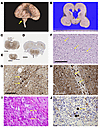 Figure 3
Pathological characterization of cases with bi-allelic LoF BORCS5 variants. (A) Brain of case F-VII:1 demonstrating hypoplastic temporal lobes; a delayed, smooth Sylvian fissure; and a markedly hypoplastic cerebellum (arrow). (B) Coronal section, demonstrating ventriculomegaly. The corpus callosum is reduced to a thin membrane and has ruptured (indicated at *). The septum is ruptured, and the fornices (arrow) are descended and lie on the roof of the third ventricle. (C–E) Immunohistochemistry of neurofilament light chain in whole mounts of posterior fossa structures showing midbrain with minute aqueduct and hypoplastic cerebral peduncles (C); the caudal pons with very small and smooth inferior olivary nuclei, hypoplastic middle cerebellar peduncles, absent corticofugal tracts (arrow) and poorly defined dentate nuclei (*) (D); absent pyramids (arrows) and inferior cerebellar peduncles in the medulla (E). Scale bars: 3 mm (C–E). (F–H) Histological analysis of the same patient, with H&E staining and immunohistochemistry demonstrating innumerable pale eosinophilic axonal spheroids (arrows) in the internal capsule (F); strong positive staining of the axonal spheroids for neurofilament light chain (G) and α-synuclein (H). Scale bars: 200 μm (F–H). (I and J) Peripheral nerves of individual F-V:2 demonstrated numerous axonal spheroids (arrows) (I), which stained strongly positive for β-amyloid precursor protein (J).
Zebrafish borcs5-ko leads to neurodevelopmental defects. To investigate the effect of loss of BORCS5 in an animal model, we generated zebrafish in which borcs5 was knocked out (borcs5-ko), using CRISPR-Cas9 editing to induce targeted biallelic borcs5 mutations directly in the injected embryos (F0 generation) (10, 13). The zebrafish genome encodes a single borcs5 ortholog, sharing 84% amino acid identity with human BORCS5.
At 3 days after fertilization (3 dpf), borcs5-ko larvae exhibited reduced body size with a slight curvature of the body axis (Figure 4, A and B). Importantly, borcs5-ko larvae had reduced eye and head size relative to WT (Figure 4, C and D), and these gross morphological defects persisted at 5 dpf (Supplemental Figure 2, C–F). Injection of human BORCS5WT mRNA in borcs5-ko zebrafish rescued morphological phenotypes (Figure 4, B–D). Fewer dopaminergic neurons in borcs5-ko larvae were observed at 3 dpf compared with controls (Supplemental Figure 2, A and B). H&E staining revealed a reduction in overall brain size in borcs5-ko larvae compared with WT at 3 and 5 dpf (Figure 4, E and F, and Supplemental Figure 2, G and H), suggesting a critical role for borcs5 in normal zebrafish brain development. We also observed larger ventricles in the borcs5-ko brain 5 dpf compared with WT controls (Supplemental Figure 2G).
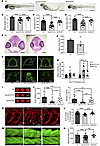 Figure 4
Zebrafish borcs5-ko larvae exhibit developmental defects and recapitulate patient symptoms. (A) Morphology of WT borcs5-ko and BORCS5WT-rescued larvae at 3 dpf. Scale bars: 500 μm. (B–D) Quantification of body length (B), eye size (C), and head size (D) in WT (n = 3, n = 40), borcs5-ko (n = 3, n = 32) and BORCS5WT (N = 3, n = 26–28) 3 dpf larvae. (Note n represents number of fish; N represents number of experimental repeats with each repeat consisting of embryos or larvae pooled from 3 independent clutches from different mating pairs.) (E) H&E staining of midbrain sections from 3 dpf WT and borcs5-ko larvae. Scale bar: 100 μm. (F) Quantification of brain area in WT (N = 5) and borcs5-ko 3 dpf (N = 3) larvae. (G and H) Neuronal activity assessed by p-MAPK/ERK fluorescence intensity in 4-dpf larvae after PTZ treatment (3 mM; 0 or 15 minutes). borcs5-ko (N = 2, n = 6–10) larvae showed significantly increased activity compared with WT (N = 2, n = 6–10) and BORCS5WT (N = 2, n = 9–11). Scale bars: 100 μm. (I) Representative swim trajectories of WT, borcs5-ko, and BORCS5WT larvae at 5 dpf. (J) Quantification of swim distance and velocity in WT (N = 1, n = 19), borcs5-ko (N = 1, n = 16), and BORCS5WT (N = 1, n = 19). (K) Acetyl tubulin staining of primary motor axon at 3 dpf. White arrows indicate axon branching defects in borcs5-ko larvae. Scale bars: 50 μm. (L) Axon length normalized by body height in WT (N = 2, n = 10), borcs5-ko (N = 2, n = 6), and BORCS5WT (N = 2, n = 10). (M) Phalloidin staining of muscle fibers at 3 dpf. Scale bars: 50 μm. (N) Quantification of dorsal or ventral myotome area in WT (N = 2, n = 9), borcs5-ko (N = 2, n = 10) and BORCS5WT larvae (N = 2, n = 12). Data are given as mean ± SEM. Statistical significance was calculated by 1-way ANOVA followed by Tukey’s multiple comparisons test (B–D, H, J, L, N), or Student’s t test (F). *P < 0.05; **P < 0.01; ***P < 0.001; ****P < 0.0001.
Seizure susceptibility was examined at 4 dpf upon exposure to the pro-convulsive GABA receptor antagonist pentylenetetrazole (PTZ) (3 mM) (13–15). Borcs5-ko larvae exhibited increased p-MAPK/ERK staining compared with WT at 15 minutes after PTZ treatment, which was rescued in BORCS5WT (Figure 4, G and H), suggesting abnormal neuronal hyperactivation in the borcs5-ko larval brain.
Locomotor activity (i.e., free swimming) was decreased in borcs5-ko larvae at 5 dpf, as compared with WT and to BORCS5WT (Figure 4, I and J). We also found that borcs5-ko larvae had shorter and less-branched axons in comparison with WT (Figure 4, K and L), and decreased area of dorsal and ventral myotomes with disorganization of somite structure and muscle fibers (Figure 4, M and N). The motor axonal and muscular defects in borcs5-ko zebrafish were rescued upon expression of the human BORCS5 mRNA (BORCS5WT) (Figure 4, K–N).
Overexpression of R95Q and H99P mRNA in borcs5-ko embryos showed that BORCS5R95Q and BORCS5H99P zebrafish had shorter body length and reduced head and eye size, albeit to a lesser extent than borcs5-ko embryos (Supplemental Figure 2, I–L). We also found reduced swimming distance, reflecting locomotor dysfunction, in BORCS5R95Q and BORCS5H99P larvae.
Taken together, knockout of borcs5 in zebrafish leads to neurodevelopmental defects, motor deficits, and increased seizure susceptibility, indicating that borcs5 plays a role in the development and function of the CNS and supporting the pathogenic role of the identified variants.
Effect of identified pathogenic variants on BORCS5 protein and BORC assembly. To analyze the impact of individual coding variants on BORCS5 protein expression, BORCS5 WT and mutant constructs were transiently expressed in HEK293T. Protein expression was comparable between WT and the R95Q missense variant, whereas it was 50% less in H99P than in the WT. The PTVs A106Pfs and Y139* exhibited aberrant, shorter protein products with lower protein amounts (Figure 5A), suggesting early truncation and reduced protein expression. Expression of L128Vfs showed multiple bands between 15 and 30 kDa (Figure 5A) that are likely degradation products.
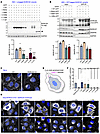 Figure 5
Impact of BORCS5 pathogenic variants on BORCS5 protein expression, BORC assembly, and endolysosome distribution in cell lines. (A) Western blot analysis of BORCS5 protein in HEK293T cells 24 hours after transfection with constructs expressing GFP (control) and BORCS5 WT or the indicated BORCS5 patient variants. GAPDH was used as a loading control. For WT and R95Q/H99P, the band indicated by * was quantified, whereas the band indicated by an arrow was quantified for A106fs and Y139*. In the case of L128fs, the entire band pattern was measured. The 25 kDa band present in the case of A106fs and Y139* variants correspond to endogenous BORCS5, as shown in GFP-only condition. The graph shows the mean ± SEM of fold change over the mean of the WT variant (n = 4 independent experiments). For BORCS5 levels, 1-way ANOVA F(5,41) = 59.49 (P < 0.0001) with Dunnett’s post hoc test compared with WT. ***P = 0.0001, ****P < 0.0001. (B) GFP trap precipitation of GFP-tagged BORCS5 variants and their interaction (co-IP) with endogenous SNAPIN and BORCS7, with GAPDH used as a specificity control. The graph shows mean ± SEM n of 3 independent experiments. For BORCS7, 1-way ANOVA with Dunnett’s post hoc test F(3,8) = 33.17 (P < 0.0001). **P ≤ 0.003. For SNAPIN, F(3,8) = 26.53 (P = 0.0002). *P < 0.018. (C and D) Immunofluorescence microscopy shows endogenous LAMP1 puncta (white) distribution in untransfected WT and BORCS5 KO HeLa (as control) or BORCS5-KO HeLa cells transiently cotransfected with BORCS5 constructs and GFP (* indicates GFP+ cells). Nuclei were labeled with DAPI (blue), and cell edges were outlined by fluorescent phalloidin (dashed lines). Scale bars: 20 μm. (E and F) Schematic depicts LAMP1+ endolysosomes present in a 2 μm peripheral shell, shown in the graph as mean ± SEM for 3 independent experiments, each dot representing a different cell. For peripheral lysosomes, 1-way ANOVA with Dunnett multiple comparisons test (compared with the WT construct), F(7,289) = 30.96 (P < 0.0001). *P < 0.05, **P = 0.0098, ****P < 0.0001.
Furthermore, we examined the interaction of BORCS5 pathogenic variants with the BORC subunits SNAPIN and BORCS7, using GFP trap precipitation upon expression of C-terminally GFP-tagged BORCS5 constructs (Figure 5B). We found 30% less endogenous BORCS7 and 20% less endogenous SNAPIN coprecipitating with the H99P and L128Vfs constructs, whereas R95Q did not affect the BORCS5-BORCS7 or BORCS5-SNAPIN interactions (Figure 5B). The A106Pfs and Y139* variants were not included in this experiment, due to low baseline protein expression levels (Figure 5A).
BORCS5 PTVs, but not the missense variants R95Q and H99P, cause abnormal perinuclear clustering of lysosomes. Because the BORC complex regulates the transport of endolysosomes from the perinuclear region toward the cell periphery (1, 5), we compared endolysosomal distribution in HeLa cells overexpressing WT or BORCS5 pathogenic variants (Figure 5, C–F). Loss of endogenous BORCS5 led to a perinuclear accumulation of endolysosomes, reflected by a 90% reduction of LAMP1+ puncta in the cell periphery of BORCS5-KO cells, restored by reintroducing BORCS5 WT (Figure 5, C and F). Expression of A106Pfs, L128Vfs, and Y139* did not rescue the perinuclear endolysosome accumulation, confirming that these variants abolish BORCS5 function (Figure 5, D and F). In contrast, R95Q and H99P expression led to approximately 30% fewer peripheral lysosomes compared with WT, suggesting a partial rescue of perinuclear endolysosomal clustering (Figure 5, D and F).
BORC assembly and lysosomal distribution were also examined in skin fibroblasts from patients carrying missense variants (F-I:1 and F-I:2 with compound heterozygous variants R95Q/L128Vfs and patient F-II:1 with homozygous H99P/H99P) and from a patient with a homozygous PTV (F-V:6 with homozygous Y139*/Y139*). All lines exhibited lower BORCS5 protein, with the 2 fibroblast lines R95Q/L128Vfs showing a 25%–40% reduction, the H99P/H99P line with a 60% reduction and the Y139*/Y139* line having 93% lower BORCS5 protein as compared with control (Figure 6, A and B).
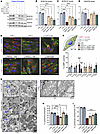 Figure 6
BORC-related protein expression, endolysosomal distribution, and function in fibroblasts of patients with BORCS5 pathogenic variants or 2 independent control lines. (A) Western blot analysis of proteins BORCS5, SNAPIN, and BORCS7; GAPDH was used as a loading control. (B–D) Graphs represent mean ± SEM of 3–5 independent experiments. For BORCS5, 1-way ANOVA with Dunnett’s post hoc test (compared with control 1 [CTRL1]), F(5,23) = 24.56 (P < 0.0001; for BORCS7, F(5,24) = 27.02 (P < 0.0001); and for SNAPIN, F(5,12) = 6.704 (P = 0.0034). *P < 0.03, **P < 0.003, ****P < 0.0001. (E) Immunofluorescence microscopy shows endogenous LAMP1 puncta distribution. Scale bar: 25 μm. (F) Schematic shows the analysis of LAMP1+ puncta distribution in fibroblasts, using elliptical concentric rings of 1.5 increments from the nucleus (ring 1 outlined). Puncta within rings 1 and 2 were designated “proximal” to the nucleus, and those between rings 3 and 4 were designated “distal.” The graph represents the mean ± SEM from 3 independent experiments, each dot representing a different cell. For the interaction, 2-way ANOVA F(5,276) = 22.86 (P < 0.0001), with Tukey’s post hoc test (compared with CTRL1/CTRL2). (G) TEM micrographs of BORCS5 patient or control fibroblasts, with dashed lines indicating magnification of the outlined insets. MLB, multilamellar body; N, nucleus. (H) Lysosomal proteolysis efficiency was assessed upon administration of 25 μg/mL of DQ Green or Red BSA for 5 hours, in 10,000 single-cell events, via flow cytometry. The graph represents the mean ± SEM of the percent median fluorescence intensity, normalized to the mean of control lines (n = 8–9 independent experiments). For proteolysis, 1-way ANOVA with Dunnett’s post hoc test (compared with CTRL1), F(5,63) = 8.687 (P < 0.0001). *P = 0.038, **P = 0.007, ****P < 0.0001. (I) Lysosomal GCase activity was assessed upon administration of 250 μM PFB-FDGlu for 30 minutes, in 10,000 single-cell events, via flow cytometry. The graph represents the mean ± SEM of the percent median fluorescence intensity, normalized to the mean of control lines. CTR-1/CTR-2, n = 7; p.Y139*/p.Y139* and p.R95Q/L128Vfs*86, n = 4; p.H99P/H99P, n = 3 independent experiments. For lysoGCase, 1-way ANOVA with Dunnett’s post hoc test (compared with CTRL1), F(5,41) = 121.3 (P < 0.0001). ****P < 0.0001.
BORCS5 mRNA transcript was reduced in the Y139*/Y139* line, consistent with nonsense-mediated decay contributing to decreased protein expression (Supplemental Figure 3A). In contrast, BORCS5 RNA levels were preserved in the 2 R95Q/L128Vfs lines, indicating that the L128Vfs variant does not impair mRNA stability (Supplemental Figure 3A).
Additionally, because loss of 1 BORC subunit affects the stability of other subunits (10), we examined the endogenous levels of SNAPIN and BORCS7. Fibroblasts from the 2 R95Q/L128Vfs patients showed 25-35% lower BORCS7, H99P/H99P showed 50% less and Y139*/Y139* fibroblasts had 75% lower protein (Figure 6, A and C). In contrast, SNAPIN was exclusively reduced in fibroblasts from the Y139*/Y139* patient (Figure 6, A and D).
Endolysosomal distribution in fibroblasts from patients with BORCS5 pathogenic variants were examined by comparing the percentage of LAMP1+ puncta located proximally compared with distally to the nucleus (Figure 6, E and F). BORCS5 Y139*/Y139* fibroblasts had 60% more endolysosomes proximal to the nucleus and 40% fewer distal endolysosomes (Figure 6, E and F). However, no changes were found in fibroblasts from patients with BORCS5 R95Q/L128Vfs and H99P/H99P variants (Figure 6, E and F).
These results indicate that A106Pfs, Y139*, and L128Vfs are complete LoF alleles, whereas the H99P is a hypomorphic allele associated with reduced endogenous protein levels. Complete loss of BORCS5 likely affects the assembly of BORC and the protein levels of its subunits. The R95Q allele is normally expressed and is not likely to affect the interaction with other BORC subunits and BORC assembly. Furthermore, BORCS5 PTV variants led to perinuclear lysosomal clustering, whereas the missense BORCS5 variants R95Q and H99P preserved, at least in part, anterograde endolysosomal transport.
Both protein-truncating and missense BORCS5 variants lead to lysosomal dysfunction. Loss of BORC subunits, including BORCS5, reduces autophagosome-to-lysosome fusion (8), leading to intracellular accumulation of autophagosomes. Consistent with this notion, BORCS5-KO HeLa cells have an increased number of puncta positive for the autophagosomal marker LC3, a phenotype that could be restored by expressing WT BORCS5 (Supplemental Figure 3, B–D). The expression of all PTVs failed to rescue the KO phenotype; however, expression of the missense variants R95Q and H99P restored LC3 to WT levels (Supplemental Figure 3, B–D), suggesting that these variants do not affect autophagosome clearance.
We further investigated endolysosomal function in fibroblasts in patients with affected BORCS5. Transmission electron microscopy (TEM) revealed the presence of multilamellar bodies, structures related to dysfunctional lysosomes (16), in 20% of the examined fibroblasts with complete BORCS5 LoF (Y139*/Y139*) as well as in 10% to 40% of those carrying the missense variant R95Q (R95Q/L128Vfs) (Figure 6G).
The efficiency of lysosomal proteolysis was reduced by approximately 20% in all fibroblast lines with both LoF and missense pathogenic variants as compared with controls (Figure 6H). Examination of total cell lysates by Western blotting showed comparable amounts of the lysosomal membrane protein LAMP2, suggesting that decreased lysosomal proteolysis was not due to lower lysosome number (Supplemental Figure 4B). Notably, the activity of lysosomal hydrolase glucocerebrosidase (GCase) was approximately 40% lower in cells with BORSC5 missense variants and approximately 60% lower in the LoF line (substrate 5-(pentafluorobenzoylamino)fluorescein di-β-d-glucopyranoside [PFB-FDGlu]) (Figure 6I), whereas GCase protein and its lysosomal transporter LIMP2 were not changed (Supplemental Figure 4, B–D). Thus, both BORCS5 LoF and missense variants led to decreased lysosomal GCase activity and impaired general lysosomal proteolysis.
Because lysosomal dysfunction may increase the release of autophagic protein cargo in association with exosomes or extracellular vesicles (EVs) (9, 17, 18), we examined EV fractions isolated from identical volumes of conditioned medium across all fibroblast lines. All fractions were positive for standard exosomal markers (Supplemental Figure 5) (19). Importantly, EVs from both the BORCS5 complete LoF (Y139*/Y139*) and the missense fibroblast line (H99P/H99P) had increased amounts of the autophagy markers LC3-II and p62/SQSTM1, and of the lysosomal membrane marker LAMP2 (Supplemental Figure 5), supporting release of undegraded protein cargo associated with EVs.
Defects in endolysosome distribution and lysosomal function in BORCS5-mutant induced pluripotent stem cells–derived forebrain neurons. Given that all patients with BORCS5 pathogenic variants exhibited exclusively neurological symptoms, we further examined the impact of complete BORCS5 LoF and the R95Q missense variant on trafficking and endolysosomal function in a human neuronal model.
To this end, we reprogrammed fibroblasts from the 2 affected individuals carrying R95Q/L128Vfs into induced pluripotent stem cells (iPSCs) and used an independent control iPSC line to generate an isogenic CRISPR/Cas9 BORCS5 KO line. All iPSC lines were differentiated into human forebrain neurons (iNeurons) via Ngn2 overexpression (20).
Using the fluorescent lysosomotropic dye Lysotracker Red, we found that BORCS5-KO neurites contained 60% fewer endolysosomes than did isogenic control neurons (Figure 7, A and B), which is in agreement with previous reports (4, 5, 7). However, no changes in endolysosomal distribution were observed in neurites of BORCS5-R95Q/L128Vfs versus WT neurons (Figure 7, A and B). Lysotracker Red+ puncta in BORCS5-KO and R95Q/L128Vfs neurons exhibited a larger area (Figure 7, A and C) and higher intensity per vesicle (Figure 7, A and D–F), which may reflect an accumulation of acidified structures. Such morphological alterations were paralleled by reduced activity of the lysosomal hydrolase cathepsin B, assessed via microscopy upon administration of Magic Red cathepsin B substrate (Figure 7, G and H). Furthermore, BORCS5-KO iNeurons had reduced lysosomal GCase activity, assessed via microscopy (LysoFQ-GBA substrate) (Figure 7I).
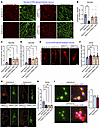 Figure 7
Lysosome-dispersal activity of patient-specific BORCS5 variants. Increased LysoTracker and decreased lysosomal enzyme activity in neurons with patient-specific BORCS5 variants. (A) Imaging of Lysotracker Red signal (red) in neurites of live iPSC-derived forebrain neurons (labeled with calcein, green) from WT, isogenic BORCS5-KO, or R95Q/L128fs patient iPSC lines. Scale bar: 10 μm. (B–D) Graphs show the mean ± SEM of 3 independent experiments. For vesicle number, 1-way ANOVA with Dunnett’s post-hoc test F(3,34) = 5.250 (P = 0.0044); for vesicle area, F(3,35) = 5.373 (P = 0.0038); for signal intensity, F(3,35) = 4.362 (P = 0.0104). (E) Imaging of Lysotracker Red endolysosomes (red) in the soma of iPSC-derived forebrain neurons from the indicated lines. Scale bar: 10 μm. (F) The graph shows the mean ± SEM of 3 independent experiments. For signal intensity, 1-way ANOVA with Dunnett’s post hoc test F(3,87) = 5.624 (P = 0.0014). (G) Fluorescence microscopy examination of LAMP1+ stained endolysosomes (green) and cathepsin B (CTSB) activity–derived fluorescent signal (red) in the soma of iPSC-derived forebrain neurons from the indicated lines. Scale bar: 10 μm. (H) The graph shows the mean ± SEM of 3 independent experiments. For CTSB activity soma, 1-way ANOVA with Dunnett’s post hoc test F(3,36) = 5.478 (P = 0.00333). Dots represent individual cells. Scale bar: 10 μm. (I) Fluorescence microscopy shows viable (calcein; red) day 21 iNeurons upon uptake of the lysosomal GCase substrate LysoFQ-GBA (green) and counterstained with DAPI. Scale bar: 50 μm. The lysosomal GCase activity–dependent fluorescent signal was quantified, and the graph shows the mean ± SEM of the relative intensity over mean WT within a specific experiment (n = 4 independent experiments). One-sample t test. **P = 0.0042.
To further elucidate the mechanisms underlying lysosomal dysfunction caused by BORCS5 deficiency, we assessed the amount of GCase and cathepsin B within the endolysosomal compartment. To this end, we expressed TMEM192-GFP-3xHA in WT and BORCS5-KO iNeurons, enabling affinity-based enrichment of endolysomes (21). Endolysosomal fractions from BORCS5-KO iNeurons exhibited an approximately 50% reduction in GCase protein and an approximately 60% reduction in mature cathepsin B compared with WT cells (Figure 8, A and B), whereas LIMP-2 and LAMP1 were not altered (Figure 8, A and B). The reduction in endolysosomal hydrolases could be partly attributed to decreased overall protein abundance in total neuronal lysates (Supplemental Figure 6).
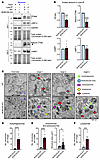 Figure 8
BORCS5 deficiency leads to lysosomal dysfunction in iNeurons. (A) Endolysosomal fractions were enriched from day 21 iNeurons expressing TMEM192-GFP-3xHA via magnetic immunopurification (Lyso-IP). Western blots of samples of the same experiment that were run in 2 different gels, with dashed lines reflecting that samples were loaded in different parts of the same gel, shown with the same exposure. Total protein was monitored by Coomassie G-250 staining of the gel after transfer. The * indicates an unspecific band at 50 kDa, and the arrow indicates the CTSB band quantified during Western blot analysis. (B) Graphs show the mean ± SEM of the relative protein amount normalized to the total protein, 1-sample t test, 7 independent experiments. ***P = 0.0001, ****P < 0.0001. (C) TEM images show the overview and magnified insets of the perinuclear cytoplasm from control and isogenic BORCS5 KO iNeurons. Individual autophagic and endolysosomal structures were classified based on morphological criteria. Scale bar: 1 μm (left panels), 500 nm (enlarged inset panels). (D–F) The number and/or area of the indicated structures are presented as mean± SEM obtained from 10–11 different cells per genotype. Unpaired t test. *P = 0.041, ***P = 0.0004, ****P < 0.0001.
To further characterize lysosomal dysfunction in BORCS5-deficient iNeurons, we performed TEM and quantified ultrastructural features associated with autophagy (autophagosomes, autolysosomes, and amphisomes) and the endolysosomal compartment (late endosomes or multivesicular bodies, and lysosomes) (Figure 8, C–F). BORCS5-KO iNeurons exhibited a 9-fold increase in the number of autophagosomes and autolysosomes or amphisomes, along with a 5.6-fold increase in lysosome number per micrograph compared with the control (Figure 8, C–F). These ultrastructural changes were corroborated by increased LC3-II and LAMP1 protein levels in total neuronal lysates (Supplemental Figure 6, A and B). Notably, induction of anterograde endolysosomal trafficking in BORCS5-KO cells by overexpression of a LAMP1–kinesin-binding sequence fusion protein — which bypasses BORC-dependent lysosomal positioning defects (1) — failed to restore LC3-II levels (Supplemental Figure 6C).
Collectively, complete loss of BORCS5 in neuronal cells disrupts anterograde axonal transport of endolysosomes and causes lysosomal dysfunction. Although these lysosomes can be acidified, they display a reduced capacity to clear autophagic cargo, even after fusion with autophagosomes. This impairment is likely, at least in part, due to decreased availability of specific lysosomal hydrolases within the endolysosomal compartment.


Copyright © 2026 American Society for Clinical Investigation
ISSN: 0021-9738 (print), 1558-8238 (online)