
Advertisement
Research ArticleCell biologyNeuroscience
Open Access |  10.1172/JCI201800
Chronotherapy to reinforce circadian rhythms improves poststroke outcomes and glymphatic function in mice
Emma Waight,1 Yuxi Zhu,1 Ashley Caudell,1 Velia S. Vizcarra,1 Evan Newbold,1 Michael J. Giannetto,1 Evalien Duyvestyn,1 Estephanie Balbuena,1 Wei Song,1 Tanzil M. Arefin,2,3 Yuki Mori,4 Maiken Nedergaard,1,4 and Lauren M. Hablitz1
1Center for Translational Neuromedicine,
2Department of Neuroscience, and
3Center for Advanced Brain Imaging and Neurophysiology, University of Rochester Medical Center, Rochester, New York, USA.
4Center for Translational Neuromedicine, Faculty of Health and Medical Sciences, University of Copenhagen, Copenhagen, Denmark.
Address correspondence to: Lauren Hablitz or Maiken Nedergaard, University of Rochester Medical Center, 601 Elmwood Ave., Box 645, Rochester, New York 14642, USA. Phone: 585.276.2460; Email: Lauren_Hablitz@urmc.rochester.edu (LMH); Nedergaard@urmc.rochester.edu (MN).
Authorship note: EW and YZ contributed equally to this work and are co–first authors.
Find articles by Waight, E. in: PubMed | Google Scholar
1Center for Translational Neuromedicine,
2Department of Neuroscience, and
3Center for Advanced Brain Imaging and Neurophysiology, University of Rochester Medical Center, Rochester, New York, USA.
4Center for Translational Neuromedicine, Faculty of Health and Medical Sciences, University of Copenhagen, Copenhagen, Denmark.
Address correspondence to: Lauren Hablitz or Maiken Nedergaard, University of Rochester Medical Center, 601 Elmwood Ave., Box 645, Rochester, New York 14642, USA. Phone: 585.276.2460; Email: Lauren_Hablitz@urmc.rochester.edu (LMH); Nedergaard@urmc.rochester.edu (MN).
Authorship note: EW and YZ contributed equally to this work and are co–first authors.
Find articles by Zhu, Y. in: PubMed | Google Scholar
1Center for Translational Neuromedicine,
2Department of Neuroscience, and
3Center for Advanced Brain Imaging and Neurophysiology, University of Rochester Medical Center, Rochester, New York, USA.
4Center for Translational Neuromedicine, Faculty of Health and Medical Sciences, University of Copenhagen, Copenhagen, Denmark.
Address correspondence to: Lauren Hablitz or Maiken Nedergaard, University of Rochester Medical Center, 601 Elmwood Ave., Box 645, Rochester, New York 14642, USA. Phone: 585.276.2460; Email: Lauren_Hablitz@urmc.rochester.edu (LMH); Nedergaard@urmc.rochester.edu (MN).
Authorship note: EW and YZ contributed equally to this work and are co–first authors.
Find articles by Caudell, A. in: PubMed | Google Scholar
1Center for Translational Neuromedicine,
2Department of Neuroscience, and
3Center for Advanced Brain Imaging and Neurophysiology, University of Rochester Medical Center, Rochester, New York, USA.
4Center for Translational Neuromedicine, Faculty of Health and Medical Sciences, University of Copenhagen, Copenhagen, Denmark.
Address correspondence to: Lauren Hablitz or Maiken Nedergaard, University of Rochester Medical Center, 601 Elmwood Ave., Box 645, Rochester, New York 14642, USA. Phone: 585.276.2460; Email: Lauren_Hablitz@urmc.rochester.edu (LMH); Nedergaard@urmc.rochester.edu (MN).
Authorship note: EW and YZ contributed equally to this work and are co–first authors.
Find articles by Vizcarra, V. in: PubMed | Google Scholar
1Center for Translational Neuromedicine,
2Department of Neuroscience, and
3Center for Advanced Brain Imaging and Neurophysiology, University of Rochester Medical Center, Rochester, New York, USA.
4Center for Translational Neuromedicine, Faculty of Health and Medical Sciences, University of Copenhagen, Copenhagen, Denmark.
Address correspondence to: Lauren Hablitz or Maiken Nedergaard, University of Rochester Medical Center, 601 Elmwood Ave., Box 645, Rochester, New York 14642, USA. Phone: 585.276.2460; Email: Lauren_Hablitz@urmc.rochester.edu (LMH); Nedergaard@urmc.rochester.edu (MN).
Authorship note: EW and YZ contributed equally to this work and are co–first authors.
Find articles by Newbold, E. in: PubMed | Google Scholar
1Center for Translational Neuromedicine,
2Department of Neuroscience, and
3Center for Advanced Brain Imaging and Neurophysiology, University of Rochester Medical Center, Rochester, New York, USA.
4Center for Translational Neuromedicine, Faculty of Health and Medical Sciences, University of Copenhagen, Copenhagen, Denmark.
Address correspondence to: Lauren Hablitz or Maiken Nedergaard, University of Rochester Medical Center, 601 Elmwood Ave., Box 645, Rochester, New York 14642, USA. Phone: 585.276.2460; Email: Lauren_Hablitz@urmc.rochester.edu (LMH); Nedergaard@urmc.rochester.edu (MN).
Authorship note: EW and YZ contributed equally to this work and are co–first authors.
Find articles by Giannetto, M. in: PubMed | Google Scholar
1Center for Translational Neuromedicine,
2Department of Neuroscience, and
3Center for Advanced Brain Imaging and Neurophysiology, University of Rochester Medical Center, Rochester, New York, USA.
4Center for Translational Neuromedicine, Faculty of Health and Medical Sciences, University of Copenhagen, Copenhagen, Denmark.
Address correspondence to: Lauren Hablitz or Maiken Nedergaard, University of Rochester Medical Center, 601 Elmwood Ave., Box 645, Rochester, New York 14642, USA. Phone: 585.276.2460; Email: Lauren_Hablitz@urmc.rochester.edu (LMH); Nedergaard@urmc.rochester.edu (MN).
Authorship note: EW and YZ contributed equally to this work and are co–first authors.
Find articles by Duyvestyn, E. in: PubMed | Google Scholar
1Center for Translational Neuromedicine,
2Department of Neuroscience, and
3Center for Advanced Brain Imaging and Neurophysiology, University of Rochester Medical Center, Rochester, New York, USA.
4Center for Translational Neuromedicine, Faculty of Health and Medical Sciences, University of Copenhagen, Copenhagen, Denmark.
Address correspondence to: Lauren Hablitz or Maiken Nedergaard, University of Rochester Medical Center, 601 Elmwood Ave., Box 645, Rochester, New York 14642, USA. Phone: 585.276.2460; Email: Lauren_Hablitz@urmc.rochester.edu (LMH); Nedergaard@urmc.rochester.edu (MN).
Authorship note: EW and YZ contributed equally to this work and are co–first authors.
Find articles by Balbuena, E. in: PubMed | Google Scholar
1Center for Translational Neuromedicine,
2Department of Neuroscience, and
3Center for Advanced Brain Imaging and Neurophysiology, University of Rochester Medical Center, Rochester, New York, USA.
4Center for Translational Neuromedicine, Faculty of Health and Medical Sciences, University of Copenhagen, Copenhagen, Denmark.
Address correspondence to: Lauren Hablitz or Maiken Nedergaard, University of Rochester Medical Center, 601 Elmwood Ave., Box 645, Rochester, New York 14642, USA. Phone: 585.276.2460; Email: Lauren_Hablitz@urmc.rochester.edu (LMH); Nedergaard@urmc.rochester.edu (MN).
Authorship note: EW and YZ contributed equally to this work and are co–first authors.
Find articles by Song, W. in: PubMed | Google Scholar
1Center for Translational Neuromedicine,
2Department of Neuroscience, and
3Center for Advanced Brain Imaging and Neurophysiology, University of Rochester Medical Center, Rochester, New York, USA.
4Center for Translational Neuromedicine, Faculty of Health and Medical Sciences, University of Copenhagen, Copenhagen, Denmark.
Address correspondence to: Lauren Hablitz or Maiken Nedergaard, University of Rochester Medical Center, 601 Elmwood Ave., Box 645, Rochester, New York 14642, USA. Phone: 585.276.2460; Email: Lauren_Hablitz@urmc.rochester.edu (LMH); Nedergaard@urmc.rochester.edu (MN).
Authorship note: EW and YZ contributed equally to this work and are co–first authors.
Find articles by Arefin, T. in: PubMed | Google Scholar
1Center for Translational Neuromedicine,
2Department of Neuroscience, and
3Center for Advanced Brain Imaging and Neurophysiology, University of Rochester Medical Center, Rochester, New York, USA.
4Center for Translational Neuromedicine, Faculty of Health and Medical Sciences, University of Copenhagen, Copenhagen, Denmark.
Address correspondence to: Lauren Hablitz or Maiken Nedergaard, University of Rochester Medical Center, 601 Elmwood Ave., Box 645, Rochester, New York 14642, USA. Phone: 585.276.2460; Email: Lauren_Hablitz@urmc.rochester.edu (LMH); Nedergaard@urmc.rochester.edu (MN).
Authorship note: EW and YZ contributed equally to this work and are co–first authors.
Find articles by Mori, Y. in: PubMed | Google Scholar
1Center for Translational Neuromedicine,
2Department of Neuroscience, and
3Center for Advanced Brain Imaging and Neurophysiology, University of Rochester Medical Center, Rochester, New York, USA.
4Center for Translational Neuromedicine, Faculty of Health and Medical Sciences, University of Copenhagen, Copenhagen, Denmark.
Address correspondence to: Lauren Hablitz or Maiken Nedergaard, University of Rochester Medical Center, 601 Elmwood Ave., Box 645, Rochester, New York 14642, USA. Phone: 585.276.2460; Email: Lauren_Hablitz@urmc.rochester.edu (LMH); Nedergaard@urmc.rochester.edu (MN).
Authorship note: EW and YZ contributed equally to this work and are co–first authors.
Find articles by Nedergaard, M. in: PubMed | Google Scholar
1Center for Translational Neuromedicine,
2Department of Neuroscience, and
3Center for Advanced Brain Imaging and Neurophysiology, University of Rochester Medical Center, Rochester, New York, USA.
4Center for Translational Neuromedicine, Faculty of Health and Medical Sciences, University of Copenhagen, Copenhagen, Denmark.
Address correspondence to: Lauren Hablitz or Maiken Nedergaard, University of Rochester Medical Center, 601 Elmwood Ave., Box 645, Rochester, New York 14642, USA. Phone: 585.276.2460; Email: Lauren_Hablitz@urmc.rochester.edu (LMH); Nedergaard@urmc.rochester.edu (MN).
Authorship note: EW and YZ contributed equally to this work and are co–first authors.
Find articles by Hablitz, L. in: PubMed | Google Scholar
Published June 15, 2026 - More info
J Clin Invest. 2026;136(12):e201800. https://doi.org/10.1172/JCI201800.
© 2026 Waight et al. This work is licensed under the Creative Commons Attribution 4.0 International License. To view a copy of this license, visit http://creativecommons.org/licenses/by/4.0/.
Received: October 28, 2025; Accepted: April 14, 2026

Related video:
Poststroke outcomes and glymphatic function in mice are improved by chronotherapy
In this episode, Lauren Hablitz describes how the manuscript's findings suggest that reinforcing normal daily rhythmicity after stroke can markedly enhance neurological recovery, even when interventions are initiated several days after stroke onset.
-
Results
Chronotherapy boosts glymphatic function and consolidates 24-hour activity rhythms. The glymphatic system is regulated by circadian timing (6). Thus, interventions that shift circadian rhythms should also influence glymphatic function. To test this hypothesis, several chronotherapeutic interventions were applied, and glymphatic influx was measured.
Circadian rhythms are controlled on the molecular level by the circadian molecular clock, a transcription-translation negative feedback loop (30). There is a growing interest in developing small-molecule modulators of the molecular clock (15, 16), and these molecules may be useful for regulation of glymphatic function. First, we tested KL001, a small-molecule modulator of the circadian clock that stabilizes cryptochrome (14). Cryptochrome expression reaches a nadir at zeitgeber time 4 (ZT4, where ZT0 marks lights on) and peaks at ZT16 in the cortex (31), a key region for glymphatic influx. KL001 was administered at ZT4 or ZT16 (Figure 1, A–C). No effect was observed at ZT4, but KL001 given at ZT16 significantly enhanced glymphatic influx. Moreover, repeated daily KL001 treatment for 8 days at ZT16 increased the amplitude of 24-hour cage activity rhythms compared with that in vehicle controls (Figure 1, D–F). These findings demonstrate that KL001 both strengthens daily rhythmicity and enhances glymphatic function in healthy wild-type mice.
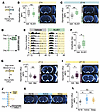 Figure 1
Circadian interventions boost glymphatic flow in healthy mice. (A) Experimental design of acute KL001 administration. (B and C) Box plots of mean pixel intensity (MPI) of glymphatic influx and representative coronal sections for experiments done at Zeitgeber time 4 (ZT4, lights on at ZT0) (B) or ZT16 (C). (D) Experimental design of KL001 treatment and diurnal behavioral monitoring. (E) Representative single-plotted actograms of mice receiving vehicle (gray) or KL001 (green) for 8 days. Each treatment is indicated by a colored dot; black tick marks denote general cage activity; white represents lights off; tan indicates lights on. (F) Box plot of χ2 periodogram calculated rhythmicity amplitude at 24 hours. (G) Experimental design of high-dose melatonin administration. (H and I) Box plots of MPI of glymphatic influx and representative coronal sections for experiments done at ZT0 (H) or ZT10 (I). (J) Experimental design of time-restricted feeding (TRF). (K) Representative coronal brain sections for glymphatic influx analysis (left). The region within the dotted box is shown at ×2.5 magnification to the right. (L) Box plot of MPI of glymphatic influx. For all box plots, median and quartiles are shown by box-and-whisker plots, with individual mice shown as colored dots. *P < 0.05, **P < 0.01. B, C, F, and H: unpaired 2-tailed t tests. I: unpaired 2-tailed t test with Welch’s correction. L: 1-way ANOVA test with Tukey’s HSD post hoc comparisons. All statistics are shown in Supplemental Table 1.
Most small-molecule modulators of the molecular clock are still in development and are currently not suitable for clinical care. However, there are circadian interventions already in use in the clinic. Melatonin, widely used to treat circadian rhythm sleep disorders, was also tested (17–19). Melatonin has the greatest phase-shifting effect on circadian timing at ZT10, with minimal phase shifts at ZT0 in both mice and humans (17, 18, 32, 33). When administered at ZT10, melatonin significantly increased glymphatic function (Figure 1, G–I), but no effect was observed at ZT0. However, at a lower clinically relevant dose (32), melatonin failed to enhance glymphatic function (Supplemental Figure 1, A and B; supplemental material available online with this article; https://doi.org/10.1172/JCI201800DS1). Treatment with melatonin for 2 weeks at ZT10 at the higher dose failed to significantly change glymphatic influx (Supplemental Figure 1C), suggesting that other circadian-targeted interventions may be more suitable for increasing glymphatic function.
Bright-light therapy has been used clinically for depression, epilepsy, ADHD, and more (20–26). Light is the most potent circadian time (CT) cue. In mammals, light pulses during constant dark can shift behavioral rhythms up to 4 hours (34–36). To test whether light affects glymphatic function, mice housed in constant darkness for 9 days were exposed to 15 minutes of either white light or red light at the beginning of the active phase (CT14, where CT12 marks activity onset). Glymphatic influx was significantly increased under white light compared with that under red light at CT14 (Supplemental Figure 1, C and D; Supplemental Table 2). In contrast, no effect was observed when white light was administered at the beginning of the sleep phase, CT2, compared with red light controls (Supplemental Figure 1D).
Finally, time-restricted feeding is an established, noninvasive, and nonpharmacological intervention for improving circadian timing in cardiometabolic disease (27–29). Restricted feeding to the active phase significantly increased glymphatic influx compared with ad libitum feeding, whereas restricted feeding to the sleep phase had no effect (Figure 1, J–L). These data suggest that circadian interventions, including KL001, high-dose melatonin, light, and active-phase restricted feeding, may represent viable interventions for disorders involving circadian and glymphatic dysfunction.
Stroke impairs 24-hour behavioral rhythms and glymphatic function. We next tested the hypothesis that circadian behavioral disruption occurs in preclinical models of stroke. Photothrombotic strokes were induced via photoactivation of the dye rose bengal and compared with sham-operated and nonsurgery control mice (Figure 2, A–C). Using χ2 periodogram analysis over days 1–7 after stroke, photothrombotic stroke injury significantly reduced the amplitude of 24-hour general cage activity relative to both sham-operated mice and nonsurgery controls (Figure 2, A and B). No differences were observed between mice that did not undergo surgery and sham controls. Importantly, there were no significant changes in average daily activity, dark activity, or light activity across all groups, demonstrating that the reduction in rhythmicity was not driven by impaired wheel running (Figure 2C and Supplemental Figure 2, A–C).
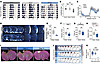 Figure 2
Ischemic stroke disrupts circadian behavior and glymphatic flow. (A) Representative double-plotted actograms of double-housed mice that received no surgery (None, dark gray), sham surgery (light gray), or photothrombotic stroke (blue). Tan indicates lights on; white represents lights off; black tic marks denote wheel-running activity. (B) Box plot of χ2 periodogram calculated rhythmicity amplitude at 24 hours. (C) Average activity counts after stroke over 24 hours. Thick lines indicate means, and shading indicates SEM. (D) Representative coronal sections of glymphatic tracer influx. Lighter colors/white are increased fluorescent tracer. Area within yellow boxes is shown at ×3 magnification to the right, with yellow arrows indicating perivascular influx of CSF tracer. (E) Box plot of MPI of glymphatic influx after sham and stroke. (F–H) Cartoon representative of the behavior tests: box plots of wire walk (F), rotarod (G), and velocity in open field (H) for sham (gray) and stroke (blue) mice. (I) Representative coronal immunohistochemistry (IHC) sections for mice 1 day, 3 days, and 11 days after photothrombotic stroke. MAP2 (magenta) was used to identify the stroke site. GFAP (yellow) and DAPI (cyan) were used for slice visualization. Scale bar: 1 mm. (J) Schematics of anterior-to-posterior coronal sections (white) with individual mouse stroke sites indicated in transparent red at 1, 3, and 11 days after stroke. The darker the red, the more stroke sites overlapped between mice. (K) Minimum/maximum box plot of stroke volume in mice 1, 3, and 11 days after stroke. In all box plots, minimum and maximum values are shown, center lines indicate the medians, quartiles are shown by box-and-whisker plots, individual mice are shown as colored dots. *P < 0.05, **P < 0.01, ***P < 0.001, ****P < 0.0001. B: 1-way ANOVA test with Tukey’s HSD post hoc analysis. F–H: unpaired t tests. E: unpaired t test with Welch’s correction. K: Welch’s ANOVA test with Dunnett’s T3 multiple comparisons test. All statistics are shown in Supplemental Table 1.
These behavioral changes may reflect altered brain homeostasis, such as perivascular flow dynamics within the glymphatic system. Consistent with this, mice exhibited reduced glymphatic influx (Figure 2, D and E). Functionally, poststroke mice showed impaired performance on the wire walk test (Figure 2F) and reduced total distance traveled and average speed in the open-field test (Figure 2H and Supplemental Figure 2, D–G) compared with sham controls. No group differences were detected on the rotarod test (Figure 2G). Together, these findings demonstrate that daily rhythms are disrupted after stroke and may represent a viable therapeutic target. Reinforcing the intrinsic timing of physiological processes such as glymphatic clearance could improve the removal of cellular debris from the injured brain and promote recovery.
To better understand the natural course of recovery, we compared lesion morphology at 1, 3, and 11 days after stroke (Figure 2, I–K). Lesion volume remained unchanged between days 1 and 3 but was significantly reduced by day 11. These findings suggest that chronotherapeutic interventions initiated during the subacute phase after photothrombotic stroke, specifically days 3–11, may be both feasible and effective.
KL001 chronotherapy improves recovery in permanent ischemia. We next tested whether repeated treatment with KL001 enhances stroke recovery. Beginning 3 days after induction of photothrombotic strokes, when the lesion was established, KL001 or vehicle was administered at ZT16 for 8 consecutive days (Figure 3, A–F). KL001 treatment significantly reduced stroke volume compared with that in vehicle controls (Figure 3, B, C, and F). As expected, glymphatic influx was suppressed in mice in the stroke group, but KL001 increased influx in both sham and stroke groups (Figure 3D).
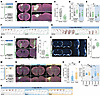 Figure 3
Chronotherapy improves glymphatic function and stroke recovery. (A) Schematic of experiment for KL001 treatment after photothrombotic (PT) stroke. (B) Representative IHC (scale bar: 1 mm) for box plot of (C) stroke volume, (D) MPI of glymphatic influx, and (E) wire walk velocity. (F) Schematics of anterior-to-posterior coronal sections (white) with individual mouse photothrombotic stroke sites indicated in transparent red for both vehicle (gray) and KL001 (green). The darker the red, the more stroke sites overlapped between mice. (G) Same as in F, but for transient middle cerebral artery occlusion–induced (tMCAO-induced) lesions. (H) Schematic of experiment for KL001 treatment after tMCAO. (I) Representative IHC (scale bar: 1 mm) for (J) box plot of stroke volume. (K) Representative coronal sections of fluorescent tracer after glymphatic influx assay. Areas within dotted yellow boxes are shown at ×2.5 magnification to the right, with perivascular tracer penetration highlighted with yellow arrows. Images are quantified by the box plot in L. (M) Schematic of experiment for restricted feeding after photothrombotic (PT) stroke. (N) Representative IHC (scale bar: 1 mm) for box plot of (O) stroke volume and (P) wire walk velocity. (Q) Same as in F, but for photothrombotic lesions after restricted feeding. Ad libitum (gray), active fed (blue), and sleep fed (orange) groups are indicated by shading. For all IHC, MAP2 (magenta), GFAP (yellow), and DAPI (cyan) 11 days after stroke. IL, ipsilateral; CL, contralateral. Area with dotted white boxes is shown at higher magnification below. Gray shading indicates sham, and blue shading indicates stroke. For all box plots: vehicle (gray), KL001 (green), active feeding (light blue), sleep feeding (orange) mice. Median and quartiles are shown by box-and-whisker plots, with individual mice shown as colored dots. *P < 0.05, **P < 0.01. C and L: unpaired t tests. D and E: 2-way ANOVA with Tukey’s HSD post hoc analysis. J: Mann-Whitney test. O: 1-way ANOVA test with Tukey’s HSD post hoc analysis. P: Kruskal Wallis test and Dunn’s multiple comparisons test. All statistics are shown in Supplemental Table 1.
In parallel, KL001 improved circadian outputs, consolidating the activity length by approximately 20 minutes (Supplemental Figure 3, A–D) without affecting the total number of activity counts or activity distribution across day and night (Supplemental Figure 3). Functionally, KL001 significantly increased velocity on the wire walk test after stroke (Figure 3E). These findings indicate that KL001 treatment initiated 3 days after stroke reduces stroke lesion size, restores glymphatic function, improves 24-hour timing of behavioral rhythms, and enhances motor recovery.
KL001 also improves recovery after transient ischemia. Can KL001 treatment also enhance recovery after the transient middle cerebral artery occlusion (tMCAO)? To answer this question, mice received KL001 or vehicle for 8 consecutive days beginning 3 days after tMCAO. KL001 treatment significantly reduced lesion size and increased glymphatic influx compared with that in vehicle controls (Figure 3, G–L). These findings support that KL001 therapy may represent a novel approach to improve stroke recovery, independent of the ischemia model.
Active-phase–restricted feeding increases glymphatic function and improves stroke recovery. We next tested whether time-restricted feeding, a behavioral chronotherapy, could improve recovery after stroke. The central hypothesis was that reinforcing endogenous circadian timing enhances poststroke recovery processes and that interventions providing sufficiently strong time cues would have effects similar to KL001. Three days after photothrombosis, mice were assigned to active-phase–restricted feeding, sleep-phase–restricted feeding, or ad libitum feeding for 8 days (Figure 3, M–Q). Compared with ad libitum controls, active-phase feeding increased glymphatic influx (Supplemental Figure 4, A, B, and D), although this effect did not remain significant when sleep-fed mice were included in the statistical model (Supplemental Figure 4, A–C). Importantly, sleep-phase feeding did not increase glymphatic function regardless of model (Supplemental Figure 4, C–E), suggesting that mistimed food may not impair glymphatic function. Active-phase feeding also reduced stroke volume (Figure 3, N, O, and Q) and improved performance on the wire walk test (Figure 3P). In contrast, sleep-phase feeding had no effect on glymphatic influx, stroke volume, or motor outcomes.
These results indicate that restricting feeding to the active phase improves glymphatic function, reduces ischemic damage, and enhances motor recovery, supporting the conclusion that reinforcing circadian timing through either pharmacological or behavioral interventions can promote recovery after ischemic injury.
Longitudinal assessment confirms the benefit of chronotherapy in stroke recovery. Although photothrombotic lesions at days 3 and 11 were consistent, reproducible, and quantifiable (Figure 2, I–K), it would be ideal to analyze lesion volume at both time points (days 3 and 11 after injury) in the same mice. To accomplish this, mice underwent photothrombosis, and T2-weighted MRI was used to assess lesion volumes at day 3 and day 11 after stroke. Between imaging time points, mice were maintained in control conditions (ad libitum food), treated with KL001 for 8 days, or subjected to active-phase–restricted feeding for 8 days (Figure 4A).
 Figure 4
Chronotherapy improves stroke outcome in longitudinal MRI. (A) Experimental design. (B) Representative coronal images of T2-weighted MRI before and after chronotherapy with KL001 (green), control (Ctrl, gray), or active-phase restricted feeding (TRF, blue) that began on day 3 after stroke. The image of the first section anterior to where corpus callosum was continuous was selected. (C) (left) Paired scatterplot of stroke volume for mice day 3 before chronotherapy and day 11 after chronotherapy with KL001. (right) Box plot of total volume reduction in lesion size before minus after chronotherapy. (D) Same as in C, but with active-phase restricted feeding (blue). (E) (left) Box plot of stroke volume on day 3, before chronotherapy. (right) Box plot of total brain volume change (day 11 minus day 3) for control- (gray), KL001- (green), and TRF-treated (blue) groups. For all box plots, vehicle (gray), KL001 (green), active feeding (light blue) mice. Median and quartiles are shown by box-and-whisker plots, with individual mice shown as colored dots. *P < 0.05. C, left, and D, left: 2-way ANOVA tests with repeated measures. C, right: Mann-Whitney test. D, right: unpaired 2-tailed t test. E, left: 1-way ANOVA test. E, right: Welch’s ANOVA. All statistics are shown in Supplemental Table 1.
As expected, lesions measured via MRI (Figure 4, B–D) were larger than those measured postmortem at days 3 and 11 after stroke (Figures 2 and 3). This is because in vivo tissue has not been exposed to paraformaldehyde fixation, where the osmolality of the 4% paraformaldehyde solution is >4-fold higher than most biological fluids and tissues, which drives water loss and shrinkage of biological samples (37, 38).
At day 3, stroke volumes were similar across groups (Figure 4E, left). Between days 3 and 11, both KL001 treatment and active-phase feeding significantly reduced lesion volume relative to that in controls (Figure 4, C and D). Importantly, this reduction was not attributable to tissue loss, as no differences in total brain volume were observed across groups before or after treatment (Figure 4E, right). These longitudinal findings confirm that chronotherapy, whether pharmacological or behavioral, supports improved recovery after stroke.
Chronotherapy selectively reduces brain cytokine burden after stroke. KL001 and active-phase–restricted feeding improve stroke recovery, along with enhancing glymphatic function. Yet, how increased glymphatic function may improve stroke recovery remains unclear. Stroke triggers neuroinflammation, releasing cytokines from injured tissue, initiating a peripheral immune response (39). We hypothesized that chronotherapy increases glymphatic function, ultimately reducing cytokine burden in the brain, contributing to improved recovery. To test this, KL001 or active-phase–restricted feeding was applied for 8 days, beginning 3 days after photothrombotic stroke. Cytokine levels 11 days after stroke were then quantified in brain homogenate and blood plasma using a multiplex panel (Figure 5, A–F and Supplemental Figure 5).
 Figure 5
Chronotherapy reduces brain, but not blood, cytokine burden after stroke. (A) Schematic of experimental design. (B) Model figure. Daily cycles in behavior and physiology (black line) are dampened in stroke (dotted red line), leading to decreased glymphatic function and cytokine accumulation. Chronotherapy (KL001, green; active-phase restricted feeding, blue) can reinforce 24-hour behavior and physiology (purple line). Glymphatic function is increased, cytokine burden is decreased, and stroke recovery is improved. An important note is that although chronotherapy may reinforce timing, the change in endogenous rhythms may be intervention and disease specific. (C) Violin plot of all individual brain cytokine concentrations normalized to the peak value with and without KL001. Box plot of normalized cytokine concentration by mouse. Normalized group mean of cytokine concentrations. Darker gray indicates increased concentration, green border indicates decreases with KL001, and red border indicates increases with KL001. Values to the right are all P values under 0.2 for group comparisons. (D) Same as in C, but with active-phase time-restricted feeding. (E) Same as in C and D, but measured in blood after KL001 chronotherapy. (F) Same as in E, but measured in blood after active-phase time-restricted feeding chronotherapy. For violin plots, vehicle/ad libitum (gray), KL001 (green), and active-phase time-restricted feeding (blue). Width reflects concentration of data, dotted lines indicate upper and lower quartile limits, solid black lines indicate median, and individual points represent individual cytokine values. For box plots, vehicle/ad libitum (gray), KL001 (green), and active-phase time-restricted feeding (blue). Minimum and maximum values are shown, center lines indicate the medians, and quartiles are shown by box-and-whisker plots, with individual mice shown as colored dots. *P < 0.05, **P < 0.01, ***P < 0.001. An unpaired t test, an unpaired t test with Welch’s correction, or a Mann-Whitney test were used for statistical tests across panels. All statistics are shown in Supplemental Table 1.
In the brain, cytokine levels decreased after both KL001 and active-phase–restricted feeding (Figure 5, C and D). This reduction reached statistical significance in individual mice treated with KL001 (Figure 5C, bottom) but was a trend in the active-phase feeding group (P = 0.1423, Figure 5D, bottom, and Supplemental Table 1). Importantly, an analysis of control photothrombotic stroke brains resulted in no significant differences in cytokine burden between contra- and ipsilateral sides to the lesion 11 days after stroke (Supplemental Figure 6), demonstrating that this bulk change in cytokine levels was likely not due to inclusion of the stroke lesion in the sample. Of the 17 cytokines measured, only IL-12 was upregulated in the contralateral side to the stroke (Supplemental Figure 6C), supporting this conclusion.
Among the 17 cytokines measured in the KL001 group, 12 showed reduced mean levels relative to those of vehicle controls. Three cytokines (IL-7, CXCL1, and TNF-α) were significantly decreased, while 3 others (IL-1β, IL-4, and IL-17) showed trends toward decreasing. A similar pattern was observed with active-phase feeding: 14 of 16 cytokines measured displayed decreased mean levels (Figure 5C, right, and Figure 5D, right). In contrast, cytokine changes in blood plasma were less pronounced (Figure 5, E and F). Only 9 of 17 cytokines (53%) decreased after chronotherapy, compared with 71% and 88% of cytokines in the KL001 and active-phase brain groups, respectively.
In summary, both pharmacological (KL001) and behavioral (active-phase feeding) chronotherapy reduced global cytokine levels in brain after stroke, which correlated with enhanced glymphatic function. These findings support a mechanism by which circadian reinforcement alleviates neuroinflammation and promotes recovery after stroke (Figure 5B).


Copyright © 2026 American Society for Clinical Investigation
ISSN: 0021-9738 (print), 1558-8238 (online)