
Abstract
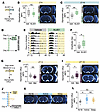
Stroke remains a leading cause of morbidity and mortality worldwide, with few effective interventions to promote recovery. Targeting circadian timing and glymphatic function may represent viable therapeutic strategies. Here, we show that the small-molecule clock modulator, KL001; high-dose melatonin; acute light pulses; and active-phase time-restricted feeding were each sufficient to enhance glymphatic function in mice. Moreover, initiating treatment with either KL001 or active-phase time-restricted feeding 3 days after preclinical models of stroke improved motor outcomes, reduced lesion volume, increased glymphatic flow, and lowered poststroke brain cytokine burden. These findings suggest that reinforcing normal daily rhythmicity after stroke can markedly enhance neurological recovery, even when interventions are initiated several days after stroke onset.
Authors
Emma Waight, Yuxi Zhu, Ashley Caudell, Velia S. Vizcarra, Evan Newbold, Michael J. Giannetto, Evalien Duyvestyn, Estephanie Balbuena, Wei Song, Tanzil M. Arefin, Yuki Mori, Maiken Nedergaard, Lauren M. Hablitz
Supplemental table 2 - Download (15.13 KB)
No preview available for this file type: xlsx
Use the download link to access the file.


Copyright © 2026 American Society for Clinical Investigation
ISSN: 0021-9738 (print), 1558-8238 (online)