
Advertisement
Clinical Research and Public HealthImmunologyVirology
Open Access |  10.1172/JCI203138
HIV causes global B cell dysregulation and restricts HBV-specific B cell development in an incident HBV cohort
Katherine E. Cascino,1 Thomas Liechti,2 Eric C. Seaberg,3 Kathleen Stevens,1 Steven M. Wolinsky,4 Mallory D. Witt,5 Robbie B. Mailliard,6 Mario Roederer,2 Justin R. Bailey,1 Chloe L. Thio,1 and Andrea L. Cox1
1Department of Medicine, Johns Hopkins University School of Medicine, Baltimore, Maryland, USA.
2ImmunoTechnology Section, Vaccine Research Center, National Institute of Allergy and Infectious Diseases (NIAID), NIH, Bethesda, Maryland, USA.
3Department of Epidemiology, Johns Hopkins University, Baltimore, Maryland, USA.
4Division of Infectious Diseases, Department of Medicine, Feinberg School of Medicine, Northwestern University, Chicago, Illinois, USA.
5Lundquist Research Institute at Harbor-UCLA Medical Center, Torrance, California, USA.
6Department of Medicine, University of Pittsburgh School of Medicine, Pittsburgh, Pennsylvania, USA.
Address correspondence to: Chloe L. Thio or Andrea L. Cox, 855 N. Wolfe Street, Rangos Building, Suite 520, Baltimore, Maryland 21205, USA. Phone: 410.502.3717; Email: cthio@jhmi.edu (CLT); Email: acox@jhmi.edu (ALC).
Authorship note: KC and TL contributed equally to this work. CLT and ALC contributed equally to this work.
Find articles by Cascino, K. in: PubMed | Google Scholar
1Department of Medicine, Johns Hopkins University School of Medicine, Baltimore, Maryland, USA.
2ImmunoTechnology Section, Vaccine Research Center, National Institute of Allergy and Infectious Diseases (NIAID), NIH, Bethesda, Maryland, USA.
3Department of Epidemiology, Johns Hopkins University, Baltimore, Maryland, USA.
4Division of Infectious Diseases, Department of Medicine, Feinberg School of Medicine, Northwestern University, Chicago, Illinois, USA.
5Lundquist Research Institute at Harbor-UCLA Medical Center, Torrance, California, USA.
6Department of Medicine, University of Pittsburgh School of Medicine, Pittsburgh, Pennsylvania, USA.
Address correspondence to: Chloe L. Thio or Andrea L. Cox, 855 N. Wolfe Street, Rangos Building, Suite 520, Baltimore, Maryland 21205, USA. Phone: 410.502.3717; Email: cthio@jhmi.edu (CLT); Email: acox@jhmi.edu (ALC).
Authorship note: KC and TL contributed equally to this work. CLT and ALC contributed equally to this work.
Find articles by Liechti, T. in: PubMed | Google Scholar
1Department of Medicine, Johns Hopkins University School of Medicine, Baltimore, Maryland, USA.
2ImmunoTechnology Section, Vaccine Research Center, National Institute of Allergy and Infectious Diseases (NIAID), NIH, Bethesda, Maryland, USA.
3Department of Epidemiology, Johns Hopkins University, Baltimore, Maryland, USA.
4Division of Infectious Diseases, Department of Medicine, Feinberg School of Medicine, Northwestern University, Chicago, Illinois, USA.
5Lundquist Research Institute at Harbor-UCLA Medical Center, Torrance, California, USA.
6Department of Medicine, University of Pittsburgh School of Medicine, Pittsburgh, Pennsylvania, USA.
Address correspondence to: Chloe L. Thio or Andrea L. Cox, 855 N. Wolfe Street, Rangos Building, Suite 520, Baltimore, Maryland 21205, USA. Phone: 410.502.3717; Email: cthio@jhmi.edu (CLT); Email: acox@jhmi.edu (ALC).
Authorship note: KC and TL contributed equally to this work. CLT and ALC contributed equally to this work.
Find articles by Seaberg, E. in: PubMed | Google Scholar
1Department of Medicine, Johns Hopkins University School of Medicine, Baltimore, Maryland, USA.
2ImmunoTechnology Section, Vaccine Research Center, National Institute of Allergy and Infectious Diseases (NIAID), NIH, Bethesda, Maryland, USA.
3Department of Epidemiology, Johns Hopkins University, Baltimore, Maryland, USA.
4Division of Infectious Diseases, Department of Medicine, Feinberg School of Medicine, Northwestern University, Chicago, Illinois, USA.
5Lundquist Research Institute at Harbor-UCLA Medical Center, Torrance, California, USA.
6Department of Medicine, University of Pittsburgh School of Medicine, Pittsburgh, Pennsylvania, USA.
Address correspondence to: Chloe L. Thio or Andrea L. Cox, 855 N. Wolfe Street, Rangos Building, Suite 520, Baltimore, Maryland 21205, USA. Phone: 410.502.3717; Email: cthio@jhmi.edu (CLT); Email: acox@jhmi.edu (ALC).
Authorship note: KC and TL contributed equally to this work. CLT and ALC contributed equally to this work.
Find articles by Stevens, K. in: PubMed | Google Scholar
1Department of Medicine, Johns Hopkins University School of Medicine, Baltimore, Maryland, USA.
2ImmunoTechnology Section, Vaccine Research Center, National Institute of Allergy and Infectious Diseases (NIAID), NIH, Bethesda, Maryland, USA.
3Department of Epidemiology, Johns Hopkins University, Baltimore, Maryland, USA.
4Division of Infectious Diseases, Department of Medicine, Feinberg School of Medicine, Northwestern University, Chicago, Illinois, USA.
5Lundquist Research Institute at Harbor-UCLA Medical Center, Torrance, California, USA.
6Department of Medicine, University of Pittsburgh School of Medicine, Pittsburgh, Pennsylvania, USA.
Address correspondence to: Chloe L. Thio or Andrea L. Cox, 855 N. Wolfe Street, Rangos Building, Suite 520, Baltimore, Maryland 21205, USA. Phone: 410.502.3717; Email: cthio@jhmi.edu (CLT); Email: acox@jhmi.edu (ALC).
Authorship note: KC and TL contributed equally to this work. CLT and ALC contributed equally to this work.
Find articles by Wolinsky, S. in: PubMed | Google Scholar
1Department of Medicine, Johns Hopkins University School of Medicine, Baltimore, Maryland, USA.
2ImmunoTechnology Section, Vaccine Research Center, National Institute of Allergy and Infectious Diseases (NIAID), NIH, Bethesda, Maryland, USA.
3Department of Epidemiology, Johns Hopkins University, Baltimore, Maryland, USA.
4Division of Infectious Diseases, Department of Medicine, Feinberg School of Medicine, Northwestern University, Chicago, Illinois, USA.
5Lundquist Research Institute at Harbor-UCLA Medical Center, Torrance, California, USA.
6Department of Medicine, University of Pittsburgh School of Medicine, Pittsburgh, Pennsylvania, USA.
Address correspondence to: Chloe L. Thio or Andrea L. Cox, 855 N. Wolfe Street, Rangos Building, Suite 520, Baltimore, Maryland 21205, USA. Phone: 410.502.3717; Email: cthio@jhmi.edu (CLT); Email: acox@jhmi.edu (ALC).
Authorship note: KC and TL contributed equally to this work. CLT and ALC contributed equally to this work.
Find articles by Witt, M. in: PubMed | Google Scholar
1Department of Medicine, Johns Hopkins University School of Medicine, Baltimore, Maryland, USA.
2ImmunoTechnology Section, Vaccine Research Center, National Institute of Allergy and Infectious Diseases (NIAID), NIH, Bethesda, Maryland, USA.
3Department of Epidemiology, Johns Hopkins University, Baltimore, Maryland, USA.
4Division of Infectious Diseases, Department of Medicine, Feinberg School of Medicine, Northwestern University, Chicago, Illinois, USA.
5Lundquist Research Institute at Harbor-UCLA Medical Center, Torrance, California, USA.
6Department of Medicine, University of Pittsburgh School of Medicine, Pittsburgh, Pennsylvania, USA.
Address correspondence to: Chloe L. Thio or Andrea L. Cox, 855 N. Wolfe Street, Rangos Building, Suite 520, Baltimore, Maryland 21205, USA. Phone: 410.502.3717; Email: cthio@jhmi.edu (CLT); Email: acox@jhmi.edu (ALC).
Authorship note: KC and TL contributed equally to this work. CLT and ALC contributed equally to this work.
Find articles by Mailliard, R. in: PubMed | Google Scholar
1Department of Medicine, Johns Hopkins University School of Medicine, Baltimore, Maryland, USA.
2ImmunoTechnology Section, Vaccine Research Center, National Institute of Allergy and Infectious Diseases (NIAID), NIH, Bethesda, Maryland, USA.
3Department of Epidemiology, Johns Hopkins University, Baltimore, Maryland, USA.
4Division of Infectious Diseases, Department of Medicine, Feinberg School of Medicine, Northwestern University, Chicago, Illinois, USA.
5Lundquist Research Institute at Harbor-UCLA Medical Center, Torrance, California, USA.
6Department of Medicine, University of Pittsburgh School of Medicine, Pittsburgh, Pennsylvania, USA.
Address correspondence to: Chloe L. Thio or Andrea L. Cox, 855 N. Wolfe Street, Rangos Building, Suite 520, Baltimore, Maryland 21205, USA. Phone: 410.502.3717; Email: cthio@jhmi.edu (CLT); Email: acox@jhmi.edu (ALC).
Authorship note: KC and TL contributed equally to this work. CLT and ALC contributed equally to this work.
Find articles by Roederer, M. in: PubMed | Google Scholar
1Department of Medicine, Johns Hopkins University School of Medicine, Baltimore, Maryland, USA.
2ImmunoTechnology Section, Vaccine Research Center, National Institute of Allergy and Infectious Diseases (NIAID), NIH, Bethesda, Maryland, USA.
3Department of Epidemiology, Johns Hopkins University, Baltimore, Maryland, USA.
4Division of Infectious Diseases, Department of Medicine, Feinberg School of Medicine, Northwestern University, Chicago, Illinois, USA.
5Lundquist Research Institute at Harbor-UCLA Medical Center, Torrance, California, USA.
6Department of Medicine, University of Pittsburgh School of Medicine, Pittsburgh, Pennsylvania, USA.
Address correspondence to: Chloe L. Thio or Andrea L. Cox, 855 N. Wolfe Street, Rangos Building, Suite 520, Baltimore, Maryland 21205, USA. Phone: 410.502.3717; Email: cthio@jhmi.edu (CLT); Email: acox@jhmi.edu (ALC).
Authorship note: KC and TL contributed equally to this work. CLT and ALC contributed equally to this work.
Find articles by Bailey, J. in: PubMed | Google Scholar
1Department of Medicine, Johns Hopkins University School of Medicine, Baltimore, Maryland, USA.
2ImmunoTechnology Section, Vaccine Research Center, National Institute of Allergy and Infectious Diseases (NIAID), NIH, Bethesda, Maryland, USA.
3Department of Epidemiology, Johns Hopkins University, Baltimore, Maryland, USA.
4Division of Infectious Diseases, Department of Medicine, Feinberg School of Medicine, Northwestern University, Chicago, Illinois, USA.
5Lundquist Research Institute at Harbor-UCLA Medical Center, Torrance, California, USA.
6Department of Medicine, University of Pittsburgh School of Medicine, Pittsburgh, Pennsylvania, USA.
Address correspondence to: Chloe L. Thio or Andrea L. Cox, 855 N. Wolfe Street, Rangos Building, Suite 520, Baltimore, Maryland 21205, USA. Phone: 410.502.3717; Email: cthio@jhmi.edu (CLT); Email: acox@jhmi.edu (ALC).
Authorship note: KC and TL contributed equally to this work. CLT and ALC contributed equally to this work.
Find articles by
Thio, C.
in:
PubMed
|
Google Scholar
|

1Department of Medicine, Johns Hopkins University School of Medicine, Baltimore, Maryland, USA.
2ImmunoTechnology Section, Vaccine Research Center, National Institute of Allergy and Infectious Diseases (NIAID), NIH, Bethesda, Maryland, USA.
3Department of Epidemiology, Johns Hopkins University, Baltimore, Maryland, USA.
4Division of Infectious Diseases, Department of Medicine, Feinberg School of Medicine, Northwestern University, Chicago, Illinois, USA.
5Lundquist Research Institute at Harbor-UCLA Medical Center, Torrance, California, USA.
6Department of Medicine, University of Pittsburgh School of Medicine, Pittsburgh, Pennsylvania, USA.
Address correspondence to: Chloe L. Thio or Andrea L. Cox, 855 N. Wolfe Street, Rangos Building, Suite 520, Baltimore, Maryland 21205, USA. Phone: 410.502.3717; Email: cthio@jhmi.edu (CLT); Email: acox@jhmi.edu (ALC).
Authorship note: KC and TL contributed equally to this work. CLT and ALC contributed equally to this work.
Find articles by
Cox, A.
in:
PubMed
|
Google Scholar
|
Published April 7, 2026 - More info
J Clin Invest. 2026;136(11):e203138. https://doi.org/10.1172/JCI203138.
© 2026 Cascino et al. This work is licensed under the Creative Commons Attribution 4.0 International License. To view a copy of this license, visit http://creativecommons.org/licenses/by/4.0/.
Received: December 4, 2025; Accepted: March 24, 2026

-
Results
Demographic and clinical characteristics. To investigate B cell characteristics associated with HBV outcome, we studied cryopreserved peripheral blood mononuclear cells (PBMCs) from 76 men (44 with HIV-1 and 32 without HIV-1) with incident HBV infection in the Multicenter AIDS Cohort Study (MACS), now the MACS-WIHS Combined Cohort Study (MWCCS) (23, 24). MACS participants were enrolled if they were at risk of or living with HIV-1 and were prospectively followed at semiannual study visits (see Methods). As previously reported for the overall MACS cohort, a subset of men acquired HBV during follow-up (25). Of men with incident HBV infection, a higher proportion of men with HIV (MWH) not on active HBV-active antiretroviral therapy (ART) developed CHB (17.5%; 95% CI 8.7%–29.9%) than men without HIV (MWoH) (8.2%; 95% CI 3.8–15.0%) (26). For this study, sampling procedures did not randomly select MACS participants and, therefore, do not reflect similar HBV recovery probabilities (see Methods). Rather, given the limited number of participants who progressed to CHB, individuals who met the sampling requirements were all selected for assessment in this study, followed by matching of controllers (see Methods). Of the 44 MWH, 31 controlled the HBV infection (70%) and 13 progressed to CHB (30%). Of the 32 MWoH, 23 controlled the HBV infection (72%) and 9 progressed to CHB (28%). Demographic characteristics stratified by HIV-1 status are in Table 1.
For each participant, up to 4 time points were analyzed, including (i) pre-HBV infection, (ii) acute HBV infection, (iii) early outcome, and (iv) late outcome, with the latest outcome time points acquired less than 2 years from the estimated time of incident HBV infection (Figure 1A). At each time point, we utilized a 24-color flow cytometry assay to define main B cell subsets, including global unswitched and class-switched memory and HBsAg-specific B cells (Supplemental Figure 1; supplemental material available online with this article; https://doi.org/10.1172/JCI203138DS1) (22).
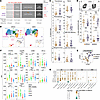 Figure 1
Global B cell subsets are significantly altered in MWH. (A) Schematic overview of longitudinal HBV cohort. (B) Concatenated flow cytometry data depicted as UMAP of all B cells from preinfection samples and plotted for MWoH or MWH. Each dot represents a single B cell. All markers except the dump/viability and HBsAg probes were used to compute UMAP. Contour plots depict distribution of events on UMAP based on the equally sampled preinfection data. Yellow and purple arrows indicate areas of up- and downregulation in MWoH and MWH, respectively. (C) Frequencies of B cell subsets from MWoH (orange) and MWH (purple). (D) Representative MWoH participant (left plot) and MWH (right plot) from the preinfection time point were examined for expression of MBC subset markers CD27 and CD21. Frequencies of MBC subsets from all MWoH and MWH are shown below. (E) UMAP based on the composition of all B cells shown in C and D. Each dot represents 1 individual at preinfection time point. (F) Mean fluorescence intensity (MFI) of all phenotypic markers on MBC subsets based on CD21/CD27 expression profile from MWH pre-HBV infection. (G) Bubble plot highlights P values of all significant phenotypic marker expression (MFI) on MBCs between MWoH and MWH when compared using Wilcoxon’s signed-rank test. Dot size is based on –log10-transformed and unadjusted P values, and dot color is based on log2-transformed (upregulated in MWH, brown; MWoH, blue) fold-change. (B–F) Data from preinfection samples for MWoH (n = 32) and MWH (n = 44). (C and D) Data compared using Mann-Whitney U test and (F) Kruskal-Wallis test corrected for multiple comparisons, where each dot represents a single measurement from each individual assessed at the preinfection time point. Bars represent median values. *, P < 0.05; **, P < 0.01; ***, P < 0.001; ****, P < 0.0001.
For both MWoH and MWH, the acute time point consisted of 3 groups based on serologic analysis and eventual outcome of HBV infection (controller 1, controller 2, and CHB). Participants in the controller 1 and CHB groups were HBsAg positive with or without positive HBV DNA while the controller 2 group was already HBsAg negative and anti–hepatitis B core (anti-HBc) positive. Thus, the controller 2 group both acquired and controlled their incident HBV infection (as shown by HBsAg clearance) in the 6 months between preinfection and acute sampling (Supplemental Figure 2A and Table 2). There was no difference in time between the preinfection visit and the acute visit in any of the 3 acute groups (controller 1: median = 0.50 years, IQR = 0.48–0.56 years; controller 2: median = 0.52 years, IQR = 0.50–0.62 years; chronic: median = 0.51 years, IQR = 0.48–0.57 years; P value = 0.25). Due to lack of significant differences in expression of B cell characteristics despite their differential serological status between controller 1 and controller 2 (Supplemental Figure 2, B–D), we combined the 2 controller groups for subsequent analysis.
Global B cells are dysregulated in HIV-1 infection. We first determined HIV-1–dependent B cell perturbations before HBV infection in MWH by comparing them with MWoH. Uniform manifold approximation and projection–based (UMAP-based) dimensionality reduction revealed differences in the B cell compartment as demonstrated by different increased density areas between MWoH and MWH (Figure 1B). MFI heatmap overlays for all panel markers are shown (Supplemental Figure 3A). B cell annotation based on manual gating revealed that areas of increased density among MWoH were represented by both unswitched B cell populations (IgM+IgD+CD27+ marginal zone [MZ] and IgM+IgD–CD27+ IgM-only memory) and class-switched populations (CD21+CD27– intermediate memory [IM] and CD21+CD27+ resting memory [RM]), while the area of increased density among MWH consisted of IgD+CD27– naive (unswitched), AM, and AtM (class-switched) subsets. We next confirmed these dynamics by quantifying the frequencies of all traditional B cell subsets pre-HBV infection for total B cells (Figure 1C) and class-switched B cells (Figure 1D). MWH showed increased frequencies of transitional B cells (CD10+CD27–), B1 B cells (CD24–/+CD38–/intCD27+CD43+), and plasmablasts (CD24–CD38+/++) and decreased levels of total memory B cells (MBC) compared with MWoH (Figure 1C). The class-switched MBC compartment for MWH was skewed toward activation, indicated by fewer IM and RM B cells and increased frequencies of AM and AtM B cells compared with MWoH (Figure 1D). UMAP analysis based on these differential B cell subset abundances resulted in clear separation of MWH and MWoH (Figure 1E). This segregation based on HIV-1 status persisted after HBV infection in the acute and early/late outcome stages, supporting that HBV infection does not change all global B cell differences between MWH and MWoH (Supplemental Figure 3B).
We further investigated the expression of functional markers on MBC subsets in MWH pre-HBV infection (Figure 1F and Supplemental Figure 3C). These markers included chemokine receptors (CXCR3, CXCR5), the costimulatory molecule CD86, regulatory molecules (BTLA, CD39), inhibitory Fc receptor CD32, and inhibitory markers associated with chronic infections (PD-1, FcRL5, CD11c, CD22) (22). Consistent with the HIV-1 literature (20, 21), in MWH, AM B cells expressed more CXCR3 and PD-1 than AtM, while both AM and AtM expressed higher levels of FcRL5 and CD11c compared with IM and RM (Figure 1F). These phenotypic expression patterns are also observed on AtM B cells in other chronic infections (21). In contrast, CXCR5, CD86, BTLA, CD39, CD32, and CD22 showed higher expression on IM and/or RM B cells compared with AM and AtM (Figure 1F). We also examined expression patterns on MBC subsets of MWoH before HBV infection (Supplemental Figure 3, D and E) and compared with MWH (Figure 1G). The expression of activation/exhaustion markers (e.g., CD86, PD-1, CD11c) on IM and RM B cells in MWH were increased compared with MWoH irrespective of HBV infection stage (Figure 1G). Overall, the pre-HBV infection samples demonstrate a B cell compartment skewed toward activation or exhaustion in MWH, consistent with previous reports. Most of the phenotypic B cell differences between men with and without HIV were in the IM and RM subsets and persisted throughout the HBV infection course.
Limited global B cell characteristics correlate with HBV outcome. Having established baseline differences in global B cells based on HIV-1 infection, we next sought to interrogate global B cell dynamics throughout the course of HBV infection to identify features associated with HBV outcome. UMAP based on the abundance of all manually gated B cell subsets across each time point, irrespective of HIV-1 status, revealed considerable overlap by HBV outcome alone between controllers and CHB (Figure 2A). Thus, overall B cell subset composition was not associated with control of an HBV infection. Given the observed effect of HIV-1 on the B cell compartment, we performed all subsequent analyses comparing HBV outcome by first stratifying on HIV-1 status.
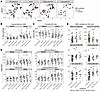 Figure 2
Differences by HBV outcome in global B cell populations are minimal and observed only in HIV-1 coinfection. (A) UMAP of B cells shown in Figure 1, C and D, from all MWoH and MWH at each time point (CHB, red; controller, blue). At each time point, each participant is represented by 1 dot. (B–D) Abundance of AtM (% class-switched) and expression (MFI) of CXCR5 (transitional B cells) and CD86 (B1, IgM-only memory, MZ, and RM B cells) between HBV outcome in MWH and MWoH are shown. At each time point, each participant is represented by 1 dot (MWoH: preinfection, controller n = 23, CHB n = 9; acute, controller n = 22, CHB n = 9; early outcome, controller n = 21; CHB n = 8; late outcome, controller n = 15, CHB n = 2; MWH: preinfection, controller n = 28, CHB n = 12; acute, controller n = 31, CHB n = 12; early outcome, controller n = 25; CHB n = 11; late outcome, controller n = 11, CHB n = 5). Box plots show median, quartile, and minimum/maximum. Data compared using Wilcoxon’s signed-rank test. P values are unadjusted for multiple comparisons. (E) Manually gated B cell characteristics compared between MWH controllers and MWH CHB with low (<350 cells/mL) and high (>350 cells/mL) CD4+ counts using a generalized estimating equation (GEE) regression model. Each dot represents 1 sample, colored by time point (orange, acute; light green, early outcome; dark green, late outcome). P values were obtained from the GEE model. *, P < 0.05; **, P < 0.01; ****, P < 0.0001.
To gain more granular insights into HBV-dependent immune dynamics, we compared all manually defined immune characteristics (frequency and MFI; N = 370) at each time point between controllers and CHB, stratified by HIV-1 (see Methods and Supplemental Table 1). Statistically significant differences were observed most often during the post-acute period when comparing CHB with controllers, and nearly all were in MWH. Of the characteristics identified, the frequency of AtM B cells and CXCR5 expression on transitional B cells were significantly higher and lower, respectively, at outcome time points in those with CHB compared with controllers (Figure 2, B and C). In addition, expression of CD86 on multiple unswitched and memory B cell populations was significantly higher in MWH who developed CHB compared with controllers at both acute and outcome time points (Figure 2D and Supplemental Figure 2, C and D). Our results show that the differential immune signature signified by increased CD86 expression occurs during acute HBV infection between individuals who develop CHB versus control and persists in the post-acute period. Additional signatures including increased frequency of AtM B cells and decreased expression of CXCR5 on transitional B cells are observed only in the post-acute period.
For each of the characteristics identified above in MWH, we next stratified participants progressing to CHB based on CD4+ count and observed that those with low CD4+ counts (<350 cells/mL) had significantly higher frequencies of AtM B cells and CD86 expression or lower CXCR5 expression compared with controllers (Figure 2E). CXCR5 expression on transitional B cells was also significantly lower in CD4-low CHB participants when directly compared with CD4-high (>350 cells/mL) CHB participants. Taken together, MWH who progressed to CHB had higher frequencies of AtM B cells and CD86 expression on multiple B cell subsets and lower CXCR5 expression on transitional B cells at acute or outcome time points. These observations were significantly more pronounced with lower CD4+ count (Figure 2E). In contrast, MWoH had stable proportions of cells and expression of these molecules throughout their HBV infection regardless of HBV outcome.
Unsupervised clustering reveals a unique population of Bregs upregulated in CHB at outcome in MWH. Manual gating analysis is limited to biological knowledge and does not take the full dimensionality of the data into account (27). Thus, interesting immune phenotypes may be missed. To capture the phenotypic heterogeneity of B cells, we used unsupervised clustering (FlowSOM) from B cells in all 244 samples (17.5 million cells) to define 40 unique clusters (28). Overlay of the cluster annotation on UMAP of global B cells from all time points revealed heterogenous B cell phenotypes based on their unique locations on the UMAP (Supplemental Figure 4A). The average FlowSOM cluster frequency ranged from <0.1% to >30%, and a heatmap of all markers for each cluster is shown (Supplemental Figure 4B).
Next, we assessed if FlowSOM cluster abundance differed based on HBV outcome at any time point. We again delineated individuals based on HIV-1 status due to profound HIV-dependent B cell perturbations. Multiple clusters significantly differed between HBV controllers and CHB groups in either MWH or MWoH (N = 12) (Figure 3A). Marker expression for these clusters is shown (Supplemental Figure 4C), and the heatmap revealed further clustering into 3 groups (Supplemental Figure 4D), driven by CD11c, CD27, and CD10, respectively, as shown by principal component analysis (Supplemental Figure 4E).
 Figure 3
Unsupervised FlowSOM clustering reveals a Breg population upregulated in MWH who develop CHB. (A) Comparison of FlowSOM cluster abundance by HBV outcome in MWoH and MWH by Wilcoxon’s signed-rank test is shown. Volcano plot depicts –log10-transformed unadjusted P values and log2 fold-change of cluster abundance in controllers compared with CHB. Upper right quadrant depicts clusters significantly upregulated in controllers while upper left quadrant depicts clusters significantly upregulated in CHB. Each dot represents a FlowSOM cluster colored by time point (red, preinfection; orange, acute; light green, early outcome; dark green, late outcome). (B) FlowSOM cluster 31 abundance in MWoH and MWH stratified by HBV outcome is shown. Each dot represents 1 sample for each participant at given time point (see Figure 2 legend for sample numbers). Box plots show median, quartile, and minimum/maximum. Data compared using Wilcoxon’s signed-rank test. P values are unadjusted for multiple comparisons. (C and D) Histogram plots show expression of all lineage markers (C) and phenotypic markers (D) for total B cells (gray) compared with FlowSOM cluster 31 (blue). (E) FlowSOM cluster 31 abundance compared between MWH controllers, MWH CHB with high CD4+ counts (>350 cells/mL), and MWH CHB with low CD4+ counts (<350 cells/mL) using a GEE regression model. Each dot represents 1 sample, colored by time point. P values were obtained from the GEE model. *, P < 0.05; **, P < 0.01; ****, P < 0.0001.
While multiple clusters were significantly altered at a given time point, only 2 clusters, 14 and 31, differed at multiple time points and were selected to further explore (see Methods). Clusters 14 and 31 were significantly increased in CHB compared with controllers at multiple time points for MWoH and MWH, respectively (Figure 3A, red circles). Cluster 14 differed at nonconsecutive acute and late outcome in MWoH and was characterized by IgM+, IgD+, CD27lo, CD21lo, CXCR5+, CD11c+, and FcRL5+, likely representing activated naive B cells (Supplemental Figure 4C) (29). In contrast, cluster 31 differed consecutively at both early and late outcome time points in MWH, supporting a robust association with CHB (Figure 3B). Cluster 31 consisted of transitional-like B cells (CD10+IgM+IgD+CD5hiCD24hiCD38hiCD21–CD32–CD27–) with heterogenous expression of functional markers (Figure 3, C and D). Among MWH, cluster 31 abundance was also significantly higher in those with low CD4+ count progressing to CHB compared with either those with high CD4+ count progressing to CHB or those in the controller group (Figure 3E). This combination of lineage markers in association with progression to CHB suggests that cluster 31 represents Bregs. Although production of IL-10 is the gold standard to identify Bregs, transitional B cells expressing CD24, CD38, and CD5, as the cluster 31 cells do, have been previously shown to secrete IL-10 and have been described as Breg populations (30). Together, FlowSOM cluster analysis reveals a likely unique Breg population in MWH with significantly higher abundance in CHB versus controllers and in MWH with low versus high CD4+ counts.
HBsAg-specific B cells expand in MWoH who control HBV and comprise distinct clusters. We next interrogated HBsAg-specific B cell dynamics and phenotypes based on HBV outcome given their importance in prevention and control of HBV. Representative manual gating of HBsAg-specific B cells using a dual-probe strategy is shown (Figure 4A). HBsAg-specific B cells ranged from undetectable to 1.13% total B cells (median 0.013%). Longitudinal sampling enabled us to uniquely assess the HBsAg-specific B cell dynamics within each participant by calculating the fold-change of frequencies over baseline (pre-HBV infection) (Figure 4B). We observed significant expansion in HBsAg-specific B cells in MWoH only in participants who controlled their HBV infection. No expansion was observed in MWoH who progressed to CHB, or in MWH, regardless of HBV outcome.
 Figure 4
HBsAg-specific B cells are expanded in MWoH upon control of acute HBV infection. (A) Flow cytometry plots of manually gated HBsAg-specific B cells from 2 representative participants are depicted (MWoH controller, top row; MWoH CHB, bottom row). Dual-staining strategy with HBsAg probes was used to define antigen-specific B cells. (B) Frequencies of HBsAg-specific B cells plotted as log2 fold-change over baseline. Data compared using Kruskal-Wallis test corrected for multiple comparisons. Each dot represents 1 participant’s sample compared with baseline for each given time point (see Figure 2 legend for sample numbers). Bars represent median values. *, P < 0.05; **, P < 0.01. (C) UMAP of total B cells (contour plot, gray) overlaid with HBsAg-specific B cells (MWoH, yellow; MWH, purple) stratified by time point in controllers (top 2 rows) and CHB (bottom 2 rows). (D) UMAP of total B cells (contour plot, gray) overlaid with total HBsAg-specific B cells colored by FlowSOM cluster. Total HBsAg-specific B cells depicted in red on UMAP inlay. (C and D) Each dot represents a single HBsAg-specific B cell.
We also examined HBsAg-specific B cell frequencies cross-sectionally, similar to previously published analyses (9, 10, 13, 14). Here, we observed that MWoH who controlled their HBV infection showed significantly higher HBsAg-specific B cell frequencies at outcome time points compared with pre- and acute infection while CHB did not show an increased abundance of HBsAg-specific B cells (Supplemental Figure 5A). In contrast, MWH who ultimately controlled HBV infection had significantly higher HBsAg-specific B cell frequencies compared with CHB only during acute infection, not at outcome time points. When comparing MWoH and MWH, we observed significantly increased HBsAg-specific B cell frequencies in MWoH during the acute stage in those who progressed to CHB and during early outcome in the HBV controllers (Supplemental Figure 5B). HBsAg-specific B cell frequencies were not altered in MWH on treatment (N = 8, Supplemental Figure 5C). Stratifying the 3 acute groups (controller 1, controller 2, and chronic) revealed a significantly higher HBsAg-specific B cell frequency in controller 2 compared with participants with subsequent chronic HBV infection within MWH (Supplemental Figure 5D).
We then stratified the previously generated UMAP of total B cells based on time point, HIV-1 status, and HBV outcome and overlaid HBsAg-specific B cells (Figure 4C). We observed that the HBsAg-specific B cell expansion in MWoH occurred in specific UMAP locations, suggesting unique B cell subsets. HBsAg-specific B cells were detected at various frequencies in 39 of the 40 FlowSOM clusters (Supplemental Figure 5E). UMAP and FlowSOM analysis revealed that expanded HBsAg-specific B cells in MWoH controllers consist of multiple phenotypically distinct B cell subsets, primarily RM and IM B cells (Figure 4D and Supplemental Figure 4B for FlowSOM cluster marker expression patterns).
Overall, unlike the global B cell analysis demonstrating HBV outcome–related differences primarily in MWH with CHB, HBsAg-specific B cells expanded only in MWoH controllers. These cells expanded within distinctive areas of the UMAP, indicating potentially protective phenotypes that merited further interrogation.
Expanded HBsAg-specific B cells are phenotypically heterogeneous. Next, we assessed if the frequency of HBsAg-specific B cells in any of the 39 FlowSOM clusters differed between time points to identify specific phenotypes associated with expansion upon HBV infection. Volcano plots stratified by HBV outcome and HIV-1 infection status revealed significant expansion of HBsAg-specific B cells in 12 FlowSOM clusters only in HBV controllers (Figure 5A). No differences occurred in CHB (Supplemental Figure 5F). All but 2 of the clusters identified were from MWoH and significantly differed between preinfection/acute versus outcome time points. This is consistent with our data showing expansion of total HBsAg-specific B cells in MWoH at the HBV infection outcome time points versus preinfection. Grouping the 10 clusters that significantly differed by at least 2 time points (see Methods) based on HIV-1 status (MWoH, clusters #4, #9, #16, #23, #24, #27, #28, #33; MWH, clusters #10 and #15) demonstrated significantly increased frequencies only during outcome time points (Figure 5B). The total number of B cells per sample was consistent across time points, regardless of HIV-1 status and HBV outcome, indicating that HBsAg-specific B cell frequencies did not merely reflect sampling differences (Supplemental Figure 5G).
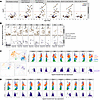 Figure 5
Expanded HBsAg-specific B cells are phenotypically heterogeneous. (A) Volcano plots depict log2 fold-change and –log10-transformed unadjusted P values based on comparisons of HBsAg-specific B cell abundance by FlowSOM cluster between each possible combination of time points in HBV controllers. P values calculated by Wilcoxon’s signed-rank test. Each dot represents a FlowSOM cluster, colored by HIV-1 infection status (MWoH, yellow; MWH, purple). (B) The log10-transformed frequency of HBsAg-specific B cells over time is plotted for both MWoH and MWH controllers in 10 clusters of interest. Top row consists of clusters upregulated in MWoH; bottom row are clusters upregulated in MWH. Abundances lower than 0.01% were adjusted to 0.01% for visualization but not statistical analysis purposes. Each dot represents 1 sample at a given time point. Data compared by Wilcoxon’s signed-rank test with Bonferroni’s correction for multiple testing. *, P < 0.05; **, P < 0.01; ***, P < 0.001. (C) Previously generated UMAP of total B cells overlaid with HBsAg-specific B cells from 10 clusters of interest are colored by FlowSOM cluster. HBsAg-specific B cells are plotted on zoomed-in sections of total UMAP (top row: expanded in MWoH; bottom row: expanded in MWH). (C and D) Histogram plots show expression levels for all lineage markers (C) and phenotypic markers (D) assessed in the panel for each of the 10 FlowSOM clusters compared with total B cells (gray histograms).
We next sought to investigate the phenotypes of these clusters to gain in-depth insights into the phenotypic landscape of antigen-specific B cell expansion in HBV infection (Figure 5, C and D). Expression levels of all markers assessed in the panel were plotted by histogram and compared with total B cells (cluster 0, gray histogram). For MWoH, significantly expanded HBsAg-specific B cells consisted of clusters that resembled IgM+IgD+CD21+CD27– naive B cells (cluster #4), IgM–IgD–CD21+/intCD27+ IM and RM B cells (clusters #16, #23, #24, #27, and #28), and IgM–IgD–CD21–CD27lo AtM B cells (cluster #9) (Figure 5C). Cluster 33 appeared to be a mixed cluster consisting of negative to intermediate expression of all lineage markers assessed. For clusters upregulated in MWH (#10 and #15), both demonstrated lineage marker expression of IgM+IgDintCD21–CD27int/+ consistent with activated naive and/or MZ B cells.
Further analysis of phenotypic markers demonstrated heterogeneous phenotypes between the IM and RM B cell clusters from MWoH (Figure 5D). For example, clusters 23 and 24 showed higher expression of CD86, CD11c, and FcRL5, markers of both activation and exhaustion, compared with clusters 16, 27, and 28. In addition, clusters 16 and 27 are characterized by increased expression of lymph node trafficking marker CXCR5 compared with 23 and 24. In contrast, clusters 10 and 15, which resemble naive and/or MZ B cell subsets in MWH, demonstrated expression of multiple inhibitory and/or putative inhibitory markers, including CD11c, FcRL5, CD22, and CD32 (Figure 5D). Interestingly, no selected clusters expressed PD-1, and unlike the global B cell analysis, there was limited CD86 expression in these clusters.
Overall, in MWoH, HBsAg-specific B cell expansion was observed upon HBV outcome, and these cells demonstrate heterogeneous phenotypes associated mainly with resting and intermediate MBCs. For the 2 unswitched B cell clusters that minimally expanded in MWH, their phenotypic marker expression is consistent with dysfunctional naive-like HBsAg-specific B cell subsets. As these clusters were identified in controllers, the phenotypes may represent a suboptimal B cell compensatory mechanism in people with HIV-1 to manage subsequent infections.


Copyright © 2026 American Society for Clinical Investigation
ISSN: 0021-9738 (print), 1558-8238 (online)