
Advertisement
Research ArticleCell biologyGastroenterologyInflammation
Open Access |  10.1172/JCI201729
Pathobiont-triggered induction of goblet cell response drives regional susceptibility to inflammatory bowel disease
Paige N. Spencer,1,2,3 Monica E. Brown,1,2,3 Erin P. Smith,4 Jiawei Wang,1,2,3 William Kim,1,2,3 Luisella Spiga,5,6 Naila Tasneem,1,2,3 Alan J. Simmons,1,2,3 Taewoo Kim,1,2,3 Yilin Yang,1,2,3 Yanwen Xu,1,2,3 Lin Zheng,1,2,3 James Ro,1,2,3 Harsimran Kaur,1,2,3 Seung Woo Kang,1,2,3 Matthew D. Helou,1,2,3 Mason A. Lee,1,2,3 Deronisha Arceneaux,1,2,3 Katherine D. Mueller,4 Ozge S. Kuddar,7 Mariah H. Harned,1,2,3 Jing Li,5 Amrita Banerjee,1,2,3 Nicholas O. Markham,2,8,9,10 Keith T. Wilson,5,6,8,9,10,11 Lori A. Coburn,8,9,10,11 Jeremy A. Goettel,5,6,8,10,11 Qi Liu,12 M. Kay Washington,5,10 Raphael H. Valdivia,4 Wenhan Zhu,5,6 and Ken S. Lau1,2,3,6,10,13
1Department of Cell and Developmental Biology and Program in Developmental Biology, Vanderbilt University, Nashville, Tennessee, USA.
2Epithelial Biology Center, Vanderbilt University Medical Center, Nashville, Tennessee, USA.
3Center for Computational Systems Biology, Vanderbilt University, Nashville, Tennessee, USA.
4Department of Integrative Immunobiology, Duke University School of Medicine, Durham, North Carolina, USA.
5Department of Pathology, Microbiology and Immunology and
6Vanderbilt Institute for Infection, Immunology and Inflammation, Vanderbilt University Medical Center, Nashville, Tennessee, USA.
7Department of Molecular Genetics and Microbiology, Duke University School of Medicine, Durham, North Carolina, USA.
8Department of Medicine, Division of Gastroenterology, Hepatology and Nutrition, Vanderbilt University Medical Center, Nashville, Tennessee, USA.
9Department of Veterans Affairs, Tennessee Valley Healthcare System, Nashville, Tennessee, USA.
10Center for Mucosal Inflammation and Cancer, Vanderbilt University Medical Center, Nashville, Tennessee, USA.
11Program in Cancer Biology, Vanderbilt University School of Medicine, Nashville, Tennessee, USA.
12Department of Biostatistics and Center for Quantitative Sciences, and
13Department of Surgery, Vanderbilt University Medical Center, Nashville, Tennessee, USA.
Address correspondence to: Ken S. Lau, Department of Cell and Developmental Biology, Vanderbilt University School of Medicine, 2215 Garland Ave., MRBIV10405A, Nashville, Tennessee 37215, USA. Phone: 857.869.4703; Email: ken.s.lau@vanderbilt.edu.
Find articles by Spencer, P. in: PubMed | Google Scholar
1Department of Cell and Developmental Biology and Program in Developmental Biology, Vanderbilt University, Nashville, Tennessee, USA.
2Epithelial Biology Center, Vanderbilt University Medical Center, Nashville, Tennessee, USA.
3Center for Computational Systems Biology, Vanderbilt University, Nashville, Tennessee, USA.
4Department of Integrative Immunobiology, Duke University School of Medicine, Durham, North Carolina, USA.
5Department of Pathology, Microbiology and Immunology and
6Vanderbilt Institute for Infection, Immunology and Inflammation, Vanderbilt University Medical Center, Nashville, Tennessee, USA.
7Department of Molecular Genetics and Microbiology, Duke University School of Medicine, Durham, North Carolina, USA.
8Department of Medicine, Division of Gastroenterology, Hepatology and Nutrition, Vanderbilt University Medical Center, Nashville, Tennessee, USA.
9Department of Veterans Affairs, Tennessee Valley Healthcare System, Nashville, Tennessee, USA.
10Center for Mucosal Inflammation and Cancer, Vanderbilt University Medical Center, Nashville, Tennessee, USA.
11Program in Cancer Biology, Vanderbilt University School of Medicine, Nashville, Tennessee, USA.
12Department of Biostatistics and Center for Quantitative Sciences, and
13Department of Surgery, Vanderbilt University Medical Center, Nashville, Tennessee, USA.
Address correspondence to: Ken S. Lau, Department of Cell and Developmental Biology, Vanderbilt University School of Medicine, 2215 Garland Ave., MRBIV10405A, Nashville, Tennessee 37215, USA. Phone: 857.869.4703; Email: ken.s.lau@vanderbilt.edu.
Find articles by Brown, M. in: PubMed | Google Scholar
1Department of Cell and Developmental Biology and Program in Developmental Biology, Vanderbilt University, Nashville, Tennessee, USA.
2Epithelial Biology Center, Vanderbilt University Medical Center, Nashville, Tennessee, USA.
3Center for Computational Systems Biology, Vanderbilt University, Nashville, Tennessee, USA.
4Department of Integrative Immunobiology, Duke University School of Medicine, Durham, North Carolina, USA.
5Department of Pathology, Microbiology and Immunology and
6Vanderbilt Institute for Infection, Immunology and Inflammation, Vanderbilt University Medical Center, Nashville, Tennessee, USA.
7Department of Molecular Genetics and Microbiology, Duke University School of Medicine, Durham, North Carolina, USA.
8Department of Medicine, Division of Gastroenterology, Hepatology and Nutrition, Vanderbilt University Medical Center, Nashville, Tennessee, USA.
9Department of Veterans Affairs, Tennessee Valley Healthcare System, Nashville, Tennessee, USA.
10Center for Mucosal Inflammation and Cancer, Vanderbilt University Medical Center, Nashville, Tennessee, USA.
11Program in Cancer Biology, Vanderbilt University School of Medicine, Nashville, Tennessee, USA.
12Department of Biostatistics and Center for Quantitative Sciences, and
13Department of Surgery, Vanderbilt University Medical Center, Nashville, Tennessee, USA.
Address correspondence to: Ken S. Lau, Department of Cell and Developmental Biology, Vanderbilt University School of Medicine, 2215 Garland Ave., MRBIV10405A, Nashville, Tennessee 37215, USA. Phone: 857.869.4703; Email: ken.s.lau@vanderbilt.edu.
Find articles by Smith, E. in: PubMed | Google Scholar
1Department of Cell and Developmental Biology and Program in Developmental Biology, Vanderbilt University, Nashville, Tennessee, USA.
2Epithelial Biology Center, Vanderbilt University Medical Center, Nashville, Tennessee, USA.
3Center for Computational Systems Biology, Vanderbilt University, Nashville, Tennessee, USA.
4Department of Integrative Immunobiology, Duke University School of Medicine, Durham, North Carolina, USA.
5Department of Pathology, Microbiology and Immunology and
6Vanderbilt Institute for Infection, Immunology and Inflammation, Vanderbilt University Medical Center, Nashville, Tennessee, USA.
7Department of Molecular Genetics and Microbiology, Duke University School of Medicine, Durham, North Carolina, USA.
8Department of Medicine, Division of Gastroenterology, Hepatology and Nutrition, Vanderbilt University Medical Center, Nashville, Tennessee, USA.
9Department of Veterans Affairs, Tennessee Valley Healthcare System, Nashville, Tennessee, USA.
10Center for Mucosal Inflammation and Cancer, Vanderbilt University Medical Center, Nashville, Tennessee, USA.
11Program in Cancer Biology, Vanderbilt University School of Medicine, Nashville, Tennessee, USA.
12Department of Biostatistics and Center for Quantitative Sciences, and
13Department of Surgery, Vanderbilt University Medical Center, Nashville, Tennessee, USA.
Address correspondence to: Ken S. Lau, Department of Cell and Developmental Biology, Vanderbilt University School of Medicine, 2215 Garland Ave., MRBIV10405A, Nashville, Tennessee 37215, USA. Phone: 857.869.4703; Email: ken.s.lau@vanderbilt.edu.
Find articles by Wang, J. in: PubMed | Google Scholar
1Department of Cell and Developmental Biology and Program in Developmental Biology, Vanderbilt University, Nashville, Tennessee, USA.
2Epithelial Biology Center, Vanderbilt University Medical Center, Nashville, Tennessee, USA.
3Center for Computational Systems Biology, Vanderbilt University, Nashville, Tennessee, USA.
4Department of Integrative Immunobiology, Duke University School of Medicine, Durham, North Carolina, USA.
5Department of Pathology, Microbiology and Immunology and
6Vanderbilt Institute for Infection, Immunology and Inflammation, Vanderbilt University Medical Center, Nashville, Tennessee, USA.
7Department of Molecular Genetics and Microbiology, Duke University School of Medicine, Durham, North Carolina, USA.
8Department of Medicine, Division of Gastroenterology, Hepatology and Nutrition, Vanderbilt University Medical Center, Nashville, Tennessee, USA.
9Department of Veterans Affairs, Tennessee Valley Healthcare System, Nashville, Tennessee, USA.
10Center for Mucosal Inflammation and Cancer, Vanderbilt University Medical Center, Nashville, Tennessee, USA.
11Program in Cancer Biology, Vanderbilt University School of Medicine, Nashville, Tennessee, USA.
12Department of Biostatistics and Center for Quantitative Sciences, and
13Department of Surgery, Vanderbilt University Medical Center, Nashville, Tennessee, USA.
Address correspondence to: Ken S. Lau, Department of Cell and Developmental Biology, Vanderbilt University School of Medicine, 2215 Garland Ave., MRBIV10405A, Nashville, Tennessee 37215, USA. Phone: 857.869.4703; Email: ken.s.lau@vanderbilt.edu.
Find articles by Kim, W. in: PubMed | Google Scholar
1Department of Cell and Developmental Biology and Program in Developmental Biology, Vanderbilt University, Nashville, Tennessee, USA.
2Epithelial Biology Center, Vanderbilt University Medical Center, Nashville, Tennessee, USA.
3Center for Computational Systems Biology, Vanderbilt University, Nashville, Tennessee, USA.
4Department of Integrative Immunobiology, Duke University School of Medicine, Durham, North Carolina, USA.
5Department of Pathology, Microbiology and Immunology and
6Vanderbilt Institute for Infection, Immunology and Inflammation, Vanderbilt University Medical Center, Nashville, Tennessee, USA.
7Department of Molecular Genetics and Microbiology, Duke University School of Medicine, Durham, North Carolina, USA.
8Department of Medicine, Division of Gastroenterology, Hepatology and Nutrition, Vanderbilt University Medical Center, Nashville, Tennessee, USA.
9Department of Veterans Affairs, Tennessee Valley Healthcare System, Nashville, Tennessee, USA.
10Center for Mucosal Inflammation and Cancer, Vanderbilt University Medical Center, Nashville, Tennessee, USA.
11Program in Cancer Biology, Vanderbilt University School of Medicine, Nashville, Tennessee, USA.
12Department of Biostatistics and Center for Quantitative Sciences, and
13Department of Surgery, Vanderbilt University Medical Center, Nashville, Tennessee, USA.
Address correspondence to: Ken S. Lau, Department of Cell and Developmental Biology, Vanderbilt University School of Medicine, 2215 Garland Ave., MRBIV10405A, Nashville, Tennessee 37215, USA. Phone: 857.869.4703; Email: ken.s.lau@vanderbilt.edu.
Find articles by Spiga, L. in: PubMed | Google Scholar
1Department of Cell and Developmental Biology and Program in Developmental Biology, Vanderbilt University, Nashville, Tennessee, USA.
2Epithelial Biology Center, Vanderbilt University Medical Center, Nashville, Tennessee, USA.
3Center for Computational Systems Biology, Vanderbilt University, Nashville, Tennessee, USA.
4Department of Integrative Immunobiology, Duke University School of Medicine, Durham, North Carolina, USA.
5Department of Pathology, Microbiology and Immunology and
6Vanderbilt Institute for Infection, Immunology and Inflammation, Vanderbilt University Medical Center, Nashville, Tennessee, USA.
7Department of Molecular Genetics and Microbiology, Duke University School of Medicine, Durham, North Carolina, USA.
8Department of Medicine, Division of Gastroenterology, Hepatology and Nutrition, Vanderbilt University Medical Center, Nashville, Tennessee, USA.
9Department of Veterans Affairs, Tennessee Valley Healthcare System, Nashville, Tennessee, USA.
10Center for Mucosal Inflammation and Cancer, Vanderbilt University Medical Center, Nashville, Tennessee, USA.
11Program in Cancer Biology, Vanderbilt University School of Medicine, Nashville, Tennessee, USA.
12Department of Biostatistics and Center for Quantitative Sciences, and
13Department of Surgery, Vanderbilt University Medical Center, Nashville, Tennessee, USA.
Address correspondence to: Ken S. Lau, Department of Cell and Developmental Biology, Vanderbilt University School of Medicine, 2215 Garland Ave., MRBIV10405A, Nashville, Tennessee 37215, USA. Phone: 857.869.4703; Email: ken.s.lau@vanderbilt.edu.
Find articles by Tasneem, N. in: PubMed | Google Scholar
1Department of Cell and Developmental Biology and Program in Developmental Biology, Vanderbilt University, Nashville, Tennessee, USA.
2Epithelial Biology Center, Vanderbilt University Medical Center, Nashville, Tennessee, USA.
3Center for Computational Systems Biology, Vanderbilt University, Nashville, Tennessee, USA.
4Department of Integrative Immunobiology, Duke University School of Medicine, Durham, North Carolina, USA.
5Department of Pathology, Microbiology and Immunology and
6Vanderbilt Institute for Infection, Immunology and Inflammation, Vanderbilt University Medical Center, Nashville, Tennessee, USA.
7Department of Molecular Genetics and Microbiology, Duke University School of Medicine, Durham, North Carolina, USA.
8Department of Medicine, Division of Gastroenterology, Hepatology and Nutrition, Vanderbilt University Medical Center, Nashville, Tennessee, USA.
9Department of Veterans Affairs, Tennessee Valley Healthcare System, Nashville, Tennessee, USA.
10Center for Mucosal Inflammation and Cancer, Vanderbilt University Medical Center, Nashville, Tennessee, USA.
11Program in Cancer Biology, Vanderbilt University School of Medicine, Nashville, Tennessee, USA.
12Department of Biostatistics and Center for Quantitative Sciences, and
13Department of Surgery, Vanderbilt University Medical Center, Nashville, Tennessee, USA.
Address correspondence to: Ken S. Lau, Department of Cell and Developmental Biology, Vanderbilt University School of Medicine, 2215 Garland Ave., MRBIV10405A, Nashville, Tennessee 37215, USA. Phone: 857.869.4703; Email: ken.s.lau@vanderbilt.edu.
Find articles by Simmons, A. in: PubMed | Google Scholar
1Department of Cell and Developmental Biology and Program in Developmental Biology, Vanderbilt University, Nashville, Tennessee, USA.
2Epithelial Biology Center, Vanderbilt University Medical Center, Nashville, Tennessee, USA.
3Center for Computational Systems Biology, Vanderbilt University, Nashville, Tennessee, USA.
4Department of Integrative Immunobiology, Duke University School of Medicine, Durham, North Carolina, USA.
5Department of Pathology, Microbiology and Immunology and
6Vanderbilt Institute for Infection, Immunology and Inflammation, Vanderbilt University Medical Center, Nashville, Tennessee, USA.
7Department of Molecular Genetics and Microbiology, Duke University School of Medicine, Durham, North Carolina, USA.
8Department of Medicine, Division of Gastroenterology, Hepatology and Nutrition, Vanderbilt University Medical Center, Nashville, Tennessee, USA.
9Department of Veterans Affairs, Tennessee Valley Healthcare System, Nashville, Tennessee, USA.
10Center for Mucosal Inflammation and Cancer, Vanderbilt University Medical Center, Nashville, Tennessee, USA.
11Program in Cancer Biology, Vanderbilt University School of Medicine, Nashville, Tennessee, USA.
12Department of Biostatistics and Center for Quantitative Sciences, and
13Department of Surgery, Vanderbilt University Medical Center, Nashville, Tennessee, USA.
Address correspondence to: Ken S. Lau, Department of Cell and Developmental Biology, Vanderbilt University School of Medicine, 2215 Garland Ave., MRBIV10405A, Nashville, Tennessee 37215, USA. Phone: 857.869.4703; Email: ken.s.lau@vanderbilt.edu.
Find articles by Kim, T. in: PubMed | Google Scholar
1Department of Cell and Developmental Biology and Program in Developmental Biology, Vanderbilt University, Nashville, Tennessee, USA.
2Epithelial Biology Center, Vanderbilt University Medical Center, Nashville, Tennessee, USA.
3Center for Computational Systems Biology, Vanderbilt University, Nashville, Tennessee, USA.
4Department of Integrative Immunobiology, Duke University School of Medicine, Durham, North Carolina, USA.
5Department of Pathology, Microbiology and Immunology and
6Vanderbilt Institute for Infection, Immunology and Inflammation, Vanderbilt University Medical Center, Nashville, Tennessee, USA.
7Department of Molecular Genetics and Microbiology, Duke University School of Medicine, Durham, North Carolina, USA.
8Department of Medicine, Division of Gastroenterology, Hepatology and Nutrition, Vanderbilt University Medical Center, Nashville, Tennessee, USA.
9Department of Veterans Affairs, Tennessee Valley Healthcare System, Nashville, Tennessee, USA.
10Center for Mucosal Inflammation and Cancer, Vanderbilt University Medical Center, Nashville, Tennessee, USA.
11Program in Cancer Biology, Vanderbilt University School of Medicine, Nashville, Tennessee, USA.
12Department of Biostatistics and Center for Quantitative Sciences, and
13Department of Surgery, Vanderbilt University Medical Center, Nashville, Tennessee, USA.
Address correspondence to: Ken S. Lau, Department of Cell and Developmental Biology, Vanderbilt University School of Medicine, 2215 Garland Ave., MRBIV10405A, Nashville, Tennessee 37215, USA. Phone: 857.869.4703; Email: ken.s.lau@vanderbilt.edu.
Find articles by Yang, Y. in: PubMed | Google Scholar
1Department of Cell and Developmental Biology and Program in Developmental Biology, Vanderbilt University, Nashville, Tennessee, USA.
2Epithelial Biology Center, Vanderbilt University Medical Center, Nashville, Tennessee, USA.
3Center for Computational Systems Biology, Vanderbilt University, Nashville, Tennessee, USA.
4Department of Integrative Immunobiology, Duke University School of Medicine, Durham, North Carolina, USA.
5Department of Pathology, Microbiology and Immunology and
6Vanderbilt Institute for Infection, Immunology and Inflammation, Vanderbilt University Medical Center, Nashville, Tennessee, USA.
7Department of Molecular Genetics and Microbiology, Duke University School of Medicine, Durham, North Carolina, USA.
8Department of Medicine, Division of Gastroenterology, Hepatology and Nutrition, Vanderbilt University Medical Center, Nashville, Tennessee, USA.
9Department of Veterans Affairs, Tennessee Valley Healthcare System, Nashville, Tennessee, USA.
10Center for Mucosal Inflammation and Cancer, Vanderbilt University Medical Center, Nashville, Tennessee, USA.
11Program in Cancer Biology, Vanderbilt University School of Medicine, Nashville, Tennessee, USA.
12Department of Biostatistics and Center for Quantitative Sciences, and
13Department of Surgery, Vanderbilt University Medical Center, Nashville, Tennessee, USA.
Address correspondence to: Ken S. Lau, Department of Cell and Developmental Biology, Vanderbilt University School of Medicine, 2215 Garland Ave., MRBIV10405A, Nashville, Tennessee 37215, USA. Phone: 857.869.4703; Email: ken.s.lau@vanderbilt.edu.
Find articles by Xu, Y. in: PubMed | Google Scholar
1Department of Cell and Developmental Biology and Program in Developmental Biology, Vanderbilt University, Nashville, Tennessee, USA.
2Epithelial Biology Center, Vanderbilt University Medical Center, Nashville, Tennessee, USA.
3Center for Computational Systems Biology, Vanderbilt University, Nashville, Tennessee, USA.
4Department of Integrative Immunobiology, Duke University School of Medicine, Durham, North Carolina, USA.
5Department of Pathology, Microbiology and Immunology and
6Vanderbilt Institute for Infection, Immunology and Inflammation, Vanderbilt University Medical Center, Nashville, Tennessee, USA.
7Department of Molecular Genetics and Microbiology, Duke University School of Medicine, Durham, North Carolina, USA.
8Department of Medicine, Division of Gastroenterology, Hepatology and Nutrition, Vanderbilt University Medical Center, Nashville, Tennessee, USA.
9Department of Veterans Affairs, Tennessee Valley Healthcare System, Nashville, Tennessee, USA.
10Center for Mucosal Inflammation and Cancer, Vanderbilt University Medical Center, Nashville, Tennessee, USA.
11Program in Cancer Biology, Vanderbilt University School of Medicine, Nashville, Tennessee, USA.
12Department of Biostatistics and Center for Quantitative Sciences, and
13Department of Surgery, Vanderbilt University Medical Center, Nashville, Tennessee, USA.
Address correspondence to: Ken S. Lau, Department of Cell and Developmental Biology, Vanderbilt University School of Medicine, 2215 Garland Ave., MRBIV10405A, Nashville, Tennessee 37215, USA. Phone: 857.869.4703; Email: ken.s.lau@vanderbilt.edu.
Find articles by Zheng, L. in: PubMed | Google Scholar
1Department of Cell and Developmental Biology and Program in Developmental Biology, Vanderbilt University, Nashville, Tennessee, USA.
2Epithelial Biology Center, Vanderbilt University Medical Center, Nashville, Tennessee, USA.
3Center for Computational Systems Biology, Vanderbilt University, Nashville, Tennessee, USA.
4Department of Integrative Immunobiology, Duke University School of Medicine, Durham, North Carolina, USA.
5Department of Pathology, Microbiology and Immunology and
6Vanderbilt Institute for Infection, Immunology and Inflammation, Vanderbilt University Medical Center, Nashville, Tennessee, USA.
7Department of Molecular Genetics and Microbiology, Duke University School of Medicine, Durham, North Carolina, USA.
8Department of Medicine, Division of Gastroenterology, Hepatology and Nutrition, Vanderbilt University Medical Center, Nashville, Tennessee, USA.
9Department of Veterans Affairs, Tennessee Valley Healthcare System, Nashville, Tennessee, USA.
10Center for Mucosal Inflammation and Cancer, Vanderbilt University Medical Center, Nashville, Tennessee, USA.
11Program in Cancer Biology, Vanderbilt University School of Medicine, Nashville, Tennessee, USA.
12Department of Biostatistics and Center for Quantitative Sciences, and
13Department of Surgery, Vanderbilt University Medical Center, Nashville, Tennessee, USA.
Address correspondence to: Ken S. Lau, Department of Cell and Developmental Biology, Vanderbilt University School of Medicine, 2215 Garland Ave., MRBIV10405A, Nashville, Tennessee 37215, USA. Phone: 857.869.4703; Email: ken.s.lau@vanderbilt.edu.
Find articles by Ro, J. in: PubMed | Google Scholar
1Department of Cell and Developmental Biology and Program in Developmental Biology, Vanderbilt University, Nashville, Tennessee, USA.
2Epithelial Biology Center, Vanderbilt University Medical Center, Nashville, Tennessee, USA.
3Center for Computational Systems Biology, Vanderbilt University, Nashville, Tennessee, USA.
4Department of Integrative Immunobiology, Duke University School of Medicine, Durham, North Carolina, USA.
5Department of Pathology, Microbiology and Immunology and
6Vanderbilt Institute for Infection, Immunology and Inflammation, Vanderbilt University Medical Center, Nashville, Tennessee, USA.
7Department of Molecular Genetics and Microbiology, Duke University School of Medicine, Durham, North Carolina, USA.
8Department of Medicine, Division of Gastroenterology, Hepatology and Nutrition, Vanderbilt University Medical Center, Nashville, Tennessee, USA.
9Department of Veterans Affairs, Tennessee Valley Healthcare System, Nashville, Tennessee, USA.
10Center for Mucosal Inflammation and Cancer, Vanderbilt University Medical Center, Nashville, Tennessee, USA.
11Program in Cancer Biology, Vanderbilt University School of Medicine, Nashville, Tennessee, USA.
12Department of Biostatistics and Center for Quantitative Sciences, and
13Department of Surgery, Vanderbilt University Medical Center, Nashville, Tennessee, USA.
Address correspondence to: Ken S. Lau, Department of Cell and Developmental Biology, Vanderbilt University School of Medicine, 2215 Garland Ave., MRBIV10405A, Nashville, Tennessee 37215, USA. Phone: 857.869.4703; Email: ken.s.lau@vanderbilt.edu.
Find articles by Kaur, H. in: PubMed | Google Scholar
1Department of Cell and Developmental Biology and Program in Developmental Biology, Vanderbilt University, Nashville, Tennessee, USA.
2Epithelial Biology Center, Vanderbilt University Medical Center, Nashville, Tennessee, USA.
3Center for Computational Systems Biology, Vanderbilt University, Nashville, Tennessee, USA.
4Department of Integrative Immunobiology, Duke University School of Medicine, Durham, North Carolina, USA.
5Department of Pathology, Microbiology and Immunology and
6Vanderbilt Institute for Infection, Immunology and Inflammation, Vanderbilt University Medical Center, Nashville, Tennessee, USA.
7Department of Molecular Genetics and Microbiology, Duke University School of Medicine, Durham, North Carolina, USA.
8Department of Medicine, Division of Gastroenterology, Hepatology and Nutrition, Vanderbilt University Medical Center, Nashville, Tennessee, USA.
9Department of Veterans Affairs, Tennessee Valley Healthcare System, Nashville, Tennessee, USA.
10Center for Mucosal Inflammation and Cancer, Vanderbilt University Medical Center, Nashville, Tennessee, USA.
11Program in Cancer Biology, Vanderbilt University School of Medicine, Nashville, Tennessee, USA.
12Department of Biostatistics and Center for Quantitative Sciences, and
13Department of Surgery, Vanderbilt University Medical Center, Nashville, Tennessee, USA.
Address correspondence to: Ken S. Lau, Department of Cell and Developmental Biology, Vanderbilt University School of Medicine, 2215 Garland Ave., MRBIV10405A, Nashville, Tennessee 37215, USA. Phone: 857.869.4703; Email: ken.s.lau@vanderbilt.edu.
Find articles by Kang, S. in: PubMed | Google Scholar
1Department of Cell and Developmental Biology and Program in Developmental Biology, Vanderbilt University, Nashville, Tennessee, USA.
2Epithelial Biology Center, Vanderbilt University Medical Center, Nashville, Tennessee, USA.
3Center for Computational Systems Biology, Vanderbilt University, Nashville, Tennessee, USA.
4Department of Integrative Immunobiology, Duke University School of Medicine, Durham, North Carolina, USA.
5Department of Pathology, Microbiology and Immunology and
6Vanderbilt Institute for Infection, Immunology and Inflammation, Vanderbilt University Medical Center, Nashville, Tennessee, USA.
7Department of Molecular Genetics and Microbiology, Duke University School of Medicine, Durham, North Carolina, USA.
8Department of Medicine, Division of Gastroenterology, Hepatology and Nutrition, Vanderbilt University Medical Center, Nashville, Tennessee, USA.
9Department of Veterans Affairs, Tennessee Valley Healthcare System, Nashville, Tennessee, USA.
10Center for Mucosal Inflammation and Cancer, Vanderbilt University Medical Center, Nashville, Tennessee, USA.
11Program in Cancer Biology, Vanderbilt University School of Medicine, Nashville, Tennessee, USA.
12Department of Biostatistics and Center for Quantitative Sciences, and
13Department of Surgery, Vanderbilt University Medical Center, Nashville, Tennessee, USA.
Address correspondence to: Ken S. Lau, Department of Cell and Developmental Biology, Vanderbilt University School of Medicine, 2215 Garland Ave., MRBIV10405A, Nashville, Tennessee 37215, USA. Phone: 857.869.4703; Email: ken.s.lau@vanderbilt.edu.
Find articles by Helou, M. in: PubMed | Google Scholar
1Department of Cell and Developmental Biology and Program in Developmental Biology, Vanderbilt University, Nashville, Tennessee, USA.
2Epithelial Biology Center, Vanderbilt University Medical Center, Nashville, Tennessee, USA.
3Center for Computational Systems Biology, Vanderbilt University, Nashville, Tennessee, USA.
4Department of Integrative Immunobiology, Duke University School of Medicine, Durham, North Carolina, USA.
5Department of Pathology, Microbiology and Immunology and
6Vanderbilt Institute for Infection, Immunology and Inflammation, Vanderbilt University Medical Center, Nashville, Tennessee, USA.
7Department of Molecular Genetics and Microbiology, Duke University School of Medicine, Durham, North Carolina, USA.
8Department of Medicine, Division of Gastroenterology, Hepatology and Nutrition, Vanderbilt University Medical Center, Nashville, Tennessee, USA.
9Department of Veterans Affairs, Tennessee Valley Healthcare System, Nashville, Tennessee, USA.
10Center for Mucosal Inflammation and Cancer, Vanderbilt University Medical Center, Nashville, Tennessee, USA.
11Program in Cancer Biology, Vanderbilt University School of Medicine, Nashville, Tennessee, USA.
12Department of Biostatistics and Center for Quantitative Sciences, and
13Department of Surgery, Vanderbilt University Medical Center, Nashville, Tennessee, USA.
Address correspondence to: Ken S. Lau, Department of Cell and Developmental Biology, Vanderbilt University School of Medicine, 2215 Garland Ave., MRBIV10405A, Nashville, Tennessee 37215, USA. Phone: 857.869.4703; Email: ken.s.lau@vanderbilt.edu.
Find articles by Lee, M. in: PubMed | Google Scholar
1Department of Cell and Developmental Biology and Program in Developmental Biology, Vanderbilt University, Nashville, Tennessee, USA.
2Epithelial Biology Center, Vanderbilt University Medical Center, Nashville, Tennessee, USA.
3Center for Computational Systems Biology, Vanderbilt University, Nashville, Tennessee, USA.
4Department of Integrative Immunobiology, Duke University School of Medicine, Durham, North Carolina, USA.
5Department of Pathology, Microbiology and Immunology and
6Vanderbilt Institute for Infection, Immunology and Inflammation, Vanderbilt University Medical Center, Nashville, Tennessee, USA.
7Department of Molecular Genetics and Microbiology, Duke University School of Medicine, Durham, North Carolina, USA.
8Department of Medicine, Division of Gastroenterology, Hepatology and Nutrition, Vanderbilt University Medical Center, Nashville, Tennessee, USA.
9Department of Veterans Affairs, Tennessee Valley Healthcare System, Nashville, Tennessee, USA.
10Center for Mucosal Inflammation and Cancer, Vanderbilt University Medical Center, Nashville, Tennessee, USA.
11Program in Cancer Biology, Vanderbilt University School of Medicine, Nashville, Tennessee, USA.
12Department of Biostatistics and Center for Quantitative Sciences, and
13Department of Surgery, Vanderbilt University Medical Center, Nashville, Tennessee, USA.
Address correspondence to: Ken S. Lau, Department of Cell and Developmental Biology, Vanderbilt University School of Medicine, 2215 Garland Ave., MRBIV10405A, Nashville, Tennessee 37215, USA. Phone: 857.869.4703; Email: ken.s.lau@vanderbilt.edu.
Find articles by Arceneaux, D. in: PubMed | Google Scholar
1Department of Cell and Developmental Biology and Program in Developmental Biology, Vanderbilt University, Nashville, Tennessee, USA.
2Epithelial Biology Center, Vanderbilt University Medical Center, Nashville, Tennessee, USA.
3Center for Computational Systems Biology, Vanderbilt University, Nashville, Tennessee, USA.
4Department of Integrative Immunobiology, Duke University School of Medicine, Durham, North Carolina, USA.
5Department of Pathology, Microbiology and Immunology and
6Vanderbilt Institute for Infection, Immunology and Inflammation, Vanderbilt University Medical Center, Nashville, Tennessee, USA.
7Department of Molecular Genetics and Microbiology, Duke University School of Medicine, Durham, North Carolina, USA.
8Department of Medicine, Division of Gastroenterology, Hepatology and Nutrition, Vanderbilt University Medical Center, Nashville, Tennessee, USA.
9Department of Veterans Affairs, Tennessee Valley Healthcare System, Nashville, Tennessee, USA.
10Center for Mucosal Inflammation and Cancer, Vanderbilt University Medical Center, Nashville, Tennessee, USA.
11Program in Cancer Biology, Vanderbilt University School of Medicine, Nashville, Tennessee, USA.
12Department of Biostatistics and Center for Quantitative Sciences, and
13Department of Surgery, Vanderbilt University Medical Center, Nashville, Tennessee, USA.
Address correspondence to: Ken S. Lau, Department of Cell and Developmental Biology, Vanderbilt University School of Medicine, 2215 Garland Ave., MRBIV10405A, Nashville, Tennessee 37215, USA. Phone: 857.869.4703; Email: ken.s.lau@vanderbilt.edu.
Find articles by Mueller, K. in: PubMed | Google Scholar
1Department of Cell and Developmental Biology and Program in Developmental Biology, Vanderbilt University, Nashville, Tennessee, USA.
2Epithelial Biology Center, Vanderbilt University Medical Center, Nashville, Tennessee, USA.
3Center for Computational Systems Biology, Vanderbilt University, Nashville, Tennessee, USA.
4Department of Integrative Immunobiology, Duke University School of Medicine, Durham, North Carolina, USA.
5Department of Pathology, Microbiology and Immunology and
6Vanderbilt Institute for Infection, Immunology and Inflammation, Vanderbilt University Medical Center, Nashville, Tennessee, USA.
7Department of Molecular Genetics and Microbiology, Duke University School of Medicine, Durham, North Carolina, USA.
8Department of Medicine, Division of Gastroenterology, Hepatology and Nutrition, Vanderbilt University Medical Center, Nashville, Tennessee, USA.
9Department of Veterans Affairs, Tennessee Valley Healthcare System, Nashville, Tennessee, USA.
10Center for Mucosal Inflammation and Cancer, Vanderbilt University Medical Center, Nashville, Tennessee, USA.
11Program in Cancer Biology, Vanderbilt University School of Medicine, Nashville, Tennessee, USA.
12Department of Biostatistics and Center for Quantitative Sciences, and
13Department of Surgery, Vanderbilt University Medical Center, Nashville, Tennessee, USA.
Address correspondence to: Ken S. Lau, Department of Cell and Developmental Biology, Vanderbilt University School of Medicine, 2215 Garland Ave., MRBIV10405A, Nashville, Tennessee 37215, USA. Phone: 857.869.4703; Email: ken.s.lau@vanderbilt.edu.
Find articles by Kuddar, O. in: PubMed | Google Scholar
1Department of Cell and Developmental Biology and Program in Developmental Biology, Vanderbilt University, Nashville, Tennessee, USA.
2Epithelial Biology Center, Vanderbilt University Medical Center, Nashville, Tennessee, USA.
3Center for Computational Systems Biology, Vanderbilt University, Nashville, Tennessee, USA.
4Department of Integrative Immunobiology, Duke University School of Medicine, Durham, North Carolina, USA.
5Department of Pathology, Microbiology and Immunology and
6Vanderbilt Institute for Infection, Immunology and Inflammation, Vanderbilt University Medical Center, Nashville, Tennessee, USA.
7Department of Molecular Genetics and Microbiology, Duke University School of Medicine, Durham, North Carolina, USA.
8Department of Medicine, Division of Gastroenterology, Hepatology and Nutrition, Vanderbilt University Medical Center, Nashville, Tennessee, USA.
9Department of Veterans Affairs, Tennessee Valley Healthcare System, Nashville, Tennessee, USA.
10Center for Mucosal Inflammation and Cancer, Vanderbilt University Medical Center, Nashville, Tennessee, USA.
11Program in Cancer Biology, Vanderbilt University School of Medicine, Nashville, Tennessee, USA.
12Department of Biostatistics and Center for Quantitative Sciences, and
13Department of Surgery, Vanderbilt University Medical Center, Nashville, Tennessee, USA.
Address correspondence to: Ken S. Lau, Department of Cell and Developmental Biology, Vanderbilt University School of Medicine, 2215 Garland Ave., MRBIV10405A, Nashville, Tennessee 37215, USA. Phone: 857.869.4703; Email: ken.s.lau@vanderbilt.edu.
Find articles by Harned, M. in: PubMed | Google Scholar
1Department of Cell and Developmental Biology and Program in Developmental Biology, Vanderbilt University, Nashville, Tennessee, USA.
2Epithelial Biology Center, Vanderbilt University Medical Center, Nashville, Tennessee, USA.
3Center for Computational Systems Biology, Vanderbilt University, Nashville, Tennessee, USA.
4Department of Integrative Immunobiology, Duke University School of Medicine, Durham, North Carolina, USA.
5Department of Pathology, Microbiology and Immunology and
6Vanderbilt Institute for Infection, Immunology and Inflammation, Vanderbilt University Medical Center, Nashville, Tennessee, USA.
7Department of Molecular Genetics and Microbiology, Duke University School of Medicine, Durham, North Carolina, USA.
8Department of Medicine, Division of Gastroenterology, Hepatology and Nutrition, Vanderbilt University Medical Center, Nashville, Tennessee, USA.
9Department of Veterans Affairs, Tennessee Valley Healthcare System, Nashville, Tennessee, USA.
10Center for Mucosal Inflammation and Cancer, Vanderbilt University Medical Center, Nashville, Tennessee, USA.
11Program in Cancer Biology, Vanderbilt University School of Medicine, Nashville, Tennessee, USA.
12Department of Biostatistics and Center for Quantitative Sciences, and
13Department of Surgery, Vanderbilt University Medical Center, Nashville, Tennessee, USA.
Address correspondence to: Ken S. Lau, Department of Cell and Developmental Biology, Vanderbilt University School of Medicine, 2215 Garland Ave., MRBIV10405A, Nashville, Tennessee 37215, USA. Phone: 857.869.4703; Email: ken.s.lau@vanderbilt.edu.
Find articles by Li, J. in: PubMed | Google Scholar
1Department of Cell and Developmental Biology and Program in Developmental Biology, Vanderbilt University, Nashville, Tennessee, USA.
2Epithelial Biology Center, Vanderbilt University Medical Center, Nashville, Tennessee, USA.
3Center for Computational Systems Biology, Vanderbilt University, Nashville, Tennessee, USA.
4Department of Integrative Immunobiology, Duke University School of Medicine, Durham, North Carolina, USA.
5Department of Pathology, Microbiology and Immunology and
6Vanderbilt Institute for Infection, Immunology and Inflammation, Vanderbilt University Medical Center, Nashville, Tennessee, USA.
7Department of Molecular Genetics and Microbiology, Duke University School of Medicine, Durham, North Carolina, USA.
8Department of Medicine, Division of Gastroenterology, Hepatology and Nutrition, Vanderbilt University Medical Center, Nashville, Tennessee, USA.
9Department of Veterans Affairs, Tennessee Valley Healthcare System, Nashville, Tennessee, USA.
10Center for Mucosal Inflammation and Cancer, Vanderbilt University Medical Center, Nashville, Tennessee, USA.
11Program in Cancer Biology, Vanderbilt University School of Medicine, Nashville, Tennessee, USA.
12Department of Biostatistics and Center for Quantitative Sciences, and
13Department of Surgery, Vanderbilt University Medical Center, Nashville, Tennessee, USA.
Address correspondence to: Ken S. Lau, Department of Cell and Developmental Biology, Vanderbilt University School of Medicine, 2215 Garland Ave., MRBIV10405A, Nashville, Tennessee 37215, USA. Phone: 857.869.4703; Email: ken.s.lau@vanderbilt.edu.
Find articles by Banerjee, A. in: PubMed | Google Scholar
1Department of Cell and Developmental Biology and Program in Developmental Biology, Vanderbilt University, Nashville, Tennessee, USA.
2Epithelial Biology Center, Vanderbilt University Medical Center, Nashville, Tennessee, USA.
3Center for Computational Systems Biology, Vanderbilt University, Nashville, Tennessee, USA.
4Department of Integrative Immunobiology, Duke University School of Medicine, Durham, North Carolina, USA.
5Department of Pathology, Microbiology and Immunology and
6Vanderbilt Institute for Infection, Immunology and Inflammation, Vanderbilt University Medical Center, Nashville, Tennessee, USA.
7Department of Molecular Genetics and Microbiology, Duke University School of Medicine, Durham, North Carolina, USA.
8Department of Medicine, Division of Gastroenterology, Hepatology and Nutrition, Vanderbilt University Medical Center, Nashville, Tennessee, USA.
9Department of Veterans Affairs, Tennessee Valley Healthcare System, Nashville, Tennessee, USA.
10Center for Mucosal Inflammation and Cancer, Vanderbilt University Medical Center, Nashville, Tennessee, USA.
11Program in Cancer Biology, Vanderbilt University School of Medicine, Nashville, Tennessee, USA.
12Department of Biostatistics and Center for Quantitative Sciences, and
13Department of Surgery, Vanderbilt University Medical Center, Nashville, Tennessee, USA.
Address correspondence to: Ken S. Lau, Department of Cell and Developmental Biology, Vanderbilt University School of Medicine, 2215 Garland Ave., MRBIV10405A, Nashville, Tennessee 37215, USA. Phone: 857.869.4703; Email: ken.s.lau@vanderbilt.edu.
Find articles by Markham, N. in: PubMed | Google Scholar
1Department of Cell and Developmental Biology and Program in Developmental Biology, Vanderbilt University, Nashville, Tennessee, USA.
2Epithelial Biology Center, Vanderbilt University Medical Center, Nashville, Tennessee, USA.
3Center for Computational Systems Biology, Vanderbilt University, Nashville, Tennessee, USA.
4Department of Integrative Immunobiology, Duke University School of Medicine, Durham, North Carolina, USA.
5Department of Pathology, Microbiology and Immunology and
6Vanderbilt Institute for Infection, Immunology and Inflammation, Vanderbilt University Medical Center, Nashville, Tennessee, USA.
7Department of Molecular Genetics and Microbiology, Duke University School of Medicine, Durham, North Carolina, USA.
8Department of Medicine, Division of Gastroenterology, Hepatology and Nutrition, Vanderbilt University Medical Center, Nashville, Tennessee, USA.
9Department of Veterans Affairs, Tennessee Valley Healthcare System, Nashville, Tennessee, USA.
10Center for Mucosal Inflammation and Cancer, Vanderbilt University Medical Center, Nashville, Tennessee, USA.
11Program in Cancer Biology, Vanderbilt University School of Medicine, Nashville, Tennessee, USA.
12Department of Biostatistics and Center for Quantitative Sciences, and
13Department of Surgery, Vanderbilt University Medical Center, Nashville, Tennessee, USA.
Address correspondence to: Ken S. Lau, Department of Cell and Developmental Biology, Vanderbilt University School of Medicine, 2215 Garland Ave., MRBIV10405A, Nashville, Tennessee 37215, USA. Phone: 857.869.4703; Email: ken.s.lau@vanderbilt.edu.
Find articles by
Wilson, K.
in:
PubMed
|
Google Scholar
|

1Department of Cell and Developmental Biology and Program in Developmental Biology, Vanderbilt University, Nashville, Tennessee, USA.
2Epithelial Biology Center, Vanderbilt University Medical Center, Nashville, Tennessee, USA.
3Center for Computational Systems Biology, Vanderbilt University, Nashville, Tennessee, USA.
4Department of Integrative Immunobiology, Duke University School of Medicine, Durham, North Carolina, USA.
5Department of Pathology, Microbiology and Immunology and
6Vanderbilt Institute for Infection, Immunology and Inflammation, Vanderbilt University Medical Center, Nashville, Tennessee, USA.
7Department of Molecular Genetics and Microbiology, Duke University School of Medicine, Durham, North Carolina, USA.
8Department of Medicine, Division of Gastroenterology, Hepatology and Nutrition, Vanderbilt University Medical Center, Nashville, Tennessee, USA.
9Department of Veterans Affairs, Tennessee Valley Healthcare System, Nashville, Tennessee, USA.
10Center for Mucosal Inflammation and Cancer, Vanderbilt University Medical Center, Nashville, Tennessee, USA.
11Program in Cancer Biology, Vanderbilt University School of Medicine, Nashville, Tennessee, USA.
12Department of Biostatistics and Center for Quantitative Sciences, and
13Department of Surgery, Vanderbilt University Medical Center, Nashville, Tennessee, USA.
Address correspondence to: Ken S. Lau, Department of Cell and Developmental Biology, Vanderbilt University School of Medicine, 2215 Garland Ave., MRBIV10405A, Nashville, Tennessee 37215, USA. Phone: 857.869.4703; Email: ken.s.lau@vanderbilt.edu.
Find articles by Coburn, L. in: PubMed | Google Scholar
1Department of Cell and Developmental Biology and Program in Developmental Biology, Vanderbilt University, Nashville, Tennessee, USA.
2Epithelial Biology Center, Vanderbilt University Medical Center, Nashville, Tennessee, USA.
3Center for Computational Systems Biology, Vanderbilt University, Nashville, Tennessee, USA.
4Department of Integrative Immunobiology, Duke University School of Medicine, Durham, North Carolina, USA.
5Department of Pathology, Microbiology and Immunology and
6Vanderbilt Institute for Infection, Immunology and Inflammation, Vanderbilt University Medical Center, Nashville, Tennessee, USA.
7Department of Molecular Genetics and Microbiology, Duke University School of Medicine, Durham, North Carolina, USA.
8Department of Medicine, Division of Gastroenterology, Hepatology and Nutrition, Vanderbilt University Medical Center, Nashville, Tennessee, USA.
9Department of Veterans Affairs, Tennessee Valley Healthcare System, Nashville, Tennessee, USA.
10Center for Mucosal Inflammation and Cancer, Vanderbilt University Medical Center, Nashville, Tennessee, USA.
11Program in Cancer Biology, Vanderbilt University School of Medicine, Nashville, Tennessee, USA.
12Department of Biostatistics and Center for Quantitative Sciences, and
13Department of Surgery, Vanderbilt University Medical Center, Nashville, Tennessee, USA.
Address correspondence to: Ken S. Lau, Department of Cell and Developmental Biology, Vanderbilt University School of Medicine, 2215 Garland Ave., MRBIV10405A, Nashville, Tennessee 37215, USA. Phone: 857.869.4703; Email: ken.s.lau@vanderbilt.edu.
Find articles by Goettel, J. in: PubMed | Google Scholar
1Department of Cell and Developmental Biology and Program in Developmental Biology, Vanderbilt University, Nashville, Tennessee, USA.
2Epithelial Biology Center, Vanderbilt University Medical Center, Nashville, Tennessee, USA.
3Center for Computational Systems Biology, Vanderbilt University, Nashville, Tennessee, USA.
4Department of Integrative Immunobiology, Duke University School of Medicine, Durham, North Carolina, USA.
5Department of Pathology, Microbiology and Immunology and
6Vanderbilt Institute for Infection, Immunology and Inflammation, Vanderbilt University Medical Center, Nashville, Tennessee, USA.
7Department of Molecular Genetics and Microbiology, Duke University School of Medicine, Durham, North Carolina, USA.
8Department of Medicine, Division of Gastroenterology, Hepatology and Nutrition, Vanderbilt University Medical Center, Nashville, Tennessee, USA.
9Department of Veterans Affairs, Tennessee Valley Healthcare System, Nashville, Tennessee, USA.
10Center for Mucosal Inflammation and Cancer, Vanderbilt University Medical Center, Nashville, Tennessee, USA.
11Program in Cancer Biology, Vanderbilt University School of Medicine, Nashville, Tennessee, USA.
12Department of Biostatistics and Center for Quantitative Sciences, and
13Department of Surgery, Vanderbilt University Medical Center, Nashville, Tennessee, USA.
Address correspondence to: Ken S. Lau, Department of Cell and Developmental Biology, Vanderbilt University School of Medicine, 2215 Garland Ave., MRBIV10405A, Nashville, Tennessee 37215, USA. Phone: 857.869.4703; Email: ken.s.lau@vanderbilt.edu.
Find articles by Liu, Q. in: PubMed | Google Scholar
1Department of Cell and Developmental Biology and Program in Developmental Biology, Vanderbilt University, Nashville, Tennessee, USA.
2Epithelial Biology Center, Vanderbilt University Medical Center, Nashville, Tennessee, USA.
3Center for Computational Systems Biology, Vanderbilt University, Nashville, Tennessee, USA.
4Department of Integrative Immunobiology, Duke University School of Medicine, Durham, North Carolina, USA.
5Department of Pathology, Microbiology and Immunology and
6Vanderbilt Institute for Infection, Immunology and Inflammation, Vanderbilt University Medical Center, Nashville, Tennessee, USA.
7Department of Molecular Genetics and Microbiology, Duke University School of Medicine, Durham, North Carolina, USA.
8Department of Medicine, Division of Gastroenterology, Hepatology and Nutrition, Vanderbilt University Medical Center, Nashville, Tennessee, USA.
9Department of Veterans Affairs, Tennessee Valley Healthcare System, Nashville, Tennessee, USA.
10Center for Mucosal Inflammation and Cancer, Vanderbilt University Medical Center, Nashville, Tennessee, USA.
11Program in Cancer Biology, Vanderbilt University School of Medicine, Nashville, Tennessee, USA.
12Department of Biostatistics and Center for Quantitative Sciences, and
13Department of Surgery, Vanderbilt University Medical Center, Nashville, Tennessee, USA.
Address correspondence to: Ken S. Lau, Department of Cell and Developmental Biology, Vanderbilt University School of Medicine, 2215 Garland Ave., MRBIV10405A, Nashville, Tennessee 37215, USA. Phone: 857.869.4703; Email: ken.s.lau@vanderbilt.edu.
Find articles by
Washington, M.
in:
PubMed
|
Google Scholar
|
1Department of Cell and Developmental Biology and Program in Developmental Biology, Vanderbilt University, Nashville, Tennessee, USA.
2Epithelial Biology Center, Vanderbilt University Medical Center, Nashville, Tennessee, USA.
3Center for Computational Systems Biology, Vanderbilt University, Nashville, Tennessee, USA.
4Department of Integrative Immunobiology, Duke University School of Medicine, Durham, North Carolina, USA.
5Department of Pathology, Microbiology and Immunology and
6Vanderbilt Institute for Infection, Immunology and Inflammation, Vanderbilt University Medical Center, Nashville, Tennessee, USA.
7Department of Molecular Genetics and Microbiology, Duke University School of Medicine, Durham, North Carolina, USA.
8Department of Medicine, Division of Gastroenterology, Hepatology and Nutrition, Vanderbilt University Medical Center, Nashville, Tennessee, USA.
9Department of Veterans Affairs, Tennessee Valley Healthcare System, Nashville, Tennessee, USA.
10Center for Mucosal Inflammation and Cancer, Vanderbilt University Medical Center, Nashville, Tennessee, USA.
11Program in Cancer Biology, Vanderbilt University School of Medicine, Nashville, Tennessee, USA.
12Department of Biostatistics and Center for Quantitative Sciences, and
13Department of Surgery, Vanderbilt University Medical Center, Nashville, Tennessee, USA.
Address correspondence to: Ken S. Lau, Department of Cell and Developmental Biology, Vanderbilt University School of Medicine, 2215 Garland Ave., MRBIV10405A, Nashville, Tennessee 37215, USA. Phone: 857.869.4703; Email: ken.s.lau@vanderbilt.edu.
Find articles by Valdivia, R. in: PubMed | Google Scholar
1Department of Cell and Developmental Biology and Program in Developmental Biology, Vanderbilt University, Nashville, Tennessee, USA.
2Epithelial Biology Center, Vanderbilt University Medical Center, Nashville, Tennessee, USA.
3Center for Computational Systems Biology, Vanderbilt University, Nashville, Tennessee, USA.
4Department of Integrative Immunobiology, Duke University School of Medicine, Durham, North Carolina, USA.
5Department of Pathology, Microbiology and Immunology and
6Vanderbilt Institute for Infection, Immunology and Inflammation, Vanderbilt University Medical Center, Nashville, Tennessee, USA.
7Department of Molecular Genetics and Microbiology, Duke University School of Medicine, Durham, North Carolina, USA.
8Department of Medicine, Division of Gastroenterology, Hepatology and Nutrition, Vanderbilt University Medical Center, Nashville, Tennessee, USA.
9Department of Veterans Affairs, Tennessee Valley Healthcare System, Nashville, Tennessee, USA.
10Center for Mucosal Inflammation and Cancer, Vanderbilt University Medical Center, Nashville, Tennessee, USA.
11Program in Cancer Biology, Vanderbilt University School of Medicine, Nashville, Tennessee, USA.
12Department of Biostatistics and Center for Quantitative Sciences, and
13Department of Surgery, Vanderbilt University Medical Center, Nashville, Tennessee, USA.
Address correspondence to: Ken S. Lau, Department of Cell and Developmental Biology, Vanderbilt University School of Medicine, 2215 Garland Ave., MRBIV10405A, Nashville, Tennessee 37215, USA. Phone: 857.869.4703; Email: ken.s.lau@vanderbilt.edu.
Find articles by Zhu, W. in: PubMed | Google Scholar
1Department of Cell and Developmental Biology and Program in Developmental Biology, Vanderbilt University, Nashville, Tennessee, USA.
2Epithelial Biology Center, Vanderbilt University Medical Center, Nashville, Tennessee, USA.
3Center for Computational Systems Biology, Vanderbilt University, Nashville, Tennessee, USA.
4Department of Integrative Immunobiology, Duke University School of Medicine, Durham, North Carolina, USA.
5Department of Pathology, Microbiology and Immunology and
6Vanderbilt Institute for Infection, Immunology and Inflammation, Vanderbilt University Medical Center, Nashville, Tennessee, USA.
7Department of Molecular Genetics and Microbiology, Duke University School of Medicine, Durham, North Carolina, USA.
8Department of Medicine, Division of Gastroenterology, Hepatology and Nutrition, Vanderbilt University Medical Center, Nashville, Tennessee, USA.
9Department of Veterans Affairs, Tennessee Valley Healthcare System, Nashville, Tennessee, USA.
10Center for Mucosal Inflammation and Cancer, Vanderbilt University Medical Center, Nashville, Tennessee, USA.
11Program in Cancer Biology, Vanderbilt University School of Medicine, Nashville, Tennessee, USA.
12Department of Biostatistics and Center for Quantitative Sciences, and
13Department of Surgery, Vanderbilt University Medical Center, Nashville, Tennessee, USA.
Address correspondence to: Ken S. Lau, Department of Cell and Developmental Biology, Vanderbilt University School of Medicine, 2215 Garland Ave., MRBIV10405A, Nashville, Tennessee 37215, USA. Phone: 857.869.4703; Email: ken.s.lau@vanderbilt.edu.
Find articles by
Lau, K.
in:
PubMed
|
Google Scholar
|
Published February 17, 2026 - More info
J Clin Invest. 2026;136(7):e201729. https://doi.org/10.1172/JCI201729.
© 2026 Spencer et al. This work is licensed under the Creative Commons Attribution 4.0 International License. To view a copy of this license, visit http://creativecommons.org/licenses/by/4.0/.
Received: October 27, 2025; Accepted: February 10, 2026

Related article:
Abstract
Crohn’s disease can occur anywhere along the small and/or large intestines, but most commonly occurs in the terminal ileum or ascending colon. Factors governing this region-specific inflammation are poorly understood. In this issue of the JCI, Spencer et al. used a TNF-driven mouse model of small intestinal Crohn’s disease to identify a specific bacterial pathobiont, Chlamydia muridarum, as a necessary and sufficient driver of region-restricted inflammation. C. muridarum triggered increased goblet cell expression of indoleamine 2,3-dioxygenase 1 (IDO1) in the mouse proximal colon, analogous to the human ascending colon. IDO1 metabolism of tryptophan stimulated increased levels of kyneurine, and suppression of this IDO1/kyneurine axis alleviated C. muridarum–provoked inflammation in the proximal colon but not the terminal ileum. Analysis of scRNA-seq datasets from patients with Crohn’s disease with ascending colon involvement also supported increased IDO1 expression in a subpopulation of crypt surface epithelial cells. The study highlights a process by which bacterial pathobionts promote region-specific intestinal inflammation.
Authors
Declan F. McCole

-
Results
The microbiome drives inflammation in the PC of a genetically susceptible host with dysregulated TNF expression. While TNF is a critical cytokine for both ileal and colonic CD pathogenesis, how some patients develop inflammatory disease only in the TI, PC/AC, or both is unclear (48–50). We hypothesized that exogenous factors, such as external stressors and specific microbes, influence the regional specificity of disease manifestation in a TNF-dependent manner. To investigate this, we used the TnfΔARE/+ mouse, an established, TNF-driven model of CD that develops inflammation in the TI with only rare and mild inflammation reported in the colon (28, 51). To determine if exogenous factors drive TNF-dependent inflammation in a region-specific manner, we reared mice in specific pathogen–free barrier (SPF-B) and conventional (CONV) facilities, which differ in their animal management policies. TnfΔARE/+ mice developed the expected terminal ileitis phenotype in SPF-B and CONV facilities (Figure 1A and Supplemental Figure 1A; supplemental material available online with this article; https://doi.org/10.1172/JCI201729DS1). Surprisingly, TnfΔARE/+ mice reared in the CONV housing facility, but not those in SPF-B, developed severe colitis that was most pronounced in the PC (Figure 1, A and B, and Supplemental Figure 1, B and C). Colonic inflammation was 100% penetrant in TnfΔARE/+ mice in the CONV facility and was established as early as 6 weeks of age (Supplemental Figure 1D). Colonic inflammation initially developed in the PC of young mice with corresponding increases in TNF protein levels in this region, and it spread to the distal colon at later stages of disease in aged mice (Figure 1, C and D, and Supplemental Figure 1, C and E). The most prevalent features of colonic inflammation were an expansion of the lamina propria compartment and depth of inflammation extending into the submucosa and muscularis propria (Supplemental Figure 1F). Of note, no cases of colonic inflammation were observed in TnfΔARE/+ mice from the SPF-B facility nor in any of the WT mice in either facility, even in mice aged up to 1 year (Supplemental Figure 1G). Our findings indicate that exogenous factors can influence the site of inflammation within the gut of a genetically susceptible host, reminiscent of human CD where the TI and PC/AC are the 2 most affected sites.
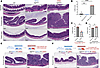 Figure 1
Crohn’s-like disease in the PC is associated with murine housing facility. (A) Representative H&E-stained intestinal sections from WT (N = 3) and TnfΔARE/+ mice from SPF-B (N = 4) and CONV facilities (N = 5). WT samples are from the CONV facility, and all mice are age-matched (34–42 weeks). (B) Colitis scores from histopathological analysis of murine colons from A. (C and D) Colitis scores by colonic regions of CONV TnfΔARE/+ mice (N = 4 for 12 weeks in C; N = 5 for 34–42 weeks in D). (E) Representative H&E-stained PC sections from aged (37 weeks) SPF-B mice (N = 3 WT, N = 4 TnfΔARE/+) transferred and cohoused/fostered as pups in the CONV facility with a WT or TnfΔARE/+ foster dam. (F) Representative H&E-stained PC sections from adult (32–54 weeks) SPF-B mice (N = 2 WT, N = 3 TnfΔARE/+) transferred and cohoused in the CONV facility in mixed-sex conditions until experimental collection. All scale bars: 200 μm. Data are shown as the mean ± SEM in quantifications. Statistical significance was determined using an ordinary 1-way ANOVA with Dunnett’s multiple-comparison test with CONV WT as the control group (B) or using paired 2-tailed t tests (C and D). *P < 0.05, ****P < 0.0001. See also Supplemental Figure 1.
Given the multifactorial nature of CD (15, 52), we investigated various potential drivers of proximal colitis. We excluded the effects of genetic drift, as CONV mice were extensively backcrossed to C57BL/6J breeders from The Jackson Laboratory and validated by SNP-based background testing to be inbred comparable to SPF-B mice (Supplemental Figure 1H). To assess nonmicrobial environmental effects in the CONV facility, such as caging and food supply, colitis-free WT and TnfΔARE/+ mice from the SPF-B facility were transferred to the CONV facility without cohousing, where neither genotype developed colitis (Supplemental Figure 1I). We then examined the role of the microbiota by cohousing colitis-free, SPF-B WT and TnfΔARE/+ mice with WT or TnfΔARE/+ mice from the CONV facility. SPF-B TnfΔARE/+ mice that were transferred and cohoused developed colitis in the PC, while transferred and cohoused SPF-B WT mice were free of colonic inflammation (Figure 1, E and F, and Supplemental Figure 1, J and K). Of note, TnfΔARE/+ mice developed PC inflammation under multiple experimental conditions, including transfer as pups to a foster dam (Figure 1E and Supplemental Figure 1J) or transfer as adults (Figure 1F and Supplemental Figure 1K), suggesting that the development of colonic inflammation is independent of the developmental stage of both the host’s immune system and microbiota. We demonstrated that the CONV microbiota, and not a specifically TNF-driven microbiota, is sufficient to confer inflammation of the PC, as WT foster dams were able to transfer colitis to SPF-B TnfΔARE/+ pups, as well as WT adults to SPF-B TnfΔARE/+ adults. In sum, proximal colitis in TnfΔARE/+ mice is microbiota driven and independent of background genetics, nonmicrobial environment, and developmental stage.
Identification of C. muridarum as a pathobiont in TNF-associated inflammation in the PC. To identify pathobiont species that drive colonic inflammation, we performed shotgun metagenomics of PC luminal contents to identify microbes associated with the most inflamed region (Supplemental Table 1). Overall, the α diversity, at the species level, was not significantly different between genotypes and across facilities and ages, suggesting that within-sample microbial diversity is similar across conditions (Supplemental Figure 2A). In young mice, there were no major phylum-level differences between WT and TnfΔARE/+ microbiota within each facility, suggesting TNF overexpression does not shift phylum-level composition (Figure 2, A and B). However, in the CONV facility, differences in phylum-level composition emerged between WT and TnfΔARE/+ microbiota in aged conditions, suggesting TNF overexpression influences the composition of the PC microbiota at later stages of disease (Supplemental Figure 2, B and C). Moreover, differences between WT and TnfΔARE/+ β diversity became more pronounced in aged conditions (Supplemental Figure 2D).
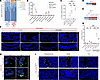 Figure 2
C. muridarum is associated with PC inflammation in the context of TNF overexpression. (A and B) Eubacterial shotgun metagenomic data of murine PC luminal contents represented as relative abundance of mapped phyla for individual mice across 8 cages (N = 4 per condition). Statistical significance was determined using multiple unpaired 2-tailed t tests with FDR of 1%. *P < 0.05. (C) Data from A mapped to C. muridarum species. Statistical significance was determined using an ordinary 1-way ANOVA with Šidák’s multiple-comparison test. **P < 0.01, ****P < 0.0001. (D) Fecal DNA-based PCR testing for C. muridarum in TnfΔARE/+ mice from SPF-B (N = 4) and CONV (N = 3) facilities. (E) Fecal DNA-based PCR testing for C. muridarum in SPF-B TnfΔARE/+ mice before and after cohousing with TnfΔARE/+ mice from the CONV facility. N = 3 independent experiments. (F) Representative IF images, with insets, of Chlamydia major outer membrane protein (MOMP) and nuclei costaining on colonic sections from WT and TnfΔARE/+ mice from the CONV facility (N = 3 each). Scale bars: 200 μm. Original magnification, ×20. (G) Quantification of Chlamydia from IF images. Statistical significance was determined using an ordinary 1-way ANOVA with Šidák’s multiple-comparison test. ***P < 0.001, ****P < 0.0001. (H) Representative confocal high-magnification IF stained images of Chlamydia MOMP and nuclei costaining. N = 3 per condition. Scale bars: 10 μm. (I) Representative IF images of Chlamydia MOMP and nuclei costaining with epithelial cell type–specific markers on colonic sections from age-matched CONV facility TnfΔARE/+ mice (N = 5, 35–37 weeks of age). White arrows point to MOMP+ enteroendocrine, goblet, or tuft cells. Scale bars: 50 μm. Data are shown as the mean ± SEM in quantifications. See also Supplemental Figure 2, Supplemental Unedited blot and gel images, and Supplemental Table 1.
However, when comparing young TnfΔARE/+ mice across facilities, we found Chlamydiota and Pseudomonadota phyla were enriched in the PCs of CONV mice compared with SPF-B mice (Figure 2, A and B). Reads for the Chlamydiota phyla mapped to a single species, C. muridarum, an obligate intracellular bacterium and the only natural Chlamydia pathogen of mice. C. muridarum is commonly used as a model to study human infections from Chlamydia trachomatis, a sexually transmitted disease–causing bacterium that is also associated with colonic inflammation (30, 31). While C. muridarum was undetected in the PC microbiota of SPF-B mice of either genotype, the relative abundance of C. muridarum was higher in the PC microbiota of CONV TnfΔARE/+ mice compared with CONV WT mice, with more pronounced differences in aged conditions (Figure 2C). Moreover, the relative abundance of C. muridarum in the PC of TnfΔARE/+ mice was not significantly different in young versus aged mice. These results suggest that WT mice can mitigate C. muridarum colonization over time, but TnfΔARE/+ mice cannot control its growth. PCR-based fecal testing for Chlamydia confirmed all tested SPF-B TnfΔARE/+ mice were Chlamydia negative, while all CONV TnfΔARE/+ mice were Chlamydia positive (Figure 2D and Supplemental Unedited blot and gel images). We then analyzed fecal samples of mice in transfer and cohousing experiments. We found SPF-B TnfΔARE/+ mice were Chlamydia positive upon cohousing, indicating that Chlamydia is a transmissible component of the microbiota that is associated with PC inflammation in TnfΔARE/+ mice (Figure 2E and Supplemental Unedited blot and gel images). Given the role of Chlamydia species in human sexually transmitted disease, we asked whether sexual transmission is required to establish GI colonization. We cohoused TnfΔARE/+ mice in same-sex conditions and found that TnfΔARE/+ mice developed PC inflammation, suggesting against a strictly sexually transmitted route and supporting a fecal-oral route (Supplemental Figure 2E) (53, 54). Overall, these findings identify C. muridarum as a potential pathobiont associated with inflammation in the PC of TnfΔARE/+ mice.
Next, we used immunofluorescence (IF) microscopy to assess the site of C. muridarum colonization along the length of the GI tract of WT and TnfΔARE/+ mice. Intracellular inclusions of Chlamydia were detected at high levels in the PC of TnfΔARE/+ mice and progressively decreased in a gradient-like manner toward the distal colon, which correlated to the degree of inflammation (Figure 2, F and G, and Supplemental Figure 2F). Consistent with shotgun metagenomics data, C. muridarum was not detected by IF microscopy in the PC of SPF-B mice (Supplemental Figure 2G). The small intestine was largely devoid of Chlamydia inclusions in mice from either facility or genotype, with only rare ileal inclusions detected in TnfΔARE/+ mice (Supplemental Figure 2, H and I). Shotgun metagenomic sequencing of ileal luminal contents from WT and TnfΔARE/+ mice revealed the presence of C. muridarum in all samples, though relative abundance varied widely, with some samples dominated by C. muridarum (Supplemental Figure 2J). Given our observations in IF imaging, the variability and high apparent abundance of C. muridarum in the ileum more likely reflect the relatively low microbial load of this region (55), where even limited presence can appear dominant in sequencing data due to the paucity of other microbes, rather than true colonization. Collectively, these findings suggest that while C. muridarum is capable of colonizing the ileal compartment, it is not the preferred niche nor is it required for terminal ileitis. Instead, C. muridarum preferentially colonizes the colon and is associated with inflammation of the PC.
In addition to IF-based detection of Chlamydia, we used RNA-FISH to detect C. muridarum 23S ribosomal RNA and found a similar pattern of colonization in CONV WT and TnfΔARE/+ mice (Supplemental Figure 2K). Chlamydia-positive cells were restricted to the luminal surface epithelium, with high-resolution imaging showing apically localized intracellular C. muridarum inclusions adjacent to the nucleus that were larger in TnfΔARE/+ than in WT mice (Figure 2H and Supplemental Figure 2L). We then determined the cellular tropism of C. muridarum by examining its colocalization with colonic epithelial cell markers. At the luminal surface, Chlamydia-positive epithelial cells are abundant, with only rare colocalization with secretory lineage cells (enteroendocrine, goblet, and tuft cells) (Figure 2I). Given the predominance of absorptive cells in the colonic epithelium, our results suggest that Chlamydia can infect both secretory and absorptive cells in the PC but exhibits tropism for luminal surface absorptive epithelial cells.
C. muridarum is necessary and sufficient to drive TNF-dependent PC inflammation. Given our finding of an association of C. muridarum with inflammation of the PC, along with the established role of specific C. trachomatis serovars in human colon pathology (31, 32) and the role of TNF signaling in Chlamydia-induced pathology (56, 57), we assessed the necessity and sufficiency of C. muridarum in inducing colonic inflammation in TnfΔARE/+ mice. To determine necessity, we treated CONV WT and TnfΔARE/+ mice with doxycycline, a clinically effective antibiotic for clearing Chlamydia infections in humans (Figure 3A) (58). Chlamydia was not detected by PCR in fecal samples from weanling-aged WT and TnfΔARE/+ mice treated with doxycycline for 1–2 weeks and remained undetectable at the time of harvest (Figure 3, B and C, Supplemental Figure 3A, and Supplemental Unedited blot and gel images). In mice and humans, the native gut microbiota gradually recovers after cessation of antibiotics (59, 60). Thus, we evaluated the extent of inflammation in the PC 3–6 weeks after antibiotic withdrawal. Strikingly, doxycycline-treated TnfΔARE/+ mice had significantly lower PC inflammation compared with vehicle control–treated, age-matched TnfΔARE/+ mice (Figure 3, D–F, and Supplemental Figure 3B). Unlike inflammation in the PC, doxycycline did not reduce ileal inflammation in TnfΔARE/+ mice compared with vehicle control conditions (Supplemental Figure 3C). This, combined with our findings that C. muridarum does not readily colonize the small intestine (Supplemental Figure 2, H–J), further suggests that C. muridarum presence does not promote nor protect against ileal inflammation. At the time of harvest, C. muridarum remained undetectable in shotgun metagenomic data of luminal PC contents of doxycycline-treated TnfΔARE/+ mice but was abundant in the vehicle control group (Figure 3, G and H, and Supplemental Table 2). Because doxycycline can alter microbial community structure, we assessed whether the recovered microbiome was broadly changed in treated mice and found that, at the phylum level, only Chlamydiota and Thermodesulfobacteriota were significantly reduced (Figure 3I). We ruled out the role of Thermodesulfobacteriota in PC inflammation, as these microbes were also present in SPF-B mice without colonic inflammation (Figure 2, A and B, and Supplemental Table 1). In aged mice with established inflammation prior to doxycycline administration, there was no overall reduction of inflammation upon treatment with doxycycline compared with vehicle-treated controls, which is unsurprising given that reversal of advanced disease is likely more complex (Supplemental Figure 3, D–F). However, analysis of colitis subscores revealed a statistically significant reduction in lamina propria chronic inflammation, indicating that partial reversal of inflammation was attained with doxycycline treatment (Supplemental Figure 3E). These results indicate that C. muridarum is required for inflammation in the PC without affecting ileitis, in a manner largely independent of other bacteria.
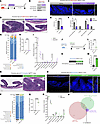 Figure 3
C. muridarum is necessary and sufficient to drive PC inflammation in the TnfΔARE/+ model. (A) Doxycycline experiment scheme for B–I, age-matched at 11–12 weeks at harvest. N = 4 mice per condition for B–F. (B) Fecal testing for C. muridarum at different time points. (C and D) Representative IF of Chlamydia MOMP and nuclei (C) and H&E-stained PC sections (D) from the doxycycline experiment. (E) Colitis scores of samples from D. (F) Colitis subscores that comprise E. (G) Eubacterial shotgun metagenomic data of PC luminal contents of mice treated with doxycycline (N = 4) or vehicle (N = 3), represented as relative abundance of mapped phyla for individual TnfΔARE/+ mice of mixed ages (11–23 weeks of age) across 7 cages. (H) Data from G with reads specifically mapped to C. muridarum species. (I) Data from G plotted. (J) CM001-GFP experimental scheme for K–R, age-matched at 16–20 weeks at tissue harvest. (K) Fecal testing for C. muridarum in TnfΔARE/+ mice from the CM001-GFP experiment. N = 4 mice per condition. (L) Body weight change from the CM001-GFP experiment. N = 10 mice per condition. (M) Colitis scores from the CM001-GFP experiment. N = 5 each condition. (N) H&E-stained PC sections from the CM001-GFP experiment. N = 10 mice per condition. (O) Representative IF images with insets of MOMP and endogenous GFP from CM001-GFP on PC sections. N = 5 mice per condition. Original magnification, ×20. (P) Eubacterial shotgun metagenomic data of PC luminal contents from TnfΔARE/+ mice in CM001-GFP-inoculated (N = 5) or sham (N = 4) conditions across 4 cages. (Q and R) Same analyses as in H and I but with data from P. (S) Shared enriched species from eubacterial shotgun metagenomic data analyses in Supplemental Figure 4, G–J, L, and M. All scale bars: 200 μm. Data are shown as the mean ± SEM in quantifications. Statistical significance was determined using unpaired 2-tailed t tests (E, H, L, M, and Q) or multiple unpaired 2-tailed t tests with FDR of 1% (F, I, and R). *P < 0.05, ***P < 0.001, ****P < 0.0001. See also Supplemental Figures 3 and 4, Supplemental Tables 2 and 3, and Supplemental Unedited blot and gel images.
To determine whether C. muridarum is sufficient to induce inflammation in the PC, we inoculated Chlamydia-free TnfΔARE/+ mice from the SPF-B facility with a typed C. muridarum Nigg strain expressing GFP, CM001-GFP (61), which shares approximately 99% sequence similarity (ANIb = 0.988, TETRA = 0.999) to the C. muridarum strain we isolated from our CONV facility (C. muridarum strain VU [Cm-VU]) (Figure 3J and Supplemental Figure 4, A and B). CM001-GFP successfully engrafted into the microbiome of SPF-B TnfΔARE/+ mice after a single gavage without the need for antibiotic pretreatment (Figure 3K and Supplemental Unedited blot and gel images). CM001-GFP–inoculated TnfΔARE/+ mice were not overtly ill compared with the sham-inoculated TnfΔARE/+ mice; however, they exhibited significantly lower weight gain compared with sham-inoculated TnfΔARE/+ controls, consistent with GI inflammation (Figure 3L). CM001-GFP–inoculated mice remained Chlamydia positive at the time of harvest, and macroscopic and histological assessment revealed that CM001-GFP–inoculated SPF-B TnfΔARE/+ mice developed severe colonic inflammation reminiscent of the disease in the CONV facility, while sham-inoculated TnfΔARE/+ mice showed no colonic inflammation, similar to untreated SPF-B mice (Figure 3, M–O, and Supplemental Figure 4, C–E). Inoculation with CM001-GFP had no effect on the extent of ileal inflammation in TnfΔARE/+ mice, consistent with region-specific susceptibility (Supplemental Figure 4F). To determine whether C. muridarum colonization indirectly drives additional community-level microbial changes to induce PC inflammation, we performed shotgun metagenomic sequencing of the PC luminal contents. Compared with sham-inoculated mice, CM001-GFP–inoculated mice had no significant changes at the phylum level, except for Chlamydiota (Figure 3, P–R, and Supplemental Table 3), demonstrating CM001-GFP engraftment does not induce global shifts in the microbiome.
To test whether C. muridarum is necessary and sufficient to drive colonic inflammation, we analyzed species-level shotgun metagenomic data across all experimental conditions (Supplemental Figure 4G and Supplemental Tables 1–3). Species enrichment was not driven by age, as no species differed between young and aged CONV TnfΔARE/+ PC samples, and comparisons of young SPF-B TnfΔARE/+ mice with either young or aged CONV TnfΔARE/+ mice yielded similar numbers of enriched species (78 and 61, respectively) with substantial overlap (Supplemental Figure 4, H–K). Having excluded age as a confounder, we identified candidate pathobionts by intersecting species enriched across 3 comparisons: CONV versus SPF-B, vehicle-treated versus doxycycline-treated, and CM001-GFP–inoculated versus sham-inoculated TnfΔARE/+ mice (Supplemental Figure 4, J, L, and M). C. muridarum was the only species common to all conditions (Figure 3S). Taken together, these results strongly support that C. muridarum is necessary and sufficient to drive PC inflammation in a genetically susceptible host, such as in the TnfΔARE/+ model.
Chlamydia colonization induces IDO1 expression in goblet cells. We sought to identify host responses to C. muridarum colonization with a focus on epithelial cells of the PC, as these cells are exclusive targets of C. muridarum tropism. We performed scRNA-seq on the PC epithelia of WT and TnfΔARE/+ mice from SPF-B and CONV facilities, including young and aged TnfΔARE/+ mice from the CONV facility (Figure 4A and Supplemental Figure 5A). Within each housing facility, cells of WT and TnfΔARE/+ PC were intermixed in the UMAP coembedding, suggesting that neither TNF overexpression nor C. muridarum abundance drastically alters colonic epithelial cells. While major transcriptomic differences amongst cell types were not observed, we aimed to determine whether epithelial cell type proportions were different amongst conditions (Figure 4, B and C, Supplemental Figure 5B, and Supplemental Table 4). Comparison of young CONV TnfΔARE/+ samples with CONV WT, aged CONV TnfΔARE/+, and young SPF-B TnfΔARE/+ samples revealed only 2 statistically significant differences: a decrease in surface goblet cells and an increase in colonocyte progenitors in aged CONV TnfΔARE/+ PC compared with young CONV TnfΔARE/+ PC (Figure 4D). Strikingly, there were no differences amongst epithelial cells between young CONV TnfΔARE/+ and young SPF-B TnfΔARE/+. These findings suggest that C. muridarum colonization does not induce changes in host responses by promoting the depletion or expansion of particular epithelial cell types of the PC, nor by drastically altering cell states, with the exception of a loss of surface goblet cells and expansion of colonocyte progenitors in later stages of inflammation.
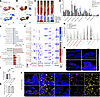 Figure 4
C. muridarum colonization induces IDO1 expression in PC goblet cells. (A and B) UMAP coembedding of scRNA-seq data from PC epithelial cells from CONV WT (N = 3), CONV young TnfΔARE/+ (N = 4), CONV aged TnfΔARE/+ (N = 4), SPF-B WT (N = 4), and SPF-B young TnfΔARE/+ (N = 5) mice with sample type overlay (A) and cell type (B) overlay. (C and D) Cell type proportions from scRNA-seq data in B grouped by sample type. Statistical significance was determined using multiple unpaired 2-tailed t tests between 3 pairwise comparisons with FDR of 1%. Only statistically significant results are shown. *P < 0.05. (E) Gene Ontology of Biological Process terms derived from ORA of upregulated genes in cells from the SPF-B facility (top) or CONV facility (bottom). Enrichment ratio is shown, and statistical significance was determined using FDR < 0.05. (F) Cell type–specific expression of genes selected from those reaching statistical enrichment in ORA from E and from select marker genes for surface goblet cells, progenitors, and goblet cells. (G) Cell type–specific expression of Ido1 from data in A and B. (H) Representative IF images of IDO1, Chlamydia MOMP, and nuclei costaining on PC sections from age-matched (34–42 weeks) WT and TnfΔARE/+ mice from the SPF-B and CONV facilities. N = 3 mice per condition. Data in top right image first appear as nuclei/MOMP costaining (no IDO1) in Supplemental Figure 2G. (I) Quantitative analysis of images in H. Statistical significance was determined using an ordinary 1-way ANOVA with Šidák’s multiple-comparison test. ***P < 0.001. (J) Representative IF images, with insets, of IDO1, UEA1 lectin, and nuclei costaining on PC sections from age-matched (16–17 weeks) WT and TnfΔARE/+ mice from the CONV facility. Dashed white lines indicate border between epithelial surface and lumen. N = 3 mice per condition. Original magnification, ×20. (K) Quantitative analysis of images in J. Statistical significance was determined using an unpaired 2-tailed t test. All scale bars: 100 μm. Data are shown as the mean ± SEM in quantifications. See also Supplemental Figures 5 and 6, and Supplemental Tables 4–7.
Next, we aimed to identify cell type–specific changes in gene expression in Chlamydia-colonized (CONV facility) versus uncolonized (SPF-B facility) conditions. Surprisingly, our analysis revealed only a limited number of differentially expressed genes when comparing individual PC epithelial cell types between CONV and SPF-B housed mice (Supplemental Figure 5C and Supplemental Table 5). We performed a more direct comparison between young TnfΔARE/+ samples in CONV conditions and young TnfΔARE/+ samples in SPF-B conditions, which yielded a similar set of differentially expressed genes to those in the broader comparison, most of which were shared between comparisons (Supplemental Figure 5C and Supplemental Table 6). These results support that C. muridarum colonization induces modest transcriptomic changes in WT and TnfΔARE/+ PC epithelial cell types.
To reveal specific gene program alterations, we performed gene overrepresentation analysis (ORA) using statistically upregulated genes from all cell types in the CONV or SPF-B facilities, separately, as input (Figure 4E and Supplemental Tables 6 and 7). Terms related to colonic cell function were enriched in SPF-B specimens but did not reach statistical significance. In contrast, several terms were statistically enriched in CONV specimens, all of which were terms related to host responses to microbes. These results indicate a loss of normal function and induction of defense responses in the PC epithelial cells from Chlamydia-positive mice in the CONV facility. We examined genes that reached statistical enrichment in ORA and found that many were enriched in goblet cell subtypes and secretory progenitors, with the most prominent and statistically significant expression differences in surface goblet cells (Supplemental Tables 6 and 7, and Figure 4F). Generally, genes contributing to these ORA terms fell into broad functional categories related to antimicrobial function or regulation of immune and inflammatory responses with a particular emphasis on IFN response genes, which have not been directly investigated in goblet cells. One such IFN response gene, Ido1, was expressed at high levels in a subset of goblet cells and surface goblet cells in the PC of mice from the CONV facility and at low levels in a small subset of goblet cells from the PC of mice from the SPF-B facility (Figure 4, F and G, and Supplemental Figure 6A). Within the CONV facility, Ido1 was expressed at higher levels in goblet and surface goblet cells of TnfΔARE/+ mice compared with WT mice, which was intriguing given our observation of surface epithelial localization of C. muridarum in the colon. Ido1 encodes the protein IDO1, an enzyme that converts tryptophan to kynurenine and has established roles in goblet cell differentiation (40), immunosuppression (41–44), and innate immune protection from infection (39), including from Chlamydia and other pathogens that require host-derived tryptophan (36–38). We examined IDO1 protein expression and found patterns consistent with our transcriptomic data; IDO1 was expressed at significantly higher levels in samples from the CONV facility compared with the SPF-B facility in both WT and TnfΔARE/+ PC, with signal most elevated in the PC compared with the distal colon and greater than 90% of IDO1-expressing cells being goblet cells (Figure 4, H–K, and Supplemental Figure 6, B and C). These results suggest a potential role for goblet cells in Chlamydia-induced PC inflammation via upregulation of IDO1.
Chronic inflammation in the PC is potentiated through a goblet cell response–dependent mechanism. We next investigated whether IDO1 expression was dependent on the presence of Chlamydia. In CONV TnfΔARE/+ mice treated with doxycycline to clear Chlamydia, IDO1 expression was substantially lower in the PC compared with that in vehicle-treated TnfΔARE/+ mice (Figure 5A and Supplemental Figure 7A). Consistently, SPF-B TnfΔARE/+ mice inoculated with C. muridarum (CM001-GFP) showed increased IDO1 expression compared with sham-inoculated TnfΔARE/+ mice, on a similar level to CONV facility TnfΔARE/+ mice colonized by Cm-VU (Figure 5B and Supplemental Figure 7B). These results demonstrate that upregulation of IDO1 is induced by C. muridarum colonization of the PC.
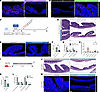 Figure 5
Perturbation of the IDO1 pathway reduces Chlamydia-driven PC inflammation in the TnfΔARE/+ model. (A) Representative IF images of IDO1, Chlamydia MOMP, and nuclei costaining on PC sections from age-matched (11–12 weeks) CONV TnfΔARE/+ mice treated with doxycycline or vehicle. N = 4 mice per condition. Scale bars: 100 μm. (B) Representative IF images as in A of PC sections from age-matched (16–20 weeks) SPF-B TnfΔARE/+ mice that are sham or CM001-GFP inoculated. N = 5 mice per condition. Scale bars: 200 μm. (C) Experimental paradigm for secretory cell ablation in TnfΔARE/+ mice. (D) Representative H&E-stained PC sections, with insets, from age-matched (20–27 weeks) TnfΔARE/+ mice with (N = 3) or without (N = 5) secretory cell ablation. Scale bars: 200 μm. (E) Representative IF images as in A of PC sections from age-matched TnfΔARE/+ mice in D with or without secretory cell ablation. Scale bars: 100 μm. (F) Colitis scores from histopathological scoring of colons from D. (G) Colitis subscores that contribute to overall colitis score in F. (H) Ratio of kynurenine to tryptophan, measured by liquid chromatography–mass spectrometry, in PC tissue from age-matched mice. N = 4 per condition. (I) Experimental paradigm for administration of tryptophan-deficient diet to TnfΔARE/+ mice from the CONV facility. (J) Representative H&E-stained PC sections from age-matched (11–12 weeks) CONV TnfΔARE/+ mice fed a control diet (N = 7) or a tryptophan-deficient diet (N = 5). Scale bars: 200 μm. (K and L) Histopathological scoring analysis as in F and G of colons from J. (M) Representative IF images as in A of PC sections from age-matched TnfΔARE/+ mice in J fed a control or tryptophan-deficient diet. Scale bars: 100 μm. Data are shown as the mean ± SEM in quantifications. Statistical significance was determined using an unpaired 2-tailed t test (F and K), multiple unpaired 2-tailed t tests with FDR of 1% (G and L), or an ordinary 1-way ANOVA with Šidák’s multiple-comparison test (H). *P < 0.05, **P < 0.01, ****P < 0.0001. See also Supplemental Figures 7 and 8.
We next investigated the relationship between IDO1 expression in goblet cells and Chlamydia-induced PC inflammation. Since IDO1 expression is restricted to goblet cells, we induced secretory cell ablation in C. muridarum–free SPF-B TnfΔARE/+ mice by knocking out the master secretory cell transcription factor Atoh1 in intestinal and colonic stem cells (Lrig1CreERT2/+ Atoh1fl/fl [Lrig1-Atoh1-KO]) (62, 63). After Cre recombinase–mediated knockout of Atoh1, goblet cells within the PC of Lrig1-Atoh1-KO-TnfΔARE/+ mice were lost (Figure 5, C and D, and Supplemental Figure 7C). To colonize with C. muridarum, SPF-B Lrig1-Atoh1-KO-TnfΔARE/+ and TnfΔARE/+ control mice were cohoused with CONV facility cagemates naturally colonized with Cm-VU (Figure 5C). While C. muridarum was successfully transferred in all conditions, IDO1 expression was no longer detected in the PC epithelium of Lrig1-Atoh1-KO-TnfΔARE/+ mice (Figure 5E and Supplemental Figure 7D). Remarkably, PC inflammation in Lrig1-Atoh1-KO-TnfΔARE/+ mice was suppressed, while secretory cell–replete TnfΔARE/+ mice presented with severe PC inflammation (Figure 5, D, F, and G, and Supplemental Figure 7C). Given the localization of C. muridarum to the colonic surface and high Ido1 expression in surface goblet cells, we repeated the same experiment where only the surface fraction of Krt20+ goblet cells were depleted by Cre-mediated knockout of Atoh1 (Krt20CreERT2/+ Atoh1fl/fl [Krt20-Atoh1-KO]). Indeed, only goblet cells at the crypt surface in the PC were depleted after tamoxifen induction in this model (Supplemental Figure 8A). Accordingly, IDO1 expression was also reduced at the crypt surface in the PC in Krt20-Atoh1-KO-TnfΔARE/+ mice (Supplemental Figure 8B). Like the Lrig1-Atoh1-KO-TnfΔARE/+ model where all goblet cells were depleted, surface goblet cell–depleted Krt20-Atoh1-KO-TnfΔARE/+ mice exhibited less severe PC inflammation characterized by less pronounced transmural inflammation (Supplemental Figure 8C). These results demonstrate the role of host responses in goblet cells, which is the main source of IDO1 expression, in inducing inflammation in the PC following C. muridarum colonization.
To assess whether goblet cell–associated IDO1 is active, we measured the levels of tryptophan, the substrate, and kynurenine, the product, in the PC of WT and TnfΔARE/+ mice in the CONV and SPF-B facilities. Both metabolites were elevated in the PC of CONV TnfΔARE/+ mice compared with the PC of SPF-B TnfΔARE/+ mice (Supplemental Figure 8D). While tryptophan levels can depend on various dietary, metabolic, and microbial factors, the ratio of kynurenine to tryptophan serves as a surrogate for enzymatic activity of IDO1 (64, 65). The kynurenine/tryptophan ratio was significantly elevated in the PC of CONV TnfΔARE/+ mice compared with SPF-B controls (Figure 5H). To determine whether IDO1 activity is directly driven by C. muridarum present in the CONV facility, we assessed the levels of these metabolites in the PC of doxycycline-treated CONV TnfΔARE/+ mice. Doxycycline treatment did not alter tryptophan levels but significantly reduced kynurenine levels and normalized the kynurenine/tryptophan ratio to C. muridarum–naive SPF-B levels (Figure 5H and Supplemental Figure 8D), indicating that elevated IDO1 activity in the PC is driven by C. muridarum, resulting in conversion of available tryptophan to downstream metabolites.
After determining that IDO1 is enzymatically active, we next sought to perturb this pathway to determine the role of IDO1 in PC inflammation in the TnfΔARE/+ mouse. We removed tryptophan from the diet of TnfΔARE/+ mice in the CONV facility to directly test if IDO1 enzymatic activity of converting tryptophan to kynurenine was responsible for driving PC inflammation (Figure 5I). PC inflammation of TnfΔARE/+ mice on a tryptophan-deficient diet was significantly suppressed compared with TnfΔARE/+ mice on a control diet (Figure 5, J–L, and Supplemental Figure 8E). Importantly, the PCs of TnfΔARE/+ mice on tryptophan-deficient diet remained colonized by C. muridarum and induction of IDO1 expression persisted, although both were reduced compared with the control diet condition (Figure 5M and Supplemental Figure 8F). The impact of the tryptophan-deficient diet is unlikely to occur by restricting the replication of Cm-VU because this strain, unlike other C. muridarum strains, encodes a functional trpAB operon that can use indole to bypass this nutritional restriction (EPS and RHV, unpublished observations). This ability to synthesize tryptophan from indole, an abundant metabolite that could be derived from the diet and microbiota, may allow Cm-VU to more effectively evade the host immune response (66, 67). These results further support our model that Chlamydia-induced aberrant goblet cell responses drive chronic inflammation in the PC of a genetically susceptible host.
Chlamydia-induced colonic inflammation is independent of upstream ileal inflammation or antimicrobial function. Given that PC and TI inflammation in the TnfΔARE/+ model occur concomitantly, we asked whether upstream inflammation in the TI is required for C. muridarum–induced inflammation in the PC. We leveraged a murine model where a genetic insert disrupts the Tnf gene and leads to TNF protein expression at an intermediate level between that of WT and TnfΔARE/+ mice (TnfΔreg/+, or TnfΔAREneo/+ in ref. 68) (Supplemental Figure 9A). Like TnfΔARE/+ mice, TnfΔreg/+ mice develop inflammation in the PC when reared in the CONV facility (Figure 6, A and B, and Supplemental Figure 9B). Importantly, TnfΔreg/+ mice did not develop concomitant ileitis, demonstrating independence between TI and PC inflammation (Figure 6, C and D, and Supplemental Figure 9C). Similar to CONV TnfΔARE/+ mice treated with doxycycline, PC inflammation was significantly reduced when CONV facility TnfΔreg/+ mice were treated with doxycycline to clear C. muridarum, and the TI remained uninflamed (Figure 6, A–E, and Supplemental Figure 9, B–D). Moreover, TnfΔreg/+ mice in Chlamydia-free conditions, achieved by rederivation from sperm into Chlamydia-free dams (rederived TnfΔreg/+), were expectedly free of Chlamydia and their TI and PC were not inflamed, further supporting the role of C. muridarum in driving PC inflammation (Figure 6, A–E, and Supplemental Figure 9, B–D). The epithelial mechanisms driving inflammation are likely conserved, as evidenced by high expression of IDO1 in PC goblet cells from CONV TnfΔreg/+ mice, compared with low IDO1 expression in the PC of doxycycline-treated TnfΔreg/+ mice and rederived TnfΔreg/+ mice into Chlamydia-free conditions (Figure 6, E and F, and Supplemental Figure 9, D and E). These findings demonstrate that inflammation in the PC occurs independently of upstream TI inflammation and is driven by IDO1 expression in goblet cells in response to C. muridarum colonization in the context of TNF overexpression.
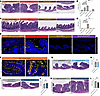 Figure 6
PC inflammation is independent of inflammation and secretory function of the small intestine. (A and C) Representative H&E-stained PC (A) and TI (C) sections from age-matched (16–17 weeks) mice from CONV TnfΔreg/+ (N = 5), CONV TnfΔARE/+ (N = 6), rederived Chlamydia-negative CONV TnfΔreg/+ (N = 5), and doxycycline-treated CONV TnfΔreg/+ (N = 4) conditions. Scale bars: 200 μm (A), 50 μm (C). (B and D) Colitis scores (B) and ileitis scores (D) of mice from A and C. (E) Representative IF images of IDO1, Chlamydia MOMP, and nuclei costaining of PC sections from CONV TnfΔreg/+, CONV TnfΔARE/+, rederived Chlamydia-negative CONV TnfΔreg/+, and doxycycline-treated CONV TnfΔreg/+ mice. N = 3 mice per condition, age-matched at 16–17 weeks of age at harvest. Scale bars: 100 μm. (F) Representative IF image, with inset, of IDO1, UEA1 lectin, and nuclei costaining of PC sections from age-matched (16–17 weeks) CONV TnfΔreg/+ mice (N = 3). Scale bars: 100 μm. Original magnification, ×20. (G) Representative H&E-stained PC sections from age-matched (8 weeks) control CONV TnfΔARE/+ (N = 4) and CONV PC-DTA-TnfΔARE/+ (N = 4) mice. Scale bars: 200 μm. (H) Colitis scores of PCs from G. (I) Representative H&E-stained PC sections from age-matched (6–10 weeks) control CONV TnfΔARE/+ (N = 3) and CONV Paneth-Atoh1-KO-TnfΔARE/+ (N = 4) mice. Scale bars: 200 μm. (J) Colitis scores of PCs from I. (K) Representative H&E-stained PC sections from aged (23–64 weeks) control CONV TnfΔARE/+ (N = 4) and aged CONV Paneth-Atoh1-KO-TnfΔARE/+ (N = 4) mice. Scale bars: 200 μm. (L) Colitis scores of PCs from K. Statistical significance was determined using an ordinary 1-way ANOVA with Šidák’s multiple-comparison test (B and D) or an unpaired 2-tailed t test (H, J, and L). **P < 0.01, ****P < 0.0001. Data are shown as the mean ± SEM in quantifications. See also Supplemental Figures 9–11.
While our results showed that upstream TI inflammation is not required for the development of C. muridarum–induced colitis, we asked whether antimicrobials produced by small intestinal Paneth cells, which are deposited into mucus that flows into the PC (69–71), would offer protection by modulating C. muridarum colonization. Loss of Paneth cell function is observed in inflamed CD lesions and has been implicated in pathogenesis (72, 73), and progressive loss of these cells in inflamed regions is characteristic of the TnfΔARE/+ model of intestinal inflammation (74). To determine whether loss of Paneth cell function promotes a bloom of C. muridarum to drive colonic inflammation, we developed 2 models (Defa4Cre/+ Atoh1f/fl [Paneth-Atoh1-KO] and Defa4Cre/+ RosaLSL-DTA/+ [Paneth-DTA]) that achieve long-term ablation of Paneth cells in the TnfΔARE/+ model (Supplemental Figure 10, A–D). In these 2 models, there was no significant difference in colonic inflammation compared with age-matched TnfΔARE/+ controls, indicating Paneth cells do not promote nor protect the PC from inflammation (Figure 6, G–J, and Supplemental Figure 11, A and B). Moreover, Paneth cell–ablated TnfΔARE/+ mice displayed a similar number of C. muridarum inclusions when compared with control TnfΔARE/+ mice, and IDO1 upregulation was sustained, suggesting Paneth cells do not modulate C. muridarum colonization (Supplemental Figure 11, C and D). Paneth-Atoh1-KO mice exhibited a loss of all secretory cells in the small intestine as a function of age but had no alterations in secretory cell specification in the colon (Supplemental Figure 11, E and F). This model enabled us to specifically examine the role of small intestinal secretory cells in PC inflammation. Colonic inflammation of aged Paneth-Atoh1-KO-TnfΔARE/+ mice was similar to that of age-matched control TnfΔARE/+ mice, suggesting that colonic secretory cells, and not small intestinal secretory cells, promote C. muridarum–induced PC inflammation (Figure 6, K and L, and Supplemental Figure 11G). Taken together, our results suggest that PC inflammation develops independently of inflammation or secretory cell function in the small intestine and instead is driven by specific microbial triggers and colonic goblet cell responses that together drive aberrant inflammatory responses.
Epithelial IDO1 activation is a hallmark of patients with CD with AC involvement. We showed that an intracellular microbe C. muridarum can induce PC inflammation in a genetically susceptible host (TNF overexpression) through goblet cell responses such as IDO1. We next investigated the generalizability of this mechanism in other hosts with immune dysregulation. IL-10 is an antiinflammatory cytokine that is implicated in the pathogenesis of CD, and IL-10 null mice are widely recognized as a colitis model that requires a microbial trigger to induce pathology (26, 75, 76). Consistent with our TnfΔARE/+ model, Il10rb–/– mice cohoused with Chlamydia-positive CONV facility cagemates developed PC inflammation, while Il10rb–/– mice in isolated caging displayed no PC inflammation (Supplemental Figure 12A). Moreover, cohoused Il10rb–/– mice harbored Chlamydia-colonized PC epithelial cells and had elevated IDO1 expression in epithelial cells compared with isolated caging controls that were Chlamydia negative with low expression of IDO1 (Supplemental Figure 12B). Together, these results demonstrate the generalizability of the intracellular microbe, Chlamydia, in triggering inflammation specifically in the PC of a host with genetic susceptibility to immune disruptions, such as the IL-10 family cytokine pathways, mirroring mechanisms implicated in human IBD.
We next investigated whether IDO1 upregulation is associated with human CD with active AC involvement. We analyzed a human scRNA-seq dataset of CD PC (termed AC in human) and TI specimens, where an emergent population of epithelial cells, termed LND cells (LCN2-, NOS2-, DUOX2-expressing), were identified and associated with CD with active inflammation (Figure 7, A and B, and Supplemental Figure 12C) (77). CD AC specimens with active inflammation had significantly higher proportions of LND cells compared with inactive CD of the AC or normal AC (Figure 7C). In AC specimens, IDO1 expression was restricted to epithelial cells from CD specimens with a history (active or inactive) of AC inflammation (Figure 7D). Intriguingly, IDO1 was almost exclusively expressed by the LND epithelial cell subpopulation and was significantly higher in patients with active AC inflammation compared with those with inactive AC inflammation (Figure 7, E–G). Using IF microscopy, we confirmed IDO1 protein expression was upregulated in epithelial cells from CD AC samples with active AC inflammation and was not expressed by epithelial cells from CD AC samples without AC inflammation (Figure 7H and Supplemental Figure 12D). Spatially, IDO1-expressing epithelial cells were typically clustered together in isolated crypts and were located in more inflamed regions of the lamina propria, further associating this response with AC inflammation. IDO1 was also detected in the lamina propria of both normal CD AC and actively inflamed CD AC specimens, and IDO1 was expressed by macrophages in our scRNA-seq data (data not shown), as observed by other groups (78). Notably, IDO1 expression was largely undetected in TI epithelial cells, further supporting the notion that epithelial IDO1 expression is a region-specific response that drives susceptibility to disease in the AC but not in the TI (Supplemental Figure 12, E–G). Our results demonstrate that like Chlamydia-driven upregulation of epithelial IDO1 in mouse models of CD, an analogous upregulation of IDO1 in inflammation-associated LND epithelial cells is a hallmark of active CD in the AC. In addition to the IDO1 response, we examined the expression of goblet cell–specific genes reaching statistical enrichment in ORA of our murine model of AC inflammation (Figure 4F) as well as hallmark IFN-γ response genes and found an enrichment in LND cells, further suggesting conservation of this pathobiont-associated signaling response across species (Supplemental Figure 12H) (79). While IDO1 is chiefly expressed by goblet cells in the murine PC, human IDO1 expression was restricted to the colonic LND epithelial cell subpopulation, a nongoblet, proinflammatory cell type that emerges in CD (77). While the pathobiont trigger and responding cell type may differ between mouse and human, our study generally supports a model whereby pathobionts induce proinflammatory signaling pathways in epithelial cells to drive chronic disease when encountering both anatomical and genetic susceptibilities.
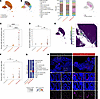 Figure 7
Epithelial IDO1 is upregulated in human CD with active AC inflammation. (A) UMAP coembedding of human scRNA-seq data of AC epithelial cells from normal (N = 15), inactive CD (N = 34), and active CD (N = 19) specimens. (B) Cell type breakdown of AC scRNA-seq data by UMAP overlay (left and right) and as cell type proportion across sample types (middle). (C) Statistical comparison of LND cell proportion amongst all epithelial cells from AC scRNA-seq data. (D) Statistical comparison of IDO1-expressing cell proportions amongst all epithelial cells from AC scRNA-seq data. (E) UMAP of AC scRNA-seq data with overlay of IDO1 gene expression. Inset shows IDO1 expression in the LND cluster. (F) Statistical comparison of the proportion of IDO1-expressing cells amongst LND cells from AC scRNA-seq data separated by sample type. (G) Cell type–specific IDO1 expression. (H) Representative IF images of IDO1 and nuclei costaining on AC biopsy sections from CD specimens with normal (N = 3) or active (N = 3) histopathological scoring. Dashed white lines indicate the basal side of epithelial cells. Scale bars: 200 μm. Original magnification, ×20. Data are shown as the mean ± SD in quantifications. Statistical significance was determined using an ordinary 1-way ANOVA with Tukey’s post hoc multiple-comparison test. *P < 0.05, **P < 0.01, ****P < 0.0001. See also Supplemental Figure 12 and Supplemental Table 8.


Copyright © 2026 American Society for Clinical Investigation
ISSN: 0021-9738 (print), 1558-8238 (online)