
Advertisement
Research ArticleCell biologyDevelopmentVascular biology
Open Access |  10.1172/JCI196119
Cooperative ETS transcription factors are required for lymphatic endothelial cell integrity and resilience
Myung Jin Yang,1 Seok Kang,1 Seon Pyo Hong,1 Hokyung Jin,1 Jin-Hui Yoon,1 Cheolhwa Jin,1,2 Chae Min Yuk,1 Lydia Getachew Gebeyehu,1,2 Junho Jung,1 Sung-Hwan Yoon,1 Hyuek Jong Lee,1 and Gou Young Koh1,2
1Center for Vascular Research, Institute for Basic Science, Daejeon, South Korea.
2Graduate School of Medical Science and Engineering, Korea Advanced Institute of Science and Technology, Daejeon, South Korea.
Address correspondence to: Hyuek Jong Lee or Gou Young Koh, Center for Vascular Research, Institute for Basic Science, Daejeon 34141, South Korea. Email: hyuekjong.lee@gmail.com (HJL); gykoh@kaist.ac.kr (GYK).
Authorship note: MJY and SK contributed equally to this work.
Find articles by Yang, M. in: PubMed | Google Scholar
1Center for Vascular Research, Institute for Basic Science, Daejeon, South Korea.
2Graduate School of Medical Science and Engineering, Korea Advanced Institute of Science and Technology, Daejeon, South Korea.
Address correspondence to: Hyuek Jong Lee or Gou Young Koh, Center for Vascular Research, Institute for Basic Science, Daejeon 34141, South Korea. Email: hyuekjong.lee@gmail.com (HJL); gykoh@kaist.ac.kr (GYK).
Authorship note: MJY and SK contributed equally to this work.
Find articles by Kang, S. in: PubMed | Google Scholar
1Center for Vascular Research, Institute for Basic Science, Daejeon, South Korea.
2Graduate School of Medical Science and Engineering, Korea Advanced Institute of Science and Technology, Daejeon, South Korea.
Address correspondence to: Hyuek Jong Lee or Gou Young Koh, Center for Vascular Research, Institute for Basic Science, Daejeon 34141, South Korea. Email: hyuekjong.lee@gmail.com (HJL); gykoh@kaist.ac.kr (GYK).
Authorship note: MJY and SK contributed equally to this work.
Find articles by
Hong, S.
in:
PubMed
|
Google Scholar
|

1Center for Vascular Research, Institute for Basic Science, Daejeon, South Korea.
2Graduate School of Medical Science and Engineering, Korea Advanced Institute of Science and Technology, Daejeon, South Korea.
Address correspondence to: Hyuek Jong Lee or Gou Young Koh, Center for Vascular Research, Institute for Basic Science, Daejeon 34141, South Korea. Email: hyuekjong.lee@gmail.com (HJL); gykoh@kaist.ac.kr (GYK).
Authorship note: MJY and SK contributed equally to this work.
Find articles by Jin, H. in: PubMed | Google Scholar
1Center for Vascular Research, Institute for Basic Science, Daejeon, South Korea.
2Graduate School of Medical Science and Engineering, Korea Advanced Institute of Science and Technology, Daejeon, South Korea.
Address correspondence to: Hyuek Jong Lee or Gou Young Koh, Center for Vascular Research, Institute for Basic Science, Daejeon 34141, South Korea. Email: hyuekjong.lee@gmail.com (HJL); gykoh@kaist.ac.kr (GYK).
Authorship note: MJY and SK contributed equally to this work.
Find articles by Yoon, J. in: PubMed | Google Scholar
1Center for Vascular Research, Institute for Basic Science, Daejeon, South Korea.
2Graduate School of Medical Science and Engineering, Korea Advanced Institute of Science and Technology, Daejeon, South Korea.
Address correspondence to: Hyuek Jong Lee or Gou Young Koh, Center for Vascular Research, Institute for Basic Science, Daejeon 34141, South Korea. Email: hyuekjong.lee@gmail.com (HJL); gykoh@kaist.ac.kr (GYK).
Authorship note: MJY and SK contributed equally to this work.
Find articles by Jin, C. in: PubMed | Google Scholar
1Center for Vascular Research, Institute for Basic Science, Daejeon, South Korea.
2Graduate School of Medical Science and Engineering, Korea Advanced Institute of Science and Technology, Daejeon, South Korea.
Address correspondence to: Hyuek Jong Lee or Gou Young Koh, Center for Vascular Research, Institute for Basic Science, Daejeon 34141, South Korea. Email: hyuekjong.lee@gmail.com (HJL); gykoh@kaist.ac.kr (GYK).
Authorship note: MJY and SK contributed equally to this work.
Find articles by Yuk, C. in: PubMed | Google Scholar
1Center for Vascular Research, Institute for Basic Science, Daejeon, South Korea.
2Graduate School of Medical Science and Engineering, Korea Advanced Institute of Science and Technology, Daejeon, South Korea.
Address correspondence to: Hyuek Jong Lee or Gou Young Koh, Center for Vascular Research, Institute for Basic Science, Daejeon 34141, South Korea. Email: hyuekjong.lee@gmail.com (HJL); gykoh@kaist.ac.kr (GYK).
Authorship note: MJY and SK contributed equally to this work.
Find articles by Gebeyehu, L. in: PubMed | Google Scholar
1Center for Vascular Research, Institute for Basic Science, Daejeon, South Korea.
2Graduate School of Medical Science and Engineering, Korea Advanced Institute of Science and Technology, Daejeon, South Korea.
Address correspondence to: Hyuek Jong Lee or Gou Young Koh, Center for Vascular Research, Institute for Basic Science, Daejeon 34141, South Korea. Email: hyuekjong.lee@gmail.com (HJL); gykoh@kaist.ac.kr (GYK).
Authorship note: MJY and SK contributed equally to this work.
Find articles by Jung, J. in: PubMed | Google Scholar
1Center for Vascular Research, Institute for Basic Science, Daejeon, South Korea.
2Graduate School of Medical Science and Engineering, Korea Advanced Institute of Science and Technology, Daejeon, South Korea.
Address correspondence to: Hyuek Jong Lee or Gou Young Koh, Center for Vascular Research, Institute for Basic Science, Daejeon 34141, South Korea. Email: hyuekjong.lee@gmail.com (HJL); gykoh@kaist.ac.kr (GYK).
Authorship note: MJY and SK contributed equally to this work.
Find articles by Yoon, S. in: PubMed | Google Scholar
1Center for Vascular Research, Institute for Basic Science, Daejeon, South Korea.
2Graduate School of Medical Science and Engineering, Korea Advanced Institute of Science and Technology, Daejeon, South Korea.
Address correspondence to: Hyuek Jong Lee or Gou Young Koh, Center for Vascular Research, Institute for Basic Science, Daejeon 34141, South Korea. Email: hyuekjong.lee@gmail.com (HJL); gykoh@kaist.ac.kr (GYK).
Authorship note: MJY and SK contributed equally to this work.
Find articles by Lee, H. in: PubMed | Google Scholar
1Center for Vascular Research, Institute for Basic Science, Daejeon, South Korea.
2Graduate School of Medical Science and Engineering, Korea Advanced Institute of Science and Technology, Daejeon, South Korea.
Address correspondence to: Hyuek Jong Lee or Gou Young Koh, Center for Vascular Research, Institute for Basic Science, Daejeon 34141, South Korea. Email: hyuekjong.lee@gmail.com (HJL); gykoh@kaist.ac.kr (GYK).
Authorship note: MJY and SK contributed equally to this work.
Find articles by Koh, G. in: PubMed | Google Scholar
Published December 29, 2025 - More info
J Clin Invest. 2026;136(5):e196119. https://doi.org/10.1172/JCI196119.
© 2025 Yang et al. This work is licensed under the Creative Commons Attribution 4.0 International License. To view a copy of this license, visit http://creativecommons.org/licenses/by/4.0/.
Received: May 28, 2025; Accepted: December 16, 2025

Related article:
Safeguarding lymphatic identity: cooperative Erg and Fli1 activity in lymphatic vascular homeostasis
Abstract
Although transcriptional programs driving lymphatic endothelial cell (LEC) specification are being increasingly characterized, far less is known about the postnatal mechanisms that preserve lymphatic vessel identity and function. In this issue of the JCI, Yang et al. show that the E26 transformation-specific (ETS) transcription factors ETS-related gene (Erg) and Friend leukemia integration 1 (Fli1) cooperatively maintain adult LEC homeostasis by sustaining transcriptionally distinct LEC populations, vascular integrity, immune-vascular interactions, and repression of proinflammatory and prothrombotic gene programs. These findings extend the known roles of Erg and Fli1 beyond the blood endothelium and provide mechanistic insight into human lymphatic disease associated with Erg haploinsufficiency.
Authors
Kelly de Korodi, Tatiana V. Petrova
-
Results
Erg and Fli1 are critical for lymphatic integrity. To examine the presence of Erg and Fli1 in lymphatics, we performed immunofluorescence staining in Prox1-GFP lymphatic reporter mice (27). Both Erg and Fli1 are constitutively found in the nuclei of all LECs, consisting of the lymphatics, in the ear skin, lymph node, diaphragm, trachea, and mesentery of adult mice (Supplemental Figure 1, A–D; supplemental material available online with this article; https://doi.org/10.1172/JCI196119DS1).
To investigate the role of Erg and Fli1 in maintaining lymphatic integrity, we first generated ErgiΔLEC and Fli1iΔLEC mice by crossing Prox1-Cre-ERT2–positive (28) Ergfl/+ mice with Ergfl/+ mice and Prox1-Cre-ERT2–positive Fli1fl/+ mice with Fli1fl/+ mice (Figure 1A). Cre-ERT2–positive but flox/flox-negative mice were used as WT controls among their littermates to exclude a potential toxic effect on cardiovascular tissue induced by tamoxifen-mediated Cre-ERT2 activation (29). Additionally, to visualize lymphatic structures more efficiently, we crossed these lines with Prox1-GFP mice, generating Prox1-GFP-WT (PG-WT), Prox1-GFP-Ergfl/fl (PG-ErgiΔLEC), and Prox1-GFP-Fli1fl/fl (PG-Fli1iΔLEC) lines (Supplemental Figure 2A). Using these mutant reporter mice, we confirmed complete LEC-specific deletion of Erg and Fli1 2 weeks after administering tamoxifen per day for 3 consecutive days (Supplemental Figure 2, B–E). However, ErgiΔLEC or Fli1iΔLEC mice exhibited no noticeable lymphatic abnormalities, such as lymphedema and chylous ascites formation. They showed no reduced survival over a month following the tamoxifen-induced deletion (Figure 1B).
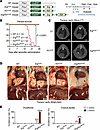 Figure 1
Both Erg and Fli1 are critical for maintaining thoracic duct valve integrity. (A) Diagram depicting generation of WT, ErgiΔLEC, Fli1iΔLEC, and Erg/Fli1iΔLEC mouse lines, i.p. administrations of tamoxifen (Tmx) to adult (8-week-old) mice for 3 consecutive days, and timing for analyses. (B) Kaplan-Meier curve showing survival rates of the indicated mice following the initial Tmx administration. n = 12 mice/group from 3 independent experiments. P value versus WT by Mantel-Cox comparison. (C and D) Micro-CT images of thoracic cavities and gross bright-field images of the thoraco-abdominal cavity of the indicated mice after 2 weeks of the first Tmx administration. Yellow arrowhead indicates a plural effusion, and black arrowhead indicates chylous fluid. Scale bars: 5 mm. (E) Incidence rates of chylothorax and chylous ascites 2 and 3 weeks after the first Tmx administration. n = 9 mice/group.
To address the potential redundant roles of Erg and Fli1 in maintaining lymphatic integrity, we generated Erg/Fli1iΔLEC double deletion mice by crossing Prox1-Cre-ERT2–positive Ergfl/+/Fli1fl/+ mice with Ergfl/+/Fli1fl/+ mice (Figure 1A). We also generated PG-Erg/Fli1iΔLEC mice by crossing Prox1-GFP mice with Erg/Fli1iΔLEC mice for efficient lymphatic structure visualization (Supplemental Figure 2A). In these mutant mice, we confirmed the specific and complete deletion of both Erg and Fli1 in LEC 2 weeks after administering tamoxifen per day for 3 consecutive days (Supplemental Figure 2, F and G). Surprisingly, most Erg/Fli1iΔLEC mice died within a month following the tamoxifen-induced deletion, primarily due to severe chylothorax and the formation of chylous ascites, as evidenced by micro-CT imaging and autopsy analyses (Figure 1, B–E). Compared with WT mice, Erg/Fli1iΔLEC mice exhibited a 2.8-fold increase in the width of the thoracic duct, accompanied by a marked amount of chylous coagulant (Figure 2, A and B). In contrast, no differences were observed in the ErgiΔLEC or Fli1iΔLEC mice. The Evans blue drainage assay, which assesses lymph flow through the thoracic duct, confirmed these findings; no drainage was observed in Erg/Fli1iΔLEC mice (Figure 2C). To assess and compare the drainage functions of mesenteric lymphatics, we performed an oral gavage loading assay using BODIPY C11–labeled fatty acids (30) in PG-WT and PG-Erg/Fli1iΔLEC mice (Figure 2D). We observed a marked stasis of the drained tracer within the mesenteric lymphatics in the PG-Erg/Fli1iΔLEC mice, whereas PG-WT mice showed normal clearance (Figure 2, E–I). Furthermore, compared with WT mice, the Erg/Fli1iΔLEC mice exhibited significant impairments in lymphatic drainage from the inguinal lymph node to the ascending axillary lymph node via dermal lymphatics in the thoracoabdominal cavity as well as from the foot pad to the popliteal and inguinal lymph nodes (Supplemental Figure 3, A–G). Thus, Erg and Fli1 are critical for lymphatic function.
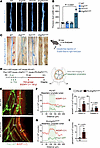 Figure 2
Erg and Fli1 double knockout impairs lymphatic drainage function. (A and B) Bright-field images and comparison of the width of the thoracic duct at 2 weeks after the first of 3 consecutive days of tamoxifen (Tmx) administrations among the indicated adult mice. Scale bars: 0.5 mm. Each dot indicates a value from 1 mouse, and n = 5 mice/group from 2 independent experiments. Data are shown as the mean ± SD; P value versus WT by 1-way ANOVA followed by Dunnett’s post hoc test. (C) Diagram showing intradermal injection of Evans blue into the right hind paw of the adult mice at 2 weeks after the first of 3 consecutive days of Tmx administration and analysis 30 min later. Bright-field images of the thoracic duct in the indicated mice. Similar findings were obtained from n = 5 mice in 3 independent experiments. Scale bars: 0.5 mm. (D) Generation of PG-WT and PG-Erg/Fli1iΔLEC mice, diagram showing i.p. administrations of Tmx for 3 consecutive days in the adult mice, and 2 weeks later, an intravital imaging of mesenteric lymphatics at 9 h after oral gavage of 150 μL of BODIPY C11. (E–G) Fluorescence images and fluorescence intensity (FI) profile analysis of BODIPY C11 in the mesenteric lymphatics between PG-WT and PG-Erg/Fli1iΔLEC mice at 9 h after the oral gavage. Yellow lines indicate the regions measured for profile analysis. Scale bars: 200 μm. Green shaded regions in the plots represent the mesenteric lymphatic lumens. LV, lymphatic vessel; BV, blood vessel. The letters F and G indicate the regions where BODIPY fluorescence was measured in F and G. (H and I) Comparisons of mean and retained BODIPY C11 FI in the mesenteric lymphatics of PG-WT and PG-Erg/Fli1iΔLEC mice. Mean FIs of 3 regions within the lymphatics (Within LV) or adjacent nonlymphatic regions (Outside LV) are shown. Retained BODIPY C11 FI (ΔBODIPY FI) was defined as FIWithin LV – FIOutside LV. Each dot indicates a value from 1 mouse, and n = 5 mice/group from 2 independent experiments. Data are shown as the mean ± SD; P value versus WT by 2-tailed Mann-Whitney U test.
To examine whether the Erg/Fli1 deletion in lymphatics affects the functional integrity of neighboring blood vessels, we compared blood vascular permeability in the mesentery between WT and Erg/Fli1iΔLEC mice using an intravenous injection of Evans blue dye (Supplemental Figure 4A). No significant difference in vascular leakage in the mesentery between the 2 groups was found over 1 h after the Evans blue injection (Supplemental Figure 4, B and C), indicating that the Erg/Fli1 deletion in lymphatics does not notably compromise surrounding blood vascular function.
Lymphatic heterogeneity is disrupted in Erg/Fli1iΔLEC mice. To gain insights into the transcriptomic changes associated with these pathological phenotypes, we conducted scRNA-seq analysis on LECs isolated from the mesenteric lymphatics of PG-WT and PG-Erg/Fli1iΔLEC mice (Figure 3A). The GFP-labeled LECs were isolated and enriched from the lymphatics in the entire mesentery that was dissected along the intestine (see details in Methods) using flow cytometry. Subsequently, we performed droplet-based scRNA-seq utilizing the 10x Genomics platform (Figure 3A). Unsupervised clustering of mesenteric LECs from PG-WT mice identified distinct lymphatic subtypes with unique transcriptomic profiles (Figure 3B and Supplemental Figure 5A). Five LEC subtypes were annotated based on the specific expression of certain signatures (15, 31), which are as follows: capillary (Lyve1+, Reln+, Ccl21a+), collecting (Lyve1–, Ccl21a–, Bgn+), valve (Foxc2+, Cldn11+), proliferative (Mki67+, Top2a+, Birc5+), and precollecting (showing intermediate expression of both capillary and collecting signatures) (Figure 3D). Unsupervised clustering of mesenteric lymphatics derived from the PG-Erg/Fli1iΔLEC dataset revealed distinct subpopulations (Supplemental Figure 5B). We used the top 100 differential markers that distinguish lymphatic subtypes in the WT dataset as a reference to assess the correlations among the clusters between datasets. We then computed Jaccard similarities with the markers for the clusters in the PG-Erg/Fli1iΔLEC dataset. With the exception of the cluster identified as proliferative, all other clusters in the PG-Erg/Fli1iΔLEC dataset demonstrated low marker correlations (Figure 3C). Additionally, expression of lymphatic subtype-specific markers indicative of capillary, collecting, and valve identities was not observed in the PG-Erg/Fli1iΔLEC dataset (Figure 3D).
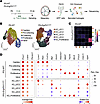 Figure 3
Loss of lymphatic heterogeneity in Erg/Fli1iΔLEC mice. (A)Diagram showing i.p. administrations of tamoxifen (Tmx) for 3 consecutive days to PG-WT and PG-Erg/Fli1iΔLEC mice, and sampling and scRNA-seq of mesenteric LECs. (B) UMAP visualization of mesenteric LEC subtypes in PG-WT and PG-Erg/Fli1iΔLEC mice datasets. (C) Heatmap showing Jaccard similarities between top 100 marker genes for each cluster from PG-WT and PG-Erg/Fli1iΔLEC mice datasets. (D) Dot plots visualizing average expression levels of Prox1, Cdh5, and Pecam1 (left panel) per cluster and scaled expression levels of marker genes for LEC subtypes (right panel) in PG-WT and PG-Erg/Fli1iΔLEC mice datasets. Scaled expression levels are scored across LEC subtypes in each dataset.
Notably, compared with the mesenteric LECs in PG-WT mice, those in PG-Erg/Fli1iΔLEC mice exhibited marked reductions in the expression of key lymphatic genes, including Flt4, Lyve1, Reln, and Pecam1 (32, 33) (Figure 3D and Figure 4, A and B). We confirmed these changes through immunofluorescence staining of lymphatics in the mesentery and ear skin. Compared with WT, mesenteric lymphatics of PG-Erg/Fli1iΔLEC mice demonstrated a marked reduction of Vegfr3 (71.3%), Lyve1 (62%), reelin (60.3%), and CD31 (74.9%) (Figure 4, C and D). Consistently, lymphatics in the ear skin of PG-Erg/Fli1iΔLEC mice showed significantly reduced CD31 (65.8%), Vegfr3 (87.6%), Lyve1 (16.4%), and reelin (86.4%) compared with PG-WT mice (Supplemental Figure 6, A and B). Thus, our clustering analysis revealed that the codeletion of Erg and Fli1 disrupts lymphatic heterogeneity and identity.
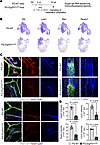 Figure 4
Lymphatic signature genes and proteins are downregulated in the lymphatics of Erg/Fli1iΔLEC mice. (A) Diagram showing i.p. administrations of tamoxifen (Tmx) for 3 consecutive days to PG-WT and PG-Erg/Fli1iΔLEC mice and sampling of mesenteric lymphatics for scRNA-seq and immunofluorescence staining. (B) UMAP plots visualizing mRNA expression levels of Flt4, Lyve1, Reln, and Pecam1 in PG-WT and PG-Erg/Fli1iΔLEC mice datasets. (C and D) Immunofluorescence images and comparisons of protein levels of Vegfr3, Lyve1, Reelin, and CD31 (PECAM1) in the mesenteric lymphatics between PG-WT and PG-Erg/Fli1iΔLEC mice at 2 weeks after the first of 3 consecutive days of Tmx administration. Lymphatic vessels are marked with white dashed lines based on Prox1-GFP+ cells. Scale bars: 100 μm. Each dot indicates a value from 1 mouse, and n = 4–5 mice/group from 2 independent experiments. Data are shown as the mean ± SD; P value versus WT by 2-tailed Mann-Whitney U test.
Given the broad developmental importance of Erg and Fli1 in specialized valve programs across vascular systems, including the cardiac valve (34), we assessed the expression and roles of Erg and Fli1 in the cardiac valvular cells. In the mitral valves of PG-WT mice, we confirmed coexpression of Erg and Fli1 in Prox1+ valvular cells, where PG-Erg/Fli1iΔLEC mice showed marked deletions of Erg and Fli1 (Supplemental Figure 7, A and B). Interestingly, Prox1+ lymphatics were present in the leaflet surface near the annulus area of the mitral valve (Supplemental Figure 7A).
Despite these deletions over 10–14 days, histological analysis showed similar valve morphology, and echocardiography revealed no significant differences in ejection fraction, fractional shortening, stroke volume, or left ventricular mass between the 2 groups (Supplemental Figure 8, A–C). These data suggest that although PG-Erg/Fli1iΔLEC deletes Erg and Fli1 in Prox1+ cardiac valve cells, these deletions over a short period do not impair cardiac valve structure or function in adult mice. However, further examination is needed to determine whether a longer period of deletions could lead to potential structural and functional changes in cardiac valves in the future.
Erg and Fli1 positively regulate Ccl21 expression in lymphatics. Among the reduced genes, we focused on C-C motif chemokine ligand 21 (Ccl21), a chemokine uniquely expressed in the capillary LECs. Ccl21 production at the distal ends of lymphatic vessels establishes a chemokine gradient essential for T cell and DC trafficking into lymphatics and toward draining lymph nodes (35–38). Despite its central role in immunity, the upstream genetic regulation of Ccl21 remains unclear. Strikingly, our analyses of scRNA differential testing and immunostaining indicated that both Ccl21a mRNA expression and Ccl21 protein were almost absent in the LECs of PG-Erg/Fli1iΔLEC mice at 2 weeks after the first tamoxifen injection (Figure 5, A–D). This significant reduction of Ccl21 protein was observed in mesenteric and ear skin lymphatics as soon as 4 days after the deletion (Supplemental Figure 9, A–E). In addition, RT-PCR analysis confirmed the reduction of CCL21 mRNA in human LECs at 48 h after ERG and FLI1 depletion (Supplemental Figure 9, F and G). These data imply that Erg and Fli1 directly and positively regulate Ccl21 expression in LECs.
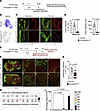 Figure 5
Ccl21 is regulated by Erg and Fli1 in LECs. (A) Diagram showing i.p. administrations of tamoxifen (Tmx) for 3 consecutive days to PG-WT and PG-Erg/Fli1iΔLEC mice, and sampling of mesenteric lymphatics for scRNA-seq and immunofluorescence staining. (B) UMAP plots visualizing expression levels of Ccl21a in PG-WT and PG-Erg/Fli1iΔLEC datasets. (C and D) Immunofluorescence images and comparisons of ear skin lymphatics and their Ccl21 protein levels in PG-WT and PG-Erg/Fli1iΔLEC mice at 2 weeks after the first of 3 consecutive days of Tmx administration. Scale bars: 50 μm. White dotted lines outline the ear skin lymphatics. Each dot indicates a value from 1 mouse, and n = 5 mice/group from 2 independent experiments. Data are shown as the mean ± SD; P value versus WT by 2-tailed Mann-Whitney U test. (E) Diagram showing the schedule of i.p. administrations of Tmx for 3 consecutive days, and then 1 week later, intradermal injection of CellTracker-labeled BMDCs into the ear skin followed by the ipsilateral parotid lymph node sampling 4 h later in PG-WT and PG-Erg/Fli1iΔLEC mice. (F and G) Fluorescence images and comparison of fluorescence intensity of CellTracker-labeled BMDCs in the parotid lymph node of the indicated mouse line. Scale bars: 50 μm. Each dot indicates a value from 1 mouse, and n = 6 mice/group from 2 independent experiments. P values versus WT by 2-tailed Welch’s t test. (H and I) ChIP analysis in primary cultured human LECs with anti-ERG antibody followed by qPCR using primers specific for the indicated regions of the CCL21 gene depicted in R1–R7 (H) demonstrates ERG interacts with CCL21 gene regulatory regions located at both –6.8 and −9.9 kb upstream of the transcription start site of the CCL21 gene (I). The sequence of the ERG binding motif is limited to CAGGAAG or CAGGAAA for qPCR. RELA (P65) was used as a negative control in ChIP-qPCR. Each dot indicates a value from 1 sample, and n = 4 samples/group from 2 independent experiments. Data are shown as the mean ± SD; P value versus WT by 1-way ANOVA followed by Dunnett’s post hoc test.
To assess the functional consequence of Ccl21 deficiency in Erg/Fli1-deficient lymphatics, we performed a DC migration assay according to a previous report (37). Bone marrow–derived dendritic cells (BMDCs), stimulated with lipopolysaccharide and labeled with CellTracker Red CMTPX, were intradermally injected into the ear skin of PG-WT or PG-Erg/Fli1iΔLEC mice. Four hours after injection, compared with PG-WT, the parotid lymph nodes of PG-Erg/Fli1iΔLEC mice exhibited a significant reduction (20.6%) in the fluorescence intensity of labeled BMDCs (Figure 5, E–G).
To determine whether ERG directly regulates CCL21 expression, we conducted ChIP-qPCR using primary cultured human LECs. We used primers targeting the ERG-binding motif on the CCL21 promoter and its upstream gene regulatory regions (Supplemental Table 1). The ChIP-qPCR analysis revealed that endogenous ERG bound to 2 specific regions, designated as R4 and R6, which are located 6.8 and 9.9 kb upstream of the CCL21 transcription start site in human LEC, respectively. Notably, R6 displayed a stronger binding affinity for ERG than R4, with binding efficiencies of 377.9- and 37.3-fold relative to the control RELA, respectively (Figure 5, H and I). These findings indicate that ERG directly and positively regulates CCL21 expression in human LECs.
Erg and Fli1 regulate genes essential for maintaining lymphatic valve integrity. To further explore the transcriptomic changes in the mesenteric lymphatics of PG-Erg/Fli1iΔLEC mice, we performed Gene Ontology (GO) term analysis on the top 100 downregulated genes from pseudo-bulk transcriptomic comparisons of LECs between PG-WT and PG-Erg/Fli1iΔLEC mice single-cell datasets (Figure 6A). This analysis revealed significant enrichment in GO terms related to lymph endothelial cell differentiation, circulatory system development, blood vessel morphogenesis, and processes associated with aortic valve and atrioventricular valve development (Figure 6A). These findings underscore the essential role of Erg/Fli1 in regulating both blood vascular and lymphatic development, including the formation and function of valves. After observing defects in lymphatic drainage, we investigated the integrity of lymphatic valves in the Erg/Fli1iΔLEC mice. Our transcriptomic analysis showed that key lymphatic valve signatures, such as Foxc2, Gata2, Gja4, and Nfatc1, were selectively expressed within the valve cluster of PG-WT mice (Figure 6B). In contrast, these signatures were broadly upregulated across all LEC clusters in PG-Erg/Fli1iΔLEC mice, except for Nfatc1, which showed reduced expression (Figure 6B), indicating a disrupted transcriptional regulation of valve identity.
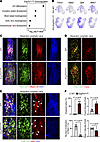 Figure 6
Dysregulation of lymphatic valve markers in Erg/Fli1iΔLEC mice. (A–F) Diagram showing i.p. administrations of tamoxifen (Tmx) for 3 consecutive days to PG-WT and PG-Erg/Fli1iΔLEC mice or WT and Erg/Fli1iΔLEC mice, and sampling of mesenteric lymphatics at 2 weeks after the first Tmx injection for scRNA-seq and immunofluorescence staining. (A) Dot plots showing significantly enriched GO terms of top 100 downregulated genes in PG-Erg/Fli1iΔLEC LECs compared with PG-WT LECs. Selected terms with Benjamini-Hochberg method–adjusted P value < 0.05 are shown. (B) UMAP plots visualizing expression levels of Foxc2, Gata2, Gja4, and Nfatc1 in PG-WT and PG-Erg/Fli1iΔLEC datasets. (C–E) Immunofluorescence images of Prox1hiIntegrin-α9hiCD31hi mesenteric lymphatic valves, Prox1hiFoxc2hi mesenteric lymphatic valves, and Prox1hiNfatc1hi in mesenteric lymphatic valves in WT and Erg/Fli1iΔLEC mice. Arrowheads indicate nuclear localization of Nfatc1, and arrows indicate cytoplasmic localization of Nfatc1. Similar findings are shown from n = 5 mice/group from 2 independent experiments. Scale bars: 50 μm. (F) Comparisons of impaired valves, Foxc2 intensity, nuclear localization of Nfatc1, and Nfatc1 intensity in mesenteric lymphatic valve areas between WT and Erg/Fli1iΔLEC mice. Each dot indicates a value from 1 mouse, and n = 5 mice/group from 2 independent experiments. Data are shown as the mean ± SD; P value versus WT by 2-tailed Mann-Whitney U test.
The typical semiluminal shape of the integrin-α9hi and Foxc2hi lymphatic valves was markedly altered in the Erg/Fli1iΔLEC mice compared with the WT mice (Figure 6C). Notably, Foxc2hi LECs, which are restricted to valve regions in WT mice, were upregulated (2.65-fold of WT) and observed throughout the lymphangion of Erg/Fli1iΔLEC mice. Additionally, Nfatc1 showed reduced expression (0.7-fold of WT) and a shift from nuclear localization to cytoplasmic localization in the LECs of the mesenteric lymphatics in Erg/Fli1iΔLEC mice (Figure 6, D–F). To further investigate the cellular dynamics within lymphatic valves following Erg/Fli1 deletion, we administered EdU 1 week after the deletion and analyzed the mice a week later (Supplemental Figure 10A). In the mesenteric lymphatics, we observed a significant increase in Prox1+ EdU+ LECs in PG-Erg/Fli1iΔLE mice compared with PG-WT mice, indicating abnormal hyperproliferation after Erg/Fli1 deletion (Supplemental Figure 10, B and D). In contrast, there were no significant changes in the number of Prox1+ caspase-3+ LECs in both groups (Supplemental Figure 10, C and D). These results suggest that Erg/Fli1 deletion disrupts lymphatic valve integrity partially by abnormal hyperproliferation of valve LECs, rather than through valvular cell loss.
These observations led us to investigate whether ERG and FLI1 directly regulate these genes at the transcriptional level in the primary cultured human dermal LECs. We selectively depleted ERG, FLI1, or both ERG and FLI1 in the LECs using specific siRNA (see details in Methods). When compared with the control siRNA, the simultaneous knockdown of both ERG and FLI1 using cotransfection of ERG siRNA and FLI1 siRNA resulted in significant reductions in VEGFR3 (0.7-fold) and NFATC1 (0.49-fold) and increases in GATA2 (2.1-fold) and FOXC2 (1.4-fold) compared with control siRNA (Supplemental Figure 11, A and B). Thus, Erg/Fli1 is crucial in maintaining lymphatic valve integrity through cooperative activities.
Erg and Fli1 negatively regulate the genes related to inflammation and coagulation in LEC. Further analysis showed that the GO term analysis of the top 100 upregulated genes in the PG-Erg/Fli1iΔLEC mesenteric lymphatics highlighted pathways related to cell migration, coagulation, and chemokine-mediated signaling (Figure 7, A and B). Notably, we observed a marked increase in the expression of prothrombotic factors, including Serpine1, F2r, and Pf4 (Figure 7C) (39, 40). Consistent with these molecular findings, substantial coagulation of a gel-like chyle was evident in the thoracic duct when it was compressed with forceps (Figure 7, D and E). Given the established role of Serpine1 as a key mediator of thrombosis through inhibiting fibrinolysis (40), we quantified the protein levels from the lymph directly collected from the mesenteric lymphatics. Consistent with the transcriptomic findings, lymph from Erg/Fli1iΔLEC mice exhibited a 30.5-fold elevation in Serpine1 level compared with WT controls (Figure 7F). Additionally, chemokine genes Cxcl1, Cxcl2, and Ccl7 were upregulated (Figure 7C). Thus, Erg/Fli1iΔLEC mesenteric lymphatics are prothrombotic and proinflammatory.
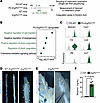 Figure 7
Upregulation of pro-coagulation factors and chemokines in Erg/Fli1iΔLEC mice. (A) Diagram showing i.p. administrations of tamoxifen (Tmx) for 3 consecutive days to PG-WT and PG-Erg/Fli1iΔLEC mice or WT and Erg/Fli1iΔLEC mice, and sampling of mesenteric lymphatics for scRNA-seq, sampling of mesenteric lymph for measuring Serpine1, and coagulation assay in thoracic duct at 2 weeks after the first Tmx injection. (B) Dot plots showing significantly enriched GO terms of top 100 upregulated genes in PG-Erg/Fli1iΔLEC LECs compared with PG-WT LECs. Selected terms with Benjamini-Hochberg method-adjusted P value < 0.05 are shown. (C) Violin plots showing expression levels of genes related to coagulation (Serpine1, F2r, and Pf4) and chemokines (Cxcl1, Ccl2, and Ccl7) in PG-WT and PG-Erg/Fli1iΔLEC LECs. (D and E) Images of thoracic ducts in WT and Erg/Fli1iΔLEC mice. White dashed boxes are magnified in the right panels. Black dashed lines outline thoracic ducts, and yellow arrowheads indicate coagulated lymph chyle. Scale bars: 500 μm. (F) Comparison of protein levels of Serpine1 in the mesenteric lymph of WT and Erg/Fli1iΔLEC mice. Each dot indicates a value from 1 mouse, and n = 5 mice/group from 2 independent experiments. Data are shown as the mean ± SD; P value versus WT by 2-tailed Mann-Whitney U test.
To identify transcriptional programs regulated by Erg/Fli1 that are specific to lymphatic, but not in BECs, we compared differentially expressed genes (DEGs) identified in our dataset with those reported in a recent study analyzing BECs after Erg/Fli1 deletion (20) (Supplemental Figure 12A). We first examined genes downregulated in either LECs or BECs following Erg/Fli1 loss. In line with our observations, LECs selectively downregulated genes associated with lymphatic fate commitment, leukocyte migration, and the Ccl21 signaling pathway (Supplemental Figure 12B). In contrast, proinflammatory chemokine genes such as Ccl2, Ccl7, and Cxcl2 were specifically upregulated in LECs, accounting for the proinflammatory phenotype following Erg/Fli1 deletion. Given that Erg/Fli1 are key transcription factors for endothelial identity, numerous genes were commonly dysregulated in both LECs and BECs. Consistent with previous findings, Erg/Fli1 deletion upregulated genes involved in coagulation, including Serpine1, F2r, and Procr (Supplemental Figure 12C). Additionally, genes associated with angiogenesis as well as endothelial cell chemotaxis and migration were downregulated in both cell types (Supplemental Figure 12D). Together, these results demonstrate that Erg/Fli1 orchestrates core transcriptional networks essential for both vascular systems while also governing lymphatic-specific transcriptional programs that are not shared with BECs.
Erg and Fli1 are critical for lymphatic plexus patterning during embryonic development. We observed that Erg and Fli1 are constitutively expressed in lymphatics in adult tissues and during embryonic and postnatal development (Supplemental Figure 13, A–F). To determine the roles of Erg and Fli1 in lymphatic development, we deleted Erg, Fli1, or Erg/Fli1 in LECs of WT, ErgiΔLEC, Fli1iΔLEC, and Erg/Fli1iΔLEC embryos by administration of tamoxifen into the pregnant mice at E12.5 and E14.5 and analyzed embryos at E16.5 (Figure 8A). Prominent hemorrhage was noted in the back of the heads of ErgiΔLEC and Erg/Fli1iΔLEC embryos, and substantial subdermal edema was evident in the back of the head and the back of Erg/Fli1iΔLEC embryos (Figure 8B). In contrast, no abnormal phenotypes were observed in WT and Fli1iΔLEC embryos. Compared with the WT embryos, Erg/Fli1iΔLEC embryos exhibited enlarged, ballooned, and mispatterned lymphatic plexus with 1.9- and 4.0-fold increased lymphatic midline gap and lymphatic length; 42.8%, 60.8%, 45.4%, and 64.3% reduced number of branching points; putative valve-initiating Prox1hi LEC clusters; and Prox1 and Vegfr3 intensities in the lymphatics of the back skin (Figure 8, B–I). Although ErgiΔLEC embryos exhibited a 1.8-fold increased lymphatic midline gap and reduced Vegfr3 intensity by 34.9%, the rest of the phenotypes were indifferent in the back skin compared with those of WT mice (Figure 8, B–I). No notable alterations were evident in the back skin of Fli1iΔLEC embryos. Thus, Erg alone plays a substantial role in lymphatic development.
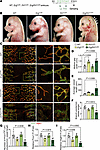 Figure 8
Erg and Fli1 are essential for lymphatic plexus patterning during embryonic development. (A) Diagram depicting tamoxifen (Tmx) administrations to WT, ErgiΔLEC, Fli1iΔLEC, and Erg/Fli1iΔLEC embryos at E12.5 and E14.5 and analyses at E16.5. (B) Images of WT, ErgiΔLEC, Fli1iΔLEC, and Erg/Fli1iΔLEC embryos at E16.5. White and yellow arrowheads indicate hemorrhage and edema. Scale bars: 2 mm. (C–I) Immunofluorescence images of Prox1 and Vegfr3 expression in E16.5 dorsal skin lymphatics and comparison of indicated parameters. Areas within yellow and white dashed boxes are magnified in middle and right panels. Scale bars: 200 μm. Each dot indicates a value from 1 mouse, and n = 4 mice/group from 2 independent experiments. Data are shown as the mean ± SD; P value versus WT by 1-way ANOVA followed by Dunnett’s post hoc test.
To determine the roles of Erg in lymphatic valve development, we deleted Erg or Erg/Fli1 in LECs of WT, ErgiΔLEC, and Erg/Fli1iΔLEC embryos by administration of tamoxifen into the pregnant mice at E12.5 and E14.5 and analyzed mesenteric lymphatic valves in embryos at E18.5 (Supplemental Figure 14A). Compared with WT embryos, ErgiΔLEC and Erg/Fli1iΔLEC mesenteries showed no discernible lymphatic valve structures and marked reductions in the expression of lymphatic valve signatures, including Col IV (60% and 57%), integrin-α9 (63% and 72%), and Vegfr3 (48% and 64%) at the potential valvular areas (Supplemental Figure 14, B and C). Although the expression levels of Foxc2 were comparable, the expression pattern shifted from valve restricted in WT embryos to a broader distribution throughout the lymphangion in ErgiΔLEC and Erg/Fli1iΔLEC embryos. Thus, Erg alone plays a critical role in lymphatic valve development. Notably, ErgiΔLEC embryos exhibited lethality by E20.5 when tamoxifen was administered at E12.5 and E14.5 (Supplemental Figure 14, D and E).
Postnatal mice exhibited similar phenotypes to adult mice following Erg/Fli1 deletion. Tamoxifen administrations from P1 to P3 led to lethality within 1 week exclusively in Erg/Fli1iΔLEC pups, while single deletion of either Erg or Fli1 alone did not compromise survival (Supplemental Figure 15, A and B). Functional assessment of mesenteric lymphatic drainage by oral gavage of BODIPY 18 showed a significant reduction (54.9%) in Erg/Fli1iΔLEC pups compared with WT pups (Supplemental Figure 15, C–E). Moreover, Erg/Fli1iΔLEC pups exhibited deformed mesenteric lymphatic structures, while they remained intact in WT and single-knockout pups (Supplemental Figure 15F).
Erg and Fli1 are essential for regenerative lymphangiogenesis after injury. We investigated whether Erg and Fli1 could regulate regenerative lymphangiogenesis in adults. To do this, we performed an ear punch injury 1 week after the deletion of Erg/Fli1 (Figure 9A). Compared with PG-WT mice, PG-Erg/Fli1iΔLEC mice exhibited a reduction of 84.0% in lymphatic sprouts and 75.8% in Lyve1+ lymphatic area (Figure 9, B and C).
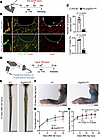 Figure 9
Dual deletion of Erg and Fli1 attenuates regenerative lymphangiogenesis. (A) Diagram depicting ear punch injury-induced lymphangiogenesis model, schedules for daily administrations of tamoxifen (Tmx) and ear punch injury, and sampling 2 weeks later. (B) Representative images of Prox1+/Lyve1+ dermal lymphatics after the ear punch injury in PG-WT and PG-Erg/Fli1iΔLEC mice. White dashed lines indicate the injury margin, yellow dashed boxes are magnified in right panels, and white arrowheads indicate lymphatic sprouts. Similar findings were observed from n = 5 mice/group from 2 independent experiments. Scale bars: 200 μm. (C) Comparison of number of lymphatic sprouts and Lyve1+ lymphatic density in PG-WT and PG-Erg/Fli1iΔLEC mice after the ear punch injury. Each dot indicates a value from 1 mouse, and n = 5 mice/group from 2 independent experiments. Data are shown as the mean ± SD; P value versus WT by 2-tailed Mann-Whitney U test. (D) Schematic diagram depicting i.p. administrations of Tmx, generation of tail or leg secondary lymphedema model, and analyses after 2 weeks of injury. (E) Representative images of mouse tails after 15 days of injury in WT or Erg/Fli1iΔLEC mice. Similar findings were observed from n = 5 mice/group from 2 independent experiments. Scale bars: 1 cm. (F) Representative images of mouse hind paws after 15 days of injury in WT or Erg/Fli1iΔLEC mice. Similar findings were observed from n = 3 mice/group from 2 independent experiments. Scale bars: 2 mm. (G and H) Comparison of tail diameter and footpad thickness in WT and Erg/Fli1iΔLEC mice after tail/leg injury models. Each dot indicates a value from 1 mouse, and n = 3–5 mice/group from 2 independent experiments. Data are shown as the mean ± SD; P value versus WT by 2-way ANOVA followed by Šidák’s post hoc test.
To further assess whether the decreased regenerative lymphangiogenesis could impair lymphatic drainage, we created a secondary lymphedema model in the tail or hind leg (Figure 9D). This was done by disconnecting the lymphatics, which involved excising a circumferential piece of the dermis. Two weeks after the injury, Erg/Fli1iΔLEC mice showed a 1.3-fold increase in tail diameter and a 2.0-fold increase in footpad thickness compared with WT mice (Figure 9, E–H). These findings indicate that Erg and Fli1 are crucial for both regenerative lymphangiogenesis and lymphatic recovery.


Copyright © 2026 American Society for Clinical Investigation
ISSN: 0021-9738 (print), 1558-8238 (online)