
Advertisement
Clinical Research and Public HealthClinical ResearchImmunologyOncology
Open Access |  10.1172/JCI195021
Spatial single-cell proteotyping reveals immunotherapy-resistant features within the complex tumor microenvironment of metastatic NSCLC
Kohsuke Isomoto,1 Koji Haratani,1,2 Takahiro Tsujikawa,3 Shuta Tomida,4 Yusuke Makutani,5 Masayuki Takeda,1 Kimio Yonesaka,1 Kaoru Tanaka,1 Tsutomu Iwasa,1 Kazuko Sakai,6 Kazuto Nishio,6 Akihiko Ito,7 Kazuhiko Nakagawa,1 and Hidetoshi Hayashi1
1Department of Medical Oncology, Kindai University Faculty of Medicine, Osaka-Sayama, Japan.
2Department of Medical Oncology, Dana-Farber Cancer Institute, Boston, Massachusetts, USA.
3Department of Otolaryngology–Head and Neck Surgery, Kyoto Prefectural University of Medicine, Kyoto, Japan.
4Center for Comprehensive Genomic Medicine, Okayama University Hospital, Okayama, Japan.
5Department of Surgery,
6Department of Genome Biology, and
7Department of Pathology, Kindai University Faculty of Medicine, Osaka-Sayama, Japan.
Address correspondence to: Koji Haratani, Department of Medical Oncology, Kindai University Faculty of Medicine, 377-2 Ohno-higashi, Osaka-Sayama, Osaka 589-8511, Japan. Phone: 81.72.366.0221; Email: haratani_k@med.kindai.ac.jp or koji_haratani@dfci.harvard.edu.
Authorship note: KI and KH contributed equally to this work and have been designated as co–first authors.
Find articles by Isomoto, K. in: PubMed | Google Scholar
1Department of Medical Oncology, Kindai University Faculty of Medicine, Osaka-Sayama, Japan.
2Department of Medical Oncology, Dana-Farber Cancer Institute, Boston, Massachusetts, USA.
3Department of Otolaryngology–Head and Neck Surgery, Kyoto Prefectural University of Medicine, Kyoto, Japan.
4Center for Comprehensive Genomic Medicine, Okayama University Hospital, Okayama, Japan.
5Department of Surgery,
6Department of Genome Biology, and
7Department of Pathology, Kindai University Faculty of Medicine, Osaka-Sayama, Japan.
Address correspondence to: Koji Haratani, Department of Medical Oncology, Kindai University Faculty of Medicine, 377-2 Ohno-higashi, Osaka-Sayama, Osaka 589-8511, Japan. Phone: 81.72.366.0221; Email: haratani_k@med.kindai.ac.jp or koji_haratani@dfci.harvard.edu.
Authorship note: KI and KH contributed equally to this work and have been designated as co–first authors.
Find articles by
Haratani, K.
in:
PubMed
|
Google Scholar
|

1Department of Medical Oncology, Kindai University Faculty of Medicine, Osaka-Sayama, Japan.
2Department of Medical Oncology, Dana-Farber Cancer Institute, Boston, Massachusetts, USA.
3Department of Otolaryngology–Head and Neck Surgery, Kyoto Prefectural University of Medicine, Kyoto, Japan.
4Center for Comprehensive Genomic Medicine, Okayama University Hospital, Okayama, Japan.
5Department of Surgery,
6Department of Genome Biology, and
7Department of Pathology, Kindai University Faculty of Medicine, Osaka-Sayama, Japan.
Address correspondence to: Koji Haratani, Department of Medical Oncology, Kindai University Faculty of Medicine, 377-2 Ohno-higashi, Osaka-Sayama, Osaka 589-8511, Japan. Phone: 81.72.366.0221; Email: haratani_k@med.kindai.ac.jp or koji_haratani@dfci.harvard.edu.
Authorship note: KI and KH contributed equally to this work and have been designated as co–first authors.
Find articles by
Tsujikawa, T.
in:
PubMed
|
Google Scholar
|
1Department of Medical Oncology, Kindai University Faculty of Medicine, Osaka-Sayama, Japan.
2Department of Medical Oncology, Dana-Farber Cancer Institute, Boston, Massachusetts, USA.
3Department of Otolaryngology–Head and Neck Surgery, Kyoto Prefectural University of Medicine, Kyoto, Japan.
4Center for Comprehensive Genomic Medicine, Okayama University Hospital, Okayama, Japan.
5Department of Surgery,
6Department of Genome Biology, and
7Department of Pathology, Kindai University Faculty of Medicine, Osaka-Sayama, Japan.
Address correspondence to: Koji Haratani, Department of Medical Oncology, Kindai University Faculty of Medicine, 377-2 Ohno-higashi, Osaka-Sayama, Osaka 589-8511, Japan. Phone: 81.72.366.0221; Email: haratani_k@med.kindai.ac.jp or koji_haratani@dfci.harvard.edu.
Authorship note: KI and KH contributed equally to this work and have been designated as co–first authors.
Find articles by Tomida, S. in: PubMed | Google Scholar
1Department of Medical Oncology, Kindai University Faculty of Medicine, Osaka-Sayama, Japan.
2Department of Medical Oncology, Dana-Farber Cancer Institute, Boston, Massachusetts, USA.
3Department of Otolaryngology–Head and Neck Surgery, Kyoto Prefectural University of Medicine, Kyoto, Japan.
4Center for Comprehensive Genomic Medicine, Okayama University Hospital, Okayama, Japan.
5Department of Surgery,
6Department of Genome Biology, and
7Department of Pathology, Kindai University Faculty of Medicine, Osaka-Sayama, Japan.
Address correspondence to: Koji Haratani, Department of Medical Oncology, Kindai University Faculty of Medicine, 377-2 Ohno-higashi, Osaka-Sayama, Osaka 589-8511, Japan. Phone: 81.72.366.0221; Email: haratani_k@med.kindai.ac.jp or koji_haratani@dfci.harvard.edu.
Authorship note: KI and KH contributed equally to this work and have been designated as co–first authors.
Find articles by Makutani, Y. in: PubMed | Google Scholar
1Department of Medical Oncology, Kindai University Faculty of Medicine, Osaka-Sayama, Japan.
2Department of Medical Oncology, Dana-Farber Cancer Institute, Boston, Massachusetts, USA.
3Department of Otolaryngology–Head and Neck Surgery, Kyoto Prefectural University of Medicine, Kyoto, Japan.
4Center for Comprehensive Genomic Medicine, Okayama University Hospital, Okayama, Japan.
5Department of Surgery,
6Department of Genome Biology, and
7Department of Pathology, Kindai University Faculty of Medicine, Osaka-Sayama, Japan.
Address correspondence to: Koji Haratani, Department of Medical Oncology, Kindai University Faculty of Medicine, 377-2 Ohno-higashi, Osaka-Sayama, Osaka 589-8511, Japan. Phone: 81.72.366.0221; Email: haratani_k@med.kindai.ac.jp or koji_haratani@dfci.harvard.edu.
Authorship note: KI and KH contributed equally to this work and have been designated as co–first authors.
Find articles by Takeda, M. in: PubMed | Google Scholar
1Department of Medical Oncology, Kindai University Faculty of Medicine, Osaka-Sayama, Japan.
2Department of Medical Oncology, Dana-Farber Cancer Institute, Boston, Massachusetts, USA.
3Department of Otolaryngology–Head and Neck Surgery, Kyoto Prefectural University of Medicine, Kyoto, Japan.
4Center for Comprehensive Genomic Medicine, Okayama University Hospital, Okayama, Japan.
5Department of Surgery,
6Department of Genome Biology, and
7Department of Pathology, Kindai University Faculty of Medicine, Osaka-Sayama, Japan.
Address correspondence to: Koji Haratani, Department of Medical Oncology, Kindai University Faculty of Medicine, 377-2 Ohno-higashi, Osaka-Sayama, Osaka 589-8511, Japan. Phone: 81.72.366.0221; Email: haratani_k@med.kindai.ac.jp or koji_haratani@dfci.harvard.edu.
Authorship note: KI and KH contributed equally to this work and have been designated as co–first authors.
Find articles by Yonesaka, K. in: PubMed | Google Scholar
1Department of Medical Oncology, Kindai University Faculty of Medicine, Osaka-Sayama, Japan.
2Department of Medical Oncology, Dana-Farber Cancer Institute, Boston, Massachusetts, USA.
3Department of Otolaryngology–Head and Neck Surgery, Kyoto Prefectural University of Medicine, Kyoto, Japan.
4Center for Comprehensive Genomic Medicine, Okayama University Hospital, Okayama, Japan.
5Department of Surgery,
6Department of Genome Biology, and
7Department of Pathology, Kindai University Faculty of Medicine, Osaka-Sayama, Japan.
Address correspondence to: Koji Haratani, Department of Medical Oncology, Kindai University Faculty of Medicine, 377-2 Ohno-higashi, Osaka-Sayama, Osaka 589-8511, Japan. Phone: 81.72.366.0221; Email: haratani_k@med.kindai.ac.jp or koji_haratani@dfci.harvard.edu.
Authorship note: KI and KH contributed equally to this work and have been designated as co–first authors.
Find articles by Tanaka, K. in: PubMed | Google Scholar
1Department of Medical Oncology, Kindai University Faculty of Medicine, Osaka-Sayama, Japan.
2Department of Medical Oncology, Dana-Farber Cancer Institute, Boston, Massachusetts, USA.
3Department of Otolaryngology–Head and Neck Surgery, Kyoto Prefectural University of Medicine, Kyoto, Japan.
4Center for Comprehensive Genomic Medicine, Okayama University Hospital, Okayama, Japan.
5Department of Surgery,
6Department of Genome Biology, and
7Department of Pathology, Kindai University Faculty of Medicine, Osaka-Sayama, Japan.
Address correspondence to: Koji Haratani, Department of Medical Oncology, Kindai University Faculty of Medicine, 377-2 Ohno-higashi, Osaka-Sayama, Osaka 589-8511, Japan. Phone: 81.72.366.0221; Email: haratani_k@med.kindai.ac.jp or koji_haratani@dfci.harvard.edu.
Authorship note: KI and KH contributed equally to this work and have been designated as co–first authors.
Find articles by Iwasa, T. in: PubMed | Google Scholar
1Department of Medical Oncology, Kindai University Faculty of Medicine, Osaka-Sayama, Japan.
2Department of Medical Oncology, Dana-Farber Cancer Institute, Boston, Massachusetts, USA.
3Department of Otolaryngology–Head and Neck Surgery, Kyoto Prefectural University of Medicine, Kyoto, Japan.
4Center for Comprehensive Genomic Medicine, Okayama University Hospital, Okayama, Japan.
5Department of Surgery,
6Department of Genome Biology, and
7Department of Pathology, Kindai University Faculty of Medicine, Osaka-Sayama, Japan.
Address correspondence to: Koji Haratani, Department of Medical Oncology, Kindai University Faculty of Medicine, 377-2 Ohno-higashi, Osaka-Sayama, Osaka 589-8511, Japan. Phone: 81.72.366.0221; Email: haratani_k@med.kindai.ac.jp or koji_haratani@dfci.harvard.edu.
Authorship note: KI and KH contributed equally to this work and have been designated as co–first authors.
Find articles by
Sakai, K.
in:
PubMed
|
Google Scholar
|
1Department of Medical Oncology, Kindai University Faculty of Medicine, Osaka-Sayama, Japan.
2Department of Medical Oncology, Dana-Farber Cancer Institute, Boston, Massachusetts, USA.
3Department of Otolaryngology–Head and Neck Surgery, Kyoto Prefectural University of Medicine, Kyoto, Japan.
4Center for Comprehensive Genomic Medicine, Okayama University Hospital, Okayama, Japan.
5Department of Surgery,
6Department of Genome Biology, and
7Department of Pathology, Kindai University Faculty of Medicine, Osaka-Sayama, Japan.
Address correspondence to: Koji Haratani, Department of Medical Oncology, Kindai University Faculty of Medicine, 377-2 Ohno-higashi, Osaka-Sayama, Osaka 589-8511, Japan. Phone: 81.72.366.0221; Email: haratani_k@med.kindai.ac.jp or koji_haratani@dfci.harvard.edu.
Authorship note: KI and KH contributed equally to this work and have been designated as co–first authors.
Find articles by Nishio, K. in: PubMed | Google Scholar
1Department of Medical Oncology, Kindai University Faculty of Medicine, Osaka-Sayama, Japan.
2Department of Medical Oncology, Dana-Farber Cancer Institute, Boston, Massachusetts, USA.
3Department of Otolaryngology–Head and Neck Surgery, Kyoto Prefectural University of Medicine, Kyoto, Japan.
4Center for Comprehensive Genomic Medicine, Okayama University Hospital, Okayama, Japan.
5Department of Surgery,
6Department of Genome Biology, and
7Department of Pathology, Kindai University Faculty of Medicine, Osaka-Sayama, Japan.
Address correspondence to: Koji Haratani, Department of Medical Oncology, Kindai University Faculty of Medicine, 377-2 Ohno-higashi, Osaka-Sayama, Osaka 589-8511, Japan. Phone: 81.72.366.0221; Email: haratani_k@med.kindai.ac.jp or koji_haratani@dfci.harvard.edu.
Authorship note: KI and KH contributed equally to this work and have been designated as co–first authors.
Find articles by Ito, A. in: PubMed | Google Scholar
1Department of Medical Oncology, Kindai University Faculty of Medicine, Osaka-Sayama, Japan.
2Department of Medical Oncology, Dana-Farber Cancer Institute, Boston, Massachusetts, USA.
3Department of Otolaryngology–Head and Neck Surgery, Kyoto Prefectural University of Medicine, Kyoto, Japan.
4Center for Comprehensive Genomic Medicine, Okayama University Hospital, Okayama, Japan.
5Department of Surgery,
6Department of Genome Biology, and
7Department of Pathology, Kindai University Faculty of Medicine, Osaka-Sayama, Japan.
Address correspondence to: Koji Haratani, Department of Medical Oncology, Kindai University Faculty of Medicine, 377-2 Ohno-higashi, Osaka-Sayama, Osaka 589-8511, Japan. Phone: 81.72.366.0221; Email: haratani_k@med.kindai.ac.jp or koji_haratani@dfci.harvard.edu.
Authorship note: KI and KH contributed equally to this work and have been designated as co–first authors.
Find articles by Nakagawa, K. in: PubMed | Google Scholar
1Department of Medical Oncology, Kindai University Faculty of Medicine, Osaka-Sayama, Japan.
2Department of Medical Oncology, Dana-Farber Cancer Institute, Boston, Massachusetts, USA.
3Department of Otolaryngology–Head and Neck Surgery, Kyoto Prefectural University of Medicine, Kyoto, Japan.
4Center for Comprehensive Genomic Medicine, Okayama University Hospital, Okayama, Japan.
5Department of Surgery,
6Department of Genome Biology, and
7Department of Pathology, Kindai University Faculty of Medicine, Osaka-Sayama, Japan.
Address correspondence to: Koji Haratani, Department of Medical Oncology, Kindai University Faculty of Medicine, 377-2 Ohno-higashi, Osaka-Sayama, Osaka 589-8511, Japan. Phone: 81.72.366.0221; Email: haratani_k@med.kindai.ac.jp or koji_haratani@dfci.harvard.edu.
Authorship note: KI and KH contributed equally to this work and have been designated as co–first authors.
Find articles by
Hayashi, H.
in:
PubMed
|
Google Scholar
|
Published March 10, 2026 - More info
J Clin Invest. 2026;136(10):e195021. https://doi.org/10.1172/JCI195021.
© 2026 Isomoto et al. This work is licensed under the Creative Commons Attribution 4.0 International License. To view a copy of this license, visit http://creativecommons.org/licenses/by/4.0/.
Received: May 2, 2025; Accepted: February 26, 2026

Related article:
Abstract
Immune checkpoint inhibitors (ICIs) have improved patient outcomes substantially in non–small cell lung cancer (NSCLC). Despite considerable effort, our understanding of the features that predict for immunotherapy response and resistance in patients remains incomplete. In this issue of the JCI, Isomoto and colleagues utilized a multiplex IHC platform to profile the spatial organization of the lung cancer tumor immune microenvironment, enabling the identification of spatial immune features that correlate with immunotherapy efficacy. This study enhances our knowledge of the spatial organization of features impacting ICI efficacy by identifying a three-variable spatial composite — including CD73 upregulation in EGFR-mutant NSCLC — that substantially outperforms PD-L1 expression in predicting immunotherapy efficacy. Moreover, it establishes spatial proteomic profiling as a platform for generating therapeutic hypotheses that are actionable and mechanistic in NSCLC.
Authors
Tao Zou, John D. Minna

-
Results
Patient characteristics and study schema. A total of 103 patients were enrolled in this study (Figure 1 and Supplemental Figure 1; supplemental material available online with this article; https://doi.org/10.1172/JCI195021DS1). Seventy-one patients were negative for the EGFR-mutations and the anaplastic lymphoma kinase (ALK)-fusion genes (EGFR/ALK-wt), whereas 19 patients had EGFR-mutations, and 13 patients had ALK-fusion oncogenes. Eighty-one patients were treated by PD-1/PD-L1 inhibitors, including 10 patients with EGFR-mutations. Of the remaining 71 patients, 36 patients were screened by next-generation sequencing, where 14 patients were positive for other known driver oncogenes. Thirty-five other patients remained inconclusive for driver oncogenes. Details for clinicopathologic and genomic features of these 81 patients are provided in Supplemental Tables 1 and 2. Of these 81 patients, 2 patients experienced early censoring (<1 year) and 30 patients (37%) experienced a long-term tumor response (≥1 year) to PD-1/PD-L1 inhibitors (referred to as durable clinical benefit [DCB] hereafter). In contrast, 49 patients (61%) developed early tumor progression (<1 year) (non-DCB), showing a clear difference in progression-free survival (PFS) and overall survival (OS) between these 2 subgroups with HRs of 0.15 (95% CI, 0.09–0.26) and 0.11 (95% CI, 0.06–0.19), respectively (Supplemental Figure 2, A and B). PD-L1 TPS, a classical predictive biomarker for PD-1/PD-L1 inhibitor therapy, was not associated with PFS and OS in our cohort regardless of treatment lines or treatment regimens (monotherapy or combination therapy), consistent with the insufficient power of PD-L1 TPS alone as a single biomarker (Supplemental Figure 2, C and D), although an extremely high PD-L1 TPS, such as ≥90%, can somewhat overcome this limitation, as suggested by previous studies (Supplemental Figure 2E) (33, 34). In agreement with previous studies (35, 36), EGFR-mutations were associated with early disease progression during PD-1/PD-L1 inhibitor treatment (Supplemental Figure 2F). Non-EGFR/ALK driver oncogenes were not associated with ICI efficacy (Supplemental Figure 2F), in agreement with the prevailing view that BRAF/KRAS/MET oncogenes, which accounted for a majority of our cases, are ICI responsive (37, 38).
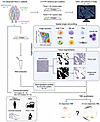 Figure 1
A schematic of the study design. Two sequential FFPE tumor tissue sections from 103 patients with advanced NSCLC, including those with tumors positive for EGFR-mutations or ALK-fusion genes, were subjected to mIHC. Subsequent spatial single-cell profiling using digital analysis aided in defining cell subsets in the tumor nest and intratumoral stroma. Gene expression analysis was performed via the nCounter platform if sufficient tumor tissue yielded good-quality RNA. All these data were integrated with clinical information, including survival outcomes, next-generation sequencing (NGS) results, and PD-L1 TPS to stratify ICI-responsive TME and nonresponsive TME.
To identify TME profiles responsible for these distinct responses to PD-1/PD-L1 inhibitors in mNSCLC, we built a highly informative platform using single-cell spatial profiling of pretreatment TME provided by our mIHC system, combined with transcriptomic analysis of the tumor tissues (Figure 1). In this mIHC system, ≥20 cell subsets were visualized and quantified as developed by our recent study (32) (Supplemental Table 3).
CD8+ T cells as an important lymphocytic cell subset responsible for durable response to PD-1/PD-L1 blockade therapy. Our platform enabled a precise quantification of different lymphocyte subsets, including CD8+ T cells, Tregs, and NK cells, in the same spaces (Supplemental Figure 3A). Although a prior AI-based evaluation of H&E stains of mNSCLC using large databases validated an association between intratumoral lymphocyte infiltration and improved ICI efficacy (12, 13), tumor-infiltrating T cell density only was not sufficient to predict a better response to PD-1/PD-L1 blockade therapy in our cohort (Figure 2A). Indeed, PFS curves did not exhibit a marked difference based on T cell density (Figure 2A). Further categorization of these T cells revealed that only CD8+ T cells were more infiltrated in tumors from patients with DCB, whereas non-CD8+ T cells were not entirely associated with the efficacy (Figure 2, B and C). Additionally, evaluation of these non-CD8+ T cells indicated that Th1 and NKT cells were not associated with the treatment efficacy (Supplemental Figure 3B). While Tregs were anticipated to counteract ICI response based on their immunosuppressive role (39, 40), our findings indicate that these cells were not clearly associated with early resistance to PD-1/PD-L1 inhibition. This observation held true even after considering the expression of PD-1 on Tregs (Figure 2D). The intratumoral cell density for non-T lymphocytes, such as NK and B cells, was similar based on the treatment efficacy (Supplemental Figure 3C).
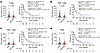 Figure 2
Association of intratumoral T cell density with ICI efficacy. (A–C) Densities of intratumoral T cells, CD8+ T cells, and CD8– T cells compared between the DCB (N = 30) and non-DCB (N = 49) groups (left) and Kaplan-Meier (KM) curves for PFS of ICI treatment stratified by cell densities (right). (D) Intratumoral Treg densities compared between the DCB and non-DCB groups (left) and KM curves for PFS of ICI treatment stratified by PD-1+ Treg density (right). Data are presented in violin plots in A–D; each dot represents 1 patient, and P values are indicated on horizontal bars. Two cases were not included in the left panels because DCB/non-DCB status could not be determined due to early censoring (<1 year) of PFS data. Vertical bars on the KM curves indicate censoring. P values of the violin plots and survival analyses were determined by Mann-Whitney U test and log-rank test, respectively.
These data suggest that CD8+ T cells are the most crucial tumor-infiltrating immune cell populations for enhancing immune cell–based cancer cell killing in response to clinical PD-1/PD-L1 inhibition.
Crucial spatial proximity: CD8+ T cells’ contact with cancer cells for durable PD-1/PD-L1 blockade response. Since intratumoral CD8+ T cell density did not sufficiently identify long-term responders, we further dissected a profile related to CD8+ TILs to identify more predictive features. Our digital pathology technology separated intratumoral regions into tumor cell nest area (TN) and intratumoral stromal area (ISA). Notably, cancer cells (pan-cytokeratin [panCK]+CD45−) were almost exclusively distributed in the TN area, whereas only the ISA harbored CAFs (panCK−CD45−FAP+) (Figure 3, A and B). Leukocytes or T lymphocytes were distributed in both regions, with a higher distribution in the ISA, suggesting a lesser tendency for immune cells to infiltrate into cancer cell nests, particularly for non-T leukocytes including myeloid, B, and NK cells (Figure 3C).
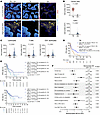 Figure 3
Association of spatial localization of tumor-infiltrating CD8+ T cells with ICI efficacy. (A) Representative mIHC images of the tumor tissues indicate that the tissue segmentation method confidently separates TN and ISA. Multicolor images of TN+ISA, TN, and ISA — with nucleus (blue), panCK (cyan), CD45 (red), and FAP (yellow) — are shown in the left, middle, and right columns, respectively. The boxed region is shown at a higher magnification in the bottom row. Scale bars: 300 μm (top), 100 μm (bottom). (B) Cell numbers of cancer cells (top) and CAFs (bottom) are compared between TN and ISA (N = 103). (C) Cell numbers of leukocytes (CD45+), T cells (CD45+CD3+), and CD3− leukocytes (CD45+CD3−) in TN and ISA (N = 103). (D) KM curves for PFS of ICI treatment are compared according to CD8+ TIL densities in TN. (E) KM curves for PFS (top) and OS (bottom) are compared according to CD8+ TIL densities in TN based on quartiles. (F) A forest plot of HRs estimated by multivariable Cox proportional hazards regression models for evaluation of the association of PFS for ICI treatment with the indicated biomarkers. Data are presented in violin plots in B and C, with each dot representing 1 patient. P values of the violin plots and survival analyses were determined by Mann-Whitney U test and log-rank test, respectively. Vertical bars on KM curves indicate censoring. ECOG-PS, Eastern Cooperative Oncology Group performance status.
Using this technology, we tested the importance of the spatial proximity of CD8+ TILs to cancer cells. Consequently, a higher density of CD8+ TILs in the TN was clearly associated with long-term responses to PD-1/PD-L1 blockade therapy (Figure 3D), highlighting the significance of physical contact between CD8+ TILs and cancer cells. Of note, a dose–response relationship between ICI efficacy and the CD8+ TIL density in TN was suggested, as shown in a subgroup analysis based on quartile values (Figure 3E). However, non-CD8+ lymphocytes (Th1, NK, NKT, and Tregs) were not associated with tumor response even with closer proximity to cancer cells (Supplemental Figure 4A). Of note, in agreement with the recent report that tumor-reactive CD8+ TILs colocalize with CD4+ T cells and Tregs at cancer cell nest-forming immunity hubs (41), densities of Th1 and Tregs were also strongly correlated with those of CD8+ TILs in TN in our study (Supplemental Figure 4B). Given that only CD8+ TIL density was predictive of ICI efficacy, however, the co-infiltration of such non-CD8+ T cells at the CD8+ TIL–cancer cell interface ultimately may not be crucial for ICI-induced antitumor efficacy.
To investigate why PD-L1 TPS was not strongly associated with ICI efficacy, we evaluated its relationship with CD8+ TIL density. PD-L1 staining on cancer cells has been regarded as a surrogate marker of IFN pathway activation, mainly driven by IFN-γ from cancer cell targeting CD8+ T cells (42). However, PD-L1 TPS did not accurately reflect CD8+ T cell infiltration in our cohort (Supplemental Figure 4C).
We performed a multivariable analysis considering heterogeneous clinical features, particularly for different treatment regimens (monotherapy or combination therapy) and treatment lines (early or late lines). We confirmed that the CD8+ TIL density in TN stands as an independent factor for ICI efficacy, irrespective of treatment backgrounds (HR, 1.79 [95% CI, 1.01–3.19]) (Figure 3F). However, such association became less apparent in the same multivariable analysis using CD8+ TIL density in ISA, reemphasizing the importance of spatial proximity between antitumor CD8+ TILs and cancer cells (Supplemental Figure 4D).
Features of exhausted yet functional CD8+ TILs linked to improve PD-1/PD-L1 inhibition response. We further investigated specific phenotypes of CD8+ TILs associated with durable tumor regression after PD-1/PD-L1 inhibition. We previously reported Trm-like CD8+ TILs characterized by a double positivity for both CD39 and CD103 as ICI-responsive T cells from a small cohort of patients with mNSCLC treated with PD-1/PD-L1 inhibitors (32). Therefore, we focused on this feature in the current larger NSCLC cohort. As expected, long-term disease control and short-term tumor response were more frequently observed in tumors with high Trm-like CD8+ TIL density (Figure 4A and Supplemental Figure 5A).
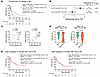 Figure 4
Association of CD8+ T cell features within TN with ICI efficacy. (A) KM curves for PFS of ICI treatment stratified by Trm-like (CD39+CD103+) CD8+ TIL density in TN. (B) Forest plot showing HRs for PFS estimated by multivariable Cox proportional hazards regression models evaluating the association between ICI efficacy and the indicated biomarkers. Other covariates not shown here are provided in the supplemental material. (C) Correlation between exhaustion marker positivity in CD8+ TILs in TN (LAG-3 vs. CD103 [left]; TIM-3 vs. CD39 [right]) (N = 80). One case was excluded because CD8+ T cells were absent, precluding positivity calculation. Pairwise correlations were calculated using Spearman’s correlation analysis. (D) LAG-3 (left) and TIM-3 (right) positivity in CD8+ TILs in TN compared between the DCB (N = 30) and non-DCB (N = 48) groups. Two cases were excluded because DCB/non-DCB status could not be determined due to early censoring (<1 year) of PFS data. Another case in the non-DCB group was excluded because CD8+ T cells were absent in the tumor, precluding positivity calculation. (E) KM curves for PFS stratified by LAG-3 or TIM-3 positivity in Trm-like CD8+ TILs in TN. Data are presented in violin plots in D, with each dot representing 1 patient; P values were determined by Mann-Whitney U test. P values for the survival analyses were determined by log-rank test. Vertical bars on KM curves indicate censoring.
To further clarify the importance of Trm-like CD8+ TILs in TN for ICI efficacy, additional analyses were performed. Not surprisingly, cell densities were entirely concordant between overall CD8+ TILs and Trm-like CD8+ TILs in TN (Supplemental Figure 5B). However, a multivariable analysis revealed that Trm-like CD8+ TIL density in the TN is a more important ICI efficacy marker independent of overall CD8+ TILs (Supplemental Figure 5C). As expected, Trm-like CD8+ TILs also existed in ISA (Supplemental Figure 5D), but no association was found between ICI efficacy and Trm-like CD8+ TIL density in the ISA (Figure 4B). These findings emphasize the importance of Trm-like CD8+ TILs in TN.
To address unavoidable heterogeneities regarding clinical and sample backgrounds such as treatment regimens (ICI monotherapy or ICI/chemotherapy combination) or sample collection methods (surgical biopsy or nonsurgical small biopsy), we performed additional subgroup analyses to further validate our findings. The association of ICI efficacy with Trm-like CD8+ TIL density was consistent regardless of treatment regimens (Supplemental Figure 6A). Tissue segmentation was feasible even for such small biopsy samples (Supplemental Figure 6B). Indeed, sample collection methods did not impact the association between ICI efficacy and Trm-like CD8+ TIL density (Supplemental Figure 6C). These findings support the proposition that the presence of Trm-like CD8+ TILs in the TN is universally important for robust ICI efficacy.
However, we noted that a subset of patients still experienced early disease progression despite having a high Trm-like CD8+ TIL density, as demonstrated in Figure 4A. Since persistent T cell receptor (TCR) exposure to cognate antigens leads to dysfunctional hyperexhaustion of the tumor-reactive CD8+ TILs (terminal exhaustion) as well as CD39 and CD103 expression (19), we hypothesized that the poor response to ICI treatment observed in a substantial number of patients, even with Trm-like CD8+ TILs in close contact to cancer cells, was attributable to the terminal exhaustion of these T cells, caused by repetitive or excessive TCR stimulation, rendering them less effectively reinvigorated by PD-1/PD-L1 inhibition. Indeed, Trm-like features were generally correlated with T cell exhaustion markers such as PD-1, lymphocyte activation gene 3 (LAG-3), and T cell immunoglobulin and mucin domain 3 (TIM-3) (Figure 4C and Supplemental Figure 7A). However, these exhaustion markers — considered to inhibit T cell functions (19) — were not suggestive of poor tumor control after PD-1/PD-L1 inhibitor therapy. Instead, they were associated with a long-term response, particularly for LAG-3 and TIM-3, implying that these molecules are still indirect evidence of T cell capacity to kill cancer cells, consistent with their induction through antigen recognition (19) (Figure 4D and Supplemental Figure 7B). Meanwhile, the correlation maps between Trm-like features (CD39/CD103) and other exhaustion markers (PD-1/LAG-3/TIM-3/T cell immunoreceptor with Ig and ITIM domains [TIGIT]) shown in Figure 4C and Supplemental Figure 7A also demonstrated heterogeneous expression of the exhaustion markers in Trm-like CD8+ TILs, particularly for PD-1 and TIGIT. This prompted us to investigate the association of these exhaustion markers with PD-1/PD-L1 inhibitor efficacy in the context of high Trm-like CD8+ TIL density. Even in this analysis, higher expression of these exhaustion markers in Trm-like CD8+ TILs did not clearly lead to poor treatment efficacy (Figure 4E and Supplemental Figure 7C).
Next, we conducted detailed phenotyping of CD8+ TILs within the TN, using other markers in our mIHC panels, to identify more functional subsets that retained responsiveness to ICI. T-box expressed in T cells (T-bet), which is a transcription factor induced by TCR activation, did not distinguish functional Trm-like CD8+ TILs from their nonfunctional counterparts (Supplemental Figure 7D). Granzyme B expression, which was expected to correlate directly with effective cancer cell killing by Trm-like CD8+ TILs, did not show an association with improved ICI efficacy (Supplemental Figure 7D). These findings suggest that the proteins examined are not capable of reflecting ICI-responsive residual CD8+ TIL functionality in TME. Further, the expression levels of these markers did not differ between Trm-like CD8+ TILs and non–Trm-like CD8+ TILs (Supplemental Figure 7E). Interestingly, Ki-67 expression, which is indicative of a substantial proliferation of CD8+ T cells likely due to persistent TCR pathway activation, was markedly higher in Trm-like CD8+ TILs than in non–Trm-like CD8+ TILs (Figure 5A). Given this observation, we expected Ki-67 as a biological marker to distinguish exhausted yet ICI-responsive CD8+ TILs from terminally exhausted nonresponsive CD8+ TILs among tumor-reactive Trm-like CD8+ TILs. Indeed, Ki-67 positivity was associated with better PFS in relation to Trm-like features (Figure 5B). As higher E/T ratios are crucial for enhanced tumoricidal effect by CD8+ TILs in immuno-oncology experimental studies, cell count ratios of CD8+ TILs to cancer cells were compared between DCB and non-DCB, confirming the aforementioned findings that superior TIL features are better predictors of DCB (Figure 5C).
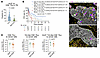 Figure 5
Association of Ki-67 expression in Trm-like CD8+ T cells with ICI efficacy. (A) Comparison of Ki-67 positivity between Trm-like (N = 74) and non–Trm-like (N = 76) CD8+ TILs in TN. Seven Trm-like and five non–Trm-like cases were excluded because the corresponding T cell populations were absent, precluding positivity calculation. (B) KM curves for PFS stratified by intratumoral Trm-like CD8+ TIL density and Ki-67 expression (left). Representative multicolor images (right) show CD8 (red), CD39 (yellow), CD103 (blue), Ki-67 (green), and panCK (gray) in a long-term ICI responder (top) and a nonresponder (bottom). Seven cases were excluded because Trm-like CD8+ TILs were absent, precluding positivity calculation. Arrows indicate overlaid color markers. Scale bars: 100 μm. (C) Cell count ratios of CD8+, Trm-like CD8+, and Ki-67+ Trm-like CD8+ TILs to cancer cells in TN compared between the DCB (N = 30) and non-DCB (N = 49) groups. Two cases were not included because DCB/non-DCB status could not be determined due to early censoring (<1 year) of PFS data. Data are presented in violin plots in A. Data are presented as mean ± SEM in dot plots in C. Each dot represents 1 patient, and P values were determined by Mann-Whitney U test. P values for the survival analyses were determined by log-rank test. Vertical bars on KM curves indicate censoring.
Collectively, Trm-like features, such as CD39 and CD103 positivity, might reflect an exhausted status of T cells due to a recent TCR activation, thus indicating a capability of CD8+ TILs to recognize cancer cells. Inhibitory exhaustion markers such as LAG-3, TIM-3, or TIGIT might also represent recent TCR activation and were not readily capable of identifying PD-1/PD-L1 inhibitor–resistant terminally exhausted T cells in clinical tumors. However, such ICI-resistant terminal exhaustion could instead be identified by lack of actual viability markers such as Ki-67 in recently activated CD8+ TILs.
Immunosuppressive myeloid cells and CAFs as unfavorable partners for tumor-reactive CD8+ TILs. Next, we evaluated the significance of nonlymphocytic immune cell subsets in TME on ICI efficacy in mNSCLC, such as TAMs, CAFs, and MDSCs.
Pan-TAM, characterized by CD68 positivity in nonlymphocytes, did not show an association with ICI efficacy (Figure 6A). CD163+ M2-TAM was not apparently associated with poor ICI efficacy (Supplemental Figure 8A). However, CD206+ M2-TAM was linked with worse survival outcomes, consistent with its immunosuppressive and tumorigenic role in TME (43) (Figure 6B). Expression of CD163 on TAM did not additionally impact PFS, suggesting CD206 as a better marker for M2-TAM (Supplemental Figure 8B). The presence of CD206+ M2-TAM rendered Trm-like CD8+ TILs less responsive to ICI treatment, even in close contact with cancer cells (Figure 6C).
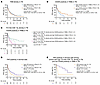 Figure 6
Association of TAMs and CAFs with ICI efficacy. (A) KM curves for PFS of ICI treatment stratified by TAM density in TN. (B) KM curves for PFS of ICI treatment stratified by CD206 positivity in TAMs. (C) KM curves for PFS of ICI treatment stratified by Trm-like CD8+ TIL density in TN and CD206 positivity in TAMs. (D) KM curves for PFS of ICI treatment stratified by FAP positivity in panCK−CD45− cells in the ISA. (E) KM curves for PFS of ICI treatment stratified by FAP positivity in the stromal cells among tumors with high Trm-like CD8+ TIL density and low CD206 positivity in TAMs in TN. Eight cases were excluded in B and C because CD68+ TAMs were absent in the tumors; therefore, denominators could not be provided for positivity calculation. P values for the survival analyses were determined by log-rank test. Vertical bars on KM curves indicate censoring.
CAFs, defined by fibroblast activation protein (FAP) positivity in the ISA, exhibited a slight association with disease progression during ICI treatment, consistent with its suggested involvement in immunosuppression and cancer cell aggressiveness in preclinical studies (44) (Figure 6D). Lack of association of CAF density with both Trm-like CD8+ TIL density and CD206+ M2-TAM density in TN suggested a direct immunosuppressive effect of CAF, unrelated to the prevention of tumor-reactive CD8+ T cell infiltration or contribution of M2-TAM accumulation into TN (Supplemental Figure 8C). Therefore, we further interrogated the association of CAF with ICI efficacy in patients with favorable pretreatment TME profiles such as high Trm-like CD8+ TIL density and low CD206+ M2-TAM density. Of note, FAP+ CAF clearly distinguished long-term responders from poor responders in this particular subset (Figure 6E).
MDSCs have been considered another contributor to the immunosuppressive TME, according to previous studies; thus, this cell subset was expected to be a negative prognostic factor for ICI efficacy (45). However, the MDSC density was not different between responders and nonresponders, at least in our cohort (Supplemental Figure 8D). Intratumoral professional APCs, such as M1-TAMs and DCs, were also visualized and quantified. In accordance with a recent report (41), DCs were preferentially coexistent with Trm-like CD8+ TILs in TN in our study (Supplemental Figure 8E). However, these cell lineages were not associated with ICI response (Supplemental Figure 8F).
TME features are summarized alongside the clinicopathologic/genomic features in Figure 7A. The ICI cohort is subcategorized by unsupervised hierarchical clustering based on key cell subsets, including functional (Ki-67+) tumor-reactive (CD39+CD103+) CD8+ TILs, immunosuppressive (CD206+) M2-TAMs, and immunosuppressive (FAP+) CAFs, thereby highlighting patients in clusters 2 and 6 as having more favorable TMEs (fTMEs), such as substantial functional tumor-reactive CD8+ TILs without immunosuppressive M2-TAMs or CAFs (Figure 7, B and C). These mathematically extracted subcohorts also exhibited better ICI efficacy, thus confirming our hypothesis (Figure 7D). Presumably, antitumor effect of tumor-reactive CD8+ TILs with cellular contact with cancer cells might be abrogated by the juxtaposed immunosuppressive cells, such as CD206+ M2-TAMs or FAP+ CAFs. To examine whether this association varied by cancer cell biology, we performed subgroup analyses by histology (squamous or nonsquamous) and oncogenic driver status (EGFR-mutations, non-EGFR/ALK driver oncogenes, or no apparent driver oncogenes). Although the number of cases in each subgroup was limited, the predictive feature of this multicellular TME profiling for ICI efficacy appeared consistent across histologic and genomic features (Supplemental Figure 9).
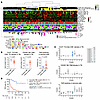 Figure 7
Association of intratumoral immune–stromal contexture with ICI efficacy. (A) Unsupervised hierarchical clustering results of ICI cohort according to Ki-67+ Trm-like CD8+ TIL density, CD206+ TAM density, and FAP positivity in stromal cells are visualized as a heatmap. Each tile represents the z score for key TME features (yellow, highest; black, median; blue, lowest). Additional mIHC-derived TME features are shown in a second heatmap (red, highest; black, median; green, lowest). Clinicopathologic characteristics and PFS for each patient are shown below the heatmaps. (B) Ki-67+ Trm-like CD8+ TIL density, CD206+ M2-TAM density, and FAP positivity in stromal cells compared between patients in clusters 2 and 6 (N = 11) and those in other clusters (N = 70). (C) The z scores for Ki-67+ Trm-like CD8+ TIL density (top), CD206+ M2-TAM density (middle), and FAP positivity in stromal cells (bottom) across all 10 clusters. (D) KM curves for PFS of ICI treatment comparing favorable (clusters 2 and 6) and unfavorable (other clusters) TME. Data are presented in violin plots in C. Each dot represents 1 patient in B and C. Data are presented as mean ± SEM in dot plots. P values for dot plots and survival analyses were determined by Mann-Whitney U test and log-rank test, respectively. Vertical bars on KM curves indicate censoring. Mono, monotherapy; chemo, chemotherapy; Adeno, adenocarcinoma; Sq, squamous cell carcinoma; Adeno-sq, adenosquamous.
We next sought an independent external cohort to test the validity of our findings. Spatial single-cell proteotyping of a substantial number of patients with mNSCLC, at this depth and with corresponding ICI treatment efficacy data, is not publicly available to date. Therefore, we utilized a bulk RNA-seq database from the SU2CLC-MGH cohort (46). CD8B, MRC1, and FAP were used, as they are relatively dominant in each cell type (CD8+ TILs, CD206+ M2-TAMs, and CAFs, respectively). Each gene was only partially associated with ICI efficacy (Supplemental Figure 10A). This was anticipated given that this bulk transcriptome data lack spatial, protein-level, and single-cell-level information as opposed to our platform. In particular, the subtle nuance characterized by Ki-67+ Trm-like CD8+ TILs in TN cannot be delineated from this approach. However, a composite profile (CD8BhiMRC1loFAPlo) mimicking the fTME showed a better tendency toward ICI efficacy (Supplemental Figure 10B). This also illustrates that high-depth but labor-intensive spatial single-cell proteotyping, underpinned by prior immuno-oncology knowledge, can guide reliable models using low-resolution, indiscriminate, yet practical platforms, such as bulk transcriptome assays.
To explore underlying potential mechanisms causing the difference between the fTME and unfavorable TME (ufTME), we performed nCounter IO360 transcriptome analysis. Twenty-two pre–ICI treatment tumors that had sufficient archival tissue amenable to good quality mRNA extraction were evaluated. Note that only 4 samples were available from the fTME for this analysis. As expected, genes related to activated T cells were upregulated in the fTME, whereas those related to myeloid cells and stromal cells were upregulated in the ufTME (Supplemental Figure 11). Several potential therapeutic targets for the ufTME were suggested, including AREG, DPP4, ANGPTL4, and VEGFA. Despite the small sample size, this might provide a clue for future research.
The predictive values of TME profiles examined in our mIHC study for PFS during ICI treatment are summarized in Figure 8. This underscored the importance of CD8+ TILs instead of other immune cells, the residual antitumor reactivity of the CD8+ TILs, a physical contact of those cells with cancer cells, absence of M2-TAMs and immunosuppressive CAFs, and ultimately co-occurrence of all of these profiles.
Immunosuppressive TME characterized by M2-TAM infiltration and aberrant angiogenesis/TGF-β signaling in EGFR/ALK-oncogene+ NSCLC in relation to CD73 expression. Next, we dissected TME profiles of EGFR/ALK-oncogene+ NSCLC, which are confirmed by our cohort to be primarily resistant to ICI therapy (Supplemental Figure 2F), to further identify unique features associated with such poor ICI response in this distinctive NSCLC subset. Patient characteristics for this subset are provided in Supplemental Table 4. As expected, the majority of cases with driver oncogene+ NSCLC were individuals who had never smoked and exhibited nonsquamous histology, thus representing classical EGFR/ALK-oncogene+ NSCLC (Supplemental Figure 12A). Indeed, the clinically available PD-L1 TPS was lower in EGFR/ALK-oncogene+ NSCLC than in EGFR/ALK-wt NSCLC, aligning with previous findings (35, 47) (Figure 9A). However, CD8+ TIL density did not show a considerable difference between EGFR/ALK-oncogene+ NSCLC and EGFR/ALK-wt NSCLC, in both TN and ISA (Figure 9B and Supplemental Figure 12B). Similarly, Trm-like CD8+ TIL density in TN was comparable between these 2 NSCLC subtypes (Figure 9C). These findings suggest that the tolerance of EGFR/ALK-oncogene+ NSCLC to ICI therapy is not solely due to a fundamental deficiency in neoantigen-reactive T cells. However, functional Trm-like CD8+ TILs, indicated by Ki-67 expression, were diminished in these tumor types, suggesting potential mechanisms hindering CD8+ TIL function (Figure 9D).
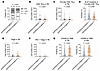 Figure 9
TME features of EGFR/ALK-oncogene+ NSCLC. (A) PD-L1 TPS compared between EGFR/ALK-oncogene– tumors (N = 65) and EGFR/ALK-oncogene+ tumors (N = 22). Six EGFR/ALK-oncogene– cases and 10 EGFR/ALK-oncogene+ cases were excluded due to unavailable PD-L1 TPS data. (B and C) CD8+ T cell densities (B) and Trm-like CD8+ T cell densities (C) in TN compared between EGFR/ALK-oncogene– tumors (N = 71) and EGFR/ALK-oncogene+ tumors (N = 32). (D) Ki-67 positivity in Trm-like CD8+ T cells in TN compared between EGFR/ALK-oncogene– tumors (N = 64) and EGFR/ALK-oncogene+ tumors (N = 32). Seven EGFR/ALK-oncogene– cases were excluded because Trm-like CD8+ TILs were absent, precluding positivity calculation. (E and F) Treg densities (E) and PD-1+ Treg densities (F) in TN compared between EGFR/ALK-oncogene– tumors (N = 71) and EGFR/ALK-oncogene+ tumors (N = 32). (G) CD206+ TAM densities in TN and ISA compared between EGFR/ALK-oncogene– tumors (N = 65 for TN; N = 71 for ISA) and EGFR/ALK-oncogene+ tumors (N = 29 for TN; N = 31 for ISA). Cases were excluded if CD68+ TAMs were absent, precluding positivity calculation (6 cases in TN of EGFR/ALK-oncogene– tumors, 3 cases in TN of EGFR/ALK-oncogene+ tumors, and 1 case in ISA of EGFR/ALK-oncogene+ tumors). Data are presented in violin plots in B–G, with each dot representing 1 patient; tumors with EGFR-mutations are colored red, and those with ALK-fusions are colored green. P values were determined by Fisher’s exact test in A and Mann-Whitney U test in B–G.
Intratumoral Treg density did not differ based on EGFR/ALK-oncogene status in both TN and ISA (Figure 9E and Supplemental Figure 12C), even when considering PD-1 expression on Tregs (Figure 9F and Supplemental Figure 12D), implying a limited role for Tregs in ICI resistance in this specific tumor within our mNSCLC cohort. Next, we investigated the involvement of other immunosuppressive cells, such as M2-TAMs and MDSCs. Intriguingly, CD206+ M2-TAMs were more infiltrated into both TN and ISA in EGFR/ALK-oncogene+ NSCLC than in EGFR/ALK-oncogene– NSCLC for these gene alterations (Figure 9G), although MDSC density was not different (Supplemental Figure 12E).
To further dissect TME profiles based on these ICI-resistant driver oncogenes, we compared transcriptomic profiles. In addition to the 22 tumors analyzed in Supplemental Figure 11, 5 additional non–ICI-treated EGFR-mutant tumors were added. Signature scores for MAPK and NF-κB signaling pathways were expectedly increased in EGFR-mutant NSCLC compared with EGFR-wt NSCLC, in agreement with EGFR downstream pathway activation caused by activating EGFR-mutations (48) (Supplemental Figure 12F). Differentially expressed genes are shown in Figure 10A and Supplemental Figure 12G. Consistent with the mIHC data, CD8A, CD8B, and FOXP3 genes were similarly expressed between tumor samples from EGFR-mutant NSCLC and EGFR-wt NSCLC (Figure 10B). GSEA showed that antigen presentation machinery was not suppressed in our EGFR-mutant NSCLC (Figure 10C), thus supporting the notion that EGFR-mutant NSCLC is potentially capable of being recognized by CD8+ TILs, as also evidenced by the existence of Trm-like CD8+ TILs in TN in Figure 9C. In contrast, signatures for angiogenesis and TGF-β signaling were upregulated in EGFR-mutant NSCLC (Figure 10D), consistent with the higher M2-TAM infiltration in this tumor type, as shown in Figure 9G. Among the upregulated genes listed in Figure 10A, we focused on the NT5E gene (Figure 10E), whose protein CD73 was visualized using mIHC. Indeed, CD73 protein from cancer cells was more frequently expressed in EGFR/ALK-oncogene+ NSCLC than in EGFR/ALK-wt NSCLC (Figure 10F), which might be at least partially responsible for the M2-TAM/angiogenesis/TGF-β circuit due to adenosine production via the ATP/CD73 pathway (49). Of note, the EGFR-mutant NSCLC exhibited an increased autophagy signature, consistent with EGFR-mediated MAPK pathway activation (50), which may reflect enhanced ATP availability (51–53) and thereby more effective activation of the CD73 pathway in this NSCLC subtype (Figure 10G).
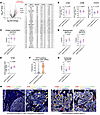 Figure 10
EGFR-mutation–associated gene expression and spatial immune features. (A) Volcano plot showing −log10(P value) and log2(fold change [FC]) of gene expression levels (EGFR-mutant [N = 9] vs. EGFR-wt [N = 18]) for 726 genes (left). The top 30 upregulated genes in EGFR-mutation+ tumors are listed with q values (right), ranked by the log2(FC). (B) Gene expression levels of CD8A, CD8B, and FOXP3 compared between EGFR-mutation– NSCLC (N = 18) and EGFR-mutation+ NSCLC (N = 9). (C and D) Gene expression signature scores (antigen presentation, angiogenesis, and TGF-β signaling) compared between EGFR-mutation– NSCLC (N = 18) and EGFR-mutation+ NSCLC (N = 9). (E) Gene expression levels of NT5E compared between EGFR-mutation– NSCLC (N = 18) and EGFR-mutation+ NSCLC (N = 9). (F) CD73 protein positivity in cancer cells compared between EGFR/ALK-oncogene– tumors (N = 71) and EGFR/ALK-oncogene+ tumors (N = 32). (G) Autophagy signature scores compared between EGFR-mutation– NSCLC (N = 18) and EGFR-mutation+ NSCLC (N = 9). (H) Representative mIHC images of M2-TAM (CD68+CD206+), CD73-expressing cancer cells, Trm-like (CD39+CD103+) CD8+ T cells, and Tregs (FOXP3+) are shown for EGFR-wt NSCLC (left) and EGFR-oncogene+ NSCLC (right). The EGFR-oncogene+ NSCLC presented a higher intratumoral M2-TAM infiltration and CD73 expression on cancer cells compared with the WT tumors. Substantial Trm-like CD8+ T cell infiltration was verified in the EGFR-oncogene+ tumor as equivalent to the WT tumor. Treg densities were comparable between the 2 distinctive tumor types. Arrows represent overlaid color markers. Scale bars: 100 μm. Data are presented in violin plots in F, with each dot representing 1 patient; tumors with EGFR-mutations are colored red, and those with ALK-fusions are colored green. Data are presented as mean ± SEM in dot plots in B–E and G. P values were determined by unpaired 2-tailed t tests in A and Mann-Whitney U test in B–G.
To validate our transcriptome findings, publicly available RNA-seq data were obtained from the lung adenocarcinoma and lung squamous cell carcinoma cohorts in The Cancer Genome Atlas (TCGA) (54), comprising 64 EGFR/ALK-oncogene+ tumors including 59 EGFR-mutant cases and 927 EGFR/ALK-wt tumors (Supplemental Figure 13A). As expected, differential gene expression analysis confirmed that NT5E expression level was apparently higher in EGFR/ALK-oncogene+ tumors than in EGFR/ALK-wt tumors, as this gene was ranked as a top 1.9 percentile upregulated gene (Supplemental Figure 13B). Gene expression levels regarding angiogenesis and TGF-β pathway, such as those for VEGF ligands, TGF-β ligands and TGF-β receptors, were also compared between these tumor types, indicating higher expression of VEGFB, TGFB2, and TGFBR2 in EGFR/ALK-oncogene+ tumors (Supplemental Figure 13C). Of note, MRC1 (CD206 gene) was also apparently upregulated in EGFR/ALK-oncogene+ tumors (as a top 3.1 percentile upregulated gene) (Supplemental Figure 13D). These data collectively corroborate findings from our original cohort.
Overall, a general tolerance of EGFR/ALK-oncogene+ NSCLC to PD-1/PD-L1 inhibitor therapy is likely to be due to its unique immunosuppressive TME, as characterized by aberrant angiogenesis and TGF-β upregulation as well as M2-TAM accumulation, rather than intratumoral infiltration of Tregs or scarcity of tumor-reactive CD8+ T cells, which might be attributable to CD73/adenosine pathway activation predominantly caused by EGFR-activated cancer cells (Figure 10H).


Copyright © 2026 American Society for Clinical Investigation
ISSN: 0021-9738 (print), 1558-8238 (online)