
Advertisement
Research ArticleCell biologyOncology
Open Access |  10.1172/JCI191040
PIM3-mediated phosphorylation stabilizes myeloid leukemia factor 2 to promote metastasis in osteosarcoma
Cuiling Zeng,1 Xin Wang,1 Jinkun Zhong,1 Yu Zhang,2 Ju Deng,1 Wenqiang Liu,1 Weixuan Chen,1 Xinhao Yu,1 Dian Lin,1 Ruhua Zhang,1 Shang Wang,3 Jianpei Lao,1 Qi Zhao,1 Li Zhong,4 Tiebang Kang,1 and Dan Liao1
1Sun Yat-sen University Cancer Center, State Key Laboratory of Oncology in South China, Guangdong Provincial Clinical Research Center for Cancer, Collaborative Innovation Center for Cancer Medicine, Guangzhou, China.
2Molecular Cancer Research Center, School of Medicine, Shenzhen Campus of Sun Yat-Sen University, Sun Yat-Sen University, Shenzhen, China.
3Shenzhen Institute of Synthetic Biology, Shenzhen Institutes of Advanced Technology, Chinese Academy of Sciences, Shenzhen, China.
4Center of Digestive Diseases, Scientific Research Center, The Seventh Affiliated Hospital, Sun Yat-sen University, Shenzhen, China.
Address correspondence to: Dan Liao or Tiebang Kang, Sun Yat-sen University Cancer Center, 651 Dongfeng Road East, Yuexiu District, Guangzhou, 510060, China. Phone: 86.020.87343182; Email: liaodan@sysucc.org.cn (D Liao). Phone: 86.020.87343183; Email: kangtb@sysucc.org.cn (TK). Or to: Li Zhong, The Seventh Affiliated Hospital, Sun Yat-sen University, No.628, Zhenyuan Road, Guangming (New) District, Shenzhen, 518107, China. Phone: 86.020.84115962; Email: zhongli@sysush.com.
Authorship note: CZ and XW contributed equally to this work.
Find articles by Zeng, C. in: PubMed | Google Scholar
1Sun Yat-sen University Cancer Center, State Key Laboratory of Oncology in South China, Guangdong Provincial Clinical Research Center for Cancer, Collaborative Innovation Center for Cancer Medicine, Guangzhou, China.
2Molecular Cancer Research Center, School of Medicine, Shenzhen Campus of Sun Yat-Sen University, Sun Yat-Sen University, Shenzhen, China.
3Shenzhen Institute of Synthetic Biology, Shenzhen Institutes of Advanced Technology, Chinese Academy of Sciences, Shenzhen, China.
4Center of Digestive Diseases, Scientific Research Center, The Seventh Affiliated Hospital, Sun Yat-sen University, Shenzhen, China.
Address correspondence to: Dan Liao or Tiebang Kang, Sun Yat-sen University Cancer Center, 651 Dongfeng Road East, Yuexiu District, Guangzhou, 510060, China. Phone: 86.020.87343182; Email: liaodan@sysucc.org.cn (D Liao). Phone: 86.020.87343183; Email: kangtb@sysucc.org.cn (TK). Or to: Li Zhong, The Seventh Affiliated Hospital, Sun Yat-sen University, No.628, Zhenyuan Road, Guangming (New) District, Shenzhen, 518107, China. Phone: 86.020.84115962; Email: zhongli@sysush.com.
Authorship note: CZ and XW contributed equally to this work.
Find articles by Wang, X. in: PubMed | Google Scholar
1Sun Yat-sen University Cancer Center, State Key Laboratory of Oncology in South China, Guangdong Provincial Clinical Research Center for Cancer, Collaborative Innovation Center for Cancer Medicine, Guangzhou, China.
2Molecular Cancer Research Center, School of Medicine, Shenzhen Campus of Sun Yat-Sen University, Sun Yat-Sen University, Shenzhen, China.
3Shenzhen Institute of Synthetic Biology, Shenzhen Institutes of Advanced Technology, Chinese Academy of Sciences, Shenzhen, China.
4Center of Digestive Diseases, Scientific Research Center, The Seventh Affiliated Hospital, Sun Yat-sen University, Shenzhen, China.
Address correspondence to: Dan Liao or Tiebang Kang, Sun Yat-sen University Cancer Center, 651 Dongfeng Road East, Yuexiu District, Guangzhou, 510060, China. Phone: 86.020.87343182; Email: liaodan@sysucc.org.cn (D Liao). Phone: 86.020.87343183; Email: kangtb@sysucc.org.cn (TK). Or to: Li Zhong, The Seventh Affiliated Hospital, Sun Yat-sen University, No.628, Zhenyuan Road, Guangming (New) District, Shenzhen, 518107, China. Phone: 86.020.84115962; Email: zhongli@sysush.com.
Authorship note: CZ and XW contributed equally to this work.
Find articles by Zhong, J. in: PubMed | Google Scholar
1Sun Yat-sen University Cancer Center, State Key Laboratory of Oncology in South China, Guangdong Provincial Clinical Research Center for Cancer, Collaborative Innovation Center for Cancer Medicine, Guangzhou, China.
2Molecular Cancer Research Center, School of Medicine, Shenzhen Campus of Sun Yat-Sen University, Sun Yat-Sen University, Shenzhen, China.
3Shenzhen Institute of Synthetic Biology, Shenzhen Institutes of Advanced Technology, Chinese Academy of Sciences, Shenzhen, China.
4Center of Digestive Diseases, Scientific Research Center, The Seventh Affiliated Hospital, Sun Yat-sen University, Shenzhen, China.
Address correspondence to: Dan Liao or Tiebang Kang, Sun Yat-sen University Cancer Center, 651 Dongfeng Road East, Yuexiu District, Guangzhou, 510060, China. Phone: 86.020.87343182; Email: liaodan@sysucc.org.cn (D Liao). Phone: 86.020.87343183; Email: kangtb@sysucc.org.cn (TK). Or to: Li Zhong, The Seventh Affiliated Hospital, Sun Yat-sen University, No.628, Zhenyuan Road, Guangming (New) District, Shenzhen, 518107, China. Phone: 86.020.84115962; Email: zhongli@sysush.com.
Authorship note: CZ and XW contributed equally to this work.
Find articles by Zhang, Y. in: PubMed | Google Scholar
1Sun Yat-sen University Cancer Center, State Key Laboratory of Oncology in South China, Guangdong Provincial Clinical Research Center for Cancer, Collaborative Innovation Center for Cancer Medicine, Guangzhou, China.
2Molecular Cancer Research Center, School of Medicine, Shenzhen Campus of Sun Yat-Sen University, Sun Yat-Sen University, Shenzhen, China.
3Shenzhen Institute of Synthetic Biology, Shenzhen Institutes of Advanced Technology, Chinese Academy of Sciences, Shenzhen, China.
4Center of Digestive Diseases, Scientific Research Center, The Seventh Affiliated Hospital, Sun Yat-sen University, Shenzhen, China.
Address correspondence to: Dan Liao or Tiebang Kang, Sun Yat-sen University Cancer Center, 651 Dongfeng Road East, Yuexiu District, Guangzhou, 510060, China. Phone: 86.020.87343182; Email: liaodan@sysucc.org.cn (D Liao). Phone: 86.020.87343183; Email: kangtb@sysucc.org.cn (TK). Or to: Li Zhong, The Seventh Affiliated Hospital, Sun Yat-sen University, No.628, Zhenyuan Road, Guangming (New) District, Shenzhen, 518107, China. Phone: 86.020.84115962; Email: zhongli@sysush.com.
Authorship note: CZ and XW contributed equally to this work.
Find articles by Deng, J. in: PubMed | Google Scholar
1Sun Yat-sen University Cancer Center, State Key Laboratory of Oncology in South China, Guangdong Provincial Clinical Research Center for Cancer, Collaborative Innovation Center for Cancer Medicine, Guangzhou, China.
2Molecular Cancer Research Center, School of Medicine, Shenzhen Campus of Sun Yat-Sen University, Sun Yat-Sen University, Shenzhen, China.
3Shenzhen Institute of Synthetic Biology, Shenzhen Institutes of Advanced Technology, Chinese Academy of Sciences, Shenzhen, China.
4Center of Digestive Diseases, Scientific Research Center, The Seventh Affiliated Hospital, Sun Yat-sen University, Shenzhen, China.
Address correspondence to: Dan Liao or Tiebang Kang, Sun Yat-sen University Cancer Center, 651 Dongfeng Road East, Yuexiu District, Guangzhou, 510060, China. Phone: 86.020.87343182; Email: liaodan@sysucc.org.cn (D Liao). Phone: 86.020.87343183; Email: kangtb@sysucc.org.cn (TK). Or to: Li Zhong, The Seventh Affiliated Hospital, Sun Yat-sen University, No.628, Zhenyuan Road, Guangming (New) District, Shenzhen, 518107, China. Phone: 86.020.84115962; Email: zhongli@sysush.com.
Authorship note: CZ and XW contributed equally to this work.
Find articles by Liu, W. in: PubMed | Google Scholar
1Sun Yat-sen University Cancer Center, State Key Laboratory of Oncology in South China, Guangdong Provincial Clinical Research Center for Cancer, Collaborative Innovation Center for Cancer Medicine, Guangzhou, China.
2Molecular Cancer Research Center, School of Medicine, Shenzhen Campus of Sun Yat-Sen University, Sun Yat-Sen University, Shenzhen, China.
3Shenzhen Institute of Synthetic Biology, Shenzhen Institutes of Advanced Technology, Chinese Academy of Sciences, Shenzhen, China.
4Center of Digestive Diseases, Scientific Research Center, The Seventh Affiliated Hospital, Sun Yat-sen University, Shenzhen, China.
Address correspondence to: Dan Liao or Tiebang Kang, Sun Yat-sen University Cancer Center, 651 Dongfeng Road East, Yuexiu District, Guangzhou, 510060, China. Phone: 86.020.87343182; Email: liaodan@sysucc.org.cn (D Liao). Phone: 86.020.87343183; Email: kangtb@sysucc.org.cn (TK). Or to: Li Zhong, The Seventh Affiliated Hospital, Sun Yat-sen University, No.628, Zhenyuan Road, Guangming (New) District, Shenzhen, 518107, China. Phone: 86.020.84115962; Email: zhongli@sysush.com.
Authorship note: CZ and XW contributed equally to this work.
Find articles by Chen, W. in: PubMed | Google Scholar
1Sun Yat-sen University Cancer Center, State Key Laboratory of Oncology in South China, Guangdong Provincial Clinical Research Center for Cancer, Collaborative Innovation Center for Cancer Medicine, Guangzhou, China.
2Molecular Cancer Research Center, School of Medicine, Shenzhen Campus of Sun Yat-Sen University, Sun Yat-Sen University, Shenzhen, China.
3Shenzhen Institute of Synthetic Biology, Shenzhen Institutes of Advanced Technology, Chinese Academy of Sciences, Shenzhen, China.
4Center of Digestive Diseases, Scientific Research Center, The Seventh Affiliated Hospital, Sun Yat-sen University, Shenzhen, China.
Address correspondence to: Dan Liao or Tiebang Kang, Sun Yat-sen University Cancer Center, 651 Dongfeng Road East, Yuexiu District, Guangzhou, 510060, China. Phone: 86.020.87343182; Email: liaodan@sysucc.org.cn (D Liao). Phone: 86.020.87343183; Email: kangtb@sysucc.org.cn (TK). Or to: Li Zhong, The Seventh Affiliated Hospital, Sun Yat-sen University, No.628, Zhenyuan Road, Guangming (New) District, Shenzhen, 518107, China. Phone: 86.020.84115962; Email: zhongli@sysush.com.
Authorship note: CZ and XW contributed equally to this work.
Find articles by Yu, X. in: PubMed | Google Scholar
1Sun Yat-sen University Cancer Center, State Key Laboratory of Oncology in South China, Guangdong Provincial Clinical Research Center for Cancer, Collaborative Innovation Center for Cancer Medicine, Guangzhou, China.
2Molecular Cancer Research Center, School of Medicine, Shenzhen Campus of Sun Yat-Sen University, Sun Yat-Sen University, Shenzhen, China.
3Shenzhen Institute of Synthetic Biology, Shenzhen Institutes of Advanced Technology, Chinese Academy of Sciences, Shenzhen, China.
4Center of Digestive Diseases, Scientific Research Center, The Seventh Affiliated Hospital, Sun Yat-sen University, Shenzhen, China.
Address correspondence to: Dan Liao or Tiebang Kang, Sun Yat-sen University Cancer Center, 651 Dongfeng Road East, Yuexiu District, Guangzhou, 510060, China. Phone: 86.020.87343182; Email: liaodan@sysucc.org.cn (D Liao). Phone: 86.020.87343183; Email: kangtb@sysucc.org.cn (TK). Or to: Li Zhong, The Seventh Affiliated Hospital, Sun Yat-sen University, No.628, Zhenyuan Road, Guangming (New) District, Shenzhen, 518107, China. Phone: 86.020.84115962; Email: zhongli@sysush.com.
Authorship note: CZ and XW contributed equally to this work.
Find articles by Lin, D. in: PubMed | Google Scholar
1Sun Yat-sen University Cancer Center, State Key Laboratory of Oncology in South China, Guangdong Provincial Clinical Research Center for Cancer, Collaborative Innovation Center for Cancer Medicine, Guangzhou, China.
2Molecular Cancer Research Center, School of Medicine, Shenzhen Campus of Sun Yat-Sen University, Sun Yat-Sen University, Shenzhen, China.
3Shenzhen Institute of Synthetic Biology, Shenzhen Institutes of Advanced Technology, Chinese Academy of Sciences, Shenzhen, China.
4Center of Digestive Diseases, Scientific Research Center, The Seventh Affiliated Hospital, Sun Yat-sen University, Shenzhen, China.
Address correspondence to: Dan Liao or Tiebang Kang, Sun Yat-sen University Cancer Center, 651 Dongfeng Road East, Yuexiu District, Guangzhou, 510060, China. Phone: 86.020.87343182; Email: liaodan@sysucc.org.cn (D Liao). Phone: 86.020.87343183; Email: kangtb@sysucc.org.cn (TK). Or to: Li Zhong, The Seventh Affiliated Hospital, Sun Yat-sen University, No.628, Zhenyuan Road, Guangming (New) District, Shenzhen, 518107, China. Phone: 86.020.84115962; Email: zhongli@sysush.com.
Authorship note: CZ and XW contributed equally to this work.
Find articles by Zhang, R. in: PubMed | Google Scholar
1Sun Yat-sen University Cancer Center, State Key Laboratory of Oncology in South China, Guangdong Provincial Clinical Research Center for Cancer, Collaborative Innovation Center for Cancer Medicine, Guangzhou, China.
2Molecular Cancer Research Center, School of Medicine, Shenzhen Campus of Sun Yat-Sen University, Sun Yat-Sen University, Shenzhen, China.
3Shenzhen Institute of Synthetic Biology, Shenzhen Institutes of Advanced Technology, Chinese Academy of Sciences, Shenzhen, China.
4Center of Digestive Diseases, Scientific Research Center, The Seventh Affiliated Hospital, Sun Yat-sen University, Shenzhen, China.
Address correspondence to: Dan Liao or Tiebang Kang, Sun Yat-sen University Cancer Center, 651 Dongfeng Road East, Yuexiu District, Guangzhou, 510060, China. Phone: 86.020.87343182; Email: liaodan@sysucc.org.cn (D Liao). Phone: 86.020.87343183; Email: kangtb@sysucc.org.cn (TK). Or to: Li Zhong, The Seventh Affiliated Hospital, Sun Yat-sen University, No.628, Zhenyuan Road, Guangming (New) District, Shenzhen, 518107, China. Phone: 86.020.84115962; Email: zhongli@sysush.com.
Authorship note: CZ and XW contributed equally to this work.
Find articles by Wang, S. in: PubMed | Google Scholar
1Sun Yat-sen University Cancer Center, State Key Laboratory of Oncology in South China, Guangdong Provincial Clinical Research Center for Cancer, Collaborative Innovation Center for Cancer Medicine, Guangzhou, China.
2Molecular Cancer Research Center, School of Medicine, Shenzhen Campus of Sun Yat-Sen University, Sun Yat-Sen University, Shenzhen, China.
3Shenzhen Institute of Synthetic Biology, Shenzhen Institutes of Advanced Technology, Chinese Academy of Sciences, Shenzhen, China.
4Center of Digestive Diseases, Scientific Research Center, The Seventh Affiliated Hospital, Sun Yat-sen University, Shenzhen, China.
Address correspondence to: Dan Liao or Tiebang Kang, Sun Yat-sen University Cancer Center, 651 Dongfeng Road East, Yuexiu District, Guangzhou, 510060, China. Phone: 86.020.87343182; Email: liaodan@sysucc.org.cn (D Liao). Phone: 86.020.87343183; Email: kangtb@sysucc.org.cn (TK). Or to: Li Zhong, The Seventh Affiliated Hospital, Sun Yat-sen University, No.628, Zhenyuan Road, Guangming (New) District, Shenzhen, 518107, China. Phone: 86.020.84115962; Email: zhongli@sysush.com.
Authorship note: CZ and XW contributed equally to this work.
Find articles by Lao, J. in: PubMed | Google Scholar
1Sun Yat-sen University Cancer Center, State Key Laboratory of Oncology in South China, Guangdong Provincial Clinical Research Center for Cancer, Collaborative Innovation Center for Cancer Medicine, Guangzhou, China.
2Molecular Cancer Research Center, School of Medicine, Shenzhen Campus of Sun Yat-Sen University, Sun Yat-Sen University, Shenzhen, China.
3Shenzhen Institute of Synthetic Biology, Shenzhen Institutes of Advanced Technology, Chinese Academy of Sciences, Shenzhen, China.
4Center of Digestive Diseases, Scientific Research Center, The Seventh Affiliated Hospital, Sun Yat-sen University, Shenzhen, China.
Address correspondence to: Dan Liao or Tiebang Kang, Sun Yat-sen University Cancer Center, 651 Dongfeng Road East, Yuexiu District, Guangzhou, 510060, China. Phone: 86.020.87343182; Email: liaodan@sysucc.org.cn (D Liao). Phone: 86.020.87343183; Email: kangtb@sysucc.org.cn (TK). Or to: Li Zhong, The Seventh Affiliated Hospital, Sun Yat-sen University, No.628, Zhenyuan Road, Guangming (New) District, Shenzhen, 518107, China. Phone: 86.020.84115962; Email: zhongli@sysush.com.
Authorship note: CZ and XW contributed equally to this work.
Find articles by
Zhao, Q.
in:
PubMed
|
Google Scholar
|

1Sun Yat-sen University Cancer Center, State Key Laboratory of Oncology in South China, Guangdong Provincial Clinical Research Center for Cancer, Collaborative Innovation Center for Cancer Medicine, Guangzhou, China.
2Molecular Cancer Research Center, School of Medicine, Shenzhen Campus of Sun Yat-Sen University, Sun Yat-Sen University, Shenzhen, China.
3Shenzhen Institute of Synthetic Biology, Shenzhen Institutes of Advanced Technology, Chinese Academy of Sciences, Shenzhen, China.
4Center of Digestive Diseases, Scientific Research Center, The Seventh Affiliated Hospital, Sun Yat-sen University, Shenzhen, China.
Address correspondence to: Dan Liao or Tiebang Kang, Sun Yat-sen University Cancer Center, 651 Dongfeng Road East, Yuexiu District, Guangzhou, 510060, China. Phone: 86.020.87343182; Email: liaodan@sysucc.org.cn (D Liao). Phone: 86.020.87343183; Email: kangtb@sysucc.org.cn (TK). Or to: Li Zhong, The Seventh Affiliated Hospital, Sun Yat-sen University, No.628, Zhenyuan Road, Guangming (New) District, Shenzhen, 518107, China. Phone: 86.020.84115962; Email: zhongli@sysush.com.
Authorship note: CZ and XW contributed equally to this work.
Find articles by Zhong, L. in: PubMed | Google Scholar
1Sun Yat-sen University Cancer Center, State Key Laboratory of Oncology in South China, Guangdong Provincial Clinical Research Center for Cancer, Collaborative Innovation Center for Cancer Medicine, Guangzhou, China.
2Molecular Cancer Research Center, School of Medicine, Shenzhen Campus of Sun Yat-Sen University, Sun Yat-Sen University, Shenzhen, China.
3Shenzhen Institute of Synthetic Biology, Shenzhen Institutes of Advanced Technology, Chinese Academy of Sciences, Shenzhen, China.
4Center of Digestive Diseases, Scientific Research Center, The Seventh Affiliated Hospital, Sun Yat-sen University, Shenzhen, China.
Address correspondence to: Dan Liao or Tiebang Kang, Sun Yat-sen University Cancer Center, 651 Dongfeng Road East, Yuexiu District, Guangzhou, 510060, China. Phone: 86.020.87343182; Email: liaodan@sysucc.org.cn (D Liao). Phone: 86.020.87343183; Email: kangtb@sysucc.org.cn (TK). Or to: Li Zhong, The Seventh Affiliated Hospital, Sun Yat-sen University, No.628, Zhenyuan Road, Guangming (New) District, Shenzhen, 518107, China. Phone: 86.020.84115962; Email: zhongli@sysush.com.
Authorship note: CZ and XW contributed equally to this work.
Find articles by
Kang, T.
in:
PubMed
|
Google Scholar
|
1Sun Yat-sen University Cancer Center, State Key Laboratory of Oncology in South China, Guangdong Provincial Clinical Research Center for Cancer, Collaborative Innovation Center for Cancer Medicine, Guangzhou, China.
2Molecular Cancer Research Center, School of Medicine, Shenzhen Campus of Sun Yat-Sen University, Sun Yat-Sen University, Shenzhen, China.
3Shenzhen Institute of Synthetic Biology, Shenzhen Institutes of Advanced Technology, Chinese Academy of Sciences, Shenzhen, China.
4Center of Digestive Diseases, Scientific Research Center, The Seventh Affiliated Hospital, Sun Yat-sen University, Shenzhen, China.
Address correspondence to: Dan Liao or Tiebang Kang, Sun Yat-sen University Cancer Center, 651 Dongfeng Road East, Yuexiu District, Guangzhou, 510060, China. Phone: 86.020.87343182; Email: liaodan@sysucc.org.cn (D Liao). Phone: 86.020.87343183; Email: kangtb@sysucc.org.cn (TK). Or to: Li Zhong, The Seventh Affiliated Hospital, Sun Yat-sen University, No.628, Zhenyuan Road, Guangming (New) District, Shenzhen, 518107, China. Phone: 86.020.84115962; Email: zhongli@sysush.com.
Authorship note: CZ and XW contributed equally to this work.
Find articles by
Liao, D.
in:
PubMed
|
Google Scholar
|
Published October 15, 2025 - More info
J Clin Invest. 2025;135(20):e191040. https://doi.org/10.1172/JCI191040.
© 2025 Zeng et al. This work is licensed under the Creative Commons Attribution 4.0 International License. To view a copy of this license, visit http://creativecommons.org/licenses/by/4.0/.
Received: January 7, 2025; Accepted: August 13, 2025


-
Results
In vivo, genome-wide CRISPR activation screening identifies MLF2 as promoting lung metastasis of osteosarcoma. To explore the key tumor-promoting genes in the progression of lung metastasis in osteosarcoma, we performed an in vivo, whole-genome-wide CRISPR activation screen using the synergistic activation mediator system, which contains 70,290 sgRNAs targeting all 23,430 human genes (10). Using an orthotopic osteosarcoma lung metastasis model in vivo, U2OS/MTX300 osteosarcoma cells were infected with the lentivirus carrying dCas9 and a library of sgRNAs (Figure 1A). Two months later, the mice were sacrificed and their lung tissues were sequenced to identify the enriched sgRNAs. A small proportion of genes were significantly enriched (Supplemental Table 1; supplemental material available online with this article; https://doi.org/10.1172/JCI191040DS1). To narrow down these genes potentially promoting metastasis, we combined these data with the STUB1 IP–mass spectrometry (MS) interactome data containing 358 proteins (Supplemental Table 2), because we had recently reported that STUB1, an E3 ligase, acts as a tumor suppressor in osteosarcoma (12, 13). There were 21 genes that overlapped in these 2 data sets (Figure 1B). Then, we individually checked the clinical relevance of these genes through databases via the R2: Genomics Analysis and Visualization Platform. Three candidates—MLF2, CCDC38, and DNAJB14—were most strongly associated with poor overall survival or metastasis-free survival (Supplemental Figure 1, A–F). Knockdown of MLF2 or DNAJB14 decreased the migration and invasion of U2OS/MTX300 cells (Supplemental Figure 1, G and H). Finally, MLF2 was chosen for further investigation because it was the most significantly enriched gene in our screening.
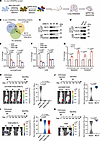 Figure 1
In vivo genome-wide CRISPR activation screen identifies genes promoting lung metastasis of osteosarcoma. (A) Diagram of in vivo CRISPR activation screening in U2OS/MTX300 cells. (B) Venn diagram indicates the overlaps among in vivo CRISPR activation screening, STUB1 interactome, and R2 database analysis. (C and D) Western blot analysis of MLF2 protein levels in U2OS/MTX300 and 143B cells stably expressing MLF2-targeted shRNAs or overexpression of MLF2. Data are representative of 3 independent experiments. (E–G) Quantification analyses of migration and invasion assays using the indicated U2OS/MTX300 or 143B cells stably expressing MLF2-targeted shRNAs or overexpression of MLF2. The data are presented as mean ± SD. n = 3 biologically independent experiments. P values were calculated using 1-way ANOVA with Dunnett’s test (E and F) and 2-tailed Student’s t test (G). (H–K) The procedure for the in vivo orthotopic model of osteosarcoma metastasis. Representative bioluminescence images of mice orthotopically transplanted with the indicated luciferase-transduced U2OS/MTX300 or 143B cells stably expressing MLF2-targeted shRNAs or overexpression of MLF2 (left) and quantification analyses of the metastasis of cancer cells in the lung based on the left (right). n = 6 mice per group. Data are presented as mean ± SD. P values were calculated using 2-tailed Student’s t test (J and K) and 2-tailed Student’s t test followed by Benjamini-Hochberg correction (H and I). NC, negative control; p, photon; sh, short hairpin; sr, steradian.
Using U2OS/MTX300,143B, and U2OS cells, we found that knockdown of MLF2 impeded cell migration and invasion, whereas MLF2 overexpression increased these processes (Figure 1, C–G, and Supplemental Figure 2, A–D). However, depletion of MLF2 inhibited cell viability, whereas ectopic MLF2 expression had no effect (Supplemental Figure 2, E–J), indicating that MLF2 is also essential for cell viability in osteosarcoma. Consistent with these results, in an orthotopic osteosarcoma lung metastasis model with U2OS/MTX300 and 143B cells, knockdown of MLF2 reduced lung metastasis, whereas its overexpression increased lung metastasis in vivo (Figure 1, H–K, and Supplemental Figure 2, K–N). However, there was no obvious difference in primary tumor growth (Supplemental Figure 3, A–H). In addition, higher protein levels of MLF2 were detected in osteosarcoma tissues compared with adjacent normal tissues (Supplemental Figure 4, A and B). Consistently, we confirmed that mRNA levels of MLF2 were higher in tumor tissues compared with the normal tissues, through the TNMplot database (14) (Supplemental Figure 4C), and high mRNA levels of MLF2 were correlated to poor prognosis in lung cancer and gastric cancer, as analyzed by the KM Plotter database (15, 16) (Supplemental Figure 4D). Taken together, these results demonstrate that MLF2 plays a key role in osteosarcoma lung metastasis.
MLF2 promotes osteosarcoma lung metastasis by activating the IRE1α/XBP1-S/MMP9 axis. MLF2 is a member of the MLF family that plays an oncogenic role in breast cancer, chronic myelogenous leukemia, and colorectal cancer (17–19). To uncover the mechanism by which MLF2 promotes osteosarcoma lung metastasis, RNA-Seq analysis was performed using U2OS cells overexpressing MLF2. Gene set enrichment analysis indicated that genes upregulated upon MLF2 overexpression were enriched in the UPR, also known as ER stress response (Supplemental Figure 5, A and B). Indeed, the key genes downstream of the IRE1α/XBP1-S signaling pathway that are commonly used as ER stress response markers were increased by ectopic MLF2 in osteosarcoma cells (Supplemental Figure 5C and Figure 2A), whereas MLF2 depleting reduced them in osteosarcoma cells (Figure 2B).
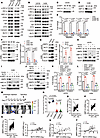 Figure 2
MLF2 promotes lung metastasis of osteosarcoma by activating IRE1α/XBP1-S-MMP9 axis. (A and B) The indicated proteins were analyzed by Western blotting in U2OS and 143B cells stably overexpressing MLF2 or MLF2-targeted shRNAs (C and D) Western blotting analysis of XBP1-S protein levels in U2OS and 143B cells stably expressing XBP1-targeted shRNAs. (E) Quantification analyses of migration and invasion assays using the indicated stable cells. (F and G) Western blotting analysis and quantification of MLF2 and MMP9 protein levels in U2OS and 143B cells stably expressing MLF2-targeted shRNAs or overexpression of MLF2. (H and I) Western blotting analysis of the indicated protein levels in indicated XBP1 knockdown cells with or without MLF2 overexpression. (J) Western blotting analysis of MLF2 and MPP9 protein levels in indicated MPP9 knockdown cells with or without MLF2 overexpression. (K and L) Quantification analyses of migration and invasion assays using the indicated stable cells in J. (M) The procedure for the in vivo orthotopic model of osteosarcoma metastasis and representative bioluminescence images of mice orthotopically transplanted with the indicated luciferase-transduced 143B cells. (N) Quantification analyses of lung metastasis based on M. n = 5 mice per group. Data are reported as mean ± SD. P values were calculated using 2-tailed Student’s t test followed by Benjamini-Hochberg correction. (O–Q) The mRNA levels of MLF2, XBP1-S, and MMP9 were analyzed by real-time PCR in human osteosarcoma tissues and adjacent normal tissues. (R–T) The correlation scatterplots are shown based on the mRNA levels of MLF2, XBP1-S, and MMP9. The coefficient of correlation and P value were calculated using nonparametric Spearman’s test. Data in A–D and H–J are representative of 3 independent experiments. Data in E–G, K, and L are presented as mean ± SD. n = 3 biologically independent experiments. P values were calculated using 1-way ANOVA with Dunnett’s test (E and F) or Šídák’s test (K and L) and 2-tailed Student’s t test (G and O–Q). NC, negative control; p, photon; sh, short hairpin; sr, steradian.
Furthermore, we investigated the potential role of MLF2 in the regulation of the ER stress response in osteosarcoma. Upon thapsigargin treatment, the IRE1α/XBP1-S signaling pathway was activated by MLF2 overexpression and inhibited by MLF2 depletion in both U2OS and 143B cells (Supplemental Figure 5, D–G). In contrast, neither the PERK nor the ATF6 pathway was affected (Supplemental Figure 5, D–G). These results indicate MLF2 activates the IRE1α/XBP1-S pathway in the ER stress response.
The IRE1α/ XBP1-S pathway is critical for tumorigenesis. Knockdown of XBP1-S, a downstream effector of IRE1α, reduced the mRNA levels of XBP1-S target genes that are related to metastasis, such as MMP9 (20), PLAU, and CCND1 (Supplemental Figure 6A), and impaired cell migration and invasion (Figure 2, C–E). However, only MMP9 was reduced by MLF2 depletion and increased by MLF2 overexpression in both U2OS and 143B cells (Figure 2, F and G). Moreover, the MMP9 reporter activity was increased by overexpression of XBP1-S and decreased by knockdown of XBP1-S in U2OS cells (Supplemental Figure 6, B and C), and knockdown of XBP1-S abolished the increase in MMP9 by ectopic MLF2 in U2OS and 143B cells (Figure 2, H and I).
MMP9 depletion decreased cell migration and invasion in U2OS and 143B cells, whereas its overexpression increased these properties (Supplemental Figure 6, D–G). More importantly, MMP9 depletion abolished MLF2-induced increases in migration and invasion in U2OS and 143B cells without affecting cell viability (Figure 2, J–L, and Supplemental Figure 6H). Consistent with these results, knockdown of MMP9 in the orthotopic osteosarcoma lung metastasis model in vivo reversed the enhancement of lung metastasis induced by overexpression of MLF2 in 143B cell lines (Figure 2, M and N, and Supplemental Figure 6I). Accordingly, mRNA levels of MLF2, XBP1-S, and MMP9 were higher in osteosarcoma tissues compared with adjacent normal tissues (Figure 2, O–Q), and these levels were positively correlated in osteosarcoma tissues (Figure 2, R–T). Collectively, these results indicate MLF2 promotes osteosarcoma lung metastasis by activating the IRE1α/XBP1-S/MMP9 axis.
MLF2 activates IRE1α/XBP1-S signaling by interfering with the interaction of BiP and IRE1α. We next investigated how MLF2 activates the ER stress response. Tandem affinity purification (TAP) MS (TAP-MS) was performed to identify the MLF2 interaction partners (Supplemental Table 3) involved in the ER stress response. Notably, binding immunoglobulin protein (BiP) (also known as GRP78), an ER chaperone crucial for ER stress response (21, 22), was listed as an MLF2 binding protein. MLF2 did have a strong colocalization with BiP (Supplemental Figure 7A): the interaction between MLF2 and BiP was detected at endogenous and exogenous levels (Figure 3, A–C). To determine the subcellular localization of MLF2, we isolated cytoplasmic and nuclear fractions, and found MLF2 present in both compartments (Figure 3D and Supplemental Figure 7B).
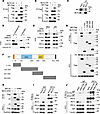 Figure 3
MLF2 activates IRE1α/XBP1-S signaling via interfering in the binding between BiP and IRE1α. (A and B) HEK293T cells were cotransfected with MLF2-HA and BiP-Flag for 48 hours and then subjected to IP using anti-FLAG antibody (A) or anti-HA antibody (B) followed by Western blotting analysis. (C) The endogenous interaction between MLF2 and BiP in 143B cells was measured by co-IP with anti-MLF2 antibody, and isotype-matched IgG was used as a control. (D) The nuclear and cytoplasmic locations of MLF2 in 143B cells were analyzed by the NE-PER Nuclear and Cytoplasmic Extraction Kit. (E) The ER location of MLF2 in 143B cells was analyzed with the ER enrichment kit. (F) Schematic illustration of BiP structure. (G and H) The domain structure of BiP, which interacts with MLF2, was measured by co-IP. HEK293T cells were cotransfected with the indicated plasmids for 48 hours and then subjected to IP using anti-FLAG antibody (G) or anti-V5 antibody (H), followed by Western blotting analysis. (I and J) Lysates from U2OS cells stably overexpression of MLF2 (I) and 143B cells stably expressing MLF2-targeted shRNAs (J) were subjected to IP using anti-IRE1α antibody or anti-IgG antibody followed by Western blotting, as indicated. Data in A–E and G–J are representative of 3 independent experiments. NC, negative control; sh, short hairpin; NBD, nucleotide-binding domain; SBD, substrate-binding domain; WCL, whole cell lysate.
Given that BiP is mainly located in the ER lumen, due to the presence of an ER signaling peptide (23), and MLF2 strongly colocalizes with the ER marker calnexin (Supplemental Figure 7C), we speculated that MLF2 might translocate to the ER lumen to activate IRE1α/XBP1-S signaling. To verify this hypothesis, we isolated, using the ER Enrichment Kit, the ER fraction from cells stably depleted of MLF2 and found that MLF2, Bip, IRE1α, and calnexin were enriched in the ER fraction (Figure 3E and Supplemental Figure 7D). BiP is released from the ER stress sensor IRE1α upon cellular stress to activate the ER stress IRE1α/XBP1-S signaling (24). We found that the substrate-binding domain (SBD), but not the nucleotide-binding domain, of BiP was required for its interaction with MLF2 (Figure 3, F–H). Moreover, the interaction of IRE1α with BiP at the endogenous level was blocked by ectopic MLF2 and augmented by depleting MLF2 (Figure 3, I and J). These results suggest MLF2 may act as an unfolded protein to activate IRE1α/XBP1-S signaling by interfering with the interaction of BiP with IRE1α.
STUB1 is an E3 ligase responsible for ubiquitination and degradation of MLF2. Because MLF2 may act as an unfolded protein to activate the ER stress response, as just described, it is predicated to be an unstable protein. This proved to be the case. Proteasome inhibitor MG132 markedly increased endogenous MLF2 protein levels (Supplemental Figure 8A). Therefore, the E3 ligase STUB1, identified as an interacting protein of MLF2 by TAP-MS, caught our attention. STUB1 has recently been reported by our group to be a tumor suppressor in osteosarcoma (12). The interaction of MLF2 with STUB1 was detected by co-IP at exogenous and endogenous levels (Supplemental Figure 8, B and C, and Figure 4A). The tetratricopeptide repeat domain of STUB1 was crucial for the interaction with MLF2 (Supplemental Figure 8, D–F), and the K30A mutant within the tetratricopeptide repeat domain of STUB1, but not the H260Q mutant that lacked E3 ligase activity, completely abolished binding to MLF2 (Supplemental Figure 8G). STUB1 overexpression decreased MLF2 protein levels, whereas STUB1 knockdown increased MLF2 protein levels in U2OS and 143B cells (Figure 4, B and C), and WT STUB1, but neither its K30A mutant nor H260Q mutant, was able to polyubiquitinate MLF2 (Figure 4D).
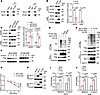 Figure 4
STUB1 is the E3 ligase responsible for the ubiquitination and degradation of MLF2. (A) The endogenous interaction between MLF2 and STUB1 in U2OS cells was measured by co-IP with anti-MLF2 antibody and anti-STUB1 antibody; isotype-matched IgG was used as a control. (B and C) The expression levels of STUB1 and MLF2 were analyzed by Western blotting in U2OS and 143B cells transfected with STUB1 or STUB1-targeted siRNAs. Quantification of MLF2 protein levels was based on the Western blotting results. (D and E) HEK293T cells were cotransfected with the indicated plasmids for 48 hours and then subjected to IP using anti-FLAG antibody followed by Western blotting. (F and G) HEK293T cells transfected with MLF2-SFB or K119A-SFB for 36 hours were incubated with 40 μg/mL cycloheximide (CHX) for the indicated periods and then analyzed by Western blotting (F). Quantitation of MLF2 protein levels was based on the Western blotting results (G). (H) The expression levels of MLF2 were analyzed by Western blotting in U2OS and 143B cells stably overexpression of MLF2 or MLF2 K119A mutant. (I and J) Quantification analyses of migration and invasion assays using the indicated U2OS and 143B stable cells in H. Data in A, D–F, and H are representative of 3 independent experiments. Data in B, C, G, I, and J are presented as mean ± SD. n = 3 biologically independent experiments. P values were calculated using 2-tailed Student’s t test (B and G) and 1-way ANOVA with Dunnett’s test (C) or Tukey’s test (I and J). NC, negative control; Ub, ubiquitin.
The ubiquitination usually occurs on lysine residues (25, 26), and there is only 1 lysine residue (K119) within MLF2. STUB1 could increase the polyubiquitination of the WT MLF2 but not the K119A mutant (Figure 4E). Consistently, the K119A mutant of MLF2 exhibited a longer half-life than WT MLF2 (Figure 4, F and G). Additionally, stable expression of the K119A mutant of MLF2 augmented migration and invasion in both U2OS and 143B cells compared with WT MLF2 overexpression (Figure 4, H–J). Collectively, these results indicate STUB1 polyubiquitinates MLF2 at K119.
PIM3 stabilizes MLF2 by phosphorylating MLF2 at ser65. Protein degradation and stability are usually regulated by phosphorylation (27, 28). To explore the kinases that may regulate MLF2 protein stability, we performed a protein stability regulators screening assay (ProSRSA) with the CRISPR-Cas9 kinase library using U2OS cells expressing DsRed-IRES-EGFP-MLF2 reporter (29) (Figure 5A). Among the top 10 candidates identified via Model-Based Analysis of Genome-wide CRISPR/Cas9 Knockout (MAGeCK) analysis, PIM3, MAPK11, and RIOK2 were confirmed to be the potential kinases for the stabilization of MLF2 protein, because cotransfecting each of them with MLF2 elevated the MLF2 protein level, with PIM3 showing the most marked effect (Figure 5B and Supplemental Figure 9, A and B).
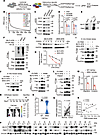 Figure 5
PIM3 stabilizes MLF2 by phosphorylating MLF2 at S65. (A) Schematic of MLF2 ProSRSA. (B) Top 10 candidate genes of MAGeCK analysis. (C and D) Western blotting analysis and quantification of MLF2 and PIM3 protein levels in U2OS and 143B stable cells. (E) 143B cells were subjected to co-IP using anti-PIM3 or anti-IgG to detect endogenous MLF2. (F, I, and K) HEK293T cells were cotransfected with the indicated plasmids for 48 hours and then subjected to IP assay. (G and H) HEK293T cells transfected with MLF2-SFB or S65A-SFB for 36 hours were incubated with 40 μg/mL cycloheximide (CHX) for the indicated periods and then subjected to Western blotting. Quantification of MLF2 protein levels was based on the Western blotting results. (J) Purified MLF2-SFB WT or S65A mutant protein were incubated with or without purified V5-PIM3 protein in vitro as described in the methods and then analyzed by Western blotting. (L) HEK293T cells cotransfected with MLF2-SFB and V5-PIM3 for 24 hours were incubated with PIM447 (10 μM) for another 24 hours and then subjected to IP assay. (M) Quantification analyses of migration and invasion assays using MLF2 WT or S65A knock-in 143B cells. (N) The procedure for in vivo orthotopic model of osteosarcoma metastasis and representative bioluminescence images of mice. (O) Quantification analyses of lung metastasis (n = 6). (P and Q) Western blotting analysis and quantification of MLF2 and PIM3 protein levels in human osteosarcoma tissues. N, normal; T, tumor. (R) The correlation between MLF2 and PIM3 protein levels is shown. The coefficient of correlation and P value were calculated using nonparametric Spearman’s test. Data in C, E–G, and I–L are representative of 3 independent experiments. Data in D, H, and M are presented as mean ± SD; n = 3 biologically independent experiments. P values were calculated using 1-way ANOVA with Dunnett’s test (D) and 2-tailed Student’s t test (H, M, O, and Q). NC, negative control; sh, short hairpin; sr, steradian; RRA, robust rank aggregation.
That MLF2 interacted most strongly with PIM3 (Supplemental Figure 9A) prompted us to focus on PIM3 for further investigation. Knockdown of PIM3 decreased MLF2 protein levels, as well as cell migration and invasion, in U2OS and 143B cells, whereas overexpression of PIM3 increased these variables (Figure 5, C and D, and Supplemental Figure 9, C–F). In addition, mRNA levels of PIM3 were higher in osteosarcoma tissues compared with corresponding normal tissues (Supplemental Figure 9G), and high PIM3 mRNA levels trended toward lower overall survival, although this association did not reach statistical significance (Supplemental Figure 9H). These results indicate PIM3 may stabilize MLF2, allowing it to play an oncogenic role in osteosarcoma.
In addition, the interaction of MLF2 with PIM3 was validated at the ectopic and endogenous levels (Supplemental Figure 10, A and B, and Figure 5E), and PIM3 was able to phosphorylate serine and threonine of MLF2 at exogenous levels (Supplemental Figure 10C). To identify the phosphorylation site(s) of MLF2 by PIM3, all serine and threonine residues of MLF2 were individually mutated to alanine. Among these mutants, only S65A and T101A mutants of MLF2 were resistant to PIM3 (Supplemental Figure 10, D and E). However, ubiquitination of the S65A mutant, but not the T101A mutant, was enhanced compared with the WT MLF2 (Figure 5F and Supplemental Figure 10F), indicating that PIM3-mediated phosphorylation at Ser65 suppresses MLF2 polyubiquitination. Moreover, the mutation of S65A shortened the half-life of MLF2 compared with the WT (Figure 5, G and H). Using an antibody that specifically recognized the Ser65 phosphorylation of MLF2, the phosphorylation of MLF2, but not its S65A mutant, was increased by PIM3 in cells and in an in vitro kinase assay (Figure 5, I and J). Furthermore, the kinase-dead mutant (K69M) of PIM3 (30, 31) and PIM inhibitor PIM447 (32, 33) reduced the phosphorylation of MLF2 at Ser65 (Figure 5, K and L).
PIM3 belongs to the highly conserved PIM family of kinases, which includes PIM1, PIM2, and PIM3 (34). Compared with PIM1 and PIM2, PIM3 had strongest binding to MLF2 and phosphorylated MLF2 Ser65 to the greatest extent (Supplemental Figure 10, G and H). Using CRISPR-Cas9–mediated homology-directed repair (35), we generated a locus-specific S65A knock-in 143B cell line (which we refer to as S65A cells) (Supplemental Figure 10I). Compared with WT cells, the half-life of MLF2 was shortened and its polyubiquitination was increased in S65A cells (Supplemental Figure 10, J–L). Moreover, although the cell viability remained unchanged in S65A cells, their migration, invasion, and lung metastasis were decreased (Figure 5, M–O, and Supplemental Figure 10, M and N). In addition, higher protein levels of PIM3 were detected in osteosarcoma tissues compared with adjacent normal tissues, and a positive correlation was observed between the protein levels of PIM3 and MLF2 in osteosarcoma tissues (Figure 5, P–R). Together, our results reveal that PIM3 stabilizes MLF2 by phosphorylating MLF2 at ser65 in osteosarcoma.
USP21 deubiquitylates MLF2 to regulate MLF2 protein stability. Next, we investigated how the phosphorylation of MLF2 at Ser65 influences its stability. Relative to WT MLF2, the S65A mutant markedly enhanced STUB1-mediated ubiquitination and degradation, yet its interaction with STUB1 remained unchanged (Figure 6A). Ubiquitin modification is a reversible process regulated by the enzyme ubiquitin ligase that can connect ubiquitin molecules to a lysine of the substrate protein (25), whereas deubiquitylases (DUBs) can remove ubiquitin molecules from substrates (36). Thus, we sought to determine whether the S65A mutant of MLF2 would affect its binding to DUBs. However, we found that USP11, reported to be a DUB of MLF2 (37), could bind equally well to both WT MLF2 and the S65A mutant (Supplemental Figure 11A). Therefore, we performed a screening using the 22 DUBs library to identify the DUB involved in the degradation of MLF2 in osteosarcoma. Interestingly, USP21 was the most marked DUB shown to stabilize the protein levels of MLF2 (Supplemental Figure 11, B and C). The interaction of MLF2 with USP21 was confirmed at the exogenous level (Figure 6B and Supplemental Figure 11D). Importantly, interaction of USP21 with the S65A mutant was decreased compared with the WT (Figure 6C). USP21 depletion reduced MLF2 protein levels, whereas USP21 overexpression increased MLF2 protein levels in U2OS and 143B cells (Figure 6, D and E). Indeed, knockdown of USP21 shortened the half-life and increased the ubiquitination of MLF2 (Figure 6, F–H). Conversely, the WT USP21, but not its C221A inactive mutant, prolonged the half-life and reduced the ubiquitination of MLF2 (Figure 6, I–K). Taken together, these results suggest phosphorylation of MLF2 at Ser65 by PIM3 augments its interaction with USP21, resulting in the stabilization of MLF2.
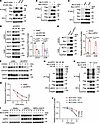 Figure 6
The phosphorylation of MLF2 at S65 contributed to its binding with USP21. (A–C) HEK293T cells were cotransfected with the indicated plasmids for 48 hours and then subjected to IP using anti-FLAG antibody or anti-Myc antibody, followed by Western blotting. (D and E) Western blotting analysis and quantification of MLF2 and USP21 protein levels in the indicated U2OS or 143B cells stably expressing USP21-targeted shRNAs or overexpressing USP21. (F and G) The indicated U2OS stable cells with or without USP21 knockdown were incubated with 20 μg/mL cycloheximide (CHX) for the indicated periods and then analyzed by Western blotting (F). Quantitation of MLF2 protein levels was based on the Western blotting results (G). (H) U2OS cells stably expressing USP21-targeted shRNAs were cotransfected with MLF2-SFB and HA-ubiquitin (HA-Ub) for 48 hours and then subjected to IP using anti-FLAG antibody followed by Western blotting. (I and J) HEK293T cells cotransfected with MLF2-SFB and vector, USP21, or mutant USP21 (C221A) for 36 hours were incubated with 40 μg/mL CHX for the indicated periods and then analyzed by Western blotting (I). Quantitation of MLF2 protein levels was based on the Western blotting results (J). (K) HEK293T cells were cotransfected with the indicated plasmids for 48 hours and then subjected to IP using anti-FLAG antibody followed by Western blotting. Data in A–C, F, H, I, and K are representative of 3 independent experiments. Data in D, E, G, and J are presented as mean ± SD. n = 3 biologically independent experiments. P values were calculated using 1-way ANOVA with Dunnett’s test (D and J) and 2-tailed Student’s t test (E and G). NC, negative control; sh, short hairpin.
-
Discussion
In this study, we found that under normal conditions, MLF2 can be polyubiquitinated at lysine119 by STUB1, leading to its proteasome degradation (Figure 7). PIM3 is overexpressed in osteosarcoma, and it can phosphorylate MLF2 at Ser65 to enhance its interaction with USP21. Consequently, the MLF2 protein is stabilized and is able to promote osteosarcoma lung metastasis via activating the ER stress response.
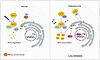 Figure 7
A proposed model for both function and regulation of MLF2 in osteosarcoma. In the normal condition, MLF2 can be polyubiquitinated at lysine119 by STUB1, leading to its proteasome degradation. In osteosarcoma, this process is abolished by PIM3 via phosphorylation of MLF2 at Ser65, which enhances its binding with USP21. MLF2 stabilization activates IRE1α/XBP1-S-MMP9 axis via interfering the interaction between IRE1α and BiP, thereby promoting osteosarcoma lung metastasis.
MLF2 shares about 40% identity with its homolog MLF1 (38, 39). Compared with MLF1, the localization and function of MLF2 are poorly documented. Recently, it has been reported that MLF2 is located in the nucleus, where it interacts with and negatively regulates p53 to promote colorectal carcinogenesis (19). Here, we found that MLF2 is primarily located in the cytoplasm and can translocate to the ER to promote osteosarcoma lung metastasis via interacting with BiP, although MLF2 was distributed in both the nucleus and cytoplasm. These results indicate that, similar to MLF1, MLF2 may be a nucleocytoplasmic shuttling protein, and it may have different functions depending on its cellular compartment. How its cellular location is regulated remains an open question for future investigation.
The ER stress response plays a role in metastasis by regulating the adaptation of tumor cells to their microenvironment (4, 5). For example, key molecules related to cancer metastasis, such as collagens, MMPs, and integrins, are regulated by the UPR (40). Here, we report that MLF2, as an unstable protein, can activate the IRE1α/XBP1-S/MMP9 axis and thereby promote lung metastasis of osteosarcoma. Accordingly, we found the level of XBP1-S was higher in osteosarcoma tissues than in normal tissues, and that XBP1-S promotes cell migration and invasion in osteosarcoma. These results are consistent with reports in the literature: XBP1 has been reported to be overexpressed in osteosarcoma tissues and involved in tumor progression (41), and XBP1-S has also been shown to be overexpressed and positively correlated with poor prognosis in breast cancer (42), myeloma (43), glioblastoma (44), and pulmonary adenocarcinoma (44).
Upon ER stress, the accumulation of unfolded proteins in the ER causes the dissociation of BiP from ER stress sensors, resulting in activation of the ER stress response (4, 5). There are 2 main models used to describe the ER stress-sensing mechanism by IRE1α and PERK: a direct recognition model in which IRE1α is activated by binding of unfolded proteins to the luminal domains of IRE1α (45), and an indirect model in which the ER stress-sensing process is directly coupled to the folding machinery. In the indirect model, BiP is responsible for sensing unfolded proteins, and the release of BiP from IRE1α is the key process involved in the activation of IRE1α (21, 22, 24, 46). Here, we report that MLF2 can interact with BiP to release BiP from IRE1α, suggesting that MLF2 may function as an unfolded protein that activates IRE1α.
The E3 ligase CRL4DCAF8 can promote MLF2 ubiquitination and degradation (37); however, CRL4DCAF8 was not identified among the proteins interacting with MLF2 by TAP-MS. Instead, we found that STUB1 was responsible for the ubiquitination and degradation of MLF2, reinforcing the suggestion that STUB1 may act as a tumor suppressor in osteosarcoma. This is supported by our recent reports showing that STUB1 functions by degrading several substrates, including Rab22a-Neof1 fusion protein (12), CBX4 (13), and IRS4 (47).
We also showed that PIM3, which belongs to the PIM kinase family that includes PIM1, PIM2, and PIM3, is upregulated and promotes cell migration and invasion in osteosarcoma. This finding is consistent with reports in the literature showing that PIM3 is upregulated and acts as an oncogene in several cancers (48–51), and that PIM kinases are frequently expressed in osteosarcoma. More importantly, we identified MLF2 as a new substrate for PIM3 in osteosarcoma. Phosphorylation of MLF2 at Ser65 by PIM3 enhances its binding to USP21, thereby stabilizing the MLF2 protein. On the basis of these findings, we propose the PIM3-MLF2 axis as a potential therapeutic target for patients with osteosarcoma lung metastasis.


Copyright © 2026 American Society for Clinical Investigation
ISSN: 0021-9738 (print), 1558-8238 (online)