
Advertisement
Research ArticleCell biologyPulmonology
Open Access |  10.1172/JCI188701
Leveraging factors that control alveolar epithelial cell fate enables large-scale expansion for lung tissue engineering
Lauren K. Rochelle,1 Rachael S. Van,1 Richard J. Ottman,1 Daren F. Robinson,1 Ashley R. Dockham,1 Amy K. Smith,2 Daniel P. Keeley,1 Jia C. Wang,1 Darell W. McCoy,1 Tyler R. Zimmerman,1 Bryan A. Fioret,1 Ryan W. Bonvillain,1 Thomas H. Petersen,1 Sarah S. Hogan,1 and Laila C. Roudsari1
1Regenerative Medicine Lab, United Therapeutics, Research Triangle Park, North Carolina, USA.
2Computational Sciences, United Therapeutics, Silver Spring, Maryland, USA.
Address correspondence to: Laila C Roudsari, Regenerative Medicine Lab, United Therapeutics, 55 TW Alexander Drive, Research Triangle Park, North Carolina 27709, USA. Phone: 919.328.3523; Email: lroudsari@unither.com.
Find articles by Rochelle, L. in: PubMed | Google Scholar
1Regenerative Medicine Lab, United Therapeutics, Research Triangle Park, North Carolina, USA.
2Computational Sciences, United Therapeutics, Silver Spring, Maryland, USA.
Address correspondence to: Laila C Roudsari, Regenerative Medicine Lab, United Therapeutics, 55 TW Alexander Drive, Research Triangle Park, North Carolina 27709, USA. Phone: 919.328.3523; Email: lroudsari@unither.com.
Find articles by Van, R. in: PubMed | Google Scholar
1Regenerative Medicine Lab, United Therapeutics, Research Triangle Park, North Carolina, USA.
2Computational Sciences, United Therapeutics, Silver Spring, Maryland, USA.
Address correspondence to: Laila C Roudsari, Regenerative Medicine Lab, United Therapeutics, 55 TW Alexander Drive, Research Triangle Park, North Carolina 27709, USA. Phone: 919.328.3523; Email: lroudsari@unither.com.
Find articles by Ottman, R. in: PubMed | Google Scholar
1Regenerative Medicine Lab, United Therapeutics, Research Triangle Park, North Carolina, USA.
2Computational Sciences, United Therapeutics, Silver Spring, Maryland, USA.
Address correspondence to: Laila C Roudsari, Regenerative Medicine Lab, United Therapeutics, 55 TW Alexander Drive, Research Triangle Park, North Carolina 27709, USA. Phone: 919.328.3523; Email: lroudsari@unither.com.
Find articles by Robinson, D. in: PubMed | Google Scholar
1Regenerative Medicine Lab, United Therapeutics, Research Triangle Park, North Carolina, USA.
2Computational Sciences, United Therapeutics, Silver Spring, Maryland, USA.
Address correspondence to: Laila C Roudsari, Regenerative Medicine Lab, United Therapeutics, 55 TW Alexander Drive, Research Triangle Park, North Carolina 27709, USA. Phone: 919.328.3523; Email: lroudsari@unither.com.
Find articles by Dockham, A. in: PubMed | Google Scholar
1Regenerative Medicine Lab, United Therapeutics, Research Triangle Park, North Carolina, USA.
2Computational Sciences, United Therapeutics, Silver Spring, Maryland, USA.
Address correspondence to: Laila C Roudsari, Regenerative Medicine Lab, United Therapeutics, 55 TW Alexander Drive, Research Triangle Park, North Carolina 27709, USA. Phone: 919.328.3523; Email: lroudsari@unither.com.
Find articles by Smith, A. in: PubMed | Google Scholar
1Regenerative Medicine Lab, United Therapeutics, Research Triangle Park, North Carolina, USA.
2Computational Sciences, United Therapeutics, Silver Spring, Maryland, USA.
Address correspondence to: Laila C Roudsari, Regenerative Medicine Lab, United Therapeutics, 55 TW Alexander Drive, Research Triangle Park, North Carolina 27709, USA. Phone: 919.328.3523; Email: lroudsari@unither.com.
Find articles by Keeley, D. in: PubMed | Google Scholar
1Regenerative Medicine Lab, United Therapeutics, Research Triangle Park, North Carolina, USA.
2Computational Sciences, United Therapeutics, Silver Spring, Maryland, USA.
Address correspondence to: Laila C Roudsari, Regenerative Medicine Lab, United Therapeutics, 55 TW Alexander Drive, Research Triangle Park, North Carolina 27709, USA. Phone: 919.328.3523; Email: lroudsari@unither.com.
Find articles by Wang, J. in: PubMed | Google Scholar
1Regenerative Medicine Lab, United Therapeutics, Research Triangle Park, North Carolina, USA.
2Computational Sciences, United Therapeutics, Silver Spring, Maryland, USA.
Address correspondence to: Laila C Roudsari, Regenerative Medicine Lab, United Therapeutics, 55 TW Alexander Drive, Research Triangle Park, North Carolina 27709, USA. Phone: 919.328.3523; Email: lroudsari@unither.com.
Find articles by McCoy, D. in: PubMed | Google Scholar
1Regenerative Medicine Lab, United Therapeutics, Research Triangle Park, North Carolina, USA.
2Computational Sciences, United Therapeutics, Silver Spring, Maryland, USA.
Address correspondence to: Laila C Roudsari, Regenerative Medicine Lab, United Therapeutics, 55 TW Alexander Drive, Research Triangle Park, North Carolina 27709, USA. Phone: 919.328.3523; Email: lroudsari@unither.com.
Find articles by Zimmerman, T. in: PubMed | Google Scholar
1Regenerative Medicine Lab, United Therapeutics, Research Triangle Park, North Carolina, USA.
2Computational Sciences, United Therapeutics, Silver Spring, Maryland, USA.
Address correspondence to: Laila C Roudsari, Regenerative Medicine Lab, United Therapeutics, 55 TW Alexander Drive, Research Triangle Park, North Carolina 27709, USA. Phone: 919.328.3523; Email: lroudsari@unither.com.
Find articles by Fioret, B. in: PubMed | Google Scholar
1Regenerative Medicine Lab, United Therapeutics, Research Triangle Park, North Carolina, USA.
2Computational Sciences, United Therapeutics, Silver Spring, Maryland, USA.
Address correspondence to: Laila C Roudsari, Regenerative Medicine Lab, United Therapeutics, 55 TW Alexander Drive, Research Triangle Park, North Carolina 27709, USA. Phone: 919.328.3523; Email: lroudsari@unither.com.
Find articles by Bonvillain, R. in: PubMed | Google Scholar
1Regenerative Medicine Lab, United Therapeutics, Research Triangle Park, North Carolina, USA.
2Computational Sciences, United Therapeutics, Silver Spring, Maryland, USA.
Address correspondence to: Laila C Roudsari, Regenerative Medicine Lab, United Therapeutics, 55 TW Alexander Drive, Research Triangle Park, North Carolina 27709, USA. Phone: 919.328.3523; Email: lroudsari@unither.com.
Find articles by Petersen, T. in: PubMed | Google Scholar
1Regenerative Medicine Lab, United Therapeutics, Research Triangle Park, North Carolina, USA.
2Computational Sciences, United Therapeutics, Silver Spring, Maryland, USA.
Address correspondence to: Laila C Roudsari, Regenerative Medicine Lab, United Therapeutics, 55 TW Alexander Drive, Research Triangle Park, North Carolina 27709, USA. Phone: 919.328.3523; Email: lroudsari@unither.com.
Find articles by Hogan, S. in: PubMed | Google Scholar
1Regenerative Medicine Lab, United Therapeutics, Research Triangle Park, North Carolina, USA.
2Computational Sciences, United Therapeutics, Silver Spring, Maryland, USA.
Address correspondence to: Laila C Roudsari, Regenerative Medicine Lab, United Therapeutics, 55 TW Alexander Drive, Research Triangle Park, North Carolina 27709, USA. Phone: 919.328.3523; Email: lroudsari@unither.com.
Find articles by Roudsari, L. in: PubMed | Google Scholar
Published June 1, 2026 - More info
J Clin Invest. 2026;136(11):e188701. https://doi.org/10.1172/JCI188701.
© 2026 Rochelle et al. This work is licensed under the Creative Commons Attribution 4.0 International License. To view a copy of this license, visit http://creativecommons.org/licenses/by/4.0/.
Received: November 5, 2024; Accepted: April 8, 2026


-
Results
Establishment of a scalable method to expand AT2s. The discovery that both mouse and human AT2s can be grown as organoids has enabled widespread study of this unique cell type, yet scalability of the organoid culture platform is limited (1, 22). To achieve cell yields necessary for cell therapy and lung tissue engineering, we developed a scalable method for expanding AT2s, comprising an expansion medium (T2-Max), a gelatin microcarrier culture substrate, and a spinner flask or stirred tank bioreactor culture system (Figure 1A). Briefly, cells were seeded onto microcarriers, and the cell-laden microcarriers were kept in suspension via the rotating impeller of the culture system. Cells can be grown on microcarriers in spinner flasks or bioreactors at different culture scales depending on the starting number of isolated AT2s (Figure 1B). Spinner flask cultures (250 mL) were used as a small-scale method development platform owing to the low cell input and equipment requirements. However, the use of larger scale bioreactors proved critical to meet the required cell yield for organ recellularization. Bioreactor vessels ranged from 3.75 L to 10 L and enabled real-time monitoring and control of culture conditions. While this paper focuses on the microcarrier platform, T2-Max can also support the formation of feeder-free organoids in Matrigel, demonstrating potential applicability to existing AT2 culture platforms (Supplemental Figure 1A; supplemental material available online with this article; https://doi.org/10.1172/JCI188701DS1).
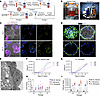 Figure 1
Establishment of a scalable method to expand AT2s. (A) Schematic of AT2 expansion. (B) Images of the culture systems used to expand AT2s: 250 mL spinner flask and 10 L bioreactor and controller. (C) Immunostaining for Ki-67 (green) alongside EdU (red), DAPI (blue), and phalloidin (magenta) on days 3 and 8 of P3 AT2s on microcarriers in T2-Max. Scale bar: 100 μm. (D) Immunostaining for AT2-specific proteins on AT2s on microcarriers on day 11 of P3: HT2-280 (green), pSP-C (white), DAPI (blue). Top left: maximum projection; top right: microcarrier cross-section, bright-field merge; lower left: microcarrier cross-section, without bright-field merge; lower right: microcarrier cross-section with pSP-C and DAPI only. Scale bars: 50 μm. (E) Transmission electron microscopy image of AT2s on a microcarrier (MC). Scale bar: 5 μm. (F) Growth curves from 3 successive cultures of AT2s isolated from donor 9VX and grown in 250 mL spinner flasks. (G) Growth curves from 3 successive cultures of AT2s isolated from donor 9VX and grown in 10 L bioreactors. (H) Fold change for P0 through P2 at 3 different scales (250 mL spinner, 3L bioreactor, and 10 L bioreactor), with each data point representing fold change for a different donor-derived cell bank. *P < 0.05, mixed effects analysis, Tukey’s multiple comparisons test. (I) Cell yields from 250 mL spinner flask, 3 L bioreactor, and 10 L bioreactor scales across 3 passages, with each data point representing yield from a different donor-derived cell bank. All bars represent mean ± SD. In H and I, 250 mL spinner: n = 12 donors, 3 L bioreactor: n = 9 donors, 10 L bioreactor: n = 10 donors.
Following attachment, cells proliferated to cover the gelatin microcarriers over the course of an 8- to 14-day culture. Maintenance of proliferation and AT2 phenotype throughout the culture duration and across multiple passages were important considerations during the development of this process. High levels of EdU incorporation and Ki-67 positivity were observed at both early and late time points of culture, days 3 and 8, respectively (Figure 1C). The cells displayed typical cuboidal morphology and stained positive for apical-localized HT2-280 and punctate prosurfactant protein C (pSP-C), two canonical AT2 markers, while growing on microcarriers (Figure 1D and Supplemental Figure 1B). Furthermore, AT2s on microcarriers exhibited microvilli and lamellar bodies (Figure 1E). Upon reaching confluence, dissociation of cells from the microcarriers enabled serial passaging. Screening studies of isolated AT2s revealed that expansion potential is a cell bank–specific variable influenced by donor, tissue handling, and processing. Therefore, we implemented a proliferation assay to identify cell banks likely to fail in the first passage, termed passage 0 (P0; Supplemental Figure 1C). Cell banks with EdU labeling below 40% were not expanded, and data from those cell banks are not further represented in this paper.
Development of the expansion process was aided by daily culture sampling to determine cell concentration and evaluate the culture environment, including pH, dissolved oxygen, and metabolites. AT2s were seeded at a density of 10,000 cells/cm2, and cell density typically increased to 80,000–160,000 cells/cm2 by the end of each passage, with some cultures exceeding 200,000 cells/cm2. Donor-matched expansion over 3 passages at our smallest and largest scales (250 mL vs. 10 L, respectively) demonstrated that both spinner flask and bioreactor culture platforms could be used to expand AT2s, albeit differences exist in the growth rate and final confluence achieved (Figure 1, F and G). Combined data from multiple donors revealed an average fold increase of 7.6 across passage and scale, with significant differences across scale observed only at P0 (Figure 1H). Cell yields depended on culture scale, and on average, the yield was 1.04 × 10⁸ cells from a 250 mL spinner flask (200 mL working volume), 2.24 × 10⁹ cells from a 3 L bioreactor (3.75 L working volume), and 6.43 × 10⁹ cells from a 10 L bioreactor (Figure 1I). To date, AT2s isolated from 3 lung donors were grown to near maximum capacity for 3–4 passages using the expansion method described herein. AT2s isolated from donors R0G, D7V, and 9VX yielded 180 × 109, 337 × 109, 699 × 109 expanded cells, respectively. These are the highest known reported yields of primary human AT2s. Upon exhaustion of the banks, cell yields from donor D7V are expected to surpass 1 × 10¹² expanded AT2s at P2 or P3.
An extended passaging study was performed to determine if AT2s could be grown beyond P3 using this expansion method. AT2s isolated from 4 donors expanded for at least 5–6 passages in bioreactors or a total of 59–76 culture days. Three of the four cell banks reached a culture population doubling level (PDL) of 30–31, and their proliferative capacity decreased only modestly through P6, with culture population doubling time (PDT) maintained within a 2-fold increase of the P0 PDT for each bank (Supplemental Figure 1, D and E). The fourth cell bank reached a culture PDL of 23, and the AT2s surpassed a 2-fold increase in culture PDT during the P4 culture. While donor heterogeneity influenced the number of passages a given cell bank could be expanded, these results demonstrated the vast expansion potential of cells grown using this method. Finally, karyotyping was performed on 34 samples from 7 donors across multiple passages to confirm that this expansion method does not drive genomic instability. Results revealed that expanded AT2s were fairly stable, with only 2 abnormalities in a low number of cells (2 of 20) that did not persist over passage and nonclonal findings that did not repeat or increase in number with passage (Supplemental Figure 1F). These data suggest the changes are likely random errors in cell division and are not specific to the expansion method.
AT2 phenotype after expansion is largely similar to that of freshly isolated AT2s. Following harvest from microcarrier cultures, expanded AT2s displayed similar morphology to freshly isolated, nonexpanded AT2s (referred to herein as isoAT2s), exhibiting characteristic epithelial size and shape (Figure 2A). Expression of NKX2-1, a transcription factor specific to lung identity, and lack of expression of nonalveolar identity markers were confirmed via immunostaining (Figure 2B and Supplemental Figure 2, A and B). HT2-280 and SP-C are markers used to identify AT2s (29). Both were expressed on a majority of AT2s after expansion on microcarriers, with SP-C evident as both newly synthesized pSP-C and mature-SP-C (mSP-C), which was frequently colocalized with the lamellar body–associated protein, LAMP3 (Figure 2, C–F and Supplemental Figure 2C). Qualitative assessment revealed more SP-C per cell in P2 AT2s vs. isoAT2s, yet quantification demonstrated no significant difference in the HT2-280/pSP-C dual-positive population for expanded AT2s versus isoAT2s (Figure 2E). We hypothesize the intensity difference is related to the need for cell recovery following the isolation process. Heterogeneity in the proportion of dual-positive cells was evident across samples and may be a donor-linked variable. In the extended passage study (Supplemental Figure 1), the AT2 population was maintained through P4 or P5, where expanded AT2s existed as HT2-280–positive, pSP-C–positive, or dual-positive, with minimal expression of the basal cell markers, CK5 and p63 (Supplemental Figure 2, E–G). While the culture still largely consisted of epithelial cells at P6, exhibited by 99% EpCAM expression, the AT2 population began to decrease, and basal cell markers began to increase. Therefore, we recommend terminating AT2 cultures after P4 or P5, depending on individual bank performance (Supplemental Figure 2, D and H).
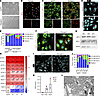 Figure 2
AT2 phenotype after expansion is largely similar to freshly isolated AT2s. (A) Bright-field images comparing isoAT2s to P2 AT2s. Scale bar: 100 μm. (B) Immunostaining for NKX2-1 (red) in P2 AT2s. Scale bar: 50 μm (C) Immunostaining for HT2-280 (green) and pSP-C (red) in isoAT2s and P2 AT2s. Scale bar: 50 μm. (D) Immunostaining for pSP-C (gray) in isoAT2s and P2 AT2s at higher magnification. Scale bar: 25 μm. (E) Quantitation of HT2-280 and pSP-C as a percentage of cells expressing both, none, or either protein above secondary-only control (isoAT2, n = 3 donors; P2 AT2, n = 6 donors; mean of n = 3 wells per bank; unpaired t test of HT2-280+/pSP-C+ population in P2 AT2 compared with isoAT2, P = 0.22). (F) Immunostaining for LAMP3 (green) and mSP-C (red) in isoAT2s and P2 AT2s. Scale bar: 25 μm. (G) Western blot of pSP-C and mSP-C in P2 AT2 lysates (n = 3 donors). (H) Quantitation of bulk mRNA transcripts in isoAT2s and expanded AT2s (n = 6 donors per passage; mean of log2 normalized counts; repeated measures 1-way ANOVA, Tukey’s multiple comparisons test, *P < 0.05, **P < 0.01, ***P < 0.001, ****P < 0.0001 compared with isoAT2s). (I) Immunostaining for SP-D (gray) in isoAT2s and P2 AT2s. Scale bar: 50 μm. (J) Quantitation of HT2-280 and SP-D immunostaining as a percentage of cells expressing both, none, or either protein above secondary-only control (n = 3 AT2 banks/passage; mean of n = 6 wells per bank; unpaired t test of HT2-280/SPD dual-positive population in P2 AT2 compared with isoAT2, P = 0.38). (K) HPLC analysis of SP-B in AT2-conditioned media collected from bioreactors after day 5 media exchange (P3; n = 3 donors). Data represent mean ± SD. (L) Transmission electron microscopy images showing structures resembling tubular myelin in conditioned media. Scale bar: 0.5 μm (main image); 0.1 μm (top left). DAPI (cyan) was used as a counterstain in B, C, D, F and I. Scale bar: 50 μm, unless otherwise noted.
We next evaluated AT2-specific gene expression in expanded cells versus isoAT2s using mRNA profiling. Several AT2 markers (SFTPA1, SFTPA2, SFTPC, SFTPB, and NAPSA) were not significantly changed in expanded AT2s, while LAMP3 was significantly reduced only at P0, and SFTPD and ABCA3 were significantly reduced at all passages (Figure 2H). The AT1 markers PDPN and CLIC5 decreased in P0 and remained at the limit of detection. Despite reduced gene expression, quantitative immunostaining for SP-D revealed that protein expression in expanded AT2s was not significantly different from that of isoAT2s owing to overall heterogeneity across donors and banks (Figure 2, I and J). We also evaluated expanded AT2s for transitional markers and observed minimal protein expression by immunostaining and mostly stable gene expression (Supplemental Figure 2, I and J). An aberrant basaloid marker, KRT17, increased in culture, albeit not significantly. Significant gene upregulation was only observed for TGFB2 and TP53 at P2 and P0, respectively, suggesting that expansion led to changes but did not largely elicit a transitional state (Supplemental Figure 2J) (30–33). A key functional role of AT2s is surfactant secretion, which we confirmed through high-performance liquid chromatography evaluation of SP-B and transmission electron microscopy of the conditioned media collected from bioreactors (Figure 2, K and L). Taken together, it is evident that, despite some changes following culture, expanded AT2s largely maintained key characteristics of their native counterparts.
Single-cell RNA-seq confirms expected AT2 profile after expansion. To further interrogate the expanded AT2 phenotype, single-cell RNA-seq (scRNA-seq) was performed on isoAT2s, P0 AT2s, and P2 AT2s from 3 donors. Map-based clustering and canonical marker cell typing confirmed that a majority of the cells were of lung origin and, more specifically, were AT2s (Figure 3, A–D, and Supplemental Figure 3, A–H). There were small populations of stromal, conducting airway, endothelial, and immune cells in the isoAT2 samples that diminished with expansion. Reclustering just the alveolar cells revealed a large cluster (named cluster 0) with typical AT2 gene expression and 6 additional subclusters with unique marker enrichment, most of which have been described previously (Figure 3E and Supplemental Figure 3, I–N, and Supplemental Table 1) (34–36). Lesser-known alveolar populations included cluster 1, characterized by slightly diminished AT2 gene expression, increased mitochondrial gene expression, and increased expression of long noncoding RNAs, MALAT1 and NEAT1, and cluster 6, marked by upregulation of metallothionein genes. When aggregating cells in clusters 0 or 1, no differentially expressed genes between clusters were identified, and we therefore simply refer to these cells by their cluster numbers. The most notable shift in the alveolar population during expansion was an increase in the cycling population and a corresponding decrease in the cytokine-responsive population (Figure 3F). These proportion shifts were also mirrored in differential gene expression and pathway enrichment analysis, whereby interleukin signaling was prevalent in isoAT2s, and cell cycle pathways were enriched in P2 AT2s (Supplemental Figure 3, O and P, and Supplemental Table 2). Reviewing canonical AT2 markers over passage demonstrated overall maintenance of AT2 gene expression and matched the bulk RNA results described herein, with SFTPD and ABCA3 as the exceptions (Figure 3G). There was no increase in the proportion of the AT1/2 cluster, characterized by diminished AT2 marker expression and increased AT1 marker expression, over passage. Probing into reported human AT2 transitional markers and aberrant basaloid markers across all clusters comparing isoAT2s to P2 AT2s revealed increases in individual genes that were not restricted to a single cluster (FN1, TGFB2, KRT17) and a lack of upregulation of core aberrant disease-associated markers (CDH2, COL1A1, SERPINE1, EPHB2) (Figure 3H, Supplemental Figure 3Q, and Supplemental Figure 4) (37, 38). Taken together, these analyses further confirmed that the expanded cells did not exhibit a clear transitional or aberrant cell signature (33, 37, 39, 40). Reference-based label-transfer cell typing using the dataset generated by Habermann et al. was performed, and the assigned labels were mapped onto the original UMAP embedding (37). Alignment with the map-based clustering was evident, and only a modest increase in the transitional population during expansion was observed (Figure 3I). Furthermore, the KRT5–KRT17+ aberrant transitional cells associated with lung disease only represented 0.28% of our P2 AT2s (Figure 3I) (37). Collectively, these sequencing results underscore that our expansion method maintains normal AT2s.
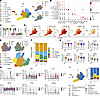 Figure 3
Single-cell RNA-seq confirms expected AT2 profile after expansion. (A) UMAP of isoAT2s, P0 AT2s, and P2 AT2s from 3 donors by cell type, sample type, and donor. (B) Dot plot of marker expression by cluster. (C) Violin plot of SFTPC expression in each cluster. (D) UMAP of AT2 marker gene expression. (E) UMAP of alveolar clusters only, by cell type, sample type, and donor. (F) Proportion plot of alveolar clusters comparing isoAT2s, P0 AT2s, and P2 AT2s. (G) Violin plots of AT2 marker genes comparing isoAT2s, P0 AT2s, and P2 AT2s (generalized linear model quasi-likelihood F test on sample pseudobulk expressions, FDR < 0.05). (H) Split violin plots of known transitional markers. (I) UMAP and proportion plot of isoAT2, P0, and P2 cells identified using reference-based label-transfer cell typing from Habermann et al. (37).
Three exogenous factors enable the expansion and stability of primary AT2s in vitro. Standard 2D culture methods are insufficient for expanding AT2s owing to loss of phenotype (8, 21, 41). Our own attempts to expand AT2s in collagen-coated flasks revealed a nearly complete loss of pSP-C at P0 as well as a diminishing population of HT2-280–positive cells, despite their epithelial appearance and retention of EpCAM expression (Supplemental Figure 5, A and B). As such, organoid-based culture platforms using specialized media are the prevailing method for growing AT2s ex vivo, with exogenous signaling factors in the media used as the primary means to control AT2 fate (1, 3, 42). Furthermore, Matrigel is commonly utilized as a substrate for alveolar organoids since it provides a mixture of ECM components and has an elastic modulus in the same range as lung parenchyma (42, 43).
To elucidate the supportive mechanism behind our culture platform, 2D cultures were performed to isolate the effects of 3 critical factors: substrate composition, stiffness (elastic modulus), and media formulation. We hypothesized that all 3 factors synergistically support the proliferation and phenotype of AT2s during ex vivo expansion. The microcarriers used herein were composed of gelatin and have a low elastic modulus of approximately 16 kPa, within the range of lung parenchyma. To closely match these microcarrier properties, commercially available tissue culture plates with a coated hydrogel surface and a defined stiffness were utilized. The control condition was gelatin coating in T2-Max on a substrate with low elastic modulus (termed gel-T2-soft to identify substrate-media-stiffness conditions). Gel-T2-soft was compared with test conditions that systematically altered 1 of the 3 key variables as follows: (a) gel-T1-soft, T1-Base in place of T2-Max, which is the same base medium formulation as T2-Max with all growth factors and small molecules removed; (b) col-T2-soft, type 1 collagen in place of gelatin; and (c) gel-T2-stiff, a polystyrene plate in place of the hydrogel (Figure 4A). Click-iT EdU labeling was multiplexed with HT2-280 immunostaining to quantify proliferation specifically in AT2s.
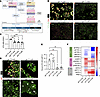 Figure 4
Three exogenous factors enable the expansion and stability of primary AT2s in vitro. (A) Schematic of conditions and experimental timeline. (B) Representative immunostaining of HT2-280 (green) alongside EdU (red) in P0 AT2s across each condition. Coatings: gelatin (gel) or collagen (col). Media: T2-Max (T2) or T1-Base (T1). Stiffness: 12-16 kPa (soft) or approximately 1 GPa (stiff). Scale bar: 200 μm. (C) Quantitation of cells positive for both HT2-280 and EdU as a fraction of total nucleated cells (mean ± SEM, n = 6 donors, 2 experiments). Normalized to gel-T2-soft condition; 1-way ANOVA, Dunnett’s post hoc test, **P < 0.01, ***P < 0.001. (D) Immunostaining of HT2-280 (green) and pSP-C (red) across each condition. Scale bar: 50 μm. (E) Quantitation of cells expressing HT2-280 and pSP-C across each media/substrate condition (mean ± SEM, n = 4 donors, 1 experiment). One-way ANOVA, Dunnett’s post hoc test, **P < 0.01. (F) Quantitation of gene expression using qRT-PCR (log2 fold change) relative to gel-T2-soft control. Genes are clustered by cell type: AT2, AT1, and transitional/basal. DAPI (cyan) was used as a counterstain in B and D.
All test conditions exhibited a significantly reduced HT2-280 and EdU dual-positive fraction compared with control (Figure 4, B and C). This reduction in proliferating AT2s was paired with a significant increase in the HT2-280–negative, EdU-positive fraction for col-T2-soft and gel-T2-stiff conditions (Supplemental Figure 5C). pSP-C protein expression was also significantly reduced in col-T2-soft and gel-T2-stiff conditions but not in gel-T1-soft, likely due to the short culture time in T1-Base media (Figure 4, D and E). To further elucidate the effect of substrate stiffness on AT2 phenotype, hydrogel plates with a modular stiffness ranging from 0.1 to 100 kPa were employed. Cell morphology gradually shifted from spheroidal to flattened when comparing 0.1 kPa with 100 kPa (Supplemental Figure 6A). Furthermore, HT2-280 and pSP-C staining decreased as stiffness increased (Supplemental Figure 6, B–D). In alignment with the mechanism study (Figure 4), AT2 phenotype was better maintained on gelatin-coated hydrogels compared with collagen-coated hydrogels. Analysis of mRNA expression indicated altering any 1 of the 3 critical factors (substrate, culture medium, or stiffness) promoted differentiation, where AT1 markers (AGER, ANKRD1, CLIC5, GPRC5A) and transitional/basal markers (KRT8, KRT17, KRT5, TP63) were upregulated in each test condition (Figure 4F). Collectively, these data demonstrate the importance of substrate composition, substrate stiffness, and media formulation for the successful maintenance of AT2 phenotype and proliferative capacity in our large-scale expansion method.
Expanded AT2s express AT1 markers after culture in AT1 medium. A critical AT2 progenitor cell responsibility is differentiation into AT1s in response to lung injury to repair the alveolar epithelium (1, 5, 44, 45). Expanded AT2s were evaluated for their ability to differentiate into cells expressing molecular and behavioral characteristics of AT1s. For this purpose, an alveolar differentiation medium, T1-Diff, was established. While the precise mechanisms that drive AT2-to-AT1 differentiation in human adult lungs are still under active investigation, several relevant signaling pathways involved in differentiation have been identified, including Wnt/β-catenin, Etv5, BMP, Notch, TGF-β, and YAP/TAZ (44). LATS inhibition was recently shown to robustly induce AT2-to-AT1 differentiation by driving nuclear YAP activation (40, 46). Therefore, to generate AT1 differentiation medium (T1-Diff), all media additives in T2-Max that promoted AT2 proliferation and phenotype maintenance were excluded and replaced with a LATS inhibitor. The only difference between T1-Diff and T1-Base is the addition of the LATS inhibitor to T1-Base to generate T1-Diff.
For in vitro assessment of T1-Diff–derived AT1s, expanded AT2s from 3 donors were seeded onto collagen I–coated cultureware and cultured in T2-Max medium for 2 days before being switched to T1-Diff on day 2 to promote differentiation. After 3 days in T1-Diff, cells were cultured in T1-Base for a 3-day maintenance phase, with time-course takedowns on days 1, 2, 5, and 8 (Figure 5A). Immunostaining with quantification of mean fluorescence intensity (MFI) and sum fluorescence intensity (SFI) for AT2, transitional cell, and AT1 markers revealed near-complete loss of HT2-280 and pSP-C expression paired with increased AT1 markers, including GPRC5A, nuclear-localized active YAP (aYAP), HT1-56, RAGE, and caveolin-1 (Figure 5, B–D, and Supplemental Figure 7A) (40, 47). Given the increase in cell size and flattening of the cytosol that occurs during AT1 transition, in some cases, SFI captured the changes in protein expression more readily than MFI. This was particularly evident for caveolin-1, HT1-56, and RAGE. Flattening of the AT1s also revealed a pronounced actin cytoskeletal network visualized via phalloidin staining, which is consistent with reports highlighting the importance of cytoskeletal forces in AT1 shape and function (40, 47, 48). Transitional marker, claudin-4, was predominantly localized to cell junctions in the first 2 time points and diminished over time, consistent with reported transient increases in transitional cells (33). By day 8, a majority of cells were positive for AT1 markers at a higher intensity than the day 1 time point: 97% GPRC5a positive, 68% aYAP positive, 61% HT1-56 positive, 66% RAGE positive, and 51% caveolin-1 positive (Figure 5E).
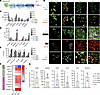 Figure 5
Expanded AT2s express AT1 markers after culture in AT1 medium. (A) Schematic representation of AT2-to-AT1 differentiation. Expanded AT2s were cultured in T2-Max for 2 days, T1-Diff for 3 days, and T1-Base for 3 days to generate AT1s. (B) Immunostaining time course from the AT1 differentiation paradigm described in A. Scale bars: 50 μm. (C) Immunostaining quantification of AT1 differentiation. Mean fluorescent intensity (MFI) of cells expressing each target was quantified for cells from each donor on days 1, 2, 5, and 8 (nuclear [nuc]; n = 3 donors; mean ± SD). (D) Immunostaining quantification of AT1 differentiation. Sum fluorescent intensity (SFI) of cells expressing each target was quantified for cells from each donor on days 1, 2, 5, and 8 (n = 3 donors; mean ± SD). (E) Immunostaining quantification of AT1 differentiation. Quantification of proportion of cells expressing each target above the day 1 MFI+1 SD (n = 3 donors; mean ± SD). (F) Gene expression quantification using qRT-PCR of AT1 differentiation over time (log2 fold change normalized to donor-specific P2 AT2 controls; n = 3 donors). (G) Gene expression quantification using qRT-PCR of AT1-specific markers on day 8 (2-ΔΔCT normalized to donor-specific P2 AT2 controls (red dotted line); n = 5 donors; mean ± SD).
Furthermore, T1-Diff induced a transcriptomic shift, demonstrated by downregulation of the AT2-specific gene, ABCA3, and upregulation of transitional and AT1 genes, KRT17, KRT8, LGALS3, AGER, CAV1, CLIC5, GPRC5A, PDPN, and ANKRD1, on day 5 that remained upregulated through day 8 (Figure 5F). Gene expression analysis of day 8 AT1s generated from 5 donors revealed robust enrichment of AT1 mRNA after differentiation (Figure 5G). Importantly, CLIC5 and PDPN increased as expected, despite the aforementioned lack of increase in protein expression. Differences in AT1 gene enhancement across the 5 banks were associated with variability in AT1 gene expression in P2 AT2s, before initiating AT1 conversion. P2 banks with relatively higher AT1 gene expression immediately following expansion exhibited lower overall increases in AT1-specific genes following media-driven conversion (Supplemental Figure 7B). Taken together, primary human AT2s retain the capacity to express AT1 markers following large-scale expansion. Upregulation of transitional cell markers on day 8 brings about the possibility that differentiation may be incomplete and may require more time or culture in a more biomimetic platform, such as a lung scaffold.
To confirm LATS inhibition and subsequent nuclear aYAP expression are responsible for driving differentiation of expanded AT2s into AT1s, gene expression of cells cultured in T1-Diff and T1-Base was assessed. Cells cultured in T1-Diff and T1-Base both exhibited robust upregulation of AT1 genes, AGER, ANKRD1, GPRC5A, CLIC5, PDPN, and CAV1, with a trend toward higher expression with the LATS inhibitor that was not statistically significant (Supplemental Figure 7C).
AT1s derived from expanded AT2s exhibit key characteristics. AT1s are remarkably large, thin cells that cover approximately 95% of the alveolar surface and are closely aligned with the capillary network of the lung to facilitate passive gas exchange (7, 49–51). The sizes of expanded AT2s taken through the AT1 differentiation paradigm were quantified over time and revealed a 461% increase in cell area from day 1 to day 5, which further increased through day 8, after removal of the LATS inhibitor (Figure 6A). Furthermore, cell area following differentiation was similar to the reported average surface area of human adult AT1s (measured average, 7,296 μm2 vs. reported average, 5,100 μm2) (7, 50). The size of the AT1s derived from expanded AT2s was qualitatively compared with that of AT1s derived from isoAT2s that did not go through expansion and was found to be comparable (Figure 6B).
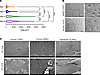 Figure 6
AT1s derived from expanded AT2s exhibit morphological changes. (A) Violin plot of cell area quantification during AT2-to-AT1 differentiation. Analysis was performed on 3 donors after 17 hours in T2-Max (day 1, n = 534 cells), prior to switching to T1-Diff on day 2 (n = 1091 cells), prior to switching to T1-Base on day 5 (n = 1647 cells), and at completion of culture on day 8 (n = 936 cells; 1-way ANOVA with Tukey’s multiple comparison test; *P = 0.0219, ****P < 0.0001). Data represent mean ± SD. AT1s were derived from expanded AT2s. (B) Bright-field images with insets of AT1s derived from isoAT2s and expanded AT2s. Scale bar: 100 μm. (C) Scanning electron microscopy images of AT1s cultured on Transwell inserts alone (AT1 only) or with a second late seed of expanded AT2s for comparison (AT1+AT2). Images were taken from above (coronal) and at an angle (transverse). AT1s were derived from expanded AT2s.
Another hallmark characteristic of AT1s is cell thickness. With a reported value of only 0.1 μm, the AT1 allows for efficient gas exchange across the cell membrane and passive diffusion of oxygen into the bloodstream (50–52). The thickness of AT1-like cells generated from expanded AT2s was visualized on Transwell inserts using a scanning electron microscope. A subset of AT1 cultures received a second AT2 seed the day before fixation for comparison. Imaging revealed hallmark features of AT1s, including a flattened, elongated nucleus; loss of microvilli; and extraordinarily thin, cytoplasmic extensions in comparison to AT2s (Figure 6C) (50).
AT1s also aid in maintaining the epithelial barrier and paracellular transport of water and solutes through cell type–specific tight junction complexes composed of various occludins and claudins (53–56). Both AT1s and AT2s express claudin-3, claudin-4, and claudin-18, but their expression patterns differ (54, 56). Claudin-3 is the predominant claudin expressed in AT2s, and claudin-18 is the predominant claudin expressed in AT1s (53, 56, 57). Gene expression analysis of AT1s generated from expanded AT2s from 4 donors revealed an average 3.5-fold upregulation of CLDN18 and an average 1.2-fold downregulation of CLDN3 compared with the starting population of AT2s, which aligns with previously published claudin profiles in alveolar tissue (Figure 7A) (56). Protein expression and junctional localization of claudin-18 and ZO-1 were confirmed in our AT1s, demonstrating their capacity to form tight junctions (Figure 7B).
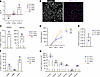 Figure 7
AT1s derived from expanded AT2s exhibit key characteristics. (A) Gene expression quantification using qRT-PCR of alveolar-specific claudins from AT1s (log2 fold change normalized to donor-specific p2 AT2s controls [red dotted line]; n = 4 donors). (B) Immunostaining of AT1s for claudin-18 (white), ZO-1 (fuchsia), and DAPI (cyan). Scale bars: 50 μm. (C) Gene expression quantification using qRT-PCR of secretory ligands from AT1s (2^-ΔΔCT normalized to donor-specific p2 AT2 controls (orange dotted line); n = 3 donors). (D) Total VEGF-A protein quantitation in conditioned media samples collected from AT1s on days 2, 5, and 8 (n = 3 donors; mean ± SD). (E) VEGF-A protein quantitation in conditioned media samples collected from day 8 AT1s. Concentrations normalized to nuclear cell counts from a satellite culture at day 8 (n = 3 donors; 3 independent experiments). (F and G) Gene expression quantification using qRT-PCR of ECM genes from AT1s (2-ΔΔCT normalized to donor-specific p2 AT2s controls (orange dotted line); n = 3 donors). All cells analyzed were expanded AT2-derived AT1s. Data represent mean ± SD.
Paracrine signaling from AT1s in the alveolar niche was recently identified as a critical function during alveologenesis and homeostasis in both mouse and human lungs (58). Enriched expression of the genes encoding signaling ligands, VEGFA, PDGFA, SHH, and WNT7A, has been demonstrated in both human primary and iPS-derived AT1s (40, 58). Gene expression analysis of our day 8 AT1-like cells generated from 3 donors revealed robust enrichment of AT1 secretory ligand mRNA after differentiation, with an average 24-fold increase in PDGFA expression and an average 1,616-fold increase in WNT7A (Figure 7C). Furthermore, recent work using transgenic conditional knockout and reporter mouse models demonstrated that VEGF-A is predominantly expressed by AT1s, rather than AT2s, as originally thought; VEGF-A is required locally to promote alveologenesis (59). VEGF secretion by our AT1s was of particular interest given the intended use of these cells in lung tissue engineering, as we hypothesize that AT1-secreted VEGF could aid in recruiting endothelial cells to distal vascular spaces. Conditioned media was collected from expanded AT2 cultures taken through AT1 differentiation and assayed for VEGF-A using an ELISA. While a low concentration of VEGF-A was secreted by expanded AT2s in T2-Max, VEGF-A secretion increased following culture in T1-Diff and T1-Base, reaching an average 27-fold increase over the differentiation time course (Figure 7, D and E).
In addition to playing a key signaling role in the alveolus, AT1s have been recognized as critical in establishing the alveolar basement membrane (40, 60). Consistent with these reports, gene expression analysis of day 8 AT1-like cells generated from 3 donors revealed enrichment of transcripts encoding essential basement membrane proteins, including laminin-332 (LAMA3, LAMB3, and LAMC2) and collagen IV (Figure 7, F and G) (40, 60). In aggregate, these data demonstrate that expanded AT2s retain the capacity to differentiate into AT1-like cells that display hallmark phenotypical and behavioral characteristics of native AT1s.
Expanded AT2s can sufficiently recellularize porcine scaffolds. To further demonstrate AT2 capacity to differentiate into AT1s at the tissue engineering scale, a total of 2 × 10⁹ expanded AT2s from 2 unique donors were seeded via airway delivery into decellularized porcine lung scaffolds. T2-Max was utilized from days 0–2 to promote growth and fill in across the alveolar surface before initiating differentiation with a switch to T1-Diff on day 3 and maintenance in T1-Base from day 6 until day 9 (Figure 8A). To examine the distribution and phenotype of AT2s over time, a scaffold from each AT2 donor was analyzed at the end of each media phase. Widespread engraftment of AT2s was observed by hematoxylin and eosin stain in sections taken from representative histological samples and was further confirmed through immunostaining and quantitation of cellular coverage of the ECM, which demonstrated that 51% of scaffold area was overlaid by epithelial cells at day 9 (Figure 8B, Supplemental Figure 8A, and Supplemental Video 1). A minor limitation is that the cellular coverage quantification methodology is imperfect. Given the whole scaffold matrix area was quantified, including vascular and interstitial spaces, the methodology underestimates alveolar wall coverage. However, in some instances, the quantification overestimates coverage, such as when tissue orientation makes it difficult to discern if one or both sides of the alveolar septa are fully epithelialized. Cell proliferation was observed in the scaffolds and was highest in T2-Max, with 12% Ki-67–positive cells at day 3, and lowest in T1-Base, with 1% Ki-67–positive cells at day 9 (Supplemental Figure 8, B and C). Cell differentiation coincided with the reduction in proliferation, whereby immunostaining revealed the induction of AT1 marker expression, GPRC5A, paired with a gradual loss of AT2 markers, HT2-280 and pSP-C, over time (Figure 8, C and D). By day 9, only 0.8% cells expressed pSP-C, indicating their strong propensity to differentiate in the context of the scaffold (Supplemental Figure 8D). Expression of additional mature AT1 markers, HT1-56, caveolin-1, EMP2, and RAGE, was also detected by immunostaining at the end of culture in T1-Base, which further confirmed differentiation was underway (Supplemental Figure 8, E and F). Quantification of the percentage of RAGE-positive cells in T1-Base revealed that 36% expressed RAGE on average, with variation based on donor (Supplemental Figure 8G). RNAscope analysis further supported these findings, demonstrating an increasing number of AGER RNA molecules per cell with time in the scaffold and a higher proportion of AGER-positive cells by end of culture compared with RAGE protein expression (76%–99% vs. 36%, Supplemental Figure 8, H and I).
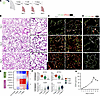 Figure 8
Expanded AT2s can sufficiently recellularize porcine scaffolds. (A) Schematic of recellularization process. (B) H&E tile scans with zoomed insets from cultures taken down on days 3, 6, and 9. Scale bar: 500 μm (tile scans); 50 μm (insets). (C) Immunostaining of HT2-280 (green), GPRC5a (red), and DAPI (white) at each time point across recellularization experiments from 2 AT2 donor banks, with insets showing higher magnification views (cyan box). Scale bars: 50 μm; original magnification, ×20 (insets). (D) Immunostaining of HT2-280 (green), pSP-C (red, blue arrows), and DAPI (white) at each time point, with inset (cyan box). Scale bars: 50 μm. (E) Gene expression quantitation using qRT-PCR of AT2 markers and AT1 markers at each time point relative to AT2s seeded (log2 fold change; n = 2 AT2 donor banks per time point). (F) snRNA-seq marker expression at each time point across recellularization experiments. (G) VEGF-A protein quantitation in conditioned media from recellularized porcine scaffolds (mean ± SD; n = 2 donors).
Bulk gene expression by quantitative real-time PCR also revealed a gradual reduction in AT2 marker expression (SFTPC, ABCA3, NAPSA) that aligned with increased AT1 marker expression (ANKRD1, CLIC5, GPRC5A, PDPN) (Figure 8E). To further investigate cell identity and cell state in the tissue, single-nucleus RNA-seq (snRNA-seq) was performed and confirmed the trend in differentiation noted by the bulk gene expression analysis. There was a clear, stepwise decrease in AT2 markers, SFTPC and SFTPA1, and a corresponding stepwise gain in AT1 markers, AGER and CLIC5 (Figure 8F). Applying the Habermann label transfer method used in Figure 3 to our cells in the scaffold revealed that proliferating epithelial cells were the largest population in T2-Max, transitional AT2s were the largest population in T1-Diff and T1-Base, and AT1s were increasing in proportion over time in culture (Supplemental Figure 8J). The transitional AT2 cluster was enriched for some previously defined transitional genes but was most readily characterized by reduced AT2 and increased AT1 marker expression (Supplemental Figure 8, K and L). As with our expansion dataset (Figure 3), there was a negligible population of KRT5–KRT17+ aberrant basaloid cells. Integration of our expansion and recellularization sequencing datasets further reinforced the differentiation trajectory observed in the scaffold, as SFTPC expression trended lower even in T2-Max compared with P2 and AGER expression did not increase until the scaffold T1-Diff phase (Supplemental Figure 8M). Pathway analysis comparing culture time points in the scaffold showed enrichment for cell cycle–related pathways in T2-Max and ECM remodeling pathways in T1-Base in alignment with expected behaviors of proliferating AT2 and differentiating AT1, respectively (Supplemental Figure 8N).
As noted previously, a critical role for AT1s in vivo is the secretion of VEGF (59). ELISA data using conditioned media collected during the recellularization study showed the gradual induction of VEGF-A secretion, recapitulating a function role for AT1 in the scaffold (Figure 8G). Overall, expanded AT2s cultured in the lung scaffold recapitulated their in vivo propensity to restore alveolar coverage through AT1 differentiation, while also retaining a small population of pSP-C–positive progenitors. Supporting a larger proportion of mature AT1s and pSP-C–positive AT2s will likely require further culture medium supplementation and the incorporation of additional cell types, namely the Axin2-positive mesenchymal cells that appear critical to supporting the alveolar epithelial niche (61).


Copyright © 2026 American Society for Clinical Investigation
ISSN: 0021-9738 (print), 1558-8238 (online)