
Advertisement
Research ArticleHematologyInflammation
Open Access |  10.1172/JCI184285
Mutant p53 promotes clonal hematopoiesis by generating a chronic inflammatory microenvironment
Sisi Chen,1,2 Sergio Barajas,3,4 Sasidhar Vemula,5 Yuxia Yang,5,6 Ed Simpson,7 Hongyu Gao,7 Rudong Li,7 Farzaneh Behzadnia,7 Sarah C. Nabinger,5 David A. Schmitz,5 Hongxia Chen,3,8 Wenjie Cai,3,4 Shiyu Xiao,3 Ruyue Luo,3 Mohammed Abdullahel Amin,3 Maegan L. Capitano,9 James P. Ropa,9 Aidan Fahey,5 Shuyi Zhou,1 Tiffany M. Mays,3 Magdalena Sotelo,3 Hao Pan,3 Sophie K. Hu,3 Sophia Veranga,3 Moiez Ali,3 Maria Shumilina,3 Reuben Kapur,5 Kehan Ren,10 Yuzhi Jia,11 Huiping Liu,11,12 Irum Khan,3,12 Yasmin Abaza,3,12 Jessica K. Altman,3,12 Elizabeth A. Eklund,3,12,13 Lucy A. Godley,3,12 Christine R. Zhang,10,12 Peng Ji,10,12 Seth L. Masters,14 Ben A. Croker,15 H. Scott Boswell,16 George E. Sandusky,17 Zhonghua Gao,18 Lindsey D. Mayo,5 Sharon A. Savage,19 Stephanie Halene,20 Yali Dou,21 Leonidas C. Platanias,3,12,13 Madina Sukhanova,10,12 Yunlong Liu,7 Omar Abdel-Wahab,2 and Yan Liu3,12
1Precision Research Center for Refractory Diseases, Department of Hematology, Shanghai General Hospital, Shanghai Jiao Tong University School of Medicine, Shanghai, China.
2Molecular Pharmacology Program, Sloan Kettering Institute, Memorial Sloan Kettering Cancer Center, New York, New York, USA.
3Department of Medicine, Northwestern University Feinberg School of Medicine, Chicago, Illinois, USA.
4Department of Biochemistry and Molecular Biology, and
5Department of Pediatrics, Herman B. Wells Center for Pediatric Research, Indiana University School of Medicine, Indianapolis, Indiana, USA.
6Department of Medical Genetics, School of Basic Medical Sciences, Peking University, Beijing, China.
7Department of Medical Genetics, Indiana University School of Medicine, Indianapolis, Indiana, USA.
8Department of Hematology and Oncology, Chongqing University Three Gorges Hospital, Chongqing, China.
9Department of Microbiology and Immunology, Indiana University School of Medicine, Indianapolis, Indiana, USA.
10Department of Pathology and
11Department of Pharmacology, Northwestern University Feinberg School of Medicine, Chicago, Illinois, USA.
12Robert H. Lurie Comprehensive Cancer Center, Chicago, Illinois, USA.
13Department of Medicine, Jesse Brown VA Medical Center, Chicago, Illinois, USA.
14The Walter and Eliza Hall Institute of Medical Research, Parkville, Victoria, Australia.
15Department of Pediatrics, University of California San Diego, La Jolla, California, USA.
16Department of Medicine and
17Department of Pathology and Laboratory Medicine, Indiana University School of Medicine, Indianapolis, Indiana, USA.
18Department of Biochemistry and Molecular Biology, College of Medicine, Pennsylvania State University, Hershey, Pennsylvania, USA.
19Clinical Genetics Branch, Division of Cancer Epidemiology and Genetics, National Cancer Institute, Bethesda, Maryland, USA.
20Department of Internal Medicine and Yale Cancer Center, Yale University School of Medicine, New Haven, Connecticut, USA.
21Department of Medicine, University of Southern California, Los Angeles, California, USA.
Address correspondence to: Yan Liu, Department of Medicine, Northwestern University Feinberg School of Medicine, Robert H. Lurie Comprehensive Cancer Center, 303 E. Superior Street, Chicago, Illinois 60611, USA. Phone: 312.503.1504; Email: yan.liu@northwestern.edu. Or to: Omar Abdel-Wahab, Human Oncology and Pathogenesis Program, Memorial Sloan Kettering Cancer Center, 1275 York Avenue, New York, New York 10065, USA. Email: abdelwao@mskcc.org. Or to: Yunlong Liu, Department of Medical Genetics, Indiana University School of Medicine, 1044 W. Walnut Street, Indianapolis, Indiana 46202, USA. Email: yunliu@iu.edu. Or to: Madina Sukhanova, Department of Pathology, Northwestern University Feinberg School of Medicine, 303 E. Superior Street, Chicago, Illinois 60611, USA. Email: madina.sukhanova@northwestern.edu.
Authorship note: SC, SB, S Vemula, and YY contributed equally to this work.
Find articles by Chen, S. in: PubMed | Google Scholar
1Precision Research Center for Refractory Diseases, Department of Hematology, Shanghai General Hospital, Shanghai Jiao Tong University School of Medicine, Shanghai, China.
2Molecular Pharmacology Program, Sloan Kettering Institute, Memorial Sloan Kettering Cancer Center, New York, New York, USA.
3Department of Medicine, Northwestern University Feinberg School of Medicine, Chicago, Illinois, USA.
4Department of Biochemistry and Molecular Biology, and
5Department of Pediatrics, Herman B. Wells Center for Pediatric Research, Indiana University School of Medicine, Indianapolis, Indiana, USA.
6Department of Medical Genetics, School of Basic Medical Sciences, Peking University, Beijing, China.
7Department of Medical Genetics, Indiana University School of Medicine, Indianapolis, Indiana, USA.
8Department of Hematology and Oncology, Chongqing University Three Gorges Hospital, Chongqing, China.
9Department of Microbiology and Immunology, Indiana University School of Medicine, Indianapolis, Indiana, USA.
10Department of Pathology and
11Department of Pharmacology, Northwestern University Feinberg School of Medicine, Chicago, Illinois, USA.
12Robert H. Lurie Comprehensive Cancer Center, Chicago, Illinois, USA.
13Department of Medicine, Jesse Brown VA Medical Center, Chicago, Illinois, USA.
14The Walter and Eliza Hall Institute of Medical Research, Parkville, Victoria, Australia.
15Department of Pediatrics, University of California San Diego, La Jolla, California, USA.
16Department of Medicine and
17Department of Pathology and Laboratory Medicine, Indiana University School of Medicine, Indianapolis, Indiana, USA.
18Department of Biochemistry and Molecular Biology, College of Medicine, Pennsylvania State University, Hershey, Pennsylvania, USA.
19Clinical Genetics Branch, Division of Cancer Epidemiology and Genetics, National Cancer Institute, Bethesda, Maryland, USA.
20Department of Internal Medicine and Yale Cancer Center, Yale University School of Medicine, New Haven, Connecticut, USA.
21Department of Medicine, University of Southern California, Los Angeles, California, USA.
Address correspondence to: Yan Liu, Department of Medicine, Northwestern University Feinberg School of Medicine, Robert H. Lurie Comprehensive Cancer Center, 303 E. Superior Street, Chicago, Illinois 60611, USA. Phone: 312.503.1504; Email: yan.liu@northwestern.edu. Or to: Omar Abdel-Wahab, Human Oncology and Pathogenesis Program, Memorial Sloan Kettering Cancer Center, 1275 York Avenue, New York, New York 10065, USA. Email: abdelwao@mskcc.org. Or to: Yunlong Liu, Department of Medical Genetics, Indiana University School of Medicine, 1044 W. Walnut Street, Indianapolis, Indiana 46202, USA. Email: yunliu@iu.edu. Or to: Madina Sukhanova, Department of Pathology, Northwestern University Feinberg School of Medicine, 303 E. Superior Street, Chicago, Illinois 60611, USA. Email: madina.sukhanova@northwestern.edu.
Authorship note: SC, SB, S Vemula, and YY contributed equally to this work.
Find articles by Barajas, S. in: PubMed | Google Scholar
1Precision Research Center for Refractory Diseases, Department of Hematology, Shanghai General Hospital, Shanghai Jiao Tong University School of Medicine, Shanghai, China.
2Molecular Pharmacology Program, Sloan Kettering Institute, Memorial Sloan Kettering Cancer Center, New York, New York, USA.
3Department of Medicine, Northwestern University Feinberg School of Medicine, Chicago, Illinois, USA.
4Department of Biochemistry and Molecular Biology, and
5Department of Pediatrics, Herman B. Wells Center for Pediatric Research, Indiana University School of Medicine, Indianapolis, Indiana, USA.
6Department of Medical Genetics, School of Basic Medical Sciences, Peking University, Beijing, China.
7Department of Medical Genetics, Indiana University School of Medicine, Indianapolis, Indiana, USA.
8Department of Hematology and Oncology, Chongqing University Three Gorges Hospital, Chongqing, China.
9Department of Microbiology and Immunology, Indiana University School of Medicine, Indianapolis, Indiana, USA.
10Department of Pathology and
11Department of Pharmacology, Northwestern University Feinberg School of Medicine, Chicago, Illinois, USA.
12Robert H. Lurie Comprehensive Cancer Center, Chicago, Illinois, USA.
13Department of Medicine, Jesse Brown VA Medical Center, Chicago, Illinois, USA.
14The Walter and Eliza Hall Institute of Medical Research, Parkville, Victoria, Australia.
15Department of Pediatrics, University of California San Diego, La Jolla, California, USA.
16Department of Medicine and
17Department of Pathology and Laboratory Medicine, Indiana University School of Medicine, Indianapolis, Indiana, USA.
18Department of Biochemistry and Molecular Biology, College of Medicine, Pennsylvania State University, Hershey, Pennsylvania, USA.
19Clinical Genetics Branch, Division of Cancer Epidemiology and Genetics, National Cancer Institute, Bethesda, Maryland, USA.
20Department of Internal Medicine and Yale Cancer Center, Yale University School of Medicine, New Haven, Connecticut, USA.
21Department of Medicine, University of Southern California, Los Angeles, California, USA.
Address correspondence to: Yan Liu, Department of Medicine, Northwestern University Feinberg School of Medicine, Robert H. Lurie Comprehensive Cancer Center, 303 E. Superior Street, Chicago, Illinois 60611, USA. Phone: 312.503.1504; Email: yan.liu@northwestern.edu. Or to: Omar Abdel-Wahab, Human Oncology and Pathogenesis Program, Memorial Sloan Kettering Cancer Center, 1275 York Avenue, New York, New York 10065, USA. Email: abdelwao@mskcc.org. Or to: Yunlong Liu, Department of Medical Genetics, Indiana University School of Medicine, 1044 W. Walnut Street, Indianapolis, Indiana 46202, USA. Email: yunliu@iu.edu. Or to: Madina Sukhanova, Department of Pathology, Northwestern University Feinberg School of Medicine, 303 E. Superior Street, Chicago, Illinois 60611, USA. Email: madina.sukhanova@northwestern.edu.
Authorship note: SC, SB, S Vemula, and YY contributed equally to this work.
Find articles by Vemula, S. in: PubMed | Google Scholar
1Precision Research Center for Refractory Diseases, Department of Hematology, Shanghai General Hospital, Shanghai Jiao Tong University School of Medicine, Shanghai, China.
2Molecular Pharmacology Program, Sloan Kettering Institute, Memorial Sloan Kettering Cancer Center, New York, New York, USA.
3Department of Medicine, Northwestern University Feinberg School of Medicine, Chicago, Illinois, USA.
4Department of Biochemistry and Molecular Biology, and
5Department of Pediatrics, Herman B. Wells Center for Pediatric Research, Indiana University School of Medicine, Indianapolis, Indiana, USA.
6Department of Medical Genetics, School of Basic Medical Sciences, Peking University, Beijing, China.
7Department of Medical Genetics, Indiana University School of Medicine, Indianapolis, Indiana, USA.
8Department of Hematology and Oncology, Chongqing University Three Gorges Hospital, Chongqing, China.
9Department of Microbiology and Immunology, Indiana University School of Medicine, Indianapolis, Indiana, USA.
10Department of Pathology and
11Department of Pharmacology, Northwestern University Feinberg School of Medicine, Chicago, Illinois, USA.
12Robert H. Lurie Comprehensive Cancer Center, Chicago, Illinois, USA.
13Department of Medicine, Jesse Brown VA Medical Center, Chicago, Illinois, USA.
14The Walter and Eliza Hall Institute of Medical Research, Parkville, Victoria, Australia.
15Department of Pediatrics, University of California San Diego, La Jolla, California, USA.
16Department of Medicine and
17Department of Pathology and Laboratory Medicine, Indiana University School of Medicine, Indianapolis, Indiana, USA.
18Department of Biochemistry and Molecular Biology, College of Medicine, Pennsylvania State University, Hershey, Pennsylvania, USA.
19Clinical Genetics Branch, Division of Cancer Epidemiology and Genetics, National Cancer Institute, Bethesda, Maryland, USA.
20Department of Internal Medicine and Yale Cancer Center, Yale University School of Medicine, New Haven, Connecticut, USA.
21Department of Medicine, University of Southern California, Los Angeles, California, USA.
Address correspondence to: Yan Liu, Department of Medicine, Northwestern University Feinberg School of Medicine, Robert H. Lurie Comprehensive Cancer Center, 303 E. Superior Street, Chicago, Illinois 60611, USA. Phone: 312.503.1504; Email: yan.liu@northwestern.edu. Or to: Omar Abdel-Wahab, Human Oncology and Pathogenesis Program, Memorial Sloan Kettering Cancer Center, 1275 York Avenue, New York, New York 10065, USA. Email: abdelwao@mskcc.org. Or to: Yunlong Liu, Department of Medical Genetics, Indiana University School of Medicine, 1044 W. Walnut Street, Indianapolis, Indiana 46202, USA. Email: yunliu@iu.edu. Or to: Madina Sukhanova, Department of Pathology, Northwestern University Feinberg School of Medicine, 303 E. Superior Street, Chicago, Illinois 60611, USA. Email: madina.sukhanova@northwestern.edu.
Authorship note: SC, SB, S Vemula, and YY contributed equally to this work.
Find articles by Yang, Y. in: PubMed | Google Scholar
1Precision Research Center for Refractory Diseases, Department of Hematology, Shanghai General Hospital, Shanghai Jiao Tong University School of Medicine, Shanghai, China.
2Molecular Pharmacology Program, Sloan Kettering Institute, Memorial Sloan Kettering Cancer Center, New York, New York, USA.
3Department of Medicine, Northwestern University Feinberg School of Medicine, Chicago, Illinois, USA.
4Department of Biochemistry and Molecular Biology, and
5Department of Pediatrics, Herman B. Wells Center for Pediatric Research, Indiana University School of Medicine, Indianapolis, Indiana, USA.
6Department of Medical Genetics, School of Basic Medical Sciences, Peking University, Beijing, China.
7Department of Medical Genetics, Indiana University School of Medicine, Indianapolis, Indiana, USA.
8Department of Hematology and Oncology, Chongqing University Three Gorges Hospital, Chongqing, China.
9Department of Microbiology and Immunology, Indiana University School of Medicine, Indianapolis, Indiana, USA.
10Department of Pathology and
11Department of Pharmacology, Northwestern University Feinberg School of Medicine, Chicago, Illinois, USA.
12Robert H. Lurie Comprehensive Cancer Center, Chicago, Illinois, USA.
13Department of Medicine, Jesse Brown VA Medical Center, Chicago, Illinois, USA.
14The Walter and Eliza Hall Institute of Medical Research, Parkville, Victoria, Australia.
15Department of Pediatrics, University of California San Diego, La Jolla, California, USA.
16Department of Medicine and
17Department of Pathology and Laboratory Medicine, Indiana University School of Medicine, Indianapolis, Indiana, USA.
18Department of Biochemistry and Molecular Biology, College of Medicine, Pennsylvania State University, Hershey, Pennsylvania, USA.
19Clinical Genetics Branch, Division of Cancer Epidemiology and Genetics, National Cancer Institute, Bethesda, Maryland, USA.
20Department of Internal Medicine and Yale Cancer Center, Yale University School of Medicine, New Haven, Connecticut, USA.
21Department of Medicine, University of Southern California, Los Angeles, California, USA.
Address correspondence to: Yan Liu, Department of Medicine, Northwestern University Feinberg School of Medicine, Robert H. Lurie Comprehensive Cancer Center, 303 E. Superior Street, Chicago, Illinois 60611, USA. Phone: 312.503.1504; Email: yan.liu@northwestern.edu. Or to: Omar Abdel-Wahab, Human Oncology and Pathogenesis Program, Memorial Sloan Kettering Cancer Center, 1275 York Avenue, New York, New York 10065, USA. Email: abdelwao@mskcc.org. Or to: Yunlong Liu, Department of Medical Genetics, Indiana University School of Medicine, 1044 W. Walnut Street, Indianapolis, Indiana 46202, USA. Email: yunliu@iu.edu. Or to: Madina Sukhanova, Department of Pathology, Northwestern University Feinberg School of Medicine, 303 E. Superior Street, Chicago, Illinois 60611, USA. Email: madina.sukhanova@northwestern.edu.
Authorship note: SC, SB, S Vemula, and YY contributed equally to this work.
Find articles by Simpson, E. in: PubMed | Google Scholar
1Precision Research Center for Refractory Diseases, Department of Hematology, Shanghai General Hospital, Shanghai Jiao Tong University School of Medicine, Shanghai, China.
2Molecular Pharmacology Program, Sloan Kettering Institute, Memorial Sloan Kettering Cancer Center, New York, New York, USA.
3Department of Medicine, Northwestern University Feinberg School of Medicine, Chicago, Illinois, USA.
4Department of Biochemistry and Molecular Biology, and
5Department of Pediatrics, Herman B. Wells Center for Pediatric Research, Indiana University School of Medicine, Indianapolis, Indiana, USA.
6Department of Medical Genetics, School of Basic Medical Sciences, Peking University, Beijing, China.
7Department of Medical Genetics, Indiana University School of Medicine, Indianapolis, Indiana, USA.
8Department of Hematology and Oncology, Chongqing University Three Gorges Hospital, Chongqing, China.
9Department of Microbiology and Immunology, Indiana University School of Medicine, Indianapolis, Indiana, USA.
10Department of Pathology and
11Department of Pharmacology, Northwestern University Feinberg School of Medicine, Chicago, Illinois, USA.
12Robert H. Lurie Comprehensive Cancer Center, Chicago, Illinois, USA.
13Department of Medicine, Jesse Brown VA Medical Center, Chicago, Illinois, USA.
14The Walter and Eliza Hall Institute of Medical Research, Parkville, Victoria, Australia.
15Department of Pediatrics, University of California San Diego, La Jolla, California, USA.
16Department of Medicine and
17Department of Pathology and Laboratory Medicine, Indiana University School of Medicine, Indianapolis, Indiana, USA.
18Department of Biochemistry and Molecular Biology, College of Medicine, Pennsylvania State University, Hershey, Pennsylvania, USA.
19Clinical Genetics Branch, Division of Cancer Epidemiology and Genetics, National Cancer Institute, Bethesda, Maryland, USA.
20Department of Internal Medicine and Yale Cancer Center, Yale University School of Medicine, New Haven, Connecticut, USA.
21Department of Medicine, University of Southern California, Los Angeles, California, USA.
Address correspondence to: Yan Liu, Department of Medicine, Northwestern University Feinberg School of Medicine, Robert H. Lurie Comprehensive Cancer Center, 303 E. Superior Street, Chicago, Illinois 60611, USA. Phone: 312.503.1504; Email: yan.liu@northwestern.edu. Or to: Omar Abdel-Wahab, Human Oncology and Pathogenesis Program, Memorial Sloan Kettering Cancer Center, 1275 York Avenue, New York, New York 10065, USA. Email: abdelwao@mskcc.org. Or to: Yunlong Liu, Department of Medical Genetics, Indiana University School of Medicine, 1044 W. Walnut Street, Indianapolis, Indiana 46202, USA. Email: yunliu@iu.edu. Or to: Madina Sukhanova, Department of Pathology, Northwestern University Feinberg School of Medicine, 303 E. Superior Street, Chicago, Illinois 60611, USA. Email: madina.sukhanova@northwestern.edu.
Authorship note: SC, SB, S Vemula, and YY contributed equally to this work.
Find articles by Gao, H. in: PubMed | Google Scholar
1Precision Research Center for Refractory Diseases, Department of Hematology, Shanghai General Hospital, Shanghai Jiao Tong University School of Medicine, Shanghai, China.
2Molecular Pharmacology Program, Sloan Kettering Institute, Memorial Sloan Kettering Cancer Center, New York, New York, USA.
3Department of Medicine, Northwestern University Feinberg School of Medicine, Chicago, Illinois, USA.
4Department of Biochemistry and Molecular Biology, and
5Department of Pediatrics, Herman B. Wells Center for Pediatric Research, Indiana University School of Medicine, Indianapolis, Indiana, USA.
6Department of Medical Genetics, School of Basic Medical Sciences, Peking University, Beijing, China.
7Department of Medical Genetics, Indiana University School of Medicine, Indianapolis, Indiana, USA.
8Department of Hematology and Oncology, Chongqing University Three Gorges Hospital, Chongqing, China.
9Department of Microbiology and Immunology, Indiana University School of Medicine, Indianapolis, Indiana, USA.
10Department of Pathology and
11Department of Pharmacology, Northwestern University Feinberg School of Medicine, Chicago, Illinois, USA.
12Robert H. Lurie Comprehensive Cancer Center, Chicago, Illinois, USA.
13Department of Medicine, Jesse Brown VA Medical Center, Chicago, Illinois, USA.
14The Walter and Eliza Hall Institute of Medical Research, Parkville, Victoria, Australia.
15Department of Pediatrics, University of California San Diego, La Jolla, California, USA.
16Department of Medicine and
17Department of Pathology and Laboratory Medicine, Indiana University School of Medicine, Indianapolis, Indiana, USA.
18Department of Biochemistry and Molecular Biology, College of Medicine, Pennsylvania State University, Hershey, Pennsylvania, USA.
19Clinical Genetics Branch, Division of Cancer Epidemiology and Genetics, National Cancer Institute, Bethesda, Maryland, USA.
20Department of Internal Medicine and Yale Cancer Center, Yale University School of Medicine, New Haven, Connecticut, USA.
21Department of Medicine, University of Southern California, Los Angeles, California, USA.
Address correspondence to: Yan Liu, Department of Medicine, Northwestern University Feinberg School of Medicine, Robert H. Lurie Comprehensive Cancer Center, 303 E. Superior Street, Chicago, Illinois 60611, USA. Phone: 312.503.1504; Email: yan.liu@northwestern.edu. Or to: Omar Abdel-Wahab, Human Oncology and Pathogenesis Program, Memorial Sloan Kettering Cancer Center, 1275 York Avenue, New York, New York 10065, USA. Email: abdelwao@mskcc.org. Or to: Yunlong Liu, Department of Medical Genetics, Indiana University School of Medicine, 1044 W. Walnut Street, Indianapolis, Indiana 46202, USA. Email: yunliu@iu.edu. Or to: Madina Sukhanova, Department of Pathology, Northwestern University Feinberg School of Medicine, 303 E. Superior Street, Chicago, Illinois 60611, USA. Email: madina.sukhanova@northwestern.edu.
Authorship note: SC, SB, S Vemula, and YY contributed equally to this work.
Find articles by Li, R. in: PubMed | Google Scholar
1Precision Research Center for Refractory Diseases, Department of Hematology, Shanghai General Hospital, Shanghai Jiao Tong University School of Medicine, Shanghai, China.
2Molecular Pharmacology Program, Sloan Kettering Institute, Memorial Sloan Kettering Cancer Center, New York, New York, USA.
3Department of Medicine, Northwestern University Feinberg School of Medicine, Chicago, Illinois, USA.
4Department of Biochemistry and Molecular Biology, and
5Department of Pediatrics, Herman B. Wells Center for Pediatric Research, Indiana University School of Medicine, Indianapolis, Indiana, USA.
6Department of Medical Genetics, School of Basic Medical Sciences, Peking University, Beijing, China.
7Department of Medical Genetics, Indiana University School of Medicine, Indianapolis, Indiana, USA.
8Department of Hematology and Oncology, Chongqing University Three Gorges Hospital, Chongqing, China.
9Department of Microbiology and Immunology, Indiana University School of Medicine, Indianapolis, Indiana, USA.
10Department of Pathology and
11Department of Pharmacology, Northwestern University Feinberg School of Medicine, Chicago, Illinois, USA.
12Robert H. Lurie Comprehensive Cancer Center, Chicago, Illinois, USA.
13Department of Medicine, Jesse Brown VA Medical Center, Chicago, Illinois, USA.
14The Walter and Eliza Hall Institute of Medical Research, Parkville, Victoria, Australia.
15Department of Pediatrics, University of California San Diego, La Jolla, California, USA.
16Department of Medicine and
17Department of Pathology and Laboratory Medicine, Indiana University School of Medicine, Indianapolis, Indiana, USA.
18Department of Biochemistry and Molecular Biology, College of Medicine, Pennsylvania State University, Hershey, Pennsylvania, USA.
19Clinical Genetics Branch, Division of Cancer Epidemiology and Genetics, National Cancer Institute, Bethesda, Maryland, USA.
20Department of Internal Medicine and Yale Cancer Center, Yale University School of Medicine, New Haven, Connecticut, USA.
21Department of Medicine, University of Southern California, Los Angeles, California, USA.
Address correspondence to: Yan Liu, Department of Medicine, Northwestern University Feinberg School of Medicine, Robert H. Lurie Comprehensive Cancer Center, 303 E. Superior Street, Chicago, Illinois 60611, USA. Phone: 312.503.1504; Email: yan.liu@northwestern.edu. Or to: Omar Abdel-Wahab, Human Oncology and Pathogenesis Program, Memorial Sloan Kettering Cancer Center, 1275 York Avenue, New York, New York 10065, USA. Email: abdelwao@mskcc.org. Or to: Yunlong Liu, Department of Medical Genetics, Indiana University School of Medicine, 1044 W. Walnut Street, Indianapolis, Indiana 46202, USA. Email: yunliu@iu.edu. Or to: Madina Sukhanova, Department of Pathology, Northwestern University Feinberg School of Medicine, 303 E. Superior Street, Chicago, Illinois 60611, USA. Email: madina.sukhanova@northwestern.edu.
Authorship note: SC, SB, S Vemula, and YY contributed equally to this work.
Find articles by Behzadnia, F. in: PubMed | Google Scholar
1Precision Research Center for Refractory Diseases, Department of Hematology, Shanghai General Hospital, Shanghai Jiao Tong University School of Medicine, Shanghai, China.
2Molecular Pharmacology Program, Sloan Kettering Institute, Memorial Sloan Kettering Cancer Center, New York, New York, USA.
3Department of Medicine, Northwestern University Feinberg School of Medicine, Chicago, Illinois, USA.
4Department of Biochemistry and Molecular Biology, and
5Department of Pediatrics, Herman B. Wells Center for Pediatric Research, Indiana University School of Medicine, Indianapolis, Indiana, USA.
6Department of Medical Genetics, School of Basic Medical Sciences, Peking University, Beijing, China.
7Department of Medical Genetics, Indiana University School of Medicine, Indianapolis, Indiana, USA.
8Department of Hematology and Oncology, Chongqing University Three Gorges Hospital, Chongqing, China.
9Department of Microbiology and Immunology, Indiana University School of Medicine, Indianapolis, Indiana, USA.
10Department of Pathology and
11Department of Pharmacology, Northwestern University Feinberg School of Medicine, Chicago, Illinois, USA.
12Robert H. Lurie Comprehensive Cancer Center, Chicago, Illinois, USA.
13Department of Medicine, Jesse Brown VA Medical Center, Chicago, Illinois, USA.
14The Walter and Eliza Hall Institute of Medical Research, Parkville, Victoria, Australia.
15Department of Pediatrics, University of California San Diego, La Jolla, California, USA.
16Department of Medicine and
17Department of Pathology and Laboratory Medicine, Indiana University School of Medicine, Indianapolis, Indiana, USA.
18Department of Biochemistry and Molecular Biology, College of Medicine, Pennsylvania State University, Hershey, Pennsylvania, USA.
19Clinical Genetics Branch, Division of Cancer Epidemiology and Genetics, National Cancer Institute, Bethesda, Maryland, USA.
20Department of Internal Medicine and Yale Cancer Center, Yale University School of Medicine, New Haven, Connecticut, USA.
21Department of Medicine, University of Southern California, Los Angeles, California, USA.
Address correspondence to: Yan Liu, Department of Medicine, Northwestern University Feinberg School of Medicine, Robert H. Lurie Comprehensive Cancer Center, 303 E. Superior Street, Chicago, Illinois 60611, USA. Phone: 312.503.1504; Email: yan.liu@northwestern.edu. Or to: Omar Abdel-Wahab, Human Oncology and Pathogenesis Program, Memorial Sloan Kettering Cancer Center, 1275 York Avenue, New York, New York 10065, USA. Email: abdelwao@mskcc.org. Or to: Yunlong Liu, Department of Medical Genetics, Indiana University School of Medicine, 1044 W. Walnut Street, Indianapolis, Indiana 46202, USA. Email: yunliu@iu.edu. Or to: Madina Sukhanova, Department of Pathology, Northwestern University Feinberg School of Medicine, 303 E. Superior Street, Chicago, Illinois 60611, USA. Email: madina.sukhanova@northwestern.edu.
Authorship note: SC, SB, S Vemula, and YY contributed equally to this work.
Find articles by Nabinger, S. in: PubMed | Google Scholar
1Precision Research Center for Refractory Diseases, Department of Hematology, Shanghai General Hospital, Shanghai Jiao Tong University School of Medicine, Shanghai, China.
2Molecular Pharmacology Program, Sloan Kettering Institute, Memorial Sloan Kettering Cancer Center, New York, New York, USA.
3Department of Medicine, Northwestern University Feinberg School of Medicine, Chicago, Illinois, USA.
4Department of Biochemistry and Molecular Biology, and
5Department of Pediatrics, Herman B. Wells Center for Pediatric Research, Indiana University School of Medicine, Indianapolis, Indiana, USA.
6Department of Medical Genetics, School of Basic Medical Sciences, Peking University, Beijing, China.
7Department of Medical Genetics, Indiana University School of Medicine, Indianapolis, Indiana, USA.
8Department of Hematology and Oncology, Chongqing University Three Gorges Hospital, Chongqing, China.
9Department of Microbiology and Immunology, Indiana University School of Medicine, Indianapolis, Indiana, USA.
10Department of Pathology and
11Department of Pharmacology, Northwestern University Feinberg School of Medicine, Chicago, Illinois, USA.
12Robert H. Lurie Comprehensive Cancer Center, Chicago, Illinois, USA.
13Department of Medicine, Jesse Brown VA Medical Center, Chicago, Illinois, USA.
14The Walter and Eliza Hall Institute of Medical Research, Parkville, Victoria, Australia.
15Department of Pediatrics, University of California San Diego, La Jolla, California, USA.
16Department of Medicine and
17Department of Pathology and Laboratory Medicine, Indiana University School of Medicine, Indianapolis, Indiana, USA.
18Department of Biochemistry and Molecular Biology, College of Medicine, Pennsylvania State University, Hershey, Pennsylvania, USA.
19Clinical Genetics Branch, Division of Cancer Epidemiology and Genetics, National Cancer Institute, Bethesda, Maryland, USA.
20Department of Internal Medicine and Yale Cancer Center, Yale University School of Medicine, New Haven, Connecticut, USA.
21Department of Medicine, University of Southern California, Los Angeles, California, USA.
Address correspondence to: Yan Liu, Department of Medicine, Northwestern University Feinberg School of Medicine, Robert H. Lurie Comprehensive Cancer Center, 303 E. Superior Street, Chicago, Illinois 60611, USA. Phone: 312.503.1504; Email: yan.liu@northwestern.edu. Or to: Omar Abdel-Wahab, Human Oncology and Pathogenesis Program, Memorial Sloan Kettering Cancer Center, 1275 York Avenue, New York, New York 10065, USA. Email: abdelwao@mskcc.org. Or to: Yunlong Liu, Department of Medical Genetics, Indiana University School of Medicine, 1044 W. Walnut Street, Indianapolis, Indiana 46202, USA. Email: yunliu@iu.edu. Or to: Madina Sukhanova, Department of Pathology, Northwestern University Feinberg School of Medicine, 303 E. Superior Street, Chicago, Illinois 60611, USA. Email: madina.sukhanova@northwestern.edu.
Authorship note: SC, SB, S Vemula, and YY contributed equally to this work.
Find articles by Schmitz, D. in: PubMed | Google Scholar
1Precision Research Center for Refractory Diseases, Department of Hematology, Shanghai General Hospital, Shanghai Jiao Tong University School of Medicine, Shanghai, China.
2Molecular Pharmacology Program, Sloan Kettering Institute, Memorial Sloan Kettering Cancer Center, New York, New York, USA.
3Department of Medicine, Northwestern University Feinberg School of Medicine, Chicago, Illinois, USA.
4Department of Biochemistry and Molecular Biology, and
5Department of Pediatrics, Herman B. Wells Center for Pediatric Research, Indiana University School of Medicine, Indianapolis, Indiana, USA.
6Department of Medical Genetics, School of Basic Medical Sciences, Peking University, Beijing, China.
7Department of Medical Genetics, Indiana University School of Medicine, Indianapolis, Indiana, USA.
8Department of Hematology and Oncology, Chongqing University Three Gorges Hospital, Chongqing, China.
9Department of Microbiology and Immunology, Indiana University School of Medicine, Indianapolis, Indiana, USA.
10Department of Pathology and
11Department of Pharmacology, Northwestern University Feinberg School of Medicine, Chicago, Illinois, USA.
12Robert H. Lurie Comprehensive Cancer Center, Chicago, Illinois, USA.
13Department of Medicine, Jesse Brown VA Medical Center, Chicago, Illinois, USA.
14The Walter and Eliza Hall Institute of Medical Research, Parkville, Victoria, Australia.
15Department of Pediatrics, University of California San Diego, La Jolla, California, USA.
16Department of Medicine and
17Department of Pathology and Laboratory Medicine, Indiana University School of Medicine, Indianapolis, Indiana, USA.
18Department of Biochemistry and Molecular Biology, College of Medicine, Pennsylvania State University, Hershey, Pennsylvania, USA.
19Clinical Genetics Branch, Division of Cancer Epidemiology and Genetics, National Cancer Institute, Bethesda, Maryland, USA.
20Department of Internal Medicine and Yale Cancer Center, Yale University School of Medicine, New Haven, Connecticut, USA.
21Department of Medicine, University of Southern California, Los Angeles, California, USA.
Address correspondence to: Yan Liu, Department of Medicine, Northwestern University Feinberg School of Medicine, Robert H. Lurie Comprehensive Cancer Center, 303 E. Superior Street, Chicago, Illinois 60611, USA. Phone: 312.503.1504; Email: yan.liu@northwestern.edu. Or to: Omar Abdel-Wahab, Human Oncology and Pathogenesis Program, Memorial Sloan Kettering Cancer Center, 1275 York Avenue, New York, New York 10065, USA. Email: abdelwao@mskcc.org. Or to: Yunlong Liu, Department of Medical Genetics, Indiana University School of Medicine, 1044 W. Walnut Street, Indianapolis, Indiana 46202, USA. Email: yunliu@iu.edu. Or to: Madina Sukhanova, Department of Pathology, Northwestern University Feinberg School of Medicine, 303 E. Superior Street, Chicago, Illinois 60611, USA. Email: madina.sukhanova@northwestern.edu.
Authorship note: SC, SB, S Vemula, and YY contributed equally to this work.
Find articles by Chen, H. in: PubMed | Google Scholar
1Precision Research Center for Refractory Diseases, Department of Hematology, Shanghai General Hospital, Shanghai Jiao Tong University School of Medicine, Shanghai, China.
2Molecular Pharmacology Program, Sloan Kettering Institute, Memorial Sloan Kettering Cancer Center, New York, New York, USA.
3Department of Medicine, Northwestern University Feinberg School of Medicine, Chicago, Illinois, USA.
4Department of Biochemistry and Molecular Biology, and
5Department of Pediatrics, Herman B. Wells Center for Pediatric Research, Indiana University School of Medicine, Indianapolis, Indiana, USA.
6Department of Medical Genetics, School of Basic Medical Sciences, Peking University, Beijing, China.
7Department of Medical Genetics, Indiana University School of Medicine, Indianapolis, Indiana, USA.
8Department of Hematology and Oncology, Chongqing University Three Gorges Hospital, Chongqing, China.
9Department of Microbiology and Immunology, Indiana University School of Medicine, Indianapolis, Indiana, USA.
10Department of Pathology and
11Department of Pharmacology, Northwestern University Feinberg School of Medicine, Chicago, Illinois, USA.
12Robert H. Lurie Comprehensive Cancer Center, Chicago, Illinois, USA.
13Department of Medicine, Jesse Brown VA Medical Center, Chicago, Illinois, USA.
14The Walter and Eliza Hall Institute of Medical Research, Parkville, Victoria, Australia.
15Department of Pediatrics, University of California San Diego, La Jolla, California, USA.
16Department of Medicine and
17Department of Pathology and Laboratory Medicine, Indiana University School of Medicine, Indianapolis, Indiana, USA.
18Department of Biochemistry and Molecular Biology, College of Medicine, Pennsylvania State University, Hershey, Pennsylvania, USA.
19Clinical Genetics Branch, Division of Cancer Epidemiology and Genetics, National Cancer Institute, Bethesda, Maryland, USA.
20Department of Internal Medicine and Yale Cancer Center, Yale University School of Medicine, New Haven, Connecticut, USA.
21Department of Medicine, University of Southern California, Los Angeles, California, USA.
Address correspondence to: Yan Liu, Department of Medicine, Northwestern University Feinberg School of Medicine, Robert H. Lurie Comprehensive Cancer Center, 303 E. Superior Street, Chicago, Illinois 60611, USA. Phone: 312.503.1504; Email: yan.liu@northwestern.edu. Or to: Omar Abdel-Wahab, Human Oncology and Pathogenesis Program, Memorial Sloan Kettering Cancer Center, 1275 York Avenue, New York, New York 10065, USA. Email: abdelwao@mskcc.org. Or to: Yunlong Liu, Department of Medical Genetics, Indiana University School of Medicine, 1044 W. Walnut Street, Indianapolis, Indiana 46202, USA. Email: yunliu@iu.edu. Or to: Madina Sukhanova, Department of Pathology, Northwestern University Feinberg School of Medicine, 303 E. Superior Street, Chicago, Illinois 60611, USA. Email: madina.sukhanova@northwestern.edu.
Authorship note: SC, SB, S Vemula, and YY contributed equally to this work.
Find articles by Cai, W. in: PubMed | Google Scholar
1Precision Research Center for Refractory Diseases, Department of Hematology, Shanghai General Hospital, Shanghai Jiao Tong University School of Medicine, Shanghai, China.
2Molecular Pharmacology Program, Sloan Kettering Institute, Memorial Sloan Kettering Cancer Center, New York, New York, USA.
3Department of Medicine, Northwestern University Feinberg School of Medicine, Chicago, Illinois, USA.
4Department of Biochemistry and Molecular Biology, and
5Department of Pediatrics, Herman B. Wells Center for Pediatric Research, Indiana University School of Medicine, Indianapolis, Indiana, USA.
6Department of Medical Genetics, School of Basic Medical Sciences, Peking University, Beijing, China.
7Department of Medical Genetics, Indiana University School of Medicine, Indianapolis, Indiana, USA.
8Department of Hematology and Oncology, Chongqing University Three Gorges Hospital, Chongqing, China.
9Department of Microbiology and Immunology, Indiana University School of Medicine, Indianapolis, Indiana, USA.
10Department of Pathology and
11Department of Pharmacology, Northwestern University Feinberg School of Medicine, Chicago, Illinois, USA.
12Robert H. Lurie Comprehensive Cancer Center, Chicago, Illinois, USA.
13Department of Medicine, Jesse Brown VA Medical Center, Chicago, Illinois, USA.
14The Walter and Eliza Hall Institute of Medical Research, Parkville, Victoria, Australia.
15Department of Pediatrics, University of California San Diego, La Jolla, California, USA.
16Department of Medicine and
17Department of Pathology and Laboratory Medicine, Indiana University School of Medicine, Indianapolis, Indiana, USA.
18Department of Biochemistry and Molecular Biology, College of Medicine, Pennsylvania State University, Hershey, Pennsylvania, USA.
19Clinical Genetics Branch, Division of Cancer Epidemiology and Genetics, National Cancer Institute, Bethesda, Maryland, USA.
20Department of Internal Medicine and Yale Cancer Center, Yale University School of Medicine, New Haven, Connecticut, USA.
21Department of Medicine, University of Southern California, Los Angeles, California, USA.
Address correspondence to: Yan Liu, Department of Medicine, Northwestern University Feinberg School of Medicine, Robert H. Lurie Comprehensive Cancer Center, 303 E. Superior Street, Chicago, Illinois 60611, USA. Phone: 312.503.1504; Email: yan.liu@northwestern.edu. Or to: Omar Abdel-Wahab, Human Oncology and Pathogenesis Program, Memorial Sloan Kettering Cancer Center, 1275 York Avenue, New York, New York 10065, USA. Email: abdelwao@mskcc.org. Or to: Yunlong Liu, Department of Medical Genetics, Indiana University School of Medicine, 1044 W. Walnut Street, Indianapolis, Indiana 46202, USA. Email: yunliu@iu.edu. Or to: Madina Sukhanova, Department of Pathology, Northwestern University Feinberg School of Medicine, 303 E. Superior Street, Chicago, Illinois 60611, USA. Email: madina.sukhanova@northwestern.edu.
Authorship note: SC, SB, S Vemula, and YY contributed equally to this work.
Find articles by
Xiao, S.
in:
PubMed
|
Google Scholar
|

1Precision Research Center for Refractory Diseases, Department of Hematology, Shanghai General Hospital, Shanghai Jiao Tong University School of Medicine, Shanghai, China.
2Molecular Pharmacology Program, Sloan Kettering Institute, Memorial Sloan Kettering Cancer Center, New York, New York, USA.
3Department of Medicine, Northwestern University Feinberg School of Medicine, Chicago, Illinois, USA.
4Department of Biochemistry and Molecular Biology, and
5Department of Pediatrics, Herman B. Wells Center for Pediatric Research, Indiana University School of Medicine, Indianapolis, Indiana, USA.
6Department of Medical Genetics, School of Basic Medical Sciences, Peking University, Beijing, China.
7Department of Medical Genetics, Indiana University School of Medicine, Indianapolis, Indiana, USA.
8Department of Hematology and Oncology, Chongqing University Three Gorges Hospital, Chongqing, China.
9Department of Microbiology and Immunology, Indiana University School of Medicine, Indianapolis, Indiana, USA.
10Department of Pathology and
11Department of Pharmacology, Northwestern University Feinberg School of Medicine, Chicago, Illinois, USA.
12Robert H. Lurie Comprehensive Cancer Center, Chicago, Illinois, USA.
13Department of Medicine, Jesse Brown VA Medical Center, Chicago, Illinois, USA.
14The Walter and Eliza Hall Institute of Medical Research, Parkville, Victoria, Australia.
15Department of Pediatrics, University of California San Diego, La Jolla, California, USA.
16Department of Medicine and
17Department of Pathology and Laboratory Medicine, Indiana University School of Medicine, Indianapolis, Indiana, USA.
18Department of Biochemistry and Molecular Biology, College of Medicine, Pennsylvania State University, Hershey, Pennsylvania, USA.
19Clinical Genetics Branch, Division of Cancer Epidemiology and Genetics, National Cancer Institute, Bethesda, Maryland, USA.
20Department of Internal Medicine and Yale Cancer Center, Yale University School of Medicine, New Haven, Connecticut, USA.
21Department of Medicine, University of Southern California, Los Angeles, California, USA.
Address correspondence to: Yan Liu, Department of Medicine, Northwestern University Feinberg School of Medicine, Robert H. Lurie Comprehensive Cancer Center, 303 E. Superior Street, Chicago, Illinois 60611, USA. Phone: 312.503.1504; Email: yan.liu@northwestern.edu. Or to: Omar Abdel-Wahab, Human Oncology and Pathogenesis Program, Memorial Sloan Kettering Cancer Center, 1275 York Avenue, New York, New York 10065, USA. Email: abdelwao@mskcc.org. Or to: Yunlong Liu, Department of Medical Genetics, Indiana University School of Medicine, 1044 W. Walnut Street, Indianapolis, Indiana 46202, USA. Email: yunliu@iu.edu. Or to: Madina Sukhanova, Department of Pathology, Northwestern University Feinberg School of Medicine, 303 E. Superior Street, Chicago, Illinois 60611, USA. Email: madina.sukhanova@northwestern.edu.
Authorship note: SC, SB, S Vemula, and YY contributed equally to this work.
Find articles by Luo, R. in: PubMed | Google Scholar
1Precision Research Center for Refractory Diseases, Department of Hematology, Shanghai General Hospital, Shanghai Jiao Tong University School of Medicine, Shanghai, China.
2Molecular Pharmacology Program, Sloan Kettering Institute, Memorial Sloan Kettering Cancer Center, New York, New York, USA.
3Department of Medicine, Northwestern University Feinberg School of Medicine, Chicago, Illinois, USA.
4Department of Biochemistry and Molecular Biology, and
5Department of Pediatrics, Herman B. Wells Center for Pediatric Research, Indiana University School of Medicine, Indianapolis, Indiana, USA.
6Department of Medical Genetics, School of Basic Medical Sciences, Peking University, Beijing, China.
7Department of Medical Genetics, Indiana University School of Medicine, Indianapolis, Indiana, USA.
8Department of Hematology and Oncology, Chongqing University Three Gorges Hospital, Chongqing, China.
9Department of Microbiology and Immunology, Indiana University School of Medicine, Indianapolis, Indiana, USA.
10Department of Pathology and
11Department of Pharmacology, Northwestern University Feinberg School of Medicine, Chicago, Illinois, USA.
12Robert H. Lurie Comprehensive Cancer Center, Chicago, Illinois, USA.
13Department of Medicine, Jesse Brown VA Medical Center, Chicago, Illinois, USA.
14The Walter and Eliza Hall Institute of Medical Research, Parkville, Victoria, Australia.
15Department of Pediatrics, University of California San Diego, La Jolla, California, USA.
16Department of Medicine and
17Department of Pathology and Laboratory Medicine, Indiana University School of Medicine, Indianapolis, Indiana, USA.
18Department of Biochemistry and Molecular Biology, College of Medicine, Pennsylvania State University, Hershey, Pennsylvania, USA.
19Clinical Genetics Branch, Division of Cancer Epidemiology and Genetics, National Cancer Institute, Bethesda, Maryland, USA.
20Department of Internal Medicine and Yale Cancer Center, Yale University School of Medicine, New Haven, Connecticut, USA.
21Department of Medicine, University of Southern California, Los Angeles, California, USA.
Address correspondence to: Yan Liu, Department of Medicine, Northwestern University Feinberg School of Medicine, Robert H. Lurie Comprehensive Cancer Center, 303 E. Superior Street, Chicago, Illinois 60611, USA. Phone: 312.503.1504; Email: yan.liu@northwestern.edu. Or to: Omar Abdel-Wahab, Human Oncology and Pathogenesis Program, Memorial Sloan Kettering Cancer Center, 1275 York Avenue, New York, New York 10065, USA. Email: abdelwao@mskcc.org. Or to: Yunlong Liu, Department of Medical Genetics, Indiana University School of Medicine, 1044 W. Walnut Street, Indianapolis, Indiana 46202, USA. Email: yunliu@iu.edu. Or to: Madina Sukhanova, Department of Pathology, Northwestern University Feinberg School of Medicine, 303 E. Superior Street, Chicago, Illinois 60611, USA. Email: madina.sukhanova@northwestern.edu.
Authorship note: SC, SB, S Vemula, and YY contributed equally to this work.
Find articles by Amin, M. in: PubMed | Google Scholar
1Precision Research Center for Refractory Diseases, Department of Hematology, Shanghai General Hospital, Shanghai Jiao Tong University School of Medicine, Shanghai, China.
2Molecular Pharmacology Program, Sloan Kettering Institute, Memorial Sloan Kettering Cancer Center, New York, New York, USA.
3Department of Medicine, Northwestern University Feinberg School of Medicine, Chicago, Illinois, USA.
4Department of Biochemistry and Molecular Biology, and
5Department of Pediatrics, Herman B. Wells Center for Pediatric Research, Indiana University School of Medicine, Indianapolis, Indiana, USA.
6Department of Medical Genetics, School of Basic Medical Sciences, Peking University, Beijing, China.
7Department of Medical Genetics, Indiana University School of Medicine, Indianapolis, Indiana, USA.
8Department of Hematology and Oncology, Chongqing University Three Gorges Hospital, Chongqing, China.
9Department of Microbiology and Immunology, Indiana University School of Medicine, Indianapolis, Indiana, USA.
10Department of Pathology and
11Department of Pharmacology, Northwestern University Feinberg School of Medicine, Chicago, Illinois, USA.
12Robert H. Lurie Comprehensive Cancer Center, Chicago, Illinois, USA.
13Department of Medicine, Jesse Brown VA Medical Center, Chicago, Illinois, USA.
14The Walter and Eliza Hall Institute of Medical Research, Parkville, Victoria, Australia.
15Department of Pediatrics, University of California San Diego, La Jolla, California, USA.
16Department of Medicine and
17Department of Pathology and Laboratory Medicine, Indiana University School of Medicine, Indianapolis, Indiana, USA.
18Department of Biochemistry and Molecular Biology, College of Medicine, Pennsylvania State University, Hershey, Pennsylvania, USA.
19Clinical Genetics Branch, Division of Cancer Epidemiology and Genetics, National Cancer Institute, Bethesda, Maryland, USA.
20Department of Internal Medicine and Yale Cancer Center, Yale University School of Medicine, New Haven, Connecticut, USA.
21Department of Medicine, University of Southern California, Los Angeles, California, USA.
Address correspondence to: Yan Liu, Department of Medicine, Northwestern University Feinberg School of Medicine, Robert H. Lurie Comprehensive Cancer Center, 303 E. Superior Street, Chicago, Illinois 60611, USA. Phone: 312.503.1504; Email: yan.liu@northwestern.edu. Or to: Omar Abdel-Wahab, Human Oncology and Pathogenesis Program, Memorial Sloan Kettering Cancer Center, 1275 York Avenue, New York, New York 10065, USA. Email: abdelwao@mskcc.org. Or to: Yunlong Liu, Department of Medical Genetics, Indiana University School of Medicine, 1044 W. Walnut Street, Indianapolis, Indiana 46202, USA. Email: yunliu@iu.edu. Or to: Madina Sukhanova, Department of Pathology, Northwestern University Feinberg School of Medicine, 303 E. Superior Street, Chicago, Illinois 60611, USA. Email: madina.sukhanova@northwestern.edu.
Authorship note: SC, SB, S Vemula, and YY contributed equally to this work.
Find articles by Capitano, M. in: PubMed | Google Scholar
1Precision Research Center for Refractory Diseases, Department of Hematology, Shanghai General Hospital, Shanghai Jiao Tong University School of Medicine, Shanghai, China.
2Molecular Pharmacology Program, Sloan Kettering Institute, Memorial Sloan Kettering Cancer Center, New York, New York, USA.
3Department of Medicine, Northwestern University Feinberg School of Medicine, Chicago, Illinois, USA.
4Department of Biochemistry and Molecular Biology, and
5Department of Pediatrics, Herman B. Wells Center for Pediatric Research, Indiana University School of Medicine, Indianapolis, Indiana, USA.
6Department of Medical Genetics, School of Basic Medical Sciences, Peking University, Beijing, China.
7Department of Medical Genetics, Indiana University School of Medicine, Indianapolis, Indiana, USA.
8Department of Hematology and Oncology, Chongqing University Three Gorges Hospital, Chongqing, China.
9Department of Microbiology and Immunology, Indiana University School of Medicine, Indianapolis, Indiana, USA.
10Department of Pathology and
11Department of Pharmacology, Northwestern University Feinberg School of Medicine, Chicago, Illinois, USA.
12Robert H. Lurie Comprehensive Cancer Center, Chicago, Illinois, USA.
13Department of Medicine, Jesse Brown VA Medical Center, Chicago, Illinois, USA.
14The Walter and Eliza Hall Institute of Medical Research, Parkville, Victoria, Australia.
15Department of Pediatrics, University of California San Diego, La Jolla, California, USA.
16Department of Medicine and
17Department of Pathology and Laboratory Medicine, Indiana University School of Medicine, Indianapolis, Indiana, USA.
18Department of Biochemistry and Molecular Biology, College of Medicine, Pennsylvania State University, Hershey, Pennsylvania, USA.
19Clinical Genetics Branch, Division of Cancer Epidemiology and Genetics, National Cancer Institute, Bethesda, Maryland, USA.
20Department of Internal Medicine and Yale Cancer Center, Yale University School of Medicine, New Haven, Connecticut, USA.
21Department of Medicine, University of Southern California, Los Angeles, California, USA.
Address correspondence to: Yan Liu, Department of Medicine, Northwestern University Feinberg School of Medicine, Robert H. Lurie Comprehensive Cancer Center, 303 E. Superior Street, Chicago, Illinois 60611, USA. Phone: 312.503.1504; Email: yan.liu@northwestern.edu. Or to: Omar Abdel-Wahab, Human Oncology and Pathogenesis Program, Memorial Sloan Kettering Cancer Center, 1275 York Avenue, New York, New York 10065, USA. Email: abdelwao@mskcc.org. Or to: Yunlong Liu, Department of Medical Genetics, Indiana University School of Medicine, 1044 W. Walnut Street, Indianapolis, Indiana 46202, USA. Email: yunliu@iu.edu. Or to: Madina Sukhanova, Department of Pathology, Northwestern University Feinberg School of Medicine, 303 E. Superior Street, Chicago, Illinois 60611, USA. Email: madina.sukhanova@northwestern.edu.
Authorship note: SC, SB, S Vemula, and YY contributed equally to this work.
Find articles by
Ropa, J.
in:
PubMed
|
Google Scholar
|
1Precision Research Center for Refractory Diseases, Department of Hematology, Shanghai General Hospital, Shanghai Jiao Tong University School of Medicine, Shanghai, China.
2Molecular Pharmacology Program, Sloan Kettering Institute, Memorial Sloan Kettering Cancer Center, New York, New York, USA.
3Department of Medicine, Northwestern University Feinberg School of Medicine, Chicago, Illinois, USA.
4Department of Biochemistry and Molecular Biology, and
5Department of Pediatrics, Herman B. Wells Center for Pediatric Research, Indiana University School of Medicine, Indianapolis, Indiana, USA.
6Department of Medical Genetics, School of Basic Medical Sciences, Peking University, Beijing, China.
7Department of Medical Genetics, Indiana University School of Medicine, Indianapolis, Indiana, USA.
8Department of Hematology and Oncology, Chongqing University Three Gorges Hospital, Chongqing, China.
9Department of Microbiology and Immunology, Indiana University School of Medicine, Indianapolis, Indiana, USA.
10Department of Pathology and
11Department of Pharmacology, Northwestern University Feinberg School of Medicine, Chicago, Illinois, USA.
12Robert H. Lurie Comprehensive Cancer Center, Chicago, Illinois, USA.
13Department of Medicine, Jesse Brown VA Medical Center, Chicago, Illinois, USA.
14The Walter and Eliza Hall Institute of Medical Research, Parkville, Victoria, Australia.
15Department of Pediatrics, University of California San Diego, La Jolla, California, USA.
16Department of Medicine and
17Department of Pathology and Laboratory Medicine, Indiana University School of Medicine, Indianapolis, Indiana, USA.
18Department of Biochemistry and Molecular Biology, College of Medicine, Pennsylvania State University, Hershey, Pennsylvania, USA.
19Clinical Genetics Branch, Division of Cancer Epidemiology and Genetics, National Cancer Institute, Bethesda, Maryland, USA.
20Department of Internal Medicine and Yale Cancer Center, Yale University School of Medicine, New Haven, Connecticut, USA.
21Department of Medicine, University of Southern California, Los Angeles, California, USA.
Address correspondence to: Yan Liu, Department of Medicine, Northwestern University Feinberg School of Medicine, Robert H. Lurie Comprehensive Cancer Center, 303 E. Superior Street, Chicago, Illinois 60611, USA. Phone: 312.503.1504; Email: yan.liu@northwestern.edu. Or to: Omar Abdel-Wahab, Human Oncology and Pathogenesis Program, Memorial Sloan Kettering Cancer Center, 1275 York Avenue, New York, New York 10065, USA. Email: abdelwao@mskcc.org. Or to: Yunlong Liu, Department of Medical Genetics, Indiana University School of Medicine, 1044 W. Walnut Street, Indianapolis, Indiana 46202, USA. Email: yunliu@iu.edu. Or to: Madina Sukhanova, Department of Pathology, Northwestern University Feinberg School of Medicine, 303 E. Superior Street, Chicago, Illinois 60611, USA. Email: madina.sukhanova@northwestern.edu.
Authorship note: SC, SB, S Vemula, and YY contributed equally to this work.
Find articles by Fahey, A. in: PubMed | Google Scholar
1Precision Research Center for Refractory Diseases, Department of Hematology, Shanghai General Hospital, Shanghai Jiao Tong University School of Medicine, Shanghai, China.
2Molecular Pharmacology Program, Sloan Kettering Institute, Memorial Sloan Kettering Cancer Center, New York, New York, USA.
3Department of Medicine, Northwestern University Feinberg School of Medicine, Chicago, Illinois, USA.
4Department of Biochemistry and Molecular Biology, and
5Department of Pediatrics, Herman B. Wells Center for Pediatric Research, Indiana University School of Medicine, Indianapolis, Indiana, USA.
6Department of Medical Genetics, School of Basic Medical Sciences, Peking University, Beijing, China.
7Department of Medical Genetics, Indiana University School of Medicine, Indianapolis, Indiana, USA.
8Department of Hematology and Oncology, Chongqing University Three Gorges Hospital, Chongqing, China.
9Department of Microbiology and Immunology, Indiana University School of Medicine, Indianapolis, Indiana, USA.
10Department of Pathology and
11Department of Pharmacology, Northwestern University Feinberg School of Medicine, Chicago, Illinois, USA.
12Robert H. Lurie Comprehensive Cancer Center, Chicago, Illinois, USA.
13Department of Medicine, Jesse Brown VA Medical Center, Chicago, Illinois, USA.
14The Walter and Eliza Hall Institute of Medical Research, Parkville, Victoria, Australia.
15Department of Pediatrics, University of California San Diego, La Jolla, California, USA.
16Department of Medicine and
17Department of Pathology and Laboratory Medicine, Indiana University School of Medicine, Indianapolis, Indiana, USA.
18Department of Biochemistry and Molecular Biology, College of Medicine, Pennsylvania State University, Hershey, Pennsylvania, USA.
19Clinical Genetics Branch, Division of Cancer Epidemiology and Genetics, National Cancer Institute, Bethesda, Maryland, USA.
20Department of Internal Medicine and Yale Cancer Center, Yale University School of Medicine, New Haven, Connecticut, USA.
21Department of Medicine, University of Southern California, Los Angeles, California, USA.
Address correspondence to: Yan Liu, Department of Medicine, Northwestern University Feinberg School of Medicine, Robert H. Lurie Comprehensive Cancer Center, 303 E. Superior Street, Chicago, Illinois 60611, USA. Phone: 312.503.1504; Email: yan.liu@northwestern.edu. Or to: Omar Abdel-Wahab, Human Oncology and Pathogenesis Program, Memorial Sloan Kettering Cancer Center, 1275 York Avenue, New York, New York 10065, USA. Email: abdelwao@mskcc.org. Or to: Yunlong Liu, Department of Medical Genetics, Indiana University School of Medicine, 1044 W. Walnut Street, Indianapolis, Indiana 46202, USA. Email: yunliu@iu.edu. Or to: Madina Sukhanova, Department of Pathology, Northwestern University Feinberg School of Medicine, 303 E. Superior Street, Chicago, Illinois 60611, USA. Email: madina.sukhanova@northwestern.edu.
Authorship note: SC, SB, S Vemula, and YY contributed equally to this work.
Find articles by Zhou, S. in: PubMed | Google Scholar
1Precision Research Center for Refractory Diseases, Department of Hematology, Shanghai General Hospital, Shanghai Jiao Tong University School of Medicine, Shanghai, China.
2Molecular Pharmacology Program, Sloan Kettering Institute, Memorial Sloan Kettering Cancer Center, New York, New York, USA.
3Department of Medicine, Northwestern University Feinberg School of Medicine, Chicago, Illinois, USA.
4Department of Biochemistry and Molecular Biology, and
5Department of Pediatrics, Herman B. Wells Center for Pediatric Research, Indiana University School of Medicine, Indianapolis, Indiana, USA.
6Department of Medical Genetics, School of Basic Medical Sciences, Peking University, Beijing, China.
7Department of Medical Genetics, Indiana University School of Medicine, Indianapolis, Indiana, USA.
8Department of Hematology and Oncology, Chongqing University Three Gorges Hospital, Chongqing, China.
9Department of Microbiology and Immunology, Indiana University School of Medicine, Indianapolis, Indiana, USA.
10Department of Pathology and
11Department of Pharmacology, Northwestern University Feinberg School of Medicine, Chicago, Illinois, USA.
12Robert H. Lurie Comprehensive Cancer Center, Chicago, Illinois, USA.
13Department of Medicine, Jesse Brown VA Medical Center, Chicago, Illinois, USA.
14The Walter and Eliza Hall Institute of Medical Research, Parkville, Victoria, Australia.
15Department of Pediatrics, University of California San Diego, La Jolla, California, USA.
16Department of Medicine and
17Department of Pathology and Laboratory Medicine, Indiana University School of Medicine, Indianapolis, Indiana, USA.
18Department of Biochemistry and Molecular Biology, College of Medicine, Pennsylvania State University, Hershey, Pennsylvania, USA.
19Clinical Genetics Branch, Division of Cancer Epidemiology and Genetics, National Cancer Institute, Bethesda, Maryland, USA.
20Department of Internal Medicine and Yale Cancer Center, Yale University School of Medicine, New Haven, Connecticut, USA.
21Department of Medicine, University of Southern California, Los Angeles, California, USA.
Address correspondence to: Yan Liu, Department of Medicine, Northwestern University Feinberg School of Medicine, Robert H. Lurie Comprehensive Cancer Center, 303 E. Superior Street, Chicago, Illinois 60611, USA. Phone: 312.503.1504; Email: yan.liu@northwestern.edu. Or to: Omar Abdel-Wahab, Human Oncology and Pathogenesis Program, Memorial Sloan Kettering Cancer Center, 1275 York Avenue, New York, New York 10065, USA. Email: abdelwao@mskcc.org. Or to: Yunlong Liu, Department of Medical Genetics, Indiana University School of Medicine, 1044 W. Walnut Street, Indianapolis, Indiana 46202, USA. Email: yunliu@iu.edu. Or to: Madina Sukhanova, Department of Pathology, Northwestern University Feinberg School of Medicine, 303 E. Superior Street, Chicago, Illinois 60611, USA. Email: madina.sukhanova@northwestern.edu.
Authorship note: SC, SB, S Vemula, and YY contributed equally to this work.
Find articles by Mays, T. in: PubMed | Google Scholar
1Precision Research Center for Refractory Diseases, Department of Hematology, Shanghai General Hospital, Shanghai Jiao Tong University School of Medicine, Shanghai, China.
2Molecular Pharmacology Program, Sloan Kettering Institute, Memorial Sloan Kettering Cancer Center, New York, New York, USA.
3Department of Medicine, Northwestern University Feinberg School of Medicine, Chicago, Illinois, USA.
4Department of Biochemistry and Molecular Biology, and
5Department of Pediatrics, Herman B. Wells Center for Pediatric Research, Indiana University School of Medicine, Indianapolis, Indiana, USA.
6Department of Medical Genetics, School of Basic Medical Sciences, Peking University, Beijing, China.
7Department of Medical Genetics, Indiana University School of Medicine, Indianapolis, Indiana, USA.
8Department of Hematology and Oncology, Chongqing University Three Gorges Hospital, Chongqing, China.
9Department of Microbiology and Immunology, Indiana University School of Medicine, Indianapolis, Indiana, USA.
10Department of Pathology and
11Department of Pharmacology, Northwestern University Feinberg School of Medicine, Chicago, Illinois, USA.
12Robert H. Lurie Comprehensive Cancer Center, Chicago, Illinois, USA.
13Department of Medicine, Jesse Brown VA Medical Center, Chicago, Illinois, USA.
14The Walter and Eliza Hall Institute of Medical Research, Parkville, Victoria, Australia.
15Department of Pediatrics, University of California San Diego, La Jolla, California, USA.
16Department of Medicine and
17Department of Pathology and Laboratory Medicine, Indiana University School of Medicine, Indianapolis, Indiana, USA.
18Department of Biochemistry and Molecular Biology, College of Medicine, Pennsylvania State University, Hershey, Pennsylvania, USA.
19Clinical Genetics Branch, Division of Cancer Epidemiology and Genetics, National Cancer Institute, Bethesda, Maryland, USA.
20Department of Internal Medicine and Yale Cancer Center, Yale University School of Medicine, New Haven, Connecticut, USA.
21Department of Medicine, University of Southern California, Los Angeles, California, USA.
Address correspondence to: Yan Liu, Department of Medicine, Northwestern University Feinberg School of Medicine, Robert H. Lurie Comprehensive Cancer Center, 303 E. Superior Street, Chicago, Illinois 60611, USA. Phone: 312.503.1504; Email: yan.liu@northwestern.edu. Or to: Omar Abdel-Wahab, Human Oncology and Pathogenesis Program, Memorial Sloan Kettering Cancer Center, 1275 York Avenue, New York, New York 10065, USA. Email: abdelwao@mskcc.org. Or to: Yunlong Liu, Department of Medical Genetics, Indiana University School of Medicine, 1044 W. Walnut Street, Indianapolis, Indiana 46202, USA. Email: yunliu@iu.edu. Or to: Madina Sukhanova, Department of Pathology, Northwestern University Feinberg School of Medicine, 303 E. Superior Street, Chicago, Illinois 60611, USA. Email: madina.sukhanova@northwestern.edu.
Authorship note: SC, SB, S Vemula, and YY contributed equally to this work.
Find articles by Sotelo, M. in: PubMed | Google Scholar
1Precision Research Center for Refractory Diseases, Department of Hematology, Shanghai General Hospital, Shanghai Jiao Tong University School of Medicine, Shanghai, China.
2Molecular Pharmacology Program, Sloan Kettering Institute, Memorial Sloan Kettering Cancer Center, New York, New York, USA.
3Department of Medicine, Northwestern University Feinberg School of Medicine, Chicago, Illinois, USA.
4Department of Biochemistry and Molecular Biology, and
5Department of Pediatrics, Herman B. Wells Center for Pediatric Research, Indiana University School of Medicine, Indianapolis, Indiana, USA.
6Department of Medical Genetics, School of Basic Medical Sciences, Peking University, Beijing, China.
7Department of Medical Genetics, Indiana University School of Medicine, Indianapolis, Indiana, USA.
8Department of Hematology and Oncology, Chongqing University Three Gorges Hospital, Chongqing, China.
9Department of Microbiology and Immunology, Indiana University School of Medicine, Indianapolis, Indiana, USA.
10Department of Pathology and
11Department of Pharmacology, Northwestern University Feinberg School of Medicine, Chicago, Illinois, USA.
12Robert H. Lurie Comprehensive Cancer Center, Chicago, Illinois, USA.
13Department of Medicine, Jesse Brown VA Medical Center, Chicago, Illinois, USA.
14The Walter and Eliza Hall Institute of Medical Research, Parkville, Victoria, Australia.
15Department of Pediatrics, University of California San Diego, La Jolla, California, USA.
16Department of Medicine and
17Department of Pathology and Laboratory Medicine, Indiana University School of Medicine, Indianapolis, Indiana, USA.
18Department of Biochemistry and Molecular Biology, College of Medicine, Pennsylvania State University, Hershey, Pennsylvania, USA.
19Clinical Genetics Branch, Division of Cancer Epidemiology and Genetics, National Cancer Institute, Bethesda, Maryland, USA.
20Department of Internal Medicine and Yale Cancer Center, Yale University School of Medicine, New Haven, Connecticut, USA.
21Department of Medicine, University of Southern California, Los Angeles, California, USA.
Address correspondence to: Yan Liu, Department of Medicine, Northwestern University Feinberg School of Medicine, Robert H. Lurie Comprehensive Cancer Center, 303 E. Superior Street, Chicago, Illinois 60611, USA. Phone: 312.503.1504; Email: yan.liu@northwestern.edu. Or to: Omar Abdel-Wahab, Human Oncology and Pathogenesis Program, Memorial Sloan Kettering Cancer Center, 1275 York Avenue, New York, New York 10065, USA. Email: abdelwao@mskcc.org. Or to: Yunlong Liu, Department of Medical Genetics, Indiana University School of Medicine, 1044 W. Walnut Street, Indianapolis, Indiana 46202, USA. Email: yunliu@iu.edu. Or to: Madina Sukhanova, Department of Pathology, Northwestern University Feinberg School of Medicine, 303 E. Superior Street, Chicago, Illinois 60611, USA. Email: madina.sukhanova@northwestern.edu.
Authorship note: SC, SB, S Vemula, and YY contributed equally to this work.
Find articles by Pan, H. in: PubMed | Google Scholar
1Precision Research Center for Refractory Diseases, Department of Hematology, Shanghai General Hospital, Shanghai Jiao Tong University School of Medicine, Shanghai, China.
2Molecular Pharmacology Program, Sloan Kettering Institute, Memorial Sloan Kettering Cancer Center, New York, New York, USA.
3Department of Medicine, Northwestern University Feinberg School of Medicine, Chicago, Illinois, USA.
4Department of Biochemistry and Molecular Biology, and
5Department of Pediatrics, Herman B. Wells Center for Pediatric Research, Indiana University School of Medicine, Indianapolis, Indiana, USA.
6Department of Medical Genetics, School of Basic Medical Sciences, Peking University, Beijing, China.
7Department of Medical Genetics, Indiana University School of Medicine, Indianapolis, Indiana, USA.
8Department of Hematology and Oncology, Chongqing University Three Gorges Hospital, Chongqing, China.
9Department of Microbiology and Immunology, Indiana University School of Medicine, Indianapolis, Indiana, USA.
10Department of Pathology and
11Department of Pharmacology, Northwestern University Feinberg School of Medicine, Chicago, Illinois, USA.
12Robert H. Lurie Comprehensive Cancer Center, Chicago, Illinois, USA.
13Department of Medicine, Jesse Brown VA Medical Center, Chicago, Illinois, USA.
14The Walter and Eliza Hall Institute of Medical Research, Parkville, Victoria, Australia.
15Department of Pediatrics, University of California San Diego, La Jolla, California, USA.
16Department of Medicine and
17Department of Pathology and Laboratory Medicine, Indiana University School of Medicine, Indianapolis, Indiana, USA.
18Department of Biochemistry and Molecular Biology, College of Medicine, Pennsylvania State University, Hershey, Pennsylvania, USA.
19Clinical Genetics Branch, Division of Cancer Epidemiology and Genetics, National Cancer Institute, Bethesda, Maryland, USA.
20Department of Internal Medicine and Yale Cancer Center, Yale University School of Medicine, New Haven, Connecticut, USA.
21Department of Medicine, University of Southern California, Los Angeles, California, USA.
Address correspondence to: Yan Liu, Department of Medicine, Northwestern University Feinberg School of Medicine, Robert H. Lurie Comprehensive Cancer Center, 303 E. Superior Street, Chicago, Illinois 60611, USA. Phone: 312.503.1504; Email: yan.liu@northwestern.edu. Or to: Omar Abdel-Wahab, Human Oncology and Pathogenesis Program, Memorial Sloan Kettering Cancer Center, 1275 York Avenue, New York, New York 10065, USA. Email: abdelwao@mskcc.org. Or to: Yunlong Liu, Department of Medical Genetics, Indiana University School of Medicine, 1044 W. Walnut Street, Indianapolis, Indiana 46202, USA. Email: yunliu@iu.edu. Or to: Madina Sukhanova, Department of Pathology, Northwestern University Feinberg School of Medicine, 303 E. Superior Street, Chicago, Illinois 60611, USA. Email: madina.sukhanova@northwestern.edu.
Authorship note: SC, SB, S Vemula, and YY contributed equally to this work.
Find articles by Hu, S. in: PubMed | Google Scholar
1Precision Research Center for Refractory Diseases, Department of Hematology, Shanghai General Hospital, Shanghai Jiao Tong University School of Medicine, Shanghai, China.
2Molecular Pharmacology Program, Sloan Kettering Institute, Memorial Sloan Kettering Cancer Center, New York, New York, USA.
3Department of Medicine, Northwestern University Feinberg School of Medicine, Chicago, Illinois, USA.
4Department of Biochemistry and Molecular Biology, and
5Department of Pediatrics, Herman B. Wells Center for Pediatric Research, Indiana University School of Medicine, Indianapolis, Indiana, USA.
6Department of Medical Genetics, School of Basic Medical Sciences, Peking University, Beijing, China.
7Department of Medical Genetics, Indiana University School of Medicine, Indianapolis, Indiana, USA.
8Department of Hematology and Oncology, Chongqing University Three Gorges Hospital, Chongqing, China.
9Department of Microbiology and Immunology, Indiana University School of Medicine, Indianapolis, Indiana, USA.
10Department of Pathology and
11Department of Pharmacology, Northwestern University Feinberg School of Medicine, Chicago, Illinois, USA.
12Robert H. Lurie Comprehensive Cancer Center, Chicago, Illinois, USA.
13Department of Medicine, Jesse Brown VA Medical Center, Chicago, Illinois, USA.
14The Walter and Eliza Hall Institute of Medical Research, Parkville, Victoria, Australia.
15Department of Pediatrics, University of California San Diego, La Jolla, California, USA.
16Department of Medicine and
17Department of Pathology and Laboratory Medicine, Indiana University School of Medicine, Indianapolis, Indiana, USA.
18Department of Biochemistry and Molecular Biology, College of Medicine, Pennsylvania State University, Hershey, Pennsylvania, USA.
19Clinical Genetics Branch, Division of Cancer Epidemiology and Genetics, National Cancer Institute, Bethesda, Maryland, USA.
20Department of Internal Medicine and Yale Cancer Center, Yale University School of Medicine, New Haven, Connecticut, USA.
21Department of Medicine, University of Southern California, Los Angeles, California, USA.
Address correspondence to: Yan Liu, Department of Medicine, Northwestern University Feinberg School of Medicine, Robert H. Lurie Comprehensive Cancer Center, 303 E. Superior Street, Chicago, Illinois 60611, USA. Phone: 312.503.1504; Email: yan.liu@northwestern.edu. Or to: Omar Abdel-Wahab, Human Oncology and Pathogenesis Program, Memorial Sloan Kettering Cancer Center, 1275 York Avenue, New York, New York 10065, USA. Email: abdelwao@mskcc.org. Or to: Yunlong Liu, Department of Medical Genetics, Indiana University School of Medicine, 1044 W. Walnut Street, Indianapolis, Indiana 46202, USA. Email: yunliu@iu.edu. Or to: Madina Sukhanova, Department of Pathology, Northwestern University Feinberg School of Medicine, 303 E. Superior Street, Chicago, Illinois 60611, USA. Email: madina.sukhanova@northwestern.edu.
Authorship note: SC, SB, S Vemula, and YY contributed equally to this work.
Find articles by Veranga, S. in: PubMed | Google Scholar
1Precision Research Center for Refractory Diseases, Department of Hematology, Shanghai General Hospital, Shanghai Jiao Tong University School of Medicine, Shanghai, China.
2Molecular Pharmacology Program, Sloan Kettering Institute, Memorial Sloan Kettering Cancer Center, New York, New York, USA.
3Department of Medicine, Northwestern University Feinberg School of Medicine, Chicago, Illinois, USA.
4Department of Biochemistry and Molecular Biology, and
5Department of Pediatrics, Herman B. Wells Center for Pediatric Research, Indiana University School of Medicine, Indianapolis, Indiana, USA.
6Department of Medical Genetics, School of Basic Medical Sciences, Peking University, Beijing, China.
7Department of Medical Genetics, Indiana University School of Medicine, Indianapolis, Indiana, USA.
8Department of Hematology and Oncology, Chongqing University Three Gorges Hospital, Chongqing, China.
9Department of Microbiology and Immunology, Indiana University School of Medicine, Indianapolis, Indiana, USA.
10Department of Pathology and
11Department of Pharmacology, Northwestern University Feinberg School of Medicine, Chicago, Illinois, USA.
12Robert H. Lurie Comprehensive Cancer Center, Chicago, Illinois, USA.
13Department of Medicine, Jesse Brown VA Medical Center, Chicago, Illinois, USA.
14The Walter and Eliza Hall Institute of Medical Research, Parkville, Victoria, Australia.
15Department of Pediatrics, University of California San Diego, La Jolla, California, USA.
16Department of Medicine and
17Department of Pathology and Laboratory Medicine, Indiana University School of Medicine, Indianapolis, Indiana, USA.
18Department of Biochemistry and Molecular Biology, College of Medicine, Pennsylvania State University, Hershey, Pennsylvania, USA.
19Clinical Genetics Branch, Division of Cancer Epidemiology and Genetics, National Cancer Institute, Bethesda, Maryland, USA.
20Department of Internal Medicine and Yale Cancer Center, Yale University School of Medicine, New Haven, Connecticut, USA.
21Department of Medicine, University of Southern California, Los Angeles, California, USA.
Address correspondence to: Yan Liu, Department of Medicine, Northwestern University Feinberg School of Medicine, Robert H. Lurie Comprehensive Cancer Center, 303 E. Superior Street, Chicago, Illinois 60611, USA. Phone: 312.503.1504; Email: yan.liu@northwestern.edu. Or to: Omar Abdel-Wahab, Human Oncology and Pathogenesis Program, Memorial Sloan Kettering Cancer Center, 1275 York Avenue, New York, New York 10065, USA. Email: abdelwao@mskcc.org. Or to: Yunlong Liu, Department of Medical Genetics, Indiana University School of Medicine, 1044 W. Walnut Street, Indianapolis, Indiana 46202, USA. Email: yunliu@iu.edu. Or to: Madina Sukhanova, Department of Pathology, Northwestern University Feinberg School of Medicine, 303 E. Superior Street, Chicago, Illinois 60611, USA. Email: madina.sukhanova@northwestern.edu.
Authorship note: SC, SB, S Vemula, and YY contributed equally to this work.
Find articles by Ali, M. in: PubMed | Google Scholar
1Precision Research Center for Refractory Diseases, Department of Hematology, Shanghai General Hospital, Shanghai Jiao Tong University School of Medicine, Shanghai, China.
2Molecular Pharmacology Program, Sloan Kettering Institute, Memorial Sloan Kettering Cancer Center, New York, New York, USA.
3Department of Medicine, Northwestern University Feinberg School of Medicine, Chicago, Illinois, USA.
4Department of Biochemistry and Molecular Biology, and
5Department of Pediatrics, Herman B. Wells Center for Pediatric Research, Indiana University School of Medicine, Indianapolis, Indiana, USA.
6Department of Medical Genetics, School of Basic Medical Sciences, Peking University, Beijing, China.
7Department of Medical Genetics, Indiana University School of Medicine, Indianapolis, Indiana, USA.
8Department of Hematology and Oncology, Chongqing University Three Gorges Hospital, Chongqing, China.
9Department of Microbiology and Immunology, Indiana University School of Medicine, Indianapolis, Indiana, USA.
10Department of Pathology and
11Department of Pharmacology, Northwestern University Feinberg School of Medicine, Chicago, Illinois, USA.
12Robert H. Lurie Comprehensive Cancer Center, Chicago, Illinois, USA.
13Department of Medicine, Jesse Brown VA Medical Center, Chicago, Illinois, USA.
14The Walter and Eliza Hall Institute of Medical Research, Parkville, Victoria, Australia.
15Department of Pediatrics, University of California San Diego, La Jolla, California, USA.
16Department of Medicine and
17Department of Pathology and Laboratory Medicine, Indiana University School of Medicine, Indianapolis, Indiana, USA.
18Department of Biochemistry and Molecular Biology, College of Medicine, Pennsylvania State University, Hershey, Pennsylvania, USA.
19Clinical Genetics Branch, Division of Cancer Epidemiology and Genetics, National Cancer Institute, Bethesda, Maryland, USA.
20Department of Internal Medicine and Yale Cancer Center, Yale University School of Medicine, New Haven, Connecticut, USA.
21Department of Medicine, University of Southern California, Los Angeles, California, USA.
Address correspondence to: Yan Liu, Department of Medicine, Northwestern University Feinberg School of Medicine, Robert H. Lurie Comprehensive Cancer Center, 303 E. Superior Street, Chicago, Illinois 60611, USA. Phone: 312.503.1504; Email: yan.liu@northwestern.edu. Or to: Omar Abdel-Wahab, Human Oncology and Pathogenesis Program, Memorial Sloan Kettering Cancer Center, 1275 York Avenue, New York, New York 10065, USA. Email: abdelwao@mskcc.org. Or to: Yunlong Liu, Department of Medical Genetics, Indiana University School of Medicine, 1044 W. Walnut Street, Indianapolis, Indiana 46202, USA. Email: yunliu@iu.edu. Or to: Madina Sukhanova, Department of Pathology, Northwestern University Feinberg School of Medicine, 303 E. Superior Street, Chicago, Illinois 60611, USA. Email: madina.sukhanova@northwestern.edu.
Authorship note: SC, SB, S Vemula, and YY contributed equally to this work.
Find articles by Shumilina, M. in: PubMed | Google Scholar
1Precision Research Center for Refractory Diseases, Department of Hematology, Shanghai General Hospital, Shanghai Jiao Tong University School of Medicine, Shanghai, China.
2Molecular Pharmacology Program, Sloan Kettering Institute, Memorial Sloan Kettering Cancer Center, New York, New York, USA.
3Department of Medicine, Northwestern University Feinberg School of Medicine, Chicago, Illinois, USA.
4Department of Biochemistry and Molecular Biology, and
5Department of Pediatrics, Herman B. Wells Center for Pediatric Research, Indiana University School of Medicine, Indianapolis, Indiana, USA.
6Department of Medical Genetics, School of Basic Medical Sciences, Peking University, Beijing, China.
7Department of Medical Genetics, Indiana University School of Medicine, Indianapolis, Indiana, USA.
8Department of Hematology and Oncology, Chongqing University Three Gorges Hospital, Chongqing, China.
9Department of Microbiology and Immunology, Indiana University School of Medicine, Indianapolis, Indiana, USA.
10Department of Pathology and
11Department of Pharmacology, Northwestern University Feinberg School of Medicine, Chicago, Illinois, USA.
12Robert H. Lurie Comprehensive Cancer Center, Chicago, Illinois, USA.
13Department of Medicine, Jesse Brown VA Medical Center, Chicago, Illinois, USA.
14The Walter and Eliza Hall Institute of Medical Research, Parkville, Victoria, Australia.
15Department of Pediatrics, University of California San Diego, La Jolla, California, USA.
16Department of Medicine and
17Department of Pathology and Laboratory Medicine, Indiana University School of Medicine, Indianapolis, Indiana, USA.
18Department of Biochemistry and Molecular Biology, College of Medicine, Pennsylvania State University, Hershey, Pennsylvania, USA.
19Clinical Genetics Branch, Division of Cancer Epidemiology and Genetics, National Cancer Institute, Bethesda, Maryland, USA.
20Department of Internal Medicine and Yale Cancer Center, Yale University School of Medicine, New Haven, Connecticut, USA.
21Department of Medicine, University of Southern California, Los Angeles, California, USA.
Address correspondence to: Yan Liu, Department of Medicine, Northwestern University Feinberg School of Medicine, Robert H. Lurie Comprehensive Cancer Center, 303 E. Superior Street, Chicago, Illinois 60611, USA. Phone: 312.503.1504; Email: yan.liu@northwestern.edu. Or to: Omar Abdel-Wahab, Human Oncology and Pathogenesis Program, Memorial Sloan Kettering Cancer Center, 1275 York Avenue, New York, New York 10065, USA. Email: abdelwao@mskcc.org. Or to: Yunlong Liu, Department of Medical Genetics, Indiana University School of Medicine, 1044 W. Walnut Street, Indianapolis, Indiana 46202, USA. Email: yunliu@iu.edu. Or to: Madina Sukhanova, Department of Pathology, Northwestern University Feinberg School of Medicine, 303 E. Superior Street, Chicago, Illinois 60611, USA. Email: madina.sukhanova@northwestern.edu.
Authorship note: SC, SB, S Vemula, and YY contributed equally to this work.
Find articles by Kapur, R. in: PubMed | Google Scholar
1Precision Research Center for Refractory Diseases, Department of Hematology, Shanghai General Hospital, Shanghai Jiao Tong University School of Medicine, Shanghai, China.
2Molecular Pharmacology Program, Sloan Kettering Institute, Memorial Sloan Kettering Cancer Center, New York, New York, USA.
3Department of Medicine, Northwestern University Feinberg School of Medicine, Chicago, Illinois, USA.
4Department of Biochemistry and Molecular Biology, and
5Department of Pediatrics, Herman B. Wells Center for Pediatric Research, Indiana University School of Medicine, Indianapolis, Indiana, USA.
6Department of Medical Genetics, School of Basic Medical Sciences, Peking University, Beijing, China.
7Department of Medical Genetics, Indiana University School of Medicine, Indianapolis, Indiana, USA.
8Department of Hematology and Oncology, Chongqing University Three Gorges Hospital, Chongqing, China.
9Department of Microbiology and Immunology, Indiana University School of Medicine, Indianapolis, Indiana, USA.
10Department of Pathology and
11Department of Pharmacology, Northwestern University Feinberg School of Medicine, Chicago, Illinois, USA.
12Robert H. Lurie Comprehensive Cancer Center, Chicago, Illinois, USA.
13Department of Medicine, Jesse Brown VA Medical Center, Chicago, Illinois, USA.
14The Walter and Eliza Hall Institute of Medical Research, Parkville, Victoria, Australia.
15Department of Pediatrics, University of California San Diego, La Jolla, California, USA.
16Department of Medicine and
17Department of Pathology and Laboratory Medicine, Indiana University School of Medicine, Indianapolis, Indiana, USA.
18Department of Biochemistry and Molecular Biology, College of Medicine, Pennsylvania State University, Hershey, Pennsylvania, USA.
19Clinical Genetics Branch, Division of Cancer Epidemiology and Genetics, National Cancer Institute, Bethesda, Maryland, USA.
20Department of Internal Medicine and Yale Cancer Center, Yale University School of Medicine, New Haven, Connecticut, USA.
21Department of Medicine, University of Southern California, Los Angeles, California, USA.
Address correspondence to: Yan Liu, Department of Medicine, Northwestern University Feinberg School of Medicine, Robert H. Lurie Comprehensive Cancer Center, 303 E. Superior Street, Chicago, Illinois 60611, USA. Phone: 312.503.1504; Email: yan.liu@northwestern.edu. Or to: Omar Abdel-Wahab, Human Oncology and Pathogenesis Program, Memorial Sloan Kettering Cancer Center, 1275 York Avenue, New York, New York 10065, USA. Email: abdelwao@mskcc.org. Or to: Yunlong Liu, Department of Medical Genetics, Indiana University School of Medicine, 1044 W. Walnut Street, Indianapolis, Indiana 46202, USA. Email: yunliu@iu.edu. Or to: Madina Sukhanova, Department of Pathology, Northwestern University Feinberg School of Medicine, 303 E. Superior Street, Chicago, Illinois 60611, USA. Email: madina.sukhanova@northwestern.edu.
Authorship note: SC, SB, S Vemula, and YY contributed equally to this work.
Find articles by
Ren, K.
in:
PubMed
|
Google Scholar
|
1Precision Research Center for Refractory Diseases, Department of Hematology, Shanghai General Hospital, Shanghai Jiao Tong University School of Medicine, Shanghai, China.
2Molecular Pharmacology Program, Sloan Kettering Institute, Memorial Sloan Kettering Cancer Center, New York, New York, USA.
3Department of Medicine, Northwestern University Feinberg School of Medicine, Chicago, Illinois, USA.
4Department of Biochemistry and Molecular Biology, and
5Department of Pediatrics, Herman B. Wells Center for Pediatric Research, Indiana University School of Medicine, Indianapolis, Indiana, USA.
6Department of Medical Genetics, School of Basic Medical Sciences, Peking University, Beijing, China.
7Department of Medical Genetics, Indiana University School of Medicine, Indianapolis, Indiana, USA.
8Department of Hematology and Oncology, Chongqing University Three Gorges Hospital, Chongqing, China.
9Department of Microbiology and Immunology, Indiana University School of Medicine, Indianapolis, Indiana, USA.
10Department of Pathology and
11Department of Pharmacology, Northwestern University Feinberg School of Medicine, Chicago, Illinois, USA.
12Robert H. Lurie Comprehensive Cancer Center, Chicago, Illinois, USA.
13Department of Medicine, Jesse Brown VA Medical Center, Chicago, Illinois, USA.
14The Walter and Eliza Hall Institute of Medical Research, Parkville, Victoria, Australia.
15Department of Pediatrics, University of California San Diego, La Jolla, California, USA.
16Department of Medicine and
17Department of Pathology and Laboratory Medicine, Indiana University School of Medicine, Indianapolis, Indiana, USA.
18Department of Biochemistry and Molecular Biology, College of Medicine, Pennsylvania State University, Hershey, Pennsylvania, USA.
19Clinical Genetics Branch, Division of Cancer Epidemiology and Genetics, National Cancer Institute, Bethesda, Maryland, USA.
20Department of Internal Medicine and Yale Cancer Center, Yale University School of Medicine, New Haven, Connecticut, USA.
21Department of Medicine, University of Southern California, Los Angeles, California, USA.
Address correspondence to: Yan Liu, Department of Medicine, Northwestern University Feinberg School of Medicine, Robert H. Lurie Comprehensive Cancer Center, 303 E. Superior Street, Chicago, Illinois 60611, USA. Phone: 312.503.1504; Email: yan.liu@northwestern.edu. Or to: Omar Abdel-Wahab, Human Oncology and Pathogenesis Program, Memorial Sloan Kettering Cancer Center, 1275 York Avenue, New York, New York 10065, USA. Email: abdelwao@mskcc.org. Or to: Yunlong Liu, Department of Medical Genetics, Indiana University School of Medicine, 1044 W. Walnut Street, Indianapolis, Indiana 46202, USA. Email: yunliu@iu.edu. Or to: Madina Sukhanova, Department of Pathology, Northwestern University Feinberg School of Medicine, 303 E. Superior Street, Chicago, Illinois 60611, USA. Email: madina.sukhanova@northwestern.edu.
Authorship note: SC, SB, S Vemula, and YY contributed equally to this work.
Find articles by Jia, Y. in: PubMed | Google Scholar
1Precision Research Center for Refractory Diseases, Department of Hematology, Shanghai General Hospital, Shanghai Jiao Tong University School of Medicine, Shanghai, China.
2Molecular Pharmacology Program, Sloan Kettering Institute, Memorial Sloan Kettering Cancer Center, New York, New York, USA.
3Department of Medicine, Northwestern University Feinberg School of Medicine, Chicago, Illinois, USA.
4Department of Biochemistry and Molecular Biology, and
5Department of Pediatrics, Herman B. Wells Center for Pediatric Research, Indiana University School of Medicine, Indianapolis, Indiana, USA.
6Department of Medical Genetics, School of Basic Medical Sciences, Peking University, Beijing, China.
7Department of Medical Genetics, Indiana University School of Medicine, Indianapolis, Indiana, USA.
8Department of Hematology and Oncology, Chongqing University Three Gorges Hospital, Chongqing, China.
9Department of Microbiology and Immunology, Indiana University School of Medicine, Indianapolis, Indiana, USA.
10Department of Pathology and
11Department of Pharmacology, Northwestern University Feinberg School of Medicine, Chicago, Illinois, USA.
12Robert H. Lurie Comprehensive Cancer Center, Chicago, Illinois, USA.
13Department of Medicine, Jesse Brown VA Medical Center, Chicago, Illinois, USA.
14The Walter and Eliza Hall Institute of Medical Research, Parkville, Victoria, Australia.
15Department of Pediatrics, University of California San Diego, La Jolla, California, USA.
16Department of Medicine and
17Department of Pathology and Laboratory Medicine, Indiana University School of Medicine, Indianapolis, Indiana, USA.
18Department of Biochemistry and Molecular Biology, College of Medicine, Pennsylvania State University, Hershey, Pennsylvania, USA.
19Clinical Genetics Branch, Division of Cancer Epidemiology and Genetics, National Cancer Institute, Bethesda, Maryland, USA.
20Department of Internal Medicine and Yale Cancer Center, Yale University School of Medicine, New Haven, Connecticut, USA.
21Department of Medicine, University of Southern California, Los Angeles, California, USA.
Address correspondence to: Yan Liu, Department of Medicine, Northwestern University Feinberg School of Medicine, Robert H. Lurie Comprehensive Cancer Center, 303 E. Superior Street, Chicago, Illinois 60611, USA. Phone: 312.503.1504; Email: yan.liu@northwestern.edu. Or to: Omar Abdel-Wahab, Human Oncology and Pathogenesis Program, Memorial Sloan Kettering Cancer Center, 1275 York Avenue, New York, New York 10065, USA. Email: abdelwao@mskcc.org. Or to: Yunlong Liu, Department of Medical Genetics, Indiana University School of Medicine, 1044 W. Walnut Street, Indianapolis, Indiana 46202, USA. Email: yunliu@iu.edu. Or to: Madina Sukhanova, Department of Pathology, Northwestern University Feinberg School of Medicine, 303 E. Superior Street, Chicago, Illinois 60611, USA. Email: madina.sukhanova@northwestern.edu.
Authorship note: SC, SB, S Vemula, and YY contributed equally to this work.
Find articles by
Liu, H.
in:
PubMed
|
Google Scholar
|
1Precision Research Center for Refractory Diseases, Department of Hematology, Shanghai General Hospital, Shanghai Jiao Tong University School of Medicine, Shanghai, China.
2Molecular Pharmacology Program, Sloan Kettering Institute, Memorial Sloan Kettering Cancer Center, New York, New York, USA.
3Department of Medicine, Northwestern University Feinberg School of Medicine, Chicago, Illinois, USA.
4Department of Biochemistry and Molecular Biology, and
5Department of Pediatrics, Herman B. Wells Center for Pediatric Research, Indiana University School of Medicine, Indianapolis, Indiana, USA.
6Department of Medical Genetics, School of Basic Medical Sciences, Peking University, Beijing, China.
7Department of Medical Genetics, Indiana University School of Medicine, Indianapolis, Indiana, USA.
8Department of Hematology and Oncology, Chongqing University Three Gorges Hospital, Chongqing, China.
9Department of Microbiology and Immunology, Indiana University School of Medicine, Indianapolis, Indiana, USA.
10Department of Pathology and
11Department of Pharmacology, Northwestern University Feinberg School of Medicine, Chicago, Illinois, USA.
12Robert H. Lurie Comprehensive Cancer Center, Chicago, Illinois, USA.
13Department of Medicine, Jesse Brown VA Medical Center, Chicago, Illinois, USA.
14The Walter and Eliza Hall Institute of Medical Research, Parkville, Victoria, Australia.
15Department of Pediatrics, University of California San Diego, La Jolla, California, USA.
16Department of Medicine and
17Department of Pathology and Laboratory Medicine, Indiana University School of Medicine, Indianapolis, Indiana, USA.
18Department of Biochemistry and Molecular Biology, College of Medicine, Pennsylvania State University, Hershey, Pennsylvania, USA.
19Clinical Genetics Branch, Division of Cancer Epidemiology and Genetics, National Cancer Institute, Bethesda, Maryland, USA.
20Department of Internal Medicine and Yale Cancer Center, Yale University School of Medicine, New Haven, Connecticut, USA.
21Department of Medicine, University of Southern California, Los Angeles, California, USA.
Address correspondence to: Yan Liu, Department of Medicine, Northwestern University Feinberg School of Medicine, Robert H. Lurie Comprehensive Cancer Center, 303 E. Superior Street, Chicago, Illinois 60611, USA. Phone: 312.503.1504; Email: yan.liu@northwestern.edu. Or to: Omar Abdel-Wahab, Human Oncology and Pathogenesis Program, Memorial Sloan Kettering Cancer Center, 1275 York Avenue, New York, New York 10065, USA. Email: abdelwao@mskcc.org. Or to: Yunlong Liu, Department of Medical Genetics, Indiana University School of Medicine, 1044 W. Walnut Street, Indianapolis, Indiana 46202, USA. Email: yunliu@iu.edu. Or to: Madina Sukhanova, Department of Pathology, Northwestern University Feinberg School of Medicine, 303 E. Superior Street, Chicago, Illinois 60611, USA. Email: madina.sukhanova@northwestern.edu.
Authorship note: SC, SB, S Vemula, and YY contributed equally to this work.
Find articles by Khan, I. in: PubMed | Google Scholar
1Precision Research Center for Refractory Diseases, Department of Hematology, Shanghai General Hospital, Shanghai Jiao Tong University School of Medicine, Shanghai, China.
2Molecular Pharmacology Program, Sloan Kettering Institute, Memorial Sloan Kettering Cancer Center, New York, New York, USA.
3Department of Medicine, Northwestern University Feinberg School of Medicine, Chicago, Illinois, USA.
4Department of Biochemistry and Molecular Biology, and
5Department of Pediatrics, Herman B. Wells Center for Pediatric Research, Indiana University School of Medicine, Indianapolis, Indiana, USA.
6Department of Medical Genetics, School of Basic Medical Sciences, Peking University, Beijing, China.
7Department of Medical Genetics, Indiana University School of Medicine, Indianapolis, Indiana, USA.
8Department of Hematology and Oncology, Chongqing University Three Gorges Hospital, Chongqing, China.
9Department of Microbiology and Immunology, Indiana University School of Medicine, Indianapolis, Indiana, USA.
10Department of Pathology and
11Department of Pharmacology, Northwestern University Feinberg School of Medicine, Chicago, Illinois, USA.
12Robert H. Lurie Comprehensive Cancer Center, Chicago, Illinois, USA.
13Department of Medicine, Jesse Brown VA Medical Center, Chicago, Illinois, USA.
14The Walter and Eliza Hall Institute of Medical Research, Parkville, Victoria, Australia.
15Department of Pediatrics, University of California San Diego, La Jolla, California, USA.
16Department of Medicine and
17Department of Pathology and Laboratory Medicine, Indiana University School of Medicine, Indianapolis, Indiana, USA.
18Department of Biochemistry and Molecular Biology, College of Medicine, Pennsylvania State University, Hershey, Pennsylvania, USA.
19Clinical Genetics Branch, Division of Cancer Epidemiology and Genetics, National Cancer Institute, Bethesda, Maryland, USA.
20Department of Internal Medicine and Yale Cancer Center, Yale University School of Medicine, New Haven, Connecticut, USA.
21Department of Medicine, University of Southern California, Los Angeles, California, USA.
Address correspondence to: Yan Liu, Department of Medicine, Northwestern University Feinberg School of Medicine, Robert H. Lurie Comprehensive Cancer Center, 303 E. Superior Street, Chicago, Illinois 60611, USA. Phone: 312.503.1504; Email: yan.liu@northwestern.edu. Or to: Omar Abdel-Wahab, Human Oncology and Pathogenesis Program, Memorial Sloan Kettering Cancer Center, 1275 York Avenue, New York, New York 10065, USA. Email: abdelwao@mskcc.org. Or to: Yunlong Liu, Department of Medical Genetics, Indiana University School of Medicine, 1044 W. Walnut Street, Indianapolis, Indiana 46202, USA. Email: yunliu@iu.edu. Or to: Madina Sukhanova, Department of Pathology, Northwestern University Feinberg School of Medicine, 303 E. Superior Street, Chicago, Illinois 60611, USA. Email: madina.sukhanova@northwestern.edu.
Authorship note: SC, SB, S Vemula, and YY contributed equally to this work.
Find articles by Abaza, Y. in: PubMed | Google Scholar
1Precision Research Center for Refractory Diseases, Department of Hematology, Shanghai General Hospital, Shanghai Jiao Tong University School of Medicine, Shanghai, China.
2Molecular Pharmacology Program, Sloan Kettering Institute, Memorial Sloan Kettering Cancer Center, New York, New York, USA.
3Department of Medicine, Northwestern University Feinberg School of Medicine, Chicago, Illinois, USA.
4Department of Biochemistry and Molecular Biology, and
5Department of Pediatrics, Herman B. Wells Center for Pediatric Research, Indiana University School of Medicine, Indianapolis, Indiana, USA.
6Department of Medical Genetics, School of Basic Medical Sciences, Peking University, Beijing, China.
7Department of Medical Genetics, Indiana University School of Medicine, Indianapolis, Indiana, USA.
8Department of Hematology and Oncology, Chongqing University Three Gorges Hospital, Chongqing, China.
9Department of Microbiology and Immunology, Indiana University School of Medicine, Indianapolis, Indiana, USA.
10Department of Pathology and
11Department of Pharmacology, Northwestern University Feinberg School of Medicine, Chicago, Illinois, USA.
12Robert H. Lurie Comprehensive Cancer Center, Chicago, Illinois, USA.
13Department of Medicine, Jesse Brown VA Medical Center, Chicago, Illinois, USA.
14The Walter and Eliza Hall Institute of Medical Research, Parkville, Victoria, Australia.
15Department of Pediatrics, University of California San Diego, La Jolla, California, USA.
16Department of Medicine and
17Department of Pathology and Laboratory Medicine, Indiana University School of Medicine, Indianapolis, Indiana, USA.
18Department of Biochemistry and Molecular Biology, College of Medicine, Pennsylvania State University, Hershey, Pennsylvania, USA.
19Clinical Genetics Branch, Division of Cancer Epidemiology and Genetics, National Cancer Institute, Bethesda, Maryland, USA.
20Department of Internal Medicine and Yale Cancer Center, Yale University School of Medicine, New Haven, Connecticut, USA.
21Department of Medicine, University of Southern California, Los Angeles, California, USA.
Address correspondence to: Yan Liu, Department of Medicine, Northwestern University Feinberg School of Medicine, Robert H. Lurie Comprehensive Cancer Center, 303 E. Superior Street, Chicago, Illinois 60611, USA. Phone: 312.503.1504; Email: yan.liu@northwestern.edu. Or to: Omar Abdel-Wahab, Human Oncology and Pathogenesis Program, Memorial Sloan Kettering Cancer Center, 1275 York Avenue, New York, New York 10065, USA. Email: abdelwao@mskcc.org. Or to: Yunlong Liu, Department of Medical Genetics, Indiana University School of Medicine, 1044 W. Walnut Street, Indianapolis, Indiana 46202, USA. Email: yunliu@iu.edu. Or to: Madina Sukhanova, Department of Pathology, Northwestern University Feinberg School of Medicine, 303 E. Superior Street, Chicago, Illinois 60611, USA. Email: madina.sukhanova@northwestern.edu.
Authorship note: SC, SB, S Vemula, and YY contributed equally to this work.
Find articles by Altman, J. in: PubMed | Google Scholar
1Precision Research Center for Refractory Diseases, Department of Hematology, Shanghai General Hospital, Shanghai Jiao Tong University School of Medicine, Shanghai, China.
2Molecular Pharmacology Program, Sloan Kettering Institute, Memorial Sloan Kettering Cancer Center, New York, New York, USA.
3Department of Medicine, Northwestern University Feinberg School of Medicine, Chicago, Illinois, USA.
4Department of Biochemistry and Molecular Biology, and
5Department of Pediatrics, Herman B. Wells Center for Pediatric Research, Indiana University School of Medicine, Indianapolis, Indiana, USA.
6Department of Medical Genetics, School of Basic Medical Sciences, Peking University, Beijing, China.
7Department of Medical Genetics, Indiana University School of Medicine, Indianapolis, Indiana, USA.
8Department of Hematology and Oncology, Chongqing University Three Gorges Hospital, Chongqing, China.
9Department of Microbiology and Immunology, Indiana University School of Medicine, Indianapolis, Indiana, USA.
10Department of Pathology and
11Department of Pharmacology, Northwestern University Feinberg School of Medicine, Chicago, Illinois, USA.
12Robert H. Lurie Comprehensive Cancer Center, Chicago, Illinois, USA.
13Department of Medicine, Jesse Brown VA Medical Center, Chicago, Illinois, USA.
14The Walter and Eliza Hall Institute of Medical Research, Parkville, Victoria, Australia.
15Department of Pediatrics, University of California San Diego, La Jolla, California, USA.
16Department of Medicine and
17Department of Pathology and Laboratory Medicine, Indiana University School of Medicine, Indianapolis, Indiana, USA.
18Department of Biochemistry and Molecular Biology, College of Medicine, Pennsylvania State University, Hershey, Pennsylvania, USA.
19Clinical Genetics Branch, Division of Cancer Epidemiology and Genetics, National Cancer Institute, Bethesda, Maryland, USA.
20Department of Internal Medicine and Yale Cancer Center, Yale University School of Medicine, New Haven, Connecticut, USA.
21Department of Medicine, University of Southern California, Los Angeles, California, USA.
Address correspondence to: Yan Liu, Department of Medicine, Northwestern University Feinberg School of Medicine, Robert H. Lurie Comprehensive Cancer Center, 303 E. Superior Street, Chicago, Illinois 60611, USA. Phone: 312.503.1504; Email: yan.liu@northwestern.edu. Or to: Omar Abdel-Wahab, Human Oncology and Pathogenesis Program, Memorial Sloan Kettering Cancer Center, 1275 York Avenue, New York, New York 10065, USA. Email: abdelwao@mskcc.org. Or to: Yunlong Liu, Department of Medical Genetics, Indiana University School of Medicine, 1044 W. Walnut Street, Indianapolis, Indiana 46202, USA. Email: yunliu@iu.edu. Or to: Madina Sukhanova, Department of Pathology, Northwestern University Feinberg School of Medicine, 303 E. Superior Street, Chicago, Illinois 60611, USA. Email: madina.sukhanova@northwestern.edu.
Authorship note: SC, SB, S Vemula, and YY contributed equally to this work.
Find articles by Eklund, E. in: PubMed | Google Scholar
1Precision Research Center for Refractory Diseases, Department of Hematology, Shanghai General Hospital, Shanghai Jiao Tong University School of Medicine, Shanghai, China.
2Molecular Pharmacology Program, Sloan Kettering Institute, Memorial Sloan Kettering Cancer Center, New York, New York, USA.
3Department of Medicine, Northwestern University Feinberg School of Medicine, Chicago, Illinois, USA.
4Department of Biochemistry and Molecular Biology, and
5Department of Pediatrics, Herman B. Wells Center for Pediatric Research, Indiana University School of Medicine, Indianapolis, Indiana, USA.
6Department of Medical Genetics, School of Basic Medical Sciences, Peking University, Beijing, China.
7Department of Medical Genetics, Indiana University School of Medicine, Indianapolis, Indiana, USA.
8Department of Hematology and Oncology, Chongqing University Three Gorges Hospital, Chongqing, China.
9Department of Microbiology and Immunology, Indiana University School of Medicine, Indianapolis, Indiana, USA.
10Department of Pathology and
11Department of Pharmacology, Northwestern University Feinberg School of Medicine, Chicago, Illinois, USA.
12Robert H. Lurie Comprehensive Cancer Center, Chicago, Illinois, USA.
13Department of Medicine, Jesse Brown VA Medical Center, Chicago, Illinois, USA.
14The Walter and Eliza Hall Institute of Medical Research, Parkville, Victoria, Australia.
15Department of Pediatrics, University of California San Diego, La Jolla, California, USA.
16Department of Medicine and
17Department of Pathology and Laboratory Medicine, Indiana University School of Medicine, Indianapolis, Indiana, USA.
18Department of Biochemistry and Molecular Biology, College of Medicine, Pennsylvania State University, Hershey, Pennsylvania, USA.
19Clinical Genetics Branch, Division of Cancer Epidemiology and Genetics, National Cancer Institute, Bethesda, Maryland, USA.
20Department of Internal Medicine and Yale Cancer Center, Yale University School of Medicine, New Haven, Connecticut, USA.
21Department of Medicine, University of Southern California, Los Angeles, California, USA.
Address correspondence to: Yan Liu, Department of Medicine, Northwestern University Feinberg School of Medicine, Robert H. Lurie Comprehensive Cancer Center, 303 E. Superior Street, Chicago, Illinois 60611, USA. Phone: 312.503.1504; Email: yan.liu@northwestern.edu. Or to: Omar Abdel-Wahab, Human Oncology and Pathogenesis Program, Memorial Sloan Kettering Cancer Center, 1275 York Avenue, New York, New York 10065, USA. Email: abdelwao@mskcc.org. Or to: Yunlong Liu, Department of Medical Genetics, Indiana University School of Medicine, 1044 W. Walnut Street, Indianapolis, Indiana 46202, USA. Email: yunliu@iu.edu. Or to: Madina Sukhanova, Department of Pathology, Northwestern University Feinberg School of Medicine, 303 E. Superior Street, Chicago, Illinois 60611, USA. Email: madina.sukhanova@northwestern.edu.
Authorship note: SC, SB, S Vemula, and YY contributed equally to this work.
Find articles by
Godley, L.
in:
PubMed
|
Google Scholar
|
1Precision Research Center for Refractory Diseases, Department of Hematology, Shanghai General Hospital, Shanghai Jiao Tong University School of Medicine, Shanghai, China.
2Molecular Pharmacology Program, Sloan Kettering Institute, Memorial Sloan Kettering Cancer Center, New York, New York, USA.
3Department of Medicine, Northwestern University Feinberg School of Medicine, Chicago, Illinois, USA.
4Department of Biochemistry and Molecular Biology, and
5Department of Pediatrics, Herman B. Wells Center for Pediatric Research, Indiana University School of Medicine, Indianapolis, Indiana, USA.
6Department of Medical Genetics, School of Basic Medical Sciences, Peking University, Beijing, China.
7Department of Medical Genetics, Indiana University School of Medicine, Indianapolis, Indiana, USA.
8Department of Hematology and Oncology, Chongqing University Three Gorges Hospital, Chongqing, China.
9Department of Microbiology and Immunology, Indiana University School of Medicine, Indianapolis, Indiana, USA.
10Department of Pathology and
11Department of Pharmacology, Northwestern University Feinberg School of Medicine, Chicago, Illinois, USA.
12Robert H. Lurie Comprehensive Cancer Center, Chicago, Illinois, USA.
13Department of Medicine, Jesse Brown VA Medical Center, Chicago, Illinois, USA.
14The Walter and Eliza Hall Institute of Medical Research, Parkville, Victoria, Australia.
15Department of Pediatrics, University of California San Diego, La Jolla, California, USA.
16Department of Medicine and
17Department of Pathology and Laboratory Medicine, Indiana University School of Medicine, Indianapolis, Indiana, USA.
18Department of Biochemistry and Molecular Biology, College of Medicine, Pennsylvania State University, Hershey, Pennsylvania, USA.
19Clinical Genetics Branch, Division of Cancer Epidemiology and Genetics, National Cancer Institute, Bethesda, Maryland, USA.
20Department of Internal Medicine and Yale Cancer Center, Yale University School of Medicine, New Haven, Connecticut, USA.
21Department of Medicine, University of Southern California, Los Angeles, California, USA.
Address correspondence to: Yan Liu, Department of Medicine, Northwestern University Feinberg School of Medicine, Robert H. Lurie Comprehensive Cancer Center, 303 E. Superior Street, Chicago, Illinois 60611, USA. Phone: 312.503.1504; Email: yan.liu@northwestern.edu. Or to: Omar Abdel-Wahab, Human Oncology and Pathogenesis Program, Memorial Sloan Kettering Cancer Center, 1275 York Avenue, New York, New York 10065, USA. Email: abdelwao@mskcc.org. Or to: Yunlong Liu, Department of Medical Genetics, Indiana University School of Medicine, 1044 W. Walnut Street, Indianapolis, Indiana 46202, USA. Email: yunliu@iu.edu. Or to: Madina Sukhanova, Department of Pathology, Northwestern University Feinberg School of Medicine, 303 E. Superior Street, Chicago, Illinois 60611, USA. Email: madina.sukhanova@northwestern.edu.
Authorship note: SC, SB, S Vemula, and YY contributed equally to this work.
Find articles by Zhang, C. in: PubMed | Google Scholar
1Precision Research Center for Refractory Diseases, Department of Hematology, Shanghai General Hospital, Shanghai Jiao Tong University School of Medicine, Shanghai, China.
2Molecular Pharmacology Program, Sloan Kettering Institute, Memorial Sloan Kettering Cancer Center, New York, New York, USA.
3Department of Medicine, Northwestern University Feinberg School of Medicine, Chicago, Illinois, USA.
4Department of Biochemistry and Molecular Biology, and
5Department of Pediatrics, Herman B. Wells Center for Pediatric Research, Indiana University School of Medicine, Indianapolis, Indiana, USA.
6Department of Medical Genetics, School of Basic Medical Sciences, Peking University, Beijing, China.
7Department of Medical Genetics, Indiana University School of Medicine, Indianapolis, Indiana, USA.
8Department of Hematology and Oncology, Chongqing University Three Gorges Hospital, Chongqing, China.
9Department of Microbiology and Immunology, Indiana University School of Medicine, Indianapolis, Indiana, USA.
10Department of Pathology and
11Department of Pharmacology, Northwestern University Feinberg School of Medicine, Chicago, Illinois, USA.
12Robert H. Lurie Comprehensive Cancer Center, Chicago, Illinois, USA.
13Department of Medicine, Jesse Brown VA Medical Center, Chicago, Illinois, USA.
14The Walter and Eliza Hall Institute of Medical Research, Parkville, Victoria, Australia.
15Department of Pediatrics, University of California San Diego, La Jolla, California, USA.
16Department of Medicine and
17Department of Pathology and Laboratory Medicine, Indiana University School of Medicine, Indianapolis, Indiana, USA.
18Department of Biochemistry and Molecular Biology, College of Medicine, Pennsylvania State University, Hershey, Pennsylvania, USA.
19Clinical Genetics Branch, Division of Cancer Epidemiology and Genetics, National Cancer Institute, Bethesda, Maryland, USA.
20Department of Internal Medicine and Yale Cancer Center, Yale University School of Medicine, New Haven, Connecticut, USA.
21Department of Medicine, University of Southern California, Los Angeles, California, USA.
Address correspondence to: Yan Liu, Department of Medicine, Northwestern University Feinberg School of Medicine, Robert H. Lurie Comprehensive Cancer Center, 303 E. Superior Street, Chicago, Illinois 60611, USA. Phone: 312.503.1504; Email: yan.liu@northwestern.edu. Or to: Omar Abdel-Wahab, Human Oncology and Pathogenesis Program, Memorial Sloan Kettering Cancer Center, 1275 York Avenue, New York, New York 10065, USA. Email: abdelwao@mskcc.org. Or to: Yunlong Liu, Department of Medical Genetics, Indiana University School of Medicine, 1044 W. Walnut Street, Indianapolis, Indiana 46202, USA. Email: yunliu@iu.edu. Or to: Madina Sukhanova, Department of Pathology, Northwestern University Feinberg School of Medicine, 303 E. Superior Street, Chicago, Illinois 60611, USA. Email: madina.sukhanova@northwestern.edu.
Authorship note: SC, SB, S Vemula, and YY contributed equally to this work.
Find articles by
Ji, P.
in:
PubMed
|
Google Scholar
|
1Precision Research Center for Refractory Diseases, Department of Hematology, Shanghai General Hospital, Shanghai Jiao Tong University School of Medicine, Shanghai, China.
2Molecular Pharmacology Program, Sloan Kettering Institute, Memorial Sloan Kettering Cancer Center, New York, New York, USA.
3Department of Medicine, Northwestern University Feinberg School of Medicine, Chicago, Illinois, USA.
4Department of Biochemistry and Molecular Biology, and
5Department of Pediatrics, Herman B. Wells Center for Pediatric Research, Indiana University School of Medicine, Indianapolis, Indiana, USA.
6Department of Medical Genetics, School of Basic Medical Sciences, Peking University, Beijing, China.
7Department of Medical Genetics, Indiana University School of Medicine, Indianapolis, Indiana, USA.
8Department of Hematology and Oncology, Chongqing University Three Gorges Hospital, Chongqing, China.
9Department of Microbiology and Immunology, Indiana University School of Medicine, Indianapolis, Indiana, USA.
10Department of Pathology and
11Department of Pharmacology, Northwestern University Feinberg School of Medicine, Chicago, Illinois, USA.
12Robert H. Lurie Comprehensive Cancer Center, Chicago, Illinois, USA.
13Department of Medicine, Jesse Brown VA Medical Center, Chicago, Illinois, USA.
14The Walter and Eliza Hall Institute of Medical Research, Parkville, Victoria, Australia.
15Department of Pediatrics, University of California San Diego, La Jolla, California, USA.
16Department of Medicine and
17Department of Pathology and Laboratory Medicine, Indiana University School of Medicine, Indianapolis, Indiana, USA.
18Department of Biochemistry and Molecular Biology, College of Medicine, Pennsylvania State University, Hershey, Pennsylvania, USA.
19Clinical Genetics Branch, Division of Cancer Epidemiology and Genetics, National Cancer Institute, Bethesda, Maryland, USA.
20Department of Internal Medicine and Yale Cancer Center, Yale University School of Medicine, New Haven, Connecticut, USA.
21Department of Medicine, University of Southern California, Los Angeles, California, USA.
Address correspondence to: Yan Liu, Department of Medicine, Northwestern University Feinberg School of Medicine, Robert H. Lurie Comprehensive Cancer Center, 303 E. Superior Street, Chicago, Illinois 60611, USA. Phone: 312.503.1504; Email: yan.liu@northwestern.edu. Or to: Omar Abdel-Wahab, Human Oncology and Pathogenesis Program, Memorial Sloan Kettering Cancer Center, 1275 York Avenue, New York, New York 10065, USA. Email: abdelwao@mskcc.org. Or to: Yunlong Liu, Department of Medical Genetics, Indiana University School of Medicine, 1044 W. Walnut Street, Indianapolis, Indiana 46202, USA. Email: yunliu@iu.edu. Or to: Madina Sukhanova, Department of Pathology, Northwestern University Feinberg School of Medicine, 303 E. Superior Street, Chicago, Illinois 60611, USA. Email: madina.sukhanova@northwestern.edu.
Authorship note: SC, SB, S Vemula, and YY contributed equally to this work.
Find articles by Masters, S. in: PubMed | Google Scholar
1Precision Research Center for Refractory Diseases, Department of Hematology, Shanghai General Hospital, Shanghai Jiao Tong University School of Medicine, Shanghai, China.
2Molecular Pharmacology Program, Sloan Kettering Institute, Memorial Sloan Kettering Cancer Center, New York, New York, USA.
3Department of Medicine, Northwestern University Feinberg School of Medicine, Chicago, Illinois, USA.
4Department of Biochemistry and Molecular Biology, and
5Department of Pediatrics, Herman B. Wells Center for Pediatric Research, Indiana University School of Medicine, Indianapolis, Indiana, USA.
6Department of Medical Genetics, School of Basic Medical Sciences, Peking University, Beijing, China.
7Department of Medical Genetics, Indiana University School of Medicine, Indianapolis, Indiana, USA.
8Department of Hematology and Oncology, Chongqing University Three Gorges Hospital, Chongqing, China.
9Department of Microbiology and Immunology, Indiana University School of Medicine, Indianapolis, Indiana, USA.
10Department of Pathology and
11Department of Pharmacology, Northwestern University Feinberg School of Medicine, Chicago, Illinois, USA.
12Robert H. Lurie Comprehensive Cancer Center, Chicago, Illinois, USA.
13Department of Medicine, Jesse Brown VA Medical Center, Chicago, Illinois, USA.
14The Walter and Eliza Hall Institute of Medical Research, Parkville, Victoria, Australia.
15Department of Pediatrics, University of California San Diego, La Jolla, California, USA.
16Department of Medicine and
17Department of Pathology and Laboratory Medicine, Indiana University School of Medicine, Indianapolis, Indiana, USA.
18Department of Biochemistry and Molecular Biology, College of Medicine, Pennsylvania State University, Hershey, Pennsylvania, USA.
19Clinical Genetics Branch, Division of Cancer Epidemiology and Genetics, National Cancer Institute, Bethesda, Maryland, USA.
20Department of Internal Medicine and Yale Cancer Center, Yale University School of Medicine, New Haven, Connecticut, USA.
21Department of Medicine, University of Southern California, Los Angeles, California, USA.
Address correspondence to: Yan Liu, Department of Medicine, Northwestern University Feinberg School of Medicine, Robert H. Lurie Comprehensive Cancer Center, 303 E. Superior Street, Chicago, Illinois 60611, USA. Phone: 312.503.1504; Email: yan.liu@northwestern.edu. Or to: Omar Abdel-Wahab, Human Oncology and Pathogenesis Program, Memorial Sloan Kettering Cancer Center, 1275 York Avenue, New York, New York 10065, USA. Email: abdelwao@mskcc.org. Or to: Yunlong Liu, Department of Medical Genetics, Indiana University School of Medicine, 1044 W. Walnut Street, Indianapolis, Indiana 46202, USA. Email: yunliu@iu.edu. Or to: Madina Sukhanova, Department of Pathology, Northwestern University Feinberg School of Medicine, 303 E. Superior Street, Chicago, Illinois 60611, USA. Email: madina.sukhanova@northwestern.edu.
Authorship note: SC, SB, S Vemula, and YY contributed equally to this work.
Find articles by
Croker, B.
in:
PubMed
|
Google Scholar
|
1Precision Research Center for Refractory Diseases, Department of Hematology, Shanghai General Hospital, Shanghai Jiao Tong University School of Medicine, Shanghai, China.
2Molecular Pharmacology Program, Sloan Kettering Institute, Memorial Sloan Kettering Cancer Center, New York, New York, USA.
3Department of Medicine, Northwestern University Feinberg School of Medicine, Chicago, Illinois, USA.
4Department of Biochemistry and Molecular Biology, and
5Department of Pediatrics, Herman B. Wells Center for Pediatric Research, Indiana University School of Medicine, Indianapolis, Indiana, USA.
6Department of Medical Genetics, School of Basic Medical Sciences, Peking University, Beijing, China.
7Department of Medical Genetics, Indiana University School of Medicine, Indianapolis, Indiana, USA.
8Department of Hematology and Oncology, Chongqing University Three Gorges Hospital, Chongqing, China.
9Department of Microbiology and Immunology, Indiana University School of Medicine, Indianapolis, Indiana, USA.
10Department of Pathology and
11Department of Pharmacology, Northwestern University Feinberg School of Medicine, Chicago, Illinois, USA.
12Robert H. Lurie Comprehensive Cancer Center, Chicago, Illinois, USA.
13Department of Medicine, Jesse Brown VA Medical Center, Chicago, Illinois, USA.
14The Walter and Eliza Hall Institute of Medical Research, Parkville, Victoria, Australia.
15Department of Pediatrics, University of California San Diego, La Jolla, California, USA.
16Department of Medicine and
17Department of Pathology and Laboratory Medicine, Indiana University School of Medicine, Indianapolis, Indiana, USA.
18Department of Biochemistry and Molecular Biology, College of Medicine, Pennsylvania State University, Hershey, Pennsylvania, USA.
19Clinical Genetics Branch, Division of Cancer Epidemiology and Genetics, National Cancer Institute, Bethesda, Maryland, USA.
20Department of Internal Medicine and Yale Cancer Center, Yale University School of Medicine, New Haven, Connecticut, USA.
21Department of Medicine, University of Southern California, Los Angeles, California, USA.
Address correspondence to: Yan Liu, Department of Medicine, Northwestern University Feinberg School of Medicine, Robert H. Lurie Comprehensive Cancer Center, 303 E. Superior Street, Chicago, Illinois 60611, USA. Phone: 312.503.1504; Email: yan.liu@northwestern.edu. Or to: Omar Abdel-Wahab, Human Oncology and Pathogenesis Program, Memorial Sloan Kettering Cancer Center, 1275 York Avenue, New York, New York 10065, USA. Email: abdelwao@mskcc.org. Or to: Yunlong Liu, Department of Medical Genetics, Indiana University School of Medicine, 1044 W. Walnut Street, Indianapolis, Indiana 46202, USA. Email: yunliu@iu.edu. Or to: Madina Sukhanova, Department of Pathology, Northwestern University Feinberg School of Medicine, 303 E. Superior Street, Chicago, Illinois 60611, USA. Email: madina.sukhanova@northwestern.edu.
Authorship note: SC, SB, S Vemula, and YY contributed equally to this work.
Find articles by Boswell, H. in: PubMed | Google Scholar
1Precision Research Center for Refractory Diseases, Department of Hematology, Shanghai General Hospital, Shanghai Jiao Tong University School of Medicine, Shanghai, China.
2Molecular Pharmacology Program, Sloan Kettering Institute, Memorial Sloan Kettering Cancer Center, New York, New York, USA.
3Department of Medicine, Northwestern University Feinberg School of Medicine, Chicago, Illinois, USA.
4Department of Biochemistry and Molecular Biology, and
5Department of Pediatrics, Herman B. Wells Center for Pediatric Research, Indiana University School of Medicine, Indianapolis, Indiana, USA.
6Department of Medical Genetics, School of Basic Medical Sciences, Peking University, Beijing, China.
7Department of Medical Genetics, Indiana University School of Medicine, Indianapolis, Indiana, USA.
8Department of Hematology and Oncology, Chongqing University Three Gorges Hospital, Chongqing, China.
9Department of Microbiology and Immunology, Indiana University School of Medicine, Indianapolis, Indiana, USA.
10Department of Pathology and
11Department of Pharmacology, Northwestern University Feinberg School of Medicine, Chicago, Illinois, USA.
12Robert H. Lurie Comprehensive Cancer Center, Chicago, Illinois, USA.
13Department of Medicine, Jesse Brown VA Medical Center, Chicago, Illinois, USA.
14The Walter and Eliza Hall Institute of Medical Research, Parkville, Victoria, Australia.
15Department of Pediatrics, University of California San Diego, La Jolla, California, USA.
16Department of Medicine and
17Department of Pathology and Laboratory Medicine, Indiana University School of Medicine, Indianapolis, Indiana, USA.
18Department of Biochemistry and Molecular Biology, College of Medicine, Pennsylvania State University, Hershey, Pennsylvania, USA.
19Clinical Genetics Branch, Division of Cancer Epidemiology and Genetics, National Cancer Institute, Bethesda, Maryland, USA.
20Department of Internal Medicine and Yale Cancer Center, Yale University School of Medicine, New Haven, Connecticut, USA.
21Department of Medicine, University of Southern California, Los Angeles, California, USA.
Address correspondence to: Yan Liu, Department of Medicine, Northwestern University Feinberg School of Medicine, Robert H. Lurie Comprehensive Cancer Center, 303 E. Superior Street, Chicago, Illinois 60611, USA. Phone: 312.503.1504; Email: yan.liu@northwestern.edu. Or to: Omar Abdel-Wahab, Human Oncology and Pathogenesis Program, Memorial Sloan Kettering Cancer Center, 1275 York Avenue, New York, New York 10065, USA. Email: abdelwao@mskcc.org. Or to: Yunlong Liu, Department of Medical Genetics, Indiana University School of Medicine, 1044 W. Walnut Street, Indianapolis, Indiana 46202, USA. Email: yunliu@iu.edu. Or to: Madina Sukhanova, Department of Pathology, Northwestern University Feinberg School of Medicine, 303 E. Superior Street, Chicago, Illinois 60611, USA. Email: madina.sukhanova@northwestern.edu.
Authorship note: SC, SB, S Vemula, and YY contributed equally to this work.
Find articles by
Sandusky, G.
in:
PubMed
|
Google Scholar
|
1Precision Research Center for Refractory Diseases, Department of Hematology, Shanghai General Hospital, Shanghai Jiao Tong University School of Medicine, Shanghai, China.
2Molecular Pharmacology Program, Sloan Kettering Institute, Memorial Sloan Kettering Cancer Center, New York, New York, USA.
3Department of Medicine, Northwestern University Feinberg School of Medicine, Chicago, Illinois, USA.
4Department of Biochemistry and Molecular Biology, and
5Department of Pediatrics, Herman B. Wells Center for Pediatric Research, Indiana University School of Medicine, Indianapolis, Indiana, USA.
6Department of Medical Genetics, School of Basic Medical Sciences, Peking University, Beijing, China.
7Department of Medical Genetics, Indiana University School of Medicine, Indianapolis, Indiana, USA.
8Department of Hematology and Oncology, Chongqing University Three Gorges Hospital, Chongqing, China.
9Department of Microbiology and Immunology, Indiana University School of Medicine, Indianapolis, Indiana, USA.
10Department of Pathology and
11Department of Pharmacology, Northwestern University Feinberg School of Medicine, Chicago, Illinois, USA.
12Robert H. Lurie Comprehensive Cancer Center, Chicago, Illinois, USA.
13Department of Medicine, Jesse Brown VA Medical Center, Chicago, Illinois, USA.
14The Walter and Eliza Hall Institute of Medical Research, Parkville, Victoria, Australia.
15Department of Pediatrics, University of California San Diego, La Jolla, California, USA.
16Department of Medicine and
17Department of Pathology and Laboratory Medicine, Indiana University School of Medicine, Indianapolis, Indiana, USA.
18Department of Biochemistry and Molecular Biology, College of Medicine, Pennsylvania State University, Hershey, Pennsylvania, USA.
19Clinical Genetics Branch, Division of Cancer Epidemiology and Genetics, National Cancer Institute, Bethesda, Maryland, USA.
20Department of Internal Medicine and Yale Cancer Center, Yale University School of Medicine, New Haven, Connecticut, USA.
21Department of Medicine, University of Southern California, Los Angeles, California, USA.
Address correspondence to: Yan Liu, Department of Medicine, Northwestern University Feinberg School of Medicine, Robert H. Lurie Comprehensive Cancer Center, 303 E. Superior Street, Chicago, Illinois 60611, USA. Phone: 312.503.1504; Email: yan.liu@northwestern.edu. Or to: Omar Abdel-Wahab, Human Oncology and Pathogenesis Program, Memorial Sloan Kettering Cancer Center, 1275 York Avenue, New York, New York 10065, USA. Email: abdelwao@mskcc.org. Or to: Yunlong Liu, Department of Medical Genetics, Indiana University School of Medicine, 1044 W. Walnut Street, Indianapolis, Indiana 46202, USA. Email: yunliu@iu.edu. Or to: Madina Sukhanova, Department of Pathology, Northwestern University Feinberg School of Medicine, 303 E. Superior Street, Chicago, Illinois 60611, USA. Email: madina.sukhanova@northwestern.edu.
Authorship note: SC, SB, S Vemula, and YY contributed equally to this work.
Find articles by Gao, Z. in: PubMed | Google Scholar
1Precision Research Center for Refractory Diseases, Department of Hematology, Shanghai General Hospital, Shanghai Jiao Tong University School of Medicine, Shanghai, China.
2Molecular Pharmacology Program, Sloan Kettering Institute, Memorial Sloan Kettering Cancer Center, New York, New York, USA.
3Department of Medicine, Northwestern University Feinberg School of Medicine, Chicago, Illinois, USA.
4Department of Biochemistry and Molecular Biology, and
5Department of Pediatrics, Herman B. Wells Center for Pediatric Research, Indiana University School of Medicine, Indianapolis, Indiana, USA.
6Department of Medical Genetics, School of Basic Medical Sciences, Peking University, Beijing, China.
7Department of Medical Genetics, Indiana University School of Medicine, Indianapolis, Indiana, USA.
8Department of Hematology and Oncology, Chongqing University Three Gorges Hospital, Chongqing, China.
9Department of Microbiology and Immunology, Indiana University School of Medicine, Indianapolis, Indiana, USA.
10Department of Pathology and
11Department of Pharmacology, Northwestern University Feinberg School of Medicine, Chicago, Illinois, USA.
12Robert H. Lurie Comprehensive Cancer Center, Chicago, Illinois, USA.
13Department of Medicine, Jesse Brown VA Medical Center, Chicago, Illinois, USA.
14The Walter and Eliza Hall Institute of Medical Research, Parkville, Victoria, Australia.
15Department of Pediatrics, University of California San Diego, La Jolla, California, USA.
16Department of Medicine and
17Department of Pathology and Laboratory Medicine, Indiana University School of Medicine, Indianapolis, Indiana, USA.
18Department of Biochemistry and Molecular Biology, College of Medicine, Pennsylvania State University, Hershey, Pennsylvania, USA.
19Clinical Genetics Branch, Division of Cancer Epidemiology and Genetics, National Cancer Institute, Bethesda, Maryland, USA.
20Department of Internal Medicine and Yale Cancer Center, Yale University School of Medicine, New Haven, Connecticut, USA.
21Department of Medicine, University of Southern California, Los Angeles, California, USA.
Address correspondence to: Yan Liu, Department of Medicine, Northwestern University Feinberg School of Medicine, Robert H. Lurie Comprehensive Cancer Center, 303 E. Superior Street, Chicago, Illinois 60611, USA. Phone: 312.503.1504; Email: yan.liu@northwestern.edu. Or to: Omar Abdel-Wahab, Human Oncology and Pathogenesis Program, Memorial Sloan Kettering Cancer Center, 1275 York Avenue, New York, New York 10065, USA. Email: abdelwao@mskcc.org. Or to: Yunlong Liu, Department of Medical Genetics, Indiana University School of Medicine, 1044 W. Walnut Street, Indianapolis, Indiana 46202, USA. Email: yunliu@iu.edu. Or to: Madina Sukhanova, Department of Pathology, Northwestern University Feinberg School of Medicine, 303 E. Superior Street, Chicago, Illinois 60611, USA. Email: madina.sukhanova@northwestern.edu.
Authorship note: SC, SB, S Vemula, and YY contributed equally to this work.
Find articles by Mayo, L. in: PubMed | Google Scholar
1Precision Research Center for Refractory Diseases, Department of Hematology, Shanghai General Hospital, Shanghai Jiao Tong University School of Medicine, Shanghai, China.
2Molecular Pharmacology Program, Sloan Kettering Institute, Memorial Sloan Kettering Cancer Center, New York, New York, USA.
3Department of Medicine, Northwestern University Feinberg School of Medicine, Chicago, Illinois, USA.
4Department of Biochemistry and Molecular Biology, and
5Department of Pediatrics, Herman B. Wells Center for Pediatric Research, Indiana University School of Medicine, Indianapolis, Indiana, USA.
6Department of Medical Genetics, School of Basic Medical Sciences, Peking University, Beijing, China.
7Department of Medical Genetics, Indiana University School of Medicine, Indianapolis, Indiana, USA.
8Department of Hematology and Oncology, Chongqing University Three Gorges Hospital, Chongqing, China.
9Department of Microbiology and Immunology, Indiana University School of Medicine, Indianapolis, Indiana, USA.
10Department of Pathology and
11Department of Pharmacology, Northwestern University Feinberg School of Medicine, Chicago, Illinois, USA.
12Robert H. Lurie Comprehensive Cancer Center, Chicago, Illinois, USA.
13Department of Medicine, Jesse Brown VA Medical Center, Chicago, Illinois, USA.
14The Walter and Eliza Hall Institute of Medical Research, Parkville, Victoria, Australia.
15Department of Pediatrics, University of California San Diego, La Jolla, California, USA.
16Department of Medicine and
17Department of Pathology and Laboratory Medicine, Indiana University School of Medicine, Indianapolis, Indiana, USA.
18Department of Biochemistry and Molecular Biology, College of Medicine, Pennsylvania State University, Hershey, Pennsylvania, USA.
19Clinical Genetics Branch, Division of Cancer Epidemiology and Genetics, National Cancer Institute, Bethesda, Maryland, USA.
20Department of Internal Medicine and Yale Cancer Center, Yale University School of Medicine, New Haven, Connecticut, USA.
21Department of Medicine, University of Southern California, Los Angeles, California, USA.
Address correspondence to: Yan Liu, Department of Medicine, Northwestern University Feinberg School of Medicine, Robert H. Lurie Comprehensive Cancer Center, 303 E. Superior Street, Chicago, Illinois 60611, USA. Phone: 312.503.1504; Email: yan.liu@northwestern.edu. Or to: Omar Abdel-Wahab, Human Oncology and Pathogenesis Program, Memorial Sloan Kettering Cancer Center, 1275 York Avenue, New York, New York 10065, USA. Email: abdelwao@mskcc.org. Or to: Yunlong Liu, Department of Medical Genetics, Indiana University School of Medicine, 1044 W. Walnut Street, Indianapolis, Indiana 46202, USA. Email: yunliu@iu.edu. Or to: Madina Sukhanova, Department of Pathology, Northwestern University Feinberg School of Medicine, 303 E. Superior Street, Chicago, Illinois 60611, USA. Email: madina.sukhanova@northwestern.edu.
Authorship note: SC, SB, S Vemula, and YY contributed equally to this work.
Find articles by
Savage, S.
in:
PubMed
|
Google Scholar
|
1Precision Research Center for Refractory Diseases, Department of Hematology, Shanghai General Hospital, Shanghai Jiao Tong University School of Medicine, Shanghai, China.
2Molecular Pharmacology Program, Sloan Kettering Institute, Memorial Sloan Kettering Cancer Center, New York, New York, USA.
3Department of Medicine, Northwestern University Feinberg School of Medicine, Chicago, Illinois, USA.
4Department of Biochemistry and Molecular Biology, and
5Department of Pediatrics, Herman B. Wells Center for Pediatric Research, Indiana University School of Medicine, Indianapolis, Indiana, USA.
6Department of Medical Genetics, School of Basic Medical Sciences, Peking University, Beijing, China.
7Department of Medical Genetics, Indiana University School of Medicine, Indianapolis, Indiana, USA.
8Department of Hematology and Oncology, Chongqing University Three Gorges Hospital, Chongqing, China.
9Department of Microbiology and Immunology, Indiana University School of Medicine, Indianapolis, Indiana, USA.
10Department of Pathology and
11Department of Pharmacology, Northwestern University Feinberg School of Medicine, Chicago, Illinois, USA.
12Robert H. Lurie Comprehensive Cancer Center, Chicago, Illinois, USA.
13Department of Medicine, Jesse Brown VA Medical Center, Chicago, Illinois, USA.
14The Walter and Eliza Hall Institute of Medical Research, Parkville, Victoria, Australia.
15Department of Pediatrics, University of California San Diego, La Jolla, California, USA.
16Department of Medicine and
17Department of Pathology and Laboratory Medicine, Indiana University School of Medicine, Indianapolis, Indiana, USA.
18Department of Biochemistry and Molecular Biology, College of Medicine, Pennsylvania State University, Hershey, Pennsylvania, USA.
19Clinical Genetics Branch, Division of Cancer Epidemiology and Genetics, National Cancer Institute, Bethesda, Maryland, USA.
20Department of Internal Medicine and Yale Cancer Center, Yale University School of Medicine, New Haven, Connecticut, USA.
21Department of Medicine, University of Southern California, Los Angeles, California, USA.
Address correspondence to: Yan Liu, Department of Medicine, Northwestern University Feinberg School of Medicine, Robert H. Lurie Comprehensive Cancer Center, 303 E. Superior Street, Chicago, Illinois 60611, USA. Phone: 312.503.1504; Email: yan.liu@northwestern.edu. Or to: Omar Abdel-Wahab, Human Oncology and Pathogenesis Program, Memorial Sloan Kettering Cancer Center, 1275 York Avenue, New York, New York 10065, USA. Email: abdelwao@mskcc.org. Or to: Yunlong Liu, Department of Medical Genetics, Indiana University School of Medicine, 1044 W. Walnut Street, Indianapolis, Indiana 46202, USA. Email: yunliu@iu.edu. Or to: Madina Sukhanova, Department of Pathology, Northwestern University Feinberg School of Medicine, 303 E. Superior Street, Chicago, Illinois 60611, USA. Email: madina.sukhanova@northwestern.edu.
Authorship note: SC, SB, S Vemula, and YY contributed equally to this work.
Find articles by Halene, S. in: PubMed | Google Scholar
1Precision Research Center for Refractory Diseases, Department of Hematology, Shanghai General Hospital, Shanghai Jiao Tong University School of Medicine, Shanghai, China.
2Molecular Pharmacology Program, Sloan Kettering Institute, Memorial Sloan Kettering Cancer Center, New York, New York, USA.
3Department of Medicine, Northwestern University Feinberg School of Medicine, Chicago, Illinois, USA.
4Department of Biochemistry and Molecular Biology, and
5Department of Pediatrics, Herman B. Wells Center for Pediatric Research, Indiana University School of Medicine, Indianapolis, Indiana, USA.
6Department of Medical Genetics, School of Basic Medical Sciences, Peking University, Beijing, China.
7Department of Medical Genetics, Indiana University School of Medicine, Indianapolis, Indiana, USA.
8Department of Hematology and Oncology, Chongqing University Three Gorges Hospital, Chongqing, China.
9Department of Microbiology and Immunology, Indiana University School of Medicine, Indianapolis, Indiana, USA.
10Department of Pathology and
11Department of Pharmacology, Northwestern University Feinberg School of Medicine, Chicago, Illinois, USA.
12Robert H. Lurie Comprehensive Cancer Center, Chicago, Illinois, USA.
13Department of Medicine, Jesse Brown VA Medical Center, Chicago, Illinois, USA.
14The Walter and Eliza Hall Institute of Medical Research, Parkville, Victoria, Australia.
15Department of Pediatrics, University of California San Diego, La Jolla, California, USA.
16Department of Medicine and
17Department of Pathology and Laboratory Medicine, Indiana University School of Medicine, Indianapolis, Indiana, USA.
18Department of Biochemistry and Molecular Biology, College of Medicine, Pennsylvania State University, Hershey, Pennsylvania, USA.
19Clinical Genetics Branch, Division of Cancer Epidemiology and Genetics, National Cancer Institute, Bethesda, Maryland, USA.
20Department of Internal Medicine and Yale Cancer Center, Yale University School of Medicine, New Haven, Connecticut, USA.
21Department of Medicine, University of Southern California, Los Angeles, California, USA.
Address correspondence to: Yan Liu, Department of Medicine, Northwestern University Feinberg School of Medicine, Robert H. Lurie Comprehensive Cancer Center, 303 E. Superior Street, Chicago, Illinois 60611, USA. Phone: 312.503.1504; Email: yan.liu@northwestern.edu. Or to: Omar Abdel-Wahab, Human Oncology and Pathogenesis Program, Memorial Sloan Kettering Cancer Center, 1275 York Avenue, New York, New York 10065, USA. Email: abdelwao@mskcc.org. Or to: Yunlong Liu, Department of Medical Genetics, Indiana University School of Medicine, 1044 W. Walnut Street, Indianapolis, Indiana 46202, USA. Email: yunliu@iu.edu. Or to: Madina Sukhanova, Department of Pathology, Northwestern University Feinberg School of Medicine, 303 E. Superior Street, Chicago, Illinois 60611, USA. Email: madina.sukhanova@northwestern.edu.
Authorship note: SC, SB, S Vemula, and YY contributed equally to this work.
Find articles by Dou, Y. in: PubMed | Google Scholar
1Precision Research Center for Refractory Diseases, Department of Hematology, Shanghai General Hospital, Shanghai Jiao Tong University School of Medicine, Shanghai, China.
2Molecular Pharmacology Program, Sloan Kettering Institute, Memorial Sloan Kettering Cancer Center, New York, New York, USA.
3Department of Medicine, Northwestern University Feinberg School of Medicine, Chicago, Illinois, USA.
4Department of Biochemistry and Molecular Biology, and
5Department of Pediatrics, Herman B. Wells Center for Pediatric Research, Indiana University School of Medicine, Indianapolis, Indiana, USA.
6Department of Medical Genetics, School of Basic Medical Sciences, Peking University, Beijing, China.
7Department of Medical Genetics, Indiana University School of Medicine, Indianapolis, Indiana, USA.
8Department of Hematology and Oncology, Chongqing University Three Gorges Hospital, Chongqing, China.
9Department of Microbiology and Immunology, Indiana University School of Medicine, Indianapolis, Indiana, USA.
10Department of Pathology and
11Department of Pharmacology, Northwestern University Feinberg School of Medicine, Chicago, Illinois, USA.
12Robert H. Lurie Comprehensive Cancer Center, Chicago, Illinois, USA.
13Department of Medicine, Jesse Brown VA Medical Center, Chicago, Illinois, USA.
14The Walter and Eliza Hall Institute of Medical Research, Parkville, Victoria, Australia.
15Department of Pediatrics, University of California San Diego, La Jolla, California, USA.
16Department of Medicine and
17Department of Pathology and Laboratory Medicine, Indiana University School of Medicine, Indianapolis, Indiana, USA.
18Department of Biochemistry and Molecular Biology, College of Medicine, Pennsylvania State University, Hershey, Pennsylvania, USA.
19Clinical Genetics Branch, Division of Cancer Epidemiology and Genetics, National Cancer Institute, Bethesda, Maryland, USA.
20Department of Internal Medicine and Yale Cancer Center, Yale University School of Medicine, New Haven, Connecticut, USA.
21Department of Medicine, University of Southern California, Los Angeles, California, USA.
Address correspondence to: Yan Liu, Department of Medicine, Northwestern University Feinberg School of Medicine, Robert H. Lurie Comprehensive Cancer Center, 303 E. Superior Street, Chicago, Illinois 60611, USA. Phone: 312.503.1504; Email: yan.liu@northwestern.edu. Or to: Omar Abdel-Wahab, Human Oncology and Pathogenesis Program, Memorial Sloan Kettering Cancer Center, 1275 York Avenue, New York, New York 10065, USA. Email: abdelwao@mskcc.org. Or to: Yunlong Liu, Department of Medical Genetics, Indiana University School of Medicine, 1044 W. Walnut Street, Indianapolis, Indiana 46202, USA. Email: yunliu@iu.edu. Or to: Madina Sukhanova, Department of Pathology, Northwestern University Feinberg School of Medicine, 303 E. Superior Street, Chicago, Illinois 60611, USA. Email: madina.sukhanova@northwestern.edu.
Authorship note: SC, SB, S Vemula, and YY contributed equally to this work.
Find articles by Platanias, L. in: PubMed | Google Scholar
1Precision Research Center for Refractory Diseases, Department of Hematology, Shanghai General Hospital, Shanghai Jiao Tong University School of Medicine, Shanghai, China.
2Molecular Pharmacology Program, Sloan Kettering Institute, Memorial Sloan Kettering Cancer Center, New York, New York, USA.
3Department of Medicine, Northwestern University Feinberg School of Medicine, Chicago, Illinois, USA.
4Department of Biochemistry and Molecular Biology, and
5Department of Pediatrics, Herman B. Wells Center for Pediatric Research, Indiana University School of Medicine, Indianapolis, Indiana, USA.
6Department of Medical Genetics, School of Basic Medical Sciences, Peking University, Beijing, China.
7Department of Medical Genetics, Indiana University School of Medicine, Indianapolis, Indiana, USA.
8Department of Hematology and Oncology, Chongqing University Three Gorges Hospital, Chongqing, China.
9Department of Microbiology and Immunology, Indiana University School of Medicine, Indianapolis, Indiana, USA.
10Department of Pathology and
11Department of Pharmacology, Northwestern University Feinberg School of Medicine, Chicago, Illinois, USA.
12Robert H. Lurie Comprehensive Cancer Center, Chicago, Illinois, USA.
13Department of Medicine, Jesse Brown VA Medical Center, Chicago, Illinois, USA.
14The Walter and Eliza Hall Institute of Medical Research, Parkville, Victoria, Australia.
15Department of Pediatrics, University of California San Diego, La Jolla, California, USA.
16Department of Medicine and
17Department of Pathology and Laboratory Medicine, Indiana University School of Medicine, Indianapolis, Indiana, USA.
18Department of Biochemistry and Molecular Biology, College of Medicine, Pennsylvania State University, Hershey, Pennsylvania, USA.
19Clinical Genetics Branch, Division of Cancer Epidemiology and Genetics, National Cancer Institute, Bethesda, Maryland, USA.
20Department of Internal Medicine and Yale Cancer Center, Yale University School of Medicine, New Haven, Connecticut, USA.
21Department of Medicine, University of Southern California, Los Angeles, California, USA.
Address correspondence to: Yan Liu, Department of Medicine, Northwestern University Feinberg School of Medicine, Robert H. Lurie Comprehensive Cancer Center, 303 E. Superior Street, Chicago, Illinois 60611, USA. Phone: 312.503.1504; Email: yan.liu@northwestern.edu. Or to: Omar Abdel-Wahab, Human Oncology and Pathogenesis Program, Memorial Sloan Kettering Cancer Center, 1275 York Avenue, New York, New York 10065, USA. Email: abdelwao@mskcc.org. Or to: Yunlong Liu, Department of Medical Genetics, Indiana University School of Medicine, 1044 W. Walnut Street, Indianapolis, Indiana 46202, USA. Email: yunliu@iu.edu. Or to: Madina Sukhanova, Department of Pathology, Northwestern University Feinberg School of Medicine, 303 E. Superior Street, Chicago, Illinois 60611, USA. Email: madina.sukhanova@northwestern.edu.
Authorship note: SC, SB, S Vemula, and YY contributed equally to this work.
Find articles by
Sukhanova, M.
in:
PubMed
|
Google Scholar
|
1Precision Research Center for Refractory Diseases, Department of Hematology, Shanghai General Hospital, Shanghai Jiao Tong University School of Medicine, Shanghai, China.
2Molecular Pharmacology Program, Sloan Kettering Institute, Memorial Sloan Kettering Cancer Center, New York, New York, USA.
3Department of Medicine, Northwestern University Feinberg School of Medicine, Chicago, Illinois, USA.
4Department of Biochemistry and Molecular Biology, and
5Department of Pediatrics, Herman B. Wells Center for Pediatric Research, Indiana University School of Medicine, Indianapolis, Indiana, USA.
6Department of Medical Genetics, School of Basic Medical Sciences, Peking University, Beijing, China.
7Department of Medical Genetics, Indiana University School of Medicine, Indianapolis, Indiana, USA.
8Department of Hematology and Oncology, Chongqing University Three Gorges Hospital, Chongqing, China.
9Department of Microbiology and Immunology, Indiana University School of Medicine, Indianapolis, Indiana, USA.
10Department of Pathology and
11Department of Pharmacology, Northwestern University Feinberg School of Medicine, Chicago, Illinois, USA.
12Robert H. Lurie Comprehensive Cancer Center, Chicago, Illinois, USA.
13Department of Medicine, Jesse Brown VA Medical Center, Chicago, Illinois, USA.
14The Walter and Eliza Hall Institute of Medical Research, Parkville, Victoria, Australia.
15Department of Pediatrics, University of California San Diego, La Jolla, California, USA.
16Department of Medicine and
17Department of Pathology and Laboratory Medicine, Indiana University School of Medicine, Indianapolis, Indiana, USA.
18Department of Biochemistry and Molecular Biology, College of Medicine, Pennsylvania State University, Hershey, Pennsylvania, USA.
19Clinical Genetics Branch, Division of Cancer Epidemiology and Genetics, National Cancer Institute, Bethesda, Maryland, USA.
20Department of Internal Medicine and Yale Cancer Center, Yale University School of Medicine, New Haven, Connecticut, USA.
21Department of Medicine, University of Southern California, Los Angeles, California, USA.
Address correspondence to: Yan Liu, Department of Medicine, Northwestern University Feinberg School of Medicine, Robert H. Lurie Comprehensive Cancer Center, 303 E. Superior Street, Chicago, Illinois 60611, USA. Phone: 312.503.1504; Email: yan.liu@northwestern.edu. Or to: Omar Abdel-Wahab, Human Oncology and Pathogenesis Program, Memorial Sloan Kettering Cancer Center, 1275 York Avenue, New York, New York 10065, USA. Email: abdelwao@mskcc.org. Or to: Yunlong Liu, Department of Medical Genetics, Indiana University School of Medicine, 1044 W. Walnut Street, Indianapolis, Indiana 46202, USA. Email: yunliu@iu.edu. Or to: Madina Sukhanova, Department of Pathology, Northwestern University Feinberg School of Medicine, 303 E. Superior Street, Chicago, Illinois 60611, USA. Email: madina.sukhanova@northwestern.edu.
Authorship note: SC, SB, S Vemula, and YY contributed equally to this work.
Find articles by
Liu, Y.
in:
PubMed
|
Google Scholar
|
1Precision Research Center for Refractory Diseases, Department of Hematology, Shanghai General Hospital, Shanghai Jiao Tong University School of Medicine, Shanghai, China.
2Molecular Pharmacology Program, Sloan Kettering Institute, Memorial Sloan Kettering Cancer Center, New York, New York, USA.
3Department of Medicine, Northwestern University Feinberg School of Medicine, Chicago, Illinois, USA.
4Department of Biochemistry and Molecular Biology, and
5Department of Pediatrics, Herman B. Wells Center for Pediatric Research, Indiana University School of Medicine, Indianapolis, Indiana, USA.
6Department of Medical Genetics, School of Basic Medical Sciences, Peking University, Beijing, China.
7Department of Medical Genetics, Indiana University School of Medicine, Indianapolis, Indiana, USA.
8Department of Hematology and Oncology, Chongqing University Three Gorges Hospital, Chongqing, China.
9Department of Microbiology and Immunology, Indiana University School of Medicine, Indianapolis, Indiana, USA.
10Department of Pathology and
11Department of Pharmacology, Northwestern University Feinberg School of Medicine, Chicago, Illinois, USA.
12Robert H. Lurie Comprehensive Cancer Center, Chicago, Illinois, USA.
13Department of Medicine, Jesse Brown VA Medical Center, Chicago, Illinois, USA.
14The Walter and Eliza Hall Institute of Medical Research, Parkville, Victoria, Australia.
15Department of Pediatrics, University of California San Diego, La Jolla, California, USA.
16Department of Medicine and
17Department of Pathology and Laboratory Medicine, Indiana University School of Medicine, Indianapolis, Indiana, USA.
18Department of Biochemistry and Molecular Biology, College of Medicine, Pennsylvania State University, Hershey, Pennsylvania, USA.
19Clinical Genetics Branch, Division of Cancer Epidemiology and Genetics, National Cancer Institute, Bethesda, Maryland, USA.
20Department of Internal Medicine and Yale Cancer Center, Yale University School of Medicine, New Haven, Connecticut, USA.
21Department of Medicine, University of Southern California, Los Angeles, California, USA.
Address correspondence to: Yan Liu, Department of Medicine, Northwestern University Feinberg School of Medicine, Robert H. Lurie Comprehensive Cancer Center, 303 E. Superior Street, Chicago, Illinois 60611, USA. Phone: 312.503.1504; Email: yan.liu@northwestern.edu. Or to: Omar Abdel-Wahab, Human Oncology and Pathogenesis Program, Memorial Sloan Kettering Cancer Center, 1275 York Avenue, New York, New York 10065, USA. Email: abdelwao@mskcc.org. Or to: Yunlong Liu, Department of Medical Genetics, Indiana University School of Medicine, 1044 W. Walnut Street, Indianapolis, Indiana 46202, USA. Email: yunliu@iu.edu. Or to: Madina Sukhanova, Department of Pathology, Northwestern University Feinberg School of Medicine, 303 E. Superior Street, Chicago, Illinois 60611, USA. Email: madina.sukhanova@northwestern.edu.
Authorship note: SC, SB, S Vemula, and YY contributed equally to this work.
Find articles by
Abdel-Wahab, O.
in:
PubMed
|
Google Scholar
|
1Precision Research Center for Refractory Diseases, Department of Hematology, Shanghai General Hospital, Shanghai Jiao Tong University School of Medicine, Shanghai, China.
2Molecular Pharmacology Program, Sloan Kettering Institute, Memorial Sloan Kettering Cancer Center, New York, New York, USA.
3Department of Medicine, Northwestern University Feinberg School of Medicine, Chicago, Illinois, USA.
4Department of Biochemistry and Molecular Biology, and
5Department of Pediatrics, Herman B. Wells Center for Pediatric Research, Indiana University School of Medicine, Indianapolis, Indiana, USA.
6Department of Medical Genetics, School of Basic Medical Sciences, Peking University, Beijing, China.
7Department of Medical Genetics, Indiana University School of Medicine, Indianapolis, Indiana, USA.
8Department of Hematology and Oncology, Chongqing University Three Gorges Hospital, Chongqing, China.
9Department of Microbiology and Immunology, Indiana University School of Medicine, Indianapolis, Indiana, USA.
10Department of Pathology and
11Department of Pharmacology, Northwestern University Feinberg School of Medicine, Chicago, Illinois, USA.
12Robert H. Lurie Comprehensive Cancer Center, Chicago, Illinois, USA.
13Department of Medicine, Jesse Brown VA Medical Center, Chicago, Illinois, USA.
14The Walter and Eliza Hall Institute of Medical Research, Parkville, Victoria, Australia.
15Department of Pediatrics, University of California San Diego, La Jolla, California, USA.
16Department of Medicine and
17Department of Pathology and Laboratory Medicine, Indiana University School of Medicine, Indianapolis, Indiana, USA.
18Department of Biochemistry and Molecular Biology, College of Medicine, Pennsylvania State University, Hershey, Pennsylvania, USA.
19Clinical Genetics Branch, Division of Cancer Epidemiology and Genetics, National Cancer Institute, Bethesda, Maryland, USA.
20Department of Internal Medicine and Yale Cancer Center, Yale University School of Medicine, New Haven, Connecticut, USA.
21Department of Medicine, University of Southern California, Los Angeles, California, USA.
Address correspondence to: Yan Liu, Department of Medicine, Northwestern University Feinberg School of Medicine, Robert H. Lurie Comprehensive Cancer Center, 303 E. Superior Street, Chicago, Illinois 60611, USA. Phone: 312.503.1504; Email: yan.liu@northwestern.edu. Or to: Omar Abdel-Wahab, Human Oncology and Pathogenesis Program, Memorial Sloan Kettering Cancer Center, 1275 York Avenue, New York, New York 10065, USA. Email: abdelwao@mskcc.org. Or to: Yunlong Liu, Department of Medical Genetics, Indiana University School of Medicine, 1044 W. Walnut Street, Indianapolis, Indiana 46202, USA. Email: yunliu@iu.edu. Or to: Madina Sukhanova, Department of Pathology, Northwestern University Feinberg School of Medicine, 303 E. Superior Street, Chicago, Illinois 60611, USA. Email: madina.sukhanova@northwestern.edu.
Authorship note: SC, SB, S Vemula, and YY contributed equally to this work.
Find articles by Liu, Y. in: PubMed | Google Scholar
Published December 30, 2025 - More info
J Clin Invest. 2026;136(3):e184285. https://doi.org/10.1172/JCI184285.
© 2026 Chen et al. This work is licensed under the Creative Commons Attribution 4.0 International License. To view a copy of this license, visit http://creativecommons.org/licenses/by/4.0/.
Received: November 22, 2024; Accepted: November 25, 2025


-
Results
Inflammatory stress confers a competitive advantage to p53 mutant HSPCs. Both viral and bacterial infections activate inflammatory response and induce chronic inflammation (8). The double-stranded RNA mimetic polyinosinic-polycytidylic acid (pI:pC) mimics the viral genome of many RNA viruses, and prolonged pI:pC treatment induces chronic inflammation in mice (34). To determine whether viral infection expands p53 mutant HSPCs in vivo, we performed competitive bone marrow (BM) transplantation assays. Eight weeks following transplantation, recipient mice were treated with PBS or pI:pC twice a week for 4 weeks (Figure 1A). While pI:pC treatment had no effect on the engraftment of WT BM cells, it significantly increased the engraftment of p53 mutant cells in peripheral blood (PB) of the recipient mice compared with those treated with PBS (Figure 1B). Given that pI:pC induces DNA damage in hematopoietic cells (34) and the canonical function of p53 is a mediator of DNA damage response (18, 19), we examined γH2AX in PBS- or pI:pC-treated Lin− BM cells. p53 mutant HSPCs displayed more γH2AX foci compared with WT HSPCs at steady state. However, pI:pC treatment increased the number of γH2AX foci in WT HPSCs but decreased H2AX phosphorylation in mutant cells (Supplemental Figure 1, A and B; supplemental material available online with this article; https://doi.org/10.1172/JCI184285DS1), suggesting that pI:pC stimulation enhances DNA damage repair in mutant HSPCs.
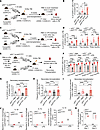 Figure 1
Inflammatory stress confers a competitive advantage to p53 mutant HSPCs. (A) Schematic illustration of experimental design where recipient mice underwent competitive transplantation and were treated with either PBS or pI:pC (25 μg/kg, i.p.). MNC, mononuclear cell; TBI, total body irradiation. (B) Percentage of donor-derived cells (CD45.2+) in PB of recipient mice at 16 weeks following PBS or pI:pC treatment; n = 5 mice per group. (C) Schematic illustration of experimental design where recipient mice underwent competitive transplantation and were treated with PBS or LPS (1 mg/kg, i.p.). (D) Percentage of donor-derived cells in PB of recipient mice following PBS or LPS treatment; n = 6–8 mice per group. (E) Schematic illustration of experimental design where BM from primary mice treated with PBS or LPS (1 mg/kg, i.p.) were used for competitive transplantation. (F) Percentage of donor-derived cells in PB of recipient mice; n = 10–15 mice per group. (G) The frequency of donor-derived cells in PB of secondary recipient mice; n = 9 mice per group. (H) The frequency of donor-derived LSKs in the BM of secondary recipient mice; n = 9 mice per group. (I) The number of donor-derived LSKs in the BM of secondary recipient mice; n = 9 mice per group. (J) p53+/+ and p53R248W/+ macrophages were stimulated with LPS (100 ng/mL), and the levels of secreted cytokines and chemokines were assayed using a mouse 31-Plex Cytokine/Chemokine array; n = 4 biological replicates. (K) p53+/+ and p53R248W/+ mice were treated with LPS (1 mg/kg, i.p.), and PB serum was collected on days 1 and 3 after LPS treatment. The levels of cytokines and chemokines were assayed by Cytokine/Chemokine array; n = 4 mice per group. The comparison among multiple groups was evaluated by 1-way ANOVA (B and G–I) or 2-way ANOVA (D and F). The comparison between 2 groups was evaluated by 2-tailed t test (J and K). Statistical significance: *P < 0.05, **P < 0.01, ***P < 0.001, ****P < 0.0001.
LPS is a ligand for TLR4, and LPS treatment activates inflammatory response in hematopoietic cells, promoting HSPC proliferation while reducing competitive fitness (35). To determine the impact of LPS on p53 mutant HSPCs, we performed competitive BM transplantation assays to determine whether LPS treatment expands p53 mutant HSPCs in vivo. Four weeks following transplantation, recipient mice were treated with LPS or PBS every other day for 4 weeks (Figure 1C). We found that LPS treatment significantly increased the engraftment of p53R248W/+ cells in PB of recipient mice compared with those treated with PBS (Figure 1D).
To determine the impact of LPS on HSPC function in vivo, we treated p53+/+ and p53R248W/+ mice with LPS or PBS every other day for a month. We then isolated live BM cells from LPS- or PBS-treated donor mice and performed competitive transplantation assays (Figure 1E). Consistent with a previous report (35), LPS-treated WT BM cells showed decreased engraftment in PB and BM in both primary and secondary transplantation assays, whereas LPS-treated p53 mutant BM cells continued to show increased engraftment (Figure 1, F and G, and Supplemental Figure 1, C and D). Importantly, LPS treatment increased both the frequency and absolute number of p53 mutant LSKs in the BM of secondary recipient mice compared with PBS treatment (Figure 1, H and I).
To understand how LPS-induced inflammatory stress promotes p53 mutant HSPC expansion, we examined the impact of mutant p53 on cytokine secretion from BM-derived macrophages (36). We treated p53+/+ and p53R248W/+ macrophages with 100 ng/mL LPS for 12 h to induce pro-inflammatory activation. Supernatants were then collected and subjected to cytokine array analysis. Notably, p53 mutant macrophages showed increased secretion of multiple pro-inflammatory cytokines, including IL-1β, IL-1α, IL-12, KC, and CXCL-9, compared with WT macrophages following LPS stimulation (Figure 1J and Supplemental Figure 1E). Next, we treated p53+/+ and p53R248W/+ mice with 1 dose of LPS and examined cytokine and chemokine in PB serum of mice on day 1 (24 h) and day 3 (72 h) after LPS treatment. We observed increased levels of IL-1β in PB serum of p53R248W/+ mice compared with that of the p53+/+ mice on both days 1 and 3 after LPS treatment (Figure 1K). Thus, we demonstrated that mutant p53 enhances LPS-induced inflammatory response.
p53 mutant HSPCs show enhanced NLRP1 activation. To investigate how mutant p53 regulates inflammatory response in HSPCs, we performed ATAC-seq (assay for transposase-accessible chromatin with sequencing) assays in LSK cells to identify differential regions of chromatin accessibility (37). There were approximately 600 peaks significantly upregulated in p53R248W/+ LSKs compared with p53+/+ LSKs (Figure 2A). Furthermore, unbiased DAVID (Database for Annotation, Visualization, and Integrated Discovery) pathway analysis of ATAC peaks significantly upregulated in p53R248W/+ LSKs revealed enrichment in hematopoietic stem cell (HSC) maintenance and self-renewal pathways (Figure 2B) (38). On the contrary, the p53 pathway, canonical Wnt signaling, and negative regulation of immune system process were enriched in p53+/+ LSKs (Supplemental Figure 2A). To characterize chromatin regions with differential accessibility in p53+/+ and p53R248W/+ LSKs, we performed a motif search of the gained openly accessible peaks in p53R248W/+ LSKs (39). Motif analysis identified a strong enrichment for transcription factor binding sites, including CTCF, ETS1, MEIS1, and FOXO1, in p53R248W/+ LSKs (Figure 2C), some of which are known regulators of HSPCs.
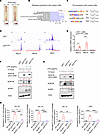 Figure 2
p53 mutant HSPCs show increased NLRP1 activation. (A) LSK cells were subjected to ATAC-seq assays to identify differential regions of chromatin accessibility. Heatmap shows differential active regions in p53+/+ and p53R248W/+ LSKs. (B) Enriched biological processes of genes associated with significantly upregulated ATAC-seq peaks in p53R248W/+ LSKs analyzed by DAVID Functional Annotation Tool. (C) Enrichment of transcription factor (TF) motifs in peaks that gain open accessibility in p53R248W/+ LSKs compared with p53+/+ LSKs determined by HOMER de novo Known Motif Analysis. (D) Nlrp1a and Nlrp1b acquired significant open chromatin peaks in p53R248W/+ LSKs. (E) Nlrp1a and Nlrp1b were significantly upregulated in p53R248W/+ LSKs compared with p53+/+ LSKs; n = 3 biological replicates. (F) The level of Nlrp1b was increased in p53R248W/+ Lin− cells. (G) The levels of Nlrp1b and Nlrp3 in BM-derived macrophages following LPS stimulation were determined by immunoblotting. (H) GFP or p53R248W was introduced into Nlrp1+/+ and Nlrp1−/− Lin− BM cells using retrovirus. Transduced cells (GFP+) were differentiated into macrophages. Macrophages were stimulated with LPS (100 ng/mL) for 12 hours, and the levels of secreted cytokines and chemokines were assayed using a Cytokine/Chemokine array; n = 4 biological replicates. The comparison among multiple groups was evaluated with 1-way ANOVA (E and H). Statistical significance: *P < 0.05, **P < 0.01, ***P < 0.001, ****P < 0.0001.
Mutant p53 increases chromatin accessibility to chemokine gene Cxcl9 (Supplemental Figure 2B). Indeed, Cxcl9 is upregulated in p53 mutant HSPCs (Supplemental Figure 2C). Notably, mutant p53 increases the chromatin accessibility to inflammasome genes, including Nlrp1a and Nlrp1b (Figure 2D), and we confirmed the upregulation of both Nlrp1a and Nlrp1b in p53R248W/+ LSKs compared with p53+/+ LSKs (Figure 2E). While NLRP3 inflammasome is activated in HSPCs from low- to high-risk MDS (40), mutant p53 affects neither the chromatin accessibility nor the expression of Nlrp3 in LSKs (Figure 2, D and E). Inflammasomes are multiprotein complexes that activate caspase-1 and increase the release of pro-inflammatory cytokines such as IL-1β, leading to caspase-1–dependent death, known as pyroptosis (41). NLRP1 was one of the first inflammasome-forming pattern recognition receptors to be identified (42, 43). To examine inflammasome activation in HSPCs, we treated p53+/+ and p53R248W/+ Lin− cells with LPS and performed immunoblotting analysis to examine the levels of Nlrp1b and Nlrp3. We observed increased levels of NLRP3 and active NLRP1B (NLRP1B-UPA-CARD) in mutant HSPCs at baseline and following LPS stimulation, whereas LPS stimulation increased NLRP3 levels in both p53+/+ and p53R248W/+ HSPCs (Figure 2F). In addition, we found increased levels of NLRP1B-UPA-CARD in mutant macrophages compared with WT cells (Figure 2G). Consistent with our findings in HSPCs, LPS stimulation increased NLRP3 levels in both p53+/+ and p53R248W/+ macrophages (Figure 2G). LPS stimulation also increased levels of cleaved caspase-1 in mutant macrophages compared with WT cells, whereas LPS increased levels of mature gasdermin D (GSDMD-NT) and cleaved caspase-3 in both p53+/+ and p53R248W/+ HSPCs (Supplemental Figure 2D). NLRP1 is known to sense and be activated by dsRNA (42). To determine the involvement of the cGAS/STING pathway in NLRP1 activation in mutant cells, we treated p53+/+ and p53R248W/+ Lin− cells with pI:pC and examined levels of cGas and Sting. pI:pC stimulation increased the levels of cGas and Sting but decreased levels of p-Sting in both p53+/+ and p53R248W/+ cells (Supplemental Figure 2E).
To determine the contribution of NLRP1 to the clonal advantage of p53 mutant HSPCs, we crossed Nlrp1−/− mice with p53R248W/+ mice. As Nlrp1 and Trp53 are close to each other on mouse chromosome 11, we failed to generate Nlrp1−/− p53R248W/+ mice (43). We then ectopically expressed GFP or p53R248W in WT and Nlrp1−/− Lin− BM cells using retroviruses. Transduced cells (GFP+) were differentiated into macrophages and stimulated with LPS for 12 h. Macrophage supernatants were then subjected to multiplex cytokine analysis. Loss of Nlrp1 significantly decreased the secretion of multiple pro-inflammatory cytokines, including IL-1β, IL-1α, IL-12, and KC, from p53 mutant macrophages (Figure 2H). Thus, we demonstrated that p53 mutant HSPCs show enhanced NLRP1 activation and that NLRP1 is a key mediator of mutant p53-driven inflammation in hematopoietic cells.
Resistance to inflammatory stress underlies enhanced fitness seen in p53 mutant HSPCs. To further understand how inflammatory stress confers a competitive advantage to p53 mutant HSPCs, we performed in vitro cell competition assays (Figure 3A). WT competitor cells (CD45.1+) show decreased competitiveness after co-culture with p53 mutant cells (CD45.2+) for 7 days (Figure 3B). Importantly, WT CD45.1+ cells co-cultured with p53 mutant cells show decreased replating potential compared with WT CD45.1+ cells co-cultured with WT CD45.2+ cells (Figure 3C). However, the number of apoptotic WT CD45.1+ cells were comparable between WT and mutant groups (Figure 3D). To understand how p53 mutant cells inhibit the fitness of WT competitor cells in vitro, we measured the levels of cytokines in the condition media utilizing cytokine arrays and observed increased levels of IL-1β, IL-6, and CXCL-9 in mutant cell cultures compared with that of the WT cells (Figure 3E). Notably, WT CD45.1+ cells co-cultured with mutant cells showed increased pyroptosis (Figure 3F and Supplemental Figure 3A). Importantly, the enhanced pyroptosis of WT CD45.1+ cells seen in the mutant group appeared to be IL-1β dependent, as adding IL-1β to the culture further increased pyroptosis, whereas adding IL-1β–neutralizing antibody brought the level of pyroptosis back to normal (Figure 3F).
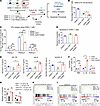 Figure 3
Resistance to inflammatory stress underlies enhanced fitness seen in p53 mutant HSPCs. (A) Schematic of in vitro cell competition assays using BM cells from p53+/+ and p53R248W/+ mice (CD45.2+) and WT competitor cells (CD45.1+). Three groups of BM cells, CD45.1, CD45.1/WT, and CD45.1/p53 mutant, were cultured in serum-free medium supplemented with SCF, TPO, FLT3 ligand, IL-3, and GM-CSF. 7 days later, live CD45.1+ cells from each group were sorted and used for proliferation, serial replating, apoptosis, and pyroptosis assays. In addition, cytokines and chemokines in the conditioned media were assayed by Cytokine/Chemokine array. (B) Proliferation of live CD45.1+ cells from 3 cell culture groups shown in A; n = 3 independent experiments performed in duplicate. (C) Serial replating assays of live CD45.1+ cells purified from 3 cell culture groups shown in A; n = 3 independent experiments performed in duplicate. (D) CD45.1+ cells purified from 3 cell culture groups were assayed for apoptosis; n = 3 independent experiments. (E) Increased levels of IL-1β, IL-6, and CXCL-9 were observed in the conditioned media from the CD45.1/p53 mutant group compared with the CD45.1/WT cell group; n = 3 independent experiments performed in duplicate. (F) Pyroptosis assays of CD45.1+ cells purified from 3 cell culture groups in the presence of PBS, IL-1β, or IL-1β–neutralizing antibody; n = 3 independent experiments. (G) Serial replating assays of p53+/+ and p53R248W/+ BM cells in the presence or absence of IL-1β; n = 3 independent experiments performed in duplicate. (H and I) MYC targets (H) and inflammatory response (I) gene signatures were significantly upregulated in IL-1β–treated p53R248W/+ LSKs compared with IL-1β–treated p53+/+ LSKs; n = 3 biological replicates. The comparison among multiple groups was evaluated with 1-way ANOVA (B, D, and E) or 2-way ANOVA (C, F, and G). Statistical significance: *P < 0.05, **P < 0.01, ***P < 0.001, ****P < 0.0001.
IL-1β is known to exert suppressive effects on WT HSPC activity (44, 45). We found that IL-1β treatment decreased the replating potential of WT BM cells, but not that of p53 mutant cells (Figure 3G). To determine the mechanism by which p53 mutant HSPCs are resistant to IL-1β treatment, we performed RNA-seq in p53+/+ andp53R248W/+ LSKs treated with IL-1β (10 ng/mL) or PBS in vitro for 90 minutes (Supplemental Figure 3B). GSEA revealed that HSPC differentiation genes are significantly upregulated in p53 mutant LSKs compared with WT LSKs following IL-1β stimulation (Supplemental Figure 3C). Notably, p53 mutant LSKs treated with IL-1β are enriched with MYC target genes (Figure 3H and Supplemental Figure 3D). IL-1β treatment also increased the expression of genes of the inflammatory response pathway, including IFN-α, IL-6, and IFN-γ (Figure 3I and Supplemental Figure 3E).
The NLRP1/IL-1β/GSDMD axis is critical for p53 mutant HSPC fitness. To determine the role of Nlrp1 in p53 mutant HSPCs, we performed competitive transplantation assays using Nlrp1+/+ and Nlrp1−/− Lin− cells expressing GFP or mutant p53. We found that loss of Nlrp1 significantly decreased the repopulating potential of HSPCs expressing mutant p53 in vivo (Figure 4, A and B). To determine the role of Il-1b in p53 mutant HSPCs, we generated Il-1b−/− p53R248W/+ mice (46). While Il-1b deficiency did not affect colony formation of WT HSPCs, loss of Il-1b significantly decreased the colony formation of p53 mutant HSPCs (Figure 4C). IL-1β has been shown to be a growth factor for AML cells (47), and we found that IL-1β–neutralizing antibody treatment (48, 49) decreased the replating potential of p53 mutant BM cells compared with p53 mutant cells treated with IgG (Figure 4D).
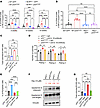 Figure 4
The NLRP1/IL-1β/GSDMD signaling axis is important for p53 mutant HSPC fitness. (A) Competitive transplantation experiments using Nlrp1+/+ and Nlrp1−/− Lin− BM cells expressing GFP or p53R248W. The frequency of donor-derived cells (CD45.2+) in PB of recipient mice was examined every 5 weeks for 15 weeks; n = 7–10 mice per group. (B) Loss of Nlrp1 decreases the engraftment of p53 mutant HSPCs in the BM of recipient mice 15 weeks after transplantation; n = 7–10 mice per group. (C) Loss of Il-1b decreases the colony formation of p53 mutant HSPCs; n = 3 biological replicates. (D) Serial replating assays of p53+/+ and p53R248W/+ BM cells in the presence of IgG or IL-1β–neutralizing antibody; n = 3 independent experiments performed in duplicate. (E) p53+/+ and p53R248W/+ BM cells were treated with DMSO or inflammasome activator VbP for 24 h and assayed for pyroptosis; n = 3 independent experiments. (F) VbP treatment enhances GSDMD maturation in BM cells. (G) GSDMD inhibitor dimethyl fumarate (DMF) treatment decreases the colony formation of p53 mutant BM cells; n = 3 independent experiments. The comparison among multiple groups was evaluated with 1-way ANOVA (B, C, E, and G) or 2-way ANOVA (A and D). Statistical significance: *P < 0.05, **P < 0.01, ***P < 0.001, ****P < 0.0001.
Given that NLRP1 activation increases IL-1β secretion, inducing pyroptosis of WT HSPCs (43), we treated p53+/+ and p53R248W/+ BM cells with Val-boroPro (VbP), a small molecule activator of inflammasomes (50), and performed pyroptosis analysis. VbP treatment significantly increased pyroptosis of WT BM cells compared with p53 mutant BM cells (Figure 4E). Cytosolic sensing of pathogens assembles inflammasomes, which activate inflammatory caspases to IL-1β and GSDMD. Cleaved GSDMD forms membrane pores, leading to cytokine release and pyroptosis (51, 52). p53 mutant BM cells show increased GSDMD maturation, which is further enhanced by VbP treatment (Figure 4F). While GSDMD inhibitor dimethyl fumarate treatment had no effect on WT BM cells (53), it significantly decreased the colony formation of p53 mutant BM cells (Figure 4G). Collectively, our data suggest that the NLRP1/IL-1β/GSDMD signaling axis is important for the enhanced fitness of p53 mutant hematopoietic cells.
Heterozygous p53 mutant mice developed MDS with age. Most homozygous p53−/− and p53R248W/R248W mice develop spontaneous tumors, including lymphoma, thymoma, and sarcoma, and die within 3 to 6 months after birth (54). We aged p53+/+ and heterozygous p53R248W/+ mice for more than 1 year and monitored their survival and tumor development. p53R248W/+ mice showed reduced survival compared with p53+/+ mice and died within 15–18 months after birth (Figure 5A). Approximately 60% of p53R248W/+ mice developed MDS based upon pathological analysis of BM and PB smears, while the remainder of p53R248W/+ mice developed lymphoma and sarcoma (Figure 5B). Aged p53R248W/+ mice showed hypercellular BM compared with age-matched p53+/+ mice (Supplemental Figure 4A). Specifically, aged p53R248W/+ mice showed morphological dysplasia on myeloid precursors, erythroid precursors, and megakaryocytes in the BM (Figure 5, C–I). We also observed morphological dysplasia on p53R248W/+ PB smears, including Pseudo-Pelger-Huët, hypersegmented neutrophils, and nucleated red cells (Supplemental Figure 4B). Significant leukopenia, thrombocytopenia, and anemia were seen in aged p53R248W/+ mice with MDS compared with age-matched p53+/+ mice (Figure 5J). p53R248W/+ mice also show splenomegaly (Supplemental Figure 4, C and D). Moreover, the spleens of aged p53R248W/+ mice have increased frequency of HSPCs (Supplemental Figure 4E). Collectively, the p53R248W/+ mice developed MDS phenotypes, recapitulating some clinical situations seen in MDS patients with TP53 mutations.
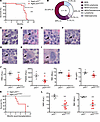 Figure 5
Heterozygous p53 mutant mice developed MDS with age. (A) Kaplan-Meier survival curve of p53+/+ and p53R248W/+ mice; n = 12–15 mice per group. (B) p53R248W/+ mice developed various diseases during aging. Disease types and frequencies are shown. (C–I) H&E-stained BM sections of p53R248W/+ mice developed MDS. Representative images show binucleated myeloid precursor (C and D), karyorrhexis in erythroid precursors (E), erythroid precursors with nuclear budding (F), binucleated erythroid precursor (G), and a giant megakaryocyte (H) compared with a megakaryocyte from age-matched p53+/+ mice (I). Scale bars: 10 μm. (J) WBC, platelet, and RBC count as well as hemoglobin levels in PB of p53R248W/+ developed MDS and age-matched p53+/+ mice; n = 6 mice per group. (K) Kaplan-Meier survival curve of recipient mice repopulated with BM cells from aged p53+/+ or p53R248W/+ mice that developed MDS; n = 6 mice per group. (L) WBC and RBC counts in PB of recipient mice following BM transplantation; n = 5 mice per group. The survival curve was determined by the log-rank (Mantel-Cox) test (A and K). The comparison between 2 groups was evaluated by 2-tailed t test (J and L). Statistical significance: **P < 0.01, ***P < 0.001.
MDS is a clonal disease from mutant MDS stem cells (55, 56). To determine whether mutant p53 driven MDS is transplantable, we injected BM cells from aged p53R248W/+ mice with MDS or age-matched p53+/+ mice into lethally irradiated recipient mice. All recipient mice repopulated with p53R248W/+ cells died within 4 months after transplantation, whereas no mice transplanted with aged p53+/+ BM cells died during this period (Figure 5K). Recipient mice repopulated with p53R248W/+ cells showed decreased WBC and RBC counts compared with recipients of WT BM cells (Figure 5L). Importantly, transplantation of BM cells from p53R248W/+ mice with MDS resulted in lethal MDS and BM failure in all transplant recipients within 4 months (Supplemental Figure 4F), suggesting that the MDS phenotype induced by mutant p53 is transplantable.
Mutant p53 generates a chronic inflammatory microenvironment during aging. To decipher the mechanism by which mutant p53 drives MDS development, we first measured the levels of cytokines and chemokines in PB serum of young (2–4 months old) p53+/+ and p53R248W/+ mice utilizing cytokine arrays. Cytokine/chemokine levels in young p53+/+ and p53R248W/+ mice were comparable (Figure 6A). Given that chronic and low-grade inflammation develops during aging (9, 10), we then tested whether p53 mutant mice show enhanced systematic inflammation in an age-dependent manner. Notably, we observed increased levels of several pro-inflammatory cytokines, including IL-1β, L-17, and M-CSF, in PB serum of old (15–20 months old) p53 mutant mice compared with that of the age-matched p53+/+ mice (Figure 6A). Given that dysregulated inflammatory signaling within the BM microenvironment has been implicated in MDS development (12), we examined the levels of cytokines and chemokines in BM fluid of old p53+/+ and p53R248W/+ mice and observed increased levels of IL-1β, IL-6, and GM-CSF in the BM of old p53 mutant mice compared with that of age-matched WT mice (Figure 6B).
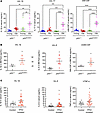 Figure 6
Mutant p53 generates a chronic inflammatory microenvironment during aging. (A) Cytokines and chemokines in PB serum of p53+/+ and p53R248W/+ (young and old) mice were assayed using a mouse 31-Plex Cytokine/Chemokine array; n = 9 mice per group. (B) The levels of cytokines and chemokines in BM fluid of old p53+/+ and p53R248W/+ mice; n = 5 mice per group. (C) Patients with MDS or AML with TP53 mutations have increased levels of pro-inflammatory cytokines in their BM compared with the control group (control group, n = 12; TP53-mutated MDS or AML, n = 28). The comparison among multiple groups was evaluated by 2-way ANOVA (A). The comparison between 2 groups was evaluated by 2-tailed t test (B and C). Statistical significance: *P < 0.05, **P < 0.01, ***P < 0.001, ****P < 0.0001.
To further understand the role of chronic inflammation in pathogenesis of TP53-mutated myeloid neoplasms, we interrogated cytokine levels in the BM of MDS and AML patients with TP53 mutations using cytokine arrays. The comparative control group included BMs of lymphoma patients without involvement in disease. Consistent with our observations in p53 mutant mice (Figure 6, A and B), we found increased levels of IL-1β, IL-6, and TNF-α in the BM of MDS or AML patients with TP53 mutations compared with the control group (Figure 6C). Thus, we demonstrated that mutant p53 generates a chronic inflammatory BM microenvironment during aging, which may contribute to pathogenesis of MDS.
Murine HSPCs expressing mutant p53 display aberrant pre-mRNA splicing. To understand how mutant p53 modulates inflammatory response during aging, we performed RNA-seq studies to compare gene expression in HSPCs isolated from middle-aged (12–14 months old; pre-MDS) p53+/+ and p53R248W/+ mice. Spliceosome genes were significantly downregulated in middle-aged p53R248W/+ HSPCs compared with age-matched p53+/+ HSPCs (Supplemental Figure 4G). We confirmed that the expression of splicing factors, such as Prpf3 and Prpf4, was significantly downregulated in middle-aged (pre-MDS) p53R248W/+ HSPCs (Figure 7A). As Prpf3 and Prpf4 play critical roles in spliceosome assembly (57, 58), we speculated that downregulation of Prpf3 and Prpf4 in p53 mutant HSPCs may alter pre-mRNA splicing. We conducted alternative splicing analysis utilizing the rMATS algorithm to identify differences in exon inclusion ratio between WT and mutant HSPCs (59, 60). We observed differential splicing of all classes of alternative splicing events, including Cassette Exons, Competing 5′ and 3′ splice sites, Mutually Exclusive Exons, and Retained Introns in p53R248W/+ HSPCs (Figure 7B).
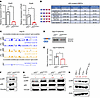 Figure 7
Murine HSPCs expressing mutant p53 display aberrant pre-mRNA splicing. (A) Splicing factors Prpf3 and Prpf4 were significantly downregulated in middle-aged p53 mutant HSPCs; n = 3 biological replicates. (B) Table of splicing events altered in middle-aged p53 mutant versus WT HSPCs. (C) Sashimi plots across splice junctions surrounding differentially spliced cassette exons in Usp15. (D and E) RT-PCR analysis revealed a significant change in pre-mRNA splicing of Usp15 in p53 mutant HSPCs; n = 3 biological replicates. (F) p53 mutant BM cells show enhanced NF-κB activation. (G) p53 mutant macrophages show enhanced NF-κB activation following LPS stimulation. (H) Loss of Il-1b did not alter p65 phosphorylation in p53 mutant BM cells. The comparison between 2 groups was evaluated by 2-tailed t test (A and E). Statistical significance: *P < 0.05, **P < 0.01.
NF-κB is a key mediator of IL-1β/IL-1R and LPS/TLR-4 signaling in immune cells (61). The NF-κB family consists of several proteins, including RelA (commonly known as p65), RelB, c-Rel, p50, and p52, operating as heterodimers or homodimers. Upon IL-1β or LPS stimulation, p65 is phosphorylated and translocated into the nucleus to activate NF-κB target genes (62). Notably, p53 mutant HSPCs show dysregulated pre-mRNA splicing in key regulators of NF-κB such as Usp15 (Figure 7C). p53 mutant HSPCs mainly express the short isoform of Usp15 (Figure 7, D and E). Usp15 is a known activator of NF-κB (63), and we found that p53 mutant BM cells have high levels of p65 phosphorylation in steady state (Figure 7F). We also observed that p53 mutant macrophages displayed elevated levels of p65 phosphorylation in steady state compared with WT cells, which was further enhanced by LPS stimulation (Figure 7G). To determine whether the baseline increase of NF-κB in p53R248W/+ BM cells is due to elevated IL-1β systemically or is a cell intrinsic mechanism, we examined p65 phosphorylation in p53R248W/+Il-1b−/− BM cells and found that loss of Il-1b did not alter the level of p65 phosphorylation in mutant cells (Figure 7H).
Human HSPCs and primary MDS cells with TP53 mutations display aberrant pre-mRNA splicing. To determine the role of mutant p53 in human HSPCs, we introduced GFP or p53R248W into human CD34+ cells using retroviruses (Figure 8A) (64). The transduction efficiency was approximately 20%–40% (Supplemental Figure 5A). Mutant p53 maintained CD34 expression in human HSPCs (Supplemental Figure 5, B and C). We sorted transduced CD34+ cells (GFP+) and performed CFU assays. The ectopic expression of p53R248W enhanced the colony formation of human CD34+ cells compared with control viruses (MIGR1) transduced with CD34+ cells (Figure 8, B and C). To determine the response of human HSPCs to irradiation, we irradiated human CD34+ cells in vitro and performed apoptosis and CFU assays. Human CD34+ cells expressing mutant p53 show decreased apoptosis compared with human cells expressing WT p53 (Figure 8D). Mutant p53 also inhibited erythroid differentiation of human HSPCs (Supplemental Figure 5, D and E). To assess the long-term reconstituting ability of human CD34+ cells expressing mutant p53, we transplanted human CD34+ cells expressing mutant p53 or empty vector (MIGR1) into sublethally irradiated (2.5 Gy) NSGS mice (65) and examined the engraftment of human cells (hCD45+) in the PB and BM of recipient mice. Ectopic expression of mutant p53 increased the engraftment of human hematopoietic cells in PB, BM, and spleen of NSGS mice at 16 weeks after transplantation (Figure 8, E–G, and Supplemental Figure 6, A–E). Furthermore, NSGS mice repopulated with p53 mutant HSPCs showed splenomegaly (Supplemental Figure 6, F and G). THP1 is a human monocyte cell line that can differentiate into macrophages following PMA treatment. We introduced MIGR1 or p53R248W into THP1 cells and differentiated them into macrophages. We treated macrophages with LPS for 4 h and examined the levels of full-length NLRP1 and active NLRP1 (NLRP1-NT) in these cells. Consistent with our findings in murine macrophages (Figure 2G and Supplemental Figure 2D), THP1 macrophages expressing mutant p53 had increased levels of full-length NLRP1 at baseline and LPS treatment increased the level of NLRP1-NT in mutant cells (Supplemental Figure 7A). These findings suggest that the impact of mutant p53 on NLRP1 activation in hematopoietic cells is conserved across species.
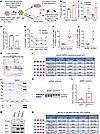 Figure 8
Human HSPCs and primary human MDS cells with TP53 mutations display dysregulated pre-mRNA splicing. (A) Schematic of in vitro and in vivo experiments using human HSPCs expressing mutant p53. CFC, colony-forming cell. (B and C) Mutant p53 enhances the colony formation of human HSPCs; n = 3 biological replicates. (D) Human HSPCs expressing mutant p53 show decreased apoptosis following irradiation; n = 3 biological replicates. (E) Ectopic mutant p53 expression increases the engraftment of human HSPCs in PB of NSGS mice; n = 9 mice per group. (F) Ectopic mutant p53 expression increases the engraftment of human HSPCs in the BM of NSGS mice at 16 weeks; n = 9 mice per group. (G) Mutant p53 expands human HSPCs in the BM of NSGS mice at 16 weeks; n = 9 mice per group. (H) Human HSC and multipotent progenitor cell gene signatures are significantly enriched in human CD34+ cells expressing mutant p53. (I) Table of splicing events altered in human CD34+ cells expressing mutant p53 compared with cells WT for p53; n = 3 biological replicates. (J) Sashimi plots across splice junctions surrounding differentially spliced cassette exons in IKBKE. (K and L) RT-PCR analysis revealed significant changes in pre-mRNA splicing of IKBKE in human HSPCs expressing mutant p53; n = 4 biological replicates. (M) IKBKE-L, but not IKBKE-S, enhances p65 phosphorylation in MDSL cells. (N) Table of splicing events altered in human MDS cells with TP53 mutations compared with the control group (control, n = 2; TP53 mutated MDS, n = 3). The comparison between 2 groups was evaluated by 2-tailed t test (B–D, F, G, and L). The comparison among multiple groups was evaluated by 2-way ANOVA (E). Statistical significance: *P < 0.05, **P < 0.01.
To determine the mechanism by which mutant p53 enhances the repopulating potential of human HSPCs, we performed RNA-seq studies in human CD34+ cells purified from the BM of NSGS mice at 16 weeks following transplantation. GSEA revealed that HSC and multipotent progenitor gene signatures are positively enriched in human HSPCs expressing mutant p53 compared with those of the WT cells (Figure 8H and Supplemental Figure 7B). We then conducted alternative splicing analysis to identify differences in exon inclusion ratio between human CD34+ cells expressing GFP and mutant p53 (59, 60). Consistent with our findings in murine HSPCs (Figure 7B), human HSPCs expressing mutant p53 displayed aberrant pre-mRNA splicing events compared with WT HSPCs (Figure 8I). Notably, human HSPCs expressing mutant p53 showed dysregulated pre-mRNA splicing in IKBKE (inhibitor of nuclear factor kappa B kinase subunit epsilon) (Figure 8J), a key regulator of NF-κB (66, 67). p53 mutant HSPCs mainly expressed the long isoform of IKBKE (IKBKE-L) (Figure 8, K and L). To determine the impact of IKBKE isoforms on NF-κB activation, we introduced HA-tagged IKBKE-L or IKBKE-S into human MDSL cells using retroviruses and examined NF-κB activation in transduced cells. We found that IKBKE-L, but not IKBKE-S, enhanced p65 phosphorylation in MDSL cells (Figure 8M).
To determine whether mutant p53 alters pre-mRNA splicing in primary human MDS cells, we performed RNA-seq in primary MDS cells with TP53 mutations and a control group with WT TP53. All human samples were free of known splicing factor mutations. Splicing analysis revealed that primary human MDS cells with TP53 mutations display aberrant pre-mRNA splicing compared with control hematopoietic cells with WT TP53 (Figure 8N).


Copyright © 2026 American Society for Clinical Investigation
ISSN: 0021-9738 (print), 1558-8238 (online)