
Advertisement
Research ArticleCell biologyOncology
Open Access |  10.1172/JCI180570
Hyaluronan network remodeling by ZEB1 and ITIH2 enhances the motility and invasiveness of cancer cells
Sieun Lee,1 Jihye Park,1 Seongran Cho,1 Eun Ju Kim,1 Seonyeong Oh,1 Younseo Lee,1 Sungsoo Park,2 Keunsoo Kang,3 Dong Hoon Shin,4 Song Yi Ko,5 Jonathan M. Kurie,6 and Young-Ho Ahn1
1Department of Molecular Medicine and Inflammation-Cancer Microenvironment Research Center, College of Medicine, Ewha Womans University, Seoul, South Korea.
2Deargen Inc., Daejeon, South Korea.
3Department of Microbiology, College of Science and Technology, Dankook University, Cheonan, South Korea.
4Research Institute and Department of Cancer Biomedical Science, Graduate School of Cancer Science and Policy, National Cancer Center, Goyang, South Korea.
5UroGyn Efficacy Evaluation Center, Ewha Womans University Mokdong Hospital, Seoul, South Korea.
6Department of Thoracic/Head and Neck Medical Oncology, University of Texas MD Anderson Cancer Center, Houston, Texas, USA.
Address correspondence to: Young-Ho Ahn, Department of Molecular Medicine, College of Medicine, Ewha Womans University, 25 Magokdong-ro 2-gil, Gangseo-gu, Seoul 07804, South Korea. Phone: 82.2.6986.6268; Email: yahn@ewha.ac.kr.
Find articles by Lee, S. in: PubMed | Google Scholar
1Department of Molecular Medicine and Inflammation-Cancer Microenvironment Research Center, College of Medicine, Ewha Womans University, Seoul, South Korea.
2Deargen Inc., Daejeon, South Korea.
3Department of Microbiology, College of Science and Technology, Dankook University, Cheonan, South Korea.
4Research Institute and Department of Cancer Biomedical Science, Graduate School of Cancer Science and Policy, National Cancer Center, Goyang, South Korea.
5UroGyn Efficacy Evaluation Center, Ewha Womans University Mokdong Hospital, Seoul, South Korea.
6Department of Thoracic/Head and Neck Medical Oncology, University of Texas MD Anderson Cancer Center, Houston, Texas, USA.
Address correspondence to: Young-Ho Ahn, Department of Molecular Medicine, College of Medicine, Ewha Womans University, 25 Magokdong-ro 2-gil, Gangseo-gu, Seoul 07804, South Korea. Phone: 82.2.6986.6268; Email: yahn@ewha.ac.kr.
Find articles by Park, J. in: PubMed | Google Scholar
1Department of Molecular Medicine and Inflammation-Cancer Microenvironment Research Center, College of Medicine, Ewha Womans University, Seoul, South Korea.
2Deargen Inc., Daejeon, South Korea.
3Department of Microbiology, College of Science and Technology, Dankook University, Cheonan, South Korea.
4Research Institute and Department of Cancer Biomedical Science, Graduate School of Cancer Science and Policy, National Cancer Center, Goyang, South Korea.
5UroGyn Efficacy Evaluation Center, Ewha Womans University Mokdong Hospital, Seoul, South Korea.
6Department of Thoracic/Head and Neck Medical Oncology, University of Texas MD Anderson Cancer Center, Houston, Texas, USA.
Address correspondence to: Young-Ho Ahn, Department of Molecular Medicine, College of Medicine, Ewha Womans University, 25 Magokdong-ro 2-gil, Gangseo-gu, Seoul 07804, South Korea. Phone: 82.2.6986.6268; Email: yahn@ewha.ac.kr.
Find articles by Cho, S. in: PubMed | Google Scholar
1Department of Molecular Medicine and Inflammation-Cancer Microenvironment Research Center, College of Medicine, Ewha Womans University, Seoul, South Korea.
2Deargen Inc., Daejeon, South Korea.
3Department of Microbiology, College of Science and Technology, Dankook University, Cheonan, South Korea.
4Research Institute and Department of Cancer Biomedical Science, Graduate School of Cancer Science and Policy, National Cancer Center, Goyang, South Korea.
5UroGyn Efficacy Evaluation Center, Ewha Womans University Mokdong Hospital, Seoul, South Korea.
6Department of Thoracic/Head and Neck Medical Oncology, University of Texas MD Anderson Cancer Center, Houston, Texas, USA.
Address correspondence to: Young-Ho Ahn, Department of Molecular Medicine, College of Medicine, Ewha Womans University, 25 Magokdong-ro 2-gil, Gangseo-gu, Seoul 07804, South Korea. Phone: 82.2.6986.6268; Email: yahn@ewha.ac.kr.
Find articles by Kim, E. in: PubMed | Google Scholar
1Department of Molecular Medicine and Inflammation-Cancer Microenvironment Research Center, College of Medicine, Ewha Womans University, Seoul, South Korea.
2Deargen Inc., Daejeon, South Korea.
3Department of Microbiology, College of Science and Technology, Dankook University, Cheonan, South Korea.
4Research Institute and Department of Cancer Biomedical Science, Graduate School of Cancer Science and Policy, National Cancer Center, Goyang, South Korea.
5UroGyn Efficacy Evaluation Center, Ewha Womans University Mokdong Hospital, Seoul, South Korea.
6Department of Thoracic/Head and Neck Medical Oncology, University of Texas MD Anderson Cancer Center, Houston, Texas, USA.
Address correspondence to: Young-Ho Ahn, Department of Molecular Medicine, College of Medicine, Ewha Womans University, 25 Magokdong-ro 2-gil, Gangseo-gu, Seoul 07804, South Korea. Phone: 82.2.6986.6268; Email: yahn@ewha.ac.kr.
Find articles by Oh, S. in: PubMed | Google Scholar
1Department of Molecular Medicine and Inflammation-Cancer Microenvironment Research Center, College of Medicine, Ewha Womans University, Seoul, South Korea.
2Deargen Inc., Daejeon, South Korea.
3Department of Microbiology, College of Science and Technology, Dankook University, Cheonan, South Korea.
4Research Institute and Department of Cancer Biomedical Science, Graduate School of Cancer Science and Policy, National Cancer Center, Goyang, South Korea.
5UroGyn Efficacy Evaluation Center, Ewha Womans University Mokdong Hospital, Seoul, South Korea.
6Department of Thoracic/Head and Neck Medical Oncology, University of Texas MD Anderson Cancer Center, Houston, Texas, USA.
Address correspondence to: Young-Ho Ahn, Department of Molecular Medicine, College of Medicine, Ewha Womans University, 25 Magokdong-ro 2-gil, Gangseo-gu, Seoul 07804, South Korea. Phone: 82.2.6986.6268; Email: yahn@ewha.ac.kr.
Find articles by Lee, Y. in: PubMed | Google Scholar
1Department of Molecular Medicine and Inflammation-Cancer Microenvironment Research Center, College of Medicine, Ewha Womans University, Seoul, South Korea.
2Deargen Inc., Daejeon, South Korea.
3Department of Microbiology, College of Science and Technology, Dankook University, Cheonan, South Korea.
4Research Institute and Department of Cancer Biomedical Science, Graduate School of Cancer Science and Policy, National Cancer Center, Goyang, South Korea.
5UroGyn Efficacy Evaluation Center, Ewha Womans University Mokdong Hospital, Seoul, South Korea.
6Department of Thoracic/Head and Neck Medical Oncology, University of Texas MD Anderson Cancer Center, Houston, Texas, USA.
Address correspondence to: Young-Ho Ahn, Department of Molecular Medicine, College of Medicine, Ewha Womans University, 25 Magokdong-ro 2-gil, Gangseo-gu, Seoul 07804, South Korea. Phone: 82.2.6986.6268; Email: yahn@ewha.ac.kr.
Find articles by Park, S. in: PubMed | Google Scholar
1Department of Molecular Medicine and Inflammation-Cancer Microenvironment Research Center, College of Medicine, Ewha Womans University, Seoul, South Korea.
2Deargen Inc., Daejeon, South Korea.
3Department of Microbiology, College of Science and Technology, Dankook University, Cheonan, South Korea.
4Research Institute and Department of Cancer Biomedical Science, Graduate School of Cancer Science and Policy, National Cancer Center, Goyang, South Korea.
5UroGyn Efficacy Evaluation Center, Ewha Womans University Mokdong Hospital, Seoul, South Korea.
6Department of Thoracic/Head and Neck Medical Oncology, University of Texas MD Anderson Cancer Center, Houston, Texas, USA.
Address correspondence to: Young-Ho Ahn, Department of Molecular Medicine, College of Medicine, Ewha Womans University, 25 Magokdong-ro 2-gil, Gangseo-gu, Seoul 07804, South Korea. Phone: 82.2.6986.6268; Email: yahn@ewha.ac.kr.
Find articles by Kang, K. in: PubMed | Google Scholar
1Department of Molecular Medicine and Inflammation-Cancer Microenvironment Research Center, College of Medicine, Ewha Womans University, Seoul, South Korea.
2Deargen Inc., Daejeon, South Korea.
3Department of Microbiology, College of Science and Technology, Dankook University, Cheonan, South Korea.
4Research Institute and Department of Cancer Biomedical Science, Graduate School of Cancer Science and Policy, National Cancer Center, Goyang, South Korea.
5UroGyn Efficacy Evaluation Center, Ewha Womans University Mokdong Hospital, Seoul, South Korea.
6Department of Thoracic/Head and Neck Medical Oncology, University of Texas MD Anderson Cancer Center, Houston, Texas, USA.
Address correspondence to: Young-Ho Ahn, Department of Molecular Medicine, College of Medicine, Ewha Womans University, 25 Magokdong-ro 2-gil, Gangseo-gu, Seoul 07804, South Korea. Phone: 82.2.6986.6268; Email: yahn@ewha.ac.kr.
Find articles by
Shin, D.
in:
PubMed
|
Google Scholar
|

1Department of Molecular Medicine and Inflammation-Cancer Microenvironment Research Center, College of Medicine, Ewha Womans University, Seoul, South Korea.
2Deargen Inc., Daejeon, South Korea.
3Department of Microbiology, College of Science and Technology, Dankook University, Cheonan, South Korea.
4Research Institute and Department of Cancer Biomedical Science, Graduate School of Cancer Science and Policy, National Cancer Center, Goyang, South Korea.
5UroGyn Efficacy Evaluation Center, Ewha Womans University Mokdong Hospital, Seoul, South Korea.
6Department of Thoracic/Head and Neck Medical Oncology, University of Texas MD Anderson Cancer Center, Houston, Texas, USA.
Address correspondence to: Young-Ho Ahn, Department of Molecular Medicine, College of Medicine, Ewha Womans University, 25 Magokdong-ro 2-gil, Gangseo-gu, Seoul 07804, South Korea. Phone: 82.2.6986.6268; Email: yahn@ewha.ac.kr.
Find articles by Ko, S. in: PubMed | Google Scholar
1Department of Molecular Medicine and Inflammation-Cancer Microenvironment Research Center, College of Medicine, Ewha Womans University, Seoul, South Korea.
2Deargen Inc., Daejeon, South Korea.
3Department of Microbiology, College of Science and Technology, Dankook University, Cheonan, South Korea.
4Research Institute and Department of Cancer Biomedical Science, Graduate School of Cancer Science and Policy, National Cancer Center, Goyang, South Korea.
5UroGyn Efficacy Evaluation Center, Ewha Womans University Mokdong Hospital, Seoul, South Korea.
6Department of Thoracic/Head and Neck Medical Oncology, University of Texas MD Anderson Cancer Center, Houston, Texas, USA.
Address correspondence to: Young-Ho Ahn, Department of Molecular Medicine, College of Medicine, Ewha Womans University, 25 Magokdong-ro 2-gil, Gangseo-gu, Seoul 07804, South Korea. Phone: 82.2.6986.6268; Email: yahn@ewha.ac.kr.
Find articles by Kurie, J. in: PubMed | Google Scholar
1Department of Molecular Medicine and Inflammation-Cancer Microenvironment Research Center, College of Medicine, Ewha Womans University, Seoul, South Korea.
2Deargen Inc., Daejeon, South Korea.
3Department of Microbiology, College of Science and Technology, Dankook University, Cheonan, South Korea.
4Research Institute and Department of Cancer Biomedical Science, Graduate School of Cancer Science and Policy, National Cancer Center, Goyang, South Korea.
5UroGyn Efficacy Evaluation Center, Ewha Womans University Mokdong Hospital, Seoul, South Korea.
6Department of Thoracic/Head and Neck Medical Oncology, University of Texas MD Anderson Cancer Center, Houston, Texas, USA.
Address correspondence to: Young-Ho Ahn, Department of Molecular Medicine, College of Medicine, Ewha Womans University, 25 Magokdong-ro 2-gil, Gangseo-gu, Seoul 07804, South Korea. Phone: 82.2.6986.6268; Email: yahn@ewha.ac.kr.
Find articles by
Ahn, Y.
in:
PubMed
|
Google Scholar
|
Published April 3, 2025 - More info
J Clin Invest. 2025;135(11):e180570. https://doi.org/10.1172/JCI180570.
© 2025 Lee et al. This work is licensed under the Creative Commons Attribution 4.0 International License. To view a copy of this license, visit http://creativecommons.org/licenses/by/4.0/.
Received: March 6, 2024; Accepted: April 1, 2025


-
Results
ZEB1 is a transcription activator of ITIH2, an HA-binding protein. In a previous study, we established that CAFs induce the secretion of ITIH2, an HA-binding protein, by lung cancer cells (22). Lung cancer cells expressing high levels of ZEB1 secreted more ITIH2 compared with cells with low ZEB1 expression. This observation led us to hypothesize that ZEB1 plays a crucial role in regulating ITIH2 expression in lung cancer cells. To test this hypothesis, we assessed ITIH2 and ZEB1 protein levels in 13 murine lung cancer cell lines derived from Kras/Trp53-mutant mice (23). Both ITIH2 and ZEB1 protein levels were elevated in mesenchymal-like lung cancer cells compared with their epithelial-like counterparts (Figure 1A). The mRNA levels of Itih2 and Zeb1 were markedly higher in mesenchymal-like lung cancer cells than in epithelial-like cells (Figure 1B), with a positive correlation observed between their expression levels in all 13 murine lung cancer cell lines (Figure 1C). Among the 5 ITIH family members examined, only Itih2 was upregulated in mesenchymal-like lung cancer cells (Figure 1D).
 Figure 1
ZEB1 is a transcription factor of ITIH2. (A) Western blot showing expression of ZEB1 and ITIH2 in murine lung cancer cells. β-Actin served as a loading control. (B) Quantitative reverse transcription PCR (qRT-PCR) analysis of Zeb1 and Itih2 mRNA in epithelial-like (blue) and mesenchymal-like (red) murine lung cancer cells. Rpl32 was used as a reference gene. (C) Scatterplot illustrating the correlation between Zeb1 and Itih2 mRNA levels in qRT-PCR data of murine lung cancer cells (n = 13). (D) qRT-PCR of the ITIH family members (Itih1–Itih5). (E) Scatterplot depicting the correlation between ZEB1 and ITIH2 mRNA levels in TCGA-LUAD data (n = 517). (F and G) qRT-PCR analysis of ZEB1 and ITIH2 mRNA in HCC827 and H1299 cells. Expression levels were normalized to ZEB1 in HCC827 (F) or HCC827-vector (G). N.D., not detected. **P < 0.01 by 2-tailed Student’s t test. (H) qRT-PCR showing Itih2 and Zeb1 mRNA levels in 344SQ-ZEB1 knockdown (KD) or control (NTC) cells. **P < 0.01 by 1-way ANOVA followed by Dunnett’s multiple-comparison test. (I) Western blot displaying expression of ZEB1 and ITIH2 in 344SQ-ZEB1-KD or control cells. Densitometric analysis (numbers below the ITIH2 blot) is shown relative to NTC (set at 1.0). (J) Luciferase reporter assay of ITIH2 promoter activity. **P < 0.01 by 1-way ANOVA followed by Dunnett’s multiple-comparison test (compared with pGL3+ZEB1). (K) ChIP assay on the ITIH2 promoter region. Cross-linked chromosomal DNA fragments were immunoprecipitated with an anti-ZEB1 antibody or control IgG. Eluted DNA fragments were used as templates for PCR with primer sets covering putative ZEB1-binding sites (site-1 and -2) or with a negative control primer set (con). Data represent the mean ± SD from a single experiment with biological replicates (n = 3, unless otherwise specified) and are representative of at least 3 independent experiments.
Additionally, analysis of The Cancer Genome Atlas (TCGA) data for lung adenocarcinoma (LUAD) revealed a positive correlation between ITIH2 and ZEB1 mRNA levels (Figure 1E). In human lung cancer cells, ITIH2 and ZEB1 mRNA levels were substantially higher in mesenchymal-like lung cancer cells (H1299) than in epithelial-like cells (HCC827; Figure 1F) (24). Overexpression of ZEB1 in epithelial-like 393P cells and HCC827 cells upregulated ITIH2 mRNA expression (Figure 1, D and G), while ZEB1 depletion in 344SQ murine lung cancer cells downregulated ITIH2 expression (Figure 1, H and I). To elucidate the direct relationship between ITIH2 and ZEB1, we conducted Itih2 promoter luciferase assays, demonstrating that ZEB1 enhanced the promoter activity of Itih2 (Figure 1J). Deletion or mutation of putative ZEB1-binding sites on the Itih2 promoter abolished the promoter activation induced by ZEB1 (Figure 1J). Furthermore, chromatin immunoprecipitation (ChIP) assays confirmed the direct binding of ZEB1 to the Itih2 promoter region (Figure 1K). Analysis of public ZEB1 ChIP-sequencing data in MCF7 breast cancer cells (Gene Expression Omnibus GSE190095) revealed ZEB1 binding to the ITIH2 promoter region (Supplemental Figure 1; supplemental material available online with this article; https://doi.org/10.1172/JCI180570DS1). These findings provide compelling evidence that ZEB1 functions as a transcriptional activator of ITIH2 in lung cancer cells.
ITIH2 facilitates the migration and metastatic colonization of lung cancer cells. To elucidate the functional role of ITIH2 in lung cancer cells, we used shRNAs to deplete ITIH2 in murine mesenchymal-like lung cancer cells (344SQ, 344LN, and 531LN2) (Figure 2A and Supplemental Figure 2, A, D, and G) (24). ITIH2 knockdown (KD) had minimal impact on cellular growth or the expression of EMT markers (Supplemental Figure 2, B and C). However, subsequent observations revealed a marked inhibition of cell migration and invasion, as demonstrated by Transwell and scratch assays (Figure 2, B and C, and Supplemental Figure 2, E, F, H, and I). Conversely, ectopic expression of ITIH2 in HCC827 and A549 human lung cancer cells (Supplemental Figure 2J) enhanced cell migration and invasion (Figure 2D and Supplemental Figure 2K).
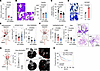 Figure 2
ITIH2 KD inhibits the migration and invasion of lung cancer cells. (A) qRT-PCR analysis of Itih2 mRNA levels in 344SQ cells transduced with Itih2 shRNAs (shC or shE). P values from 1-way ANOVA followed by Dunnett’s multiple-comparison test. (B) Boyden chamber migration assay in 344SQ-ITIH2-KD cells. After 24 hours, migrated cells were stained with crystal violet. P values determined by 1-way ANOVA followed by Dunnett’s multiple-comparison test. Scale bar: 200 μm. (C) Scratch migration assay in 344SQ-ITIH2-KD cells. Migration activity, (1 – [scratch area ratio of 24 hours to 0 hours]) × 100%, was measured using ImageJ (NIH). Mean ± SD (n = 12). P values determined by 1-way ANOVA followed by Dunnett’s multiple-comparison test. (D) Boyden chamber invasion assay in HCC827 cells overexpressing ITIH2. P value determined by 2-tailed Student’s t test. Scale bar: 200 μm. (E) Mouse subcutaneous injection of 344SQ-ITIH2-KD cells. After 6 weeks of injection, the primary tumor volume and lung metastatic tumor nodules were measured at necropsy (n = 9 or 10). P values determined by 1-way ANOVA followed by Dunnett’s multiple-comparison test. (F) Mouse orthotopic injection of 344SQ-ITIH2-KD cells. After a week of injection, the tumor nodules on mediastinal lymph nodes and lungs were measured at necropsy (n = 7 or 8). H&E staining results of the lung sections are described. P values determined by 1-way ANOVA followed by Dunnett’s multiple-comparison test. Scale bar: 5 mm. (G) Mouse tail-vein injection of 344SQ-ITIH2-KD cells. After 10 days of injection, tumor nodules colonized in the lungs were measured at necropsy under a fluorescent microscope (n = 5). P values determined by 2-tailed Student’s t test. Scale bars: 5 mm (left), 2 mm (right). (H) Kaplan-Meier curve for progression-free survival in patients with LUAD was generated from the Kaplan-Meier plotter (66). Data represent the mean ± SD from a single experiment with biological replicates (n = 3, unless otherwise specified) and are representative of at least 3 independent experiments.
The 344SQ cell line, mesenchymal-like cells with high ZEB1 expression, was used to study lung cancer progression and metastasis in 129/Sv syngeneic mice (23, 24). Following subcutaneous injection, tumors develop at the injection site and metastasize to the lungs within 5–6 weeks. Beyond 6 weeks, metastasis spreads to multiple organs, such as the liver, kidney, and intestines, often necessitating euthanasia. ZEB1 KD or targeting with microRNA-200 in 344SQ cells reduced their metastatic potential, indicating that ZEB1 is a key regulator of metastasis in this system (23, 25, 26). Additionally, ITIH2-depleted 344SQ cells demonstrated impaired metastasis to distant organs such as the lung, liver, kidney, spleen, and brain compared with control cells when injected into syngeneic mice (129/Sv) subcutaneously (Figure 2E and Supplemental Figure 3A). Furthermore, in an orthotopic injection model, ITIH2 depletion suppressed local invasion and lymph node metastases (Figure 2F). Mice that underwent surgery during the orthotopic injection showed minimal signs of systemic inflammation or infection (Supplemental Figure 3B). ITIH2 depletion also suppressed lung colonization in a tail-vein injection model (Figure 2G). Because of rapid disease progression in the orthotopic and tail-vein injection models, mice were euthanized 7–10 days after injection, which was insufficient time to assess distant metastasis. ITIH2 overexpression enhanced the invasive potential of lung cancer cells in mouse orthotopic injection (Supplemental Figure 2L). Moreover, ITIH2 add-back in ZEB1-KD cells restored their motility and local invasive potential (Supplemental Figure 2, M and N). Analysis of publicly available LUAD datasets using the Kaplan-Meier plotter (27) revealed that patients with high ITIH2 expression exhibited a worse progression-free survival rate than those with low ITIH2 expression (Figure 2H). In the same database, ITIH2 expression was higher in lung metastatic tumors compared with primary tumors (Supplemental Figure 2O). ZEB1 has also been reported to be negatively correlated with overall survival in patients with lung cancer (20, 28). In primary tumors, both ZEB1 and ITIH2 were highly expressed at the invasive front of the tumor edge compared with the central region, indicating that they promote invasive potential. Consistent with these findings, high expression of ZEB1 and ITIH2 was observed throughout metastatic tumors (Supplemental Figure 3C). These results strongly indicate that ITIH2, regulated by ZEB1, is indispensable for enhancing the migration and invasion of lung cancer cells, as well as local tumor progression.
ITIH2’s role in establishing a pro-migratory extracellular environment. As ITIH2 promotes cellular motility, invasiveness, and the formation of HA bundles in the ECM, it is proposed that ITIH2 modulates heterotypic cellular interactions within the TME. In a 3D collagen gel–based invasion assay with cocultures of lung cancer cells and CAFs, 344SQ cells invaded following CAFs at the front of invasive projections as described previously (22). However, ITIH2-depleted 344SQ cells failed to invade along the CAFs (Figure 3A). We subsequently performed spheroid overlay cultures by placing 344SQ cancer cell spheroids (red) on a confluent layer of CAFs (green), which had been cultured for 24 hours prior to the spheroid seeding (Figure 3B). The 344SQ spheroids pushed CAFs outward and invaded the feeder layer, with the CAFs climbing up the lateral surface of the 344SQ spheroid as they were pushed outward. Meanwhile, ITIH2 depletion again hindered the 344SQ spheroids from invading the CAF feeder layer. To further validate the impact of the HA matrix facilitated by ITIH2 on cell-cell interaction during invasion into the ECM, we labeled control 344SQ cells (nontargeting control [NTC]) with red fluorescence and ITIH2-depleted cells (shRNA-C [shC]) with green fluorescence. After mixing NTC and shC cells to form spheroids, we embedded these spheroids in collagen gels (Figure 3C). Interestingly, spheroids composed of both NTC and shC cells also exhibited reduced invasive activity, comparable to those consisting solely of shC cells, suggesting that the depletion of the HA matrix due to ITIH2 KD not only impairs the invasive activity of the KD cells themselves but also negatively impacts neighboring cancer cells. These findings underscore ITIH2’s role in creating a pro-migratory extracellular environment for neighboring cells through the construction of the HA network.
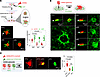 Figure 3
ITIH2 KD inhibits the interaction between cancer cells and CAFs. (A) Confocal micrographs of multicellular aggregates containing CAF-led invasive structures (arrows). Spheroids were created with both CAFs (labeled with GFP) and 344SQ-NTC or ITIH2-KD cells (shC and shE, labeled with mCherry). The spheroid invasion ratios were calculated by ImageJ software after 24 hours of incubation. Mean ± SD (NTC, n = 8; shC, n = 7; shE, n = 7). P values determined by 1-way ANOVA followed by Dunnett’s multiple-comparison test. Scale bar: 200 μm. (B) Confocal micrographs of spheroid overlay cultures where 344SQ cancer cell spheroids (NTC or shC–E, mCherry) were placed on top of a confluent monolayer of CAFs (GFP), which were cultured for 24 hours before the spheroid seeding. Multicellular aggregates were further incubated for another 24 hours to allow migration and invasion. Arrows indicate the lateral surface of cancer cell aggregates interacting with surrounding CAFs. Scale bars: 200 μm (top), 100 μm (bottom left). (C) Spheroid invasion assay in 344SQ-ITIH2-shC (green), NTC (red), and mixed NTC and shC (NTC+shC) cells. The cancer spheroids were composed of NTC only, shC only, and a mix of both NTC and shC. To differentiate between the cell types, NTC cells were labeled with red fluorescence and shC cells with green fluorescence. After 48 hours, spheroids were embedded in collagen gels. The spheroids were imaged using a fluorescence microscope (middle panel), and the spheroid invasion ratio was calculated using ImageJ software (right) after 24 hours of incubation. Mean ± SD (NTC, n = 12; shC, n = 10; NTC+shC, n = 12). P values determined by 1-way ANOVA followed by Dunnett’s multiple-comparison test. Scale bar: 200 μm. Data represent the mean ± SD from a single experiment with biological replicates and are representative of at least 3 independent experiments.
ZEB1’s contribution to HA network formation. ITIH2 actively contributes to the formation of HA-rich extracellular cables by forming covalent bonds with HA, detectable using HA-binding protein (HABP) as a specific probe for HA, indicating the presence of an extracellular HA matrix (15). The abundance of the HA matrix surrounding 344SQ cells was reduced with the inhibition of HA synthesis by 4-methylumbelliferone (4-MU) (29) or hyaluronidase treatment (Figure 4A and Supplemental Figure 4, A–C). Additionally, the formation of the extracellular HA matrix was less prominent and narrower in 393P and HCC827 cells with low levels of ZEB1 and ITIH2 compared with 344SQ and H1299 cells, respectively (Figure 4C and Supplemental Figure 4D). ZEB1 or ITIH2 overexpression in 393P and HCC827 cells increased the formation of the HA matrix (Figure 4B and Supplemental Figure 4, E–G), while ITIH2 KD in 344SQ cells led to a reduction in the extent of the extracellular HA matrix (Figure 4E). Gefitinib-resistant HCC827 cells that had undergone the EMT process (30) and expressed high levels of ZEB1 developed a more extensive HA matrix compared with the control (Supplemental Figure 4, H–J). 4-MU treatment effectively blocked HA synthesis and HA matrix formation even with ectopic ZEB1 overexpression (Supplemental Figure 4, K and L). During the scratch assay, the HA matrix was enriched around the leading edge of migrating cancer cells, implying its role in facilitating cell migration (Supplemental Figure 5A). Forced expression of ZEB1 in 393P cells promoted HA matrix formation, whereas depletion of ZEB1 and ITIH2 in 344SQ cells suppressed HA matrix formation (Supplemental Figure 5, B–D). These observations emphasize the pivotal role of ZEB1 in promoting the development of an extracellular HA environment.
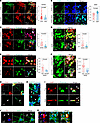 Figure 4
ZEB1 and ITIH2 facilitate the formation of the HA matrix and cables. (A) Confocal microscopy of 344SQ cells with or without 4-MU treatment (1 mg/mL for 24 hours) stained with HABP, phalloidin, and DAPI. Mean ± SD (control [CON], n = 40; 4-MU, n = 12). (B) Confocal microscopy of 393P-vec and 393P-ZEB1 cells. Mean ± SD (393P-vec, n = 14; 393P-ZEB1, n = 17). (C) Confocal microscopy of 344SQ and 393P cells. Mean ± SD (344SQ, n = 11; 393P, n = 10). (D) Confocal Z-stack images of 344SQ and 393P cells. The arrows indicate HA cables. Mean ± SD (393P, n = 17; 344SQ, n = 10). (E) Confocal microscopy of 344SQ-ITIH2-KD cells. Mean ± SD (344SQ-NTC, n = 8; ITIH2-KD, n = 6). (F) Confocal Z-stack images of 344SQ-ITIH2-KD cells. Arrows indicate HA cables. Mean ± SD (344SQ-NTC, n = 12; ITIH2-KD, n = 10). Scale bars in A–F: 50 μm. (G) Confocal Z-stack images of 344SQ cells. The arrows indicate ITIH2 on the HA cable. Scale bars: 25 μm (top), 10 μm (bottom). (H) Confocal Z-stack images of 344SQ cells. The arrows indicate that HA cables are not colocalized with cytoskeletons. Scale bar: 50 μm. (I) Confocal Z-stack images of 344SQ cells. The arrows indicate an HA cable forming a bridge between 2 cells. Scale bar: 20 μm. (J) Confocal Z-stack images of 344SQ cells. RFP-labeled EVs were treated to control 344SQ cells for 24 hours. The arrows indicate the captured EVs on HA cables. Scale bar: 10 μm. (K) Confocal Z-stack images of the same 344SQ cells as in J. The arrows indicate a cell with less HA matrix, and the asterisks indicate a cell with abundant HA matrix. Scale bar: 20 μm. Data represent the mean ± SD from a single experiment with biological replicates and are representative of at least 3 independent experiments. P values determined by 2-tailed Student’s t test.
As anticipated, a higher presence of HA cables was evident in 344SQ cells compared with 393P cells or ITIH2-KD cells (Figure 4, D and F). ITIH2 was identified as a component of these cables, as it forms bundles or cables by binding to HA (Figure 4G). These HA cables did not overlap with the actin cytoskeleton (Figure 4H), signifying that they were not extensions of the cellular membrane. These HA cables served as intercellular connections, resembling suspension bridges between cells (Figure 4I), suggesting potential intercellular communication through this structure. HA matrices and cables are recognized for their role in facilitating the release and transport of extracellular vesicles (EVs) (31, 32). Moreover, breast cancer cells produce HA-rich trails that contain EVs, aiding in directional cell migration (33). These findings imply that HA cables are not merely passive structures but rather active extracellular structures involved in regulating cell-to-cell interactions. Consistent with this, EVs were observed bound to HA cables (Figure 4J), and cells with a well-developed HA matrix exhibited increased binding and uptake of EVs (Figure 4K and Supplemental Figure 5E). 344SQ cells enriched with an HA matrix exhibited enhanced EV binding and uptake compared with 393P cells (Supplemental Figure 5F). Although further investigation is warranted, these findings propose that the HA matrix plays a pivotal role in cell migration and facilitates intercellular communication.
ZEB1 governs the cellular response to HA. In the TME, cancer cells are ensconced within an HA matrix that aids their migration and invasion. Treatment of lung cancer cells with HA heightened their mobility and invasiveness by inducing partial EMT, particularly evident in mesenchymal-like (high-ZEB1) 344SQ and H1299 cells compared with epithelial-like (low-ZEB1) 393P and HCC827 cells (Figure 5, A–F). Depletion of ITIH2 impeded the migration of 344SQ cells, which was otherwise enhanced by HA treatment (Figure 5G). Inhibition of HA synthesis by 4-MU or hyaluronidase treatment reduced the invasiveness and motility of 344SQ cells, whereas its impact on 393P cells was minimal (Figure 5, H and I). These observations suggest that 344SQ cells, actively forming the HA matrix, depend more on HA for migration and invasion than do 393P cells. The divergent responses may be attributed, at least in part, to the distinct activation of the ERK pathway downstream of HA signaling (34). In 344SQ cells, ERK phosphorylation increased in a time-dependent manner after HA treatment, a response less pronounced in 393P cells (Figure 5J). Additionally, treatment with an ERK inhibitor (FR180204) effectively curbed the migration and invasion of 344SQ cells (Figure 5, K and L). These results indicate that ZEB1 governs the response to HA, with high-ZEB1 cells showing greater sensitivity to extracellular HA compared with low-ZEB1 cells.
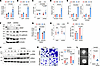 Figure 5
Mesenchymal-like cells are more sensitive to the HA matrix than epithelial-like cells. (A) Scratch migration assay in 393P and 344SQ cells treated with HA (2 mg/mL). Mean ± SD (n = 12). (B) Boyden chamber migration assay in 393P and 344SQ cells treated with HA. (C) Spheroid invasion assay of 393P and 344SQ cells treated with HA. The spheroid invasion ratios were calculated by ImageJ after 24 hours of incubation. Mean ± SD (393P control, n = 21; 393P with HA, n = 25; 344SQ control, n = 30; 344SQ with HA, n = 21). (D) Boyden chamber migration assay in HCC827 and H1299 cells treated with HA. (E) Boyden chamber migration (left) and invasion (right) assays in HCC827-vec and HCC827-ZEB1 cells treated with HA. (F) Western blot of ZEB1, N-cadherin, E-cadherin, and vimentin in 393P and 344SQ cells treated with HA. (G) Scratch migration assay of 344SQ-ITIH2-KD and NTC cells with mean ± SD (n = 12). (H) Spheroid invasion assay of 393P and 344SQ cells treated with 4-MU (1 mg/mL). Mean ± SD (393P control, n = 13; 393P with 4-MU, n = 15; 344SQ control, n = 9; 344SQ with 4-MU, n = 9). (I) Boyden chamber migration assay in 393P and 344SQ cells with hyaluronidase (HYAL). (J) Western blot of p-ERK and ERK2 in 393P and 344SQ cells with HA treatment. (K) Boyden chamber migration assay of 344SQ cells treated with HA and FR180204 (10 μM). Scale bar: 200 μm. (L) Spheroid invasion assay of 344SQ cells treated with FR180204. Mean ± SD (DMSO, n = 44; FR180204, n = 44). Scale bar: 200 μm. Data represent the mean ± SD from a single experiment with biological replicates (n = 3, unless otherwise specified) and are representative of at least 3 independent experiments. P values determined by 2-tailed Student’s t test.
ZEB1 is a transcription activator of HAS2, an HA synthase. ZEB1 has emerged as a pivotal transcription factor, steering the synthesis and receptor-mediated signaling of HA (35). Our scrutiny of 13 murine lung cancer cell lines and TCGA-LUAD data disclosed a positive correlation between ZEB1 and HAS2 mRNA levels, solidifying ZEB1’s role as a transcription activator for HAS2, an HA synthase (Figure 6, A and B). Within the HA synthase family, Has2 exhibited the highest expression and proved to be under the regulatory influence of ZEB1 in murine lung cancer cells (Figure 6, C and D). In line with previous findings (35), ZEB1 heightened the promoter activity of the Has2 gene (Figure 6E). ChIP-sequencing data from MCF7 cells corroborated ZEB1’s binding to the promoter region of HAS2 (Supplemental Figure 1). Depletion of HAS2 in 344SQ cells reduced their motility and invasiveness (Figure 6, F–I), affirming that ZEB1, by upregulating HAS2, promotes HA synthesis and consequently enhances cell migration and invasion.
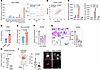 Figure 6
ZEB1 upregulates HAS2 expression. (A) qRT-PCR of Has2 mRNA levels in epithelial-like (blue) and mesenchymal-like (red) murine lung cancer cells. A scatterplot of Zeb1 and Has2 mRNA levels is presented (right). (B) Scatterplot of ZEB1 and HAS2 mRNA levels in TCGA-LUAD data (n = 517). (C) qRT-PCR of mRNA levels of HAS family members (Has1–Has3) in 393P, 344SQ, 393P-vec, and 393P-ZEB1 cells. **P < 0.01 by 2-tailed Student’s t test. (D) qRT-PCR of HAS2 mRNA levels in HCC827 and H1299 cells. P value determined by 2-tailed Student’s t test. (E) Luciferase reporter assay of Has2 promoter activity. Murine Has2 promoter region (2,077 bp; –1,182 to 895 from the transcription start site) was inserted into a luciferase reporter vector (pGL3-Basic). Luciferase reporter was cotransfected with the ZEB1 expression vector. P value determined by 2-tailed Student’s t test. (F) qRT-PCR of Has2 mRNA levels in 344SQ cells transfected with Has2 siRNAs (siRNA nos. 1, 4, and 5). **P < 0.01 by 1-way ANOVA followed by Dunnett’s multiple-comparison test. (G) Boyden chamber migration assay of 344SQ cells transfected with Has2 siRNAs. Cells were seeded in upper inserts, and after 24 hours, migrated cells were stained with crystal violet. **P < 0.01 by 1-way ANOVA followed by Dunnett’s multiple-comparison test. Scale bar: 200 μm. (H) qRT-PCR of Has2 mRNA levels in 344SQ cells transduced with Has2 shRNA. P value from 2-tailed Student’s t test. (I) Mouse orthotopic injection of 344SQ-HAS2-KD cells. Cells labeled with mCherry were injected into the left lung (n = 10). After 1 week, lung tumors were measured at necropsy under a fluorescence microscope. P value determined by 2-tailed Student’s t test. Scale bar: 5 mm. Data represent the mean ± SD from a single experiment with biological replicates (n = 3, unless otherwise specified) and are representative of at least 3 independent experiments.
ZEB1 controls the splice isoform switching of CD44, an HA receptor. CD44 serves as an HA receptor, engaging in interactions with HA. During the EMT, two splice isoforms of CD44, CD44 standard (CD44s) and CD44 variants (CD44v), exhibit distinct functional characteristics (10, 20, 36). The switch from CD44v to CD44s promotes EMT and contributes to cancer progression (20, 37). In murine lung cancer cells, CD44s expression is higher in mesenchymal-like cells than in epithelial-like cells (Figure 7A). When lung cancer cells were treated with TGF-β, a potent EMT inducer, CD44s expression increased (Supplemental Figure 6A). This increase was restored after TGF-β removal, suggesting that CD44 isoform switching depends on the EMT status.
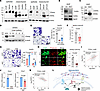 Figure 7
ZEB1 controls CD44 expression. (A) Western blot of CD44 in epithelial-like and mesenchymal-like murine lung cancer cells. Standard (s) and variant (v) isoforms of CD44 are indicated. (B) RT-PCR of Cd44 in 393P-vec and 393P-ZEB1 cells. Standard (s) and variant (v) splicing isoforms are indicated. Rpl32 was used as a loading control. (C) Western blot of CD44 in 393P-vec and 393P-ZEB1 cells. (D) Western blot of CD44 in 344SQ cells transduced with Cd44 shRNAs (shA–E). (E) Boyden chamber migration assay of 344SQ-CD44-KD (shC and shD) and NTC cells. Cells were seeded in upper inserts, and after 24 hours, migrated cells were stained with crystal violet. P values determined by 1-way ANOVA followed by Dunnett’s multiple-comparison test. Scale bar: 200 μm. (F) Mouse subcutaneous injection of 344SQ-CD44-KD (shC) and NTC cells. Tumor volume was measured at necropsy. P value from 2-tailed Student’s t test. (G) Boyden chamber migration assay of 344SQ-CD44-KD and NTC cells treated with or without HA. Cells were seeded in upper inserts coated with HA, and after 24 hours, migrated cells were stained with crystal violet. P value determined by 2-tailed Student’s t test. Scale bar: 200 μm. (H) Confocal microscopy of 344SQ-CD44-KD and NTC cells stained with HABP and streptavidin–Alexa Fluor 488 (green) and phalloidin (red). Mean ± SD (NTC, n = 10; shC, n = 10). Scale bar: 50 μm. (I) Scatterplot of ZEB1 and CD44 mRNA levels in TCGA-LUAD data (n = 517). (J) qRT-PCR of Esrp1 mRNA levels in 393P, 344SQ, 393P-vec, and 393P-ZEB1 cells. (H) and (I) P values determined by 2-tailed Student’s t test. (K) Scatterplot of ZEB1 and ESRP1 mRNA levels in TCGA-LUAD data (n = 517). (L) Diagram showing the HA network reconstructed by ZEB1. Data represent the mean ± SD from a single experiment with biological replicates (n = 3, unless otherwise specified) and are representative of at least 3 independent experiments.
ZEB1 facilitates the isoform switching from CD44v to CD44s, as demonstrated at both mRNA and protein levels (Figure 7, B and C). This implies that the abundance of CD44s may underlie traits such as heightened migratory and invasive capacities. CD44 KD in 344SQ cells resulted in diminished motility, tumorigenicity, and responsiveness to HA (Figure 7, D–G), indicating CD44’s role in mediating cellular responses to HA. Moreover, CD44 KD led to a reduction in HA matrix formation surrounding lung cancer cells, further affirming the functional importance of CD44 in the HA network (Figure 7H).
In TCGA-LUAD, CD44 exhibits a positive correlation with ZEB1 at the mRNA level (Figure 7I). This correlation is attributed to ZEB1’s suppressive effect on ESRP1, a pivotal regulator of CD44 alternative splicing (20, 37). The mRNA levels of Esrp1 were lower in 344SQ cells and 393P-ZEB1 cells than in 393P and 393P-vector cells (Figure 7J). In TCGA-LUAD data, ESRP1 shows a negative correlation with ZEB1 at the mRNA level (Figure 7K). ChIP-sequencing data in MCF7 cells confirm ZEB1’s binding to the promoter region of ESRP1 (Supplemental Figure 1). These findings collectively suggest that ZEB1 orchestrates the HA network at the receptor level by regulating the splice isoform switching of CD44. ZEB1 was found to modulate the expression of other HA-binding proteins and receptors, which warrants further study (Supplemental Figure 6B). In contrast, other EMT-inducing transcription factors, such as ZEB2, SNAIL, SLUG (Snail2), and TWIST, exhibited little or no effect on Itih2 and Has2 expression or on the formation of the extracellular HA matrix (Supplemental Figure 6, C–I). Overall, ZEB1 plays a pivotal role in governing the comprehensive formation of the HA network, encompassing HA synthesis, matrix formation, and receptor-mediated signaling (Figure 7L).
Sincalide suppresses lung cancer progression by inhibiting ITIH2. Given the pivotal role of ITIH2 in cancer cell invasion and metastasis, directing therapeutic interventions toward ITIH2 poses a promising strategy. Employing the Molecule Transformer Drug-Target Interaction (MT-DTI) algorithm, a deep learning model for drug-target interactions (Figure 8A) (38), we screened 2,459 FDA-approved drugs to identify candidates disrupting the ITIH2-HA interaction and impeding HA matrix formation (Supplemental Figure 7A). Sincalide, also known as CCK-8, stood out as the most effective compound, displaying inhibitory effects on lung cancer cell migration and invasion without causing severe cytotoxicity upon experimental validation (Supplemental Figure 7, B–F).
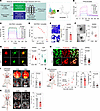 Figure 8
Sincalide, an ITIH2 inhibitor, inhibits the migration and invasion of lung cancer cells. (A) Prediction of ITIH2 inhibitors using the MT-DTI algorithm. (B) Surface plasmon resonance (SPR) analysis showing binding of sincalide to the ITIH2 protein. (C and D) SPR analysis showing inhibition of binding between HA and the ITIH2 protein by sincalide. (E and F) Boyden chamber migration (E) and spheroid invasion assay (F) of 344SQ cells treated with sincalide (SIN). Scale bar: 200 μm. (G) Spheroid invasion assay of CAFs and 344SQ cells treated with sincalide. Mean ± SD (CON, n = 23; SIN, n = 32). Scale bar: 200 μm. (H) Confocal microscopy of 344SQ cells treated with sincalide. Mean ± SD (CON, n = 20; SIN, n = 24). Scale bar: 50 μm. (I) 344SQ cells were orthotopically injected into the left lung (n = 8 or 9). Sincalide (2.5 mg/kg of body weight) was injected intraperitoneally twice a week until mice were euthanized. After 7 days, the number of lung tumor nodules was measured at necropsy. Scale bar: 5 mm. (J) 344SQ cells were subcutaneously injected (n = 9), and primary tumor volumes (left graph) were measured until mice were euthanized. After 6 weeks, tumor weights (middle graph) and number of lung metastases (right graph) were measured at necropsy. (K) 344SQ cells were injected via tail vein (n = 5 or 6). After 10 days, tumor nodules colonized in lungs were assessed. Scale bar: 5 mm. Data represent the mean ± SD from a single experiment with biological replicates (n = 3, unless otherwise specified) and are representative of at least 3 independent experiments. P values determined by 2-tailed Student’s t test (E–I, J [right 2 bar graphs], and K) or 2-way ANOVA test (J [left]).
Sincalide, primarily used for diagnosing gallbladder and pancreatic disorders, stimulates gallbladder contractions and induces digestive enzyme release from the pancreas (39). Surface plasmon resonance analysis confirmed its effective binding to ITIH2 (Figure 8B), preventing its interaction with HA (Figure 8, C and D). Sincalide exhibited inhibitory effects on the migration and invasion of various cancer cells (lung, head and neck, breast, and prostate cancer) (Figure 8, E and F, and Supplemental Figure 7, G and H) and reduced CAF invasion in a coculture assay (Figure 8G). Furthermore, sincalide mitigated the formation of the HA matrix surrounding 344SQ cells (Figure 8H). Unlike anti-survival/anti-proliferation drugs such as cisplatin and EGFR inhibitors (40, 41), ZEB1 did not drive resistance to sincalide (Supplemental Figure 7, I and J). Instead, ZEB1 increased sensitivity to sincalide (Supplemental Figure 7K).
Hypothesizing that disrupting the HA matrix crucial for cancer cell migration and invasion would diminish lung cancer progression, we administered sincalide intraperitoneally or intravenously in syngeneic 129/Sv mice. In the orthotopic injection model, sincalide markedly suppressed local invasion of lung cancer cells (Figure 8I and Supplemental Figure 8A). While primary tumor growth in the subcutaneous injection model remained unaffected (Supplemental Figure 8, B–E), sincalide effectively curtailed lung metastasis (Figure 8J). In a tail-vein injection model, sincalide attenuated the lung colonization of 344SQ cells (Figure 8K). During the treatment period, sincalide had a minimal impact on body weight in comparison with the control group (Supplemental Figure 9A). Hematological analysis, including complete blood count parameters, as well as ELISA tests for plasma aspartate aminotransferase, alanine transaminase, and blood urea nitrogen levels, along with H&E staining of the major organs, confirmed that sincalide had no adverse effects on the mice at the concentration used in this study (2.5 mg/kg of body weight; Supplemental Figure 9, B–D). Even when the dosage was doubled to 5 mg/kg, the antitumor effect of sincalide remained comparable to that of the original dosage, suggesting that the original dosage is sufficient to fully elicit the antitumor activity of sincalide (Supplemental Figure 10, A and B). The combination of sincalide and 4-MU showed no synergistic effects, probably because they both act on the same therapeutic target (Supplemental Figure 10C). Since sincalide disrupts HA matrix formation downstream of HA synthesis, further blocking HA synthesis with 4-MU may not enhance inhibition. Sincalide treatment slightly inhibited spontaneous lung tumor growth in KrasG12D mice, though this effect was statistically insignificant, consistent with the results observed in the syngeneic mouse models (Supplemental Figure 10D). We were unable to assess sincalide’s impact on metastasis, as KrasG12D mice rarely develop metastases (42). Furthermore, sincalide treatment suppressed CAF activation and M2 macrophage recruitment (Supplemental Figure 10E), thereby hindering cancer progression in the TME. These findings underscore sincalide’s role in inhibiting cancer progression by disrupting the ITIH2-HA interaction, leading to a reduction in HA matrix formation crucial for lung cancer cell migration and invasion.


Copyright © 2026 American Society for Clinical Investigation
ISSN: 0021-9738 (print), 1558-8238 (online)