
Go to JCI Insight
  • About
  • Editors
  • Consulting Editors
  • For authors
  • Journal stats
  • Publication ethics
  • Publication alerts by email
  • Advertising
  • Job board
  • Contact
  • Clinical Research and Public Health
  • Current issue
  • Past issues
  • By specialty
    • COVID-19
    • Cardiology
    • Gastroenterology
    • Immunology
    • Metabolism
    • Nephrology
    • Neuroscience
    • Oncology
    • Pulmonology
    • Vascular biology
    • All ...
  • Videos
    • ASCI Milestone Awards
    • Video Abstracts
    • Conversations with Giants in Medicine
  • Reviews
    • View all reviews ...
    • Emerging therapeutic strategies in breast cancer (Oct 2026)
    • The cGAS-STING pathway: DNA sensing in health and disease (Jun 2026)
    • Neurodegeneration (Mar 2026)
    • Clinical innovation and scientific progress in GLP-1 medicine (Nov 2025)
    • Pancreatic Cancer (Jul 2025)
    • Complement Biology and Therapeutics (May 2025)
    • Evolving insights into MASLD and MASH pathogenesis and treatment (Apr 2025)
    • View all review series ...
  • Viewpoint
  • Collections
    • In-Press Preview
    • Clinical Research and Public Health
    • Research Letters
    • Letters to the Editor
    • Editorials
    • Commentaries
    • Editor's notes
    • Reviews
    • Viewpoints
    • 100th anniversary
    • Top read articles
  • Search Articles

  • Current issue
  • Past issues
  • Specialties
  • Reviews
  • Review series
  • ASCI Milestone Awards
  • Video Abstracts
  • Conversations with Giants in Medicine
  • In-Press Preview
  • Clinical Research and Public Health
  • Research Letters
  • Letters to the Editor
  • Editorials
  • Commentaries
  • Editor's notes
  • Reviews
  • Viewpoints
  • 100th anniversary
  • Top read articles
  • About
  • Editors
  • Consulting Editors
  • For authors
  • Journal stats
  • Publication ethics
  • Publication alerts by email
  • Advertising
  • Job board
  • Contact

Submit a comment

Nuclear cGAS governs transcription to control lipid metabolism, tumor growth, and therapy response
Yu Deng, Matthew J. Niederhuber, Zhichuan Zhu, Austin J. Hepperla, Le Yu, Quentin Hahn, Joshua Hartsell, Tooba Rashid, Piotr A. Mieczkowski, Hemant Kelkar, Jeremy M. Simon, Yanqiong Zhang, Alessandra Livraghi-Butrico, Meredith J. Zeller, Joseph G.C. Kennedy, Jazmin F. DePriest, Jiong Li, Yan Zhang, Xing Qiu, H. Ümit Kaniskan, Jian Jin, Corbin D. Jones, Laura E. Herring, Douglas H. Phanstiel, Xiaojing Liu, Jesse R. Raab, Brian D. Strahl, Pengda Liu
View: Text | PDF
Research Article Cell biology Metabolism Oncology

Nuclear cGAS governs transcription to control lipid metabolism, tumor growth, and therapy response

  • Text
  • PDF
Abstract

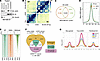
Cyclic GMP-AMP synthase (cGAS) is a cytosolic DNA sensor critical for host defense against microbial infections. To prevent aberrant activation, nuclear cGAS is restrained by nucleosome tethering or by barrier-to-autointegration factor–mediated restriction of its access to DNA. However, its physiological roles beyond enzymatic suppression in the nucleus remain poorly understood. Here, we present a genome-wide map of cGAS chromatin localization in human cells and unexpectedly find its binding beyond nucleosome tethering, where cGAS is recruited to chromatin by AP-1 transcription factors via a potentially previously uncharacterized transactivation domain. Integrated CUT&RUN, RNA-seq, and metabolomics analyses reveal that cGAS transcriptionally regulates cholesterol homeostasis. Mechanistically, cGAS promotes LGALS3 transcription, which inhibits ACAA2 activity to suppress fatty acid oxidation and acetyl-CoA production, thereby lowering intracellular cholesterol levels. Reduced cholesterol lowers plasma membrane phosphatidylinositol [3,4,5] triphosphate [PI(3,4,5)P3] levels and decreases mTOR complex 2 (mTORC2) activation. In contrast, cGAS depletion results in cholesterol accumulation and elevated PI(3,4,5)P3, driving mTORC2/Akt signaling, promoting xenografted tumor growth, and conferring resistance to DNA-damaging agents. In vivo, the elevated hepatic cholesterol levels observed in cGas–/– mice were largely reversed by inhibition of Akt but not STING, whereas cGAS deficiency had minimal effects on lung physiology. Collectively, our findings uncover an unexpected role for nuclear cGAS in orchestrating a transcriptional program that links lipid metabolism to cell proliferation, stress response, and cholesterol homeostasis in liver.

Authors

Yu Deng, Matthew J. Niederhuber, Zhichuan Zhu, Austin J. Hepperla, Le Yu, Quentin Hahn, Joshua Hartsell, Tooba Rashid, Piotr A. Mieczkowski, Hemant Kelkar, Jeremy M. Simon, Yanqiong Zhang, Alessandra Livraghi-Butrico, Meredith J. Zeller, Joseph G.C. Kennedy, Jazmin F. DePriest, Jiong Li, Yan Zhang, Xing Qiu, H. Ümit Kaniskan, Jian Jin, Corbin D. Jones, Laura E. Herring, Douglas H. Phanstiel, Xiaojing Liu, Jesse R. Raab, Brian D. Strahl, Pengda Liu

×

Guidelines

The Editorial Board will only consider comments that are deemed relevant and of interest to readers. The Journal will not post data that have not been subjected to peer review; or a comment that is essentially a reiteration of another comment.

  • Comments appear on the Journal’s website and are linked from the original article’s web page.
  • Authors are notified by email if their comments are posted.
  • The Journal reserves the right to edit comments for length and clarity.
  • No appeals will be considered.
  • Comments are not indexed in PubMed.

Specific requirements

  • Maximum length, 400 words
  • Entered as plain text or HTML
  • Author’s name and email address, to be posted with the comment
  • Declaration of all potential conflicts of interest (even if these are not ultimately posted); see the Journal’s conflict-of-interest policy
  • Comments may not include figures
This field is required

Copyright © 2026 American Society for Clinical Investigation
ISSN: 0021-9738 (print), 1558-8238 (online)

Sign up for email alerts