
Submit a comment
Abstract
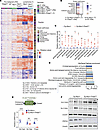
Antimetabolites, chemotherapy targeting nucleotide biosynthesis, are among the oldest and most widely used cancer treatments, yet resistance remains a daunting barrier, especially in the fight against B cell lymphomas. However, the underlying mechanisms of this resistance have long remained elusive. Using an innovative, integrated omics approach, we unexpectedly identified that the accumulation of dipeptides and upregulation of the dipeptide transporter SLC15A3 underlie resistance to nucleotide deficiency in a Myc-driven large B cell lymphoma mouse model. A similar mechanism occurred after long treatment of human B cell lymphoma cells with the chemotherapeutic purine synthesis inhibitor 6-mercaptopurine (6MP). Mechanistically, we demonstrated that dipeptides containing essential amino acids activated the growth and survival mTOR complex 1 (mTORC1) signaling pathway. Notably, SLC15A3 specifically interacted with mTOR on the lysosome, boosting mTORC1 activity selectively in resistant lymphoma cells but not in parental cancer cells. Silencing SLC15A3 diminished mTORC1 activity and restored resistant lymphoma sensitivity to 6MP. Strikingly, resistant lymphomas, but not primary tumors, exhibited heightened sensitivity to the clinical mTOR inhibitor, rapamycin, in culture and in vivo. We extended these findings in human lymphoma biopsies, which revealed increased SLC15A3 expression following antimetabolite therapy. Together, our study uncovered a metabolic adaptation that fuels cancer resistance to nucleotide deficiency and positions the mTORC1 inhibitor, rapamycin, as a potential therapeutic strategy for transforming the management of chemotherapy-resistant lymphomas.
Authors
Haojun Yang, Vincenzo Andrea Zingaro, Kevin Boardman, Ashish Noronha, Ekin Guney, Lingru Xue, Saishma Hoigebazar, Isabelle Liu, Sohit Miglani, Siyu Chen, Hieu Vu, Kwun Wah Wen, Hao G. Nguyen, Hani Goodarzi, Ralph J. DeBerardinis, Davide Ruggero
Guidelines
The Editorial Board will only consider comments that are deemed relevant and of interest to readers. The Journal will not post data that have not been subjected to peer review; or a comment that is essentially a reiteration of another comment.
- Comments appear on the Journal’s website and are linked from the original article’s web page.
- Authors are notified by email if their comments are posted.
- The Journal reserves the right to edit comments for length and clarity.
- No appeals will be considered.
- Comments are not indexed in PubMed.
Specific requirements
- Maximum length, 400 words
- Entered as plain text or HTML
- Author’s name and email address, to be posted with the comment
- Declaration of all potential conflicts of interest (even if these are not ultimately posted); see the Journal’s conflict-of-interest policy
- Comments may not include figures


Copyright © 2026 American Society for Clinical Investigation
ISSN: 0021-9738 (print), 1558-8238 (online)