
Go to JCI Insight
  • About
  • Editors
  • Consulting Editors
  • For authors
  • Publication ethics
  • Publication alerts by email
  • Advertising
  • Job board
  • Contact
  • Clinical Research and Public Health
  • Current issue
  • Past issues
  • By specialty
    • COVID-19
    • Cardiology
    • Gastroenterology
    • Immunology
    • Metabolism
    • Nephrology
    • Neuroscience
    • Oncology
    • Pulmonology
    • Vascular biology
    • All ...
  • Videos
    • ASCI Milestone Awards
    • Video Abstracts
    • Conversations with Giants in Medicine
  • Reviews
    • View all reviews ...
    • The cGAS-STING pathway: DNA sensing in health and disease (Jun 2026)
    • Neurodegeneration (Mar 2026)
    • Clinical innovation and scientific progress in GLP-1 medicine (Nov 2025)
    • Pancreatic Cancer (Jul 2025)
    • Complement Biology and Therapeutics (May 2025)
    • Evolving insights into MASLD and MASH pathogenesis and treatment (Apr 2025)
    • Microbiome in Health and Disease (Feb 2025)
    • View all review series ...
  • Viewpoint
  • Collections
    • In-Press Preview
    • Clinical Research and Public Health
    • Research Letters
    • Letters to the Editor
    • Editorials
    • Commentaries
    • Editor's notes
    • Reviews
    • Viewpoints
    • 100th anniversary
    • Top read articles

  • Current issue
  • Past issues
  • Specialties
  • Reviews
  • Review series
  • ASCI Milestone Awards
  • Video Abstracts
  • Conversations with Giants in Medicine
  • In-Press Preview
  • Clinical Research and Public Health
  • Research Letters
  • Letters to the Editor
  • Editorials
  • Commentaries
  • Editor's notes
  • Reviews
  • Viewpoints
  • 100th anniversary
  • Top read articles
  • About
  • Editors
  • Consulting Editors
  • For authors
  • Publication ethics
  • Publication alerts by email
  • Advertising
  • Job board
  • Contact
Top
  • View PDF
  • Download citation information
  • Send a comment
  • Terms of use
  • Standard abbreviations
  • Need help? Email the journal
  • Top
  • Abstract
  • Introduction
  • Pathological roles of LSECs in liver fibrogenesis
  • Endothelial BRD4/PML axis drives fibrogenesis by recruiting macrophages
  • Targeting LSECs to treat liver fibrosis
  • Conclusion
  • Conflict of interest
  • Funding support
  • Footnotes
  • References
  • Version history
  • Article usage
  • Citations to this article

Advertisement

Commentary Open Access | 10.1172/JCI206430

Sinusoidal endothelial cells control liver inflammation and fibrosis

Yingfen Chen1,2 and Yong He1,2

1State Key Laboratory of Drug Research, Shanghai Institute of Materia Medica (SIMM), Chinese Academy of Sciences, Shanghai, China.

2University of Chinese Academy of Sciences, Beijing, China.

Address correspondence to: Yong He, State Key Laboratory of Drug Research, Shanghai Institute of Materia Medica (SIMM), Chinese Academy of Sciences, 555 Zuchongzhi Road, Pudong, Shanghai, 201203, China. Phone: 86.021.68077848; Email: heyong@simm.ac.cn.

Find articles by Chen, Y. in: PubMed | Google Scholar

1State Key Laboratory of Drug Research, Shanghai Institute of Materia Medica (SIMM), Chinese Academy of Sciences, Shanghai, China.

2University of Chinese Academy of Sciences, Beijing, China.

Address correspondence to: Yong He, State Key Laboratory of Drug Research, Shanghai Institute of Materia Medica (SIMM), Chinese Academy of Sciences, 555 Zuchongzhi Road, Pudong, Shanghai, 201203, China. Phone: 86.021.68077848; Email: heyong@simm.ac.cn.

Find articles by He, Y. in: PubMed | Google Scholar

Published June 1, 2026 - More info

Published in Volume 136, Issue 11 on June 1, 2026
J Clin Invest. 2026;136(11):e206430. https://doi.org/10.1172/JCI206430.
© 2026 Chen, et al. This work is licensed under the Creative Commons Attribution 4.0 International License. To view a copy of this license, visit http://creativecommons.org/licenses/by/4.0/.
Published June 1, 2026 - Version history
View PDF

Related article:

Epigenetically controlled endothelial promyelocytic leukemia drives liver inflammation and fibrosis
Can Gan, Enjiang Lai, Yang Tai, Shuai Chen, Chong Zhao, Wenting Dai, Zhu Yang, Bei Li, Tian Lan, Yang Xiao, Yangkun Guo, Jiaxin Chen, Bo Wei, Zhaodi Che, Sheng Cao, Mengfei Liu, Frank Tacke, Chengwei Tang, Vijay H. Shah, Haopeng Yu, Fei Wang, Zhiyin Huang, Jinhang Gao
Phase separation of endothelial PML promotes inflammatory macrophage recruitment in liver fibrosis via the activation of TIMP1-CD63 signaling axis.
Research Article Gastroenterology Hepatology

Epigenetically controlled endothelial promyelocytic leukemia drives liver inflammation and fibrosis

  • Text
  • PDF
Abstract

Cellular and molecular heterogeneity in the liver has been increasingly recognized to drive liver fibrosis progression, but the particular events that occur initially in response to liver injury and trigger immune cell recruitment remain unclear. Here, we identify epigenetically aberrant liver sinusoidal endothelial cells (LSECs) as key players in this process. Mechanistically, the epigenetic readers like bromodomain-containing protein 4–dependent (BRD4-dependent) super enhancers (SEs) activate proinflammatory genes, including promyelocytic leukemia (PML). The PML protein, in turn, binds BRD4 and amplifies proinflammatory angiocrine signaling through phase separation–dependent SE activation via PML/BRD4 condensate formation. In mouse models, LSEC-specific depletion of the PML/BRD4 complex mitigates liver inflammation and fibrosis. Single-cell RNA-seq reveals that epigenetically aberrant LSECs exhibit a reprogrammed proinflammatory angiocrine landscape in mouse fibrotic livers. TIMP1+ LSECs promote the recruitment of CD63+ monocyte–derived macrophages (MoMFs) during liver fibrosis progression. Thereby, PML/BRD4 in LSECs governs inflammatory immune cell recruitment in liver fibrosis. Pharmacological BRD4 inhibition or epigenetic PML-SE repression alleviates liver inflammation and fibrosis. In conclusion, PML/BRD4-mediated SE activation via phase separation drives proinflammatory angiocrine signaling in LSECs, initiating the inflammatory cascade and subsequent immune cell recruitment during liver fibrosis.

Authors

Can Gan, Enjiang Lai, Yang Tai, Shuai Chen, Chong Zhao, Wenting Dai, Zhu Yang, Bei Li, Tian Lan, Yang Xiao, Yangkun Guo, Jiaxin Chen, Bo Wei, Zhaodi Che, Sheng Cao, Mengfei Liu, Frank Tacke, Chengwei Tang, Vijay H. Shah, Haopeng Yu, Fei Wang, Zhiyin Huang, Jinhang Gao

×

Abstract

Liver fibrosis is a common pathological outcome of chronic liver disease and is driven by inflammatory responses. However, the early signals that initiate the inflammatory cascade remain poorly understood. Emerging evidence suggests that liver sinusoidal endothelial cells (LSECs) are not merely passive bystanders, but active regulators during liver fibrosis. In this issue of the JCI, Gan et al. demonstrated in multiple preclinical models that BRD4/PML-mediated super-enhancer activation in LSECs drives proinflammatory angiocrine signaling, thereby initiating liver fibrosis. Thus, targeting this endothelial axis may offer a promising therapeutic strategy for the treatment of liver fibrosis.

Introduction

The global burden of chronic liver disease is rising, with cirrhosis being currently ranked as the 11th and 14th leading cause of death and morbidity worldwide, respectively (1). Globally, liver diseases cause approximately two million deaths annually and account for 4% of all deaths, largely owing to complications of cirrhosis and hepatocellular carcinoma (2). Liver fibrosis is a common wound-healing response to chronic injury and may lead to cirrhosis and liver failure. Although our understanding of the mechanisms underlying liver fibrosis has advanced considerably, antifibrotic therapies in clinical trials have so far yielded disappointing results. This underscores the urgent need to further dissect fibrogenesis by identifying its central drivers and initiating events.

Liver fibrogenesis is a dynamic and potentially reversible process that involves interactions among multiple cell types, including hepatic stellate cells (HSCs), hepatocytes, liver sinusoidal endothelial cells (LSECs), and inflammatory cells. It is characterized by chronic hepatocellular injury, endothelial barrier damage, inflammation, and excessive extracellular matrix (ECM) deposition (3). Among these processes, inflammation plays a central role in liver fibrogenesis, as danger signals released from dying cells, extrahepatic signals, and chemokine networks collectively drive immune cell infiltration into the injured liver (4). Nevertheless, the dominant cellular players that initiate and sustain inflammation during liver fibrosis remain incompletely understood.

Pathological roles of LSECs in liver fibrogenesis

LSECs line the hepatic sinusoids and are characterized by the absence of an organized basement membrane and the presence of open fenestrae, which facilitate the efficient exchange of circulating substances between the bloodstream and hepatocytes and are essential for maintaining liver homeostasis (5). Importantly, LSECs are a heterogeneous cell population with distinct transcriptomic profiles across different spatial zones of the liver lobule. Given the central role of LSECs in sinusoidal homeostasis, LSEC dysfunction is increasingly recognized as an early unifying mechanism across different liver pathologies (6). Upon injury, LSECs gradually lose their specialized phenotype in a process termed sinusoidal capillarization that is marked by the loss of their characteristic fenestrae and the development of a basement membrane. Notably, LSEC capillarization can occur even before fibrosis develops and is associated with the acquisition of a profibrotic phenotype and the secretion of a wide spectrum of profibrotic factors (7). Capillarized LSECs can also undergo partial endothelial-to-mesenchymal transition during liver fibrosis, acquiring mesenchymal features and potentially promoting fibrosis through the production of ECM components, including collagen and other fibrosis-related proteins (8).

Accordingly, increasing efforts have focused on identifying endothelial regulators that govern LSEC dysfunction and liver fibrosis. Among these regulators, the transcription factors GATA binding protein 4 (GATA4) (9), zinc-finger E-box-binding homeobox 2 (ZEB2) (10), and runt-related transcription factor 3 (RUNX3) (11) have emerged as crucial regulators of LSEC homeostasis and antifibrotic function. Endothelial GATA4 suppresses profibrotic angiocrine signaling and protects against perisinusoidal liver fibrosis (9), whereas ZEB2 preserves hepatic angioarchitecture, and its loss renders LSECs more prone to capillarization and disrupts LSEC-HSC communication (10). Moreover, endothelial Runx3 deficiency causes gradual spontaneous liver fibrosis secondary to LSEC dysfunction and exacerbates acute liver injury, partially through paracrine activation of HSCs (11). Apart from these transcription factors, other endothelial regulators also contribute to LSEC-HSC communication during fibrosis. Protein O-fucosyltransferase 1 (POFUT1), an essential regulator of NOTCH signaling, prevents liver fibrogenesis during chronic injury by repressing fibrinogen synthesis in LSECs, while its loss enhances NOTCH/HES1/STAT3 signaling and HSC activation (12). Ras-associated protein 1A (RAP1A), a small GTPase of the RAS superfamily, has also been identified as a protective endothelial regulator that attenuates sinusoidal capillarization and liver fibrosis by suppressing NOTCH activation (13).

In addition to maintaining liver homeostasis and mediating angiocrine communication with HSCs, LSECs are increasingly recognized as important immunoregulatory cells that orchestrate hepatic inflammation, thus influencing fibrogenesis. Under homeostatic conditions, fenestrated LSECs maintain Kupffer cell (KC) identity and contribute to the immunotolerance of CD8+ and CD4+ T cells (14). However, upon injury, LSECs can be reprogrammed toward a proinflammatory phenotype. For example, mechanotransduction-induced glycolysis epigenetically regulates a C-X-C motif chemokine ligand 1–dominant (CXCL1-dominant) angiocrine signaling program in LSECs (15). Inhibition of glycolysis reduces CXCL1 production and subsequently attenuates CXCL1-driven neutrophil infiltration, early fibrosis, and portal hypertension (15). Furthermore, C-C motif chemokine ligand 2 (CCL2), a key chemokine for monocyte recruitment, is upregulated in LSECs and promotes the recruitment of CCR2+ monocyte-derived macrophages (MoMFs) into the liver, contributing to liver fibrosis and portal hypertension (16). Likewise, in murine models of metabolic dysfunction–associated steatohepatitis (MASH), vascular cell adhesion molecule 1 (VCAM-1), an adhesion molecule upregulated in LSECs, promotes the infiltration of proinflammatory monocytes into the liver, thereby exacerbating MASH-associated liver inflammation and fibrosis (17). Taken together, these studies support an important role of LSECs in promoting fibrosis by orchestrating immune cell recruitment during liver injury (Figure 1).
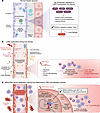
Roles of LSECs in liver fibrosis.Figure 1

Roles of LSECs in liver fibrosis. (A) LSECs line the hepatic sinusoids and maintain liver homeostasis by facilitating substance exchange, preserving Kupffer cell identity, and supporting immune tolerance. Endothelial regulators, including GATA4, ZEB2, RUNX3, POFUT1, and RAP1A, help preserve LSEC homeostasis and restrain liver fibrosis, whereas ROCK2-selective inhibition with TDI01 represents a potential antifibrotic strategy. (B) Upon liver injury, loss of fenestrae and development of a basement membrane drive sinusoidal capillarization, and capillarized LSECs can further undergo partial endothelial-to-mesenchymal transition, resulting in enhanced profibrotic angiocrine signaling and excessive extracellular matrix deposition. Injured LSECs can also adopt a proinflammatory phenotype, with increased expression of CXCL1, CCL2, and VCAM-1, thereby contributing to inflammatory cell recruitment and fibrogenesis. (C) Notably, as Gan et al. (18) reported in this issue of the JCI, BRD4/PML-driven epigenetic rewiring in TIMP1+ LSECs promotes super-enhancer–dependent inflammatory gene activation, recruits CD63+ monocyte-derived macrophages, and amplifies inflammation, finally aggravating liver fibrosis.
Endothelial BRD4/PML axis drives fibrogenesis by recruiting macrophages

While accumulating evidence supports an important role for LSECs in orchestrating immune cell recruitment during liver injury, the upstream endothelial programs that translate injury-related cues into proinflammatory signals and initiate the inflammatory cascade during fibrogenesis remain incompletely understood. In this issue of the JCI, Gan et al. (18) identified a proinflammatory angiocrine program in murine fibrotic LSECs that is enriched for genes involved in chemotaxis, leukocyte migration and adhesion, and mononuclear cell proliferation. These conclusions were further supported by evaluating liver macrophage and neutrophil infiltration via performing intravital imaging for F4/80 (a macrophage marker) and Ly6G (a neutrophil marker) in fibrotic and nonfibrotic mouse livers. The authors found that endothelial CCL2 was markedly induced by tumor necrosis factor α (TNF-α), whereas inhibitors targeting the epigenetic reader domain most effectively suppressed Ccl2 gene expression, with bromodomain-containing protein 4 (BRD4) inhibitors showing the greatest potency. BRD4 was abundant in endothelial cells and correlated with liver fibrosis development in human livers. Integrated multi-omic analyses identified promyelocytic leukemia (PML), a multifunctional protein involved in DNA repair, apoptosis, and gene expression (19), as a BRD4-dependent target driven by super enhancers (SEs). Interestingly, PML, in turn, directly bound BRD4 in the nucleus and promoted BRD4 accumulation via phase separation, thus amplifying proinflammatory gene expression. Importantly, using LSEC-specific Brd4- and Pml-deficient mice, the authors further demonstrated that disruption of the BRD4/PML axis alleviated liver inflammation and fibrosis. Further scRNA-seq analysis of healthy and CCl4-induced fibrotic livers with and without LSEC-specific Brd4 depletion, revealed that TIMP1+ LSECs recruited CD63+ MoMFs during liver fibrosis progression. To evaluate the therapeutic potential, the authors showed that both pharmacological BRD4 inhibition with iBET151 and epigenetic repression of PML mitigated liver inflammation and fibrosis (Figure 1).

The study by Gan et al. (18) convincingly describes the critical role of epigenetically rewired LSECs in promoting inflammation during liver fibrosis, suggesting that targeting the BRD4/PML-TIMP1 axis may represent a promising therapeutic strategy. Nevertheless, some issues warrant further investigation. Since both BRD4 (20) and PML (19) have broad biological functions, the safety and translational feasibility of targeting this pathway remain to be determined in humans. Although the authors provided supportive evidence in human cirrhotic liver sections and performed in vitro experiments in hLSECs, further validation in human cohorts and translational studies is needed. Additionally, because the study of Gan et al. (18) mainly relied on CCl4- and DDC-induced mouse models, whether this phase separation–dependent BRD4/PML axis also operates in liver fibrosis in alcohol-associated liver disease (ALD), MASH, metabolic dysfunction and alcohol-associated liver disease (MetALD), and viral hepatitis remains to be established.

Targeting LSECs to treat liver fibrosis

Although Resmetirom (21) and Semaglutide (22) have shown histologic benefit in selected patients with MASH-associated fibrosis, there are still no broadly approved antifibrotic therapies for liver fibrosis across different etiologies. Pharmacotherapies for liver fibrosis may also benefit from targeting LSECs. Notably, a recent study identified endothelial and perivascular Rho-associated coiled-coil containing kinase 2 (ROCK2) as a vascular druggable target in liver fibrosis. In line with this, the ROCK2-selective inhibitor TDI01 showed a trend toward reducing liver fibrosis in five of six patients in an extended clinical study (ChiCTR2400082056) (23) (Figure 1). In three preclinical models of liver fibrosis, targeted spherical nucleic acid nanoparticles restored LSEC fenestrations, reversed capillarization, and significantly reduced fibrosis, while showing a favorable biosafety profile (24), supporting the feasibility of LSEC-targeted antifibrotic therapy. Interestingly, spatial transcriptomic analysis of healthy and fibrotic human livers revealed remodeling of macrophage populations during fibrotic injury (25). Gan et al. (18) further demonstrated that proinflammatory LSECs actively recruit CD63+ MoMFs during liver fibrosis progression. Therefore, specifically targeting key mediators of LSEC-macrophage crosstalk, such as the BRD4/PML-TIMP1 axis identified by Gan et al. (18), may provide another attractive strategy to tackle liver fibrosis. Further elucidation of the molecular mechanisms underlying LSEC-macrophage crosstalk may facilitate the development of antifibrotic therapies.

Conclusion

Collectively, the data presented by Gan et al. (18) reveal that epigenetically rewired LSECs initiate profibrotic inflammation in liver fibrosis. The authors document a pathogenic role of the BRD4/PML-TIMP1 axis in driving liver fibrogenesis and also demonstrate that targeting this key axis ameliorates liver inflammation and fibrosis in preclinical models. Nevertheless, the clinical relevance of this signaling pathway remains to be established, particularly given the broad biological functions of BRD4 and PML.

Conflict of interest

The authors have declared that no conflict of interest exists.

Funding support
  • The National Key Research and Development Program of China (2023YFA1800804 to YH).
  • The Noncommunicable Chronic Diseases-National Science and Technology Major Project (2024ZD0530604 to YH).
  • Strategic Priority Research Program of the Chinese Academy of Sciences (XDB0830402 to YH).
Footnotes

Copyright: © 2026, Chen et al. This is an open access article published under the terms of the Creative Commons Attribution 4.0 International License.

Reference information: J Clin Invest. 2026;136(11):e206430. https://doi.org/10.1172/JCI206430.

See the related article at Epigenetically controlled endothelial promyelocytic leukemia drives liver inflammation and fibrosis.

References
  1. Sharma S, et al. Cellular stress in the pathogenesis of nonalcoholic steatohepatitis and liver fibrosis. Nat Rev Gastroenterol Hepatol. 2023;20(10):662–678.
    View this article via: CrossRef PubMed Google Scholar
  2. Devarbhavi H, et al. Global burden of liver disease: 2023 update. J Hepatol. 2023;79(2):516–537.
    View this article via: CrossRef PubMed Google Scholar
  3. Kisseleva T, Brenner D. Molecular and cellular mechanisms of liver fibrosis and its regression. Nat Rev Gastroenterol Hepatol. 2021;18(3):151–166.
    View this article via: CrossRef PubMed Google Scholar
  4. Hammerich L, Tacke F. Hepatic inflammatory responses in liver fibrosis. Nat Rev Gastroenterol Hepatol. 2023;20(10):633–646.
    View this article via: CrossRef PubMed Google Scholar
  5. Liu Y, Wang L. Extracellular vesicles targeting non-parenchymal cells: the therapeutical effect on liver fibrosis. eGastroenterology. 2024;2(1):e100040.
    View this article via: CrossRef PubMed Google Scholar
  6. Felli E, et al. The role of liver sinusoidal endothelial cells in liver diseases: Key players in health and pathology. Journal of Hepatology. 2026;84(3):655–672.
    View this article via: CrossRef PubMed Google Scholar
  7. Gao J, et al. Angiocrine signaling in sinusoidal homeostasis and liver diseases. J Hepatol. 2024;81(3):543–561.
    View this article via: CrossRef PubMed Google Scholar
  8. Qu J, et al. Liver sinusoidal endothelial cell: An important yet often overlooked player in the liver fibrosis. Clin Mol Hepatol. 2024;30(3):303–325.
    View this article via: CrossRef PubMed Google Scholar
  9. Winkler M, et al. Endothelial GATA4 controls liver fibrosis and regeneration by preventing a pathogenic switch in angiocrine signaling. J Hepatol. 2021;74(2):380–393.
    View this article via: CrossRef PubMed Google Scholar
  10. de Haan W, et al. Endothelial Zeb2 preserves the hepatic angioarchitecture and protects against liver fibrosis. Cardiovasc Res. 2022;118(5):1262–1275.
    View this article via: CrossRef PubMed Google Scholar
  11. Ojha U, et al. Endothelial RUNX3 controls LSEC dysfunction and angiocrine LRG1 signaling to prevent liver fibrosis. Hepatology. 2025;81(4):1228–1243.
    View this article via: CrossRef PubMed Google Scholar
  12. He S, et al. Endothelial POFUT1 controls injury-induced liver fibrosis by repressing fibrinogen synthesis. J Hepatol. 2024;81(1):135–148.
    View this article via: CrossRef PubMed Google Scholar
  13. Chen G, et al. Endothelial RAP1A attenuates sinusoidal capillarisation and liver fibrosis by inhibiting RAF1-mediated Notch activation. [published online February 11, 2026]. Gut. https://doi.org/10.1136/gutjnl-2025-337143.
    View this article via: PubMed Google Scholar
  14. Kostallari E, et al. Inflammation and immunity in liver homeostasis and disease: a nexus of hepatocytes, nonparenchymal cells and immune cells. Cell Mol Immunol. 2025;22(10):1205–1225.
    View this article via: CrossRef PubMed Google Scholar
  15. Greuter T, et al. Mechanotransduction-induced glycolysis epigenetically regulates a CXCL1-dominant angiocrine signaling program in liver sinusoidal endothelial cells in vitro and in vivo. J Hepatol. 2022;77(3):723–734.
    View this article via: CrossRef PubMed Google Scholar
  16. Gao J, et al. Endothelial p300 promotes portal hypertension and hepatic fibrosis through C-C motif chemokine ligand 2-mediated angiocrine signaling. Hepatology. 2021;73(6):2468–2483.
    View this article via: CrossRef PubMed Google Scholar
  17. Furuta K, et al. Lipid-induced endothelial vascular cell adhesion molecule 1 promotes nonalcoholic steatohepatitis pathogenesis. J Clin Invest. 2021;131(6):e143690.
    View this article via: JCI CrossRef PubMed Google Scholar
  18. Gan C, et al. Epigenetically controlled endothelial promyelocytic leukemia drives liver inflammation and fibrosis. J Clin Invest. 2026;136(11):e196730.
    View this article via: JCI PubMed CrossRef Google Scholar
  19. Corpet A, et al. PML nuclear bodies and chromatin dynamics: catch me if you can! Nucleic Acids Res. 2020;48(21):11890–11912.
    View this article via: CrossRef PubMed Google Scholar
  20. Zhang W, et al. Targeting BRD4 bromodomains and beyond: exploring new therapeutic frontiers. Trends Pharmacol Sci. 2026;47(1):15–39.
    View this article via: CrossRef PubMed Google Scholar
  21. Harrison SA, et al. A phase 3, randomized, controlled trial of resmetirom in NASH with liver fibrosis. N Engl J Med. 2024;390(6):497–509.
    View this article via: CrossRef PubMed Google Scholar
  22. Sanyal AJ, et al. Phase 3 trial of semaglutide in metabolic dysfunction-associated steatohepatitis. N Engl J Med. 2025;392(21):2089–2099.
    View this article via: CrossRef PubMed Google Scholar
  23. Hu Y, et al. Selective targeting of endothelial and perivascular angiocrine ROCK2 treats liver fibrosis. [published online March 6, 2026]. Cell. https://doi.org/10.1016/j.cell.2026.02.001.
    View this article via: PubMed Google Scholar
  24. Liu W, et al. Nucleic acid spheres for treating capillarisation of liver sinusoidal endothelial cells in liver fibrosis. Nat Commun. 2025;16(1):4517.
    View this article via: CrossRef PubMed Google Scholar
  25. Watson BR, et al. Spatial transcriptomics of healthy and fibrotic human liver at single-cell resolution. Nat Commun. 2025;16(1):319.
    View this article via: CrossRef PubMed Google Scholar
Version history
  • Version 1 (June 1, 2026): Electronic publication

Article tools

  • View PDF
  • Download citation information
  • Send a comment
  • Terms of use
  • Standard abbreviations
  • Need help? Email the journal

Metrics

  • Article usage
  • Citations to this article

Go to

  • Top
  • Abstract
  • Introduction
  • Pathological roles of LSECs in liver fibrogenesis
  • Endothelial BRD4/PML axis drives fibrogenesis by recruiting macrophages
  • Targeting LSECs to treat liver fibrosis
  • Conclusion
  • Conflict of interest
  • Funding support
  • Footnotes
  • References
  • Version history
Advertisement
Advertisement

Copyright © 2026 American Society for Clinical Investigation
ISSN: 0021-9738 (print), 1558-8238 (online)

Sign up for email alerts