
Go to JCI Insight
  • About
  • Editors
  • Consulting Editors
  • For authors
  • Publication ethics
  • Publication alerts by email
  • Advertising
  • Job board
  • Contact
  • Clinical Research and Public Health
  • Current issue
  • Past issues
  • By specialty
    • COVID-19
    • Cardiology
    • Gastroenterology
    • Immunology
    • Metabolism
    • Nephrology
    • Neuroscience
    • Oncology
    • Pulmonology
    • Vascular biology
    • All ...
  • Videos
    • ASCI Milestone Awards
    • Video Abstracts
    • Conversations with Giants in Medicine
  • Reviews
    • View all reviews ...
    • Clinical innovation and scientific progress in GLP-1 medicine (Nov 2025)
    • Pancreatic Cancer (Jul 2025)
    • Complement Biology and Therapeutics (May 2025)
    • Evolving insights into MASLD and MASH pathogenesis and treatment (Apr 2025)
    • Microbiome in Health and Disease (Feb 2025)
    • Substance Use Disorders (Oct 2024)
    • Clonal Hematopoiesis (Oct 2024)
    • View all review series ...
  • Viewpoint
  • Collections
    • In-Press Preview
    • Clinical Research and Public Health
    • Research Letters
    • Letters to the Editor
    • Editorials
    • Commentaries
    • Editor's notes
    • Reviews
    • Viewpoints
    • 100th anniversary
    • Top read articles

  • Current issue
  • Past issues
  • Specialties
  • Reviews
  • Review series
  • ASCI Milestone Awards
  • Video Abstracts
  • Conversations with Giants in Medicine
  • In-Press Preview
  • Clinical Research and Public Health
  • Research Letters
  • Letters to the Editor
  • Editorials
  • Commentaries
  • Editor's notes
  • Reviews
  • Viewpoints
  • 100th anniversary
  • Top read articles
  • About
  • Editors
  • Consulting Editors
  • For authors
  • Publication ethics
  • Publication alerts by email
  • Advertising
  • Job board
  • Contact
Top
  • View PDF
  • Download citation information
  • Send a comment
  • Terms of use
  • Standard abbreviations
  • Need help? Email the journal
  • Top
  • Abstract
  • Mouse digit tip amputation models complex tissue regeneration
  • Experimental models inhibiting lymphangiogenesis improve digit tip regeneration
  • Potential mechanisms underlying enhanced digit regeneration
  • Future outlook
  • Funding support
  • Acknowledgments
  • Footnotes
  • References
  • Version history
  • Article usage
  • Citations to this article

Advertisement

Commentary Open Access | 10.1172/JCI201199

Breaking down to rebuild: lymphatic ablation enhances osteoclast-driven regeneration

Matthijs Luxen, Francesca Lazzeri-Barcelo, and Ralf H. Adams

Department of Tissue Morphogenesis, Max Planck Institute for Molecular Biomedicine, Münster, Germany.

Address correspondence to: Ralf H. Adams, Max Planck Institute for Molecular Biomedicine, Roentgenstrasse 20, D-48149 Münster, Germany.

Authorship note: ML and FLB contributed equally to this work.

Find articles by Luxen, M. in: PubMed | Google Scholar

Department of Tissue Morphogenesis, Max Planck Institute for Molecular Biomedicine, Münster, Germany.

Address correspondence to: Ralf H. Adams, Max Planck Institute for Molecular Biomedicine, Roentgenstrasse 20, D-48149 Münster, Germany.

Authorship note: ML and FLB contributed equally to this work.

Find articles by Lazzeri-Barcelo, F. in: PubMed | Google Scholar

Department of Tissue Morphogenesis, Max Planck Institute for Molecular Biomedicine, Münster, Germany.

Address correspondence to: Ralf H. Adams, Max Planck Institute for Molecular Biomedicine, Roentgenstrasse 20, D-48149 Münster, Germany.

Authorship note: ML and FLB contributed equally to this work.

Find articles by Adams, R. in: PubMed | Google Scholar |

Authorship note: ML and FLB contributed equally to this work.

Published February 2, 2026 - More info

Published in Volume 136, Issue 3 on February 2, 2026
J Clin Invest. 2026;136(3):e201199. https://doi.org/10.1172/JCI201199.
© 2026 Luxen et al. This work is licensed under the Creative Commons Attribution 4.0 International License. To view a copy of this license, visit http://creativecommons.org/licenses/by/4.0/.
Published February 2, 2026 - Version history
View PDF

Related article:

Targeting lymphatic vessels enhances bone regeneration by augmenting osteoclast activity in mouse models of amputation
Neda Vishlaghi, Trisha K. Ghotra, Monisha Mittal, Ji Hae L. Choi, Sneha Korlakunta, Mingquan Yan, Janna L. Crossley, Danielle Griswold-Wheeler, Elnaz Ghotbi, Conan Juan, Shiri Gur-Cohen, Babak Mehrara, David A. Brown, Michael T. Dellinger, Lindsay A. Dawson, Benjamin Levi
Mammals have limited regeneration, restricted to the digit tip. Researchers found, reducing lymphatic vessels accelerates bone breakdown and enhances regeneration, revealing a potential therapeutic target.
Research Article Bone biology Vascular biology

Targeting lymphatic vessels enhances bone regeneration by augmenting osteoclast activity in mouse models of amputation

  • Text
  • PDF
Abstract

Although mammals generally demonstrate limited regenerative capacity compared with amphibians, the digit tip retains remarkable regenerative potential, providing a useful model to study successful mammalian regeneration. This process involves coordinated immune cell activity, vascular remodeling, and tissue reconstruction, yet the molecular checkpoints controlling regenerative versus fibrotic outcomes remain poorly understood. In mammals, regeneration of the digit tip (P3) proceeds through myeloid cell migration, early osteoclast-mediated osteolysis of the distal bone, and subsequent blastema-mediated regeneration. Here we test the hypothesis that lymphatic vessels regulate regenerative capacity by modulating local immune cell dynamics and osteoclast function. Using a lymphatic system–specific reporter line, we discovered that lymphatic vessels grow toward the nail region from the ventral side of the digit during quiescence and after amputation. These lymphatics closely surround, but do not invade, the native or regenerated bone. Unexpectedly, genetic, pharmacological, and surgical inhibition of lymphangiogenesis accelerated early osteolysis through enhanced transition of myeloid cells to osteoclasts, resulting in faster and more robust regeneration. These findings reveal a mechanism linking lymphatic vessel, immune regulation, and bone remodeling, suggesting that targeted manipulation of lymphatics dynamics may enhance regenerative outcomes after musculoskeletal injury.

Authors

Neda Vishlaghi, Trisha K. Ghotra, Monisha Mittal, Ji Hae L. Choi, Sneha Korlakunta, Mingquan Yan, Janna L. Crossley, Danielle Griswold-Wheeler, Elnaz Ghotbi, Conan Juan, Shiri Gur-Cohen, Babak Mehrara, David A. Brown, Michael T. Dellinger, Lindsay A. Dawson, Benjamin Levi

×

Abstract

The fingertip is one of the only known complex structures in mammals that can fully regenerate following amputation. This phenomenon can be studied in mice using the amputation of the digit tip, the regenerative success of which has been shown to be reliant on effective bone clearance prior to new bone formation. In this issue of the JCI, Vishlaghi et al. investigated whether local lymphatic vessels are involved in this process. Interestingly, they found that inhibiting lymphangiogenesis resulted in accelerated clearance of damaged tissue and bone, thereby improving subsequent digit regeneration. This study is the first to our knowledge to report lymphatic involvement in digit regeneration and raises questions regarding the underlying mechanisms at play.

Mouse digit tip amputation models complex tissue regeneration

Regeneration of complex body parts composed of highly diverse cell types and tissue structures is rare in mammals. However, the fingertip — formed of skin, nail, bone, connective tissues, nerves, and vasculature — is a unique case. Both humans and mice can naturally regenerate digit tips, and mouse digit tip regeneration is a long-standing model used to study complex mammalian tissue regeneration (1) with the goal of translating findings to therapeutic interventions in humans.

The digit tip consists of the distal phalangeal bone (P3), flanked by connective tissue and a ventral fat pad, with blood vessels and nerves running along the lateral sides. Epithelium encases the digit and the nail extends along the top (Figure 1A). P3 amputation, used in most regeneration studies, removes the nail and distal bone tip while sparing the bone marrow and fat pad. Amputated P3 digit tips are fully regenerated in under a month in adult mice, restoring structure and function. In contrast, a P2-level amputation, which removes more bone and disrupts the bone marrow cavity, results in scarring and failed regeneration (1), indicating important limits to the regenerative process and serving as a useful comparison for testing interventions.
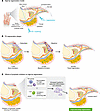
Lymphatic ablation promotes regeneration in a P3 digit amputation model.Figure 1

Lymphatic ablation promotes regeneration in a P3 digit amputation model. (A) Overview of tissue structure within the digit tip. Amputation along the P2 axis leads to scarring and fibrosis without regeneration, whereas amputation along the more distal P3 axis leads to full regeneration. (B) Following P3 digit tip amputation, the damage site undergoes an osteoclast-driven bone resorption phase (7 days post-amputation [DPA]), followed by the formation of the regenerative blastema (10 DPA). At 28 DPA, the digit tip is fully regenerated. (C) Vishlaghi et al. (9) showed that inhibition of lymphatics during P3 digit amputation led to accumulation of both F4/80+ myeloid cells and RANKL-producing T cells at the damage site. RANKL promoted myeloid-to-osteoclast differentiation, thereby contributing to increased osteolytic activity. More efficient clearance of the amputated bone stump allowed for faster and improved bone regeneration.

After amputation, regeneration begins with an initial inflammatory and wound closure phase, which is followed by osteolysis, consisting of the removal of the distal bone stump by osteoclasts (2) (Figure 1B). Osteolysis is crucial for successful regeneration, as increased osteoclast activity correlates with improved outcomes (2–4). The next critical step is the formation of a blastema, a mass of proliferating progenitor cells derived mainly from tissue-resident stem cells rather than infiltrating immune or dedifferentiated mature cells (1). These progenitor cells differentiate into osteogenic and connective tissue lineages, reconstructing bone and surrounding tissues indistinguishable from the original structure.

While the role of blood vessels in digit tip regeneration has been documented (5, 6), the localization and function of lymphatic vessels in digit regeneration remain elusive. Beyond their traditional roles in fluid drainage, lipid absorption, and immune surveillance, lymphatic vessels are increasingly recognized for additional organ-specific functions (7, 8). For instance, lymphatic endothelial cells (LECs) can provide potent paracrine factors and facilitate immune responses across tissues.

In the current issue of the JCI, Vishlaghi et al. have demonstrated that lymphatic vessels surrounding the outer surface of the digit bone actively influence regeneration (9). They showed that lymphatics modulated local immune cell dynamics and that their ablation increased myeloid-to-osteoclast differentiation. The resulting rise in osteoclast number and activity enhanced osteolysis at the injury site, enabling quicker, more robust digit tip regeneration. These findings reveal that lymphatic vessels are not merely passive conduits but active regulators of bone remodeling and repair during digit tip regeneration.
Experimental models inhibiting lymphangiogenesis improve digit tip regeneration

It is well established that lymphangiogenesis depends critically on signaling via the growth factor VEGF-C and its receptor, the transmembrane tyrosine kinase VEGFR3 (10). To investigate the link between lymphatics and bone regeneration outcome following P3 amputation, Vishlaghi et al. employed a combination of pharmacological and genetic models. Approaches involved the administration of a pharmacological VEGFR3 inhibitor, a genetic approach allowing the depletion of VEGFR3+ cells, or analysis of Chy mice, which exhibit constitutively diminished VEGFR3 activity following a heterozygous gene mutation and are considered a model of human lymphedema. In each model of impaired lymphangiogenesis, osteolysis of damaged bone was increased, which subsequently led to a higher bone mass in the regenerated digit (9). The uniformity of these results across different models is striking, yet the involvement of VEGFR3 also presents an important limitation: Experimental manipulations were not region specific, raising the possibility of systemic and therefore potentially indirect effects caused by alterations elsewhere in the lymphatic vasculature. In addition, VEGFR3 is required in certain blood vessels, such as the sinusoidal endothelial cells of the bone marrow (11, 12), which might lead to alterations in hematopoietic cell production in these models.

However, the authors also introduced a surgical model, in which the role of the lymphatics is restricted following lymph node removal (9). The added value of this surgical model lies in its independence from VEGFR3 manipulation, thereby ruling out potential off-target effects on sinusoidal endothelial cells from the bone marrow. Importantly, the lymph node removal followed by P3 digit tip amputation recapitulated the enhanced osteolysis and improved bone regeneration that Vishlaghi et al. identified following pharmacological and genetic suppression of VEGFR3, as described above. Together, these findings indicate that suppression of lymphangiogenesis indeed leads to improved digit tip regeneration.

Potential mechanisms underlying enhanced digit regeneration

How might the targeting of lymphatic vessels promote early osteolysis to increase subsequent bone regeneration in the P3 amputation model? Following lymphatic inhibition, Vishlaghi et al. observed an increase in F4/80+ macrophages and enhanced myeloid-to-osteoclast differentiation (Figure 1C) (9). This is consistent with previous work showing that the depletion of F4/80+ macrophages impairs osteolysis, blastema formation, and tip regeneration (3). Vishlaghi et al. also reported that lymphatic vessel inhibition increased the abundance of T cells in the injured digit, which the authors identified as an important source of RANKL, a factor promoting osteoclastogenesis. It would be of interest to further characterize the T cell populations present at the injury site, given their capacity to regulate lymphatic vessel growth, but also osteoclast formation positively or negatively, depending on T cell subset and context (13, 14). Furthermore, macrophages have been shown to stimulate lymphangiogenesis by releasing VEGF-C and the related growth factor VEGF-D (15). In this model, lymphatic inhibition may trigger macrophage expansion by creating a feedback loop in which macrophages accumulate in an effort to restore LECs.

Previous work has indicated that ingrowth of lymphatic vessels into bone triggers osteolysis, as is the case in the rare human syndrome Gorham-Stout disease (GSD). In mouse models, GSD-like defects can be induced by excessive lymphangiogenesis, triggered by overexpression of VEGF-C, and might be linked to LEC-specific production of M-CSF, a protein promoting osteoclast formation and survival (16, 17). While the distinct and seemingly opposite roles of lymphatic vessels in animal models of GSD and in Vishlaghi et al. may appear puzzling, their location may help explain this discrepancy, as LECs remain confined to the surrounding tissue and do not penetrate the bone or blastema during digit regeneration. As lymphatic vessels facilitate immune cell trafficking, their ablation could disrupt an important route for immune cell exit, leading to the retention of immune cells, including the F4/80+ macrophages and T cells that Vishlaghi et al. linked with enhanced regeneration (9), at the injury site.

Future outlook

While the exact mechanism linking impaired lymphatic vessel growth to improved digit tip regeneration deserves further investigation, the findings of this paper are valuable for advancing our understanding of digit tip regeneration and might have implications for bone fracture healing. Although tip regeneration and bone fracture healing are distinct repair processes, they share notable parallels, such as the essential role of osteoclasts, which are required for hard callus remodeling and for the resorption of necrotic bone fragments preceding new bone formation (18). While lymphatic vessels surround bone throughout the skeletal system (19), the reorganization of this network and its function during regeneration and fracture healing have remained elusive. In addition, elucidating the contributions of LEC-derived paracrine (lymphangiocrine) signals (7), of lymphatic drainage, and of alterations in the trafficking of immune cells would provide important insight into lymphatic-immune crosstalk in the observations of Vishlaghi and colleagues.

It would also be of interest to test whether lymphatic ablation could confer regenerative capacity to the typically non-regenerative P2-level amputation. Previous studies have shown that the application of growth factors or transplantation of pluripotent stem cells can promote P2 digit regeneration (20, 21). Conversely, experiments in which enhanced lymphangiogenesis impairs P3 digit regeneration would further strengthen the proposed mechanistic concept.

From a therapeutic perspective, surgical removal of lymph nodes or systemic inhibition of lymphangiogenesis would be problematic due to the associated risks of lymphedema and increased inflammation (22, 23). However, it might be feasible to transiently modulate lymphatic signaling pathways to facilitate bone formation.

Together, it will be very interesting to see how future research continues to explore the multifaceted role of lymphatic vessels in regenerative processes.

Funding support
  • ML by the Rubicon grant funded by ZonMw (04520232410013).
  • FLB and RHA by the MPI for Molecular Biomedicine.
  • FLB and RHA by the Max Planck Society.
Acknowledgments

The authors thank the Max Planck Society and the MPI for Molecular Biomedicine for their support.

Address correspondence to: Ralf H. Adams, Max Planck Institute for Molecular Biomedicine, Roentgenstrasse 20, D-48149 Münster, Germany.

Footnotes

Conflict of interest: The authors have declared that no conflict of interest exists.

Copyright: © 2026, Luxen et al. This is an open access article published under the terms of the Creative Commons Attribution 4.0 International License.

Reference information: J Clin Invest. 2026;136(3):e201199. https://doi.org/10.1172/JCI201199.

See the related article at Targeting lymphatic vessels enhances bone regeneration by augmenting osteoclast activity in mouse models of amputation.

References
  1. Rinkevich Y, et al. Germ-layer and lineage-restricted stem/progenitors regenerate the mouse digit tip. Nature. 2011;476(7361):409–413.
    View this article via: CrossRef PubMed Google Scholar
  2. Fernando WA, et al. Wound healing and blastema formation in regenerating digit tips of adult mice. Dev Biol. 2011;350(2):301–310.
    View this article via: CrossRef PubMed Google Scholar
  3. Simkin J, et al. Macrophages are required to coordinate mouse digit tip regeneration. Development. 2017;144(21):3907–3916.
    View this article via: PubMed Google Scholar
  4. Riquelme-Guzmán C, et al. Osteoclast-mediated resorption primes the skeleton for successful integration during axolotl limb regeneration. Elife. 2022;11:e79966.
    View this article via: CrossRef PubMed Google Scholar
  5. Yu L, et al. Angiogenesis is inhibitory for mammalian digit regeneration. Regeneration (Oxf). 2014;1(3):33–46.
    View this article via: CrossRef PubMed Google Scholar
  6. Said S, et al. Vascular supplies differ in regenerating and nonregenerating amputated rodent digits. Anat Rec A Discov Mol Cell Evol Biol. 2004;278(1):443–449.
    View this article via: CrossRef PubMed Google Scholar
  7. Palikuqi B, et al. Lymphangiocrine signals are required for proper intestinal repair after cytotoxic injury. Cell Stem Cell. 2022;29(8):1262–1272.
    View this article via: CrossRef PubMed Google Scholar
  8. Louveau A, et al. Structural and functional features of central nervous system lymphatic vessels. Nature. 2015;523(7560):337–341.
    View this article via: CrossRef PubMed Google Scholar
  9. Vishlaghi N, et al. Targeting lymphatic vessels enhances bone regeneration by augmenting osteoclast activity in mouse models of amputation. J Clin Invest. 2026;136(2):e191906.
  10. Joukov V, et al. A novel vascular endothelial growth factor, VEGF-C, is a ligand for the Flt4 (VEGFR-3) and KDR (VEGFR-2) receptor tyrosine kinases. EMBO J. 1996;15(2):290–298.
    View this article via: CrossRef PubMed Google Scholar
  11. Mohanakrishnan V, et al. Specialized post-arterial capillaries facilitate adult bone remodelling. Nat Cell Biol. 2024;26(12):2020–2034.
    View this article via: CrossRef PubMed Google Scholar
  12. Sung DC, et al. Sinusoidal and lymphatic vessel growth is controlled by reciprocal VEGF-C-CDH5 inhibition. Nat Cardiovasc Res. 2022;1(11):1006–1021.
    View this article via: CrossRef PubMed Google Scholar
  13. Kataru RP, et al. T lymphocytes negatively regulate lymph node lymphatic vessel formation. Immunity. 2011;34(1):96–107.
    View this article via: CrossRef PubMed Google Scholar
  14. D’Amico L, Roato I. Cross-talk between T cells and osteoclasts in bone resorption. Bonekey Rep. 2012;1:82.
    View this article via: PubMed Google Scholar
  15. Cursiefen C, et al. VEGF-A stimulates lymphangiogenesis and hemangiogenesis in inflammatory neovascularization via macrophage recruitment. J Clin Invest. 2004;113(7):1040–1050.
    View this article via: JCI CrossRef PubMed Google Scholar
  16. Wang W, et al. Lymphatic endothelial cells produce M-CSF, causing massive bone loss in mice. J Bone Miner Res. 2017;32(5):939–950.
    View this article via: CrossRef PubMed Google Scholar
  17. Hominick D, et al. VEGF-C promotes the development of lymphatics in bone and bone loss. Elife. 2018;7:e34323.
    View this article via: CrossRef PubMed Google Scholar
  18. Xiang Q, et al. Beyond resorption: osteoclasts as drivers of bone formation. Cell Regen. 2024;13(1):22.
    View this article via: CrossRef PubMed Google Scholar
  19. Chang Q, et al. Identification of lymphatic vessels in skull periosteum but not bone marrow reveals skull channel heterogeneity. J Exp Med. 2025;222(12):e20241971.
    View this article via: CrossRef PubMed Google Scholar
  20. Yu L, et al. BMP9 stimulates joint regeneration at digit amputation wounds in mice. Nat Commun. 2019;10(1):424.
    View this article via: CrossRef PubMed Google Scholar
  21. Chen Y, et al. Generation of iPSC-derived limb progenitor-like cells for stimulating phalange regeneration in the adult mouse. Cell Discov. 2017;3:17046.
    View this article via: CrossRef PubMed Google Scholar
  22. Guo R, et al. Inhibition of lymphangiogenesis and lymphatic drainage via vascular endothelial growth factor receptor 3 blockade increases the severity of inflammation in a mouse model of chronic inflammatory arthritis. Arthritis Rheum. 2009;60(9):2666–2676.
    View this article via: CrossRef PubMed Google Scholar
  23. Arslan H, et al. Effect of lymphedema on the recovery of fractures. J Orthop Sci. 2007;12(6):578–584.
    View this article via: CrossRef PubMed Google Scholar
Version history
  • Version 1 (February 2, 2026): Electronic publication

Article tools

  • View PDF
  • Download citation information
  • Send a comment
  • Terms of use
  • Standard abbreviations
  • Need help? Email the journal

Metrics

  • Article usage
  • Citations to this article

Go to

  • Top
  • Abstract
  • Mouse digit tip amputation models complex tissue regeneration
  • Experimental models inhibiting lymphangiogenesis improve digit tip regeneration
  • Potential mechanisms underlying enhanced digit regeneration
  • Future outlook
  • Funding support
  • Acknowledgments
  • Footnotes
  • References
  • Version history
Advertisement
Advertisement

Copyright © 2026 American Society for Clinical Investigation
ISSN: 0021-9738 (print), 1558-8238 (online)

Sign up for email alerts