
Advertisement
Research ArticleHepatologyMetabolismOncology
Open Access |  10.1172/JCI199730
The allosteric IDH1 inhibitor ivosidenib overcomes chemoresistance in intrahepatic cholangiocarcinoma models expressing wild-type IDH1
Xiuxian Li,1,2,3 Zhixiao Song,1,2,3 Shusheng Lin,1,2,3 Man Luo,4 Shaoru Liu,1,5 Yang Liu,1 Fapeng Zhang,1 Leibo Xu,1,2,3 Chao Liu,1,2,3 and Honghua Zhang1,2,3
1Department of Biliary-Pancreatic Surgery,
2Guangzhou Key Laboratory of Precise Diagnosis and Treatment of Biliary Tract Cancer,
3Guangdong Provincial Key Laboratory of Malignant Tumor Epigenetics and Gene Regulation, Guangdong-Hong Kong Joint Laboratory for RNA medicine, and
4Department of Ultrasound, Sun Yat-sen Memorial Hospital, Sun Yat-sen University, Guangzhou, Guangdong Province, China.
5Department of Liver Surgery, Sun Yat-sen University Cancer Center, Sun Yat-sen University, Guangzhou, Guangdong Province, China.
Address correspondence to: Honghua Zhang, Chao Liu, or Leibo Xu, Sun Yat-Sen Memorial Hospital, Sun Yat-Sen University, Yingfeng Road 33, Haizhu district, Guangzhou, Guangdong Province, China. Email: zhanghh68@mail.sysu.edu.cn (HZ); liuchao3@mail.sysu.edu.cn (CL); xuleibo3@mail.sysu.edu.cn (LX).
Authorship note: XL, ZS, S Lin, and ML contributed equally to this work and are co-first authors.
Find articles by Li, X. in: PubMed | Google Scholar
1Department of Biliary-Pancreatic Surgery,
2Guangzhou Key Laboratory of Precise Diagnosis and Treatment of Biliary Tract Cancer,
3Guangdong Provincial Key Laboratory of Malignant Tumor Epigenetics and Gene Regulation, Guangdong-Hong Kong Joint Laboratory for RNA medicine, and
4Department of Ultrasound, Sun Yat-sen Memorial Hospital, Sun Yat-sen University, Guangzhou, Guangdong Province, China.
5Department of Liver Surgery, Sun Yat-sen University Cancer Center, Sun Yat-sen University, Guangzhou, Guangdong Province, China.
Address correspondence to: Honghua Zhang, Chao Liu, or Leibo Xu, Sun Yat-Sen Memorial Hospital, Sun Yat-Sen University, Yingfeng Road 33, Haizhu district, Guangzhou, Guangdong Province, China. Email: zhanghh68@mail.sysu.edu.cn (HZ); liuchao3@mail.sysu.edu.cn (CL); xuleibo3@mail.sysu.edu.cn (LX).
Authorship note: XL, ZS, S Lin, and ML contributed equally to this work and are co-first authors.
Find articles by Song, Z. in: PubMed | Google Scholar
1Department of Biliary-Pancreatic Surgery,
2Guangzhou Key Laboratory of Precise Diagnosis and Treatment of Biliary Tract Cancer,
3Guangdong Provincial Key Laboratory of Malignant Tumor Epigenetics and Gene Regulation, Guangdong-Hong Kong Joint Laboratory for RNA medicine, and
4Department of Ultrasound, Sun Yat-sen Memorial Hospital, Sun Yat-sen University, Guangzhou, Guangdong Province, China.
5Department of Liver Surgery, Sun Yat-sen University Cancer Center, Sun Yat-sen University, Guangzhou, Guangdong Province, China.
Address correspondence to: Honghua Zhang, Chao Liu, or Leibo Xu, Sun Yat-Sen Memorial Hospital, Sun Yat-Sen University, Yingfeng Road 33, Haizhu district, Guangzhou, Guangdong Province, China. Email: zhanghh68@mail.sysu.edu.cn (HZ); liuchao3@mail.sysu.edu.cn (CL); xuleibo3@mail.sysu.edu.cn (LX).
Authorship note: XL, ZS, S Lin, and ML contributed equally to this work and are co-first authors.
Find articles by Lin, S. in: PubMed | Google Scholar
1Department of Biliary-Pancreatic Surgery,
2Guangzhou Key Laboratory of Precise Diagnosis and Treatment of Biliary Tract Cancer,
3Guangdong Provincial Key Laboratory of Malignant Tumor Epigenetics and Gene Regulation, Guangdong-Hong Kong Joint Laboratory for RNA medicine, and
4Department of Ultrasound, Sun Yat-sen Memorial Hospital, Sun Yat-sen University, Guangzhou, Guangdong Province, China.
5Department of Liver Surgery, Sun Yat-sen University Cancer Center, Sun Yat-sen University, Guangzhou, Guangdong Province, China.
Address correspondence to: Honghua Zhang, Chao Liu, or Leibo Xu, Sun Yat-Sen Memorial Hospital, Sun Yat-Sen University, Yingfeng Road 33, Haizhu district, Guangzhou, Guangdong Province, China. Email: zhanghh68@mail.sysu.edu.cn (HZ); liuchao3@mail.sysu.edu.cn (CL); xuleibo3@mail.sysu.edu.cn (LX).
Authorship note: XL, ZS, S Lin, and ML contributed equally to this work and are co-first authors.
Find articles by Luo, M. in: PubMed | Google Scholar
1Department of Biliary-Pancreatic Surgery,
2Guangzhou Key Laboratory of Precise Diagnosis and Treatment of Biliary Tract Cancer,
3Guangdong Provincial Key Laboratory of Malignant Tumor Epigenetics and Gene Regulation, Guangdong-Hong Kong Joint Laboratory for RNA medicine, and
4Department of Ultrasound, Sun Yat-sen Memorial Hospital, Sun Yat-sen University, Guangzhou, Guangdong Province, China.
5Department of Liver Surgery, Sun Yat-sen University Cancer Center, Sun Yat-sen University, Guangzhou, Guangdong Province, China.
Address correspondence to: Honghua Zhang, Chao Liu, or Leibo Xu, Sun Yat-Sen Memorial Hospital, Sun Yat-Sen University, Yingfeng Road 33, Haizhu district, Guangzhou, Guangdong Province, China. Email: zhanghh68@mail.sysu.edu.cn (HZ); liuchao3@mail.sysu.edu.cn (CL); xuleibo3@mail.sysu.edu.cn (LX).
Authorship note: XL, ZS, S Lin, and ML contributed equally to this work and are co-first authors.
Find articles by Liu, S. in: PubMed | Google Scholar
1Department of Biliary-Pancreatic Surgery,
2Guangzhou Key Laboratory of Precise Diagnosis and Treatment of Biliary Tract Cancer,
3Guangdong Provincial Key Laboratory of Malignant Tumor Epigenetics and Gene Regulation, Guangdong-Hong Kong Joint Laboratory for RNA medicine, and
4Department of Ultrasound, Sun Yat-sen Memorial Hospital, Sun Yat-sen University, Guangzhou, Guangdong Province, China.
5Department of Liver Surgery, Sun Yat-sen University Cancer Center, Sun Yat-sen University, Guangzhou, Guangdong Province, China.
Address correspondence to: Honghua Zhang, Chao Liu, or Leibo Xu, Sun Yat-Sen Memorial Hospital, Sun Yat-Sen University, Yingfeng Road 33, Haizhu district, Guangzhou, Guangdong Province, China. Email: zhanghh68@mail.sysu.edu.cn (HZ); liuchao3@mail.sysu.edu.cn (CL); xuleibo3@mail.sysu.edu.cn (LX).
Authorship note: XL, ZS, S Lin, and ML contributed equally to this work and are co-first authors.
Find articles by Liu, Y. in: PubMed | Google Scholar
1Department of Biliary-Pancreatic Surgery,
2Guangzhou Key Laboratory of Precise Diagnosis and Treatment of Biliary Tract Cancer,
3Guangdong Provincial Key Laboratory of Malignant Tumor Epigenetics and Gene Regulation, Guangdong-Hong Kong Joint Laboratory for RNA medicine, and
4Department of Ultrasound, Sun Yat-sen Memorial Hospital, Sun Yat-sen University, Guangzhou, Guangdong Province, China.
5Department of Liver Surgery, Sun Yat-sen University Cancer Center, Sun Yat-sen University, Guangzhou, Guangdong Province, China.
Address correspondence to: Honghua Zhang, Chao Liu, or Leibo Xu, Sun Yat-Sen Memorial Hospital, Sun Yat-Sen University, Yingfeng Road 33, Haizhu district, Guangzhou, Guangdong Province, China. Email: zhanghh68@mail.sysu.edu.cn (HZ); liuchao3@mail.sysu.edu.cn (CL); xuleibo3@mail.sysu.edu.cn (LX).
Authorship note: XL, ZS, S Lin, and ML contributed equally to this work and are co-first authors.
Find articles by Zhang, F. in: PubMed | Google Scholar
1Department of Biliary-Pancreatic Surgery,
2Guangzhou Key Laboratory of Precise Diagnosis and Treatment of Biliary Tract Cancer,
3Guangdong Provincial Key Laboratory of Malignant Tumor Epigenetics and Gene Regulation, Guangdong-Hong Kong Joint Laboratory for RNA medicine, and
4Department of Ultrasound, Sun Yat-sen Memorial Hospital, Sun Yat-sen University, Guangzhou, Guangdong Province, China.
5Department of Liver Surgery, Sun Yat-sen University Cancer Center, Sun Yat-sen University, Guangzhou, Guangdong Province, China.
Address correspondence to: Honghua Zhang, Chao Liu, or Leibo Xu, Sun Yat-Sen Memorial Hospital, Sun Yat-Sen University, Yingfeng Road 33, Haizhu district, Guangzhou, Guangdong Province, China. Email: zhanghh68@mail.sysu.edu.cn (HZ); liuchao3@mail.sysu.edu.cn (CL); xuleibo3@mail.sysu.edu.cn (LX).
Authorship note: XL, ZS, S Lin, and ML contributed equally to this work and are co-first authors.
Find articles by Xu, L. in: PubMed | Google Scholar
1Department of Biliary-Pancreatic Surgery,
2Guangzhou Key Laboratory of Precise Diagnosis and Treatment of Biliary Tract Cancer,
3Guangdong Provincial Key Laboratory of Malignant Tumor Epigenetics and Gene Regulation, Guangdong-Hong Kong Joint Laboratory for RNA medicine, and
4Department of Ultrasound, Sun Yat-sen Memorial Hospital, Sun Yat-sen University, Guangzhou, Guangdong Province, China.
5Department of Liver Surgery, Sun Yat-sen University Cancer Center, Sun Yat-sen University, Guangzhou, Guangdong Province, China.
Address correspondence to: Honghua Zhang, Chao Liu, or Leibo Xu, Sun Yat-Sen Memorial Hospital, Sun Yat-Sen University, Yingfeng Road 33, Haizhu district, Guangzhou, Guangdong Province, China. Email: zhanghh68@mail.sysu.edu.cn (HZ); liuchao3@mail.sysu.edu.cn (CL); xuleibo3@mail.sysu.edu.cn (LX).
Authorship note: XL, ZS, S Lin, and ML contributed equally to this work and are co-first authors.
Find articles by Liu, C. in: PubMed | Google Scholar
1Department of Biliary-Pancreatic Surgery,
2Guangzhou Key Laboratory of Precise Diagnosis and Treatment of Biliary Tract Cancer,
3Guangdong Provincial Key Laboratory of Malignant Tumor Epigenetics and Gene Regulation, Guangdong-Hong Kong Joint Laboratory for RNA medicine, and
4Department of Ultrasound, Sun Yat-sen Memorial Hospital, Sun Yat-sen University, Guangzhou, Guangdong Province, China.
5Department of Liver Surgery, Sun Yat-sen University Cancer Center, Sun Yat-sen University, Guangzhou, Guangdong Province, China.
Address correspondence to: Honghua Zhang, Chao Liu, or Leibo Xu, Sun Yat-Sen Memorial Hospital, Sun Yat-Sen University, Yingfeng Road 33, Haizhu district, Guangzhou, Guangdong Province, China. Email: zhanghh68@mail.sysu.edu.cn (HZ); liuchao3@mail.sysu.edu.cn (CL); xuleibo3@mail.sysu.edu.cn (LX).
Authorship note: XL, ZS, S Lin, and ML contributed equally to this work and are co-first authors.
Find articles by Zhang, H. in: PubMed | Google Scholar
Published March 17, 2026 - More info
J Clin Invest. 2026;136(10):e199730. https://doi.org/10.1172/JCI199730.
© 2026 Li et al. This work is licensed under the Creative Commons Attribution 4.0 International License. To view a copy of this license, visit http://creativecommons.org/licenses/by/4.0/.
Received: August 29, 2025; Accepted: March 12, 2026


-
Results
Higher IDH1 expression was associated with the resistance of iCCA to GEM-based chemotherapy. GEM-based chemotherapy remains the most recommended treatment for patients with advanced iCCA; however, chemoresistance to GEM diminishes the therapeutic benefits (13). To address this challenge, we first assessed the sensitivity of various iCCA cell lines to GEM, identifying those with primary resistance to GEM (Figure 1, A and B). We then constructed a druggable CRISPR/Cas9 library screen (Figure 1C), as previously reported (33–35), to identify key targets associated with chemoresistance to GEM in iCCA. Sequencing results demonstrated stable read counts across samples and high intragroup correlation (Supplemental Figure 1, A and B; supplemental material available online with this article; https://doi.org/10.1172/JCI199730DS1), confirming the stability and reproducibility of our in vitro screening model. Scatter plots highlighted the importance of specific genes in facilitating chemoresistance in iCCA to GEM, with IDH1 emerging as a critical target (Figure 1D).
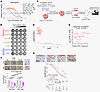 Figure 1
Higher IDH1 was associated with the resistance of iCCA to GEM-based chemotherapy. (A) Luminescence denoted relative cellular viability of iCCA cells treated with serial concentrations of GEM for 72 hours (n = 3 replicates), and the calculated IC50 are shown in brackets. (B) Colony-formation assay of iCCA cells treated with serial concentrations of GEM for 10 days. (C) Workflow of the synthetic lethal screen in GEM-resistant HuCCT1 cells with druggable CRISPR/Cas9 library screening (n = 3 replicates). (D) Dot plot showing the synthetic lethality of each gene in promoting HuCCT1 resistance to 14-day GEM treatment (1 μM), where IDH1 was identified as the top synthetic lethal hit. (E) Spearman’s correlation analysis of the IDH1 expression level, with IC50 in response to GEM in iCCA cells. (F) Tumor organoids derived from patients with iCCA were treated with GEM for 72 hours to evaluate their relative viability (n = 9). These organoids were dichotomized by the IDH1 expression level of their corresponding primary tumor sections. Scale bar: 100 μm. (G) Kaplan-Meier OS analysis of patients with iCCA who received radical resection and adjuvant GEM-based chemotherapy in the SYSMH cohort (n = 174). Representative tiles of IDH1 IHC staining are shown below, and samples with IHC score >1.3 were classified as “IDH1 high.” Scale bar: 100 μm. Statistical analysis was performed with (E) Spearman’s correlation coefficient, (F) 1-way ANOVA, and (G) log-rank test. Data represent mean ± SEM. See also Supplemental Figure 1.
IDH1 is an important enzyme in the TCA cycle, catalyzing the oxidative decarboxylation of isocitrate to produce CO2 and αKG, which is crucial for maintaining cellular redox homeostasis (30). In fact, IDH1 mutations are the most common mutation pattern in iCCA (26–28), promoting tumorigenesis and progression via (R)-2HG–mediated epigenetic/metabolic reprogramming. However, iCCA cell lines (HuCCT1 and CCLP1) identified with primary resistance to GEM are devoid of IDH1 mutations. Thus, the effect of IDH1 on chemoresistance to GEM may be dependent on the physiological function of wtIDH1. In assessing the basal expression of IDH1 in iCCA cell lines, we observed higher IDH1 expression in the resistant cell lines (Supplemental Figure 1C), none of which harbors IDH1/IDH2 hotspot mutations (Supplemental Figure 1D), and the resistance to GEM was positively correlated with quantified IDH1 expression (Figure 1E). Moreover, resected recurrent iCCA tumors after GEM-based chemotherapy demonstrate higher IDH1 expression compared with paired iCCA primary tumors (Supplemental Figure 1E), and sensitive iCCA cell lines surviving GEM treatment showed increased IDH1 expression (Supplemental Figure 1F), suggesting that IDH1 contributes to the maintenance of survival of iCCA cells under GEM treatment. The elevated IDH1 expression in residual pancreatic ductal adenocarcinoma cells, a kind of malignancy showing a ductal phenotype similar to iCCA that is mainly treated with GEM-based regimens, after GEM treatment from GEO datasets (36, 37) provided supportive evidence (Supplemental Figure 1G).
Furthermore, using our constructed patient-derived organoids library, we verified that higher IDH1 expression in iCCA correlates with greater resistance to GEM (Figure 1F). In clinicopathological analysis of patients with iCCA, IDH1 was specifically expressed in iCCA cells (Supplemental Figure 1H) and was associated with poor OS in patients with iCCA treated with radical surgery and GEM-based chemotherapy (Figure 1G). Further univariate and multivariate Cox regression analysis identified the adverse prognostic impact of IDH1 expression regardless of IDH1 mutation status (Supplemental Figure 1I and Supplemental Table 1). These findings suggest that IDH1 expression facilitates GEM resistance in iCCA tumors.
Inhibition of IDH1 alleviates the chemoresistance of iCCA to GEM. The above results demonstrate that IDH1 is associated with chemoresistance of iCCA to GEM. Consequently, we performed lentivirus-mediated knockdown or overexpression experiments targeting IDH1 in iCCA cells. The results revealed no effect of IDH1 on tumor malignancies (Supplemental Figure 2, A–D), including proliferation, migration, and invasion. However, IDH1 overexpression increased the resistance of IDH1-low iCCA cell lines to GEM, while IDH1 knockdown reversed the resistance of IDH1-high iCCA cell lines to GEM (Figure 2A and Supplemental Figure 2, E and F), consistent with the clinicopathological correlation between IDH1 and GEM resistance. Coculturing iCCA cells harboring altered expression of IDH1 under GEM treatment further confirmed the role of IDH1 in facilitating resistance to GEM (Figure 2B).
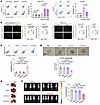 Figure 2
Inhibition of IDH1 alleviates the chemoresistance of iCCA to GEM. (A) Apoptosis flow cytometry evaluating the resistance of iCCA cells with altered IDH1 to GEM (10 nM, 72 hours; n = 3 replicates). (B) Human iCCA cells with altered IDH1 were cocultured in culture medium with GEM to evaluate their relative resistance to GEM (10 nM; n = 3 replicates). Scale bar: 100 μm. (C) Apoptosis flow cytometry evaluating the combination efficacy of GSK321 (1 μM) and GEM in HuCCT1 cells (10 nM, 72 hours; n = 3 replicates). (D) Box plot illustrating the relative viability of iCCA organoids after treatment of GSK321 (1 μM) and GEM for 72 hours (10 nM; n = 4). Scale bar: 100 μm. (E) Gross view of the tumors in the liver subcapsular inoculation models in nude mice. (F) Bioluminescence imaging analysis showing the photon flux of inoculated HuCCT1 xenografts (n = 18). Statistical analysis was performed with (A, C, D, and F) 1-way ANOVA and (B) 2-sided t test. Data represent mean ± SEM. See also Supplemental Figures 2 and 3.
Previous studies have elucidated the inhibitory effects of GSK321 on wtIDH1 (38). In our experiments, we found that GSK321 does not significantly affect tumor malignancies (Supplemental Figure 3, A–D), but it can overcome the primary resistance of iCCA to GEM (Figure 2, C and D, and Supplemental Figure 3, E and F), where the combination of GSK321 and GEM exhibited profound inhibition of iCCA proliferation. However, in the combination assays of GSK321 and GEM in iCCA cells with knockdown of IDH1 expression, their combination did not yield additional synergistic suppression (Supplemental Figure 3G). These results indicate that GSK321-mediated chemosensitizing effects to GEM are dependent on IDH1. Subsequently, we constructed orthotopic iCCA tumor models (liver subcapsular tumor inoculation models) and validated the synergistic effects of GSK321 with GEM (Figure 2, E and F). The combination treatment showed no influence on mouse weights (Supplemental Figure 3H) and led to reversed resistance to GEM, with reduced Ki67 tumor proliferation (Supplemental Figure 3I) and increased tumor apoptosis (Supplemental Figure 3J).
Although GSK321 exhibits stronger inhibitory effects on mutant IDH1, the lack of IDH1 mutations in identified iCCA cell lines (HuCCT1 and CCLP1) with primary resistance to GEM indicate that the effects of GSK321 in reversing chemoresistance are dependent on its inhibition of wtIDH1. These results demonstrate that targeting wtIDH1 may enhance iCCA sensitivity to GEM, representing a potentially viable therapeutic strategy to overcome chemoresistance.
The effects of IDH1 in causing resistance of iCCA to GEM depends on its role in maintaining redox homeostasis. We have demonstrated that wtIDH1 facilitates chemoresistance of iCCA to GEM. Given that IDH1 participates in TCA cycle metabolism and plays a crucial role in maintaining cellular redox homeostasis, while GEM induces cell death by inhibiting DNA synthesis and causing excessive cellular oxidative stress, we speculate that the underlying mechanism by which wtIDH1 leads to iCCA resistance to GEM is its function in promoting the capacity of iCCA cells to handle excessive cellular oxidative stress.
To elucidate the role of oxidative stress in iCCA chemoresistance, we first assessed the oxidative stress levels in iCCA cells treated with GEM. Although there was no significant difference in the proliferation and intracellular ROS levels of drug-resistant iCCA cells at moderate GEM concentration (Supplemental Figure 4, A and B), their glutathione (GSH)/GSH disulfide (GSSG) ratio and αKG contents were reduced (Supplemental Figure 4, C and D). We also evaluated the effect of GEM on replication stress and DNA damage in iCCA cells, where serial GEM induced dose-dependent elevated pCHK1(S345) and γH2AX expression, and the difference was consistent with the primary resistance to GEM (Supplemental Figure 4, E–G). These findings suggest that, even in the absence of overt changes in proliferation or ROS levels, GEM treatment induces metabolic alterations in iCCA cells.
Consistent with our assumption, overexpression of IDH1 did not significantly affect the proliferation or oxidative stress of iCCA cells under normal culture conditions; however, it rescued the inhibitory effects and oxidative stress responses induced by GEM treatment in GEM-sensitive iCCA cells (Figure 3, A–D, and Supplemental Figure 5, A–D). In addition, IDH1 knockdown combined with GEM treatment led to proliferation inhibition, intracellular ROS spiking, and a reduction in GSH/GSSG ratio as well as a reduction in αKG contents in GEM-resistant iCCA cells (Figure 3, E–H, and Supplemental Figure 5, E–H). These synergistic effects were also observed when combining GEM and GSK321 to inhibit wtIDH1 (Figure 3, I–M, and Supplemental Figure 5, I–M).
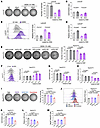 Figure 3
GEM treatment and IDH1 alteration affects intracellular oxidative stress in iCCA. (A–D) In vitro assays evaluating the rescue effects of overexpressing IDH1 in GEM-sensitive LICCF cells against the effect of GEM treatment (10 nM, 10 days) on the proliferation (A), oxidative stress (B), GSH/GSSG ratio (C), and αKG contents (D). (E–H) In vitro assays evaluating the synergistic effects of combining IDH1 knockdown and GEM treatment (10 nM, 10 days) in GEM-resistant HuCCT1 cells on the proliferation (E), oxidative stress (F), GSH/GSSG ratio (G), and αKG contents (H). (I–M) In vitro assays evaluating the synergistic effects of combining IDH1 pharmacological inhibition (1 μM) and GEM treatment (10 nM, 10 days) in GEM-resistant HuCCT1 cells on the proliferation (I), oxidative stress (J), GSH/GSSG ratio (K), αKG contents (L), and NADP+/NADPH ratio (M). Sample size: n = 3 replicates for each group. Statistical analysis was performed with 1-way ANOVA. Data represent mean ± SEM. See also Supplemental Figures 4 and 5.
To investigate whether wtIDH1-mediated resistance of iCCA to GEM is dependent on the management of oxidative stress, we first confirmed that the additional combination of prooxidants could inhibit the growth of GEM-resistant iCCA cells under GEM treatment (Figure 4, A–C, and Supplemental Figure 6, A–C), effectively killing iCCA cells that were on the brink of excessive stress under moderate GEM treatment. In addition, supplementing antioxidants N-acetylcysteine and GSH rescued the effects of GEM, including proliferation inhibition and oxidative stress induction, in GEM-sensitive iCCA cells (Figure 4, D–F, and Supplemental Figure 6, D–F). Furthermore, treatment with prooxidants attenuated the prochemoresistance of IDH1 overexpression in GEM-sensitive iCCA cells (Figure 4, G–J, and Supplemental Figure 6, G–J), exacerbating the oxidative stress caused by GEM. Meanwhile, supplementation of antioxidants abolished the chemosensitization effects of IDH1 knockdown in GEM-resistant iCCA cells (Figure 5, A–D, and Supplemental Figure 6, K–N), contributing to intracellular redox homeostasis. The rescue effects of antioxidants were also validated in experiments involving the combination of GSK321 and GEM treatment (Figure 5, E–H, and Supplemental Figure 6, O–R).
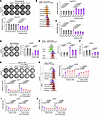 Figure 4
The effects of IDH1 in causing resistance of iCCA to GEM depend on its role in maintaining redox homeostasis. (A–C) In vitro assays evaluating the synergistic effects of combining prooxidants (1% serum starvation, 10 μM hydrogen peroxide, 2.5 mM glucose withdrawal, and 1 μM glutaminase inhibitor CB-839) and GEM treatment (10 nM, 10 days) in GEM-resistant HuCCT1 cells on the proliferation (A), oxidative stress (B), and GSH/GSSG ratio (C). (D–F) In vitro assays evaluating the rescue effects of supplementing antioxidants (1 mM N-acetylcysteine, and 4 mM glutathione) in GEM-sensitive LICCF cells against the effect of GEM treatment (10 nM, 10 days) on the proliferation (D), oxidative stress (E), and GSH/GSSG ratio (F). (G–J) In vitro assays evaluating the rescue effects of overexpressing IDH1 in GEM-sensitive LICCF cells against the synergistic efficacy of combining GEM treatment (10 nM, 10 days) with prooxidants (1% serum starvation, 10 μM hydrogen peroxide, 2.5 mM glucose withdrawal, and 1 μM glutaminase inhibitor CB-839) on the proliferation (G), oxidative stress (H), GSH/GSSG ratio (I), and αKG contents (J). Sample size: n = 3 replicates for each group. Statistical analysis was performed with (A–F) 1-way ANOVA and (G–J) 2-way ANOVA. Data represent mean ± SEM. See also Supplemental Figures 6 and 7.
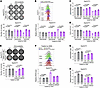 Figure 5
Supplementing antioxidants counteracts the synergistic efficacy of knocking down or pharmacologically inhibiting IDH1 in reversing chemoresistance. (A–D) In vitro assays evaluating the rescue effects of supplementing antioxidants (1 mM N-acetylcysteine, and 4 mM glutathione) in GEM-resistant HuCCT1 cells against the synergistic efficacy of combining IDH1 knockdown and GEM treatment (10 nM, 10 days) on proliferation (A), oxidative stress (B), GSH/GSSG ratio (C), and αKG contents (D). (E–H) In vitro assays evaluating the rescue effects of supplementing antioxidants (1 mM N-acetylcysteine and 4 mM glutathione) in GEM-resistant HuCCT1 cells against the synergistic efficacy of combining IDH1 pharmacological inhibition (1 μM) and GEM treatment (10 nM, 10 days) on proliferation (E), oxidative stress (F), GSH/GSSG ratio (G), and αKG contents (H). Sample size: n = 3 replicates for each group. Statistical analysis was performed with (A–D) 2-way ANOVA and (E–H) 1-way ANOVA. Data represent mean ± SEM. See also Supplemental Figures 6 and 7.
Our results illustrate that wtIDH1 inhibition leads to reduced αKG contents, decreased GSH/GSSG ratio, and elevated NADP+/NADPH ratio. Since αKG is a substrate for transaminase-dependent synthesis of glutamate, a requisite component of the GSH tripeptide, we supposed that decreased de novo GSH synthesis is the major contributor to impaired redox defense upon wtIDH1 inhibition. To test this hypothesis, we transduced HuCCT1 and CCLP1 cells with mitochondrial TPNOX, an engineered enzyme that accelerates NADPH catabolism (Supplemental Figure 7, A and B) (39). The induction of mitochondrial TPNOX elevated the NADP+/NADPH ratio, and this elevation was further amplified when combined with GEM (Supplemental Figure 7C), consistent with their suppression effects on tumor proliferation (Supplemental Figure 7D). Conversely, additional IDH1 inhibition under TPNOX-induced conditions did not further increase the NADP+/NADPH ratio (Supplemental Figure 7E) or enhance the inhibition effects on tumor growth (Supplemental Figure 7F), proving that the chemosensitizing activity of IDH1 inhibition is dependent on the effect of IDH1 inhibition on NADPH catabolism. These results demonstrate that TPNOX-mediated NADPH catabolism could recapitulate the GEM-sensitizing effects of IDH1 inhibition, consistent with our hypothesis that impaired redox defense upon wtIDH1 inhibition was mainly due to decreased de novo GSH synthesis.
Taken together, these findings demonstrate that wtIDH1 promotes resistance of iCCA to cytocidal GEM by enhancing iCCA’s ability to counteract excessive oxidative stress and maintain intracellular redox homeostasis.
Allosteric IDH1 inhibitor ivosidenib inhibits wtIDH1 to reverse the resistance of iCCA to GEM. Currently, ivosidenib, a drug targeting mutant IDH1, is well tolerated in patients and has already been approved for the treatment of IDH1-mutant advanced iCCA patients, demonstrating promising therapeutic effects in multicenter clinical trials (5, 6). Although ivosidenib was primarily designed to target mutant IDH1, recent reports suggest that it also exhibits high binding potency and an inhibitory effect on wtIDH1 (cell-free half-maximal inhibitory concentration of 17.6 nM) within specific TMEs (31) as well as in enzymatic tests: GSK321 IC50 = 2.9~4.6 nM against IDH1 R132 mutations, GSK321 IC50 = 46 nM against wtIDH1, ivosidenib IC50 = 8~13 nM against IDH1 R132 mutations, ivosidenib IC50 = 71 nM against wtIDH1 (38, 40).
In our molecular docking analyses of ivosidenib with wtIDH1, ivosidenib presents binding affinity to the catalytic domain of wtIDH1 with a Gibbs binding energy (ΔGbind) of –30.19 ± 15.47 kJ/mol, which is comparable to that of GSK321 binding with wtIDH1 (ΔGbind = –34.49 ± 2.94 kJ/mol), suggesting the inhibitory potential of ivosidenib on wtIDH1 (Figure 6A). However, under conventional culture conditions, ivosidenib treatment alone did not affect the proliferation or oxidative stress of iCCA cells (Supplemental Figure 8, A–D) and neither did it reverse iCCA’s resistance to GEM (Supplemental Figure 8E). Previous studies have reported that magnesium (Mg2+) competitively interacts with Asp279 in the allosteric pocket of wtIDH1 to prevent the binding of inhibitors targeting the catalytic pocket of IDH1, thus reducing the inhibitory effect of ivosidenib of wtIDH1 (41). Therefore, we conducted combination treatment experiments under low-Mg2+ conditions and demonstrated the synergistic antitumor effects of ivosidenib and GEM (Bliss synergy indices >20) in iCCA cells (Figure 6, B–F, and Supplemental Figure 9, A–E).
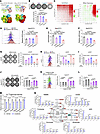 Figure 6
Allosteric IDH1 inhibitor ivosidenib inhibits wtIDH1 to reverse the resistance of iCCA to GEM. (A) Molecular docking between wtIDH1 and GSK321 or ivosidenib, where the Gibbs binding energy (ΔGbind) was determined by MM-PBSA algorithm (57). (B) Colony-formation assay of GEM-resistant HuCCT1 cells treated with GEM (10 nM) and ivosidenib (1 μM) for 10 days under magnesium-low complete medium. (C) Relative viability and corresponding Bliss independence scores in response to the combination of ivosidenib and GEM in GEM-resistant HuCCT1 cells for 10 days under magnesium-low complete medium, where positive values represent synergistic response. (D–F) In vitro assays evaluating the synergistic effects of combining ivosidenib (1 μM) and GEM treatment (10 nM, 10 days) in GEM-resistant HuCCT1 cells on the oxidative stress (D), GSH/GSSG ratio (E), and αKG contents (F). (G–I) In vitro assays evaluating the reversal effects of applying ivosidenib (1 μM) in GEM-sensitive LICCF cells for 10 days against the rescue effects of overexpressing IDH1 on proliferation (G), oxidative stress (H), and GSH/GSSG ratio (I). (J–L) In vitro assays evaluating the rescue effects of supplementing antioxidants (1 mM N-acetylcysteine and 4 mM glutathione) in GEM-resistant HuCCT1 cells for 10 days against the synergistic efficacy of combining ivosidenib (1 μM) and GEM treatment (10 nM) on proliferation (J), oxidative stress (K), and GSH/GSSG ratio (L). (M and N) Metabolic profiling demonstrating the glucose-dependent isotopologues (M) and isotopologue distribution (N) in HuCCT1 cells pretreated by ivosidenib (1 μM) or vehicle for 7 days, which were cultured under glucose-depleted medium for a 30-hour washout period followed by 6 hours of additional 2.5 mM [U-13C] glucose culturing under magnesium-low medium. Sample size: n = 3 replicates for each group, except that n = 4 replicates for M and N. Statistical analysis was performed with (B, D–F, and J–L) 1-way ANOVA, (G–I) 2-way ANOVA, and (M and N) 2-sided t test. Data represent mean ± SEM. See also Supplemental Figures 8 and 9.
Our previous findings indicate that wtIDH1 facilitates the resistance of iCCA to GEM by enhancing the capacity of iCCA cells to revolve GEM-induced oxidative stress. Under low-Mg2+ conditions, we found that the combination of ivosidenib and GEM demonstrated synergistic antitumor effects and led to redox imbalance in iCCA cells, thereby overcoming the chemoresistance conferred by overexpression of IDH1 (Figure 6, G–I, and Supplemental Figure 9, F–H). Additionally, supplementing antioxidants reversed the synergistic effects of ivosidenib and GEM in iCCA (Figure 6, J–L, and Supplemental Figure 9, I–K), highlighting the dependence of ivosidenib on redox disturbance to exert its antitumor effects. Given the proposed redox mechanism, we constructed in vivo orthotopic iCCA tumor models to evaluate the 24-hour acute effect of GEM and ivosidenib on redox imbalance. As illustrated in Supplemental Figure 9, L–O, administration of GEM alone caused acute redox imbalance, including increased lipid peroxidation (increased 4-HNE), DNA oxidation (increased 8-oxo-dG), and DNA damage (increased γH2AX and pCHK1), with decreased antioxidant capacity (decreased GSH/GSSG ratio and increased NADP+/NADPH ratio), whereas the combination with ivosidenib exhibited synergistic effects. These results have strengthened the mechanistic link among replication stress, DNA damage, redox imbalance, and GEM-induced cell death.
The mitochondrial dysfunction induced by the inhibition of wtIDH1 with ivosidenib was further confirmed through metabolic flux assays (Figure 6, M and N). Treatment with ivosidenib led to a reduction in the de novo synthesis of 13C-enriched metabolites related to TCA cycle, suggesting a decreased carbon input from [U-13C]glucose into mitochondrial TCA metabolism, thereby attenuating the IDH1-dependent TCA metabolic flux.
Taken together, these results demonstrate that under low-Mg2+ conditions, the allosteric IDH1 inhibitor ivosidenib effectively inhibits the physiological function of wtIDH1 in managing oxidative stress, thereby reversing the chemoresistance of iCCA to GEM.
Ivosidenib possesses an inhibitory effect on wtIDH1 in iCCA under physiological TME. Our findings illustrate the therapeutic effects of ivosidenib in reversing iCCA’s resistance to GEM under low-magnesium conditions, while these effects could be neutralized by increasing Mg2+ levels (Figure 7, A–E, and Supplemental Figure 10, A–C). Furthermore, we observed enhanced thermal stability of intracellular wtIDH1 protein under ivosidenib treatment in low-Mg2+ conditions, while no stabilizing effects of ivosidenib on wtIDH1 were observed at high-Mg2+ levels (Figure 7F). These observations suggest that Mg2+ competes with ivosidenib for binding to wtIDH1, thereby relieving the inhibitory effects of ivosidenib on wtIDH1, including resistance to GEM and management of oxidative stress.
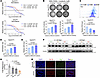 Figure 7
Ivosidenib possesses inhibitory effect on wtIDH1 in iCCA under physiological TME. (A) Luminescence-denoted relative cellular viability of iCCA cells treated with ivosidenib and GEM under serial concentrations of magnesium for 72 hours. (B) Colony-formation assay of iCCA cells treated with ivosidenib and GEM under serial concentrations of magnesium for 10 days. (C–E) In vitro assays evaluating the effect of serial concentrations of magnesium on the synergistic effects of combining ivosidenib (1 μM) and GEM treatment (10 nM; 10 days) in GEM-resistant HuCCT1 cells on the oxidative stress (C), GSH/GSSG ratio (D), and αKG contents (E). (F) Western blot evaluating the thermal stability of IDH1 protein in HuCCT1 cells treated by vehicle or ivosidenib (1 μM) under culture medium containing indicated concentrations of magnesium. (G) Spectrophotometry detecting the free magnesium levels in serum, liver, normal bile duct, and iCCA tumors collected from patients with iCCA. (H) Immunofluorescence staining of CK19 and fluorescent probing of magnesium in normal bile duct tissues or iCCA tumors to evaluate the distribution of magnesium. Scale bar: 100 μm. Sample size: n = 3 replicates for each group, except that n = 5 for G. Statistical analysis was performed with (B–E) 1-way ANOVA and (G) 2-sided t test. Data represent mean ± SEM. See also Supplemental Figure 10.
To date, no comprehensive analyses have been conducted on the Mg2+ contents and distribution in intrinsic tumor and normal tissues in patients with iCCA. To investigate the correspondence between the low-magnesium microenvironment and the physiological body microenvironment, we collected human samples, including peripheral blood, normal liver, normal bile duct, and cholangiocarcinoma tissues from patients with iCCA for Mg2+ content measurement. The results revealed high-Mg2+ concentration in peripheral blood and moderate-to-high-Mg2+ contents in normal liver and bile ducts. In contrast, Mg2+ levels in iCCA tumor tissues were lower due to poor blood supply (Figure 7G). The differential intracellular Mg2+ contents were further verified by probe-detected spatial distribution of Mg2+ in normal bile duct and iCCA samples (Figure 7H).
These results reveal the physiological relevance of the low-Mg2+ concentration used in our in vitro experiments to the intrinsic TME of iCCA. Given that Mg2+ can decrease the binding of ivosidenib to wtIDH1, the lower Mg2+ content in the iCCA microenvironment guarantees the sensitivity of iCCA expressing wtIDH1 to ivosidenib, while sparing normal tissues from its inhibitory effects. This differential sensitivity expands the therapeutic window for ivosidenib in clinical applications.
Allosteric IDH1 inhibitor ivosidenib synergies with GEM against iCCA with wtIDH1 in preclinical models. We previously demonstrated that, within the liver microenvironment, ivosidenib can inhibit wtIDH1 and reverse chemoresistance to GEM in iCCA. If the therapeutic efficacy of combining FDA-approved ivosidenib and GEM can be validated across various preclinical models, this therapy strategy could be rapidly translated into clinical applications to overcome chemoresistance in iCCA.
To validate the synergistic antitumor effects of combining ivosidenib and GEM, we constructed several preclinical models. In the iCCA patient-derived organoids models with high IDH1 expression, ivosidenib synergized with GEM to inhibit the proliferation of iCCA organoids under low-magnesium conditions (Figure 8A).
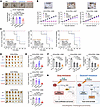 Figure 8
Allosteric IDH1 inhibitor ivosidenib synergies with GEM against iCCA with wtIDH1 in preclinical models. (A) Box plot illustrating the relative viability of iCCA organoids after treatment of ivosidenib and GEM for 72 hours (n = 5). Scale bar: 100 μm. (B) Tumor growth curves of iCCA PDX xenografts from 3 chemotherapy-naive patients with iCCA. Representative tiles of IDH1 IHC staining are shown below. Scale bar: 100 μm. (C) Kaplan-Meier tumor volume-free (500 mm3) analysis of iCCA PDX xenografts. (D) Gross view of the iCCA PDX xenografts after treatment of ivosidenib and/or GEM. (E) Box plot showing the tumor volume of iCCA PDX xenografts. (F) Spectrophotometry detecting the free magnesium levels in serum, liver, normal bile duct, and xenografts collected from the iCCA PDX models. (G) Molecular mechanisms and therapeutic vulnerability of IDH1 in iCCA’s chemoresistance to GEM. In iCCA cells, overexpressed IDH1 oxidizes isocitrate to generate αKG and NADPH, thereby reducing the oxidative stress induced by GEM, maintaining redox homeostasis, and ultimately leading to their chemoresistance to GEM. If IDH1 inhibitors (such as ivosidenib or GSK321) are used in combination with GEM, they can inhibit the catalytic function of IDH1, reducing the production of NADPH and GSH involved in antioxidant stress responses. This leads to intracellular redox imbalance, consequently reversing the chemoresistance of iCCA to GEM and resulting in tumor proliferation arrest and cell death. The image was created with BioRender. Statistical analysis was performed with (A and E) 1-way ANOVA, (C) log-rank test, and (F) 2-sided t test. Data represent mean ± SEM. See also Supplemental Figures 11 and 12.
Next, we established 3 patient-derived xenograft (PDX) models to evaluate the in vivo therapeutic efficacy of GEM and ivosidenib. Of these, C227 and C264 exhibited high IDH1 expression, while C252 showed low IDH1 expression. The IDH1-high PDXs displayed resistance to GEM, which could be overcome by the addition of ivosidenib, whereas the IDH1-low PDXs exhibited sensitivity to GEM with minimal additional effect from ivosidenib (Figure 8, B–E). Immunohistochemical staining for Ki67 proliferation (Supplemental Figure 11A) and cleaved caspase-3 apoptosis (Supplemental Figure 11B) in tumor tissues confirmed the antitumor effects of combination therapy. The reduction in the GSH/GSSG ratio (Supplemental Figure 11C) and αKG levels (Supplemental Figure 11D) in PDX tumors further verified the effect of ivosidenib and GEM on exacerbating tumor oxidative stress. Additionally, analysis of Mg2+ levels in peripheral blood, normal liver, normal bile duct, and iCCA PDXs tissues from tumor-bearing mice corroborated the distribution differences of Mg2+ across heterogeneous microenvironments (Figure 8F). These findings demonstrate that ivosidenib holds a favorable therapeutic window both in humans and mice.
Finally, we evaluated the sensitivity to GEM and effects of IDH1 inhibition in iCCA cell lines with IDH1 mutations. The RBE cells harbor IDH1 R132S hotspot mutations and demonstrated great sensitive to GEM treatment (Supplemental Figure 12, A and B), which might be attributed to the enhanced NADPH consumption by mutant IDH1, suggesting that patients with iCCA with IDH1 hotspot mutations may derive enhanced benefits from GEM-based chemotherapy. In combination assays, olutasidenib (selective for IDH1 R132H and R132C mutations) did not affect RBE proliferation, whereas GEM produced growth inhibition, and their combination showed no synergistic effects (Supplemental Figure 12C). In contrast, the nonselective inhibitors GSK321 and ivosidenib suppressed RBE proliferation and exhibited synergistic antiproliferation activity when combined with GEM (Supplemental Figure 12, D and E). These data indicate that patients with oncogenic IDH1 mutations may achieve superior responses through concurrent administration of GEM and corresponding IDH1 inhibitors. On the other hand, to validate the on-target effects of ivosidenib, we introduced the IDH1 inhibitor-resistance mutation S280F into HuCCT1 cells (Supplemental Figure 12F) (42), illustrating that IDH1 S280F variant abolished the synergistic effects of ivosidenib and GEM (Supplemental Figure 12G). We also found that ivosidenib no longer increased the thermal stability of IDH1 S280F protein (Supplemental Figure 12H), indicating a loss of ivosidenib binding after S280F mutation. These data demonstrate that the IDH1 S280F mutation confers iCCA resistance to ivosidenib and confirm the on-target mechanism of ivosidenib.
In summary, we have validated the clinical application prospects of targeting wtIDH1 to reverse chemoresistance to GEM in iCCA. Our findings demonstrate that ivosidenib, an FDA-approved allosteric inhibitor originally designed to target mutant IDH1, also shows promising therapeutic outcomes in iCCA carrying wtIDH1 within the iCCA TME.


Copyright © 2026 American Society for Clinical Investigation
ISSN: 0021-9738 (print), 1558-8238 (online)