
Advertisement
Research ArticleCardiologyGenetics
Open Access |  10.1172/JCI198675
Homozygous SGCB splice-site variant causes isolated dilated cardiomyopathy through sarcoglycan complex destabilization in East Asians
Fangfang Li,1 Haruki Shinomiya,1,2 Yuki Kuramoto,1,3,4 Koshiro Kanaoka,5 Yuji Sakahashi,6 Yasuki Ishihara,7 Hidetaka Kioka,1 Seiko Ide,1,8 Yumi Yamaguchi-Kabata,9 Shu Tadaka,9 Ikuko N. Motoike,9,10 Kengo Kinoshita,9,10,11 Kinuko Ohneda,9,11 Hidetoshi Sakurai,12 Takahiro Okumura,13,14 Yohei Miyashita,1,2 Kota Jojima,15 Hisakazu Kato,15 Ken Matsuoka,15,16 Kazuya Tanabe,1 Shunsuke Nishimura,1 Seiji Takashima,15,16 Yoshihiro Asano,1,2 and Yasushi Sakata1
1Department of Cardiovascular Medicine, The University of Osaka Graduate School of Medicine, Osaka, Japan.
2Department of Genomic Medicine and
3Department of Pathophysiology of Heart Failure and Therapeutics, National Cerebral and Cardiovascular Center Research Institute, Osaka, Japan.
4Premium Research Institute for Human Metaverse Medicine (WPI-PRIMe), The University of Osaka, Osaka, Japan.
5Department of Medical and Health Information Management, National Cerebral and Cardiovascular Center Research Institute, Osaka, Japan.
6Omics Research Center and
7Biobank, National Cerebral and Cardiovascular Center, Osaka, Japan.
8Department of Dental Anesthesiology, The University of Osaka Graduate School of Dentistry, Osaka, Japan.
9Tohoku Medical Megabank Organization,
10Graduate School of Information Sciences, and
11Advanced Research Center for Innovations in Next-Generation Medicine, Tohoku University, Sendai, Japan.
12Department of Clinical Application, Center for iPS Cell Research and Application (CiRA), Kyoto University, Kyoto, Japan.
13Department of Cardiology and
14Department of Advanced Cardiovascular Therapeutics, Nagoya University Graduate School of Medicine, Nagoya, Japan.
15Department of Medical Biochemistry, The University of Osaka Graduate School of Medicine, Osaka, Japan.
16Department of Medical Biochemistry, The University of Osaka Graduate School of Frontier Biosciences, Osaka, Japan.
Address correspondence to: Haruki Shinomiya or Yoshihiro Asano, Department of Genomic Medicine, National Cerebral and Cardiovascular Center, 6-1 Kishibe-Shinmachi, Suita, Osaka 564-8565, Japan. Phone: 81.6.6170.1070; Email: shinomiya.haruki@ncvc.go.jp (H Shinomiya). Email: asano.yoshihiro@ncvc.go.jp (YA).
Find articles by Li, F. in: PubMed | Google Scholar
1Department of Cardiovascular Medicine, The University of Osaka Graduate School of Medicine, Osaka, Japan.
2Department of Genomic Medicine and
3Department of Pathophysiology of Heart Failure and Therapeutics, National Cerebral and Cardiovascular Center Research Institute, Osaka, Japan.
4Premium Research Institute for Human Metaverse Medicine (WPI-PRIMe), The University of Osaka, Osaka, Japan.
5Department of Medical and Health Information Management, National Cerebral and Cardiovascular Center Research Institute, Osaka, Japan.
6Omics Research Center and
7Biobank, National Cerebral and Cardiovascular Center, Osaka, Japan.
8Department of Dental Anesthesiology, The University of Osaka Graduate School of Dentistry, Osaka, Japan.
9Tohoku Medical Megabank Organization,
10Graduate School of Information Sciences, and
11Advanced Research Center for Innovations in Next-Generation Medicine, Tohoku University, Sendai, Japan.
12Department of Clinical Application, Center for iPS Cell Research and Application (CiRA), Kyoto University, Kyoto, Japan.
13Department of Cardiology and
14Department of Advanced Cardiovascular Therapeutics, Nagoya University Graduate School of Medicine, Nagoya, Japan.
15Department of Medical Biochemistry, The University of Osaka Graduate School of Medicine, Osaka, Japan.
16Department of Medical Biochemistry, The University of Osaka Graduate School of Frontier Biosciences, Osaka, Japan.
Address correspondence to: Haruki Shinomiya or Yoshihiro Asano, Department of Genomic Medicine, National Cerebral and Cardiovascular Center, 6-1 Kishibe-Shinmachi, Suita, Osaka 564-8565, Japan. Phone: 81.6.6170.1070; Email: shinomiya.haruki@ncvc.go.jp (H Shinomiya). Email: asano.yoshihiro@ncvc.go.jp (YA).
Find articles by Shinomiya, H. in: PubMed | Google Scholar
1Department of Cardiovascular Medicine, The University of Osaka Graduate School of Medicine, Osaka, Japan.
2Department of Genomic Medicine and
3Department of Pathophysiology of Heart Failure and Therapeutics, National Cerebral and Cardiovascular Center Research Institute, Osaka, Japan.
4Premium Research Institute for Human Metaverse Medicine (WPI-PRIMe), The University of Osaka, Osaka, Japan.
5Department of Medical and Health Information Management, National Cerebral and Cardiovascular Center Research Institute, Osaka, Japan.
6Omics Research Center and
7Biobank, National Cerebral and Cardiovascular Center, Osaka, Japan.
8Department of Dental Anesthesiology, The University of Osaka Graduate School of Dentistry, Osaka, Japan.
9Tohoku Medical Megabank Organization,
10Graduate School of Information Sciences, and
11Advanced Research Center for Innovations in Next-Generation Medicine, Tohoku University, Sendai, Japan.
12Department of Clinical Application, Center for iPS Cell Research and Application (CiRA), Kyoto University, Kyoto, Japan.
13Department of Cardiology and
14Department of Advanced Cardiovascular Therapeutics, Nagoya University Graduate School of Medicine, Nagoya, Japan.
15Department of Medical Biochemistry, The University of Osaka Graduate School of Medicine, Osaka, Japan.
16Department of Medical Biochemistry, The University of Osaka Graduate School of Frontier Biosciences, Osaka, Japan.
Address correspondence to: Haruki Shinomiya or Yoshihiro Asano, Department of Genomic Medicine, National Cerebral and Cardiovascular Center, 6-1 Kishibe-Shinmachi, Suita, Osaka 564-8565, Japan. Phone: 81.6.6170.1070; Email: shinomiya.haruki@ncvc.go.jp (H Shinomiya). Email: asano.yoshihiro@ncvc.go.jp (YA).
Find articles by
Kuramoto, Y.
in:
PubMed
|
Google Scholar
|

1Department of Cardiovascular Medicine, The University of Osaka Graduate School of Medicine, Osaka, Japan.
2Department of Genomic Medicine and
3Department of Pathophysiology of Heart Failure and Therapeutics, National Cerebral and Cardiovascular Center Research Institute, Osaka, Japan.
4Premium Research Institute for Human Metaverse Medicine (WPI-PRIMe), The University of Osaka, Osaka, Japan.
5Department of Medical and Health Information Management, National Cerebral and Cardiovascular Center Research Institute, Osaka, Japan.
6Omics Research Center and
7Biobank, National Cerebral and Cardiovascular Center, Osaka, Japan.
8Department of Dental Anesthesiology, The University of Osaka Graduate School of Dentistry, Osaka, Japan.
9Tohoku Medical Megabank Organization,
10Graduate School of Information Sciences, and
11Advanced Research Center for Innovations in Next-Generation Medicine, Tohoku University, Sendai, Japan.
12Department of Clinical Application, Center for iPS Cell Research and Application (CiRA), Kyoto University, Kyoto, Japan.
13Department of Cardiology and
14Department of Advanced Cardiovascular Therapeutics, Nagoya University Graduate School of Medicine, Nagoya, Japan.
15Department of Medical Biochemistry, The University of Osaka Graduate School of Medicine, Osaka, Japan.
16Department of Medical Biochemistry, The University of Osaka Graduate School of Frontier Biosciences, Osaka, Japan.
Address correspondence to: Haruki Shinomiya or Yoshihiro Asano, Department of Genomic Medicine, National Cerebral and Cardiovascular Center, 6-1 Kishibe-Shinmachi, Suita, Osaka 564-8565, Japan. Phone: 81.6.6170.1070; Email: shinomiya.haruki@ncvc.go.jp (H Shinomiya). Email: asano.yoshihiro@ncvc.go.jp (YA).
Find articles by Kanaoka, K. in: PubMed | Google Scholar
1Department of Cardiovascular Medicine, The University of Osaka Graduate School of Medicine, Osaka, Japan.
2Department of Genomic Medicine and
3Department of Pathophysiology of Heart Failure and Therapeutics, National Cerebral and Cardiovascular Center Research Institute, Osaka, Japan.
4Premium Research Institute for Human Metaverse Medicine (WPI-PRIMe), The University of Osaka, Osaka, Japan.
5Department of Medical and Health Information Management, National Cerebral and Cardiovascular Center Research Institute, Osaka, Japan.
6Omics Research Center and
7Biobank, National Cerebral and Cardiovascular Center, Osaka, Japan.
8Department of Dental Anesthesiology, The University of Osaka Graduate School of Dentistry, Osaka, Japan.
9Tohoku Medical Megabank Organization,
10Graduate School of Information Sciences, and
11Advanced Research Center for Innovations in Next-Generation Medicine, Tohoku University, Sendai, Japan.
12Department of Clinical Application, Center for iPS Cell Research and Application (CiRA), Kyoto University, Kyoto, Japan.
13Department of Cardiology and
14Department of Advanced Cardiovascular Therapeutics, Nagoya University Graduate School of Medicine, Nagoya, Japan.
15Department of Medical Biochemistry, The University of Osaka Graduate School of Medicine, Osaka, Japan.
16Department of Medical Biochemistry, The University of Osaka Graduate School of Frontier Biosciences, Osaka, Japan.
Address correspondence to: Haruki Shinomiya or Yoshihiro Asano, Department of Genomic Medicine, National Cerebral and Cardiovascular Center, 6-1 Kishibe-Shinmachi, Suita, Osaka 564-8565, Japan. Phone: 81.6.6170.1070; Email: shinomiya.haruki@ncvc.go.jp (H Shinomiya). Email: asano.yoshihiro@ncvc.go.jp (YA).
Find articles by Sakahashi, Y. in: PubMed | Google Scholar
1Department of Cardiovascular Medicine, The University of Osaka Graduate School of Medicine, Osaka, Japan.
2Department of Genomic Medicine and
3Department of Pathophysiology of Heart Failure and Therapeutics, National Cerebral and Cardiovascular Center Research Institute, Osaka, Japan.
4Premium Research Institute for Human Metaverse Medicine (WPI-PRIMe), The University of Osaka, Osaka, Japan.
5Department of Medical and Health Information Management, National Cerebral and Cardiovascular Center Research Institute, Osaka, Japan.
6Omics Research Center and
7Biobank, National Cerebral and Cardiovascular Center, Osaka, Japan.
8Department of Dental Anesthesiology, The University of Osaka Graduate School of Dentistry, Osaka, Japan.
9Tohoku Medical Megabank Organization,
10Graduate School of Information Sciences, and
11Advanced Research Center for Innovations in Next-Generation Medicine, Tohoku University, Sendai, Japan.
12Department of Clinical Application, Center for iPS Cell Research and Application (CiRA), Kyoto University, Kyoto, Japan.
13Department of Cardiology and
14Department of Advanced Cardiovascular Therapeutics, Nagoya University Graduate School of Medicine, Nagoya, Japan.
15Department of Medical Biochemistry, The University of Osaka Graduate School of Medicine, Osaka, Japan.
16Department of Medical Biochemistry, The University of Osaka Graduate School of Frontier Biosciences, Osaka, Japan.
Address correspondence to: Haruki Shinomiya or Yoshihiro Asano, Department of Genomic Medicine, National Cerebral and Cardiovascular Center, 6-1 Kishibe-Shinmachi, Suita, Osaka 564-8565, Japan. Phone: 81.6.6170.1070; Email: shinomiya.haruki@ncvc.go.jp (H Shinomiya). Email: asano.yoshihiro@ncvc.go.jp (YA).
Find articles by Ishihara, Y. in: PubMed | Google Scholar
1Department of Cardiovascular Medicine, The University of Osaka Graduate School of Medicine, Osaka, Japan.
2Department of Genomic Medicine and
3Department of Pathophysiology of Heart Failure and Therapeutics, National Cerebral and Cardiovascular Center Research Institute, Osaka, Japan.
4Premium Research Institute for Human Metaverse Medicine (WPI-PRIMe), The University of Osaka, Osaka, Japan.
5Department of Medical and Health Information Management, National Cerebral and Cardiovascular Center Research Institute, Osaka, Japan.
6Omics Research Center and
7Biobank, National Cerebral and Cardiovascular Center, Osaka, Japan.
8Department of Dental Anesthesiology, The University of Osaka Graduate School of Dentistry, Osaka, Japan.
9Tohoku Medical Megabank Organization,
10Graduate School of Information Sciences, and
11Advanced Research Center for Innovations in Next-Generation Medicine, Tohoku University, Sendai, Japan.
12Department of Clinical Application, Center for iPS Cell Research and Application (CiRA), Kyoto University, Kyoto, Japan.
13Department of Cardiology and
14Department of Advanced Cardiovascular Therapeutics, Nagoya University Graduate School of Medicine, Nagoya, Japan.
15Department of Medical Biochemistry, The University of Osaka Graduate School of Medicine, Osaka, Japan.
16Department of Medical Biochemistry, The University of Osaka Graduate School of Frontier Biosciences, Osaka, Japan.
Address correspondence to: Haruki Shinomiya or Yoshihiro Asano, Department of Genomic Medicine, National Cerebral and Cardiovascular Center, 6-1 Kishibe-Shinmachi, Suita, Osaka 564-8565, Japan. Phone: 81.6.6170.1070; Email: shinomiya.haruki@ncvc.go.jp (H Shinomiya). Email: asano.yoshihiro@ncvc.go.jp (YA).
Find articles by Kioka, H. in: PubMed | Google Scholar
1Department of Cardiovascular Medicine, The University of Osaka Graduate School of Medicine, Osaka, Japan.
2Department of Genomic Medicine and
3Department of Pathophysiology of Heart Failure and Therapeutics, National Cerebral and Cardiovascular Center Research Institute, Osaka, Japan.
4Premium Research Institute for Human Metaverse Medicine (WPI-PRIMe), The University of Osaka, Osaka, Japan.
5Department of Medical and Health Information Management, National Cerebral and Cardiovascular Center Research Institute, Osaka, Japan.
6Omics Research Center and
7Biobank, National Cerebral and Cardiovascular Center, Osaka, Japan.
8Department of Dental Anesthesiology, The University of Osaka Graduate School of Dentistry, Osaka, Japan.
9Tohoku Medical Megabank Organization,
10Graduate School of Information Sciences, and
11Advanced Research Center for Innovations in Next-Generation Medicine, Tohoku University, Sendai, Japan.
12Department of Clinical Application, Center for iPS Cell Research and Application (CiRA), Kyoto University, Kyoto, Japan.
13Department of Cardiology and
14Department of Advanced Cardiovascular Therapeutics, Nagoya University Graduate School of Medicine, Nagoya, Japan.
15Department of Medical Biochemistry, The University of Osaka Graduate School of Medicine, Osaka, Japan.
16Department of Medical Biochemistry, The University of Osaka Graduate School of Frontier Biosciences, Osaka, Japan.
Address correspondence to: Haruki Shinomiya or Yoshihiro Asano, Department of Genomic Medicine, National Cerebral and Cardiovascular Center, 6-1 Kishibe-Shinmachi, Suita, Osaka 564-8565, Japan. Phone: 81.6.6170.1070; Email: shinomiya.haruki@ncvc.go.jp (H Shinomiya). Email: asano.yoshihiro@ncvc.go.jp (YA).
Find articles by Ide, S. in: PubMed | Google Scholar
1Department of Cardiovascular Medicine, The University of Osaka Graduate School of Medicine, Osaka, Japan.
2Department of Genomic Medicine and
3Department of Pathophysiology of Heart Failure and Therapeutics, National Cerebral and Cardiovascular Center Research Institute, Osaka, Japan.
4Premium Research Institute for Human Metaverse Medicine (WPI-PRIMe), The University of Osaka, Osaka, Japan.
5Department of Medical and Health Information Management, National Cerebral and Cardiovascular Center Research Institute, Osaka, Japan.
6Omics Research Center and
7Biobank, National Cerebral and Cardiovascular Center, Osaka, Japan.
8Department of Dental Anesthesiology, The University of Osaka Graduate School of Dentistry, Osaka, Japan.
9Tohoku Medical Megabank Organization,
10Graduate School of Information Sciences, and
11Advanced Research Center for Innovations in Next-Generation Medicine, Tohoku University, Sendai, Japan.
12Department of Clinical Application, Center for iPS Cell Research and Application (CiRA), Kyoto University, Kyoto, Japan.
13Department of Cardiology and
14Department of Advanced Cardiovascular Therapeutics, Nagoya University Graduate School of Medicine, Nagoya, Japan.
15Department of Medical Biochemistry, The University of Osaka Graduate School of Medicine, Osaka, Japan.
16Department of Medical Biochemistry, The University of Osaka Graduate School of Frontier Biosciences, Osaka, Japan.
Address correspondence to: Haruki Shinomiya or Yoshihiro Asano, Department of Genomic Medicine, National Cerebral and Cardiovascular Center, 6-1 Kishibe-Shinmachi, Suita, Osaka 564-8565, Japan. Phone: 81.6.6170.1070; Email: shinomiya.haruki@ncvc.go.jp (H Shinomiya). Email: asano.yoshihiro@ncvc.go.jp (YA).
Find articles by Yamaguchi-Kabata, Y. in: PubMed | Google Scholar
1Department of Cardiovascular Medicine, The University of Osaka Graduate School of Medicine, Osaka, Japan.
2Department of Genomic Medicine and
3Department of Pathophysiology of Heart Failure and Therapeutics, National Cerebral and Cardiovascular Center Research Institute, Osaka, Japan.
4Premium Research Institute for Human Metaverse Medicine (WPI-PRIMe), The University of Osaka, Osaka, Japan.
5Department of Medical and Health Information Management, National Cerebral and Cardiovascular Center Research Institute, Osaka, Japan.
6Omics Research Center and
7Biobank, National Cerebral and Cardiovascular Center, Osaka, Japan.
8Department of Dental Anesthesiology, The University of Osaka Graduate School of Dentistry, Osaka, Japan.
9Tohoku Medical Megabank Organization,
10Graduate School of Information Sciences, and
11Advanced Research Center for Innovations in Next-Generation Medicine, Tohoku University, Sendai, Japan.
12Department of Clinical Application, Center for iPS Cell Research and Application (CiRA), Kyoto University, Kyoto, Japan.
13Department of Cardiology and
14Department of Advanced Cardiovascular Therapeutics, Nagoya University Graduate School of Medicine, Nagoya, Japan.
15Department of Medical Biochemistry, The University of Osaka Graduate School of Medicine, Osaka, Japan.
16Department of Medical Biochemistry, The University of Osaka Graduate School of Frontier Biosciences, Osaka, Japan.
Address correspondence to: Haruki Shinomiya or Yoshihiro Asano, Department of Genomic Medicine, National Cerebral and Cardiovascular Center, 6-1 Kishibe-Shinmachi, Suita, Osaka 564-8565, Japan. Phone: 81.6.6170.1070; Email: shinomiya.haruki@ncvc.go.jp (H Shinomiya). Email: asano.yoshihiro@ncvc.go.jp (YA).
Find articles by Tadaka, S. in: PubMed | Google Scholar
1Department of Cardiovascular Medicine, The University of Osaka Graduate School of Medicine, Osaka, Japan.
2Department of Genomic Medicine and
3Department of Pathophysiology of Heart Failure and Therapeutics, National Cerebral and Cardiovascular Center Research Institute, Osaka, Japan.
4Premium Research Institute for Human Metaverse Medicine (WPI-PRIMe), The University of Osaka, Osaka, Japan.
5Department of Medical and Health Information Management, National Cerebral and Cardiovascular Center Research Institute, Osaka, Japan.
6Omics Research Center and
7Biobank, National Cerebral and Cardiovascular Center, Osaka, Japan.
8Department of Dental Anesthesiology, The University of Osaka Graduate School of Dentistry, Osaka, Japan.
9Tohoku Medical Megabank Organization,
10Graduate School of Information Sciences, and
11Advanced Research Center for Innovations in Next-Generation Medicine, Tohoku University, Sendai, Japan.
12Department of Clinical Application, Center for iPS Cell Research and Application (CiRA), Kyoto University, Kyoto, Japan.
13Department of Cardiology and
14Department of Advanced Cardiovascular Therapeutics, Nagoya University Graduate School of Medicine, Nagoya, Japan.
15Department of Medical Biochemistry, The University of Osaka Graduate School of Medicine, Osaka, Japan.
16Department of Medical Biochemistry, The University of Osaka Graduate School of Frontier Biosciences, Osaka, Japan.
Address correspondence to: Haruki Shinomiya or Yoshihiro Asano, Department of Genomic Medicine, National Cerebral and Cardiovascular Center, 6-1 Kishibe-Shinmachi, Suita, Osaka 564-8565, Japan. Phone: 81.6.6170.1070; Email: shinomiya.haruki@ncvc.go.jp (H Shinomiya). Email: asano.yoshihiro@ncvc.go.jp (YA).
Find articles by Motoike, I. in: PubMed | Google Scholar
1Department of Cardiovascular Medicine, The University of Osaka Graduate School of Medicine, Osaka, Japan.
2Department of Genomic Medicine and
3Department of Pathophysiology of Heart Failure and Therapeutics, National Cerebral and Cardiovascular Center Research Institute, Osaka, Japan.
4Premium Research Institute for Human Metaverse Medicine (WPI-PRIMe), The University of Osaka, Osaka, Japan.
5Department of Medical and Health Information Management, National Cerebral and Cardiovascular Center Research Institute, Osaka, Japan.
6Omics Research Center and
7Biobank, National Cerebral and Cardiovascular Center, Osaka, Japan.
8Department of Dental Anesthesiology, The University of Osaka Graduate School of Dentistry, Osaka, Japan.
9Tohoku Medical Megabank Organization,
10Graduate School of Information Sciences, and
11Advanced Research Center for Innovations in Next-Generation Medicine, Tohoku University, Sendai, Japan.
12Department of Clinical Application, Center for iPS Cell Research and Application (CiRA), Kyoto University, Kyoto, Japan.
13Department of Cardiology and
14Department of Advanced Cardiovascular Therapeutics, Nagoya University Graduate School of Medicine, Nagoya, Japan.
15Department of Medical Biochemistry, The University of Osaka Graduate School of Medicine, Osaka, Japan.
16Department of Medical Biochemistry, The University of Osaka Graduate School of Frontier Biosciences, Osaka, Japan.
Address correspondence to: Haruki Shinomiya or Yoshihiro Asano, Department of Genomic Medicine, National Cerebral and Cardiovascular Center, 6-1 Kishibe-Shinmachi, Suita, Osaka 564-8565, Japan. Phone: 81.6.6170.1070; Email: shinomiya.haruki@ncvc.go.jp (H Shinomiya). Email: asano.yoshihiro@ncvc.go.jp (YA).
Find articles by Kinoshita, K. in: PubMed | Google Scholar
1Department of Cardiovascular Medicine, The University of Osaka Graduate School of Medicine, Osaka, Japan.
2Department of Genomic Medicine and
3Department of Pathophysiology of Heart Failure and Therapeutics, National Cerebral and Cardiovascular Center Research Institute, Osaka, Japan.
4Premium Research Institute for Human Metaverse Medicine (WPI-PRIMe), The University of Osaka, Osaka, Japan.
5Department of Medical and Health Information Management, National Cerebral and Cardiovascular Center Research Institute, Osaka, Japan.
6Omics Research Center and
7Biobank, National Cerebral and Cardiovascular Center, Osaka, Japan.
8Department of Dental Anesthesiology, The University of Osaka Graduate School of Dentistry, Osaka, Japan.
9Tohoku Medical Megabank Organization,
10Graduate School of Information Sciences, and
11Advanced Research Center for Innovations in Next-Generation Medicine, Tohoku University, Sendai, Japan.
12Department of Clinical Application, Center for iPS Cell Research and Application (CiRA), Kyoto University, Kyoto, Japan.
13Department of Cardiology and
14Department of Advanced Cardiovascular Therapeutics, Nagoya University Graduate School of Medicine, Nagoya, Japan.
15Department of Medical Biochemistry, The University of Osaka Graduate School of Medicine, Osaka, Japan.
16Department of Medical Biochemistry, The University of Osaka Graduate School of Frontier Biosciences, Osaka, Japan.
Address correspondence to: Haruki Shinomiya or Yoshihiro Asano, Department of Genomic Medicine, National Cerebral and Cardiovascular Center, 6-1 Kishibe-Shinmachi, Suita, Osaka 564-8565, Japan. Phone: 81.6.6170.1070; Email: shinomiya.haruki@ncvc.go.jp (H Shinomiya). Email: asano.yoshihiro@ncvc.go.jp (YA).
Find articles by Ohneda, K. in: PubMed | Google Scholar
1Department of Cardiovascular Medicine, The University of Osaka Graduate School of Medicine, Osaka, Japan.
2Department of Genomic Medicine and
3Department of Pathophysiology of Heart Failure and Therapeutics, National Cerebral and Cardiovascular Center Research Institute, Osaka, Japan.
4Premium Research Institute for Human Metaverse Medicine (WPI-PRIMe), The University of Osaka, Osaka, Japan.
5Department of Medical and Health Information Management, National Cerebral and Cardiovascular Center Research Institute, Osaka, Japan.
6Omics Research Center and
7Biobank, National Cerebral and Cardiovascular Center, Osaka, Japan.
8Department of Dental Anesthesiology, The University of Osaka Graduate School of Dentistry, Osaka, Japan.
9Tohoku Medical Megabank Organization,
10Graduate School of Information Sciences, and
11Advanced Research Center for Innovations in Next-Generation Medicine, Tohoku University, Sendai, Japan.
12Department of Clinical Application, Center for iPS Cell Research and Application (CiRA), Kyoto University, Kyoto, Japan.
13Department of Cardiology and
14Department of Advanced Cardiovascular Therapeutics, Nagoya University Graduate School of Medicine, Nagoya, Japan.
15Department of Medical Biochemistry, The University of Osaka Graduate School of Medicine, Osaka, Japan.
16Department of Medical Biochemistry, The University of Osaka Graduate School of Frontier Biosciences, Osaka, Japan.
Address correspondence to: Haruki Shinomiya or Yoshihiro Asano, Department of Genomic Medicine, National Cerebral and Cardiovascular Center, 6-1 Kishibe-Shinmachi, Suita, Osaka 564-8565, Japan. Phone: 81.6.6170.1070; Email: shinomiya.haruki@ncvc.go.jp (H Shinomiya). Email: asano.yoshihiro@ncvc.go.jp (YA).
Find articles by
Sakurai, H.
in:
PubMed
|
Google Scholar
|
1Department of Cardiovascular Medicine, The University of Osaka Graduate School of Medicine, Osaka, Japan.
2Department of Genomic Medicine and
3Department of Pathophysiology of Heart Failure and Therapeutics, National Cerebral and Cardiovascular Center Research Institute, Osaka, Japan.
4Premium Research Institute for Human Metaverse Medicine (WPI-PRIMe), The University of Osaka, Osaka, Japan.
5Department of Medical and Health Information Management, National Cerebral and Cardiovascular Center Research Institute, Osaka, Japan.
6Omics Research Center and
7Biobank, National Cerebral and Cardiovascular Center, Osaka, Japan.
8Department of Dental Anesthesiology, The University of Osaka Graduate School of Dentistry, Osaka, Japan.
9Tohoku Medical Megabank Organization,
10Graduate School of Information Sciences, and
11Advanced Research Center for Innovations in Next-Generation Medicine, Tohoku University, Sendai, Japan.
12Department of Clinical Application, Center for iPS Cell Research and Application (CiRA), Kyoto University, Kyoto, Japan.
13Department of Cardiology and
14Department of Advanced Cardiovascular Therapeutics, Nagoya University Graduate School of Medicine, Nagoya, Japan.
15Department of Medical Biochemistry, The University of Osaka Graduate School of Medicine, Osaka, Japan.
16Department of Medical Biochemistry, The University of Osaka Graduate School of Frontier Biosciences, Osaka, Japan.
Address correspondence to: Haruki Shinomiya or Yoshihiro Asano, Department of Genomic Medicine, National Cerebral and Cardiovascular Center, 6-1 Kishibe-Shinmachi, Suita, Osaka 564-8565, Japan. Phone: 81.6.6170.1070; Email: shinomiya.haruki@ncvc.go.jp (H Shinomiya). Email: asano.yoshihiro@ncvc.go.jp (YA).
Find articles by Okumura, T. in: PubMed | Google Scholar
1Department of Cardiovascular Medicine, The University of Osaka Graduate School of Medicine, Osaka, Japan.
2Department of Genomic Medicine and
3Department of Pathophysiology of Heart Failure and Therapeutics, National Cerebral and Cardiovascular Center Research Institute, Osaka, Japan.
4Premium Research Institute for Human Metaverse Medicine (WPI-PRIMe), The University of Osaka, Osaka, Japan.
5Department of Medical and Health Information Management, National Cerebral and Cardiovascular Center Research Institute, Osaka, Japan.
6Omics Research Center and
7Biobank, National Cerebral and Cardiovascular Center, Osaka, Japan.
8Department of Dental Anesthesiology, The University of Osaka Graduate School of Dentistry, Osaka, Japan.
9Tohoku Medical Megabank Organization,
10Graduate School of Information Sciences, and
11Advanced Research Center for Innovations in Next-Generation Medicine, Tohoku University, Sendai, Japan.
12Department of Clinical Application, Center for iPS Cell Research and Application (CiRA), Kyoto University, Kyoto, Japan.
13Department of Cardiology and
14Department of Advanced Cardiovascular Therapeutics, Nagoya University Graduate School of Medicine, Nagoya, Japan.
15Department of Medical Biochemistry, The University of Osaka Graduate School of Medicine, Osaka, Japan.
16Department of Medical Biochemistry, The University of Osaka Graduate School of Frontier Biosciences, Osaka, Japan.
Address correspondence to: Haruki Shinomiya or Yoshihiro Asano, Department of Genomic Medicine, National Cerebral and Cardiovascular Center, 6-1 Kishibe-Shinmachi, Suita, Osaka 564-8565, Japan. Phone: 81.6.6170.1070; Email: shinomiya.haruki@ncvc.go.jp (H Shinomiya). Email: asano.yoshihiro@ncvc.go.jp (YA).
Find articles by Miyashita, Y. in: PubMed | Google Scholar
1Department of Cardiovascular Medicine, The University of Osaka Graduate School of Medicine, Osaka, Japan.
2Department of Genomic Medicine and
3Department of Pathophysiology of Heart Failure and Therapeutics, National Cerebral and Cardiovascular Center Research Institute, Osaka, Japan.
4Premium Research Institute for Human Metaverse Medicine (WPI-PRIMe), The University of Osaka, Osaka, Japan.
5Department of Medical and Health Information Management, National Cerebral and Cardiovascular Center Research Institute, Osaka, Japan.
6Omics Research Center and
7Biobank, National Cerebral and Cardiovascular Center, Osaka, Japan.
8Department of Dental Anesthesiology, The University of Osaka Graduate School of Dentistry, Osaka, Japan.
9Tohoku Medical Megabank Organization,
10Graduate School of Information Sciences, and
11Advanced Research Center for Innovations in Next-Generation Medicine, Tohoku University, Sendai, Japan.
12Department of Clinical Application, Center for iPS Cell Research and Application (CiRA), Kyoto University, Kyoto, Japan.
13Department of Cardiology and
14Department of Advanced Cardiovascular Therapeutics, Nagoya University Graduate School of Medicine, Nagoya, Japan.
15Department of Medical Biochemistry, The University of Osaka Graduate School of Medicine, Osaka, Japan.
16Department of Medical Biochemistry, The University of Osaka Graduate School of Frontier Biosciences, Osaka, Japan.
Address correspondence to: Haruki Shinomiya or Yoshihiro Asano, Department of Genomic Medicine, National Cerebral and Cardiovascular Center, 6-1 Kishibe-Shinmachi, Suita, Osaka 564-8565, Japan. Phone: 81.6.6170.1070; Email: shinomiya.haruki@ncvc.go.jp (H Shinomiya). Email: asano.yoshihiro@ncvc.go.jp (YA).
Find articles by Jojima, K. in: PubMed | Google Scholar
1Department of Cardiovascular Medicine, The University of Osaka Graduate School of Medicine, Osaka, Japan.
2Department of Genomic Medicine and
3Department of Pathophysiology of Heart Failure and Therapeutics, National Cerebral and Cardiovascular Center Research Institute, Osaka, Japan.
4Premium Research Institute for Human Metaverse Medicine (WPI-PRIMe), The University of Osaka, Osaka, Japan.
5Department of Medical and Health Information Management, National Cerebral and Cardiovascular Center Research Institute, Osaka, Japan.
6Omics Research Center and
7Biobank, National Cerebral and Cardiovascular Center, Osaka, Japan.
8Department of Dental Anesthesiology, The University of Osaka Graduate School of Dentistry, Osaka, Japan.
9Tohoku Medical Megabank Organization,
10Graduate School of Information Sciences, and
11Advanced Research Center for Innovations in Next-Generation Medicine, Tohoku University, Sendai, Japan.
12Department of Clinical Application, Center for iPS Cell Research and Application (CiRA), Kyoto University, Kyoto, Japan.
13Department of Cardiology and
14Department of Advanced Cardiovascular Therapeutics, Nagoya University Graduate School of Medicine, Nagoya, Japan.
15Department of Medical Biochemistry, The University of Osaka Graduate School of Medicine, Osaka, Japan.
16Department of Medical Biochemistry, The University of Osaka Graduate School of Frontier Biosciences, Osaka, Japan.
Address correspondence to: Haruki Shinomiya or Yoshihiro Asano, Department of Genomic Medicine, National Cerebral and Cardiovascular Center, 6-1 Kishibe-Shinmachi, Suita, Osaka 564-8565, Japan. Phone: 81.6.6170.1070; Email: shinomiya.haruki@ncvc.go.jp (H Shinomiya). Email: asano.yoshihiro@ncvc.go.jp (YA).
Find articles by Kato, H. in: PubMed | Google Scholar
1Department of Cardiovascular Medicine, The University of Osaka Graduate School of Medicine, Osaka, Japan.
2Department of Genomic Medicine and
3Department of Pathophysiology of Heart Failure and Therapeutics, National Cerebral and Cardiovascular Center Research Institute, Osaka, Japan.
4Premium Research Institute for Human Metaverse Medicine (WPI-PRIMe), The University of Osaka, Osaka, Japan.
5Department of Medical and Health Information Management, National Cerebral and Cardiovascular Center Research Institute, Osaka, Japan.
6Omics Research Center and
7Biobank, National Cerebral and Cardiovascular Center, Osaka, Japan.
8Department of Dental Anesthesiology, The University of Osaka Graduate School of Dentistry, Osaka, Japan.
9Tohoku Medical Megabank Organization,
10Graduate School of Information Sciences, and
11Advanced Research Center for Innovations in Next-Generation Medicine, Tohoku University, Sendai, Japan.
12Department of Clinical Application, Center for iPS Cell Research and Application (CiRA), Kyoto University, Kyoto, Japan.
13Department of Cardiology and
14Department of Advanced Cardiovascular Therapeutics, Nagoya University Graduate School of Medicine, Nagoya, Japan.
15Department of Medical Biochemistry, The University of Osaka Graduate School of Medicine, Osaka, Japan.
16Department of Medical Biochemistry, The University of Osaka Graduate School of Frontier Biosciences, Osaka, Japan.
Address correspondence to: Haruki Shinomiya or Yoshihiro Asano, Department of Genomic Medicine, National Cerebral and Cardiovascular Center, 6-1 Kishibe-Shinmachi, Suita, Osaka 564-8565, Japan. Phone: 81.6.6170.1070; Email: shinomiya.haruki@ncvc.go.jp (H Shinomiya). Email: asano.yoshihiro@ncvc.go.jp (YA).
Find articles by Matsuoka, K. in: PubMed | Google Scholar
1Department of Cardiovascular Medicine, The University of Osaka Graduate School of Medicine, Osaka, Japan.
2Department of Genomic Medicine and
3Department of Pathophysiology of Heart Failure and Therapeutics, National Cerebral and Cardiovascular Center Research Institute, Osaka, Japan.
4Premium Research Institute for Human Metaverse Medicine (WPI-PRIMe), The University of Osaka, Osaka, Japan.
5Department of Medical and Health Information Management, National Cerebral and Cardiovascular Center Research Institute, Osaka, Japan.
6Omics Research Center and
7Biobank, National Cerebral and Cardiovascular Center, Osaka, Japan.
8Department of Dental Anesthesiology, The University of Osaka Graduate School of Dentistry, Osaka, Japan.
9Tohoku Medical Megabank Organization,
10Graduate School of Information Sciences, and
11Advanced Research Center for Innovations in Next-Generation Medicine, Tohoku University, Sendai, Japan.
12Department of Clinical Application, Center for iPS Cell Research and Application (CiRA), Kyoto University, Kyoto, Japan.
13Department of Cardiology and
14Department of Advanced Cardiovascular Therapeutics, Nagoya University Graduate School of Medicine, Nagoya, Japan.
15Department of Medical Biochemistry, The University of Osaka Graduate School of Medicine, Osaka, Japan.
16Department of Medical Biochemistry, The University of Osaka Graduate School of Frontier Biosciences, Osaka, Japan.
Address correspondence to: Haruki Shinomiya or Yoshihiro Asano, Department of Genomic Medicine, National Cerebral and Cardiovascular Center, 6-1 Kishibe-Shinmachi, Suita, Osaka 564-8565, Japan. Phone: 81.6.6170.1070; Email: shinomiya.haruki@ncvc.go.jp (H Shinomiya). Email: asano.yoshihiro@ncvc.go.jp (YA).
Find articles by Tanabe, K. in: PubMed | Google Scholar
1Department of Cardiovascular Medicine, The University of Osaka Graduate School of Medicine, Osaka, Japan.
2Department of Genomic Medicine and
3Department of Pathophysiology of Heart Failure and Therapeutics, National Cerebral and Cardiovascular Center Research Institute, Osaka, Japan.
4Premium Research Institute for Human Metaverse Medicine (WPI-PRIMe), The University of Osaka, Osaka, Japan.
5Department of Medical and Health Information Management, National Cerebral and Cardiovascular Center Research Institute, Osaka, Japan.
6Omics Research Center and
7Biobank, National Cerebral and Cardiovascular Center, Osaka, Japan.
8Department of Dental Anesthesiology, The University of Osaka Graduate School of Dentistry, Osaka, Japan.
9Tohoku Medical Megabank Organization,
10Graduate School of Information Sciences, and
11Advanced Research Center for Innovations in Next-Generation Medicine, Tohoku University, Sendai, Japan.
12Department of Clinical Application, Center for iPS Cell Research and Application (CiRA), Kyoto University, Kyoto, Japan.
13Department of Cardiology and
14Department of Advanced Cardiovascular Therapeutics, Nagoya University Graduate School of Medicine, Nagoya, Japan.
15Department of Medical Biochemistry, The University of Osaka Graduate School of Medicine, Osaka, Japan.
16Department of Medical Biochemistry, The University of Osaka Graduate School of Frontier Biosciences, Osaka, Japan.
Address correspondence to: Haruki Shinomiya or Yoshihiro Asano, Department of Genomic Medicine, National Cerebral and Cardiovascular Center, 6-1 Kishibe-Shinmachi, Suita, Osaka 564-8565, Japan. Phone: 81.6.6170.1070; Email: shinomiya.haruki@ncvc.go.jp (H Shinomiya). Email: asano.yoshihiro@ncvc.go.jp (YA).
Find articles by Nishimura, S. in: PubMed | Google Scholar
1Department of Cardiovascular Medicine, The University of Osaka Graduate School of Medicine, Osaka, Japan.
2Department of Genomic Medicine and
3Department of Pathophysiology of Heart Failure and Therapeutics, National Cerebral and Cardiovascular Center Research Institute, Osaka, Japan.
4Premium Research Institute for Human Metaverse Medicine (WPI-PRIMe), The University of Osaka, Osaka, Japan.
5Department of Medical and Health Information Management, National Cerebral and Cardiovascular Center Research Institute, Osaka, Japan.
6Omics Research Center and
7Biobank, National Cerebral and Cardiovascular Center, Osaka, Japan.
8Department of Dental Anesthesiology, The University of Osaka Graduate School of Dentistry, Osaka, Japan.
9Tohoku Medical Megabank Organization,
10Graduate School of Information Sciences, and
11Advanced Research Center for Innovations in Next-Generation Medicine, Tohoku University, Sendai, Japan.
12Department of Clinical Application, Center for iPS Cell Research and Application (CiRA), Kyoto University, Kyoto, Japan.
13Department of Cardiology and
14Department of Advanced Cardiovascular Therapeutics, Nagoya University Graduate School of Medicine, Nagoya, Japan.
15Department of Medical Biochemistry, The University of Osaka Graduate School of Medicine, Osaka, Japan.
16Department of Medical Biochemistry, The University of Osaka Graduate School of Frontier Biosciences, Osaka, Japan.
Address correspondence to: Haruki Shinomiya or Yoshihiro Asano, Department of Genomic Medicine, National Cerebral and Cardiovascular Center, 6-1 Kishibe-Shinmachi, Suita, Osaka 564-8565, Japan. Phone: 81.6.6170.1070; Email: shinomiya.haruki@ncvc.go.jp (H Shinomiya). Email: asano.yoshihiro@ncvc.go.jp (YA).
Find articles by Takashima, S. in: PubMed | Google Scholar
1Department of Cardiovascular Medicine, The University of Osaka Graduate School of Medicine, Osaka, Japan.
2Department of Genomic Medicine and
3Department of Pathophysiology of Heart Failure and Therapeutics, National Cerebral and Cardiovascular Center Research Institute, Osaka, Japan.
4Premium Research Institute for Human Metaverse Medicine (WPI-PRIMe), The University of Osaka, Osaka, Japan.
5Department of Medical and Health Information Management, National Cerebral and Cardiovascular Center Research Institute, Osaka, Japan.
6Omics Research Center and
7Biobank, National Cerebral and Cardiovascular Center, Osaka, Japan.
8Department of Dental Anesthesiology, The University of Osaka Graduate School of Dentistry, Osaka, Japan.
9Tohoku Medical Megabank Organization,
10Graduate School of Information Sciences, and
11Advanced Research Center for Innovations in Next-Generation Medicine, Tohoku University, Sendai, Japan.
12Department of Clinical Application, Center for iPS Cell Research and Application (CiRA), Kyoto University, Kyoto, Japan.
13Department of Cardiology and
14Department of Advanced Cardiovascular Therapeutics, Nagoya University Graduate School of Medicine, Nagoya, Japan.
15Department of Medical Biochemistry, The University of Osaka Graduate School of Medicine, Osaka, Japan.
16Department of Medical Biochemistry, The University of Osaka Graduate School of Frontier Biosciences, Osaka, Japan.
Address correspondence to: Haruki Shinomiya or Yoshihiro Asano, Department of Genomic Medicine, National Cerebral and Cardiovascular Center, 6-1 Kishibe-Shinmachi, Suita, Osaka 564-8565, Japan. Phone: 81.6.6170.1070; Email: shinomiya.haruki@ncvc.go.jp (H Shinomiya). Email: asano.yoshihiro@ncvc.go.jp (YA).
Find articles by Asano, Y. in: PubMed | Google Scholar
1Department of Cardiovascular Medicine, The University of Osaka Graduate School of Medicine, Osaka, Japan.
2Department of Genomic Medicine and
3Department of Pathophysiology of Heart Failure and Therapeutics, National Cerebral and Cardiovascular Center Research Institute, Osaka, Japan.
4Premium Research Institute for Human Metaverse Medicine (WPI-PRIMe), The University of Osaka, Osaka, Japan.
5Department of Medical and Health Information Management, National Cerebral and Cardiovascular Center Research Institute, Osaka, Japan.
6Omics Research Center and
7Biobank, National Cerebral and Cardiovascular Center, Osaka, Japan.
8Department of Dental Anesthesiology, The University of Osaka Graduate School of Dentistry, Osaka, Japan.
9Tohoku Medical Megabank Organization,
10Graduate School of Information Sciences, and
11Advanced Research Center for Innovations in Next-Generation Medicine, Tohoku University, Sendai, Japan.
12Department of Clinical Application, Center for iPS Cell Research and Application (CiRA), Kyoto University, Kyoto, Japan.
13Department of Cardiology and
14Department of Advanced Cardiovascular Therapeutics, Nagoya University Graduate School of Medicine, Nagoya, Japan.
15Department of Medical Biochemistry, The University of Osaka Graduate School of Medicine, Osaka, Japan.
16Department of Medical Biochemistry, The University of Osaka Graduate School of Frontier Biosciences, Osaka, Japan.
Address correspondence to: Haruki Shinomiya or Yoshihiro Asano, Department of Genomic Medicine, National Cerebral and Cardiovascular Center, 6-1 Kishibe-Shinmachi, Suita, Osaka 564-8565, Japan. Phone: 81.6.6170.1070; Email: shinomiya.haruki@ncvc.go.jp (H Shinomiya). Email: asano.yoshihiro@ncvc.go.jp (YA).
Find articles by Sakata, Y. in: PubMed | Google Scholar
Published June 1, 2026 - More info
J Clin Invest. 2026;136(11):e198675. https://doi.org/10.1172/JCI198675.
© 2026 Li et al. This work is licensed under the Creative Commons Attribution 4.0 International License. To view a copy of this license, visit http://creativecommons.org/licenses/by/4.0/.
Received: August 5, 2025; Accepted: April 8, 2026


-
Results
Identification of SGCB as a splicing and expression outlier in genetically undiagnosed DCM. To identify potential causative genes in genetically undiagnosed patients with DCM, we applied the Detection of RNA Outliers Pipeline (DROP), a previously published framework for detecting aberrant gene expression and splicing events (10), to RNA-seq data from cardiac tissues. Cardiac tissue samples for the DROP analysis were obtained from 107 patients who underwent HTx or ventricular assist device (VAD) implantation, including 63 with DCM and 44 with other cardiac conditions. Inclusion of the latter group enabled exclusion of transcriptomic changes commonly associated with end-stage heart failure and enhanced the statistical power of the analysis. Among the 63 DCM patients, WES identified pathogenic or likely pathogenic (P/LP) variants in 37 (59%) across 40 known DCM-associated genes (Supplemental Table 1; supplemental material available online with this article; https://doi.org/10.1172/JCI198675DS1), based on American College of Medical Genetics and Genomics (ACMG) criteria. The remaining 26 (41%) were genetically undiagnosed. We thus focused on these undiagnosed cases within the results of the DROP analysis and progressively narrowed down candidate genes after screening all genes for transcriptomic abnormalities (Supplemental Figure 1).
In the splicing outlier analysis, aberrant splicing events were identified in 1,203 genes among the genetically undiagnosed DCM cases. Filtering for genes carrying rare variants detected by WGS that were predicted to cause splicing defects, followed by exclusion of genes with low cardiac expression, resulted in 13 genes. Of these, SGCB was the only gene identified in multiple cases (Supplemental Figure 1 and P1–P4 in Figure 1A).
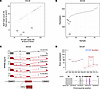 Figure 1
Aberrant splicing and altered expression of SGCB in cardiac tissue from patients with DCM. (A) Splicing rank plot showing aberrant splicing of SGCB. (B) Expression rank plot demonstrating decreased expression of SGCB. (C) Sashimi plots illustrating splicing patterns across exons 1–3 in samples carrying either the WT (WT/WT) or homozygous c.243+6T>A (Mut/Mut) SGCB allele, identified through DROP analysis. RPKM, reads per kilobase of transcript per million mapped reads. (D) Differential exon usage analysis using DEXSeq comparing WT/WT and Mut/Mut groups across all annotated SGCB exons (exons 1–6) and a pseudoexon located between exons 2 and 3. Each bar represents normalized exon-level read counts. The x axis represents exon analysis numbers assigned by DEXSeq, with canonical SGCB exon numbers annotated below to facilitate alignment with the annotated gene structure; corresponding chromosomal positions are also displayed below. Exon 2, which is significantly decreased expression in the Mut/Mut group, is highlighted in red. P4* denotes a patient harboring 2 heterozygous variants: c.243+6T>A and c.325C>T (p.Arg109*).
In the expression outlier analysis, we focused on genes with markedly reduced expression (fold change ≤ 0.5) and identified 299 candidate genes. Filtering for rare variants detected by WGS with potential regulatory effects, followed by exclusion of genes with low cardiac expression, resulted in a single candidate gene, SGCB (Figure 1B and Supplemental Figure 1). Notably, P4, the case exhibiting this aberrant expression of SGCB, was also identified as a splicing outlier (Figure 1A).
The c.243+6T>A splice-site variant causes exon 2 skipping in SGCB. All 4 cases (P1–P4) with splicing abnormalities in SGCB shared the common splicing event: exon 2 skipping (Figure 1C). WGS revealed the same splice-site variant (SGCB c.243+6T>A) in intron 2 in all 4 cases: P1–P3 were homozygous, and P4 was heterozygous. Sanger sequencing additionally confirmed the variant in these cases (Supplemental Figure 2). Importantly, P4, the case identified as both a splicing and expression outlier, also harbored a nonsense variant (c.325C>T, p.Arg109*; Supplemental Figure 2).
To quantitatively assess exon-level expression, we performed differential exon usage analysis using the Bioconductor package DEXSeq, a previously described method for detecting exon-specific expression changes from RNA-seq data (13). This analysis revealed that among exons 1–6 of SGCB, only exon 2 exhibited significantly reduced expression in homozygous c.243+6T>A (Mut/Mut) samples compared with WT (WT/WT) (Figure 1D), consistent with exon 2 skipping. PCR analysis using cDNA derived from cardiac tissue confirmed that the exon 2–retained transcript (i.e., the nonskipped transcript) showed a c.243+6T>A genotype–dependent stepwise decrease from WT/WT to WT/Mut and Mut/Mut, whereas the exon 2–skipped transcript showed a corresponding stepwise increase (Supplemental Figure 3). Notably, in the Mut/Mut samples, an aberrant transcript containing a cryptic exon was also detected (Supplemental Figure 3), which, unlike the in-frame exon 2 skipping, introduced a premature stop codon within the cryptic exon (Supplemental Figure 4). Digital PCR (dPCR) analysis further provided quantitative validation, demonstrating a progressive reduction of exon 2 expression across genotypes (Supplemental Figure 5). These results indicate that the c.243+6T>A variant induces exon 2 skipping in an allele dose–dependent manner.
The homozygous SGCB c.243+6T>A variant is significantly enriched in patients with DCM. To further assess the pathogenicity of the SGCB c.243+6T>A variant associated with exon 2 skipping, we compared its allele frequency and zygosity between the general population and DCM patient cohorts. The minor allele frequency (MAF) of this variant was 0.0003 in the general global population (gnomAD v4.1.0, all populations) and 0.009 in East Asian populations (gnomAD v4.1.0, East Asian), indicating a notable population-specific enrichment. We thus compared carrier frequencies between a population-matched general Japanese cohort (Tohoku Medical Megabank Organization [ToMMo], n = 54,212) and a Japanese DCM cohort (n = 936). To formally address potential confounding by subtle ancestry differences between cohorts, we assessed genome-wide population structure by principal component analysis (PCA); the DCM cohort and ToMMo largely overlapped in PCA space, and DCM cases homozygous for the SGCB variant did not form a distinct ancestry cluster (Supplemental Figure 6). We then evaluated enrichment using logistic regression with principal components as covariates (3 ToMMo controls were excluded due to missing genotypes for this variant). In this PC-adjusted analysis, the heterozygous carriers were observed in 569/54,209 ToMMo controls (1.05%) and 13/936 DCM cases (1.39%). This difference did not reach conventional statistical significance (OR, 1.83; 95% CI, 0.99–3.38; P = 0.053). In contrast, the homozygous carriers were observed in 3/54,209 ToMMo controls (0.006%) and 10/936 DCM cases (1.07%). This enrichment was highly significant (OR, 227.55; 95% CI, 41.43–1,249.71; P = 4.23 × 10⁻¹⁰). These findings suggest that the heterozygous state of the c.243+6T>A variant is consistent with an asymptomatic carrier status for an autosomal recessive condition, whereas the homozygous state is markedly enriched among patients with DCM, supporting its pathogenic role.
Genotype–phenotype concordance further supports the SGCB variant as a genetic cause of DCM. A clear correlation between genotype and phenotype is a crucial criterion for determining the pathogenicity of a genetic variant (14). Thus, we collected clinical and genetic information from 4 pedigrees harboring the SGCB variant (Figure 2). Families 1 and 4 represent probands identified via transcriptomic outlier analysis (P2 and P4 in Figure 1A; P4 also shown in Figure 1B), while families 2 and 3 were independently extracted from the DCM database. In families 1–3, the probands with DCM were homozygous for the SGCB c.243+6T>A variant. In families 1 and 2, no other family members exhibited an apparent cardiac phenotype, and each of them was either WT or heterozygous for the variant. In family 3, not only the proband but also his brother developed severe DCM, and the brother was found to carry the same homozygous SGCB variant. In contrast, their mother, who showed no cardiac symptoms, was heterozygous for the variant. In family 4, the proband with DCM harbored the 2 heterozygous SGCB variants shown in Supplemental Figure 2 (P4). Notably, the proband’s father (I:1), who carried the heterozygous c.243+6T>A variant, and mother (I:2), who carried the heterozygous c.325C>T variant, exhibited no cardiac manifestations. These findings confirmed that the proband from family 4 was compound heterozygous for the 2 variants.
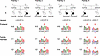 Figure 2
Pedigrees of 4 unrelated families carrying the SGCB c.243+6T>A variant. The proband in each family is indicated by a black arrow. Filled symbols, affected individuals; open symbols, unaffected; slashed open symbols, deceased unaffected individuals. Sanger sequencing chromatograms show the variant site marked with red arrows. wt, mut1, and mut2 indicate the WT allele at c.243+6, 243+6T>A, and c.325C>T, respectively. In family 4, the proband harbors compound heterozygous variants (mut1 and mut2).
We also evaluated other genetic causes of DCM to exclude the possibility that the disease was attributable to alternative pathogenic variants. We screened all 12 cases carrying biallelic pathogenic SGCB variants identified in the DCM cohort, comprising 11 homozygous for c.243+6T>A and 1 compound heterozygous for c.243+6T>A and c.325C>T (p.Arg109*), for known P/LP variants in 40 DCM-associated genes (Supplemental Table 1). No such variants were identified in 10 of the 12 cases. Among the remaining 2, 1 carried a likely pathogenic variant in TTN (c.33580+2T>C, NM_001267550.2); however, due to the lack of familial information, its contribution to the disease could not be definitively determined. Another case (family 3, II:5) carried a heterozygous DES variant (c.1210A>G, NM_001927.4), but his affected sibling (family 3, II:4), who shared the homozygous SGCB c.243+6T>A variant, did not carry the DES variant. This intrafamilial segregation pattern implicates the SGCB variant as the primary cause of DCM in family 3. To further exclude structural variants as an alternative genetic cause, copy number variant (CNV) analysis was performed in the 10 cases with WGS data available; no reportable CNVs affecting the DCM-associated genes were identified.
Exon 2 skipping of SGCB leads to loss of β-SG and destabilization of the sarcoglycan complex. SGCB encodes β-SG, a core component of the sarcoglycan complex. Given that the c.243+6T>A variant induces exon 2 skipping at the mRNA level, we sought to determine how this splicing alteration affects the expression and membrane localization of β-SG and other components of the sarcoglycan complex in patient cardiac tissue. β-SG is a single-pass transmembrane protein (15). In silico topology prediction indicated that the exon 2–skipped isoform lacks most of the predicted transmembrane segment, suggesting a marked disruption of the membrane-spanning region (Supplemental Figure 7). To test this, we performed Western blot analysis using an antibody capable of detecting the exon 2–skipped isoform. Although exon 2–skipped mRNA was readily detectable in patient samples (Supplemental Figure 3), the corresponding skipped β-SG protein isoform (~25 kDa) was undetectable (Figure 3B). This suggests that the exon-skipped protein is unstable and subject to rapid degradation. To further evaluate the stability of this isoform, we overexpressed it in cultured cells (Supplemental Figure 8, A and B). Although the skipped β-SG isoform was detectable, it appeared faint and smeared, indicating an increased susceptibility to proteolytic degradation.
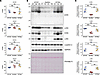 Figure 3
Gene and protein expression of sarcoglycan subunits in cardiac tissue. (A) RNA-seq–based expression levels of SGCB, SGCA, SGCD, and SGCG in cardiac tissue samples from individuals carrying the WT (WT/WT, n = 3), homozygous c.243+6T>A (Mut/Mut), or heterozygous c.243+6T>A (WT/Mut, n = 3) allele of SGCB. For SGCB, the Mut/Mut group includes 3 samples, excluding the compound heterozygous sample (P4), which was identified as an expression outlier in Figure 1B. For SGCA, SGCD, and SGCG, the Mut/Mut group includes 4 samples, including P4. Expression values, presented as fragments per kilobase of transcript per million mapped reads (FPKM), are shown as mean ± SD. (B) Representative Western blot analysis of β-SG, α-SG, δ-SG, and γ-SG in cardiac tissue samples from the same groups (WT/WT, n = 3; Mut/Mut, n = 4; WT/Mut, n = 2). α-Actinin 2, GAPDH, and Ponceau S staining were used as loading controls. P4* indicates a compound heterozygous sample harboring the c.243+6T>A and c.325C>T variants. (C) Quantification of Western blot band intensities shown in B, performed using ImageJ. Data are presented as the mean ± SD. *P < 0.05; **P < 0.01; ***P < 0.001. P values were calculated using 1-way ANOVA followed by the Tukey-Kramer test for pairwise comparisons.
In addition to the absence of the skipped isoform, full-length β-SG was markedly reduced in Mut/Mut samples compared with WT/WT and WT/Mut samples (Figure 3, B and C), indicating an overall loss-of-function effect of the variant. To determine whether this reduction affects other components of the sarcoglycan complex, we examined the expression of α-, γ-, and δ-SG in the same samples (Figure 3, B and C). All showed decreased expression, with α-SG showing a relatively modest reduction. Notably, the β-SG antibody did not cross-react with other sarcoglycan subunits (Supplemental Figure 8C). Because mRNA expression levels of each subunit were preserved in Mut/Mut samples (Figure 3A), the reduction in protein levels likely reflects posttranscriptional instability of the complex rather than transcriptional downregulation.
Consistent with these results, immunohistochemical analysis revealed markedly reduced membrane localization of β-SG and other sarcoglycan subunits in Mut/Mut samples (Figure 4), although the reduction in α-SG signal was relatively mild in line with the Western blot analysis. Notably, despite the overall reduction, partial membrane localization of β-SG was retained, colocalizing with γ-SG, representative of other subunits (Supplemental Figure 9). Collectively, these results indicate that exon 2 skipping of SGCB markedly reduces membrane localization of β-SG and compromises the overall stability of the sarcoglycan complex.
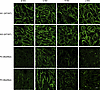 Figure 4
Immunohistochemical analysis of sarcoglycan subunits in cardiac tissue. Cardiac sections from samples carrying the WT (WT/WT) or homozygous c.243+6T>A (Mut/Mut) allele of SGCB were stained with antibodies against β-SG, α-SG, δ-SG, and γ-SG. Representative images from 2 WT/WT and 2 Mut/Mut samples are shown. Images were acquired at ×1,000 magnification. Scale bar: 20 μm.
Muscle strength, serum creatine kinase levels, and skeletal muscle imaging reveal no evidence of myopathy in patients with the c.243+6T>A variant. To our knowledge, all the variants of SGCB have been reported to be associated with clinical symptoms of LGMD, typically characterized by progressive muscle weakness — particularly in proximal muscle groups such as the thigh or upper arm — and marked elevation of creatine kinase (CK) levels (16). We thus compared muscle strength between patients homozygous for the SGCB c.243+6T>A variant and those heterozygous for the TNNT2 c.407G>A variant (NM_001276345), which is theoretically not associated with muscle symptoms due to its cardiac-specific expression. The 2 groups showed no significant differences in age (SGCB, 42 ± 7.1 years vs. TNNT2, 45.3 ± 11.9 years, P = 0.65) or left ventricular ejection fraction (LVEF; SGCB, 21.4 ± 5.7% vs. TNNT2, 22.0 ± 3.4%, P = 0.85). Under these conditions, no significant differences in grip strength or knee extension strength, both adjusted for BMI, were observed between the groups (Figure 5, A and B, and Supplemental Table 2). In addition, serum CK levels were comparable between the groups (Figure 5C and Supplemental Table 2), and CK levels for all 12 patients carrying the c.243+6T>A variant were within the normal range (Supplemental Table 3).
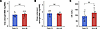 Figure 5
Muscle strength and serum CK levels in patients with SGCB and TNNT2 variants. (A) Muscle strength assessed by grip strength/BMI and (B) knee extension strength/BMI showed no significant differences between the 2 groups. (C) Serum CK levels between the groups; the normal reference range is 54–286 U/L. TNNT2 and SGCB refer to patients with the c.407G>A variant in TNNT2 (n = 4) and the c.243+6T>A variant in SGCB (n = 5), respectively. Data are presented as the mean ± SD. P values were calculated using a 2-tailed Welch’s t test.
To further evaluate skeletal muscle involvement at the tissue level, we performed native T1 mapping using cardiac MRI, a quantitative technique in which elevated T1 values reflect tissue pathology such as fibrosis or fatty infiltration (17). We analyzed T1 values of skeletal muscles (serratus anterior and pectoralis major) incidentally captured during routine cardiac MRI in patients with DCM carrying the homozygous SGCB c.243+6T>A variant and age- and sex-matched healthy male patients acting as controls. While myocardial native T1 values were significantly higher in DCM patients than in controls (P = 0.011), skeletal muscle T1 values showed no significant difference between the 2 groups for either the serratus anterior (P = 0.759) or the pectoralis major (P = 0.179) (Supplemental Figure 10 and Supplemental Table 4). The absence of muscle weakness and normal skeletal muscle T1 values in the SGCB group strongly supports the association of the homozygous c.243+6T>A variant with isolated DCM, without skeletal muscle involvement.
Human-induced pluripotent stem cell–derived skeletal myocytes show reduced β-SG with relative preservation of the sarcoglycan complex. To investigate the impact of the c.243+6T>A variant on the sarcoglycan complex in skeletal muscle, we generated human-induced pluripotent stem cells (hiPSCs) from a homozygous patient (Mut/Mut) (Supplemental Figure 11) and differentiated them, along with a control line (253G1; WT/WT), into skeletal myocytes (Supplemental Figure 12). All 4 sarcoglycan genes were upregulated upon differentiation (Figure 6A). Among differentiated skeletal myocytes, expression levels of SGCA, SGCD, and SGCG were comparable between WT/WT and Mut/Mut, whereas SGCB expression measured with an exon 5–6 qPCR assay was slightly but significantly elevated in Mut/Mut cells (Figure 6A).
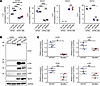 Figure 6
Sarcoglycan subunit expression in hiPSC–derived skeletal myocytes. (A) qPCR analysis of hiPSCs and hiPSC-derived skeletal myocytes (hiPSC-SMs) from a control line (253G1; WT/WT) and a patient carrying the homozygous SGCB c.243+6T>A variant (Mut/Mut) (n = 3 independent experiments). Expression levels are presented as ΔCt values normalized to GAPDH; lower ΔCt values indicate higher expression. #, Only 2 samples were analyzed because 1 sample was undetermined. (B) Representative Western blot analysis of β-SG, α-SG, δ-SG, and γ-SG in hiPSCs and hiPSC-SMs from WT/WT and Mut/Mut lines. Myosin heavy chain (MyHC) was used as a differentiation marker, and GAPDH was used as a loading control. (C) Quantification of Western blot band intensities of hiPSC-SMs shown in B, performed using ImageJ (n = 3 independent experiments). Data are presented as the mean ± SD. *P < 0.05; ***P < 0.001. P values were calculated using 1-way ANOVA followed by the Tukey–Kramer test for pairwise comparisons in A and using a 2-tailed Welch’s t test in C.
PCR analysis confirmed that SGCB exon 2 skipping occurred in Mut/Mut cells both in the undifferentiated hiPSC state and after skeletal myocyte differentiation, and exon 2–containing SGCB transcripts were markedly decreased in Mut/Mut compared with WT/WT (Supplemental Figure 13, A and B). Furthermore, RT-PCR spanning the full SGCB coding region detected no transcript isoforms beyond the exon 2–skipped product in Mut/Mut cells, indicating the absence of compensatory splicing events (Supplemental Figure 13C).
Western blot analysis revealed that β-SG protein was markedly reduced in Mut/Mut skeletal myocytes (Figure 6, B and C). In contrast, α-, γ-, and δ-SG showed a trend toward reduction but did not reach statistical significance (Figure 6, B and C). This pattern differed from that observed in patient cardiac tissue, where all sarcoglycan subunits were significantly reduced (Figure 3, B and C), suggesting that the downstream impact of reduced β-SG expression on the remaining complex components may be less severe in skeletal muscle.
The homozygous SGCB c.243+6T>A variant is associated with poor prognosis in DCM. Genetic background is known to influence clinical outcome in DCM (3, 18). To investigate the clinical impact of the SGCB c.243+6T>A variant, we compared the 12 patients carrying biallelic pathogenic SGCB variants (11 homozygous and 1 compound heterozygous) with 50 variant-negative (V–) DCM patients, defined as those lacking pathogenic variants in any of the 40 known DCM-associated genes (see Methods), and with 105 DCM patients carrying pathogenic TTN truncating variants, selected as the comparator group because they represent the most common genetic cause of DCM (19). The SGCB group tended to be diagnosed at a slightly younger age (41 years [IQR 32–48]) than the V– group (49 years [IQR 45–55]) and the TTN group (46 years [IQR 35–58]) (Table 1 and Supplemental Table 5). While no significant difference was observed in LVEF between the groups, the left ventricular end-diastolic diameter was significantly greater in the SGCB group (72 mm [IQR 66–80]) than in the V– group (65 mm [IQR 61–71], P = 0.007), and the TTN group (66 mm [IQR 62–72], P = 0.016) (Table 1 and Supplemental Table 5). In contrast, no significant differences were observed between the groups in sex distribution, family history of cardiomyopathy, or the use of major heart failure medications (Table 1).
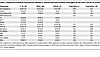 Table 1
Comparison of baseline characteristics between V– patients with DCM and those homozygous for the SGCB c.243+6T>A variant
Kaplan-Meier analysis using age as the timescale revealed a significantly earlier onset of the composite endpoint — VAD implantation, HTx, or cardiovascular death — in the SGCB group compared with the V– group (Figure 7; HR, 2.90; 95% CI, 1.07–7.88; P = 0.036). The SGCB group also showed a trend toward earlier adverse events compared with the TTN group (HR, 1.47; 95% CI, 0.62–3.49; P = 0.383), although this comparison did not reach statistical significance, likely owing to the limited sample size of the SGCB group. These findings suggest that the presence of the SGCB variant is associated with an increased risk of early adverse outcomes.
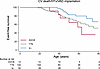 Figure 7
Event-free survival in patients with DCM harboring biallelic pathogenic SGCB variants, without known pathogenic variants or with TTN variants. Patients with DCM were divided into 3 groups: the SGCB group (n = 12), consisting of patients with biallelic pathogenic SGCB variants (11 homozygous for c.243+6T>A and 1 compound heterozygous); the variant-negative (V–) group (n = 50), consisting of patients without pathogenic variants in any of the 40 known DCM-associated genes; and the TTN group (n = 105), consisting of patients with TTN variants classified as P/LP according to ACMG criteria. Kaplan-Meier curves illustrate survival free of the composite endpoint — cardiovascular (CV) death, HTx, or VAD implantation — using age as the timescale. P values were calculated using a univariable Cox proportional hazard model. The number of patients at risk is shown below the Kaplan-Meier curves.
Collectively, these findings indicate that the homozygous SGCB c.243+6T>A variant defines a high-risk subset of patients with DCM, characterized by an enlarged left ventricle and increased risk of adverse clinical outcomes.


Copyright © 2026 American Society for Clinical Investigation
ISSN: 0021-9738 (print), 1558-8238 (online)