
Advertisement
Research ArticleImmunologyOncology
Open Access |  10.1172/JCI197592
Proanthocyanidins enhance antitumor immunity by promoting ubiquitin-proteasomal PD-L1 degradation via stabilization of LKB1 and SYVN1
Mengting Xu,1,2 Xuwen Lin,3 Hanchi Xu,2 Hongmei Hu,1,2 Xinying Xue,3 Qing Zhang,2 Dianping Yu,2 Saisai Tian,4 Mei Xie,3 Linyang Li,2 Xiaoyu Tao,2 Xinru Li,2 Simeng Li,2 Shize Xie,4 Yating Tian,4 Xia Liu,4 Hanchen Xu,1 Qun Wang,2 Weidong Zhang,4,5 and Sanhong Liu1,2
1Institute of Digestive Diseases, Longhua Hospital, Shanghai University of Traditional Chinese Medicine, Shanghai, China.
2State Key Laboratory of Discovery and Utilization of Functional Components in Traditional Chinese Medicine, Shanghai Frontiers Science Center of TCM Chemical Biology, Institute of Interdisciplinary Integrative Medicine Research, Shanghai University of Traditional Chinese Medicine, Shanghai, China.
3Department of Respiratory and Critical Care, Xuanwu Hospital, Capital Medical University, Beijing, China.
4School of Pharmacy, Second Military Medical University, Shanghai, China.
5Institute of Medicinal Plant Development, Chinese Academy of Medical Sciences and Peking Union Medical College, Beijing, China.
Address correspondence to: Sanhong Liu or Qun Wang, Institute of Interdisciplinary Integrative Medicine Research, Shanghai University of Traditional Chinese Medicine, 1200 Cailun Road, Shanghai, 201203, China. Email: liush@shutcm.edu.cn (SL); qunwang0523@163.com (QW). Or to: Weidong Zhang or Xia Liu, School of Pharmacy, Second Military Medical University, 325 Guohe Road, Shanghai, 200433, China. Email: wdzhangy@hotmail.com (WZ); lxflying@aliyun.com (XL). Or to: Hanchen Xu, Institute of Digestive Diseases, Longhua Hospital, Shanghai University of Traditional Chinese Medicine, Shanghai, 200032, China. Email: hanson0702@126.com.
Find articles by Xu, M. in: PubMed | Google Scholar
1Institute of Digestive Diseases, Longhua Hospital, Shanghai University of Traditional Chinese Medicine, Shanghai, China.
2State Key Laboratory of Discovery and Utilization of Functional Components in Traditional Chinese Medicine, Shanghai Frontiers Science Center of TCM Chemical Biology, Institute of Interdisciplinary Integrative Medicine Research, Shanghai University of Traditional Chinese Medicine, Shanghai, China.
3Department of Respiratory and Critical Care, Xuanwu Hospital, Capital Medical University, Beijing, China.
4School of Pharmacy, Second Military Medical University, Shanghai, China.
5Institute of Medicinal Plant Development, Chinese Academy of Medical Sciences and Peking Union Medical College, Beijing, China.
Address correspondence to: Sanhong Liu or Qun Wang, Institute of Interdisciplinary Integrative Medicine Research, Shanghai University of Traditional Chinese Medicine, 1200 Cailun Road, Shanghai, 201203, China. Email: liush@shutcm.edu.cn (SL); qunwang0523@163.com (QW). Or to: Weidong Zhang or Xia Liu, School of Pharmacy, Second Military Medical University, 325 Guohe Road, Shanghai, 200433, China. Email: wdzhangy@hotmail.com (WZ); lxflying@aliyun.com (XL). Or to: Hanchen Xu, Institute of Digestive Diseases, Longhua Hospital, Shanghai University of Traditional Chinese Medicine, Shanghai, 200032, China. Email: hanson0702@126.com.
Find articles by Lin, X. in: PubMed | Google Scholar
1Institute of Digestive Diseases, Longhua Hospital, Shanghai University of Traditional Chinese Medicine, Shanghai, China.
2State Key Laboratory of Discovery and Utilization of Functional Components in Traditional Chinese Medicine, Shanghai Frontiers Science Center of TCM Chemical Biology, Institute of Interdisciplinary Integrative Medicine Research, Shanghai University of Traditional Chinese Medicine, Shanghai, China.
3Department of Respiratory and Critical Care, Xuanwu Hospital, Capital Medical University, Beijing, China.
4School of Pharmacy, Second Military Medical University, Shanghai, China.
5Institute of Medicinal Plant Development, Chinese Academy of Medical Sciences and Peking Union Medical College, Beijing, China.
Address correspondence to: Sanhong Liu or Qun Wang, Institute of Interdisciplinary Integrative Medicine Research, Shanghai University of Traditional Chinese Medicine, 1200 Cailun Road, Shanghai, 201203, China. Email: liush@shutcm.edu.cn (SL); qunwang0523@163.com (QW). Or to: Weidong Zhang or Xia Liu, School of Pharmacy, Second Military Medical University, 325 Guohe Road, Shanghai, 200433, China. Email: wdzhangy@hotmail.com (WZ); lxflying@aliyun.com (XL). Or to: Hanchen Xu, Institute of Digestive Diseases, Longhua Hospital, Shanghai University of Traditional Chinese Medicine, Shanghai, 200032, China. Email: hanson0702@126.com.
Find articles by Xu, H. in: PubMed | Google Scholar
1Institute of Digestive Diseases, Longhua Hospital, Shanghai University of Traditional Chinese Medicine, Shanghai, China.
2State Key Laboratory of Discovery and Utilization of Functional Components in Traditional Chinese Medicine, Shanghai Frontiers Science Center of TCM Chemical Biology, Institute of Interdisciplinary Integrative Medicine Research, Shanghai University of Traditional Chinese Medicine, Shanghai, China.
3Department of Respiratory and Critical Care, Xuanwu Hospital, Capital Medical University, Beijing, China.
4School of Pharmacy, Second Military Medical University, Shanghai, China.
5Institute of Medicinal Plant Development, Chinese Academy of Medical Sciences and Peking Union Medical College, Beijing, China.
Address correspondence to: Sanhong Liu or Qun Wang, Institute of Interdisciplinary Integrative Medicine Research, Shanghai University of Traditional Chinese Medicine, 1200 Cailun Road, Shanghai, 201203, China. Email: liush@shutcm.edu.cn (SL); qunwang0523@163.com (QW). Or to: Weidong Zhang or Xia Liu, School of Pharmacy, Second Military Medical University, 325 Guohe Road, Shanghai, 200433, China. Email: wdzhangy@hotmail.com (WZ); lxflying@aliyun.com (XL). Or to: Hanchen Xu, Institute of Digestive Diseases, Longhua Hospital, Shanghai University of Traditional Chinese Medicine, Shanghai, 200032, China. Email: hanson0702@126.com.
Find articles by Hu, H. in: PubMed | Google Scholar
1Institute of Digestive Diseases, Longhua Hospital, Shanghai University of Traditional Chinese Medicine, Shanghai, China.
2State Key Laboratory of Discovery and Utilization of Functional Components in Traditional Chinese Medicine, Shanghai Frontiers Science Center of TCM Chemical Biology, Institute of Interdisciplinary Integrative Medicine Research, Shanghai University of Traditional Chinese Medicine, Shanghai, China.
3Department of Respiratory and Critical Care, Xuanwu Hospital, Capital Medical University, Beijing, China.
4School of Pharmacy, Second Military Medical University, Shanghai, China.
5Institute of Medicinal Plant Development, Chinese Academy of Medical Sciences and Peking Union Medical College, Beijing, China.
Address correspondence to: Sanhong Liu or Qun Wang, Institute of Interdisciplinary Integrative Medicine Research, Shanghai University of Traditional Chinese Medicine, 1200 Cailun Road, Shanghai, 201203, China. Email: liush@shutcm.edu.cn (SL); qunwang0523@163.com (QW). Or to: Weidong Zhang or Xia Liu, School of Pharmacy, Second Military Medical University, 325 Guohe Road, Shanghai, 200433, China. Email: wdzhangy@hotmail.com (WZ); lxflying@aliyun.com (XL). Or to: Hanchen Xu, Institute of Digestive Diseases, Longhua Hospital, Shanghai University of Traditional Chinese Medicine, Shanghai, 200032, China. Email: hanson0702@126.com.
Find articles by Xue, X. in: PubMed | Google Scholar
1Institute of Digestive Diseases, Longhua Hospital, Shanghai University of Traditional Chinese Medicine, Shanghai, China.
2State Key Laboratory of Discovery and Utilization of Functional Components in Traditional Chinese Medicine, Shanghai Frontiers Science Center of TCM Chemical Biology, Institute of Interdisciplinary Integrative Medicine Research, Shanghai University of Traditional Chinese Medicine, Shanghai, China.
3Department of Respiratory and Critical Care, Xuanwu Hospital, Capital Medical University, Beijing, China.
4School of Pharmacy, Second Military Medical University, Shanghai, China.
5Institute of Medicinal Plant Development, Chinese Academy of Medical Sciences and Peking Union Medical College, Beijing, China.
Address correspondence to: Sanhong Liu or Qun Wang, Institute of Interdisciplinary Integrative Medicine Research, Shanghai University of Traditional Chinese Medicine, 1200 Cailun Road, Shanghai, 201203, China. Email: liush@shutcm.edu.cn (SL); qunwang0523@163.com (QW). Or to: Weidong Zhang or Xia Liu, School of Pharmacy, Second Military Medical University, 325 Guohe Road, Shanghai, 200433, China. Email: wdzhangy@hotmail.com (WZ); lxflying@aliyun.com (XL). Or to: Hanchen Xu, Institute of Digestive Diseases, Longhua Hospital, Shanghai University of Traditional Chinese Medicine, Shanghai, 200032, China. Email: hanson0702@126.com.
Find articles by Zhang, Q. in: PubMed | Google Scholar
1Institute of Digestive Diseases, Longhua Hospital, Shanghai University of Traditional Chinese Medicine, Shanghai, China.
2State Key Laboratory of Discovery and Utilization of Functional Components in Traditional Chinese Medicine, Shanghai Frontiers Science Center of TCM Chemical Biology, Institute of Interdisciplinary Integrative Medicine Research, Shanghai University of Traditional Chinese Medicine, Shanghai, China.
3Department of Respiratory and Critical Care, Xuanwu Hospital, Capital Medical University, Beijing, China.
4School of Pharmacy, Second Military Medical University, Shanghai, China.
5Institute of Medicinal Plant Development, Chinese Academy of Medical Sciences and Peking Union Medical College, Beijing, China.
Address correspondence to: Sanhong Liu or Qun Wang, Institute of Interdisciplinary Integrative Medicine Research, Shanghai University of Traditional Chinese Medicine, 1200 Cailun Road, Shanghai, 201203, China. Email: liush@shutcm.edu.cn (SL); qunwang0523@163.com (QW). Or to: Weidong Zhang or Xia Liu, School of Pharmacy, Second Military Medical University, 325 Guohe Road, Shanghai, 200433, China. Email: wdzhangy@hotmail.com (WZ); lxflying@aliyun.com (XL). Or to: Hanchen Xu, Institute of Digestive Diseases, Longhua Hospital, Shanghai University of Traditional Chinese Medicine, Shanghai, 200032, China. Email: hanson0702@126.com.
Find articles by Yu, D. in: PubMed | Google Scholar
1Institute of Digestive Diseases, Longhua Hospital, Shanghai University of Traditional Chinese Medicine, Shanghai, China.
2State Key Laboratory of Discovery and Utilization of Functional Components in Traditional Chinese Medicine, Shanghai Frontiers Science Center of TCM Chemical Biology, Institute of Interdisciplinary Integrative Medicine Research, Shanghai University of Traditional Chinese Medicine, Shanghai, China.
3Department of Respiratory and Critical Care, Xuanwu Hospital, Capital Medical University, Beijing, China.
4School of Pharmacy, Second Military Medical University, Shanghai, China.
5Institute of Medicinal Plant Development, Chinese Academy of Medical Sciences and Peking Union Medical College, Beijing, China.
Address correspondence to: Sanhong Liu or Qun Wang, Institute of Interdisciplinary Integrative Medicine Research, Shanghai University of Traditional Chinese Medicine, 1200 Cailun Road, Shanghai, 201203, China. Email: liush@shutcm.edu.cn (SL); qunwang0523@163.com (QW). Or to: Weidong Zhang or Xia Liu, School of Pharmacy, Second Military Medical University, 325 Guohe Road, Shanghai, 200433, China. Email: wdzhangy@hotmail.com (WZ); lxflying@aliyun.com (XL). Or to: Hanchen Xu, Institute of Digestive Diseases, Longhua Hospital, Shanghai University of Traditional Chinese Medicine, Shanghai, 200032, China. Email: hanson0702@126.com.
Find articles by Tian, S. in: PubMed | Google Scholar
1Institute of Digestive Diseases, Longhua Hospital, Shanghai University of Traditional Chinese Medicine, Shanghai, China.
2State Key Laboratory of Discovery and Utilization of Functional Components in Traditional Chinese Medicine, Shanghai Frontiers Science Center of TCM Chemical Biology, Institute of Interdisciplinary Integrative Medicine Research, Shanghai University of Traditional Chinese Medicine, Shanghai, China.
3Department of Respiratory and Critical Care, Xuanwu Hospital, Capital Medical University, Beijing, China.
4School of Pharmacy, Second Military Medical University, Shanghai, China.
5Institute of Medicinal Plant Development, Chinese Academy of Medical Sciences and Peking Union Medical College, Beijing, China.
Address correspondence to: Sanhong Liu or Qun Wang, Institute of Interdisciplinary Integrative Medicine Research, Shanghai University of Traditional Chinese Medicine, 1200 Cailun Road, Shanghai, 201203, China. Email: liush@shutcm.edu.cn (SL); qunwang0523@163.com (QW). Or to: Weidong Zhang or Xia Liu, School of Pharmacy, Second Military Medical University, 325 Guohe Road, Shanghai, 200433, China. Email: wdzhangy@hotmail.com (WZ); lxflying@aliyun.com (XL). Or to: Hanchen Xu, Institute of Digestive Diseases, Longhua Hospital, Shanghai University of Traditional Chinese Medicine, Shanghai, 200032, China. Email: hanson0702@126.com.
Find articles by Xie, M. in: PubMed | Google Scholar
1Institute of Digestive Diseases, Longhua Hospital, Shanghai University of Traditional Chinese Medicine, Shanghai, China.
2State Key Laboratory of Discovery and Utilization of Functional Components in Traditional Chinese Medicine, Shanghai Frontiers Science Center of TCM Chemical Biology, Institute of Interdisciplinary Integrative Medicine Research, Shanghai University of Traditional Chinese Medicine, Shanghai, China.
3Department of Respiratory and Critical Care, Xuanwu Hospital, Capital Medical University, Beijing, China.
4School of Pharmacy, Second Military Medical University, Shanghai, China.
5Institute of Medicinal Plant Development, Chinese Academy of Medical Sciences and Peking Union Medical College, Beijing, China.
Address correspondence to: Sanhong Liu or Qun Wang, Institute of Interdisciplinary Integrative Medicine Research, Shanghai University of Traditional Chinese Medicine, 1200 Cailun Road, Shanghai, 201203, China. Email: liush@shutcm.edu.cn (SL); qunwang0523@163.com (QW). Or to: Weidong Zhang or Xia Liu, School of Pharmacy, Second Military Medical University, 325 Guohe Road, Shanghai, 200433, China. Email: wdzhangy@hotmail.com (WZ); lxflying@aliyun.com (XL). Or to: Hanchen Xu, Institute of Digestive Diseases, Longhua Hospital, Shanghai University of Traditional Chinese Medicine, Shanghai, 200032, China. Email: hanson0702@126.com.
Find articles by Li, L. in: PubMed | Google Scholar
1Institute of Digestive Diseases, Longhua Hospital, Shanghai University of Traditional Chinese Medicine, Shanghai, China.
2State Key Laboratory of Discovery and Utilization of Functional Components in Traditional Chinese Medicine, Shanghai Frontiers Science Center of TCM Chemical Biology, Institute of Interdisciplinary Integrative Medicine Research, Shanghai University of Traditional Chinese Medicine, Shanghai, China.
3Department of Respiratory and Critical Care, Xuanwu Hospital, Capital Medical University, Beijing, China.
4School of Pharmacy, Second Military Medical University, Shanghai, China.
5Institute of Medicinal Plant Development, Chinese Academy of Medical Sciences and Peking Union Medical College, Beijing, China.
Address correspondence to: Sanhong Liu or Qun Wang, Institute of Interdisciplinary Integrative Medicine Research, Shanghai University of Traditional Chinese Medicine, 1200 Cailun Road, Shanghai, 201203, China. Email: liush@shutcm.edu.cn (SL); qunwang0523@163.com (QW). Or to: Weidong Zhang or Xia Liu, School of Pharmacy, Second Military Medical University, 325 Guohe Road, Shanghai, 200433, China. Email: wdzhangy@hotmail.com (WZ); lxflying@aliyun.com (XL). Or to: Hanchen Xu, Institute of Digestive Diseases, Longhua Hospital, Shanghai University of Traditional Chinese Medicine, Shanghai, 200032, China. Email: hanson0702@126.com.
Find articles by Tao, X. in: PubMed | Google Scholar
1Institute of Digestive Diseases, Longhua Hospital, Shanghai University of Traditional Chinese Medicine, Shanghai, China.
2State Key Laboratory of Discovery and Utilization of Functional Components in Traditional Chinese Medicine, Shanghai Frontiers Science Center of TCM Chemical Biology, Institute of Interdisciplinary Integrative Medicine Research, Shanghai University of Traditional Chinese Medicine, Shanghai, China.
3Department of Respiratory and Critical Care, Xuanwu Hospital, Capital Medical University, Beijing, China.
4School of Pharmacy, Second Military Medical University, Shanghai, China.
5Institute of Medicinal Plant Development, Chinese Academy of Medical Sciences and Peking Union Medical College, Beijing, China.
Address correspondence to: Sanhong Liu or Qun Wang, Institute of Interdisciplinary Integrative Medicine Research, Shanghai University of Traditional Chinese Medicine, 1200 Cailun Road, Shanghai, 201203, China. Email: liush@shutcm.edu.cn (SL); qunwang0523@163.com (QW). Or to: Weidong Zhang or Xia Liu, School of Pharmacy, Second Military Medical University, 325 Guohe Road, Shanghai, 200433, China. Email: wdzhangy@hotmail.com (WZ); lxflying@aliyun.com (XL). Or to: Hanchen Xu, Institute of Digestive Diseases, Longhua Hospital, Shanghai University of Traditional Chinese Medicine, Shanghai, 200032, China. Email: hanson0702@126.com.
Find articles by Li, X. in: PubMed | Google Scholar
1Institute of Digestive Diseases, Longhua Hospital, Shanghai University of Traditional Chinese Medicine, Shanghai, China.
2State Key Laboratory of Discovery and Utilization of Functional Components in Traditional Chinese Medicine, Shanghai Frontiers Science Center of TCM Chemical Biology, Institute of Interdisciplinary Integrative Medicine Research, Shanghai University of Traditional Chinese Medicine, Shanghai, China.
3Department of Respiratory and Critical Care, Xuanwu Hospital, Capital Medical University, Beijing, China.
4School of Pharmacy, Second Military Medical University, Shanghai, China.
5Institute of Medicinal Plant Development, Chinese Academy of Medical Sciences and Peking Union Medical College, Beijing, China.
Address correspondence to: Sanhong Liu or Qun Wang, Institute of Interdisciplinary Integrative Medicine Research, Shanghai University of Traditional Chinese Medicine, 1200 Cailun Road, Shanghai, 201203, China. Email: liush@shutcm.edu.cn (SL); qunwang0523@163.com (QW). Or to: Weidong Zhang or Xia Liu, School of Pharmacy, Second Military Medical University, 325 Guohe Road, Shanghai, 200433, China. Email: wdzhangy@hotmail.com (WZ); lxflying@aliyun.com (XL). Or to: Hanchen Xu, Institute of Digestive Diseases, Longhua Hospital, Shanghai University of Traditional Chinese Medicine, Shanghai, 200032, China. Email: hanson0702@126.com.
Find articles by Li, S. in: PubMed | Google Scholar
1Institute of Digestive Diseases, Longhua Hospital, Shanghai University of Traditional Chinese Medicine, Shanghai, China.
2State Key Laboratory of Discovery and Utilization of Functional Components in Traditional Chinese Medicine, Shanghai Frontiers Science Center of TCM Chemical Biology, Institute of Interdisciplinary Integrative Medicine Research, Shanghai University of Traditional Chinese Medicine, Shanghai, China.
3Department of Respiratory and Critical Care, Xuanwu Hospital, Capital Medical University, Beijing, China.
4School of Pharmacy, Second Military Medical University, Shanghai, China.
5Institute of Medicinal Plant Development, Chinese Academy of Medical Sciences and Peking Union Medical College, Beijing, China.
Address correspondence to: Sanhong Liu or Qun Wang, Institute of Interdisciplinary Integrative Medicine Research, Shanghai University of Traditional Chinese Medicine, 1200 Cailun Road, Shanghai, 201203, China. Email: liush@shutcm.edu.cn (SL); qunwang0523@163.com (QW). Or to: Weidong Zhang or Xia Liu, School of Pharmacy, Second Military Medical University, 325 Guohe Road, Shanghai, 200433, China. Email: wdzhangy@hotmail.com (WZ); lxflying@aliyun.com (XL). Or to: Hanchen Xu, Institute of Digestive Diseases, Longhua Hospital, Shanghai University of Traditional Chinese Medicine, Shanghai, 200032, China. Email: hanson0702@126.com.
Find articles by Xie, S. in: PubMed | Google Scholar
1Institute of Digestive Diseases, Longhua Hospital, Shanghai University of Traditional Chinese Medicine, Shanghai, China.
2State Key Laboratory of Discovery and Utilization of Functional Components in Traditional Chinese Medicine, Shanghai Frontiers Science Center of TCM Chemical Biology, Institute of Interdisciplinary Integrative Medicine Research, Shanghai University of Traditional Chinese Medicine, Shanghai, China.
3Department of Respiratory and Critical Care, Xuanwu Hospital, Capital Medical University, Beijing, China.
4School of Pharmacy, Second Military Medical University, Shanghai, China.
5Institute of Medicinal Plant Development, Chinese Academy of Medical Sciences and Peking Union Medical College, Beijing, China.
Address correspondence to: Sanhong Liu or Qun Wang, Institute of Interdisciplinary Integrative Medicine Research, Shanghai University of Traditional Chinese Medicine, 1200 Cailun Road, Shanghai, 201203, China. Email: liush@shutcm.edu.cn (SL); qunwang0523@163.com (QW). Or to: Weidong Zhang or Xia Liu, School of Pharmacy, Second Military Medical University, 325 Guohe Road, Shanghai, 200433, China. Email: wdzhangy@hotmail.com (WZ); lxflying@aliyun.com (XL). Or to: Hanchen Xu, Institute of Digestive Diseases, Longhua Hospital, Shanghai University of Traditional Chinese Medicine, Shanghai, 200032, China. Email: hanson0702@126.com.
Find articles by Tian, Y. in: PubMed | Google Scholar
1Institute of Digestive Diseases, Longhua Hospital, Shanghai University of Traditional Chinese Medicine, Shanghai, China.
2State Key Laboratory of Discovery and Utilization of Functional Components in Traditional Chinese Medicine, Shanghai Frontiers Science Center of TCM Chemical Biology, Institute of Interdisciplinary Integrative Medicine Research, Shanghai University of Traditional Chinese Medicine, Shanghai, China.
3Department of Respiratory and Critical Care, Xuanwu Hospital, Capital Medical University, Beijing, China.
4School of Pharmacy, Second Military Medical University, Shanghai, China.
5Institute of Medicinal Plant Development, Chinese Academy of Medical Sciences and Peking Union Medical College, Beijing, China.
Address correspondence to: Sanhong Liu or Qun Wang, Institute of Interdisciplinary Integrative Medicine Research, Shanghai University of Traditional Chinese Medicine, 1200 Cailun Road, Shanghai, 201203, China. Email: liush@shutcm.edu.cn (SL); qunwang0523@163.com (QW). Or to: Weidong Zhang or Xia Liu, School of Pharmacy, Second Military Medical University, 325 Guohe Road, Shanghai, 200433, China. Email: wdzhangy@hotmail.com (WZ); lxflying@aliyun.com (XL). Or to: Hanchen Xu, Institute of Digestive Diseases, Longhua Hospital, Shanghai University of Traditional Chinese Medicine, Shanghai, 200032, China. Email: hanson0702@126.com.
Find articles by Liu, X. in: PubMed | Google Scholar
1Institute of Digestive Diseases, Longhua Hospital, Shanghai University of Traditional Chinese Medicine, Shanghai, China.
2State Key Laboratory of Discovery and Utilization of Functional Components in Traditional Chinese Medicine, Shanghai Frontiers Science Center of TCM Chemical Biology, Institute of Interdisciplinary Integrative Medicine Research, Shanghai University of Traditional Chinese Medicine, Shanghai, China.
3Department of Respiratory and Critical Care, Xuanwu Hospital, Capital Medical University, Beijing, China.
4School of Pharmacy, Second Military Medical University, Shanghai, China.
5Institute of Medicinal Plant Development, Chinese Academy of Medical Sciences and Peking Union Medical College, Beijing, China.
Address correspondence to: Sanhong Liu or Qun Wang, Institute of Interdisciplinary Integrative Medicine Research, Shanghai University of Traditional Chinese Medicine, 1200 Cailun Road, Shanghai, 201203, China. Email: liush@shutcm.edu.cn (SL); qunwang0523@163.com (QW). Or to: Weidong Zhang or Xia Liu, School of Pharmacy, Second Military Medical University, 325 Guohe Road, Shanghai, 200433, China. Email: wdzhangy@hotmail.com (WZ); lxflying@aliyun.com (XL). Or to: Hanchen Xu, Institute of Digestive Diseases, Longhua Hospital, Shanghai University of Traditional Chinese Medicine, Shanghai, 200032, China. Email: hanson0702@126.com.
Find articles by Xu, H. in: PubMed | Google Scholar
1Institute of Digestive Diseases, Longhua Hospital, Shanghai University of Traditional Chinese Medicine, Shanghai, China.
2State Key Laboratory of Discovery and Utilization of Functional Components in Traditional Chinese Medicine, Shanghai Frontiers Science Center of TCM Chemical Biology, Institute of Interdisciplinary Integrative Medicine Research, Shanghai University of Traditional Chinese Medicine, Shanghai, China.
3Department of Respiratory and Critical Care, Xuanwu Hospital, Capital Medical University, Beijing, China.
4School of Pharmacy, Second Military Medical University, Shanghai, China.
5Institute of Medicinal Plant Development, Chinese Academy of Medical Sciences and Peking Union Medical College, Beijing, China.
Address correspondence to: Sanhong Liu or Qun Wang, Institute of Interdisciplinary Integrative Medicine Research, Shanghai University of Traditional Chinese Medicine, 1200 Cailun Road, Shanghai, 201203, China. Email: liush@shutcm.edu.cn (SL); qunwang0523@163.com (QW). Or to: Weidong Zhang or Xia Liu, School of Pharmacy, Second Military Medical University, 325 Guohe Road, Shanghai, 200433, China. Email: wdzhangy@hotmail.com (WZ); lxflying@aliyun.com (XL). Or to: Hanchen Xu, Institute of Digestive Diseases, Longhua Hospital, Shanghai University of Traditional Chinese Medicine, Shanghai, 200032, China. Email: hanson0702@126.com.
Find articles by Wang, Q. in: PubMed | Google Scholar
1Institute of Digestive Diseases, Longhua Hospital, Shanghai University of Traditional Chinese Medicine, Shanghai, China.
2State Key Laboratory of Discovery and Utilization of Functional Components in Traditional Chinese Medicine, Shanghai Frontiers Science Center of TCM Chemical Biology, Institute of Interdisciplinary Integrative Medicine Research, Shanghai University of Traditional Chinese Medicine, Shanghai, China.
3Department of Respiratory and Critical Care, Xuanwu Hospital, Capital Medical University, Beijing, China.
4School of Pharmacy, Second Military Medical University, Shanghai, China.
5Institute of Medicinal Plant Development, Chinese Academy of Medical Sciences and Peking Union Medical College, Beijing, China.
Address correspondence to: Sanhong Liu or Qun Wang, Institute of Interdisciplinary Integrative Medicine Research, Shanghai University of Traditional Chinese Medicine, 1200 Cailun Road, Shanghai, 201203, China. Email: liush@shutcm.edu.cn (SL); qunwang0523@163.com (QW). Or to: Weidong Zhang or Xia Liu, School of Pharmacy, Second Military Medical University, 325 Guohe Road, Shanghai, 200433, China. Email: wdzhangy@hotmail.com (WZ); lxflying@aliyun.com (XL). Or to: Hanchen Xu, Institute of Digestive Diseases, Longhua Hospital, Shanghai University of Traditional Chinese Medicine, Shanghai, 200032, China. Email: hanson0702@126.com.
Find articles by Zhang, W. in: PubMed | Google Scholar
1Institute of Digestive Diseases, Longhua Hospital, Shanghai University of Traditional Chinese Medicine, Shanghai, China.
2State Key Laboratory of Discovery and Utilization of Functional Components in Traditional Chinese Medicine, Shanghai Frontiers Science Center of TCM Chemical Biology, Institute of Interdisciplinary Integrative Medicine Research, Shanghai University of Traditional Chinese Medicine, Shanghai, China.
3Department of Respiratory and Critical Care, Xuanwu Hospital, Capital Medical University, Beijing, China.
4School of Pharmacy, Second Military Medical University, Shanghai, China.
5Institute of Medicinal Plant Development, Chinese Academy of Medical Sciences and Peking Union Medical College, Beijing, China.
Address correspondence to: Sanhong Liu or Qun Wang, Institute of Interdisciplinary Integrative Medicine Research, Shanghai University of Traditional Chinese Medicine, 1200 Cailun Road, Shanghai, 201203, China. Email: liush@shutcm.edu.cn (SL); qunwang0523@163.com (QW). Or to: Weidong Zhang or Xia Liu, School of Pharmacy, Second Military Medical University, 325 Guohe Road, Shanghai, 200433, China. Email: wdzhangy@hotmail.com (WZ); lxflying@aliyun.com (XL). Or to: Hanchen Xu, Institute of Digestive Diseases, Longhua Hospital, Shanghai University of Traditional Chinese Medicine, Shanghai, 200032, China. Email: hanson0702@126.com.
Find articles by
Liu, S.
in:
PubMed
|
Google Scholar
|

Published February 2, 2026 - More info
J Clin Invest. 2026;136(3):e197592. https://doi.org/10.1172/JCI197592.
© 2026 Xu et al. This work is licensed under the Creative Commons Attribution 4.0 International License. To view a copy of this license, visit http://creativecommons.org/licenses/by/4.0/.
Received: July 9, 2025; Accepted: November 25, 2025


-
Results
PC demonstrates potent broad-spectrum capability to downregulate PD-L1 expression in tumor cells. To identify small-molecule compounds that can substantially downregulate PD-L1, we conducted pharmacological screening of 209 natural small-molecule compounds (Selleck) using the RKO cell line, which has high PD-L1 expression. Among the tested compounds, PC resulted in the most substantial PD-L1 downregulation (Figure 1A). To systematically evaluate the broad-spectrum efficacy of PC-mediated PD-L1 downregulation, flow cytometric quantification across multiple cancer lineages, including HCT116 (colorectal), HT29 (colon), MC38 (murine colorectal), and H460 (non–small cell lung cancer, NSCLC) cells consistently revealed an inverse correlation between PC concentration and cell surface PD-L1 expression levels (Supplemental Figure 1, A–D; supplemental material available online with this article; https://doi.org/10.1172/JCI197592DS1). To further explore the effects of PC on the RKO and H1975 cell lines, experiments were conducted in which these cell lines were treated with gradient concentrations of PC (ranging from 0 to 40 μM) or exposed to 40 μM PC for different durations (from 0 to 24 hours). As shown in Figure 1, B–I, PC markedly inhibited total PD-L1 protein expression in both cell lines in a concentration- and time-dependent manner while decreasing PD-L1 membrane surface levels. Importantly, immunofluorescence (IF) assays further confirmed this regulatory effect (Figure 1, J–M, and Supplemental Figure 1, E–H).
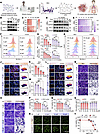 Figure 1
PC enhances T cell killing by downregulating PD-L1. (A) PC was identified as a PD-L1 inhibitor from a screen of 209 natural molecules using Western blotting. (B) Total PD-L1 protein levels were determined by Western blotting analysis in RKO and H1975 cells following exposure to PC at concentrations of 0 μM, 10 μM, 20 μM, and 40 μM for 24 hours. (C) Quantification of B. (D) Western blotting analysis was performed to assess total PD-L1 protein expression in RKO and H1975 cells treated with 40 μM PC for various time intervals. (E) Quantification of D. (F–I) Membrane PD-L1 levels were measured by flow cytometry after treatment with varying PC concentrations (F) or durations (H), with quantifications in G and I. (J–M) Immunofluorescence detected membrane PD-L1 in RKO (J) and H1975 (L) cells after PC treatment (nuclei stained with DAPI; scale bar: 200 μm). Quantifications are in K and M. (N–Q) Pretreated RKO (9 hours) (N) and H1975 (24 hours) (O) cells were cocultured with PD-1–overexpressing Jurkat T cells for 24 hours at an effector-to-target ratio of 9:1. Prior to coculture, the Jurkat T cells were activated with phytohemagglutinin (PHA) (1 mg/mL) and PMA (50 ng/mL). The survival of target cells was quantified using crystal violet staining. Quantitative data from N and O are presented in P and Q, respectively. (R and S) Cytotoxicity of various PC concentrations on RKO and H1975 cells was assessed by EdU assay and the corresponding quantitation. (T) CCK-8 assay for cytotoxicity under the same conditions. The data shown are the mean ± SEM of triplicate experiments. Statistical differences were determined by 1-way ANOVA with Dunnett’s multiple-comparison test. *P < 0.05, **P < 0.01, ***P < 0.001, and ****P < 0.0001.
Subsequently, to investigate whether PC enhances T cell–mediated cytotoxicity against tumor cells by downregulating PD-L1, PD-1–overexpressing Jurkat cells were subsequently cocultured with RKO and H1975 cells treated with different concentrations of PC. As shown in Figure 1, N–Q, the cytotoxicity of Jurkat cells to tumor cells was substantially increased with increasing PC concentration. Primary T cell killing exhibited identical results (Supplemental Figure 1, I–L). Moreover, 5-ethynyl-2′-deoxyuridine (EdU) (Figure 1, R and S) and cell counting kit-8 (CCK-8) (Figure 1T) assays demonstrated that PC exhibited minimal cytotoxicity in its effective concentration range. In conclusion, PC is a safe and broad-spectrum inhibitor of PD-L1 with potential applications in enhancing T cell–mediated antitumor activity.
PC mediates antitumor immunity by inhibiting PD-L1 expression in vivo. To evaluate the antitumor efficacy of PC in vivo, subcutaneous tumor models were established in immunocompetent C57BL/6 mice and nude mice via syngeneic MC38 colon adenocarcinoma cells and Lewis lung carcinoma cells, respectively. In the immunocompetent C57BL/6 mouse model bearing MC38 subcutaneous tumors, the antitumor effects of PC were initially evaluated in a dose-dependent manner at 25 and 50 mg/kg. The results showed that PC substantially inhibited tumor growth, with inhibition rates of 38.1% and 61.1% at 25 and 50 mg/kg, respectively (Figure 2, A–F). During the treatment period, no substantial changes in body weight were observed (Figure 2G), indicating good systemic tolerability of PC. Based on these dose efficacy results, a dose of 50 mg/kg was selected for administration to T cell–deficient nude mice. Compared with the control group, PC did not have a substantial antitumor effect on the nude mice (Figure 2, H–J), and the body weight curves completely overlapped with those of the control group (there was no statistically substantial difference between the groups, P > 0.05; Figure 2K). In addition, similar results were obtained in the lung cancer model (Supplemental Figure 2, A–K). These findings suggest that the antitumor effect of PC is mediated through the activation of the immune system. To systematically validate the immune-dependent mechanism hypothesis, we performed multimodal molecular profiling on subcutaneous tumor tissues from PC-treated C57BL/6 mice. Western blotting analysis revealed dose-dependent downregulation of total PD-L1 protein expression in tumor tissues following 16 days of treatment with 25 mg/kg and 50 mg/kg PC (Figure 2L and Supplemental Figure 2L). Flow cytometry revealed reduced expression of immunosuppressive markers, including CD4+CD25+Foxp3+ regulatory T cells (Tregs) (17, 18) (Figure 2M and Supplemental Figure 2M) and CD11b+Gr-1+ myeloid-derived suppressor cells (MDSCs) (18, 19) (Figure 2N and Supplemental Figure 2N), alongside elevated granzyme B (GzmB) expression (Figure 2O and Supplemental Figure 2O), indicative of cytotoxic T cell activation (20). Additionally, PC treatment substantially increased the populations of NK1.1+ NK cells (21, 22) (Figure 2P and Supplemental Figure 2P) and B220+ B cells (23–25) (Figure 2Q and Supplemental Figure 2Q). Tumor-associated macrophages (26–28) polarized into pro-inflammatory M1 or immunosuppressive M2 phenotypes presented dose-dependent alterations: The expression of CD86+ and CD80+ M1 markers (25, 29) was positively correlated with the PC concentration (Figure 2, R and S, and Supplemental Figure 2, R and S), whereas the expression of CD206+ M2 markers (30) showed an inverse relationship (Figure 2T and Supplemental Figure 2T), suggesting PC-driven M1 polarization.
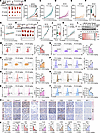 Figure 2
PC attenuates MC38 tumor growth in C57BL/6 mice. C57BL/6 mice or nude mice were subcutaneously implanted with 1 × 10⁷ MC38 colon cancer cells. Upon reaching a tumor volume of approximately 50 mm3, different doses of PC were administered via oral gavage. n = 5 mice per group. Tissues were harvested approximately 2 weeks after the initiation of treatment. (A) Experimental flowchart and tumor schematic in C57BL/6 mice. (B–E) Tumor growth curves in C57BL/6 mice treated with different doses of PC, specifically showing 0 (C), 25 (D), and 50 (E) mg/kg. (F) Statistical analysis of subcutaneous tumor weights in C57BL/6 mice. (G) C57BL/6 mice body weight changes. (H–K) In nude mice bearing MC38 subcutaneous tumors (H), 50 mg/kg PC showed no effect on tumor growth (I), tumor weight (J), or body weight (K) versus the 0 mg/kg control. Further analyses were conducted on C57BL/6 mouse tumors: (L) Western blot detection of PD-L1 protein expression; (M–T) flow cytometry analysis of tumor-infiltrating lymphocytes identified the following populations: Tregs (M, CD4+CD25+Foxp3+), MDSCs (N, CD11b+Gr-1+ in CD45+), cytotoxic T cells (O, CD8+GzmB+), NK cells (P, NK1.1+), B cells (Q, B220+), M1 macrophages (R and S; CD86+ and CD80+), and M2 macrophages (T, CD206+). (U and V) Immunohistochemical analysis of MC38 tumors from PC-treated C57BL/6 mice quantified multiple markers — including CD8, cleaved caspase-3, Ki-67, Foxp3, TUNEL, PD-L1, CD86, CD206, CD11c, and NK1.1 — across 3 representative tumor regions. (V) Positive staining was quantified using ImageJ (NIH) and statistically analyzed with GraphPad Prism. The data shown are the mean ± SEM. Statistical differences were determined by 1-way ANOVA with Dunnett’s multiple-comparison test for all panels except B and G (analyzed by 2-way ANOVA) and I–K (analyzed by unpaired 2-tailed Student’s t test). *P < 0.05, **P < 0.01, ***P < 0.001, and ****P < 0.0001.
The immunohistochemistry results shown in Figure 2, U and V, and Supplemental Figure 2, U and V, verified the dose-dependent upregulation of CD8+ cytotoxic T cell infiltrates and cleaved caspase-3 (apoptosis marker) (31–33), which was concurrent with reduced Ki-67 (proliferation marker) (34) and Foxp3+ Tregs. TUNEL assays revealed that PC induced apoptosis in a dose-responsive manner. Furthermore, the level of PD-L1 decreased with PC treatment, whereas the number of M1 macrophages (CD86+), CD11c+ antigen-presenting cells (35), and NK1.1+ NK cells increased. Furthermore, hematoxylin and eosin (H&E) staining of major organs revealed no histopathological abnormalities in PC-treated mice (Supplemental Figure 3A), confirming systemic safety. Collectively, these results demonstrate that PC enhances antitumor immunity by suppressing PD-L1 expression and promoting lymphocyte infiltration while maintaining a favorable safety profile.
PC prevents AOM/DSS-induced colon cancer. To evaluate the therapeutic potential of PC, a well-established system mimicking human inflammation-associated colorectal carcinogenesis through sequential mutagenic (azoxymethane, AOM) and inflammatory (dextran sodium sulfate, DSS) challenges was developed (36) (Figure 3A). Eight-week-old male C57BL/6 mice received intraperitoneal AOM (12.5 mg/kg) followed by 3 cycles of 2.5% DSS (7 days/cycle) interspersed with regular water intervals. PC treatment (50 mg/kg, oral gavage) commenced at the conclusion of the second cycle. After the experiment, comparative analysis of representative colons revealed preserved colon length in the AOM/DSS+PC group compared with the blank control group (P > 0.05), whereas substantial shortening was detected in the untreated AOM/DSS group (P < 0.05), indicating that PC attenuated DSS-induced inflammation (Figure 3, B and C). Additionally, PC administration mitigated body weight loss (Figure 3D) and reduced the tumor burden across size categories (< 2 mm3, 2–4 mm3, >4 mm3) (Figure 3E), culminating in decreased total tumor multiplicity (Figure 3F). Histopathological evaluation demonstrated marked suppression of neoplastic progression in PC-treated colons (Figure 3G), without hepatosplenic or renal toxicity (Figure 3H). Immunohistochemical profiling revealed that PC dose-dependently modulated tumor immunity, increasing CD8+ T cell infiltration, cleaved caspase-3 (apoptosis), TUNEL+ cells, M1 macrophages (CD86+), CD11c+ antigen-presenting cells, and NK1.1+ NK cells, coupled with downregulated Ki-67, Foxp3+ Tregs, PD-L1, and M2 macrophages (CD206+) (Figure 3, I and J). These findings collectively demonstrate that PC counteracts AOM/DSS-driven colon carcinogenesis through immune system potentiation.
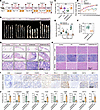 Figure 3
PC demonstrates a significant preventative effect against AOM/DSS-induced colon cancer. (A) Flowchart of the AOM/DSS model in male C57BL/6 mice. n = 5 mice per group. ig, itragastric. (B) Representation of colonic morphology in control, PC (50 mg/kg), AOM/DSS, and AOM/DSS+PC (50 mg/kg) groups. (C) Statistical analysis of colon length in control, PC, AOM/DSS, and AOM/DSS+PC groups. 1-way ANOVA with Dunnett multiple comparisons test. (D) Body weight changes in mice from control, PC, AOM/DSS, and AOM/DSS+PC groups. 2-way ANOVA with Tukey’s multiple comparison test. (E) Statistical analysis of tumor size (< 2 mm3, 2–4 mm3, > 4 mm3) in the colons of mice from AOM/DSS and AOM/DSS+PC groups. 2-way ANOVA with Šídák multiple comparisons test. (F) Total number of colonic tumors in AOM/DSS and AOM/DSS+PC groups. (G) H&E staining of colon tissues from control, PC, AOM/DSS, and AOM/DSS+PC groups was performed to observe histological changes. (H) H&E staining of liver, spleen, and kidney tissues from control, PC, AOM/DSS, and AOM/DSS+PC groups. (I) Immunohistochemical analysis of tumor-associated markers (CD8, C-caspase-3, Ki-67, Foxp3, TUNEL, PD-L1, F4/80, CD86, CD206, CD11c, and NK1.1) in colon tissues from AOM/DSS and AOM/DSS+PC groups. For each tumor sample, 3 representative regions of interest (ROIs) were analyzed. The ROIs were selected to focus on viable tumor areas while systematically avoiding obvious necrotic regions, large blood vessels, and tissue folds to ensure an accurate assessment of staining within the tumor parenchyma. Positive markers were then quantified using ImageJ software. (J) Quantitative analysis of immunohistochemical markers from I. The data shown are the mean ± SEM. (F and J) Unpaired 2-tailed Student’s t test. *P < 0.05, **P < 0.01, ***P < 0.001, and ****P < 0.0001.
PC and anti–CTLA-4 exert synergistic inhibition of tumor growth. Clinical trials have demonstrated improved efficacy of anti–PD-1/PD-L1 antibodies when they are administered in combination with CTLA-4 inhibitors (37–39). To assess the potential of PC as a PD-L1 inhibitor, we established colon cancer (MC38) and lung cancer (Lewis) graft tumor models in C57BL/6 mice. The experimental groups received various treatments, including PBS, anti–PD-L1 (100 μg), anti–CTLA-4 (100 μg), PC (50 mg/kg), PC + anti–PD-L1, PC + anti–CTLA-4, and anti–PD-L1 + anti–CTLA-4. PC monotherapy resulted in comparable tumor growth inhibition to anti–PD-L1 or anti–CTLA-4 monotherapy in both models (Figure 4, A–C, and Supplemental Figure 4, A–N). While PC + anti–PD-L1 showed no additive effects versus single agents, both PC + anti–CTLA-4 and anti–PD-L1 + anti–CTLA-4 combinations demonstrated superior tumor control relative to monotherapies (Supplemental Figure 4O), without inducing substantial weight fluctuations. These findings suggest that PC can be effectively combined with anti–CTLA-4 therapy for enhanced treatment of colon and lung cancer. Tumor tissues from each group were analyzed by flow cytometry. The results revealed that mice subjected to PC + anti–CTLA-4 and anti–PD-L1 + anti–CTLA-4 combination therapies exhibited markedly lower frequencies of CD4+CD25+Foxp3+ Tregs (Figure 4D and Supplemental Figure 5A) and MDSCs (CD11b+Gr-1+) (Figure 4E and Supplemental Figure 5B) within the tumor microenvironment compared with other treatment groups. Conversely, these combination groups presented substantially elevated levels of cytotoxic markers (GzmB+) (Figure 4F and Supplemental Figure 5C), NK cells (NK1.1+) (Figure 4G and Supplemental Figure 5D), B cells (CD19+, Figure 4H; and B220+, Supplemental Figure 5E), and M1-polarized macrophages (CD86+, Supplemental Figure 5F; CD80+, Figure 4I and Supplemental Figure 5G; and CD11c+, Supplemental Figure 6A). In contrast, the expression of the M2 macrophage marker CD206+ was minimal in these groups (Supplemental Figure 5H and Supplemental Figure 6B). Immunohistochemical analysis further highlighted the profound antitumor effects of the combination therapies. Tumor tissues from the PC + anti–CTLA-4 and anti–PD-L1 + anti–CTLA-4 groups displayed substantial increases in CD8+ T cells, cleaved caspase-3, and TUNEL-positive cells, indicating enhanced cytotoxicity and apoptosis. Concurrently, there were pronounced reductions in Ki-67+ proliferating cells and Foxp3+ Tregs (Supplemental Figure 6, C and D, and Supplemental Figure 7, A and B). Overall, these findings demonstrate that PC can be effectively substituted for anti–PD-L1 in combination with anti–CTLA-4 to elicit synergistic antitumor responses.
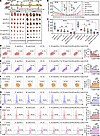 Figure 4
PC combined with anti–CTLA-4 therapy demonstrates enhanced efficacy in the treatment of colon and lung cancers. C57BL/6 mice received subcutaneous transplants of either 1 × 10⁷ MC38 colon cancer cells or 3 × 10⁷ Lewis lung cells. Upon reaching a tumor volume of 50 mm3, the mice were randomized into 7 treatment groups. The groups received the following treatments: PBS (vehicle control), anti–PD-L1 (100 μg), anti–CTLA-4 (100 μg), PC (50 mg/kg), PC + anti–PD-L1 antibody, PC + anti–CTLA-4 antibody, or anti–PD-L1 antibody + anti–CTLA-4 antibody. n = 5 mice per group. Antibodies were administered via intraperitoneal injection at 1-week intervals. PC was administered daily by oral gavage until sample collection. (A) A flowchart illustrating the MC38 or Lewis transplantation tumor model, along with representative images of solid tumors from each treatment group. (B) Tumor growth curves for each treatment group in the MC38 or Lewis transplantation tumor model were shown. (C) Tumor weight statistics for each group of MC38- and Lewis-transplanted tumor mice. (D–I) Flow cytometry analysis of the proportions of tumor-associated lymphocyte markers in tumor tissues from MC38-transplanted tumor-bearing mice in each group and their statistical analysis. D–I represent the expression levels of CD4+CD25+Foxp3+, CD11b+Gr-1+, CD8+GzmB+, NK1.1+, CD19+, and CD80+, respectively, in the tumor tissues of each group. The data shown are the mean ± SEM. Statistical differences were determined by 2-way ANOVA test. *P < 0.05, **P < 0.01, ***P < 0.001, and ****P < 0.0001.
PC downregulates the expression of PD-L1 via the ubiquitin/proteasome pathway. To investigate the mechanisms driving PC-induced PD-L1 downregulation, we first evaluated PD-L1 transcriptional dynamics in RKO cells via RT-qPCR following either dose-dependent (0 μM, 10 μM, 20 μM, or 40 μM) or time-dependent (0 hours, 3 hours, 6 hours, 9 hours, 12 hours, or 24 hours) PC treatment. Notably, these analyses revealed only modest transcriptional suppression (≤50%) of PD-L1 (Supplemental Figure 8A), suggesting that posttranscriptional regulation predominates. To assess protein-level regulation directly, we subjected RKO and H1975 cells to combined treatment with PC and the translational inhibitor cycloheximide (CHX). PC substantially accelerated the degradation of PD-L1 protein, reducing the protein half-life to approximately 2.2 hours in RKO cells and 6.0 hours in H1975 cells (Figure 5, A–D). Collectively, these findings suggest that PC degrades PD-L1 primarily at the protein level.
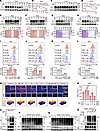 Figure 5
PC promotes K48-linked polyubiquitination of PD-L1 for its degradation. (A–D) RKO (A) and H1975 (C) cells were cotreated with 60 μg/mL CHX and 40 μM PC. The PD-L1 protein expression was detected by Western blot at 0, 1, 3, 6, and 9 hours posttreatment. Quantification is shown in B and D. (E–L) RKO cells were treated with different concentrations of the following compounds and 40 μM PC: eeyarestatin I (EI; 10, 20 μM), MG132 (1, 5 μM), chloroquine (CQ; 20, 40 μM), or 3-methyladenine (3-MA; 1, 5 mM). The expression of PD-L1 was subsequently examined via Western blotting (E–H) and flow cytometry (I–L), followed by statistical analysis. (M and N) PD-L1 expression was detected by immunofluorescence in RKO cells cotreated with 40 μM PC and either 5 μM MG-132 or 40 μM CQ. Blue fluorescence indicates cell nuclei, whereas red fluorescence indicates PD-L1 levels on the cell membrane. Scale bars of 100 μm, 200 μm, and 400 μm were used. (N) Quantitative analysis. (O) PD-L1 was immunoprecipitated from PC-treated RKO cell lysates, and the level of ubiquitination was assessed via Western blotting with a ubiquitin (Ub) antibody. (P and Q) C57BL/6 mice subcutaneously transplanted with MC38 (P) or Lewis (Q) cells were treated with different doses of PC. Western blotting with an anti-Ub antibody was used to detect PD-L1 ubiquitination in tumor tissues. (R) RKO cells expressing WT ubiquitin (WT-Ub), K48R-Ub, or K63R-Ub were treated with PC. After immunoprecipitation with an anti–PD-L1 antibody, PD-L1 ubiquitination was analyzed via Western blotting with an anti-Ub antibody. The data shown are the mean ± SEM of triplicate experiments. Statistical differences were determined by 1-way ANOVA with Dunnett’s multiple-comparison test. *P < 0.05, **P < 0.01, and ****P < 0.0001.
Intracellular protein homeostasis is maintained through the degradation of excess or misfolded proteins following synthesis, which is regulated primarily by the ubiquitin/proteasome pathway and the autophagy/lysosome pathway (40). To identify the specific pathway and location of PD-L1 degradation by PC, we treated RKO cells with PC in combination with various inhibitors: eeyarestatin I (EI; an ER-associated protein synthesis inhibitor), MG132 (a proteasome inhibitor), chloroquine (CQ; a lysosomal inhibitor), and 3-methyladenine (3-MA; an autophagy inhibitor). Western blotting analysis demonstrated that only EI and MG132 effectively rescued PD-L1 protein levels from PC-mediated degradation (Figure 5, E–H, and Supplemental Figure 8, B and C). This rescue effect was corroborated by flow cytometric (Figure 5, I–L) and IF assay (Figure 5, M and N) quantification of membrane PD-L1 expression, where EI and MG132 treatments restored the PD-L1 surface abundance to levels that were not substantially different from those in the control group. In contrast, lysosomal (CQ) and autophagic (3-MA) inhibitors had no substantial protective effects. These results indicate that PC primarily degrade PD-L1 on the ER through the ubiquitin/proteasome pathway.
To verify whether PC promotes PD-L1 ubiquitination, immunoprecipitation assays were performed using RKO cells. Western blotting analysis revealed a marked increase in ubiquitin chains associated with PD-L1 following PC treatment (Figure 5O). Additionally, we examined the ubiquitination levels in tumor tissues from C57BL/6 mice with subcutaneous transplantation of MC38 and Lewis cells and treatment with different doses of PC. As shown in Figure 5, P and Q, the ubiquitination levels in tumor tissues increased with increasing doses of PC, accompanied by correspondingly decreased PD-L1 levels. K48 and K63 are the 2 most common types of polyubiquitin chain linkages. K48-linked polyubiquitination is the primary pathway for PD-L1 degradation (41, 42). In contrast, K63 ubiquitination does not directly lead to PD-L1 degradation but may be involved in PD-L1 endocytosis and intracellular transport, thereby affecting its cell surface expression (43–45). To determine the specific ubiquitination sites mediated by PC on PD-L1, site-specific ubiquitin-mutant plasmids (Ub-K48R/K63R) were used. PD-L1 immunoprecipitation captured ubiquitinated complexes, and Western blotting analysis (Figure 5R) revealed that in the Ub-K63R mutant group, a substantial ubiquitination signal was still detected after PC treatment, whereas the Ub-K48R mutation completely blocked PC-induced ubiquitination. In summary, PC achieves targeted degradation of the PD-L1 protein by precisely regulating the assembly of K48-specific polyubiquitin chains.
PC promotes PD-L1 ubiquitination and degradation by targeting SYVN1. Previous studies have shown that PD-L1 ubiquitination is dynamically regulated by E3 ubiquitin ligases such as SPOP (46), STUB1 (47), and SYVN1 (48, 49) and is counteracted by deubiquitinating enzymes (DUBs) such as USP22 (50, 51) and OTUB1 (52). To identify the key E3 ligases or DUBs that mediate PC-induced PD-L1 degradation, we systematically silenced candidate E3 ligases — ARIH1 (53), β-TrCP, MARCH8 (54), STUB1, SPOP, and SYVN1 — via siRNA or overexpressed DUBs — USP22 and OTUB1 — in RKO cells and then assessed the impact of PC on PD-L1 levels (Supplemental Figure 9, A and F). As shown in Figure 6, A–C, only SYVN1 knockdown counteracted the degradation of PD-L1 by PC in RKO cells. Additionally, SYVN1 overexpression did not substantially increase PC degradation of PD-L1 (Figure 6, D and E). Consistently, Figure 6, F–N, indicate that the PC-mediated increase in the cytotoxicity of Jurkat cells to RKO cells was reversed by SYVN1 knockdown. Moreover, neither overexpressing SYVN1 nor knocking down PD-L1 further enhanced this cytotoxic effect. In summary, these results indicate that PC enhances in vitro immune responses by downregulating PD-L1 through targeting SYVN1. These findings suggest that PC may target SYVN1 to increase its stability, thereby degrading PD-L1.
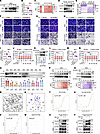 Figure 6
PC downregulates PD-L1 expression via targeting SYVN1. (A–C) Following SYVN1 knockdown in RKO cells, Western blotting detected PD-L1 protein levels after PC treatment (A). si, siRNA. SYVN1 knockdown efficiency was validated by RT-qPCR (B). (C) Quantification of A. (D) Western blotting analysis of PD-L1 protein expression in RKO cells overexpressing SYVN1 and cocultured with PC. (E) Quantification of D. (F–H) RKO cells with SYVN1 knockdown (F), SYVN1 overexpression (G), or PD-L1 knockdown (H) were cocultured with PD-1–overexpressing Jurkat cells (activated with PHA/PMA) at a 9:1 E:T ratio for 24 hours, in the presence or absence of PC, to assess tumor cell killing. The remaining RKO cells were stained with crystal violet and imaged (Cytation 5; scale bar: 100 μm). (I) SYVN1 knockdown efficiency was measured by RT-qPCR. (J) Quantification of F. (K) SYVN1 overexpression was verified by Western blotting and quantified. (L) Quantification of G. (M) PD-L1 knockdown efficiency was measured by RT-qPCR. (N) Quantification of H. (O–Q) PC binding to SYVN1 was demonstrated by CETSA at graded temperatures (O) and a fixed 45°C with different PC doses (P) and by the drug affinity responsive target stability assay under various PC concentrations (1:300 ratio) (Q). (R and S) Molecular docking of PC with SYVN1. (T–W) MST assay of GFP-tagged SYVN1 cells overexpressing WT SYVN1 (M) or SYVN1 mutants (Trp118A, Glu121A, and Glu87A) (N–P). (X and Y) Immunoprecipitation experiments confirmed that PC enhances the interaction between the PD-L1 and SYVN1 proteins. Cell lysates were co-precipitated using antibodies against PD-L1 (X) or SYVN1 (Y). The data shown are the mean ± SEM of triplicate experiments. (B, I, K, M) Significance was determined using Student’s t test; (O) 2-way ANOVA with Šídák multiple comparisons test; All other panels: 1-way ANOVA with Dunnett multiple comparisons test. *P < 0.05, **P < 0.01, and ****P < 0.0001.
To verify this hypothesis, we performed a cellular thermal shift assay (CETSA), which is primarily used to confirm the binding of drugs to target proteins (55, 56). We incubated RKO cell lysates with 0 μM or 200 μM PC and found that PC substantially reversed the degradation of the SYVN1 protein at 40°C, 45°C, and 50°C (Figure 6O). Next, we incubated the lysates with different concentrations of PC at 45°C for the same duration and observed that the stability of the SYVN1 protein increased with increasing PC concentration (Figure 6P). This effect was also evident in the presence of proteases (Figure 6Q). Molecular docking analysis via the Molecular Operating Environment (MOE) platform identified Trp118, Glu121, and Glu87 as potential binding residues at the PC-SYVN1 interface (Figure 6, R and S). To validate these predictions, GFP-tagged WT SYVN1 and point mutants (W118A, E121A, and E87A) were expressed in HEK293T cells. Microscale thermophoresis (MST) binding assays revealed a PC-WT SYVN1 dissociation constant (KD) of 4.5 μM (Figure 6T). While the W118A and E121A mutations exhibited comparable binding affinities to WT (Figure 6, U and V), the E87A mutation completely abolished the PC-SYVN1 interaction (Figure 6W). These structural and functional data establish that Glu87 is the critical binding site for PC on SYVN1.
To further investigate whether PC promotes the interaction between SYVN1 and PD-L1, we conducted immunoprecipitation experiments in RKO cells using antibodies against PD-L1 and SYVN1. The results as shown in Figure 6, X and Y, indicated that PC enhanced the interaction between SYVN1 and PD-L1. This finding was further supported by IF colocalization experiments, which also demonstrated that PC strengthened the interaction between SYVN1 and PD-L1. However, SYVN1 overexpression did not further enhance this interaction (Figure 7, A–D), whereas SYVN1 knockdown reversed it. Additionally, cell experiments and immunohistochemistry revealed that SYVN1 expression increased with increasing PC concentration (Figure 7, E–G). Further RNA experiments indicated that this increase was not due to transcription (Supplemental Figure 10A), but rather that PC increased SYVN1 stability by extending its half-life (Figure 7H). These findings suggest that PC enhances SYVN1 protein stability in RKO cells.
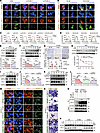 Figure 7
PC targets SYVN1 while promoting AMPK phosphorylation and thus induces PD-L1 ubiquitination-mediated degradation. (A–D) Immunofluorescence images showing colocalization of PD-L1 (red) and SYVN1 (green) in RKO cells with SYVN1 knockdown (A) or overexpression (B), cocultured with 40 μM PC. Nuclei are stained blue. Scale bar: 20 μm. (C and D) Quantitative analysis of A and B, respectively. (E and F) Western blot analysis of SYVN1 and PD-L1 protein levels in RKO cells treated with PC at different concentrations (E) or for different durations (F), with quantification and statistical analysis. (G) Immunohistochemical staining and quantitative analysis of SYVN1 expression in tumor tissues from C57BL/6 mice subcutaneously transplanted with MC38 or Lewis cells and in intestinal tissues from PC-treated AOM/DSS model mice. (H) Western blot determination of SYVN1 protein half-life in RKO cells treated with CHX and PC. (I–L) Western blot analysis of phosphorylated and total AMPKα in PC-treated RKO cells under varying concentrations (I) or time points (K); J and L show quantitation of I and K, respectively. (M) Immunofluorescence colocalization of SYVN1 and PD-L1 in cells overexpressing WT, S195A, or S195E PD-L1, with or without PC. Scale bar: 20 μm. (N) Crystal violet staining and imaging (Cytation 5) of residual tumor cells after coculture of Jurkat cells with RKO cells overexpressing WT, S195A, or S195E PD-L1, followed by PC treatment. Scale bar: 100 μm. (O) Co-IP for SYVN1–PD-L1 interaction after PC treatment with indicated PD-L1 variants. (P) PD-L1 Western blot in CHX and PC cotreated RKO cells expressing the specified PD-L1 variants. The data shown are the mean ± SEM of triplicate experiments. Statistical differences were determined by 2-way ANOVA with Dunnett’s multiple-comparison test. *P < 0.05, **P < 0.01, ***P < 0.001, and ****P < 0.0001.
PC promotes the proteasomal degradation of PD-L1 by targeting LKB1-mediated AMPK phosphorylation. Our findings indicate that PC promotes PD-L1 degradation within the ER. Studies have shown that activated AMPK induces the phosphorylation of PD-L1 at Ser195 (57). This phosphorylation triggers abnormal glycosylation of PD-L1, causing its accumulation in the ER and subsequent degradation via the E3 ligase SYVN1. Our experiments also demonstrated that PC activated AMPK in a dose-dependent manner. Together with PC-mediated targeting of SYVN1, these findings suggest dual mechanisms by which PC promotes abnormal PD-L1 glycosylation via AMPK activation and enhances PD-L1 degradation by targeting SYVN1 (Figure 7, I–L). Next, we constructed PD-L1 plasmids with WT, S195A (nonphosphomimetic), or S195E (phosphomimetic) mutations (57). IF revealed that the S195A mutation reversed PC-mediated PD-L1 degradation, whereas degradation persisted in the WT and S195E contexts (Figure 7M and Supplemental Figure 10B). In vitro cytotoxicity assays showed that only the S195A mutation abrogated PC-enhanced T cell–mediated killing of RKO cells (Figure 7N and Supplemental Figure 10C). Co-immunoprecipitation assays demonstrated that the S195A mutation abolished the PC-induced interaction between PD-L1 and SYVN1 (Figure 7O). Moreover, Western blotting analysis revealed that, upon cotreatment with CHX and PC, the S195E mutation accelerated PD-L1 degradation, whereas S195A counteracted this effect (Figure 7P and Supplemental Figure 10D).
To further elucidate how PC triggers AMPK phosphorylation, we first verified whether PC-mediated PD-L1 downregulation depends on AMPK activation. Using the AMPK inhibitor compound C dihydrochloride, we verified that AMPK inhibition abrogates PC-induced PD-L1 reduction, establishing AMPK as a critical mediator (Figure 8A). We then investigated the upstream mechanism of AMPK activation. Drawing on published evidence implicating LKB1 as a key upstream kinase of AMPK (58, 59), we hypothesized that LKB1 may be involved. Consistent with these findings, the LKB1 inhibitor Pim1 abolished the effect of PC on PD-L1 downregulation (Figure 8B), suggesting that LKB1 acts upstream of AMPK in the PC-induced signaling pathway.
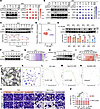 Figure 8
PC targets LKB1 to activate AMPK phosphorylation and downregulate PD-L1. (A) RKO cells were pretreated with 10 μM compound C dihydrochloride (CCd) (10 μM) or vehicle (2 hours), then 30 μM PC (9 hours). Immunoblotting for p-AMPKα (Thr172), AMPKα, PD-L1. (B) Western blot analysis of RKO cells treated with Pim1 (5, 10 μM; 2 hours) ± 30 μM PC (9 hours) for p-AMPKα (Thr172), AMPKα, LKB1, and PD-L1. (C) RKO cells were cotreated with CHX and PC or vehicle, and the LKB1 half-life was assessed by Western blotting. (D) LKB1 mRNA levels in RKO cells after 40 μM PC treatment for 9 hours (RT-qPCR). (E) CETSA was used to evaluate PC-induced thermal stabilization of LKB1 across a range of temperatures. (F and G) LKB1 thermal stability at 42°C under increasing PC concentrations and quantification of these results. (H and I) LKB1 proteolytic susceptibility was assessed by DARTS assay at PC-to-protein ratios of 1:400 (H), with quantification shown in I. (J and K) Molecular docking simulations illustrating potential binding modes between PC and LKB1. (L–N) MST analysis of the interaction between PC and GFP-tagged WT LKB1 (L) or its mutants (Asp141A, Ser428A) (M and N). (O) RKO cells expressing GFP-tagged WT or mutant LKB1 (Asp141A, Ser428A) were treated with or without 30 μM PC for 9 hours, followed by a 24-hour coculture with PHA/PMA-activated Jurkat T cells at a 9:1 ratio. Surviving cells were quantified by crystal violet staining and Cytation 5 imaging. (P) The quantitative plot of O. The data shown are the mean ± SEM. Statistical differences were determined by unpaired 2-tailed Student’s t test (D), 2-way ANOVA with Šídák multiple comparisons test (E), and 1-way ANOVA with Dunnett multiple comparisons test (all other panels). *P < 0.05, and ****P < 0.0001.
Subsequent mechanistic studies, as shown in Figure 8, C and D, revealed that PC prolongs the half-life of LKB1 protein without altering its mRNA levels, ruling out transcriptional regulation. CETSA (Figure 8, E–G) and streptavidin pulldown experiments (Figure 8, H and I) further demonstrated that PC enhances LKB1 thermal stability. Molecular docking analysis predicted potential binding sites between PC and LKB1 in Figure 8, J and K, which was further validated by MST indicating that Ser428 is the critical binding residue (Figure 8, L–N). Mutation of Ser428 not only disrupted the PC–LKB1 interaction but also abrogated the ability of PC to enhance the tumor-killing capacity of Jurkat cells (Figure 8, O and P). Collectively, these results define a coherent posttranslational regulatory axis wherein PC binds to and stabilizes LKB1, leading to AMPK activation, abnormal glycosylation of PD-L1, SYVN1 recruitment, and ultimately PD-L1 ubiquitination and degradation.
LKB1 and SYVN1 in cancer immunotherapy and patient survival. Analysis of the Kaplan-Meier survival curve (log-rank test, P < 0.05) indicated that higher LKB1 expression in colorectal cancer (COAD) and lung adenocarcinoma (LUAD) was associated with improved overall survival (Figure 9A). Furthermore, analysis of the TIMER database demonstrated that elevated LKB1 levels correlated with increased infiltration of CD8+ T cells and NK cells and decreased infiltration of M2 macrophages in these cancers (Figure 9B). These results suggest that high tumor LKB1 expression may activate antitumor immunity.
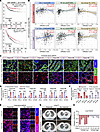 Figure 9
LKB1 and SYVN1 are implicated in cancer therapy and immune regulation. (A) Kaplan-Meier plotter analysis indicates that elevated LKB1 expression is associated with improved survival in patients with COAD and LUAD. (B) Analysis using the TIMER algorithm shows that LKB1 levels are positively associated with immune-related markers — specifically CD8+ T cells and NK cells — while exhibiting a negative correlation with M2 macrophages in patients with COAD and LUAD. (C) Fluorescence double-staining immunohistochemistry was used to detect PD-L1 and SYVN1 expression levels in paraneoplastic and colorectal cancer tissues from patients with colorectal cancer. Scale bar: 50 μm. (D) Quantitative statistical plot of C. (E) Representative images showing SYVN1 and PD-L1 expression in the lung tissues of patients with lung cancer. Scale bar: 50 μm. (F) Statistical quantification of the data in E. (G) Tumor image maps of 2 patients with lung cancer treated with an anti–PD-1 mAb showing the tumor size before and after treatment. (H) Patients with lung cancer who responded and did not respond to immunotherapy had different changes in tumor diameter. The data shown are the mean ± SEM of triplicate experiments. Statistical differences were determined by 2-way ANOVA with Šídák’s multiple-comparison test. ***P < 0.001, and ****P < 0.0001.
Previous studies have indicated that SYVN1 may inhibit PD-L1 expression in tumor tissues (60). To further investigate the relationship between SYVN1 expression and cancer treatment, we assessed the infiltration levels of tumor-infiltrating immune cells in patients with rectal cancer (READ), COAD, and LUAD via 2 independent algorithms. Consistent with previous findings, SYVN1 expression was positively correlated with the infiltration levels of B cells, CD8+ T cells, NK cells, macrophages, and dendritic cells across all datasets (Supplemental Figure 11, A–C).
We also analyzed PD-L1 and SYVN1 expression levels in paracancerous and cancerous tissues from patients with COAD. As depicted in Figure 9, C and D, cancer tissues presented substantially higher PD-L1 expression compared with paracancerous tissues, while SYVN1 expression showed the opposite trend. These results suggest that elevated SYVN1 expression in tumors may suppress PD-L1, thereby enhancing anticancer efficacy.
Furthermore, we evaluated SYVN1 and PD-L1 protein expression levels via IF staining in tumor biopsy tissues from patients with NSCLC treated with PD-1 monoclonal antibody (mAb) (Figure 9, E and F, and Supplemental Tables 1 and 2. The sources for all cell lines and reagents used are compiled in Supplemental Table 3, and the relevant antibodies are shown in Supplemental Table 4.) Patients were categorized as responders or nonresponders based on their response to PD-1 mAb therapy. Compared with nonresponders, responders had higher PD-L1 expression and lower SYVN1 expression in their biopsy tissues. These findings are in line with previous studies demonstrating that SYVN1 expression is negatively correlated with PD-L1 expression and that patients with elevated PD-L1 levels tend to respond better to immunotherapy.
Additionally, radiographic images from 2 representative lung cancer cases supported these findings (Figure 9G and Supplemental Tables 1 and 2). Analysis of tumor diameter changes in all patients with lung cancer (Figure 9H) revealed a negative correlation between tumor diameter reduction and SYVN1 expression. In conclusion, patients with high PD-L1 expression and low SYVN1 expression are more likely to benefit from PD-L1 checkpoint inhibitors.


Copyright © 2026 American Society for Clinical Investigation
ISSN: 0021-9738 (print), 1558-8238 (online)