
Advertisement
Research ArticleCardiologyDevelopmentEndocrinology
Open Access |  10.1172/JCI196271
Rho/ROCK signaling and α-catenin mediate β-catenin–driven hyperplasia in the adrenal cortex via adherens junctions
Mesut Berber,1,2 Betul Haykir,1,2 Nick A. Guagliardo,3 Vasileios Chortis,1,2 Kleiton Silva Borges,1,2 Paula Q. Barrett,3 Felix Beuschlein,4,5,6 Diana L. Carlone,1,2,7 and David T. Breault1,2,7
1Division of Endocrinology, Boston Children’s Hospital, Boston, Massachusetts, USA.
2Department of Pediatrics, Harvard Medical School, Boston, Massachusetts, USA.
3Department of Pharmacology, University of Virginia, Charlottesville, Virginia, USA.
4Department of Endocrinology, Diabetology and Clinical Nutrition, University Hospital Zurich and University of Zurich, Zurich, Switzerland.
5Medizinische Klinik und Poliklinik IV, Klinikum der Universität, Ludwig-Maximilians-Universität, Munich, Germany.
6The LOOP Zurich Medical Research Center, Zurich, Switzerland.
7Harvard Stem Cell Institute, Cambridge, Massachusetts, USA.
Address correspondence to: David T. Breault, Boston Children’s Hospital, BCH3151, 300 Longwood Avenue, Boston, Massachusetts, 02115, USA. Phone: 617.919.2863; Email: david.breault@childrens.harvard.edu.
Find articles by
Berber, M.
in:
PubMed
|
Google Scholar
|

1Division of Endocrinology, Boston Children’s Hospital, Boston, Massachusetts, USA.
2Department of Pediatrics, Harvard Medical School, Boston, Massachusetts, USA.
3Department of Pharmacology, University of Virginia, Charlottesville, Virginia, USA.
4Department of Endocrinology, Diabetology and Clinical Nutrition, University Hospital Zurich and University of Zurich, Zurich, Switzerland.
5Medizinische Klinik und Poliklinik IV, Klinikum der Universität, Ludwig-Maximilians-Universität, Munich, Germany.
6The LOOP Zurich Medical Research Center, Zurich, Switzerland.
7Harvard Stem Cell Institute, Cambridge, Massachusetts, USA.
Address correspondence to: David T. Breault, Boston Children’s Hospital, BCH3151, 300 Longwood Avenue, Boston, Massachusetts, 02115, USA. Phone: 617.919.2863; Email: david.breault@childrens.harvard.edu.
Find articles by Haykir, B. in: PubMed | Google Scholar
1Division of Endocrinology, Boston Children’s Hospital, Boston, Massachusetts, USA.
2Department of Pediatrics, Harvard Medical School, Boston, Massachusetts, USA.
3Department of Pharmacology, University of Virginia, Charlottesville, Virginia, USA.
4Department of Endocrinology, Diabetology and Clinical Nutrition, University Hospital Zurich and University of Zurich, Zurich, Switzerland.
5Medizinische Klinik und Poliklinik IV, Klinikum der Universität, Ludwig-Maximilians-Universität, Munich, Germany.
6The LOOP Zurich Medical Research Center, Zurich, Switzerland.
7Harvard Stem Cell Institute, Cambridge, Massachusetts, USA.
Address correspondence to: David T. Breault, Boston Children’s Hospital, BCH3151, 300 Longwood Avenue, Boston, Massachusetts, 02115, USA. Phone: 617.919.2863; Email: david.breault@childrens.harvard.edu.
Find articles by Guagliardo, N. in: PubMed | Google Scholar
1Division of Endocrinology, Boston Children’s Hospital, Boston, Massachusetts, USA.
2Department of Pediatrics, Harvard Medical School, Boston, Massachusetts, USA.
3Department of Pharmacology, University of Virginia, Charlottesville, Virginia, USA.
4Department of Endocrinology, Diabetology and Clinical Nutrition, University Hospital Zurich and University of Zurich, Zurich, Switzerland.
5Medizinische Klinik und Poliklinik IV, Klinikum der Universität, Ludwig-Maximilians-Universität, Munich, Germany.
6The LOOP Zurich Medical Research Center, Zurich, Switzerland.
7Harvard Stem Cell Institute, Cambridge, Massachusetts, USA.
Address correspondence to: David T. Breault, Boston Children’s Hospital, BCH3151, 300 Longwood Avenue, Boston, Massachusetts, 02115, USA. Phone: 617.919.2863; Email: david.breault@childrens.harvard.edu.
Find articles by Chortis, V. in: PubMed | Google Scholar
1Division of Endocrinology, Boston Children’s Hospital, Boston, Massachusetts, USA.
2Department of Pediatrics, Harvard Medical School, Boston, Massachusetts, USA.
3Department of Pharmacology, University of Virginia, Charlottesville, Virginia, USA.
4Department of Endocrinology, Diabetology and Clinical Nutrition, University Hospital Zurich and University of Zurich, Zurich, Switzerland.
5Medizinische Klinik und Poliklinik IV, Klinikum der Universität, Ludwig-Maximilians-Universität, Munich, Germany.
6The LOOP Zurich Medical Research Center, Zurich, Switzerland.
7Harvard Stem Cell Institute, Cambridge, Massachusetts, USA.
Address correspondence to: David T. Breault, Boston Children’s Hospital, BCH3151, 300 Longwood Avenue, Boston, Massachusetts, 02115, USA. Phone: 617.919.2863; Email: david.breault@childrens.harvard.edu.
Find articles by
Borges, K.
in:
PubMed
|
Google Scholar
|
1Division of Endocrinology, Boston Children’s Hospital, Boston, Massachusetts, USA.
2Department of Pediatrics, Harvard Medical School, Boston, Massachusetts, USA.
3Department of Pharmacology, University of Virginia, Charlottesville, Virginia, USA.
4Department of Endocrinology, Diabetology and Clinical Nutrition, University Hospital Zurich and University of Zurich, Zurich, Switzerland.
5Medizinische Klinik und Poliklinik IV, Klinikum der Universität, Ludwig-Maximilians-Universität, Munich, Germany.
6The LOOP Zurich Medical Research Center, Zurich, Switzerland.
7Harvard Stem Cell Institute, Cambridge, Massachusetts, USA.
Address correspondence to: David T. Breault, Boston Children’s Hospital, BCH3151, 300 Longwood Avenue, Boston, Massachusetts, 02115, USA. Phone: 617.919.2863; Email: david.breault@childrens.harvard.edu.
Find articles by Barrett, P. in: PubMed | Google Scholar
1Division of Endocrinology, Boston Children’s Hospital, Boston, Massachusetts, USA.
2Department of Pediatrics, Harvard Medical School, Boston, Massachusetts, USA.
3Department of Pharmacology, University of Virginia, Charlottesville, Virginia, USA.
4Department of Endocrinology, Diabetology and Clinical Nutrition, University Hospital Zurich and University of Zurich, Zurich, Switzerland.
5Medizinische Klinik und Poliklinik IV, Klinikum der Universität, Ludwig-Maximilians-Universität, Munich, Germany.
6The LOOP Zurich Medical Research Center, Zurich, Switzerland.
7Harvard Stem Cell Institute, Cambridge, Massachusetts, USA.
Address correspondence to: David T. Breault, Boston Children’s Hospital, BCH3151, 300 Longwood Avenue, Boston, Massachusetts, 02115, USA. Phone: 617.919.2863; Email: david.breault@childrens.harvard.edu.
Find articles by
Beuschlein, F.
in:
PubMed
|
Google Scholar
|
1Division of Endocrinology, Boston Children’s Hospital, Boston, Massachusetts, USA.
2Department of Pediatrics, Harvard Medical School, Boston, Massachusetts, USA.
3Department of Pharmacology, University of Virginia, Charlottesville, Virginia, USA.
4Department of Endocrinology, Diabetology and Clinical Nutrition, University Hospital Zurich and University of Zurich, Zurich, Switzerland.
5Medizinische Klinik und Poliklinik IV, Klinikum der Universität, Ludwig-Maximilians-Universität, Munich, Germany.
6The LOOP Zurich Medical Research Center, Zurich, Switzerland.
7Harvard Stem Cell Institute, Cambridge, Massachusetts, USA.
Address correspondence to: David T. Breault, Boston Children’s Hospital, BCH3151, 300 Longwood Avenue, Boston, Massachusetts, 02115, USA. Phone: 617.919.2863; Email: david.breault@childrens.harvard.edu.
Find articles by Carlone, D. in: PubMed | Google Scholar
1Division of Endocrinology, Boston Children’s Hospital, Boston, Massachusetts, USA.
2Department of Pediatrics, Harvard Medical School, Boston, Massachusetts, USA.
3Department of Pharmacology, University of Virginia, Charlottesville, Virginia, USA.
4Department of Endocrinology, Diabetology and Clinical Nutrition, University Hospital Zurich and University of Zurich, Zurich, Switzerland.
5Medizinische Klinik und Poliklinik IV, Klinikum der Universität, Ludwig-Maximilians-Universität, Munich, Germany.
6The LOOP Zurich Medical Research Center, Zurich, Switzerland.
7Harvard Stem Cell Institute, Cambridge, Massachusetts, USA.
Address correspondence to: David T. Breault, Boston Children’s Hospital, BCH3151, 300 Longwood Avenue, Boston, Massachusetts, 02115, USA. Phone: 617.919.2863; Email: david.breault@childrens.harvard.edu.
Find articles by Breault, D. in: PubMed | Google Scholar
Published January 27, 2026 - More info
J Clin Invest. 2026;136(6):e196271. https://doi.org/10.1172/JCI196271.
© 2026 Berber et al. This work is licensed under the Creative Commons Attribution 4.0 International License. To view a copy of this license, visit http://creativecommons.org/licenses/by/4.0/.
Received: June 2, 2025; Accepted: January 22, 2026


-
Results
K+ and AngII stimulation enhance AJ formation via Rho/ROCK signaling. To identify physiological mechanisms regulating zG function, we reanalyzed our phosphoproteomic dataset examining the effects of K+ stimulation on aldosterone production in the human NCI-H295R adrenocortical cell line (26). Gene Ontology and Reactome Pathway analyses revealed that K+ stimulation led to increased levels of phosphoproteins involved in cadherin binding, actin binding, and Rho-GTPase signaling, each of which is associated with an increase in AJ formation (Supplemental Figure 1A; supplemental material available online with this article; https://doi.org/10.1172/JCI196271DS1). To extend these findings, we assessed the effects of the aldosterone secretagogues K+ and AngII on AJs (including the transition from pAJs to ZAs) (Figure 1A and Supplemental Figure 1B). First, we used co-immunoprecipitation (co-IP) for αCat in NCI-H295R cells treated with either K+ or AngII. Both AngII and K+ significantly increased KCad association with αCat, suggesting increased AJ formation (Figure 1, B and C). To better characterize the K+-induced transition from pAJs to more stable ZAs, we developed a quantitative line profile analysis (qLPA) assay by adapting the fluorescence intensity line profiling techniques in ImageJ into a standardized quantitative approach, where the fluorescence intensity of KCad and αCat was measured along 50-pixel-wide lines drawn between adjacent nuclei and normalized to a 0–100 point scale. This method allowed for direct comparison of AJ proteins across experimental conditions. Consistent with the co-IP results, qLPA following stimulation with K+ revealed an increase in AJ proteins, suggesting a transition from pAJs to ZAs (Figure 1, D–G, Supplemental Figure 1C, and Supplemental Figure 2A). Similar results were observed following stimulation with AngII (Supplemental Figure 1D). Considering that both K+ and AngII converge on Ca2+ signaling, we next inhibited Ca2+ channels with nifedipine to determine the role of Ca2+ influx in AJ assembly. As predicted, nifedipine prevented K+-induced AJ enrichment (Figure 1, D, F, and G, and Supplemental Figure 2A). Together, these data indicate that aldosterone secretagogues led to an increase in AJ formation between zG cells through Ca2+-mediated signaling.
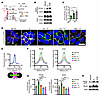 Figure 1
Aldosterone secretagogues increase AJ formation via the Rho/ROCK/NMII pathway. (A) Schematic illustrating AJ regulation by the K+/AngII-mediated Ca2+/ROCK/NMII pathway. Red arrow denotes AJ formation and stabilization. Nif, nifedipine; Fas, fasudil; Bleb, blebbistatin. (B) αCat co-IP in NCI-H295R cells treated with vehicle (11 mM NaCl), K+ (11 mM KCl), or AngII (100 nM) for 48 hours. KCad and αCat immunoblots. Input: whole-cell lysates. β-Actin: loading control. (C) Densitometric quantification of KCad/αCat co-IP (n = 3 independent experiments). (D) Representative image of αCat (green) and KCad (magenta) immunofluorescence in NCI-H295R cells stimulated with vehicle (11 mM NaCl), K+ (11 mM KCl) ± nifedipine (10 μM), fasudil (10 μM), or blebbistatin (10 μM) for 48 hours (1 hour preincubation with inhibitors or DMSO). Low-power images are in Supplemental Figure 2A. (E) Schematic of qLPA methodology. (F) qLPA of αCat and KCad fluorescence intensities represented in D presented as mean ± SEM (n = 90 cell–cell interfaces pooled from 3 independent experiments). (G) Average peak fluorescence intensity per experiment for KCad and αCat from D and F (n = 3). (H) RhoA activity in NCI-H295R cells treated with vehicle, K+, or AngII for 3 hours was assessed by pull-down assay. Immunoblots show active RhoA (RhoA-GTP) in precipitates (top), total RhoA in lysates (middle), and β-actin in lysates (bottom). Statistical significance determined by unpaired 2-tailed Student’s t test in C and 1-way ANOVA with Tukey’s multiple-comparison post test in G. *P < 0.05, **P < 0.01, ***P < 0.001. Data are presented as mean ± SEM. Scale bar: 20 μm.
Our phosphoproteomic analysis also identified Rho-GTPase signaling as a putative downstream mediator of K+ stimulation (Supplemental Figure 1A), indicating this pathway may mediate the enhancement of AJ formation. To confirm this, we treated NCI-H295R cells with K+ or AngII, which revealed increased RhoA-GTP activation (Figure 1H). Next, we assessed actomyosin formation, a downstream marker of RhoA activity (Figure 1A) (27), by staining for pMLC2 (28), F-actin, and NMIIB. K+ stimulation promoted MLC2 phosphorylation and robust actin polymerization at cell–cell contacts (Supplemental Figure 2, B and C), which directly correlated with increased fluorescence intensity and more continuous distribution of KCad and αCat along the normalized membrane interface. These changes reflect the molecular basis for the observed transition from pAJs to more stable ZAs, as assessed by qLPA (Supplemental Figure 2, D and E). Consistent with these findings, inhibition of ROCK activity (with fasudil) (29, 30) or myosin motor activity (with blebbistatin) (31) abrogated ZAs and actomyosin formation (Supplemental Figure 2, C–E). Indeed, inhibition of ROCK and NMII activity using fasudil, Y27632 (another ROCK inhibitor), and blebbistatin disrupted the membrane localization and junction formation of KCad and αCat, as evidenced by reduced fluorescence intensity at cell–cell interfaces (Figure 1, D, F, and G, and Supplemental Figure 2). Similar results were observed following stimulation with AngII (Supplemental Figure 2G). Finally, to establish whether the increase in AJ proteins seen following K+ stimulation was associated with an increase in AJ stability, we performed fluorescence recovery after photobleaching (FRAP) using a KCad-GFP fusion protein in NCI-H295R cells (Figure 2A). The results demonstrated that K+ stimulation markedly decreased the mobile fraction of KCad-GFP (thereby increasing the stable fraction), indicating that K+ stimulation led to increased AJ stability (Figure 2B). Taken together, these data indicate that aldosterone secretagogues promote AJ stability via Rho/ROCK/NMII signaling in adrenocortical cells via Ca2+ signaling.
 Figure 2
K+ increases AJ stability in NCI-H295R cells. (A) Representative FRAP images of KCad-GFP–expressing NCI-H295R cells. KCad-GFP at the cell–cell interface (yellow boxes) was photobleached (red boxes) at 00:00 and imaged over time. (B) Normalized KCad-GFP FRAP data from NCI-H295R cells treated with vehicle (11 mM NaCl) or K+ (11 mM KCl) for 48 hours (n = 5–7 cells pooled from 3 independent experiments). FMob, mobile fraction; t1/2, half-life recovery time (seconds). Data are presented as mean ± SEM. Scale bar: 20 μm.
Rho/ROCK signaling mediates zG morphology and aldosterone production. Given AJs are crucial for normal zG morphology (including zG rosettes) (10), we next assessed whether Rho/ROCK signaling mediated this process. We treated 2-month-old C57BL/6J WT female mice with fasudil for 4 weeks and assessed zG structure, gene expression, and aldosterone production. Compared with vehicle-treated mice, fasudil treatment led to a significant reduction in 2D glomerular area (a measure of zG morphology assessed using immunostaining for laminin β1) and zG rosettes, despite no change in the overall size of the zG (assessed using immunostaining for Dab2) (Figure 3, A–D). Next, we assessed the functional impact of fasudil on the zG, which revealed a decrease in Cyp11b2 (encoding aldosterone synthase [AS]) expression (Figure 3E), and reduced aldosterone levels (Figure 3F), with a trend toward increased Renin (Ren) expression (Figure 3G). To confirm the reduction in aldosterone levels, we repeated the analysis with a more rigorous fasudil treatment protocol, incorporating pre- and posttreatment aldosterone measurements, which verified decreased aldosterone production following fasudil treatment (Figure 3H). Taken together, these results indicate a direct impact of fasudil on adrenal function and zG morphology. The modest changes in renal Ren mRNA levels may reflect the complex, multilevel regulation of Ren expression and suggest that both direct effects on the adrenal and compensatory renal responses may contribute to the observed hormonal changes in this well-coordinated endocrine system.
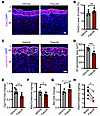 Figure 3
ROCK inhibition via fasudil decreases 2D glomerular area in the zG and blunts aldosterone production. (A) Representative images of Dab2 immunofluorescence in adrenal sections from 2-month-old control (Cyp11b2Cre/+) female mice treated with vehicle (PBS) or fasudil (30 mg/kg) every other day for 28 days. (B) Quantification of percentage Dab2+ area, as shown in A (n = 4, 4 mice). (C) Laminin β1 immunofluorescence in sections from 2-month-old female C57BL/6 mice treated as in A. Images highlight glomerular structures within the zG. (D) Quantification of 2D glomerular area via laminin β1 labeling represented in C (n = 5, 5 mice). (E) Cyp11b2 mRNA expression in adrenals from vehicle- and fasudil-treated 2-month-old female C57BL/6 mice as in A, assessed by qPCR (n = 5, 5 mice). Data are presented as fold change relative to vehicle-treated controls normalized to Gapdh expression. (F) Measurement of 24-hour urinary aldosterone (Aldo) levels in 2-month-old female C57BL/6 mice treated as in A, assessed by RIA and normalized to creatinine (n = 5, 8 mice). (G) Ren mRNA expression in kidneys of 2-month-old female C57BL/6 mice treated as in A, assessed by qPCR (n = 5, 5 mice). Data are presented as fold change relative to vehicle-treated controls normalized to 18S expression. (H) Measurement of 24-hour urinary aldosterone levels in 7- to 12-month-old control (Cyp11b2Cre/+) male mice before (basal) and after fasudil treatment (30 mg/kg) administered 6 times weekly for 14 days, assessed by RIA and normalized to creatinine (n = 5 mice). Statistical significance determined by unpaired 2-tailed Student’s t test or ratio paired t test in H. *P < 0.05, ***P < 0.001. Solid lines mark boundary between capsule (C) and zG, and dashed lines mark boundary between zG and zona fasciculata (zF). Each white asterisk denotes an individual cell within a zG rosette. Data are presented as mean ± SEM. Scale bars: 20 μm.
βCat stabilization promotes AJ formation. While βCat is a core component of the AJ complex, recent evidence suggests that βCat can facilitate cadherin clustering (32), though whether increased levels of βCat can directly affect AJ formation has not been fully established. To explore this, we assessed the impact of βCat stabilization on AJ formation. First, we treated NCI-H295R cells with CHIR 99021 (CHIR), an inhibitor of GSK3β, to enhance βCat stabilization (Supplemental Figure 3, A–C). As expected, increased βCat stabilization led to an increase in βCat target gene (LEF1 and AXIN2) expression (Supplemental Figure 3A). Treatment with CHIR also significantly enhanced membrane localization of KCad, αCat, and F-actin, leading to the formation of well-defined ZAs at cell–cell contacts, compared with pAJs in vehicle-treated cells (Figure 4, A–D, and Supplemental Figure 3, A–E), without affecting total KCad levels, as determined by immunoblot analysis (Supplemental Figure 3F), indicating that βCat likely promotes AJ formation through redistribution of existing proteins rather than through increased expression. To functionally assess whether CHIR-induced membrane localization of AJ components results in enhanced stability of cell–cell contacts, we performed a cell dissociation assay. Confluent monolayers of vehicle- or CHIR-treated NCI-H295R cells were detached and subjected to mechanical stress via repeated trituration. CHIR-treated cells showed significantly reduced dissociation compared with vehicle controls, remaining in larger intact fragments (Supplemental Figure 4, A and B), providing functional evidence that βCat stabilization promotes enhanced cell–cell contacts. Moreover, treatment with CHIR led to a pronounced aggregation of NCI-H295R cells into rosette-like clusters, reminiscent of the spatial organization observed in zG rosettes (Supplemental Figure 4C). Next, we assessed the impact of inhibiting the Rho/ROCK/NMII signaling pathway (using fasudil or blebbistatin) on CHIR-treated cells, which revealed a marked reduction in AJ formation and an attenuation of ZA formation (Figure 4, A–D). Similar results were observed following treatment with the ROCK inhibitor Y27632 (Supplemental Figure 3B). Next, we showed that CHIR increased pMLC2, a downstream marker of Rho/ROCK pathway activity (28), which was blocked by the addition of fasudil, providing a mechanistic link between βCat stabilization and Rho/ROCK signaling (Supplemental Figure 4, D and E). To validate these findings using a genetic model, we cultured primary zG cells isolated from control (Cyp11b2Cre/wt:Ctnnb1wt/wt) (33) and βCat-GOF mice (zG-specific Cyp11b2Cre/wt:Ctnnb1fl(Ex3)/wt) (22). Consistent with CHIR-treated NCI-H295R cells, primary zG cells from βCat-GOF adrenals demonstrated enhanced KCad staining at cell membranes compared with controls (Supplemental Figure 4F). Moreover, βCat-GOF primary zG cells exhibited increased aldosterone production compared with control cells (Supplemental Figure 4G), consistent with increased AJ formation leading to enhanced aldosterone production. Together, these findings demonstrate that the Rho/ROCK signaling axis is essential for βCat-mediated enhancement of AJ formation and multicellular organization in adrenocortical cells, providing mechanistic insight into how tissue architecture may be regulated in the zG.
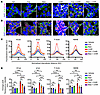 Figure 4
βCat stabilization via CHIR stimulation enhances AJ formation. (A) Representative images of αCat (green) and KCad (magenta) immunofluorescence in NCI-H295R cells treated with vehicle (Veh; DMSO), fasudil (Fas; 10 μM), or blebbistatin (Bleb; 10 μM) and stimulated with vehicle (DMSO) or CHIR 99021 (5 μM) for 48 hours (1 hour preincubation with inhibitors). (B) Representative images of NMIIB (green) immunofluorescence and F-actin (magenta) staining in NCI-H295R cells treated as in A. (C) QLPA of KCad, αCat, F-actin, and NMIIB fluorescence intensities from A and B. Lines represent mean ± SEM (n = 90 cell–cell interfaces pooled from 3 independent experiments). (D) Average peak fluorescence intensity for KCad, αCat, F-actin, and NMIIB per experiment, corresponding to data in A–C (n = 3). Data are presented as mean ± SEM. Statistical significance determined by 2-way ANOVA with Tukey’s multiple-comparison post test. *P < 0.05, **P < 0.01, ***P < 0.001, ****P < 0.0001. Scale bars: 20 μm.
To assess βCat’s impact on AJ formation in vivo, we employed adrenals from young adult (6–8 weeks of age) βCat-GOF and control mice. After confirming zG hyperplasia at this young age in βCat-GOF mice (22), as evidenced by an expanded Dab2+ zG (Supplemental Figure 5A), we performed immunostaining for KCad and p120 in the zG, which revealed a predominance of pAJs in the control zG and a marked increase in ZAs in the βCat-GOF zG (Figure 5A and Supplemental Figure 5B). We also measured Cdh6 expression, which was comparable between βCat-GOF and control mice (Supplemental Figure 5C), suggesting βCat enhances KCad membrane localization primarily through spatial reorganization of existing protein pools (e.g., KCad) rather than via transcriptional upregulation, as with NCI-295R cells (Figure 4 and Supplemental Figures 3 and 4). To formally assess the binding of p120 to KCad — a proxy for AJ stability (34) — we next employed a proximity ligation assay (PLA) as a sensitive method for visualizing protein–protein interactions in situ (35), targeting KCad and p120. The analysis revealed a marked increase in the interaction of these AJ proteins in the zG of βCat-GOF mice compared with controls (Figure 5, B and C, and Supplemental Figure 5D). Together, these data indicate that βCat stabilization led to increased binding of AJ proteins, consistent with an increase in AJ stability.
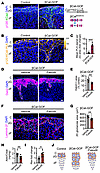 Figure 5
βCat stabilization strengthens AJs in the zG, while ROCK inhibition with fasudil prevents hyperplasia and reduces aldosterone production. (A) Representative images of KCad and p120-catenin (p120) immunofluorescence in adrenal sections from 2-month-old control and βCat-GOF female mice. Schematic of Cyp11b2Cre/+:Ctnnb1fl(Ex3)/wt (βCat-GOF) mice. (B) Representative images of KCad/p120 PLA signal in sections from 2-month-old control and βCat-GOF female mice. (C) Quantification of PLA signal per zG area from control and βCat-GOF mice represented in B (n = 5, 4 mice). (D) Representative images of Dab2 immunofluorescence in sections from 2-month-old βCat-GOF female mice treated with either vehicle (PBS) or fasudil (30 mg/kg) administered every other day for 28 days. (E) Quantification of percentage Dab2+ area in the cortex, as shown in D (n = 5, 5 mice). (F) Representative images of laminin β1 immunofluorescence in sections from βCat-GOF female mice treated as in D. (G) Quantification of the 2D area of glomerular structures, as defined by laminin β1 labeling in F (n = 5, 6 mice). (H) Measurement of 24-hour urinary aldosterone (Aldo) levels of 4-month-old βCat-GOF female mice treated with either vehicle (PBS) or fasudil (30 mg/kg) administered 6 times per week for 28 days, assessed by RIA and normalized to creatinine (Creat) (n = 8, 6 mice). (I) Ren mRNA expression in kidneys of 4-month-old βCat-GOF female mice treated as in H, assessed by qPCR (n = 4, 5 mice). Data are presented as fold change relative to vehicle-treated controls normalized to Gapdh expression. (J) Schematic of control, βCat-GOF, and βCat-GOF:fasudil–treated mice. All statistical significance determined by unpaired 2-tailed Student’s t test. *P < 0.05, **P < 0.01, ***P < 0.001. Data are presented as mean ± SEM. Solid lines mark the boundary between the capsule (C) and zG, and dashed lines marks boundary between the zG and zona fasciculata (zF). Each white asterisk denotes an individual cell within a zG rosette. Scale bars: 20 μm.
To evaluate the functional relationship between Rho/ROCK signaling and βCat-driven zG hyperplasia, we administered fasudil or vehicle to 2-month-old female βCat-GOF mice. Fasudil treatment of βCat-GOF mice led to a marked reduction in Dab2+ zG area (Figure 5, D and E). In addition, fasudil treatment resulted in a marked reduction in zG glomerular area and zG rosettes (Figure 5, F and G). Next, given the progressive nature of the βCat-GOF phenotype with age (22), we confirmed these findings in both male and female mice at 4 months of age (Supplemental Figure 6, A–D). In addition, we showed treatment of βCat-GOF mice (with established zG cell hyperplasia) with fasudil led to decreased aldosterone production with a corresponding increase in Ren expression (Figure 5, H and I, and Supplemental Figure 6, E and F). To confirm these effects in aged βCat-GOF mice (22), which display more pronounced aldosterone elevation, we treated 1-year-old βCat-GOF male mice for 2 weeks with fasudil and measured aldosterone. Analysis of 24-hour urinary aldosterone excretion before and after treatment revealed fasudil treatment reduced levels to below those of littermate controls (Supplemental Figure 6G). Intriguingly, while fasudil treatment was able to block zG hyperplasia in βCat-GOF mice, it did not significantly affect expression of βCat’s transcriptional target genes Lef1 and Axin2 (Supplemental Figure 6H). Taken together, these findings establish that stabilization of βCat led to increased AJ formation via pMLC2 and that disruption of AJs through inhibition of Rho/ROCK signaling blunted βCat-GOF–driven hyperplasia and aldosterone production independent of significant changes in βCat-dependent target genes (Figure 5J).
Because βCat functions as both a transcription factor and a core AJ component, it is challenging to delineate the contribution of these 2 activities on AJ formation. To assess whether βCat’s transcriptional activity is required for AJ formation, we treated NCI-H295R cells with iCRT14 (a potent inhibitor of βCat transcription) (36). As expected, iCRT14 was able to block expression of canonical βCat target genes (LEF1 and AXIN2) (Supplemental Figure 7A). Despite blocking βCat transcription activity, stabilization of βCat with CHIR was still able to promote KCad enrichment at cell–cell junctions (Supplemental Figure 7, B and C). This finding further supports that βCat’s role in AJ formation may be independent, at least in part, of its transcriptional activity.
zG-specific αCat deletion impairs zG morphology. To better assess the role of the AJ in zG and rosette formation, we next targeted αCat, an obligatory AJ adaptor protein that connects the cadherin-catenin complex to the actin cytoskeleton (Figure 1A) (7). We first generated zG-specific Cyp11b2Cre/wt:Ctnna1fl/fl mice, referred to as αCat-LOF (loss-of-function) mice. Analysis of 2-month-old αCat-LOF mice confirmed deletion of αCat in the zG compared with controls (Supplemental Figure 8A). We next assessed the impact of αCat-LOF on the zG, which revealed no change in the overall size or morphology of the zG, nor did it alter expression of the βCat target gene Lef1, compared with controls (Supplemental Figure 8, B–F). Despite this, αCat-LOF led to a significant reduction in zG 2D glomerular area and zG rosette number compared with controls (Supplemental Figure 8, G–I). These data indicate that despite no change in overall zG size between αCat-LOF and control mice, αCat is required for normal zG morphology, including formation of rosette structures.
Taken together, the above findings with iCRT14 and αCat-LOF mice decouple βCat’s nuclear and AJ functions and highlight a transcription-independent effect of βCat and the critical role of αCat. Despite these findings, we cannot exclude the possibility of nonjunctional roles for αCat, as has been described (37).
zG-specific αCat deletion prevents βCat-GOF–driven zG hyperplasia. To directly assess the role of αCat, and by extension AJs, in the context of βCat-driven zG hyperplasia, we generated zG-specific Cyp11b2Cre/wt:Ctnnb1fl(Ex3)/wt:Ctnna1fl/fl mice, referred to as βCat-GOF:αCat-LOF mice. We next compared 2D glomerular area and zG rosette number in control, βCat-GOF, αCat-LOF, and βCat-GOF:αCat-LOF mice. As expected, analysis of βCat-GOF mice revealed a 3-fold increase in Dab2+ zG area (66% ± 12% of the cortex) compared with control (22% ± 3%) and αCat-LOF (19% ± 3%) mice. Remarkably, analysis of βCat-GOF:αCat-LOF revealed a 50% decrease in Dab2+ zG area (34% ± 7% of the cortex) compared with βCat-GOF mice without affecting Lef1 expression (Figure 6, A and B, and Supplemental Figure 9). Consistent with these results, we observed similar changes in 2D glomerular area and zG rosette number (Figure 6, C–E). These data indicate that αCat-dependent AJ formation is essential for βCat-driven zG hyperplasia (Figure 6F).
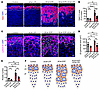 Figure 6
zG-specific αCat deletion attenuates βCat-GOF–induced zG hyperplasia and rosette expansion. (A) Representative images of Dab2 immunofluorescence in adrenal sections from 4-month-old control, αCat-LOF, βCat-GOF, and βCat-GOF:αCat-LOF male mice. (B) Quantification of percentage Dab2+ area in the cortex, represented in A (n = 4–12 mice). (C) Representative images of laminin β1 immunofluorescence in sections from 4-month-old control, βCat-GOF, αCat-LOF, and βCat-GOF:αCat-LOF male mice. (D) Quantification of the 2D area of glomerular structures, as defined by laminin β1 labeling in C (n = 3–6 mice). (E) Quantification of rosette number, defined as clusters of 5 or more cells within a single glomerular structure measured in regions of 500 × 500 μm, as shown in C (n = 3 mice per group). All statistical significance determined by 2-way ANOVA with Tukey’s multiple-comparison post test. *P < 0.05, **P < 0.01, ****P < 0.0001. Data are presented as mean ± SEM. Solid lines mark the boundary between the capsule (C) and zG, and dashed lines marks boundary between the zG and zona fasciculata (zF). Each white asterisk denotes an individual cell within a zG rosette. Scale bars: 20 μm.
Targeting AJs in βCat-GOF–driven zG hyperplasia leads to cell death. To better understand the mechanism(s) responsible for the rescue of βCat-driven zG hyperplasia with fasudil and loss of αCat, we assessed cell proliferation (immunostaining for Ki67) and cell death (immunostaining for cleaved caspase-3) in the adrenals of βCat-GOF and βCat-GOF:αCat-LOF mice and in βCat-GOF mice treated with fasudil or vehicle. While the number of Ki67+ cells was comparable between genotypes and treatments, the number of cleaved caspase-3+ cells in the zG was significantly increased in βCat-GOF:αCat-LOF compared with βCat-GOF adrenals and in fasudil-treated βCat-GOF adrenals compared with vehicle (Supplemental Figure 10, A–H). Next, we treated NCI-H295R cells with different doses of fasudil (10, 50, and 100 μM) over 10 days, which led to a dose-dependent decrease in cell numbers, with the highest dose (100 μM) reducing cell numbers below starting levels (Supplemental Figure 10I). In addition, fasudil induced apoptosis in NCI-H295R cells at a dose of 100 μM, despite the presence of CHIR (Supplemental Figure 10J). Notably, fasudil-treated cells displayed increased segregation abnormalities, including intact and broken chromosome bridges and micronuclei — indicators of replication stress and aberrant mitosis (38) (Supplemental Figure 10K). These findings suggest that ROCK inhibition impairs faithful cell division, which may trigger checkpoint responses leading to apoptosis (38, 39). Beyond inducing apoptosis, qPCR analysis revealed that fasudil treatment significantly downregulated Cyclin D2 (Ccnd2) in vivo (Supplemental Figure 10L), a known βCat transcriptional target involved in G1/S transition (40, 41). Consistent with this, CHIR-induced upregulation of CCND2 was completely blocked by fasudil cotreatment in NCI-H295R cells (Supplemental Figure 10M), indicating that ROCK activity is required for βCat-driven cell cycle progression. Together, these findings suggest that AJ destabilization suppresses hyperplasia through both impaired cell cycle progression and increased apoptotic cell death (39, 42–44).
βCat expression correlates with increased AJs in APAs. Stabilization of βCat has been associated with a range of adrenal disorders, including APAs, where the majority of cases express high levels of βCat (24). To investigate whether high levels of βCat might contribute to an increase in AJs in human APAs, we analyzed paraffin-embedded sections from a cohort of 16 patients with APAs (Supplemental Table 1). We employed immunostaining for CYP11B2 (AS), βCat, and KCad. Focusing first on AS-expressing regions, in a blinded fashion, we randomly assessed βCat expression levels and independently scored AJ structures by determining the level of intercellular KCad (Figure 7, A and B, and Supplemental Figure 11A). While βCat expression levels showed no correlation with CYP11B2 expression in APAs, KCad peak intensity demonstrated a weak correlation (Supplemental Figure 11, B and C). Notably, APAs with higher βCat expression levels showed higher KCad levels at cell–cell contacts compared with those with lower βCat levels, which showed lower KCad levels (Figure 7, A–C). Using PLA as a proxy for AJ stability, we assessed the interaction between p120 and KCad, which revealed an increase in AJs in APAs with elevated βCat levels (Supplemental Figure 11D), mirroring the observations in βCat-GOF mice (Figures 5 and 6). To quantitatively and spatially assess the AJs, we scored approximately 50 cell pairs (across their cell–cell contacts) within each of 76 regions across all 16 APA samples for βCat levels (mean fluorescence intensity) and KCad levels (peak fluorescence intensity). Spearman’s correlation analysis comparing average data for each APA revealed a positive correlation between βCat and KCad levels (r = 0.58) (Figure 7D), with remarkable intratumor congruence (Supplemental Figure 11E). Together, these data suggest that elevated βCat expression is associated with enhanced AJ formation, consistent with a role for βCat stabilization in promoting epithelial cohesion and junctional integrity in APAs. In addition, these data highlight AJs as potential targets for the development of new treatments for these tumors.
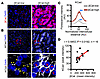 Figure 7
βCat expression positively correlates with KCad membrane localization in human APAs. (A) Representative images of βCatlo and βCathi immunofluorescence in human APA sections. (B) Top panels, representative images of KCad immunofluorescence in βCatlo (left) and βCathi (right) regions. Magnified views of regions marked by dashed red squares are shown in bottom panels. Yellow arrowheads denote pAJs, and red arrows denote ZAs. (C) QLPA of KCad fluorescence intensity in representative βCatlo and βCathi regions, with blue arrows highlighting peaks of averaged KCad signal localized at approximately 50 cell–cell interfaces from randomly selected regions in APA sections. Lines represent mean and shaded areas represent standard error of the mean. (D) Spearman’s correlation analysis comparing βCat mean intensity and peak KCad intensity, as shown in C, from 16 human APA samples. The red line represents the regression fit (r = 0.5853, P < 0.0192). Scale bars: 20 μm.


Copyright © 2026 American Society for Clinical Investigation
ISSN: 0021-9738 (print), 1558-8238 (online)