
Go to JCI Insight
  • About
  • Editors
  • Consulting Editors
  • For authors
  • Publication ethics
  • Publication alerts by email
  • Advertising
  • Job board
  • Contact
  • Clinical Research and Public Health
  • Current issue
  • Past issues
  • By specialty
    • COVID-19
    • Cardiology
    • Gastroenterology
    • Immunology
    • Metabolism
    • Nephrology
    • Neuroscience
    • Oncology
    • Pulmonology
    • Vascular biology
    • All ...
  • Videos
    • ASCI Milestone Awards
    • Video Abstracts
    • Conversations with Giants in Medicine
  • Reviews
    • View all reviews ...
    • Neurodegeneration (Mar 2026)
    • Clinical innovation and scientific progress in GLP-1 medicine (Nov 2025)
    • Pancreatic Cancer (Jul 2025)
    • Complement Biology and Therapeutics (May 2025)
    • Evolving insights into MASLD and MASH pathogenesis and treatment (Apr 2025)
    • Microbiome in Health and Disease (Feb 2025)
    • Substance Use Disorders (Oct 2024)
    • View all review series ...
  • Viewpoint
  • Collections
    • In-Press Preview
    • Clinical Research and Public Health
    • Research Letters
    • Letters to the Editor
    • Editorials
    • Commentaries
    • Editor's notes
    • Reviews
    • Viewpoints
    • 100th anniversary
    • Top read articles

  • Current issue
  • Past issues
  • Specialties
  • Reviews
  • Review series
  • ASCI Milestone Awards
  • Video Abstracts
  • Conversations with Giants in Medicine
  • In-Press Preview
  • Clinical Research and Public Health
  • Research Letters
  • Letters to the Editor
  • Editorials
  • Commentaries
  • Editor's notes
  • Reviews
  • Viewpoints
  • 100th anniversary
  • Top read articles
  • About
  • Editors
  • Consulting Editors
  • For authors
  • Publication ethics
  • Publication alerts by email
  • Advertising
  • Job board
  • Contact
Top
  • View PDF
  • Download citation information
  • Send a comment
  • Terms of use
  • Standard abbreviations
  • Need help? Email the journal
  • Top
  • Abstract
  • The genetic basis of kidney stone disease
  • From genetic variants to targeted interventions
  • Conclusions and future perspectives
  • Acknowledgments
  • Footnotes
  • References
  • Version history
  • Article usage
  • Citations to this article

Advertisement

Commentary Open Access | 10.1172/JCI195624

Genetic susceptibility to kidney stone disease: unveiling pathogenesis and potential therapeutic targets

Shiwei Li,1 Xuemei Wang,1,2 and Ming Liu1

1Department of Endocrinology and Metabolism, Tianjin Medical University General Hospital, Tianjin, China.

2Department of Endocrinology and Nephrology, Tianjin Ninghe Hospital, Tianjin, China.

Address correspondence to: Ming Liu, Department of Endocrinology and Metabolism, Tianjin Medical University General Hospital, #154 Anshan Road, Heping District, Tianjin, 300052, China. Phone: 86.022.60817182; Email: mingliu@tmu.edu.cn.

Find articles by Li, S. in: PubMed | Google Scholar

1Department of Endocrinology and Metabolism, Tianjin Medical University General Hospital, Tianjin, China.

2Department of Endocrinology and Nephrology, Tianjin Ninghe Hospital, Tianjin, China.

Address correspondence to: Ming Liu, Department of Endocrinology and Metabolism, Tianjin Medical University General Hospital, #154 Anshan Road, Heping District, Tianjin, 300052, China. Phone: 86.022.60817182; Email: mingliu@tmu.edu.cn.

Find articles by Wang, X. in: PubMed | Google Scholar

1Department of Endocrinology and Metabolism, Tianjin Medical University General Hospital, Tianjin, China.

2Department of Endocrinology and Nephrology, Tianjin Ninghe Hospital, Tianjin, China.

Address correspondence to: Ming Liu, Department of Endocrinology and Metabolism, Tianjin Medical University General Hospital, #154 Anshan Road, Heping District, Tianjin, 300052, China. Phone: 86.022.60817182; Email: mingliu@tmu.edu.cn.

Find articles by Liu, M. in: PubMed | Google Scholar |

Published August 1, 2025 - More info

Published in Volume 135, Issue 15 on August 1, 2025
J Clin Invest. 2025;135(15):e195624. https://doi.org/10.1172/JCI195624.
© 2025 Li et al. This work is licensed under the Creative Commons Attribution 4.0 International License. To view a copy of this license, visit http://creativecommons.org/licenses/by/4.0/.
Published August 1, 2025 - Version history
View PDF

Related article:

Genetic variants predisposing to an increased risk of kidney stone disease
Catherine E. Lovegrove, Michelle Goldsworthy, Jeremy Haley, Diane Smelser, Caroline Gorvin, Fadil M. Hannan, Anubha Mahajan, Mohnish Suri, Omid Sadeghi-Alavijeh, Shabbir H. Moochhala, Daniel P. Gale, David Carey, Michael V. Holmes, Dominic Furniss, Rajesh V. Thakker, Sarah A. Howles
Kidney stone disease is common and recurrent. In these studies we identify three biologic pathways that underlie ~12-17% of common causes of stone formation and that may facilitate personalised medicine approaches.
Clinical Research and Public Health Endocrinology Genetics Nephrology

Genetic variants predisposing to an increased risk of kidney stone disease

  • Text
  • PDF
Abstract

BACKGROUND Kidney stone disease (KSD) affects approximately 10% of adults, is heritable, and is associated with mineral metabolic abnormalities.METHODS Genetic variants and pathways increasing KSD risk via calcium and phosphate homeostasis were ascertained using GWAS, region-specific Mendelian randomization (MR), and genetic colocalization. The utility of pathway modulation was estimated via drug target MR, and the effects of variants on calcium-sensing receptor (CaSR) signaling were characterized.RESULTS Seventy-nine independent KSD-associated genetic signals at 71 loci were identified. MR identified 3 loci affecting KSD risk via increased serum calcium or decreased serum phosphate concentrations (ORs for genomic regions = 4.30, 11.42, and 13.83 per 1 SD alteration; P < 5.6 × 10⁻¹⁰). Colocalization analyses defined putative, noncoding KSD-causing variants estimated to account for 11%–19% of KSD cases in proximity to diacylglycerol kinase δ (DGKD), a CaSR signaling partner; solute carrier family 34 member 1 (SLC34A1), a renal sodium-phosphate transporter; and cytochrome P450 family 24 subfamily A member 1 (CYP24A1), which degrades 1,25-dihydroxyvitamin D. Drug target MR indicated that reducing serum calcium by 0.08 mmol/L via CASR, DGKD, or CYP24A1, or increasing serum phosphate by 0.16 mmol/L via SLC34A1 may reduce KSD relative risk by up to 90%. Furthermore, reduced DGKδ expression and KSD-associated DGKD missense variants impaired CaSR signal transduction in vitro, which was ameliorated by cinacalcet, a positive CaSR allosteric modulator.CONCLUSION DGKD-, SLC34A1-, and CYP24A1-associated variants linked to reduced CaSR signal transduction, increased urinary phosphate excretion, and impaired 1,25-dihydroxyvitamin D inactivation, respectively, are common causes of KSD. Genotyping patients with KSD may facilitate personalized KSD risk stratification and targeted pharmacomodulation of associated pathways to prevent KSD.FUNDING Oxfordshire Health Services Research Committee (OHSRC, part of Oxford Hospitals Charity); Kidney Research UK (RP_030_20180306); The Urology Foundation; National Institute for Health Research (NIHR) Oxford Biomedical Research Centre (NF-SI-0514–10091); Wellcome Trust (204826/z/16/z and 106995/z/15/z); Medical Research Council (MRC) Clinical Research Training Fellowships (MR/W03168X/1 and MR/S021329/1); Wellcome Trust Clinical Career Development Fellowship; Sir Henry Dale Fellowship, with joint funding by the Wellcome Trust and the Royal Society (224155/Z/21/Z); St. Peter’s Trust for Kidney Bladder and Prostate Research.

Authors

Catherine E. Lovegrove, Michelle Goldsworthy, Jeremy Haley, Diane Smelser, Caroline Gorvin, Fadil M. Hannan, Anubha Mahajan, Mohnish Suri, Omid Sadeghi-Alavijeh, Shabbir H. Moochhala, Daniel P. Gale, David Carey, Michael V. Holmes, Dominic Furniss, Rajesh V. Thakker, Sarah A. Howles

×

Abstract

Kidney stone disease (KSD) arises from a complex interplay of genetic predisposition, diet, metabolic disorders, and other environmental factors. In this issue of the JCI, Lovegrove et al. report a large GWAS that identifies 71 loci associated with an increased risk of KSD. Through an integrative approach combining Mendelian randomization and functional validation, they emphasize the roles of DGKD, SLC34A1, and CYP24A1 in maintaining homeostasis of calcium and phosphate. These findings offer insights into the pathogenesis of KSD and suggest potential targets for intervention. Further studies are needed to validate these findings across diverse populations and clinical settings.

The genetic basis of kidney stone disease

Kidney stone disease (KSD) is a common and recurrent urological condition that affects approximately 10% of the global population and imposes a substantial burden on health care systems (1). Although the acute pain from urinary stone passage is well recognized, the underlying pathogenesis of stone formation and its chronic consequences, including genetic predispositions, systemic metabolic disturbances, recurrent stones, and renal dysfunction, remain less understood (2). The substantial economic burden and patient morbidity underscore the need to elucidate the underlying pathophysiology (3). While modifiable factors such as diet, fluid intake, metabolic disorders, infections, and certain drugs have traditionally been the focus of prevention strategies (4, 5), growing evidence points to a critical role for inherited susceptibility.

Twin studies have shown that the heritability of KSD may exceed 50% (6), and family history remains one of the strongest clinical predictors of KSD (7). These familial patterns suggest that genetic variants influence renal handling of calcium, phosphate, oxalate, and uric acid. Indeed, rare monogenic disorders including X-linked Dent disease and mutations in SLC34A3 impair proximal tubule (PT) function and phosphate reabsorption, respectively, leading to nephrocalcinosis and an increased risk of stone formation. Inherited hyperparathyroidism, as seen in multiple endocrine neoplasia (MEN) syndromes, results in hypercalcemia and hypercalciuria, further promoting lithogenesis (8). Although individual loci associated with these rare causes of KSD have provided insights into disease mechanisms, their translation into diagnostic or therapeutic strategies in the general population remains elusive.

Initial GWAS identified several risk loci, including CLDN14, SLC34A1, and TRPV5 (1, 9, 10), implicating pathways involved in mineral reabsorption and epithelial transport. However, the predominance of Icelandic and Japanese cohorts in these studies limits the generalizability of the findings to more diverse populations (2). In this issue of the JCI, Lovegrove et al. report an important advance (11). By integrating GWAS with Mendelian randomization (MR), genetic colocalization, and in vitro functional studies, the authors provide a robust framework linking genetic variation to mineral homeostasis, calcium-sensing receptor (CaSR) signaling, and clinical phenotype.

From genetic variants to targeted interventions

Lovegrove and colleagues conducted one of the most comprehensive genetic studies of KSD to date, integrating GWAS data from more than 1.2 million individuals with MR, as well as data from colocalization, drug-target MR, and in vitro functional assays (11). They identified 79 independent risk signals across 71 genomic loci, markedly expanding the known genetic landscape of KSD. A key strength of this work lies in its translational focus. Rather than limiting the analysis to statistical associations, the authors followed a gene-pathway-therapy framework, exemplified by three key candidate genes: DGKD, SLC34A1, and CYP24A1 (Figure 1) (11).
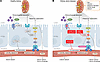
Genetic variants in DGKD, SLC34A1, and CYP24A1 and environmental factors coFigure 1

Genetic variants in DGKD, SLC34A1, and CYP24A1 and environmental factors contribute to the pathogenesis of KSD. (A) The healthy kidney maintains homeostasis of calcium and phosphate. (B) Several variants independently perturb the calcium-phosphate balance and are associated with increased susceptibility to KSD. The DGKD variant rs838717 impairs CaSR signaling via DGKδ activity, disrupting conversion of DAG to PA, a lipid mediator downstream of MAPK signaling that modulates calcium and phosphate homeostasis. This defective signaling increases calcium reabsorption in the TAL and augments phosphate excretion in the PT. Moreover, rs838717 may contribute to elevated circulating calcium and reduced phosphate levels by directly promoting PTH secretion. Cinacalcet can partially rescue the impaired CaSR signal transduction. The SLC34A1 variant rs10051765 impairs phosphate reabsorption by reducing the activity of sodium-phosphate cotransporter NPT2a in the PT, leading to increased renal phosphate excretion. The CYP24A1 variant rs6127099 decreases 24-hydroxylase activity, resulting in elevated circulating 1,25-dihydroxyvitamin D and increased renal calcium absorption. Environmental and acquired risk factors, including dietary oxalate, sodium, animal protein intake, urinary tract infection, medications, metabolic disorders, and unidentified contributors, interact with genetic susceptibility to promote lithogenesis. MAPK, mitogen-activated protein kinase; PA, phosphatidic acid; PIP2, phosphatidylinositol 4,5-bisphosphate.

DGKD encodes a diacylglycerol (DAG) kinase that modulates CaSR signaling. Functional studies have shown that the KSD-associated variant rs838717 impairs CaSR-mediated activation of MAPK pathways, resulting in decreased phosphate reabsorption in the PT and increased calcium reabsorption in the thick ascending limb (TAL) of the loop of Henle (11, 12). The authors showed this variant may also enhance parathyroid hormone (PTH) secretion, contributing to elevated serum calcium and reduced serum phosphate (11). Through direct effects on TAL calcium transport and indirect effects via PTH-mediated inhibition of proximal phosphate reabsorption, the rs838717 variant may disrupt homeostasis of calcium and phosphate and promote lithogenesis (11). SLC34A1 encodes the sodium-phosphate cotransporter NPT2a, which is essential for phosphate reabsorption in the renal PT. Lovegrove and co-authors found that the variant rs10051765 in SLC34A1 was associated with increased urinary phosphate, potentially leading to calcium phosphate supersaturation and promoting stone formation (11). CYP24A1 encodes the enzyme 24-hydroxylase, which is responsible for metabolizing active vitamin D (1,25-dihydroxyvitamin D). The variant rs6127099 in CYP24A1 was associated with reduced 24-hydroxylase activity, resulting in elevated 1,25-dihydroxyvitamin D3 and subsequently contributing to increasing serum calcium, which occurs in conditions linked to increased KSD (11).

MR and colocalization analyses have been used to infer causal relationships between imbalances in serum minerals and the risk of KSD (13–15). By leveraging independent genetic variants as instrumental variables, Lovegrove et al. present evidence that even modest, genetically mediated changes in serum calcium or phosphate levels can substantially alter the risk of kidney stone formation. Specially, MR analysis suggests that a one SD increase in serum calcium mediated via DGKD variants confers more than a four-fold increase in KSD risk (11). These mechanistic hypotheses are further supported by colocalization and expression quantitative trait locus (eQTL) analyses and are reinforced by MR studies that suggest a causal link between gene expression levels and KSD risk. While these findings require cautious interpretation due to the complexity of calcium homeostasis, they provide a framework for understanding how common genetic variation cumulatively influences disease susceptibility (11).

Notably, the work by Lovegrove et al. parallels and complements a contemporaneous trans-ancestry GWAS by Cao et al., recently published in Nature Communications (16), which aimed to elucidate the genetic architecture of KSD. Methodologically, Cao et al. conducted cross-population GWAS meta-analyses and validated polygenic risk scores (PRSs) across multiple ancestries, improving generalizability but introducing potential limitations related to diagnostic heterogeneity and differences in linkage disequilibrium structure (16). In contrast, Lovegrove et al. focused primarily on European ancestry cohorts, which limits ethnic generalizability but offers greater mechanistic depth through MR, colocalization, and functional validation (11). These two studies considerably expanded the list of KSD-associated loci and identified shared genes, including SLC34A1 and CYP24A1. However, each study also uncovered distinct associations: Lovegrove et al. highlighted variants in DGKD (11), whereas Cao et al. identified novel loci such as TRIOBP by leveraging fine-mapping across European and East Asian populations (16). These complementary approaches underscore the value of integrating population-scale discovery with functional genomics to advance the understanding of KSD.

Beyond mechanistic insights, drug-target MR simulations that modeled the effects of enhancing or inhibiting activity at these risk loci provide a preclinical rationale for therapeutic development. Importantly, these analyses indicate that modulation of serum calcium via CASR, DGKD, or CYP24A1, or increased phosphate reabsorption via SLC34A1, could reduce the risk of KSD by as much as 90% (10). Specifically, cinacalcet, a clinically approved CaSR agonist (17), partially rescued impaired CaSR signaling caused by DGKD variants in genetically susceptible individuals (11). Similarly, targeting the vitamin D pathway, for example, through inhibitors of vitamin D synthesis, may be beneficial in individuals carrying high-risk CYP24A1 variants (10). These scenarios underscore the translational potential of the gene-pathway-therapy paradigm and may promote a shift from conventional management, which has focused largely on symptom control and general lifestyle modifications, to more targeted intervention based on genetic susceptibilities.
Conclusions and future perspectives

Lovegrove et al. provide a foundation for several future directions in the genetic and clinical management of KSD. The expanded list of risk loci enables the construction of a more precise PRS, which could identify individuals at increased risk for incidents or recurrent stones. The identification of druggable targets, including diacylglycerol kinase δ (DGKδ) and components of the CaSR signaling pathway, supports the potential repurposing of existing medications for genetically susceptible individuals. These genotype-guided approaches could serve as the basis for future randomized clinical trials. However, continued validation in ancestrally diverse cohorts is essential. Broader representation will be essential for equitable application of genomic tools (18).

Looking ahead, several key questions remain. First, how can we better quantify the individual and cumulative contributions of genetic risk alleles to disease burden? Future efforts should focus on refining PRSs across ancestries and integrating them with clinical and biochemical data to enhance risk stratification, particularly in early-onset or idiopathic cases (19). Second, what molecular mechanisms underlie polygenic interactions that influence stone formation? Elucidating these interactions will require integrative multiomics approaches and high-throughput functional assays to reveal how combinations of variants affect mineral handling and epithelial transport. Third, how can these findings be translated into effective interventions? One direction involves genotype-guided trials evaluating repurposed therapies, while another lies in developing risk-stratified lifestyle modification protocols. Finally, how do environmental and lifestyle exposures interact with genetic predisposition to influence stone formation? Understanding gene-environment interplay, such as sodium and calcium intake in individuals with altered CaSR signaling, may inform targeted prevention strategies and increase the clinical utility of genetic screening. Advancing this agenda will require close interdisciplinary collaboration among geneticists, endocrinologists, nephrologists, and nutritionists. By combining genomic, clinical, and behavioral data, future research may enable precision prevention strategies and improved long-term outcomes for individuals at risk of KSD (20).

Acknowledgments

The work was supported by the National Natural Science Foundation of China (82220108014) and the National Key R&D Program (2024YFA1802903 and 2022YFE0131400). We acknowledge the support of the Tianjin Medical University General Hospital Clinical Research Program (22ZYYLCZD02), the Tianjin Key Medical Discipline (Specialty) Construction Project (TJYXZDXK-030A), and the Tianjin Medical University Clinical Special Disease Research Center – Neuroendocrine Tumor Clinical Special Disease Research Center.

Address correspondence to: Ming Liu, Department of Endocrinology and Metabolism, Tianjin Medical University General Hospital, #154 Anshan Road, Heping District, Tianjin, 300052, China. Phone: 86.022.60817182; Email: mingliu@tmu.edu.cn.

Footnotes

Conflict of interest: The authors have declared that no conflict of interest exists.

Copyright: © 2025, Li et al. This is an open access article published under the terms of the Creative Commons Attribution 4.0 International License.

Reference information: J Clin Invest. 2025;135(15):e195624. https://doi.org/10.1172/JCI195624.

See the related article at Genetic variants predisposing to an increased risk of kidney stone disease.

References
  1. Singh P, et al. The genetics of kidney stone disease and nephrocalcinosis. Nat Rev Nephrol. 2022;18(4):224–240.
    View this article via: CrossRef PubMed Google Scholar
  2. Spasiano A, et al. Kidney stone biology: insights from Genetics. [published online May 15, 2025]. Nephrol Dial Transplant. https://doi.org/10.1093/ndt/gfaf062.
    View this article via: PubMed Google Scholar
  3. Collaborators GU. The global, regional, and national burden of urolithiasis in 204 countries and territories, 2000-2021: a systematic analysis for the Global Burden of Disease Study 2021. EClinicalMedicine. 2024;78:102924.
    View this article via: CrossRef PubMed Google Scholar
  4. Dai M, et al. Dietary factors and risk of kidney stone: a case-control study in southern China. J Ren Nutr. 2013;23(2):e21–e28.
    View this article via: CrossRef PubMed Google Scholar
  5. Liu M, et al. Metabolic Syndrome and the Risk of Kidney Stones: Evidence from 487 860 UK Biobank Participants. J Clin Endocrinol Metab. 2025;110(4):e1211–e1219.
    View this article via: CrossRef PubMed Google Scholar
  6. Palsson R, et al. Genetics of common complex kidney stone disease: insights from genome-wide association studies. Urolithiasis. 2019;47(1):11–21.
    View this article via: CrossRef PubMed Google Scholar
  7. Unno R, et al. Maternal family history of urolithiasis is associated with earlier age of onset of stone disease. World J Urol. 2023;41(1):241–247.
    View this article via: CrossRef PubMed Google Scholar
  8. Ganesan C, et al. Analysis of primary hyperparathyroidism screening among US veterans with kidney stones. JAMA Surg. 2020;155(9):861–868.
    View this article via: CrossRef PubMed Google Scholar
  9. Thorleifsson G, et al. Sequence variants in the CLDN14 gene associate with kidney stones and bone mineral density. Nat Genet. 2009;41(8):926–930.
    View this article via: CrossRef PubMed Google Scholar
  10. Howles SA, Thakker RV. Genetics of kidney stone disease. Nat Rev Urol. 2020;17(7):407–421.
    View this article via: CrossRef PubMed Google Scholar
  11. Lovegrove CE, et al. Genetic variants predisposing to an increased risk of kidney stone disease. J Clin Invest. 2025;135(15):e186915.
    View this article via: JCI PubMed Google Scholar
  12. Hannan FM, et al. The calcium-sensing receptor in physiology and in calcitropic and noncalcitropic diseases. Nat Rev Endocrinol. 2018;15(1):33–51.
    View this article via: CrossRef PubMed Google Scholar
  13. Lovegrove CE, et al. Causal inference in health and disease: a review of the principles and applications of Mendelian randomization. J Bone Miner Res. 2024;39(11):1539–1552.
    View this article via: CrossRef PubMed Google Scholar
  14. Zuber V, et al. Combining evidence from Mendelian randomization and colocalization: review and comparison of approaches. Am J Hum Genet. 2022;109(5):767–782.
    View this article via: CrossRef PubMed Google Scholar
  15. Triozzi JL, et al. Mendelian randomization analysis of genetic proxies of thiazide diuretics and the reduction of kidney stone risk. JAMA Netw Open. 2023;6(11):e2343290.
    View this article via: CrossRef PubMed Google Scholar
  16. Cao X, et al. Trans-ancestry GWAS identifies 59 loci and improves risk prediction and fine-mapping for kidney stone disease. Nat Commun. 2025;16(1):3473.
    View this article via: CrossRef PubMed Google Scholar
  17. Hannan FM, Thakker RV. Calcium-sensing receptor (CaSR) mutations and disorders of calcium, electrolyte and water metabolism. Best Pract Res Clin Endocrinol Metab. 2013;27(3):359–371.
    View this article via: CrossRef PubMed Google Scholar
  18. Corpas M, et al. Bridging genomics’ greatest challenge: the diversity gap. Cell Genom. 2025;5(1):100724.
    View this article via: CrossRef PubMed Google Scholar
  19. Geraghty R, et al. Role of genetic testing in kidney stone disease: a narrative review. Curr Urol Rep. 2024;25(12):311–323.
    View this article via: CrossRef PubMed Google Scholar
  20. Sarigiannis D, et al. Advancing translational exposomics: bridging genome, exposome and personalized medicine. Hum Genomics. 2025;19(1):48.
    View this article via: CrossRef PubMed Google Scholar
Version history
  • Version 1 (August 1, 2025): Electronic publication

Article tools

  • View PDF
  • Download citation information
  • Send a comment
  • Terms of use
  • Standard abbreviations
  • Need help? Email the journal

Metrics

  • Article usage
  • Citations to this article

Go to

  • Top
  • Abstract
  • The genetic basis of kidney stone disease
  • From genetic variants to targeted interventions
  • Conclusions and future perspectives
  • Acknowledgments
  • Footnotes
  • References
  • Version history
Advertisement
Advertisement

Copyright © 2026 American Society for Clinical Investigation
ISSN: 0021-9738 (print), 1558-8238 (online)

Sign up for email alerts